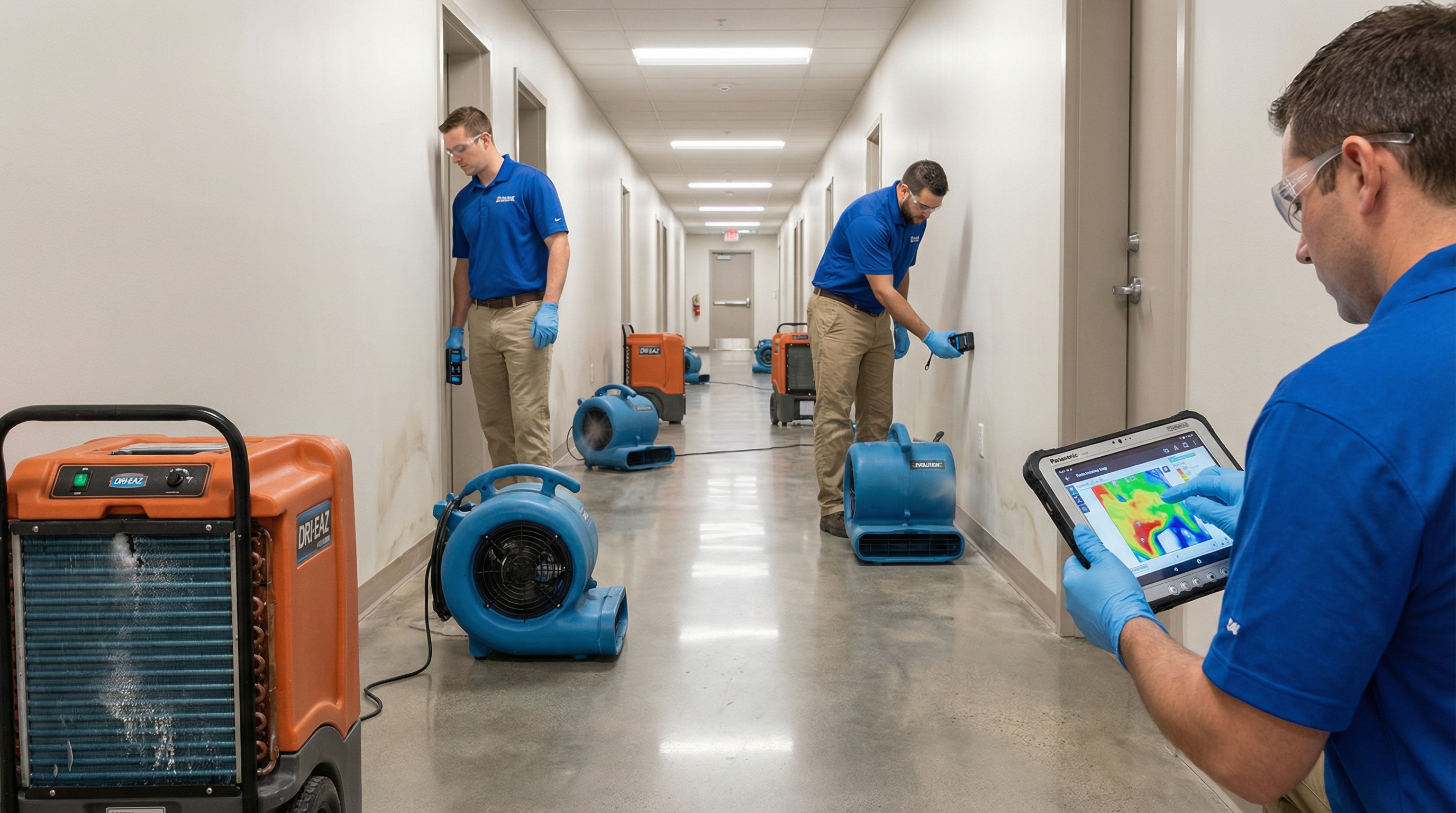
Multi-family corridor mitigation
Phased extraction, drying, and resident communication protocols that keep occupied units habitable during 2-3 week mitigation cycles.
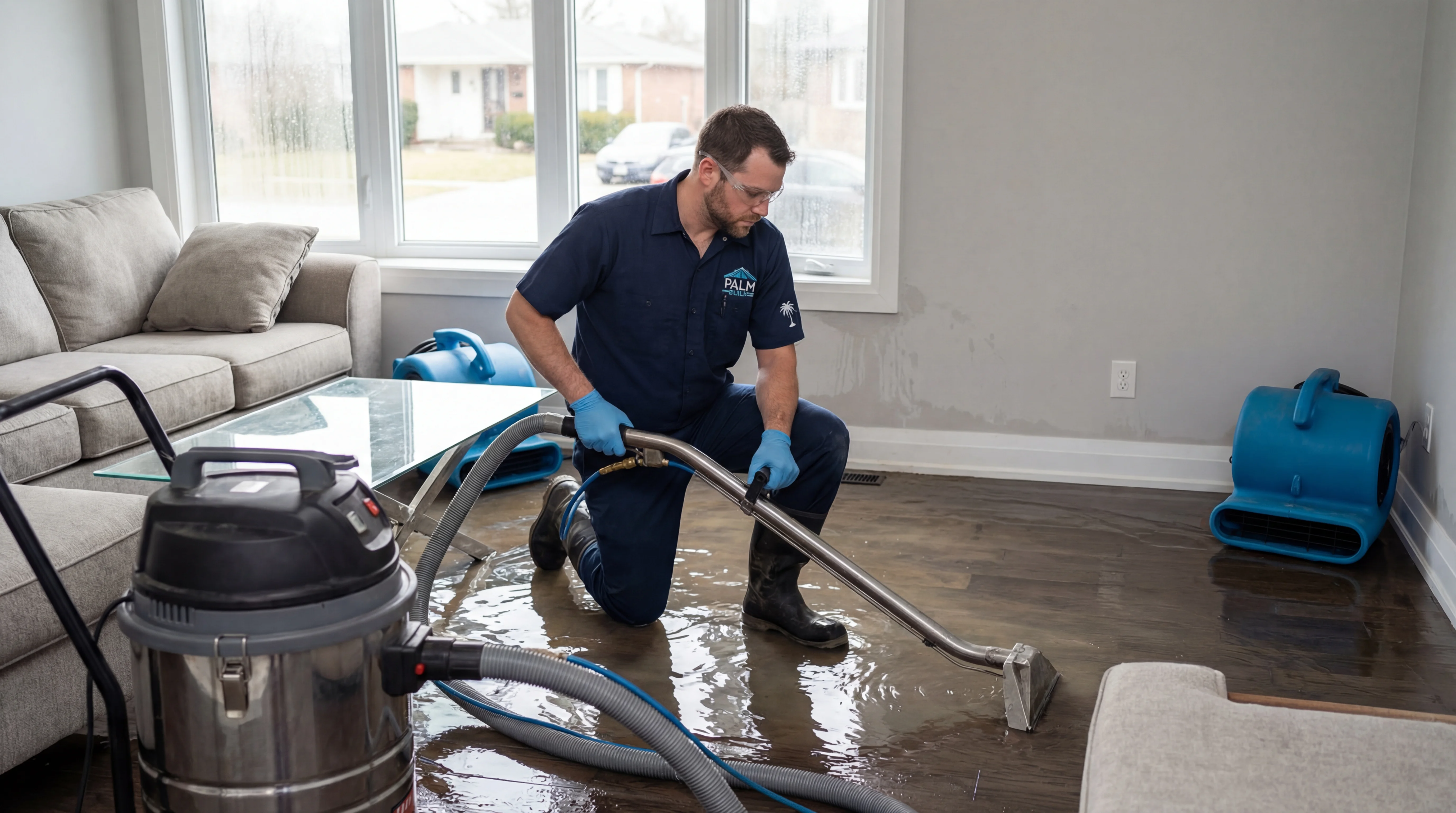
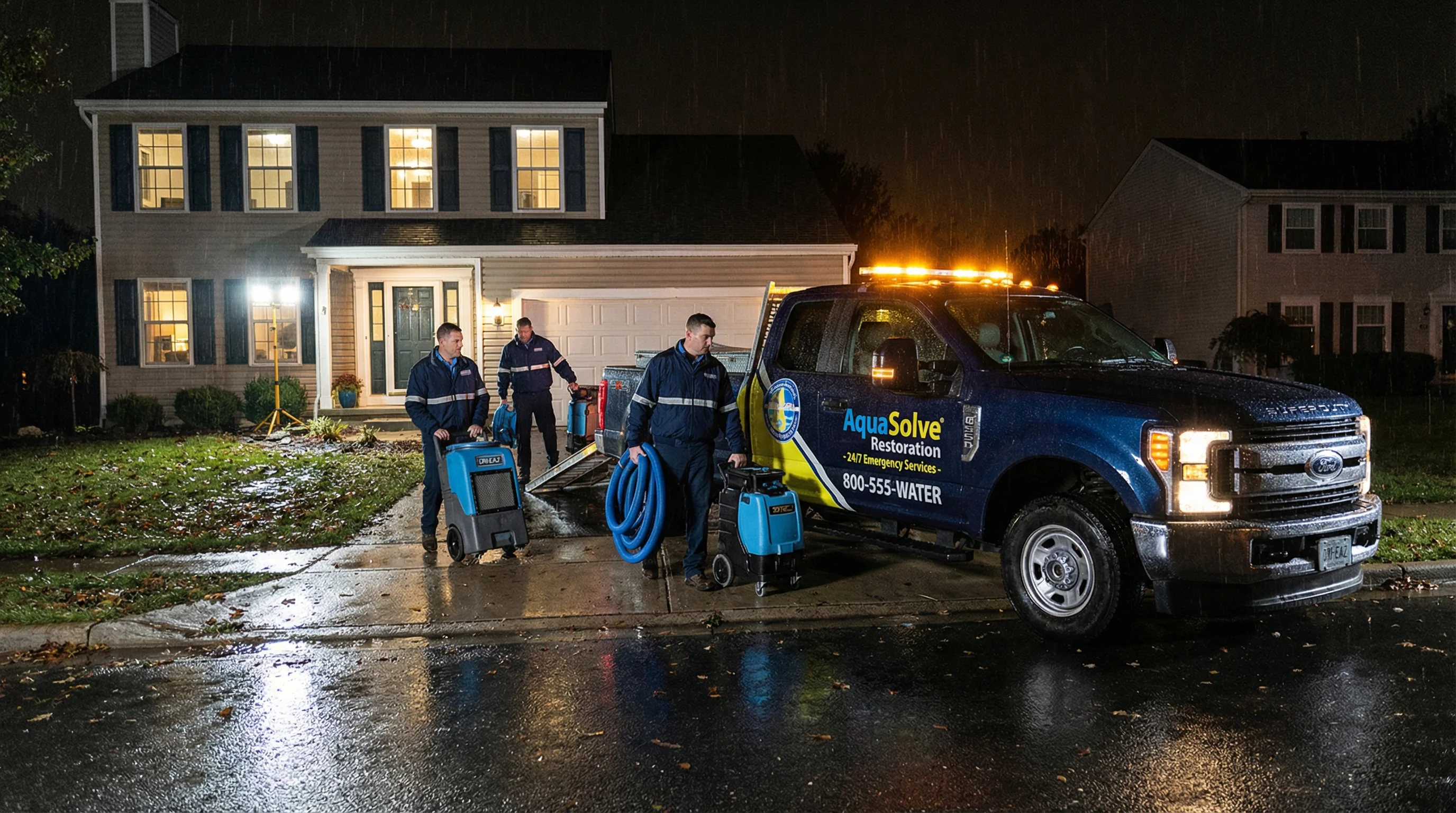
When flooding, burst pipes, or appliance leaks hit, every minute matters. Palm Build delivers 24-hour emergency water removal, structural drying to IICRC S500 standards, and full restoration with one coordinated team across Charlotte NC and South Florida.
Emergency Water Damage Restoration Across FL, NC, and SC
Palm Build restores homes and commercial properties after burst pipes, appliance leaks, and flooding events. We remove standing water, dry hidden moisture, and complete repairs after mitigation. If moisture has already created microbial growth, we coordinate with our mold remediation team to keep scope and timelines clear.
If you are searching for a water restoration service near me in Charlotte NC, the Metrolina area, Palm Beach County, or South Florida, our teams are on call. When structural repairs are needed after drying, we transition directly into reconstruction services so you are not juggling multiple vendors during an emergency.
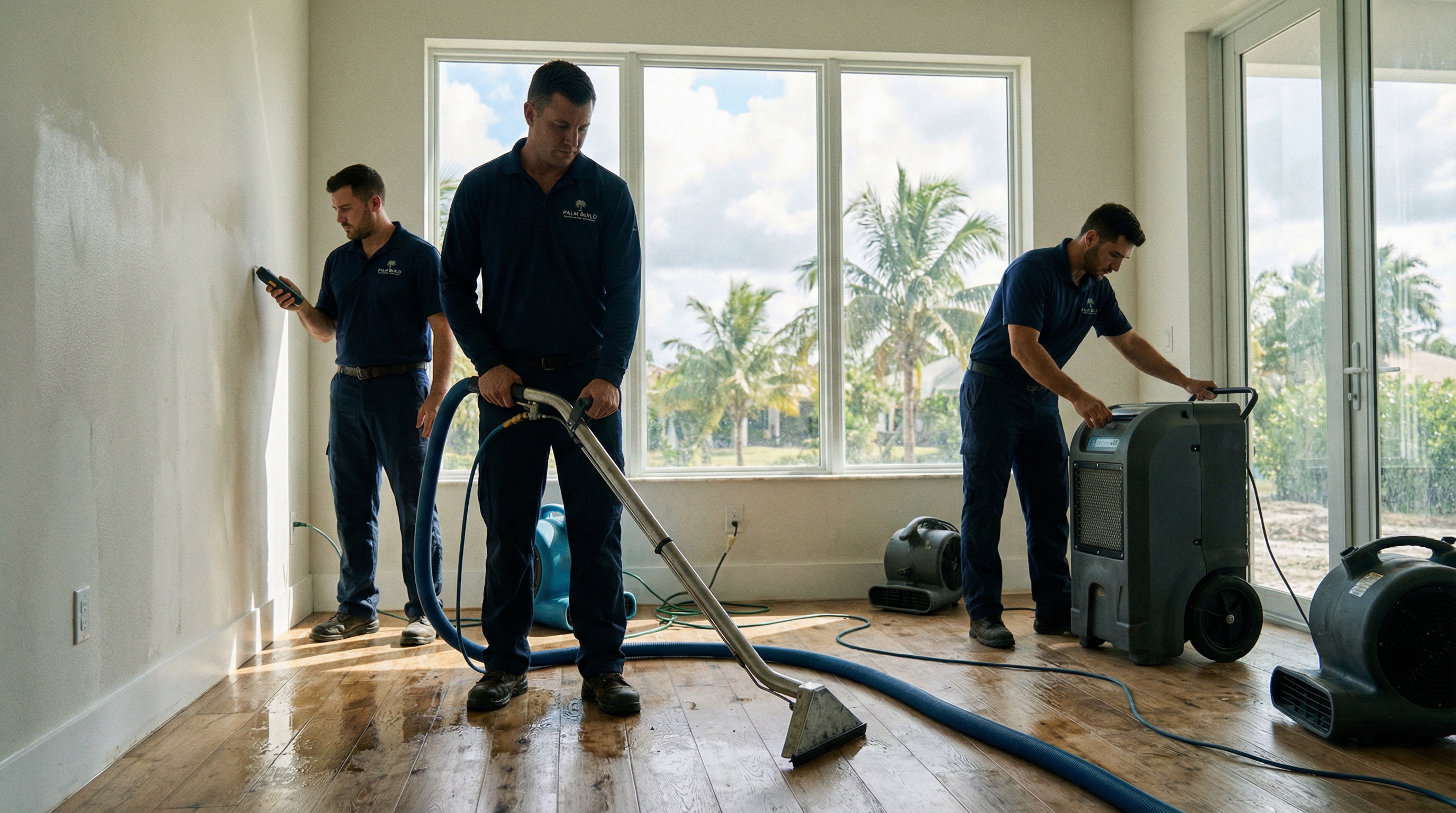
Palm Build dispatches scaled crews to office buildings, hotels, condos, multifamily properties, and HOA-managed buildings. We coordinate phased mitigation with property managers, insurance carriers, and TPAs. Property managers — see our emergency water damage protocol.
500+
Buildings served
Multi-family + commercial
24+
Largest crew
Technicians on single loss
< 60 min
Response window
Charlotte + South FL metros
8 crews
Crews on-site
Simultaneous deployment capacity
Phased extraction, drying, and resident communication protocols that keep occupied units habitable during 2-3 week mitigation cycles.
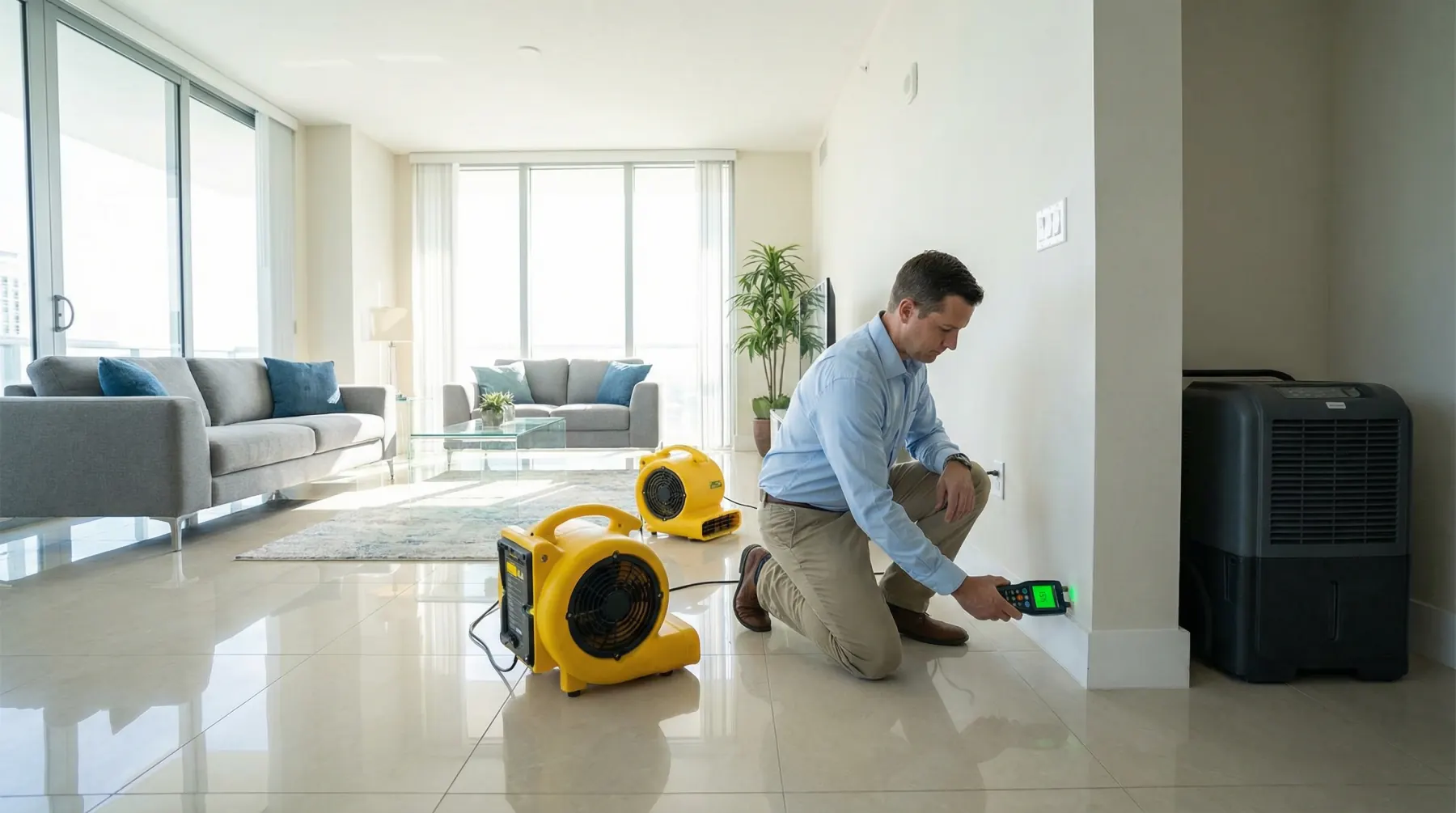
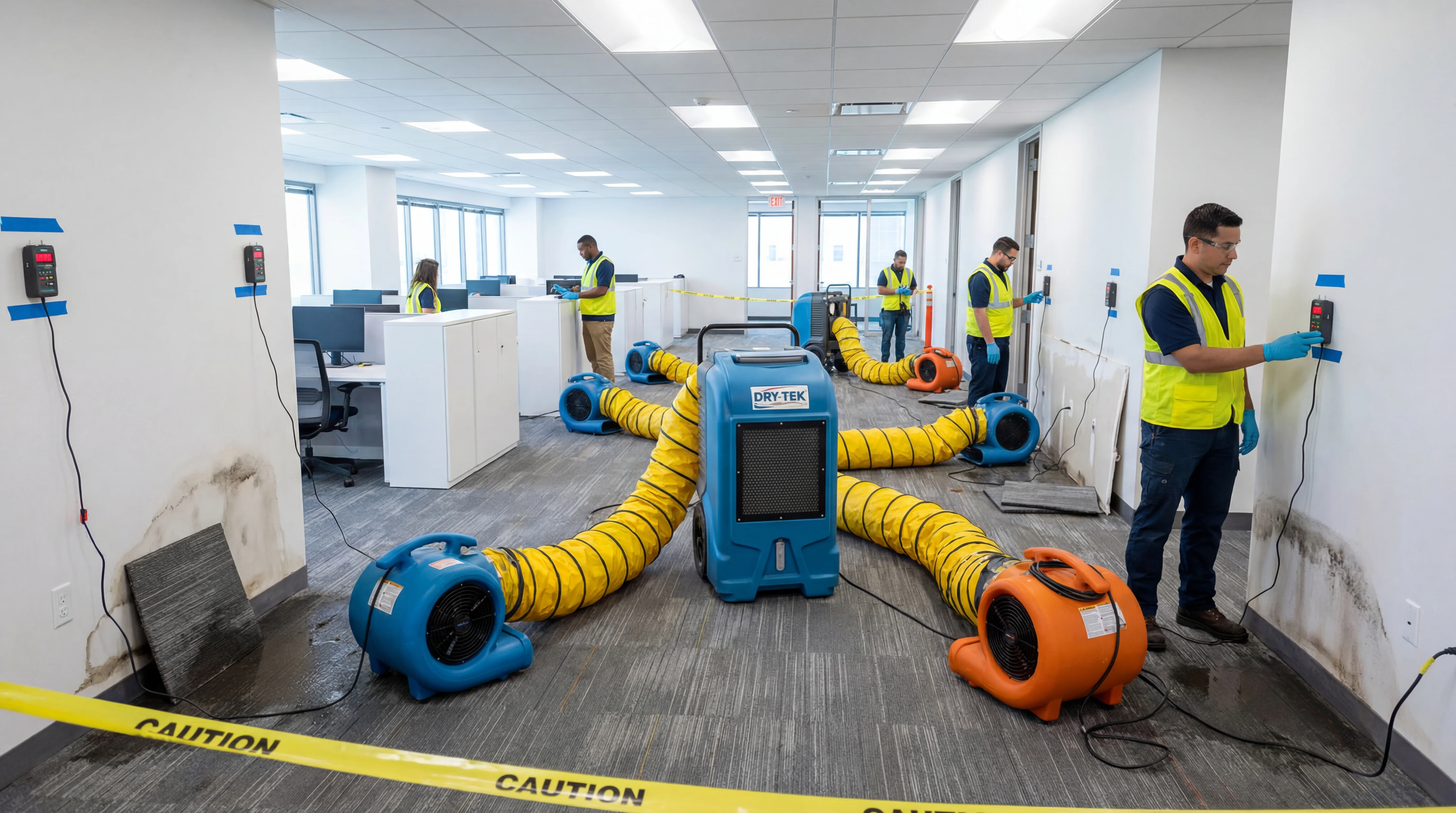
Vertical drying logistics for condo and office towers — equipment staging, elevator coordination, and floor-by-floor moisture mapping.
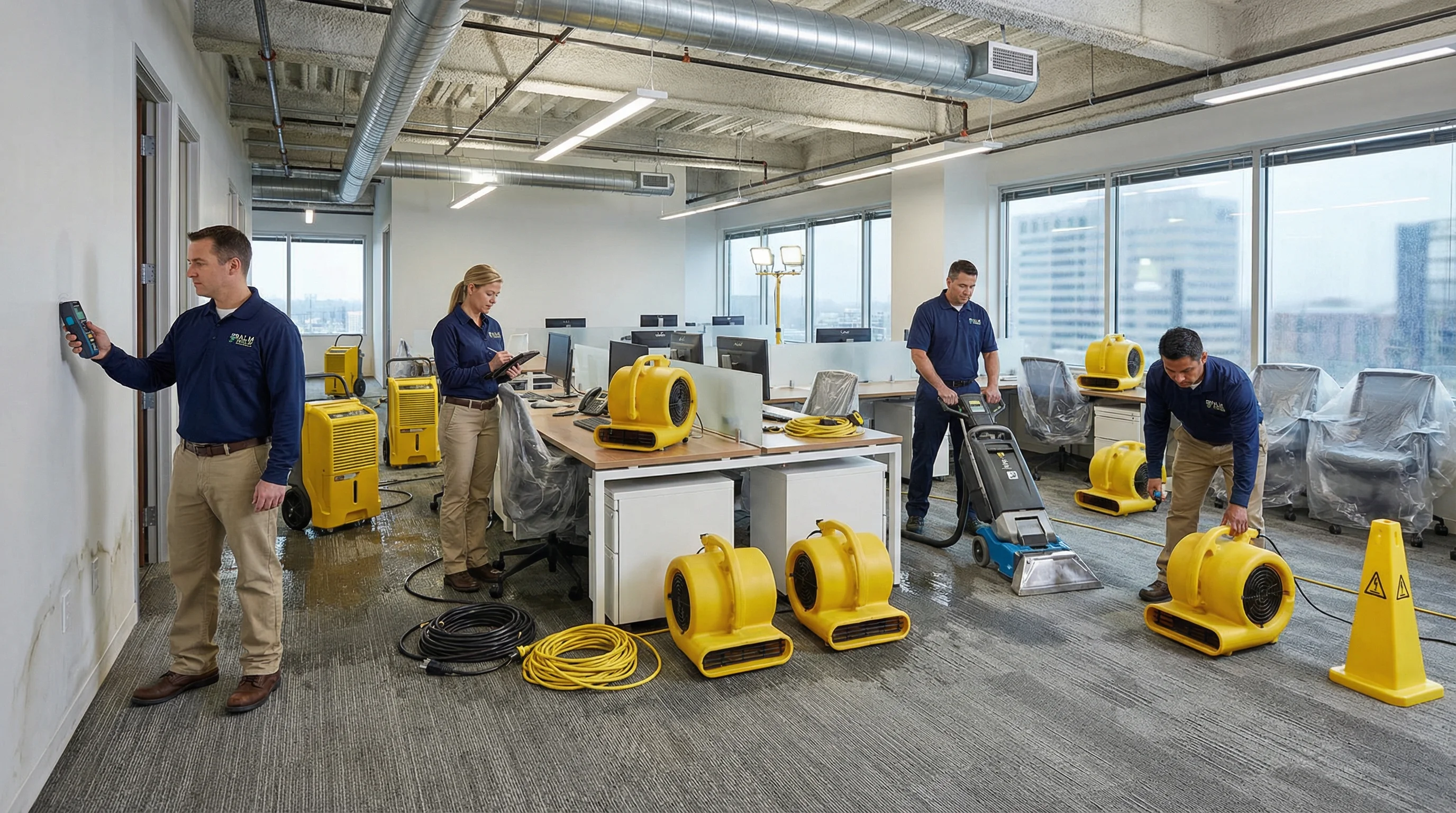
Large-loss truck-mount fleet for office buildings, hotels, retail centers. Documented chain-of-custody for property managers and TPA workflows.
What To Do Right Now
If your home is flooding at 2am, focus on safety, stopping active water, and immediate documentation. Then start emergency water damage restoration before moisture spreads. We dispatch across Charlotte, Metrolina, Palm Beach County, and South Florida.
STEP 1
If water is near outlets, appliances, or a sagging ceiling, turn off power to that zone if safe. Leave unsafe spaces and keep children and pets away.
STEP 2
Shut off the nearest valve or the main line when possible. For active burst pipes, a plumber can stop flow while restoration starts.
STEP 3
Take clear photos and video of affected rooms, contents, and visible water lines. This evidence is critical for your water damage insurance claim.
STEP 4
Professional extraction and structural drying should begin quickly to reduce mold risk and material loss. We are available 24/7.
Do Not Wait To Act
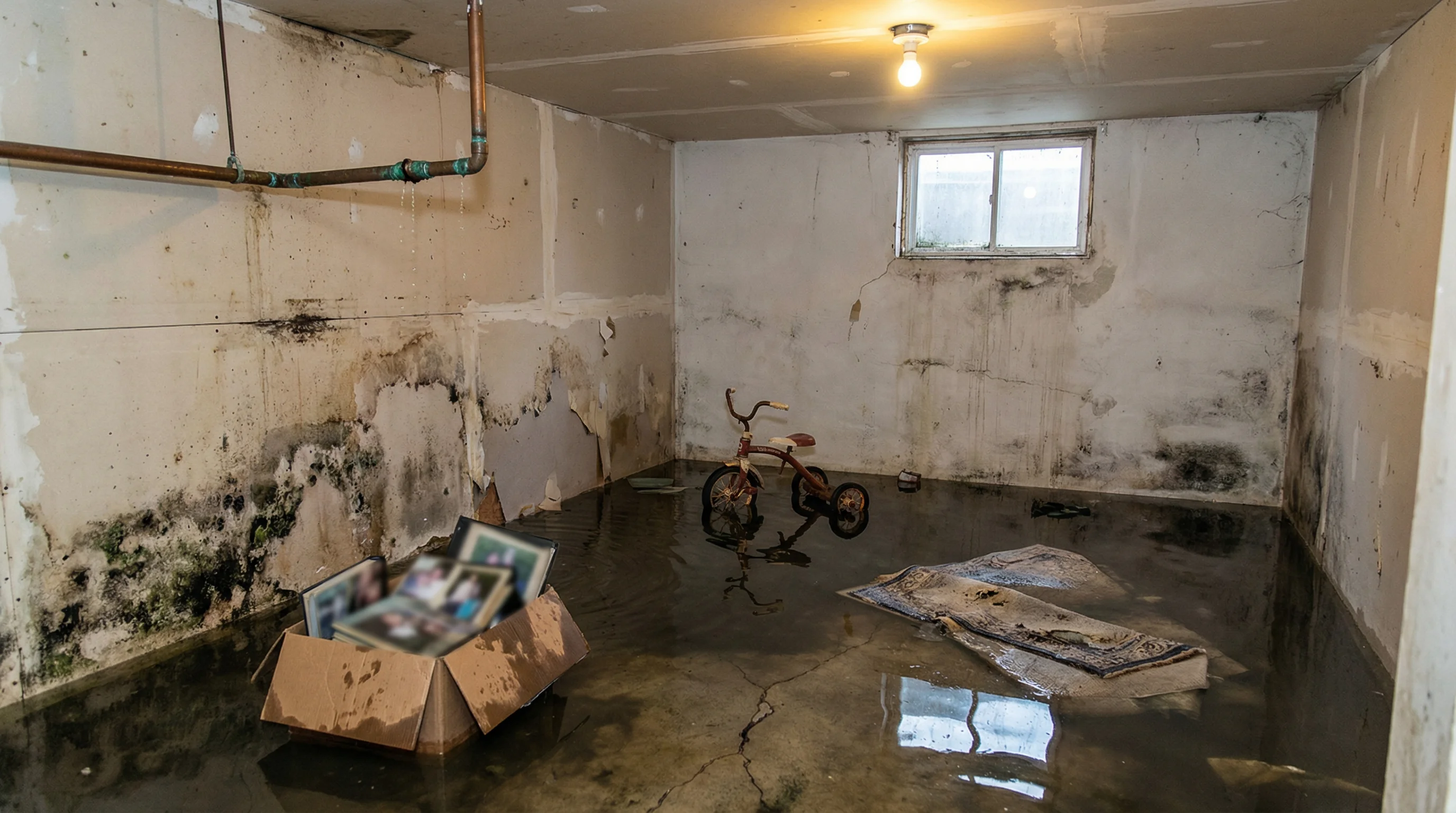
In warm and humid conditions, microbial growth can start quickly. Fast extraction and drying can prevent expensive teardown and longer displacement.
Call now for immediate dispatch in Florida, North Carolina, and South Carolina.
Mold can begin growing on damp materials within 24 to 48 hours, per EPA, CDC, and FEMA guidance. Every hour you wait raises both health risk and total project cost. See our first 24 hours after water damage checklist and how fast mold grows after water damage.
| Window | What's happening | Risk level |
|---|---|---|
| 0-1 hour | Active water present, materials beginning to absorb Action: Stop water source, document with photos, call emergency dispatch | Lowest — clean water still Cat 1 Cost impact: Standard mitigation rates apply |
| 1-6 hours | Drywall wicking begins, carpet pad fully saturated, hardwood swelling starts Action: Truck-mount extraction, equipment deployment, moisture mapping | Low — bacteria not yet multiplying Cost impact: Standard rates; small overtime if night response |
| 6-24 hours | Walls saturated up to wicking line, subfloor water content rising Action: 8-12 air movers + 2-4 LGR dehumidifiers; daily moisture readings begin | Moderate — humid climates can begin sporulating Cost impact: Standard 3-5 day drying cycle |
| 24-48 hours | Insulation compressed, paint blistering, musty smell developing Action: Antimicrobial treatment, possible containment for elevated humidity zones | Significant — EPA/CDC mold growth window opens Cost impact: May add antimicrobial + containment line items |
| 48-72 hours | Drywall losing structural integrity, baseboards warping, hidden growth possible Action: Selective demo of saturated drywall, contents pack-out, expanded containment | High — Cat 1 water can escalate to Cat 2 as bacteria multiply Cost impact: Demo + reconstruction costs added; 30-50% project increase |
| 72 hours - 1 week | Visible mold colonies on damp materials, structural wood at risk Action: Full mold remediation protocol, HEPA air scrubbers, larger demo footprint | Severe — active colonization likely Cost impact: Project cost can double; insurance scrutiny rises |
| 1+ week | Established mold ecosystem, framing damage, possible HVAC contamination Action: Full mold remediation + reconstruction; air quality testing | Critical — potential health impacts for occupants Cost impact: Total restoration cost can triple original estimate |
Federal guidance is unambiguous
The EPA states that if wet or damp areas are dried within 24-48 hours, mold will not grow in most cases. The CDC, FEMA, and the National Flood Insurance Program all echo this window. If you've passed 24 hours, every additional day of delay compounds the project cost — and may complicate your insurance claim. Coordinate mold remediation early when secondary risk is present.
Acting in the golden window keeps your project in standard mitigation pricing.
Our six-step workflow follows IICRC S500 guidance in plain language: inspect, extract, dry, monitor, clean, and restore. This process keeps decisions measurable so your home or business is dried correctly before repairs begin.
Our team arrives quickly to assess the situation, stop active leaks, and protect your personal property from further harm.
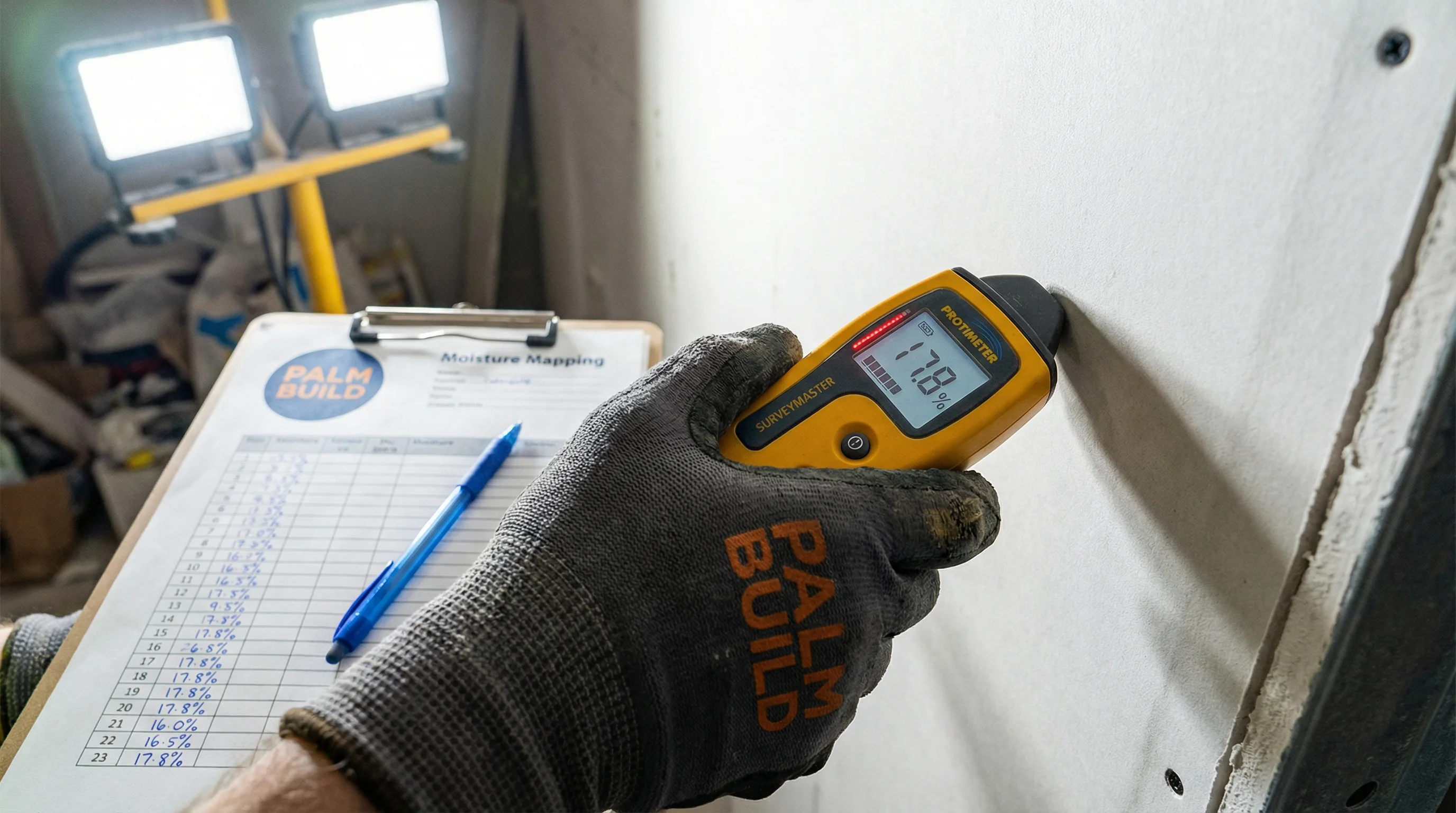
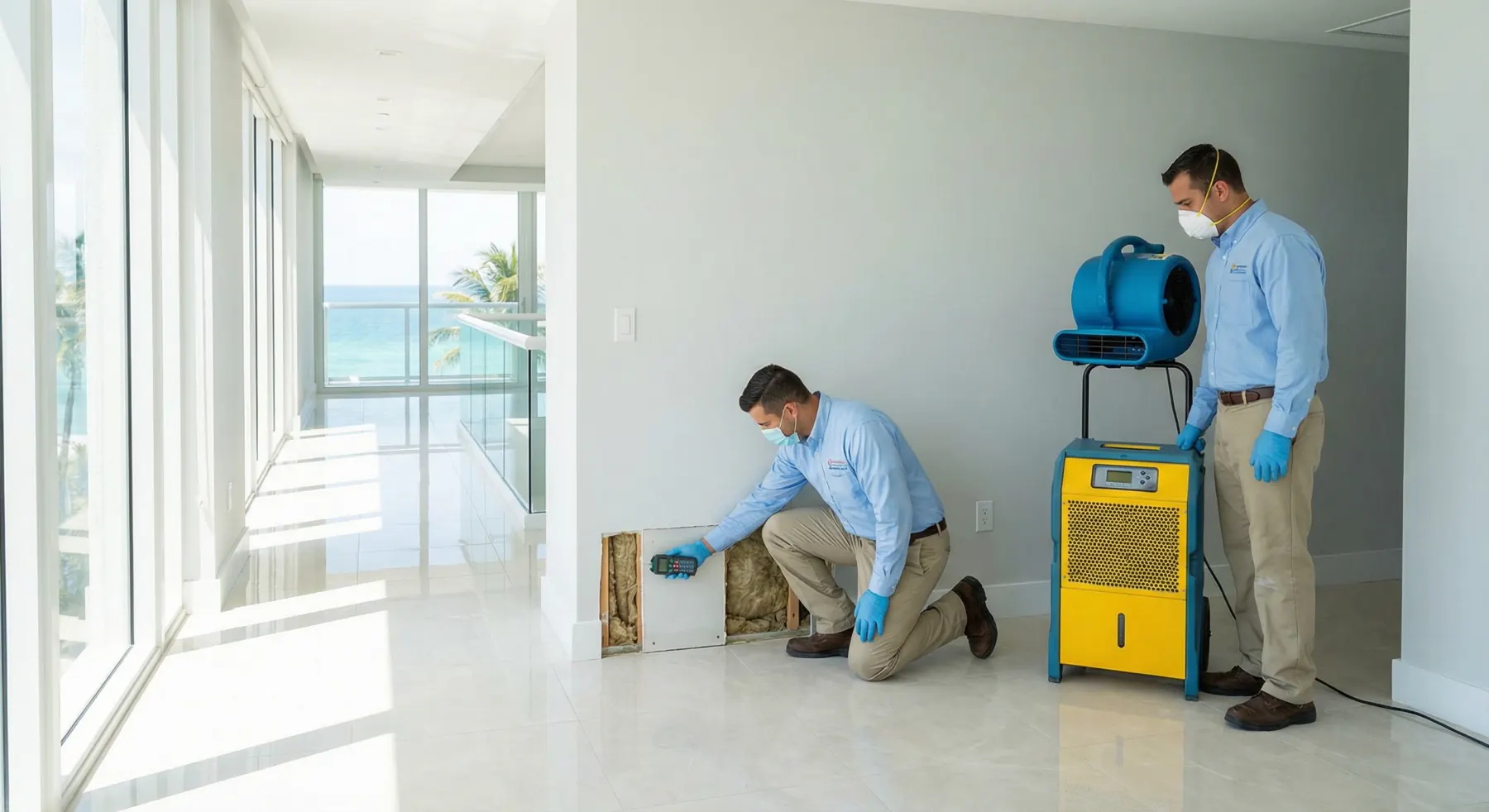
Using moisture meters and thermal imaging, we document all affected areas and create a detailed plan for your home or business.
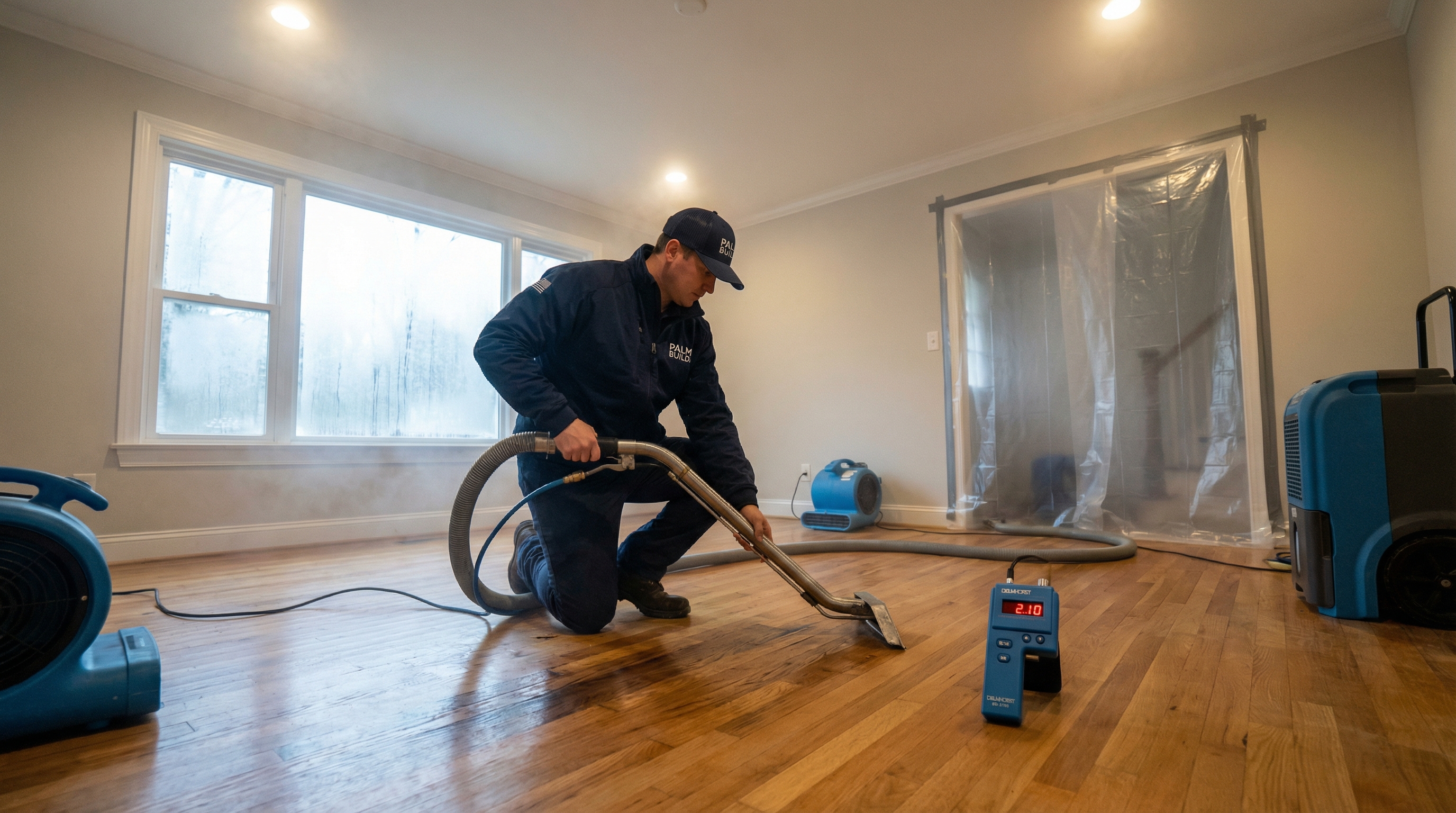
Powerful pumps and vacuums remove standing water and excess water from floors, carpets, and porous materials.
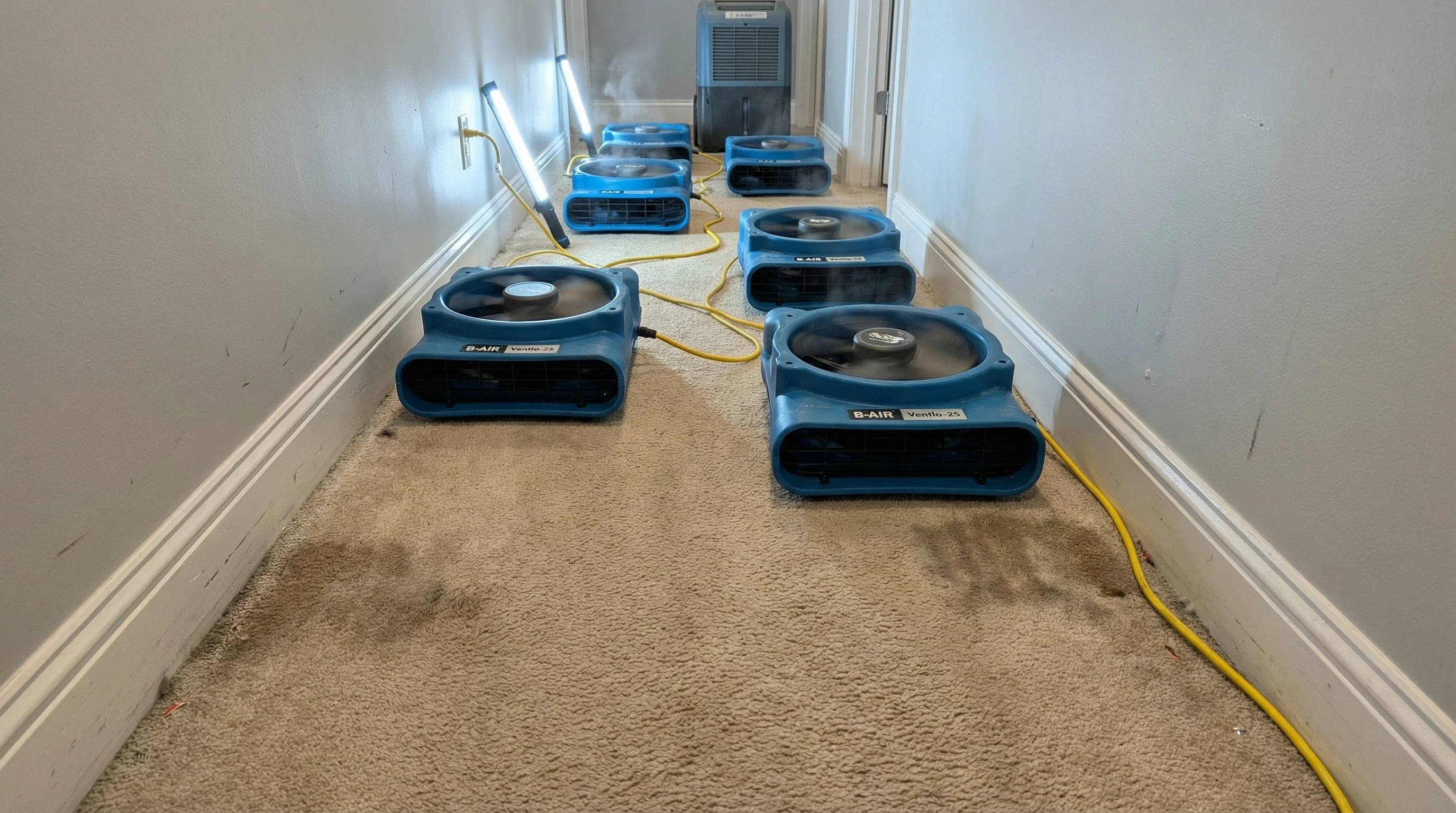
Industrial dehumidifiers and air movers are positioned strategically. The drying process continues until all moisture is eliminated.
Daily readings verify the drying process is progressing correctly, ensuring complete moisture removal and mold prevention.
Once verified dry, we complete all necessary repairs and restoration—from drywall replacement to full reconstruction.
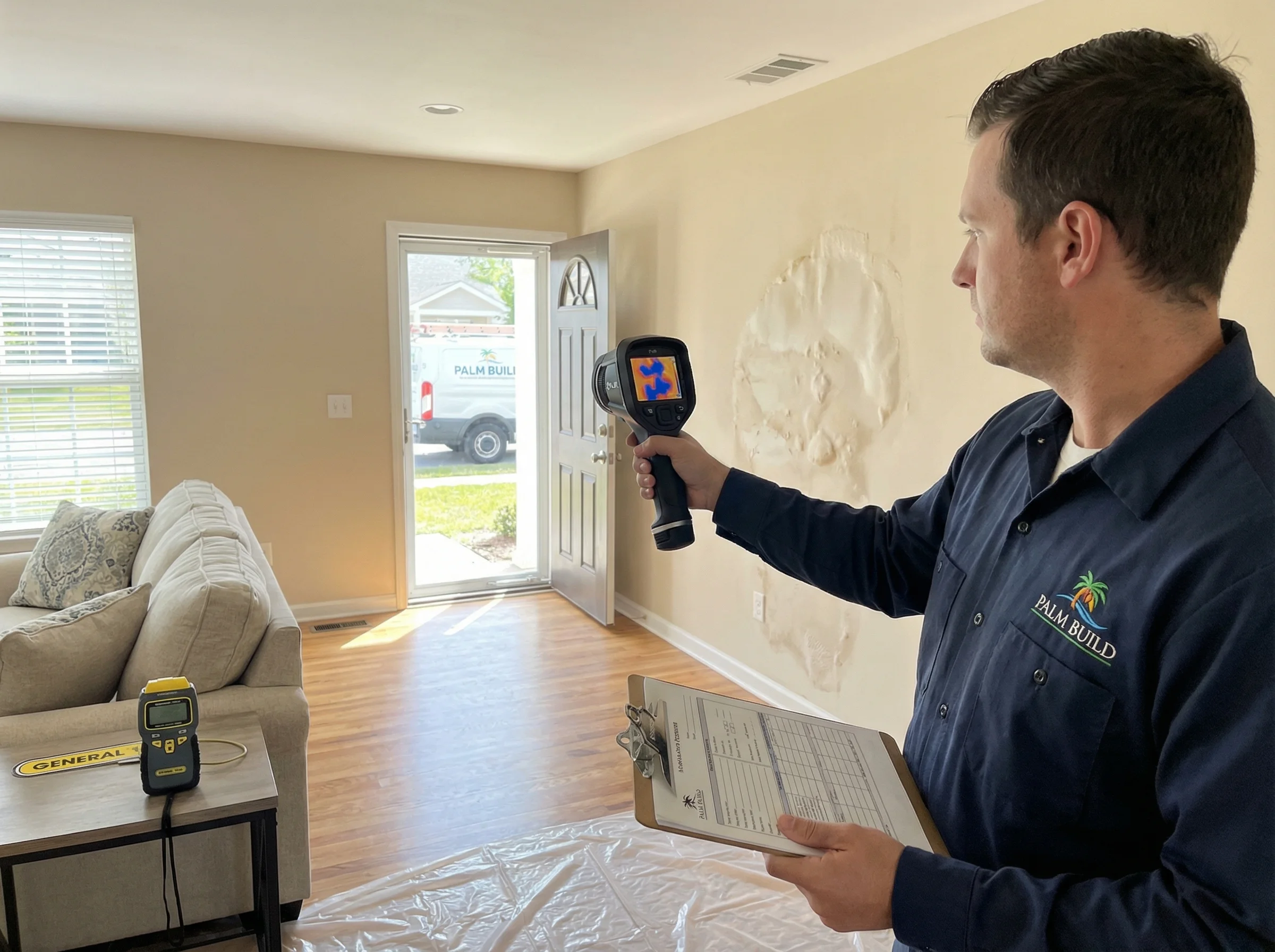
Our trained technicians follow industry protocols that meet your insurance company's documentation requirements while ensuring complete drying of all porous materials.
Quick response minimizes damage to your home or business
Industrial extraction removes excess water from all surfaces fast
The drying process is monitored daily with precise moisture readings
Complete drying and antimicrobial treatments protect your property
*Timeline varies based on severity and affected materials. Minor issues may resolve in 3-5 days, while severe flood damage can take 2-4 weeks for complete repairs and restoration.
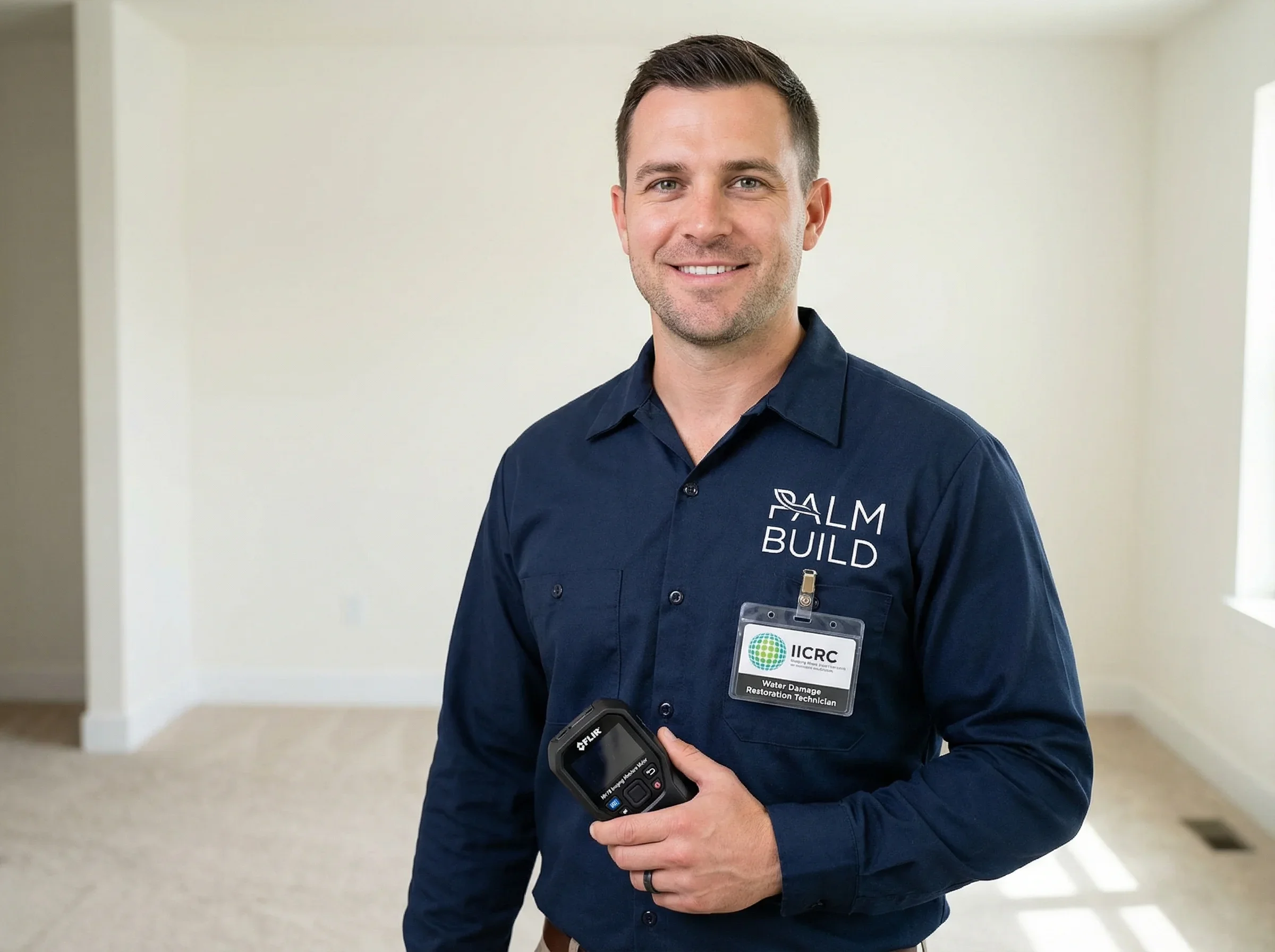
The IICRC S500 Standard for Professional Water Damage Restoration is the ANSI-accredited reference your insurance adjuster expects every restoration company to follow. It defines water by category (contamination level, drives PPE and cost) and by class (absorption extent, drives equipment and time). For deeper detail see our category and class breakdown.
Category 1
$3.00 - $4.25 / sq ft
Common sources
Burst supply lines, melting ice, broken water heaters, sink overflows from clean source
Required PPE
Standard work gloves, eye protection, basic respiratory if extended exposure
Handling protocol
Direct extraction, dry-in-place options for many materials, minimal demolition expected
Demo trigger
Materials still wet after 5 days of drying, structural saturation above safe EMC
Category 2
$4.00 - $6.50 / sq ft
Common sources
Dishwasher overflow, washing machine discharge, toilet overflow (urine only), failed sump pumps
Required PPE
Nitrile gloves, eye protection, N95 respirator minimum, disposable coveralls in larger areas
Handling protocol
Antimicrobial treatment required, porous materials in direct contact typically removed
Demo trigger
Carpet pad always removed; drywall removed if saturation exceeds 24 hours
Category 3
$7.00 - $12.00 / sq ft
Common sources
Sewage backup, river / storm flooding, toilet overflow with feces, standing water 72+ hours
Required PPE
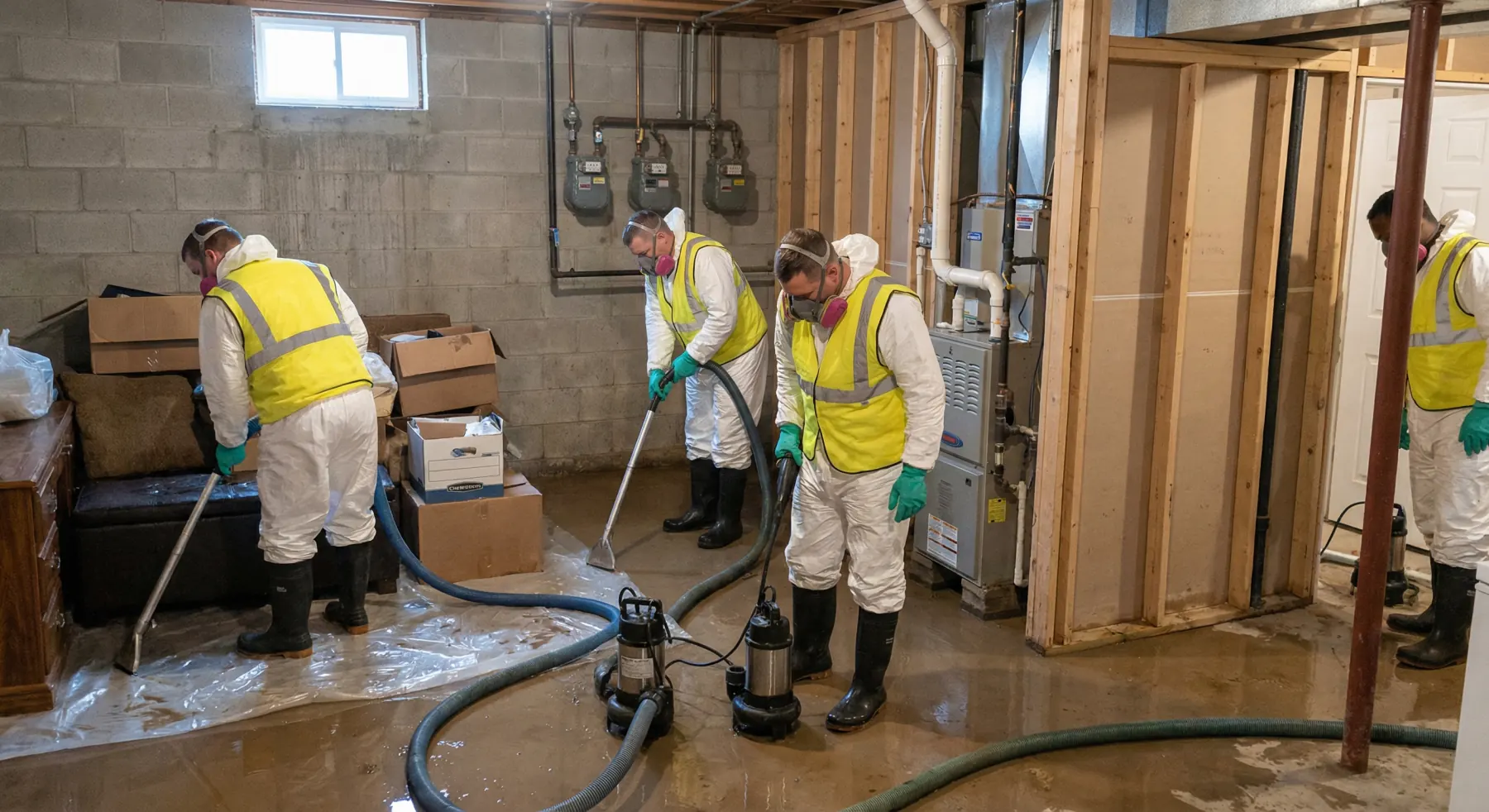
Full PPE — Tyvek suit, full-face respirator, double gloves, rubber boots, decontamination station
Handling protocol
Aggressive demolition standard, biocide treatment, contained work zone with HEPA air scrubbers
Demo trigger
All porous materials in affected zone removed regardless of saturation level
Where category measures contamination, class measures how much water the materials actually absorbed. A Class 4 project on Cat 1 clean water can still cost more than a Class 1 project on Cat 3 black water — because saturation drives equipment day-count, and equipment day-count drives the bulk of the bill.
| Class | Saturation extent | Equipment | Drying time |
|---|---|---|---|
| Class 1 | Minimum — only part of one room affected, low evaporation surfaces | 1 dehumidifier + 2-4 air movers | 2-3 days drying |
| Class 2 | Entire room, carpet and pad saturated, water wicked up walls less than 24" | 1-2 dehumidifiers + 6-10 air movers | 3-4 days drying |
| Class 3 | Greatest amount of water absorption — ceiling, walls, insulation, subfloor | 2-4 dehumidifiers + 10-16 air movers + injection drying | 4-7 days drying |
| Class 4 | Specialty drying — hardwood, plaster, concrete, dense materials with deep saturation | Desiccant dehumidifiers + heat drying + extended monitoring | 7-14+ days drying |
Restoration is measured, not improvised. Equipment day-count is the biggest hidden cost driver on most projects, and "dry" has a specific quantitative meaning under IICRC S500. Use our drying time calculator to estimate your project window.
| Equipment | Specification | Purpose | When deployed |
|---|---|---|---|
| Truck-mount extractor | 12-20 GPM at 200+ PSI | Bulk water removal — pulls 10x more water than portable units in the first hour | Always first on Cat 1/2 events. Reduces drying time by 30-40% vs portable extraction. |
| High-velocity air mover | 2,500-3,500 CFM each | Forces evaporation off saturated surfaces by stripping the boundary layer | Mid-size loss = 8-12 air movers. Class 3 loss = 12-16+. Placed at 10-16ft intervals. |
| LGR / desiccant dehumidifier | 120-180 PPD (low-grain refrigerant); 600+ PPD (desiccant) | Pulls moisture from the air so air movers can keep evaporating from materials | LGRs for most residential. Desiccants for cold conditions, hardwood, or large commercial. |
| Pinless moisture meter | 0.75" depth, ±0.5% MC accuracy | Maps moisture without damaging finishes; tracks daily drying progress | Daily readings on every wall, floor, and structural element until dry standard met. |
| FLIR thermal imaging camera | 320×240 resolution, ±2°C accuracy | Detects evaporative cooling patterns that reveal hidden moisture in walls and ceilings | Initial assessment + final clearance scan. Catches what visual inspection misses. |
| Material | Dry standard target | Monitoring interval | Demo trigger |
|---|---|---|---|
| Drywall (gypsum) | 0.5% MC or below ambient + 4% | Every 24 hours | No measurable drop after 72h of equipment |
| Hardwood flooring | 6-9% MC depending on species and climate | Every 24 hours | Cupping > 1/16" after drying or MC stuck above 12% |
| Concrete subfloor | Below 4 lbs/1000 sq ft (calcium chloride test) | Every 48-72 hours | Rare — concrete typically dries with extended desiccant |
| Wood framing | 15% MC or below | Every 24 hours | Visible decay or fungal growth on surface |
Understanding Water Damage
Whether you're dealing with a burst pipe, flood damage, or excess water from any source, our water damage restoration company is equipped to handle it all—for your home or business. Learn more about water damage categories and drying classes.
From sanitary sources like burst pipes, supply lines, or rainwater. Safe at origin but can degrade quickly.
Contains contaminants that may cause illness. Includes discharge from washing machines, dishwashers, or toilets with urine.
Highly contaminated water containing pathogens and toxins. Flood damage from storms or sewage backup falls into this category.
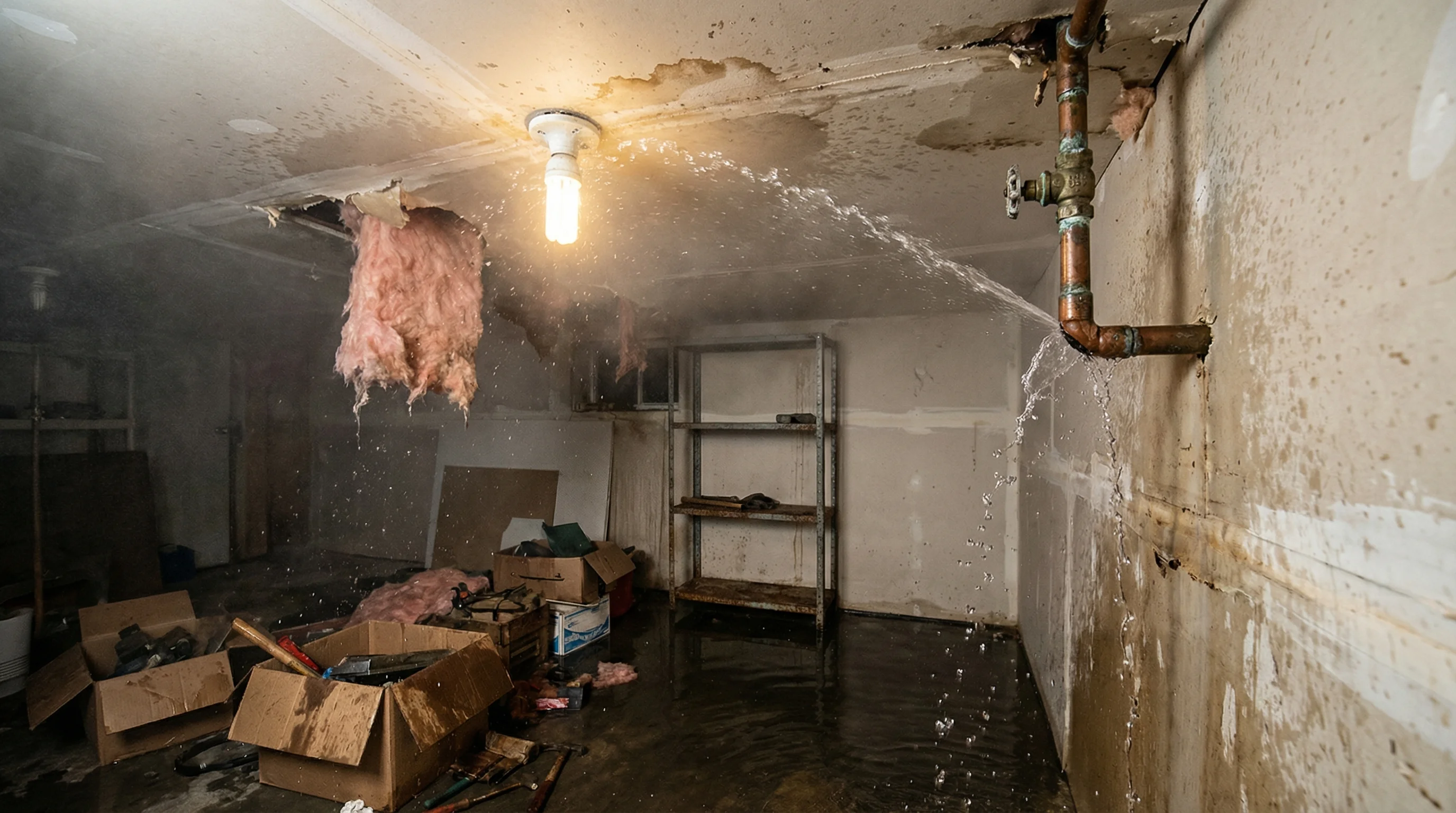
Frozen pipes, aging plumbing, or water hammer can cause sudden pipe failures
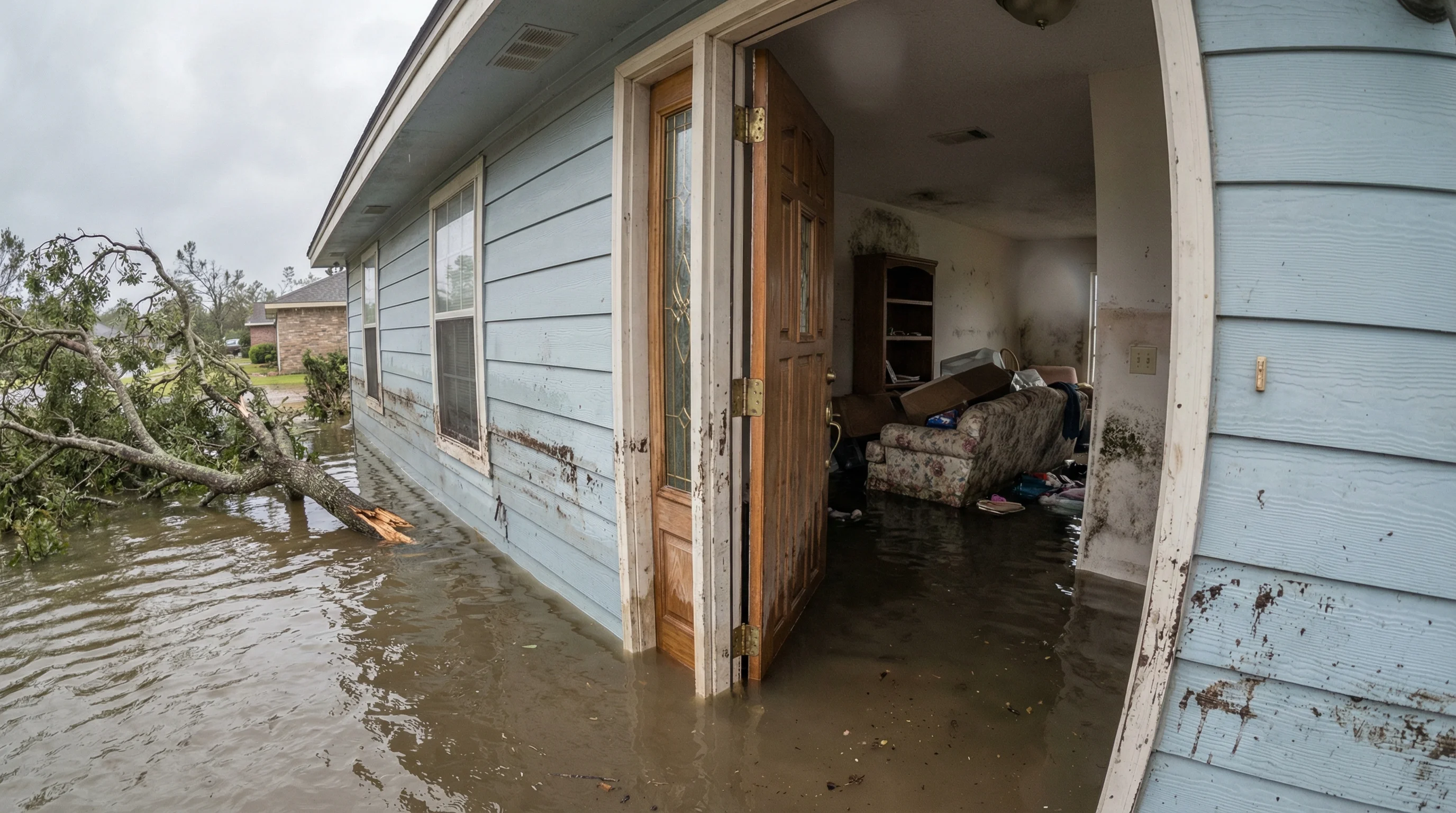
Storm surges, flash floods, or rising water tables that invade your property
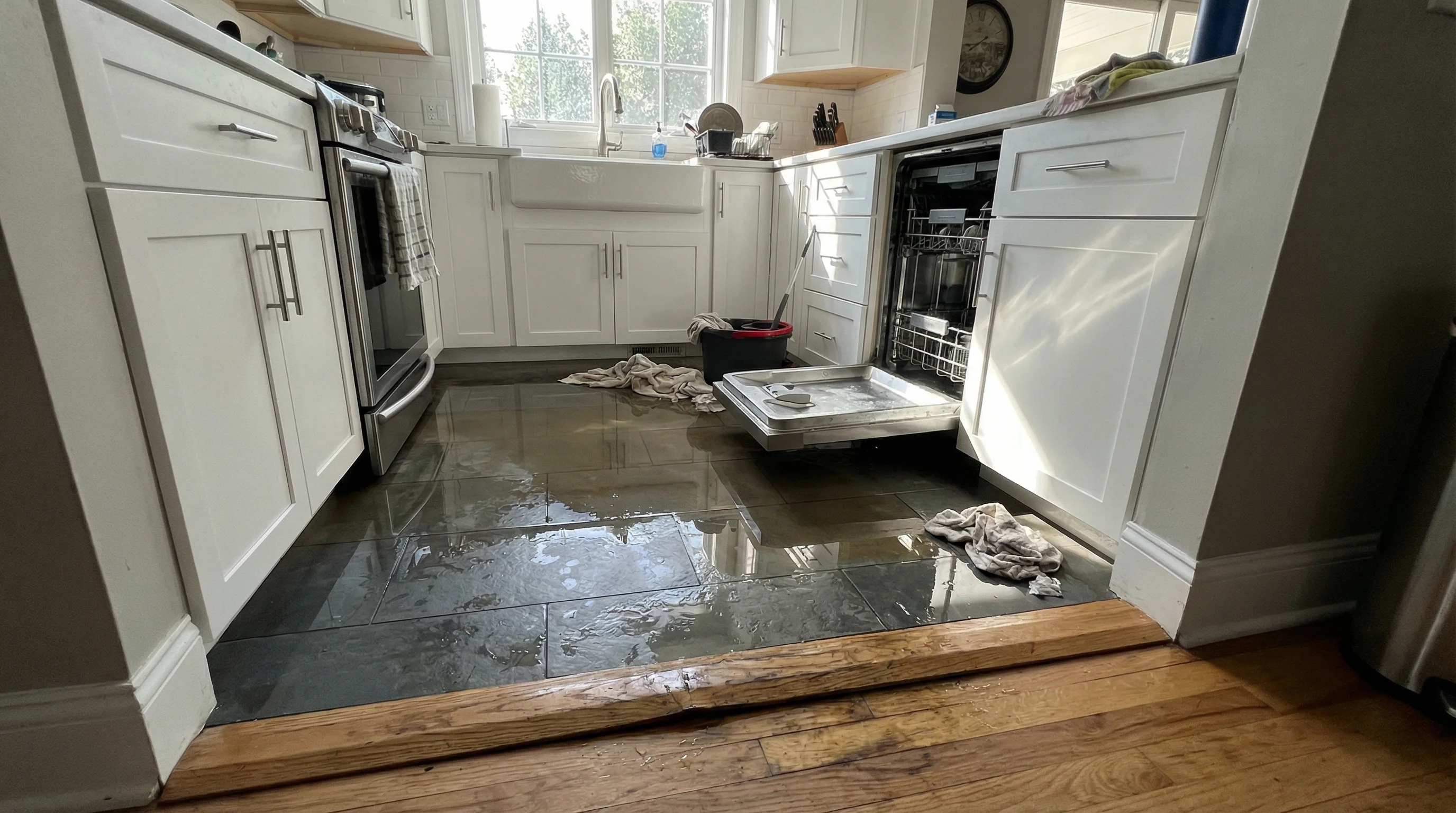
Water heaters, washing machines, and dishwashers can leak or burst unexpectedly
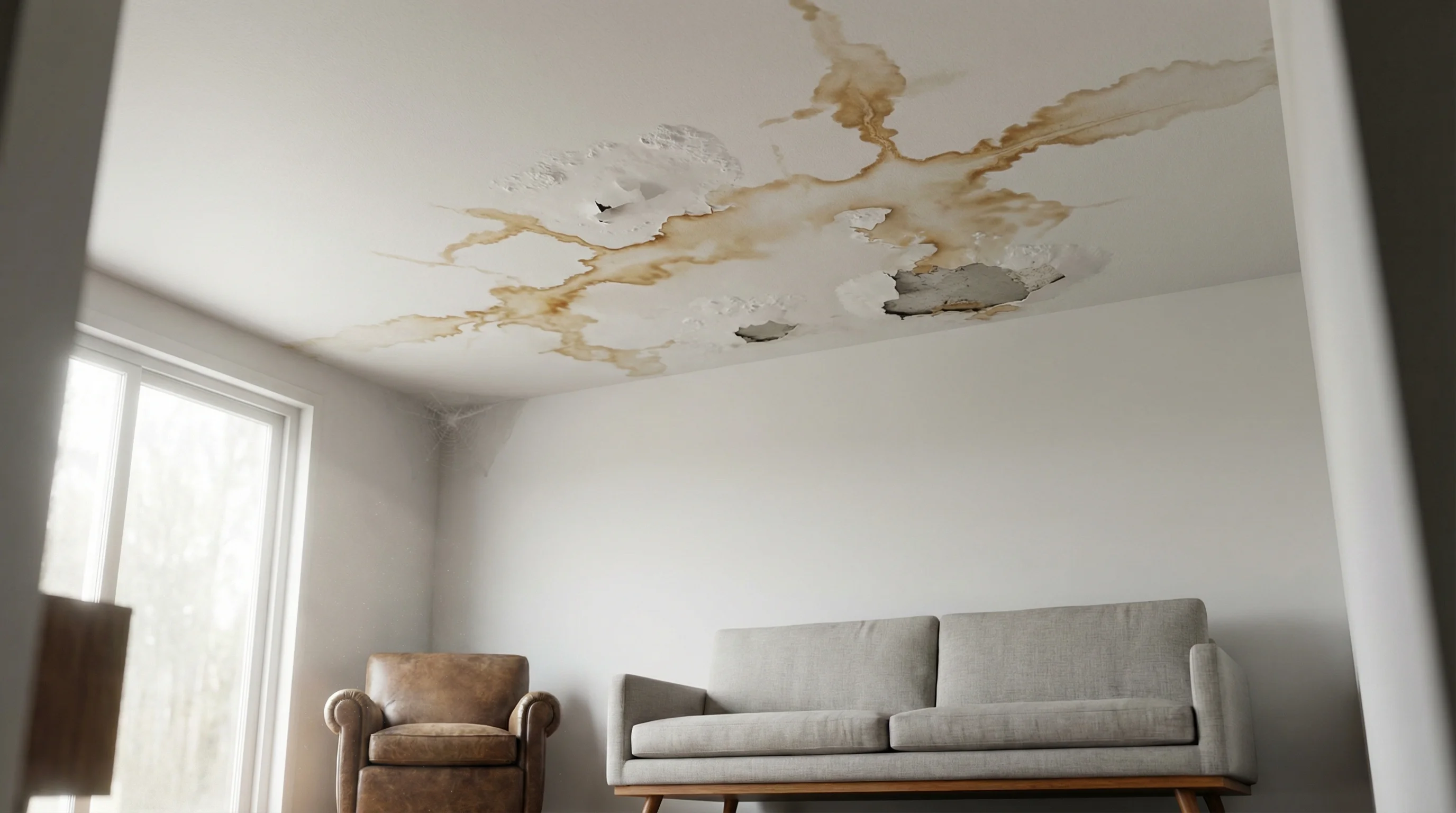
Storm damage, failing seals, or clogged gutters allow water intrusion
Excess water affects different materials in different ways. Porous materials like drywall, carpet, and wood absorb moisture quickly, while your personal property—from furniture to electronics—requires specialized drying and cleaning techniques.
Most homeowners pay $1,384 to $6,384 for water damage restoration in 2026. Mitigation runs $3-$7.50 per sq ft; full repair adds $20-$37 per sq ft. Cost depends on water category, project size, and how fast you act. See our 2026 cost breakdown for the full guide.
National average
$3,867
Typical 2026 water damage total
Per sq ft (mitigation)
$3-$7.50
Extraction, drying, sanitation
Mold risk window
24-48 hrs
EPA, CDC, FEMA guidance
| Cost scope | What it includes | 2026 price range |
|---|---|---|
| Mitigation (dry-out) | Water extraction, dehumidification, antimicrobial, moisture monitoring | $1,384 - $6,384 total ($3-$7.50/sq ft) |
| Repair (build-back) | Demo, drywall, flooring, paint, trim replacement | $20 - $37 / sq ft (basic scopes) |
| Full restoration (both) | Mitigation plus complete repair and reconstruction | $5,000 - $16,000+ common |
Burst supply lines, rainwater before contamination, melting ice
Mitigation
$3.00 - $4.25 / sq ft
Appliance overflow, dishwasher/washing machine, toilet (urine), sump failure
Mitigation
$4.00 - $6.50 / sq ft
Sewage backup, river flooding, storm surge, standing water 72+ hours
Mitigation
$7.00 - $12.00 / sq ft
| Project size | Low | Expected | High |
|---|---|---|---|
| Single room (under 200 sq ft) | $1,000 | $2,000 | $3,500 |
| Multiple rooms (200-500 sq ft) | $2,500 | $4,500 | $7,000 |
| Whole floor (500-1,200 sq ft) | $5,000 | $8,400 | $14,000 |
| Basement / crawl event | $3,000 | $6,500 | $12,000 |
| Whole-home / major loss | $10,000 | $18,000 | $30,000+ |
Florida
$4,606 ($1,962-$7,250)
Highest US humidity extends drying cycles; mold risk on every loss
North Carolina
$2,328 / $8,407 avg
Winter freeze events spike burst pipe season; crawl space exposure
South Carolina
$5,000 - $13,000
45+ tropical landfalls 1851-2024; humid coastal + upstate variance
Sources: Tampa, Charlotte, and Raleigh metro averages from major 2026 cost publishers. See the full 2026 water damage cost guide for source links and methodology.
Get your project range in 60 seconds
Use our calculator or call for a free on-site moisture inspection
Climate And Regional Considerations
The same leak behaves differently in humid South Florida versus winter conditions in the Carolinas. Our drying strategy, equipment mix, and monitoring cadence adapt by climate and local response conditions in markets like Charlotte and Palm Beach County.
Humidity + hurricane surge risk
Search intent: water mitigation services palm beach fl
Freeze season + storm cycles
Search intent: water damage restoration service charlotte nc
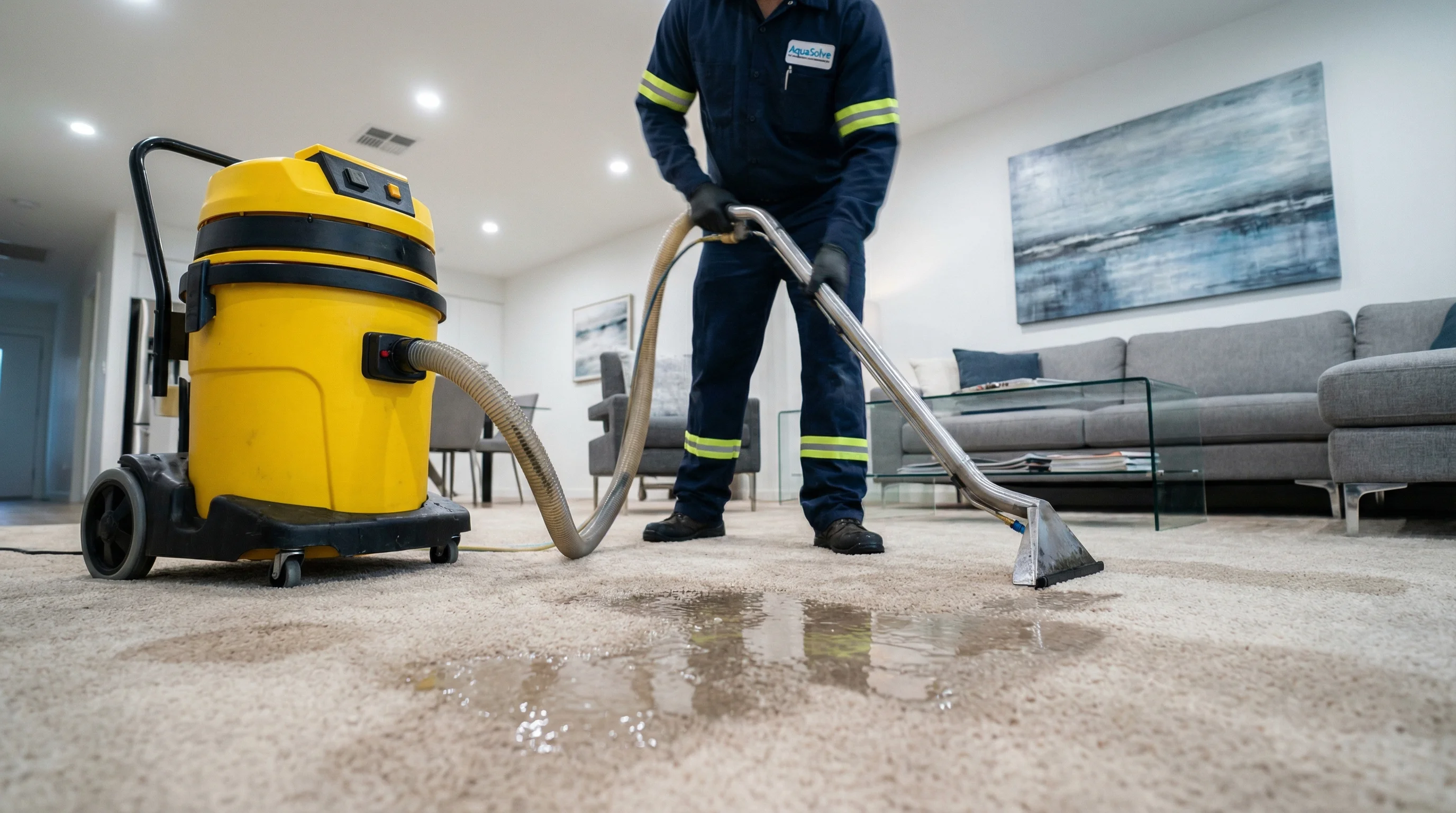
Coastal storms + winter pipe exposure
Search intent: water restoration services south carolina
For state-focused response details, see South Florida water restoration and Charlotte NC water restoration.
For storm impact planning, review our storm and hurricane damage guide. For chronic moisture in lower levels, see crawl space cleanup services. If your building is commercial, use our commercial restoration team for large-footprint water losses.
Different climates produce different damage patterns. A burst pipe is rare in Tampa but routine in Charlotte. A hurricane surge is rare in Raleigh but common across the SC coast. Knowing your local risk profile is the first step in matching insurance coverage to actual exposure. See Raleigh flood-prone neighborhoods and Wilton Manors flooding patterns.
| Risk type | Florida | North Carolina | South Carolina | Insurance treatment |
|---|---|---|---|---|
| Hurricane wind / surge | Very high | High (coast) | Very high | NFIP flood policy required for surge; HO covers wind-driven rain |
| Inland river / flash flood | High | High | Moderate | NFIP flood policy required; HO does NOT cover |
| Burst pipe (winter freeze) | Very low | High | Moderate | Sudden burst typically covered under HO-3 |
| HVAC condensate / leak | Very high | Moderate | High | Sudden malfunction typically covered; gradual leak excluded |
| Roof leak (storm) | Very high | High | High | Wind-driven rain through roof opening typically covered |
| Sewer / drain backup | High | Moderate | Moderate | Requires separate sewer backup endorsement |
#1
In US humidity; mold risk on every loss
1-year claim notice deadline; state-licensed mold pros required
40°F
Charlotte avg winter temp drives burst pipe season
NC DOI: document, temporary repairs only, contact insurer immediately
45
Tropical landfalls 1851-2024 on SC coast
Most claimants get adjuster contact within ~48 hours of reporting
Why Professional Restoration Beats DIY
DIY can help with very small clean-water incidents. Once multiple rooms, hidden moisture, or contamination are involved, professional mitigation lowers risk and shortens recovery.
Commercial extraction and dehumidification remove moisture quickly from visible and hidden zones.
We use moisture meters and thermal imaging to verify dryness before repairs begin.
Category 2 and 3 losses require proper containment, PPE, and controlled material removal.
Photo logs and moisture records support smoother insurance review and reimbursement.
After drying is complete, we can transition directly into reconstruction services. For multi-unit or business properties, we coordinate with commercial restoration workflows to reduce downtime.
See the dramatic difference our professional water damage restoration services make. Drag the slider to reveal the transformation.
Ready to restore your property?
Get a Free EstimateReal Palm Build response work — emergency extraction, structural drying, claim documentation, and full restoration across Florida and the Carolinas. Every project follows IICRC S500 protocols with daily moisture mapping.
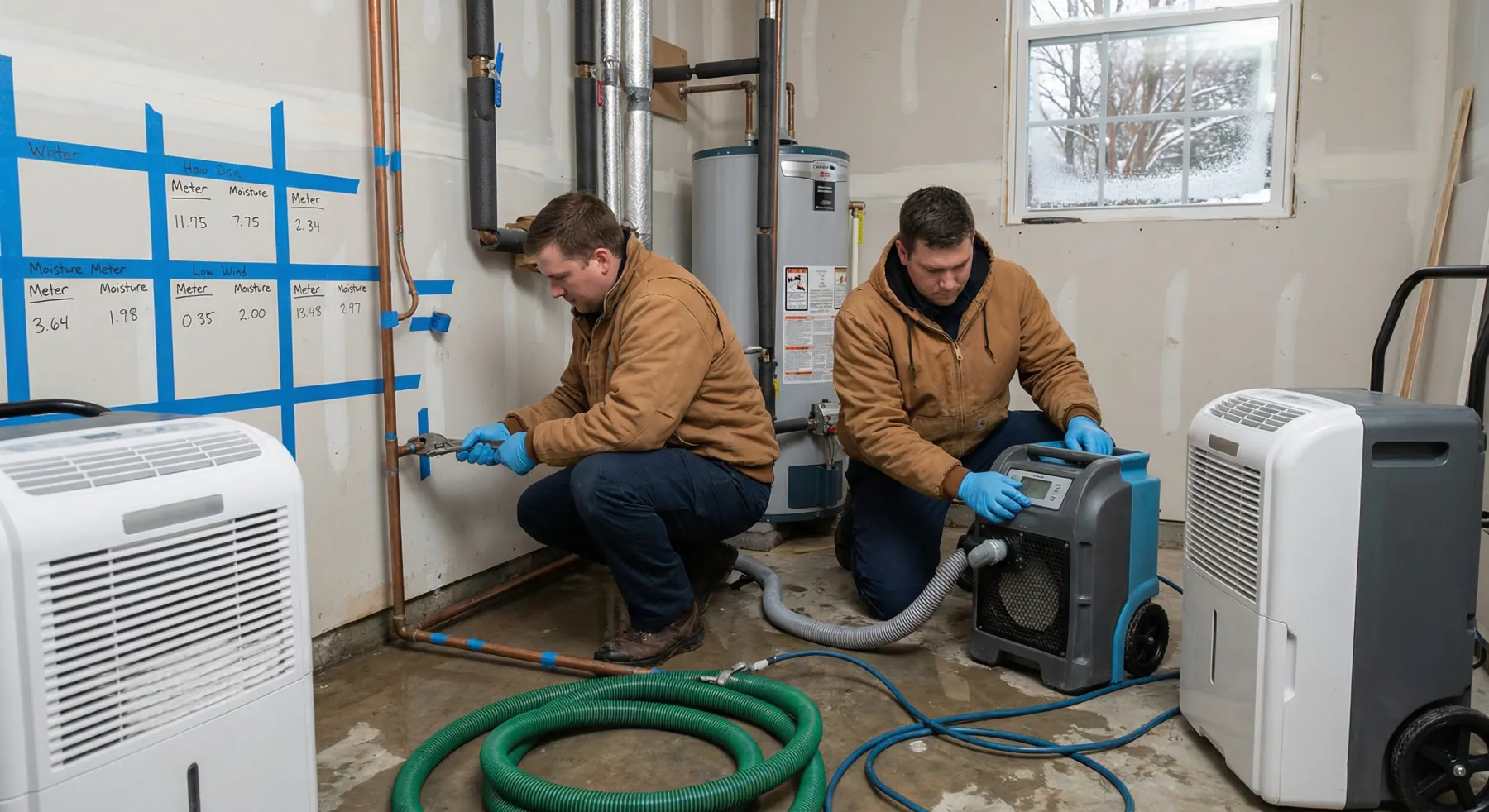
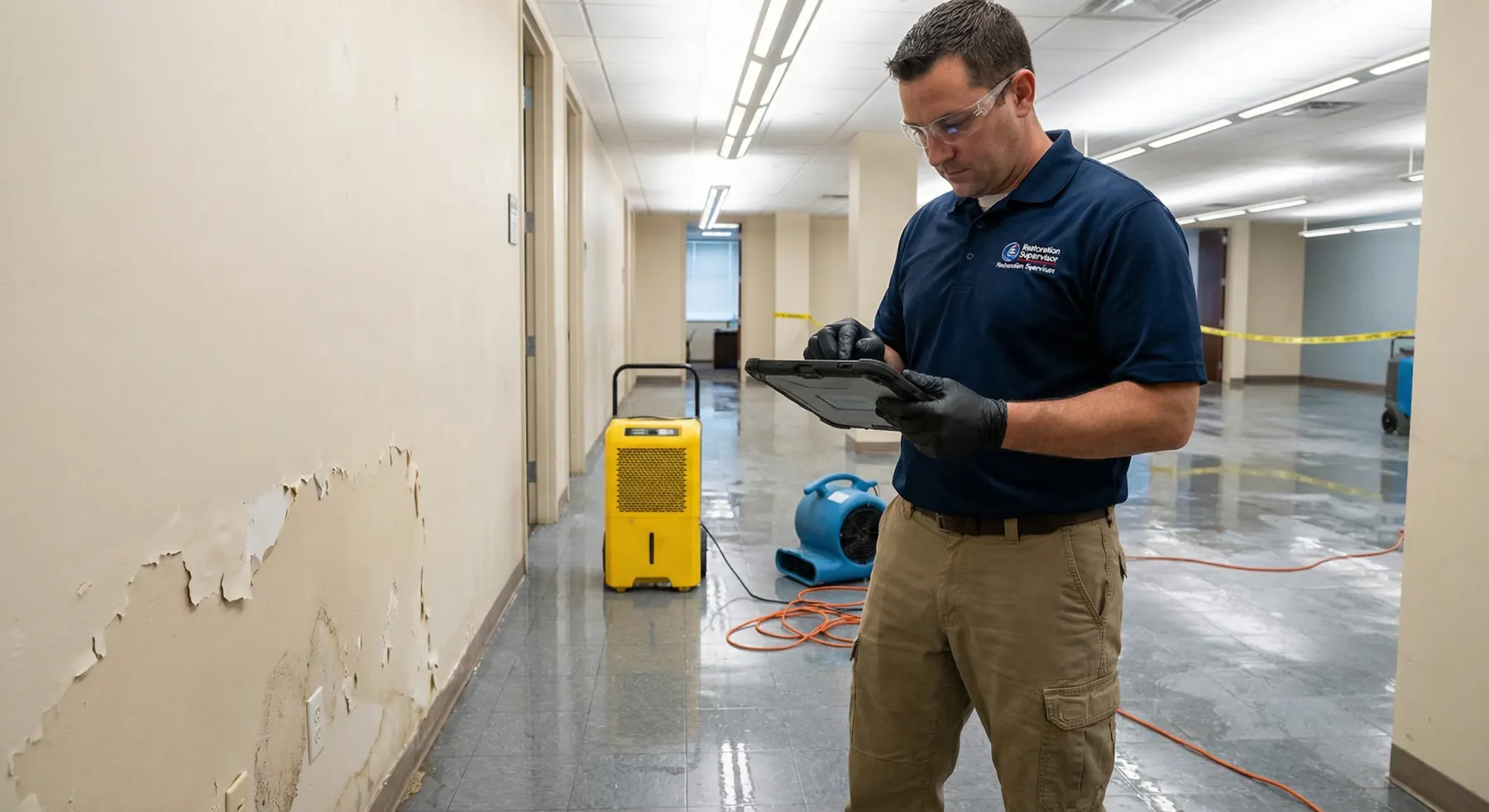
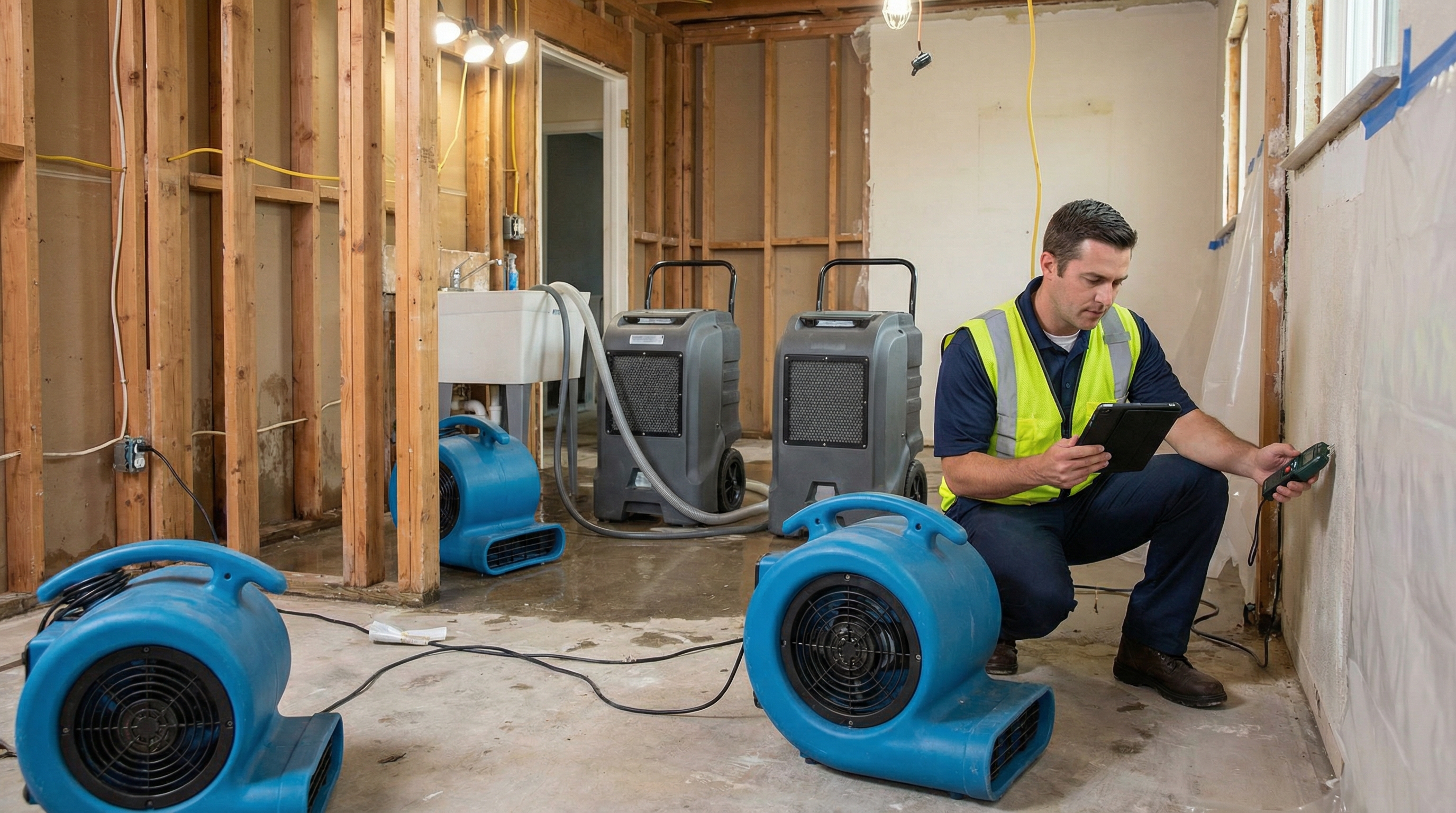
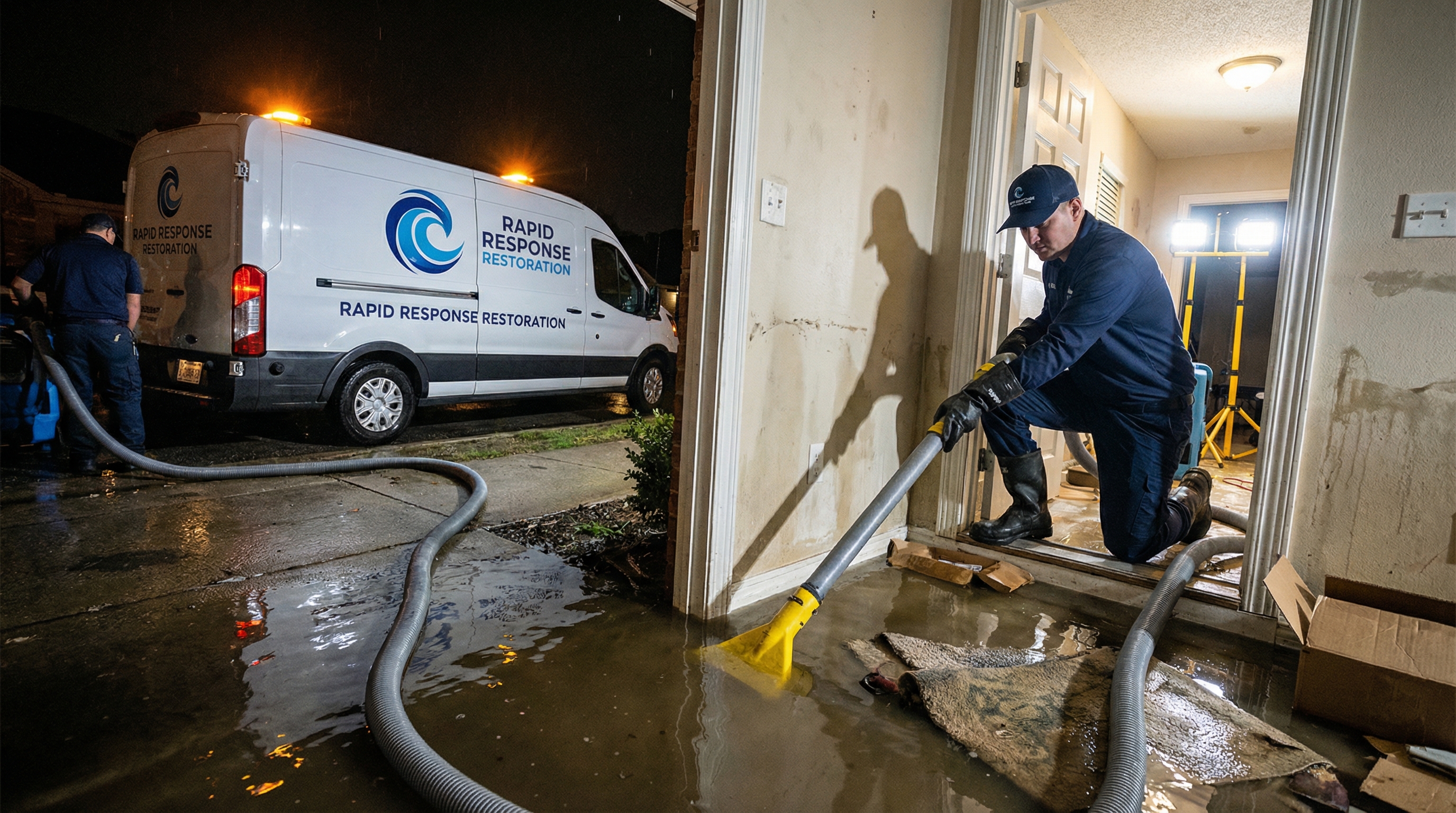
Recognize the Warning Signs
Early detection prevents deeper structural drying needs and expensive repairs. Check these common warning signs in your home or business.
Visible pooling or standing water on floors, in basements, or around appliances. Even small amounts indicate a leak that needs immediate attention.
Brown or yellow spots on ceilings, walls, or floors often signal hidden leaks. These stains may appear dry but indicate ongoing moisture issues.
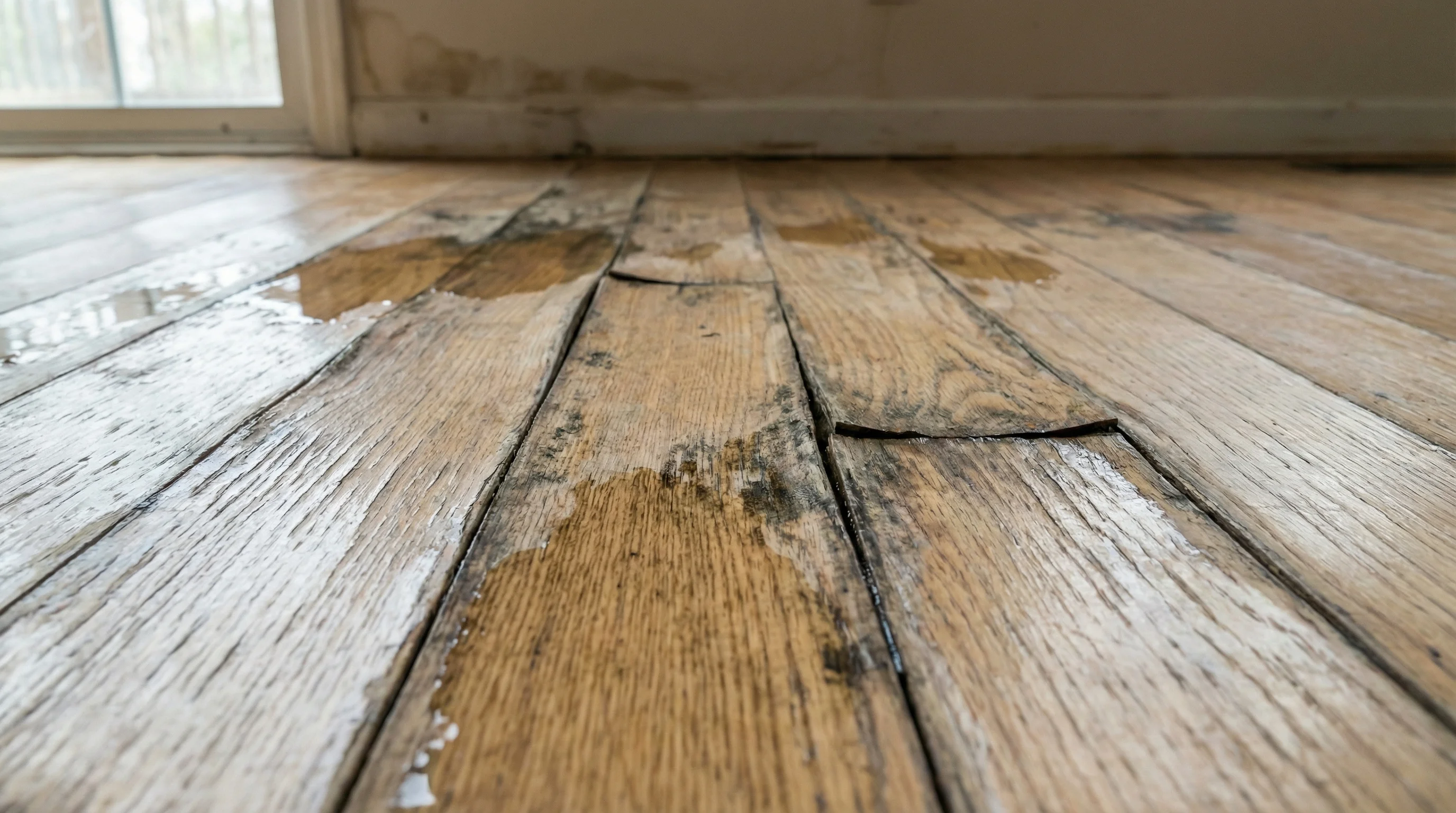
Flooring that buckles, walls that bulge, or doors that stick are signs that porous materials have absorbed excess water and are swelling.
A persistent damp smell or unusually high humidity levels suggest hidden water damage. This often precedes visible mold growth.
The drying process must begin within 24-48 hours to prevent mold growth and structural damage. A professional restoration company can respond immediately.
Emergency Water Damage Assessment Tool
Answer five quick questions to get a severity level, urgency window, and immediate action checklist.
This assessment is informational. On-site inspection is required to confirm moisture migration, category classification, and final restoration scope.
Insurance And Documentation Basics
Good documentation makes claims faster and cleaner. Start with timestamped photos, then track damaged contents, emergency mitigation costs, and communication with your insurer. For most policies, sudden events like burst pipes are handled differently than long-term neglect, so clear evidence of timing matters.
Keep this section focused on first actions only. For the full step-by-step filing walkthrough, including water categories, moisture evidence requirements, and FL/NC/SC deadlines, see our guide on how to file a water damage insurance claim. For broader claim strategy, coverage differences, and dispute handling, use our Insurance and Restoration Process guide. If water originated after fire suppression, also review fire and smoke cleanup services for related scope. For costs, mold risk, and insurance tips specific to suppression water, see our guide on water damage from firefighting.
Photos
Receipts
Inventory
Six steps from discovery to final invoice review, with the exact phrases that work with adjusters. For the deeper guide see how to file a water damage insurance claim, Florida insurance crisis 2026, and HOA water damage liability.
Photograph every affected room from multiple angles before moving contents. Capture water lines on walls, damaged floors, and the source if visible. Time-stamped video walkthroughs are even stronger than photos. This is your foundation; nothing else in the claim works without it.
What to say to your adjuster
"I have time-stamped photos and video from before we began any mitigation. I can email them to you today."
Call the claims line on your insurance card, not your agent first. Get a claim number on the call. Note the adjuster's name and direct line. State that water is active or recently stopped, and that you are mitigating per policy obligations.
What to say to your adjuster
"Loss occurred at [time]. Source was [burst pipe / overflow / storm]. I am authorizing emergency mitigation now to comply with my duty to protect."
Most policies require you to mitigate damage immediately to limit further loss. Waiting for adjuster approval before drying is a common reason for partial denials. Choose a company that documents with daily moisture logs and provides a written scope.
What to say to your adjuster
"My restoration company is providing daily moisture logs. They'll send the scope of work to your team within 48 hours."
Remove standing water, set up drying equipment, protect contents. Save receipts for any temporary repairs (boarding, tarping, fan rentals). These are typically reimbursable even if the broader claim is contested.
What to say to your adjuster
"I have a folder with all receipts and daily progress photos. The total mitigation cost so far is [$X]."
A professional restoration company should provide a written scope that clearly separates mitigation costs from repair/rebuild costs. This is the document your adjuster will use to write the estimate. Vague or all-in-one bids invite scrutiny.
What to say to your adjuster
"Here is the written scope from my restoration company, separated by mitigation, demo, and rebuild line items."
Compare the adjuster's estimate against your restoration company's scope. Common omissions: dehumidifier day-count, antimicrobial treatment, content cleaning, and like-kind replacement materials. Push back in writing on any line item that's missing or under-priced.
What to say to your adjuster
"Your estimate is missing [X] from line item [Y]. The restoration company's scope shows [Z]. Can you supplement the estimate?"
| Trigger | HO-3 (most common) | HO-5 (open peril) | NFIP flood |
|---|---|---|---|
| Sudden burst pipe | Typically covered | Typically covered | Not applicable |
| Long-term hidden leak | Often excluded | Often excluded | Not applicable |
| Storm flood / surge | Excluded | Excluded | Covered if active policy |
| Sewer backup | Excluded (endorsement) | Excluded (endorsement) | Sometimes covered |
| Emergency response & extraction | $1,200 |
| 4 days drying (10 air movers + 3 LGRs) | $2,800 |
| Antimicrobial treatment & containment | $650 |
| Selective demo (drywall, baseboards, carpet pad) | $1,400 |
| Content pack-out & cleaning | $800 |
| Daily monitoring & moisture documentation | $550 |
| Reconstruction (drywall, paint, baseboards, flooring) | $1,000 |
| Total claim value | $8,400 |
Common Misconceptions
Most costly mistakes happen in the first 24 hours. Use myth-versus-reality checks before you decide to wait, dry alone, or skip professional assessment.
Myth
"I can wait a few days and it will dry on its own."
Reality
Waiting increases material saturation and microbial growth risk. Fast extraction and dehumidification usually lowers rebuild scope and cost.
Myth
"If it feels dry, everything is dry."
Reality
Surface dryness can hide moisture in subfloors, wall cavities, and insulation. Use moisture mapping and readings before closing walls.
Myth
"A shop-vac and box fans are enough for major losses."
Reality
Household equipment cannot match the airflow, extraction rate, and humidity control of professional drying systems.
Myth
"Only major floods cause serious damage."
Reality
Small, ongoing leaks can quietly damage framing and finishes over time. Early mitigation prevents hidden structural loss.
Myth
"Bleach solves post-water mold problems."
Reality
Bleach is not a complete remediation strategy for porous materials. If growth is present, use proper remediation protocols and containment.
If dampness has already progressed to visible microbial growth, move directly to mold remediation services so cleanup and containment are handled correctly.
Six dedicated service paths under our water damage program. Each is built for a specific trigger and follows the same IICRC S500 protocols. Tap into the one that matches your situation.
Frozen lines, failed connections, copper splits — fast extraction and structural drying before mold takes hold.
Common cost
$2,500 - $7,500 typical
Category 3 protocols, full PPE, and aggressive demo for sewage backup, river flooding, and storm surge events.
Common cost
$7,000 - $25,000+
Dishwasher, washing machine, water heater, and refrigerator failures — sudden malfunction protocols.
Common cost
$2,000 - $5,000 typical
Submersible pumps, dehumidification, and crawl space coordination for below-grade water events.
Common cost
$3,000 - $12,000 typical
Truck-mount extractors at 12-20 GPM, 24/7 dispatch across Charlotte, Metrolina, and South FL.
Common cost
Mitigation rates apply
IICRC S500 dry-standard targets, daily moisture mapping, and verified clearance before reconstruction.
Common cost
$2,800 - $6,500 (4-5 days)
Related Restoration Services
Water losses often overlap with mold prevention, contents recovery, insurance navigation, and structural rebuilds. Use these connected guides to keep your project aligned.
Standing water and hidden moisture create mold risk within 24–48 hours. Coordinate drying and mold prevention early.
Fire suppression often causes secondary water damage. Manage both cleanup tracks with one restoration team.
Water-damaged furniture, electronics, and personal belongings can often be professionally restored and returned.
Clothing, rugs, and upholstery soaked by flooding or leaks need specialized cleaning to prevent permanent staining and odor.
Navigate water damage claims with proper documentation, moisture logs, and adjuster coordination from day one.
After drying is complete, transition directly into rebuild — flooring, drywall, cabinetry, and finish work.
Step-by-step Florida Citizens claim guide: deadlines, hurricane deductibles, the $3,000 Managed Repair cap, and what to do if you're denied.
13 min read
Stop the leak, beat the 24–48 hour mold window, and understand real costs for washing machine, dishwasher, and water heater leaks across Florida, NC, and SC.
12 min read
Not sure if you should DIY water cleanup or call a pro? Use this decision matrix, cost comparison, and the EPA 10 sq ft mold rule to decide fast.
16 min read
Palm Build Tools
These premium tools turn a water-loss story into clearer cost, drying, mold-risk, and insurance conversations—without forcing you through a lead gate first.
Get a homeowner-friendly low, expected, and high range before you talk through mitigation and rebuild scope.
See how extraction, humidity, and hidden cavities affect the likely drying window for your loss.
Understand how fast wet materials move from “dry it out” to “inspect for mold risk.”
Pressure-test whether the size and story of loss make an insurance conversation worth opening now.
Local Service Pages
Tier 4 · Local office
Tier 2 · Local office
Tier 4 · Local office
Tier 4 · Local office
Tier 4 · Local office
Tier 1 · Local office
Tier 4 · Local office
Tier 1 · Local office
Tier 1 · Local office
Tier 3 · Local office
Tier 2 · Local office
Tier 2 · Local office
Tier 3 · Local office
Tier 1 · Local office
Tier 2 · Local office
Tier 2 · Local office
Tier 3 · Local office
Tier 4 · Local office
Tier 3 · Local office
Tier 4 · Local office
Tier 2 · Local office
Tier 1 · Local office
Tier 4 · Local office
Tier 1 · Local office
Tier 1 · Local office
Tier 4 · Local office
Tier 3 · Local office
Tier 1 · Local office
Tier 3 · Local office
Tier 4 · Local office
Tier 4 · Local office
Tier 3 · Local office
Tier 4 · Local office
Tier 3 · Local office
Tier 4 · Local office
Tier 2 · Local office
Tier 2 · Local office
Tier 2 · Local office
Tier 2 · Local office
Tier 2 · Local office
Tier 3 · Local office
Tier 3 · Local office
Tier 2 · Local office
Tier 4 · Local office
Tier 3 · Local office
Tier 3 · Local office
Tier 4 · Local office
Tier 4 · Local office
Tier 4 · Local office
Tier 4 · Local office
Tier 4 · Local office
Tier 4 · Local office
Tier 3 · Local office
Tier 4 · Local office
Tier 1 · Local office
Tier 2 · Local office
Tier 3 · Local office
Tier 2 · Local office
Tier 2 · Local office
Tier 2 · Local office
Tier 3 · Local office
Tier 2 · Local office
Tier 4 · Local office
Tier 4 · Local office
Tier 3 · Local office
Tier 4 · Local office
Tier 4 · Local office
Tier 2 · Local office
Tier 2 · Local office
Tier 2 · Local office
Tier 3 · Local office
Tier 2 · Local office
Tier 1 · Local office
Tier 3 · Local office
Tier 4 · Local office
Tier 4 · Local office
Tier 1 · Local office
Tier 4 · Local office
Tier 3 · Local office
Tier 2 · Local office
Tier 4 · Local office
Tier 3 · Local office
Tier 4 · Local office
Tier 4 · Local office
Tier 2 · Local office
Tier 3 · Local office
Tier 2 · Local office
Tier 4 · Local office
Tier 1 · Local office
Tier 4 · Local office
Tier 3 · Local office
Tier 1 · Local office
Tier 3 · Local office
Tier 4 · Local office
Tier 2 · Local office
Answers for urgent cleanup decisions, restoration timelines, water categories, and insurance documentation across Florida, North Carolina, and South Carolina.
Protect people first, then stop active water if it is safe. Document damage with photos before moving contents, and call for emergency water removal quickly. Fast extraction and drying in the first hours can reduce mold risk and material loss. For a detailed hour-by-hour checklist, see our first 24 hours after water damage guide. If there are electrical or structural hazards, do not stay in the affected area.
Still have questions about emergency and process?
From burst pipes to flood damage cleanup, Palm Build dispatches quickly to extract water, stabilize moisture, and protect your structure before secondary damage spreads.
Immediate response when water is active
Fast extraction with commercial equipment
Moisture readings guide each drying decision
Photo and moisture logs for your insurer
Need help right now? Call us.
24/7 live dispatch — average answer time under 30 seconds