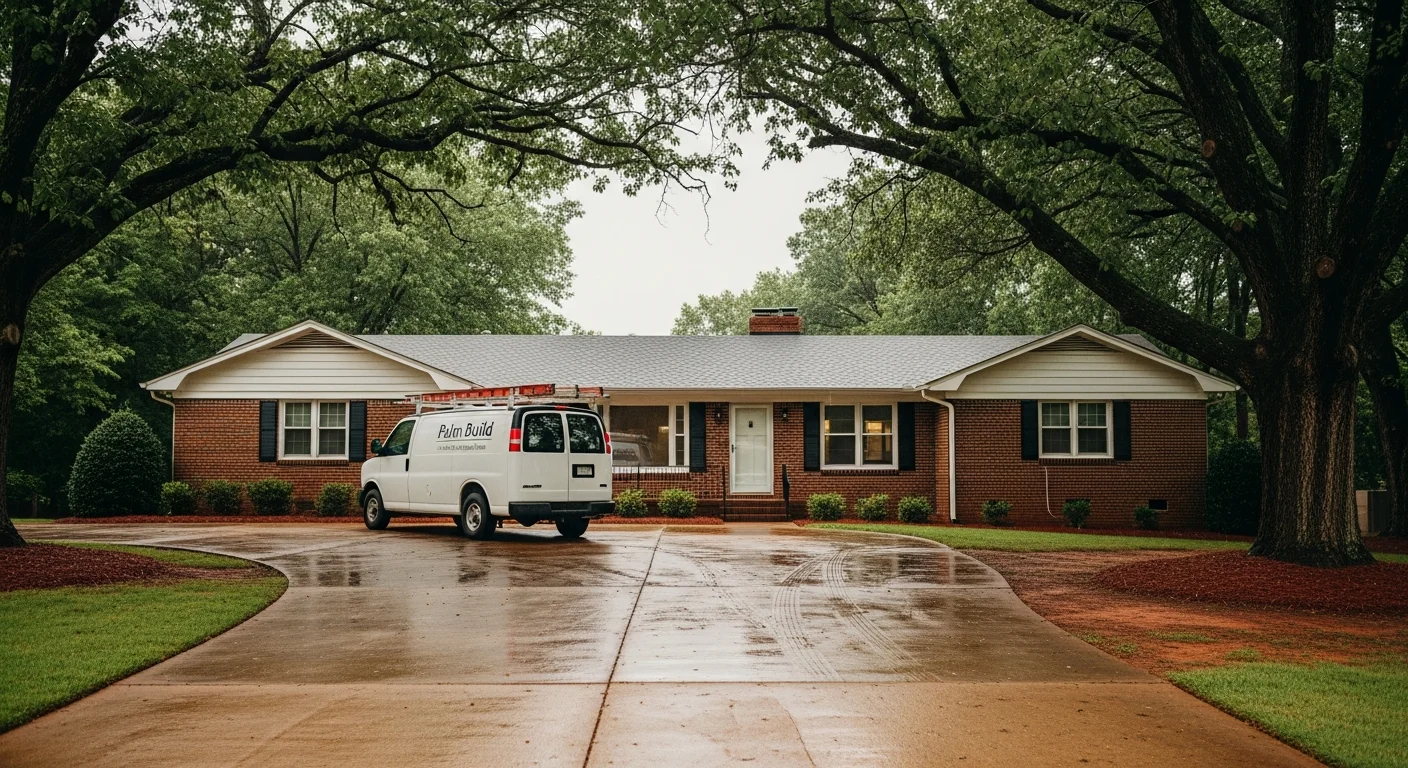
Water Damage Restoration in Bessemer City, North Carolina
From Edgewood Acres' 1960s ranch homes to Bennington Estates' new builds, Bessemer City's housing stock sits on Gaston County clay soil that holds water for weeks after a storm. When a corroded supply line floods your Sunset Park crawl space at 3 a.m. or a summer thunderstorm overwhelms Crowders Creek and backs water toward your foundation, Palm Build responds from Charlotte with truck-mounted extraction, industrial dehumidifiers, and the insurance documentation that gets your claim paid.
45-75 min
Emergency Response
24/7
Dispatch Available
IICRC
Certified Technicians
Local Risk Factors
Why Bessemer City Homes Face Unique Water Damage Risks
Bessemer City's water damage profile is defined by three converging factors no competitor is writing about: Gaston County clay that refuses to drain, four named creek corridors threading through neighborhoods, and a housing stock where most homes were built before modern moisture detailing existed. When water enters a Bessemer City home, it has nowhere to go quickly — and in summer, mold can begin growing within 24 to 48 hours.
Clay Soil Drainage
Gaston County Piedmont clay has infiltration rates well below 0.2 in/hr. The Cecil soil series underlying lots decreases permeability, especially when compacted by construction. When it rains hard, water pools against foundations instead of draining away — and with four creek corridors nearby, that pooled water has nowhere to go fast.
Four Creek Corridors
Abemethy Creek, Crowders Creek, Long Creek, and Oates Creek thread through residential areas — all within the Catawba River Basin, per Bessemer City's MS4 stormwater permit. Your flood risk tier is largely determined by how close your lot sits to one of these named receiving waters.
1960s–1970s Housing Stock
19.6% of Bessemer City homes were built 1970–1979, and another 17.4% in the 1960s. Vented crawl space foundations, original supply lines, and layered remodels — each era carries its own moisture failure mode. Repairs and additions from multiple decades create hidden transition zones where water reliably finds a way in.
Muggy Season
Dew points above 70°F run from late May through late September, with July as the peak. Every water event during this window becomes a mold emergency within 24–48 hours. Bessemer City's summer humidity means there is no such thing as a slow, passive dry — active drying equipment is required from day one.
Neighborhood Profiles
Bessemer City Neighborhoods and Water Damage Risk
Every Bessemer City neighborhood has a distinct water damage profile based on its construction era, foundation type, and proximity to the four creek corridors. Here's what to expect — and watch for — in your neighborhood.
Dover Heights
High1930–2024
Aging originals + mixed crawl/slab
Edgewood Acres
High1964–1974
Supply-line failures, crawl space humidity
Glendon Hills
High1965–1974
Moisture intrusion at additions, crawl space mold
Sunset Park
High1969–1978
Storm-driven roof leaks, wet insulation
Tryon Village
High1969–1998
Hidden slow leaks behind remodels
Pine Acres
Medium1973–1984
HVAC condensate, attic humidity
Rustic Hills
Medium1978–1984
Storm damage, soffit/fascia water intrusion
Walker Heights
Medium1989–1998
Appliance-line failures, bathroom waterproofing
Chestnut Oaks
Medium1992–2000
Stormwater runoff, HVAC condensate
Forest Ridge
Medium1996–1997
Uniform build — repeatable failure points
Mountain Brook
Low1996–2020
Newer: HVAC moisture; older: pipe failures
Applewood
Low2001–2003
Appliance leaks, water heater failures
Stones Throw
Low2001–2003
Water heater, roof transition issues
Bennington Estates
Low2023–2025
Construction moisture, grading drainage, HOA
Flood Risk Intelligence
Bessemer City's Creek Corridors and Flood Risk
Bessemer City's MS4 stormwater permit identifies four named receiving waters — Abemethy Creek, Crowders Creek, Long Creek, and Oates Creek — all draining to the Catawba River Basin. These corridors define the city's flood risk geography. Your address relative to these four waterways is the single biggest factor in your flood exposure.
Abemethy Creek
Runs through older residential areas. Low-lying lots near this corridor are vulnerable to localized flooding during heavy rainfall events. Homes built along Abemethy in the 1960s–1970s often have foundations that predate current floodplain setback guidance.
Crowders Creek
The city's primary receiving water, with named tributaries. Crowders Creek floodplains are mapped SFHA in some segments — check the NFHL viewer for your address. This corridor sees the most frequent high-water events after sustained or intense rainfall.
Long Creek
Long Creek and unnamed tributaries thread through the eastern residential fringe. Lots near unnamed tributaries can flood even when the main channel is clear — headwater backs up faster than FEMA flood maps reflect on the ground.
Oates Creek
Oates Creek, with one named unnamed tributary, flows through lower-lying terrain. Post-storm flooding along this corridor can be rapid. Homes with basement or low crawl space access points are particularly vulnerable during rain events above 2 in/hr.
Understanding FEMA Flood Zones in Bessemer City
Most upland Bessemer City homes are mapped Zone X (minimal flood hazard). Special Flood Hazard Areas (SFHA) follow the four creek corridors outlined above. Zone X does not mean zero risk — Gaston County recommends flood insurance even outside high-risk zones, especially given the region's clay soils and rapid surface runoff. Use the FEMA Flood Map Service Center (msc.fema.gov) to look up your exact address and verify your flood zone designation before assuming you're protected.
Bessemer City's Stormwater Investment
Bessemer City adopted an impervious surface-based stormwater rate (effective July 1, 2024) and has pursued a city-wide stormwater master plan. This investment reduces long-term flood risk across the municipality. Palm Build coordinates with city stormwater recommendations for repeat-loss prevention — if your property has flooded more than once, we can help you document conditions for both your insurance carrier and Gaston County's stormwater department.
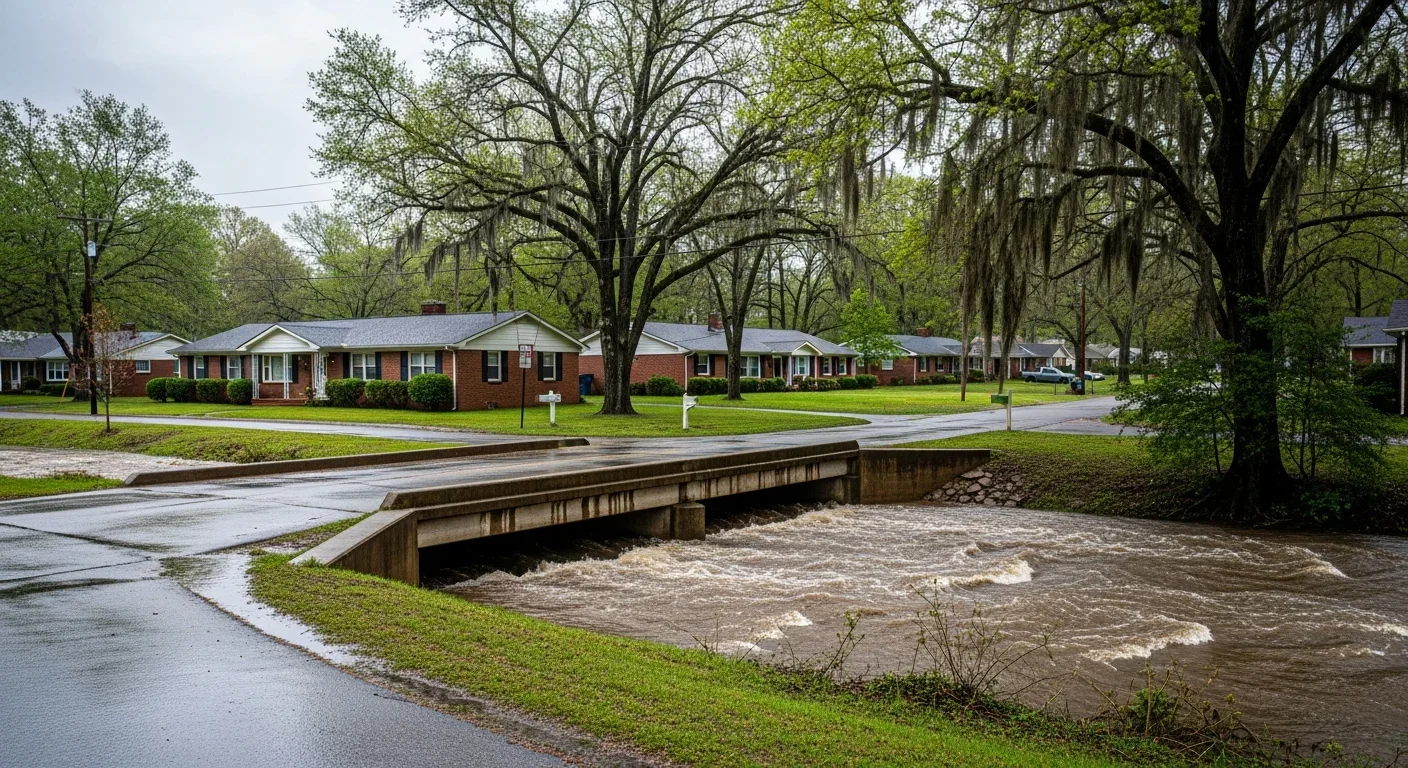
Crowders Creek — Bessemer City's primary MS4 receiving water
How We Work
Our Water Restoration Process
Every Palm Build water restoration follows the same six-step process — calibrated for Bessemer City's specific conditions: clay soil, crawl space foundations, summer humidity, and Gaston County insurance carriers.
Emergency Dispatch
We answer 24/7 and dispatch from Charlotte in minutes. Our Bessemer City response time is 45–75 minutes. Every call gets a full crew with truck-mounted extraction, commercial dehumidifiers, and air movers — not a single technician with a shop vac. You'll speak to a project coordinator before the truck rolls.
Assessment & Moisture Mapping
We use thermal imaging and calibrated moisture meters to map all wet materials — including hidden moisture behind walls, under flooring, and in crawl space framing. No hidden damage goes undocumented. Every affected area is photographed and logged before work begins, building the record your insurance carrier needs.
Water Extraction
Truck-mounted extraction removes standing water fast. For Bessemer City crawl spaces, we use submersible pumps and industrial vacuums adapted to low-clearance clay-floor conditions. The faster we extract, the less structural material absorbs — extraction speed directly determines total restoration cost.
Structural Drying
Industrial LGR dehumidifiers and high-velocity air movers are positioned to IICRC S500 standards. We monitor readings daily and adjust equipment placement — drying is active, not passive. In Bessemer City's high-humidity summer months, passive drying is not an option: moisture levels must be measured and verified, not assumed.
Mold Prevention Treatment
After drying is confirmed by measurement, we apply EPA-registered antimicrobial treatment to all affected surfaces. In Bessemer City's summer months — with dew points above 70°F from May through September — mold prevention is non-negotiable. Wet materials in these conditions will begin growing mold within 24–48 hours without treatment.
Documentation & Closeout
We provide a signed moisture log, before-and-after photos, and a drying verification report — formatted for NC homeowners insurance carriers including State Farm, NC Farm Bureau, Allstate, and Nationwide. You receive a complete job package that supports your claim and documents the work for future reference.
Cost Guide
Water Damage Restoration Costs in Bessemer City
Costs in Bessemer City reflect the city's median home value of $206,100 and the mix of 1960s–2020s construction types. Older homes with crawl spaces, original hardwood, and layered remodels typically cost more to restore than newer drywall-and-engineered-flooring builds.
Scope
Single room, no structural impact
Common Cause
Supply line drip, toilet overflow
Scope
Multiple rooms or crawl space affected
Common Cause
Appliance failure, storm entry
Scope
Structural materials wet, subfloor damage
Common Cause
Burst pipe, extended crawl flooding
Scope
Full home + mold secondary loss
Common Cause
Flood, prolonged undetected leak
What Increases Cost
- Crawl space access under 30 in.
- Original hardwood or solid wood subfloor
- Mold secondary loss from delay
- Multiple layered remodels
What Reduces Cost
- Fast response — hours, not days
- Open-plan layout, accessible walls
- Engineered flooring vs solid wood
- Active insurance coverage
Insurance Coverage
- Sudden/accidental losses: typically covered
- Flood damage: requires separate policy
- Slow leaks: carrier-dependent
- We bill insurers directly
Ranges reflect Bessemer City/Gaston County market conditions and a median home value of $206,100. Actual costs vary by materials, access, and insurance coverage. Written estimates are provided before work begins — no surprise billing.
Seasonal Guide
Bessemer City Water Damage: What to Watch by Season
Water damage risk in Bessemer City changes with the calendar. Understanding your peak exposure windows — and what failure mode is most likely each season — is the fastest way to prevent a claim.
Freeze Risk
Coldest months. Supply lines in unheated crawl spaces and exterior walls are vulnerable to freezing. Burst pipes from freeze events are typically covered by homeowners insurance as "sudden and accidental" losses — but the claim window requires prompt documentation. Call immediately: frozen-pipe bursts can discharge hundreds of gallons before anyone notices.
Insulate exposed pipes in crawl spaces before December
Spring Rains
March shows the highest average rainfall in the Bessemer City area. Prime season for foundation saturation, crawl space flooding, and vapor drive — especially where clay soil slows drainage. Homes near Abemethy, Crowders, Long, or Oates Creeks are most exposed during multi-day rain events.
Check crawl space vents and sump pumps before March
Mold Season
Dew points above 70°F and the highest wet-day probability of the year. Every water event in this window is a mold emergency. Mold can begin colonizing wet cellulose materials — drywall paper, wood framing, insulation facing — within 24 to 48 hours. Containment and fast drying are non-negotiable. Passive drying without equipment will not outpace mold growth in these conditions.
Any water event May–Aug requires same-day extraction
Tropical Remnants
Tropical cyclone remnants contribute to warm-season rainfall in NC. Storm-driven roof leaks and tree impacts peak in this window. Crowders Creek and tributaries can rise rapidly during tropical rain bands — a storm that drops 4 inches in 6 hours can cause localized flooding even without a named event. Temperatures are still warm enough for mold growth in September.
Inspect roof and gutters before hurricane season peaks
Fire & Late Pipe Risk
Heating season brings chimney, cooking, and space heater fire risk. Pipe freeze risk returns in late December, especially in unheated crawl spaces. A water or fire event now means fighting moisture in cold, slow-drying conditions — colder air holds less moisture, which reduces dehumidifier efficiency and extends drying cycles. Response time matters even more in winter.
Schedule chimney inspection in November before first use
Water damage doesn't wait for a convenient season.
Palm Build answers every call 24/7, 365 days a year — including holidays, weekends, and the middle of the night. Dispatch from Charlotte to Bessemer City in 45–75 minutes.
Insurance Navigation
Water Damage Insurance Claims in Bessemer City
North Carolina homeowners premiums are in a period of approved base rate increases through mid-2026 — making thorough claims documentation more important than ever. Every dollar recovered depends on how well the damage was documented in the first 24 hours.
Common Carriers in Gaston County
Palm Build documents every Bessemer City project for seamless processing with any carrier. We work directly with adjusters from first contact to final sign-off.
What Your Policy Covers — and What It Does Not
- Sudden and accidental pipe burst
- Appliance failure (dishwasher, washing machine supply line)
- Storm-driven water intrusion through a sudden opening
- Fire suppression water
- Flooding from outside — requires separate NFIP or private flood policy
- Slow or gradual leak from maintenance failure
- Mold resulting from neglect or maintenance failure
- Sewer backup — unless rider purchased
Claims Documentation Checklist
Photos before any cleanup
Document from multiple angles including crawl space access points — establishes the pre-mitigation condition.
Moisture meter readings
Document wall and floor readings at the time of loss. These baseline numbers are essential for proving extent.
Date and time of discovery
Critical for "sudden and accidental" framing — the timestamp establishes the event, not a long-running condition.
Source identification
Identify the failure point — pipe, appliance, roof, or HVAC. Adjusters need a clear cause before coverage applies.
Mitigation log
Document every drying step and equipment placement by date. Shows the insurer mitigation started immediately.
Communication log
Keep records of all adjuster contacts — dates, names, and what was discussed. Protects your timeline.
NC Premium Rate Context
North Carolina homeowners insurance premiums are in a period of approved base rate increases through mid-2026. As premiums climb, carriers apply greater scrutiny to claims. Documentation quality — from the first hour on-site — directly affects claim outcomes. Palm Build begins documenting the moment we arrive.
Damage Patterns
Common Water Damage Types in Bessemer City Homes
From Gaston County clay crawl spaces to aging galvanized supply lines, Bessemer City homes face specific, repeatable water damage patterns — each requiring a different restoration approach.
Burst Pipes
The most common emergency call in Bessemer City's older housing stock. Supply lines in 1960s–1970s homes — often galvanized steel or original copper — fail from corrosion, freeze events, and pressure fluctuations. A single 3/4-inch line can release 7–10 gallons per minute.
Crawl Space Flooding
When Gaston County clay saturates after heavy rain, hydrostatic pressure forces water through crawl space vents and block foundations. Affected crawl spaces develop mold within 48–72 hours in summer conditions without extraction and drying.
Appliance Failures
Dishwashers, washing machines, water heaters, and refrigerator ice makers are the leading source of water losses in Chestnut Oaks, Walker Heights, and other 1990s-era Bessemer City neighborhoods. Hose failures often occur gradually and go undetected.
Storm-Driven Roof Leaks
Thunderstorm season (May–October) brings wind-driven rain that exploits aging shingle, flashing, and fascia failures. Roof leaks in Sunset Park and Pine Acres often appear as ceiling staining before the structural saturation is apparent.
HVAC Condensate
HVAC condensate line clogs and secondary drain pan overflows are a common but underreported water loss. In Bessemer City's summer months, air conditioning systems run nearly continuously — a blocked condensate line can release 5–10 gallons per day undetected.
Sewer Backup
Sewer backups following heavy rain events — when municipal lines are overwhelmed — send contaminated Category 3 water into basements and crawl spaces. Older Bessemer City infrastructure near Crowders Creek is most vulnerable during peak rainfall.
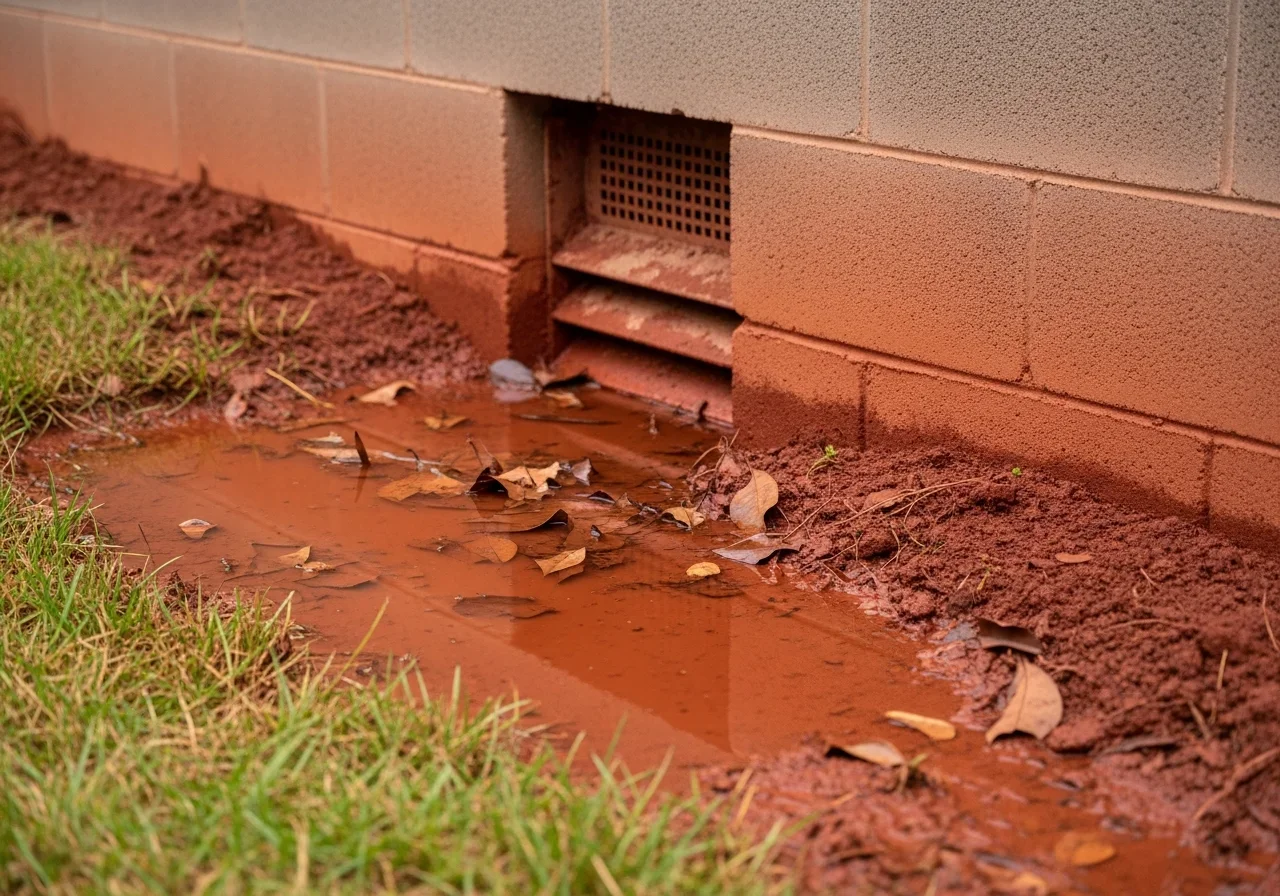
Bessemer City Projects
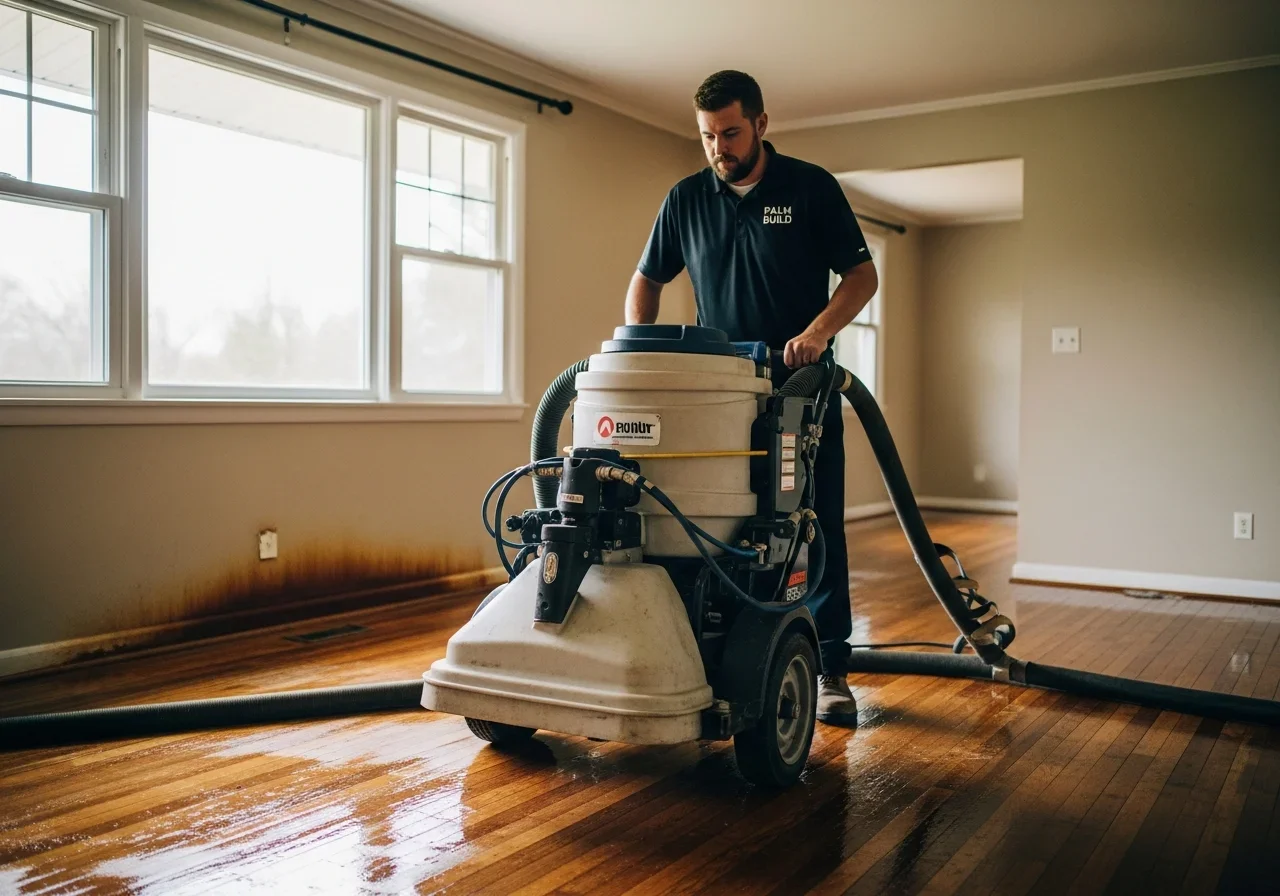
Bessemer City Water Damage Restorations
Real jobs. Real results. Every Bessemer City restoration ends with signed moisture readings and documentation ready for your insurance carrier.
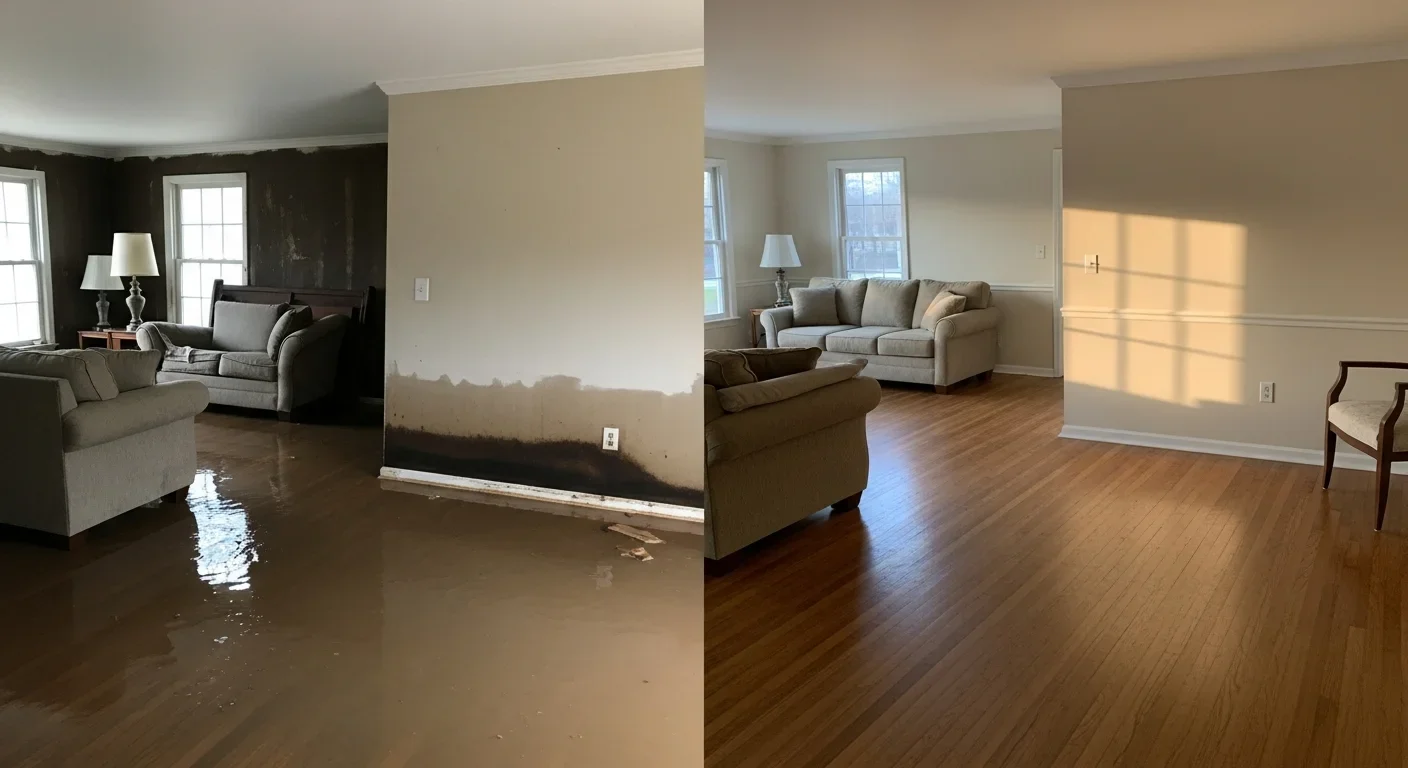
72 hrs
Avg. dry-out completion
100%
Jobs with signed moisture readings
24/7
Emergency response available
All carriers
Direct carrier documentation
Why Choose Us
Why Bessemer City Homeowners Choose Palm Build
Bessemer City needs a restoration company that understands Gaston County clay, older crawl space construction, and the specific water damage patterns in this community.
IICRC Certified
Water damage restoration to ANSI/IICRC S500 standards. Our technicians hold current certifications — not provisional credentials. Every job produces documentation that meets the standard.
45-75 Min Response
Charlotte dispatch means Bessemer City gets a full crew in 45–75 minutes, 24 hours a day. Not a call center estimate — an actual response commitment.
Insurance-Ready Documentation
Every moisture reading, every equipment placement, every drying day documented. We work directly with State Farm, NC Farm Bureau, Allstate, and every major NC carrier.
No Hidden Damage Left Behind
Thermal imaging and calibrated meters check every wall cavity and subfloor. We don't sign off until every reading confirms dry.
Gaston County Experience
We know Bessemer City clay. We know the creek corridors near Crowders Creek. We know what 1960s crawl space construction looks like inside. Local knowledge matters in restoration.
Mold Prevention Standard
In summer conditions, drying without antimicrobial treatment is incomplete. Every Bessemer City job includes post-dry treatment on all affected surfaces.
Water damage in Bessemer City?
Call now — crews dispatch from Charlotte in under 75 minutes.
FAQ
Frequently Asked Questions — Bessemer City Water Damage
Answers specific to Bessemer City homes, Gaston County clay, and the local insurance landscape in NC.
Water Damage in Bessemer City? We Respond 24/7.
Gaston County clay holds water for weeks. Every hour of delay increases damage and mold risk. Our Charlotte team reaches Bessemer City in 45-75 minutes — call now.
Nearby Cities