Visible growth with an obvious moisture source may not require extensive pre-remediation testing. When the contamination is clearly defined and the water intrusion path is understood, resources are often better spent on containment and removal rather than additional sampling. Testing in these cases can still be useful for documentation purposes, but it should not delay the start of remediation work.
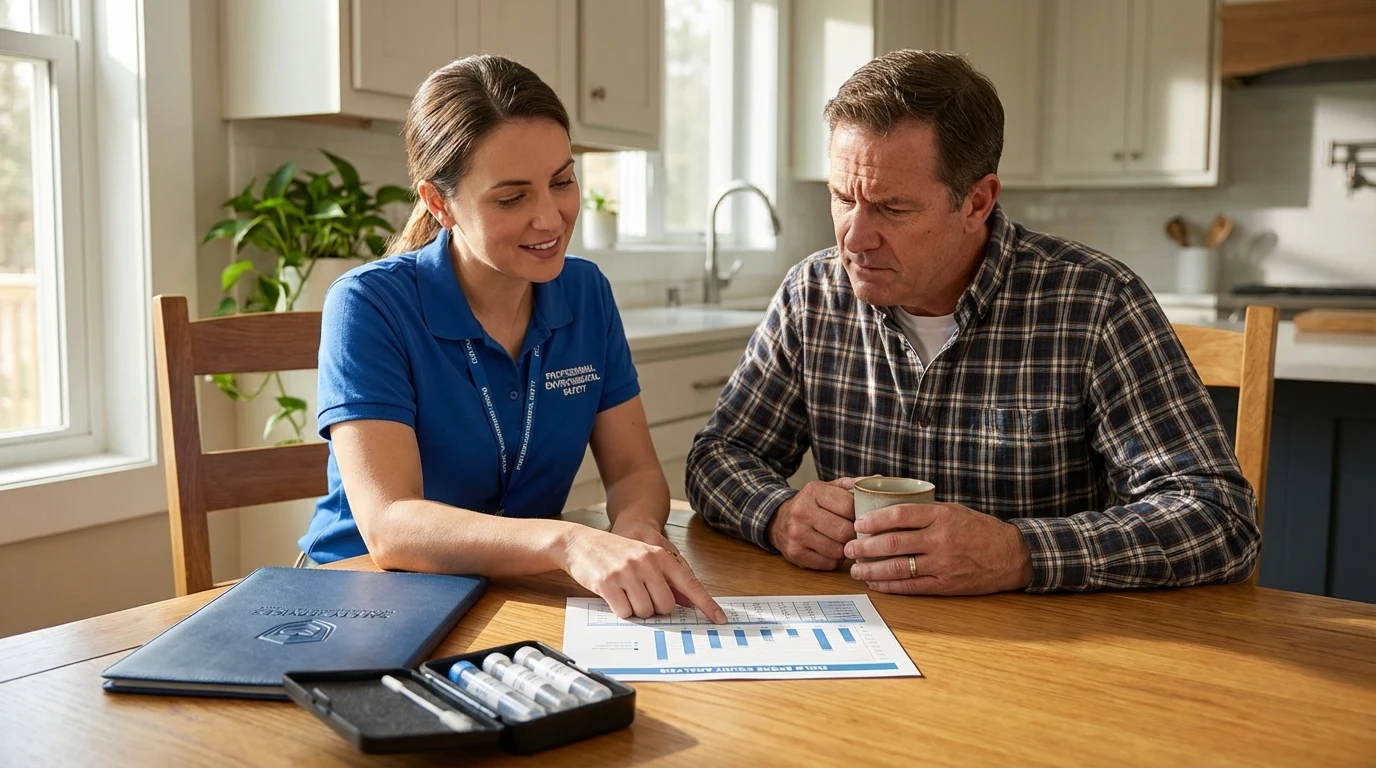
Mold Testing Services
Mold Testing: Useful Evidence When You Ask the Right Question
Testing should support a decision, not delay remediation. This page covers air, surface, and bulk methods, plus when third-party testing improves claim and legal defensibility.
- Air sampling
- Surface and bulk samples
- Third-party clearance
Practical first steps
Testing is high value when scope is unclear, symptoms persist, or documentation is required. In multi-unit buildings, properties with concealed wall cavities, or situations where occupants report health concerns without a visible source, targeted sampling can reveal contamination that visual inspection alone cannot identify. Insurance adjusters and attorneys may also require lab-verified data before approving scope or settling claims.
Indoor/outdoor comparisons add context for interpreting spore profiles and burden. A single indoor sample in isolation tells very little without a corresponding outdoor baseline. Elevated indoor counts of specific genera relative to outdoor levels can indicate active interior growth, while similar profiles may suggest normal ambient infiltration rather than a building-related problem.
Clearance testing after remediation can validate readiness for rebuild and occupancy. Post-remediation verification sampling compares treated areas against established benchmarks or pre-agreed criteria. This step is particularly important when the project involves insurance coverage, tenant displacement, or any scenario where documented proof of successful remediation may be needed later.
Results should be interpreted alongside field observations and moisture data, not in isolation. Lab reports provide genus-level or species-level identification and spore counts, but those numbers only become meaningful when paired with relative humidity readings, material moisture content, thermal imaging findings, and the building history. A qualified assessor integrates all of these data points into a coherent narrative.
In-Depth Guide
Understanding the process
Professional mold testing employs several distinct methodologies, each suited to different assessment objectives. Spore trap air sampling is the most commonly used technique, drawing a calibrated volume of air through a cassette that captures particles on a sticky collection surface. The cassette is then sent to an accredited laboratory where an analyst identifies and counts spore types under a microscope. This method provides a snapshot of airborne conditions at the moment of collection and is most informative when multiple indoor samples are compared against a concurrent outdoor baseline. Surface sampling, performed via swab or tape-lift, collects material directly from a visible or suspect surface and is analyzed to confirm the genus or species present on that substrate. Bulk sampling involves removing a small piece of building material, such as drywall, insulation, or carpet padding, and submitting it for laboratory analysis to determine whether mold has colonized the material itself rather than merely settled on its surface.
Not every situation calls for laboratory testing. When visible mold growth is present and the moisture source has been identified, a qualified assessor may determine that visual assessment and moisture diagnostics provide sufficient information to develop a remediation scope of work. Testing adds the most value when contamination is suspected but not visible, when the boundary between affected and unaffected areas is uncertain, when species identification may influence the remediation approach, or when third-party documentation is needed for insurance, real estate, or legal purposes. Indoor/outdoor comparison data is central to interpretation because outdoor spore levels vary by season, geography, and weather conditions. An indoor sample showing 500 Cladosporium spores per cubic meter might be unremarkable if the concurrent outdoor sample shows 2,000, but the same indoor count would be significant if the outdoor baseline were only 50.
Third-party clearance testing performed by an independent assessor, rather than the remediation contractor, is considered a best practice and is required by regulation in several states. Independence matters because it eliminates the conflict of interest inherent in a contractor verifying its own work. For insurance claims, clearance documentation from a qualified third party provides defensible evidence that the remediation met accepted standards. In litigation contexts, opposing counsel will scrutinize whether the testing entity had any financial relationship with the remediation firm. Investing in independent clearance testing typically costs a fraction of the overall project budget but provides substantial protection against future disputes, denied claims, and liability exposure.
Field Visuals
Inspection, containment, and remediation in practice
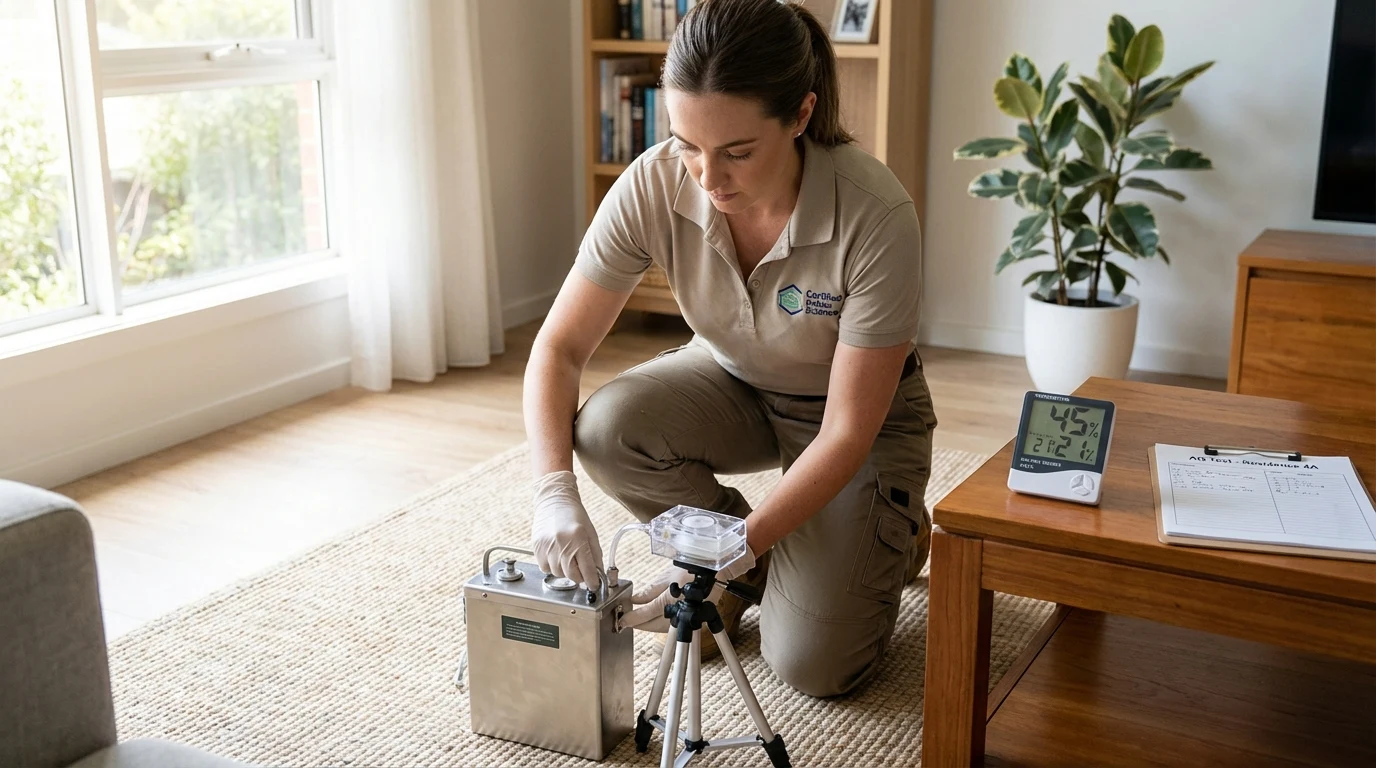
Air quality sample collection
Air sampling helps estimate airborne burden when combined with moisture and visual findings.
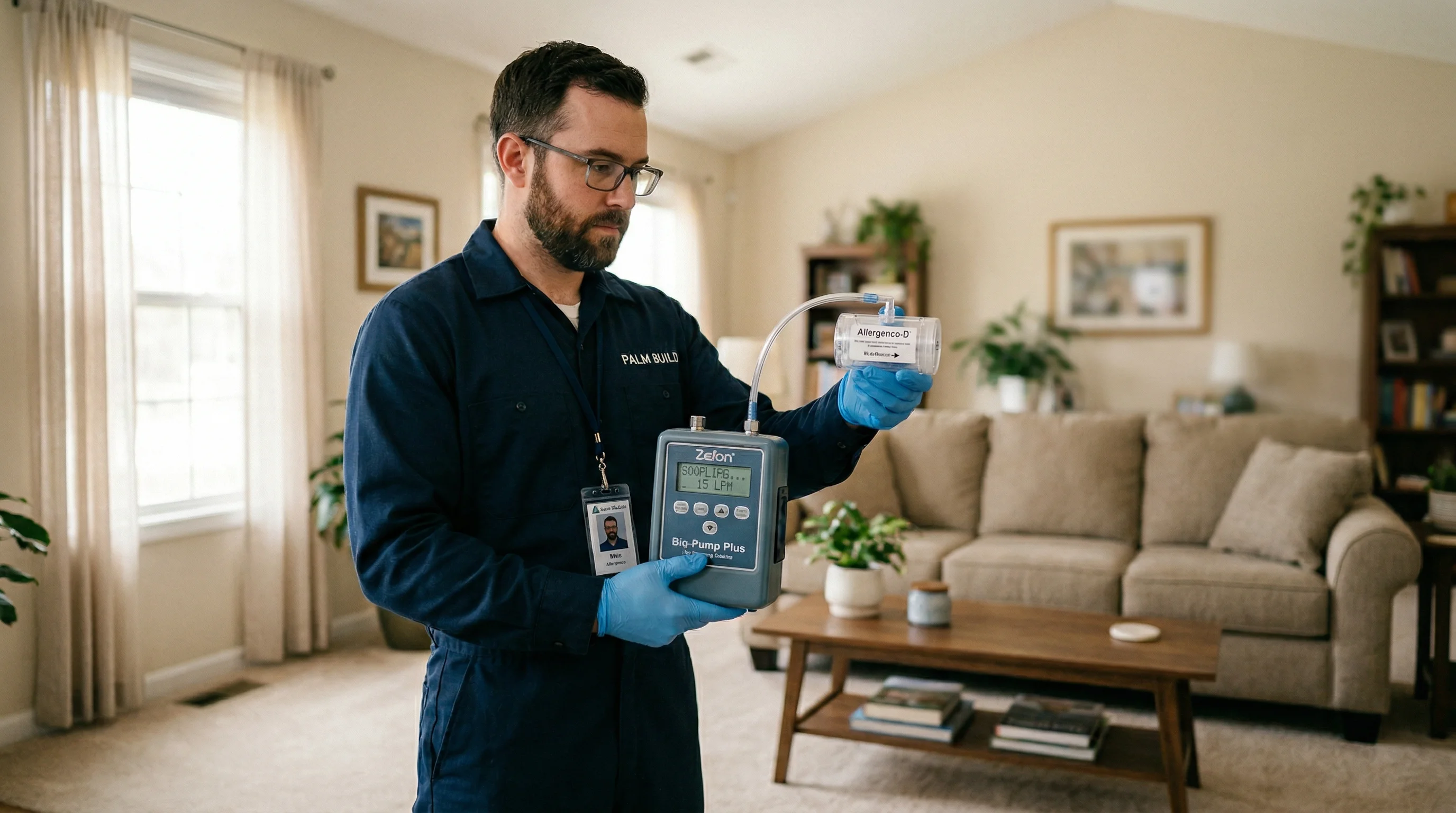
Spore trap and monitoring setup
Sampling strategy should match the question being answered, not a one-size-fits-all checklist.
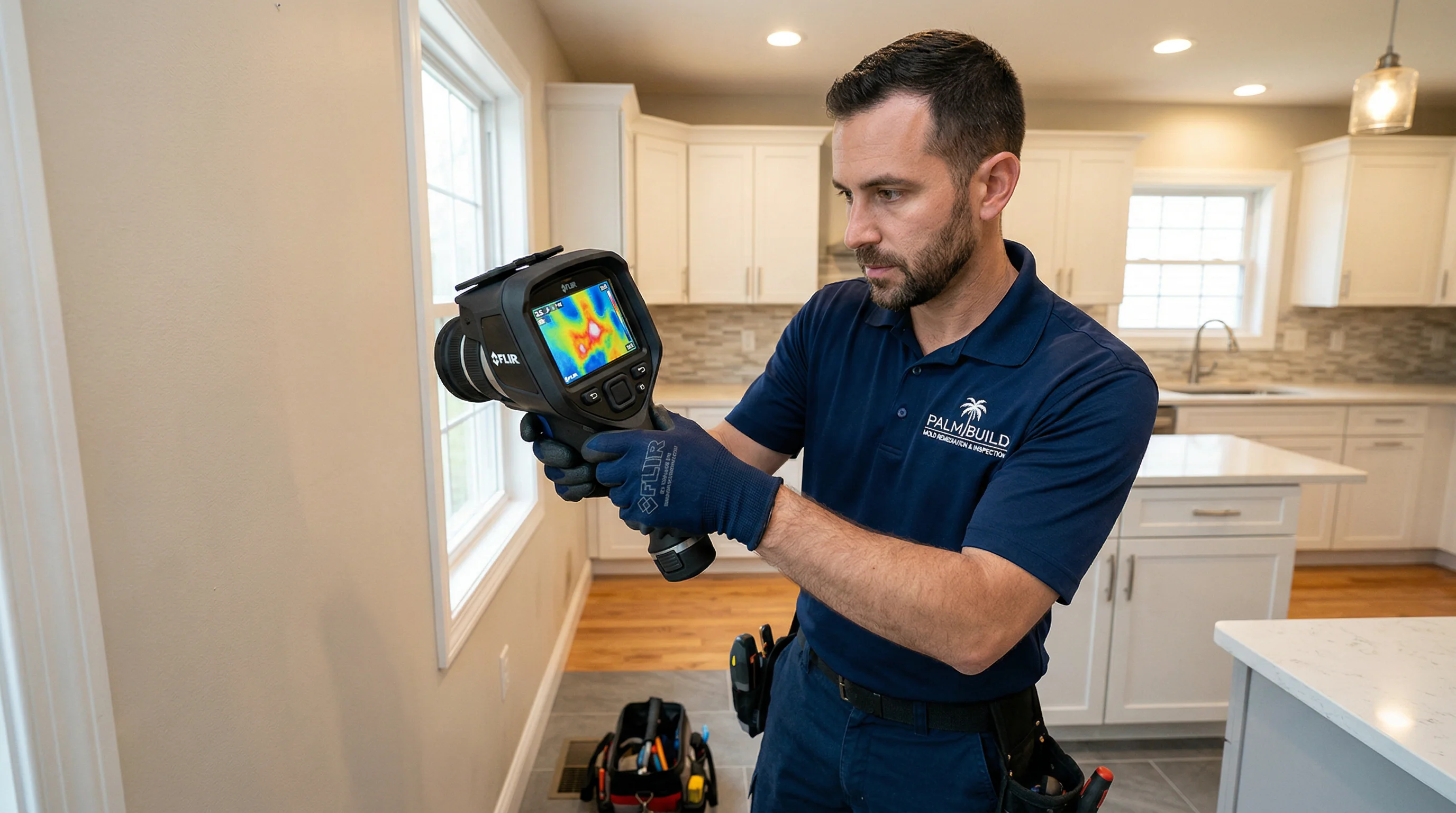
Moisture and thermal diagnostics
Moisture mapping often provides higher decision value than species name alone.
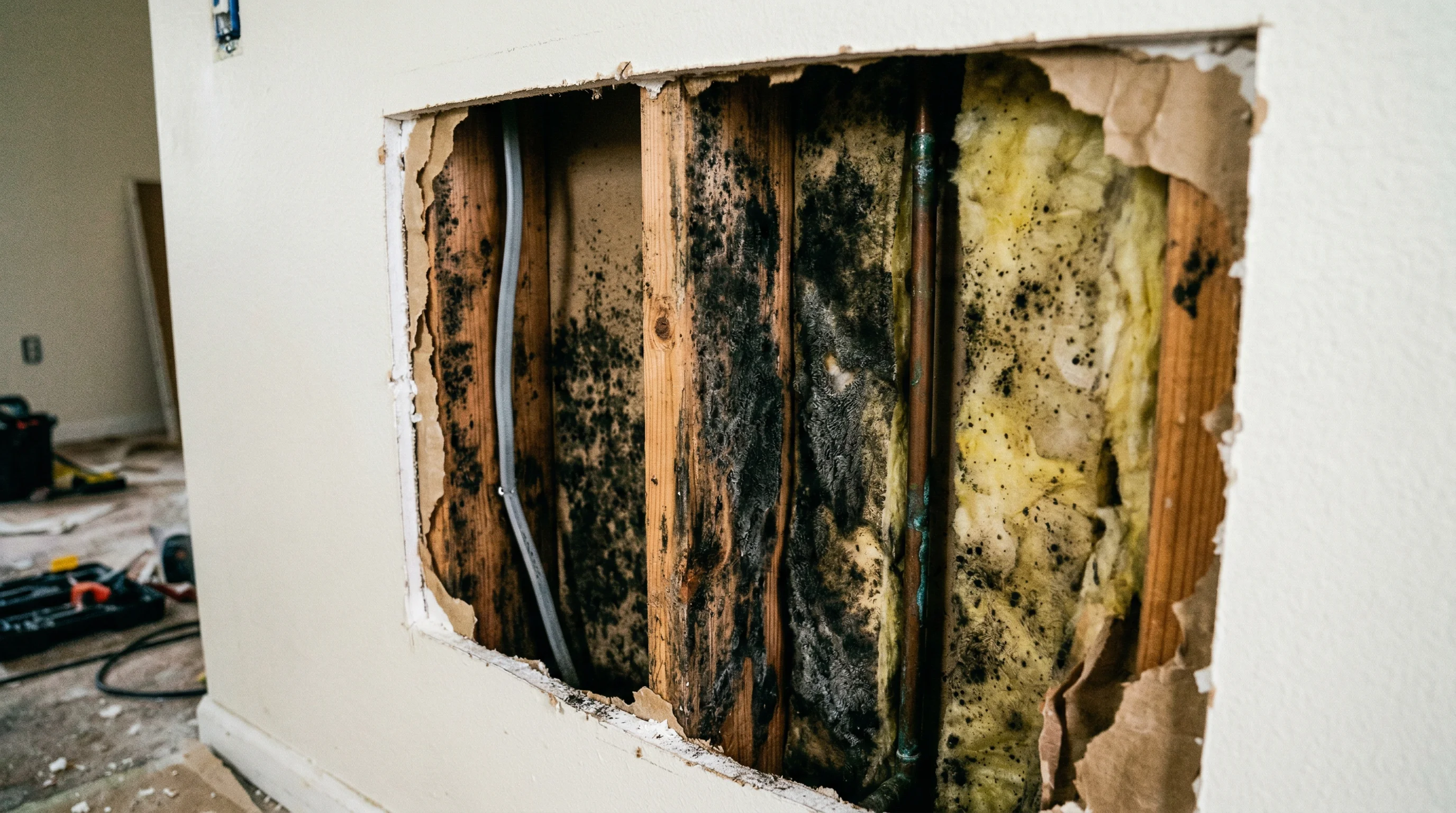
Hidden mold behind wall cavity
Concealed contamination behind walls underscores why testing is essential when visual inspection alone cannot confirm or rule out mold presence.
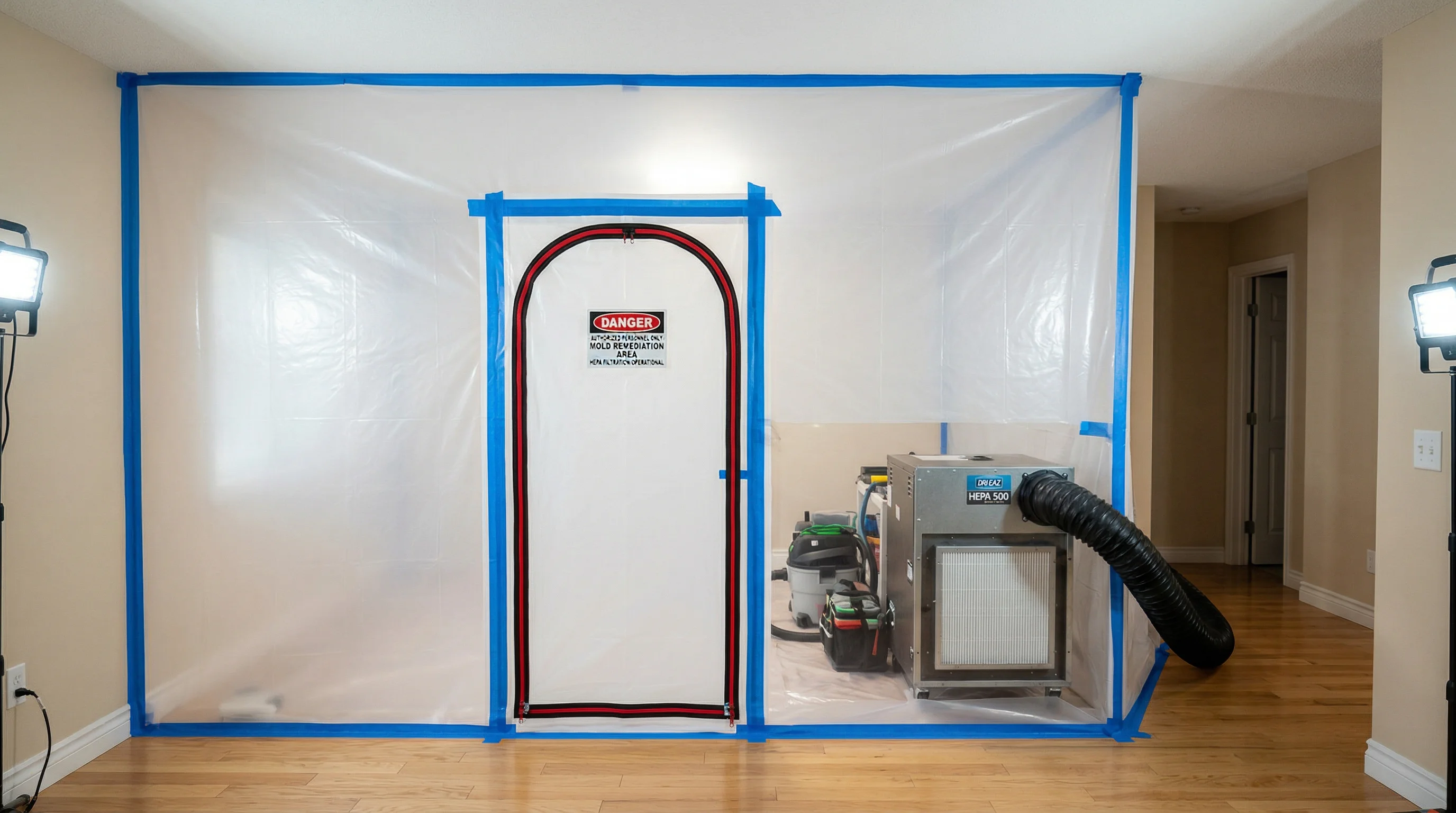
Containment barrier during remediation
Proper containment prevents cross-contamination during removal and supports cleaner post-remediation clearance results.
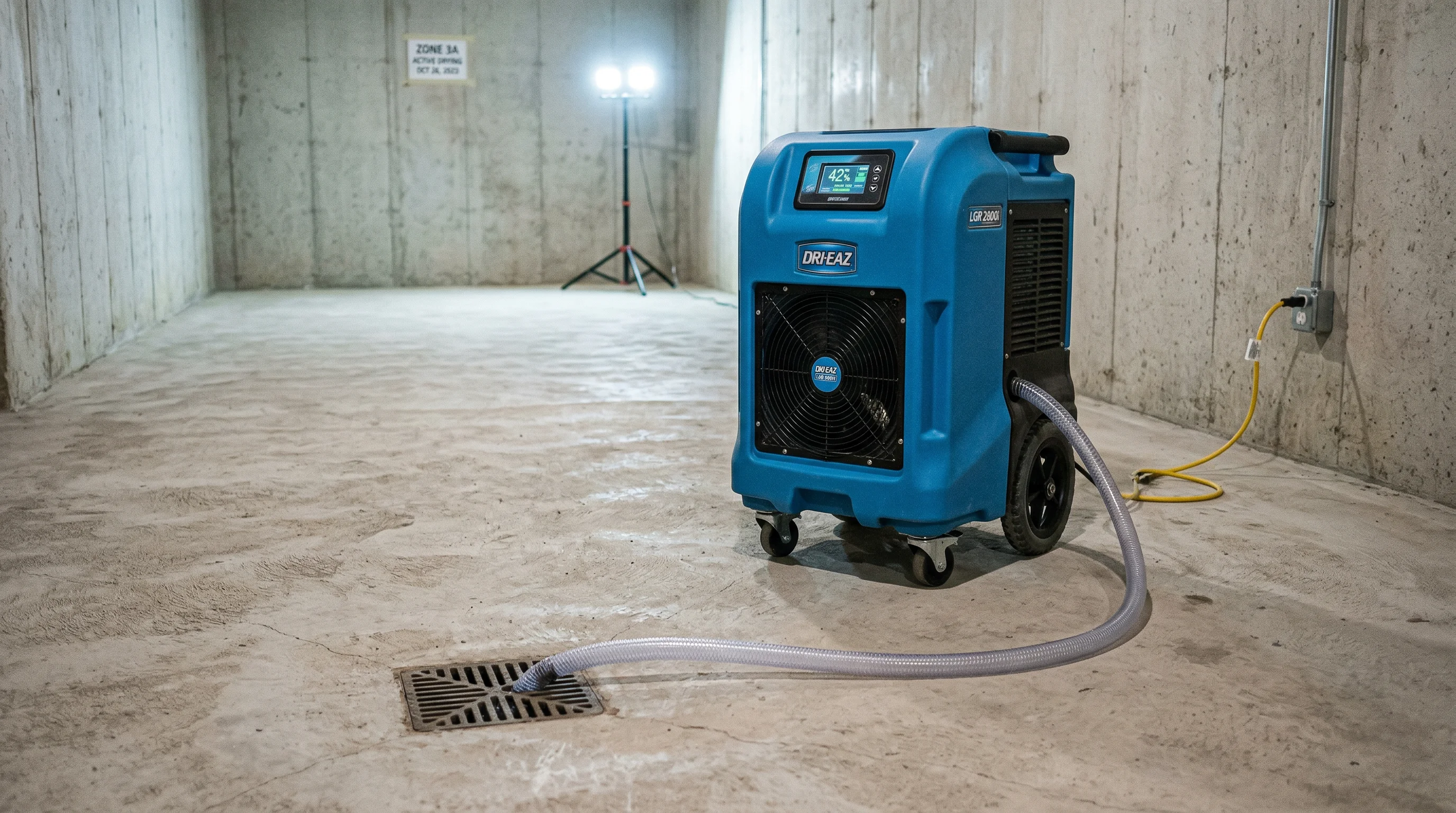
Dehumidifier and moisture control
Sustained moisture control after remediation is critical to preventing recolonization and achieving passing clearance test results.
Remediation Sequence
How this project type is handled professionally
Define the testing objective
Before any sample is collected, clarify whether the goal is to confirm the presence of mold, map the extent of contamination, establish a pre-remediation baseline, or verify successful cleanup through clearance testing. The objective determines which sampling methods are appropriate, how many samples are needed, and where they should be placed. Without a clear question, even accurate lab data can be difficult to act on.
Collect targeted samples
Select air, surface, or bulk sampling methods based on site conditions, the nature of the suspected contamination, and the information needed for decision-making. Air samples are collected using calibrated pumps and spore trap cassettes at standardized flow rates, while surface samples use swab or tape-lift techniques on visible or suspect materials. Outdoor control samples should always be included when air sampling is performed to enable meaningful indoor/outdoor comparison.
Interpret with field context
Lab reports arrive with spore counts, genus identification, and sometimes species-level data, but these numbers require field context to be actionable. Compare indoor results against outdoor baselines, cross-reference with moisture meter readings and thermal imaging findings, and account for building use patterns and HVAC operation. A qualified assessor synthesizes lab data with on-site observations to determine whether findings indicate active growth, historical residue, or normal ambient conditions.
Apply findings to scope
Use the interpreted results to refine containment boundaries, adjust the removal plan, and establish the verification strategy for post-remediation clearance. If sampling reveals contamination beyond the initially suspected area, the scope of work expands accordingly. If results are within normal ranges, the team can proceed with confidence that the existing plan addresses the full extent of the problem. Documented findings also support insurance submissions and regulatory compliance.
Cost Guidance
What to expect on pricing
Costs vary by contamination severity, affected area size, and region. These ranges reflect typical residential and commercial projects in our service areas.
Air quality sampling (2-3 locations)
$250 - $500
Includes calibrated spore trap collection at multiple indoor locations plus one outdoor control, with accredited lab analysis and a written interpretive report.
Surface / bulk sampling
$100 - $300 per sample
Swab, tape-lift, or bulk material samples submitted individually to the lab. Costs scale with the number of discrete locations sampled across the property.
Full mold inspection with report
$400 - $800
Comprehensive visual assessment combined with moisture diagnostics, sampling as warranted, and a detailed written report suitable for insurance or legal documentation.
Post-remediation clearance testing
$300 - $600
Independent verification sampling performed after remediation is complete to confirm that airborne and surface conditions meet established clearance criteria before reconstruction begins.
Third-party lab analysis
$50 - $150 per sample
Accredited laboratory processing fee for individual sample cassettes or swabs. Turnaround times typically range from 24 hours for standard analysis to same-day for rush processing.
Regional notes
Florida
High ambient humidity and frequent storm events can shift outdoor spore profiles quickly, making the timing of baseline samples critical for accurate indoor/outdoor comparisons. Post-hurricane environments often produce elevated background counts of water-indicator genera like Chaetomium and Stachybotrys, which complicates interpretation if outdoor controls are not collected concurrently. Assessors in South Florida should also account for year-round elevated moisture levels when evaluating whether indoor conditions represent active growth or normal regional baselines.
North Carolina
Significant seasonal variation in temperature and humidity means that sampling results from summer months may look very different from winter assessments in the same building. Crawl space environments in the Piedmont and mountain regions are particularly susceptible to condensation-driven mold growth, often requiring targeted sub-floor sampling that would not be part of a standard living-space assessment. Vented crawl space designs common in older North Carolina homes can introduce outdoor moisture that sustains hidden contamination for extended periods.
South Carolina
The contrast between coastal and inland microclimates can produce substantially different outdoor spore profiles within the same metro area, affecting the validity of indoor/outdoor ratio comparisons. Lowcountry properties near tidal waterways face elevated ambient mold levels year-round, which must be factored into clearance criteria and baseline interpretation. Assessors working in Charleston and surrounding coastal zones should collect outdoor samples in close proximity to the subject building rather than relying on regional averages.
Common Questions
Frequently asked questions
When is mold testing necessary?
Testing is most valuable when contamination is suspected but not visible, when the scope of a known problem is unclear, when occupants report persistent health symptoms without an obvious source, or when documentation is required for insurance claims, real estate transactions, or legal proceedings. If mold is plainly visible and the moisture source is identified, testing may not be needed before starting remediation, though it can still serve a documentation role.
What is the difference between air and surface sampling?
Air sampling uses a calibrated pump to draw a measured volume of air through a spore trap cassette, capturing airborne particles for laboratory analysis. It estimates the types and concentrations of spores in the breathing zone at the time of collection. Surface sampling uses swab, tape-lift, or bulk material techniques to identify mold directly on a material. Air sampling reveals what occupants may be inhaling, while surface sampling confirms what is growing on a specific substrate. Most thorough assessments use both methods together.
How long do lab results take?
Standard turnaround from an accredited laboratory is typically 24 to 48 hours after the sample is received. Rush or same-day processing is available from most labs at an additional fee and is commonly used for clearance testing when reconstruction crews are scheduled to begin work. The assessor then needs additional time to interpret the raw data in the context of field observations and produce a written report.
Can I do my own mold test?
Consumer-grade mold test kits are widely available, but they have significant limitations. Settle-plate kits left open to ambient air will almost always grow mold colonies because spores are naturally present in every indoor environment, making positive results essentially meaningless without quantitative comparison data. Professional sampling uses calibrated equipment, standardized protocols, accredited laboratories, and trained interpretation to produce results that are actionable for remediation planning, insurance documentation, and legal defensibility.
What does a clearance test prove?
A clearance test, also called post-remediation verification, demonstrates that airborne spore concentrations and surface conditions in the remediated area meet pre-established criteria, which may be based on industry guidelines, project specifications, or indoor/outdoor comparison ratios. Passing clearance provides documented evidence that the remediation was effective and that the space is suitable for reconstruction and reoccupancy. This documentation is often required by insurance carriers before they authorize rebuild payments and can serve as a legal defense if disputes arise later.
Related Guides
Keep your remediation plan connected
Need testing with remediation planning?
Palm Build can align assessment findings with containment, remediation sequencing, and documentation requirements.