Common Myth
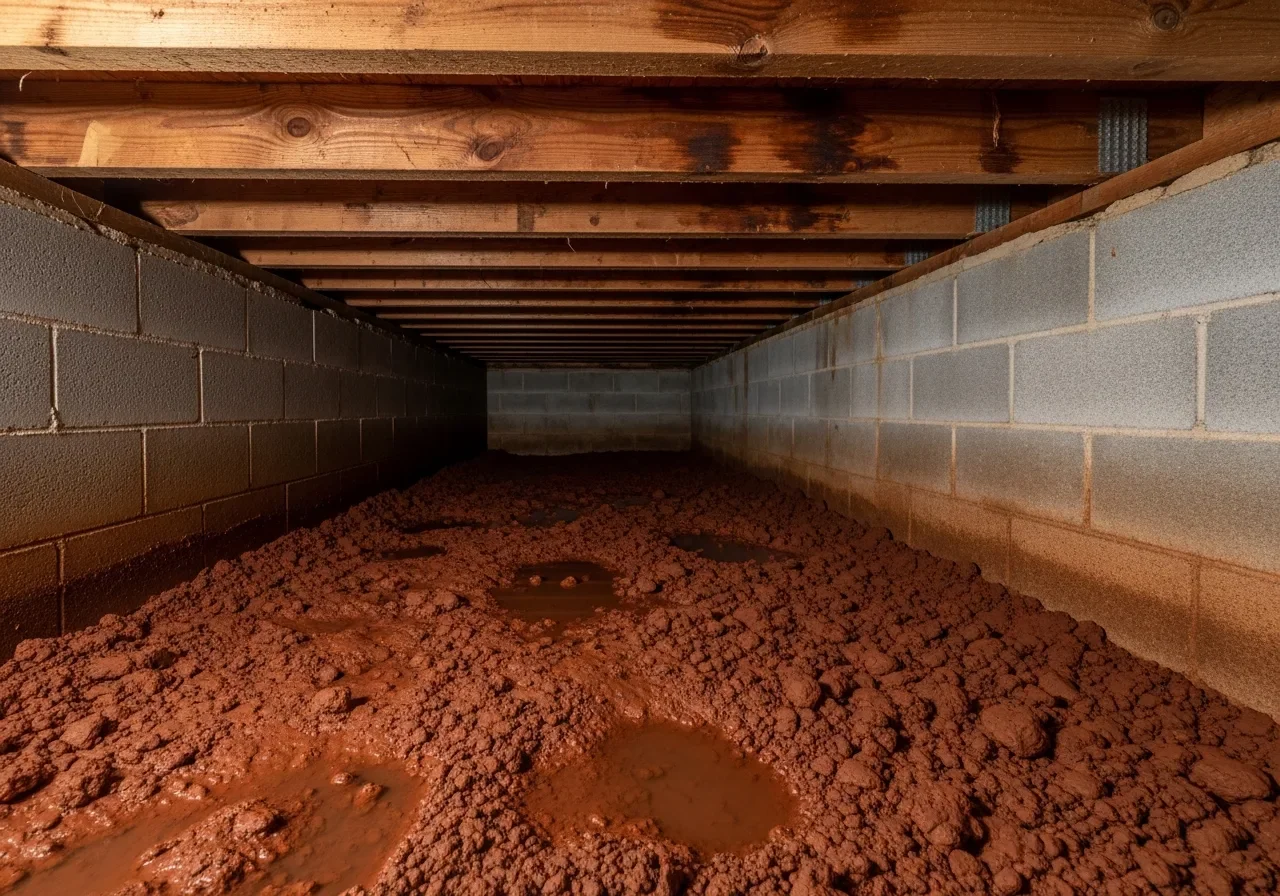
Crawl spaces are supposed to be damp — it's just dirt down there.
Reality
Uncontrolled moisture beneath your home causes mold, wood rot, and structural damage that spreads upward into living spaces.
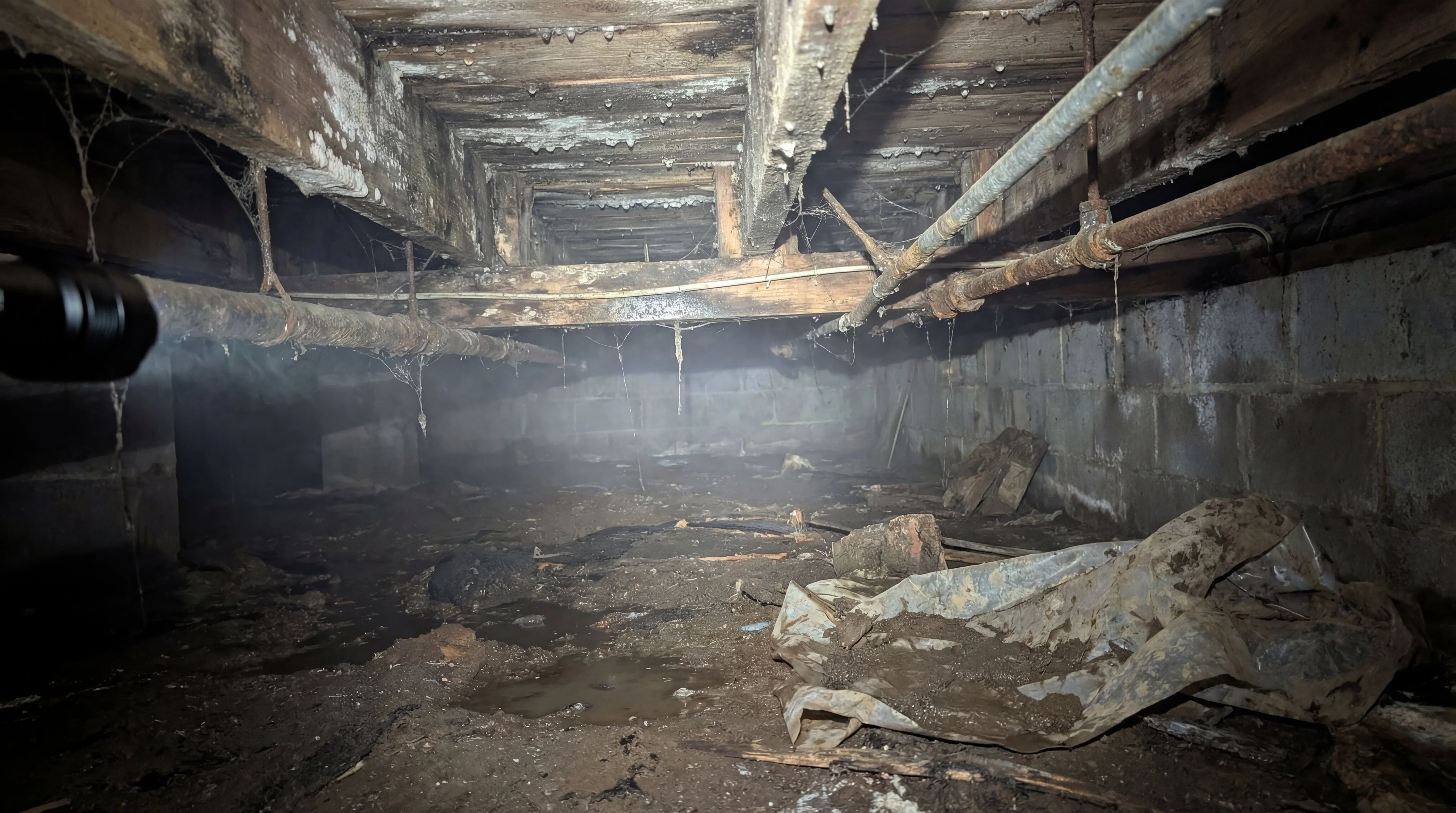
Moisture, mold, and structural problems beneath your home affect everything above it. Our IICRC-certified team provides encapsulation, dehumidification, and structural repairs across North Carolina, South Carolina, and Florida.
What's Beneath Your Home Matters
Sagging floors, musty odors, and high humidity are signs of trouble below. Mold in the crawl space travels through air ducts to affect indoor air quality. Foundation problems worsen without intervention. Our specialists identify issues, recommend solutions, and protect your home with encapsulation, dehumidification, and structural repairs.
Schedule your free inspection todayOut of Sight Shouldn't Mean Out of Mind
Most homeowners never think about their crawl space until something goes wrong — a musty smell that won't go away, floors that feel soft underfoot, or an energy bill that keeps climbing. What's happening beneath your home doesn't stay there. Through the stack effect, roughly half the air on your first floor rises from the crawl space below, carrying moisture, mold spores, and odors with it.
~50%
of first-floor air originates from the crawl space via the stack effect
70%+
relative humidity threshold where mold actively colonizes wood framing
15%
average energy savings from properly encapsulated crawl spaces
Crawl spaces are supposed to be damp — it's just dirt down there.
Uncontrolled moisture beneath your home causes mold, wood rot, and structural damage that spreads upward into living spaces.
If I can't see or smell anything wrong, my crawl space is fine.
Many crawl space problems develop silently for years. By the time you notice sagging floors or musty odors, damage is often advanced.
Opening the vents will dry out a damp crawl space.
In humid climates like NC, SC, and FL, open vents pull moisture-laden air in and raise humidity — sealed crawl spaces stay drier.
As warm air rises and escapes through upper levels, replacement air is drawn upward from the crawl space. Mold spores, moisture, soil gases, and pest allergens ride that current directly into bedrooms, kitchens, and living areas. Fixing crawl space conditions is an indoor air quality upgrade for your entire home.
Warning Signs
Crawl space problems are invisible until they become expensive. These four warning signs mean your crawl space needs professional assessment — not next quarter, now.
If you can safely access your crawl space, look for pooling water, saturated vapor barriers, or active dripping. Standing water beneath your home accelerates wood rot, attracts pests, and can compromise your foundation within weeks. If your sump pump has stopped running, that is an emergency.
Musty or earthy smells coming through your floors or vents mean moisture and likely mold growth below. Do not ignore it — crawl space air makes up 40-50% of the air you breathe on the first floor through the stack effect. Open foundation vents if accessible and run a dehumidifier on the main level.
Droppings, gnaw marks, insect damage to floor joists, or nesting material all indicate an active infestation driven by excess moisture. Pests and moisture go together — solving one without the other guarantees recurrence. Document what you find with photos before calling for service.
Soft spots, warping hardwood, buckling laminate, or condensation on windows all point to crawl space moisture migrating upward. If indoor humidity stays above 60% despite running AC, the source is almost certainly below. These are signals your crawl space needs professional assessment now, not next month.
Free crawl space assessments across FL, NC, and SC. We identify moisture sources, structural concerns, and encapsulation needs before small problems become foundation-level repairs.
What's Actually Happening Below
Crawl space issues rarely come alone. Standing water leads to mold; mold weakens wood; weakened wood attracts pests; pest damage drives up energy loss. This is the catalog of what we find on almost every assessment — and how we fix it without leaving the root cause untreated.
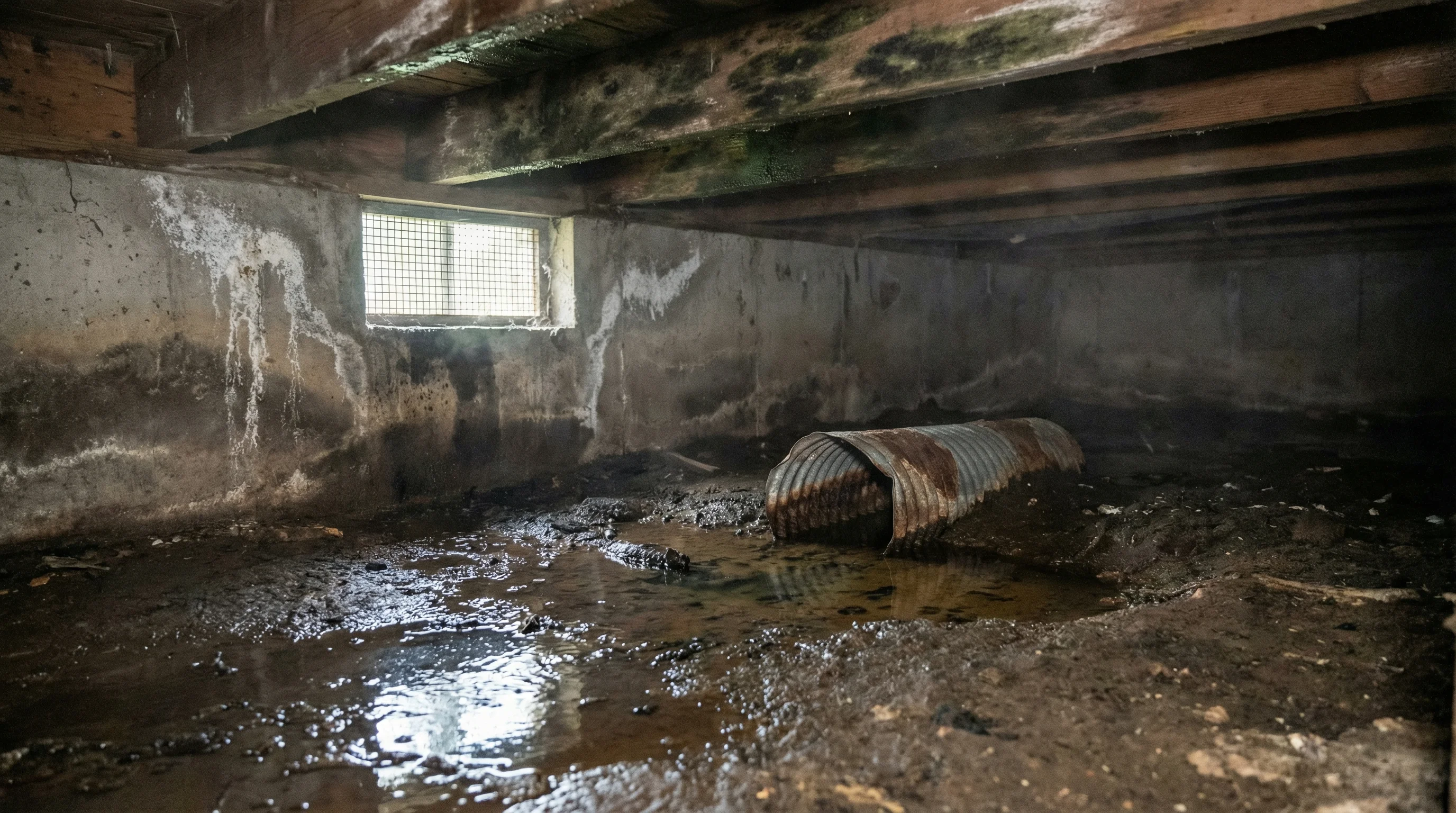
Water in the crawl space is the highest-urgency problem on this list. Wood members lose structural integrity within hours, not days, and mold colonization begins at the 24–48 hour mark.
Detection signs
If left untreated
How Palm Build remediates
Emergency extraction with submersible pumps or truck-mount equipment, identify and stop the water source (groundwater, plumbing, surface drainage), interior french drain + sump pump install if recurrence is likely, then full drying with commercial dehumidification before any encapsulation.
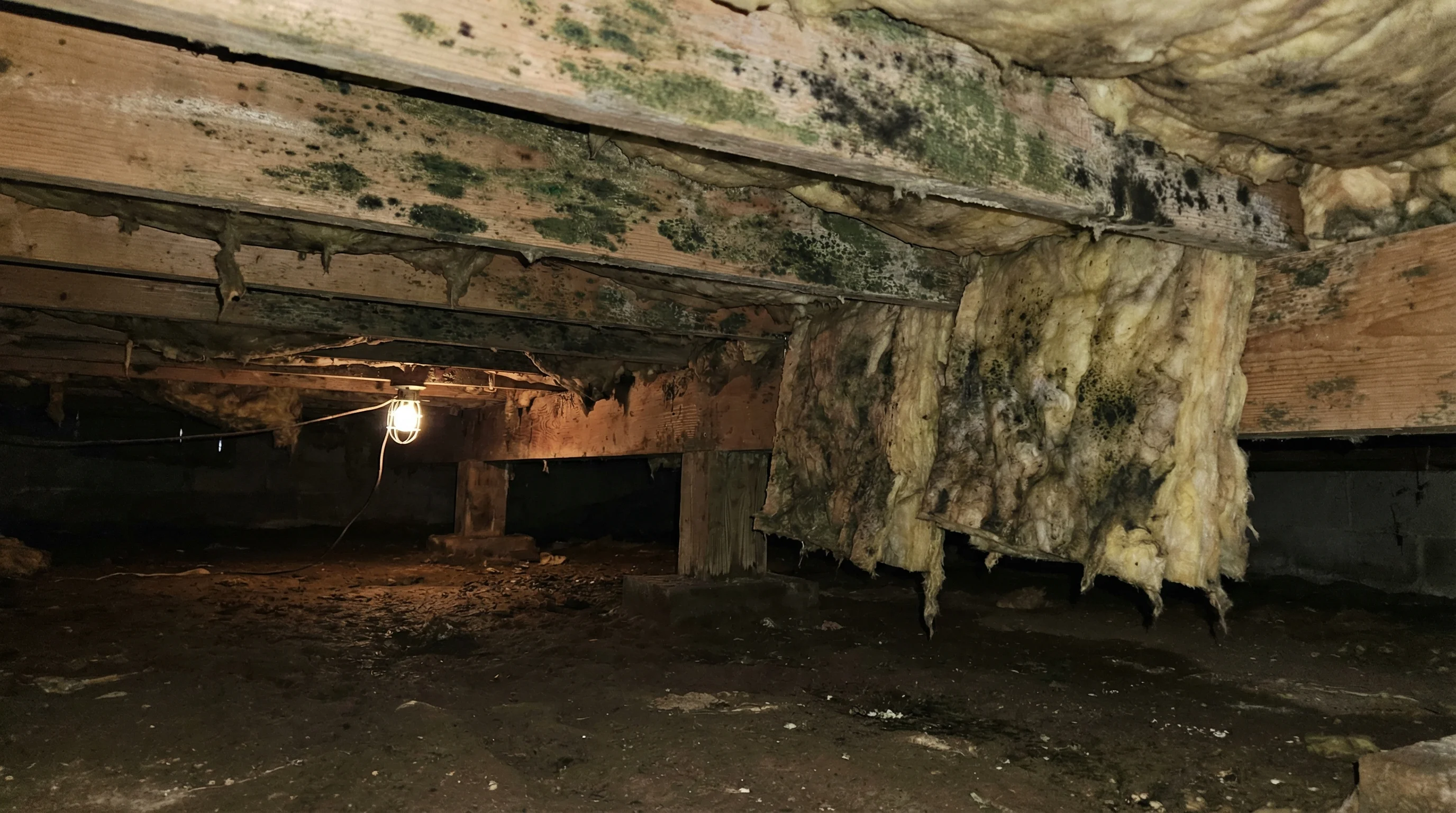
Crawl space mold is the most common air-quality complaint we investigate. Because ~40% of indoor air in vented-crawl homes originates below the floor (Building America, ASHRAE field studies), spores migrate upstairs through the stack effect.
Detection signs
If left untreated
How Palm Build remediates
IICRC S520-compliant remediation: HEPA containment, PPE, source removal of contaminated material, HEPA vacuuming of all surfaces, antimicrobial treatment, post-remediation verification testing. Follow with encapsulation and dehumidification to prevent re-colonization.
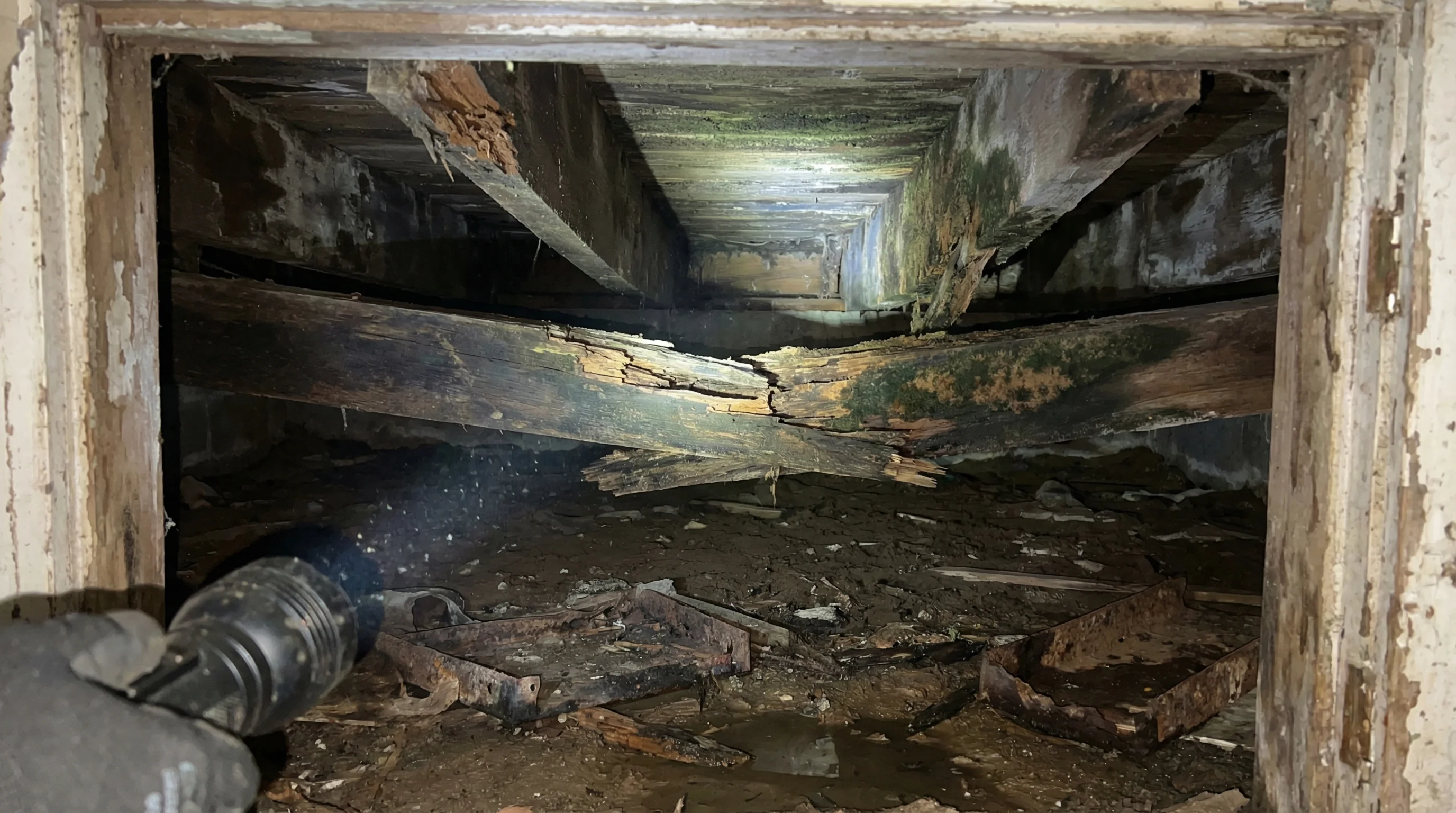
Wood-decay fungi can reduce load-bearing capacity by 10–40% before damage is visible (USDA Forest Products Laboratory). Sagging floors, bouncy spots, and sticking doors are the upstairs symptoms of below-grade structural failure.
Detection signs
If left untreated
How Palm Build remediates
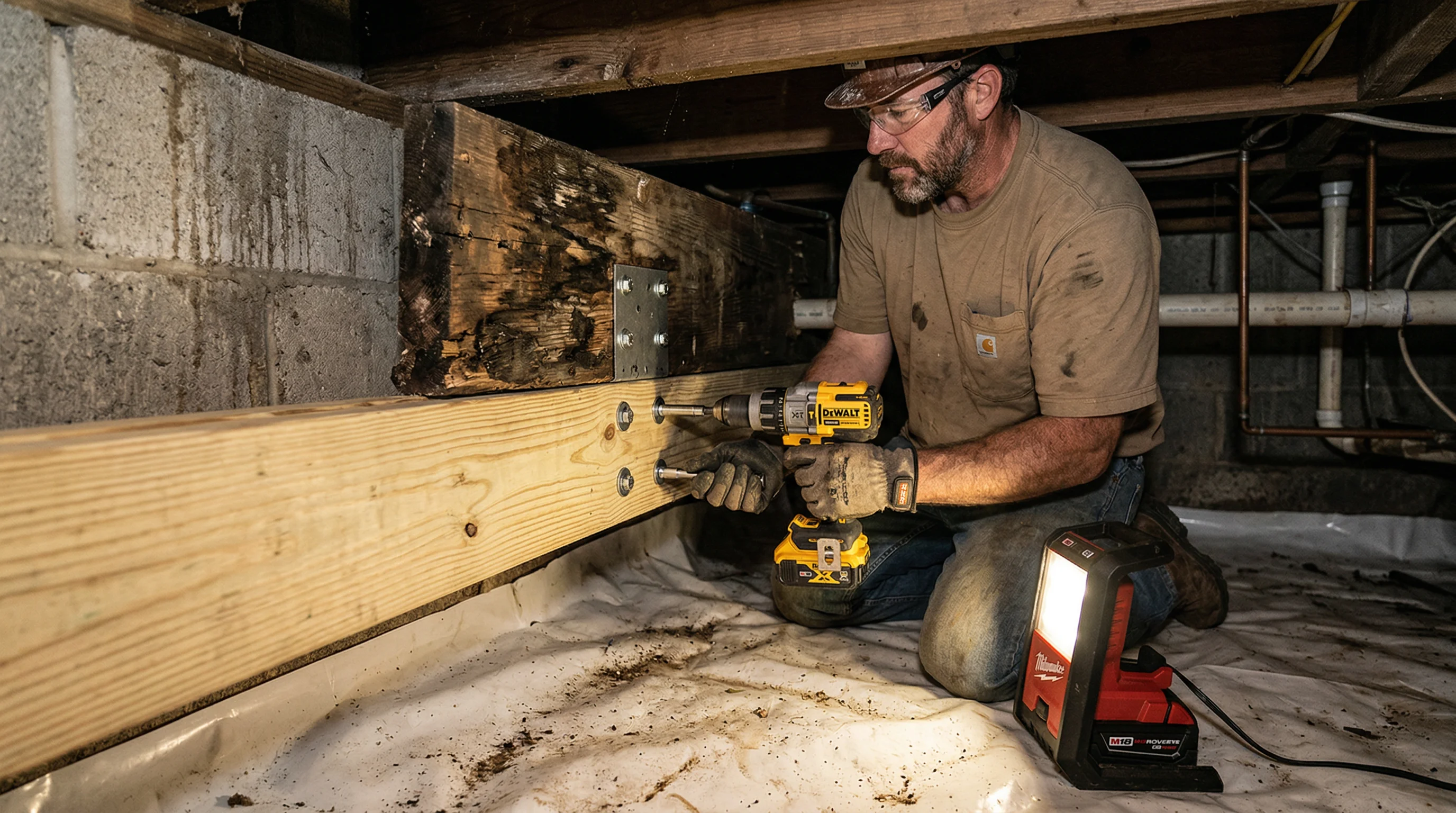
Structural assessment by a qualified contractor, joist sistering with pressure-treated lumber, beam or girder replacement when primary members are compromised, steel jack post installation, and — most importantly — a permanent moisture control plan so the new wood does not suffer the same fate.
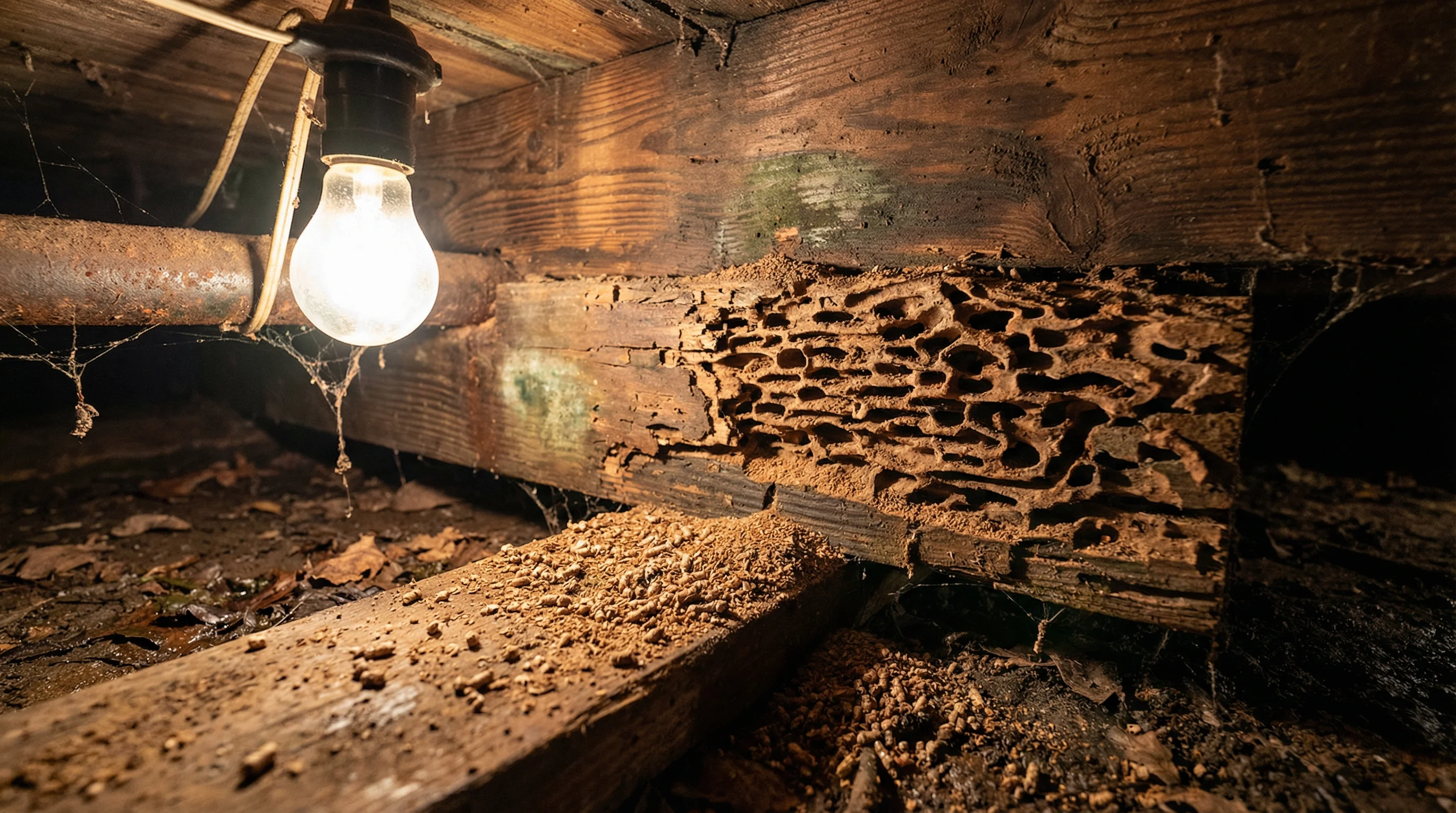
Damp crawl spaces are the perfect habitat for subterranean termites, carpenter ants, rodents, and cockroaches. Subterranean termites alone cause $5+ billion in U.S. property damage every year (NPMA), and they enter through soil-contact wood and mud tubes from the ground.
Detection signs
If left untreated
How Palm Build remediates
Coordinated treatment with a licensed pest control provider before any encapsulation work, removal of contaminated insulation under PPE, structural repair of damaged members, and encapsulation that maintains a 3–4 inch termite inspection gap at the sill plate (mandatory in NC and SC code).
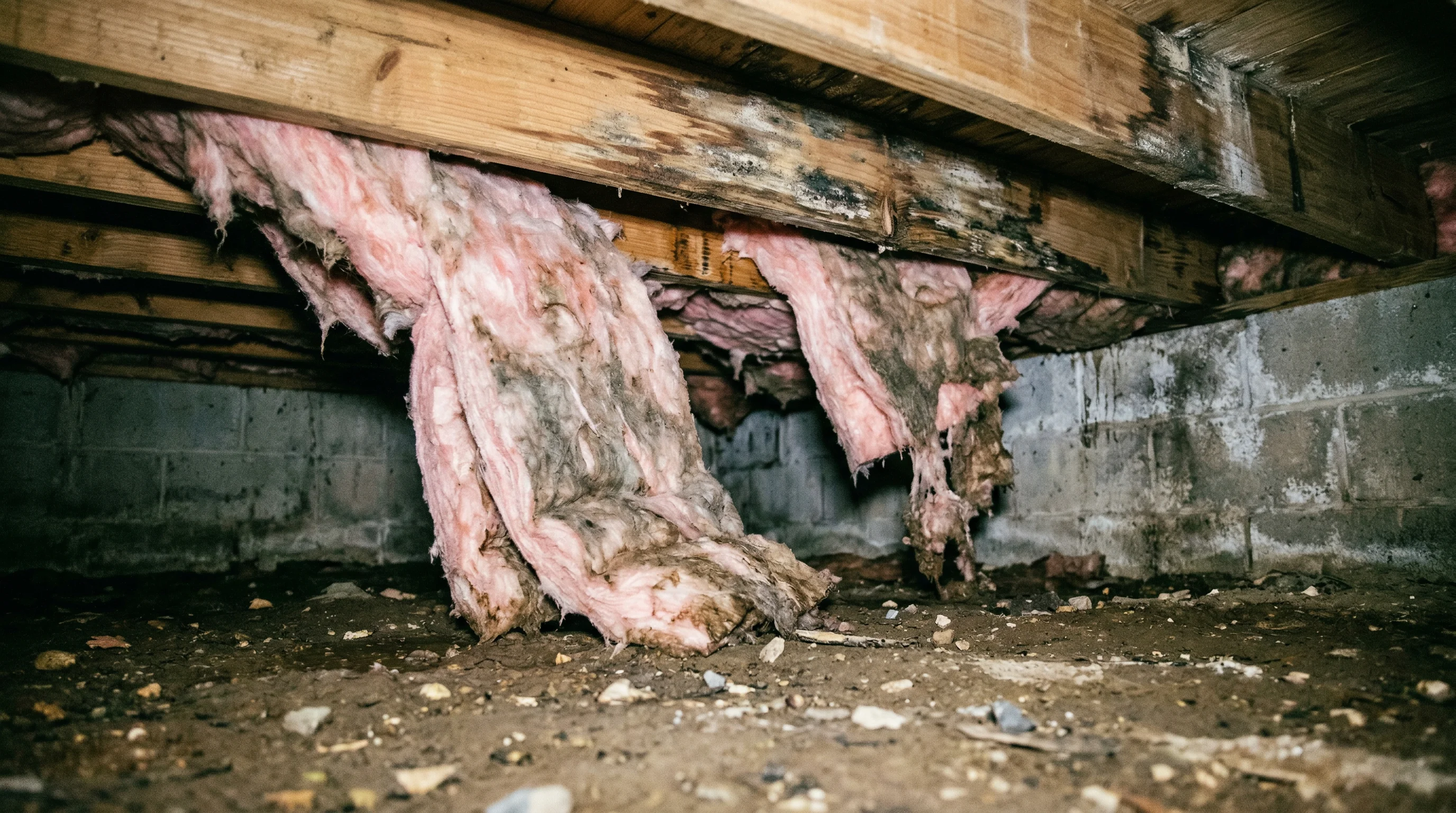
Unencapsulated crawl spaces account for 10–20% higher heating and cooling costs in typical Southeastern homes (ENERGY STAR). Cold winter floors, clammy summer humidity, and rising utility bills are all symptoms of an uncontrolled crawl space pulling conditioned air down through the stack effect.
Detection signs
If left untreated
How Palm Build remediates
Air-seal the crawl space envelope (vent sealing, sill plate sealing), install rigid foam wall insulation R-10 to R-15 (or spray foam), and decouple the crawl from outside air. Encapsulation with dehumidification typically delivers 5–10 year payback through HVAC savings alone.
Warning Signs to Watch For
Many homeowners don't realize that problems beneath their home affect everything above. Recognizing these signs early can prevent costly foundation problems and improve air quality throughout your living space.
When floor joists weaken from moisture damage, you may notice sagging floors or a bouncy feeling when walking. This indicates structural damage that requires immediate attention.
Up to 40% of your home's air comes from below. Mold in the crawl space causes musty smells that affect indoor air quality. Addressing the source is the only way to improve air quality.
Visible water or condensation on surfaces indicates moisture problems. Without proper drainage and dehumidification, this leads to mold growth and foundation problems.
Termites, rodents, and other pests thrive in damp environments. Wood-destroying insects cause floor joist damage that compromises your home's structural integrity.
Mold in the crawl space can begin growing within 24-48 hours. Floor joists and subflooring absorb moisture, leading to sagging floors and structural issues. Early intervention prevents costly foundation repair.
Transform the area beneath your home from a problem zone into a clean, dry foundation. Our IICRC-certified technicians address moisture issues, mold in your crawl space, and structural concerns with encapsulation, dehumidification, and floor joist repair.
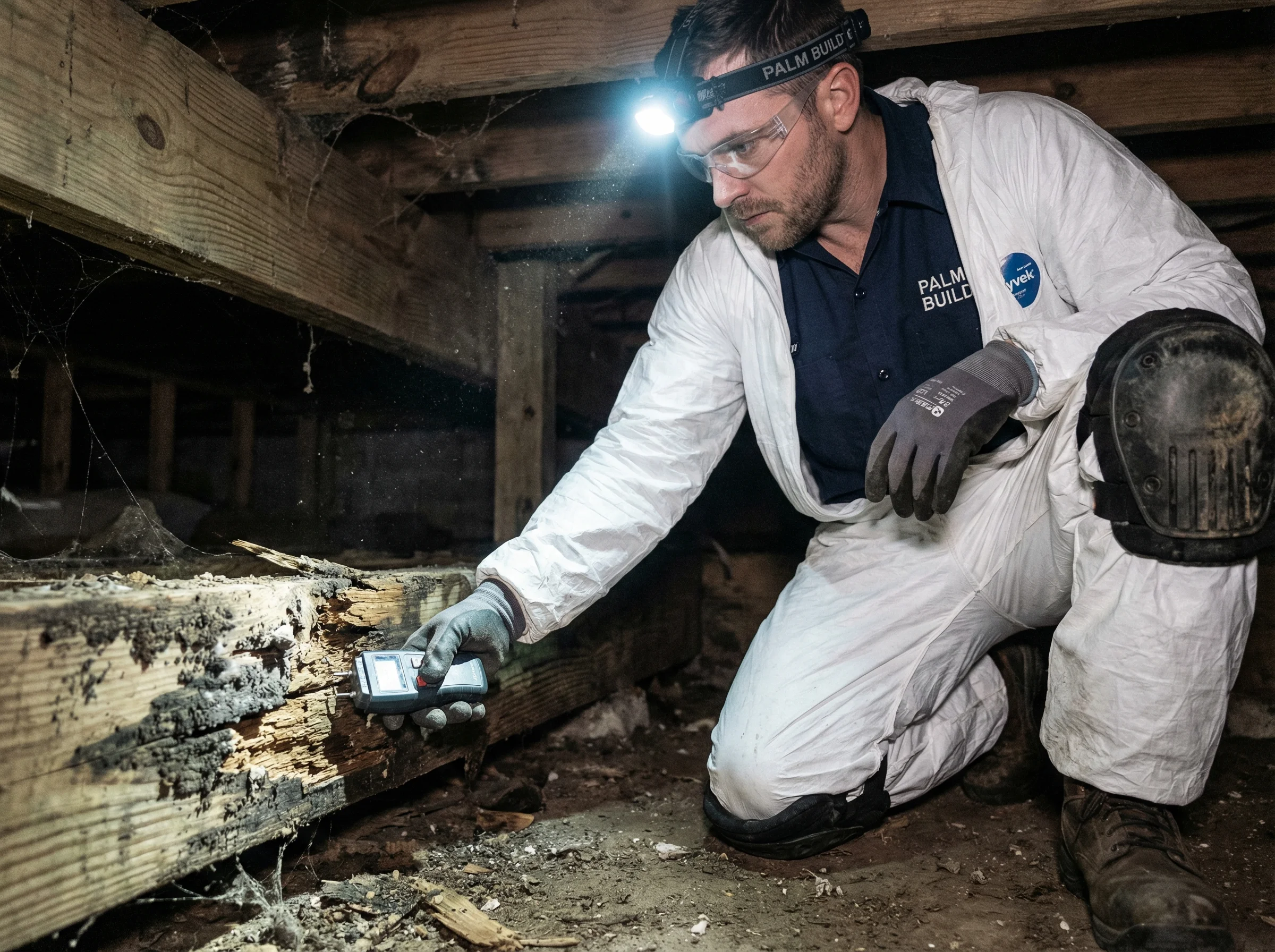
Trained specialists in moisture control, mold remediation, and foundation repair serving Florida & North Carolina
Comprehensive cleanup with long-term moisture control solutions
Thorough moisture and air quality testing
Commercial-grade systems maintain optimal humidity and improve air quality
Vapor barriers seal out moisture and protect floor joists
Safe removal of mold in the crawl space and prevention
Foundation repair and solutions for sagging floors
Our 6-step process addresses moisture, mold in the crawl space, structural issues, and air quality. We identify foundation problems early and implement lasting solutions that protect your home for years to come.
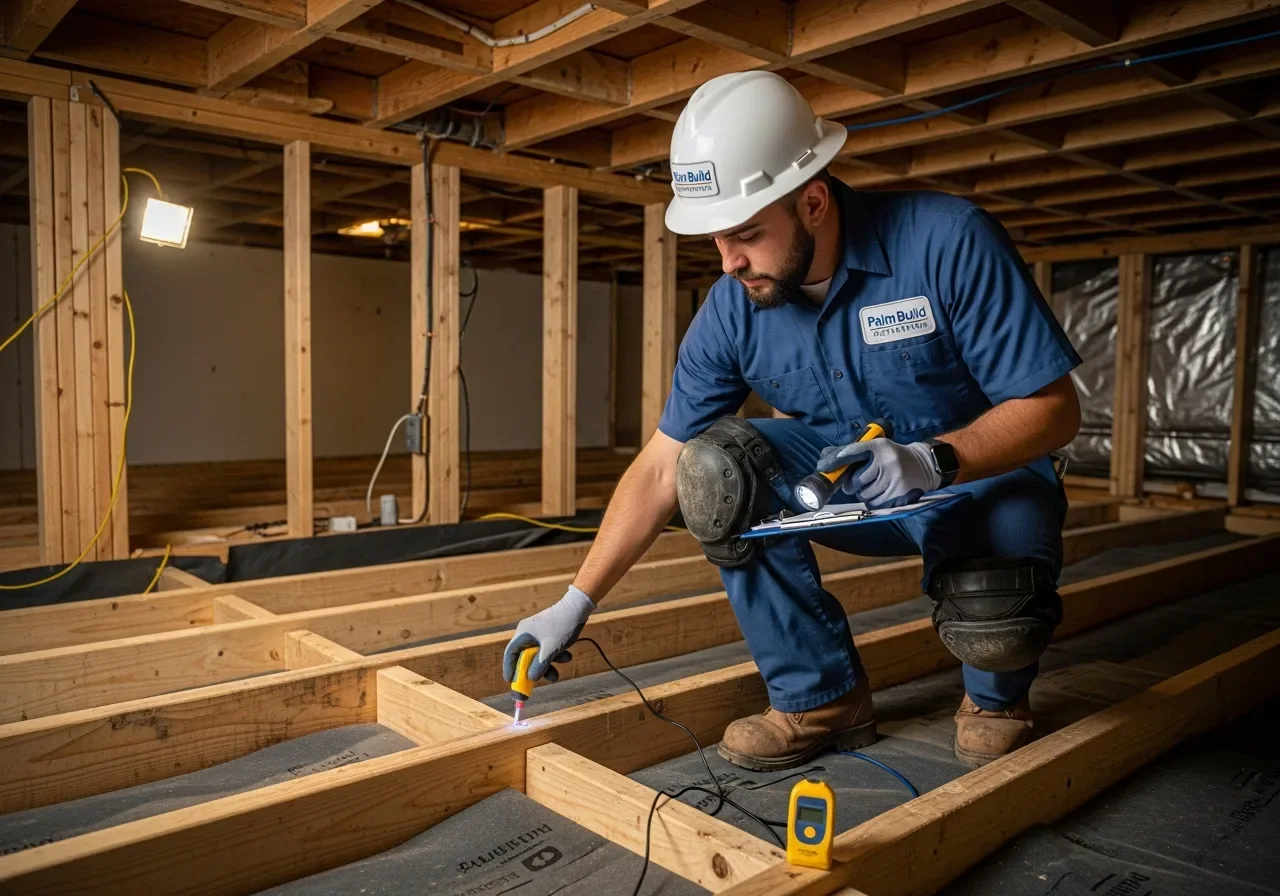
Our technicians assess moisture levels, check for mold in the crawl space, evaluate floor joists, and identify any foundation problems or structural concerns.
We address water intrusion with proper drainage solutions. When needed, we install a sump pump system to manage groundwater and prevent future problems.
Comprehensive pest control eliminates existing infestations. We seal entry points and remove conditions that attract wood-destroying insects.
Safe removal of mold in your crawl space using IICRC-approved methods. We address the moisture source to prevent regrowth.
Heavy-duty vapor barriers seal the space. A commercial dehumidifier maintains optimal humidity to improve air quality throughout your home.
We repair or reinforce damaged floor joists, address sagging floors, and complete any foundation repair needed to restore structural integrity.

Our specialists follow industry protocols for moisture control, mold remediation, and structural repair. We address foundation problems, improve air quality, and protect your home's value.
Thorough assessment of moisture, mold, pests, and structural issues.
Effective moisture management to prevent future problems.
Long-term pest control solutions to keep your crawl space protected.
Improved ventilation and air quality monitoring systems.
*Timeline varies based on crawl space size, condition, and specific issues. Minor cleanup may take 3-5 days, while extensive projects can take 1-2 weeks for complete resolution.
Comprehensive solutions that address moisture, mold in the crawl space, and foundation problems. We improve air quality and protect your home's structural integrity.
Commercial-grade dehumidification and drainage solutions including sump pump installation. We eliminate standing water and maintain optimal humidity.
Comprehensive pest control removes infestations and seals entry points. Encapsulation creates an environment pests avoid.
Safe removal of mold in the crawl space using IICRC-approved methods. We address moisture sources to prevent regrowth.
By sealing out contaminants and controlling moisture, we improve air quality throughout your home. Air ducts stay cleaner longer.
Address foundation problems before they worsen. We repair floor joists, eliminate sagging floors, and protect structural integrity.
We work directly with your insurance company to document damage and streamline claims for covered repairs.
IICRC-certified technicians trained in moisture control, mold remediation, and foundation repair techniques.
Proper encapsulation reduces energy costs by preventing conditioned air loss. Many homeowners see lower utility bills.
"Thorough inspection revealed foundation problems we didn't know about. They fixed sagging floors and installed a complete encapsulation system. Highly recommend."
Michael R., Miami
Don't let moisture, mold, or foundation problems worsen. Our team is ready to help with a free inspection and customized solution for your home.
Advanced moisture detection and control solutions to prevent water damage and maintain a dry environment.
Comprehensive pest control measures to remove existing infestations and prevent future problems.
Professional mold removal and prevention strategies to ensure a healthy indoor environment.
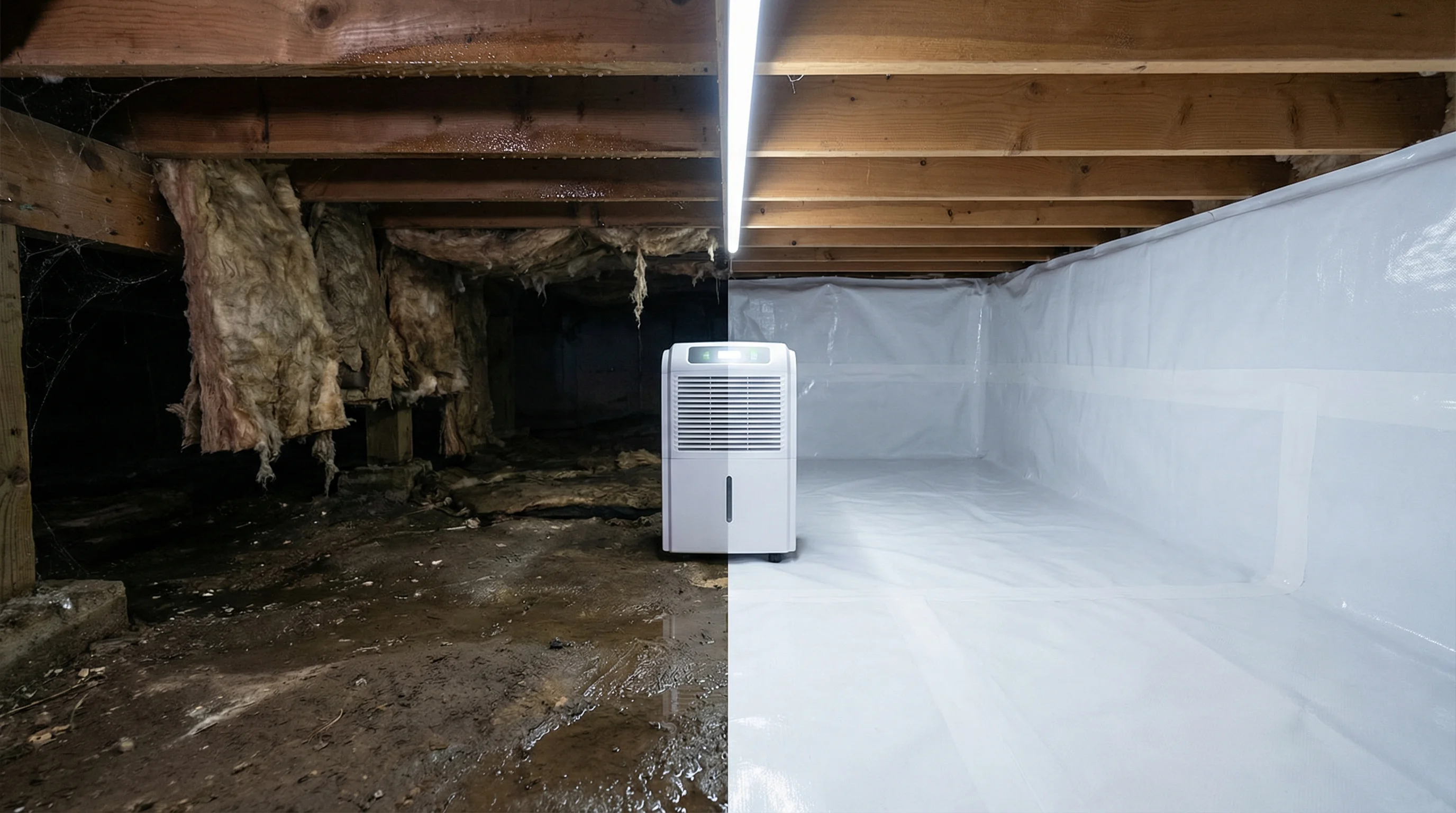
See the dramatic difference our professional crawl space cleanup services make. Drag the slider to reveal the transformation.
Need professional crawl space cleanup?
Get a Free EstimatePrevention is more affordable than repair. Learn how to spot foundation problems early, improve air quality, and protect against moisture damage beneath your home.
Check for sagging floors, musty odors, and visible moisture. Early detection of foundation problems prevents costly repairs.
High humidity leads to mold in the crawl space. Consider a hygrometer to track moisture and know when intervention is needed.
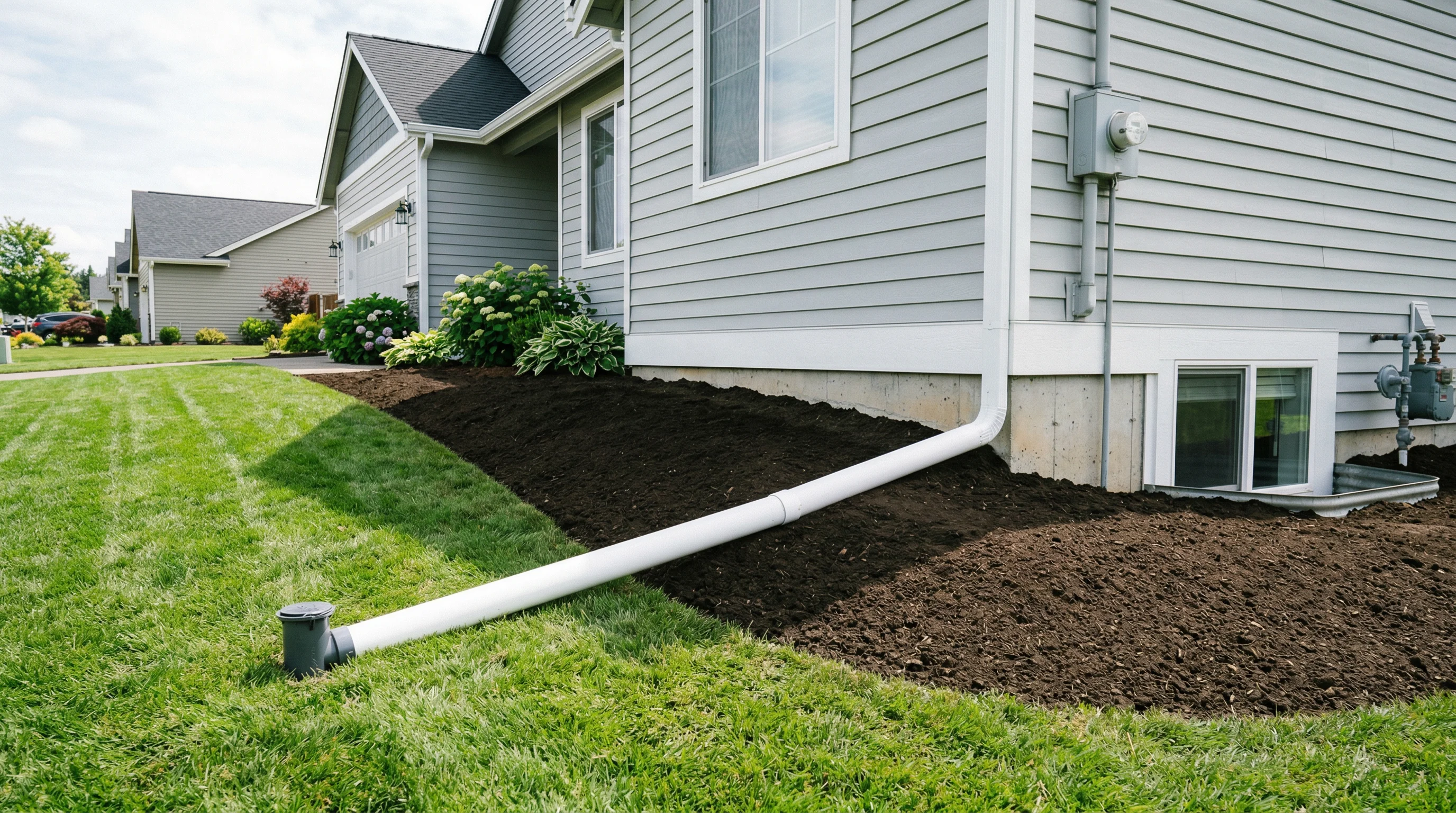
Ensure gutters direct water away from your foundation. Poor drainage causes foundation problems and basement waterproofing issues.
Higher energy bills, allergies, musty odors, and floor joist creaking all indicate possible issues beneath your home.
Mold in the crawl space can begin growing within 24-48 hours of moisture exposure
Floor joist damage from moisture weakens structural support and causes sagging floors
40-50% of air in your home comes from below—affecting indoor air quality
Proper encapsulation with dehumidification can improve air quality throughout your home
Foundation problems caught early cost significantly less to repair than ignored issues
Schedule regular crawl space inspections
Monitor moisture levels and humidity
Maintain proper ventilation
Have an emergency response plan ready
Our IICRC-certified specialists are available to assess foundation problems, mold in the crawl space, and moisture damage. We protect your home and improve air quality.
Our 8-Step Encapsulation Process
A 1,500 sq ft crawl space takes us 5–7 working days from first measurement to final verification. Here is exactly what each step costs, how long it takes, and why it cannot be skipped — because a vapor barrier rolled over wet soil with mold underneath will fail in under a year.
Why it matters: You cannot fix what you have not measured. We document baseline wood moisture content (%), relative humidity, dew point, structural condition, mold presence, drainage patterns, and any pest activity before recommending a scope.
What we deliver
Why it matters: Old fiberglass insulation, construction debris, abandoned materials, and contaminated soil all interfere with the vapor barrier seal. A clean substrate is essential — anything left behind becomes a future moisture trap.
What we deliver
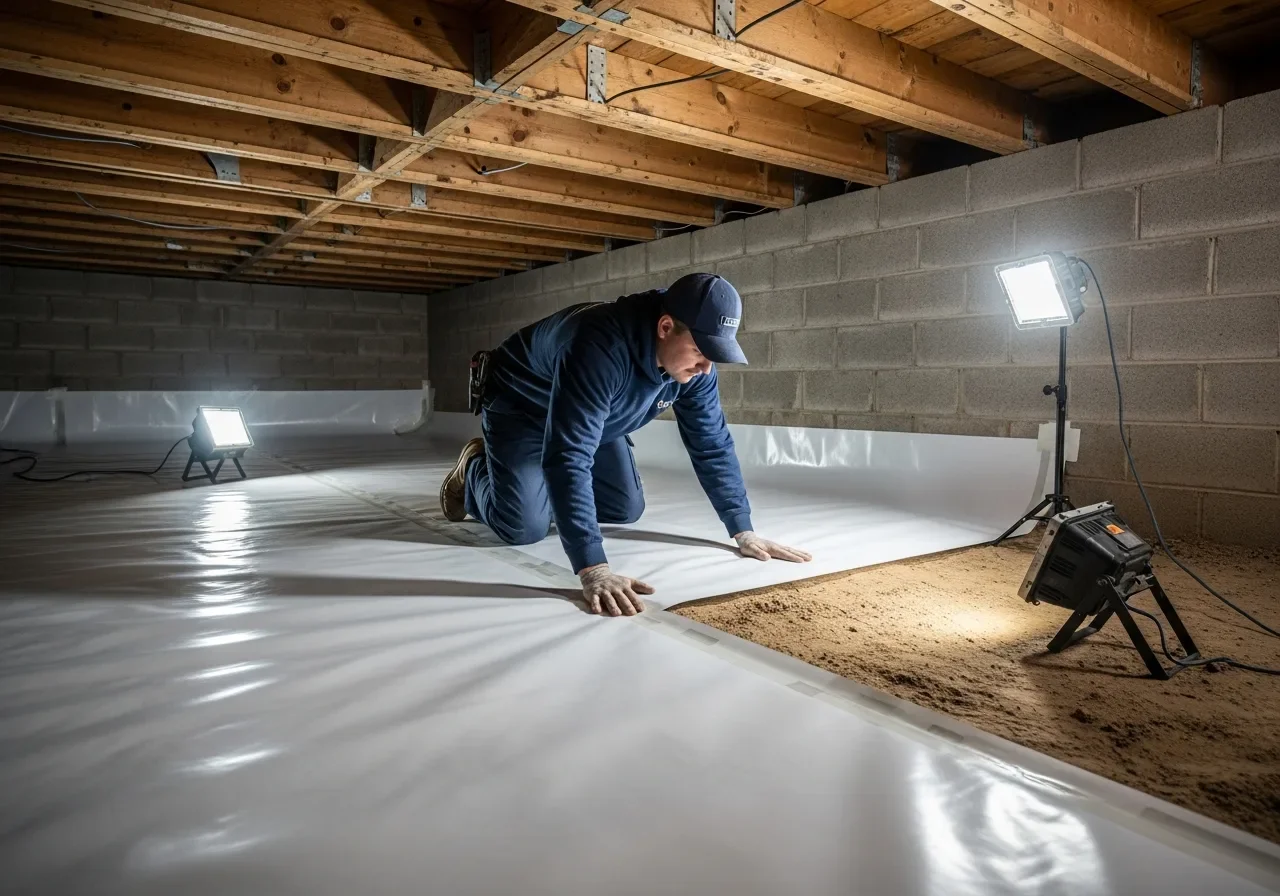
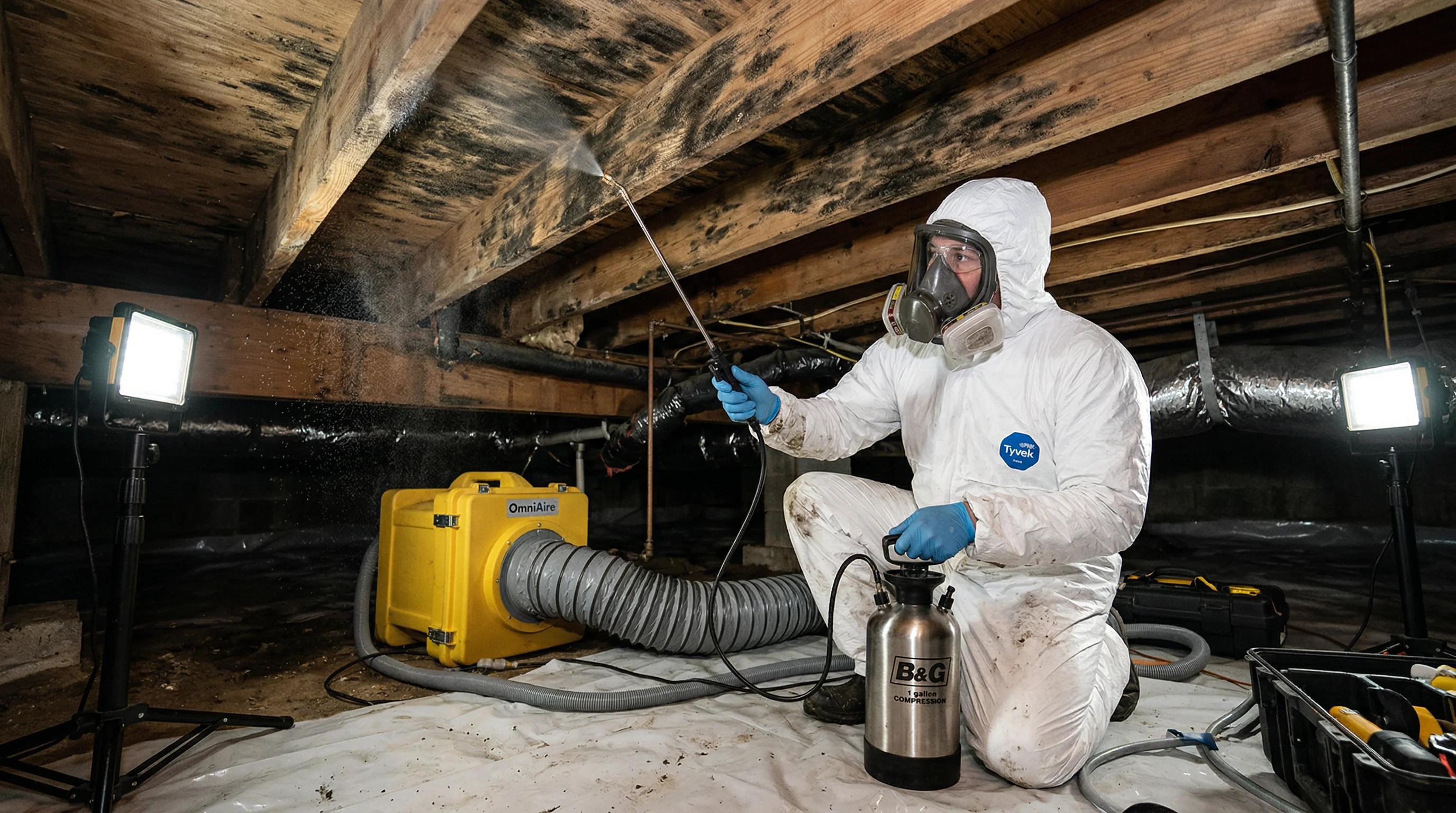
Why it matters: Encapsulating over visible mold traps it with a food source (wood) and elevated humidity — guaranteeing colony growth. IICRC S520 protocol requires source removal first, with HEPA containment and post-remediation verification.
What we deliver
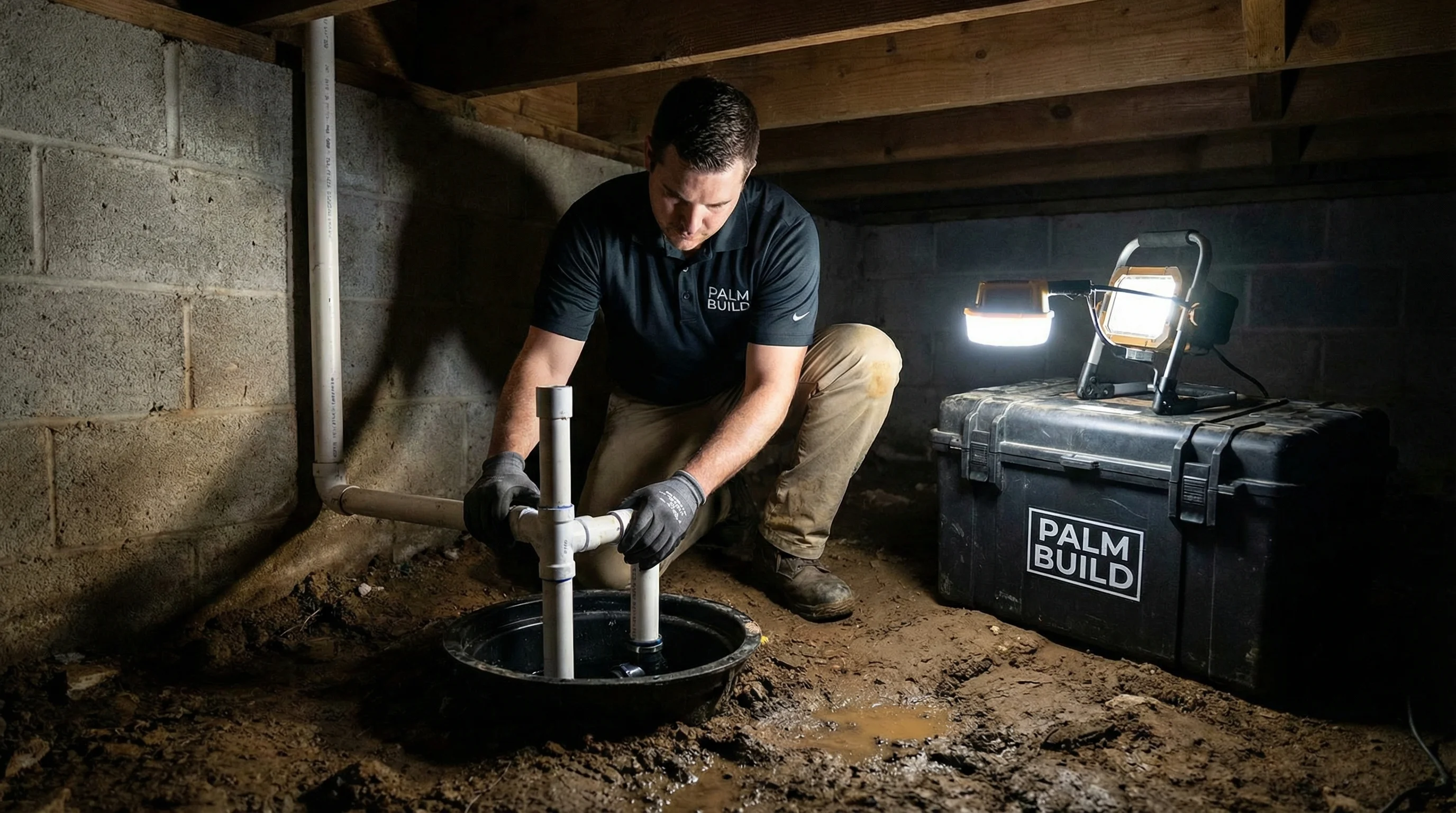
Why it matters: A vapor barrier solves ground moisture but does nothing for active water intrusion. If standing water has occurred even once, drainage correction must be installed before sealing — otherwise the crawl will flood inside the encapsulation envelope.
What we deliver
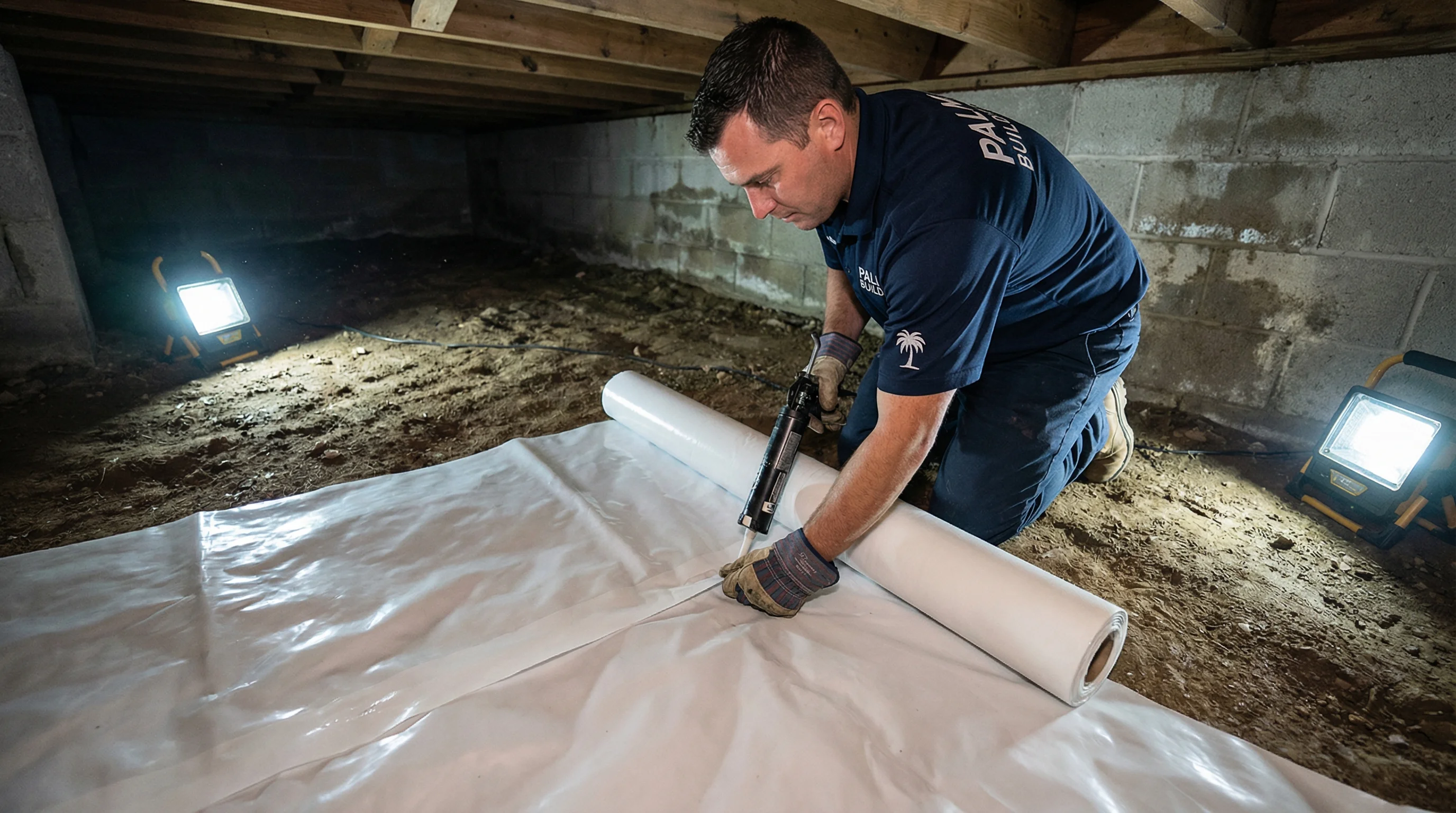
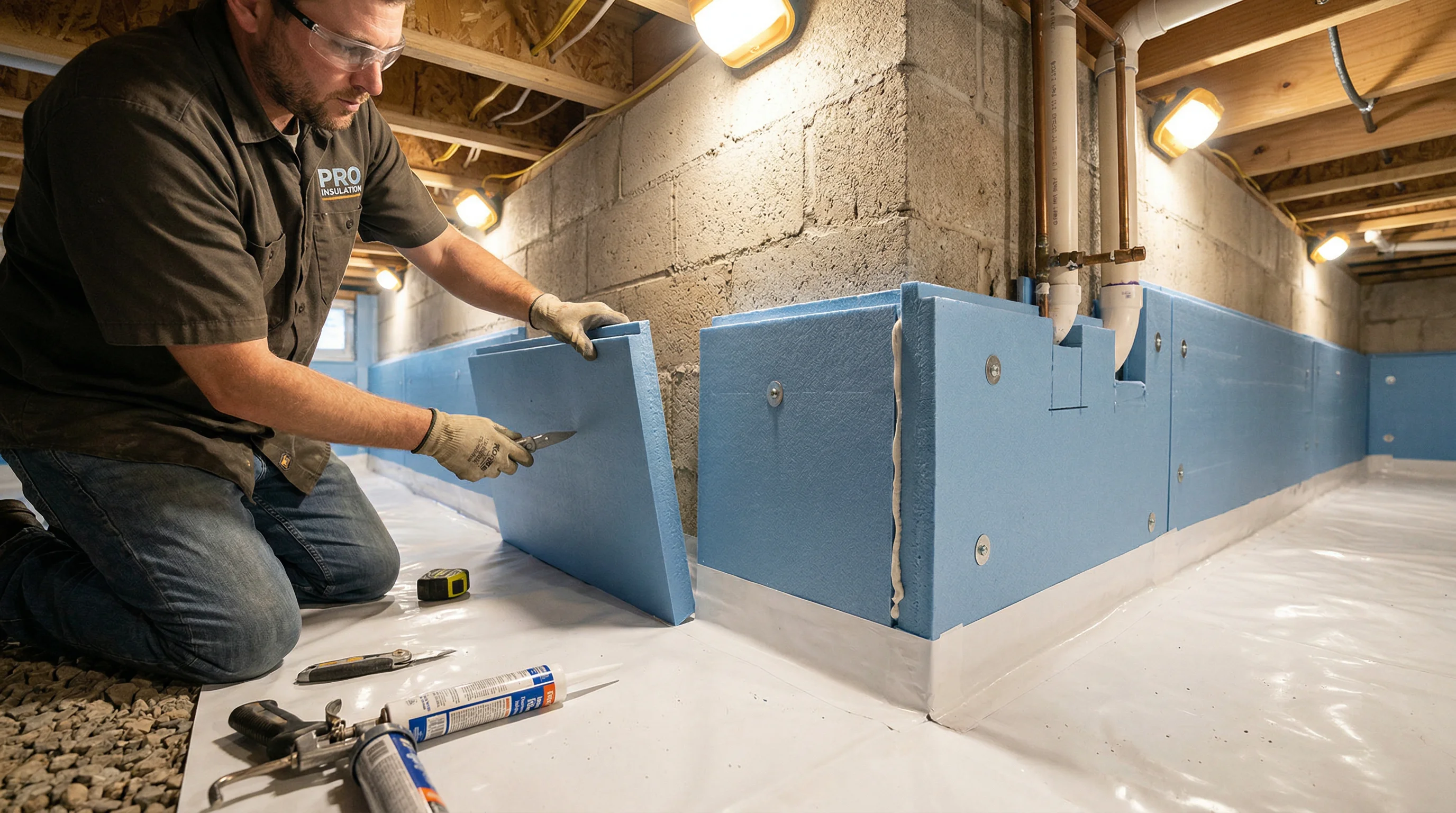
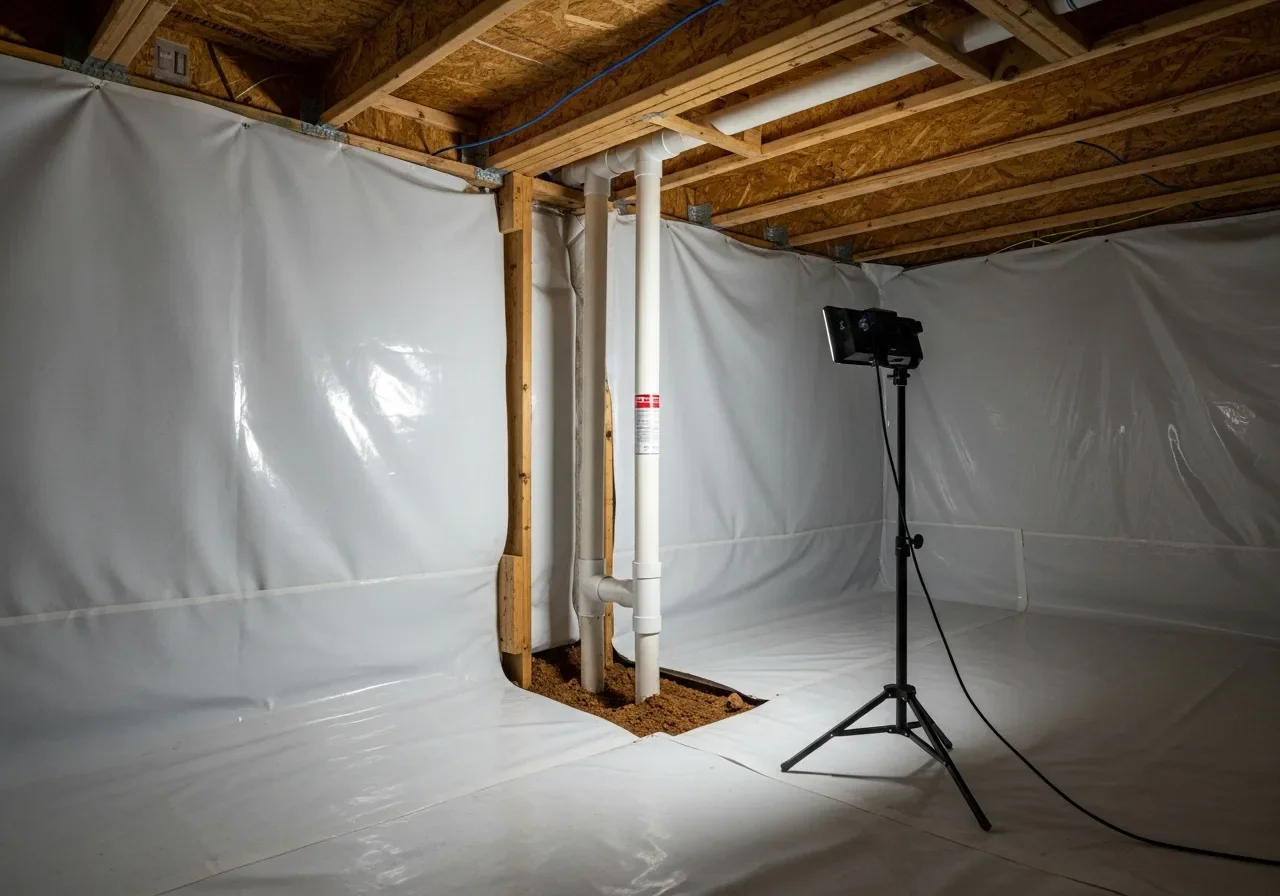
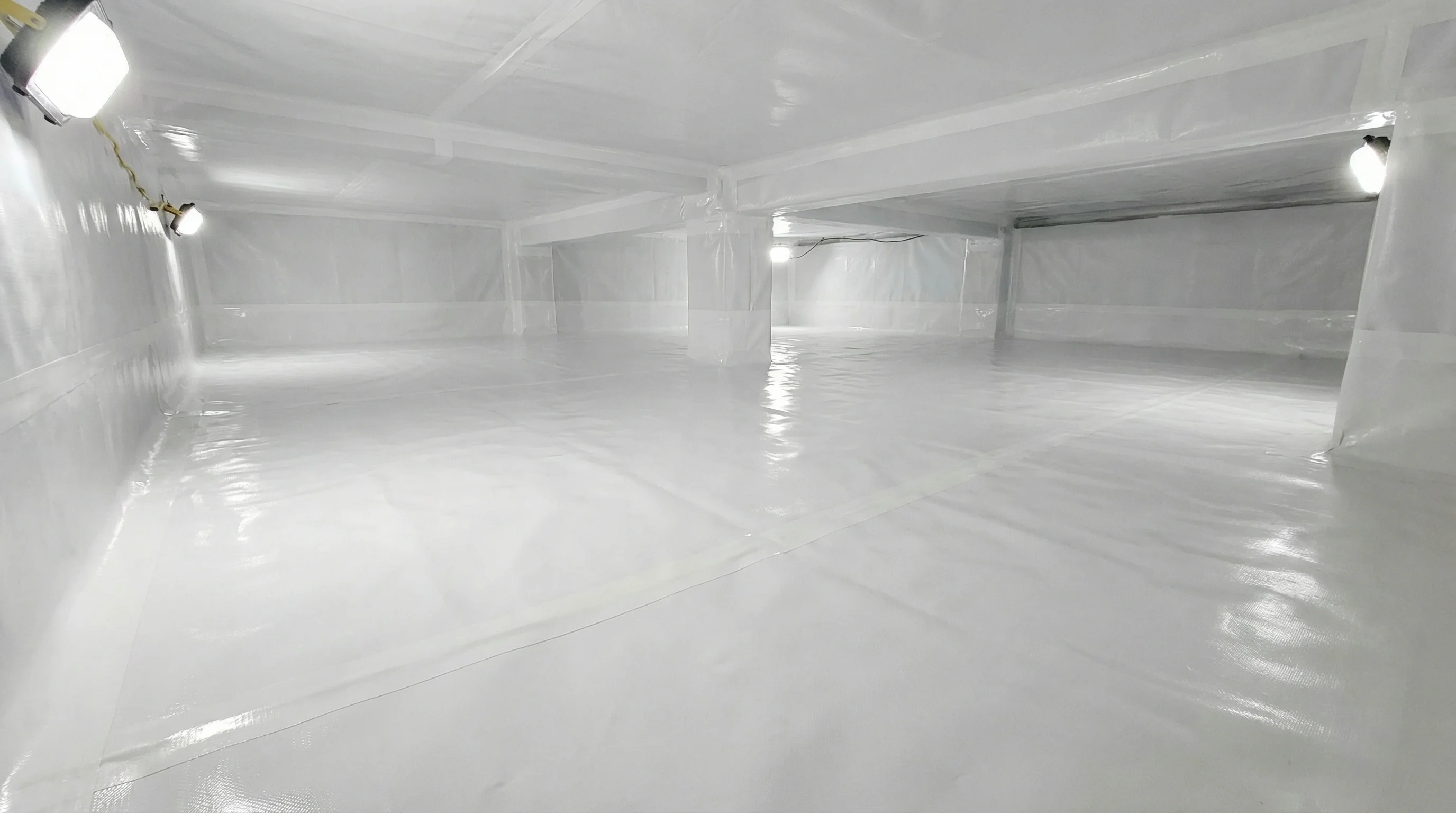
Why it matters: The vapor barrier is the heart of encapsulation. We use 12–20 mil reinforced polyethylene — never 6 mil, which tears under foot traffic and degrades within years. Seams overlap 6–12 inches and are sealed with specialized seam tape.
What we deliver
Why it matters: Sealing the crawl from outside air is what unlocks the energy savings. Foundation vents become liabilities once the space is encapsulated — they let humid outside air condense on cool surfaces. Wall insulation (R-10 to R-15 rigid foam) decouples the crawl thermally from the soil and outside air.
What we deliver
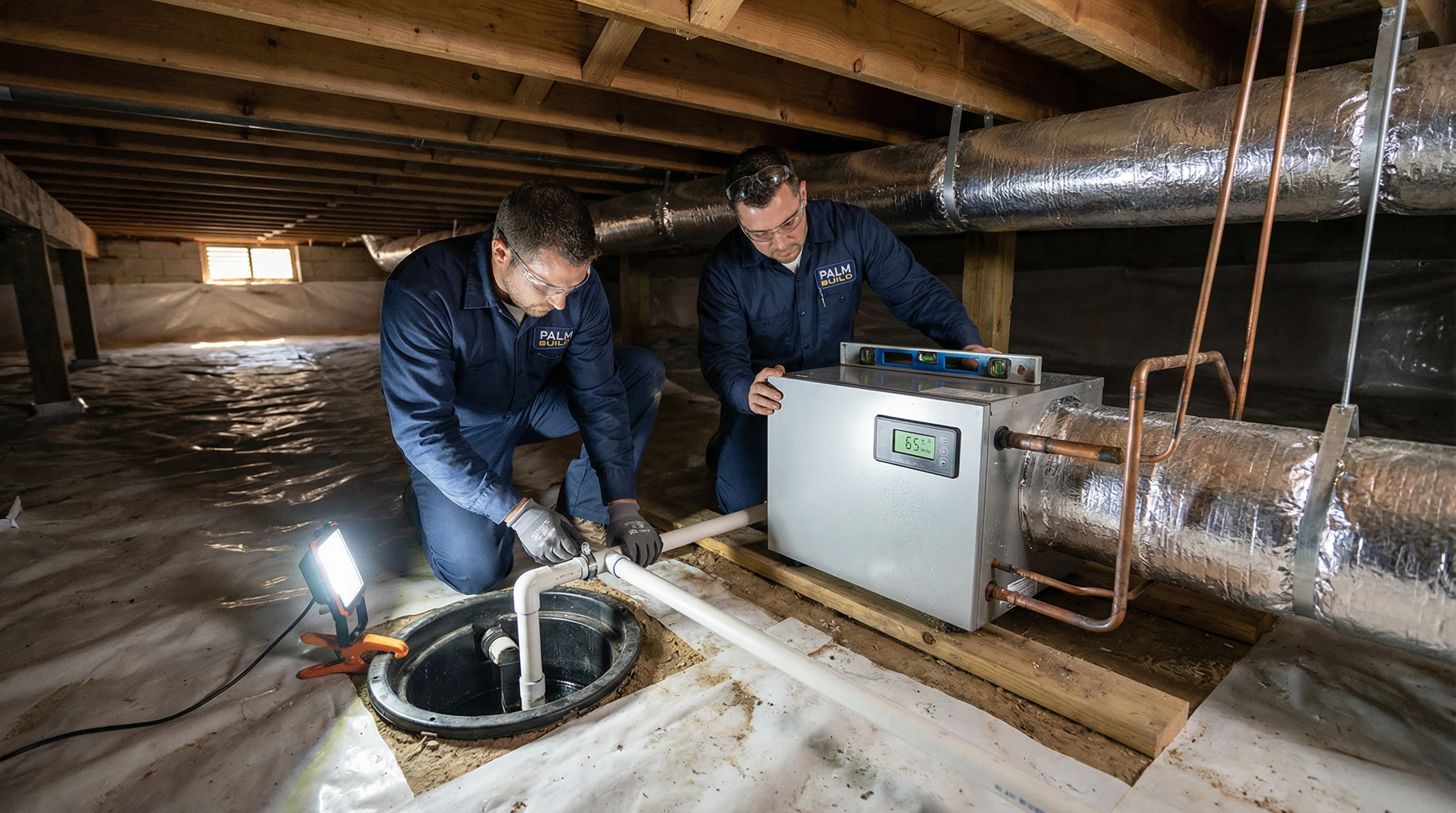
Why it matters: Even a perfectly sealed crawl needs active humidity management. A 70–90 PPD commercial dehumidifier with auto-drain holds the space below 55% RH year-round, the threshold below which mold cannot grow and wood-decay fungi cannot activate.
What we deliver
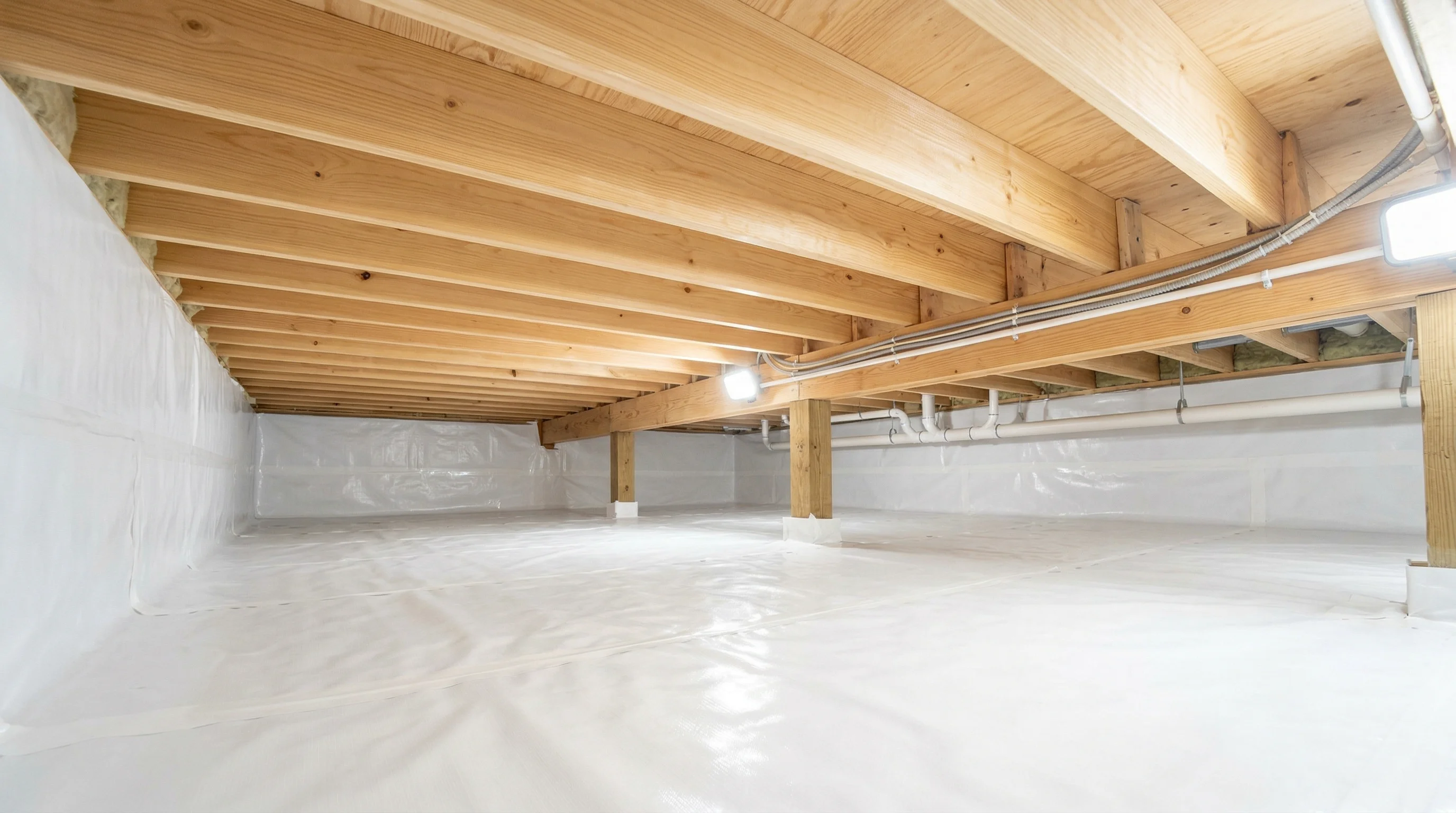
Why it matters: A project is not complete because the work looks done — it is complete when measured conditions meet the targets. We re-test moisture and humidity, walk the homeowner through every component, and hand off written verification.
What we deliver
Built to IICRC + EPA + DOE Standards
Our process aligns with IICRC S520 (mold remediation), IICRC S500 (water restoration), EPA Indoor airPLUS guidance, and the U.S. Department of Energy Building America program. That means consistent outcomes and documentation that holds up to insurance scrutiny.
Schedule Your Project WalkthroughProfessional Solutions
We offer comprehensive solutions to address moisture, structural damage, and air quality issues. Each home is different—our experts recommend the right combination of services for your situation.
Complete sealing of the area with heavy-duty vapor barriers on floors and walls. Encapsulation prevents ground moisture from entering and is the gold standard for long-term protection.
Commercial-grade dehumidifiers maintain optimal humidity (30-50%). Unlike household units, these systems handle high moisture loads and run continuously with minimal maintenance.
Interior drainage systems channel water to a sump pump, which removes it from your home. Essential for properties with groundwater intrusion or poor exterior drainage.
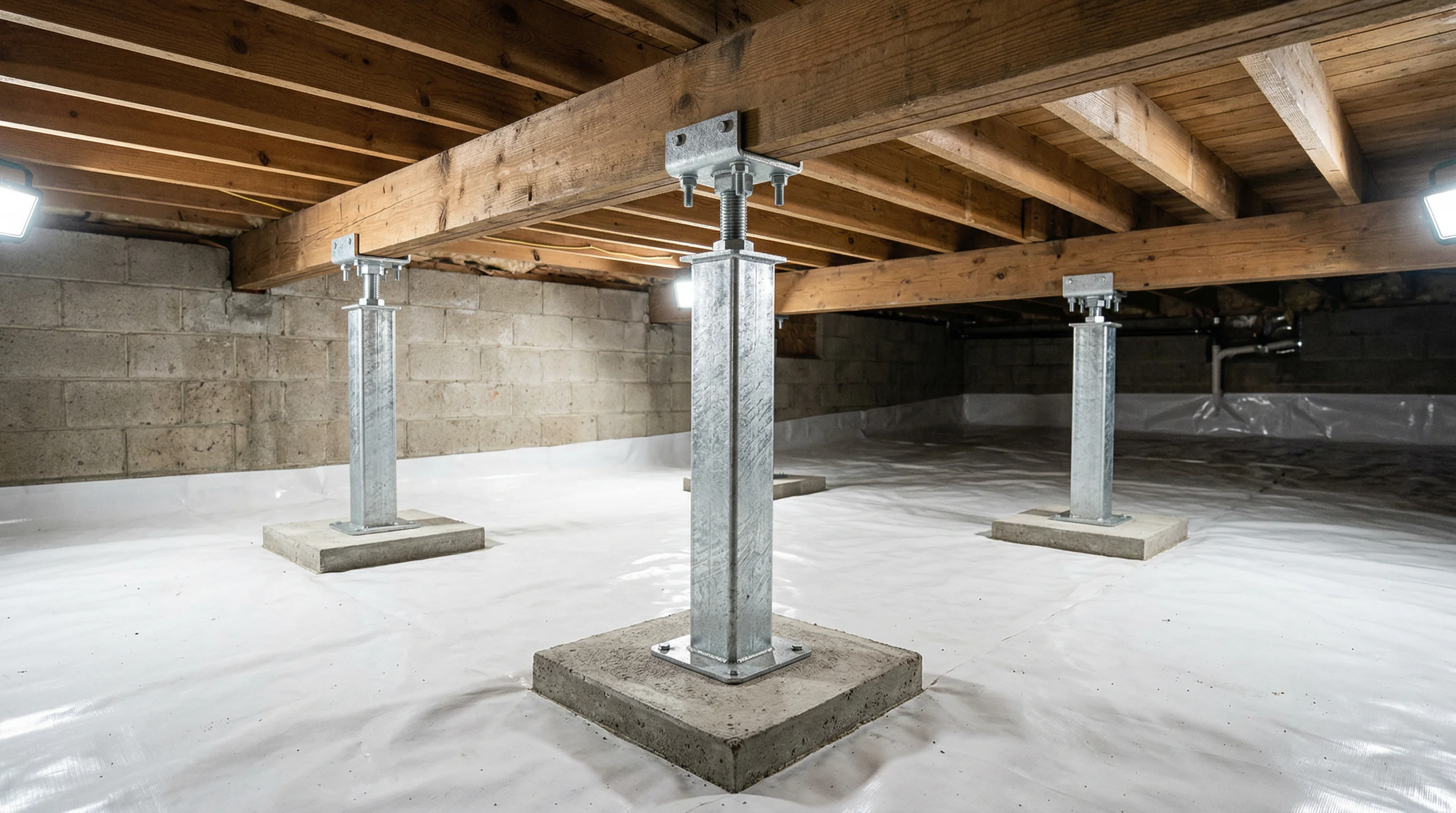
We address foundation problems, sagging floors, and damaged floor joists with proven repair techniques. Structural integrity is restored before encapsulation.
Sistering or replacing damaged joists to eliminate sagging floors
Leveling and stabilizing foundation supports to address foundation problems
Heavy-duty barriers that block ground moisture from entering
Removing damaged insulation and installing new, moisture-resistant materials
Proper encapsulation doesn't just protect your structure—it dramatically improves air quality. By sealing out moisture, mold, and contaminants, you breathe cleaner air.
DIY solutions often fail because they don't address root causes. Our IICRC-certified technicians assess all factors—moisture sources, structural condition, ventilation—and create a comprehensive plan that solves problems permanently.
Trained in moisture control, mold remediation, and structural repair
Work backed by manufacturer and labor warranties
Equipment & Performance Specifications
Crawl space encapsulation is a science, not a craft. The materials and equipment we install have measurable specs, and the conditions after the project must meet measurable targets. If a contractor cannot tell you the mil thickness of their vapor barrier or the PPD capacity of their dehumidifier, you are looking at a guess, not an installation.
Spec
70 – 90 PPD (pints per day) capacity, auto-drain
Purpose
Maintains <55% RH year-round; decouples crawl from outside humidity
When deployed
Every full encapsulation; partial scopes when humidity exceeds 60% RH
Spec
1/3 to 1/2 HP, cast iron or thermoplastic, optional 12V backup
Purpose
Removes groundwater intrusion and french drain discharge
When deployed
Standing water history, NC/SC clay soils, post-flood remediation
Spec
12, 15, or 20 mil reinforced — 6 mil NOT recommended for encapsulation
Purpose
Blocks soil moisture vapor; foot-traffic-rated; 25+ year lifespan
When deployed
All encapsulation projects; thicker barriers in active-use crawl spaces
Spec
R-10 to R-15 polyiso or XPS, 2" – 3" thickness
Purpose
Thermal decoupling from soil and outside air; 15% HVAC savings target
When deployed
Energy-driven retrofits, NC/SC homes with cold winter floors
Spec
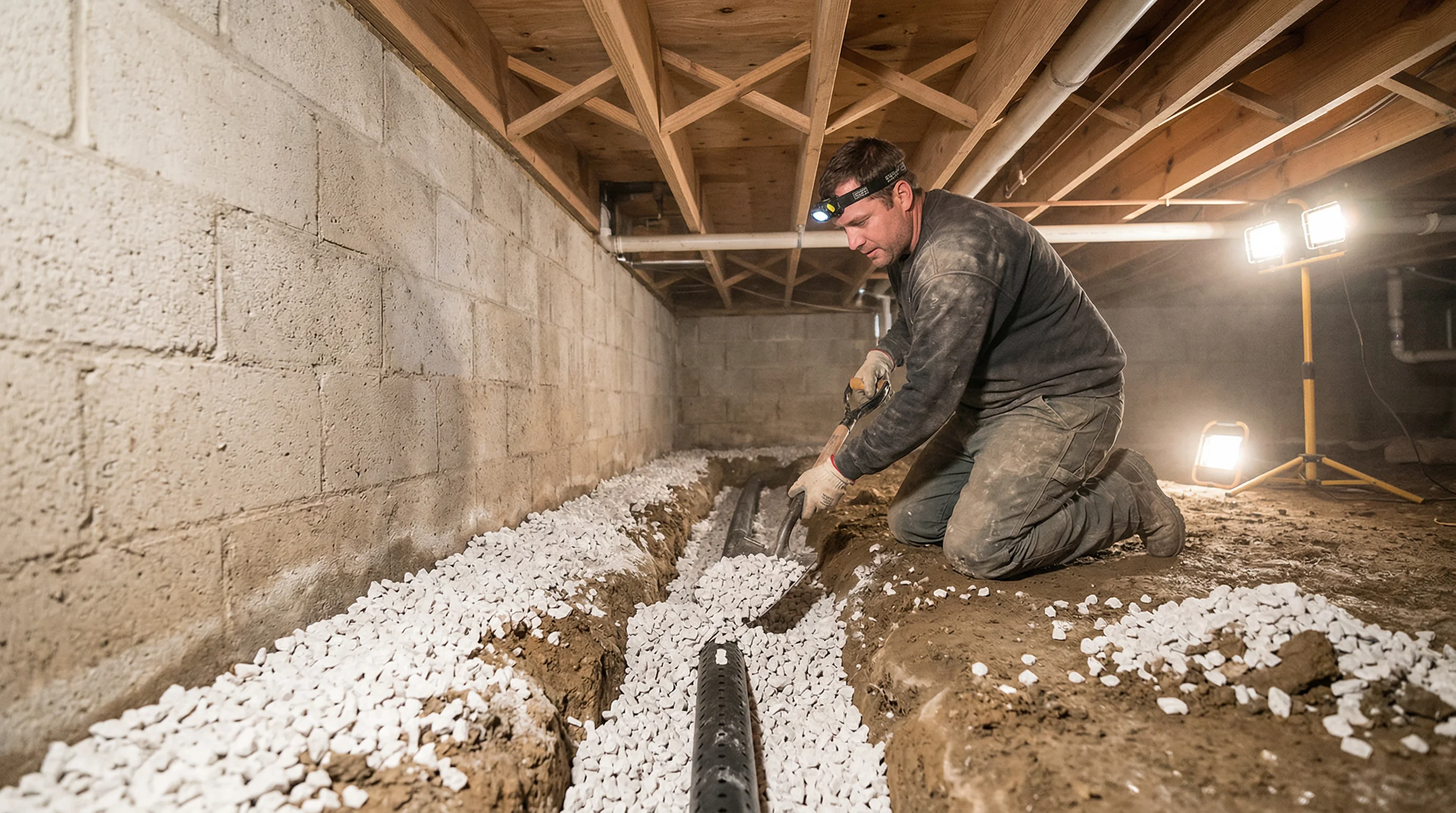
4" perforated pipe in dimpled drainage mat, gravel bed
Purpose
Captures groundwater and routes it to sump basin
When deployed
Active groundwater intrusion or soil pooling
Spec
500 – 2,000 CFM, true HEPA filter, negative-air containment
Purpose
Captures airborne mold spores during S520 remediation
When deployed
Mold remediation projects; pre-encapsulation when mold is present
| Metric | Target | Monitoring | Action trigger |
|---|---|---|---|
| Wood moisture content | < 19% | Pinless meter monthly for 90 days post-project | Above 19% triggers wood-decay fungi — investigate dehumidifier and drainage |
| Relative humidity | < 55% (ideal 45–50%) | Wireless hygrometer continuous logging | Above 60% RH supports mold and dust mites — verify dehumidifier setpoint |
| Outside air decoupling | 100% sealed envelope | Visual inspection of vents, sill plate, penetrations annually | Any breach lets in outside humidity and undermines the entire system |
| Sill plate inspection gap | 3 – 4 inches (NC/SC code) | Visual at each pest inspection | Vapor barrier covering this gap voids termite warranties and code compliance |
| Standing water tolerance | Zero — never acceptable | Visual at every inspection | Any pooling means drainage failure; pump runs continuously means investigate the source |
| Sump pump function | Activates within 4 inches of basin top | Quarterly water-pour test | Failed float switch is the #1 cause of crawl space flooding under encapsulation |
Verified outcomes, not promises. Every Palm Build encapsulation ends with a written verification report showing pre- and post-project moisture and humidity readings. We hand off the data alongside the photo package — so you can confirm the targets were hit, not just trust that they were.
Most homeowners pay $1,500 to $15,000 for crawl space encapsulation in 2026, with a national average of $5,500. Vapor barrier only projects start near $1,200; full encapsulation with dehumidification and drainage runs $8,000–$15,000+. Cost depends on square footage, scope, regional climate, and existing conditions like mold or standing water. See our 2026 cost breakdown blog for the full methodology.
National average
$5,500
2026 full encapsulation typical
Per square foot
$3 – $7
Up to $10 in high-humidity zones
Project timeline
5 – 7 days
1,500 sq ft standard scope
ROI payback
5 – 10 yrs
~15% HVAC savings (ENERGY STAR)
| Scope | What it includes | 2026 price range | When chosen |
|---|---|---|---|
| Vapor barrier only | 6–10 mil polyethylene over soil, light vent sealing, no dehumidifier | $1,200 – $4,000 | Dry crawls already below 60% RH with no standing water history |
| Partial encapsulation | 12 mil barrier on floor + walls, vent sealing, basic moisture monitor | $2,500 – $6,500 | Moderate humidity, no active leaks, budget-constrained homeowners |
| Full encapsulation | 15–20 mil barrier on floor + walls, sealed seams, vent + sill sealing, commercial dehumidifier | $5,500 – $12,000 | Recurring humidity problems, prior mold, energy-driven retrofits |
| Full + dehu + drainage | Complete encapsulation, sump pump, interior french drain, mold prep, structural prep | $8,000 – $15,000+ | Standing water history, NC/SC clay soils, post-mold remediation projects |
| Crawl space size | Low | Average | High |
|---|---|---|---|
| 1,000 sq ft | $3,000 | $5,000 | $10,000 |
| 1,500 sq ft | $4,500 | $7,500 | $15,000 |
| 2,000 sq ft | $6,000 | $10,000 | $20,000 |
| 2,500 sq ft | $7,500 | $12,500 | $25,000 |
| 3,000 sq ft | $9,000 | $15,000 | $30,000 |
Source: 2026 industry pricing aggregated from HomeAdvisor, Angi, Forbes Home, and Palm Build project data. Variance comes from existing conditions, regional labor, and accessibility.
North Carolina
$5,100
Piedmont clay soils retain moisture, freeze-thaw stress, 77 of 100 counties above EPA radon action level
NC code allows closed crawls with 3–4" termite gap and mechanical conditioning. Permit required for vented→closed conversion (NC DOI Dec 2025).
South Carolina
$5,000
Coastal storm/humidity in Charleston + Myrtle, Piedmont conditions inland (Greenville/Columbia)
70–90% of older Southeast homes already have moisture-damaged insulation or mold per Advanced Energy field studies.
Florida
$5,800 (above national)
Year-round >70% summer humidity, high water tables, FEMA NFIP flood vent requirements in coastal zones
Slab construction dominant, but coastal raised foundations need encapsulation balanced with flood code. Chapter 468 Part XVI mold licensing applies.
| Component | Typical cost | Notes |
|---|---|---|
| Inspection & moisture mapping | $100 – $250 | Typically waived with project booking |
| Cleaning, debris removal & repairs | $500 – $8,000 | Wide range based on prior insulation, debris, mold |
| Vapor barrier (12–20 mil polyethylene) | $1,200 – $4,000 | $0.50–$2.00/sq ft material; 6 mil NOT recommended for encapsulation |
| Vent sealing (4–8 vents typical) | $150 – $450 | Rigid foam board + sealed mechanical fasteners |
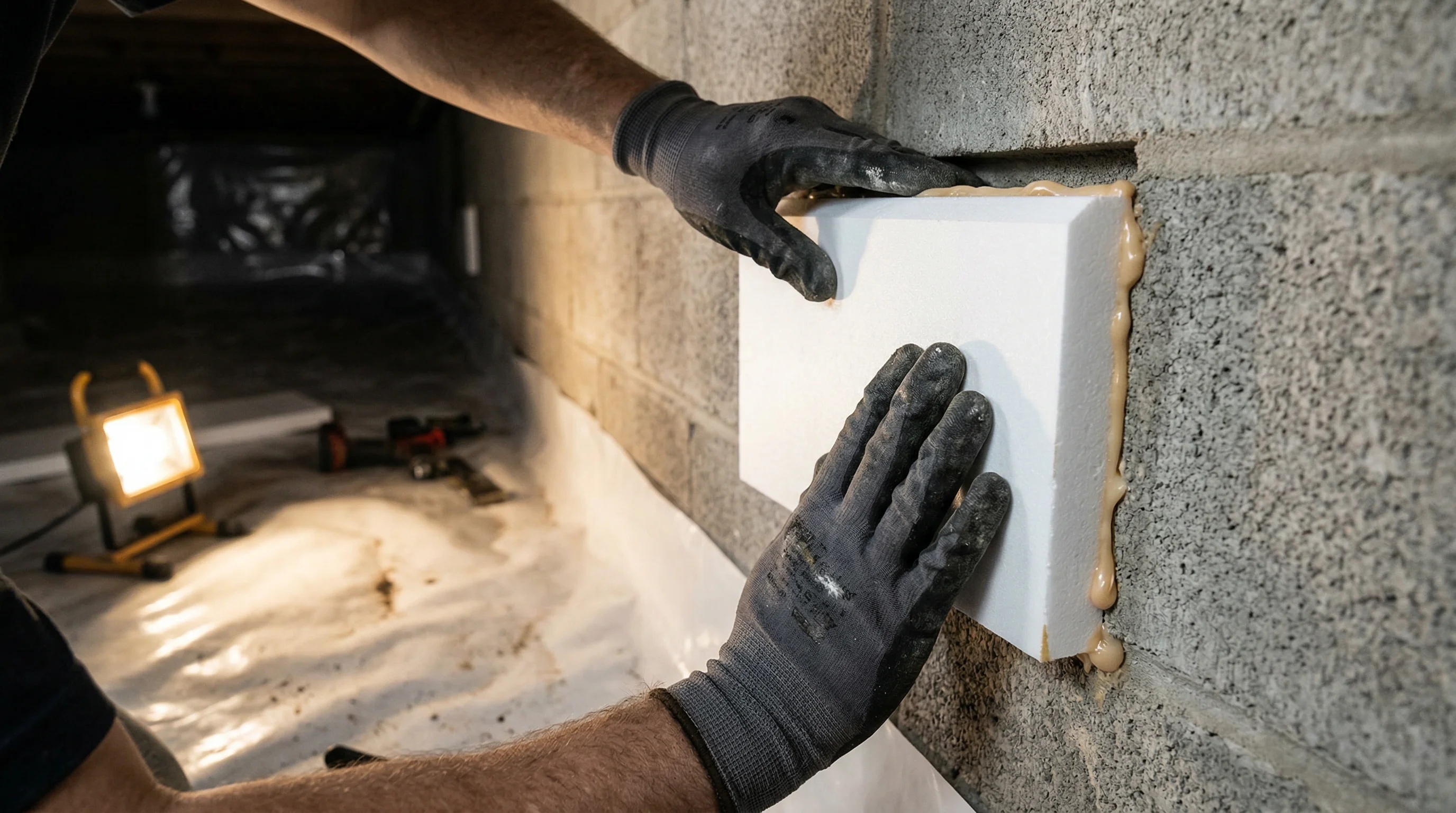
| Wall insulation (R-10 to R-15 rigid foam) | $500 – $3,700 | Spray foam alternative pushes the high end |
| Commercial dehumidifier (70–90 PPD) | $1,000 – $3,500 | Includes auto-drain line install |
| Sump pump + battery backup | $600 – $1,800 | Only if standing water history or french drain installed |
| Permits & inspection fees | $100 – $250 | Required in NC for vented→closed conversion |
Labor accounts for 50–70% of total project cost. Materials account for 30–50%. Add-on services like mold remediation ($1,500–$4,000) or structural repair are billed separately when discovered during the assessment phase.
Get your project range in 60 seconds
Free on-site moisture assessment with no-pressure scope and price
Crawl space encapsulation is one of the few home improvements with a measurable financial return. ENERGY STAR puts HVAC savings from air sealing and crawl space insulation at 10–20% annually. Advanced Energy's North Carolina field studies measured ~15% energy savings in encapsulated homes — paying back the investment in 5 to 10 years through utility savings alone.
HVAC efficiency
15 – 30%
Reduction in heating and cooling load (ENERGY STAR range: 10–20%)
Annual savings
$180 – $300
Typical Southeastern home utility bill reduction
Payback period
5 – 10 yrs
Energy savings alone, before health and resale value
Lifetime value
20+ yrs
Vapor barrier and dehumidifier service life
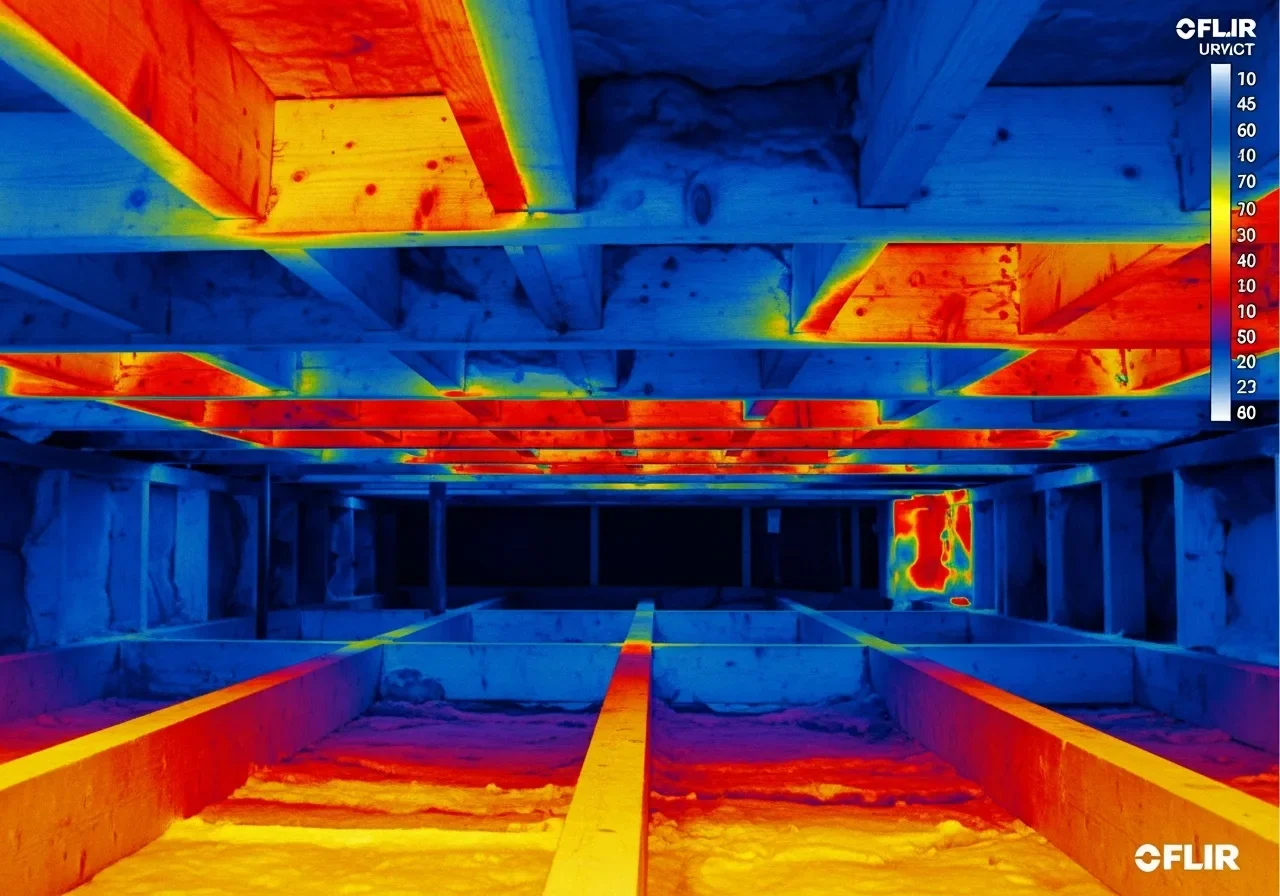
| Crawl space condition | Air infiltration to upstairs | Typical RH | Impact on home |
|---|---|---|---|
| Vented crawl space (typical) | ~40% of indoor air | > 80% (summer peak) | Stack effect pulls humid, mold-laden air upstairs Source: Building America / ASHRAE field studies |
| Vapor barrier only (partial) | ~25% of indoor air | 60 – 75% | Some improvement, but humid air still enters via vents Source: Advanced Energy NC field studies |
| Full encapsulation + dehumidifier | < 5% of indoor air | < 55% controlled | Crawl is effectively a separate, conditioned space Source: Building America / U.S. DOE |
| Year | Investment | Annual savings | Net position |
|---|---|---|---|
| Year 1 | −$7,500 | +$240 | −$7,260 |
| Year 3 | $0 | +$240 | −$6,540 |
| Year 5 | $0 | +$240 | −$6,060 |
| Year 7 | $0 | +$240 | −$5,580 |
| Year 10 | $0 | +$240 | −$4,860 |
| Year 15 | $0 | +$240 | −$3,660 |
| Year 20 | $0 | +$240 | −$2,460 |
| Year 25 | $0 | +$240 | −$1,260 |
ROI model assumes mid-range project ($7,500), typical Southeastern utility savings ($240/yr), and ignores additional benefits: reduced mold remediation cost, improved indoor air quality, structural preservation, and resale value bump (typical 1–3% on disclosure-required markets).
Indoor Air Quality & Stack Effect
The U.S. Department of Energy's Building America program and ASHRAE field studies have measured it: in vented-crawl homes, roughly 40% of indoor air originates below the floor. The "stack effect" — warm air rising through the home and being replaced by air drawn up from the crawl — means your upstairs air quality is determined by what is happening downstairs, whether you ever go down there or not.
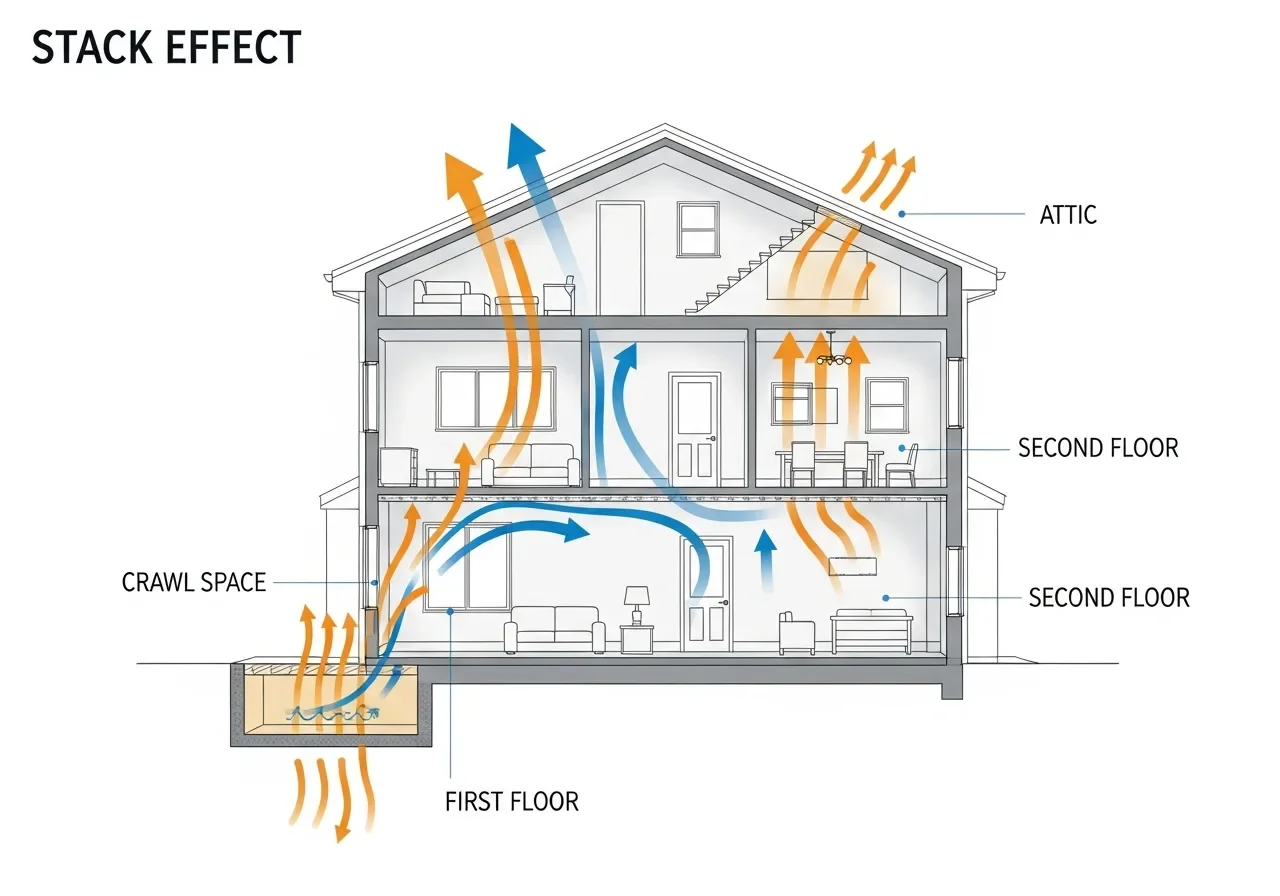
Warm air rises and exits through upper levels and the attic. To replace that air, your home sucks in air from the lowest available source — which, in any home with a vented crawl space, is the crawl. Mold spores, radon gas, soil-borne VOCs, dust mite waste, and humidity all come along for the ride.
In a vented crawl space, summer air at 85°F and 90% humidity flows in through foundation vents, hits the cooler 65°F crawl space surfaces, and condenses. That condensation is what feeds mold colonies on joists and creates the "musty basement" smell that migrates upstairs.
In an encapsulated crawl space, the envelope is sealed. The dehumidifier pulls humidity below 55% — below the threshold for mold growth and dust mite reproduction. Air entering your living space from below is now controlled, not contaminated.
Advanced Energy's North Carolina field study measured vented crawls peaking above 80% RH in summer; encapsulated crawls held under 65% without dehumidification, and under 55% with it.
| Season | Vented crawl | Encapsulated crawl | Improvement |
|---|---|---|---|
| Summer (Jun–Sep) | 78 – 92% RH | 48 – 54% RH | −30 to −38 points |
| Fall (Oct–Nov) | 65 – 78% RH | 46 – 52% RH | −15 to −26 points |
| Winter (Dec–Feb) | 55 – 68% RH | 42 – 48% RH | −10 to −20 points |
| Spring (Mar–May) | 68 – 82% RH | 46 – 52% RH | −20 to −30 points |
| Contaminant | Vented exposure | Encapsulated reduction | Health risk (citation) |
|---|---|---|---|
| Mold spores | Continuous infiltration upstairs via stack effect | ~95% reduction (when paired with remediation) | Allergies, asthma exacerbation, severe in immunocompromised (CDC) |
| Radon (NC, SC mountains) | Soil gas migration directly into living space | Reduced via sealed envelope; mitigation pipe if >4 pCi/L (EPA action level) | #1 cause of lung cancer in non-smokers (EPA) |
| VOCs from soil and stored chemicals | Free migration into HVAC return path | Vapor barrier blocks soil-source VOCs | Headaches, eye/throat irritation, long-term liver/kidney effects (EPA IAQ) |
| Musty odor (microbial VOCs) | Persistent throughout home, especially after rain | Eliminated within 7–14 days post-remediation | Comfort, resale, indicator of active mold growth |
| Dust mites | Thrive at >55% RH — fed by humid upstairs air | <55% RH eliminates breeding conditions | Major asthma and allergy trigger (American Lung Association) |
| Combustion byproducts (gas appliances) | Backdraft risk when stack effect reverses | Stable pressure plane reduces backdraft risk | Carbon monoxide exposure (CDC) |
The U.S. CDC and EPA have published extensive research on indoor mold and humidity exposure. Symptoms reported in occupants of homes with chronic crawl space moisture issues include:
77 of 100 North Carolina counties have measured indoor radon levels above the EPA action level of 4 pCi/L. Radon is the #1 cause of lung cancer in non-smokers in the United States, and the primary entry point in crawl-space homes is the soil beneath the home.
Encapsulation alone reduces radon entry significantly by sealing the soil-air interface; if testing shows persistent levels above 4 pCi/L, an active sub-membrane depressurization system (radon mitigation pipe) is added. For NC homeowners, radon testing before encapsulation is strongly recommended.
FL · NC · SC Regional Risk Profile
The crawl space scope that protects a Charleston SC beach house is different from the one that saves a Charlotte NC ranch in clay soil — and both differ from a Deerfield Beach FL coastal property. This matrix maps the six dominant risk factors against each state we serve, with the treatment priority for each.
| Risk factor | Florida | North Carolina | South Carolina | Treatment priority |
|---|---|---|---|---|
Termite & pest pressure | high Year-round subterranean termite activity, Formosan in coastal areas | high Eastern subterranean termite throughout state; mandatory inspection gap | high Subterranean termite present statewide; coastal Formosan risk | Always coordinate with licensed pest provider |
Moisture intrusion | medium Slab dominant, but raised foundations near water tables affected | high Piedmont clay holds water; freeze-thaw expands cracks | high Coastal storm surge + Piedmont clay inland | Drainage correction precedes vapor barrier |
Wood rot & decay | high Year-round humidity above 19% MC threshold without dehumidification | high Wet/dry cycles accelerate fungal colonization on joists | high Coastal humidity + interior clay = compounded decay risk | Encapsulation + dehumidifier required to halt |
Radon exposure | low Low overall, occasional elevated readings near phosphate mining | high 77 of 100 counties above EPA 4 pCi/L; mountain region highest | medium Upstate / mountain region elevated; coastal lower | Test before sealing; mitigation pipe if >4 pCi/L |
Hurricane / flood | high Hurricane corridor + FEMA NFIP flood vent compliance for coastal | medium Coastal counties hurricane-exposed; inland tropical remnants | high Charleston/Myrtle direct hurricane risk; inland flooding | Flood vents required in FEMA SFHA zones |
Summer humidity | high July avg dewpoint 73°F+ statewide; year-round dehu required | high Piedmont/coastal summer dewpoints above 70°F sustained | high Statewide high humidity with coastal extremes | 70–90 PPD dehumidifier non-negotiable for encapsulation |
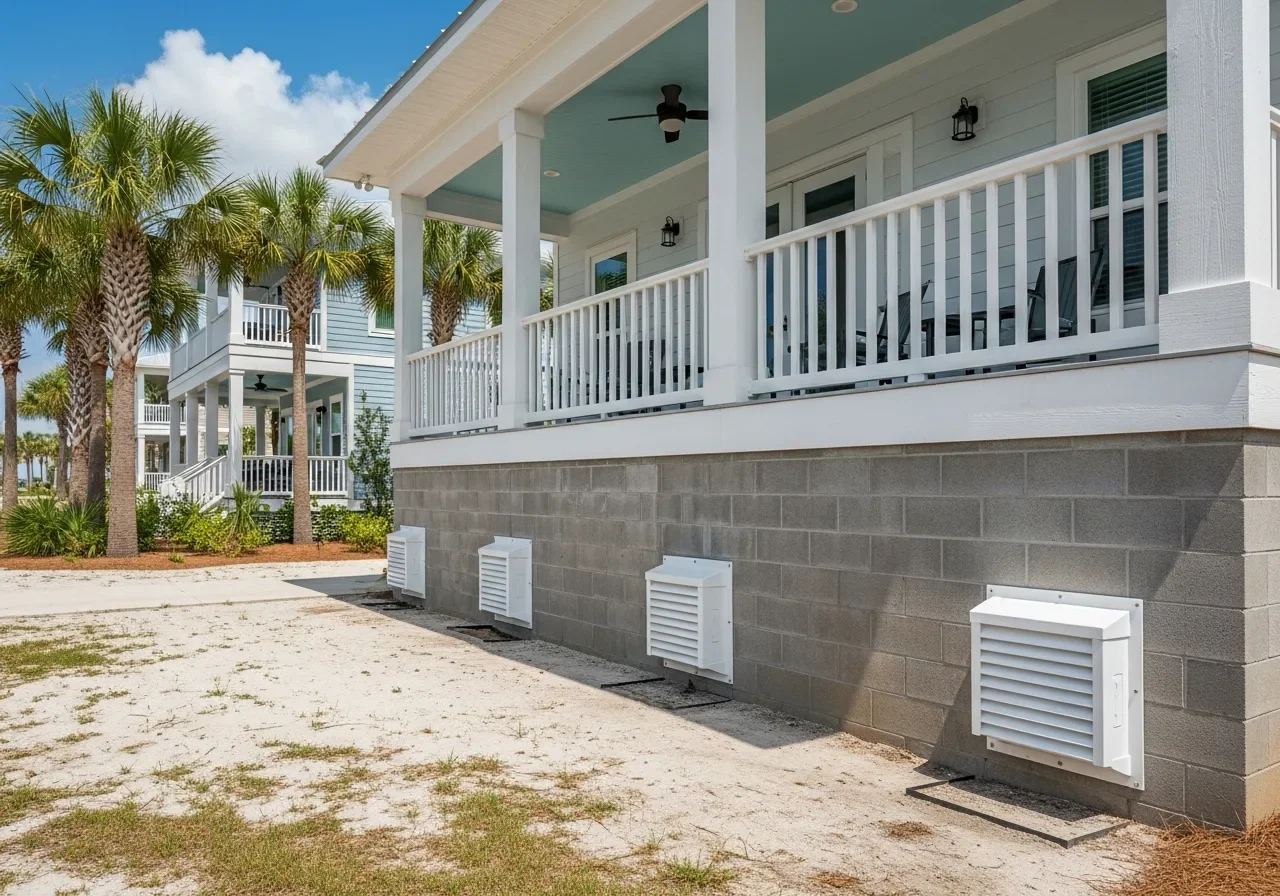
Slab construction dominates Florida residential, but coastal raised-foundation homes have crawl spaces with their own playbook.
NC is the highest-volume crawl space market in our service area. Building code now permits closed crawl spaces statewide with specific requirements.
SC splits between coastal storm exposure (Charleston, Myrtle Beach) and Piedmont clay conditions inland (Greenville, Columbia).
Interactive Assessment
Answer 10 quick questions about your crawl space conditions to get a personalized health score with specific recommendations.
A look inside actual Palm Build encapsulation, drainage, and structural projects. Every photo comes from a completed customer crawl space across our NC, SC, and FL service area.
Crawl Space Insurance Claims
Crawl space damage claims are some of the most disputed in homeowners insurance. The line between "sudden" and "gradual" is where most denials happen — and the documentation you produce in the first 24 hours determines whether the claim is paid or fought. Here is the framework that wins.
Sudden burst pipe under the home Frozen line splits or supply line failure causing rapid water intrusion | Almost always covered |
HVAC condensate line overflow Sudden equipment malfunction releasing water into the crawl | Typically covered |
Appliance failure (washing machine, water heater) Mechanical failure causing water to migrate into crawl space | Typically covered |
Storm-driven roof or siding failure routing water below Wind-created opening allowing water to enter and reach the crawl | Usually covered if storm event documented |
Sewage backup (with rider) Plumbing main backing up into crawl space | Covered only with sewage backup endorsement |
Mold remediation following a covered water event Mold caused by a covered loss within typical 14-day discovery window | Often covered, capped by mold endorsement limit |
Long-term moisture intrusion Slowly developed groundwater seepage or vapor migration | Maintenance category — not a sudden event |
Failure to maintain (clogged gutters, missing flashing) Damage attributable to homeowner maintenance failures | Excluded under maintenance clauses |
Flood from external water source Storm surge, river flooding, surface water entering crawl | Requires separate NFIP flood policy |
Pre-existing mold or hidden mold Mold present before the policy date or beyond endorsement caps | Common exclusion or limit applies |
Gradual wood rot and decay Long-term joist deterioration from chronic moisture | Wear-and-tear / maintenance exclusion |
Termite or pest damage Damage caused by wood-destroying organisms | Universally excluded; requires pest provider warranty |
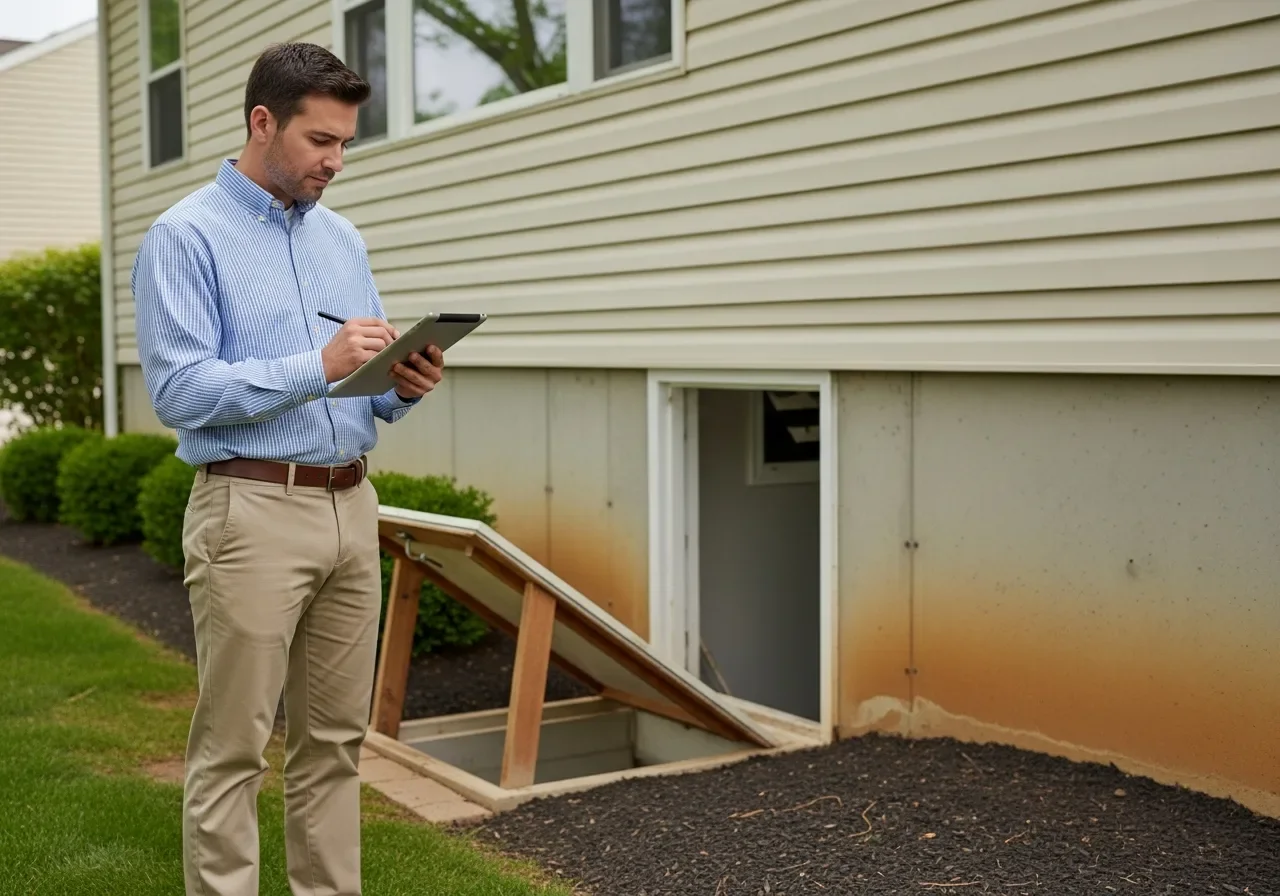
Photograph and video the loss before any mitigation work begins. Get wide shots, close shots, water lines on walls, affected materials, and damaged contents. Insurance adjusters need to see the loss as it actually happened.
Call your insurer's claims line and report the loss. Get a claim number. Note the date, time, and adjuster contact. Florida policies have a 1-year notice deadline; reporting promptly preserves all your rights.
Insurance carriers expect you to mitigate damage to prevent further loss. Hiring an IICRC S500 / S520 certified provider (not a handyman) is what makes the invoice defensible. Mitigation invoices submitted by certified providers are paid at higher rates.
Keep daily moisture readings, equipment run logs, photo updates, and itemized invoices. The paperwork is what defends the claim if the adjuster pushes back on the scope or duration of drying.
If the adjuster's scope is below the IICRC standard or excludes covered items, request a written explanation and dispute it in writing. Many low offers are revised when challenged with documentation. Public adjusters or legal counsel are options for stuck claims.
After mitigation is complete, scope the rebuild — not just the dryout. Reconstruction (drywall, flooring, paint, structural repairs) is a separate phase and is paid out under the dwelling coverage portion of your policy.
| Line item | Typical billing |
|---|---|
| Emergency water extraction (wet/dry vac, truck-mount) | $1,200 – $2,400 |
| Antimicrobial treatment + structural drying (4–5 days) | $2,800 – $5,500 |
| IICRC S520 mold remediation with HEPA containment | $1,800 – $4,500 |
| Vapor barrier removal/reinstall (12–20 mil) | $1,500 – $3,800 |
| Dehumidification rental + monitoring (7–10 days) | $700 – $1,400 |
| Joist sistering or structural repair (if needed) | $800 – $4,200 |
| Documentation, moisture logs, claim support | Included |
| Total mitigation range | $8,800 – $21,800 |
Six dedicated service paths under our crawl space program. Each is built for a specific condition and follows the same IICRC S520 / S500 protocols. Pick the one that matches your situation and dive into the full guide.
Complete vapor barrier, vent sealing, wall insulation, and dehumidifier system designed for long-term moisture control.
Common cost
$5,500 – $12,000 typical
Emergency extraction, sump pump install, drainage correction, and post-flood drying for crawl space flooding events.
Common cost
$1,500 – $6,500 typical
IICRC S520-compliant mold remediation for floor joists, subfloor, and insulation with HEPA containment and PRV testing.
Common cost
$1,500 – $4,000 typical
R-10 to R-15 rigid foam wall insulation, batt removal, and energy-efficient envelope upgrades for cold floors and HVAC waste.
Common cost
$500 – $3,700 typical
Joist sistering, beam replacement, jack post installation, and subfloor repair for sagging floors and damaged supports.
Common cost
$800 – $8,000+ scope dependent
Commercial 70–90 PPD dehumidifiers, sump pumps, interior french drains, and grading correction — covered in depth in our equipment specs section.
Common cost
See equipment table below
Practical Decision Framework
Crawl space work ranges from a few hundred dollars to five figures. The difference between a wise investment and wasted money comes down to accurate diagnosis. This framework helps you evaluate proposals and prioritize the work that actually addresses your home's specific conditions.
Crawl space moisture can come from ground vapor, bulk water intrusion, plumbing leaks, condensation from humid air, or combinations of all four. A vapor barrier solves ground moisture but won't stop a drainage problem. A sump pump handles flooding but won't address humidity. Diagnosis determines which components you actually need — and which you can skip.
Not every crawl space needs full encapsulation. If your humidity stays below 60% and you have no water intrusion, a quality vapor barrier and seasonal monitoring may be sufficient. If you're seeing mold, standing water, or structural damage, comprehensive intervention is warranted. Get moisture readings and a professional assessment before committing to a scope.
Good crawl space work ends with measurable results: wood moisture below 19%, relative humidity consistently under 55%, no standing water, and structural elements verified sound. Ask for post-project readings, not just photos. A wireless hygrometer lets you monitor conditions from upstairs going forward.
Ask what thickness and type of vapor barrier they use, whether they seal all vents and penetrations, what dehumidifier brand and capacity they install, and whether they include a termite inspection gap per local code. Ask for moisture readings before and after the project, and whether the work carries a transferable warranty.
Good contractors will walk through their materials and process without pressure. Be cautious of quotes that skip drainage assessment, omit dehumidification, or price without visiting the crawl space first. The right scope comes from conditions found on-site, not a phone estimate.
Post-Service Maintenance
Encapsulation and repairs set the foundation. Ongoing awareness and basic maintenance ensure your crawl space stays dry, stable, and problem-free for years. This schedule covers the minimum checks every homeowner should follow.
Monthly
Check your crawl space hygrometer reading (should stay below 55% RH). Walk first-floor rooms and note any musty odors, especially after rain or during humid seasons. Investigate immediately if humidity rises or smells return.
Quarterly
Verify the dehumidifier is running and draining properly. Clean or replace filters per manufacturer schedule. If you have a sump pump, test it by pouring water into the basin to confirm the float switch activates and the pump discharges.
Twice yearly
Before and after the rainy season, inspect gutters, downspout extensions, and yard grading around the foundation. Ensure water flows away from the home. Clear any debris from exterior French drains or gutter outlets.
Annually
Have a professional check vapor barrier integrity, wood moisture levels, structural supports, and any signs of pest activity. Annual inspections catch small issues before they escalate and maintain any warranty coverage on encapsulation work.
Triage Guide
Not every crawl space concern has the same urgency. Standing water and active structural damage require same-day response. Musty odors and humidity questions can be investigated with a scheduled inspection. Use this guide to prioritize your next step.
Related Restoration Services
Crawl space problems often overlap with water damage, mold, structural repairs, and insurance claims. Use these connected guides to coordinate scope and timing.
Crawl space mold often requires full remediation protocols. Coordinate containment, removal, and prevention with our mold specialists.
Water damage that reaches below-grade areas needs specialized extraction and drying alongside crawl space moisture management.
After crawl space structural repairs, above-floor reconstruction may be needed for subfloor, flooring, and finish work.
Navigate crawl space damage claims with proper documentation, scope alignment, and carrier communication.
Hurricane and storm flooding frequently pushes water into crawl spaces. Coordinate storm response with below-grade remediation.
Commercial properties with crawl spaces or raised foundations require coordinated moisture management at scale.
Items stored near crawl space access or affected by moisture migration can be inventoried, cleaned, and restored.
Next Step
Schedule a free crawl space inspection. We'll measure moisture levels, check structural supports, assess ventilation, and give you a clear picture of what your home needs — with no pressure and no obligation.
Why crawl space mold happens, how to remove it safely, what it costs ($1,500–$4,000 average), and how to keep it from coming back across FL, NC & SC.
13 min read
NC crawl spaces fail from humidity and poor drainage. Learn warning signs, what to do in 48 hours, encapsulation costs, permit notes, and how to prevent mold.
14 min read
What mold remediation companies actually do, step by step: inspect, contain, HEPA-filter, remove, clean, dry, and verify — what each phase looks like and why crews do it.
12 min read
This guide is educational and should not replace a professional inspection. For specific property conditions, use qualified crawl space specialists who can take moisture readings and assess structural elements on-site.
Palm Build Tools
Estimate mold risk, drying time, equipment needs, and insurance exposure for crawl space problems — no signup required.
Crawl spaces are prime mold environments. Check how humidity, wet time, and hidden moisture combine to create growth risk beneath your home.
Encapsulation requires dry substrate. Estimate how long crawl space materials take to dry based on conditions and equipment.
Estimate dehumidifier capacity, air mover count, and containment level for crawl space moisture management and remediation.
Crawl space damage coverage varies by policy and cause. Estimate whether your loss is claim-worthy and what documentation to prepare.
Local Service Pages
Tier 2 · Local office
Tier 1 · Local office
Tier 2 · Local office
Tier 1 · Local office
Tier 2 · Local office
Tier 1 · Local office
Tier 1 · Local office
Tier 2 · Local office
Tier 2 · Local office
Tier 2 · Local office
Tier 1 · Local office
Tier 2 · Local office
Tier 2 · Local office
Tier 2 · Local office
Tier 1 · Local office
Tier 2 · Local office
Tier 2 · Local office
Tier 1 · Local office
Tier 2 · Local office
Expert answers about encapsulation cost, vapor barrier thickness, dehumidifier sizing, regional NC/SC/FL conditions, insurance coverage, and long-term maintenance.
The most common warning signs are sagging or bouncy floors, musty odors throughout the home, increased allergy or asthma symptoms, rising utility bills, and visible moisture or mold during a quick visual inspection. Because roughly 40% of indoor air originates in the crawl space (per Building America and ASHRAE field studies), upstairs symptoms are often the first indicator of a downstairs problem.
Still have questions about basics & diagnosis?
Moisture, mold, and structural problems beneath your home affect air quality, energy costs, and structural integrity. Our IICRC-certified specialists deliver verified, measurable outcomes.
Joist sistering and foundation work
Dehumidifiers and sump pumps
IICRC S520 protocols
12–20 mil vapor barrier systems
Need help right now? Call us.
24/7 live dispatch — average answer time under 30 seconds