Mold needs moisture, organic material, and warmth to grow. Crawl spaces provide all three. Wood framing, paper-backed insulation, and damp soil create a persistent food source, while vented crawl spaces pull in humid outdoor air that condenses on cooler surfaces.
Crawl Space Mold Treatment Guide
Crawl Space Mold: Find It, Remove It, Prevent It From Returning
Crawl spaces create ideal conditions for mold — damp organic materials, poor ventilation, and warmth. Roughly 50% of first-floor air originates below the home, carrying mold spores into your living space. This guide covers how mold develops in crawl spaces, how professionals remove it safely, and the moisture corrections that prevent regrowth.
- Mold Remediation
- HEPA Containment
- Wood Treatment
- Moisture Prevention
- IICRC Certified
What you need to know
Color does not confirm species or toxicity. "Black mold" is a marketing term, not a scientific classification. All active mold growth in a crawl space should be treated the same way: with proper containment, removal, and moisture correction.
Never encapsulate over active mold. Sealing mold beneath a vapor barrier traps it against structural wood, allowing continued growth and musty odor migration into the living space. Remediation must happen first.
The stack effect is the core health concern. As warm air rises through your home and exits through the attic, replacement air is drawn upward from the crawl space. Mold spores, volatile organic compounds, and musty odors follow this path directly into occupied rooms.
Minor surface mold on a few joists in an otherwise dry crawl space may not require full remediation — drying and monitoring can stop growth. Extensive colonies, heavily saturated materials, or immunocompromised occupants warrant professional containment and removal.
After remediation, moisture control is the actual solution. Without encapsulation, dehumidification, or drainage corrections, mold will return. The EPA confirms that controlling moisture is the only reliable strategy for preventing indoor mold growth.
Field Visuals
What this work looks like in practice
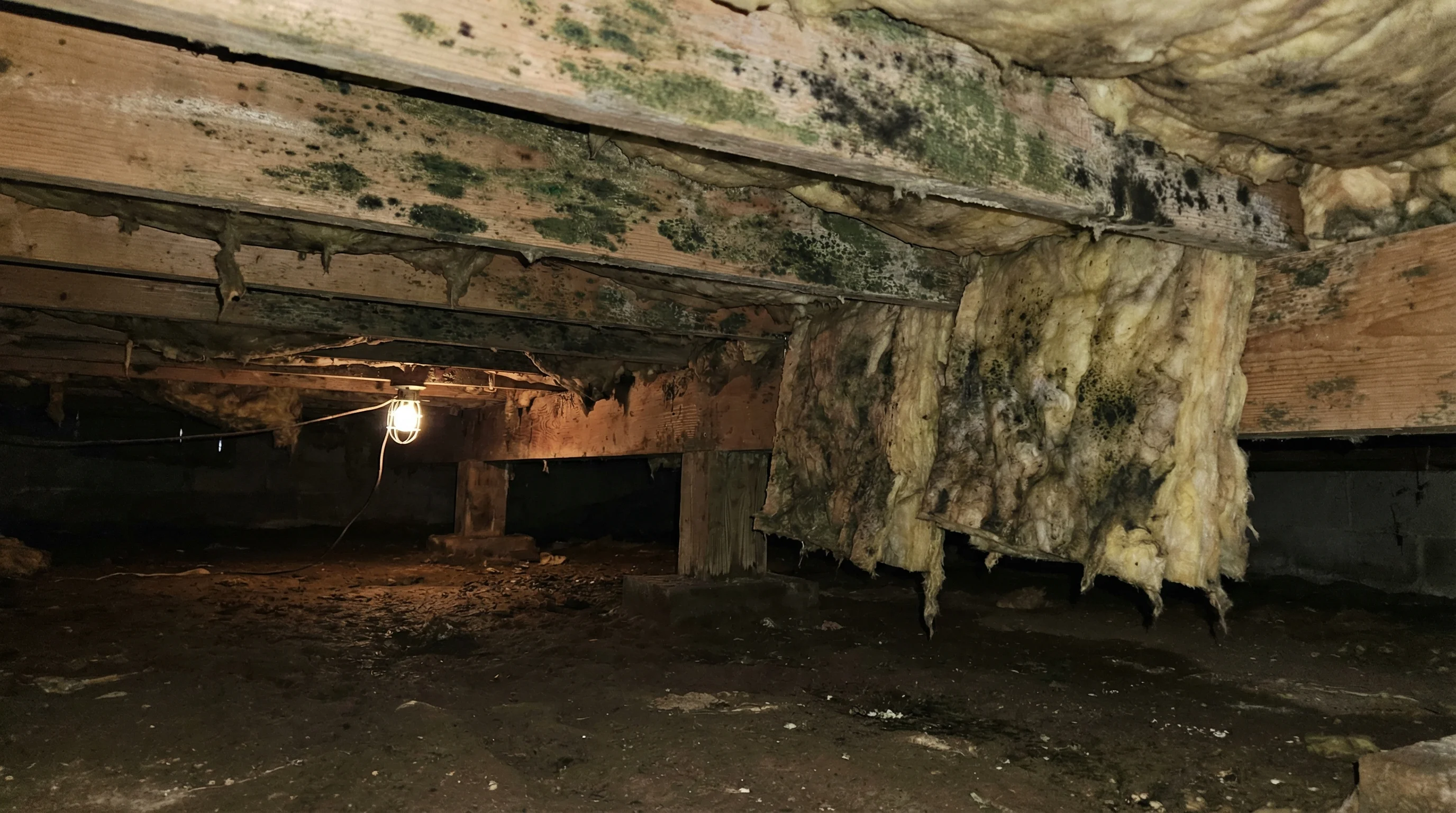
Active mold on floor joists
Visible mold colonies on untreated floor joists in a vented crawl space. The white and dark growth indicates active colonization fed by condensation moisture from outside air.
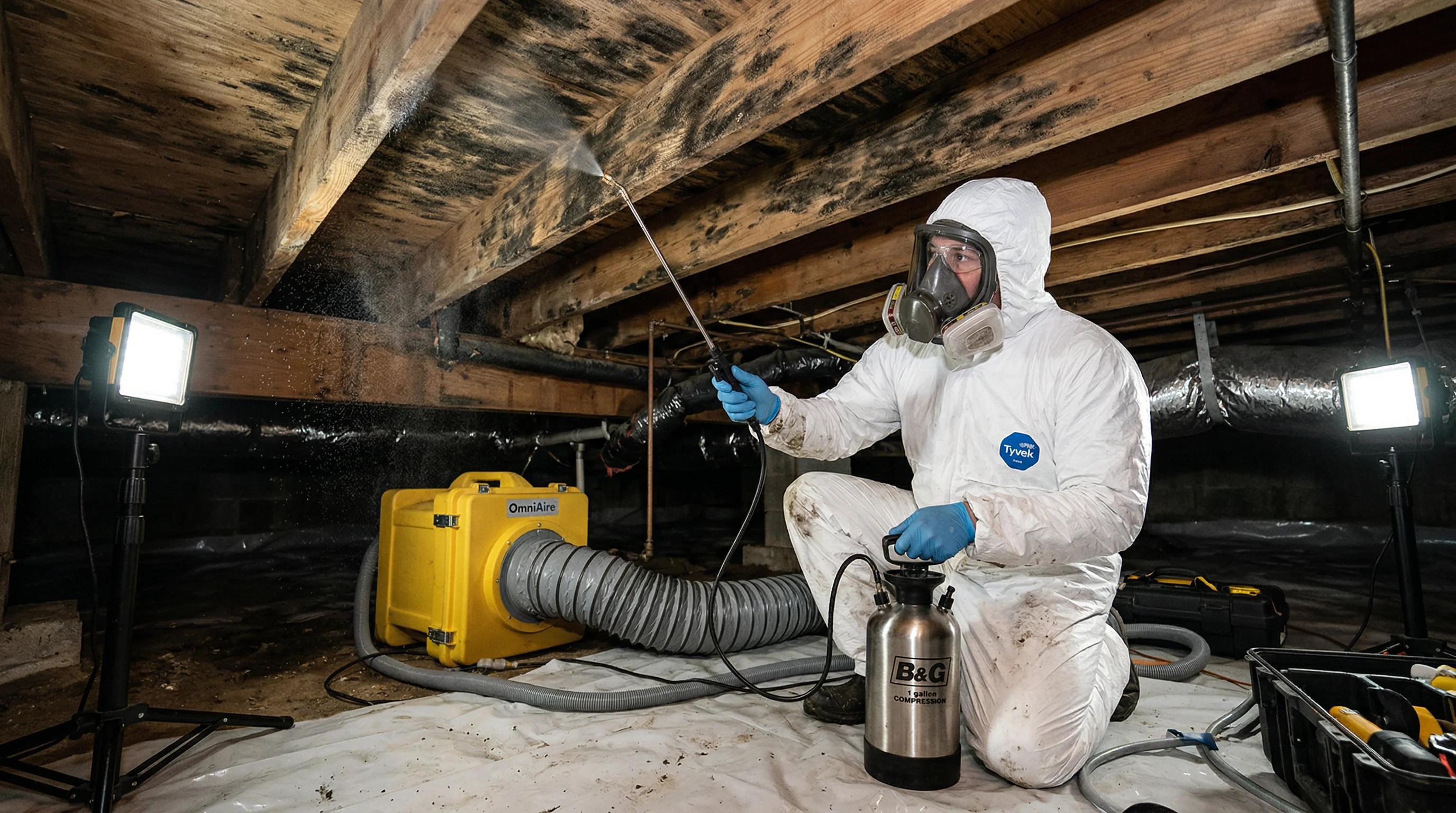
Professional mold treatment
Technician in full PPE applies antimicrobial treatment to affected joists. HEPA-filtered air scrubbers maintain negative pressure to prevent spore migration during remediation.
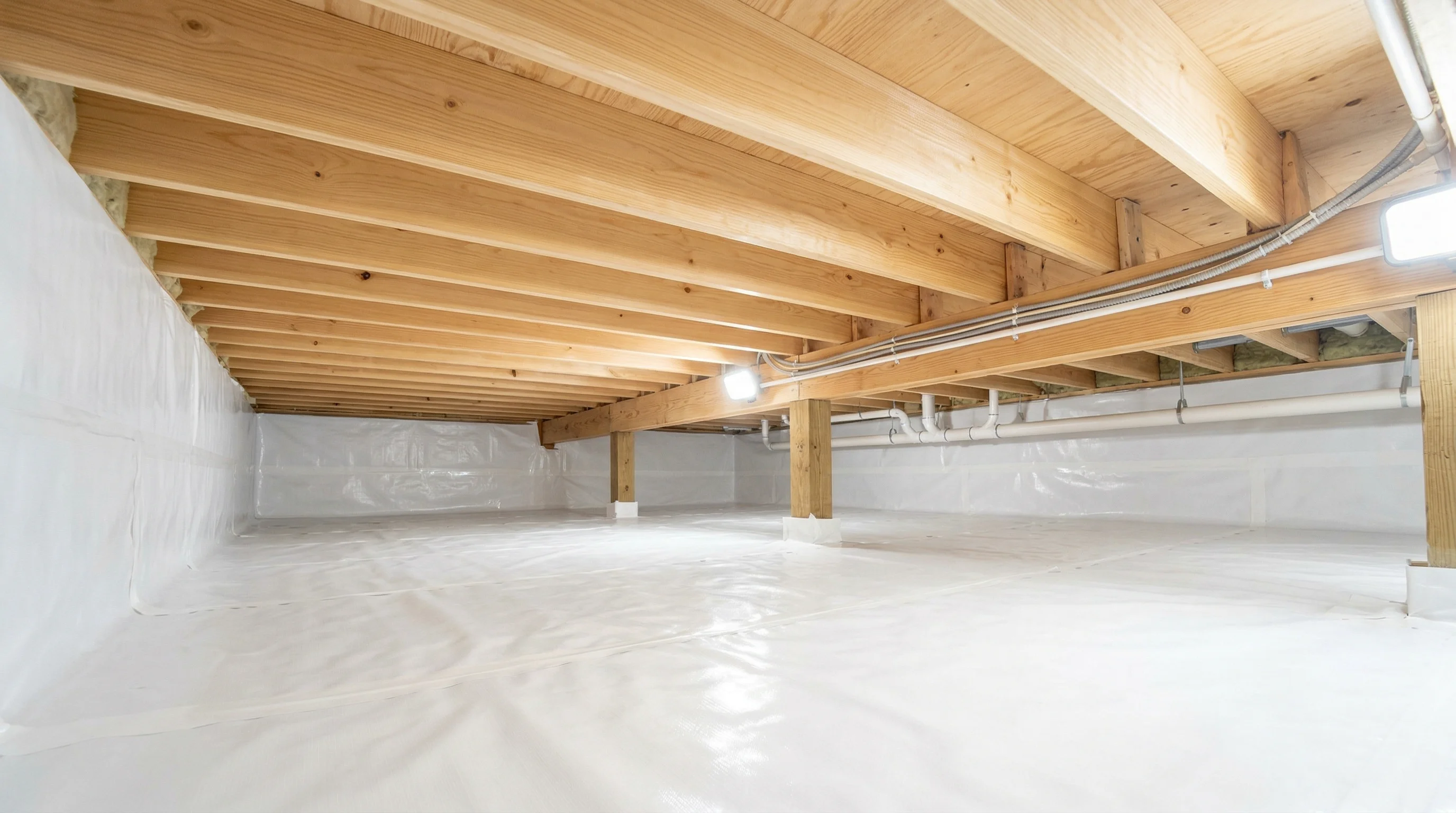
Post-remediation result
Floor joists after complete mold remediation — HEPA vacuumed, scrubbed with antimicrobial agents, and sealed with fungicidal coating. Wood moisture reads below 15% after drying.
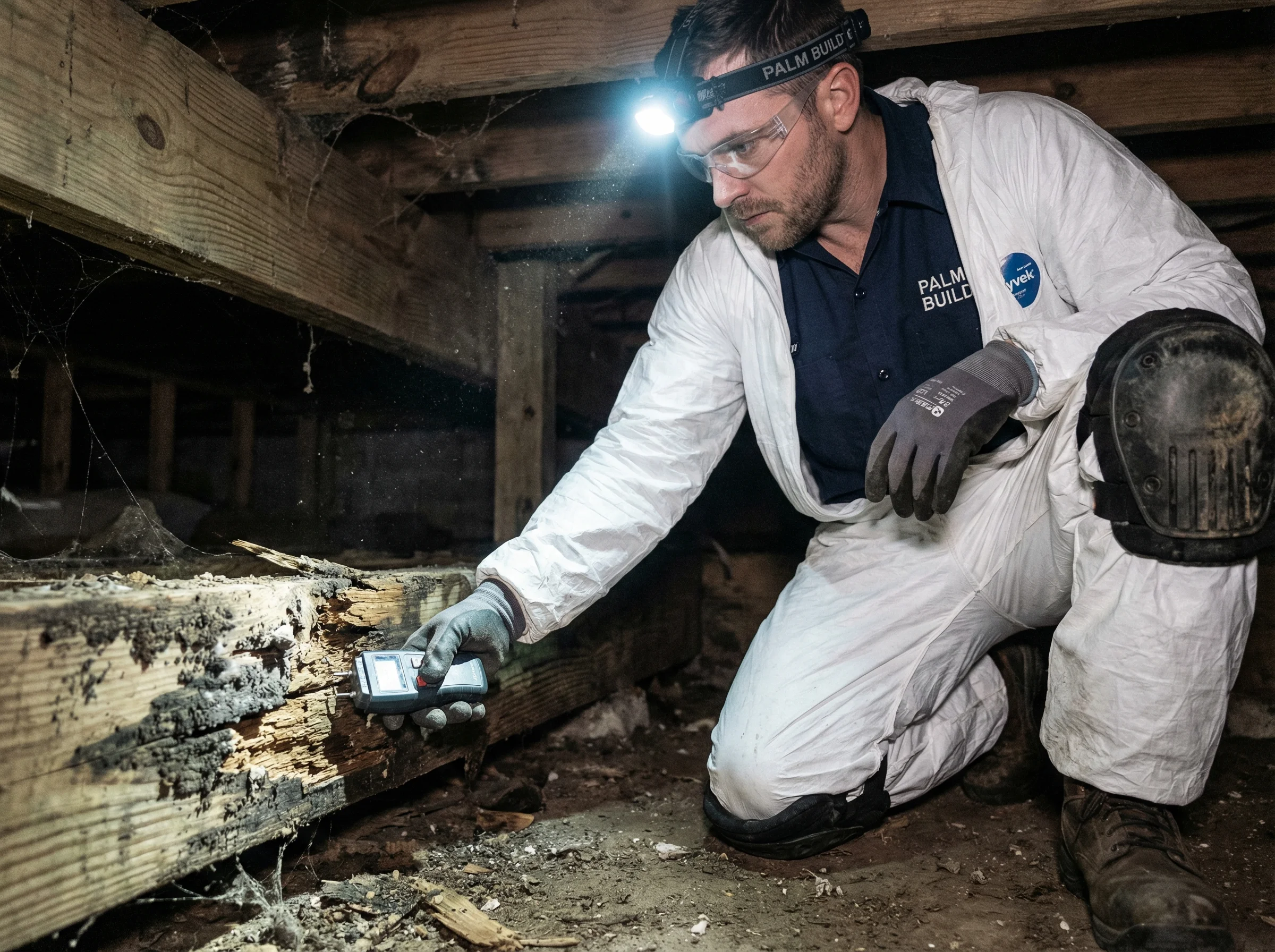
Mold inspection and assessment
Certified technician assesses mold extent and moisture conditions. Accurate mapping of affected areas determines the remediation scope and containment requirements.
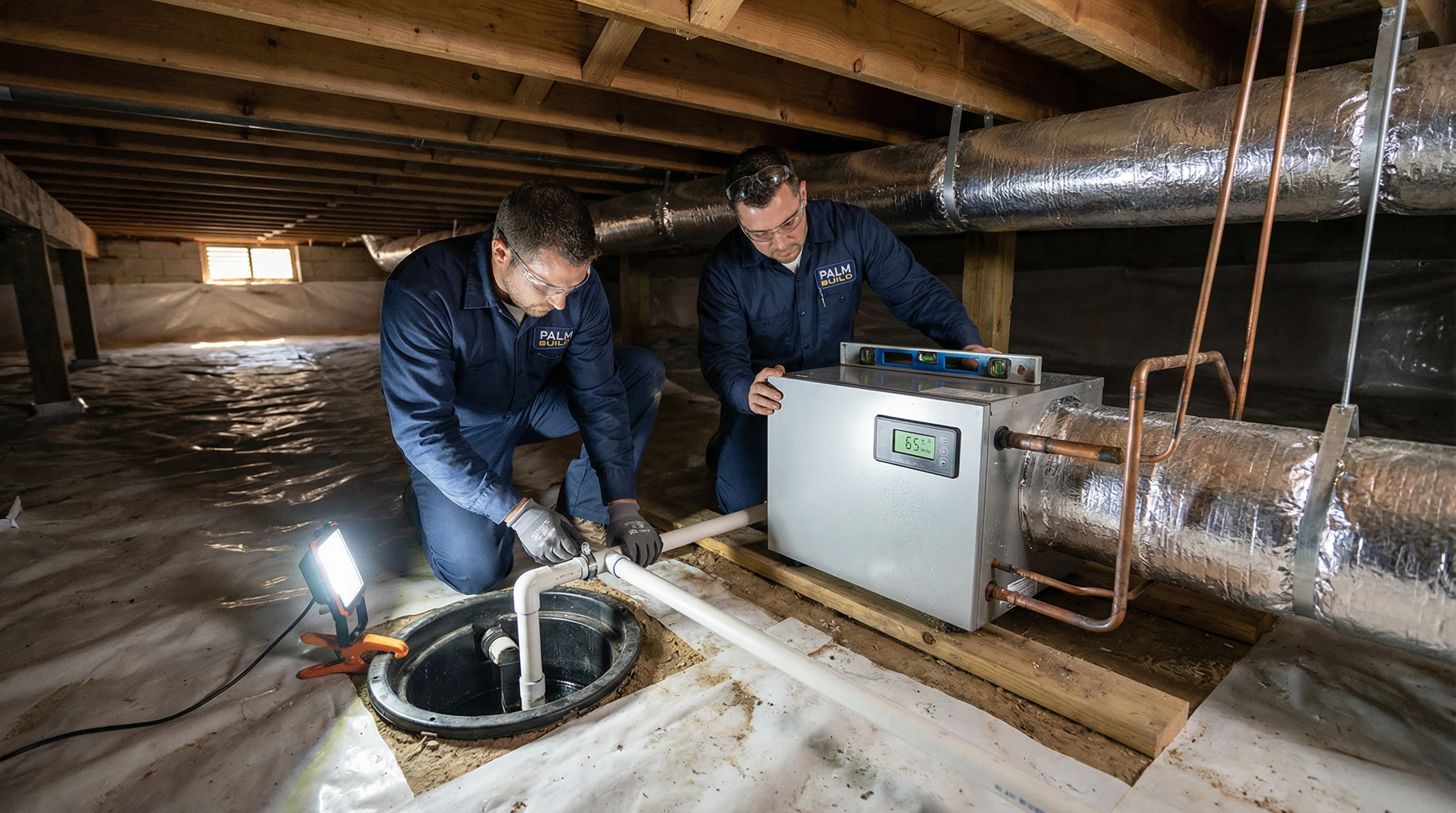
Post-remediation dehumidification
After mold removal, a commercial dehumidifier maintains humidity below 55% — well under the 60% threshold that supports mold growth. This is the critical prevention step.
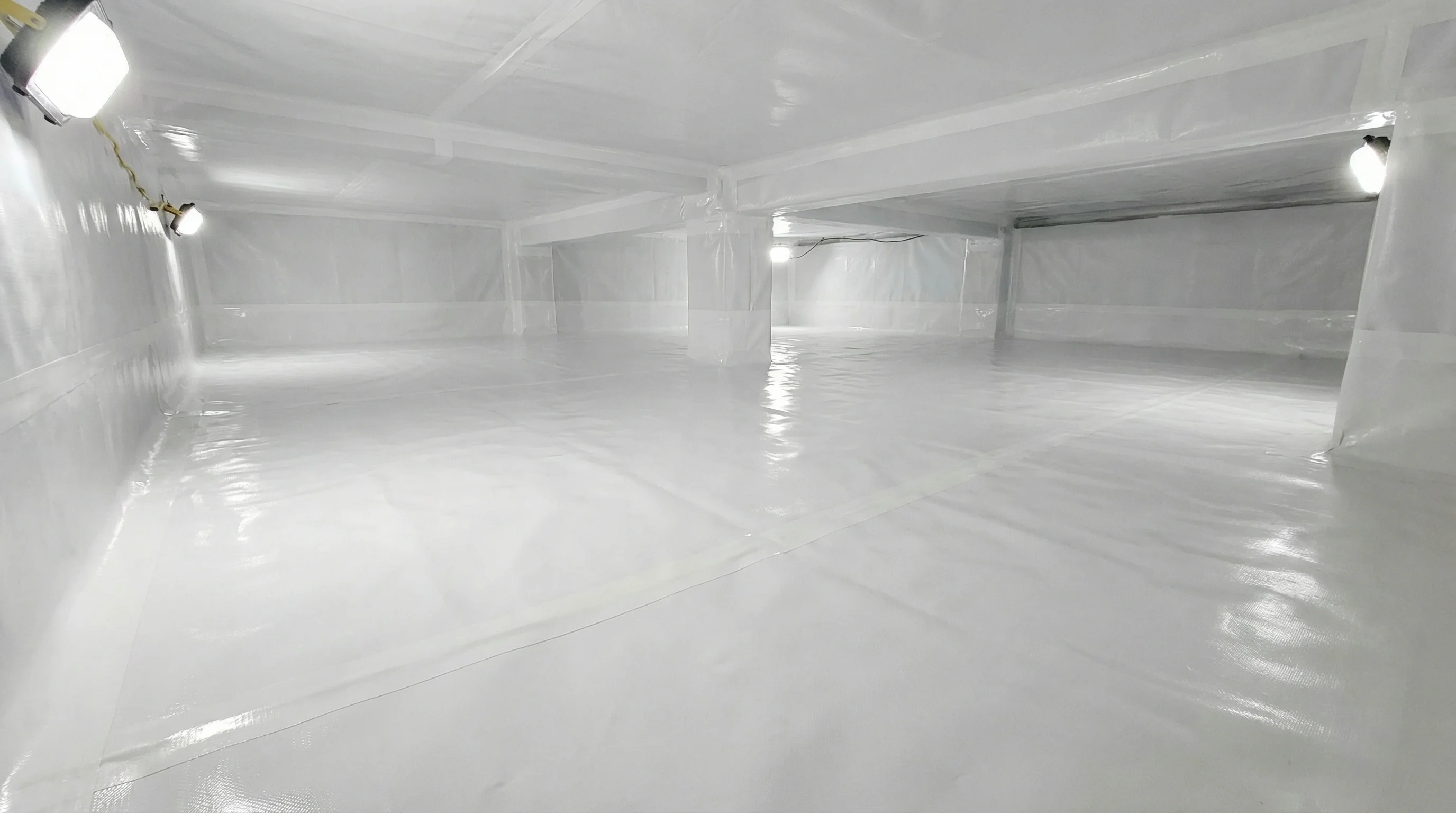
Encapsulation prevents recurrence
Full encapsulation after mold remediation. The sealed, conditioned crawl space maintains dry conditions that prevent regrowth — the only reliable long-term mold prevention.
Professional Process
How this work is done right
Each step builds on the last so moisture stays managed and materials stay protected.
Inspection and moisture mapping
Measure relative humidity, wood moisture content, and map visible mold growth across all accessible surfaces. Identify all moisture sources — ground vapor, condensation, plumbing leaks, or bulk water intrusion. Determine whether the scope is limited (a few joists) or extensive (widespread colonization).
Containment and negative pressure
For larger projects, seal the crawl space access and establish negative air pressure using HEPA-filtered air scrubbers. This prevents spores from migrating into the living space during removal. Workers use full PPE including respirators, suits, and gloves.
Physical removal and wood treatment
HEPA vacuum all accessible surfaces. Scrub affected wood with antimicrobial cleaning agents. Remove and discard moldy insulation — fiberglass cannot be salvaged. For structural members with deep penetration, apply fungicidal sealant after cleaning to neutralize remaining growth.
Verification and moisture correction
Post-remediation air sampling or visual inspection confirms the remediation meets clearance standards. Then install moisture controls — vapor barrier, encapsulation, dehumidification, or drainage — to maintain conditions below the 60% RH threshold that supports mold growth.
Cost Guidance
What to expect on pricing
Costs vary by crawl space size, severity of damage, and region. These ranges reflect typical residential projects in our service areas.
Light mold treatment
$500 – $1,500
Surface mold on a few joists in an otherwise dry crawl space. Cleaning, HEPA vacuuming, and antimicrobial treatment.
Moderate remediation
$1,500 – $5,000
Widespread mold across multiple joists and subfloor areas. Includes containment, insulation removal, wood treatment, and post-remediation verification.
Extensive remediation
$5,000 – $10,000+
Severe colonization with structural damage. Full containment, negative pressure, wood treatment, structural repair, and comprehensive moisture correction.
Post-remediation testing
$300 – $600
Air sampling or visual clearance inspection to verify mold levels meet acceptable standards after treatment.
Insulation replacement
$1 – $3 / sq ft
Replacing removed fiberglass batts with appropriate insulation after the crawl space is dried and remediated.
Encapsulation (after remediation)
$3,500 – $15,000
Full encapsulation prevents mold recurrence by controlling the moisture conditions that caused growth. Often the most important long-term investment.
Regional considerations
North Carolina
Charlotte and Piedmont homes with vented crawl spaces are especially prone to summer condensation mold. Clay soils hold moisture near foundations, and summer dew points regularly exceed 70°F, creating persistent condensation on cooler crawl space surfaces. Encapsulation is the most effective long-term prevention.
South Carolina
Coastal and Lowcountry properties face year-round humidity challenges. Older elevated homes near Charleston often have decades of unaddressed crawl space moisture. Mold remediation paired with encapsulation is the standard approach for these properties.
Florida
Year-round warmth and humidity create persistent mold pressure. Hurricane-driven water intrusion can introduce contaminated floodwater that requires Category 3 protocols. Florida crawl spaces need aggressive dehumidification — 70+ pint/day units running continuously.
Related Guides
Connect this work with the bigger picture
Suspect mold in your crawl space?
Schedule a free inspection. We'll assess moisture conditions, map mold extent, and provide a clear scope — with no pressure and no obligation. IICRC-certified technicians handle every project.