Wood moisture above 18–20% supports wood-decay fungi. These organisms digest cellulose and lignin, reducing wood strength from the inside. By the time damage is visible — soft, flaky joists or fibrous white growth — structural capacity has already been compromised.
Crawl Space Structural Repair Guide
Crawl Space Structural Repair: Fix the Damage, Stop the Cause
Sagging floors, bouncy spots, and sticking doors often trace back to moisture-damaged structural members in the crawl space. Chronic dampness feeds wood-decay fungi that weaken joists, girders, and posts from the inside out. This guide covers how structural damage develops, how professionals repair it, and why moisture control must follow every structural project.
- Joist Sistering
- Beam Replacement
- Pier Adjustment
- Wood Rot Repair
- Structural Assessment
What you need to know
Sagging or bouncy floors are the most common above-ground sign of crawl space structural problems. Other indicators include doors that stick or won't latch, cracks in interior walls or tile, and uneven floor surfaces that have developed gradually.
Sistering is the most common joist repair method: new pressure-treated lumber is bolted alongside the damaged joist, transferring the load to sound material. When damage is limited to a section of the joist, sistering avoids the cost and complexity of full replacement.
Beam and girder replacement becomes necessary when the primary load-bearing members have deteriorated. Adjustable steel jack posts or concrete piers can supplement or replace damaged wooden posts. This work requires shoring the structure above before removing failed supports.
Replacing damaged structural members without fixing the moisture source guarantees repeat failure. Every structural repair project must include a moisture control plan — at minimum a vapor barrier, and ideally full encapsulation with dehumidification.
Subfloor damage (plywood rot above joists) is often discovered during structural repair. Soft or delaminated subfloor sections should be cut out and replaced, though this work is typically accessed from above and may involve flooring removal.
Field Visuals
What this work looks like in practice
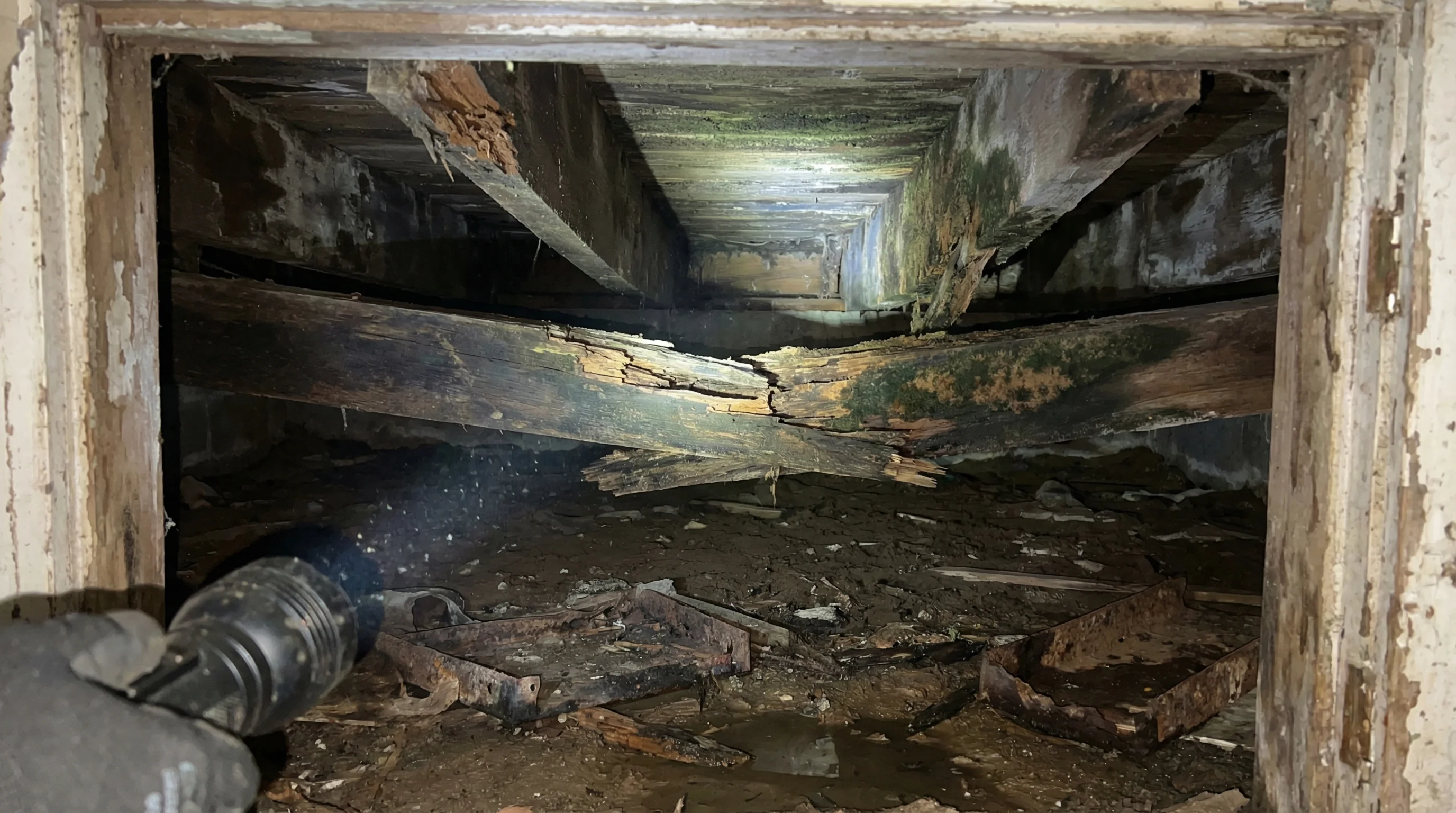
Moisture-damaged floor joists
Chronic moisture has fed wood-decay fungi that weakened these floor joists. The visible sagging and discoloration indicate significant structural compromise requiring sistering or replacement.
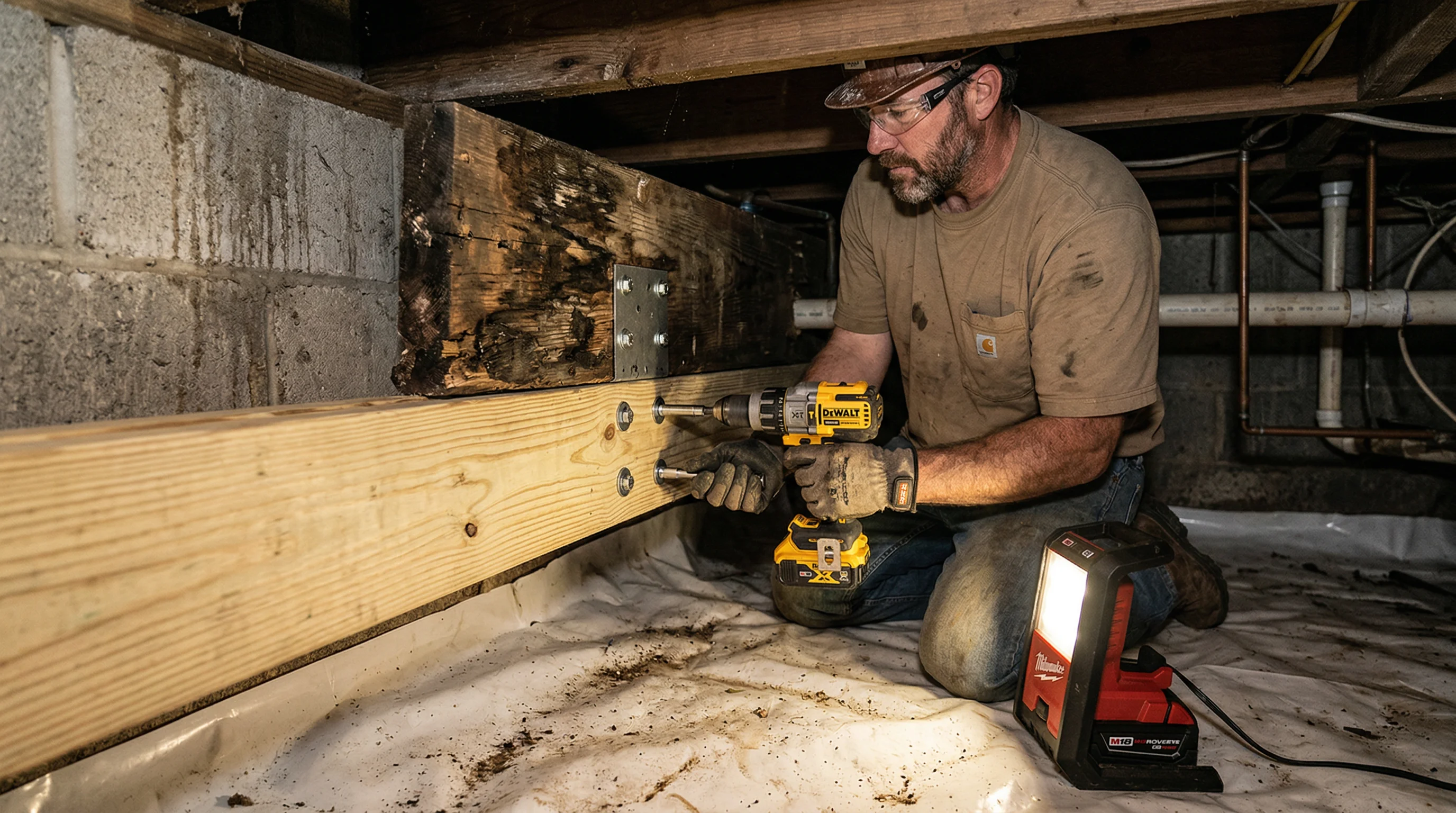
Joist sistering in progress
New pressure-treated lumber secured alongside a damaged joist with structural bolts. The sister joist transfers floor load to sound material while the damaged section is stabilized.
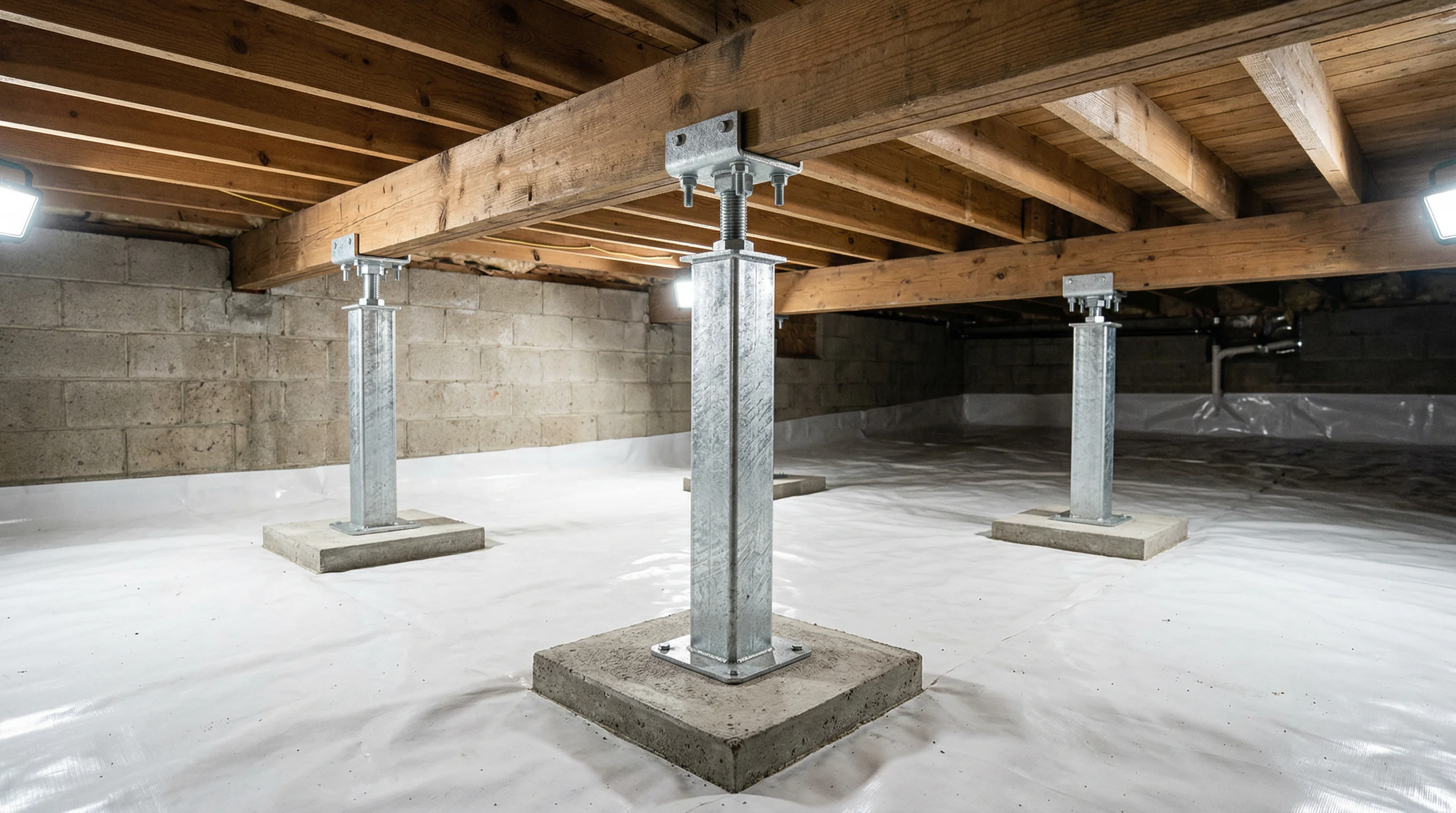
Steel support post installation
Adjustable steel jack posts on concrete footings provide additional support for sagging beams. Posts are adjusted gradually to level the floor above without causing stress cracks.
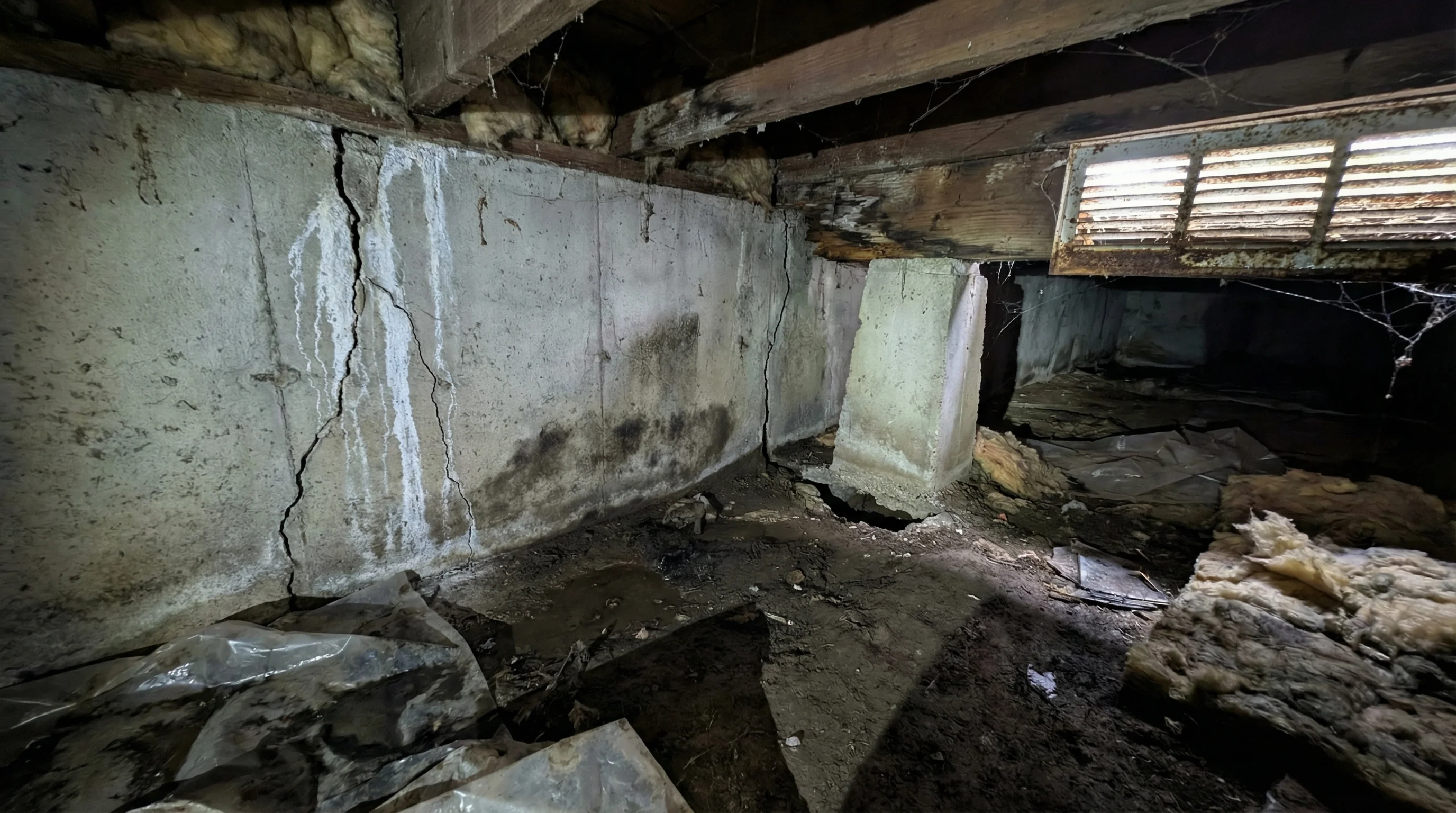
Foundation settling damage
Visible cracks and settling in the foundation wall. Settling can shift support points and contribute to uneven floors above. May require pier reinforcement alongside joist repair.
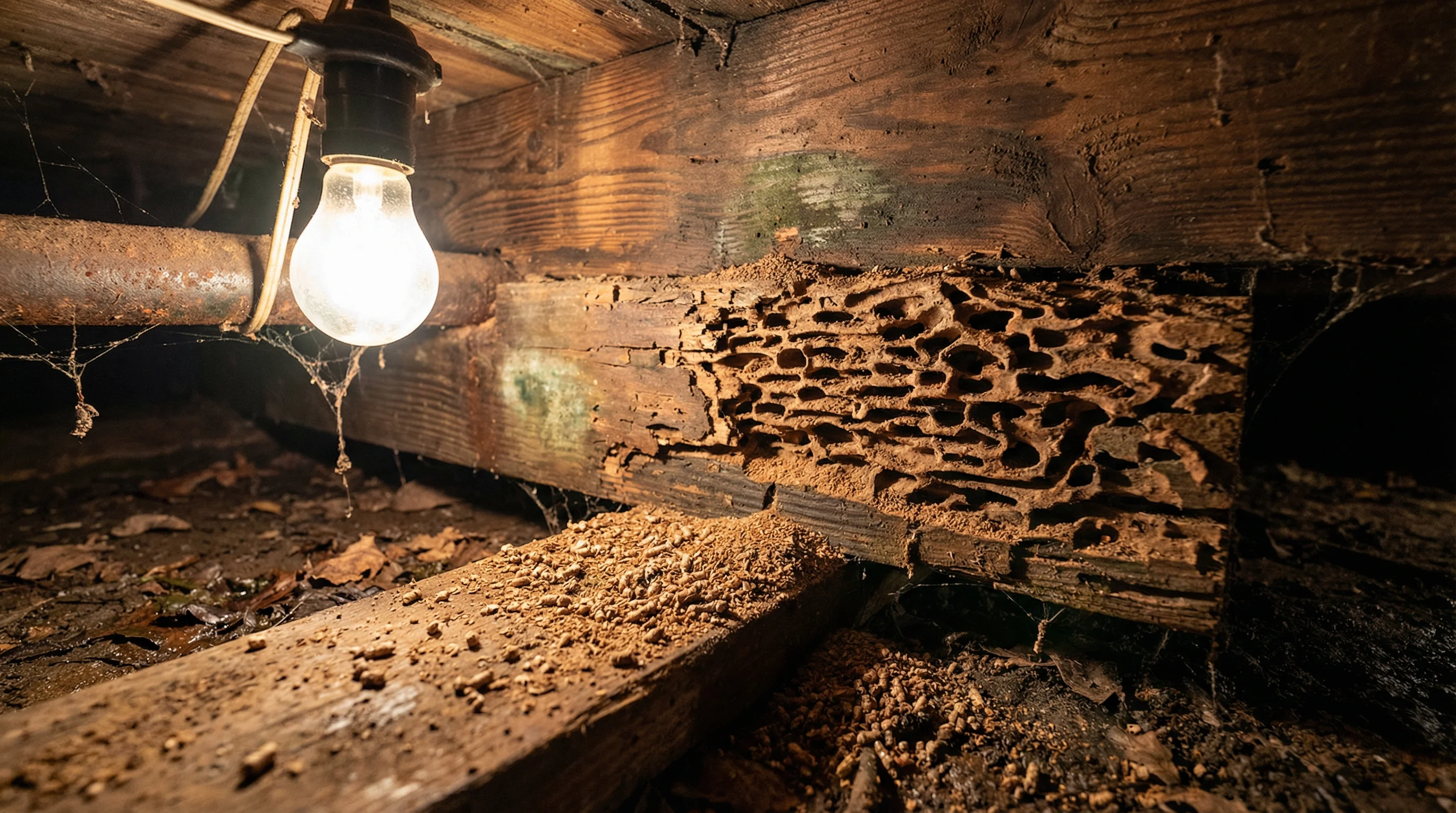
Pest damage on structural members
Termite damage alongside moisture rot. Pest-damaged wood must be addressed with both structural repair and licensed pest treatment to prevent ongoing deterioration.
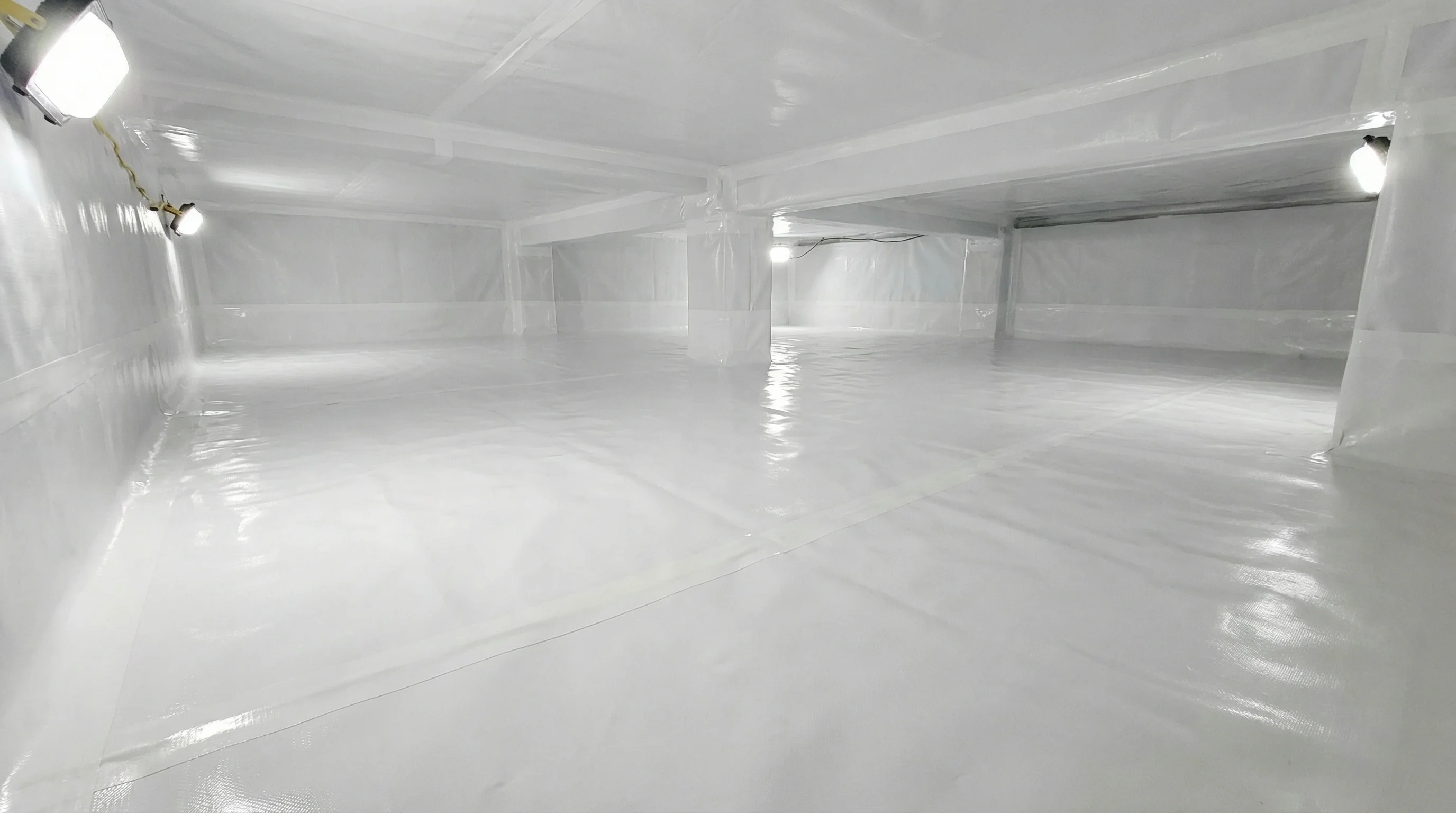
Moisture protection after repair
Full encapsulation installed after structural repairs. The sealed, conditioned environment keeps new wood dry and prevents the moisture conditions that caused the original damage.
Professional Process
How this work is done right
Each step builds on the last so moisture stays managed and materials stay protected.
Structural assessment
Inspect all accessible joists, girders, posts, and subfloor from within the crawl space. Use a moisture meter to identify active moisture zones. Probe wood with an awl to test firmness — sound wood resists penetration; rotted wood is soft and flaky. Document all damage with measurements and photos.
Shoring and preparation
Before removing or reinforcing any structural member, shore the floor above with temporary jacks or supports. Clear the crawl space of debris, old insulation, and any vapor barrier in the work area. Ensure safe, adequate access for workers and materials.
Repair and reinforcement
Sister new pressure-treated joists alongside damaged ones, secured with structural bolts or engineered hangers. Replace failed beams with properly sized lumber or steel. Install adjustable steel jack posts on concrete footings where additional support is needed. Level floors gradually.
Moisture control and protection
After structural work is complete, install vapor barrier and/or full encapsulation. Add a dehumidifier to maintain conditions below 55% RH and keep wood moisture well under the 19% threshold. This step is non-negotiable — without it, new materials will follow the same path as the old ones.
Cost Guidance
What to expect on pricing
Costs vary by crawl space size, severity of damage, and region. These ranges reflect typical residential projects in our service areas.
Joist sistering
$200 – $500 per joist
Pressure-treated lumber bolted alongside damaged joists. Cost depends on joist length, access difficulty, and number of joists affected.
Beam replacement
$1,500 – $5,000
Removing and replacing a failed girder or primary beam. Includes shoring, removal, new beam, and support installation.
Steel jack posts
$300 – $800 each
Adjustable steel support columns on concrete footings. Typically installed in pairs or groups to reinforce sagging areas.
Moderate structural repair
$2,000 – $7,000
Multiple sistered joists, one or two new support posts, and targeted subfloor repair. Covers most single-area sagging problems.
Extensive structural repair
$7,000 – $15,000+
Widespread joist damage, beam replacement, multiple supports, and subfloor replacement. Typically seen in crawl spaces with years of unaddressed moisture.
Subfloor replacement
$3 – $8 / sq ft
Cutting out and replacing rotted plywood subfloor sections. Usually accessed from above, which may require flooring removal.
Regional considerations
North Carolina
Crawl space foundations are the norm in Charlotte and across the Piedmont. Clay soils that hold moisture near the foundation create chronic conditions for wood rot. Home inspectors routinely find fungal growth on joists in vented crawl spaces. Structural repair paired with encapsulation is the standard protocol.
South Carolina
Older coastal homes near Charleston and Beaufort often have elevated foundations with decades of unaddressed moisture. Termite damage frequently accompanies wood rot in South Carolina crawl spaces. Coordinate structural repair with licensed pest treatment for complete protection.
Florida
Fewer modern Florida homes have crawl spaces, but older and coastal properties do. High humidity, termite pressure, and hurricane-driven water intrusion accelerate structural deterioration. Repairs must account for both moisture and pest control in Florida's climate.
Related Guides
Connect this work with the bigger picture
Floors sagging or bouncy?
Structural damage in the crawl space gets worse over time, not better. Schedule a free assessment — we'll measure moisture, check every joist and support, and give you a clear picture of what your home needs.