Fiberglass batts between floor joists are the most common crawl space insulation — and the most common failure. In humid climates, these batts absorb moisture, sag out of position, and trap water directly against wood framing, accelerating rot and mold growth.
Crawl Space Insulation Guide
Crawl Space Insulation: Remove What's Failed, Install What Works
Most crawl space insulation problems start the same way: fiberglass batts installed between floor joists absorb moisture, sag, and eventually trap water against wood framing. This guide covers why old insulation fails, what to replace it with, and how insulation fits into the larger moisture control strategy.
- Insulation Removal
- Rigid Foam Board
- Energy Efficiency
- Moisture Management
- Code Compliant
What you need to know
In an encapsulated (closed) crawl space, insulation belongs on the foundation walls, not between the floor joists. Wall insulation creates a thermal envelope around the conditioned space and keeps masonry surfaces above dew point to prevent condensation.
Rigid foam board (XPS or EPS) is the standard for crawl space wall insulation. It resists moisture, provides consistent R-value, and does not support mold growth. Typical installations use 1.5–2 inch panels secured to foundation walls over the vapor barrier.
Spray foam insulation (closed-cell) is an option for rim joists and irregular surfaces where rigid board cannot be cut to fit. Open-cell spray foam should be avoided in crawl spaces because it absorbs moisture.
Removing old, failed insulation is often the first step in any crawl space project. Wet fiberglass, rodent-contaminated batts, and falling insulation should be fully removed before encapsulation, mold treatment, or structural work begins.
Properly insulated and encapsulated crawl spaces deliver measurable energy savings. The Department of Energy recommends insulating crawl space walls rather than the subfloor when the space is conditioned and sealed.
Field Visuals
What this work looks like in practice
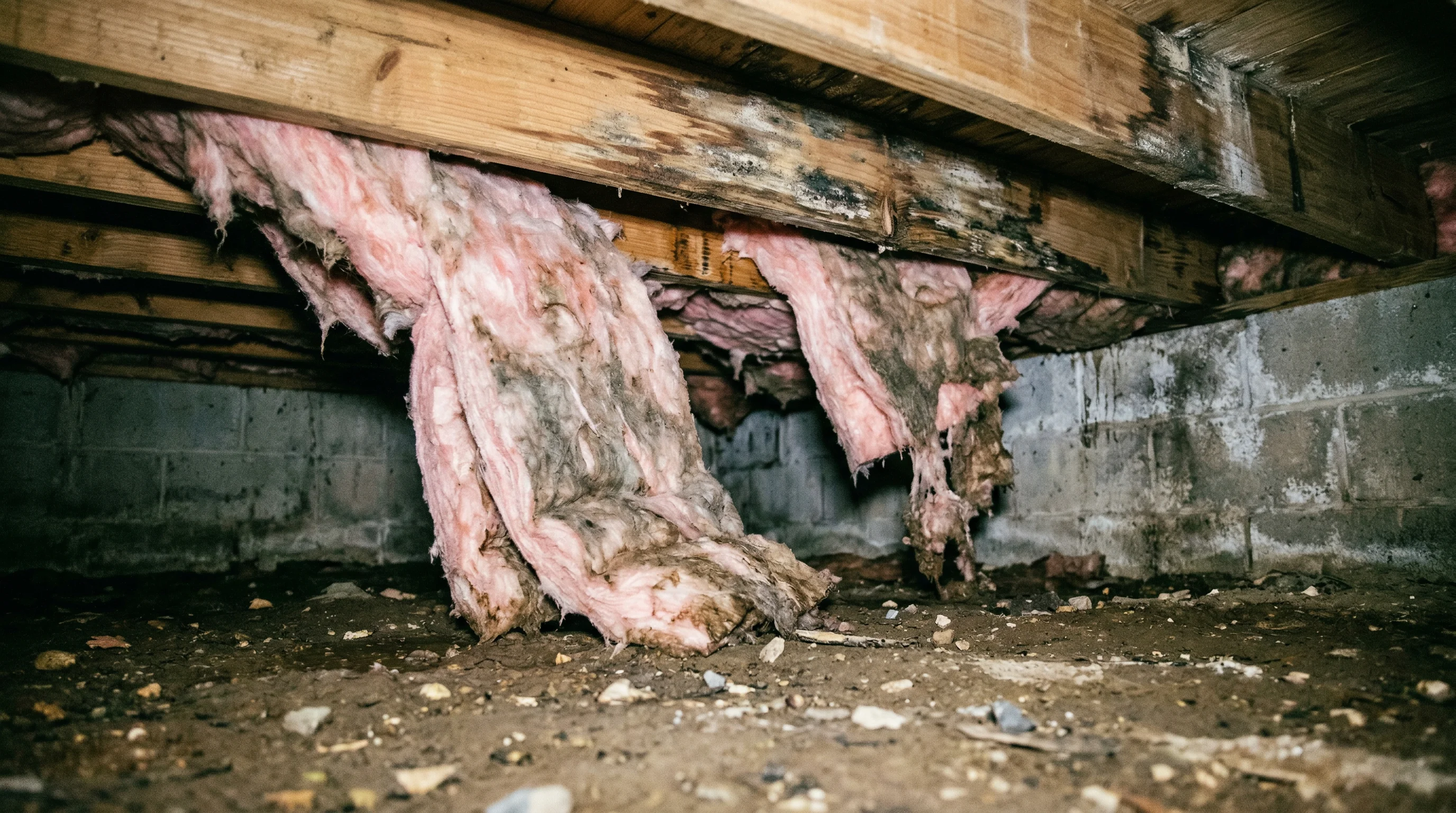
Failed fiberglass insulation
Fiberglass batts that have absorbed moisture and sagged out of position. This insulation is trapping water against floor joists and must be removed before it causes structural damage.
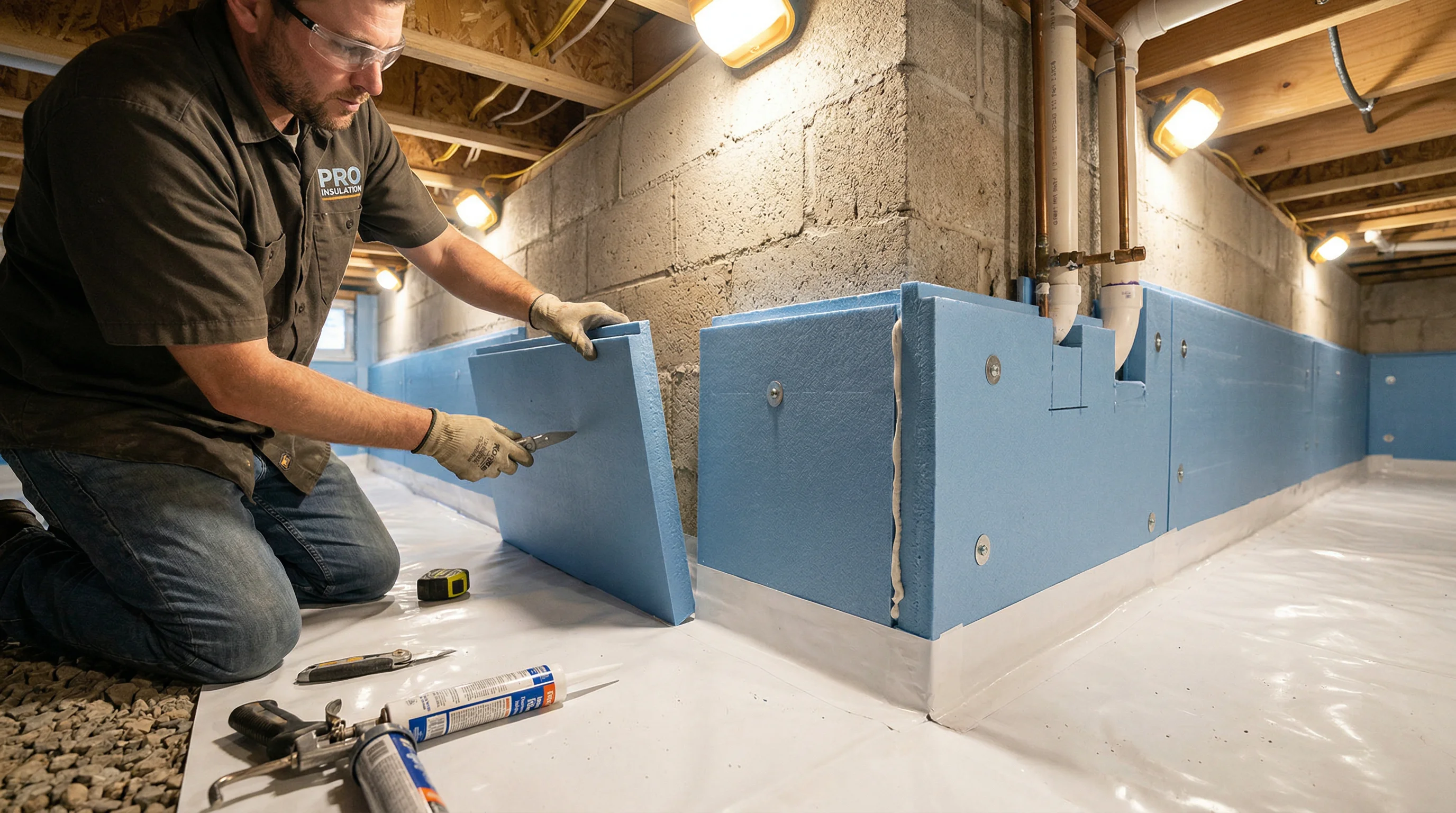
Wall insulation installation
2-inch rigid XPS foam board secured to foundation walls over the vapor barrier. This approach insulates the conditioned crawl space envelope rather than the floor above.
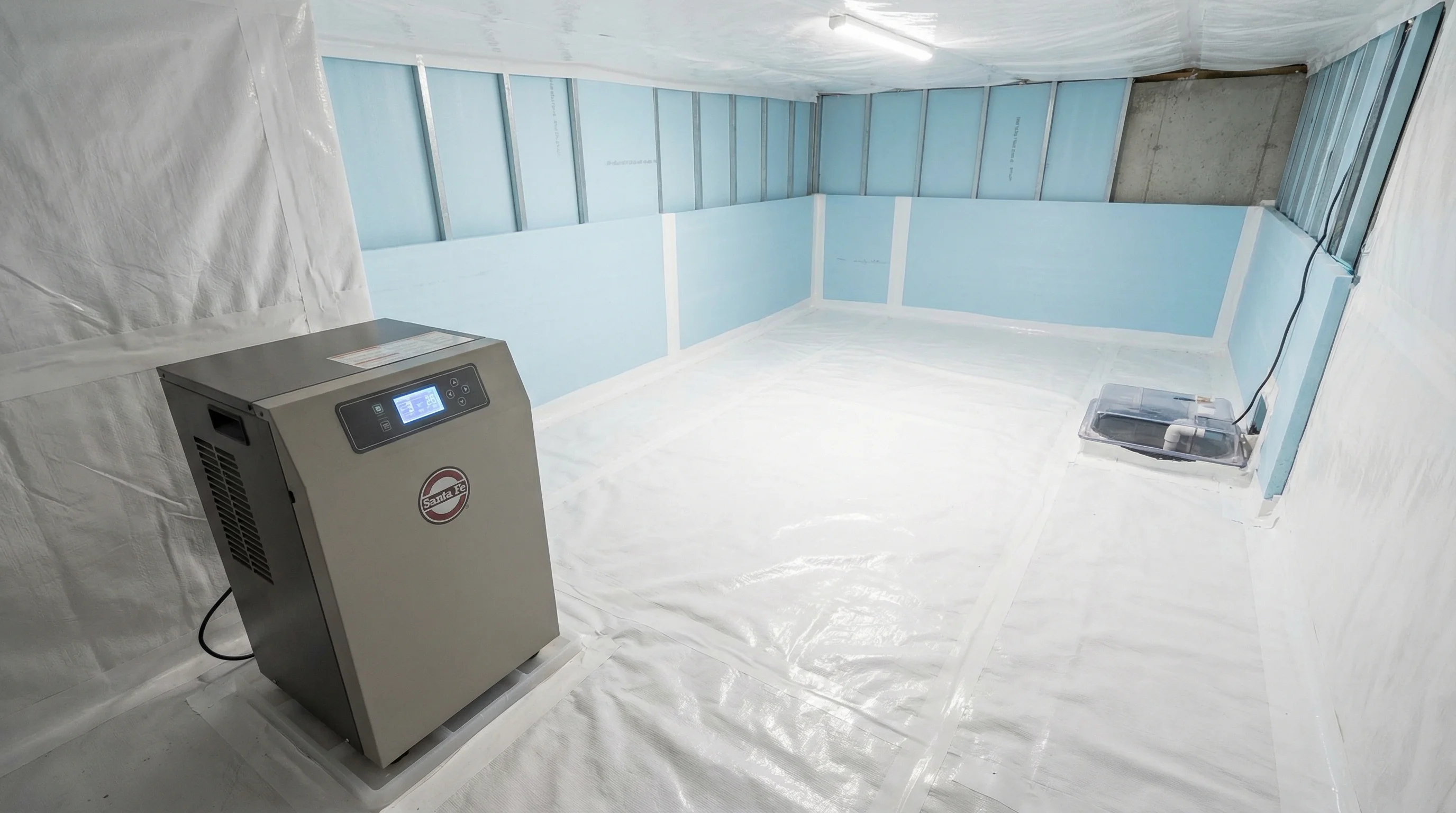
Encapsulation with wall insulation
Fully encapsulated crawl space with rigid foam on walls, sealed vapor barrier, and dehumidifier running. The insulation is part of a complete moisture and thermal control system.
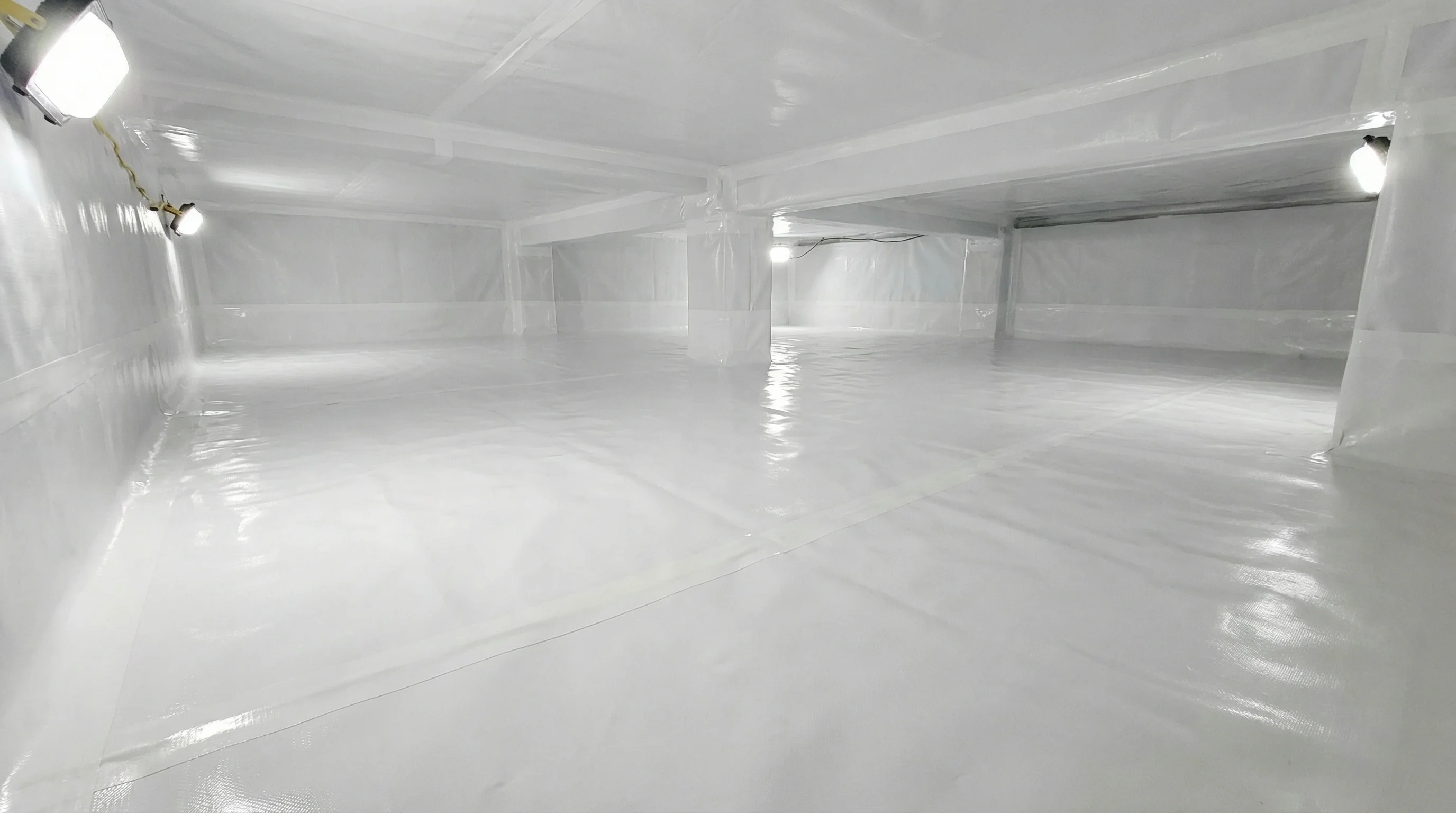
Completed insulation upgrade
After removing old fiberglass, treating wood surfaces, and installing wall insulation. The crawl space is dry, sealed, and conditioned — no more cold floors or moisture problems.
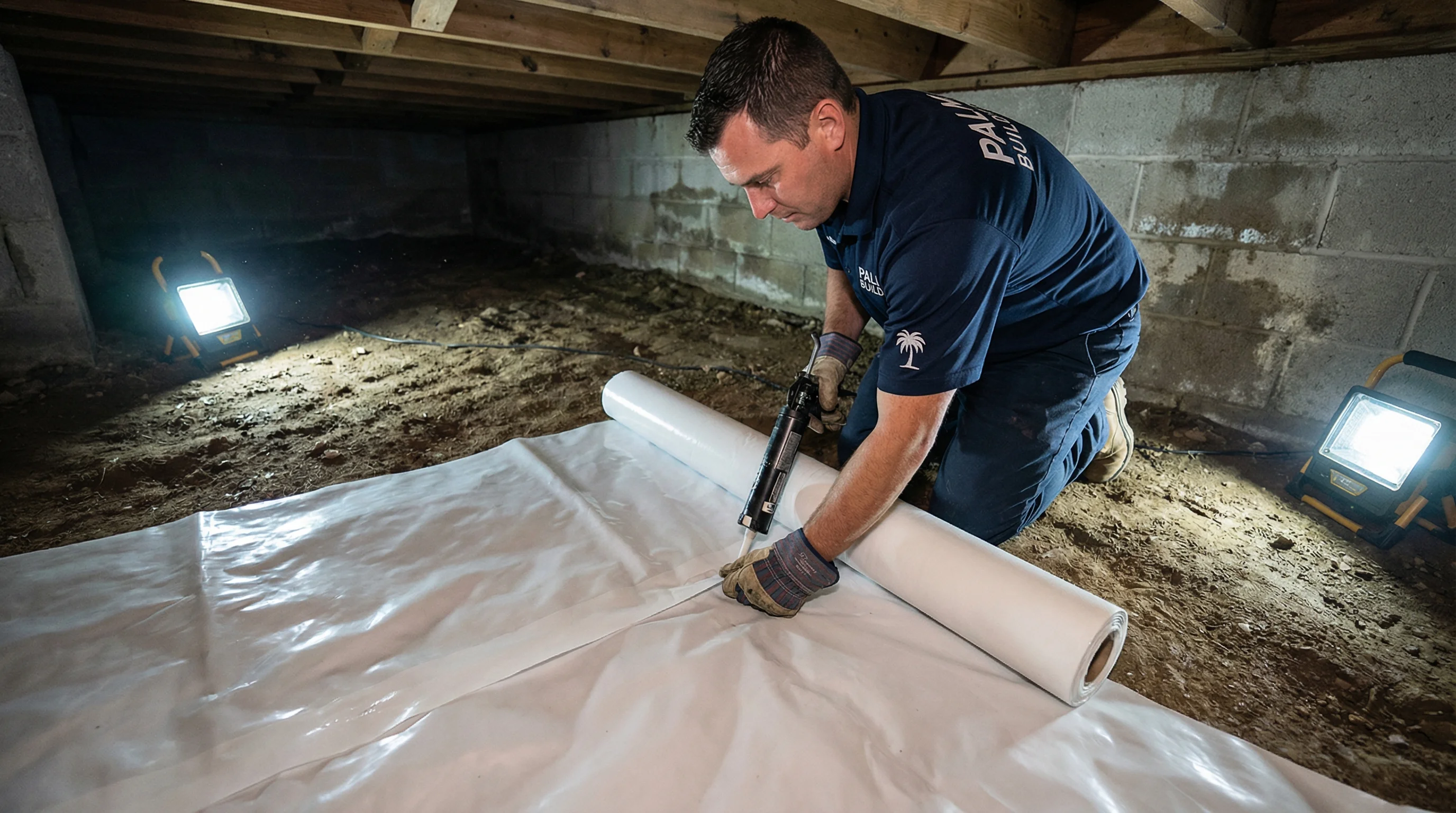
Vapor barrier before insulation
Heavy-duty vapor barrier installed on walls and floor before rigid foam board goes up. The barrier prevents ground moisture from reaching the insulation and wood framing.
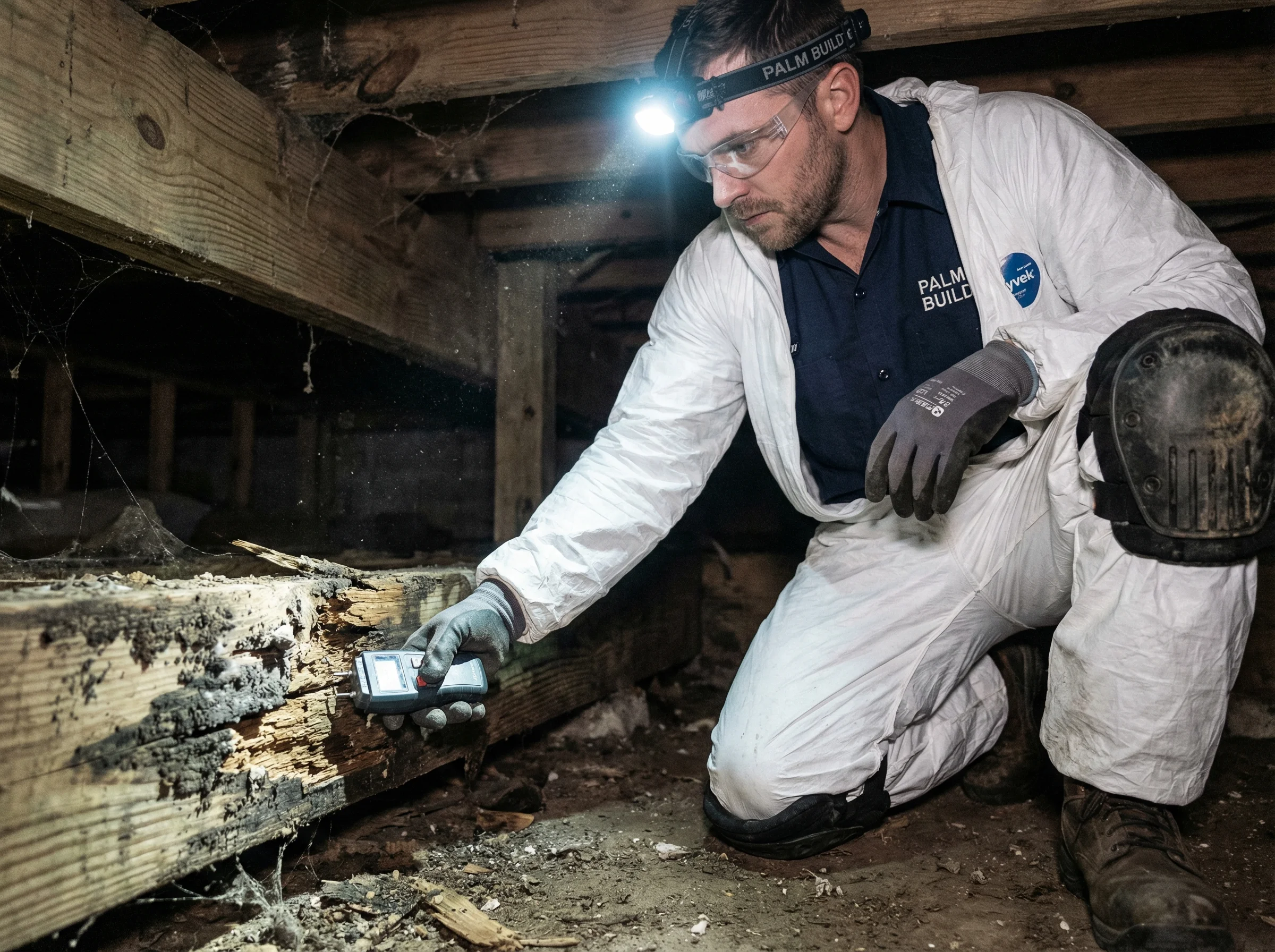
Insulation assessment
Technician evaluates existing insulation condition, moisture levels, and structural integrity to recommend the right insulation strategy for the crawl space.
Professional Process
How this work is done right
Each step builds on the last so moisture stays managed and materials stay protected.
Remove failed insulation
Pull out all sagging, wet, or contaminated fiberglass batts. Bag and dispose of material properly — rodent-contaminated insulation may require respiratory protection. Clear all debris from the crawl space floor.
Address underlying conditions
Treat any mold found on exposed joists. Dry the space with dehumidifiers until wood moisture is below 19%. Repair structural damage if present. These steps must be complete before new insulation goes in.
Install vapor barrier and seal
If encapsulating, install 12–20 mil vapor barrier on the floor and walls. Seal all vents and penetrations. The crawl space is now a conditioned space, and insulation strategy shifts from floor joists to foundation walls.
Install wall insulation and verify
Secure rigid foam board (1.5–2" XPS or EPS) to foundation walls over the vapor barrier. Apply closed-cell spray foam to rim joists and irregular areas. Install and verify dehumidifier operation. Take final moisture and temperature readings to confirm performance.
Cost Guidance
What to expect on pricing
Costs vary by crawl space size, severity of damage, and region. These ranges reflect typical residential projects in our service areas.
Insulation removal
$1 – $2 / sq ft
Removing old fiberglass batts, debris, and cleanup. Heavily contaminated material (rodents, mold) may cost more due to disposal requirements.
Rigid foam board (walls)
$1.50 – $3 / sq ft
1.5–2 inch XPS or EPS panels on foundation walls. Includes material, adhesive, and labor for proper sealing.
Spray foam (rim joists)
$3 – $7 / sq ft
Closed-cell spray foam for rim joists and irregular areas. Higher cost per square foot but essential for air sealing at the rim.
Full insulation replacement
$2,000 – $6,000
Complete removal of old fiberglass, wall insulation with rigid foam, and rim joist spray foam for a typical 1,200 sq ft crawl space.
Bundled with encapsulation
$5,000 – $18,000
Insulation is most cost-effective when combined with full encapsulation. Many contractors bundle vapor barrier, sealing, dehumidification, and insulation.
Energy savings
10–15% annually
Advanced Energy research shows insulated, encapsulated crawl spaces reduce heating and cooling costs. Typical payback period is 5–8 years.
Regional considerations
North Carolina
Cold winter floors are the most common complaint driving insulation upgrades in Charlotte and the Piedmont. Wall insulation in a sealed crawl space keeps the space warmer, eliminating cold floors and reducing frozen pipe risk. NC energy code supports closed crawl space with wall insulation.
South Carolina
Humidity is the primary insulation concern. Wet fiberglass is endemic in older homes near the coast. Shifting to wall insulation with encapsulation resolves both the moisture and energy problems simultaneously. SC code permits closed crawl with proper vapor barrier and conditioning.
Florida
Year-round warmth means less heating benefit, but insulation prevents condensation on cooler crawl space surfaces during air-conditioned months. Wall insulation also creates a thermal buffer that helps dehumidifiers work more efficiently.
Related Guides
Connect this work with the bigger picture
Is your crawl space insulation failing?
Sagging fiberglass, musty odors, and cold floors are signs your insulation needs attention. Schedule a free inspection and we'll assess conditions and recommend the right upgrade.