Encapsulation is not just a vapor barrier — it includes sealing all vents, covering 100% of the earth floor and foundation walls with 12–20 mil polyethylene, installing a commercial dehumidifier, and adding wall insulation. Each component addresses a different moisture pathway.
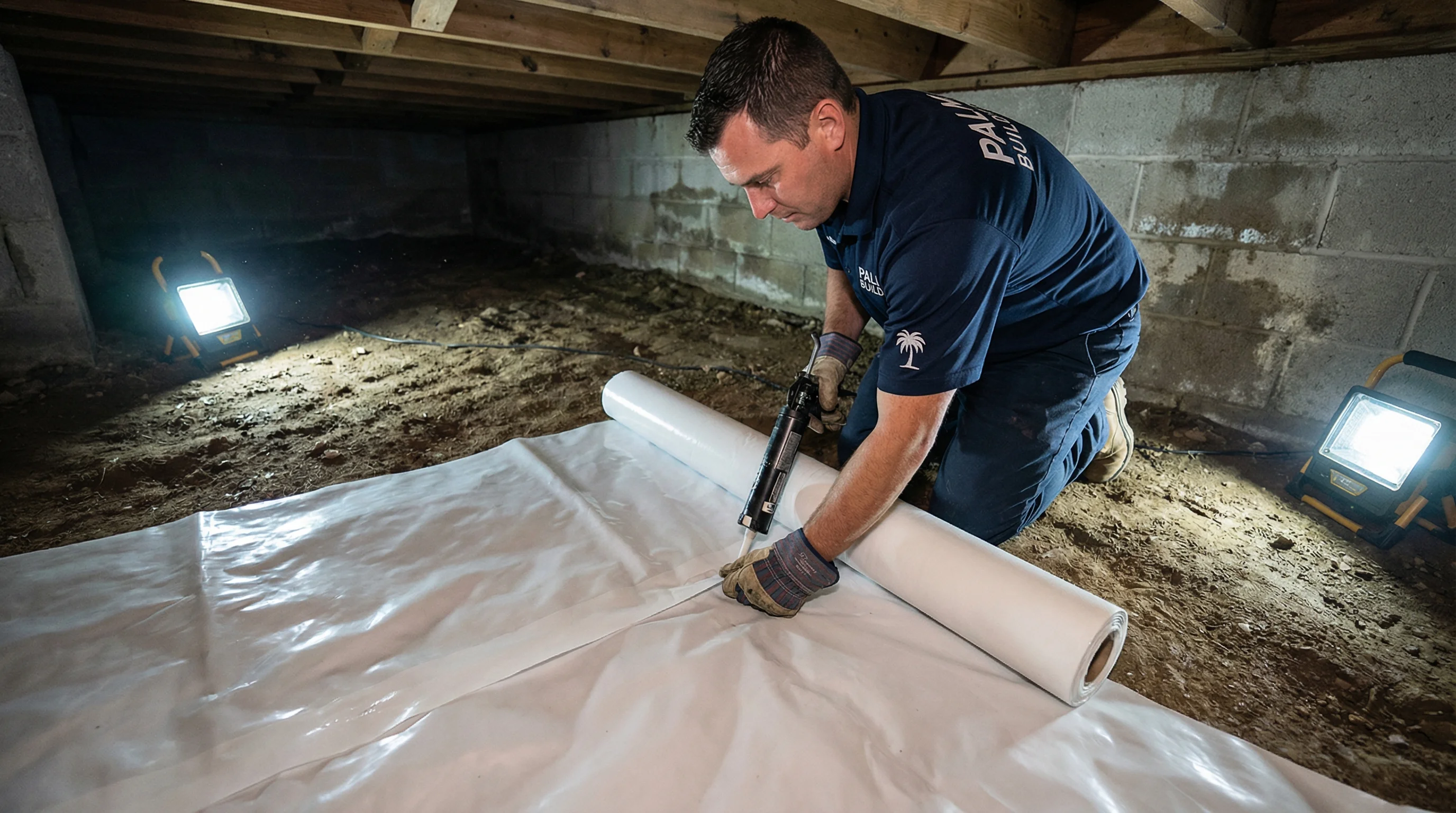
Crawl Space Encapsulation Guide
Crawl Space Encapsulation: Full Moisture Control From the Ground Up
Encapsulation turns a damp, vented crawl space into a dry, conditioned environment. This guide covers every component — vapor barriers, vent sealing, dehumidification, and wall insulation — so you understand what you're paying for and why each piece matters.
- Vapor Barrier
- Vent Sealing
- Dehumidification
- Wall Insulation
- NC · SC · FL
What you need to know
A basic vapor barrier covers only the floor and may be 6–8 mil plastic. Full encapsulation seals the entire crawl space envelope — floor, walls, vents, and penetrations — and adds mechanical moisture control. The difference in long-term performance is substantial.
Vented crawl spaces in humid climates (NC, SC, FL) often sit above 70% relative humidity in summer. Warm outdoor air enters through vents, condenses on cooler surfaces, and feeds mold growth. Sealing the vents and conditioning the space breaks this cycle.
Advanced Energy research shows encapsulated crawl spaces achieve roughly 15% energy savings in humid climates. Rooms above the crawl space feel more comfortable, and HVAC systems run more efficiently with consistent below-floor conditions.
Modern building codes in North Carolina, South Carolina, and Florida allow closed crawl spaces if you install a Class I vapor retarder, provide mechanical conditioning, maintain access, and preserve the code-required termite inspection gap at the foundation wall.
Do not encapsulate over active mold, standing water, or rotted structural members. These conditions must be addressed first. Encapsulating without resolving existing problems traps moisture and makes damage worse.
Field Visuals
What this work looks like in practice
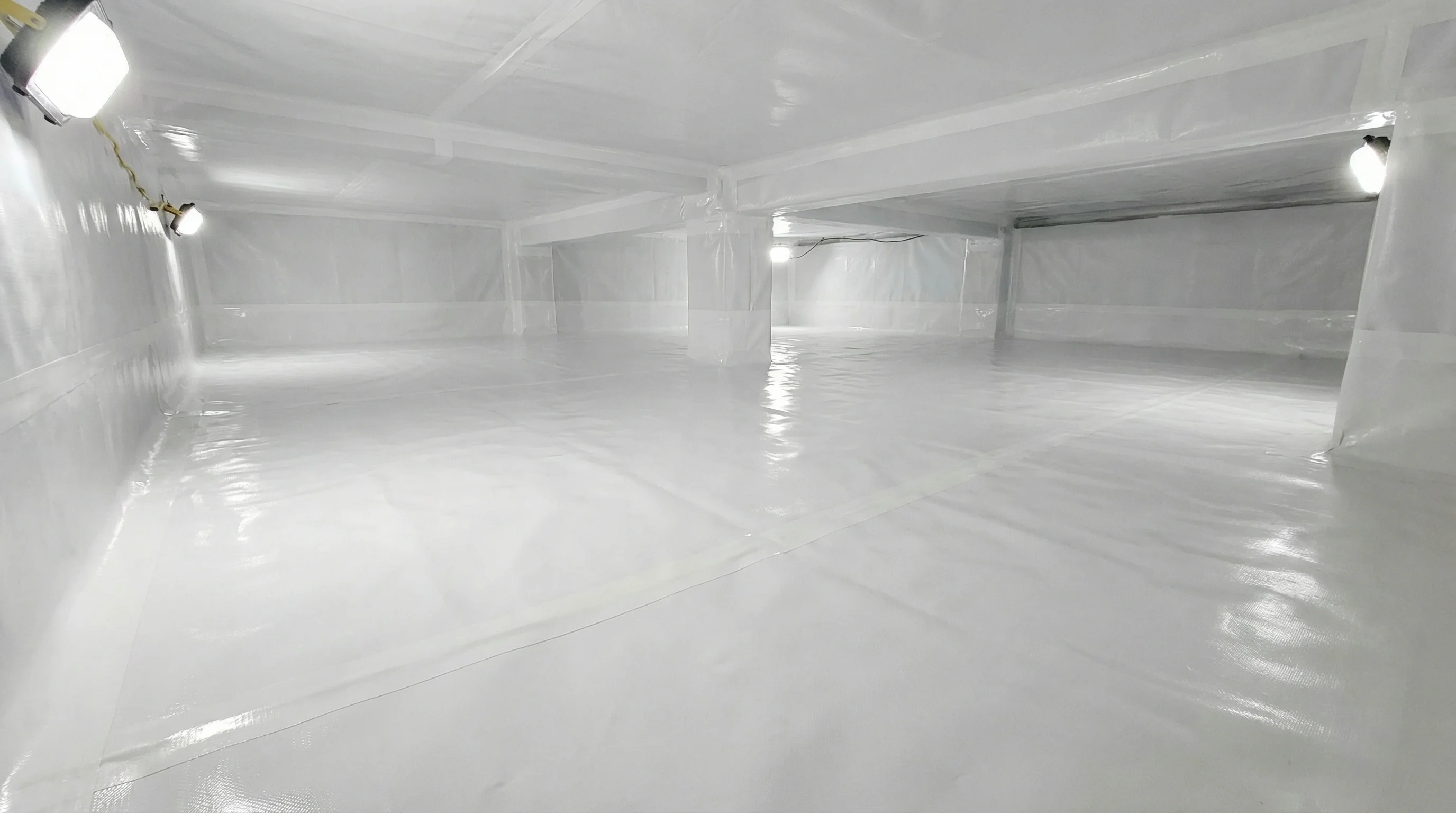
Completed full encapsulation
Clean, sealed crawl space with 20-mil reinforced vapor barrier covering the entire floor and foundation walls. Dehumidifier maintains conditions below 50% RH.
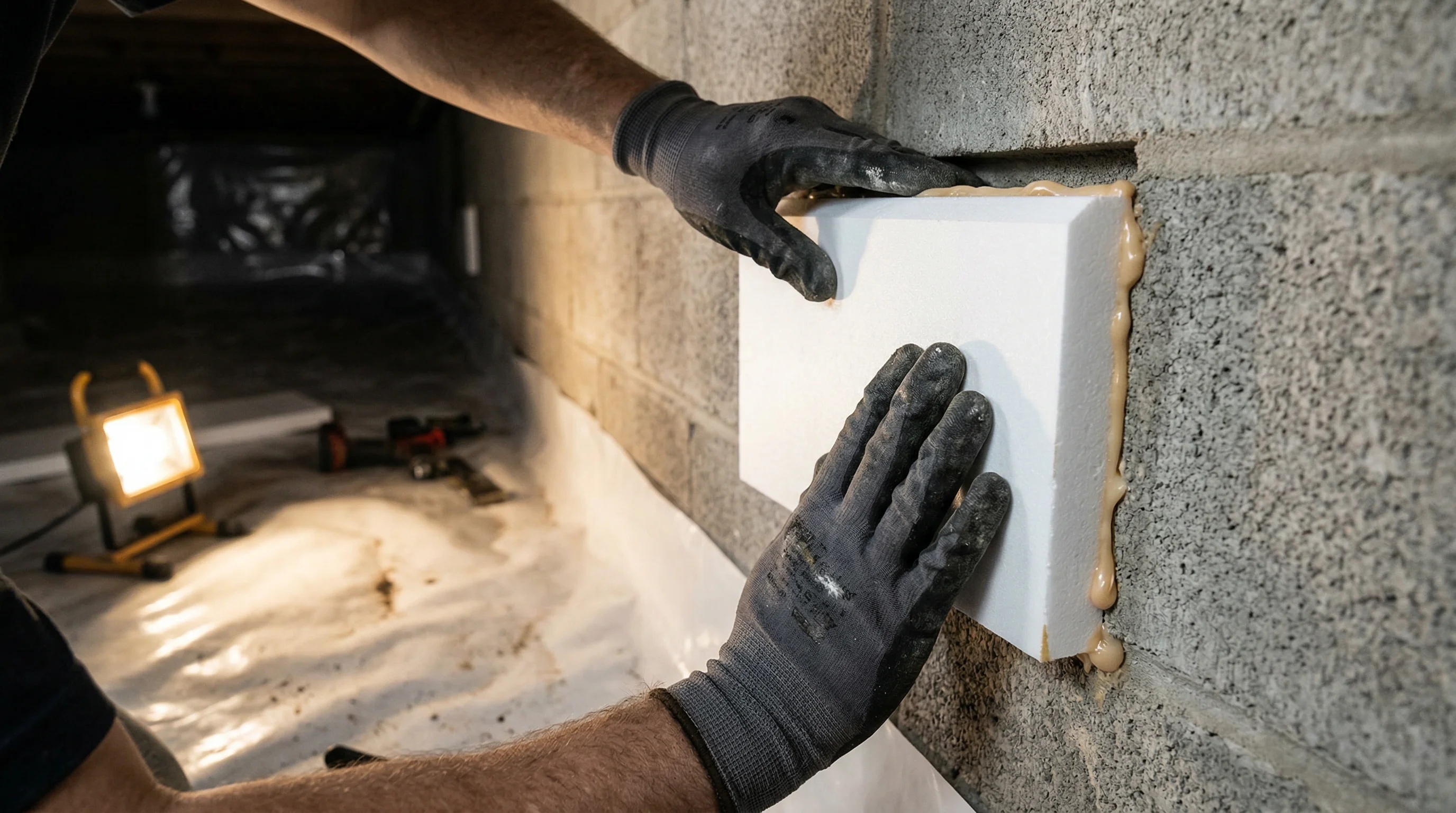
Foundation vent sealing
Each foundation vent is sealed with cut-to-fit rigid foam board and secured with construction adhesive. This stops warm, humid outside air from entering the conditioned crawl space.
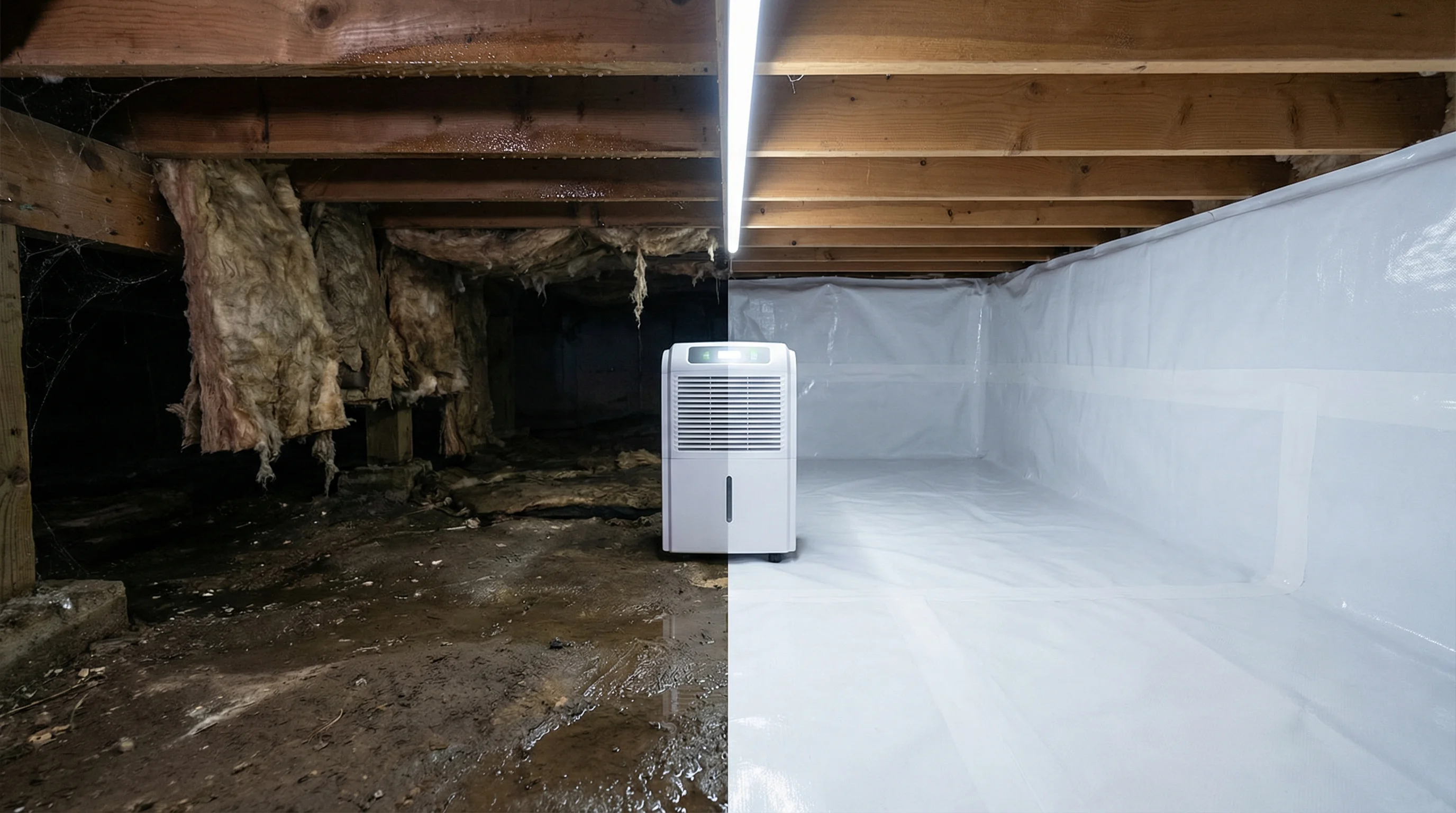
Before vs. after encapsulation
Left: damp, unfinished crawl space with exposed soil and moisture issues. Right: sealed, dry crawl space with complete vapor barrier and mechanical conditioning.
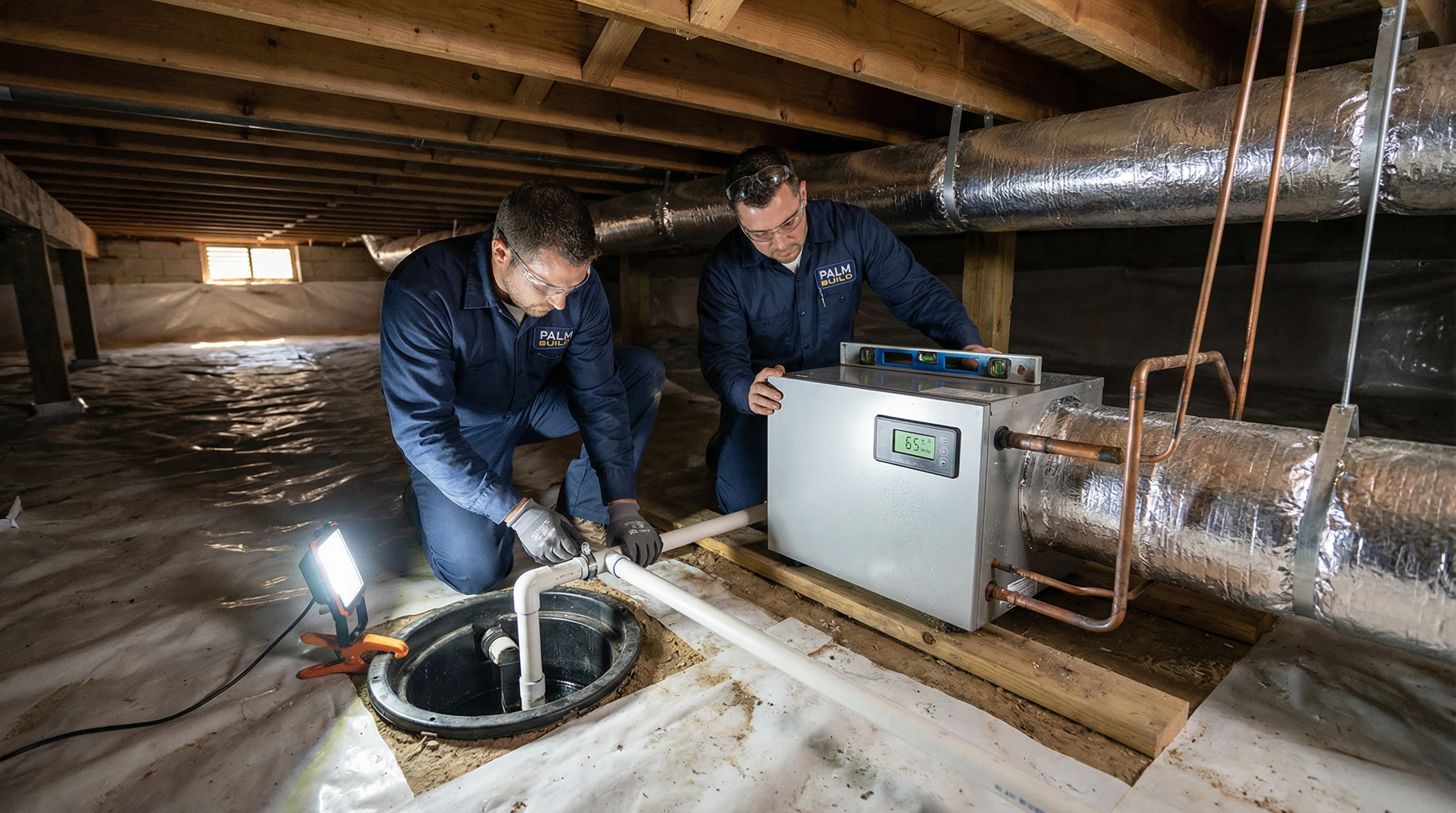
Dehumidifier installation
Commercial-grade 90-pint dehumidifier with auto-drain to exterior. Runs continuously to maintain target humidity below 55% in the sealed crawl space.
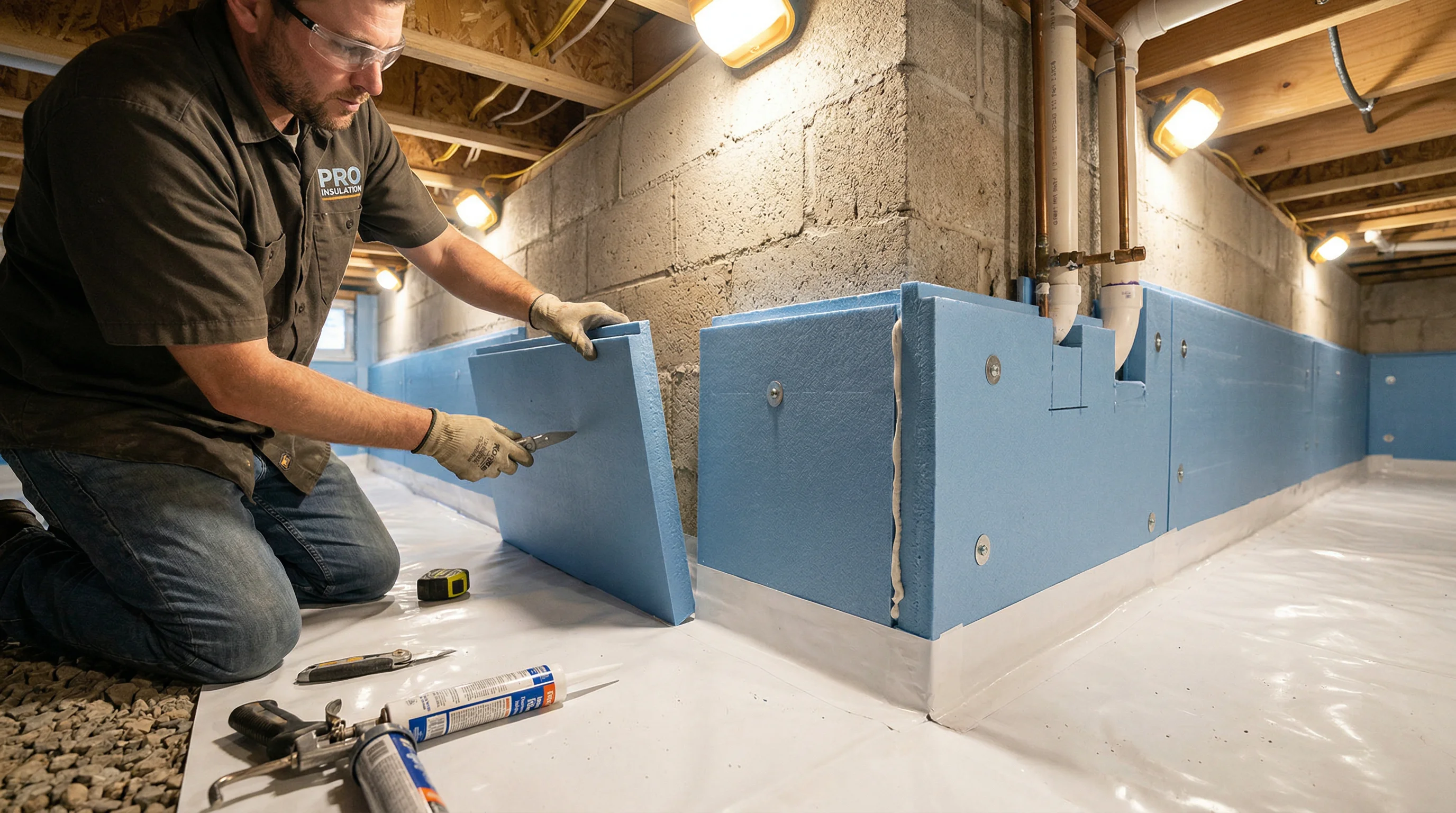
Wall insulation over vapor barrier
Rigid foam board installed over the vapor barrier on foundation walls. Provides thermal break and prevents condensation where warm interior air meets cool masonry.
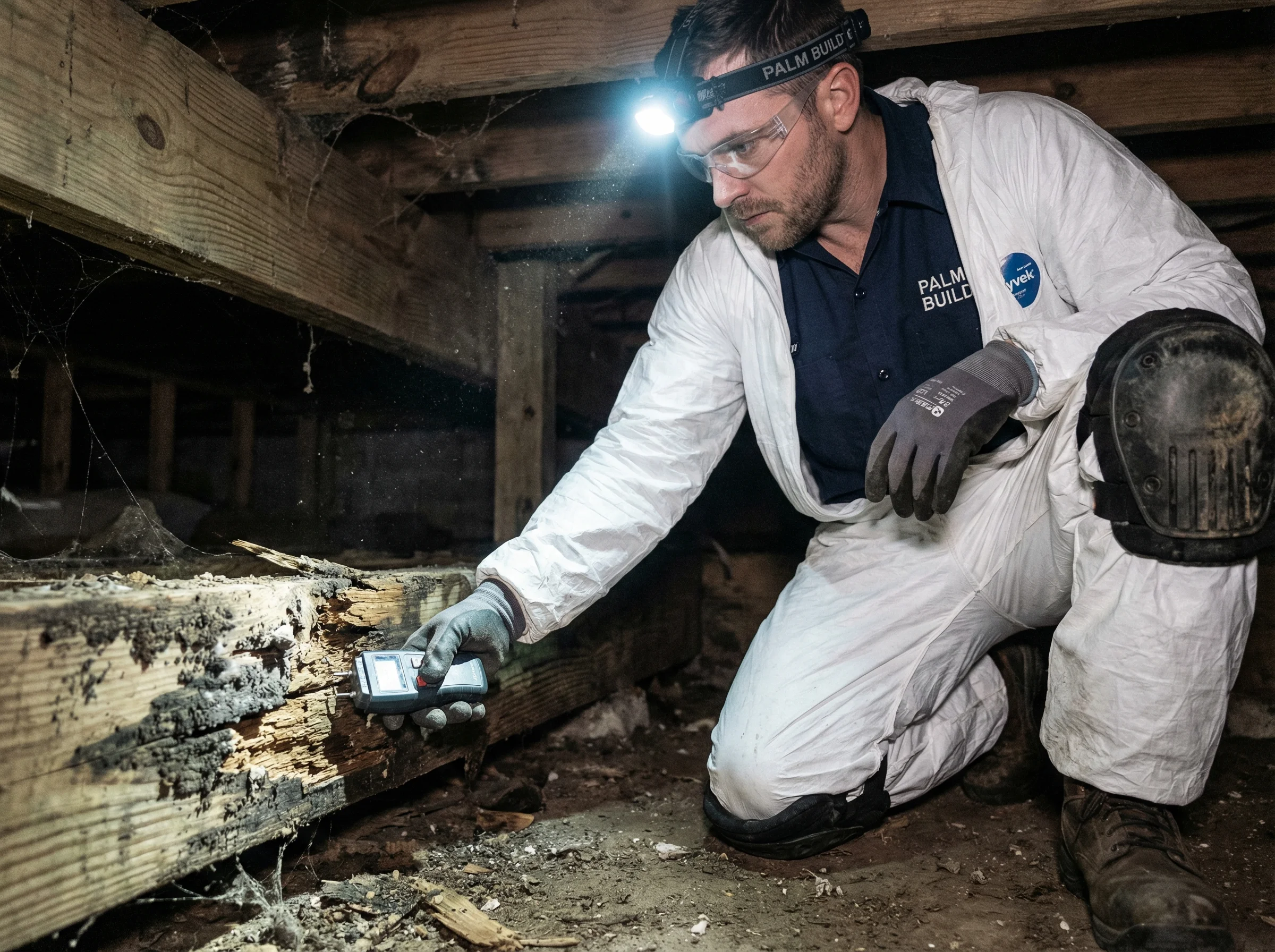
Pre-encapsulation moisture assessment
Technician measuring wood moisture content and relative humidity before specifying the encapsulation scope. Accurate readings prevent over- or under-scoping the project.
Professional Process
How this work is done right
Each step builds on the last so moisture stays managed and materials stay protected.
Inspection and moisture mapping
Measure wood moisture, relative humidity, and check for standing water, mold, or structural damage. Identify all moisture sources — ground vapor, bulk water, plumbing leaks, condensation — before specifying scope.
Preparation and pre-treatment
Remove old insulation, debris, and any failed vapor barrier. Treat active mold if present. Repair any structural damage (sistering joists, replacing supports) before sealing. The space must be dry and sound before encapsulation begins.
Barrier installation and sealing
Install 12–20 mil reinforced polyethylene across the entire floor and up foundation walls. Seal all seams with specialized tape. Close and seal all vents with foam board or rigid insulation. Seal around pipes, wires, and any penetrations through the foundation.
Dehumidification and verification
Install a commercial crawl space dehumidifier (typically 70–90 pint/day) with auto-drain to sump or exterior. Run the system for 48–72 hours and verify conditions: wood moisture below 19%, relative humidity consistently under 55%, no condensation on surfaces.
Cost Guidance
What to expect on pricing
Costs vary by crawl space size, severity of damage, and region. These ranges reflect typical residential projects in our service areas.
Full encapsulation
$3,500 – $15,000
Varies by crawl space size and complexity. National average around $5,500. Includes vapor barrier, vent sealing, and dehumidifier.
Vapor barrier only
$500 – $3,000
Floor-only barrier at $0.50–$2 per sq ft. Simpler scope, but does not provide full moisture control in humid climates.
Dehumidifier (installed)
$1,000 – $2,500
Commercial crawl space unit with auto-drain, humidistat, and low-temperature operation capability.
Vent sealing
$150 – $500
Foam board or rigid insulation to close all foundation vents. Usually included in full encapsulation quotes.
Wall insulation
$1,000 – $3,000
Rigid foam board on foundation walls. Reduces heat transfer and prevents condensation on masonry surfaces.
Labor vs. materials
50–70% / 30–50%
Labor is the largest cost component. Tight access, low clearance, and complex layouts increase labor time.
Regional considerations
North Carolina
Crawl space foundations are extremely common, especially in Charlotte and the Piedmont. Clay soils hold moisture near the foundation. Summer humidity and winter cold floors both improve dramatically with encapsulation. NC code allows closed crawl spaces with proper vapor barrier and mechanical conditioning.
South Carolina
Coastal areas near Charleston face high humidity and storm-driven water. Inland clay soils mirror NC conditions. Older elevated homes benefit significantly from encapsulation. Termite inspection gap requirements must be maintained per SC code.
Florida
High water tables, sandy soil, and year-round humidity make moisture control critical. Fewer modern homes have crawl spaces, but older properties and elevated coastal structures still do. Hurricane-driven water intrusion adds urgency to proper sealing.
Related Guides
Connect this work with the bigger picture
Ready to encapsulate your crawl space?
Schedule a free inspection. We'll measure moisture levels, assess structural conditions, and recommend the right encapsulation scope for your home — no pressure, no obligation.