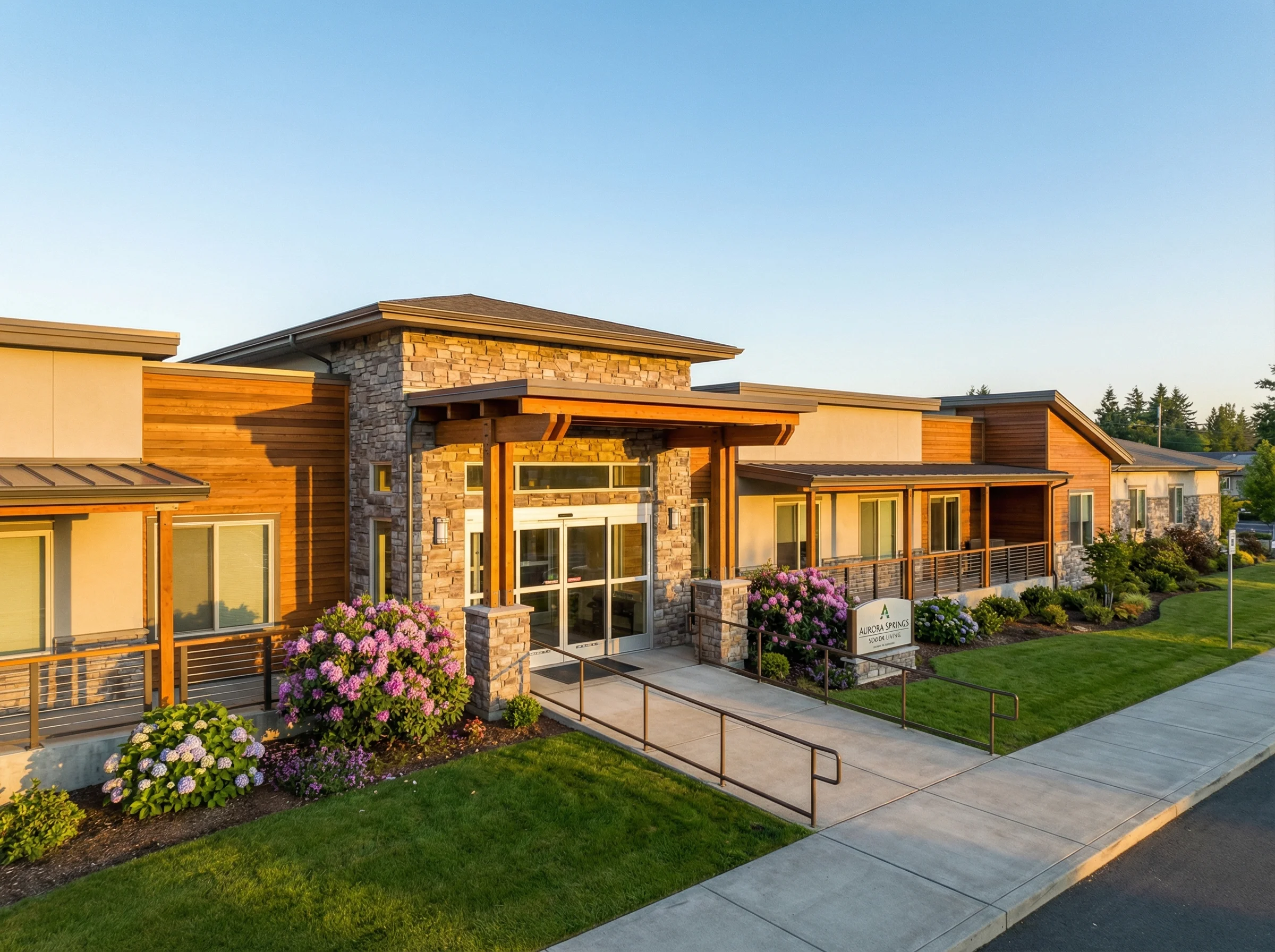
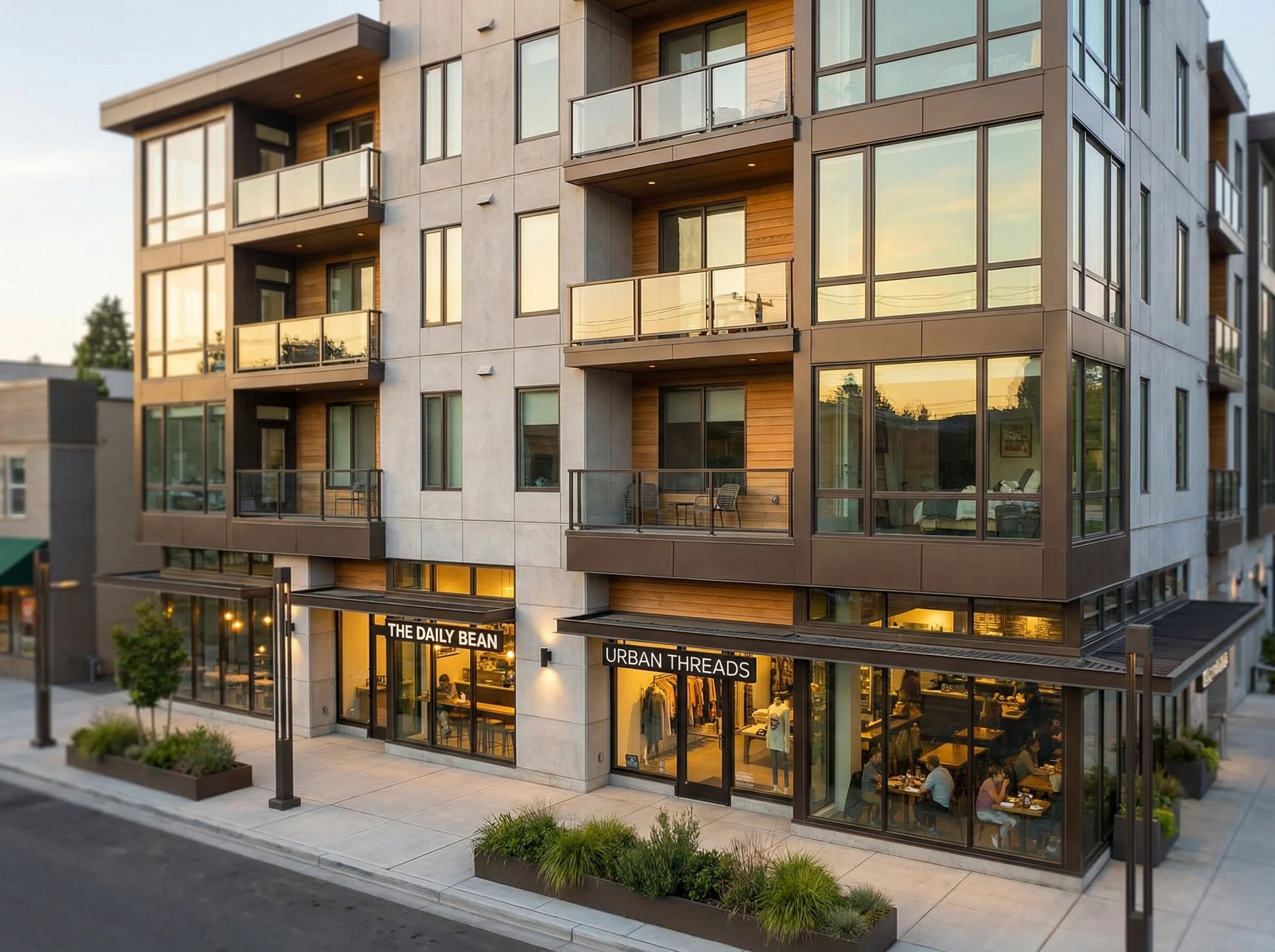
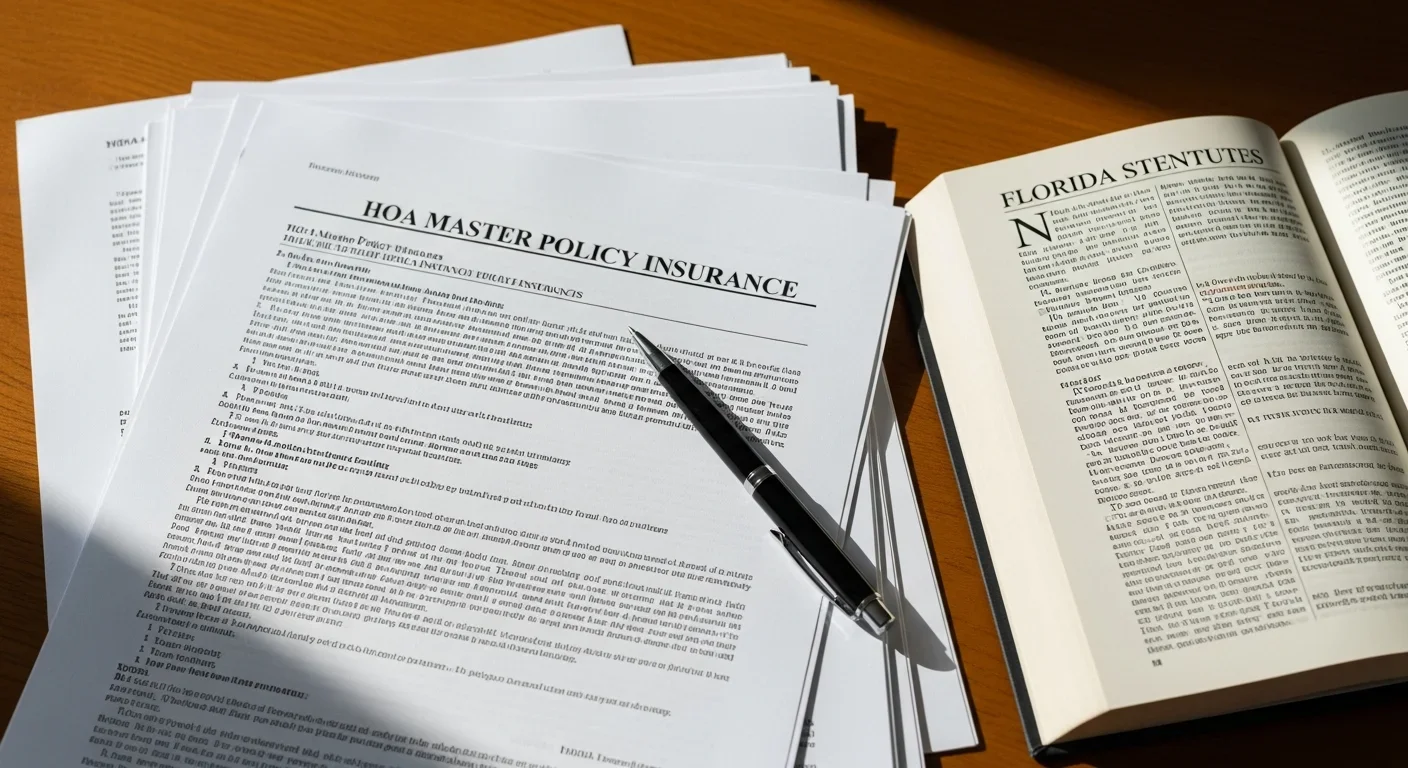
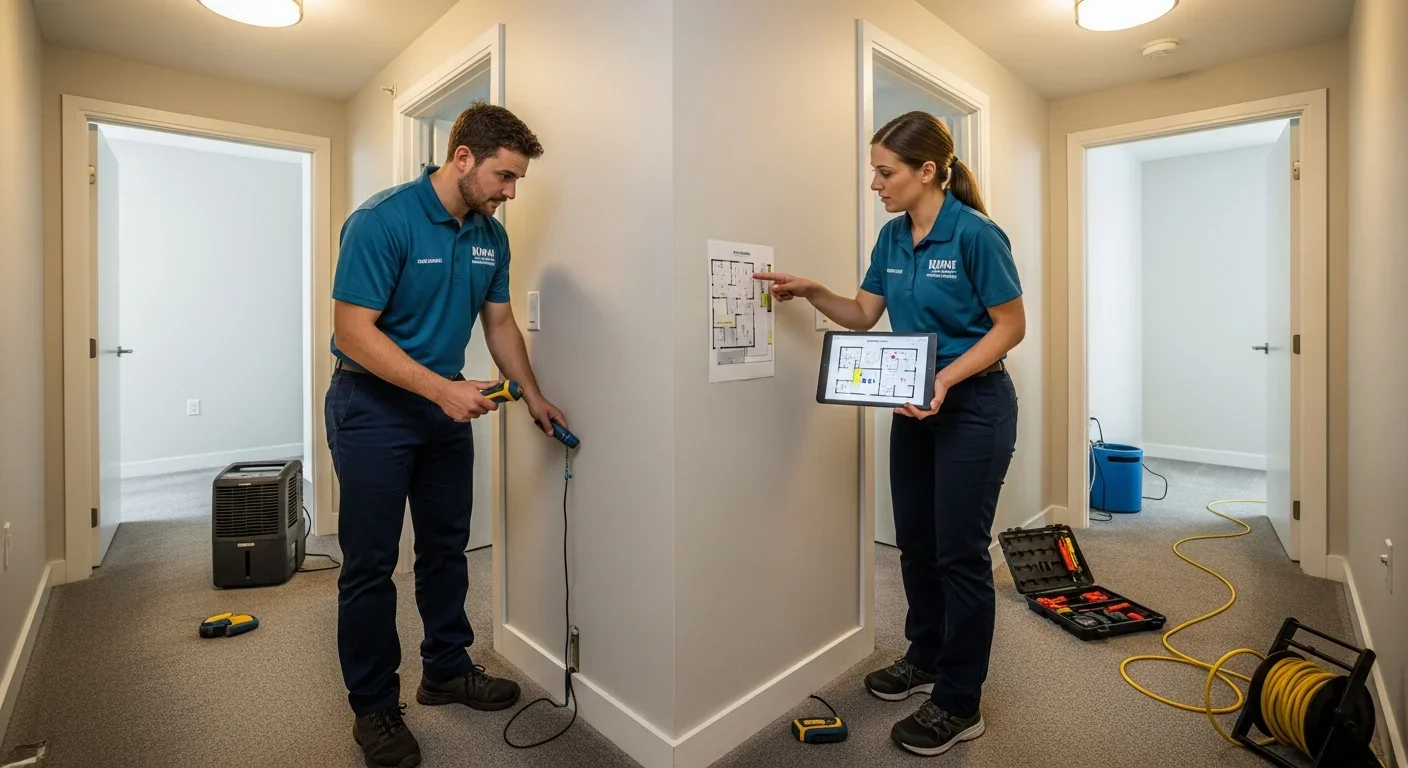
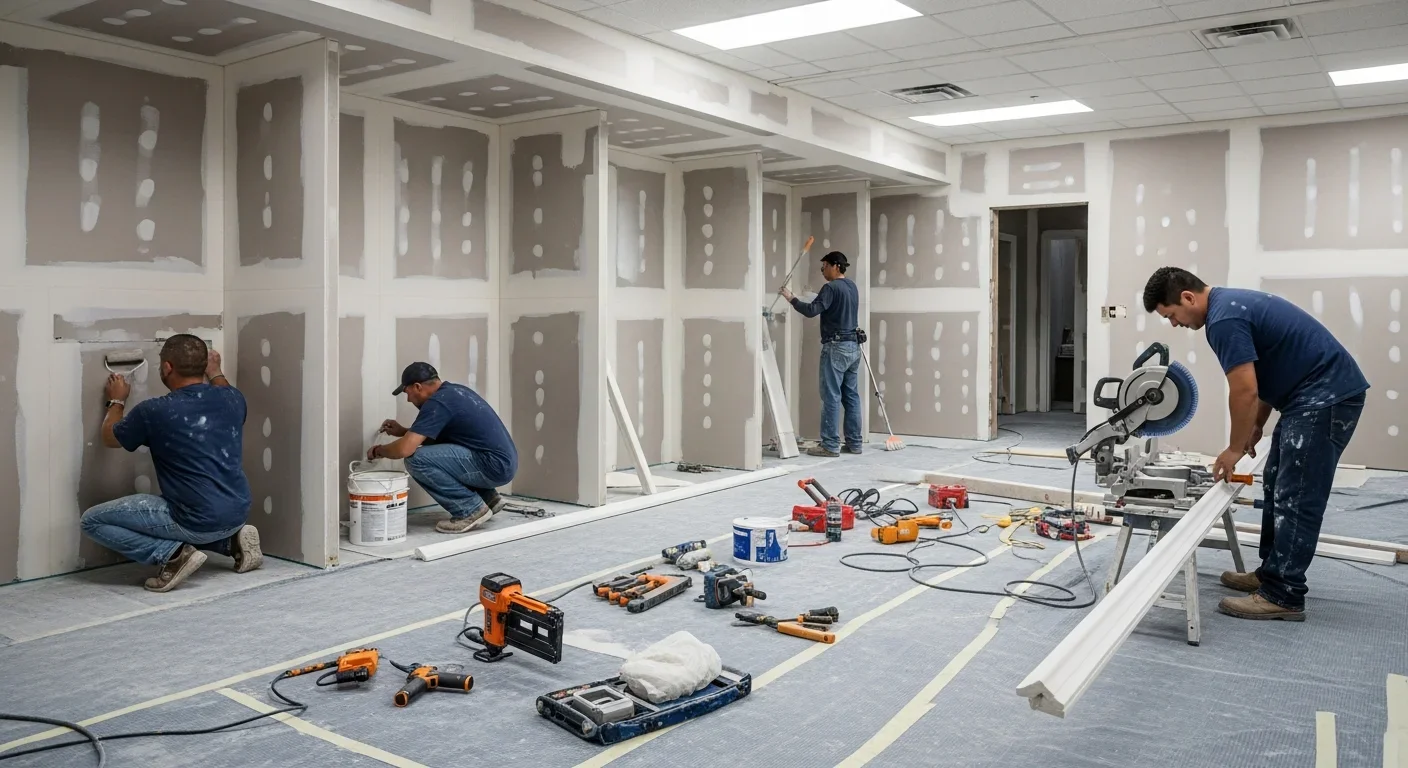
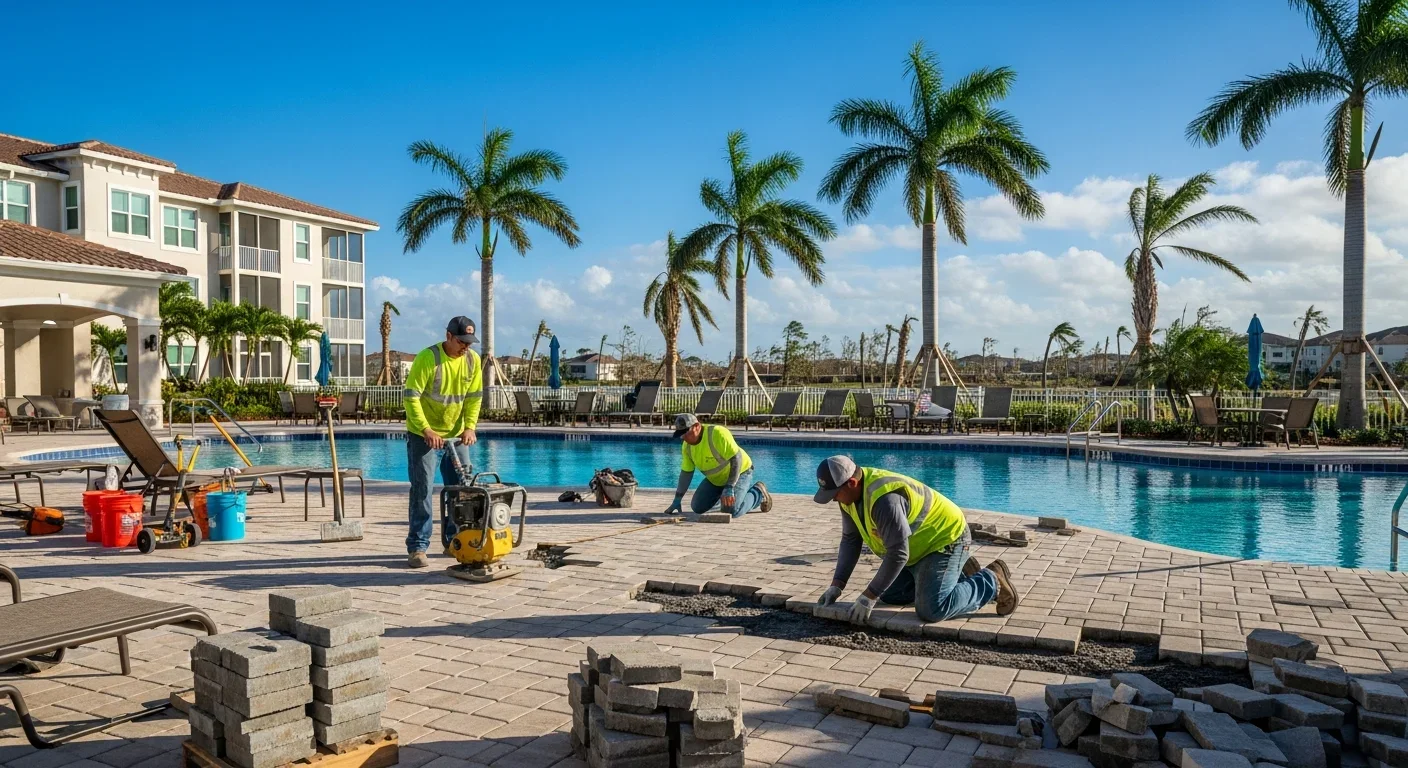
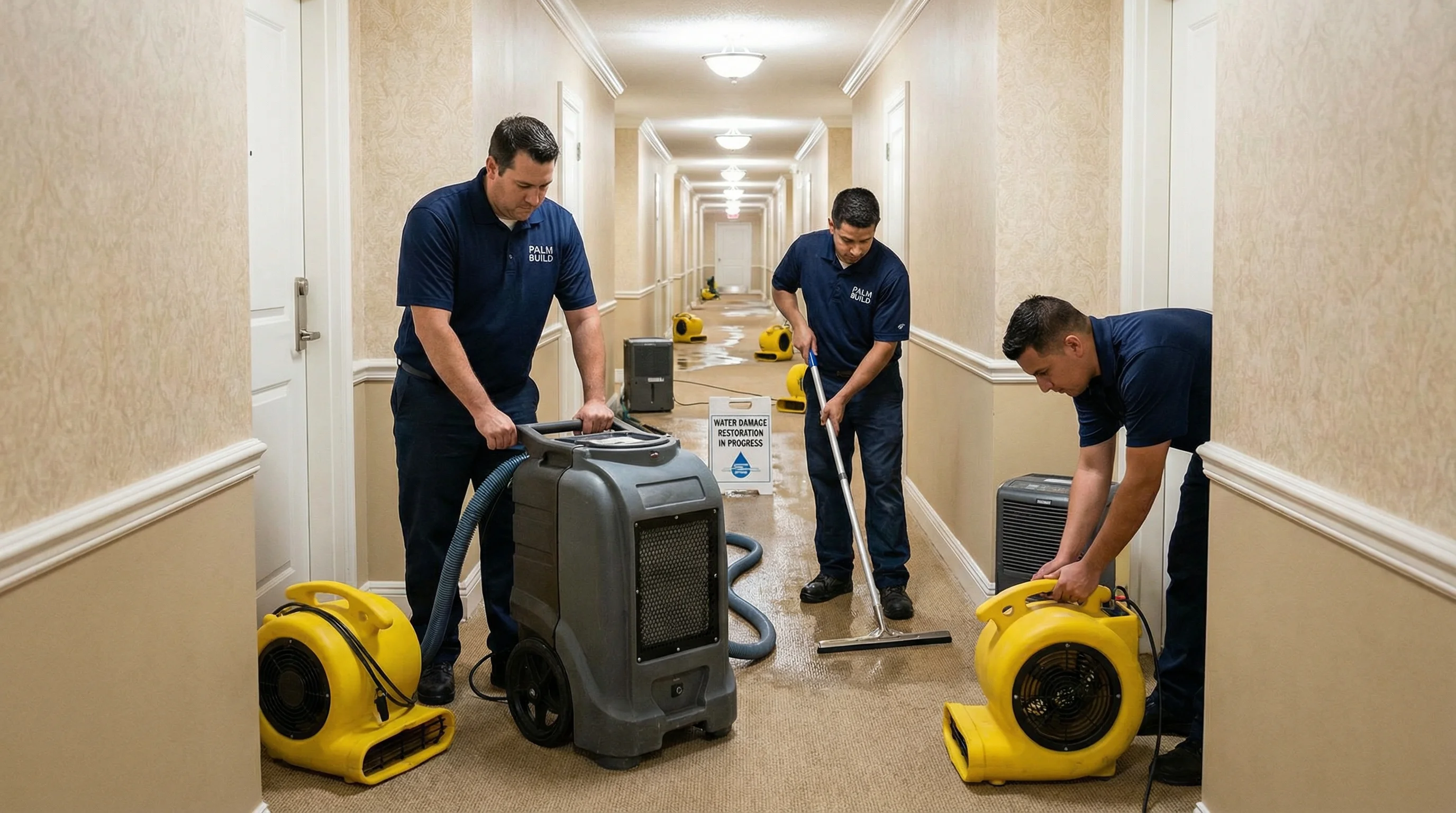
Restoring communities, not just buildings. We coordinate with boards, property managers, and residents to navigate multi-unit damage, complex insurance, and the unique challenges of community restoration.
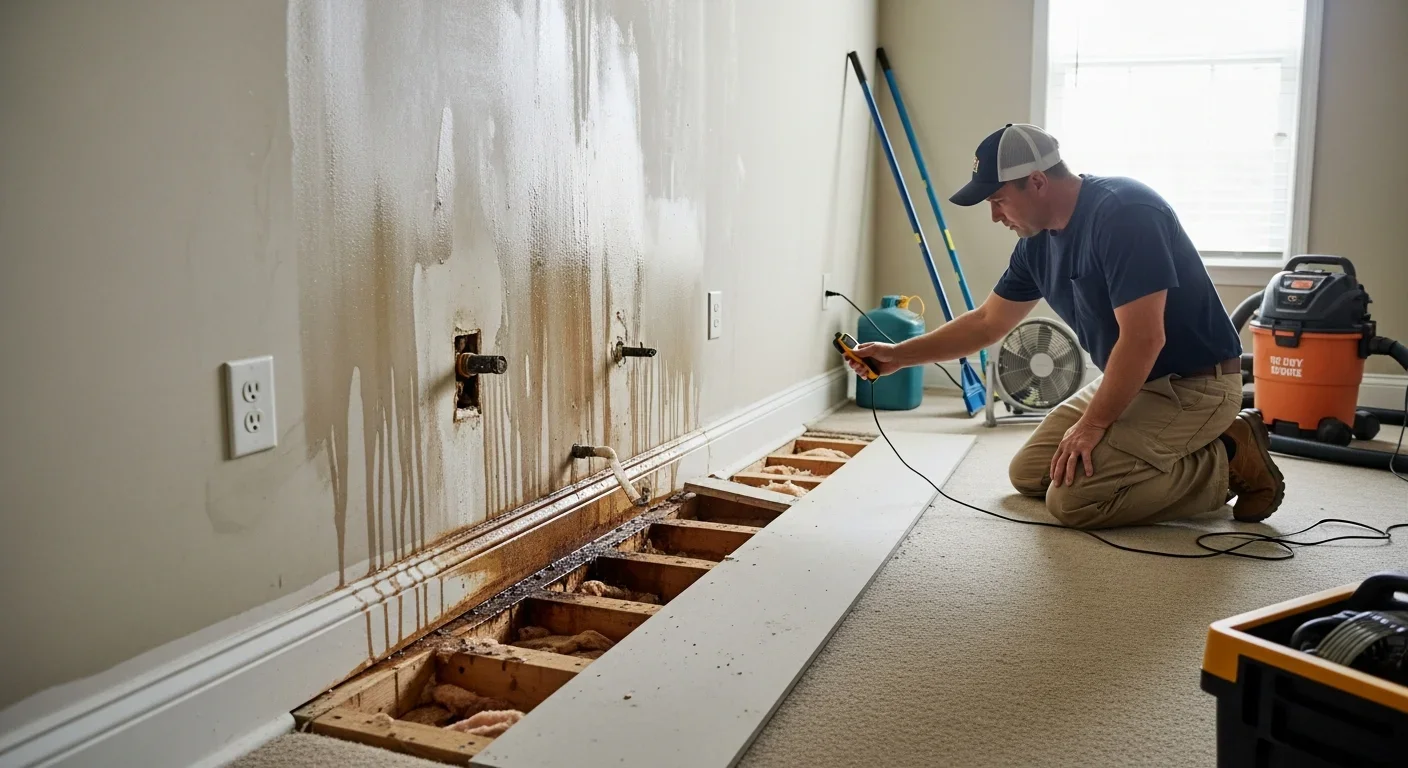
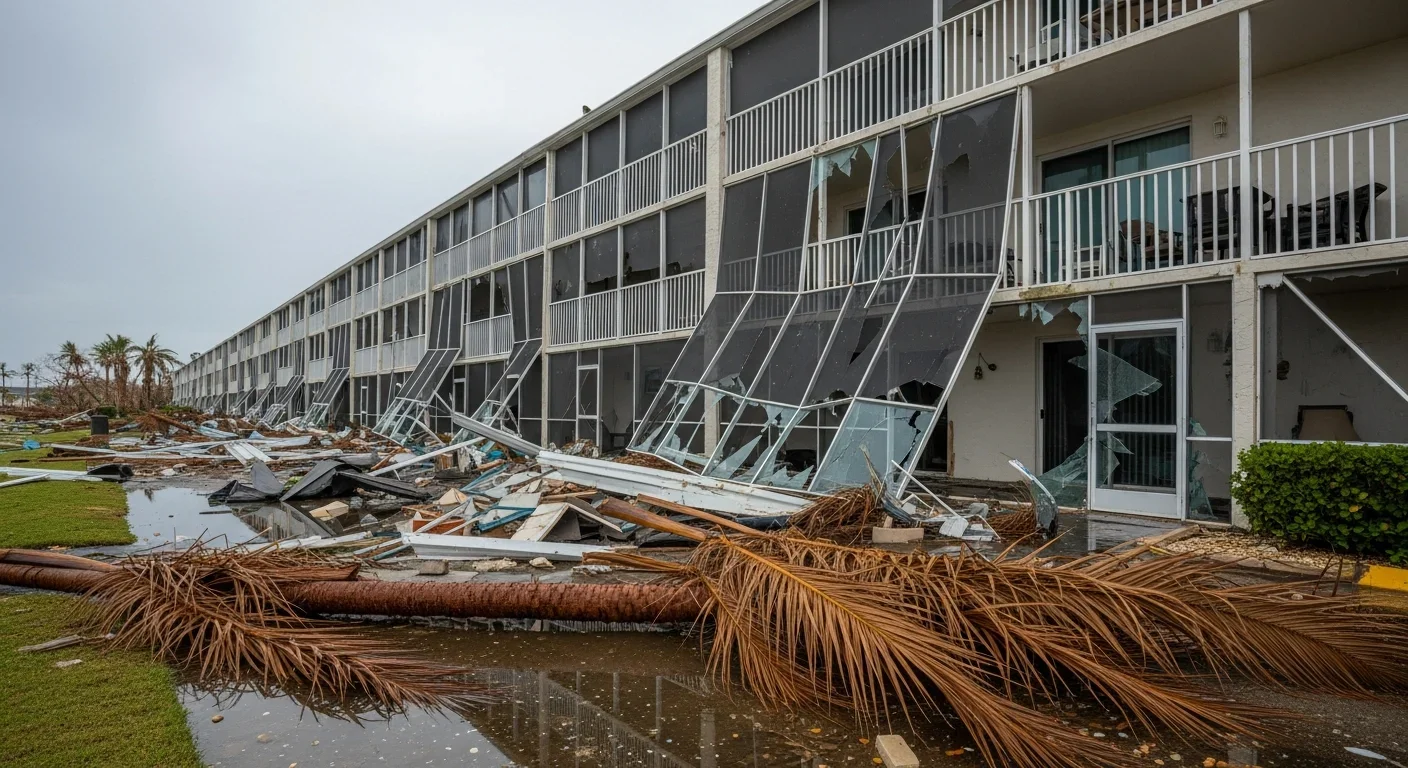
Water travels between floors. Smoke moves through shared HVAC systems. Storm damage affects
every unit sharing a roof. Multi-family restoration is fundamentally different from
restoring a single home — it involves more stakeholders, more insurance carriers, and more
coordination. The #1 question everyone has: who is responsible?
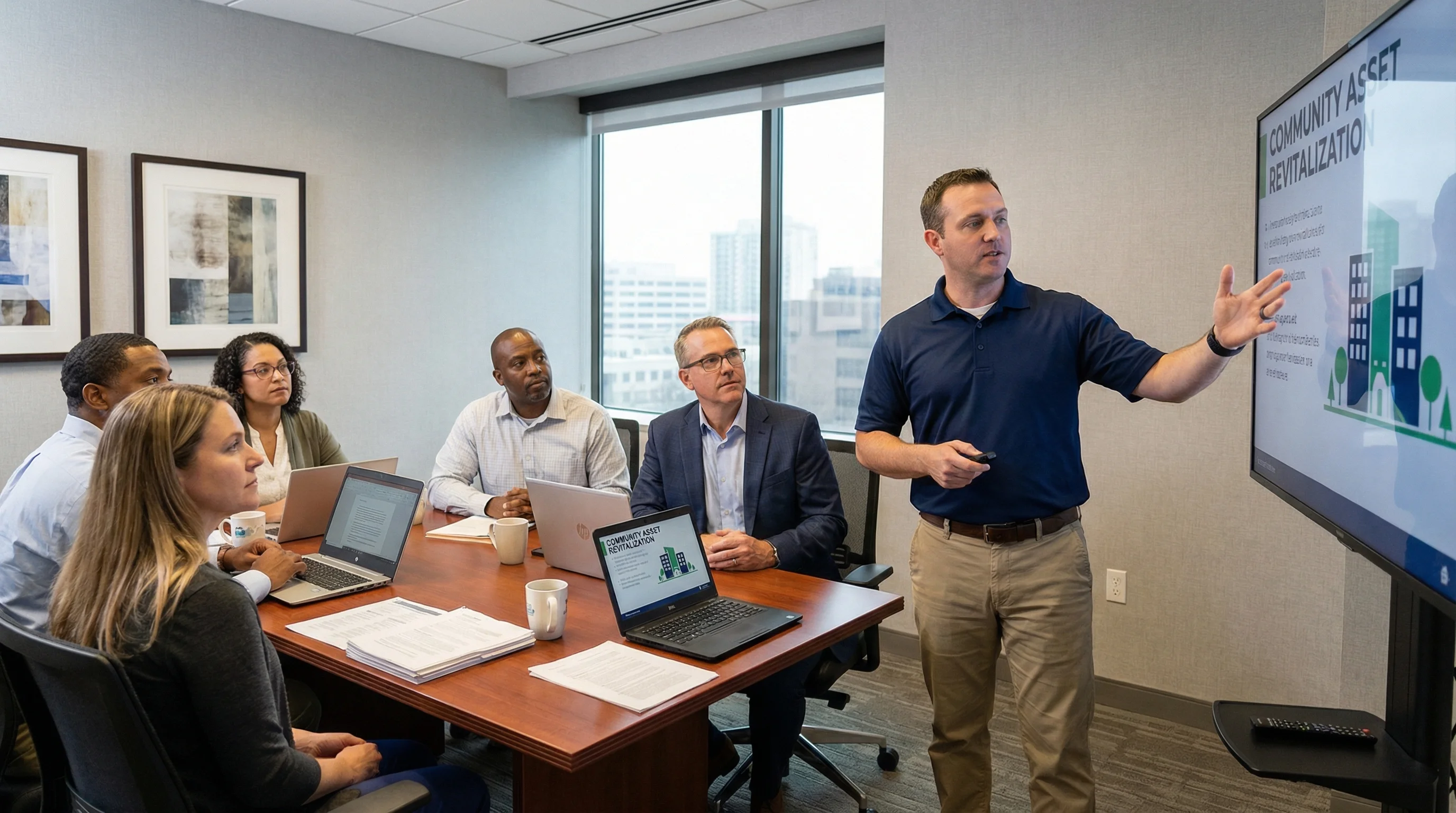
Palm Build specializes in the multi-stakeholder coordination that HOA and condo restoration
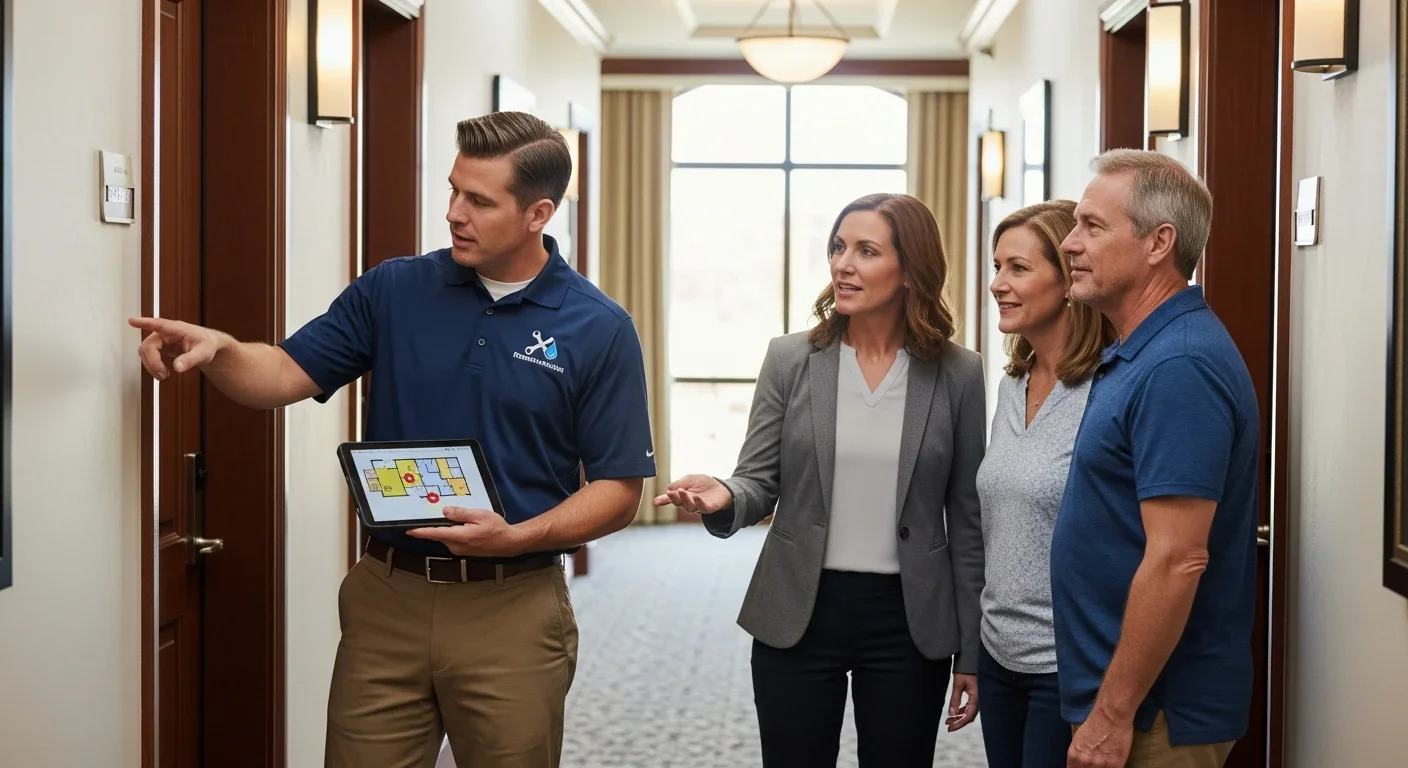
demands. We work directly with boards, property managers, and individual unit owners to
navigate the complexity — from emergency response through final walkthrough.
Damage crosses unit boundaries and affects multiple owners
Master policy and HO-6 insurance must be coordinated simultaneously
Board approval processes and resident communication are required
Access coordination across occupied units adds logistical complexity
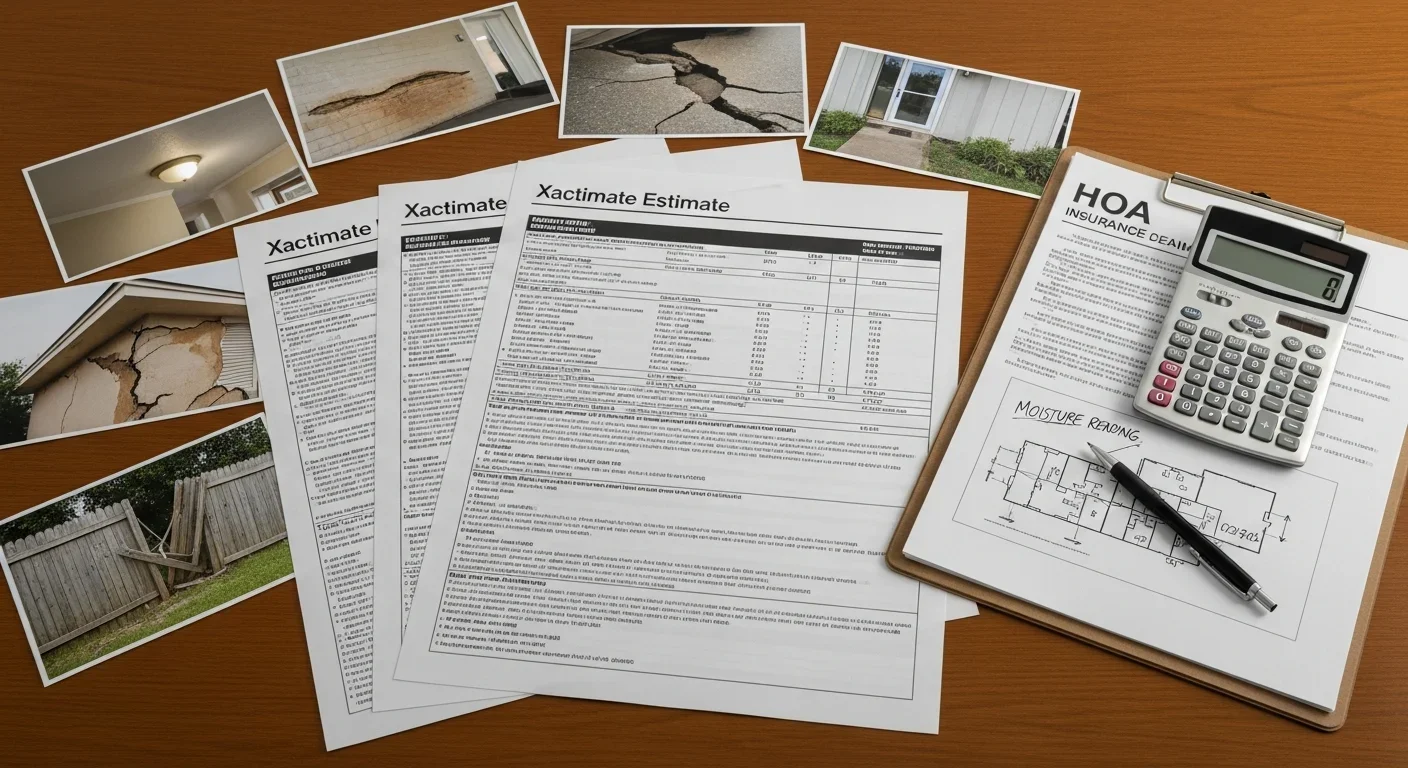
Documentation must serve multiple carriers and multiple owners
Board Member First Response
HOA Emergency: What to Do Right Now
Multi-unit damage creates multi-stakeholder chaos. Four steps board members and property
managers should take in the first hours to protect the community, the claim, and
individual unit owners.
01
Activate Your Emergency Contact Tree
Notify your property manager, board president, and emergency contacts immediately. If damage affects common areas or multiple units, the board has a fiduciary duty to act quickly. Assign one person to coordinate resident communication — confusion spreads faster than water.
One coordinator, one message
02
Document Common Area Damage
Photograph hallways, lobbies, elevators, parking structures, roofing, shared HVAC systems, and every affected unit entrance. Wide shots showing the extent, then close-ups of specific damage. This documentation serves the master policy claim and protects the board from liability disputes with individual unit owners.
Master policy claims need proof
03
File the Master Policy Claim
Contact your association's insurance carrier immediately — do not wait for the next board meeting. The master policy covers common elements and sometimes unit interiors depending on your policy type (Bare Walls, Single Entity, or All-In). Individual unit owners should file their HO-6 claims simultaneously.
File both policies in parallel
04
Engage a Multi-Unit Restoration Firm
Standard residential contractors are not equipped for multi-unit coordination. You need a firm experienced in phased access across occupied units, corridor-based extraction, multi-carrier documentation, and board communication protocols. The wrong contractor turns a two-week mitigation into a six-week ordeal with special assessments.
Multi-unit demands multi-unit experience
Multi-unit damage escalates faster than single-family
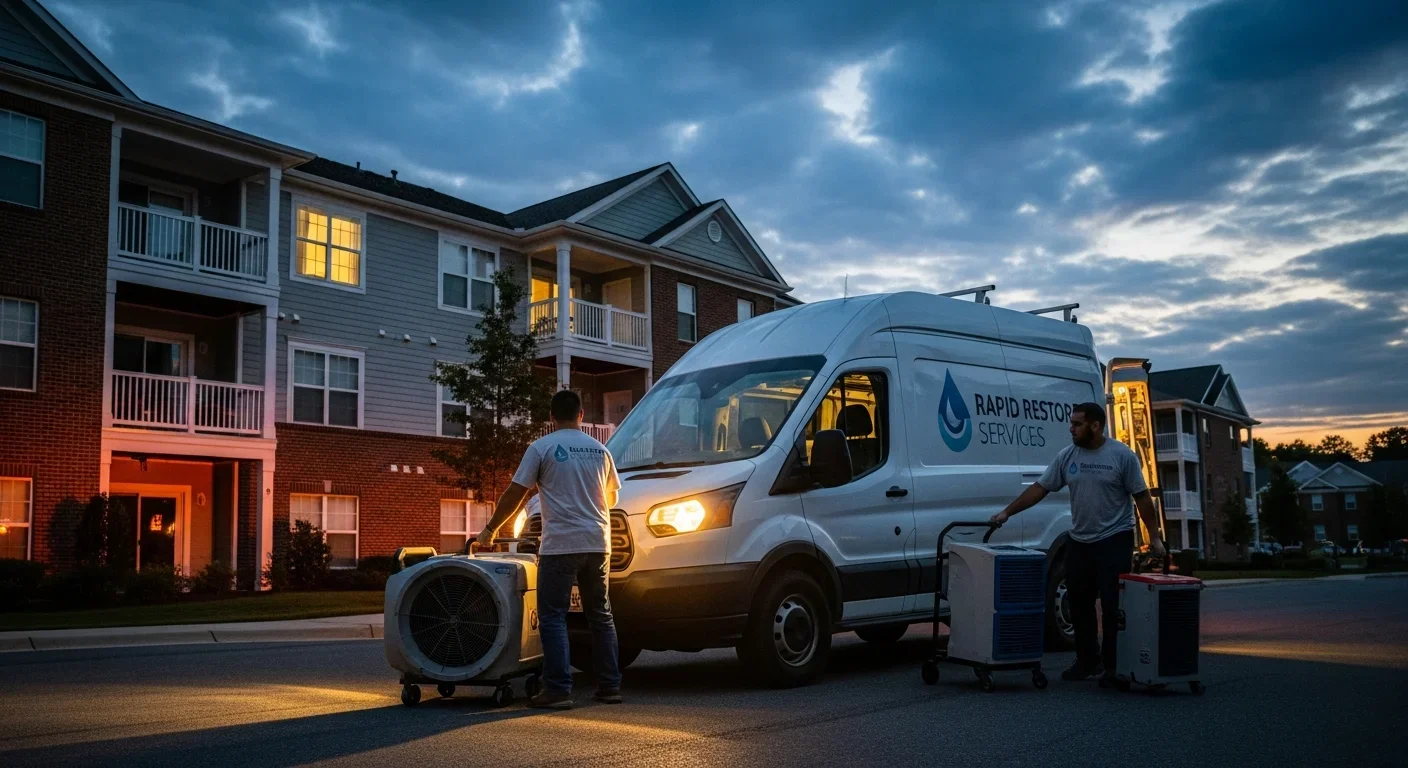
24/7 community emergency response across FL, NC, and SC. We coordinate with
boards, property managers, and carriers simultaneously — so no unit owner is left
waiting.
Who Pays for HOA Water Damage? The Full Scenario Matrix
Every HOA water damage dispute starts with the same question: who is responsible — the association, the unit owner, or both? This 10-row matrix maps the most common condo
and multi-family scenarios to the parties who must act, the policies that respond, and the variable
that most often shifts the answer. Use it as a starting point, then read your declaration and
your master policy for the final word.
Adapted from the Palm Build research guide on HOA water damage responsibility. This is educational orientation, not legal advice — your declaration, master policy,
and HO-6 policy control.
Scenario
Who stops the water
Who repairs the source
Who pays structure
Who pays interior
Key variable
#1 Roof leak into top-floor unit
HOA + owner together
HOA (common element)
HOA master policy
Owner HO-6
Negligence or delayed maintenance can shift liability to the association beyond standard "common element" framing
#2 Burst shared plumbing stack inside a wall
HOA + owner together
HOA
HOA master policy
Owner HO-6
Declaration may define pipe ownership differently — vertical stack vs branch line into the unit
#3 Burst supply line inside unit (under-sink, washing machine)
Owner
Owner
Usually owner
Owner HO-6
If water reaches common areas or other units, HOA repairs those and may seek reimbursement from the source unit
#4 Upstairs unit appliance leak (dishwasher, ice maker)
Source owner stops; affected owner mitigates
Source unit owner
HOA if structural; otherwise each owner
Each owner's HO-6 for their unit
Negligence (failure to maintain hose, ignored alerts) is often the deciding factor in liability claims
#5 HVAC condensate overflow (in-unit air handler)
Depends on system ownership
Depends on HVAC ownership
Depends on unit boundary definition
Owner for unit finishes
Common in humid coastal Florida buildings; mold develops fast — emergency drying must start regardless
#6 Sewer backup into unit
Owner mitigates; HOA if shared lines
Depends — private lateral vs shared main
Depends
Depends — endorsement may be needed
Most master policies and HO-6 policies exclude sewer backup unless a specific endorsement is in place
#7 Storm-driven rain through exterior wall or roof
HOA + owner together
HOA (if exterior is common)
HOA master policy
Owner for finishes
Hurricanes drive disputes over envelope failure vs window/door opening damage — each is treated differently in many policies
#8 Sprinkler system activation or leak
HOA + owner together
HOA (if system is common)
HOA master policy
Owner for interior
Even an accidental sprinkler discharge requires immediate restoration regardless of fault investigation
#9 Balcony or patio drain backup (limited common element)
Owner mitigates; HOA on shared drain
HOA usually maintains; owner uses
Usually HOA
Owner HO-6 for interior damage
Limited common elements (LCEs) sit between the unit and common area — declarations vary widely on who maintains them
#10 Window or sliding-door seal failure
Owner mitigates immediately
Depends on declaration (window assembly vs frame)
HOA if envelope; owner if interior frame
Owner HO-6
Many associations classify the window as a unit boundary — read your declaration carefully before assuming the HOA owns it
#1
Roof leak into top-floor unit
Stops water
HOA + owner together
Repairs source
HOA (common element)
Pays structure
HOA master policy
Pays interior
Owner HO-6
Key variable
Negligence or delayed maintenance can shift liability to the association beyond standard "common element" framing
#2
Burst shared plumbing stack inside a wall
Stops water
HOA + owner together
Repairs source
HOA
Pays structure
HOA master policy
Pays interior
Owner HO-6
Key variable
Declaration may define pipe ownership differently — vertical stack vs branch line into the unit
#3
Burst supply line inside unit (under-sink, washing machine)
Stops water
Owner
Repairs source
Owner
Pays structure
Usually owner
Pays interior
Owner HO-6
Key variable
If water reaches common areas or other units, HOA repairs those and may seek reimbursement from the source unit
#4
Upstairs unit appliance leak (dishwasher, ice maker)
Stops water
Source owner stops; affected owner mitigates
Repairs source
Source unit owner
Pays structure
HOA if structural; otherwise each owner
Pays interior
Each owner's HO-6 for their unit
Key variable
Negligence (failure to maintain hose, ignored alerts) is often the deciding factor in liability claims
#5
HVAC condensate overflow (in-unit air handler)
Stops water
Depends on system ownership
Repairs source
Depends on HVAC ownership
Pays structure
Depends on unit boundary definition
Pays interior
Owner for unit finishes
Key variable
Common in humid coastal Florida buildings; mold develops fast — emergency drying must start regardless
#6
Sewer backup into unit
Stops water
Owner mitigates; HOA if shared lines
Repairs source
Depends — private lateral vs shared main
Pays structure
Depends
Pays interior
Depends — endorsement may be needed
Key variable
Most master policies and HO-6 policies exclude sewer backup unless a specific endorsement is in place
#7
Storm-driven rain through exterior wall or roof
Stops water
HOA + owner together
Repairs source
HOA (if exterior is common)
Pays structure
HOA master policy
Pays interior
Owner for finishes
Key variable
Hurricanes drive disputes over envelope failure vs window/door opening damage — each is treated differently in many policies
#8
Sprinkler system activation or leak
Stops water
HOA + owner together
Repairs source
HOA (if system is common)
Pays structure
HOA master policy
Pays interior
Owner for interior
Key variable
Even an accidental sprinkler discharge requires immediate restoration regardless of fault investigation
#9
Balcony or patio drain backup (limited common element)
Stops water
Owner mitigates; HOA on shared drain
Repairs source
HOA usually maintains; owner uses
Pays structure
Usually HOA
Pays interior
Owner HO-6 for interior damage
Key variable
Limited common elements (LCEs) sit between the unit and common area — declarations vary widely on who maintains them
#10
Window or sliding-door seal failure
Stops water
Owner mitigates immediately
Repairs source
Depends on declaration (window assembly vs frame)
Pays structure
HOA if envelope; owner if interior frame
Pays interior
Owner HO-6
Key variable
Many associations classify the window as a unit boundary — read your declaration carefully before assuming the HOA owns it
Key variable cheat sheet
Four factors decide most of the matrix above. Memorize them.
Source vs damage
Always separate where the water came from (the "source") from where it caused damage (the "result"). They almost always have different owners.
Master policy type
Bare walls in vs single entity vs all-in fundamentally changes which interior items the HOA must pay for after a casualty.
Negligence
A documented failure to maintain — by either the HOA or a unit owner — can override the default "common element" rule.
Loss assessment
Even when the HOA is the payer, individual owners may face their share of the master policy deductible. HO-6 loss assessment coverage is the safety net.
Still unsure where your situation falls in the matrix? Our HOA team will read your
declaration with you and walk through each variable on a free consultation call. Request a liability review →
Interactive Guidance Tool
Who Is Responsible for the Damage?
The #1 question after damage in a multi-unit property. Answer a few questions about your
situation to understand the likely responsibility breakdown and your next steps.
First, tell us your role:
Master Policy vs HO-6
Bare Walls, Single Entity, All-In, and HO-6 — Decoded
Three master policy structures + the unit owner's HO-6 = the four insurance contracts that
control every "who pays" question in HOA water, fire, and storm damage. Read your
declaration to find which master policy type your association carries — then layer your
HO-6 to fill the gap.
Master · Bare Walls In
Bare Walls In (Studs-Out)
Most stripped-down master policy structure
A bare-walls-in master policy stops at the unfinished side of the unit drywall. The HOA insures the building structure, the roof, the exterior walls, common elements, building systems (main plumbing, elevators, electrical mains), and the studs that frame your unit — but everything from the drywall surface inward is the unit owner's problem. That includes drywall, paint, flooring, cabinets, countertops, appliances, fixtures, and all personal property. Bare walls policies are common in older Florida condos and in associations that prioritized low premiums over coverage breadth. After a covered loss, the HOA repairs the structural envelope and the unit owner pays to rebuild every interior surface.
Covered
Building structure, roof, exterior walls
Common elements (lobbies, corridors, elevators)
Main plumbing, electrical, HVAC infrastructure
Studs, joists, subfloor framing
Not covered
Drywall, paint, interior wall finishes
Flooring, cabinets, countertops
All fixtures and appliances
Any built-in improvement or upgrade
Master · Single Entity
Single Entity (Original Specification)
The most common Florida condo master policy type
A single-entity master policy covers everything in the bare-walls policy PLUS the original installations inside each unit as delivered by the developer — original drywall, original cabinets, countertops, flooring, fixtures, and built-in appliances. If you bought a 1985 condo and the kitchen still has the original 1985 finishes, the master policy will rebuild them at original spec after a covered loss. Any upgrade or renovation the owner has installed since handover is excluded. Florida Statute 718.111(11) heavily influences this structure: the HOA must repair items it is required to insure, and Florida's default treats original interior installations as the association's responsibility unless the declaration explicitly opts out.
Covered
Everything from a bare-walls policy
Original drywall, paint, flooring
Original cabinets, countertops, fixtures
Original built-in appliances
Not covered
Owner upgrades and improvements
Personal property and contents
Loss of use / temporary housing
Personal liability claims
Master · All-In
All-In (Comprehensive)
Rare and expensive — but the broadest master coverage
An all-in (also called "all-inclusive" or "comprehensive") master policy covers the structure, common elements, original installations, AND most subsequent improvements made by the unit owner. After a covered loss, the HOA rebuilds the unit to its current state — including the post-handover renovations. All-in coverage is the safest structure for unit owners but is rare in Florida because of the cost: insuring every individual upgrade in a 200-unit building dramatically increases premiums and dilutes the link between owner risk and owner premium. Where it does exist, you typically still see exclusions for personal property, loss of use, and high-end improvements above a defined cap.
Covered
Everything from single-entity coverage
Most owner improvements and upgrades
Renovated finishes and built-ins
Comprehensive interior coverage
Not covered
Personal property and contents
Improvements above policy cap
Personal liability
Loss of use / temporary housing
Unit Owner · HO-6
HO-6 Unit Owner Policy
The gap-filler every condo owner needs
The HO-6 (also called "condo unit owner" or "walls-in" policy) fills the space between the master policy and the owner's personal exposure. Exactly which gap it fills depends entirely on the master policy type above. Under a bare-walls master, the HO-6 carries everything from the studs in. Under a single-entity master, it covers improvements and personal property. Under an all-in master, it covers personal property, loss of use, and liability. Every HO-6 should also include loss assessment coverage — the single most important rider for Florida condo owners — which reimburses your share of any HOA special assessment levied to cover the master policy deductible after a major loss.
Covered
Interior finishes (per master policy gap)
Personal property and contents
Personal liability protection
Loss of use / temporary housing
Loss assessment coverage (with rider)
Not covered
Items already covered by the master policy
Building structure or common elements
Flood (separate flood policy needed)
Earthquake or war exclusions
The Most Important HO-6 Rider in Florida
Loss Assessment Coverage — The HOA Deductible Safety Net
Florida master policy hurricane deductibles are commonly 2-5% of the building's
insured value. For a $50 million condo tower, a 3% deductible is $1.5 million the
association must cover before insurance pays a dollar. That deductible is typically
split among all unit owners as a special assessment — and the bill can land in your
mailbox with no warning.
Loss assessment coverage on your HO-6 reimburses you for that share. Without
it, you pay your assessment entirely out of pocket. Coverage limits typically range from
$1,000 (the policy minimum) to $50,000+ (recommended in Florida coastal markets). After
Hurricane Ian, Palm Build saw owners hit with $25,000-$80,000 assessments — owners with
loss assessment coverage filed and recovered; owners without it borrowed, drained savings,
or sold.
Every Florida and coastal Carolina condo owner should carry loss assessment coverage
at the highest limit their carrier will write. It is the cheapest line item on an HO-6
and the one that pays out fastest in a major loss. Ask your agent for a quote at
$25,000 minimum — then increase from there based on your building's deductible and
replacement value.
Communities We Serve
Restoration for Every Type of HOA Community
From high-rise condominiums to planned developments, we have the experience and resources to
handle your community's unique restoration needs.
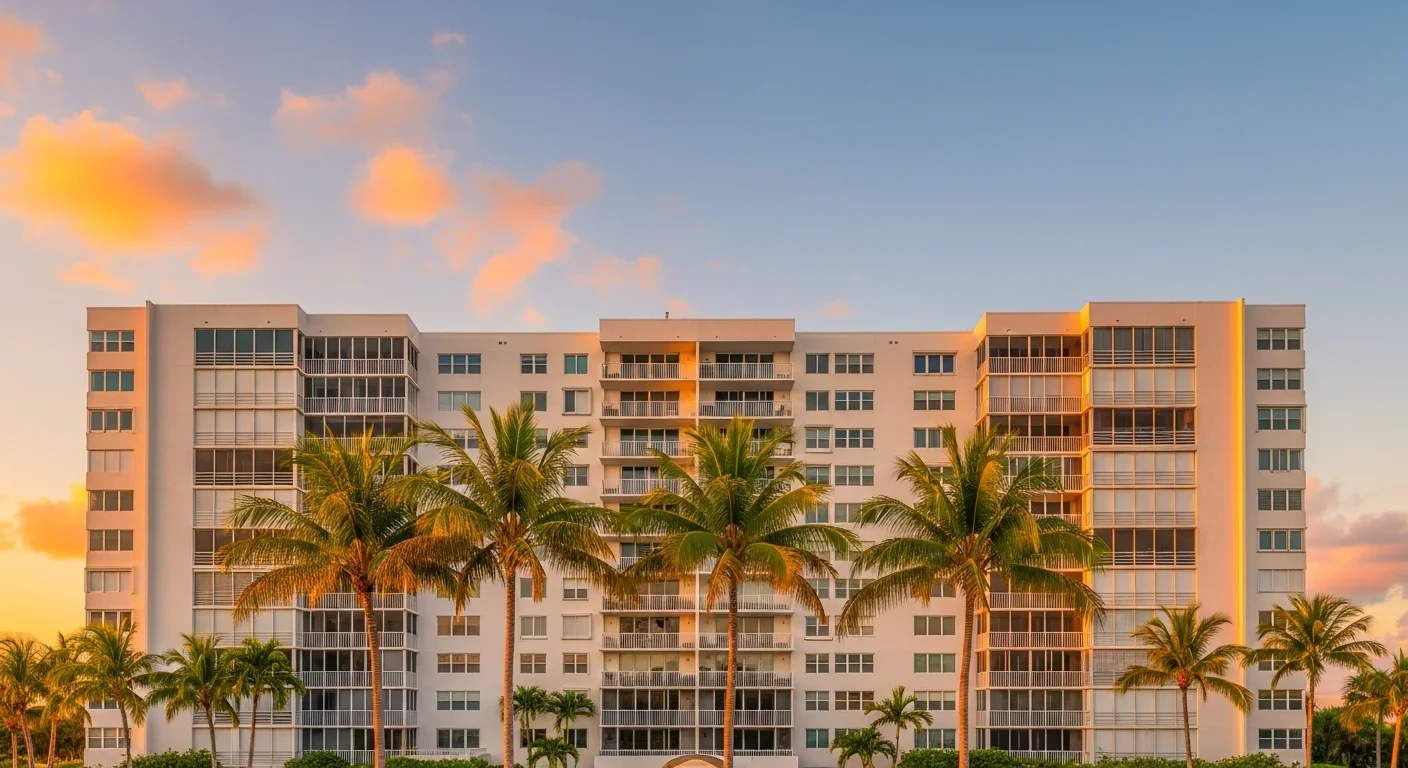
Condominium Associations
Multi-story and mid-rise buildings with shared walls, common areas, and complex building systems. We handle water damage that affects multiple floors and units.
Elevator and lobby restoration
Multi-unit water damage
Shared system repairs
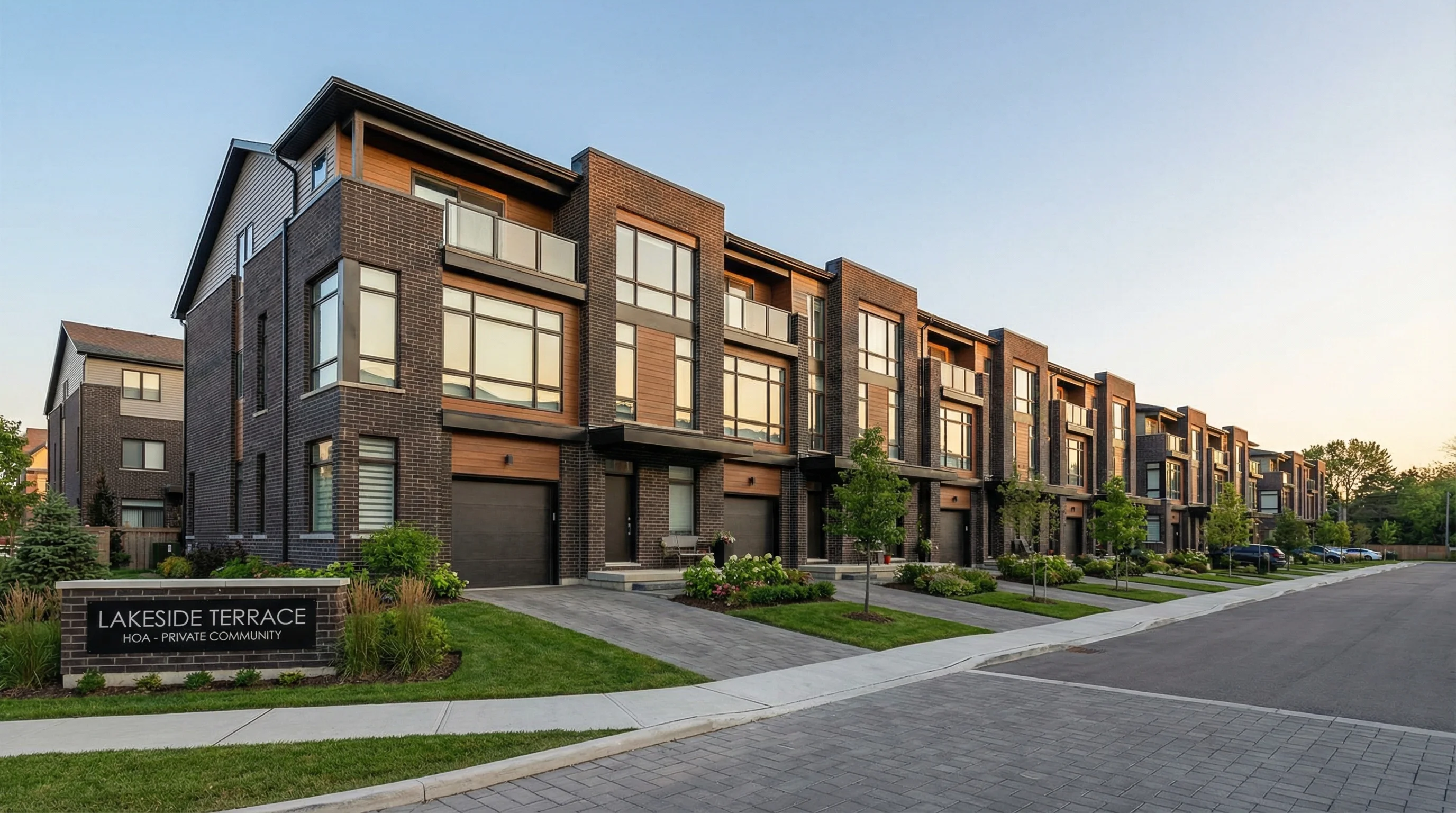
Townhome Communities
Attached homes with shared walls and common exterior areas. We coordinate restoration across affected units while managing individual owner communication.
Shared wall restoration
Roof and exterior repairs
Unit-by-unit coordination
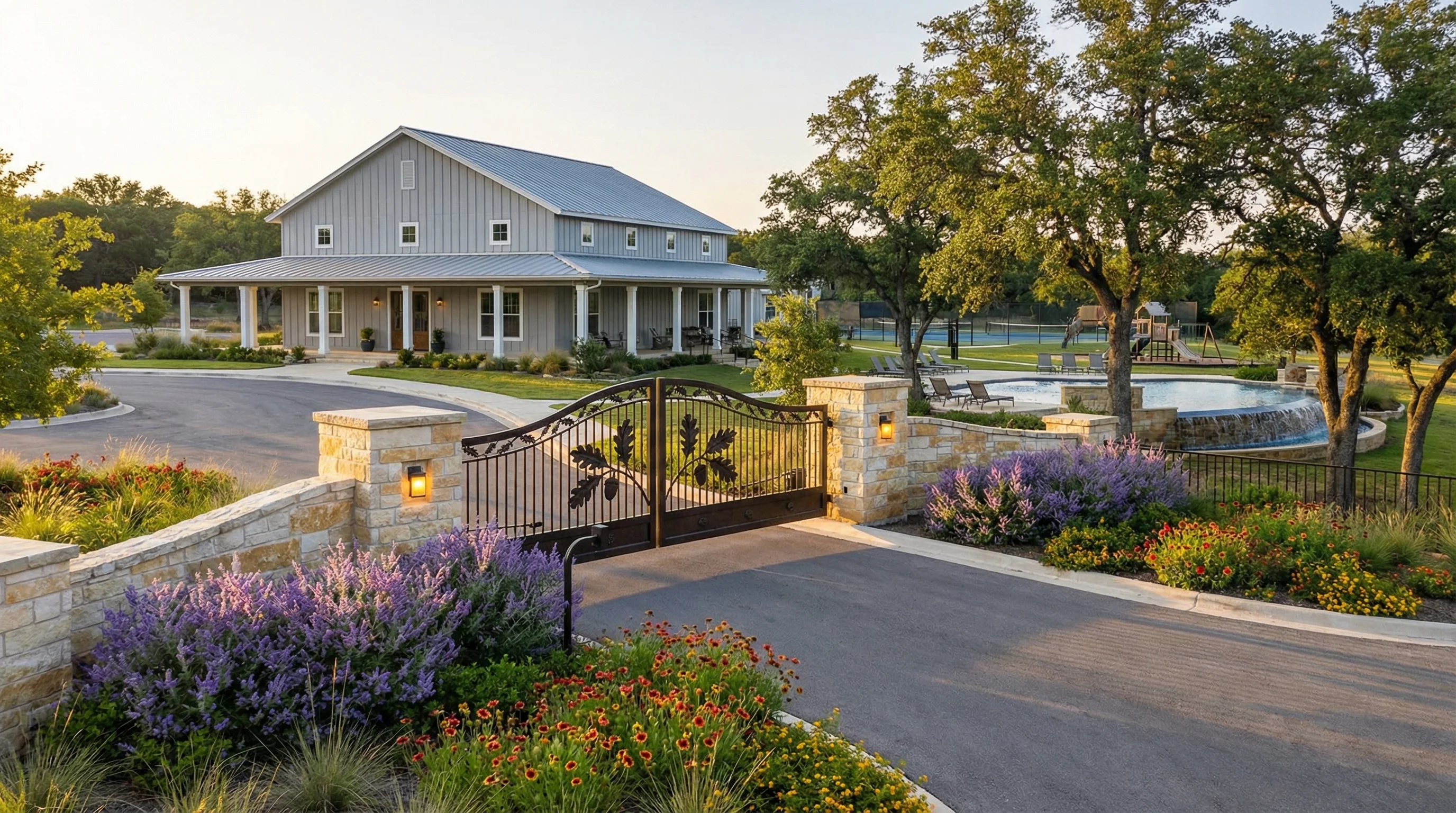
Planned Developments
Single-family homes with community amenities and common areas. We restore clubhouses, pools, and community infrastructure.
Clubhouse and amenity restoration
Community-wide storm damage
Common area repairs
Senior Living Communities
Assisted living and retirement communities where resident safety and accessibility are paramount. We coordinate with facility management and minimize displacement of vulnerable residents.
ADA-compliant restoration
Minimal resident displacement
Facility coordination
Mixed-Use Properties
Buildings with commercial ground floors and residential above, requiring separate restoration approaches and coordination between business tenants and residents.
Residential and commercial coordination
Business continuity planning
Complex insurance handling
Student Housing
University-adjacent housing with high turnover, dense occupancy, and property management coordination. Fast turnaround is critical between academic terms.
Fast-turnaround restoration
Property management coordination
High-density unit work
Common Damage Scenarios
When Damage Doesn't Stay in One Unit
Multi-family properties face unique challenges because damage crosses unit boundaries. Here
are the most common scenarios we handle and how responsibility typically works.
Board Member Responsibilities
What HOA Boards Must Do When Damage Occurs — A 6-Step Framework
Every state we serve imposes a fiduciary duty on board members during a loss event.
Skipping a step does not just expose the association — it can expose individual board
members to personal liability. This six-step framework is what we walk every board through
within the first 48 hours of a major incident.
1
Immediate Mitigation Duty
What the law requires
In Florida (Statute 718.1265), North Carolina (Chapter 47C-3-102), and South Carolina (Horizontal Property Act §27-31), board members owe a fiduciary duty to act in the best interest of the association. After a casualty event, that duty includes taking reasonable steps to prevent further damage — even before insurance is sorted. Failing to mitigate can expose the board to personal liability claims for wasted insurance proceeds.
What boards often miss
Boards often wait for an emergency meeting, a quorum, or three-bid procurement before authorizing emergency drying. Every state we serve has emergency power provisions that let the board act unilaterally to stop further damage — and in many cases, requires it.
How Palm Build helps
We deploy emergency mitigation crews within hours of the call, document everything to IICRC S500 standards, and provide the board with written justification for emergency action that protects them from second-guessing later.
Most states and most declarations require the board to notify (a) the master policy carrier within a defined window — Florida's deadline is one year under Statute 627.70132 with strict practical recommendations to notify within 24-72 hours; (b) all affected residents in writing; and (c) in some communities, state regulatory bodies for incidents above a defined severity. Notification timing affects coverage in ways most boards do not realize.
What boards often miss
Verbal notification or email to one resident does not satisfy the legal duty. Written, dated, and acknowledged notice to ALL affected unit owners is the standard. Boards also frequently miss the carrier notification window because they "want to wait until they know more."
How Palm Build helps
We provide pre-written notification templates customized to each state, send templated written notices on the board's behalf with read receipts, and maintain a notification log that becomes part of the claim documentation packet.
3
Reserve Fund Access Protocol
What the law requires
Florida Senate Bill 4-D and the post-Surfside reforms now require Structural Integrity Reserve Studies (SIRS) and prohibit waiver of statutorily required reserves. North Carolina and South Carolina rely on declaration provisions. In all three states, draws from reserve accounts for unbudgeted emergencies typically require formal board action and a recorded vote, even when the action is otherwise authorized as an emergency expense.
What boards often miss
Boards either (a) hesitate to touch the reserve, fearing audit consequences, or (b) draw from the reserve without recording the action properly. Both create problems. Properly authorized emergency draws are legal, fast, and the cheapest source of capital for unexpected restoration.
How Palm Build helps
We coordinate with the association's management company, accountant, and attorney to ensure the draw is properly recorded, the work scope justifies the amount, and the reserve replenishment plan is filed with the next budget. We do not slow the work down for paperwork — we run them in parallel.
4
Contractor Vetting & Licensing Verification
What the law requires
Boards owe a duty of reasonable care in selecting contractors. Hiring an unlicensed or uninsured contractor exposes the association to direct liability for any damage, injury, or claim denial that results. Florida regulates restoration contractors through the Department of Business and Professional Regulation; mold work requires a separate state license under Chapter 468 Part XVI.
What boards often miss
Boards often select on price or speed and skip license verification. Calling the state license board takes ten minutes and protects the board from a personal-liability claim that could otherwise reach members' homeowner insurance and personal assets.
How Palm Build helps
Palm Build is fully licensed in every state we serve, IICRC-certified across WRT, ASD, AMRT, and FSRT, and carries full general liability and workers comp coverage. We provide the board with a credentials packet on day one — the kind that satisfies carrier and counsel review.
5
Documentation, Minutes, and Audit Trail
What the law requires
Board action on a major loss must be reflected in written board minutes. Insurance carriers, future buyers, and any potential litigation will request the minutes. Vague or absent minutes weaken the association's position and can be construed as failure to act with reasonable care.
What boards often miss
Minutes get summarized, glossed, or skipped during emergencies. The vendor selection rationale, scope of work, dollar authorization, and ongoing progress reports all need to land on paper — at the time the decisions are made, not weeks later when memories fade.
How Palm Build helps
We provide the board with a turnkey documentation packet — daily progress reports, photo logs, moisture readings, scope of work changes, and cost authorizations — formatted for direct insertion into board minutes.
6
Post-Loss Reporting & Reserve Recalculation
What the law requires
After major losses (typically defined as >$50K or >5% of insured value), Florida SIRS-compliant associations must update their reserve study to reflect the depletion and any structural changes. Many declarations also require post-loss reports to all owners. Failure to do so can trigger owner lawsuits and Department of Business and Professional Regulation complaints.
What boards often miss
Boards complete the restoration and never circle back to the financial reporting and reserve update. Six months later, the next reserve study reveals an underfunded position the board did not communicate — and owners feel blindsided.
How Palm Build helps
We provide a final close-out report at the end of every HOA project that includes total spend, master vs HO-6 attribution, recovery from carriers, and a recommendation for reserve replenishment that the association's reserve specialist can plug directly into the next study.
We can walk your board through this framework before damage ever happens
Most associations only learn this framework after their first major incident — when
they are exhausted, frightened, and reactive. We offer a free 60-minute board workshop
that walks through all six steps in your community context, customizes a notification
template to your declaration, and leaves the board with a printed emergency response
binder.
HOA Law by State: Florida vs North Carolina vs South Carolina
Three states, three statutory frameworks, and three very different answers to the same
"who pays" question. Florida's Chapter 718 is unusually prescriptive. North Carolina's
Chapter 47C provides middle-ground statutory direction. South Carolina relies more heavily
on the master deed and declaration. Knowing your state's baseline lets boards respond
decisively instead of waiting for legal counsel during a crisis.
This is educational orientation, not legal advice. Always read your declaration and
consult counsel for your specific community.
Every state has a different baseline statute that controls how HOA water, fire, and
storm losses are allocated. Knowing yours is the difference between a 24-hour response
and a 14-day delay.
Florida
Chapter 718 (Florida Condominium Act)
The most prescriptive condo statute in the U.S.
Verified
Board insurance & repair duty
Florida Statute 718.111(11) requires the association to maintain property insurance covering all building portions originally installed (or replacements of like kind and quality), excluding only floor, wall, and ceiling coverings, electrical fixtures, appliances, water heaters, water filters, built-in cabinets and counter tops, and window treatments — all of which become unit owner responsibility. After a casualty, the association must repair or replace items it is required to insure. SIRS-compliant reserves are now mandatory under Senate Bill 4-D.
Fiduciary standard
Board members owe duties of care, loyalty, and good faith. Failure to maintain reserves, ignore inspection deadlines, or act on a known structural risk can expose individual board members to personal liability — a major change after the Surfside collapse.
Emergency powers
Statute 718.1265 grants the board explicit emergency powers after a declared emergency: contract for emergency services, borrow funds, impose special assessments without standard notice, and waive standard procurement procedures. These powers exist because waiting for a quorum costs lives and units.
Claim notice deadline
Notice of claim: 1 year from date of loss. Supplemental claim: 18 months. (Statute 627.70132)
Master policy minimum
Master policy must cover full replacement cost of insured property; hurricane deductibles of 2-5% of insured value are standard.
How to verify a contractor
Verify any FL restoration contractor at MyFloridaLicense.com. Mold work requires a separate license under Chapter 468 Part XVI.
Palm Build credentials in Florida
Palm Build holds active Florida General Contractor and Mold Remediator licenses. Our Deerfield Beach office is the home base for our Florida HOA team.
North Carolina
Chapter 47C (NC Condominium Act)
Statute-driven but more flexible than Florida
Verified
Board insurance & repair duty
NC General Statute 47C-3-113 requires the association to maintain property insurance on common elements at no less than 80% of replacement cost. In horizontal-boundary buildings (typical stacked condos), the policy must include the units themselves but is not required to include unit improvements and betterments. The association policy is primary if other coverage exists for the same risk.
Fiduciary standard
NC 47C-3-103 imposes the standard of care of a person in like position under like circumstances — the business judgment rule applies. Board members are protected from personal liability when they act in good faith, on informed deliberation, and in the association's interest.
Emergency powers
NC does not have a Florida-style explicit emergency-powers statute, but 47C provides broad authority for the board to act on common-element emergencies. Most NC declarations include explicit emergency authority that overrides standard procurement requirements during casualty events.
Claim notice deadline
No state-mandated claim notice deadline; carrier policies set the deadline (typically 30-60 days for prompt notice). Document everything from day one.
Master policy minimum
Property insurance on common elements at minimum 80% replacement cost; commercial general liability minimum varies by declaration.
How to verify a contractor
Verify NC general contractors through the NC Licensing Board for General Contractors. NC has no state mold license — IICRC AMRT is the trust standard.
Palm Build credentials in North Carolina
Palm Build holds an active NC General Contractor license and IICRC AMRT, WRT, and ASD certifications. Our Charlotte office serves the Carolinas HOA market.
South Carolina
SC Horizontal Property Act (§27-31)
Older statute, more dependent on declaration language
Verified
Board insurance & repair duty
South Carolina Code §27-31-240 addresses how the council of co-owners must procure insurance, and §27-31-250 governs reconstruction or repair after damage. The statutes provide a baseline framework but are less prescriptive than Florida or NC — meaning the declaration and master deed control more outcomes. Boards must read their specific governing documents carefully.
Fiduciary standard
SC follows the business judgment rule; board members are protected when they act in good faith and within the scope of their authority. The statute and SC case law emphasize that the master deed governs the relationship between co-owners and the council.
Emergency powers
No explicit emergency powers statute; reliance on master deed provisions and general SC nonprofit corporation law (Title 33). Most SC declarations include emergency authority, but boards should confirm before acting unilaterally.
Claim notice deadline
No state-mandated deadline; carrier prompt-notice clauses control. SC coastal communities should treat hurricane events as triggering immediate insurer notification.
Master policy minimum
Insurance procurement governed by master deed; no statutory minimum percentage. Most SC coastal master policies require separate windstorm endorsements.
How to verify a contractor
Verify SC contractors at the SC Department of Labor, Licensing and Regulation. SC has no state mold license; IICRC AMRT is the trust standard.
Palm Build credentials in South Carolina
Palm Build serves SC under the same IICRC and licensing standards as our FL and NC operations, with crews dispatchable from both Charlotte and Deerfield Beach offices.
Bottom line: Florida boards have the broadest statutory emergency powers
but also the strictest reserve and inspection obligations. NC boards have middle-ground statutory
direction with strong business judgment rule protection. SC boards rely more heavily on the
master deed — read it carefully and update it if it is vague. In all three states, Palm Build
navigates the regulatory layer so the board can focus on residents and recovery.
HOA-Specific Cost Factors
What HOA Restoration Actually Costs (and What Drives the Number)
HOA restoration pricing is not the same as residential restoration pricing. Six factors —
most of which never apply to a single-family home — drive the per-unit invoice up or down
by tens of thousands of dollars. Understanding them before a loss occurs lets boards
budget reserves intelligently and avoid the largest line items.
For general restoration cost ranges (water, mold, fire), see our public 2026 cost guides. The factors below are layered on top of those baseline numbers.
Cost factor
Typical magnitude
Financial impact
What boards miss
#1 Board approval delay (vote required)
3-14 days added
$2,000-$18,000 per delayed unit
Each day of delay after the 24-48 hour mold window adds remediation scope. A 7-day delay on a 4-unit incident routinely adds $40K+ to the final invoice.
#2 Reserve fund draw vs operating budget
Varies by association
Often $0 direct cost (already funded)
Buildings with healthy reserves and SIRS-compliant funding can absorb mid-size losses without triggering an assessment. The cost is opportunity cost, not new spend.
#3 Special assessment threshold math
Triggered above deductible + reserve gap
Per-unit hit: $500-$25,000+
When the master policy deductible exceeds available reserves, the gap is split across all units. Florida hurricane deductibles routinely create $5K-$40K per-unit assessments.
#4 Phased unit displacement / temporary housing
$120-$320/night per displaced unit
$3,600-$12,000 per unit per month
When residents must vacate, the master policy may cover ALE for short periods, but extended stays often fall on individual HO-6 loss-of-use coverage.
#5 After-hours common-area work
+25% to +60% labor surcharge
$2,000-$15,000 added per project
Work in lobbies, corridors, pools, and shared amenities is often pushed to evenings/weekends to minimize resident disruption — at premium labor rates.
#6 Multi-carrier documentation overhead
8-20 extra labor hours per unit
$800-$2,400 per unit in admin
Each affected unit owner has their own HO-6 carrier with their own documentation requirements. Bulk estimates get rejected — each unit needs a segmented packet.
#7 Reserve study impact / SIRS recalculation
Required after >$50K event
Indirect — affects future budgets
In Florida, SIRS-compliant associations must update their reserve study after major losses. The recalculation often reveals underfunding that increases future dues.
The Cost of Delay — A 4-Unit Multi-Family Scenario
Four units affected by a single 5th-floor burst pipe. Same building, same restoration
crew, same materials — only variable is how long the board waited before authorizing
emergency mitigation. Mold colonies start at hour 24-48. Every day after that
compounds the scope.
Decision delay
0-2 days
Scope
Mitigation only
Total cost (4 units)
$3,000 – $9,000
Decision delay
3-5 days
Scope
Mitigation + light demo
Total cost (4 units)
$9,000 – $24,000
Decision delay
6-10 days
Scope
Full demo + mold treatment
Total cost (4 units)
$24,000 – $65,000
Decision delay
11+ days
Scope
Mold remediation + reconstruction
Total cost (4 units)
$65,000 – $180,000+
Bottom line: a 7-day board approval delay on a 4-unit incident
typically multiplies the final cost by 7-10x and increases the odds of triggering a
special assessment by 80%+. Florida Statute 718.1265 grants HOA boards emergency powers to authorize urgent restoration without a standard meeting. Use
them.
Reserve health matters more than insurance
A funded reserve absorbs the deductible gap. Underfunded reserves trigger the special
assessment that creates 80% of HOA legal disputes.
Documentation is the multiplier
Segmented per-unit packets cost more upfront but recover 30-50% more from carriers than
bulk estimates that get partially denied.
Phased work has a price tag
Off-hours, low-disruption execution costs more per labor hour but avoids the larger cost
of vacancy and resident dissatisfaction.
Assessment Avoidance
How to Absorb a Major Loss Without Triggering a Special Assessment
Special assessments are the single most disruptive event a board can trigger. They strain
owner relationships, drive turnover, depress property values, and erode trust in the board
for years. Yet most boards default to a special assessment as the first move after a major
loss — when in fact, three other strategies usually exist that minimize or eliminate the
per-unit hit entirely. Here are the four playbooks Palm Build helps boards evaluate before
authorizing any restoration spend.
Decision tree — which strategy fits your situation?
1 Is the loss above or below the master policy deductible?
Above → Strategies 2, 3, 4
Below → Strategy 1 (reserve draw)
2 Is the source identifiable to a single unit?
Yes → Strategy 3 (deductible splitting)
No → Strategies 1, 2, 4
3 Can restoration be safely phased without life-safety risk?
Yes → Strategy 4 (phased work across fiscal years)
No → Strategies 1, 2, 3
4 Do affected unit owners carry HO-6 with loss assessment coverage?
Yes → Strategy 2 (claim optimization stack)
No → Educate owners now; use Strategies 1, 3, 4
Strategy #1
Reserve Fund Draw vs Operating Budget
The cheapest source of capital is money the association already has. A properly funded reserve absorbs the master policy deductible without triggering a special assessment or borrowing.
Real-world scenario
$48,000 burst pipe loss in a 60-unit Florida condo
$25,000 master policy deductible
Without strategy
$25K split across 60 units = $417 per-unit special assessment, board meeting, owner backlash
With strategy
Reserve replenishment plan adopted at next budget cycle, increasing dues by ~$8/month for 24 months. Zero one-time hit.
When this strategy applies
Loss is below or near the master policy deductible
Reserves are SIRS-compliant or otherwise healthy
Board can adopt a replenishment plan within the fiscal year
Many associations leave money on the table by filing only a master policy claim. Coordinating master policy structural recovery with each affected owner's HO-6 interior recovery routinely shifts 30-50% of total cost off the association entirely.
Real-world scenario
$120,000 sprinkler discharge across 8 units in a Charlotte condo
$15,000 master policy deductible
Without strategy
Association files one master policy claim for $120K, pays $15K deductible, recovers $105K. The board considers the matter closed.
With strategy
Association files master policy claim for $48K (structural only) and supplies each of 8 owners with a per-unit packet. 6 owners file HO-6 claims totaling $52K of interior recovery. Total association out-of-pocket drops to deductible only.
When this strategy applies
Loss involves both structural and interior damage
Affected owners carry HO-6 policies (which they should)
Restoration vendor can produce segmented per-unit documentation
Strategy #3
Deductible Splitting with Affected Unit Owners
Where the loss originates inside a single unit (appliance leak, in-unit pipe), most state statutes and many declarations allow the board to allocate the deductible to the source unit owner — not all owners. This is the single most powerful tool for avoiding broad assessments.
Real-world scenario
$12,000 dishwasher hose failure in unit 4B damaging units 4A and 3B
$10,000 master policy deductible
Without strategy
$10K assessed across all 60 owners as a "common expense" — owner of 4B feels protected, owners of unaffected units feel cheated, board faces complaints.
With strategy
Per Florida 718.111(11) and properly drafted declaration language, the deductible is assessed to the source unit owner (4B) and recovered through their HO-6 loss assessment coverage. Other owners pay nothing.
When this strategy applies
Source of the loss is a single identifiable unit
Declaration includes deductible chargeback language (or state statute permits)
Source-unit owner carries adequate HO-6 loss assessment coverage
Strategy #4
Phased Work Across Fiscal Years
Major losses do not have to be paid in a single fiscal year. Phased restoration spreads cost across two or three budgets, letting the board avoid the assessment threshold entirely while still completing critical work.
Real-world scenario
$240,000 hurricane envelope damage to a Deerfield Beach condo
$120,000 hurricane deductible
Without strategy
Board calls a $120K special assessment ($2,000 per unit on a 60-unit building) — late 2026, with no warning, on top of insurance market increases owners are already absorbing.
With strategy
Phase 1 (envelope mitigation, $40K) executed in Q4 2026 from operating budget. Phase 2 (interior reconstruction, $50K) deferred to Q1 2027 budget. Phase 3 (cosmetic finishing, $30K) deferred to Q3 2027. No single-year assessment trigger.
When this strategy applies
Loss is structural / non-life-safety after initial mitigation
Restoration scope can be sequenced safely
Board has appetite for proactive financial planning
Important: these strategies are not mutually exclusive. The strongest assessment-avoidance
plans stack two or more strategies on a single loss event. Palm Build routinely combines reserve
draws with claim stacking and phased execution on loss events above $100,000 — driving the per-unit
financial impact toward zero while still completing the work to IICRC standards.
Phased Execution Framework
How We Run a Multi-Unit Restoration Without Shutting Your Community Down
Multi-family restoration is fundamentally a logistics problem layered on a remediation
problem. Six execution phases — corridor strategy, communication, relocation, sequencing,
field execution, and off-hours work windows — let us complete major losses without
full-building shutdowns and with minimum resident disruption. This is the same framework
used in our commercial restoration and large loss handling divisions, adapted for HOA and multi-family contexts.
Phase A · Stabilize
Corridor Strategy & Zoned Isolation
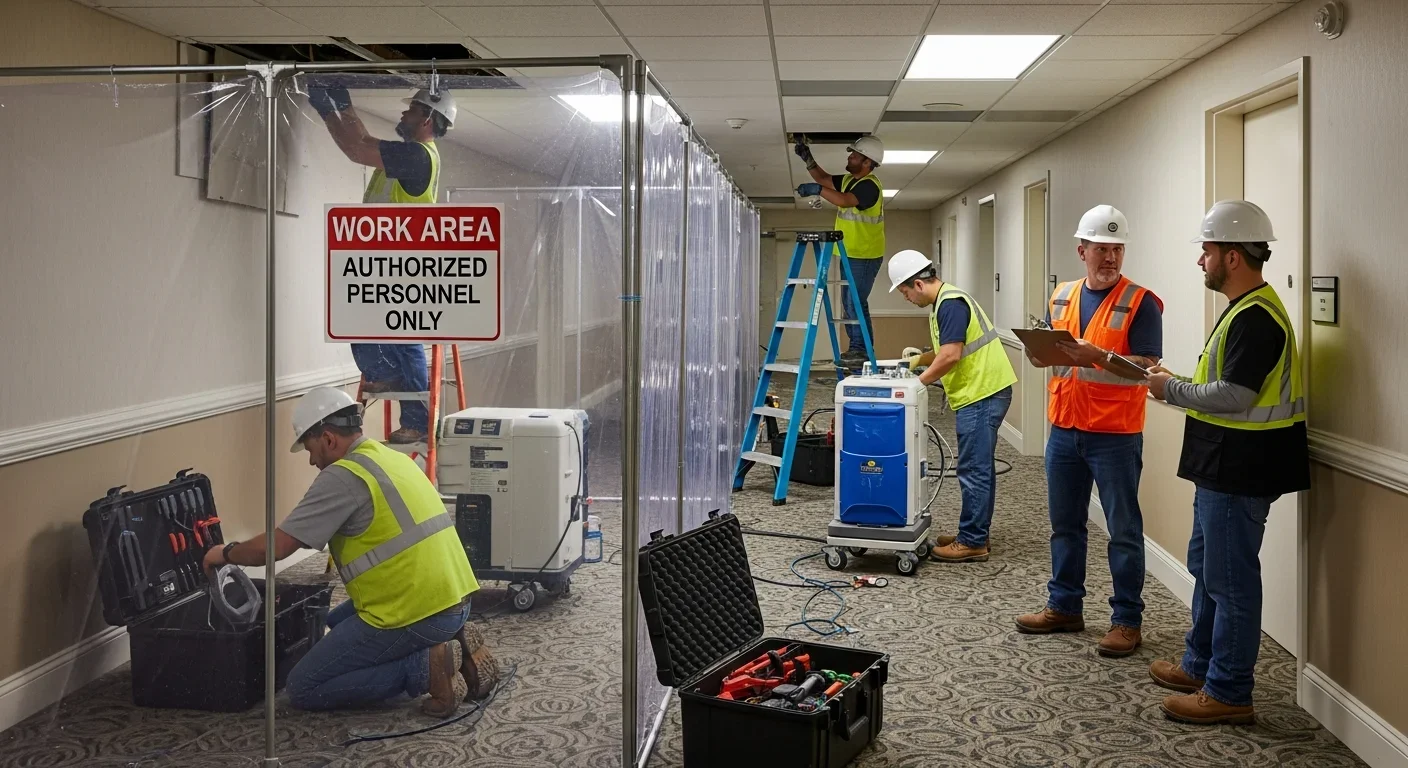
The first 24 hours of any multi-unit incident are about isolation, not finish work. We split the building into containment zones using temporary plastic barriers, negative-air machines, and posted signage. Affected corridors are closed and rerouted; HVAC zones serving affected units are isolated to prevent cross-contamination of moisture and microbial spores between units. This phase looks dramatic but is the cheapest way to prevent a 4-unit incident from becoming a 12-unit incident.
Deliverables
Building-wide moisture map within 6 hours
Containment barriers in all affected corridors
Negative-air pressure verified in each work zone
HVAC isolation per zone
Phase B · Communicate
Tenant Notification Cadence
Residents do not need restoration jargon — they need predictability. We work with the board and management company to deploy a communication cadence: an initial written notice within 12 hours of the incident, daily progress emails for the duration of the work, and 48-hour advance notice of any unit access requests. Templated communication keeps the board out of the firing line and gives Palm Build a single, signed-off voice for resident-facing updates.
Deliverables
Initial incident notice (within 12 hours)
Daily progress email schedule
48-hour advance unit-access requests
Single point of resident contact
Phase C · Relocate
Temporary Housing Coordination
Some units will be uninhabitable. The master policy may cover Additional Living Expense for short displacement; for longer stays, individual HO-6 loss-of-use coverage takes over. We coordinate with the carrier(s), secure block hotel rates with extended-stay properties near the building, transport residents who need help, and maintain a relocation log so each owner can document loss-of-use claims accurately. Pets, accessibility needs, and elderly residents get priority placement.
Deliverables
Block rates with 2-3 nearby properties
Per-resident relocation log
ALE / loss-of-use claim coordination
Accessibility and pet accommodation
Phase D · Sequence
Phased Displacement Minimization
Most multi-unit work can be sequenced so the majority of residents stay in place. We model the work plan against an occupancy chart: which units must be empty, which can stay occupied with periodic disruption, and which only need exterior or corridor access. The result is typically 60-80% reduction in the number of resident-nights displaced compared to a "shut everything down" approach.
Deliverables
Per-unit displacement matrix
Sequenced unit-access calendar
Reduced total displacement nights
Resident sign-off on sequence plan
Phase E · Execute
Multi-Crew Field Operations
Multi-unit jobs run multiple crews in parallel — water mitigation, demo, drying monitoring, reconstruction, and final detail — each in different units at the same time. We assign a dedicated project manager who walks the building daily, coordinates the trades, runs the moisture-reading log, and reports progress to the board and PM. For larger losses we coordinate with our commercial restoration and large-loss-handling teams to scale equipment and crews on demand.
Deliverables
Dedicated project manager on-site
Daily moisture readings logged
Multi-crew parallel operations
Cross-pillar resource scaling on demand
Phase F · Off-Hours
After-Hours Common-Area Work Windows
Common-area work — lobbies, hallways, pools, clubhouses, fitness rooms — must be done with minimum disruption to the community. We schedule loud demolition, structural drying, and finish work for evening and weekend windows where resident impact is lowest. Yes, after-hours labor carries a premium (typically +25-60%); the offset is that residents do not see the project, the board does not field complaints, and the building feels normal during the day.
Deliverables
Off-hours schedule for noisy work
Resident impact minimized
Daytime amenity availability
Premium labor justified by lower complaint volume
When the loss is bigger than the framework
Some events exceed the standard multi-unit playbook — full-building hurricane envelope
failure, multi-floor sprinkler activation, fire spreading across stacked units. For
losses above $100,000 or affecting 10+ units, we activate our large-loss handling team
alongside the HOA restoration crew, scaling commercial equipment, project management
bandwidth, and adjuster coordination on demand.
Pre-Loss Planning: The Single Highest-ROI Investment a Board Can Make
Every dollar spent on pre-loss emergency planning saves five to ten dollars in post-loss
restoration cost. Most HOA boards do not have a written emergency response plan — and
discover this fact the night of the first major incident. The four pillars below are the
minimum framework Palm Build helps every Emergency Response Plan (ERP) community establish
before they need it.
A pre-vetted vendor list — restoration, emergency plumbing, electrical, board attorney, public adjuster, IT/security — saves the board hours during the worst day of the year. Each vendor on the list has been credentialed (license, insurance, references), priced (preferred rates negotiated in advance), and briefed on the building (floor plans, access keys, on-call contacts). Palm Build maintains a vendor coordination protocol with every association we serve under our Emergency Response Plan program.
When water starts pouring through a 5th-floor ceiling at 2 a.m., who calls whom? A documented contact tree maps the call sequence: resident → on-call PM → board president → emergency vendor → insurance adjuster → state regulator (if needed). Each contact has primary and backup numbers, escalation timing, and the authority to authorize specific actions. We provide every ERP community with a contact tree template customized to their governing documents.
What we deliver
Primary + backup contact for every role
Authority matrix (who can authorize what)
Escalation timing per role
Quarterly call-tree drill recommendation
03
Reserve Fund Earmarks
A general reserve account is an emergency fund. A reserve account with line-item earmarks for restoration, emergency mitigation, and post-loss reconstruction is an actionable emergency fund. We help boards work with their reserve specialist to add restoration line items at the next reserve study update — typically without raising dues. The earmarks make emergency draws faster and less politically charged because the spend was anticipated.
What we deliver
Restoration earmark in reserve study
Emergency mitigation budget line
Annual replenishment plan
Coordination with reserve specialist
04
Annual Inspection Checklists
Most major HOA losses are preventable. An annual inspection checklist — roof, exterior envelope, common-area plumbing, fire/life safety, water shut-off valve test, sprinkler system check — catches the failures that become disasters. We provide a templated checklist customized for FL, NC, and SC building stock; the cost of preventive inspection is a small fraction of any single avoided major loss.
What we deliver
Roof + envelope visual inspection
Plumbing infrastructure pressure test
Fire / life safety system test
Documented findings → board minutes
Free Download for HOA Boards
The Palm Build HOA Emergency Response Plan Template
A customizable PDF template covering all four pillars: vendor list, contact tree,
reserve earmarks, and inspection checklist. We populate it for free for any
association considering our Emergency Response Plan program — no commitment, no
strings attached. The fastest way to find out where your community is exposed.
Twelve real photos from active and completed multi-unit projects across Florida, North
Carolina, and South Carolina. Filter by work type or state to see the kind of conditions
we routinely handle.
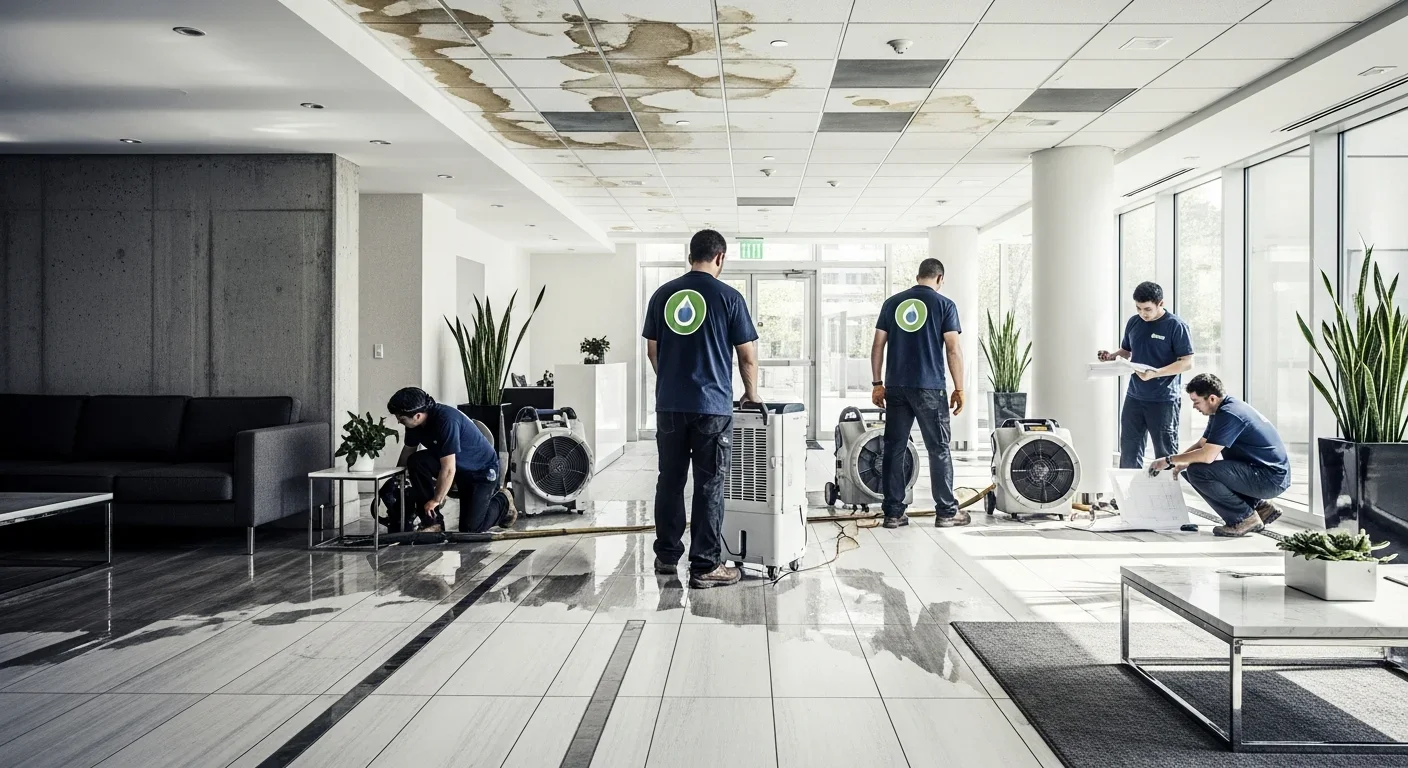
Common-area lobby water damage
Burst supply line on the 3rd floor reached the lobby ceiling. Mitigation deployed within 4 hours.
common-areafl
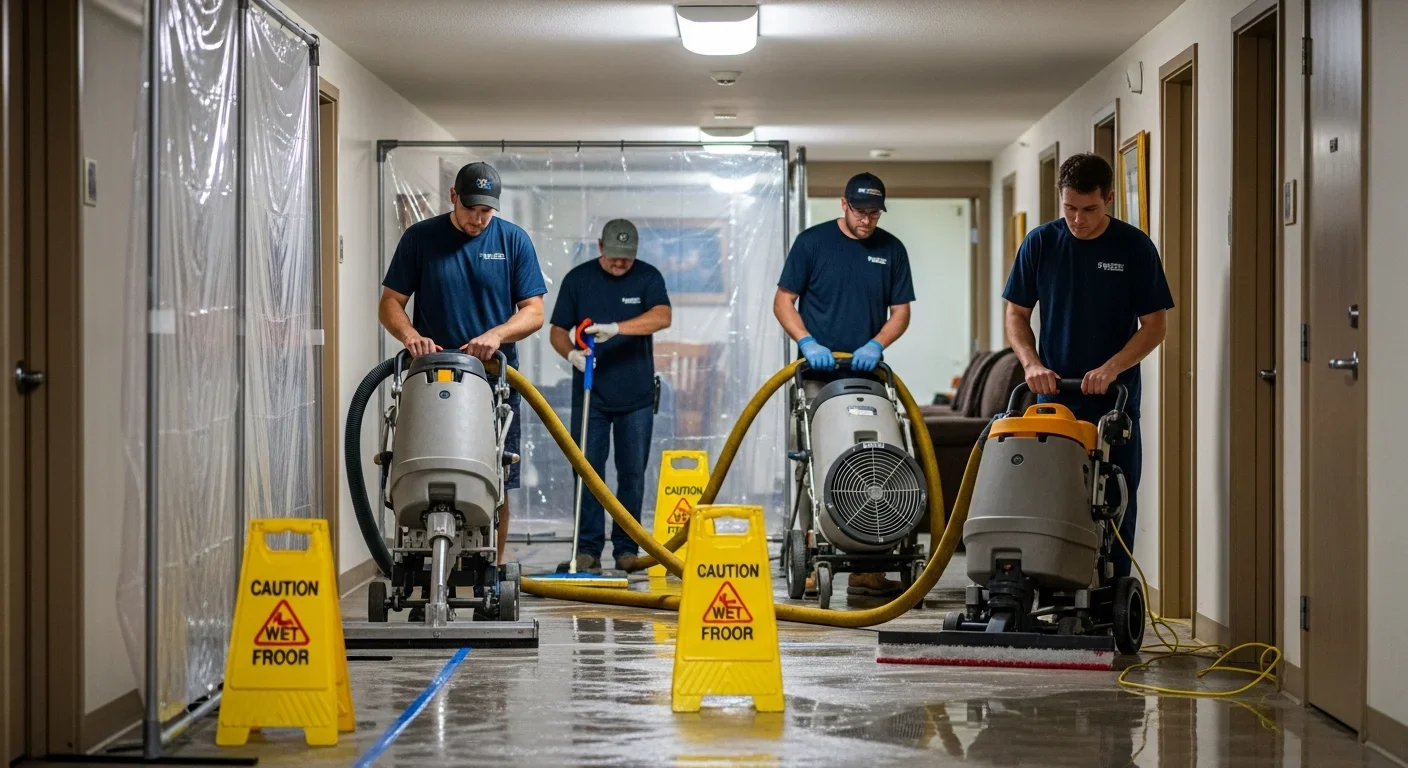
Multi-unit corridor mitigation
Coordinated extraction across 6 affected units and the shared corridor.
multi-unitcommon-area
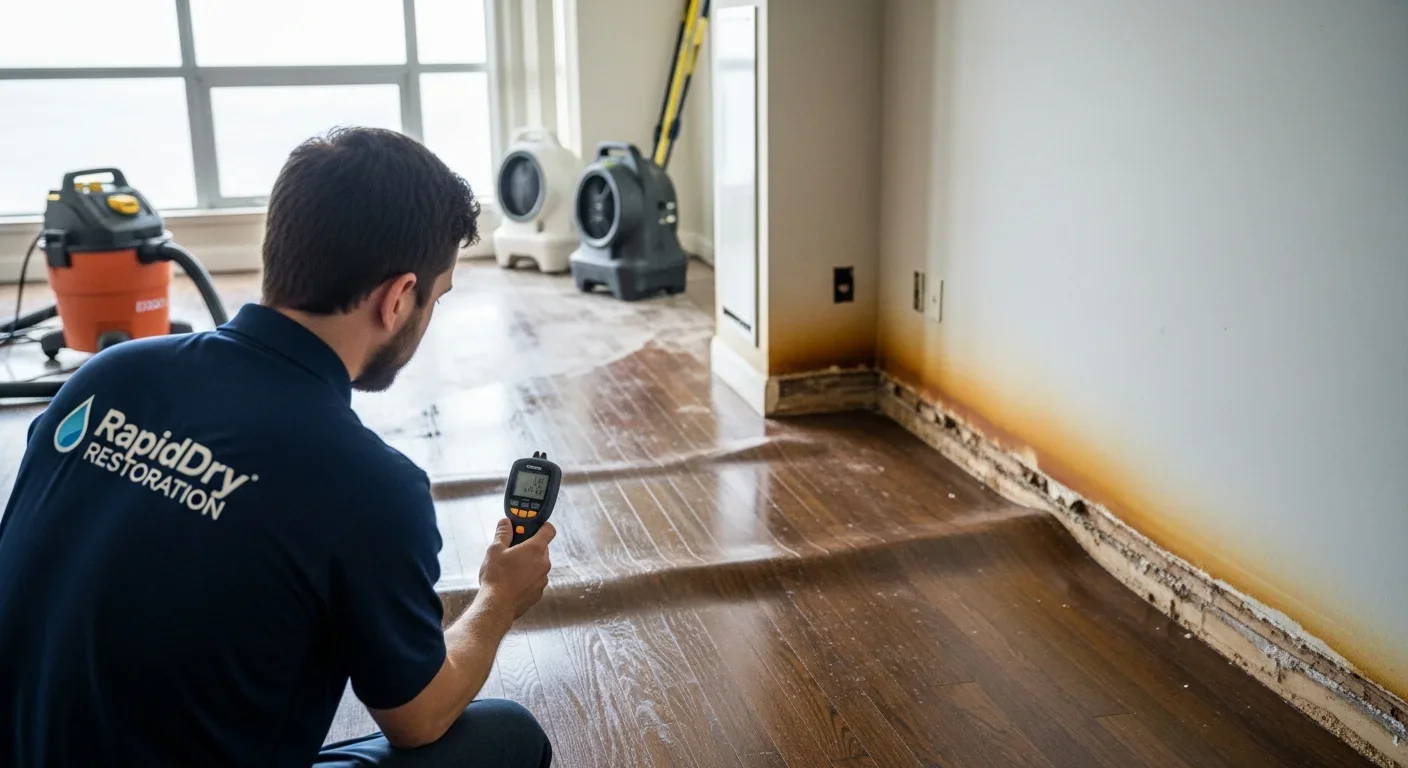
Unit interior assessment
Per-unit damage assessment with moisture mapping for HO-6 carrier documentation.
unitfl
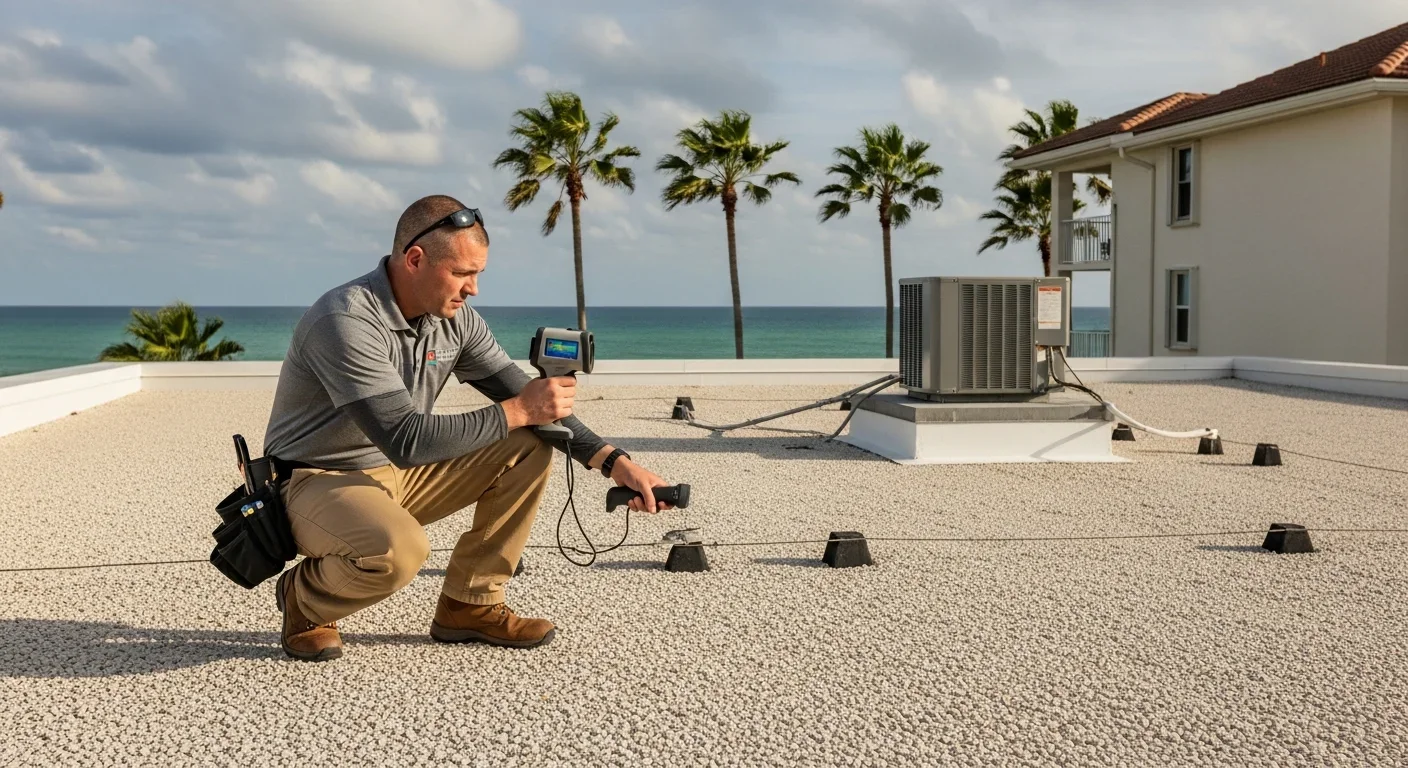
Roof leak source inspection
Thermal imaging located the source within 30 minutes of arrival.
common-areafl
Unit-to-unit leak investigation
Source unit identified, declaration reviewed, deductible split negotiated with HO-6 carrier.
unitmulti-unit
Completed lobby restoration
Restored to pre-loss condition. Resident impact minimized through after-hours work.
common-areafl
Common-area reconstruction
Phased reconstruction completed across two fiscal years to avoid special assessment.
common-area
Pool deck restoration
Storm-driven debris removal and structural drying of the pool deck and clubhouse.
common-areafl
NC townhome freeze damage
Shared-wall pipe burst affecting 3 adjacent townhomes. Coordinated response in under 6 hours.
unitmulti-unitnc
FL hurricane envelope damage
Wind-driven rain through compromised envelope. Master policy claim coordinated with multi-unit HO-6 stacking.
common-areafl
On-site coordination
Daily progress updates and resident-access scheduling.
multi-unit
Phased multi-unit execution
Six-unit incident sequenced to keep 4 units occupied throughout the work.
multi-unitcommon-area
Community-Focused Approach
Why HOA Boards and Property Managers Choose Us
We understand the unique challenges of community restoration—from board approval processes
to multi-stakeholder coordination.
Board Coordination
We attend board meetings, provide regular updates, and communicate clearly with all stakeholders throughout the project.
Multi-Unit Experience
Expertise in coordinating restoration across multiple affected units while managing resident access and minimizing disruption.
Insurance Navigation
We understand master policies and HO-6 coverage, coordinating with multiple carriers to ensure proper claim handling.
24/7 Emergency Response
Community emergencies require immediate action. Our teams are ready around the clock to respond to HOA properties.
Compliance Focus
We work within your community guidelines and CC&Rs, ensuring restoration meets association standards.
Single Point of Contact
One dedicated project manager handles everything, simplifying communication for boards and property managers.
Community Restoration Specialists
Restoration Services for HOA Communities
Community associations face unique restoration challenges. Palm Build provides
professional restoration services for condominiums, townhomes, and planned
developments. We coordinate directly with your board and property manager to restore
common areas and individual units with minimal disruption to residents.
Our comprehensive 6-step HOA management process ensures efficient community management,
enhanced property values, and satisfied residents. When searching for HOA management
companies, you want experts with a proven approach.
Professional HOA Management Company
Our licensed HOA property management experts follow industry best practices to
ensure efficient community operations and resident satisfaction. Trust our HOA
management services for your community.
Why Our Process Works
1
Customized Solutions
Tailored services designed to meet your community's specific needs and goals.
2
Professional Management
Licensed property managers with expertise in HOA operations and community
development.
3
Transparent Communication
Regular updates and open communication channels with board members and residents.
4
Value Enhancement
Proactive maintenance and improvements to maintain and increase property values.
Our comprehensive HOA management services enhance community value, streamline operations,
and ensure resident satisfaction through professional expertise and dedicated support.
Community Transformations
Before & After Community Improvements
See how our professional HOA management services have transformed communities. Drag the
slider to reveal the improvements.
Ensure your community is prepared for emergencies with our comprehensive safety and
emergency response strategies.
Prevention Tips
Community Safety Facts
In-Depth Guides
HOA Restoration Sub-Pillar Guides
Six in-depth guides covering the full HOA restoration playbook — water, common-area, storm,
preparedness, claims coordination, and assessment minimization. Each guide goes deeper than
the pillar overview, with case studies and a board-ready process.
Connect community restoration with specialized services
HOA and multi-family losses often involve water mitigation, storm response, insurance
coordination, and contents recovery across multiple units. Use these connected guides.
Answers about who pays for HOA water damage, master policy vs HO-6 coverage, board fiduciary duties, state statutes, and how to avoid special assessments.
The HOA typically pays for the roof repair itself and any structural damage, since the roof is almost always a common element under the master policy. The unit owner pays for interior finish damage (ceiling texture, paint, flooring, furniture) through their HO-6 policy. If the HOA delayed roof maintenance and negligence is a factor, the owner may have grounds to seek reimbursement for interior costs. See our full liability matrix in our HOA water damage responsibility guide for more scenarios.
Still have questions about
who pays — liability & responsibility?
Community Damage Requires Coordinated Response.
We Handle the Complexity.
Multi-unit restoration involves more stakeholders, more insurance carriers, and more coordination than any other type of restoration. Our teams specialize in the diplomatic, organized approach that HOA communities demand.