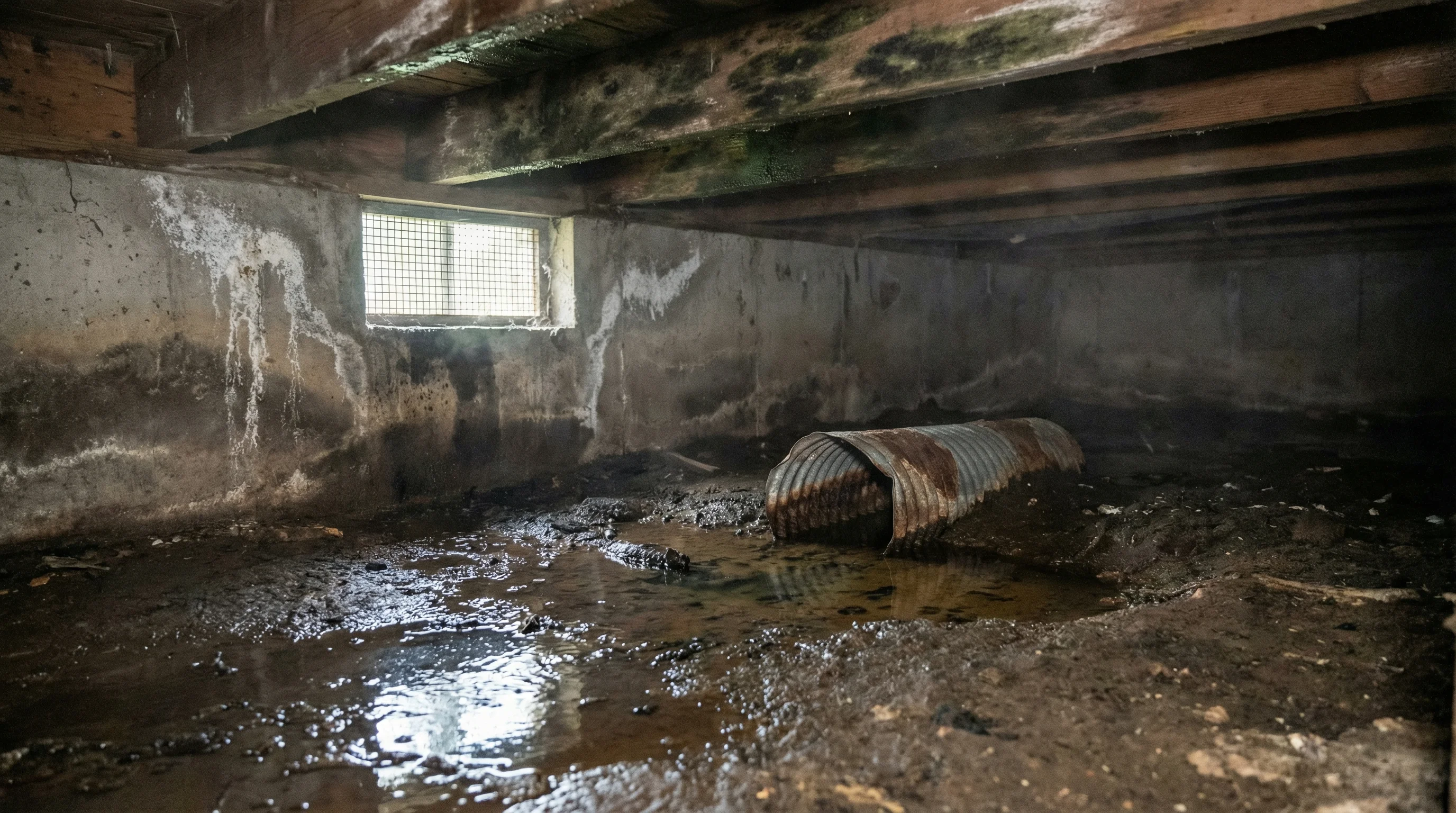
Standing water in a crawl space is never normal. Even a few inches of water can damage floor joists, saturate insulation, and create mold conditions that affect indoor air quality within days.
Crawl Space Water Removal Guide
Crawl Space Water Removal: Stop the Flooding, Protect the Structure
Standing water beneath your home accelerates wood rot, attracts pests, and creates conditions for mold growth within 24–48 hours. This guide covers extraction priorities, sump pump systems, French drains, and the drainage corrections that prevent recurrence.
- Emergency Extraction
- Sump Pumps
- French Drains
- Drainage Correction
- 24/7 Service
What you need to know
Identify the water source before choosing a fix. Bulk water intrusion (storm runoff, high water table) requires drainage solutions. Plumbing leaks need plumbing repair. Ground vapor needs a vapor barrier. Many crawl spaces have multiple sources.
A sump pump handles active water intrusion by collecting water in a basin at the lowest point and pumping it away from the foundation. Most residential sump pumps activate automatically via a float switch.
Interior French drains work alongside sump pumps. A shallow trench with gravel and perforated pipe runs along the crawl space perimeter, collecting water that seeps through walls or rises from soil and directing it to the sump basin.
Exterior drainage corrections — extending downspouts, maintaining 1–2% grade away from the foundation, and keeping gutters clean — often eliminate the water source before it reaches the crawl space.
After water removal, the crawl space must be dried to below 19% wood moisture before any encapsulation or insulation work begins. Skipping the drying phase traps moisture under new materials.
Field Visuals
What this work looks like in practice
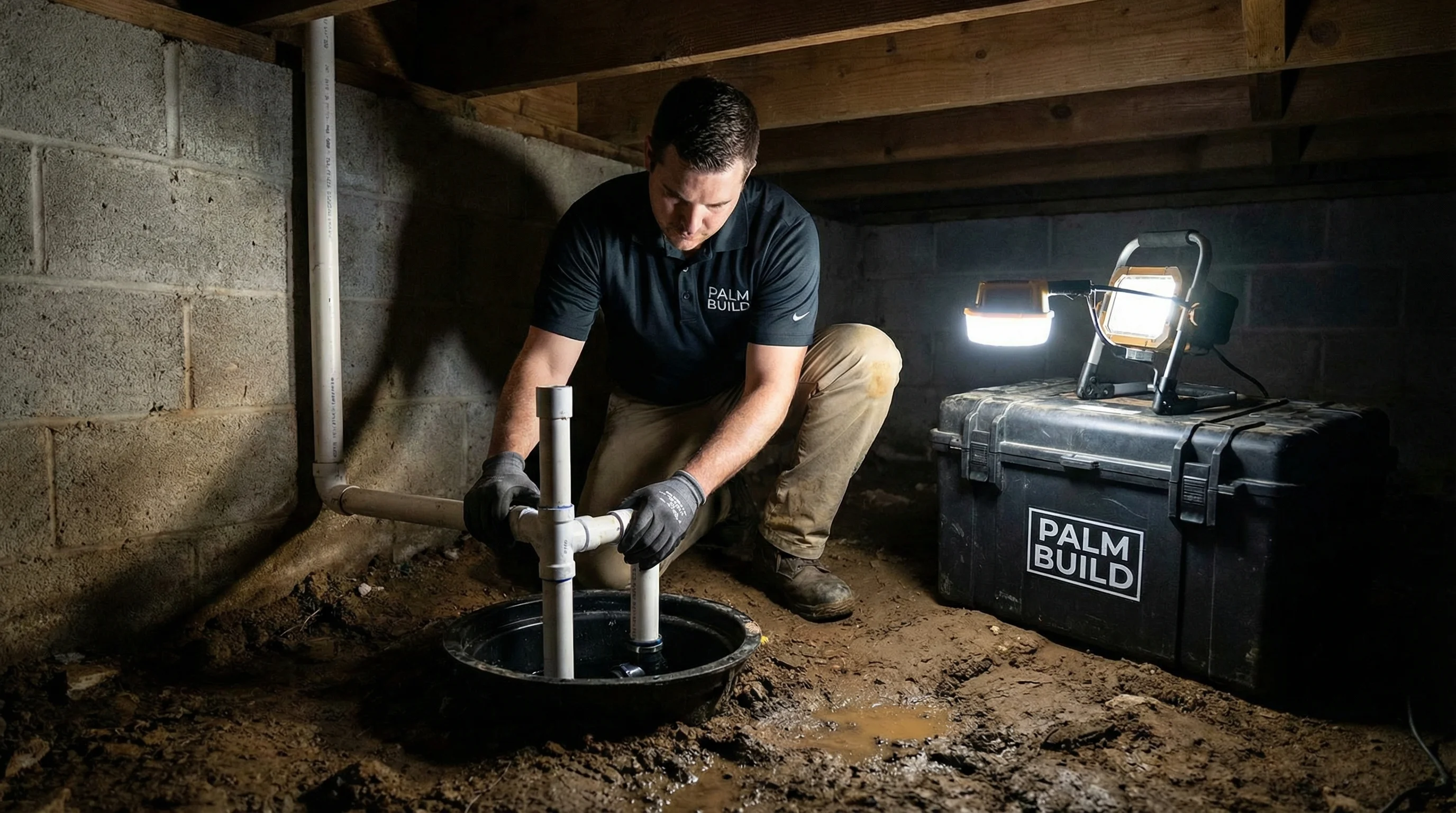
Sump pump installation
Commercial sump pump with float switch installed at the lowest point of the crawl space. Perimeter drainage feeds water into the basin for automatic discharge away from the foundation.
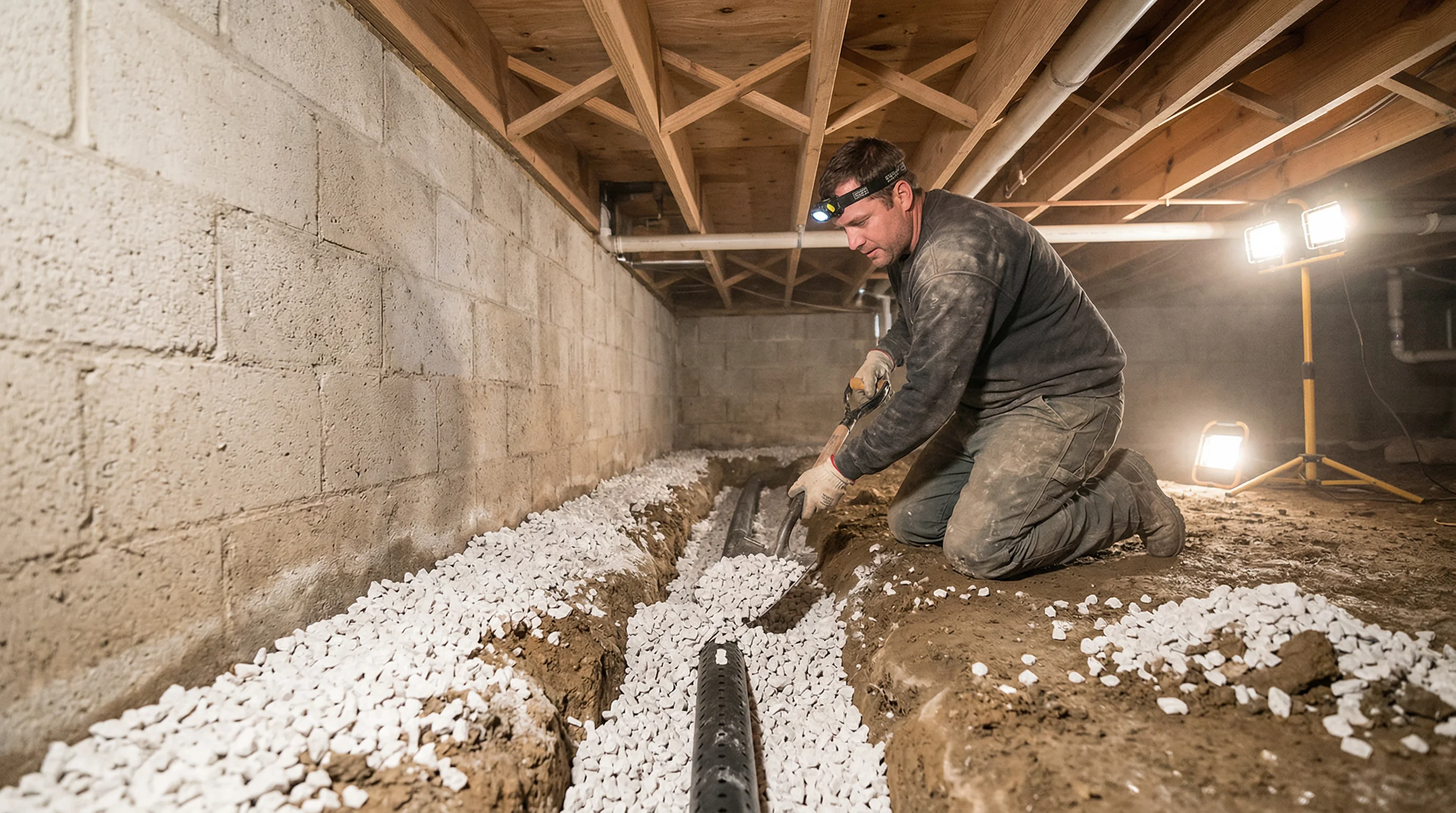
Interior French drain system
Shallow trench along the crawl space perimeter lined with gravel and perforated pipe. Collects water from wall seepage and soil, directing it to the sump basin for removal.
Active water intrusion
Standing water in a crawl space after heavy rain. This level of water requires emergency extraction followed by source identification and drainage system installation.
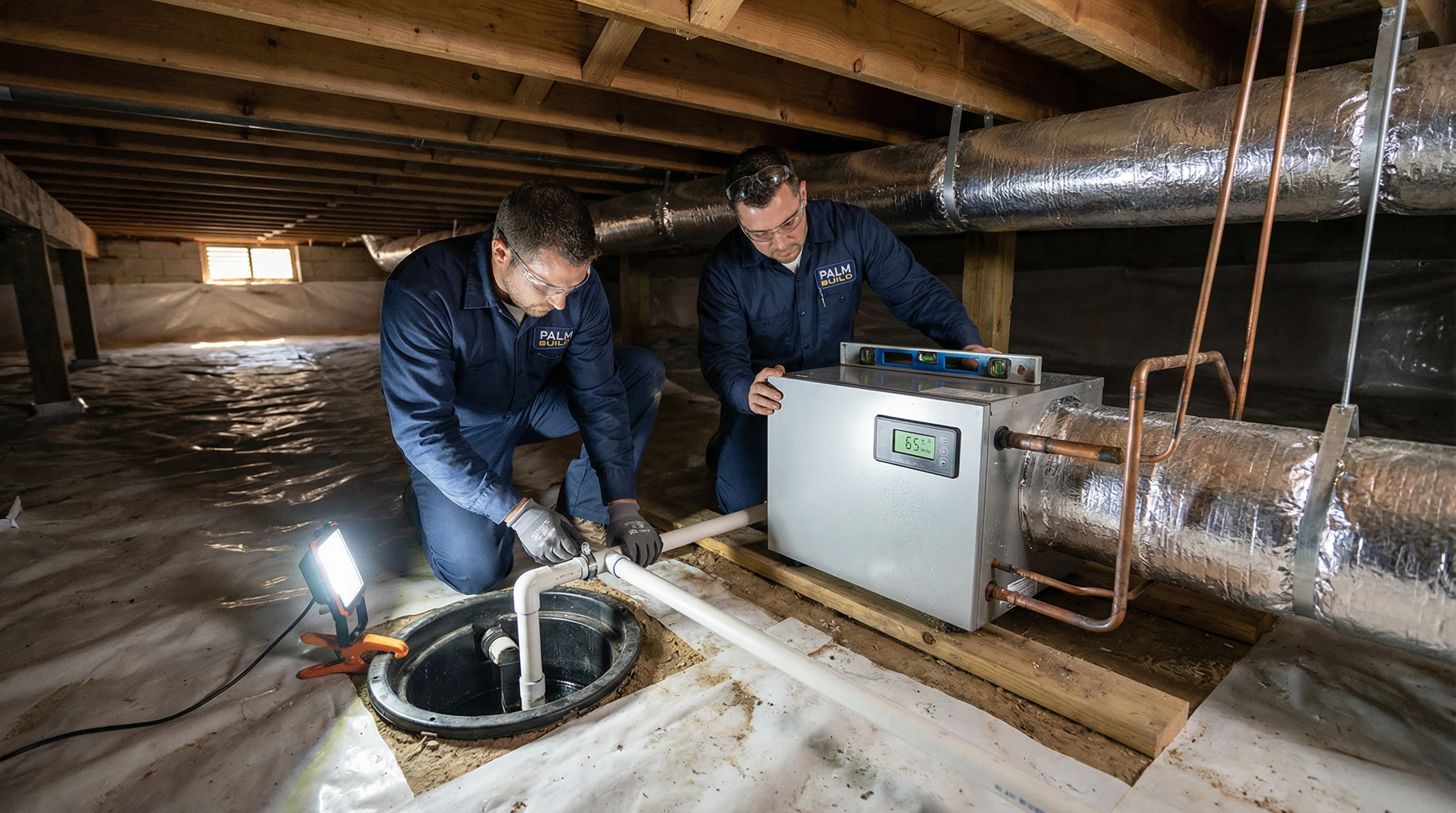
Post-extraction drying
Commercial dehumidifier deployed after water extraction to bring wood moisture below safe levels. Monitoring continues daily until target conditions are met.
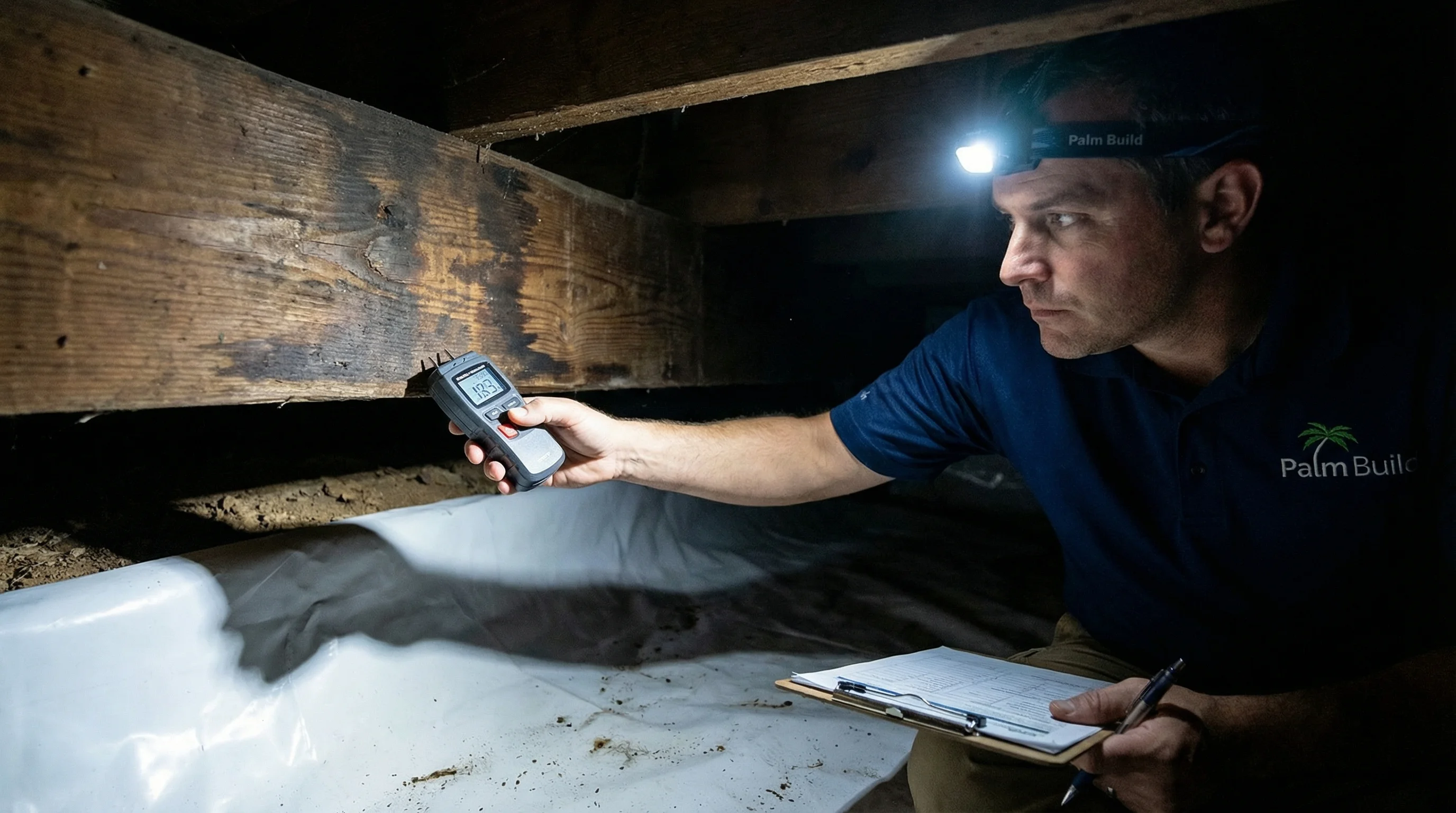
Moisture assessment
Technician measures wood moisture content after extraction and drying. All structural members must read below 19% before encapsulation or insulation work begins.
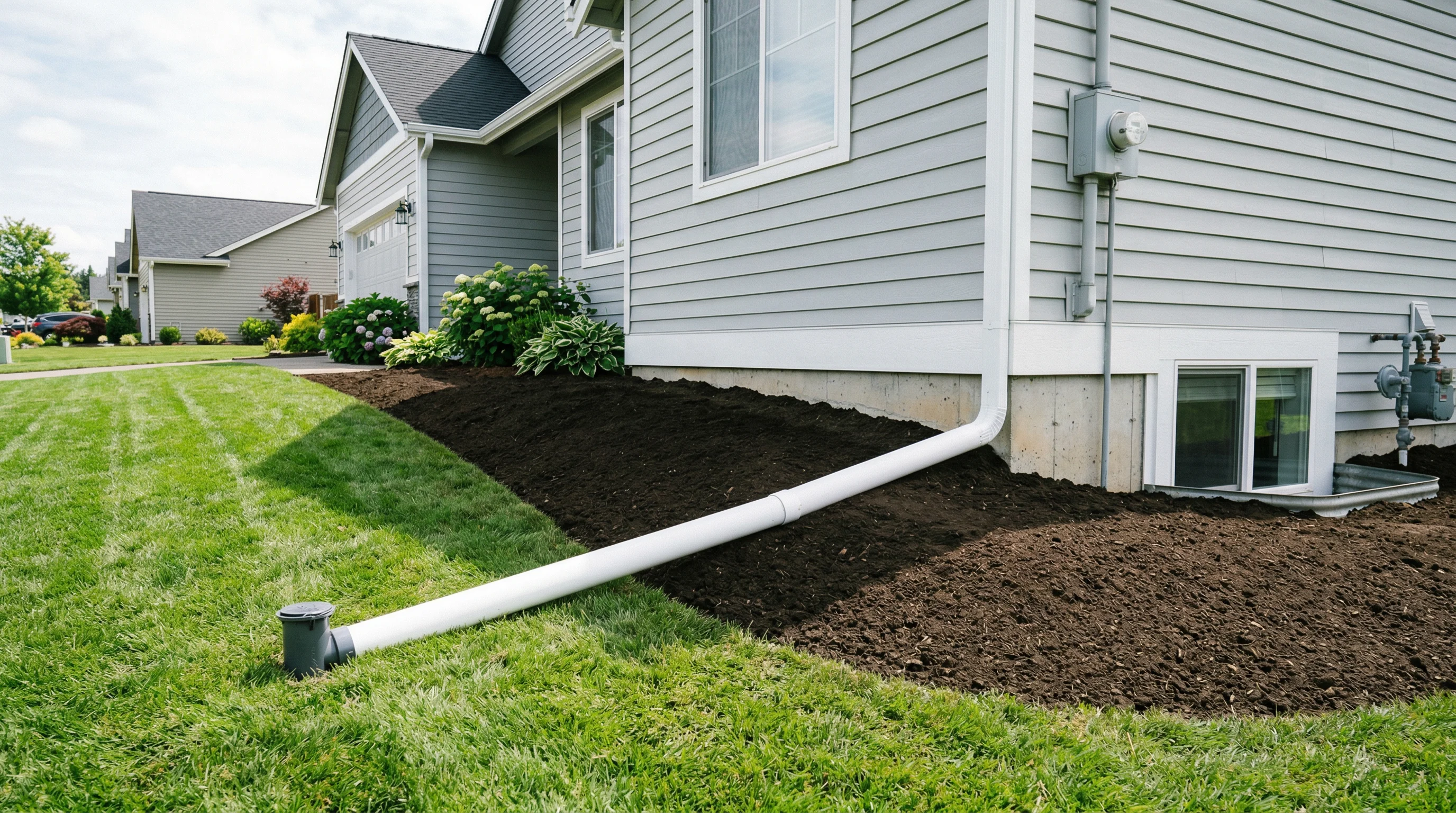
Exterior drainage correction
Proper grading slopes soil 1–2% away from the foundation. Downspout extensions discharge water at least 6 feet from the wall, reducing the volume that reaches the crawl space.
Professional Process
How this work is done right
Each step builds on the last so moisture stays managed and materials stay protected.
Emergency extraction and assessment
Remove standing water with submersible pumps. Map moisture levels across the crawl space. Identify the water source — storm intrusion, plumbing leak, rising water table, or surface runoff. Document conditions for any insurance claim coordination.
Drainage system installation
Install interior French drains along the crawl space perimeter if water enters through walls or rises from soil. Set a sump basin at the lowest point with a commercial float-activated pump. Route discharge at least 10 feet from the foundation.
Drying and dehumidification
Deploy commercial air movers and dehumidifiers to bring wood moisture below 19% and relative humidity below 55%. Monitor daily with moisture meters and hygrometers. Drying typically takes 3–7 days depending on saturation level.
Exterior corrections and prevention
Extend downspouts, correct grading to maintain slope away from foundation, clear gutter outlets, and install vent well covers if applicable. These corrections reduce or eliminate the water reaching the crawl space in the first place.
Cost Guidance
What to expect on pricing
Costs vary by crawl space size, severity of damage, and region. These ranges reflect typical residential projects in our service areas.
Sump pump (installed)
$1,000 – $2,500
Includes basin, commercial pump, float switch, check valve, and discharge piping. Battery backup adds $300–$500.
Interior French drain
$20 – $30 / linear ft
Perimeter trench with gravel and perforated pipe. A 120-linear-foot crawl space perimeter runs roughly $2,400–$3,600.
Emergency water extraction
$500 – $2,000
Depends on water volume and access. Includes pumping, initial debris removal, and condition assessment.
Drainage matting
$1 – $3 / sq ft
Dimpled plastic installed under the vapor barrier to channel water toward the sump basin. Useful for uneven or chronically wet soil.
Exterior grading correction
$500 – $2,000
Adjusting soil grade around the foundation perimeter to ensure water flows away from the home.
Downspout extensions
$50 – $200 each
Extending existing downspouts to discharge at least 6–10 feet from the foundation wall.
Regional considerations
North Carolina
Charlotte and the Piedmont sit on clay soils that drain slowly and hold water near foundations. Heavy spring rains frequently push water into vented crawl spaces. Sump pumps are common even in homes without a history of flooding, as a preventive measure.
South Carolina
Coastal areas face both high water tables and storm surge risk. Inland clay soils create the same slow-drainage issues as North Carolina. Older Charleston-area elevated homes benefit from combined French drain and sump systems.
Florida
Sandy soil and high water tables mean water rises fast after heavy rain. Hurricane season brings bulk water intrusion that overwhelms standard drainage. Crawl space pumps need reliable battery backup given Florida's storm-related power outages.
Related Guides
Connect this work with the bigger picture
Standing water in your crawl space?
Call now for emergency extraction or schedule a drainage assessment. We'll identify the water source and recommend the right combination of sump pump, French drain, and exterior corrections.