Color does not confirm species. Many common indoor molds, including Cladosporium and Aspergillus niger, appear dark or black under normal conditions. Proper assessment focuses on moisture history, material type, and growth pattern rather than visual appearance alone. Laboratory analysis is the only reliable way to identify species.
Black Mold Removal Guide
Black Mold Removal: What Matters and What Is Marketing Hype
Not every dark stain is Stachybotrys, but moisture-driven growth should always be treated seriously. This guide explains species context, health caution, and the safest remediation workflow.
- Stachybotrys context
- Containment first
- Moisture correction
Practical first steps
If growth is active and widespread, containment and controlled removal are higher priority than DIY cleaning. Disturbing mold colonies without proper controls can release large volumes of spores into adjacent living spaces, increasing exposure risk for occupants. Professional remediation teams establish engineering controls before any demolition begins.
Porous materials with chronic saturation often need removal and replacement, not just surface treatment. Drywall, insulation, carpet padding, and ceiling tiles absorb moisture deeply, allowing fungal hyphae to penetrate well beyond the visible surface. Surface cleaning alone leaves embedded growth intact, which typically leads to regrowth once humidity returns.
HEPA filtration and negative pressure reduce cross-contamination during demolition and cleaning. Air scrubbers equipped with true HEPA filters capture particles down to 0.3 microns, which includes most mold spores. Maintaining negative pressure inside the containment zone ensures that airborne contaminants are exhausted through filtration rather than migrating into clean areas.
Post-remediation verification helps confirm readiness for rebuild and occupancy. Visual inspection, moisture readings, and in many cases third-party air or surface sampling provide documented evidence that conditions meet acceptable standards. This step protects both the property owner and the restoration contractor by establishing a clear baseline before reconstruction begins.
In-Depth Guide
Understanding the process
The term "black mold" has become a catch-all in popular media, but from a mycological standpoint it is imprecise. Stachybotrys chartarum, the species most commonly associated with the label, is a slow-growing, cellulose-dependent fungus that requires sustained saturation to colonize. It thrives on materials like paper-faced drywall, ceiling tiles, and wood fiber products that have remained wet for extended periods, typically seven days or more. However, numerous other indoor mold species, including Cladosporium, Aspergillus niger, Chaetomium, and Ulocladium, also present as dark green, brown, or black colonies. Without laboratory analysis, distinguishing between these species based on appearance alone is unreliable. This distinction matters because different species have different growth requirements, health implications, and remediation considerations.
Professional remediation is not simply about removing visible mold. The primary objective is to identify and correct the moisture condition that enabled colonization, then safely remove contaminated materials under controlled conditions. Containment using polyethylene barriers and negative air pressure prevents spore dispersal into clean areas of the building during demolition. HEPA filtration, rated to capture 99.97% of particles at 0.3 microns, is used in both negative air machines and vacuum equipment to ensure that airborne and settled spores are captured rather than redistributed. This level of engineering control is what separates professional remediation from surface-level cleaning, and it is the reason that industry standards such as the IICRC S520 and ANSI/IICRC R520 exist to govern the process.
Equally important is addressing the root moisture cause. Whether the source is a plumbing failure, roof leak, foundation intrusion, condensation from poor insulation, or chronically high indoor humidity, remediation without source correction is incomplete. Post-remediation, the restored environment must be maintained below 60% relative humidity to prevent recolonization. In high-humidity climates like Florida and the coastal Carolinas, this often requires mechanical dehumidification, improved air sealing, and sometimes HVAC modifications. A comprehensive remediation project concludes with verification, including visual inspection, moisture confirmation, and where warranted, independent clearance testing, to document that the space is safe for reconstruction and reoccupancy.
Field Visuals
Inspection, containment, and remediation in practice
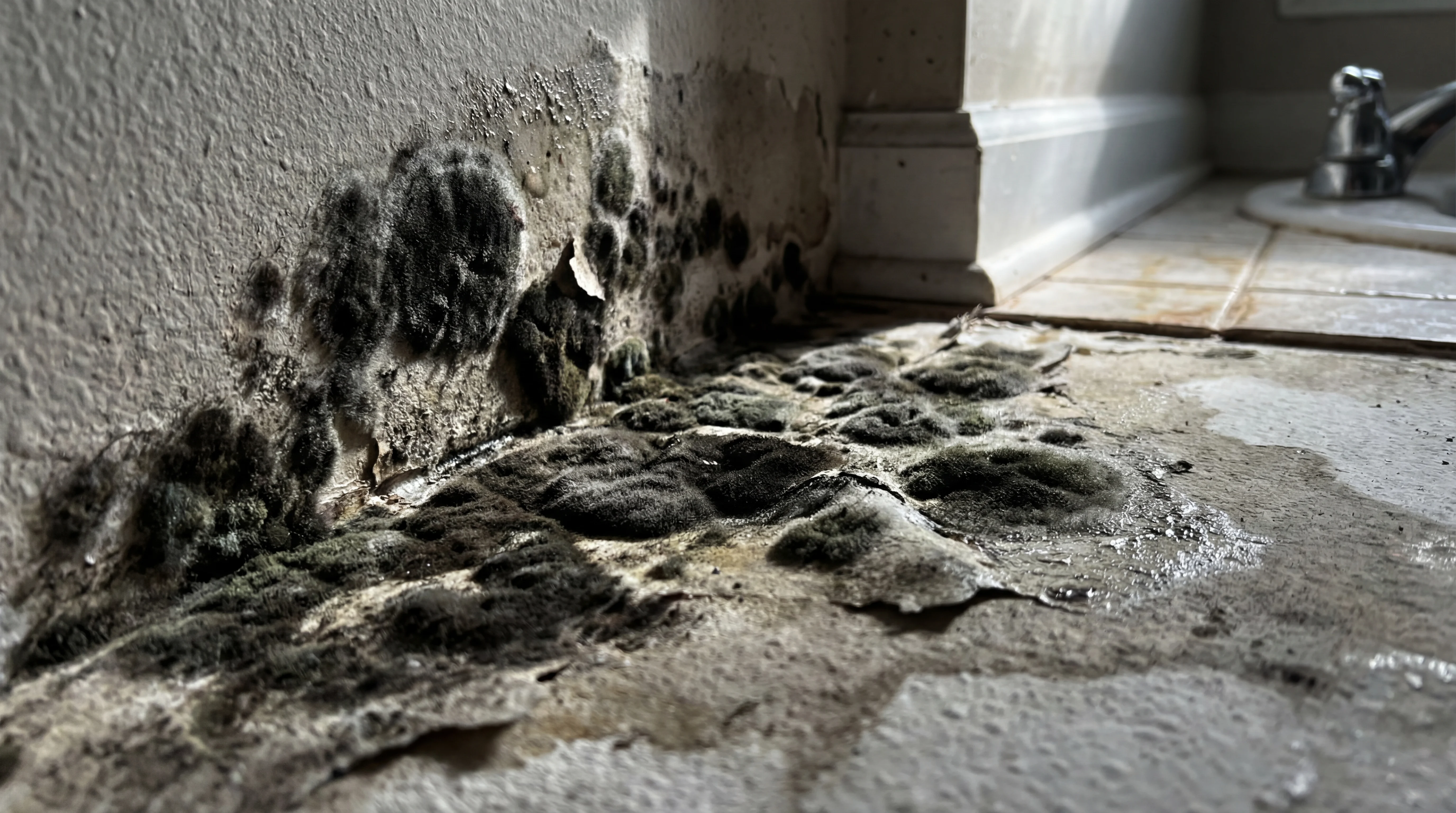
High-visibility contamination
Large visible growth usually indicates underlying moisture conditions that require full scope review.
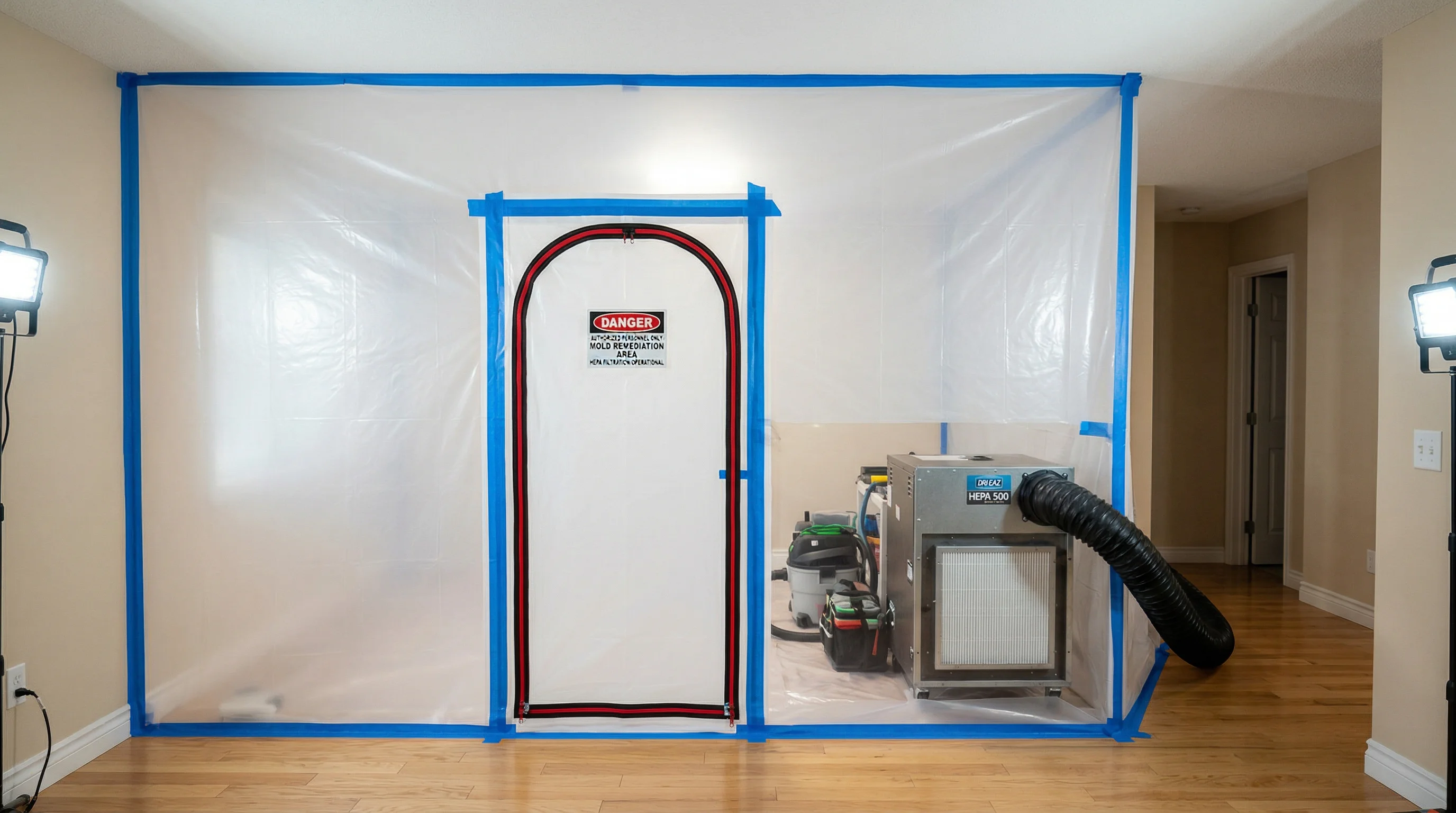
Containment setup in progress
Isolation is a core safety control that limits spread while affected materials are removed.
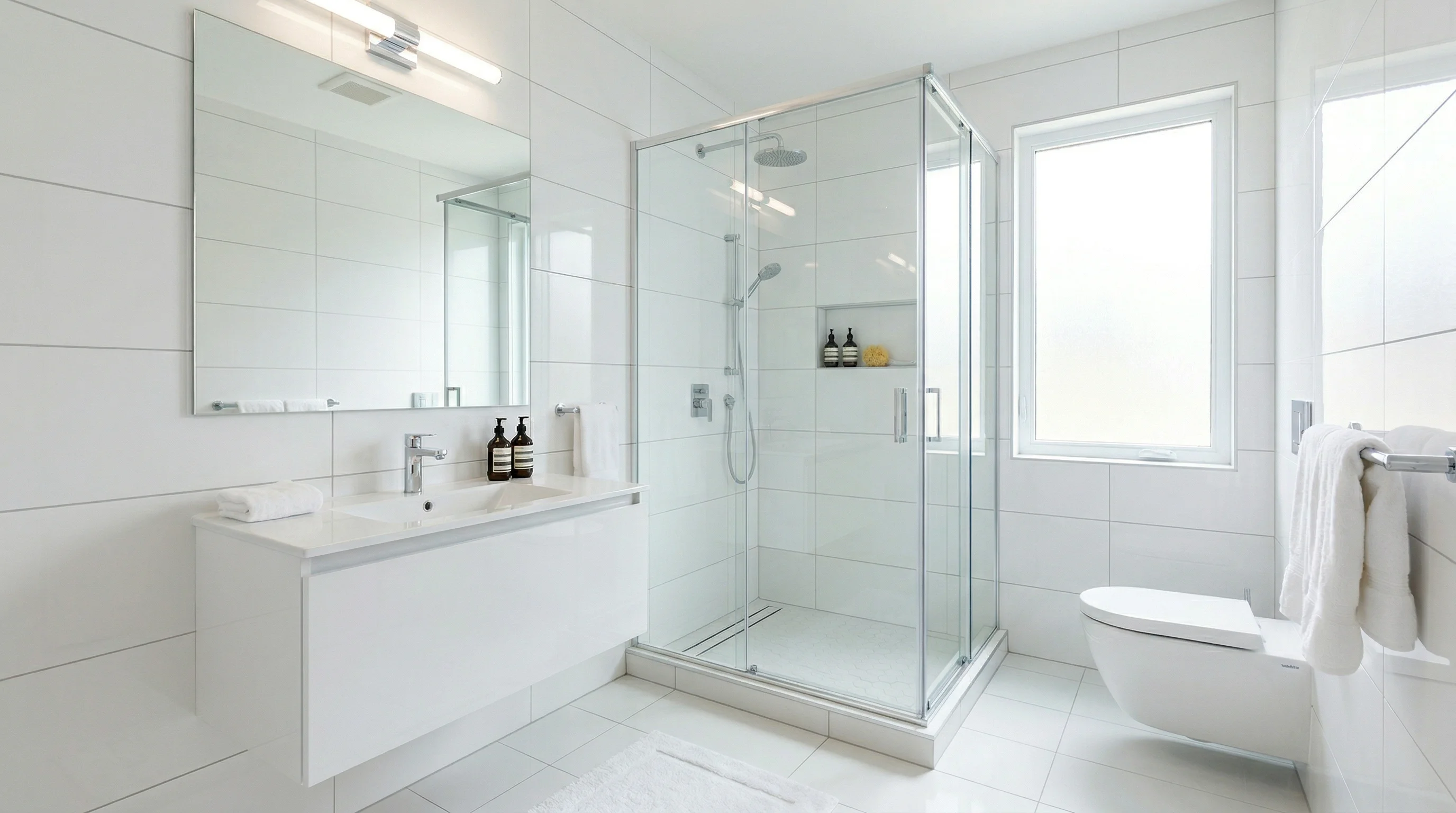
Post-remediation condition
After remediation, the area should be clean, dry, and ready for final finish restoration.
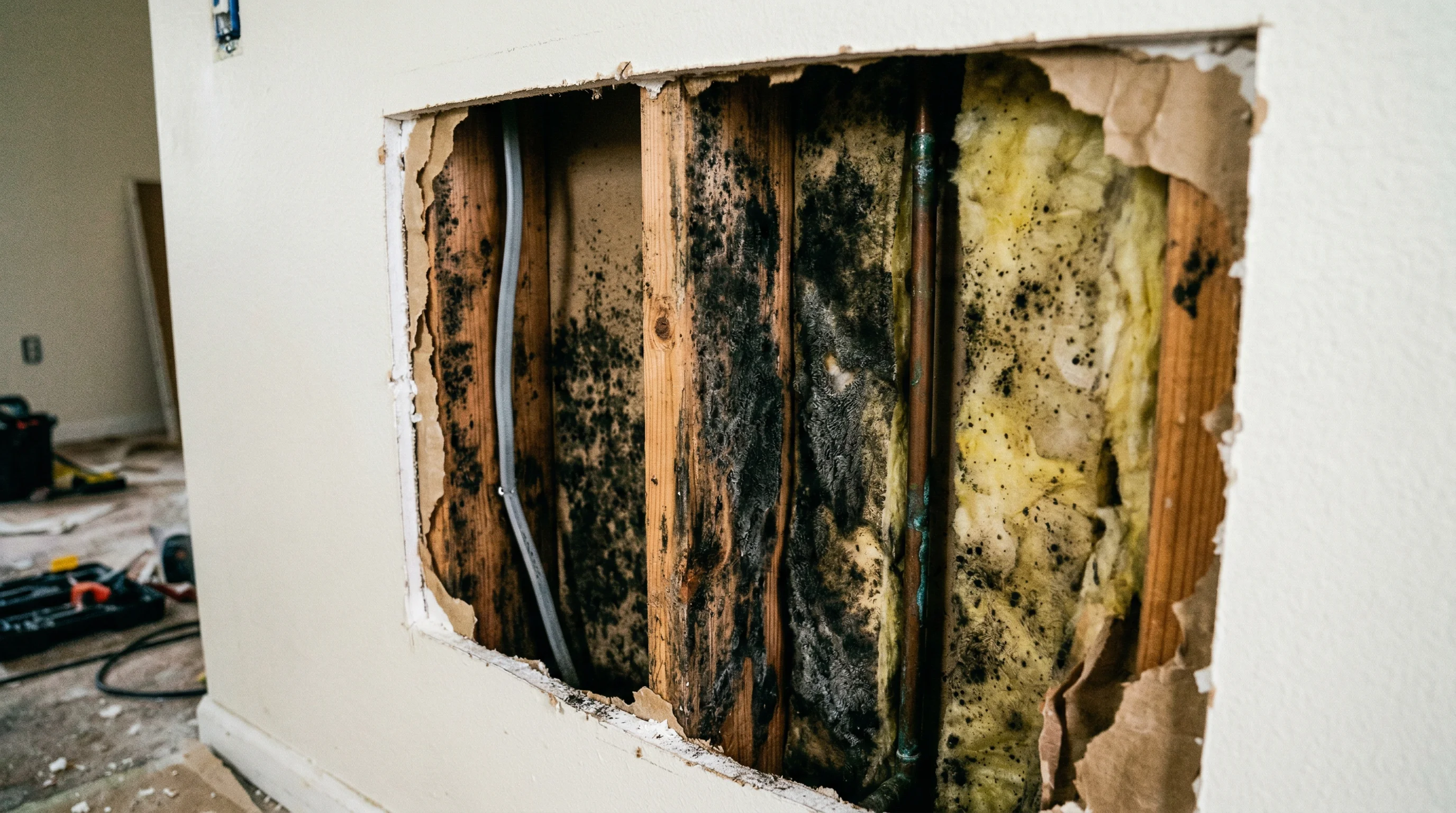
Hidden mold behind wall cavity
Mold frequently grows undetected behind walls where slow leaks or condensation provide sustained moisture.
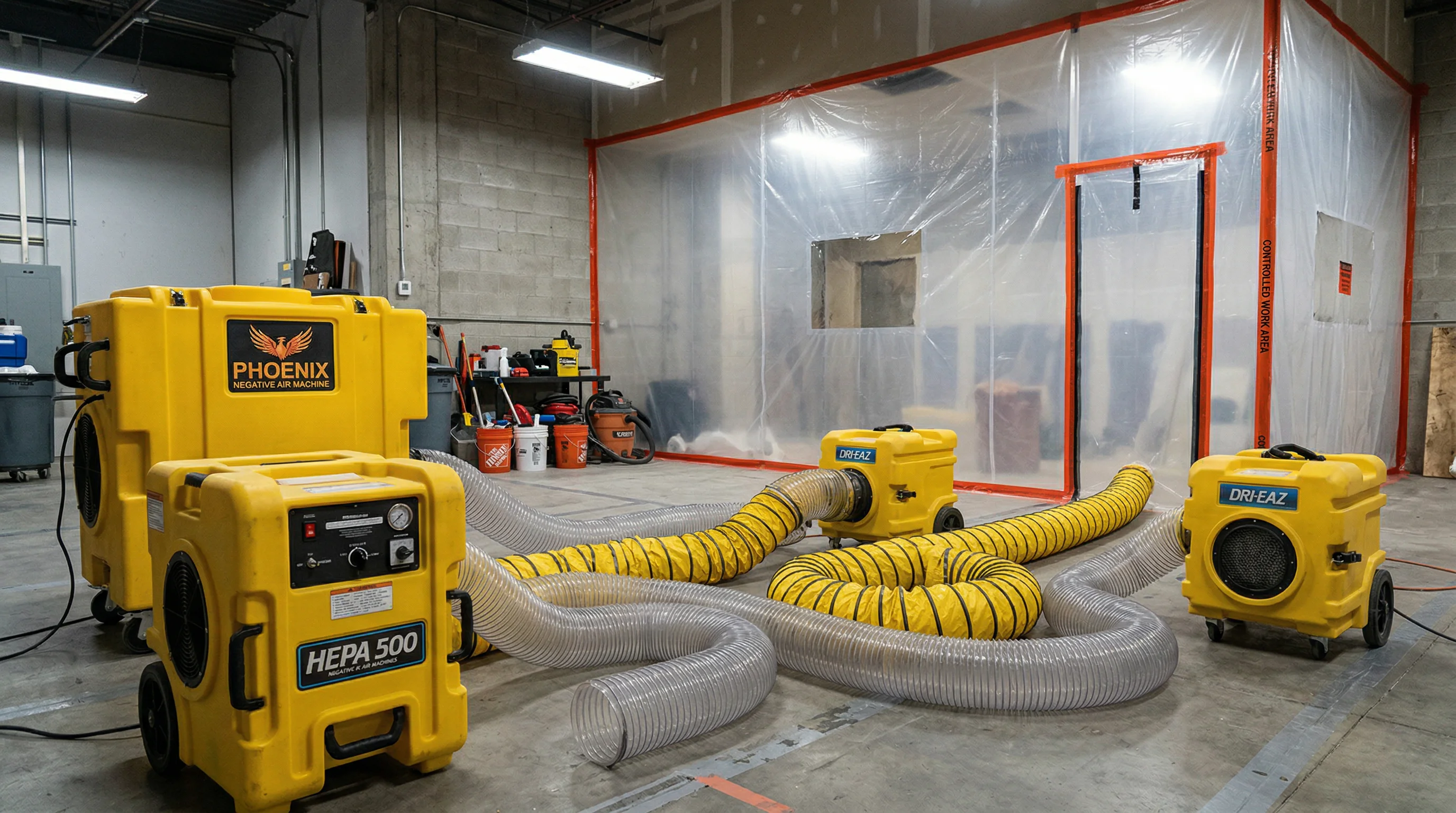
Negative air machine in containment
HEPA-filtered negative air machines exhaust contaminated air from the work zone while preventing spore migration to clean areas.
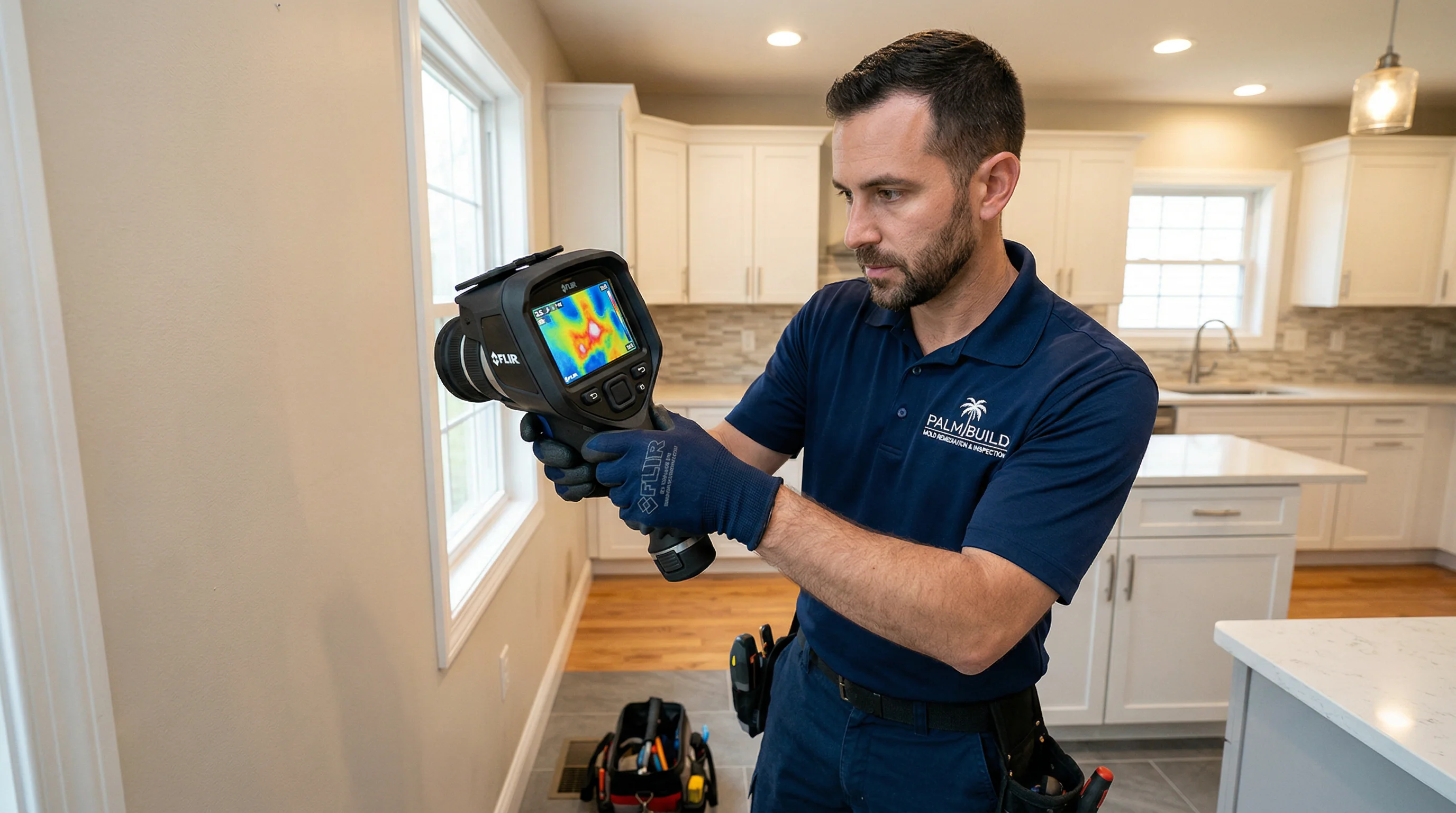
Thermal imaging for moisture detection
Infrared scanning reveals temperature differentials that indicate trapped moisture, helping define the full scope of affected materials before removal begins.
Remediation Sequence
How this project type is handled professionally
Inspection and moisture mapping
Technicians use moisture meters, thermal imaging, and visual inspection to locate active moisture pathways and define impacted zones before disturbing any materials. Mapping identifies not only where mold is visible but also where hidden moisture may be supporting growth behind walls, above ceilings, or beneath flooring. This assessment drives the containment boundaries and removal scope for the project.
Containment and pressure control
The work area is sealed using polyethylene sheeting, and negative air machines with HEPA filtration maintain lower pressure inside the containment zone relative to adjacent clean spaces. This engineering control prevents spore migration during demolition and material removal. Access is restricted to trained personnel wearing appropriate personal protective equipment throughout the process.
Targeted removal and cleaning
Non-salvageable porous materials such as drywall, insulation, and carpet are carefully removed and bagged within containment for disposal. Salvageable structural elements like wood framing and concrete are cleaned using HEPA vacuuming, wire brushing, and antimicrobial application as warranted. Affected areas are then dried to target moisture levels using commercial dehumidification and air movement equipment.
Verification and rebuild handoff
Once remediation is complete, the project undergoes visual re-inspection and moisture verification to confirm that conditions are within acceptable parameters. For insurance-documented or health-sensitive projects, third-party clearance testing by an independent assessor provides additional defensibility. Only after verification confirms the space is clean and dry does the project advance to reconstruction and finish work.
Cost Guidance
What to expect on pricing
Costs vary by contamination severity, affected area size, and region. These ranges reflect typical residential and commercial projects in our service areas.
Mold inspection and assessment
$300 - $700
Covers visual inspection, moisture mapping, and scope documentation. Cost varies by property size and accessibility of affected areas.
Contained remediation (10-100 sq ft)
$1,500 - $5,000
Includes containment setup, material removal, HEPA cleaning, and drying for a single defined area. Per-area pricing scales with contamination density and material type.
Full-home remediation (severe cases)
$5,000 - $15,000+
Multi-zone projects involving extensive material removal, structural cleaning, and whole-home dehumidification. Costs at the upper range typically involve wall cavity and subfloor remediation.
Air and surface testing (pre/post)
$300 - $800
Third-party laboratory analysis of air cassettes and surface samples. Post-remediation clearance testing is recommended for insurance-documented projects.
HEPA air scrubbing and filtration
$200 - $500/day
Daily equipment rental for negative air machines and air scrubbers used to maintain containment integrity and reduce airborne spore counts during active remediation.
Regional notes
Florida
Persistent humidity levels above 60% combined with frequent storm season water intrusion events make recurrence prevention a central part of any remediation plan. Properties in South Florida, including Deerfield Beach and the surrounding Broward County corridor, face year-round moisture pressure from both exterior weather and indoor HVAC cycling. Dehumidification planning and envelope sealing are typically required to maintain post-remediation conditions.
North Carolina
Crawl space moisture, seasonal humidity spikes, and older building stock with limited vapor barriers frequently drive hidden growth in subfloor assemblies and interior wall cavities. The Charlotte metro area and Piedmont region experience significant seasonal temperature swings that create condensation risk on cooler surfaces. Crawl space encapsulation and ventilation improvements are often recommended alongside remediation to prevent recurrence.
South Carolina
Coastal moisture exposure and ventilation gaps in attic and wall assemblies can keep building materials damp well beyond the initial wetting event. Properties along the Lowcountry and Grand Strand corridors are particularly susceptible due to salt air, high humidity, and frequent tropical moisture events. Proper air sealing and mechanical dehumidification are often necessary to maintain interior relative humidity below the threshold that supports mold growth.
Common Questions
Frequently asked questions
Is all black mold toxic?
No. The term "black mold" is commonly used to refer to Stachybotrys chartarum, but many mold species appear dark or black, including Cladosporium, Aspergillus niger, and Chaetomium. Not all of these produce mycotoxins, and toxicity depends on species, growth conditions, and exposure duration. Color alone is not a reliable indicator of health risk. Laboratory analysis is the only way to confirm species identification.
Can I remove black mold myself?
Small areas of surface mold on non-porous materials (under 10 square feet, per EPA guidance) may be manageable with proper respiratory protection, gloves, and containment. However, any growth on porous materials like drywall or insulation, growth in wall cavities or HVAC systems, or contamination exceeding 10 square feet should be handled by a qualified remediation professional with proper containment, filtration, and disposal protocols.
How long does professional remediation take?
Timelines vary based on contamination severity and affected area size. A contained single-room project typically takes 1 to 3 days for active remediation, followed by drying and verification. Multi-zone or whole-home projects can take 5 to 10 days or longer, particularly when structural drying and third-party clearance testing are required before reconstruction can begin.
Will mold come back after remediation?
Mold will not return if the underlying moisture source is identified and corrected. Professional remediation addresses both the visible contamination and the conditions that allowed growth to occur. This includes repairing leaks, improving ventilation, and managing indoor humidity levels. Without moisture source correction, regrowth is likely regardless of how thoroughly the remediation was performed.
Does insurance cover black mold removal?
Coverage depends on the cause of the mold and the terms of your specific policy. Most standard homeowner policies cover mold remediation when it results from a covered peril, such as a sudden pipe burst or storm damage. Mold caused by deferred maintenance, long-term humidity, or gradual leaks is typically excluded. Reviewing your policy language and filing a claim promptly after discovery improves the likelihood of coverage. For detailed pricing, see our <a href="/blog/mold-remediation-cost-2026">mold remediation cost guide</a>. Palm Build works directly with insurance adjusters to provide the documentation needed for claim processing.
Related Guides
Keep your remediation plan connected
Need help with suspected black mold?
Palm Build can assess active moisture, establish containment, and execute a full remediation plan with verification support.