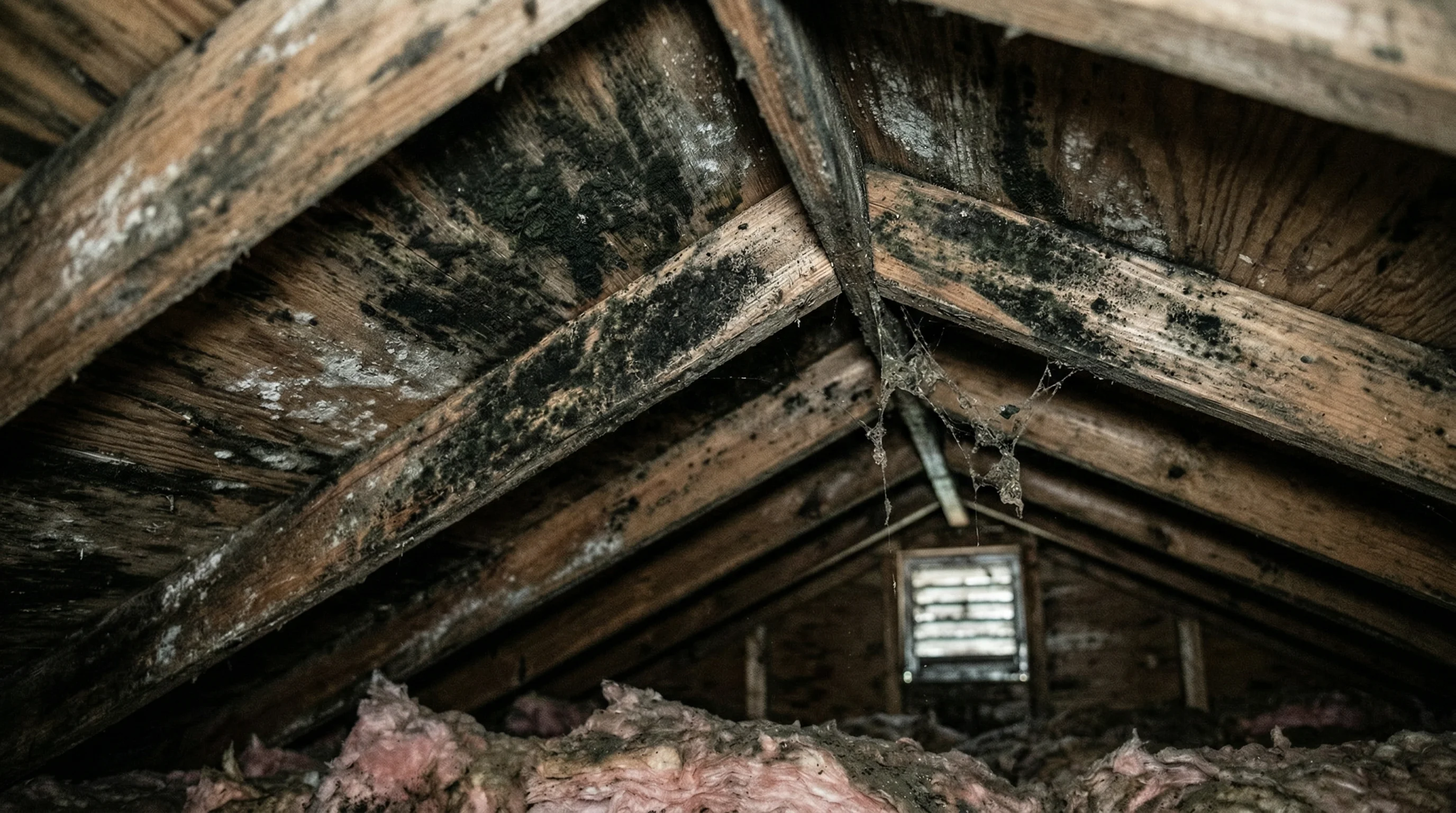
Attic mold often forms where warm moist air meets cooler roof sheathing surfaces, particularly during colder months when temperature differentials are greatest. This condensation cycle can persist undetected for years because most homeowners rarely inspect their attic space. By the time visible growth appears on sheathing or rafters, the moisture problem has usually been active for multiple seasons.
Attic Mold Remediation
Attic Mold Usually Signals a Building-Science Problem
Attic growth commonly comes from roof intrusion, duct leakage, or ventilation imbalance. Correcting airflow and moisture pathways is as important as removing visible contamination.
- Roof leak pathways
- Ventilation balancing
- Insulation evaluation
Practical first steps
Bath fan duct terminations into attic space are one of the most common hidden humidity sources in residential construction. Every shower or bath sends moisture-laden air directly into the attic cavity when ducts are improperly routed or disconnected. Over time, this creates localized condensation zones on nearby sheathing that support rapid mold colonization.
Roof flashing and penetration failures around vents, chimneys, and skylights can create chronic localized wetting that mimics condensation patterns. These leaks may only activate during wind-driven rain or specific storm angles, making them difficult to identify through a single inspection. Staining patterns and moisture mapping help distinguish leak-driven growth from condensation-driven growth.
Insulation may require partial or full replacement when contamination is extensive or when the material has absorbed significant moisture. Fiberglass batts and blown-in cellulose both lose thermal performance when saturated, and contaminated insulation can act as a reservoir for mold spores even after surface cleaning. Replacement should be coordinated with ventilation corrections to ensure the new insulation performs as intended.
Without ventilation correction, mold can return even after thorough cleaning because the underlying moisture pathway remains active. A remediation project that addresses only the visible growth without resolving the building-science failure is incomplete. Effective attic mold work always pairs removal with airflow rebalancing and moisture source elimination.
In-Depth Guide
Understanding the process
Attic mold is fundamentally a building-science problem rooted in moisture dynamics. Warm, humid air from the living space rises through ceiling penetrations, recessed lights, plumbing chases, and attic hatches due to natural stack effect. When this moisture-laden air reaches the underside of roof sheathing — which is often the coldest surface in the building during cooler months — it cools past its dew point and condenses directly onto the wood. Over repeated cycles, this condensation creates the sustained surface moisture that mold requires to colonize. The pattern of growth across the sheathing often tells the story: widespread, uniform coverage typically points to a condensation problem, while localized clusters near specific penetrations suggest point-source moisture from duct terminations or roof leaks.
One of the most frequently encountered causes is bathroom exhaust fan ductwork that terminates inside the attic space rather than through the roof or soffit to the exterior. Every time a shower or bath runs, that duct delivers warm, saturated air directly onto attic framing and sheathing. Kitchen range hood ducts and dryer vents can create similar problems when improperly routed. In some cases, ducts that were originally installed correctly become disconnected at joints over time due to vibration, thermal movement, or pest activity, turning a previously functional exhaust path into a hidden moisture source. The relationship between insulation and condensation also plays a critical role — insufficient or compressed insulation along the attic floor allows more heat to escape into the attic cavity, raising the air temperature and increasing its capacity to hold moisture until it contacts the cold sheathing above.
Ventilation correction is the essential companion to any attic mold remediation project. A properly ventilated attic maintains a balance between intake air at the soffits and exhaust air at the ridge or gable vents, creating continuous airflow that carries moisture out of the space before it can condense. When soffits are blocked by insulation, when ridge vents are capped or undersized, or when powered attic ventilators create negative pressure that pulls conditioned air from below, this balance fails and moisture accumulates. Remediation without ventilation correction is incomplete — the visible mold may be removed, but the conditions that produced it remain active, and regrowth is only a matter of time. Effective projects address the full chain: seal air leakage from below, correct duct terminations, verify insulation placement does not obstruct intake vents, and confirm that the net free area of ventilation meets or exceeds code requirements for the attic square footage.
Field Visuals
Inspection, containment, and remediation in practice
Ventilation-related attic growth
Growth pattern distribution often reveals whether moisture is from condensation or leak pathways.
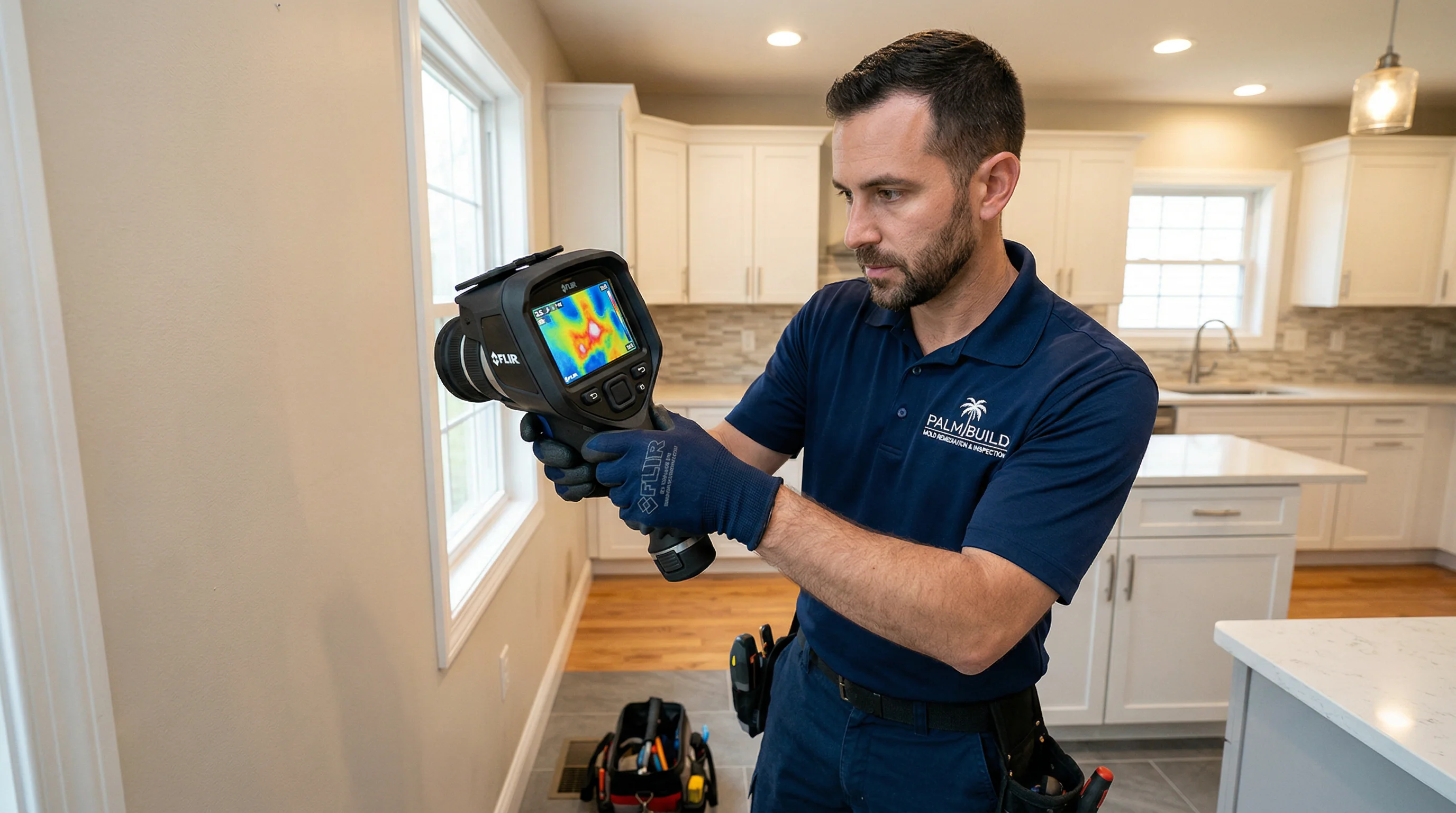
Thermal diagnostics in concealed cavities
Infrared and moisture tools help define scope before removal starts.
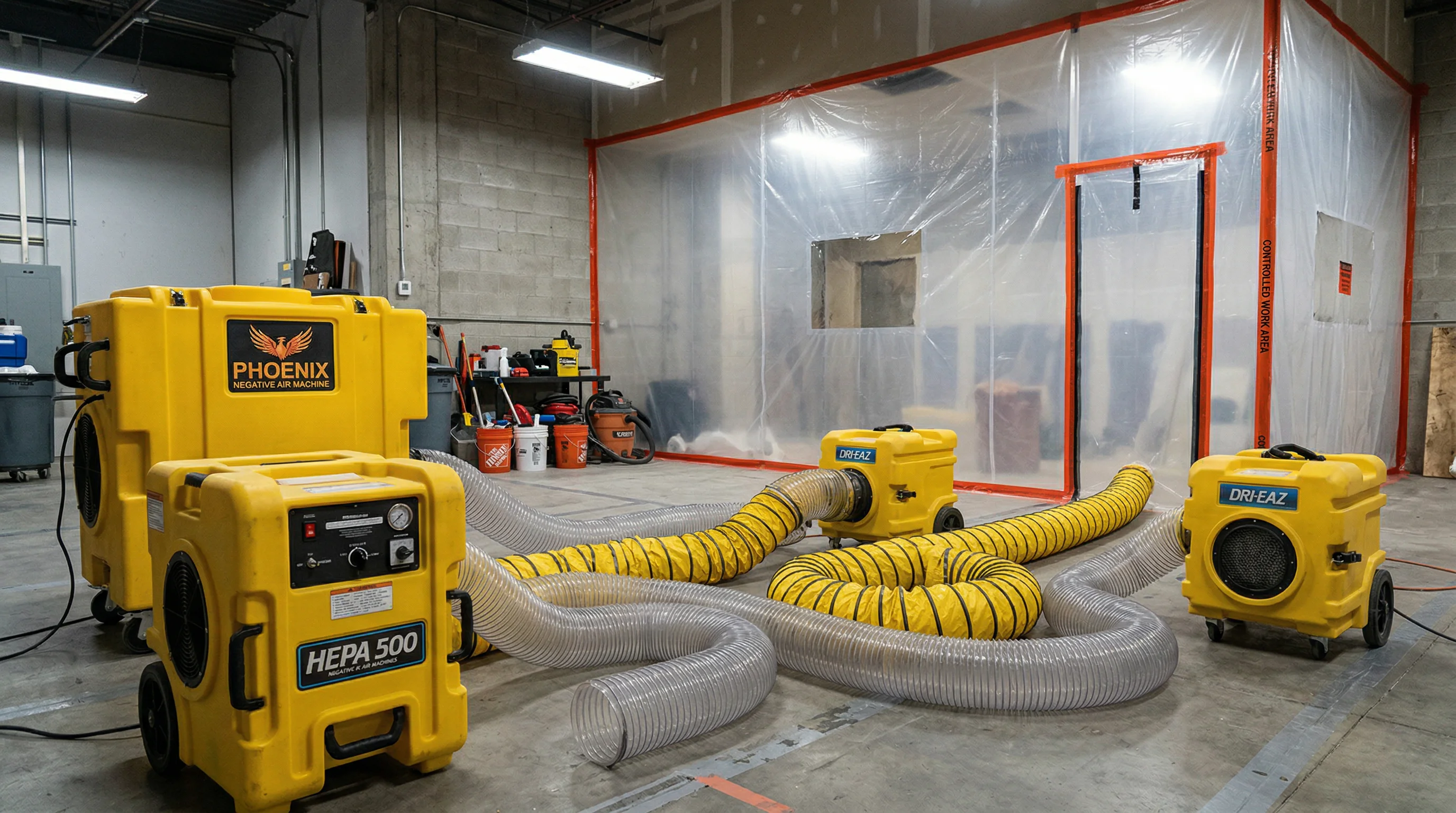
Containment and filtration workflow
Filtered negative pressure helps protect occupied areas during remediation activities.
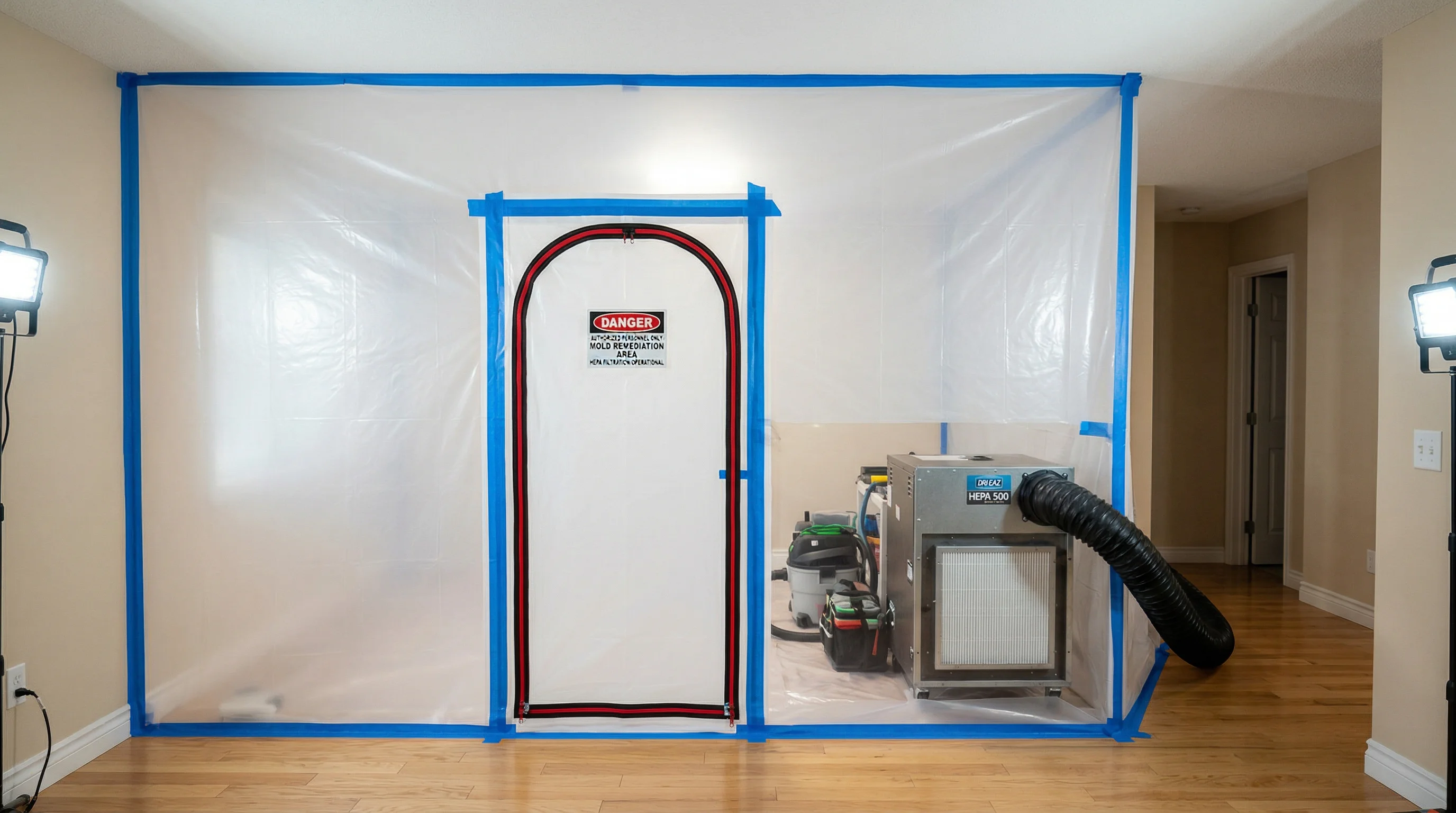
Containment barrier installation
Barrier systems isolate the remediation area to prevent spore migration into occupied spaces below.
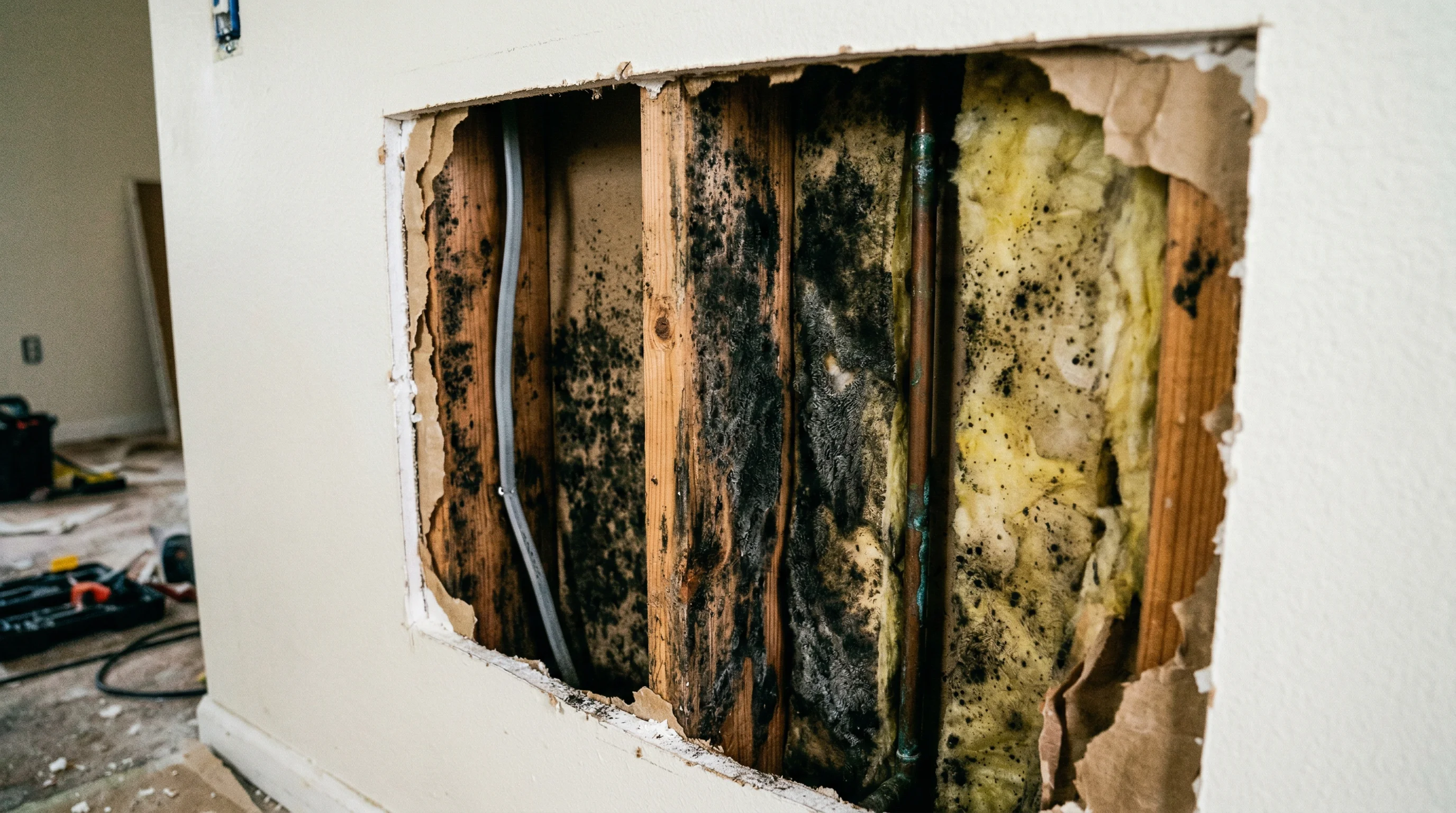
Hidden growth behind wall assembly
Attic moisture problems can extend into wall cavities where framing meets the roof line, requiring broader scope assessment.
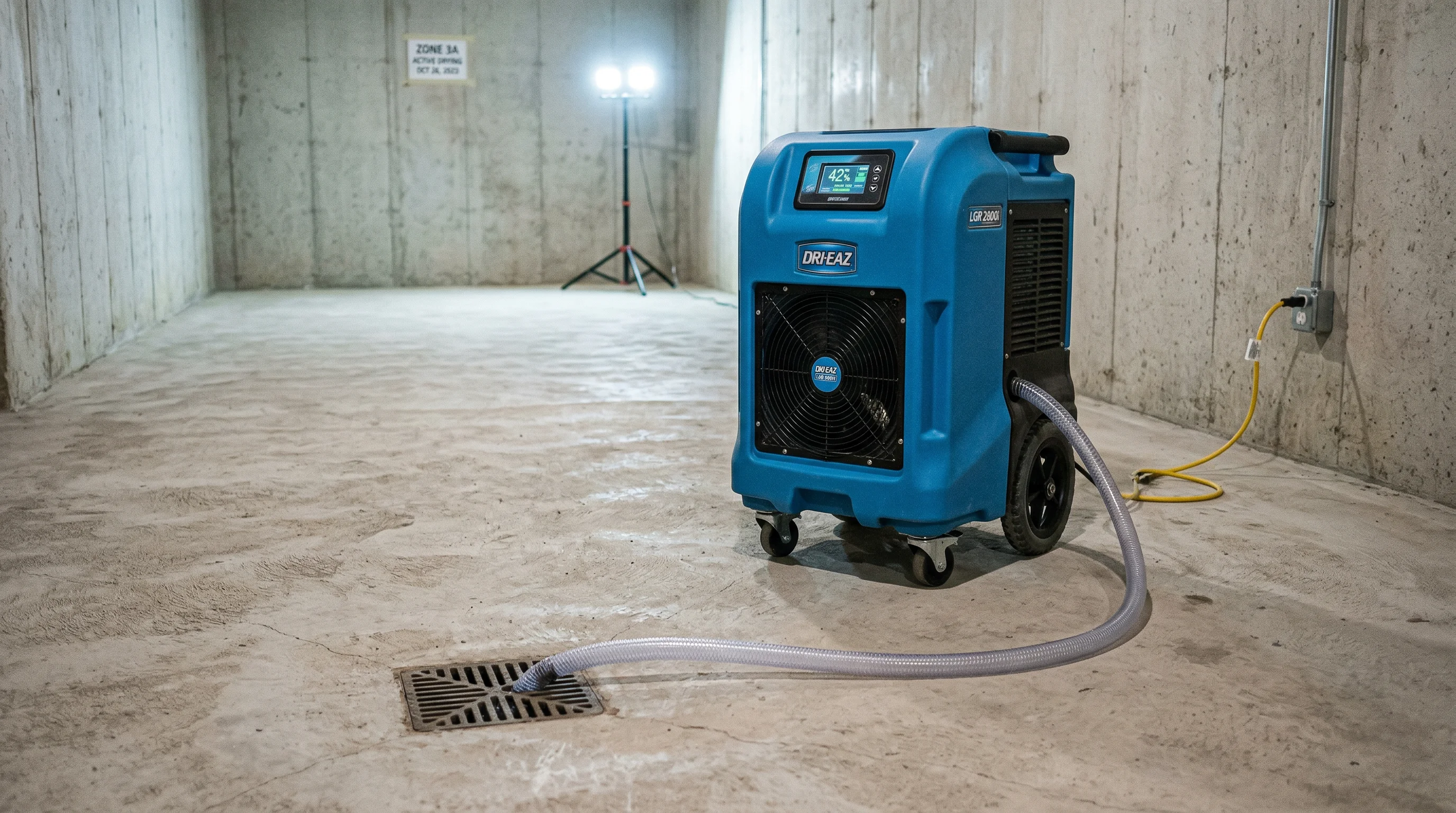
Dehumidification and moisture control
Mechanical drying equipment is used post-remediation to bring moisture levels within acceptable thresholds before insulation replacement.
Remediation Sequence
How this project type is handled professionally
Envelope and moisture diagnostics
Inspect the roof system, ventilation intake and exhaust paths, and all duct terminations to isolate the primary moisture drivers. Thermal imaging and pin-type moisture meters are used to map wet zones across the sheathing and framing. This diagnostic phase determines whether the issue stems from condensation, active leaks, or a combination of both, which directly shapes the remediation scope.
Containment and access setup
Establish controlled work zones with polyethylene barriers between the attic space and occupied areas below. Negative air machines with HEPA filtration are positioned to maintain directional airflow and prevent cross-contamination during disturbance of colonized materials. Access staging accounts for attic geometry, including truss spacing, limited headroom, and insulation depth that can obscure walking surfaces.
Remediation and insulation strategy
Remove or treat impacted sheathing and framing using HEPA vacuuming, media blasting, or antimicrobial application depending on the severity and material condition. Contaminated or moisture-degraded insulation is carefully removed and bagged for disposal under containment conditions. Replacement insulation type and depth are specified based on the corrected ventilation design and local energy code requirements.
Ventilation correction and verification
Rebalance ventilation pathways by verifying soffit intake is unobstructed, ridge or gable exhaust is functioning properly, and all bath and kitchen exhaust ducts terminate outside the building envelope. Moisture readings are documented across the sheathing field to confirm conditions have returned to acceptable levels. Post-remediation air sampling or visual clearance is performed to verify the project meets industry standards before the space is closed up.
Cost Guidance
What to expect on pricing
Costs vary by contamination severity, affected area size, and region. These ranges reflect typical residential and commercial projects in our service areas.
Attic mold inspection
$300 - $600
Includes visual assessment, moisture mapping, and thermal imaging to determine contamination extent and moisture source identification.
Attic remediation (per sq ft of sheathing)
$10 - $25
Varies based on contamination severity, accessibility constraints, and whether media blasting or manual treatment methods are required.
Insulation removal and replacement
$1,500 - $4,000
Depends on attic square footage, insulation type being removed, and the replacement material and R-value specified.
Ventilation correction (soffit/ridge work)
$500 - $2,000
Covers soffit vent clearing or installation, ridge vent repair, and rerouting of bath or kitchen exhaust ducts to exterior terminations.
Post-remediation verification
$300 - $600
Third-party clearance testing with air sampling and visual inspection to confirm the space meets acceptable conditions before closeout.
Regional notes
Florida
High year-round dew points and frequent storm moisture create persistent condensation risk on attic sheathing, especially in homes with inadequate soffit ventilation. Hurricane-driven rain can force water past flashing and underlayment in ways that standard roof inspections may not catch. Florida building code ventilation requirements should be verified during any attic remediation project to ensure compliance and long-term performance.
North Carolina
Seasonal temperature swings drive significant condensation cycles at the roof deck, particularly during late fall and early spring when nighttime temperatures drop rapidly. Homes in the mountain and piedmont regions face different attic moisture dynamics than coastal properties, requiring location-specific ventilation strategies. Ice damming in higher elevations can also introduce leak pathways that contribute to sheathing moisture.
South Carolina
Mixed coastal and inland humidity patterns mean that a ventilation strategy effective in Charleston may underperform in Greenville and vice versa. Coastal properties face salt air corrosion of metal roof components, which can create slow leak pathways that go unnoticed until mold appears. Proper attic ventilation design in South Carolina must account for the full seasonal humidity range rather than peak summer conditions alone.
Common Questions
Frequently asked questions
What causes mold in attics?
The most common causes are inadequate ventilation, bathroom or kitchen exhaust fans that vent into the attic instead of outside, and roof leaks around flashing, penetrations, or damaged shingles. All of these introduce moisture into the attic space where it condenses on cooler roof sheathing. Over time, that persistent moisture supports mold colonization on wood surfaces.
Can I just paint over attic mold?
Painting or encapsulating over active mold growth without addressing the moisture source is not an effective remediation strategy. The underlying colony continues to grow beneath the coating, and the moisture problem that caused the growth remains unresolved. Proper remediation requires removing or treating the colonized material and correcting the moisture pathway before any protective coatings are considered.
Does attic mold affect indoor air quality?
Yes, attic mold can affect indoor air quality even when the attic is not part of the conditioned living space. Air movement through ceiling penetrations, recessed light fixtures, attic hatches, and HVAC components can transport spores from the attic into occupied areas. Stack effect pressure dynamics in the home naturally draw air upward, and any leakage points between the attic and living space become pathways for contaminated air.
How long does attic remediation take?
Most residential attic remediation projects take between two and five days depending on the size of the affected area, accessibility of the attic space, and whether insulation replacement and ventilation corrections are included in the scope. Larger projects with extensive sheathing treatment and full insulation replacement may extend to a week. Post-remediation verification testing typically adds one to two additional days for lab results.
Will my homeowners insurance cover attic mold?
Coverage depends on the cause of the mold and the specific terms of your policy. Mold resulting from a sudden covered peril, such as a storm that damaged the roof, is more likely to be covered than mold caused by long-term maintenance issues like poor ventilation. Many policies include mold coverage caps or require separate mold endorsements. Reviewing your policy language and documenting the cause of loss thoroughly are important steps before filing a claim.
Related Guides
Keep your remediation plan connected
Need attic moisture and mold correction?
Palm Build can scope roof and ventilation drivers, remediate attic contamination, and coordinate rebuild-ready verification.