Mold can establish quickly when porous materials remain damp beyond the first two days. Drywall, carpet padding, and cellulose insulation are particularly vulnerable because they absorb and hold water deep within their structure. Once colonization begins in these materials, surface cleaning is rarely sufficient to address the problem.
Mold After Water Damage
Water Event Resolved? Mold Risk May Still Be Active
Mold often appears after extraction is complete when moisture remains trapped in walls, flooring, or insulation. This guide focuses on timeline-based prevention and secondary growth response.
- 24-48 hour window
- Hidden moisture zones
- Secondary growth control
Practical first steps
Surface dryness does not guarantee dry cavities behind drywall or under flooring systems. Moisture trapped inside wall bays, behind baseboards, or beneath subfloor layers can sustain active mold growth for weeks without any visible indication. Professional moisture mapping with pin and pinless meters is necessary to evaluate conditions in concealed assemblies.
Moisture verification with meters and thermal imaging reduces the likelihood of missed hidden growth. Infrared cameras can identify temperature differentials that indicate retained moisture, while pin-type meters confirm actual moisture content in specific materials. Together, these tools provide a reliable picture of drying progress and residual risk.
Fast source control and dehumidification lower secondary remediation scope significantly. The faster water is extracted and drying equipment is deployed, the smaller the affected footprint becomes. Properties where drying begins within the first 12 hours after a water event consistently show lower rates of mold colonization.
Water restoration and mold strategy should be sequenced as one coordinated response. Treating water extraction and mold prevention as separate projects often introduces gaps in timing that allow growth to establish. A unified approach ensures that containment, drying, and antimicrobial treatment decisions are made with the full scope in view.
In-Depth Guide
Understanding the process
The 24 to 48-hour window after a water event is widely referenced in the restoration industry because it represents the threshold at which mold spores transition from dormant presence to active colonization on damp materials. Under typical indoor conditions with temperatures between 60 and 80 degrees Fahrenheit, porous substrates like drywall paper facing, carpet padding, and cellulose insulation provide both the moisture and the organic nutrients that mold requires. Once colonization begins, growth accelerates rapidly, and what starts as a localized issue can expand into a multi-room remediation project within days.
The highest mold risk after a water event is not on visible surfaces but in concealed spaces. Wall cavities, the underside of flooring systems, insulation bays, and areas behind cabinetry are consistently the most problematic zones because they retain moisture long after exposed surfaces appear dry. Water wicks through drywall, seeps under baseboards, and pools on subfloor materials where it cannot evaporate without active intervention. These hidden reservoirs are invisible to the occupant and often go undetected unless moisture meters and thermal imaging are used to evaluate conditions beyond the surface. It is in these concealed environments that secondary mold growth most frequently establishes itself.
For this reason, water restoration and mold prevention should be treated as a single coordinated response rather than two separate projects. When extraction, structural drying, and antimicrobial treatment are managed together under one scope, decisions about material removal, equipment placement, and drying duration are informed by the mold risk timeline from the start. Incomplete drying, whether caused by premature equipment removal, insufficient airflow in hidden cavities, or failure to verify moisture targets before closing walls, is the most common driver of secondary damage and expanded remediation scope. Properties where drying was monitored to documented completion consistently require less remediation, lower reconstruction costs, and shorter project timelines overall.
Field Visuals
Inspection, containment, and remediation in practice
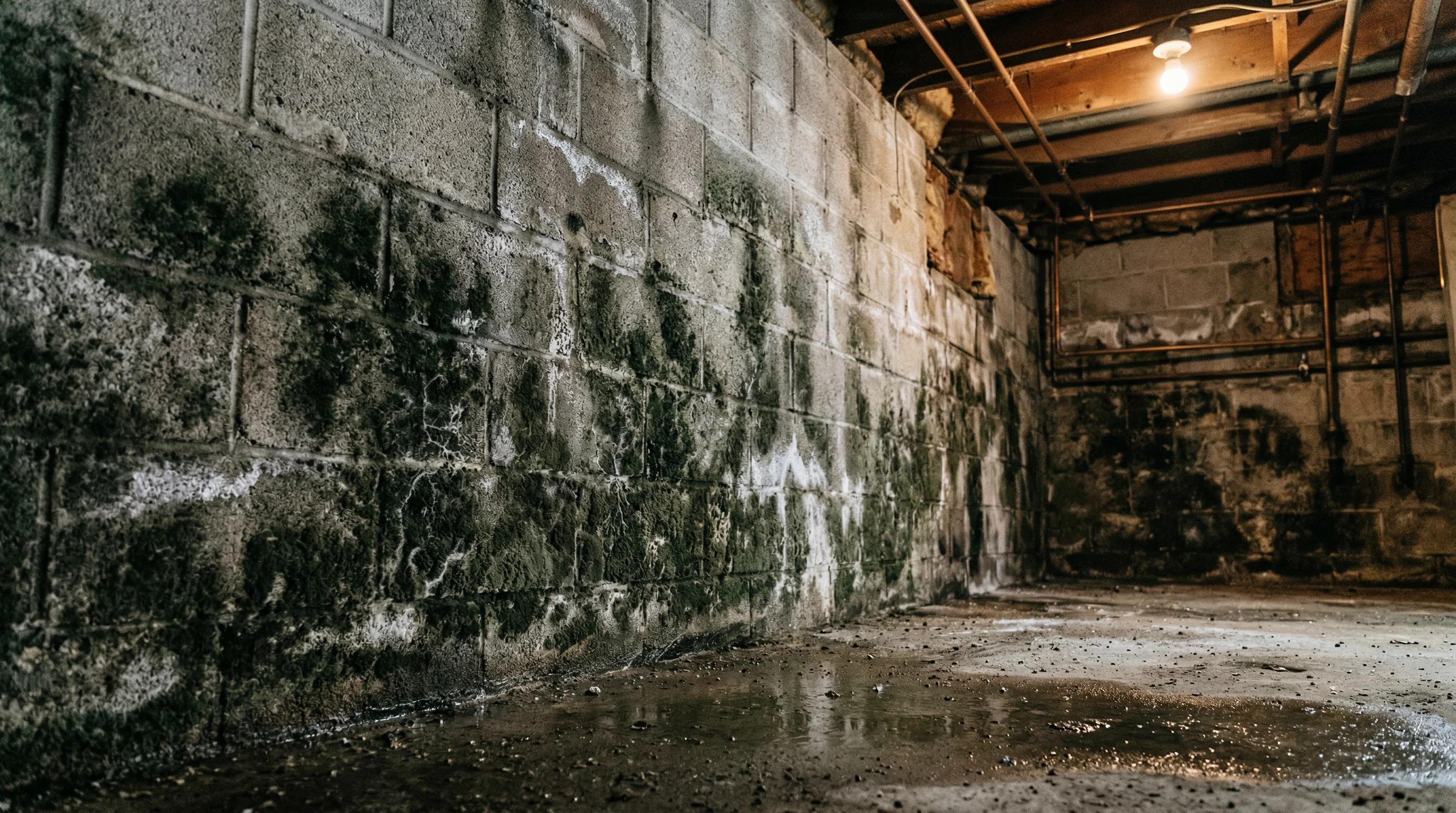
Water-damaged material at risk
Visible growth may appear after delayed drying even when extraction occurred initially.
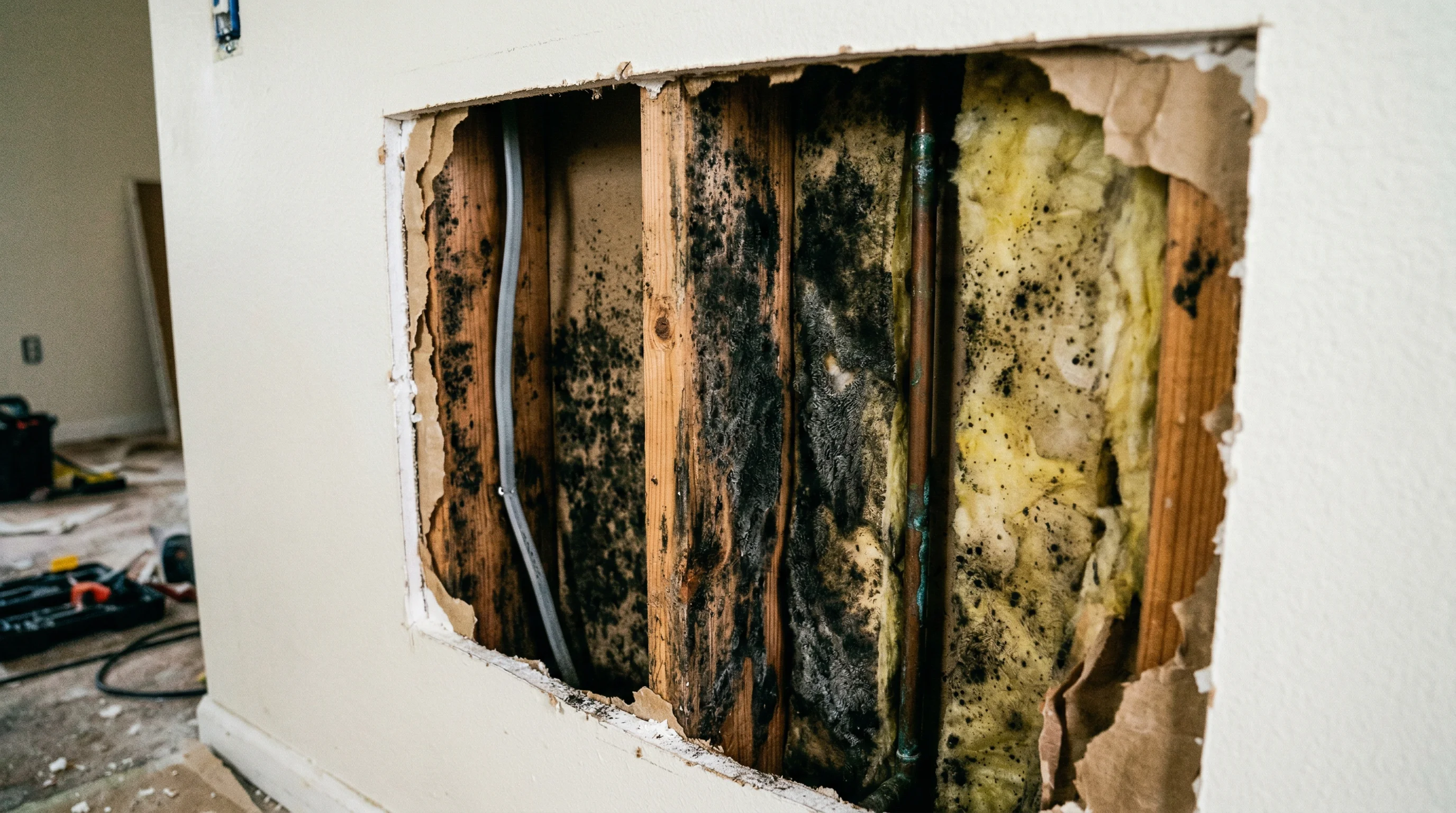
Moisture-driven hidden growth
Wall cavities and under-floor layers are common locations for post-loss secondary growth.
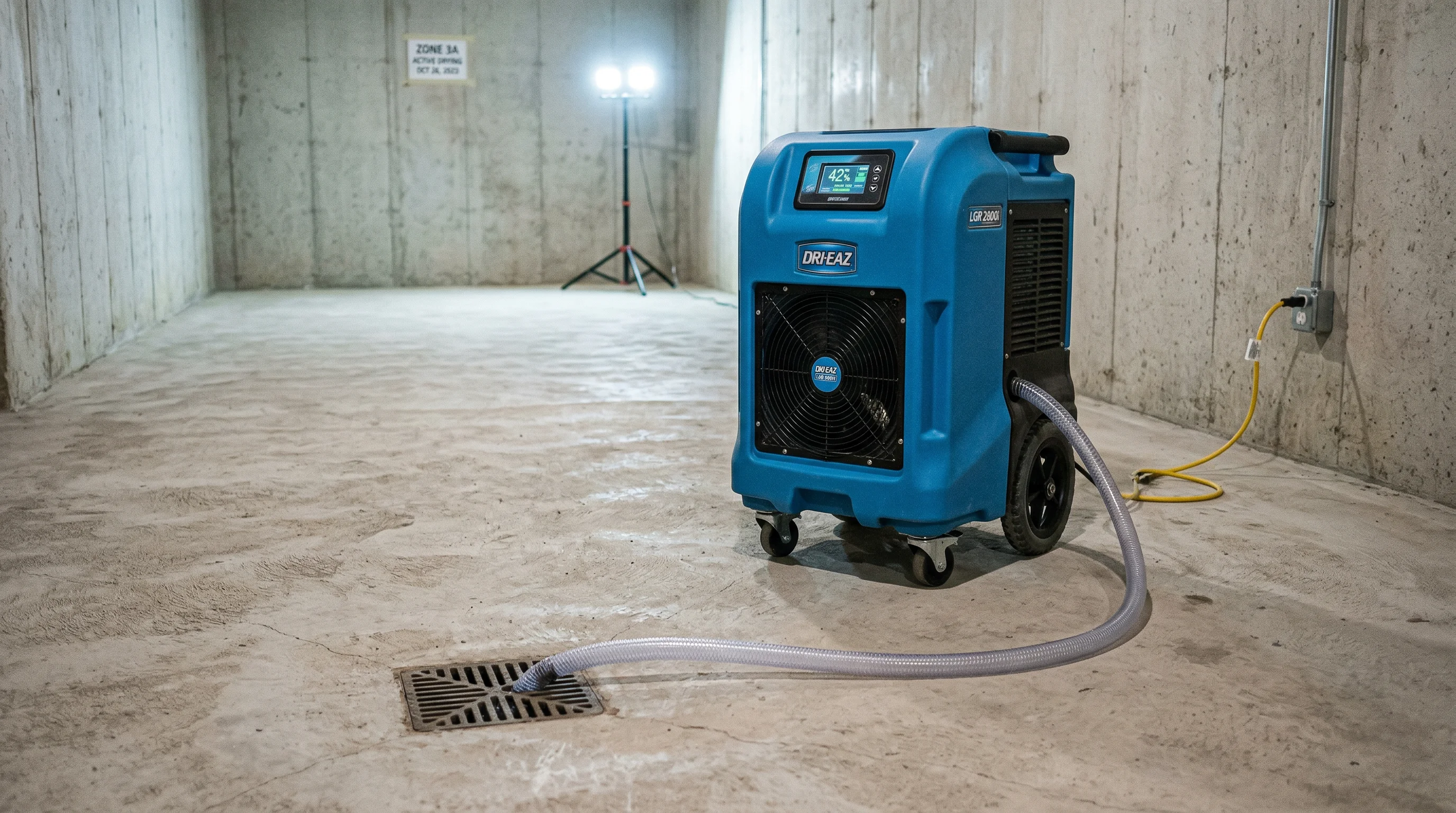
Drying and air control
Early dehumidification and tracking can prevent costly remediation escalation.
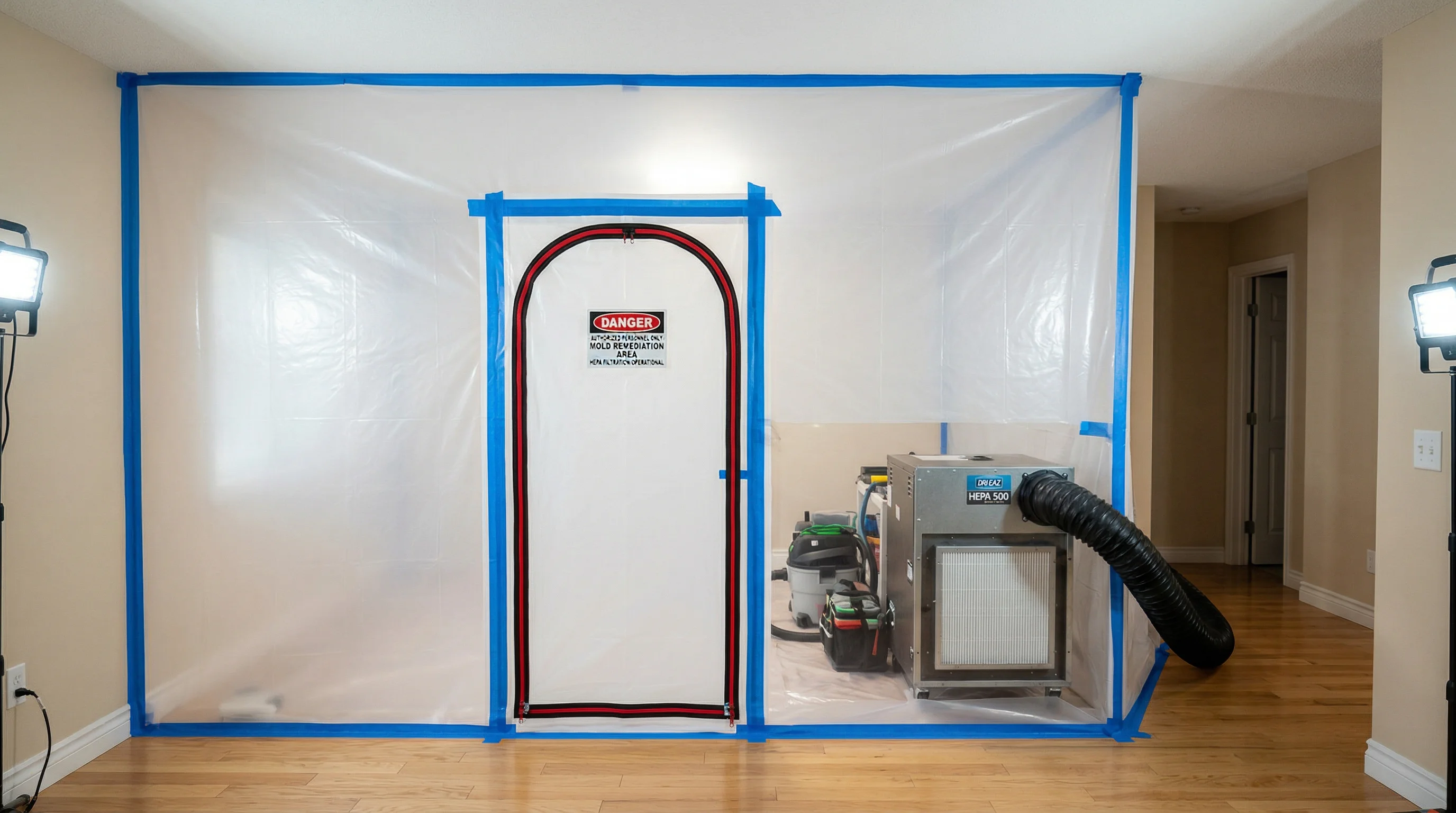
Containment during remediation
When secondary growth is confirmed, containment barriers prevent cross-contamination to clean areas during removal.
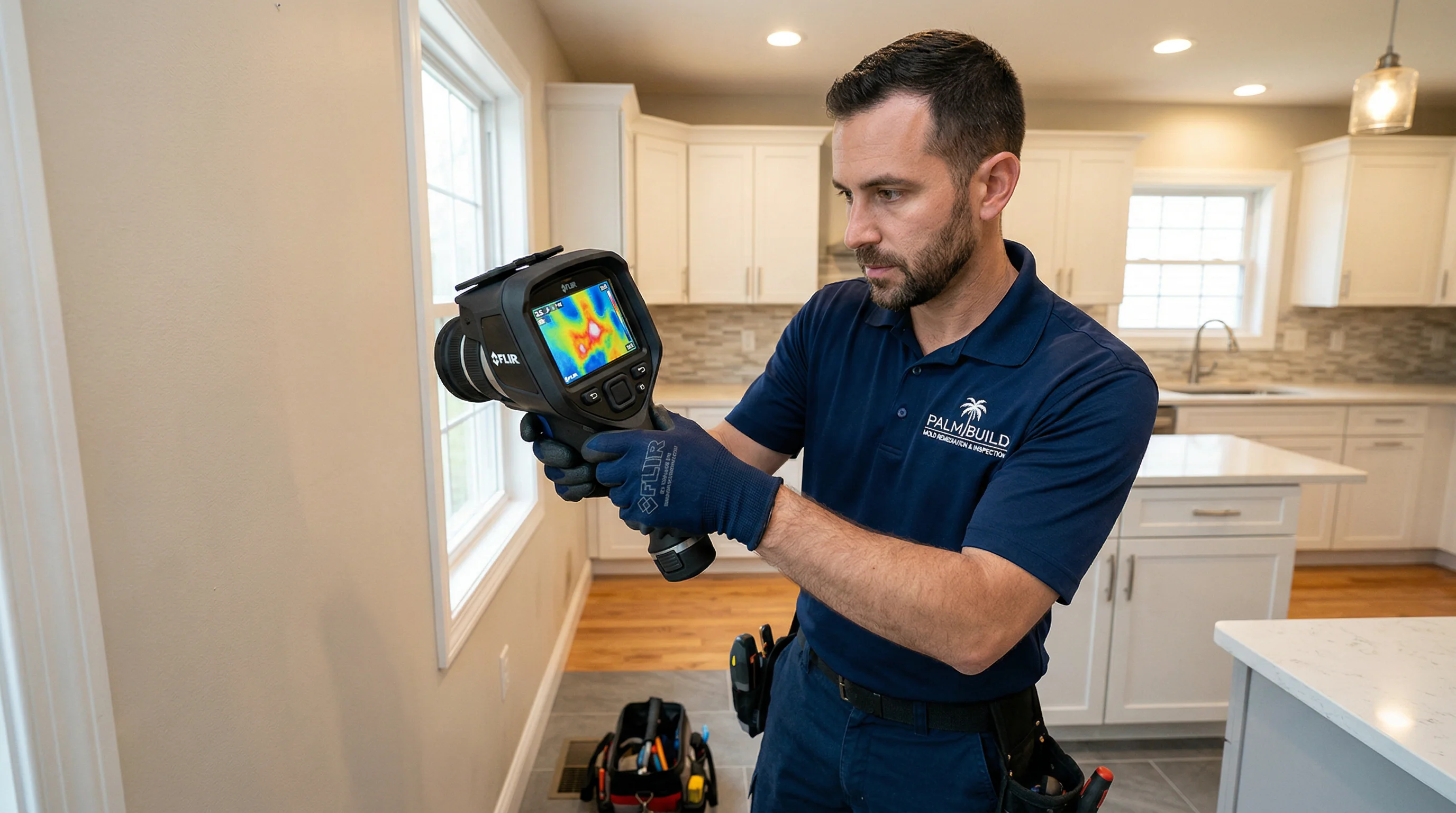
Thermal detection of hidden moisture
Infrared imaging reveals temperature differentials that indicate retained moisture behind finished surfaces before mold becomes visible.
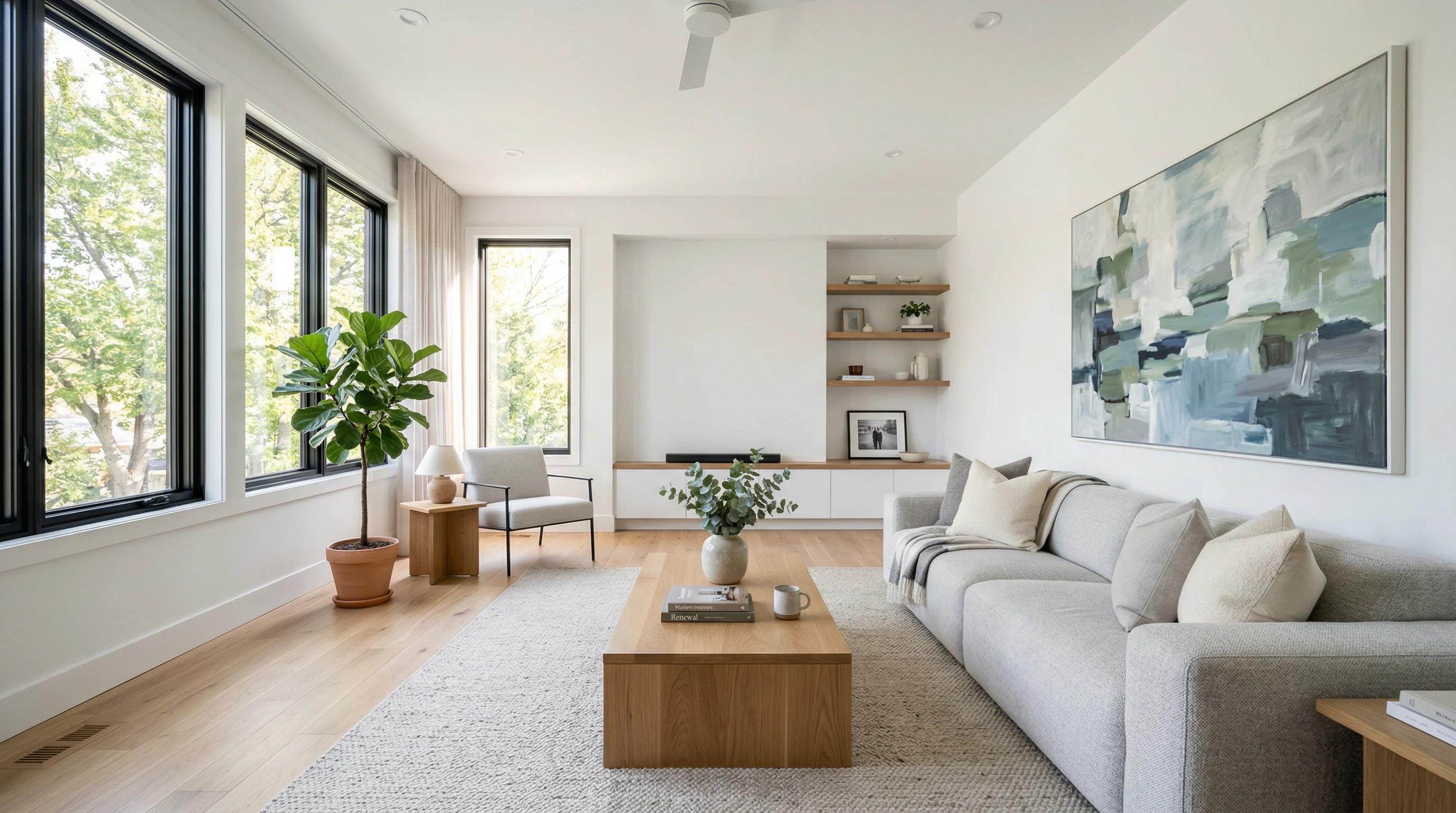
Completed post-water remediation
After remediation and verification, the space is returned to a clean, dry, rebuild-ready state.
Remediation Sequence
How this project type is handled professionally
Stop active water source
Control the leak, intrusion, or flood pathway and document event conditions immediately. Shut off supply lines if applicable, tarp compromised roof sections, and photograph the extent of standing water. Early documentation supports insurance claims and provides a reference baseline for scope development.
Dry and monitor aggressively
Deploy extraction, airflow, and dehumidification with moisture tracking across all affected assemblies. Readings should be taken at regular intervals and logged to demonstrate drying progress over time. Focus on wall cavities, subfloor systems, and insulation layers where trapped moisture is most likely to persist undetected.
Inspect for secondary growth
If drying lagged or was interrupted, evaluate hidden zones for contamination and scope targeted remediation. Use thermal imaging and direct material sampling behind walls and under flooring to identify colonization that occurred during the delay. Early detection of secondary growth keeps remediation limited to affected zones rather than requiring broader demolition.
Verify before rebuild
Confirm dry, clean, and stable conditions before insulation, drywall, flooring, or trim reinstall. All affected materials should meet documented moisture targets for their specific type before they are enclosed. Third-party clearance testing may be warranted in cases involving significant contamination or insurance-driven documentation requirements.
Cost Guidance
What to expect on pricing
Costs vary by contamination severity, affected area size, and region. These ranges reflect typical residential and commercial projects in our service areas.
Post-water mold inspection
$300 - $600
Covers moisture mapping, visual assessment, and sampling to determine whether secondary growth has established after a water event.
Secondary mold remediation (localized)
$1,000 - $4,000
Addresses contained growth in a single room or limited area, typically involving selective demolition, cleaning, and antimicrobial treatment.
Extensive post-water remediation
$4,000 - $12,000
Required when moisture spread across multiple rooms or floors, involving large-scale containment, material removal, and structural drying.
Preventive antimicrobial treatment
$500 - $1,500
Applied to at-risk materials during the drying phase to inhibit mold colonization before it begins, reducing the likelihood of secondary remediation.
Combined water and mold restoration
$3,000 - $15,000+
Full-scope projects that include extraction, structural drying, mold remediation, and rebuild coordination under a single response plan.
Regional notes
Florida
Hurricane and high-humidity conditions can accelerate secondary growth after water events. Ambient relative humidity regularly exceeds 70% during summer months, which slows structural drying and creates favorable conditions for mold even after standing water is removed. Properties in coastal zones face compounded risk from salt-laden moisture that can damage materials and complicate remediation chemistry.
North Carolina
Storm season and crawl space moisture can extend dry-down timelines in older construction. Many Piedmont and mountain-region homes have vented crawl spaces that introduce ground moisture into floor assemblies, creating a persistent baseline humidity problem. When a water event occurs on top of this existing condition, the combined moisture load frequently overwhelms standard drying configurations.
South Carolina
Coastal wetting events and inland ventilation gaps commonly compound post-loss moisture risk. Lowcountry properties with high water tables are especially prone to prolonged saturation in slab-on-grade and crawl space configurations. Seasonal humidity fluctuations between summer and winter also create condensation patterns that sustain mold growth in attic sheathing and exterior wall cavities.
Common Questions
Frequently asked questions
How quickly does mold grow after water damage?
Mold spores can begin colonizing damp porous materials within 24 to 48 hours under favorable temperature and humidity conditions. Within 3 to 7 days, visible growth may appear on drywall paper, carpet backing, and wood surfaces. The speed of colonization depends on material type, ambient temperature, and how quickly drying efforts are initiated after the water event.
Can drying alone prevent mold?
Thorough and timely drying is the single most effective measure for preventing mold after water damage, but it must reach all affected materials including hidden cavities, insulation, and subfloor layers. If drying begins within the first 24 hours and reaches target moisture levels within 3 to 5 days, mold growth can often be avoided entirely. However, if porous materials were saturated for an extended period, preventive antimicrobial treatment may also be warranted as an additional safeguard.
How do I know if mold is growing behind walls after a leak?
Common indicators include persistent musty odors that do not resolve after the visible water is addressed, staining or discoloration on wall surfaces that was not present before the event, and bubbling or warping of paint and drywall tape. Moisture meters and thermal imaging provide objective confirmation by identifying elevated moisture levels and temperature anomalies behind finished surfaces. If any of these signs are present, a professional inspection with selective exploratory openings may be necessary.
Should I file one insurance claim for water and mold?
In most cases, it is best to file a single claim that documents the water event as the cause and any resulting mold as secondary damage. Separating the claims can create coverage disputes, especially if the insurer argues that mold resulted from delayed response rather than the original loss. Document the timeline carefully, including when the water event occurred, when mitigation began, and when mold was first identified, so that the connection between the two is clearly established.
What if mold appears weeks after the water was cleaned up?
Mold appearing weeks after a water event typically indicates that moisture remained trapped in concealed areas such as wall cavities, under cabinets, or within floor assemblies. This is common when extraction addressed only visible water without confirming that structural materials reached safe moisture levels. At this point, a professional inspection should assess the extent of hidden growth, and remediation should be coordinated promptly to prevent further spread into adjacent materials.
Related Guides
Keep your remediation plan connected
Recent water loss and new mold signs?
Palm Build can evaluate residual moisture, contain secondary growth, and coordinate remediation with reconstruction timing.