Water Damage Restoration in Matthews, North Carolina
From Brightmoor crawl spaces to Shannamara basements, Palm Build responds fast with truck-mounted extraction, scientific drying, and insurance-ready documentation — because Matthews' Cecil clay soil and 1980s-90s housing stock create water damage risks no national franchise understands.
15 minutes from Matthews via I-485 30-45 min Response IICRC Certified
Matthews' combination of Cecil clay soil, aging crawl space foundations, and a humid
subtropical climate creates one of the most persistent water damage environments in the
Charlotte metro. When a supply line bursts in your Brightmoor colonial at 2 a.m. or a
July thunderstorm overwhelms your Sardis Forest crawl space, the clock starts
immediately — mold can begin growing in 24 to 48 hours.
Cecil Clay Soil — NC's State Soil
<0.2 in/hr
Clay drainage rate
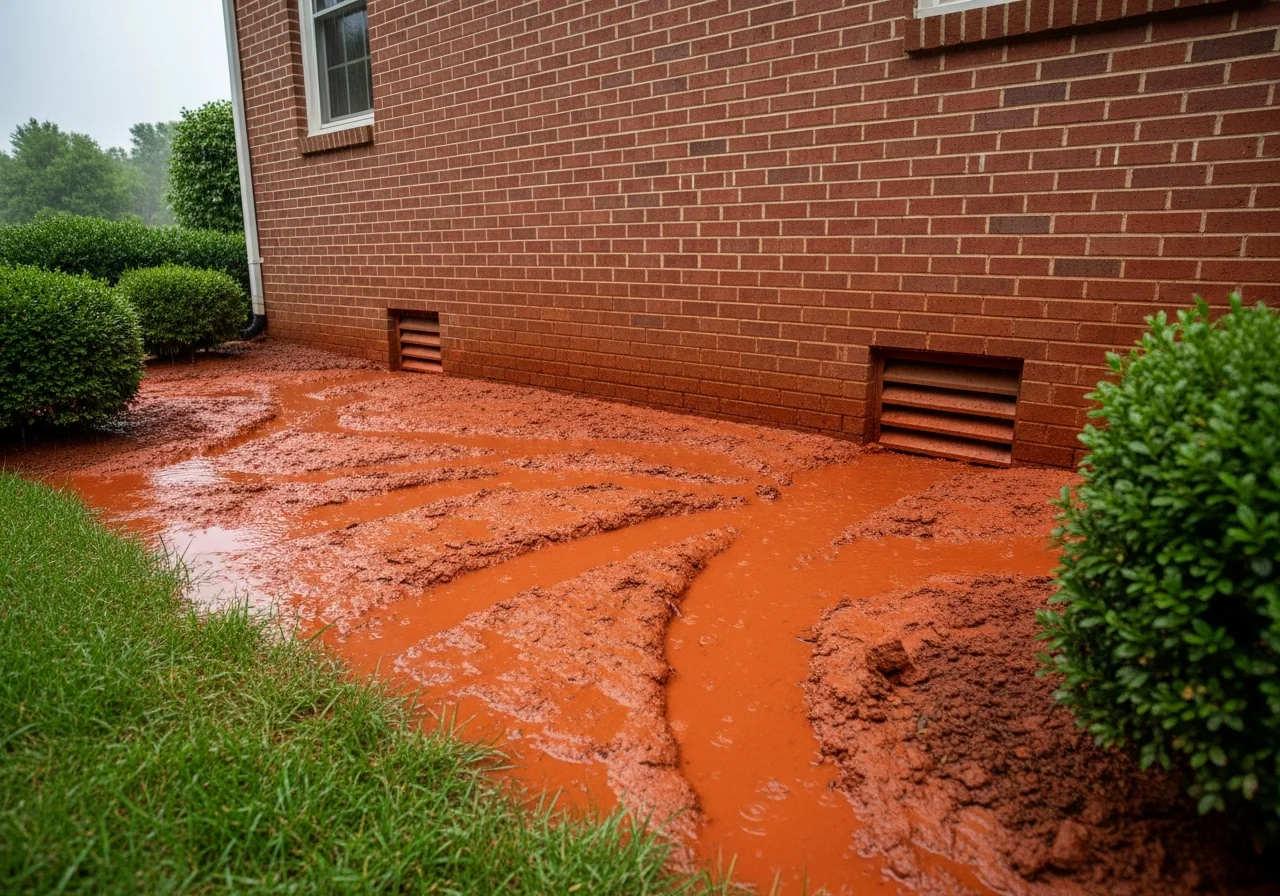
Matthews sits atop Cecil clay — roughly 37% clay, 27% silt — with infiltration rates below 0.2 inches per hour. After a storm, water pools against your brick foundation for days, feeding moisture through crawl space vents and wicking up through foundation walls. This soil covers 59% of Mecklenburg County.
53% of Homes Built 1980–2000
53%
Homes in sweet spot for failures
The dominant cohort of Matthews homes — neighborhoods like Brightmoor, Sardis Forest, Cherokee Woods, and The Heathers — is now 25 to 45 years old. Original plumbing is approaching or past its design lifespan, crawl space vapor barriers have degraded, and waterproofing membranes have failed.
Crawl Space Foundations Everywhere
70-90%
Crawl spaces with moisture issues
The majority of 1980s–1990s Matthews homes have vented crawl space foundations sitting directly on Cecil clay. Foundation vents designed for older building codes actually draw humid exterior air into crawl spaces, where it condenses on cooler joists, ductwork, and insulation — creating a persistent moisture factory.
44 Inches of Rain, Year-Round
44 in
Annual rainfall
Matthews receives 44 inches of rain annually with no dry season. Summer humidity regularly exceeds 70–75%, and tropical storm remnants like Debby (August 2024) can dump inches of rain in hours. The Zelda Lane dam in Matthews itself nearly crested during that storm.
Cecil clay soil holds water against Matthews foundations for days after rain — feeding
moisture into crawl spaces through foundation vents and degraded vapor barriers.
Neighborhood-Level Intelligence
Matthews Neighborhood Water Damage Risk Profiles
Water damage in Matthews follows predictable patterns based on when your neighborhood
was built, what foundation type your home sits on, and how close you are to Four Mile
Creek or McAlpine Creek. Here's what we see most in the neighborhoods where we work.
Common damage: Crawl space moisture; tree limb roof strikes; 40+ yr old supply lines
Brightmoor
High Risk
Built: 1985–1995
Primary risk: Clay drainage, degraded crawl space barriers
Common damage: Crawl space mold; 30-40 yr old plumbing; storm damage from dense canopy
Cherokee Woods
Critical
Built: 1970s–1980s
Primary risk: Oldest active residential stock in Matthews
Common damage: Aging infrastructure failure; chronic crawl space issues; high mold risk
The Heathers
High Risk
Built: 1980s
Primary risk: Clay soil drainage, wind exposure
Common damage: Foundation water intrusion; 35-40 yr old plumbing and HVAC systems
Shannamara
High Risk
Built: 1995–2005
Primary risk: Rolling terrain, basement configurations
Common damage: Basement water intrusion; golf course drainage proximity; high-value claims
Providence Hills
Moderate
Built: 1994–2001
Primary risk: Premium multi-story homes aging past 25 years
Common damage: Aging plumbing in 3,300–4,800 sq ft homes; complex insurance claims
Downtown / Four Mile Creek
Critical
Built: Pre-1960 to mixed
Primary risk: FEMA flood zone, oldest structures
Common damage: Creek flooding from Four Mile Creek; stormwater infrastructure strain
Eden Hall / Glenhurst
Moderate
Built: 2019–2020s
Primary risk: New construction settling, flashing junctions
Common damage: Water intrusion from roof/wall junctions; HOA-governed exterior repairs
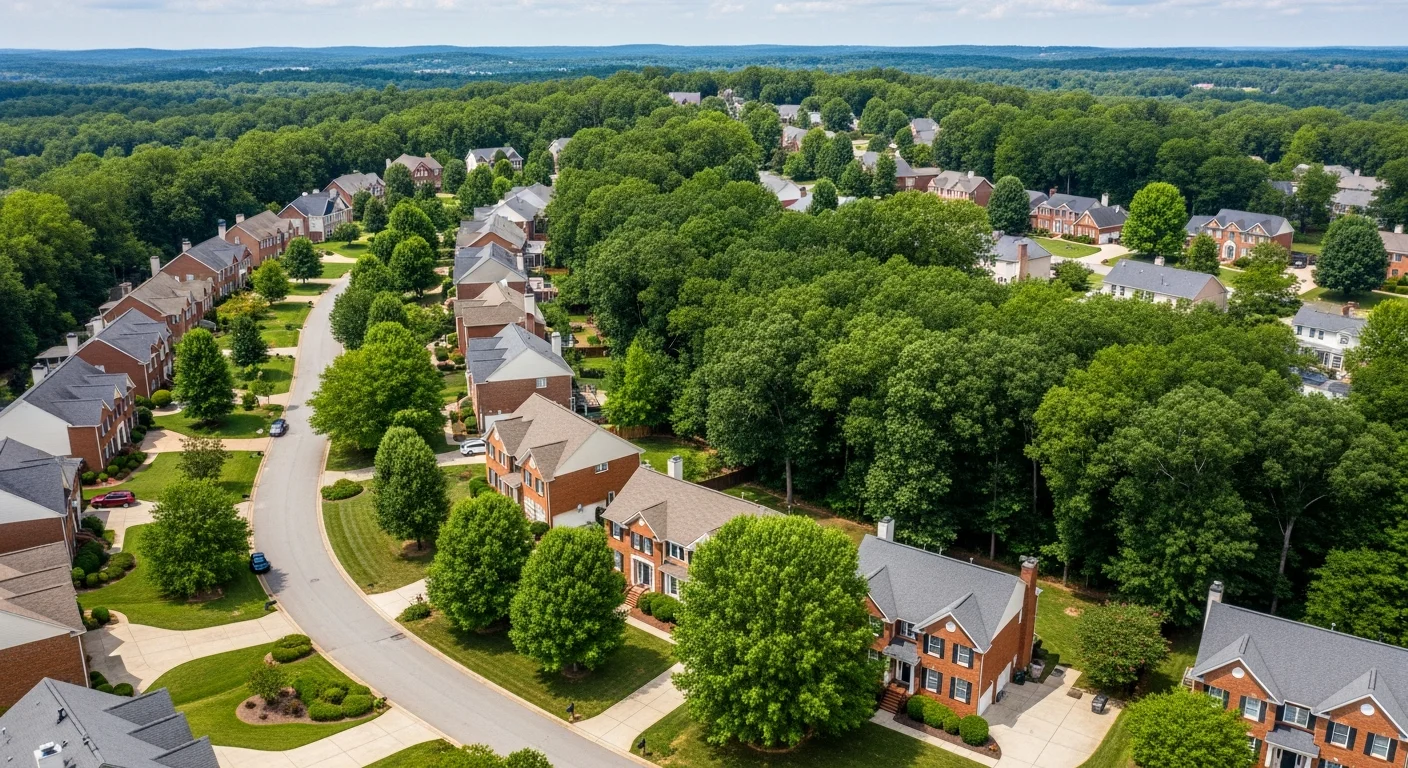
Matthews' 1980s–1990s brick colonial neighborhoods sit under dense mature tree canopy —
beautiful but creating both storm damage risk and crawl space moisture challenges.
Our Matthews Process
How We Restore Matthews Homes After Water Damage
Every water damage event is different, but the science of restoration follows a proven
sequence. Here's exactly what happens when you call Palm Build in Matthews.
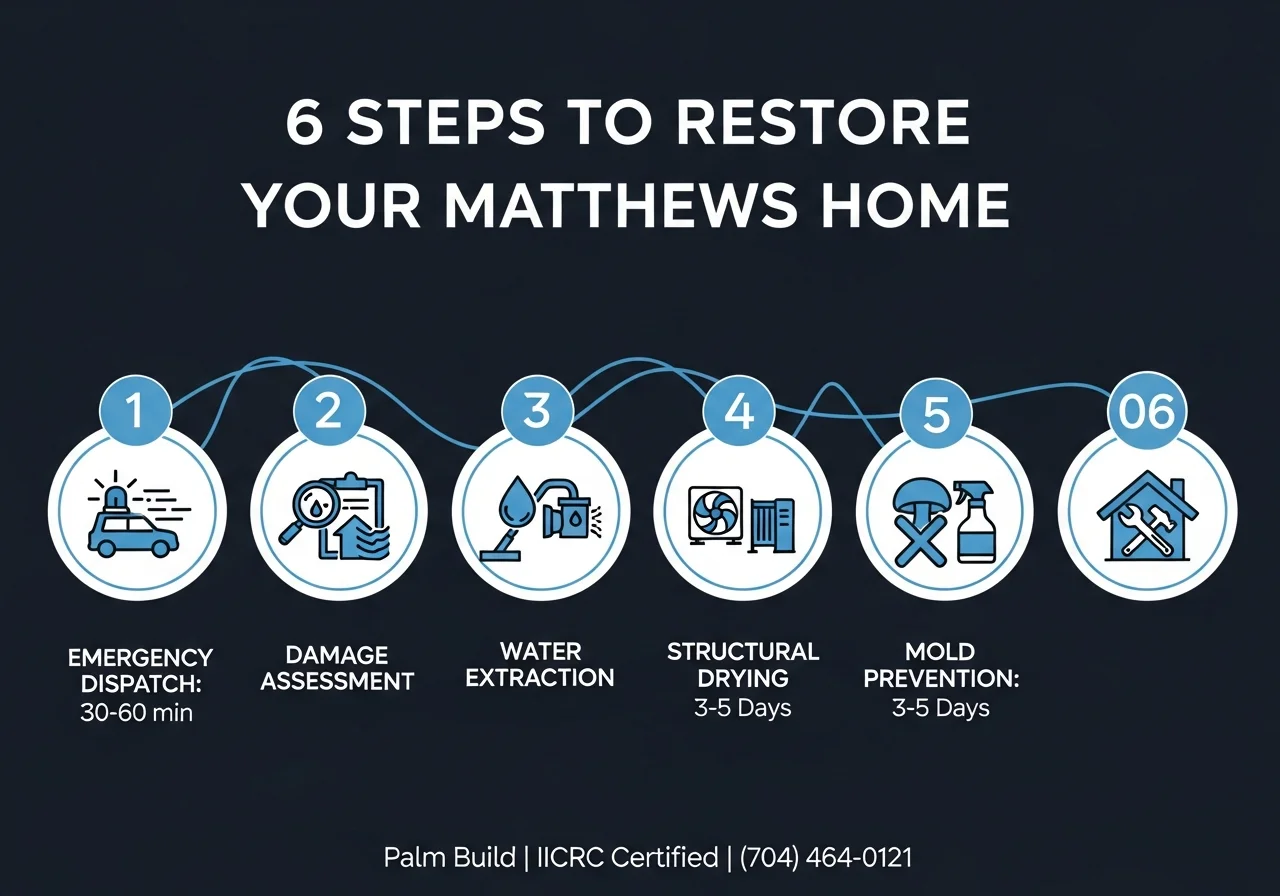
01
Emergency Dispatch
30-45 Minutes
02
Damage Assessment
First 2 Hours
03
Water Extraction
Hours 2-6
04
Structural Drying
3-5 Days
05
Mold Prevention
During Drying
06
Full Restoration
1-4 Weeks
01
Emergency Dispatch
30-45 Minutes
Call our Charlotte line at (704) 464-0121 any time, day or night. Our dispatcher sends a crew from our Crompton Street hub — just 15 minutes from Matthews via I-485 — with truck-mounted extraction and full drying loadout.
02
Damage Assessment
First 2 Hours
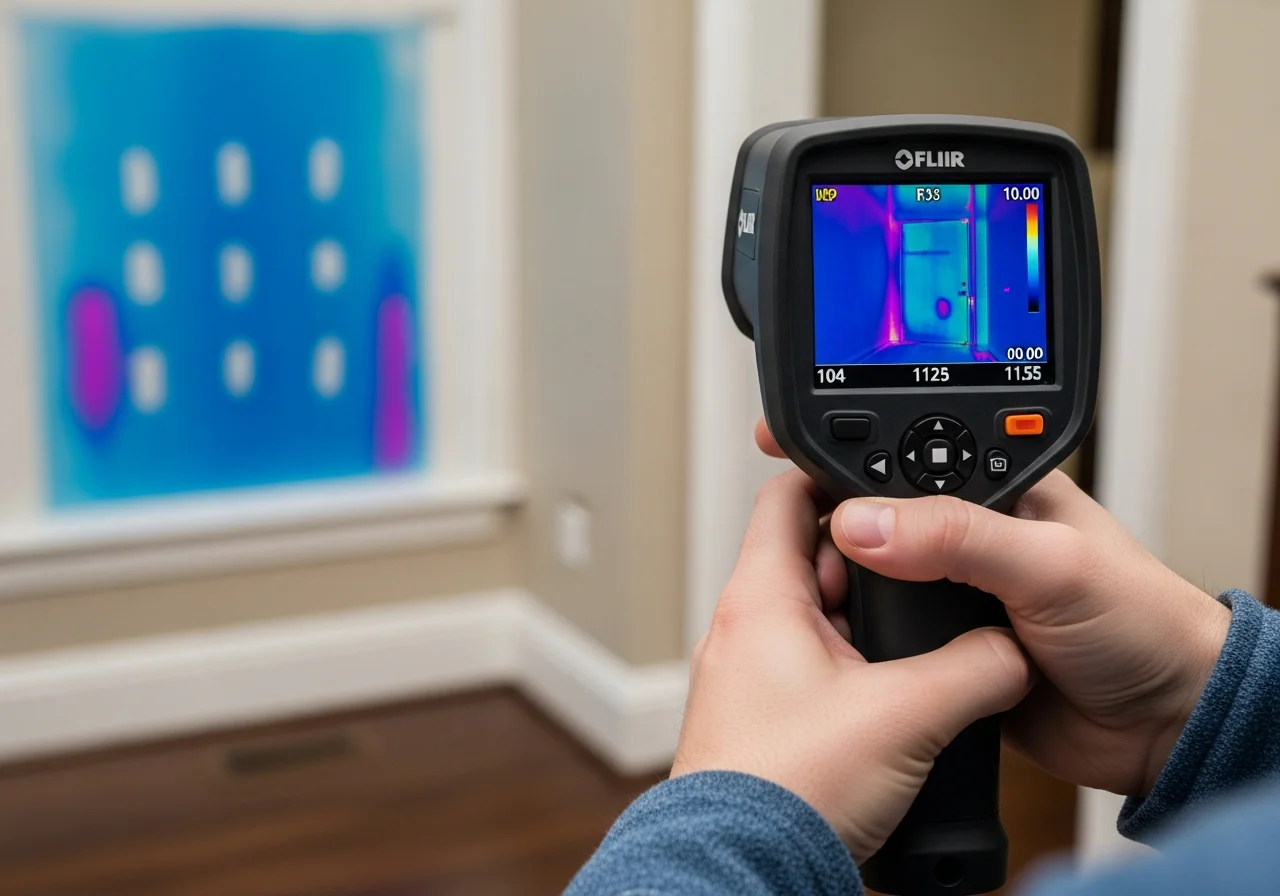
IICRC-certified technicians use infrared thermal imaging and pin-type moisture meters to map exactly where water has traveled — behind walls, under hardwood floors, and into crawl spaces. For Matthews homes, we always check the crawl space first.
03
Water Extraction
Hours 2-6
Truck-mounted extraction systems pull hundreds of gallons per hour. For Matthews homes with hardwood floors — common in Brightmoor, Sardis Forest, and Providence Hills — speed here prevents permanent cupping and buckling.
04
Structural Drying
3-5 Days
Commercial LGR dehumidifiers pulling 15-30 gallons per day and high-velocity air movers positioned strategically. For crawl space homes — the majority of Matthews housing — we address the crawl space directly. Moisture under the house will re-humidify everything above.
05
Mold Prevention
During Drying
EPA-registered antimicrobial treatments applied during drying. Matthews' summer humidity regularly exceeds 70%, meaning mold risk is elevated from the moment water intrudes. Any pre-existing crawl space mold triggers a separate remediation scope under IICRC S520.
06
Full Restoration
1-4 Weeks
Drywall, flooring, baseboard, trim, painting, and structural work. Palm Build pulls permits through both Mecklenburg County LUESA (28105) and Union County (28104) — Matthews straddles the county line, and we handle whichever jurisdiction applies to your address.
Why Our Matthews Process Works
1
Local Knowledge
We know Cecil clay, Matthews crawl spaces, and Four Mile Creek flood patterns
2
Speed
30-45 minute response from our Charlotte hub via I-485
3
Scientific Drying
Daily moisture readings until every material reaches dry standard
4
Dual-County Permits
We handle Mecklenburg (28105) and Union County (28104) permitting
The most common emergency call in Matthews, especially January through March. Original plumbing in 1980s–1990s homes is 25-45 years old — past design lifespan for many materials. A single burst supply line releases 5-8 gallons per minute.
Appliance Failures
Water heaters, dishwashers, washing machines, and refrigerator ice maker lines. In Matthews homes with crawl spaces, water heaters are frequently located in areas without drain pans — any failure floods the subfloor above.
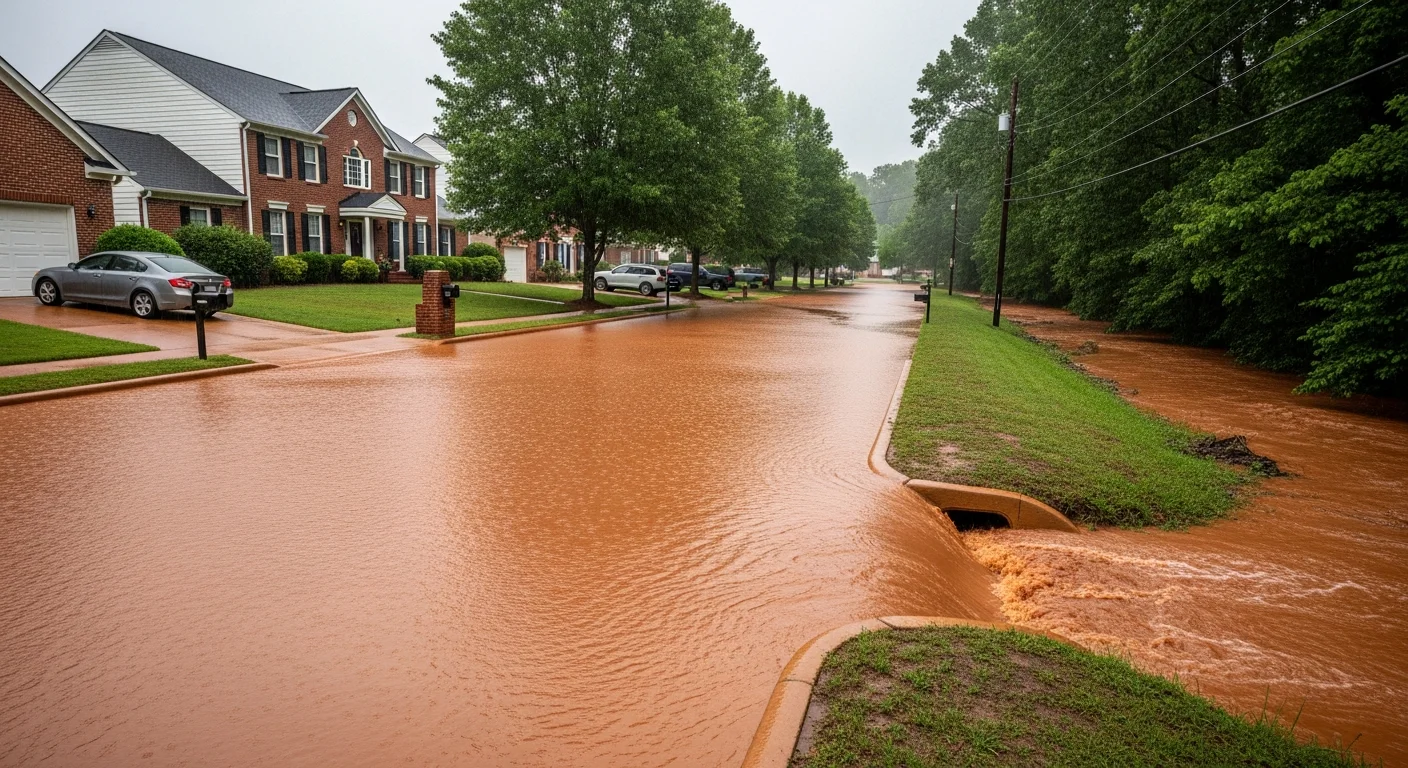
Storm & Flash Flooding
Matthews receives 44 inches of rain annually. Tropical Storm Debby (August 2024) and Hurricane Helene remnants (September 2024) caused widespread flooding. Four Mile Creek overflow affects downtown-adjacent properties most severely.
Crawl Space Moisture
Matthews' signature damage type. Cecil clay soil moisture, vented crawl space condensation, and degraded 25-40 year old vapor barriers combine to damage joists, subfloors, and HVAC ductwork beneath the majority of Matthews homes.
HVAC Condensate Overflow
Aging AC unit drain lines in attics and ceilings are a leading cause of sudden ceiling water damage in Matthews' 1980s-90s colonial homes during peak summer operation when systems run 12+ hours daily.
Sewer and Drain Backup
Common in older Matthews homes with aging sewer laterals connected to municipal systems. Not covered by standard homeowners insurance — requires a separate endorsement that many Matthews homeowners lack.
Speed is critical for Matthews' hardwood floors — the longer they stay saturated, the
higher the risk of permanent warping and buckling.
Matthews Pricing
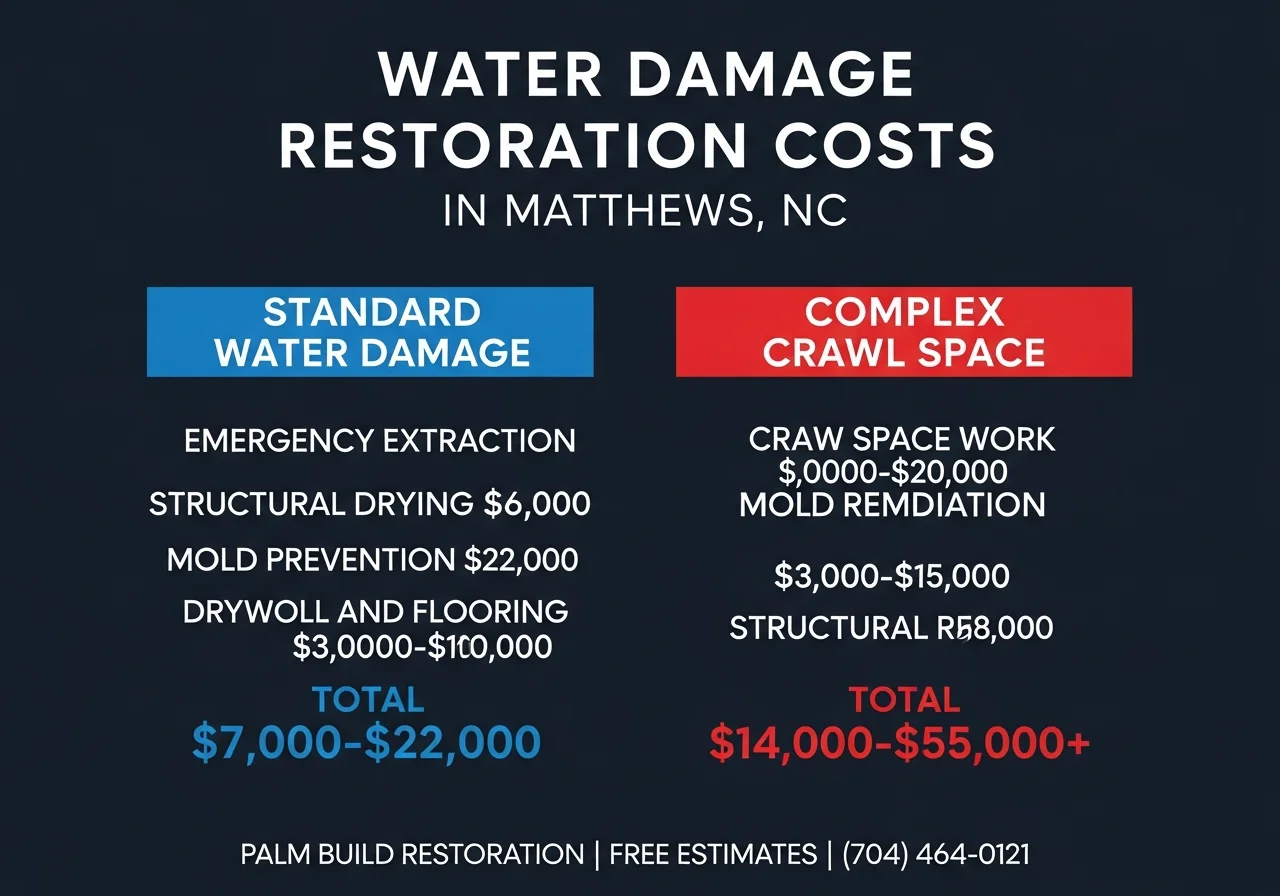
Water Damage Restoration Costs in Matthews
These ranges reflect real-world project costs in the Matthews area — not national
averages. Matthews' median home value of $445,100, crawl space construction prevalence,
and Cecil clay soil complications all push costs toward the higher end of Charlotte
metro averages.
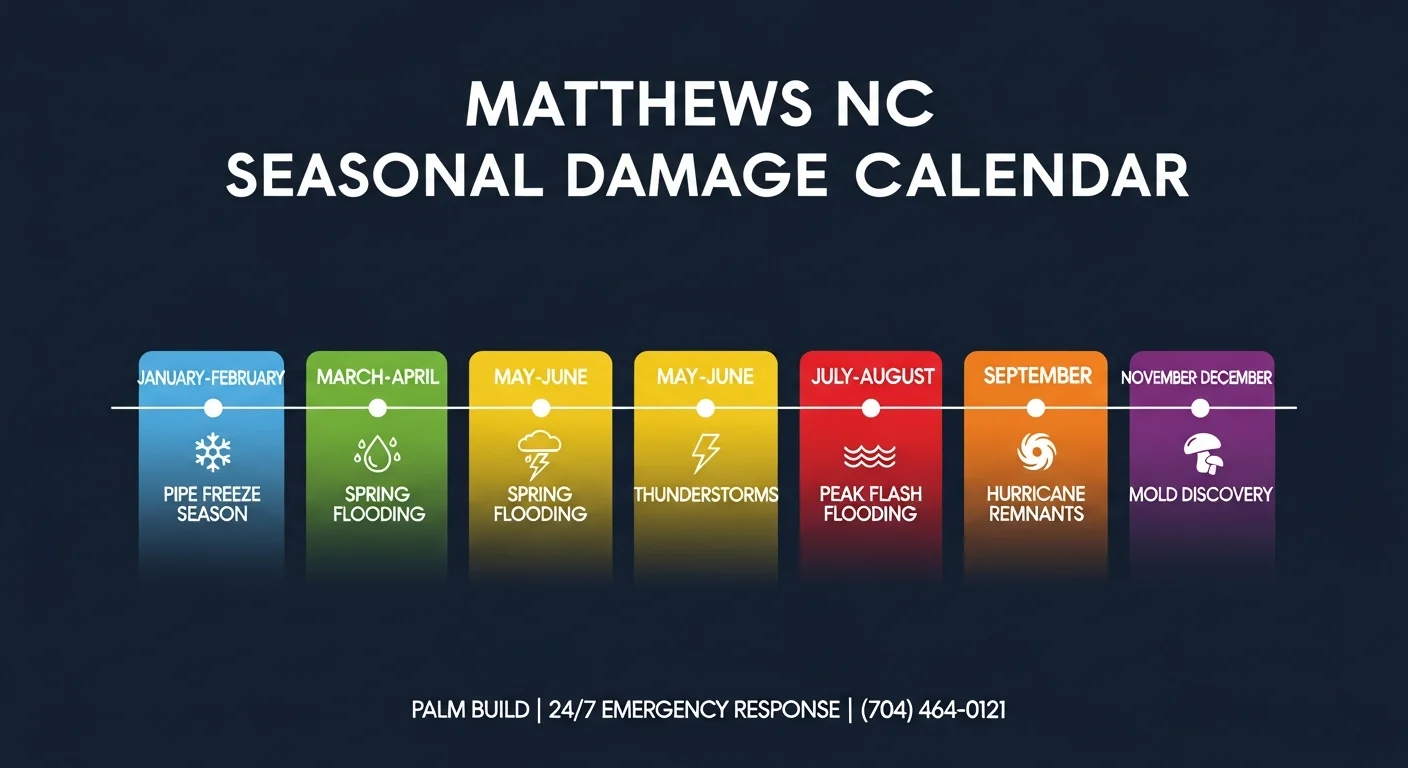
Matthews doesn't have a single "water damage season" — different types of damage peak at
different times of year. Understanding this calendar helps you catch problems early and
know when to be most vigilant.
January – February
Freeze-Thaw & Burst Pipe Season
Matthews winters swing between the 20s and 50s. Exposed PVC and CPVC pipes in crawl spaces and exterior walls are vulnerable — especially in 1980s homes in Cherokee Woods and Sardis Forest with inadequate insulation. January lows near 33°F trigger freeze events.
March – April
Spring Flooding & Crawl Space Activation
Spring rains saturate Cecil clay soil. Crawl space moisture levels begin climbing as ground temperatures rise. Many Matthews homeowners first notice musty smells, condensation on ductwork, or sagging insulation. Four Mile Creek rises with snowmelt and spring rain.
May – June
Severe Thunderstorm Season
July averages 18.5 rainy days — the most of any month. Flash flooding overwhelms storm drains and sends water into crawl spaces and ground-level entries across Matthews. Rising temperatures activate dormant mold in crawl spaces.
July – August
Peak Risk: Tropical Remnants & Flash Floods
August is Matthews' wettest month at 3.35 inches. Tropical Storm Debby (August 2024) caused a dam to begin cresting on Zelda Lane in Matthews itself. Humidity exceeds 70-75%, making this the peak mold growth window.
September – October
Hurricane Remnant Season
Hurricane Helene (September 2024) devastated western NC and impacted the Charlotte metro. Matthews organized relief operations. Post-storm mold is typically discovered 2-4 weeks after water events when homeowners notice musty odors.
November – December
Mold Discovery & Heating Season
December has Matthews' highest relative humidity at 75%. Many homeowners discover water damage when closing up homes for winter or when HVAC systems reveal moisture problems. Heating-related fire risk increases.
Local Flood Intelligence
Four Mile Creek: The Hidden Flood Risk Running Through Matthews
Four Mile Creek and its tributaries flow through the heart of Matthews, draining into
McAlpine Creek along the Charlotte border. The creek's downstream reach has a bed of
"dense clay, highly eroded with almost vertical banks" — meaning it overwhelms quickly
during heavy rain events.
NOAA's gauge at the Elm Lane Bridge begins registering flood stage at 17.5 feet. But
homes on Stevens Ridge Road can be surrounded with water at just 16.5 feet — a full foot
below the official flood threshold. During Tropical Storm Debby in August 2024, a dam on
Zelda Lane in Matthews itself began cresting, threatening downstream properties.
1,311 Matthews properties face flood risk over 30 years (12.3%)
Zelda Lane dam nearly crested during Tropical Storm Debby (Aug 2024)
Stevens Ridge Road floods at 16.5 ft — below NOAA's 17.5 ft threshold
Charlotte-Mecklenburg was first in the nation to map Community Floodplains
The County Split Complicates Flood Insurance
Matthews straddles the Mecklenburg-Union county line. Your flood zone designation,
permit authority, and stormwater program all depend on which side of the line your
property sits on. ZIP 28105 (Mecklenburg) participates in Charlotte-Mecklenburg's
Community Rating System — the nation's best — qualifying for NFIP discounts. ZIP 28104
(Union County) has a separate rating.
What Matthews Homeowners Should Do
Check your FEMA zone at Charlotte-Mecklenburg's online flood maps
Consider private flood insurance even outside AE zones — Cecil clay causes localized flooding
everywhere
Document pre-storm property condition for faster claims processing
Know your county (28104 = Union, 28105 = Mecklenburg) for permit requirements
Insurance Navigation
Insurance Claims for Water Damage in Matthews
Matthews homeowners carry higher-than-average insurance premiums reflecting the area's
high home values and water damage exposure. Understanding what your policy actually
covers — and what requires separate endorsements — can save you tens of thousands.
Sudden and accidental discharge (burst pipe, appliance failure, supply line rupture)
Flood damage from rising water, Four Mile Creek or McAlpine Creek overflow — requires separate NFIP or private flood insurance
Gradual damage (slow leaks, seepage, long-term crawl space moisture from Cecil clay wicking)
Mold coverage typically limited to $5,000-$10,000 sublimits — Matthews crawl space remediation regularly exceeds this
Sewer and drain backup — common in older Matthews homes — requires a separate policy endorsement
Matthews homeowners pay $1,900-$2,400/year for coverage at median home values ($445,100). NC premiums rose 44.4% from 2020 to mid-2025.
Palm Build Handles the Documentation
We work directly with your insurance adjuster from the first inspection. Our moisture
maps, thermal images, daily drying logs, and photo documentation are formatted for the
adjuster workflow — reducing delays and disputes. We handle State Farm, Allstate, Farm
Bureau, USAA, and all other carriers common in the Matthews area.
Thermal imaging and moisture mapping provide the evidence your Matthews insurance
adjuster needs to approve your claim.
Our Work
Matthews Water Damage: Before and After
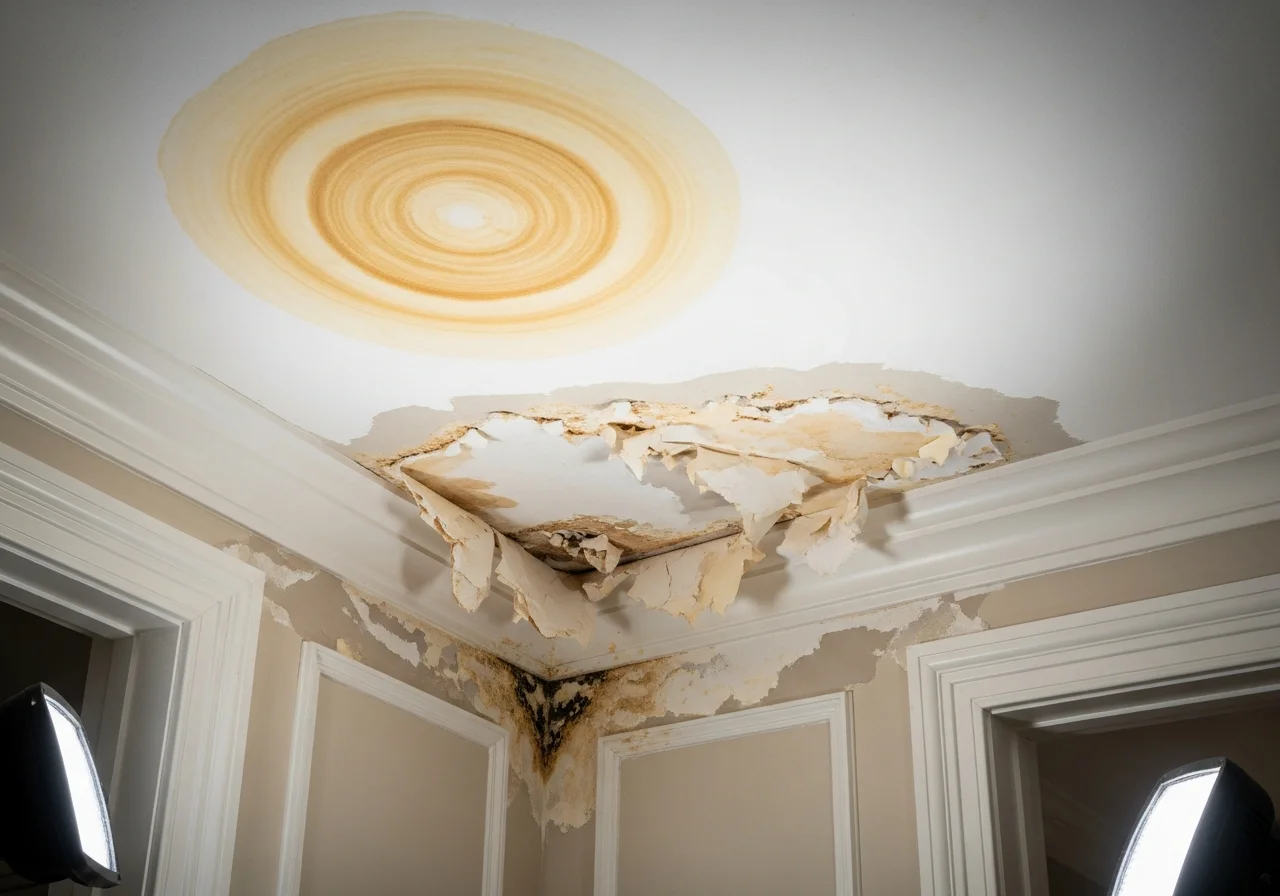
Water staining and early mold growth on interior drywall — common in Matthews homes with aging plumbing
Fully restored with refinished hardwood floors, fresh paint, and new baseboards
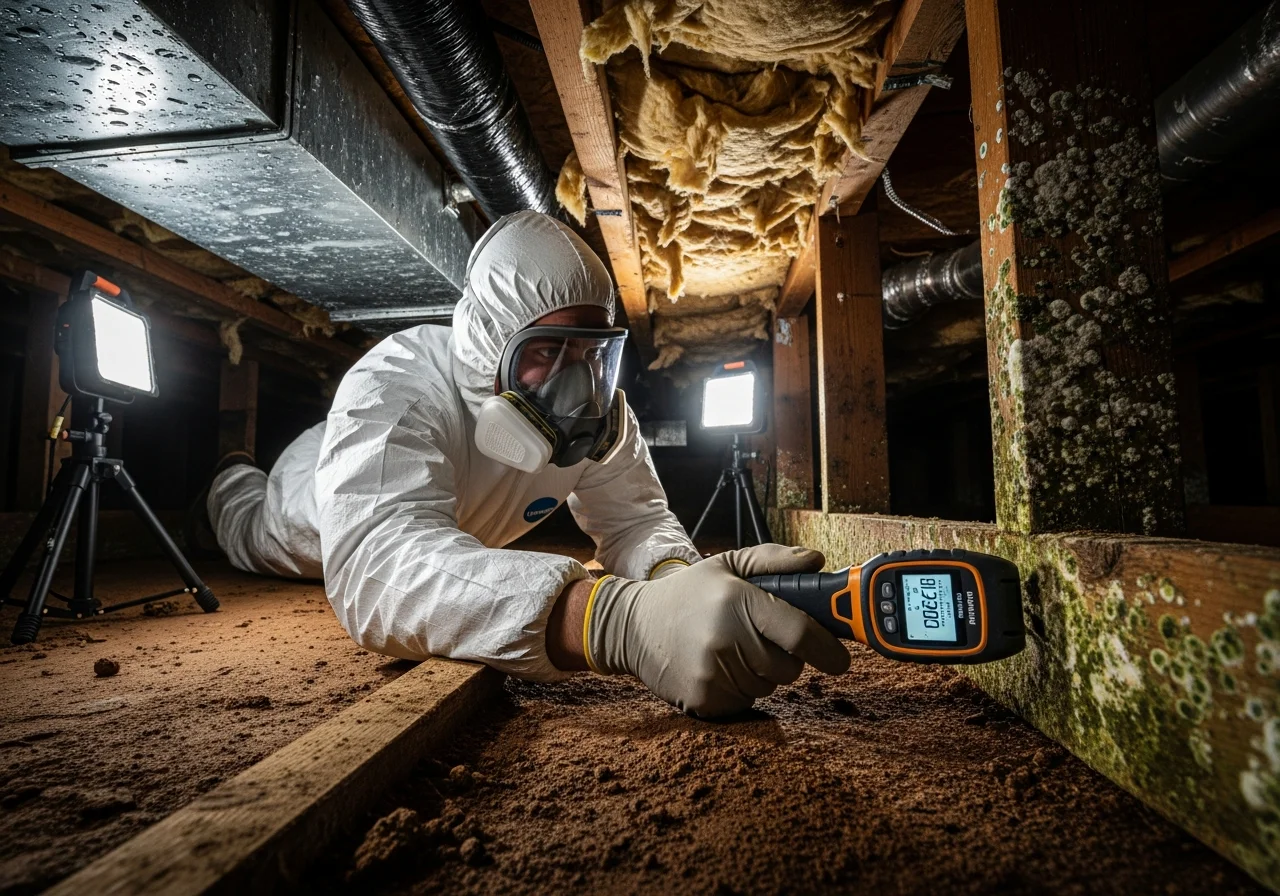
Matthews' crawl space homes on Cecil clay face chronic moisture and mold challenges
Structural drying in progress with commercial LGR dehumidifiers and high-velocity air movers
The Palm Build Difference
Why Matthews Homeowners Choose Palm Build
National franchises dominate the Matthews restoration market — SERVPRO, ServiceMaster,
1-800 WATER DAMAGE all have local offices. But none of them reference Cecil clay
drainage rates, Four Mile Creek flood stages, or the 28104/28105 county permit split.
That's because they don't build their operations around Matthews-specific knowledge.
15 Minutes from Matthews
Our Crompton Street hub in Charlotte is a straight shot to Matthews via I-485. We're dispatching from inside the metro — not from a regional franchise headquarters an hour away.
IICRC Certified Technicians
Every crew lead holds current IICRC Water Restoration Technician (WRT) certification and follows the S500 standard. NC has no state mold licensing — IICRC certification is the gold standard.
Matthews-Specific Expertise
We understand crawl space construction on Cecil clay, the risks of 25-45 year old plumbing in Brightmoor and Sardis Forest, the Four Mile Creek flood corridors, and the Mecklenburg-Union county permit split.
Dual-County Permit Handling
Matthews straddles Mecklenburg (28105) and Union (28104) counties — different permit authorities, different rules. We pull permits through both LUESA and Union County Code Enforcement as part of our service.
Full-Service Restoration
From emergency extraction through final reconstruction, one company manages the entire project. No handoffs between mitigation and rebuild companies — no gaps, no delays, no finger-pointing.
Common Questions
Matthews Water Damage FAQ
How fast can Palm Build respond to a water emergency in Matthews?
Our Charlotte operations hub on Crompton Street is approximately 15 minutes from Matthews via I-485. We typically arrive on-site within 30 to 45 minutes of your call, 24 hours a day, 7 days a week. Call (704) 464-0121 for immediate dispatch.
Why is water damage so common in Matthews homes?
Matthews sits on Cecil clay soil that drains at less than 0.2 inches per hour. Over 53% of Matthews homes were built between 1980 and 2000 with crawl space foundations. This combination means rainwater pools against foundations for days, wicking moisture into crawl spaces where it damages joists, subfloors, and ductwork. The town's 44 inches of annual rainfall compounds the issue.
Does my Matthews homeowners insurance cover water damage?
Standard NC homeowners policies cover sudden and accidental water damage like burst pipes and appliance failures. However, flood damage from rising water or creek overflow requires separate flood insurance — critical since 12.3% of Matthews properties face flood risk over 30 years. Gradual damage, slow leaks, and most mold damage have limited or no coverage. Palm Build documents everything from day one to support your claim.
My Matthews home has a crawl space. Should I be concerned about water damage?
Yes. Crawl space homes built in the 1980s and 1990s — which make up the majority of Matthews housing stock — are especially vulnerable. The original vapor barriers have likely degraded after 25-40 years, and the vented crawl space design actually draws humid air inside where it condenses on cooler surfaces. We find active moisture problems or early mold in most Matthews crawl spaces we inspect for the first time.
Is my Matthews home in a flood zone?
Matthews straddles two FEMA-mapped drainage corridors — Four Mile Creek and McAlpine Creek. Properties adjacent to these waterways fall in AE or A flood zones with 1% annual flood risk. First Street Foundation projects 1,311 Matthews properties face flood risk over the next 30 years. Even outside formal flood zones, Cecil clay soil causes localized flooding during heavy rain. Check your specific address at Charlotte-Mecklenburg's online flood zone maps.
What is Cecil clay soil and how does it affect my Matthews foundation?
Cecil clay is North Carolina's official state soil. It covers roughly 59% of Mecklenburg County with a composition of about 37% clay, 27% silt, and 24% sand. This soil expands when wet and contracts when dry, creating cyclical pressure against foundations. Its slow infiltration rate means water pools against your home for days after rain, constantly feeding moisture into crawl spaces and foundation walls.
My home is in the 28104 zip code. Does that affect restoration permits differently than 28105?
Yes. Matthews straddles the Mecklenburg-Union county line. ZIP 28105 falls under Mecklenburg County LUESA for permits and inspections. ZIP 28104 falls under Union County Code Enforcement. Permit requirements, fees, and inspection timelines differ between the two counties. Palm Build handles all permitting for both jurisdictions as part of our restoration service.
How much does water damage restoration cost in Matthews?
Standard water damage restoration in Matthews typically ranges from $7,000 to $22,000 for burst pipes, appliance failures, and roof leaks. Complex projects involving crawl space remediation, mold treatment, and structural repair can range from $14,000 to $55,000 or more. Matthews' high home values (median $445,100) and prevalence of crawl space construction tend to push costs toward the higher end of regional averages.