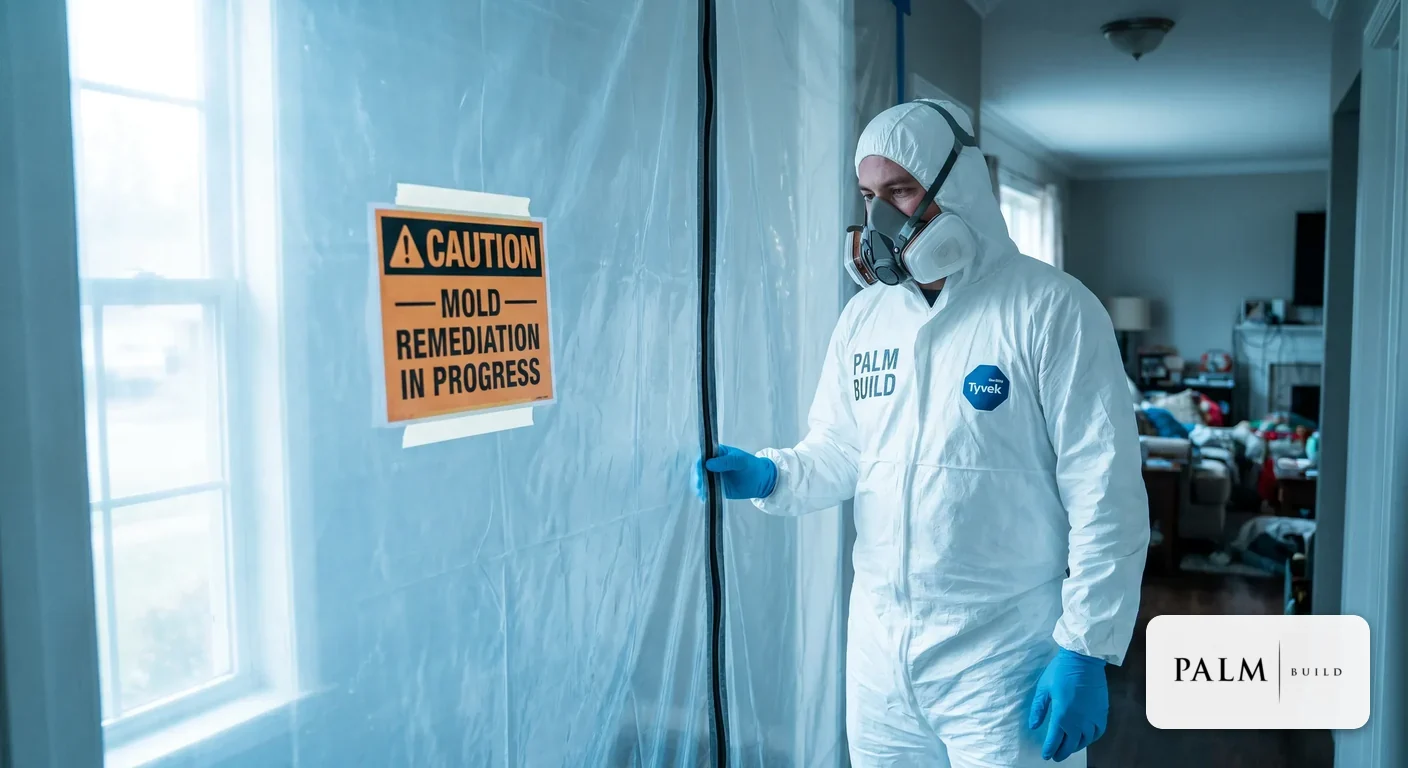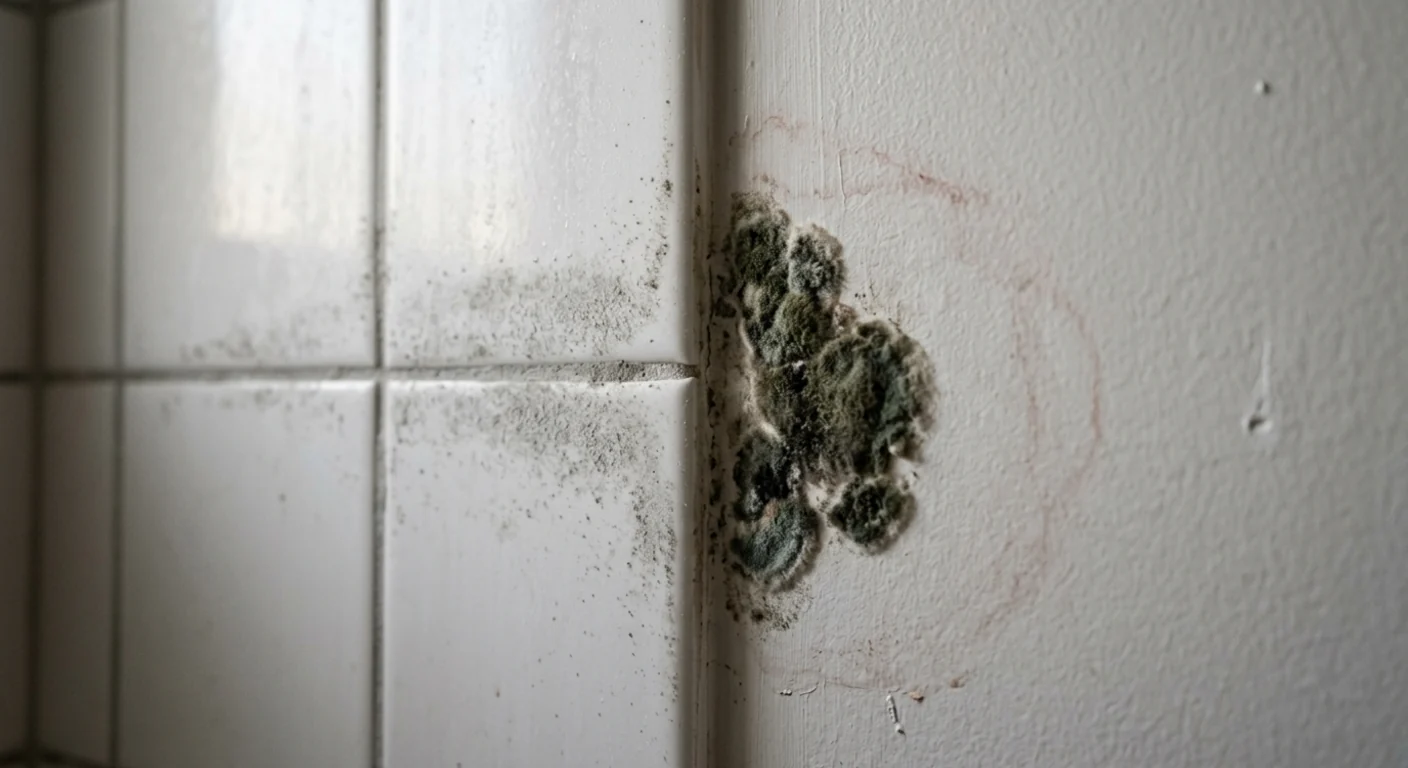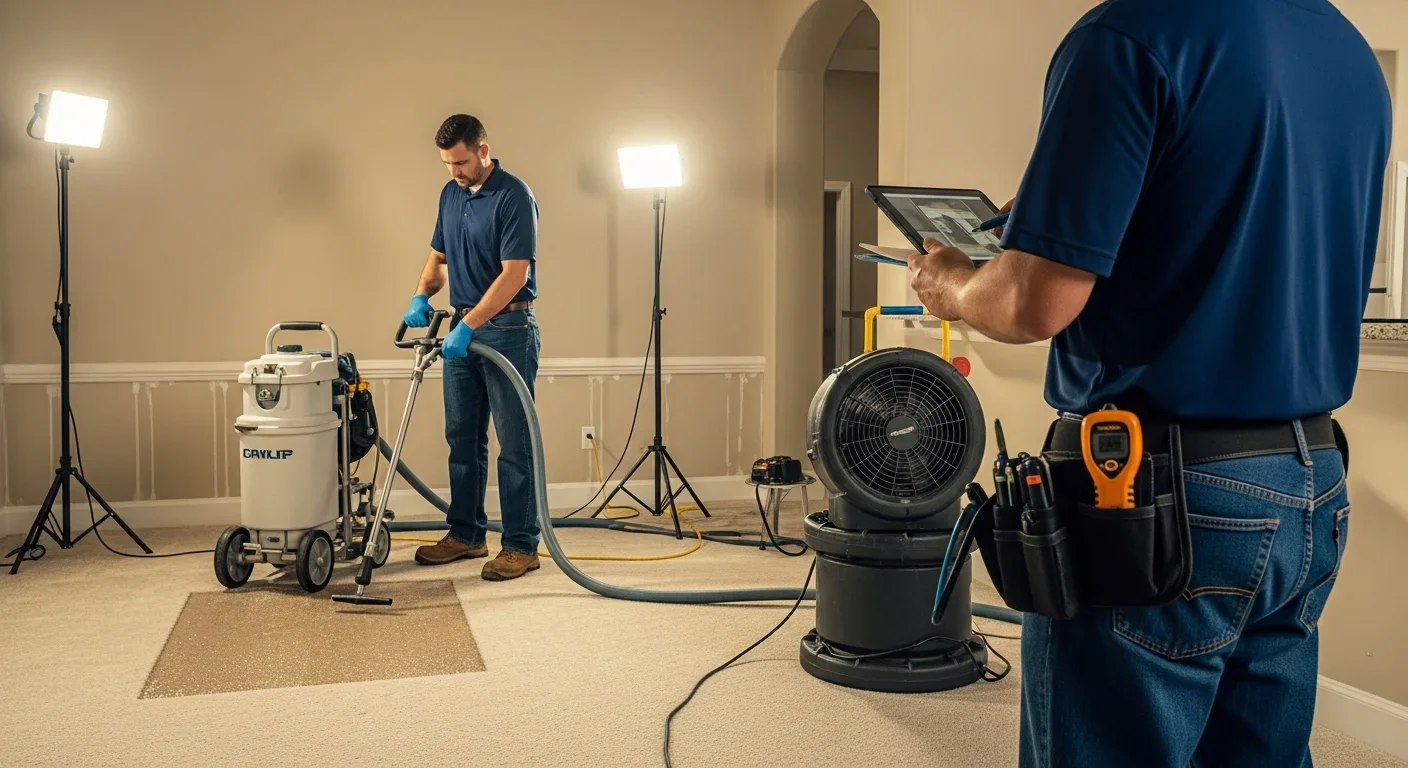
Quick Answer
DIY water damage cleanup is only safe when the water is clean (from a supply line, not a toilet, appliance overflow, or flood), the affected area is small, and you can dry everything completely within 24 to 48 hours. If mold covers more than about 10 square feet, the EPA recommends professional help. Professional restoration averages about $3,867 nationally, but skipping it when you need it often leads to hidden mold, structural damage, and a bigger bill later.
Key takeaways
- DIY cleanup is only appropriate for small, clean-water incidents you can fully dry within 24 to 48 hours.
- Any gray water (appliance overflow), black water (sewage, floodwater), or hidden moisture behind walls requires professional restoration.
- The EPA recommends consulting a professional if mold covers more than about 10 square feet.
- Professional restoration averages $3,867 nationally ($1,350 to $6,300 typical range), while DIY equipment rentals run $35 to $105 per day and add up fast.
- Florida, North Carolina, and South Carolina each have different claim deadlines, contractor licensing thresholds, and mold regulations that affect your decision.
DIY water damage cleanup is only a good idea when the water is clean, the affected area is small, and you can start drying immediately and get everything fully dry within 24 to 48 hours. That is the window the CDC and EPA both emphasize for reducing mold risk. If mold already covers more than about 10 square feet, the U.S. Environmental Protection Agency recommends consulting professional guidance. If the water came from outside (storm or flood), a dishwasher or washing machine overflow, a toilet, or sewage, treat it as contaminated and call a professional water damage restoration company. The cost tradeoff is real: professional restoration averages about $3,867 nationally, but DIY rental equipment still runs $35 to $105 per day per machine and the total can climb fast when you need multiple machines for multiple days.
Pro restoration average
$3,867
National average, typical range $1,350–$6,300
Mold risk window
24–48 hrs
EPA and CDC drying guidance
EPA mold threshold
~10 sq ft
Beyond this, consult a professional
DIY vs. Professional Water Damage Cleanup at a Glance
The most important question is not how much it costs but whether you can safely and completely handle the loss yourself. Water damage decisions are time-sensitive because moisture drives mold growth, material failure, and insurance claim complexity. Use this decision matrix to make the call quickly.
| Decision factor | DIY is usually reasonable | Call a professional |
|---|---|---|
| Water source | Clean water from a supply line leak, caught early and contained | Any flooding from outside, sewage, toilet overflow, or appliance discharge with detergent or food waste |
| Time since loss began | You can start immediately and fully dry all materials within 24 to 48 hours | Water sat long enough that mold growth is possible, or you cannot dry materials quickly |
| Visible mold | Mold is very limited (well under 10 sq ft) and you can safely clean it and fix the moisture source | Mold covers more than about 10 square feet, or there was significant water damage (EPA guidance) |
| Hidden moisture risk | Water stayed on hard, non-porous surfaces and did not wick into walls, insulation, or subfloor | Water reached walls, ceilings, insulation, cabinetry, subfloor, crawl space, or HVAC zones |
| Health risk in the home | No one in the home has asthma, serious allergies, or immune suppression, and the area is not visibly moldy | Anyone with breathing problems or a weakened immune system; children should not participate in disaster cleanup (CDC) |
| Insurance documentation | The loss is truly minor and you can document damage thoroughly yourself | You expect to file an insurance claim — professionals document moisture readings and scope in formats aligned with claims workflows |
Decision matrix: when to DIY vs. when to call a professional
When DIY Water Damage Cleanup Is Usually Safe
Not every water incident requires a professional crew. If you catch a clean-water leak early and act fast, you can handle it yourself in many cases. The key is being honest about the scope: a small puddle on tile from a supply line drip is very different from water that has been soaking into carpet padding for 12 hours.
Clean water, small area, fast action
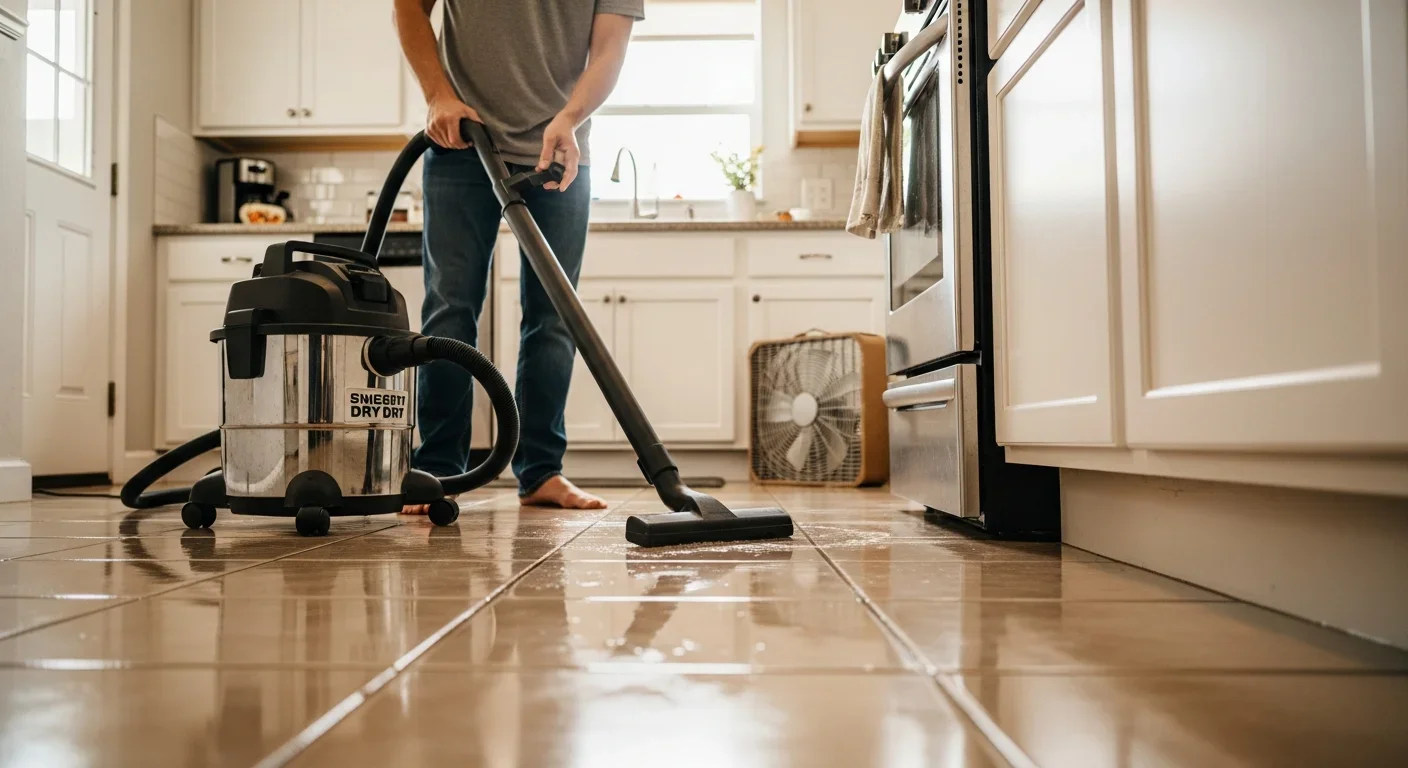
The safest DIY scenario is a contained, clean-water leak on a hard surface that you discover quickly. Think: a supply line fitting under the kitchen sink drips onto tile flooring and you catch it within an hour. You can mop up the water, run a fan, and monitor for dampness. The total affected area is small, no porous materials absorbed water, and you can have everything dry within a day.
No porous materials or hidden cavities involved
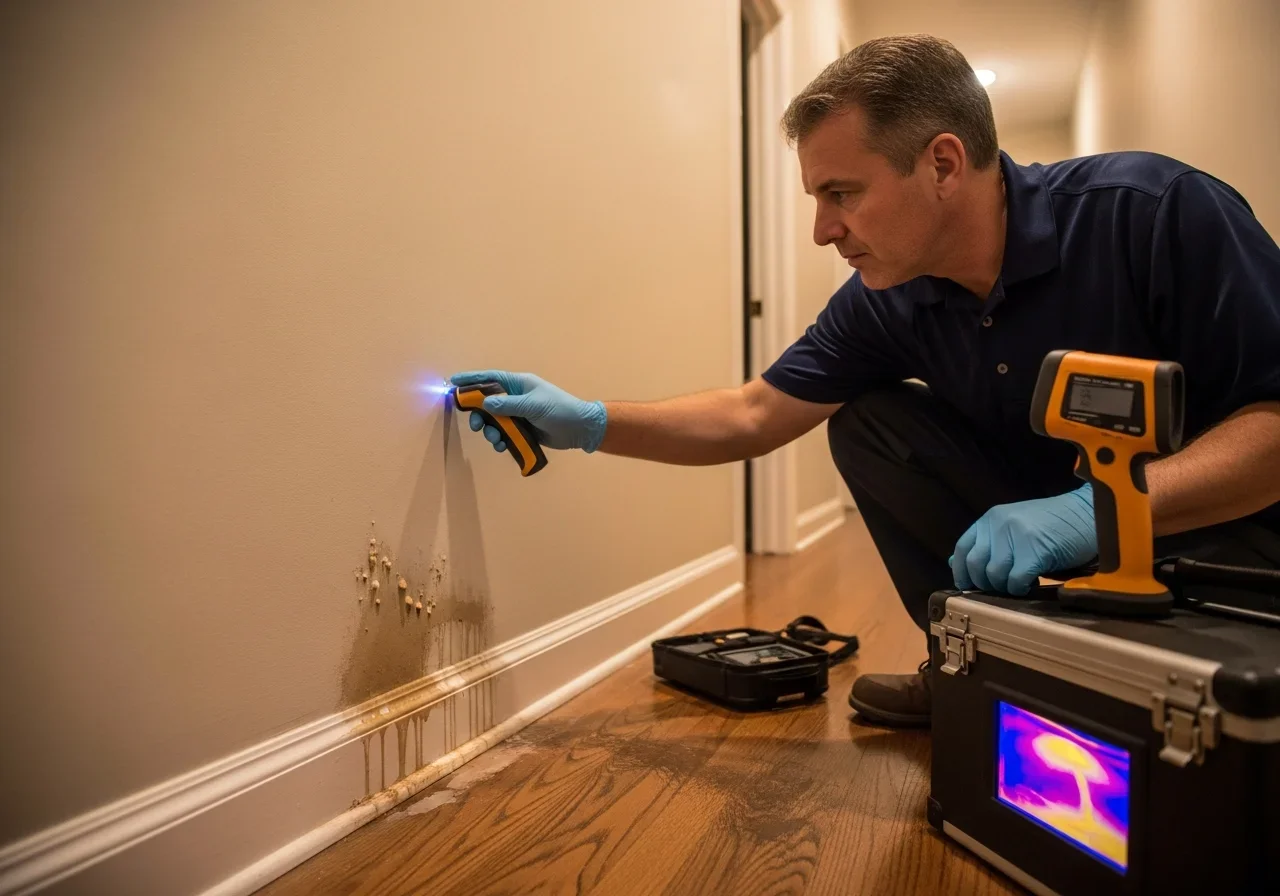
Water on tile, sealed concrete, or vinyl plank is straightforward to extract and dry. The moment water reaches carpet padding, drywall, insulation, hardwood subfloor, or cabinetry interiors, you are dealing with porous materials that hold moisture and are much harder to verify as dry. If water wicked into a wall cavity or under cabinets, you likely cannot see or measure the full extent of the moisture without professional equipment like thermal imaging cameras and deep-probe moisture meters.
No high-risk occupants
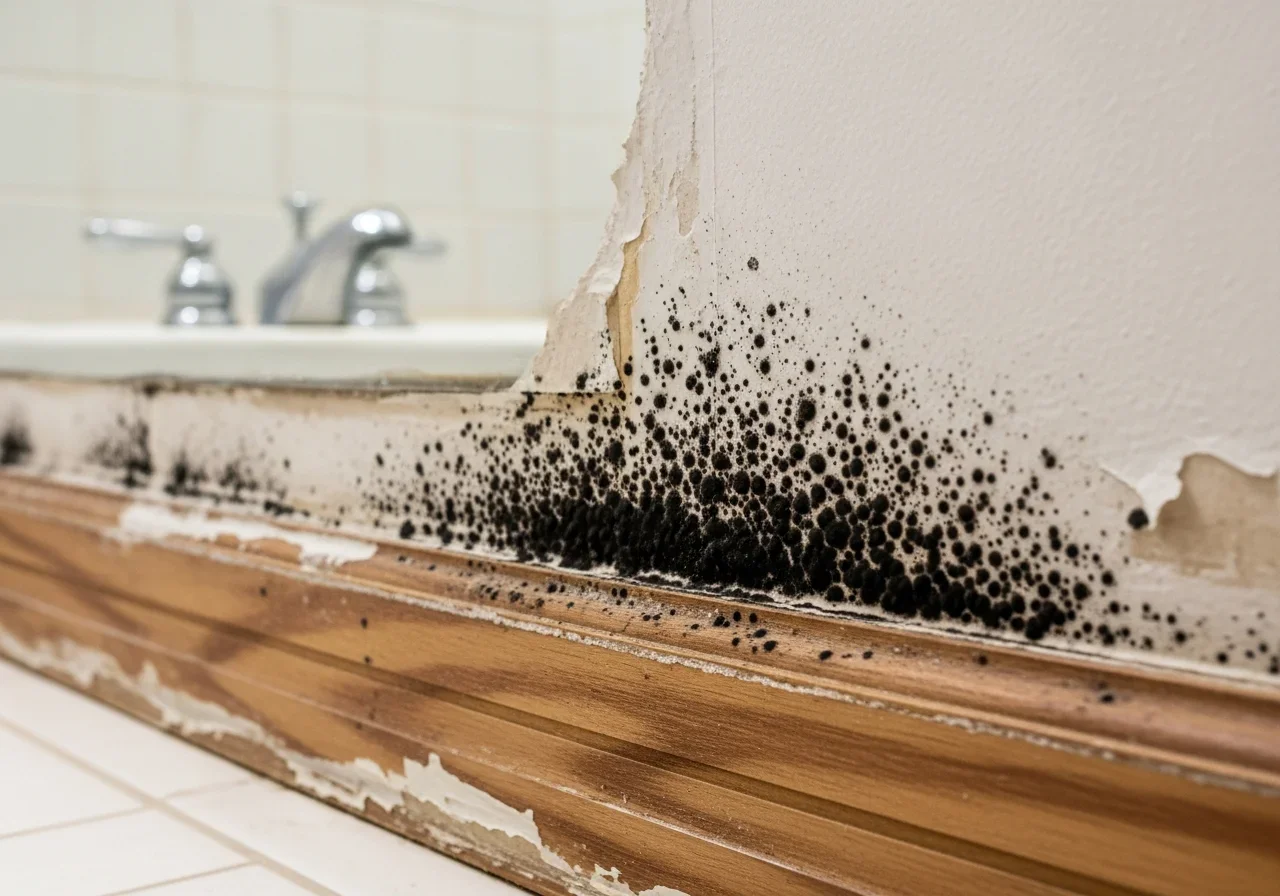
The CDC advises that people with asthma, serious allergies, or weakened immune systems should avoid areas with visible mold. Children should not participate in disaster cleanup. If anyone in your household falls into these categories and there is any possibility of mold exposure, err on the side of professional help. Mold remediation services include proper containment and air filtration that protect building occupants during the work.
When to Call a Professional Water Damage Restoration Company
Most real-world water damage falls outside the safe DIY window. Appliance overflows carry detergent and food residue (gray water). Toilet overflows and sewage backups are biohazards. Storm flooding brings in bacteria, pesticides, and debris. And even clean-water losses that sit for more than a day start growing mold in wall cavities, under flooring, and inside HVAC ductwork where you cannot see them.
DIY is usually safe when
- Clean water from a known supply line
- Less than about 20 sq ft on a hard surface
- Discovered and addressed within hours
- No water behind walls, under floors, or in HVAC
- No mold visible or smelled
- No at-risk occupants (asthma, immune issues)
Call a professional when
- Any gray water, black water, or flooding
- Water reached porous materials or hidden cavities
- More than 24 hours since the loss began
- Mold covers more than 10 sq ft or strong musty odor
- You plan to file an insurance claim
- Water entered crawl space, attic, or HVAC system
If water has entered your crawl space, the risk of hidden moisture is especially high. Crawl spaces trap humidity, lack airflow, and are difficult to inspect without specialized equipment. Most crawl space water intrusion requires professional extraction and drying to prevent long-term mold and structural issues.
Cost Comparison: DIY Equipment vs. Professional Restoration
Cost is the main reason homeowners consider DIY cleanup, and it is a valid concern. But DIY costs add up faster than most people expect, and the financial risk of an incomplete dry-out (hidden mold, secondary damage, a denied insurance claim) can dwarf the original restoration bill. Here is a realistic cost comparison based on publicly available rental rates and national cost guide data.
| Cost area | DIY baseline | Professional baseline | When this should flip your decision |
|---|---|---|---|
| Air movers (fans) | ~$35/day per unit (rental) | Included in service pricing | If you need 3+ air movers for 3+ days, rental alone reaches $300+ |
| Dehumidifier | ~$65–$105/day (commercial rental) | Included in service pricing | A 5-day rental at $85/day = $425 for one machine |
| Moisture meter | $10–$50 (purchase) | Professional-grade included | Consumer meters cannot read deep into wall cavities or subfloor |
| Antimicrobial treatment | $20–$60 (consumer products) | Professional-grade included | Consumer sprays do not replace professional fogging for contaminated water |
| Total restoration service | N/A | Average ~$3,867 (typical range $1,350–$6,300) | When contamination, hidden moisture, or rebuild is needed, pro work often prevents a second loss |
| Material replacement (drywall, flooring, trim) | $500–$2,000+ (materials + your labor) | $20–$37/sq ft for professional repair scopes | Improper demo or reinstallation can void warranties and create new moisture traps |
DIY vs. professional cost comparison
For a detailed breakdown of what drives water damage restoration costs in 2026, including per-square-foot pricing by water category and state-level factors, see our comprehensive cost guide.
What Professionals Do That DIY Often Misses
The value of professional water damage restoration is not just bigger fans. It is a systematic process designed to find, measure, and eliminate all moisture before it causes secondary damage. Here is what that process includes and why each step matters.
- 1
Moisture mapping and hidden water detection
Professionals use thermal imaging cameras, deep-probe moisture meters, and hygrometers to build a complete moisture map of your property. This reveals water behind walls, under flooring, and inside HVAC ductwork that you cannot detect with consumer-grade tools or by touch. Missing even one wet wall cavity can lead to mold growth months later.
- 2
Controlled drying with daily verification
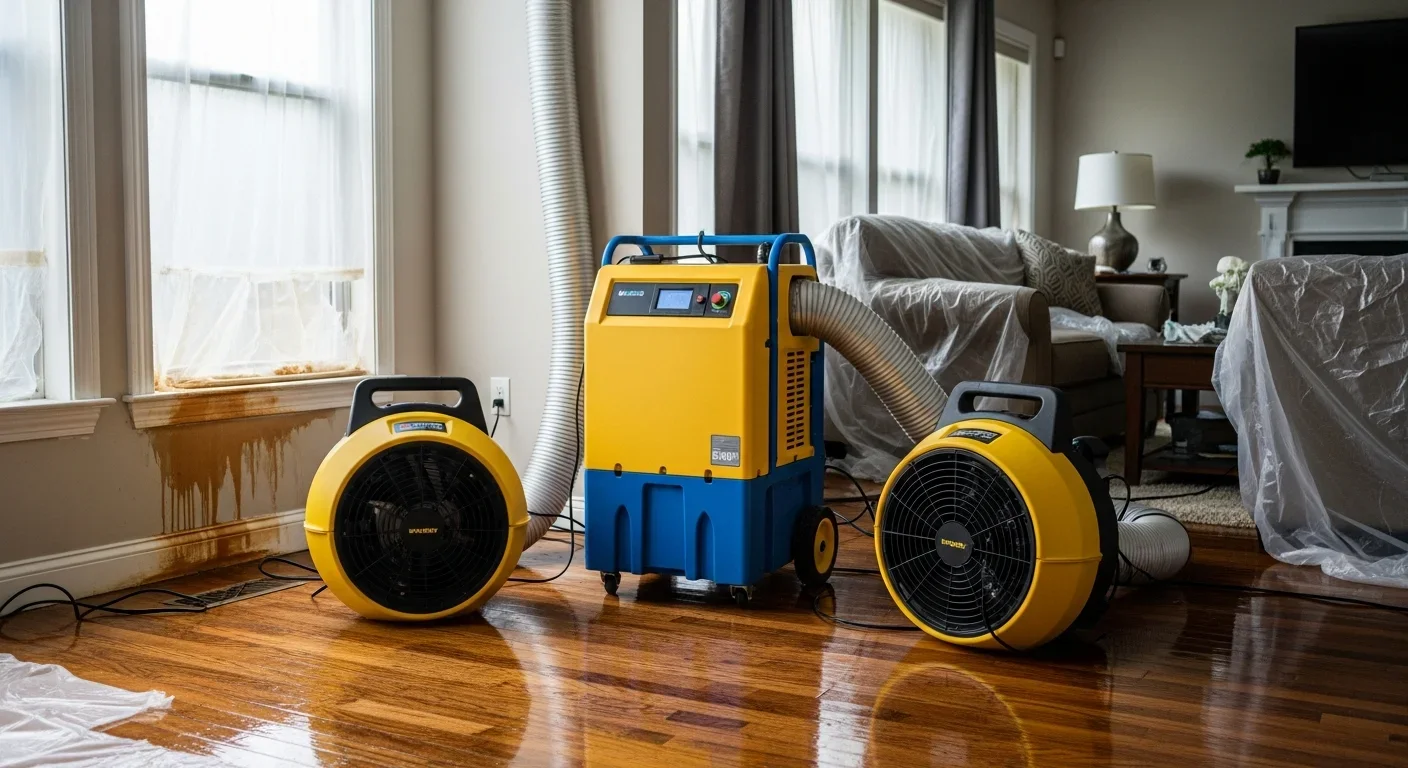
Professional drying is not just running fans. Technicians calculate the specific volume of air movement and dehumidification capacity needed for your space, then verify progress with daily moisture readings. Equipment runs until readings confirm materials are at or below target moisture levels, not just until they feel dry to the touch.
- 3
Containment, antimicrobial treatment, and safe disposal
For contaminated water or mold situations, professionals establish containment zones with plastic sheeting and negative air pressure to prevent cross-contamination. They apply professional-grade antimicrobial treatments and safely dispose of materials that cannot be decontaminated, including proper handling of asbestos-era materials in older homes.
- 4
Documentation for insurance and coordinated rebuild
IICRC-standard documentation includes dated photos, moisture readings, equipment placement logs, and daily progress reports. This documentation is designed to align with insurance adjuster expectations and supports your claim. When the loss requires reconstruction and build-back, having a single company coordinate mitigation through rebuild prevents the gaps and finger-pointing that happen when multiple contractors hand off scope.
What You Can Do Immediately, Even If You Plan to Hire a Pro
Even if you are going to call a professional, there are steps you should take right now to limit the damage and protect your insurance claim. These actions are safe for anyone and can meaningfully reduce the scope and cost of the loss. For a complete step-by-step walkthrough, see our guide to the first 24 hours after water damage.
- Make the situation safe: shut off the water supply if possible and avoid electrical hazards. Do not enter standing water if outlets, wiring, or appliances are submerged. Use a flashlight, not a flame, if gas could be trapped.
- Stop the source and limit spread: close the supply valve, move furniture off wet carpet, and place towels or barriers to keep water from reaching dry rooms.
- Document damage for insurance: photograph and video everything before you start cleanup. Capture wide shots and close-ups of affected areas, water lines on walls, damaged materials, and the source of the leak.
- Remove standing water safely: use a wet/dry shop vacuum or mop for small, clean-water spills. Do not use a standard household vacuum on water.
- Start airflow and dehumidification: open windows if outdoor humidity is lower than indoor, run fans pointed at wet surfaces, and turn on your HVAC system or a portable dehumidifier.
- Remove water-damaged porous items you cannot dry quickly: pull wet area rugs, throw pillows, books, and cardboard boxes out of the affected area. Wet carpet padding almost always needs replacement.
- Monitor for odors, visible mold, and moisture rebound: check the area daily for at least a week. A musty smell or visible mold means the area is not dry, even if it feels dry to the touch.
Florida, North Carolina, and South Carolina: What Changes by State
The DIY-vs-professional decision is mostly universal, but a few state-specific factors genuinely affect what homeowners should do next and what "professional" means locally. If you are dealing with storm, wind, or hurricane damage, these distinctions matter even more.
Florida: claim deadlines, mold licensing, and flood insurance
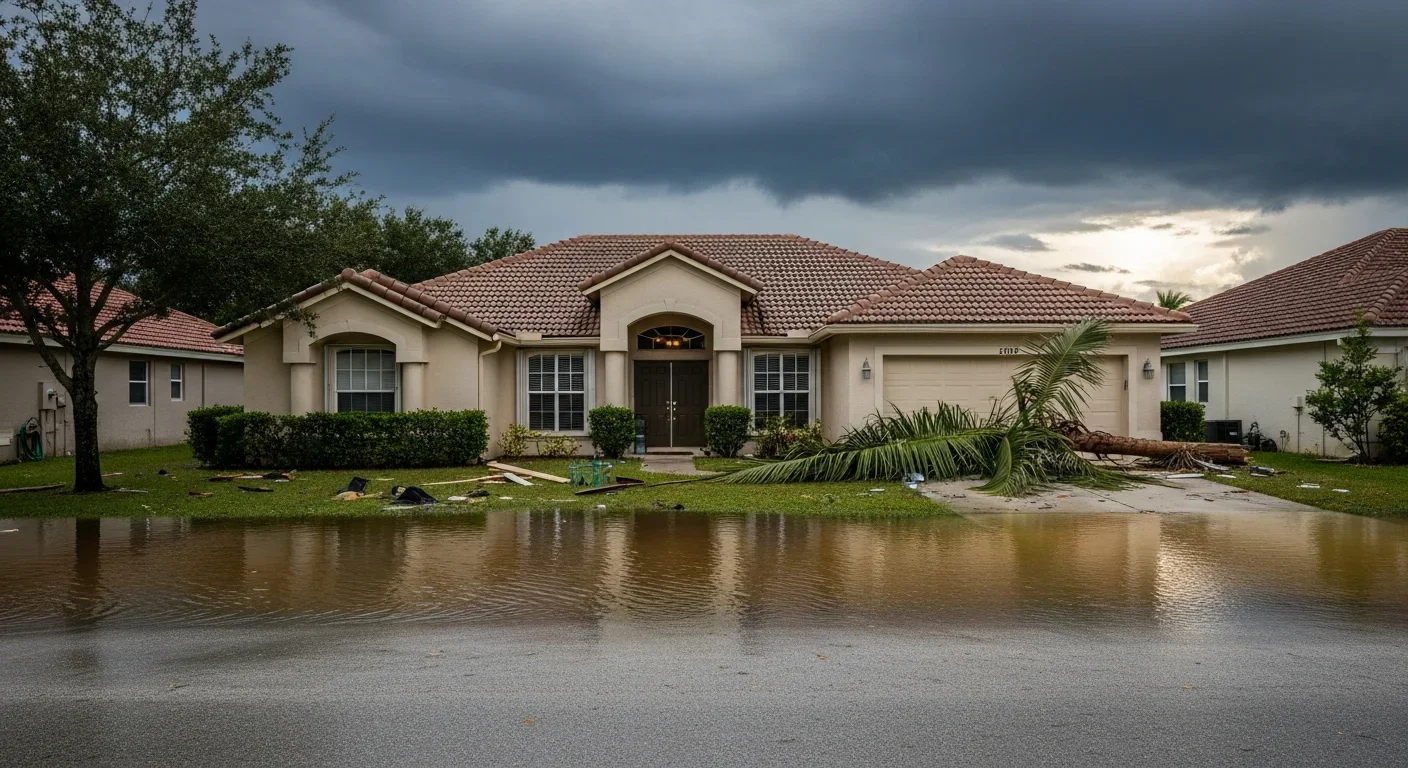
Florida has the highest number of direct hurricane hits among U.S. states in historical records (1851–2004, NOAA), which means many homeowners confuse "water damage" with "flood damage" after storms. This distinction matters because flood damage is typically excluded from homeowners insurance and requires separate NFIP flood coverage, which commonly has a 30-day waiting period. Florida law also sets a hard deadline: property insurance claims must be filed within one year of the date of loss, and supplemental claims within 18 months. On the professional side, Florida licenses and regulates mold-related services through its DBPR program, requiring documented training, a state exam, and a background check. If you need mold work in Florida, verify that your provider holds a valid state mold license.
North Carolina: contractor licensing thresholds
In North Carolina, the state licensing board requires a general contractor license for projects valued at $40,000 or more. This threshold matters when water damage crosses from drying into a rebuild scope. If your restoration turns into a flooring, drywall, and cabinet replacement project that reaches that dollar value, make sure your contractor is properly licensed. North Carolina does not currently have a state certification program for mold remediation, so homeowners should vet training credentials, methods, and references carefully. Learn about the differences in our guide to choosing between a restoration company vs. a general contractor.
South Carolina: licensing changes and mold policy direction
South Carolina recently increased its contractor licensing threshold from $5,000 to greater than $10,000, relevant if your water loss turns into a renovation. The state has published environmental-services guidance emphasizing fast drying after severe weather, with specific warnings about higher-risk individuals including people with asthma and immune suppression. A bill introduced in February 2026 would create a formal mold assessment and remediation certification framework in South Carolina. While still in committee, it signals the state moving toward regulated mold services.
Frequently Asked Questions
How fast does mold start after water damage? +
Can I handle water damage cleanup myself? +
What is the EPA 10 square feet mold rule? +
Is sewage backup a DIY job? +
Will homeowners insurance cover water damage? +
What should I do first when I discover water damage? +
How much does professional water damage restoration cost? +
How long does professional drying take? +
Related Resources
Water Damage Restoration Services
24/7 emergency water extraction, structural drying, and moisture verification across Florida, North Carolina, and South Carolina.
Mold Remediation Services
Professional mold assessment, containment, removal, and prevention for residential and commercial properties.
Water Damage Restoration Cost (2026)
National averages, per-square-foot pricing by water category, and FL/NC/SC cost factors.
The First 24 Hours After Water Damage
Step-by-step emergency response plan for homeowners facing a water loss.
Insurance Restoration Process
How professional restoration documentation supports your insurance claim from filing through rebuild.
EPA Mold Cleanup Guide
U.S. Environmental Protection Agency guidance on mold assessment thresholds and cleanup procedures.
- Clean water (Category 1)
- Water from a sanitary source like a broken supply line or faucet. Generally safe for DIY cleanup when caught early.
- Gray water (Category 2)
- Water with significant contamination from sources like dishwashers, washing machines, or aquarium leaks. Contains chemical or biological agents. Requires professional handling.
- Black water (Category 3)
- Grossly contaminated water from sewage, toilet overflow with solids, or exterior flooding. Carries bacteria, viruses, and parasites. Requires professional restoration with full PPE.
- IICRC S500
- The Institute of Inspection, Cleaning and Restoration Certification standard for professional water damage restoration. Defines procedures for inspection, extraction, drying, monitoring, and documentation.
- Moisture mapping
- The process of using thermal imaging and moisture meters to document the full extent of water intrusion, including hidden moisture behind walls and under flooring.
Not sure if your water damage needs a pro?
Call Palm Build for a free assessment. Our IICRC-certified crews respond 24/7 across Florida, North Carolina, and South Carolina. We will tell you honestly whether you need professional help or can handle it safely on your own.
Found this helpful? Send it to someone who needs it.