Quick Answer
Call a restoration company first when you have active water intrusion, smoke or soot, suspected mold, or storm-created openings — they stabilize the damage, extract moisture, and produce the Xactimate documentation insurers expect, all within the critical 24-to-48-hour drying window. Call a general contractor afterward, once the property is dry and cleared, for the rebuild: drywall, flooring, cabinetry, and finish work.
Key takeaways
- Call a restoration company first when you have active water intrusion, smoke or soot residue, suspected mold, or storm-created openings. They stabilize the damage, extract moisture, and create the insurance documentation you need.
- Call a general contractor after the property is dry, safe, and cleared for rebuild. They handle drywall, flooring, cabinetry, roofing, and finish work.
- The 24-to-48-hour window matters: CDC and EPA guidance recommends drying water-damaged materials within this timeframe to reduce mold growth risk.
- Insurance documentation differs significantly: restoration companies typically provide line-item Xactimate estimates that align with carrier expectations, while general contractors often provide lump-sum bids.
- Florida, North Carolina, and South Carolina each have different contractor licensing thresholds and insurance claim deadlines that affect who you hire and when.
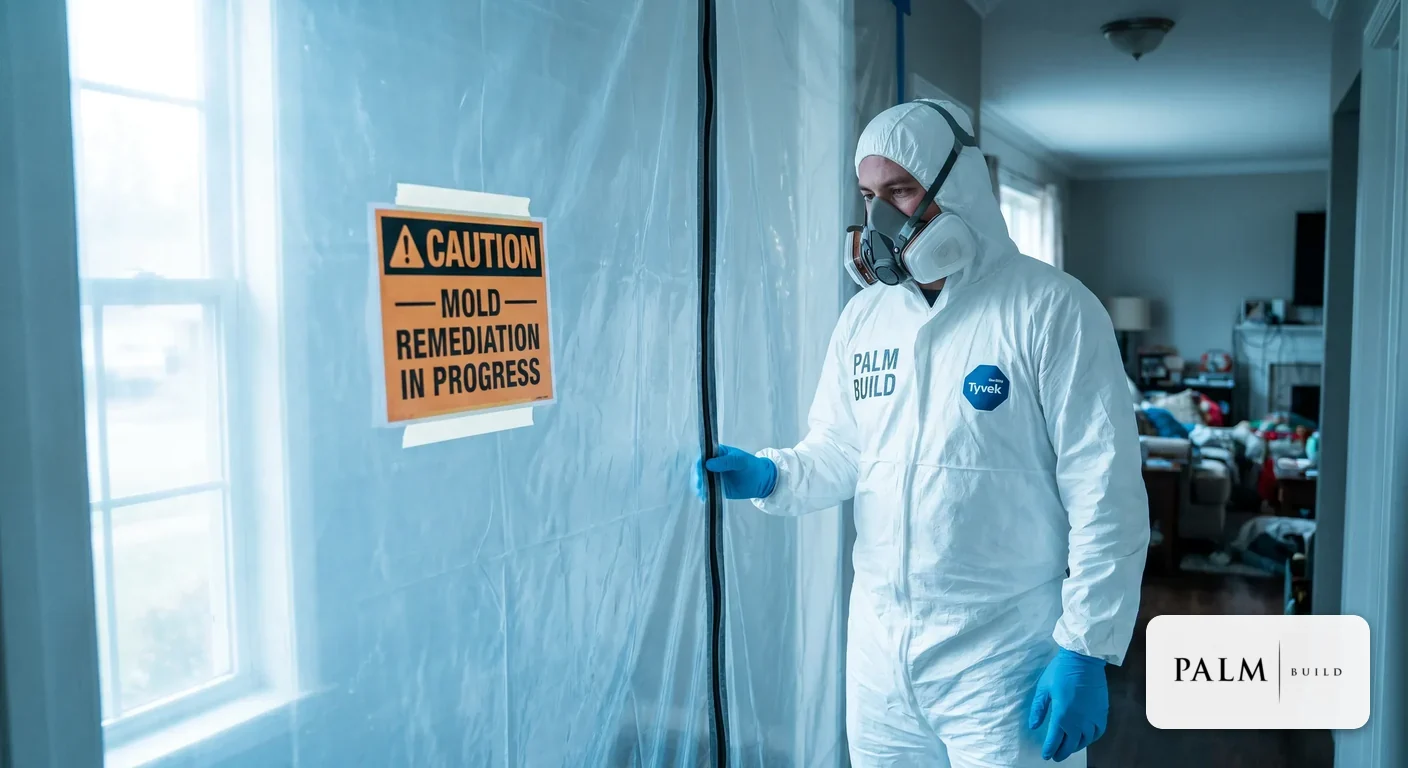
If you have active water intrusion, smoke or soot residue, suspected mold, storm openings, or unsafe conditions, you usually need a restoration company first. They stabilize the damage fast with extraction, drying, containment, and documentation that helps your insurance claim. Waiting or jumping straight to cosmetic repairs can trap moisture behind walls and increase mold risk. Public health guidance from the CDC and EPA repeatedly emphasizes drying and cleanup within 24 to 48 hours when possible. You typically need a general contractor later, after the site is dry and safe, to rebuild drywall, flooring, cabinetry, roofing, and finishes. If one qualified company can manage both emergency water damage restoration and reconstruction, it can reduce handoffs and shorten your overall timeline.
Mold prevention window
24-48 hrs
EPA and CDC drying guidance
Avg. water mitigation cost
$3-$7.50/sf
National average range for extraction and drying
Avg. claim payout
$15,400
Water/freeze claim severity (III data)
Water claim frequency
1 in 67
U.S. homes per year (Insurance Information Institute)
Restoration Company vs General Contractor: The Fastest Decision Rule
The simplest way to decide is to ask one question: is there active damage happening right now? If water is still flowing, smoke residue is settling, mold is spreading, or a storm has created openings that expose the interior, you need a restoration company. Their job is to stop the damage from getting worse. If the damage event is over, the property is stable and dry, and you need to rebuild what was lost, you need a general contractor.
Calling the wrong one first is a common and expensive mistake. A general contractor who starts hanging drywall in a home that still has elevated moisture levels is setting the stage for mold growth inside the wall cavity. A restoration company that only performs mitigation without offering reconstruction services leaves you managing a second contractor handoff at a stressful time. The best outcomes happen when mitigation and rebuild are clearly sequenced, whether by one firm or two.
Call a restoration company when
- Water is actively flowing or standing in your property
- You smell smoke, soot, or char after a fire event
- You see or suspect mold growth on walls, ceilings, or in crawl spaces
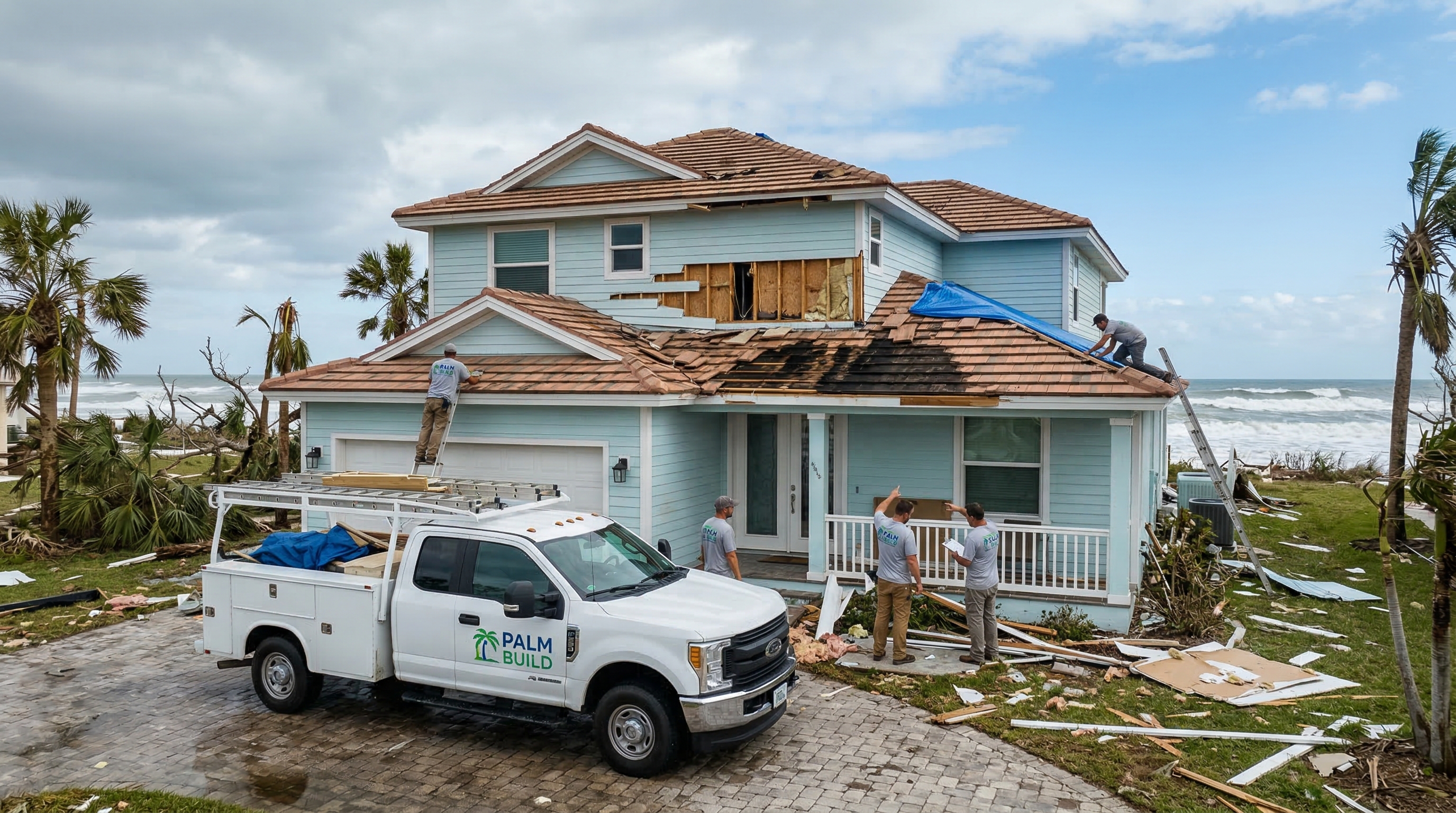
- A storm created openings (missing roof sections, broken windows)
- You need emergency board-up or tarping to prevent further exposure
- You need insurance-ready documentation with moisture logs and photos
- The damage happened within the last 24 to 48 hours and time is critical
Call a general contractor when
- The property is fully dried and moisture readings are at normal levels
- You need drywall, flooring, cabinetry, or paint replacement
- Structural framing, roofing, or siding needs to be rebuilt
- You are doing a planned renovation or remodel (no active damage)
- Permits are required for electrical, plumbing, or structural changes
- The insurance scope is finalized and the rebuild budget is set
- The restoration company has completed clearance testing
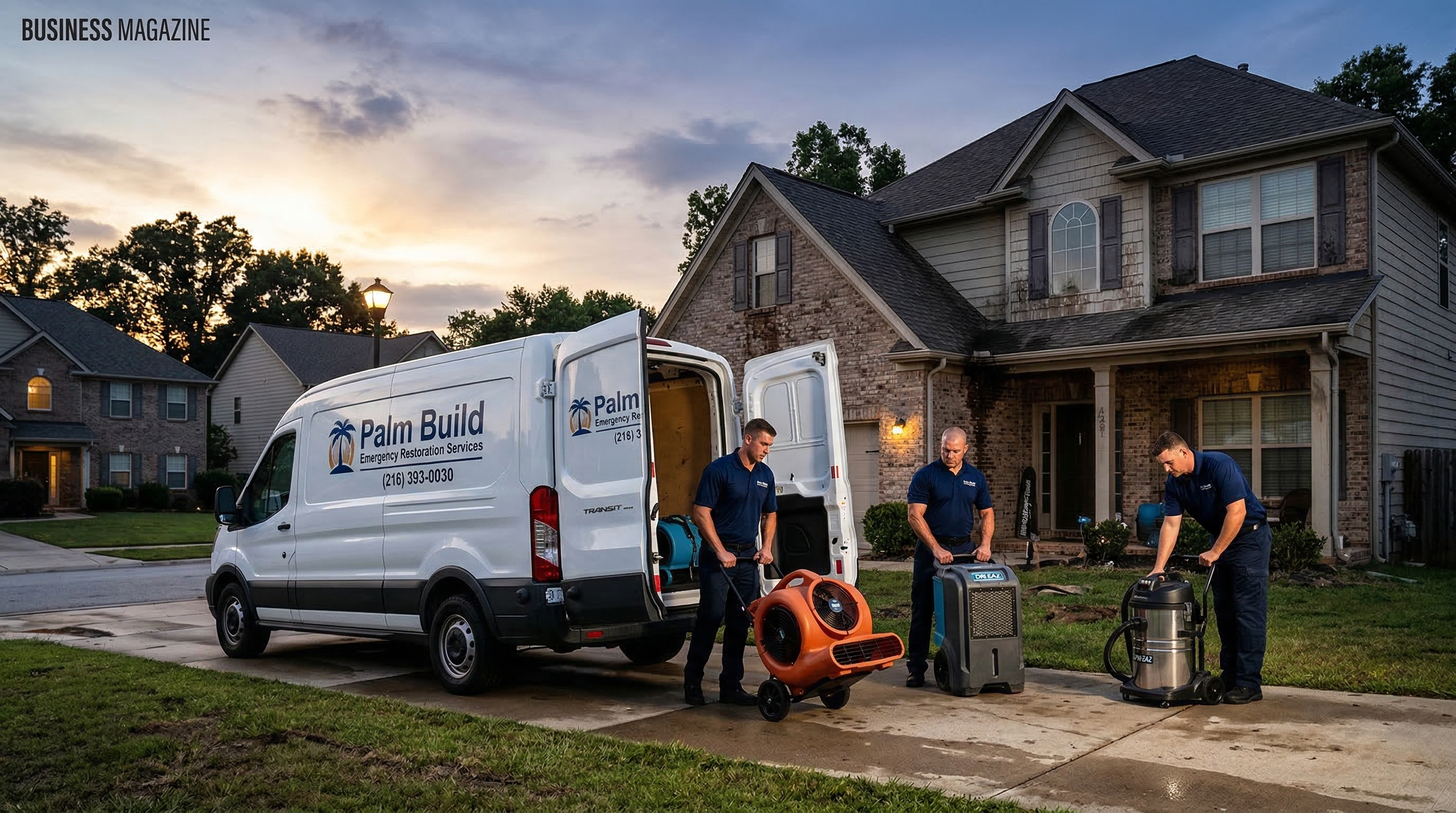
What a Restoration Company Does That a General Contractor Does Not
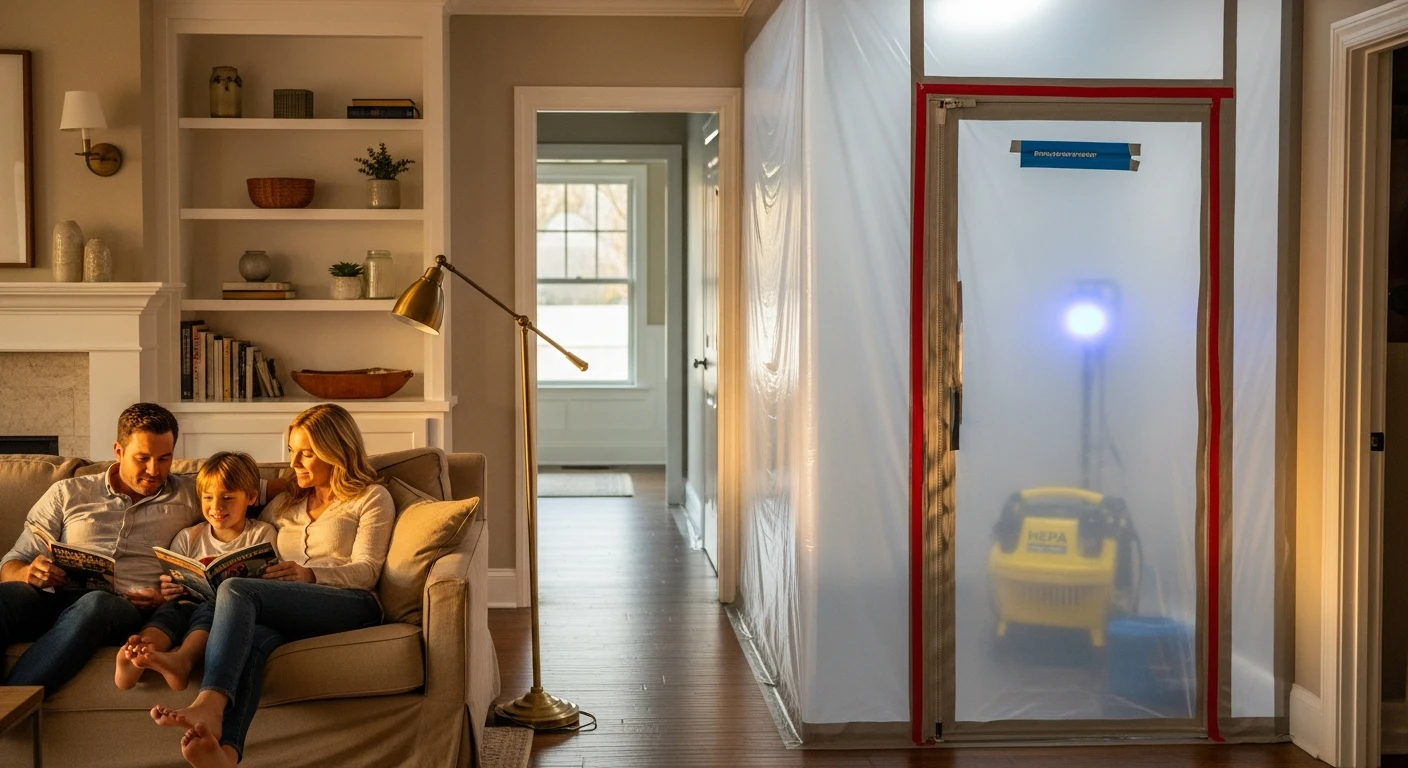
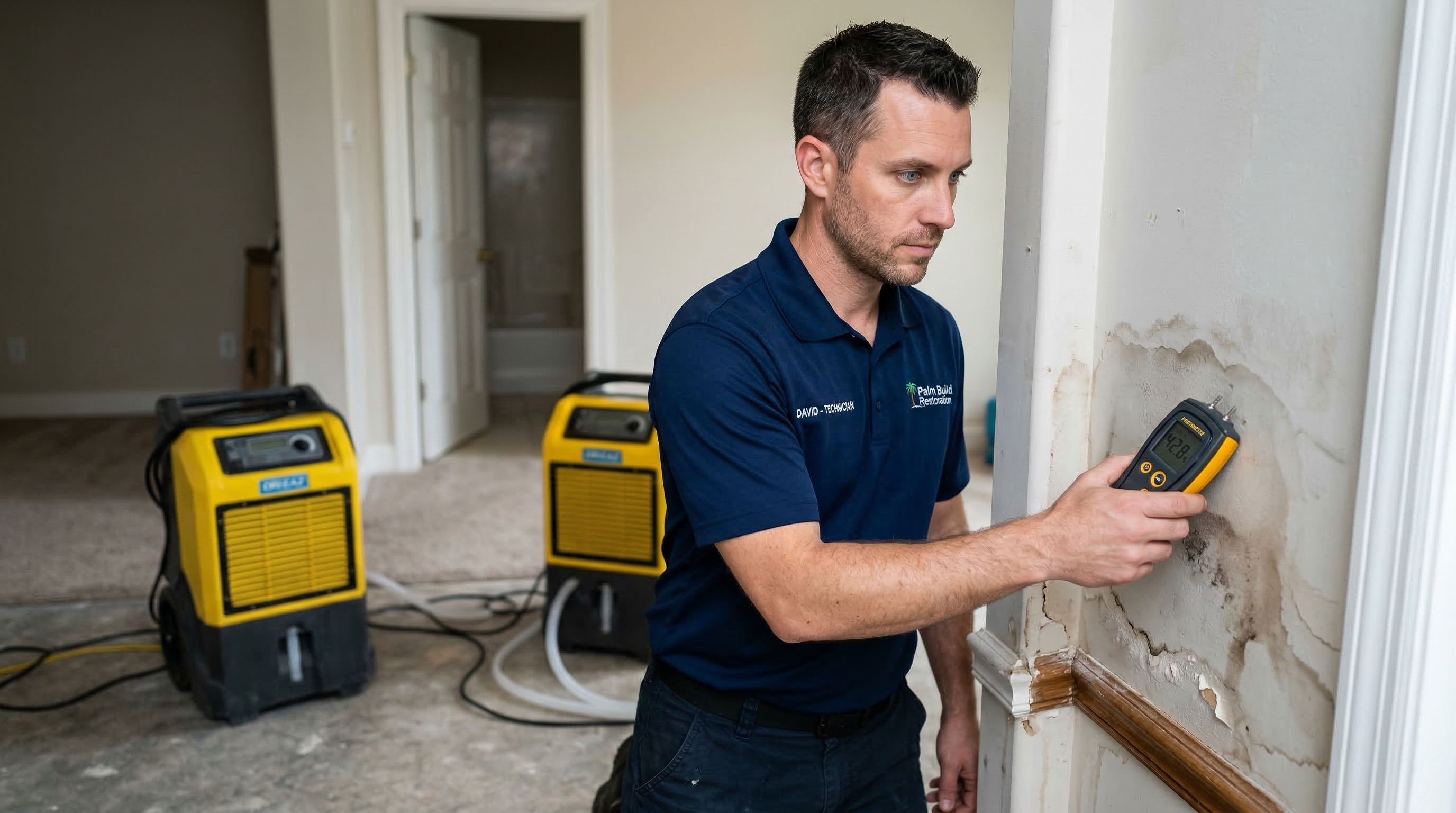
Restoration companies are positioned as first responders for property damage. Their core work centers on stabilizing the loss: water extraction and structural drying, containment and decontamination, smoke and soot cleaning, emergency board-up and tarping, and detailed documentation. This work follows formal industry standards. The IICRC S500 standard describes procedures and precautions for water damage restoration across building types, including project documentation and risk management. Restoration-first companies like Palm Build carry specialized equipment that most general contractors do not: commercial-grade dehumidifiers, truck-mounted extractors, moisture meters, thermal imaging cameras, HEPA air scrubbers, and hydroxyl generators.
The documentation difference is significant. Restoration companies typically produce line-item estimates using claims estimating software such as Xactimate, moisture mapping logs with daily readings, photo documentation timestamped to the loss timeline, and containment and clearance reports. This documentation directly supports your insurance claim. The Journal of Light Construction has noted that insurance restoration is paperwork-heavy, requiring unit pricing detail, while many general contractors commonly provide lump-sum bids that carriers may not accept without line-item breakdowns. For a deeper look at choosing the right team, see our guide on how to choose a restoration company.
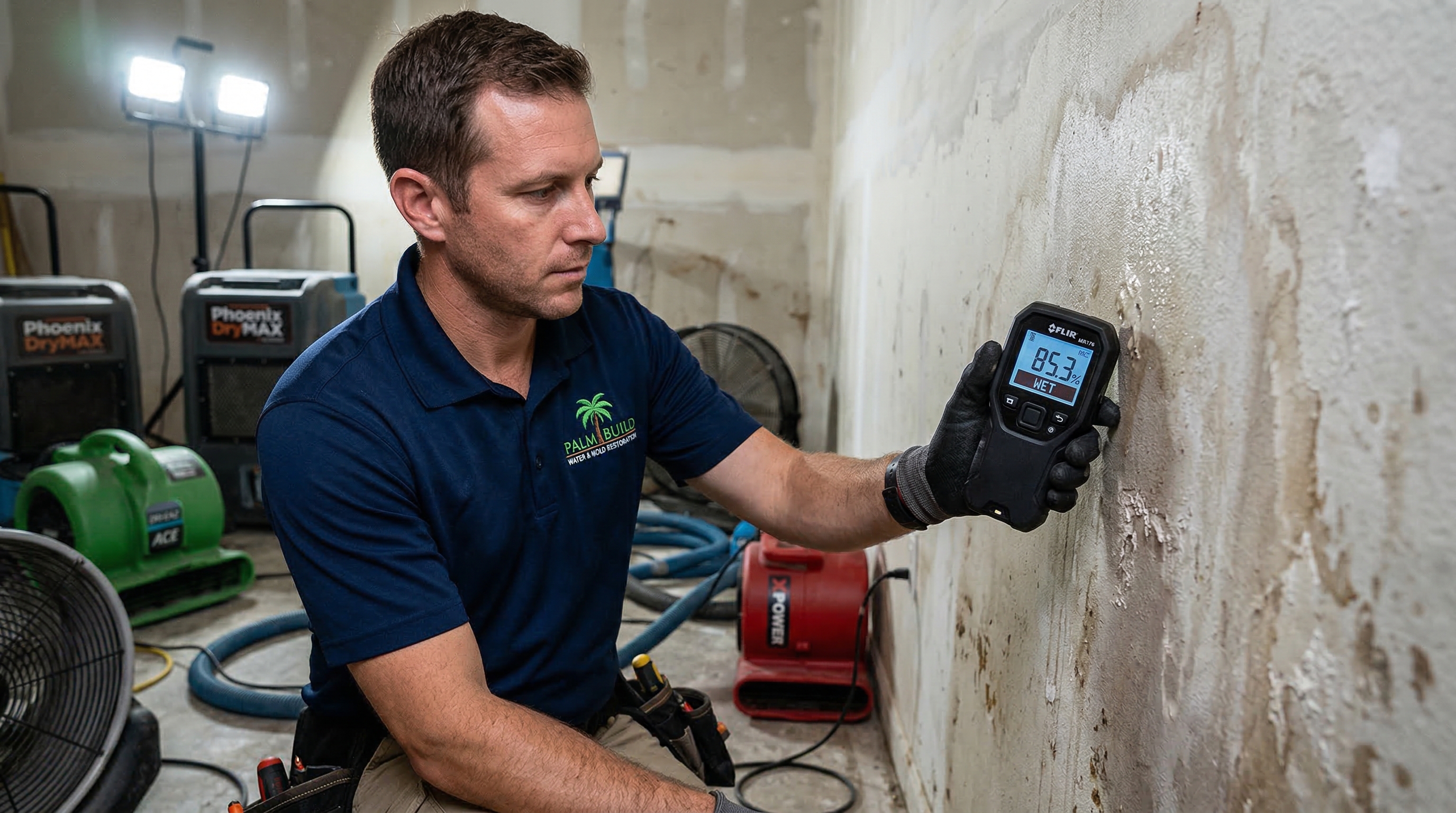
What a General Contractor Does After the Property Is Stabilized
General contractors are builders and remodelers. They manage planned construction scopes, coordinate trades (electrical, plumbing, HVAC, painting), pull permits, and deliver finished spaces. After a property loss, the general contractor's role begins once the restoration company has completed extraction, drying, demolition of unsalvageable materials, and clearance testing. The rebuild scope typically includes drywall replacement and finishing, flooring installation matched to existing materials, cabinetry and countertop replacement, painting, trim, and finish carpentry, and any structural repairs that require permits.
A good general contractor brings value through project management, code compliance, and finish quality. But most general contractors are not set up for the emergency-response, moisture-measurement, and insurance-documentation work that defines the first phase of a property loss. Hiring a GC for the rebuild is the right move at the right time. Hiring one when you actually need extraction and drying is where problems start.
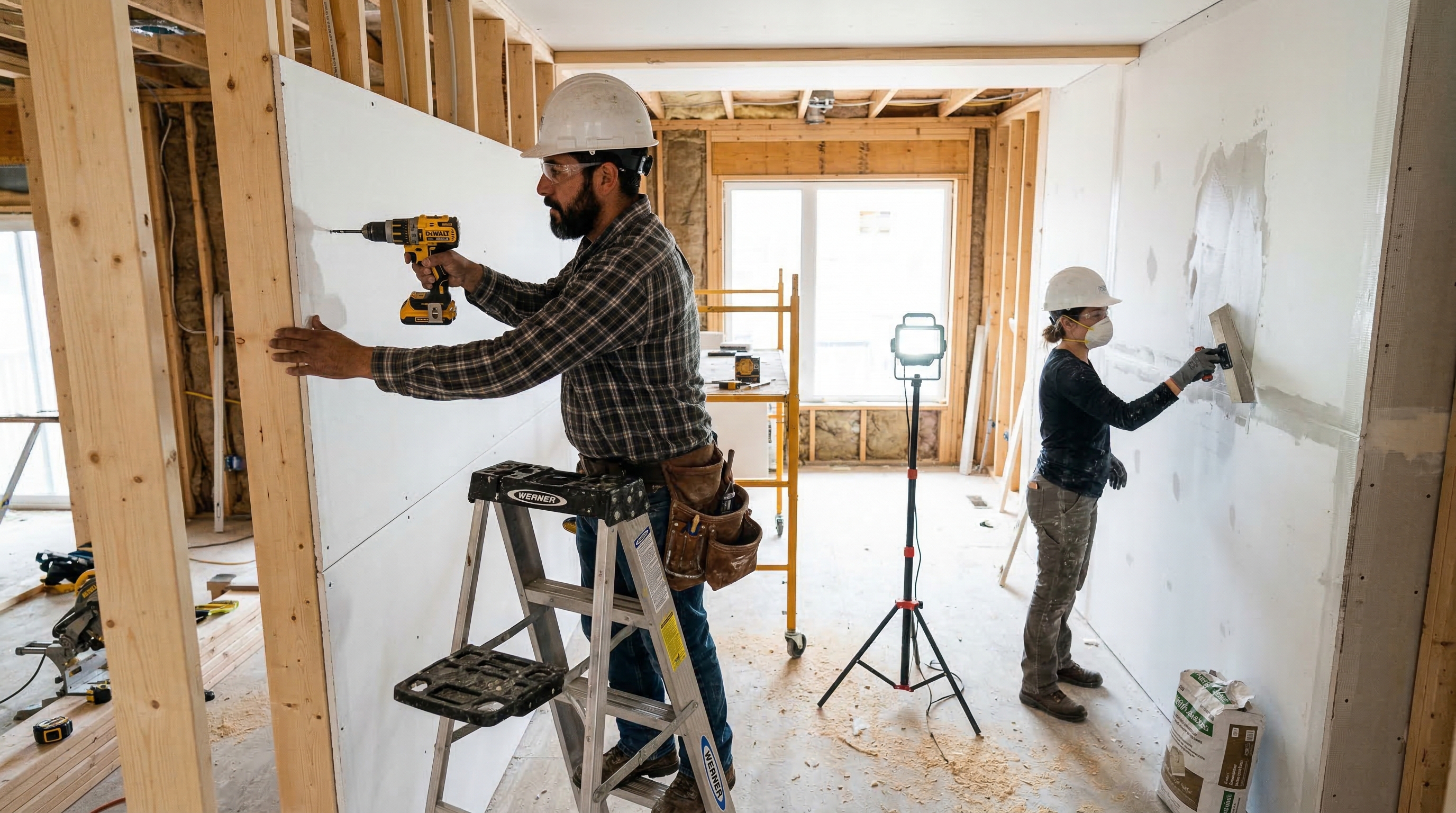
Side-by-Side Comparison: Restoration Company vs General Contractor
This table summarizes the key differences. Use it to evaluate which professional fits your current situation.
| Decision factor | Restoration company | General contractor |
|---|---|---|
| Best fit scenario | Sudden loss: water intrusion, smoke/soot, mold, storm openings, safety hazards | Planned rebuild after site is stabilized; cosmetic upgrades and renovations |
| Availability | Often 24/7 emergency dispatch with rapid mobilization | Typically scheduled availability; may not offer emergency response |
| Equipment | Moisture meters, dehumidifiers, extractors, HEPA scrubbers, thermal imaging | Construction tools, framing equipment, finishing tools |
| Industry standards | IICRC S500 (water), S520 (mold), S540 (trauma); EPA/CDC guidelines | Building code compliance, permitting requirements |
| Insurance documentation | Line-item Xactimate estimates, moisture logs, timestamped photos | Lump-sum bids or traditional proposals (may need conversion for carriers) |
| Typical cost structure | $3-$7.50/sq ft for mitigation; equipment rental and emergency labor rates | Varies by scope; typically bid per project for materials and labor |
| End-to-end capability | Some firms (like Palm Build) handle both mitigation and reconstruction | Many GCs subcontract mitigation to a restoration partner |
Restoration company vs general contractor comparison
Costs and Timelines: Mitigation vs Reconstruction
Understanding costs helps you evaluate scope, set expectations with your insurer, and avoid surprises. Mitigation and reconstruction are different work categories with different pricing structures. Here are current national benchmarks.
| Line item | Typical range | Phase | Notes |
|---|---|---|---|
| Water extraction and structural drying | $3-$7.50/sq ft | Mitigation | National average project ~$3,867; rises with contamination level |
| Mold remediation | $10-$25/sq ft | Mitigation | Average project $1,223-$3,753; jumps with wall cavity or HVAC involvement |
| Smoke damage restoration | $200-$1,200/room | Mitigation | Higher if contents and HVAC are heavily impacted |
| Emergency roof tarping | $150-$3,300 | Mitigation | Average ~$450; also $0.70-$2.80/sq ft depending on size and urgency |
| Window board-up | $50-$500 | Mitigation | Average ~$250; emergency fees may apply |
| Drywall replacement | $1.50-$3/sq ft | Reconstruction | Varies by room size and finish level |
| Flooring installation | ~$12.50/sq ft | Reconstruction | Material matching affects cost significantly |
| Storm damage repairs (total) | $2,655-$22,127 | Both phases | Complex losses can exceed $60,000 |
Typical costs: mitigation phase vs rebuild phase
For detailed pricing breakdowns, see our water damage restoration cost guide and mold remediation cost guide. If the cost ranges above feel broad, it is because every loss is different. Square footage, contamination level, number of rooms affected, and materials involved all drive the final number. What matters most is getting accurate scope documentation early, which is why the restoration-first approach protects your budget.
The Typical Sequence From Emergency to Rebuild
Property damage recovery is not one phase. It is a sequence, and each step needs to be completed before the next one starts safely. Rushing to rebuild before drying is complete creates secondary damage. Here is how the timeline typically unfolds.
Hours 0-4
Emergency response and stabilization
Restoration company arrives, secures the property (board-up, tarping), stops active water flow, begins extraction, and starts photo/video documentation for the insurance claim.
Hours 4-48
Active mitigation and moisture mapping
Industrial dehumidifiers and air movers are placed. Moisture meters map all affected materials. Non-salvageable materials (saturated drywall, padding) are removed. Daily moisture logs begin.
Days 3-7
Drying verification and clearance
Moisture readings are tracked daily until materials reach normal equilibrium. If mold is suspected, testing is performed. The restoration company issues a drying certificate or clearance report.
Days 7-14
Scope finalization and insurance coordination
The restoration company's line-item estimate is submitted to the carrier. Adjuster reviews scope. Supplements are filed if needed. Rebuild scope is defined.
Weeks 2-8+
Reconstruction and rebuild
General contractor (or the restoration company's rebuild division) begins drywall, flooring, cabinetry, paint, and finish work. Final inspections and punch-list completion.
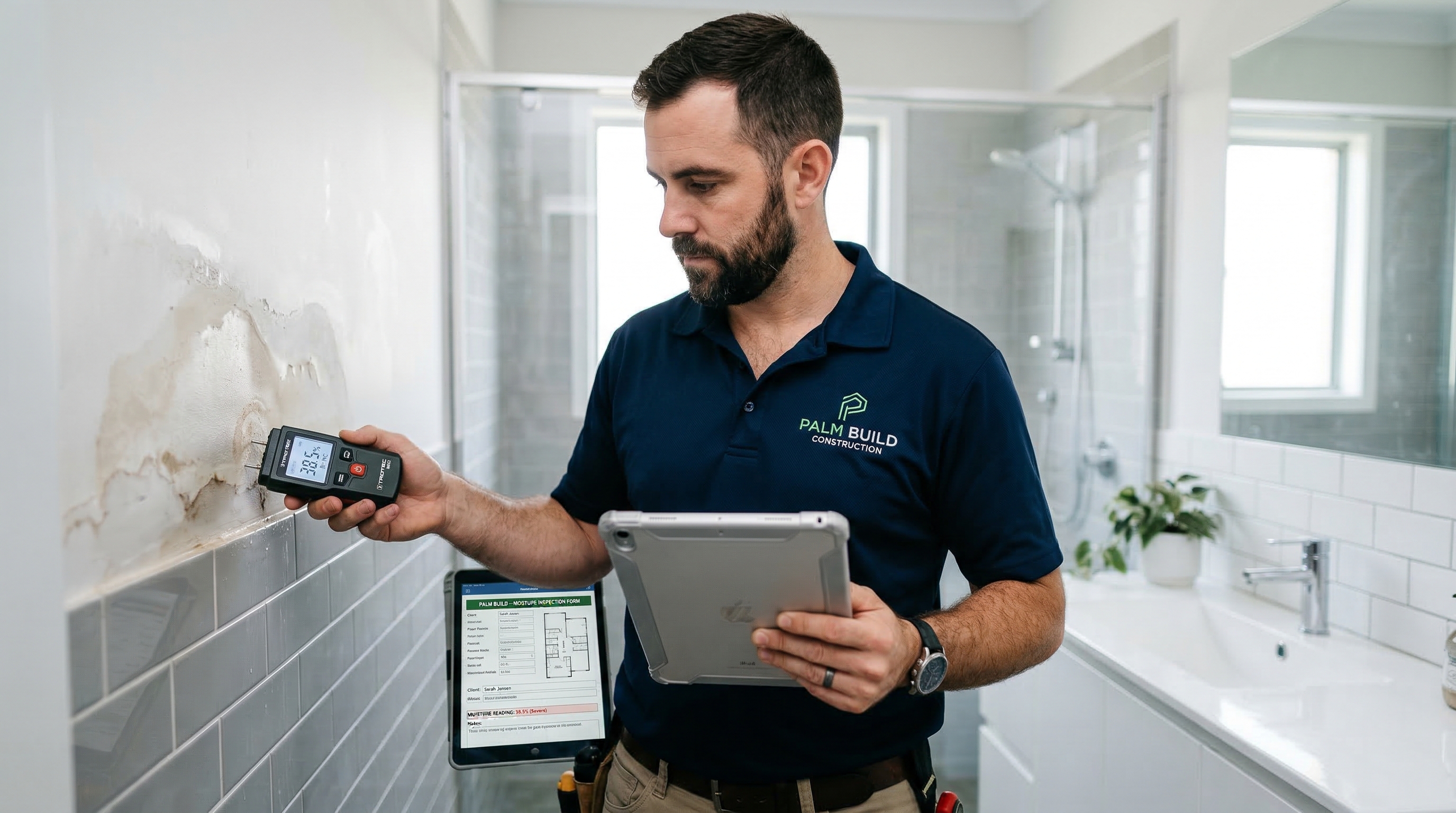
How Insurance Changes the Answer
If you are filing an insurance claim, the restoration-vs-contractor decision has additional weight. Insurance carriers expect specific documentation formats and workflows that most general contractors are not set up to provide. A restoration company that understands claims estimating can directly affect your approval speed and payout amount.
Carriers typically want estimates formatted in Xactimate (the industry-standard claims estimating software) with line-item pricing, not lump-sum proposals. They expect moisture logs that show daily readings from start to drying completion. They want photo documentation that establishes the cause, the extent of damage, and the mitigation steps taken. Without this documentation, supplements get delayed, scopes get cut, and homeowners end up covering gaps out of pocket. Palm Build's insurance restoration process handles adjuster communication, Xactimate-compatible estimating, and documentation that supports your coverage position from day one.
State-Specific Rules for Florida, North Carolina, and South Carolina
The decision between a restoration company and a general contractor is complicated by state-level differences in claim deadlines, contractor licensing requirements, and specialized licensing. If you are in Florida, North Carolina, or South Carolina, these details matter.
Florida: Strict Claim Deadlines and Mold Licensing Requirements
Florida has the most prescriptive requirements of the three states. Notice of a claim or reopened claim is generally barred unless given within 1 year after the date of loss, and supplemental claims must be noticed within 18 months (per Florida statute). Assignment of Benefits is prohibited for policies issued on or after January 1, 2023, which means homeowners now manage their own claim process more directly. Florida also requires a specific mold remediator license for anyone performing mold remediation work, including passing an approved exam, meeting education and experience thresholds, fingerprinting, and maintaining at least $1 million in general liability insurance. This is not a task a general contractor can legally take on without proper licensure.
North Carolina: Contractor Licensing Thresholds and Flood Exclusions
North Carolina's Licensing Board requires a state-issued general contractor license for any project valued at $40,000 or more. For restoration projects that escalate into significant reconstruction, this threshold matters. The NC Department of Insurance also confirms that homeowners policies do not cover flood or rising water damage, making the distinction between storm-driven water entry (often covered) and flood damage (not covered) critical. Insurers should acknowledge claims within 30 days, but there is no specific settlement time limit, so do not wait for resolution before starting storm and hurricane damage restoration.
South Carolina: Dual Licensing and Proof-of-Loss Requirements
South Carolina has a dual licensing framework. Commercial general contractor licenses are required for projects over $10,000 in regulated classifications. The state also maintains a separate residential licensing system through the Residential Builders Commission, requiring a current SC license or registration for residential building or specialty contracting activities. On the insurance side, if a carrier requires a written proof of loss, they must furnish the form. If not furnished within 20 days, you are treated as having complied. A covered claim not paid within 90 days after demand under specified conditions can create attorney fee exposure for the insurer.
| Factor | Florida | North Carolina | South Carolina |
|---|---|---|---|
| Claim filing deadline | 1 year initial; 18 months supplemental | Per policy terms (no fixed state deadline) | Per policy terms |
| Insurer response window | 7 days to acknowledge; 60 days to pay/deny | 30 days to acknowledge; no settlement deadline | Adjuster contact within ~48 hours |
| GC licensing threshold | Varies by county/type | $40,000+ requires state GC license | $10,000+ commercial; separate residential license |
| Mold-specific licensing | Yes, state mold remediator license required | No separate mold license | No separate mold license |
| Flood coverage | Separate policy required (not in standard HO) | Separate policy required | Separate policy required |
State licensing and claim rules that affect who you hire
What to Do Right Now: Step by Step After Property Damage
Whether you ultimately need a restoration company, a general contractor, or both, this sequence protects your property and your claim.
- 1
Make the property safe
If water is flowing, shut off the supply. If there is fire or smoke, confirm the fire department has cleared the structure. If a storm created openings, do not enter if the structure is compromised. Safety first, always.
- 2
Document the damage thoroughly
Before touching anything, photograph and video the damage source, all affected rooms, standing water lines, damaged materials, and any failed equipment. Timestamped evidence establishes the timeline adjusters will evaluate.
- 3
Call a restoration company for active damage
If water is present, mold is suspected, or storm/fire created unsafe conditions, call a restoration company for emergency stabilization. They will begin extraction, drying, containment, and documentation. For 24/7 response, call Palm Build at (888) 245-5155.
- 4
Notify your insurance company
Report the loss promptly. Ask what documentation they need, whether a proof-of-loss form is required, and what their timeline will be. Keep notes on every call.
- 5
Complete drying and clearance before any rebuild
Wait for moisture readings to return to normal levels and for the restoration company to issue a clearance report. Only then should reconstruction begin. Skipping this step is the most common and costly mistake homeowners make.
- 6
Hire a qualified contractor for reconstruction
Once the property is dry and the insurance scope is finalized, bring in a general contractor for the rebuild, or work with a restoration company like Palm Build that handles both mitigation and reconstruction. Verify licensing for your state and project size.
For a detailed hour-by-hour version of this sequence, read our guide on what to do in the first 24 hours after water damage.
Key Terms You Should Know
- Mitigation
- The emergency phase of restoration focused on stopping active damage and preventing secondary damage. Includes water extraction, structural drying, containment, board-up, and tarping. This is the restoration company's primary scope.
- Reconstruction
- The rebuild phase that begins after mitigation is complete and the property is dry and safe. Includes drywall, flooring, cabinetry, painting, and structural repairs. This is traditionally the general contractor's scope.
- IICRC S500
- The Institute of Inspection, Cleaning and Restoration Certification's standard for professional water damage restoration. Describes procedures, documentation requirements, and safety precautions across building types.
- Xactimate
- Industry-standard claims estimating software used by restoration companies and insurance adjusters. Produces line-item estimates that carriers recognize and process more efficiently than lump-sum bids.
- Clearance testing
- Verification that moisture levels have returned to normal ranges and that affected areas are safe for reconstruction. Usually documented with final moisture readings and a clearance report.
- Assignment of Benefits (AOB)
- A legal transfer of insurance claim rights from the policyholder to a contractor. Prohibited in Florida for policies issued on or after January 1, 2023, which means Florida homeowners now manage their own claim process directly.
Related Guides and Services
Water Damage Restoration Services
24/7 emergency extraction, structural drying, and moisture documentation across FL, NC, and SC.
Reconstruction Services
Full rebuild after mitigation: drywall, flooring, cabinetry, roofing, and finish work with insurance scope alignment.
Insurance Restoration Process
How Palm Build coordinates adjuster communication, Xactimate estimating, and claim documentation.
How to Choose a Restoration Company
Checklist for vetting contractors: IICRC credentials, licensing, insurance, estimate quality, and red flags.
Water Damage Restoration Cost Guide 2026
Current pricing data for mitigation and restoration to help evaluate scope and compare bids.
First 24 Hours After Water Damage
Hour-by-hour emergency action checklist covering safety, documentation, and mitigation priorities.
Mold Remediation Services
IICRC-aligned mold containment, removal, and clearance testing for residential and commercial properties.
Fire and Smoke Cleanup Services
Soot removal, odor elimination, content cleaning, and structural assessment after fire events.
Storm and Hurricane Damage Restoration
Emergency board-up, tarping, water extraction, and full restoration for wind and storm damage.
Commercial Restoration Services
Large-scale restoration for commercial properties, multi-family buildings, and HOA communities.
Frequently Asked Questions
How quickly should I call a restoration company after property damage? +
Can a general contractor handle water damage or mold? +
Are restoration companies more expensive than general contractors? +
Do I need to wait for the insurance adjuster before cleanup starts? +
Does homeowners insurance cover flood damage from storms? +
How do Florida claim deadlines affect who I hire? +
What should I do first after storm damage to my home? +
Can one company handle both restoration and reconstruction? +
Property damage right now? Call Palm Build.
Palm Build provides 24/7 emergency restoration with IICRC-aligned mitigation, insurance-ready documentation, and full reconstruction services across Florida, North Carolina, and South Carolina. One team from emergency to rebuild.
Found this helpful? Send it to someone who needs it.