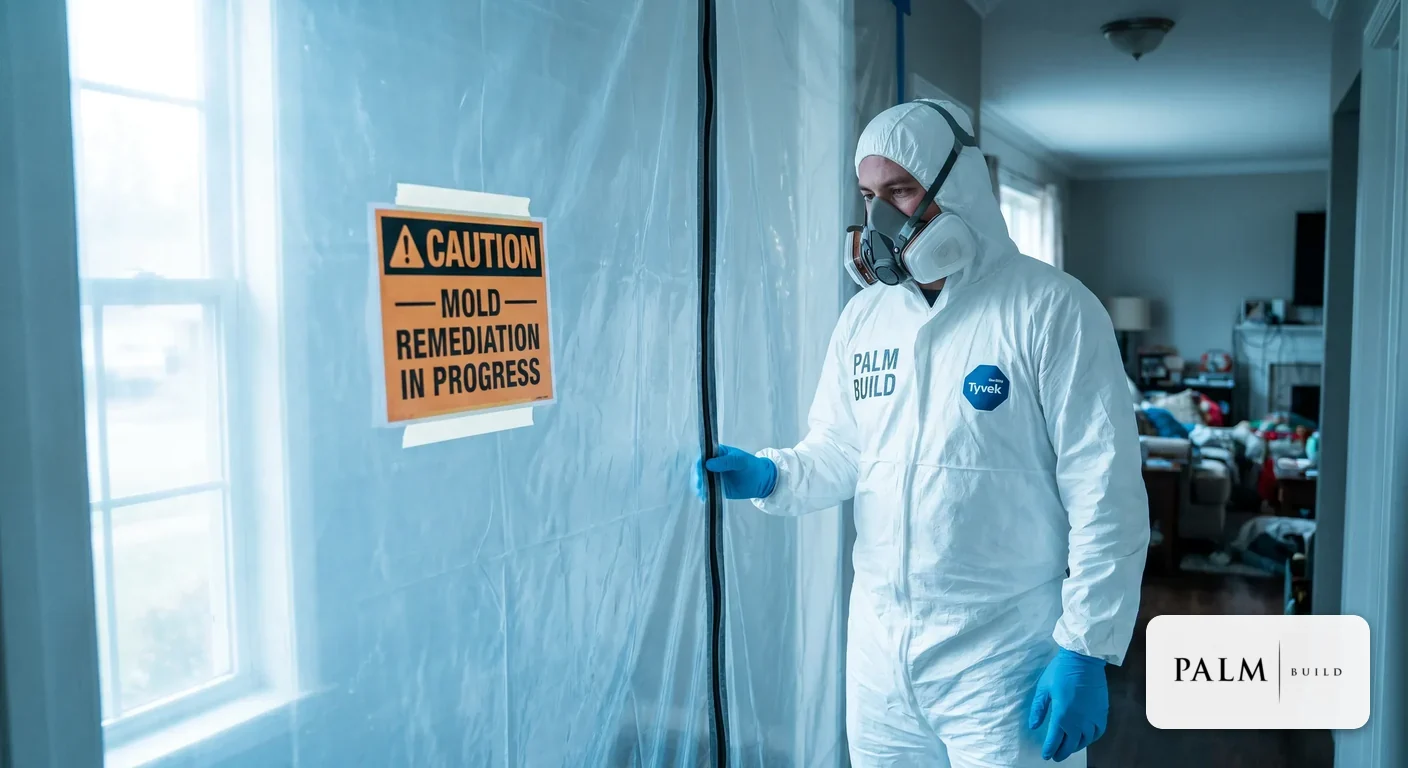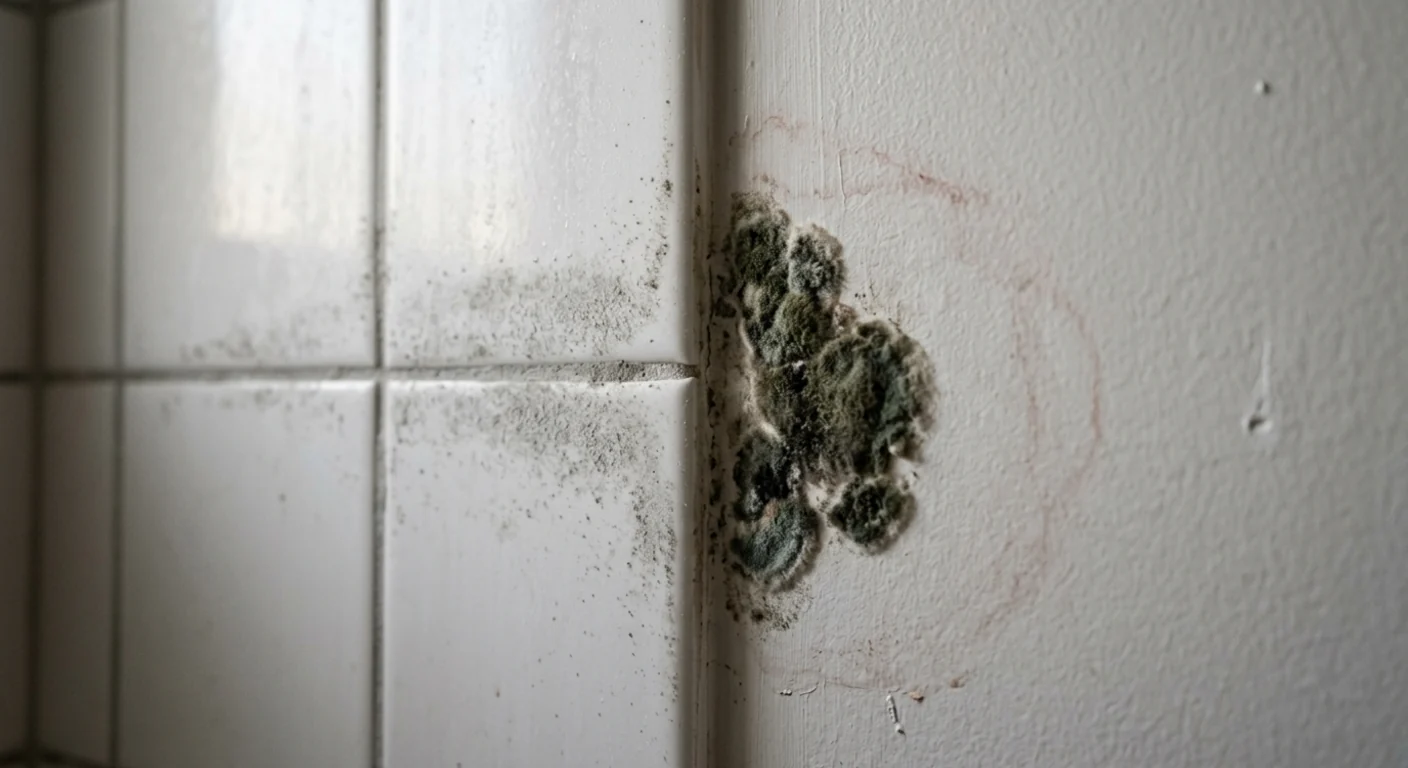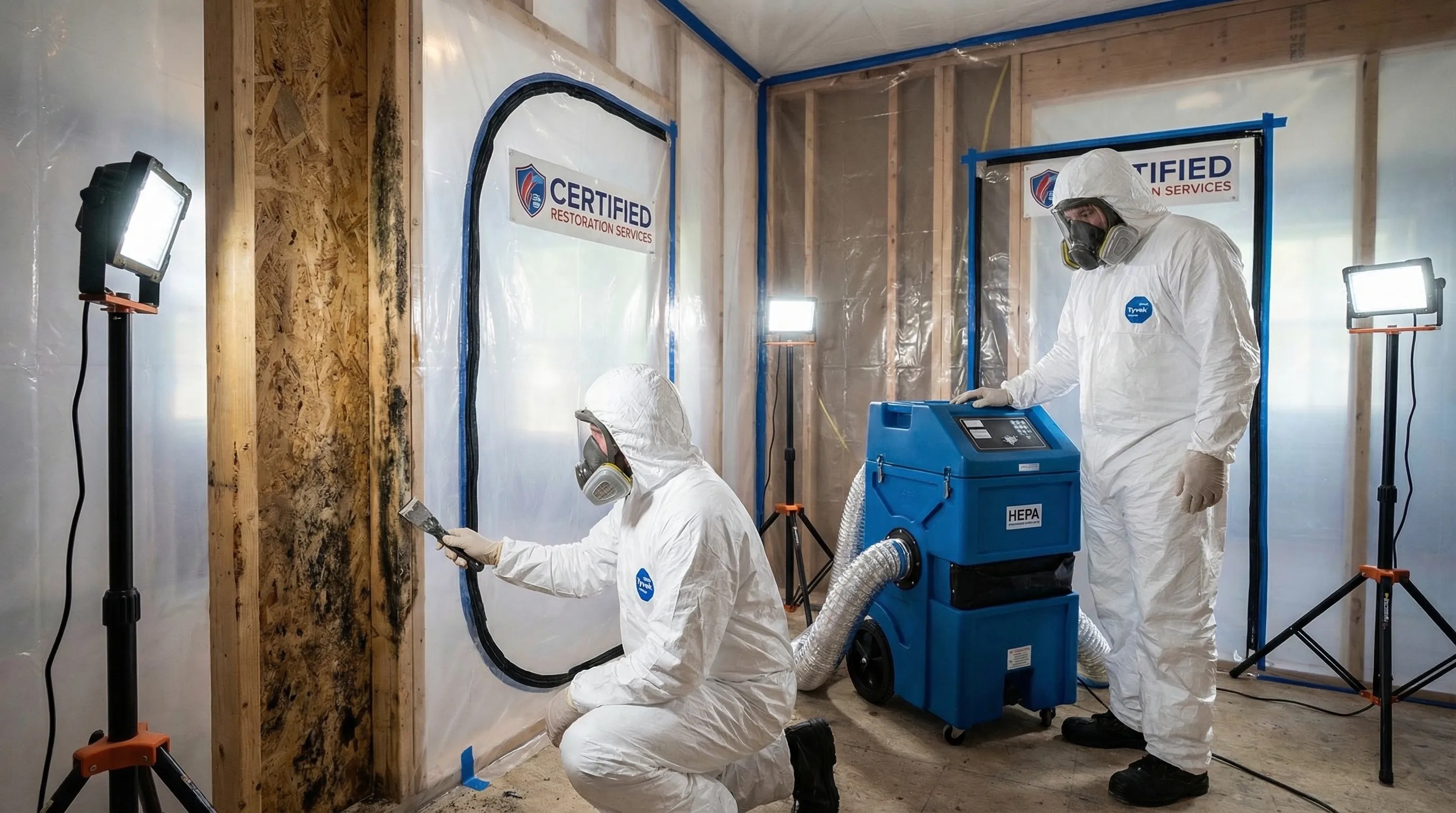
Quick Answer
Mold remediation costs $1,200 to $3,750 for most homeowners in 2026, with a national average around $2,300 to $2,400. Per-square-foot pricing runs $10 to $25, and whole-house projects can reach $10,000 to $30,000.
Key takeaways
- Most homeowners pay $1,200 to $3,750 for professional mold remediation, with an average around $2,300 to $2,400.
- Per square foot pricing typically runs $10 to $25, though whole-house projects can reach $10,000 to $30,000.
- Costs vary significantly by location in the home: bathroom mold is often the least expensive, while HVAC and whole-house remediation are the most costly.
- Florida requires state licensing for mold remediators. North Carolina and South Carolina do not have specific mold certification programs.
- Insurance may cover mold when it results from a covered peril like sudden water damage, but gradual leaks and flood-related mold are commonly excluded.
In 2026, most homeowners pay between $1,200 and $3,750 for professional mold remediation, with the national average landing around $2,300 to $2,400. Contractors typically estimate $10 to $25 per square foot of affected area. Whole-house situations, especially after major water intrusion, commonly reach $10,000 to $30,000. Timing is critical: wet or damp materials should be dried within 24 to 48 hours to reduce the chance of mold growth, and typical professional remediation takes one to five days depending on severity.
Typical project cost
$1,200 - $3,750
National average for most residential jobs
Cost per square foot
$10 - $25
Affected area, not total home square footage
Whole-house remediation
$10,000 - $30,000
Multi-room or severe water damage scenarios
Project timeline
1 - 5 days
Longer for severe or multi-area contamination
Mold Removal Cost Per Square Foot
Per square foot pricing is one of the most searched mold remediation cost questions, and it is the metric most contractors use when scoping a project. The "affected area" is measured in square feet of contaminated surface, not your home's total square footage.
| Pricing tier | Cost per sq ft | What's typically included |
|---|---|---|
| Standard remediation | $10 - $25 | Containment, HEPA vacuuming, antimicrobial treatment, material removal if needed |
| Complex or hidden mold | $15 - $30 | Demolition access, wall cavity work, HVAC system cleaning, post-remediation verification |
| Minimum charge (small jobs) | $500 - $1,500 flat | Most contractors have a minimum project charge regardless of square footage |
Mold remediation cost per square foot in 2026
Small jobs often carry a higher effective per-foot cost because of fixed setup expenses. Containment barriers, HEPA air scrubbers, and personal protective equipment cost the same whether the affected area is 20 square feet or 200.
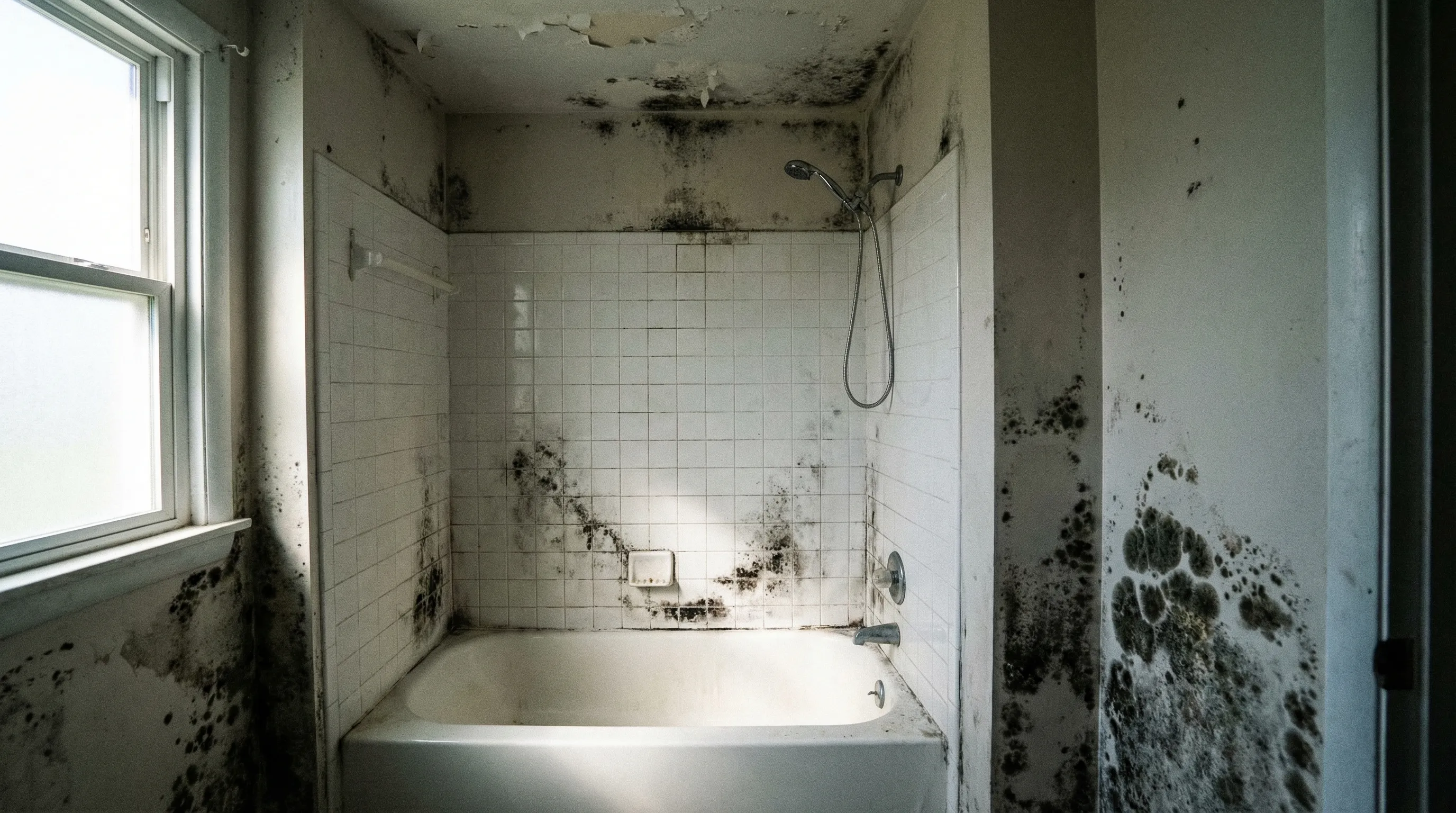
Mold Remediation Cost by Project Size
Small areas (under 10 square feet)
For surface mold covering less than about 10 square feet, the EPA notes that homeowners may be able to handle cleanup themselves in many cases. Professional remediation for areas this size typically costs $500 to $1,500. This usually covers a bathroom corner, a small section of drywall, or a window frame.
Medium contamination (10 to 100 square feet)
Mid-range projects are where most homeowner invoices land. Expect $1,500 to $5,000 depending on the material type, accessibility, and whether demolition is needed. A section of basement wall, a bathroom ceiling, or a closet wall with hidden growth behind drywall all fall into this range.
Whole-house and multi-room contamination
When mold has spread across multiple rooms, into the HVAC system, or through large sections of a home after flooding or a major leak, costs climb to $10,000 to $30,000. These projects involve extensive material removal, multiple containment zones, post-remediation air testing, and often reconstruction of removed surfaces after the remediation is complete.
Mold Remediation Cost by Location in the Home
Where the mold is growing changes the price more than the size alone. A small patch inside a wall cavity can cost more than a larger area on an exposed bathroom surface because of the demolition, containment, and rebuild work required.
| Location | Typical cost range | Why it trends higher or lower |
|---|---|---|
| Bathroom | $500 - $1,000 | Usually accessible with a smaller containment scope |
| Crawl space | $500 - $2,000 | Tight access; often requires moisture control add-ons |
| Basement | $500 - $3,000 | Larger damp zones; hidden growth behind finishes raises cost |
| Attic | $1,000 - $4,000 | Often tied to roof leaks; insulation contamination changes scope |
| Inside walls | $1,000 - $20,000 | Demolition and rebuild drives the highest cost variability |
| HVAC system and ducts | $3,000 - $10,000 | Specialized cleaning; contamination can affect the entire home |
| Whole house | $10,000 - $30,000 | Multiple material types removed, plus post-project rebuild |
Typical mold remediation costs by location
Mold Inspection and Testing Costs
Many homeowners confuse mold inspection and testing with mold remediation. They are separate services, and understanding the difference helps you avoid paying for work you may not need.
| Service | Typical cost range | When it applies |
|---|---|---|
| Mold inspection | $300 - $1,000 (avg ~$657) | Confirms extent of growth, moisture conditions, and whether remediation is warranted |
| Mold testing (air/surface samples) | $250 - $500 | Determines mold type and spore concentration; not required in every situation |
Mold inspection and testing costs
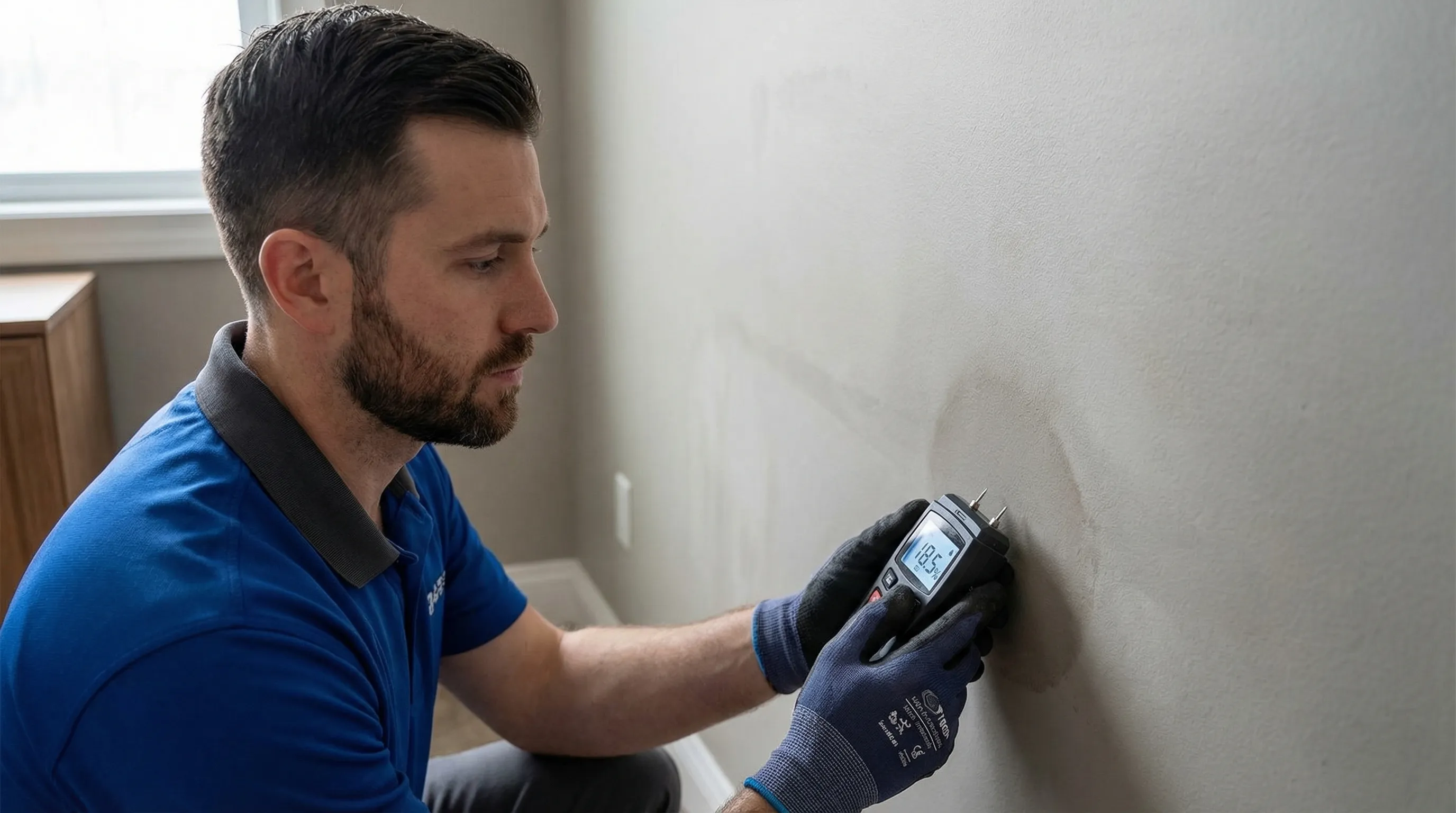
A mold inspection is often the right first step when you suspect a problem but cannot see visible growth. If mold is already visible and the moisture source is known, testing may not add value. Your remediation professional can help determine which services make sense for your situation.
What Drives Mold Remediation Cost Up
Size alone rarely tells the full story. Understanding what moves the price helps you evaluate estimates and avoid surprises on the final invoice.
Factors that increase cost
- Hidden mold behind walls, under floors, or inside ceiling cavities requiring demolition to access
- HVAC system involvement that can spread spores throughout the home
- Contaminated insulation, carpet, or porous materials that must be removed and replaced
- Multiple containment zones needed to prevent cross-contamination between rooms
- Post-remediation air testing and clearance verification
- Structural damage or wood rot requiring repair before rebuild
Factors that keep cost lower
- Surface mold on hard, non-porous materials (tile, glass, metal)
- Single-room containment with easy access
- Moisture source already identified and fixed before remediation starts
- No HVAC involvement or ductwork contamination
- Minimal demolition needed to reach affected materials
- Small affected area with no spread behind finishes
Mold Growth Risk Calculator
Assess your mold risk based on moisture levels, time elapsed, and environmental conditions.
Insurance Claim Estimator
Check if your mold remediation may be covered and estimate your out-of-pocket share.
What Professional Mold Remediation Includes
Professional mold remediation is not just "spraying something." It is a controlled process designed to remove contamination, prevent cross-contamination, and address the moisture source so mold does not return. Remediation practices are typically scoped using the IICRC S520 standard, an ANSI-accredited industry reference for mold remediation across residential, commercial, and institutional buildings.
- 1
Identify and stop the moisture source
Mold cannot grow without moisture. Before any remediation begins, the water source must be found and corrected. This might be a plumbing leak, roof damage, poor drainage, or humidity. If water damage restoration is needed, it should happen first.
- 2
Document the damage for insurance
Photographs, moisture readings, and a written scope of work create the foundation for an insurance claim. Thorough documentation before work begins protects your coverage. If you need guidance, our insurance restoration process team can help.
- 3
Establish containment and negative air pressure
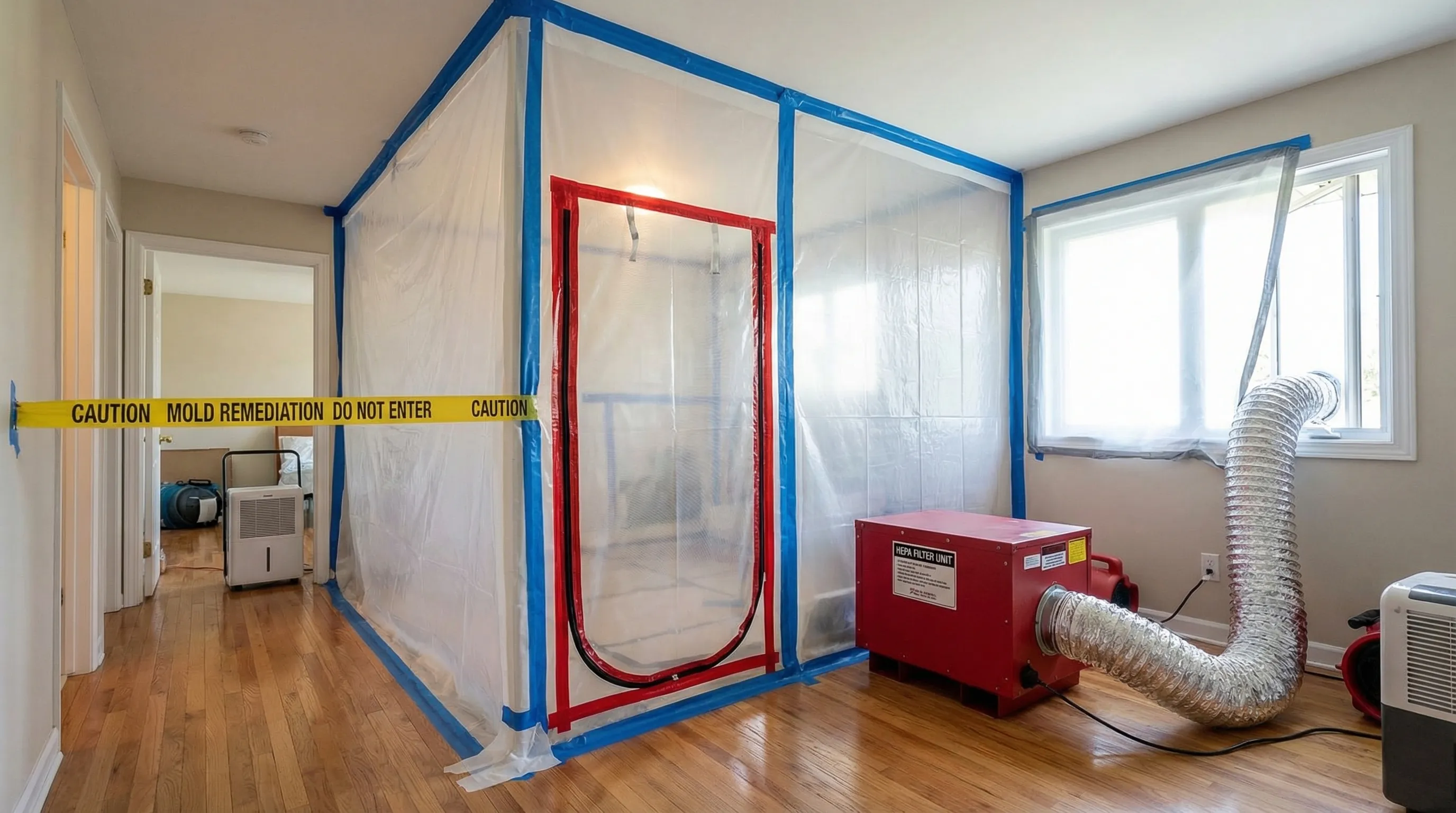
Plastic sheeting seals the work area. HEPA-filtered negative air machines create pressure that pulls air inward, preventing spores from migrating to clean areas of the home.
- 4
Remove unsalvageable materials and clean remaining surfaces
Porous materials like drywall, insulation, and carpet that cannot be cleaned are removed and disposed of. Hard surfaces are HEPA vacuumed and treated with antimicrobial solutions.
- 5
Dry the structure completely
Commercial dehumidifiers and air movers bring moisture levels down to safe thresholds. Wood should be dried below about 20% moisture content to provide a margin of safety against fungal decay.
- 6
Verify results and prevent recurrence
Post-remediation air testing or visual inspection confirms the work meets clearance criteria. Ongoing moisture control, whether through ventilation, dehumidification, or repairs, prevents future growth.
Mold Remediation Costs in Florida
Florida's combination of year-round humidity, hurricane exposure, and aging housing stock makes mold one of the most common restoration issues in the state. Our guide on why Florida homes are especially prone to mold covers the climate factors, prevention steps, and licensing rules in detail. Florida is also one of the few states with specific licensing requirements for mold work.
Florida mold licensing and how to verify it
Florida regulates mold-related services through a state licensing program under Chapter 468, Part XVI. The framework covers both mold assessors and mold remediators, with requirements and prohibitions for unlicensed practice. Before hiring anyone in Florida, verify their license through the Florida Department of Business and Professional Regulation.
Tampa area pricing snapshot
In the Tampa market, reported local mold remediation costs range from about $1,347 to $3,778, with a local average around $2,548. This is roughly 7.5% higher than the national average, driven by high demand and humidity-related frequency.
Mold Remediation Costs in North Carolina
North Carolina does not have a state certification program specifically for mold remediation companies or individuals, according to public guidance from NC State Extension. This means the responsibility falls on homeowners to vet contractors carefully, and this how to choose a restoration company checklist is a strong starting point.
What to ask North Carolina mold contractors
Without state licensing, look for IICRC certification (specifically the AMRT designation for mold remediation), liability insurance, and a written scope of work that references industry standards. Ask for references from similar projects.
Raleigh and Charlotte pricing snapshots
In the Raleigh market, reported mold remediation costs range from about $1,007 to $3,338, with a local average around $2,145. Charlotte costs range from about $1,103 to $3,821, with a local average around $2,382. Charlotte's slightly higher range reflects its humid climate and higher frequency of crawl space mold issues.
Contractor licensing for rebuild work
Even when the mold remediation itself does not require a permit, rebuilding what was removed often does. The North Carolina Licensing Board for General Contractors requires a general contractor license when a project is valued at $40,000 or more. For large remediation projects that include extensive reconstruction, this threshold matters.
Mold Remediation Costs in South Carolina
South Carolina state guidance has historically emphasized that there are no state or federal laws, regulations, or standards for mold or indoor air quality, and the state does not regulate mold in homes or public buildings in the way many homeowners assume. This makes choosing a reputable, standards-based remediation provider even more important.
Post-storm mold urgency in South Carolina
South Carolina's Department of Environmental Services emphasizes that severe weather events and excess moisture drive indoor mold risk. Their guidance reiterates the importance of cleaning and drying within 24 to 48 hours to help prevent mold growth after flooding or storm damage.
Rebuild licensing thresholds
For rebuild work following mold remediation, the South Carolina Contractor's Licensing Board requires commercial general and mechanical contractor licensing when the total cost of construction exceeds $10,000. Residential builders must be licensed and residential specialty contractors must be registered. Additional bonding requirements are triggered when project cost exceeds $5,000 for certain residential specialty work.
Does Insurance Cover Mold Remediation?
Insurance coverage for mold is usually determined by the cause of the water problem, not by the presence of mold itself. Understanding this distinction can save you thousands in out-of-pocket costs and prevent claim denials.
When mold remediation may be covered
Mold may be covered when it results from a covered peril, such as sudden accidental water damage from a burst pipe, appliance failure, or storm damage. In these cases, the mold remediation is treated as part of the water damage claim. Documentation from the moment of discovery is critical for approval.
Common exclusions and coverage caps
Mold is often excluded when tied to neglect, gradual leaks, or deferred maintenance. Many policies also cap mold-specific coverage at $5,000 to $10,000 regardless of actual remediation cost. Flood-related mold generally requires separate flood insurance. Use our insurance claim estimator to check whether your situation may be covered and estimate your out-of-pocket share. If you are filing a claim, our guide on how to file a water damage insurance claim walks through the documentation process step by step.

Water Damage Restoration Cost Guide
See what water damage restoration costs in 2026, including emergency extraction, drying, and rebuild.
Mold Remediation Services
24/7 professional mold remediation across Florida, North Carolina, and South Carolina.
Insurance Restoration Process
How Palm Build works directly with your insurance company from claim to completion.
Crawl Space Cleanup and Moisture Control
Crawl space mold removal, encapsulation, and long-term moisture management.
Crawl Space Encapsulation Cost in 2026
What encapsulation, vapor barriers, and dehumidification cost in FL, NC, and SC.
Mold Remediation vs. Mold Removal: Key Differences
What professional remediation includes versus simple removal, and why the distinction matters.
Frequently Asked Questions About Mold Remediation Cost
How much does mold remediation cost per square foot? +
What does mold remediation include? +
How long does professional mold remediation take? +
How much does a mold inspection and testing cost? +
Does insurance cover mold removal in Florida, North Carolina, or South Carolina? +
Is mold remediation worth it if I plan to sell? +
Can I remove mold myself if it is a small area? +
How do I prevent mold from coming back after remediation? +
Dealing with mold in your home?
Our certified remediation teams are available 24/7 across Florida, North Carolina, and South Carolina. We handle the mold, the moisture source, and the insurance paperwork.
Found this helpful? Send it to someone who needs it.