Key takeaways
- Stop the water source, document everything, and call your insurer within 24 hours. Do not wait for the adjuster to start mitigation.
- Water category (clean, gray, or black) directly affects cleanup cost and what your insurer will approve.
- Moisture meter readings, thermal imaging, and daily drying logs are the evidence that separates approved claims from denied ones.
- Florida homeowners have only 1 year to file notice of a water damage claim, shorter than most expect.
- Common mistakes like cleaning up before documenting or delaying mitigation are the top reasons water damage claims get denied.
To file a water damage insurance claim, you need to do seven things in order: stop the water source, document the damage with photos and video before touching anything, call your insurance company within 24 hours, start professional water extraction and drying immediately (do not wait for the adjuster), collect moisture readings and drying logs as evidence, walk the adjuster through every affected area including hidden damage behind walls, and review the final estimate carefully before accepting. Most standard homeowners policies cover sudden and accidental water damage like burst pipes and appliance failures. They do not cover gradual leaks, deferred maintenance, or flood damage (which requires a separate policy). Getting the sequence right in the first 48 hours is what separates claims that get paid in full from claims that get reduced or denied.
Homes filing water claims
1 in 50
Per year among insured U.S. homes
Average water damage claim
$12,514
Insurance Information Institute data
Mold risk window
24-48 hrs
EPA/CDC guidance on drying timeline
What Water Damage Does (and Doesn't) Your Insurance Cover?
Before you file a claim, you need to understand what your policy actually covers. The single most common reason water damage claims get complicated is that homeowners assume all water damage is covered. It is not. If you live in a condo or HOA community, responsibility splits between the association and your unit, making claims even more complex. See our HOA water damage responsibility guide for who pays what. The distinction your insurer cares about most is whether the damage was sudden and accidental versus gradual or maintenance-related. For a full breakdown of coverage types, see Palm Build's understanding your coverage guide.
| Scenario | Typically covered? | Why |
|---|---|---|
| Burst pipe (sudden) | Yes | Sudden and accidental damage is a standard covered peril |
| Washing machine overflow | Yes | Appliance failure is typically covered if not caused by neglect |
| Water heater failure | Yes | Sudden mechanical failure, but not if the unit was visibly corroded and ignored |
| Toilet overflow or backup | Usually yes | Covered under most policies; sewage backup may require an endorsement |
| Roof leak from storm damage | Yes | Wind and storm damage are standard covered perils |
| Slow leak behind a wall (gradual) | Usually no | Insurers exclude damage from gradual or repeated seepage |
| Deferred maintenance (old pipes, worn seals) | No | Maintenance is the homeowner's responsibility |
| Flood from rising water (storm surge, river) | No | Requires separate NFIP or private flood policy |
| Sewer backup | Depends | Many standard policies exclude it; available as an add-on endorsement |
| Fire suppression water | Yes | Covered as part of the fire loss; see our firefighting water damage guide |
Water damage coverage: what is typically covered vs. excluded
How Water Category Affects Your Insurance Claim
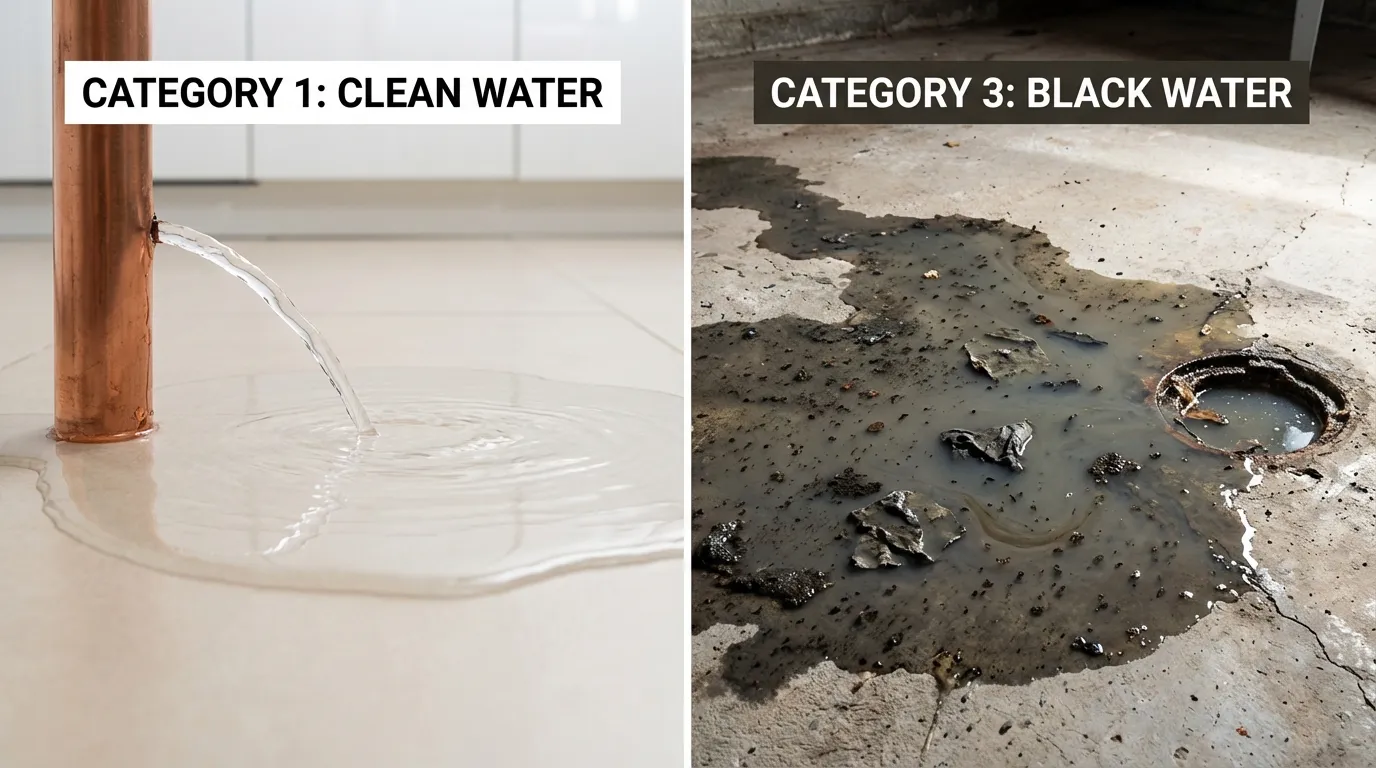
The IICRC classifies water damage into three categories, and the category directly affects what your insurer approves for cleanup and how much they pay. Higher categories mean more contamination, more protective equipment, more aggressive demolition, and higher costs per square foot. Knowing your water category before talking to your adjuster helps you push back if the approved scope seems too low.
| Category | Source examples | Contamination level | Typical cost impact |
|---|---|---|---|
| Category 1 (Clean) | Broken supply lines, rainwater, faucet leaks | Minimal health risk | $3 to $5 per sq ft for mitigation |
| Category 2 (Gray) | Washing machine discharge, dishwasher overflow, toilet overflow with urine | May cause illness if ingested | $4 to $7 per sq ft; requires more PPE and sanitation |
| Category 3 (Black) | Sewage backup, rising floodwater, toilet overflow with feces, standing water over 72 hours | Serious health hazard | $7 to $12+ per sq ft; full demolition of affected porous materials required |
IICRC water categories and their impact on insurance claims
An important detail: any water left standing for more than 72 hours automatically escalates to Category 3 regardless of its original source. This is why acting fast matters for your health and your claim. For detailed cost ranges by category, see our 2026 water damage restoration cost guide.
Step-by-Step: Filing Your Water Damage Insurance Claim
These seven steps are specific to water damage claims. For the general insurance claims process (applicable to all property damage types), see Palm Build's full insurance restoration process guide. The steps below focus on what makes water damage claims different: the speed required, the moisture evidence needed, and the mitigation obligation that catches many homeowners off guard.
- 1
Stop the water source and protect the property
Shut off the main water valve if the source is a plumbing failure. If the water is coming from the roof, place tarps or buckets to limit spread. Move furniture and valuables away from standing water. Your policy requires you to take reasonable steps to prevent further damage. Failure to mitigate can reduce your payout. For detailed first-hour actions, see our first 60 minutes after water damage guide.
- 2
Document everything before cleanup starts
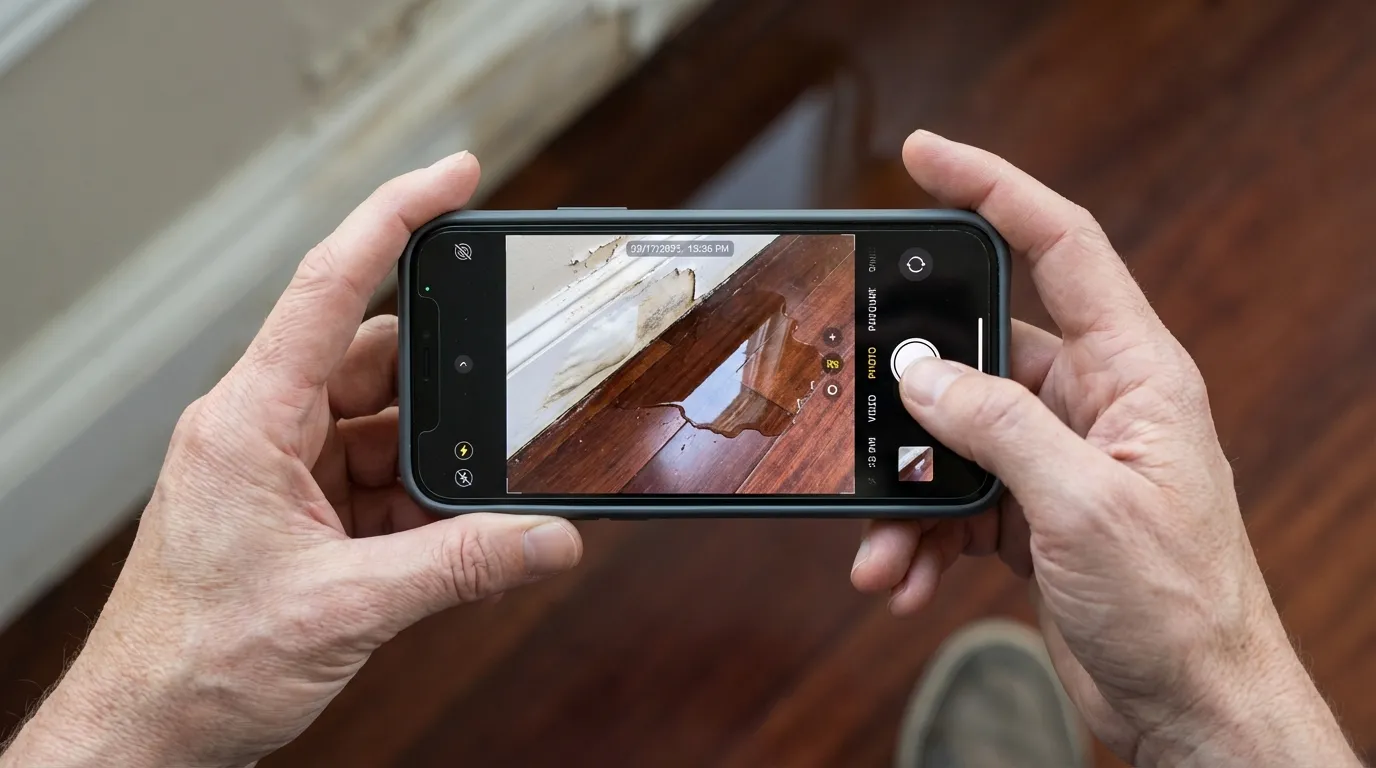
Take photos and video of every affected room from multiple angles. Photograph the water source, water lines on walls, standing water depth, and damaged items. Use a ruler or tape measure next to water lines to show depth. Open cabinets and closets to document damage inside. Do not start cleaning up or moving items until you have thorough visual documentation. This is the evidence your adjuster will rely on.
- 3
Call your insurance company within 24 hours
Report the loss as soon as possible. Most policies require prompt notice, and delays can give your insurer grounds to reduce or deny your claim. Have your policy number ready. Ask for your claim number and the name of your assigned adjuster. Ask specifically whether sewage backup coverage applies if the water source involves any drain or sewer line. Write down the date, time, and name of every person you speak with.
- 4
Start professional mitigation immediately (do not wait for the adjuster)
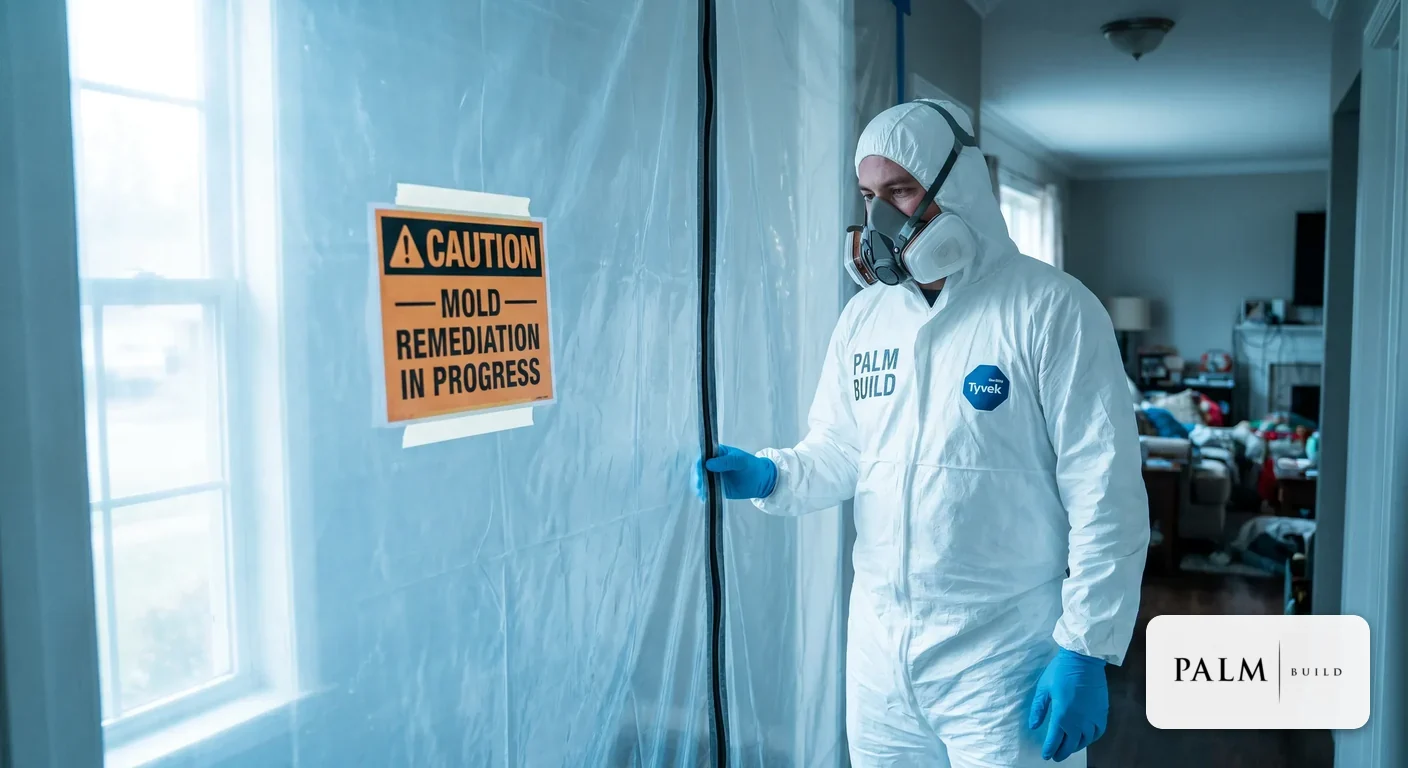
This is the step most homeowners get wrong. You do not need to wait for the insurance adjuster before starting water extraction and drying. In fact, your policy requires you to mitigate. The EPA and CDC both warn that mold can begin growing within 24 to 48 hours on wet materials. Our first 24 hours guide spells out the immediate steps. A professional emergency water restoration team will extract standing water, deploy drying equipment, and begin moisture mapping. Palm Build documents everything with photos, moisture readings, and daily logs that your adjuster needs.
- 5
Get moisture readings and drying logs as evidence
This is the evidence that makes water damage claims different from other property claims. Your restoration company should be taking pin moisture meter readings at specific test points every day, recording relative humidity and temperature, and using thermal imaging to identify hidden moisture behind walls and under floors. These daily drying logs prove to your insurer that professional protocols were followed and that the scope of work was necessary. If your restoration company is not providing drying logs, that is a red flag.
- 6
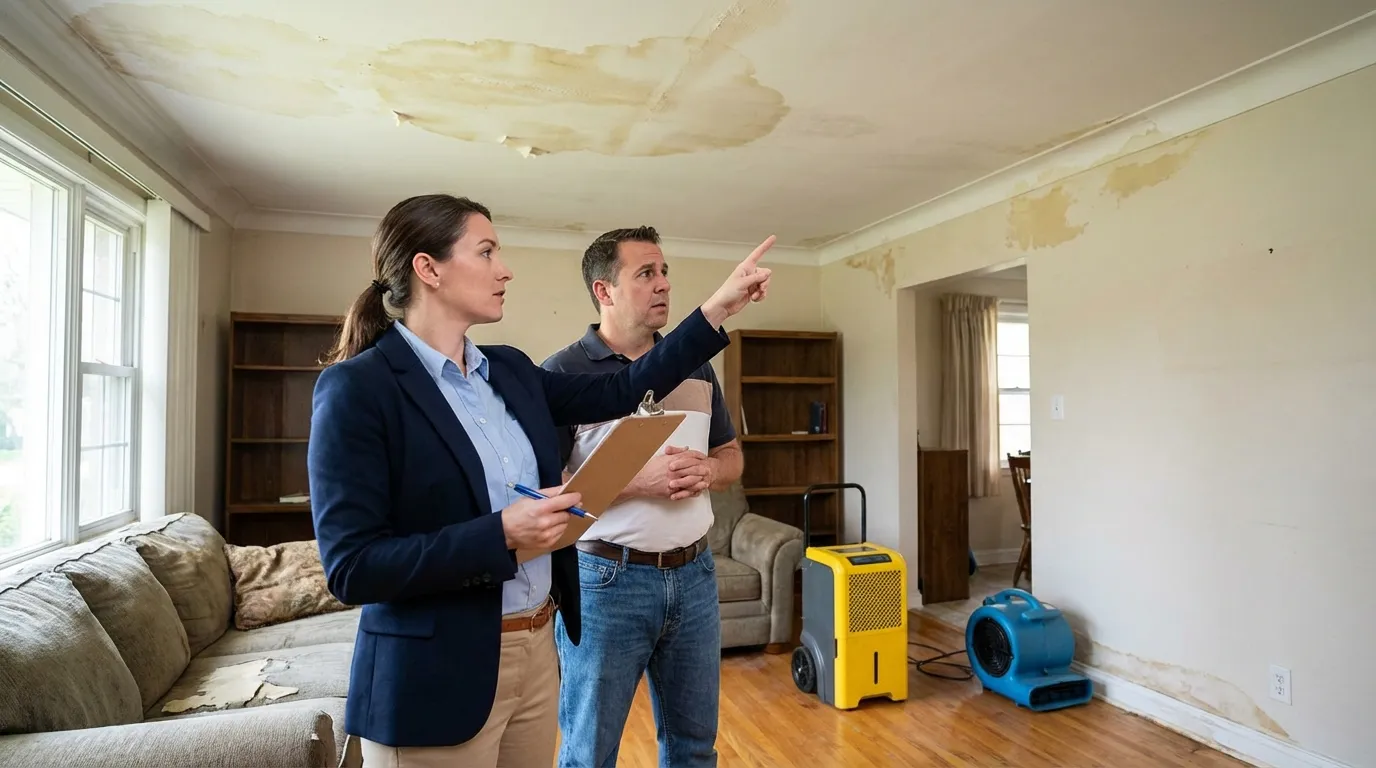
Walk through with the adjuster and show hidden damage
When the adjuster arrives, walk them through every affected room. Show them your photos from before cleanup started. Point out areas where moisture readings are elevated behind walls or under flooring. If your restoration company used thermal imaging, show the images. Adjusters can only approve what they can see or what is documented. Hidden water damage behind walls, under cabinets, and in crawl spaces is the scope most commonly missed in initial estimates. For tips on working with adjusters, see our adjuster guidance page.
- 7
Review the estimate and file supplements if scope was missed
Do not sign off on the first estimate without reviewing it against the actual scope of work. Common items missed in initial water damage estimates include: mold prevention treatment, crawl space drying, HVAC cleaning, content cleaning or replacement, and code-upgrade requirements triggered by the repairs. If additional damage is discovered during demolition or drying, file a supplemental claim. Palm Build's team prepares supplemental documentation with photos, moisture data, and scope justification as part of the insurance restoration process.
The Evidence That Makes or Breaks a Water Damage Claim
Water damage claims live or die on documentation. Unlike fire damage, which is visible, much of the damage from water is hidden inside wall cavities, under flooring, and behind cabinets. Your insurer will only pay for what is documented. The checklist below covers the evidence a professional restoration company should be collecting on your behalf. For a deeper dive into documentation strategy, see our documenting damage for insurance guide.
- Photos and video of every affected room before any cleanup or demolition
- Photos of the water source (burst pipe, failed appliance, roof penetration)
- Water line markings on walls with a ruler or tape measure for scale
- Pin moisture meter readings at documented test points (daily during drying)
- Thermal imaging photos showing hidden moisture behind walls and floors
- Daily drying logs with humidity, temperature, and equipment placement
- Before-and-after photos of each room showing restoration progress
- Inventory of damaged personal property with estimated replacement costs
- Receipts for all emergency purchases (hotel, temporary repairs, supplies)
- Written mold prevention documentation showing the 24-to-48-hour window was met
Common Mistakes That Get Water Damage Claims Denied
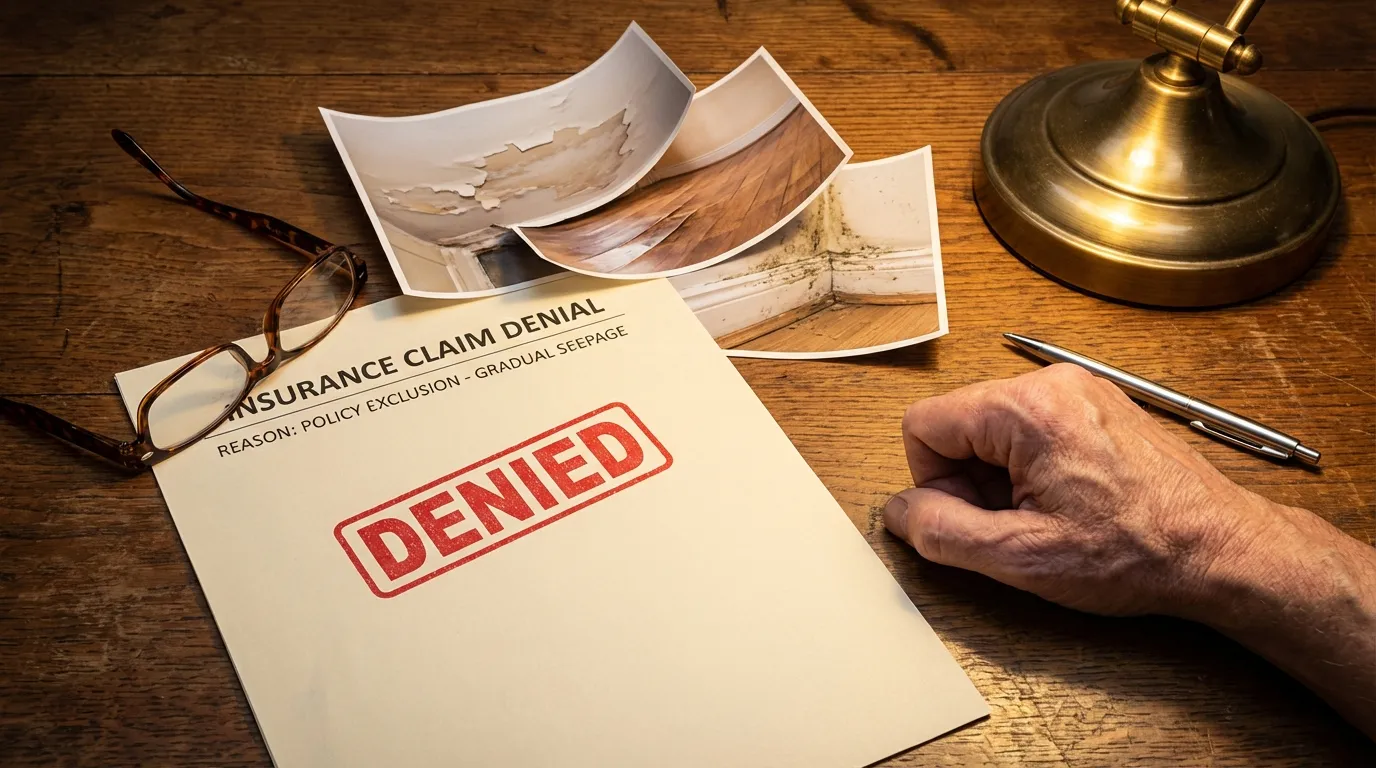
Most water damage claim denials are preventable. They happen because homeowners make one of these mistakes in the critical first 48 hours, not because the damage itself was not covered. If your claim has already been denied, see our claim denied guide for next steps.
Do this to protect your claim
- Document everything with photos and video before cleanup
- Report the loss to your insurer within 24 hours
- Start professional mitigation immediately, even before the adjuster visits
- Keep every receipt for emergency expenses
- Get daily moisture readings and drying logs from your restoration company
- File a supplemental claim when additional damage is discovered
- Keep a written log of every conversation with your insurer
Avoid these costly mistakes
- Cleaning up or removing damaged materials before documenting
- Waiting more than 24 hours to report the loss
- Waiting for the adjuster before starting water extraction
- Throwing away damaged items before the adjuster sees them
- Accepting the first estimate without reviewing scope
- Failing to document the water source and cause
- Making permanent repairs before getting insurer approval
Florida, North Carolina, and South Carolina: Filing Deadlines and State Rules
Insurance claim filing rules vary by state, and the differences are significant enough to change your strategy. Florida has the tightest deadlines in Palm Build's service area. All three states require prompt notice and reasonable mitigation, but the specific windows and consequences differ.
| Requirement | Florida | North Carolina | South Carolina |
|---|---|---|---|
| Notice of loss deadline | 1 year from date of loss | Prompt notice (policy-defined) | Prompt notice (policy-defined) |
| Supplemental claim deadline | 18 months from date of loss | Varies by policy | Varies by policy |
| Suit filing window | Shortened under recent reforms | 3 years from inception of loss | 3 years (civil procedure code) |
| Mitigation duty | Required to prevent further damage | Required to prevent further damage | Required to prevent further damage |
| Key risk | Missing the 1-year notice window | Failing prompt notice duties | Failing prompt notice duties |
State-by-state insurance claim filing comparison for FL, NC, and SC

When to Call a Restoration Company vs. Waiting for the Adjuster
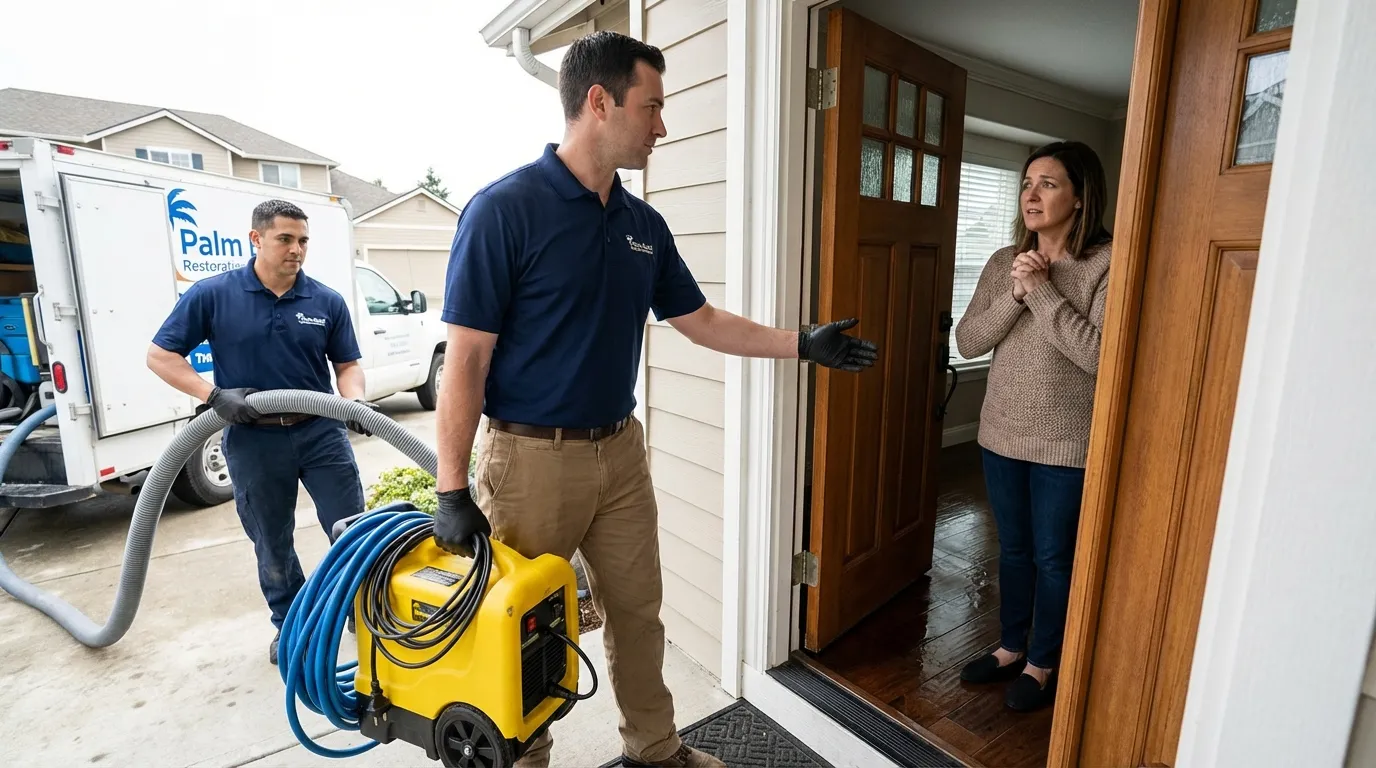
Call a restoration company first, then use this restoration company vetting checklist before authorizing work. This is the most counterintuitive step for homeowners, but it is the correct one. Your insurance policy has a duty-to-mitigate clause that requires you to take reasonable steps to prevent further damage. Standing water that sits for 24 to 48 hours turns into a mold problem, especially in humid states like Florida. Wet drywall that is not dried turns into a demolition problem. Every hour of delay increases the total cost of the claim.
A professional restoration company like Palm Build documents the damage before, during, and after mitigation with the photos, moisture readings, and drying logs that your adjuster needs to approve the scope. Palm Build works directly with insurance companies across Florida, North Carolina, and South Carolina and prepares documentation in the formats adjusters expect (including Xactimate-compatible estimates). The insurance restoration process is built into every project from day one.
Frequently Asked Questions
How long do I have to file a water damage insurance claim? +
Does homeowners insurance cover water damage from a slow leak? +
Do I need to wait for the insurance adjuster before cleaning up? +
What if my water damage insurance claim is denied? +
How much does a water damage insurance claim payout? +
Will filing a water damage claim raise my insurance rates? +
What documentation does the insurance adjuster need from me? +
Insurance Restoration Process
Palm Build's complete guide to navigating insurance claims from first notice through final payment.
Emergency Water Restoration Services
24/7 water extraction, structural drying, and moisture mapping across FL, NC, and SC.
Water Damage Restoration Cost in 2026
Detailed cost guide with per-sq-ft pricing by water category and state-specific factors.
Flood vs. Homeowners Insurance
Understanding which policy covers what when water enters your home.
What to Do After Water Damage in Florida
Hour-by-hour Florida-specific guide for water damage response and insurance filing.
Water Damage from Firefighting: Hidden Costs
If your water damage came from fire suppression, special cost and coverage considerations apply.
Mold Remediation Services
When mold develops from delayed drying, professional remediation is the next step.
Mold Remediation Cost in 2026
Per square foot pricing, cost by location, and what drives the final bill for mold cleanup.
Restoration Company vs General Contractor: Who to Call First
When to call a restoration company vs. a general contractor, the difference between mitigation and reconstruction, and state licensing rules for FL, NC, and SC.
Need help with a water damage insurance claim?
Palm Build works directly with insurance companies across Florida, North Carolina, and South Carolina. We document the damage, manage the drying process, and prepare claim-ready reports so you get paid for the full scope of work.
Found this helpful? Send it to someone who needs it.