Quick Answer
After water damage in a Florida home, move fast — the state's humidity means mold can start within 24 to 48 hours. Ensure safety first (water and electricity don't mix), document everything with photos and video before cleaning, stop the water source, then begin professional extraction and structural drying. Proper water classification and documentation strengthen your insurance claim.
Key takeaways
- Mold can start growing within 24-48 hours in Florida's humidity—speed is critical.
- Document everything with photos and videos before moving or cleaning anything.
- Professional moisture detection finds hidden water that DIY methods miss.
- Proper water classification and documentation significantly strengthen insurance claims.
Water in your home is stressful. In Florida's humidity, it becomes urgent. Mold can start growing within 24-48 hours, turning a manageable situation into a much bigger problem. If you're searching for water damage cleanup or emergency water damage restoration in Florida, this step-by-step guide shows the same water damage mitigation pros use—hour by hour.
Mold risk window
24-48 hrs
Florida's humidity accelerates growth
Average humidity
74%
South Florida annual average
Response target
60 min
Palm Build emergency dispatch
The First Hour: Safety First
Before touching anything, you need to ensure everyone's safety. Water and electricity don't mix, and structural damage may not be immediately visible. Take a breath, assess the situation, and follow this sequence.
- 1
Cut the power
Locate your breaker panel and shut off circuits to affected areas. If the panel is in a flooded area, do not attempt to access it—call your utility company or 911.
- 2
Stop the water source
If you can safely reach it, shut off the water. For a burst pipe, close your main water valve (usually near the water meter or where the main line enters your home). For roof damage during a storm, don't climb up—wait for conditions to improve or call for emergency tarping.
- 3
Document immediately
Take photos and videos of everything before you move or clean anything. Walk through each affected room systematically. Your insurance claim depends on this documentation.
- 4
Contact your insurance
Call your insurance company to report the loss. Get a claim number and ask about their preferred restoration vendors—though you always have the right to choose your own contractor.
First-hour safety checklist
- Power off to all affected areas
- Water source identified and stopped (if safe)
- Gas lines checked for damage or smell
- Photos and video of all affected areas
- Insurance company notified
- Restoration company called
The First 24 Hours: Why Speed Matters in Florida
Florida's humidity is the enemy here. What might dry out naturally in Arizona will breed mold in Florida within a day or two. Florida ranks #2 nationally for mold-prone homes, and the clock starts the moment water hits your property. Every hour of delay increases the scope of damage and the cost of repairs. This is why professional water damage restoration and water damage remediation move fast, with documented readings from day one.
Water Damage Cleanup and Restoration in Florida
When homeowners search for water damage cleanup, they're usually dealing with emergency water damage, flooding, or hidden leaks. A proper water damage restoration plan combines immediate extraction, water damage mitigation, and water damage remediation so water damage repair can happen without hidden mold. If the event involved stormwater or heavy rain, flood damage restoration is often required.
For a full breakdown of what professional crews do from extraction through reconstruction, see our Water Restoration Services page.
What professional restoration teams do that DIY can't match
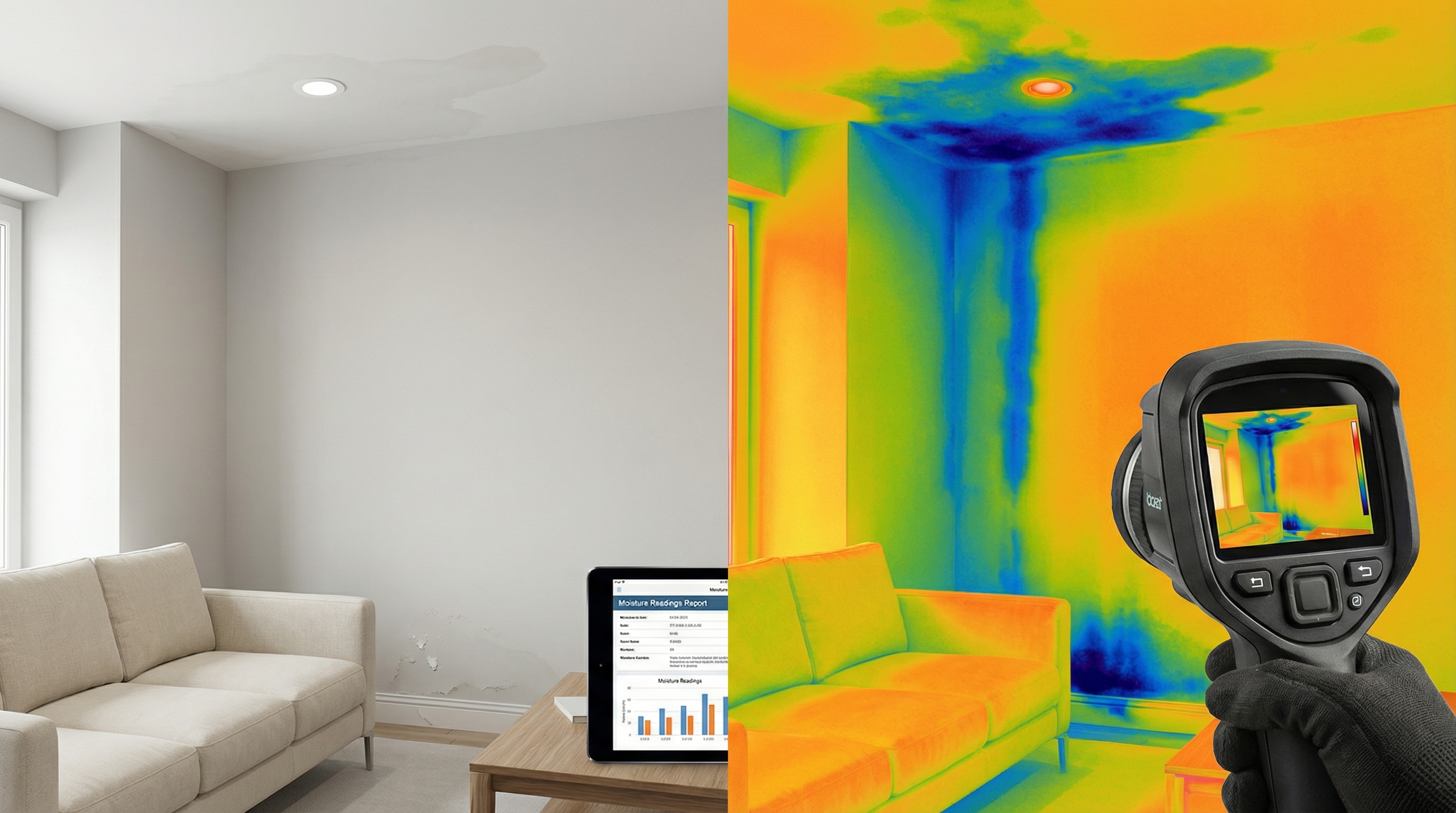
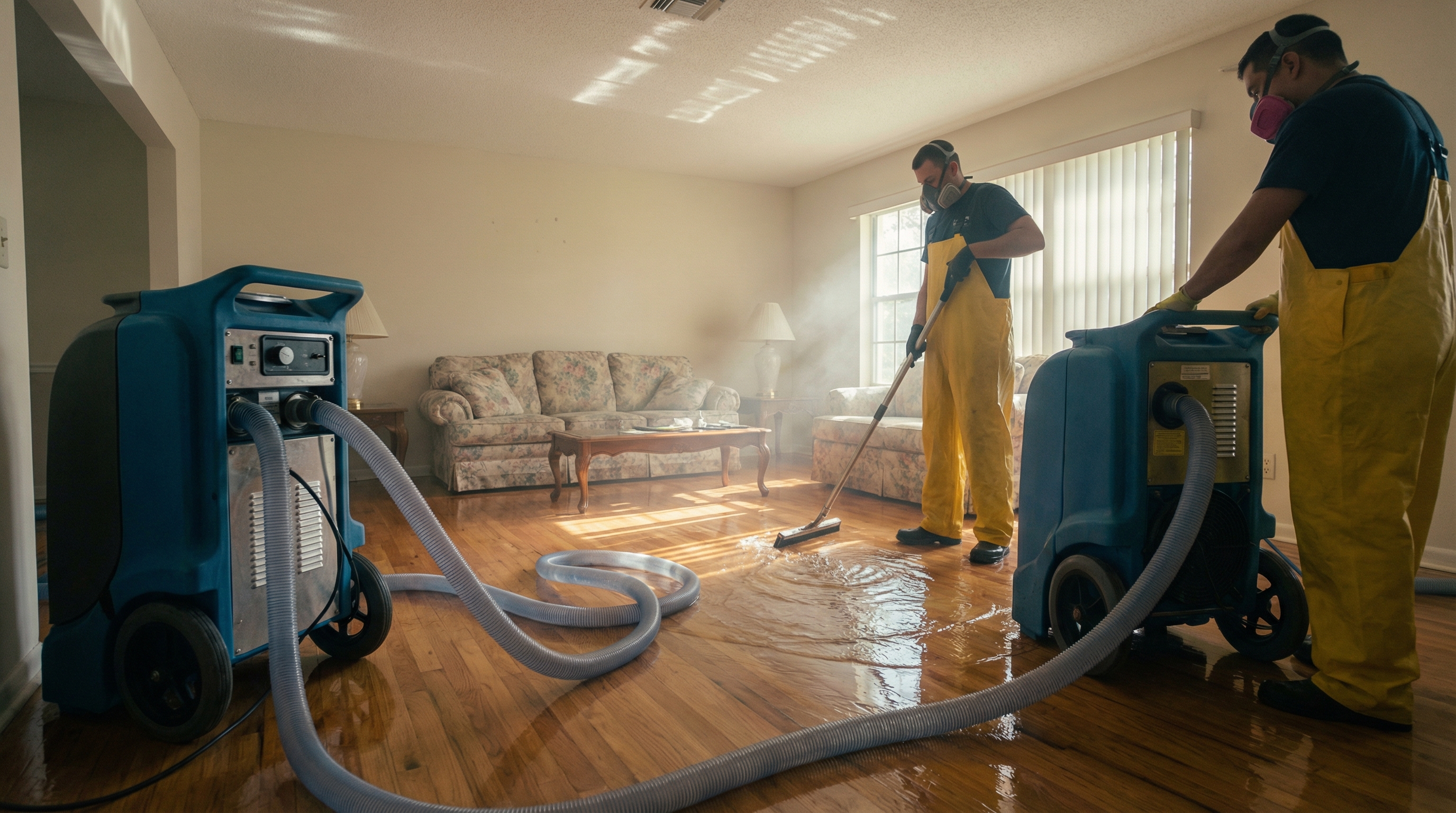
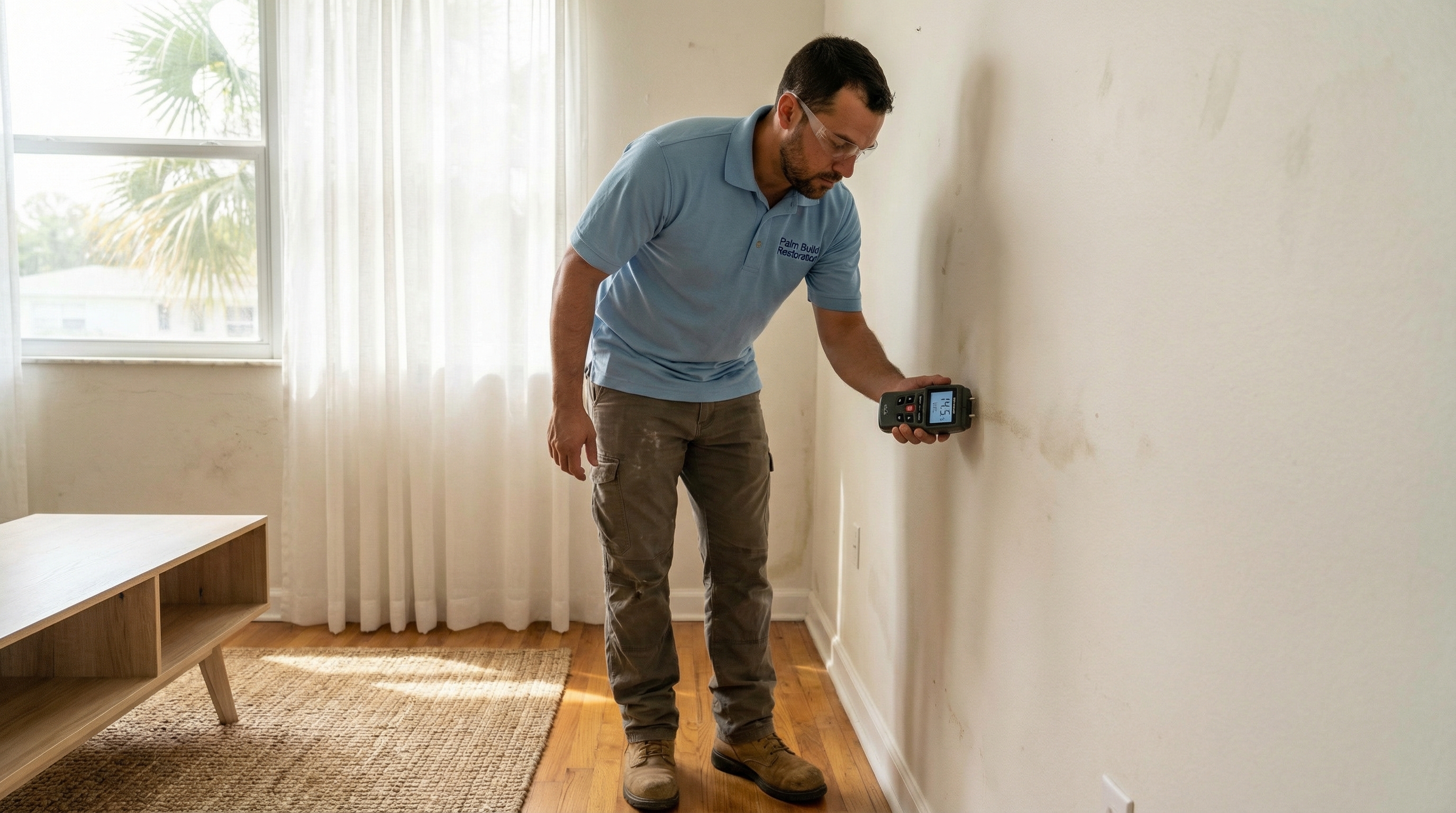
Industrial extractors pull water out at rates your shop vac can't touch. More importantly, pros use moisture meters and thermal imaging to find water hiding inside walls and under floors. Surface drying fools a lot of homeowners. The water you can't see causes the real damage, which is why certified water damage restoration teams document every step.
Professional restoration
- Industrial extractors remove water 10x faster than consumer equipment
- Moisture meters detect hidden water in walls, floors, and ceilings
- Thermal imaging reveals water paths invisible to the eye
- Commercial dehumidifiers control humidity at scale
- Water classification documented for insurance approval
DIY limitations
- Shop vacs leave significant moisture behind
- No way to detect water inside wall cavities
- Surface appears dry while structure stays wet
- Consumer dehumidifiers can't keep pace with Florida humidity
- No documentation trail for insurance claims
Water damage classification
Professional teams classify your water damage on-site. Insurance adjusters want to see Category 1, 2, or 3 classification and detailed moisture readings. Without this documentation, claims get denied or reduced.
| Category | Source | Health Risk | Treatment Required |
|---|---|---|---|
| Category 1 (Clean) | Broken supply lines, rainwater, melting ice | Low | Standard extraction and drying |
| Category 2 (Gray) | Dishwasher/washing machine overflow, toilet overflow (urine only), sump pump failure | Moderate | Antimicrobial treatment, affected material removal |
| Category 3 (Black) | Sewage backup, flooding from rivers/storm surge, toilet overflow (feces), standing water > 72 hours | High | Full PPE, extensive removal, air scrubbing, disinfection |
Water damage categories and their implications
Days 1-5: The Drying Process
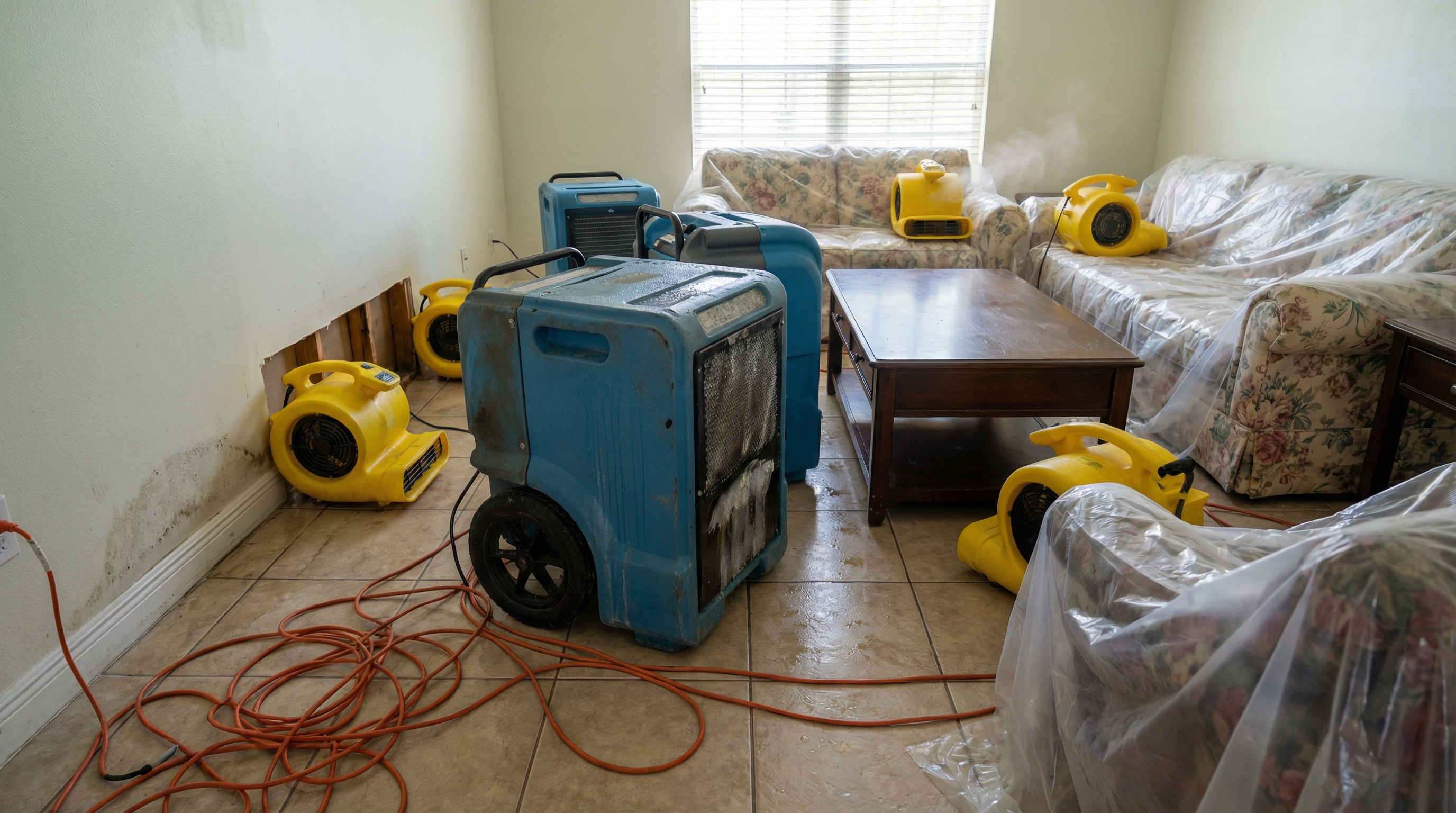
Proper drying in Florida requires controlling both temperature and humidity. Air movers alone just circulate moist air around. You need commercial dehumidifiers running continuously, with daily moisture readings to track progress. This drying phase is what makes later water damage repair possible without hidden mold.
Day 1
Extraction and equipment setup
Remove all standing water, set containment barriers, deploy air movers and dehumidifiers, document baseline moisture readings throughout the structure.
Day 2
Monitoring and adjustment
Check moisture readings against baseline, reposition equipment to target wet zones, remove saturated materials that won't dry in place (insulation, carpet pad, severely damaged drywall).
Day 3
Progress verification
Moisture readings should show improvement. If certain areas aren't drying, additional demo may be needed to expose wet materials. Daily logs continue.
Days 4-5
Final drying and clearance
Target moisture levels reached throughout structure. Final readings documented. Equipment removed. Structure cleared for reconstruction.
Hidden moisture: The silent killer
Walls can read dry on the surface while holding enough moisture inside to rot your framing over the next few months. Professional teams scan daily until readings hit safe levels throughout the structure—not just at the surface—so you don't face repeated ceiling water damage repair or surprise rot later.
- Water travels horizontally along floor systems and vertically through wall cavities
- Insulation acts like a sponge, holding moisture against framing
- Vapor barriers can trap moisture inside walls if not addressed
- Subfloors under tile and hardwood often hold water longer than visible flooring
- HVAC ductwork can spread moisture (and mold spores) throughout the home
Mold Prevention: The Real Stakes
Skip this step and you're looking at a much more expensive remediation project down the road. Mold doesn't just damage your property—it creates serious health risks and can make portions of your home uninhabitable. If you smell musty odors or see growth, schedule a professional mold inspection right away.
Professional mold prevention protocols
- Antimicrobial treatment applied during and after extraction
- HEPA air scrubbers deployed to capture airborne spores
- Affected porous materials removed before they become mold hosts
- Humidity controlled below 60% throughout drying
- Final clearance testing confirms no active growth
Household bleach doesn't cut it on porous materials like drywall and wood. Professional antimicrobials penetrate materials and provide residual protection. If your water was Category 2 or 3, air scrubbing becomes essential too—you don't want mold spores circulating through your HVAC system. When growth is present, professional mold removal and mold cleanup are safer than DIY fixes.
Why doesn't bleach work on mold in walls? +
How do I know if mold has started growing? +
Does insurance cover mold remediation? +
Working With Insurance
File your claim immediately. Florida insurers are used to water damage claims, but they scrutinize documentation carefully. The quality of your records often determines whether your water damage insurance claim is paid in full, reduced, or denied.
What strengthens your claim
- Professional assessment reports with moisture readings
- Daily drying logs showing progress
- Timestamped photos and videos before any cleanup
- Itemized damage lists with make/model where applicable
- Water source identified and documented
- Prompt reporting and mitigation timeline
What weakens your claim
- Waiting more than 24-48 hours to file
- DIY repairs before professional documentation
- Incomplete or inconsistent records
- No moisture readings or drying documentation
- Disposing of damaged items before adjuster inspection
- Gaps in the timeline of events
The adjuster walkthrough
A restoration company that's worked with Florida insurers knows what adjusters expect. They can often handle the adjuster walkthrough directly, which takes pressure off you and ensures technical questions get accurate answers.
| Timing | What to Document | Why It Matters |
|---|---|---|
| Immediately | Photos/video of all damage, water source | Establishes scope before any changes |
| Within 24 hours | Moisture readings, affected room inventory | Baseline for drying verification |
| Daily during drying | Equipment logs, humidity readings, progress photos | Proves proper mitigation efforts |
| At completion | Final moisture readings, clearance documentation | Confirms structure is dry and safe |
Documentation timeline for insurance claims
When to Call for Professional Help
Some water damage is manageable on your own, like a small spill cleaned up immediately. But in Florida's humidity, the threshold for professional help is lower than you might think, especially when you need documented water damage mitigation for insurance. If you need to hire fast, use this guide to choose a restoration company with fewer risks.
Call a professional restoration company if:
- Standing water covers more than a small area
- Water touched electrical systems, HVAC, or insulation
- The source was contaminated (sewage, floodwater, appliance discharge)
- You can't identify or stop the water source
- More than a few hours have passed in Florida's humidity
- The affected area includes multiple rooms or floors
- You see or smell mold
- You're filing an insurance claim
Common water damage scenarios in Florida
Hurricane and storm damage +
AC unit failures and condensate line clogs +
Water heater failures +
Plumbing failures and supply line breaks +
Flooding from heavy rain +
Frequently Asked Questions
How quickly can restoration crews arrive? +
Do you provide water damage cleanup near me? +
How long does the drying process take? +
Can I stay in my home during restoration? +
What if my insurance claim is denied or underpaid? +
Do you handle the reconstruction too? +
Florida Water Damage: Quick Reference
- Category 1 (Clean Water)
- Water from a sanitary source that poses no substantial risk if consumed. Examples: broken supply lines, rainwater.
- Category 2 (Gray Water)
- Water with significant contamination that could cause illness if consumed. Examples: washing machine overflow, dishwasher discharge.
- Category 3 (Black Water)
- Grossly contaminated water containing pathogens. Examples: sewage, floodwater, toilet overflow with feces.
- Psychrometrics
- The science of air and moisture relationships. Used to optimize drying conditions by balancing temperature, humidity, and airflow.
- Moisture Mapping
- A documented grid of moisture readings throughout the affected area. Used to track drying progress and prove completion.
- Class of Water Damage
- Classification (1-4) based on how much water was absorbed by materials. Higher classes require more equipment and longer drying times.
Additional resources
Water Damage Restoration Cost in 2026
Complete pricing guide with national averages, per-square-foot costs by water category, and FL/NC/SC factors.
Water Damage from Firefighting: The Hidden Costs
Why firefighter water causes mold, what cleanup typically costs ($1K-$6K), and how to document it for insurance.
How to File a Water Damage Insurance Claim
Complete filing guide with evidence checklists, water category impacts, and FL/NC/SC deadlines.
Water Restoration Services
Our full 24/7 water damage response process, from extraction through reconstruction.
Mold Remediation Services
When prevention isn't enough, our certified remediation team can help.
IICRC S500 Standards
Industry reference standards for professional water damage restoration.
Florida Division of Emergency Management
State resources for disaster preparedness and recovery.
Mold Remediation Cost in 2026
What Florida homeowners pay for mold cleanup, with Tampa pricing data and state licensing details.
Water emergency in Florida?
Every hour counts. Call now to dispatch a certified crew and start protecting your property.
Found this helpful? Send it to someone who needs it.