Quick Answer
Mold removal means cleaning or tearing out the visible mold you can see. Mold remediation is the larger process: containing the area, removing contaminated materials, cleaning surfaces and the air, drying the structure, and fixing the moisture source so mold does not return. Because spores exist everywhere indoors, no contractor can remove all mold — the realistic goal is moisture control.
Key takeaways
- "Mold removal" typically means cleaning or removing visible mold. "Mold remediation" includes containment, removal, drying, and moisture-source correction to prevent recurrence.
- Mold spores exist in every indoor environment. No contractor can remove all mold, so the realistic goal is moisture control and returning conditions to safe, normal levels.
- Most residential mold remediation projects cost $1,200 to $3,750, with per-square-foot pricing of $10 to $25. Whole-house jobs can reach $10,000 to $30,000.
- The EPA suggests homeowners may handle cleanup themselves when the affected area is less than about 10 square feet and the moisture source is already fixed.
- Florida requires state licensing for mold remediators. North Carolina and South Carolina do not have specific mold certification programs, making contractor vetting especially important.
"Mold removal" usually means cleaning or tearing out what you can see. "Mold remediation" means stopping the entire problem: containing the affected area, physically removing contaminated materials, cleaning remaining surfaces and the air, drying the structure, and fixing the moisture source so mold does not return. Because mold spores exist in every indoor environment, no contractor can realistically remove all mold from your home. Credible professionals focus on mold remediation rather than promising total removal, because moisture control and returning indoor conditions to safe levels is the only approach that actually works long-term. For budgeting, most projects land between $1,200 and $3,750 total, often priced at $10 to $25 per square foot.
Typical remediation cost
$1,200 - $3,750
National average for most residential projects
Cost per square foot
$10 - $25
Affected area, not total home square footage
Drying window
24 - 48 hrs
EPA/CDC benchmark to prevent mold growth
Project duration
1 day - 1+ week
Drying and moisture correction is often the longest phase
The Real Difference Between Mold Remediation and Mold Removal
These two terms get mixed up because some companies use "mold removal" as a consumer-friendly label for the same full process that professionals call remediation. The problem is that "mold removal" can also imply a promise you cannot verify in real buildings: eliminating all mold.
The more accurate framing comes from the U.S. Environmental Protection Agency: mold spores are always present indoors, and "the key to mold control is moisture control." If the water problem driving the growth is not fixed, mold will come back even after scrubbing or tear-out. That is why the industry standard, set by the IICRC S520, centers on remediation as a containment-first, source-removal, and dry-out process rather than a surface cleaning service.
| Category | Mold removal | Mold remediation |
|---|---|---|
| Goal | Get rid of visible mold contamination | Restore indoor conditions to safe, normal levels and prevent recurrence |
| Scope | Often surface-level cleaning or limited tear-out | Inspection, containment, source correction, removal, cleaning, drying, and rebuild readiness |
| Moisture handling | May ignore the underlying cause | Treats moisture control as mandatory since mold cannot grow without water |
| Can it "remove all mold"? | No. That is not realistic in any building | Also no. Remediation targets control and prevention, not zero spores |
| When it fits | Very small, contained areas where the moisture source is already fixed | Hidden growth, recurring mold, multiple rooms, HVAC involvement, post-water-damage situations |
Mold removal vs. mold remediation: side-by-side comparison
This comparison aligns with EPA guidance that you cannot eliminate all spores and must fix moisture, plus how the IICRC defines remediation as the larger, prevention-focused process. If a contractor promises to "remove all mold" from your home, that should raise a red flag.
What Professional Mold Remediation Actually Includes
Professional remediation follows the IICRC S520 mold remediation standard, which is the procedural backbone for mold-damaged structures and contents. The standard emphasizes physical removal of contamination as the primary means of remediation, not chemical sprays or surface treatments alone. Here is what the process looks like in practice.
- 1
Assessment and scoping
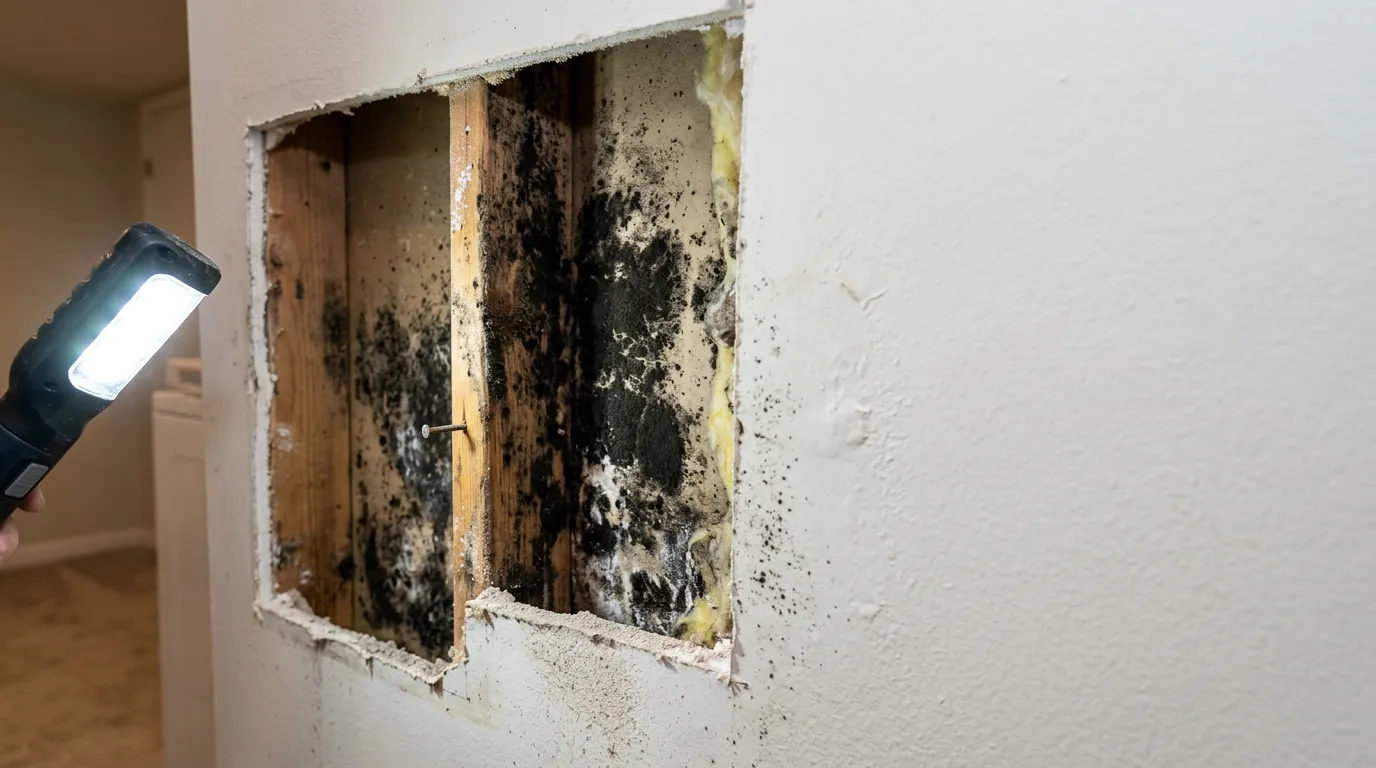
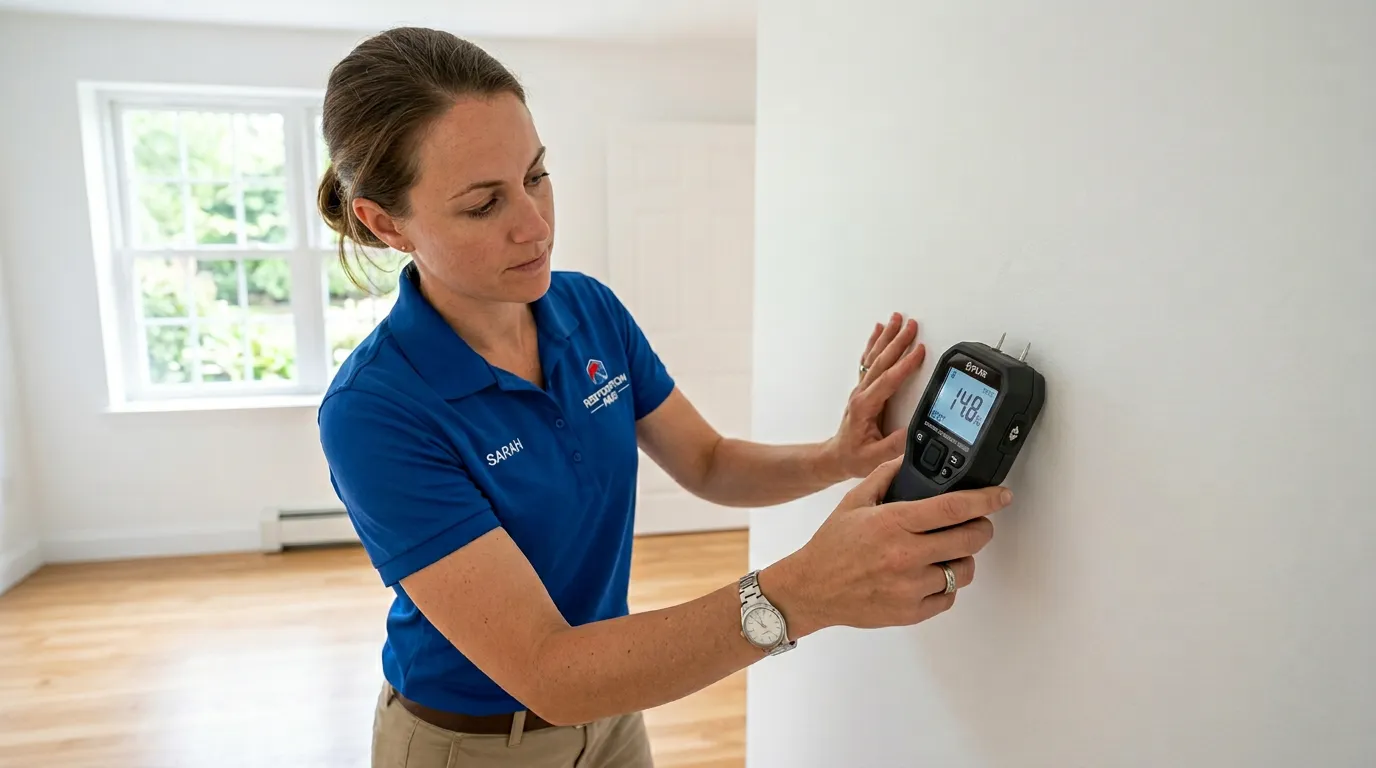
A competent scope starts by identifying the moisture source and mapping where contamination likely exists, including hidden areas behind walls, under flooring, and inside HVAC systems. Moisture meters, thermal imaging, and visual inspection are standard tools at this stage.
- 2
Containment and air control
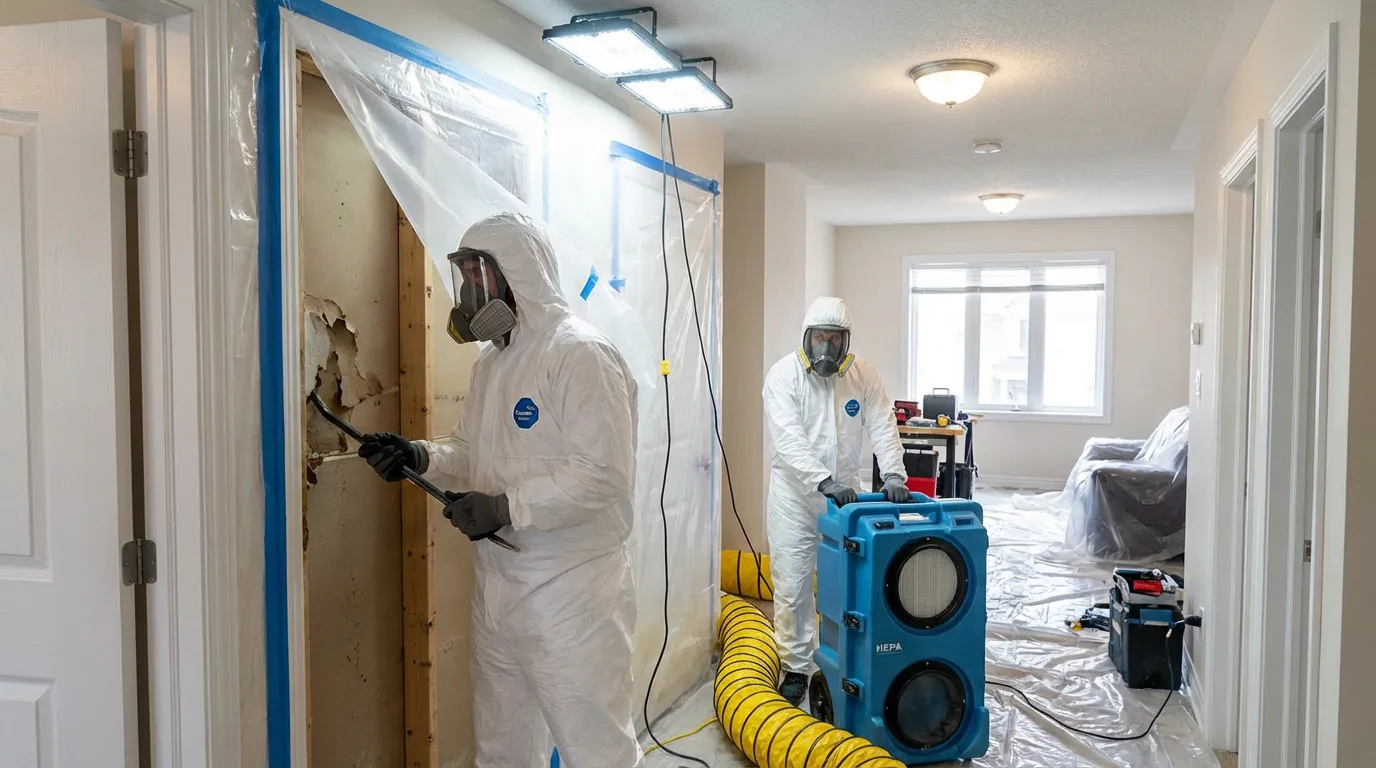
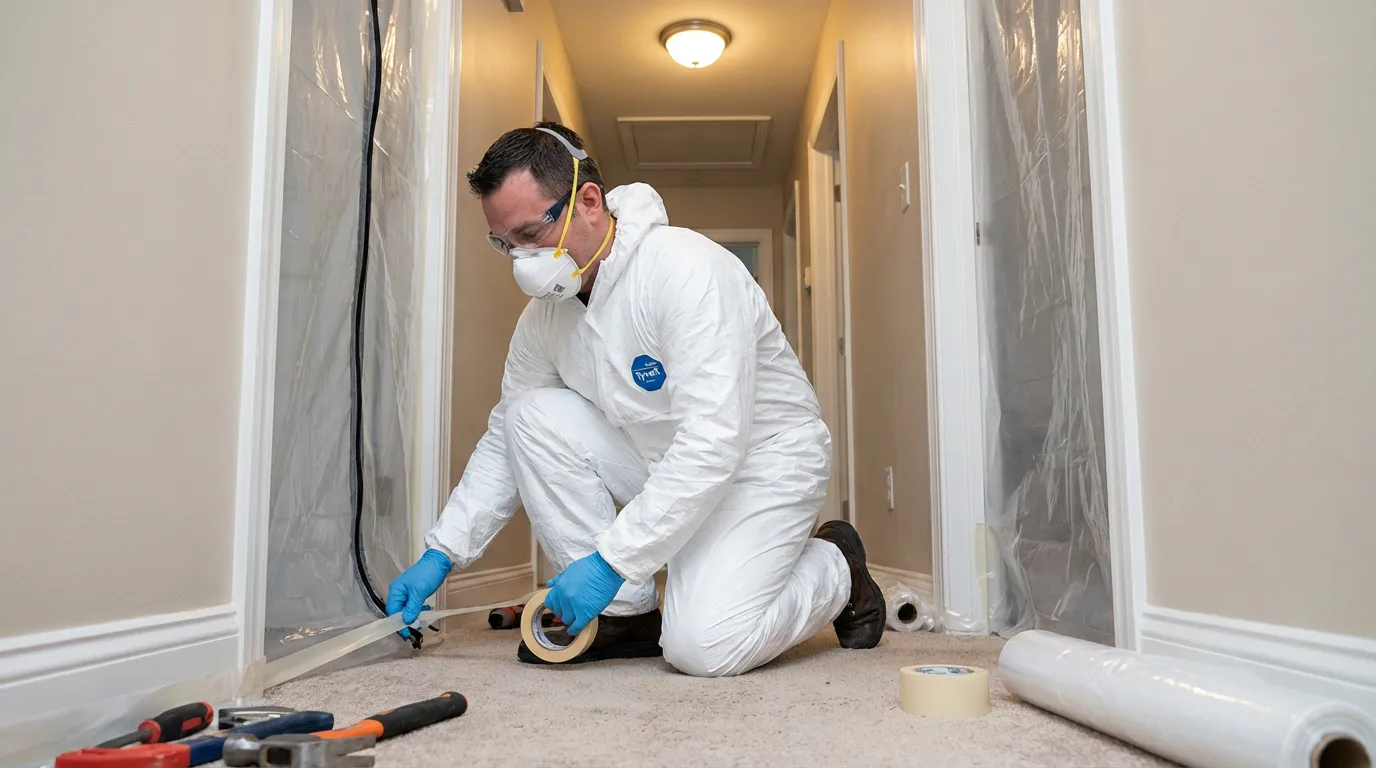
The work area is isolated using plastic barriers and negative air pressure to prevent cross-contamination. HEPA air scrubbers run continuously during active work to capture airborne particulates and prevent spores from spreading to unaffected areas of the home.
- 3
Removal of contaminated materials
Porous materials like drywall, carpet, and insulation are difficult or impossible to fully clean once mold has colonized them. In most professional remediation projects, contaminated porous materials are removed and replaced rather than treated in place.
- 4
Cleaning remaining structure and contents
After tear-out, remaining surfaces are HEPA-vacuumed and cleaned with appropriate antimicrobial solutions. EPA guidance for homeowners centers on physical cleaning plus complete drying, and professional practice follows the same principle at a more rigorous level.
- 5
Drying and moisture verification
Structural drying is not optional. The EPA, CDC, and OSHA all emphasize drying wet materials within 24 to 48 hours to prevent mold growth. Professional teams use commercial dehumidifiers, air movers, and moisture meters to verify that materials reach safe moisture levels before the project closes. Our structural drying and moisture control teams handle this phase.
- 6
Post-remediation verification
There is no single federal "mold pass/fail" standard. Verification is typically based on visible cleanliness, absence of mold odor, moisture measurements, and sometimes targeted air or surface sampling. In higher-stakes projects, an independent indoor environmental professional performs clearance testing to verify a return to normal conditions.
Mold Remediation Cost and Timeline Benchmarks
People searching "mold remediation vs mold removal" often want a fast cost ballpark alongside the definition. Here is what current national data shows, based on Angi and HomeAdvisor cost guides. For a deeper breakdown by project size, location, and state, see our complete mold remediation cost guide for 2026.
| Scenario | Typical cost range | Why it costs that much |
|---|---|---|
| Small bathroom area | $500 - $1,000 | Limited square footage and simpler containment |
| Crawl space | $500 - $2,000 | Access challenges, but usually a smaller containment footprint |
| Attic | $1,000 - $4,000 | Roof leak history, insulation involvement, and access difficulty |
| Wall cavity or behind finishes | $1,000 - $20,000 | Demolition and rebuild scope drives the wide cost spread |
| HVAC system | $3,000 - $10,000 | Specialized cleaning, system complexity, and whole-home contamination risk |
| Whole-house remediation | $10,000 - $30,000 | Multi-room containment, extended drying, and rebuild coordination |
Mold remediation cost by scenario in 2026
If your mold problem started with a water event like a pipe burst, appliance failure, or storm and hurricane flooding, addressing the water damage and the mold together is more effective and less expensive than treating them as separate projects. Our water damage restoration teams coordinate with mold remediation crews to handle both in a single scope.
How to Decide What You Actually Need
Not every mold situation requires a full remediation project. And not every surface cleanup will solve the problem. The decision depends on how much mold you are dealing with, whether the moisture source is fixed, and whether the contamination is likely hidden behind walls, under floors, or inside HVAC systems.
When DIY cleanup might be reasonable
EPA guidance suggests that if the moldy area is less than about 10 square feet (roughly a 3-by-3-foot patch), many homeowners can handle cleanup themselves, provided they can do it safely and the moisture source is already fixed. If you go the DIY route, treat it like a dust-control project.
- Wear proper PPE: an N95 respirator approved by NIOSH, goggles without ventilation holes, and gloves that extend to mid-forearm
- Scrub mold off hard surfaces with detergent and water, then dry completely
- Discard porous materials (carpet, ceiling tiles, insulation) that are visibly moldy and cannot be fully cleaned
- Do not paint or caulk over moldy surfaces without cleaning and drying first. The EPA explicitly warns against this.
- Fix the moisture source before you start cleaning. If the water problem is not resolved, the mold will return.
- Avoid mixing bleach with ammonia or other household cleaners. The fumes are dangerous.
When remediation is the safer call
Professional remediation is the smarter default when any of the conditions below apply. Trying to handle a complex mold situation yourself can spread contamination to clean areas, create health exposure risks, and turn a manageable project into a much larger one.
DIY cleanup may work when
- The moldy area is smaller than about 10 square feet
- Mold is on hard, non-porous surfaces like tile, glass, or metal
- The moisture source has already been identified and fixed
- There is no musty smell suggesting hidden contamination
- You have no respiratory sensitivities or immune concerns
- The water source was clean (not sewage or floodwater)
Call a professional when
- Mold covers more than 10 square feet or spans multiple surfaces
- There is water damage, flooding, or chronic moisture that has not been fully corrected
- Mold is likely hidden behind walls, under flooring, or in the HVAC system
- The mold keeps coming back after cleaning
- Anyone in the household has asthma, allergies, or immune system concerns
- You are dealing with contaminated water from sewage backup or storm flooding
If your mold is in a crawl space, it almost always warrants professional attention. Crawl spaces combine restricted access, persistent moisture issues, and poor ventilation, all of which make DIY cleanup impractical and potentially dangerous.
Do You Need Mold Testing Before Remediation?
This question shows up constantly in search results, and the answer surprises most homeowners. In the majority of cases, testing is not the right first step.
The Centers for Disease Control and Prevention does not recommend mold testing in homes and emphasizes that regardless of the mold type present, you need to remove it. The National Institute for Occupational Safety and Health similarly notes there are no health-based standards for mold in indoor air and does not recommend routine air sampling, explaining that short-term spore counts are hard to interpret relative to health risks. The EPA likewise states that if visible mold growth is present, sampling is usually unnecessary, partly because no federal limits exist for mold or mold spores.
For a deeper look at when mold grows and the science behind the 24-to-48-hour window, our guide on how fast mold grows after water damage covers the timeline in detail with EPA, CDC, and OSHA citations.
State-Specific Notes for Florida, North Carolina, and South Carolina
Mold remediation regulations, licensing requirements, and insurance norms genuinely differ by state. These differences affect who you should hire, what credentials to verify, and how your insurance claim may be handled.
Florida: state licensing and mold endorsements
Florida has a formal licensing framework for mold-related services under Chapter 468, Part XVI of state law. The state requires separate licenses for mold assessors and mold remediators, making Florida one of the more regulated states for this work. When hiring in Florida, checking licensure through the state's licensing portal is a concrete step you can take beyond verifying IICRC certifications.
On the insurance side, the Florida Department of Financial Services describes mold endorsements that can increase mold damage coverage limits. Examples include $25,000 and $50,000 endorsements. If you own property in Florida, reviewing your policy for mold endorsements before a loss happens gives you a much better starting position when filing a claim. Florida's humidity and storm exposure make mold a near-certainty after any significant water intrusion. For more on Florida-specific mold challenges, we have a dedicated guide.
North Carolina: no state mold license, so vet carefully
North Carolina does not have a state certification program specifically for mold remediation companies or individuals. NC State Extension guidance makes this point directly, which means you cannot rely on a state license as a screening tool the way you can in Florida.
Instead, focus on verifiable credentials: IICRC certification, documented experience with similar projects, clear scope-of-work proposals, and references. Our guide to choosing a restoration company walks through the full verification checklist. The North Carolina Department of Health and Human Services emphasizes that controlling moisture is the control mechanism for mold, reinforcing that any contractor you hire should center their approach on finding and fixing the water source, not just cleaning surfaces.
South Carolina: public resources and evolving regulations
South Carolina's Department of Environmental Services provides "Indoor Mold" resources and a mold hotline, positioning the agency as an information resource rather than a remediation regulator. For storm and flood contexts, the South Carolina Emergency Management Division includes cleanup safety messaging and directs residents to mold resources after severe weather.
A bill introduced in February 2026 (H.5109) proposes creating a certification framework for mold assessment and remediation providers in South Carolina. This is not a current requirement unless enacted, but it signals the state may move toward formal regulation. Property managers and homeowners should verify current state requirements when hiring.
Questions Homeowners Ask When They Find Mold
Is mold remediation the same as mold removal? +
Can mold be completely removed from a house? +
How long after water damage does mold start growing? +
How much does mold remediation cost? +
Should you get mold testing before remediation? +
Does homeowners insurance cover mold remediation? +
Can you stay in your house during mold remediation? +
Mold Remediation Cost in 2026
Full cost breakdown by project size, location in the home, and state-specific pricing for FL, NC, and SC.
How Fast Does Mold Grow After Water Damage?
The 24-48 hour mold growth timeline explained with EPA, CDC, and OSHA citations.
Florida Mold Problems
Why Florida homes are especially vulnerable to mold and what you can do about it.
Mold Remediation Services
24/7 professional mold remediation across Florida, North Carolina, and South Carolina.
Water Damage Restoration
Emergency water extraction, structural drying, and moisture control to prevent secondary mold growth.
Insurance Restoration Process
How Palm Build works directly with your insurance company from claim filing to project completion.
Crawl Space Encapsulation Cost in 2026
Crawl space encapsulation and moisture control pricing by scope and state.
Found mold in your home?
Our certified remediation teams are available 24/7 across Florida, North Carolina, and South Carolina. We handle the mold, the moisture source, and the insurance paperwork.
Found this helpful? Send it to someone who needs it.