Understanding the process
Structural drying is grounded in psychrometric science, the study of how air, temperature, and moisture interact. Every drying project begins with an evaluation of the current conditions: ambient temperature, relative humidity, and the dew point of both the indoor environment and the outdoor air. These three variables determine the grain depression, which is the difference between the moisture content of the air entering the dehumidifier and the air leaving it. The higher the grain depression, the more aggressively the system extracts moisture. Professional restoration teams use this data to design a drying strategy that is specific to the structure, the materials involved, and the climate conditions at the time of the loss.
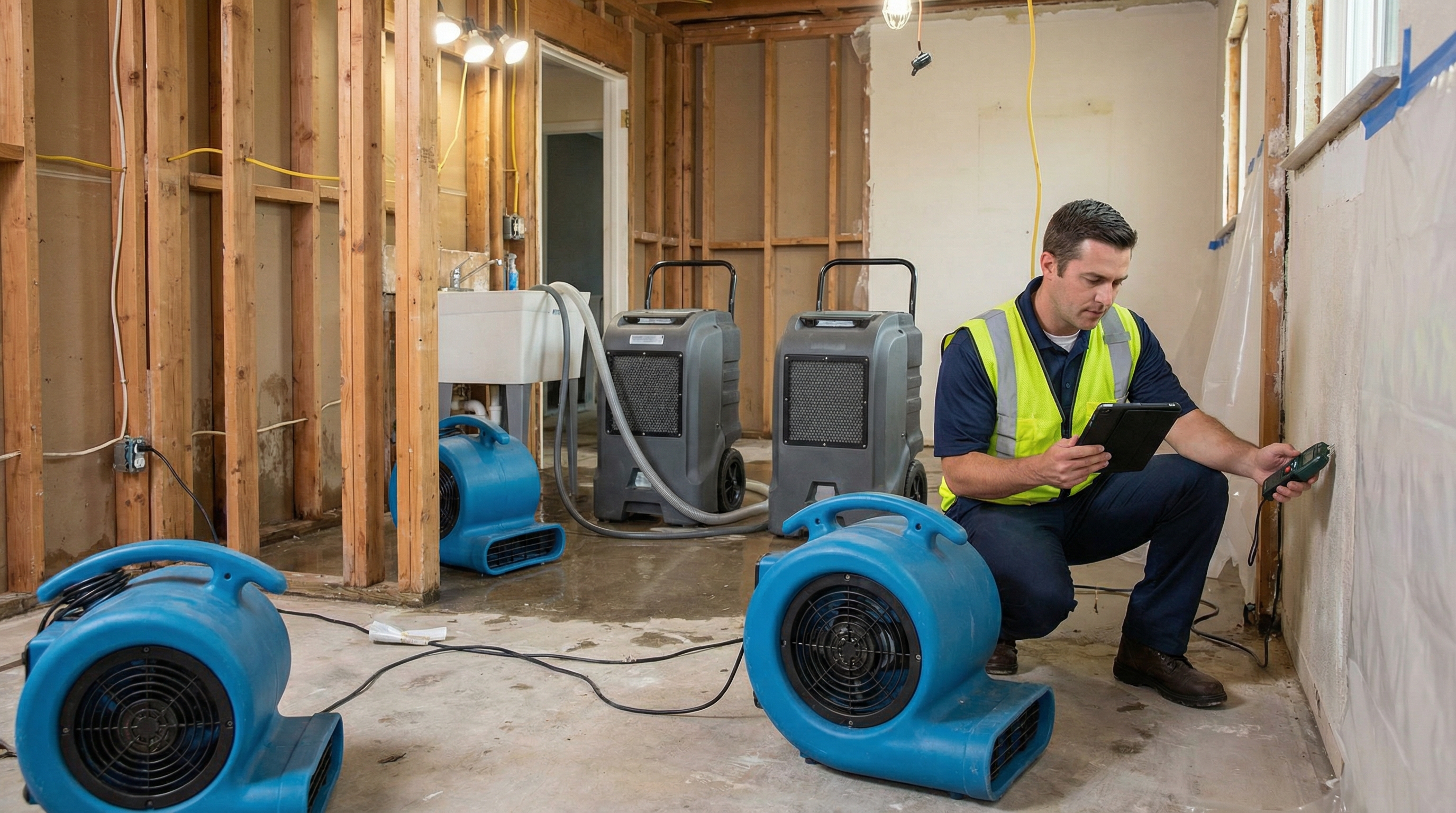
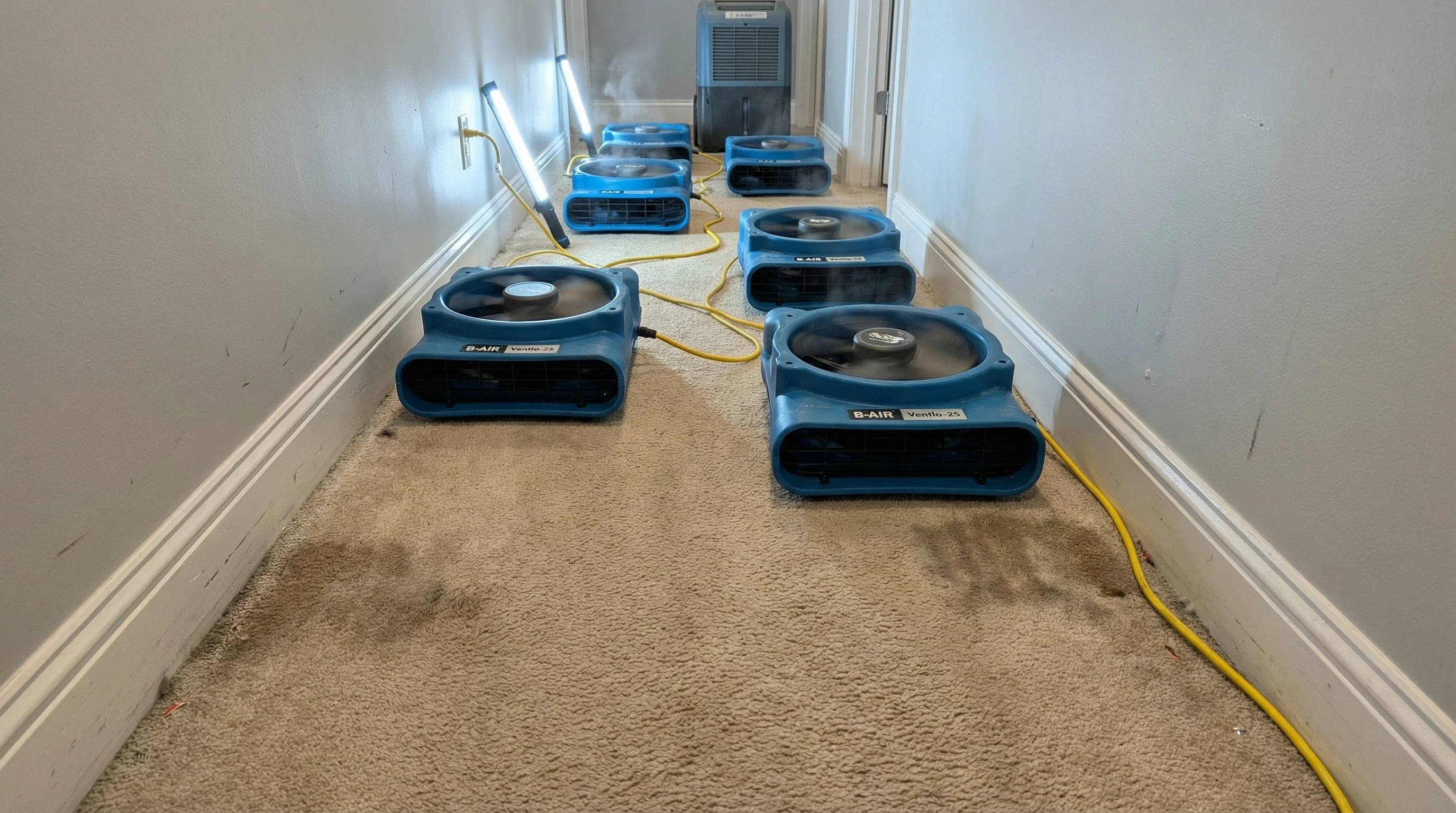
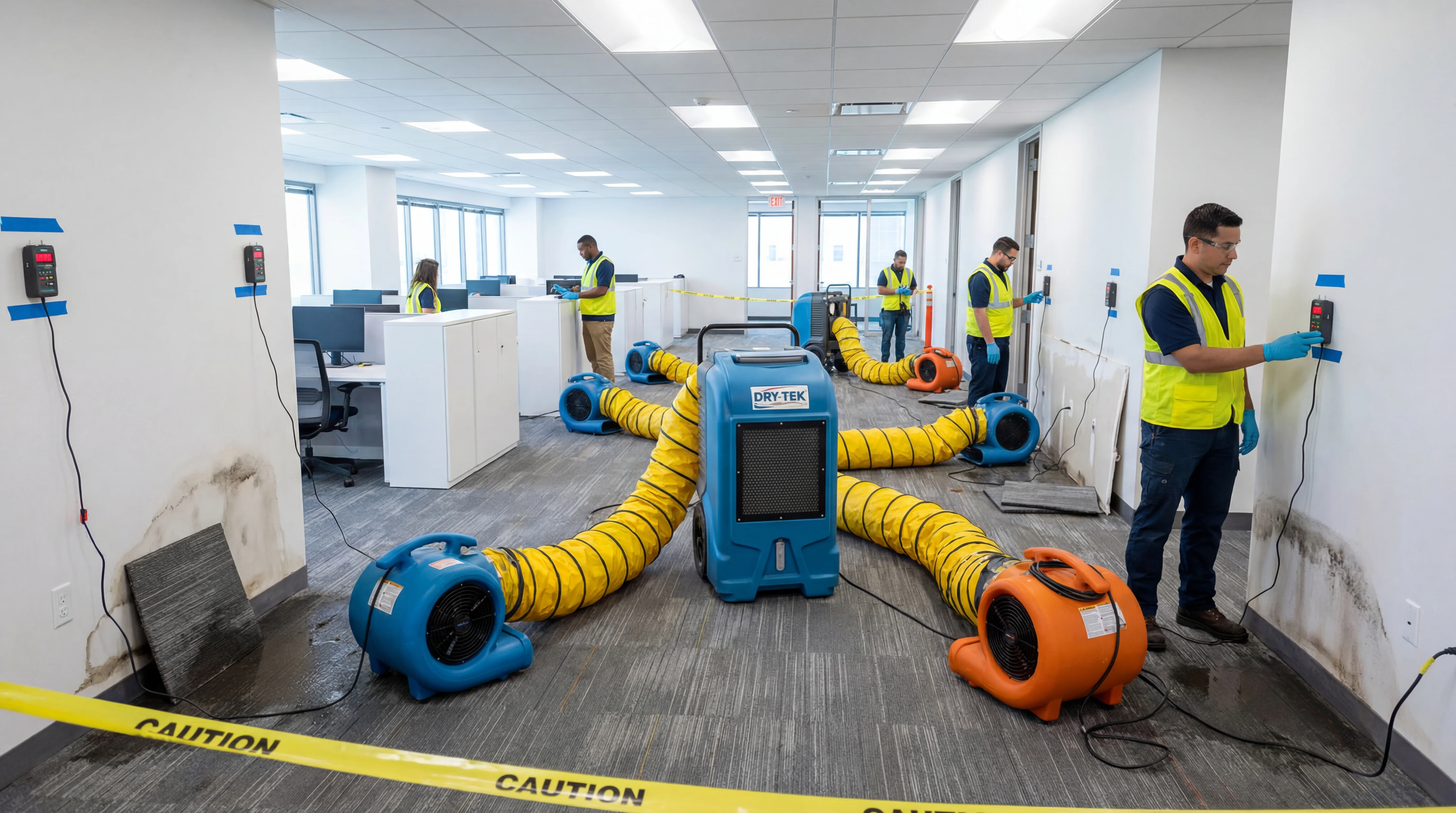
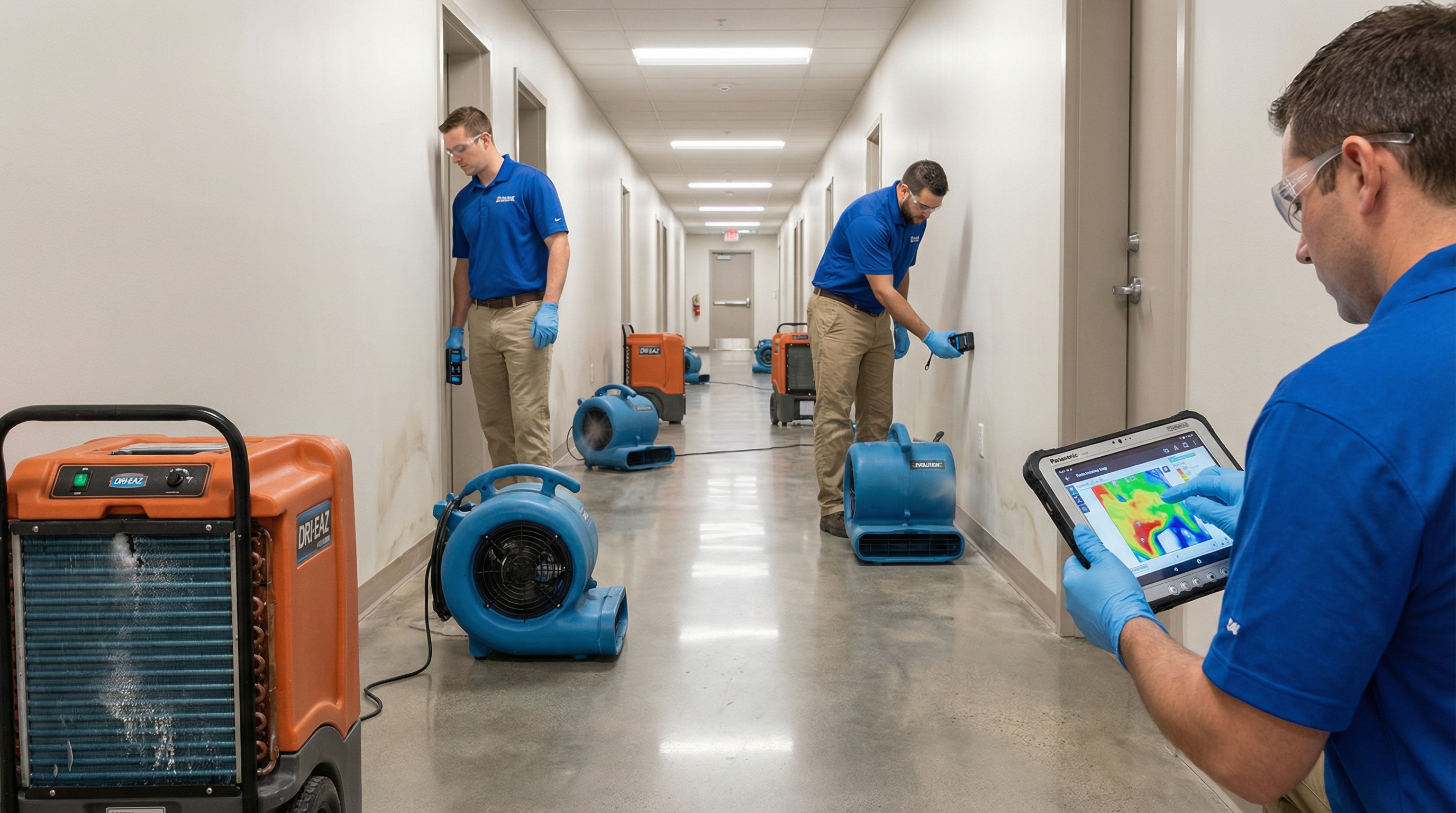
The equipment used in professional structural drying serves distinct and complementary purposes. Centrifugal air movers create high-velocity airflow across wet surfaces, breaking the boundary layer of saturated air that naturally forms on materials like drywall, wood framing, and concrete. This accelerates evaporation at the material surface. Low-grain refrigerant (LGR) dehumidifiers then capture that airborne moisture and convert it to liquid for disposal. In some situations, desiccant dehumidifiers are used instead, particularly in low-temperature environments or when extremely low humidity targets are required. Specialty systems such as injectidry panels, floor mat systems, and wall cavity injection ports extend the reach of the drying system into enclosed or multi-layer assemblies that standard equipment cannot address from the surface alone.
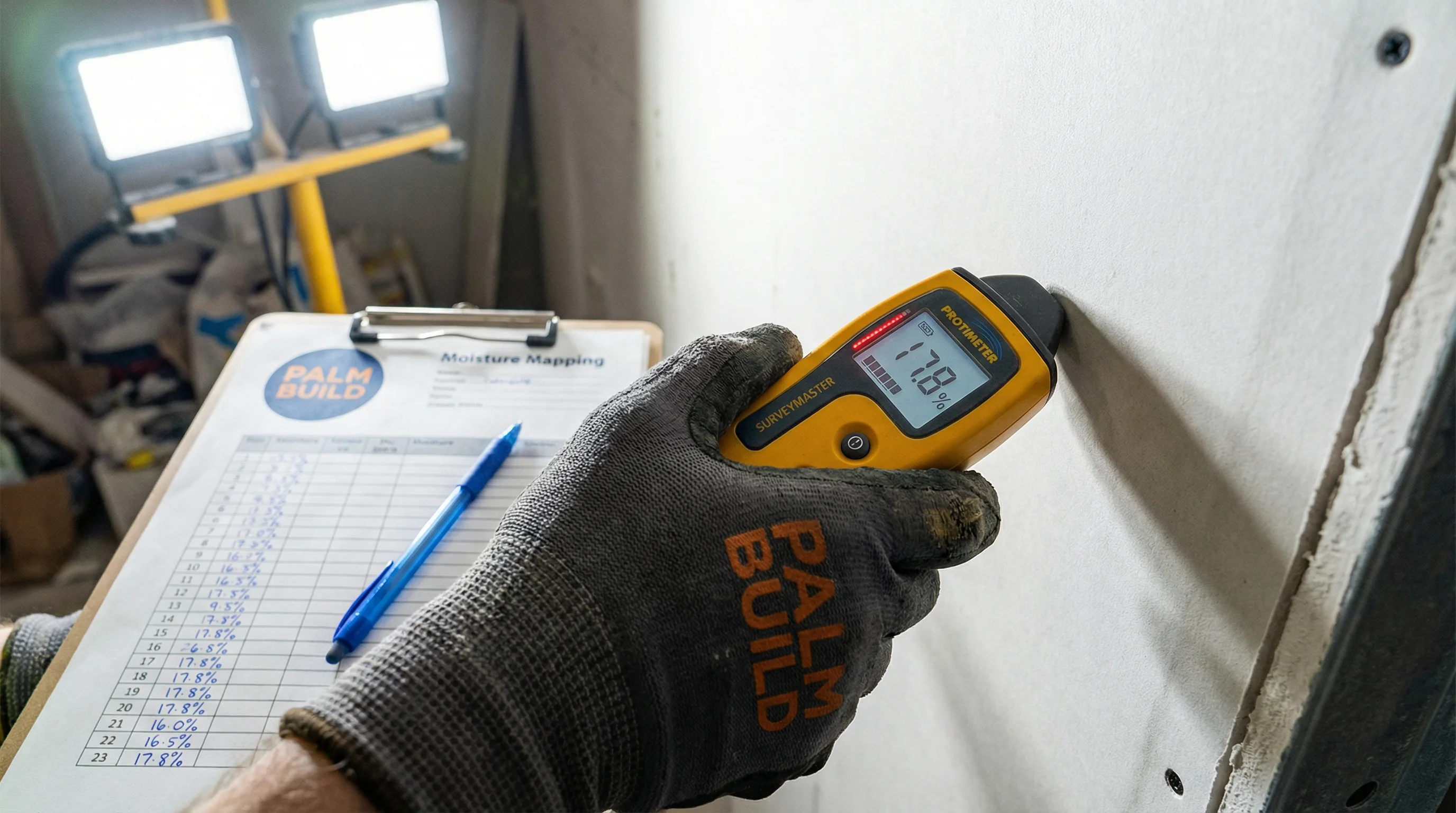
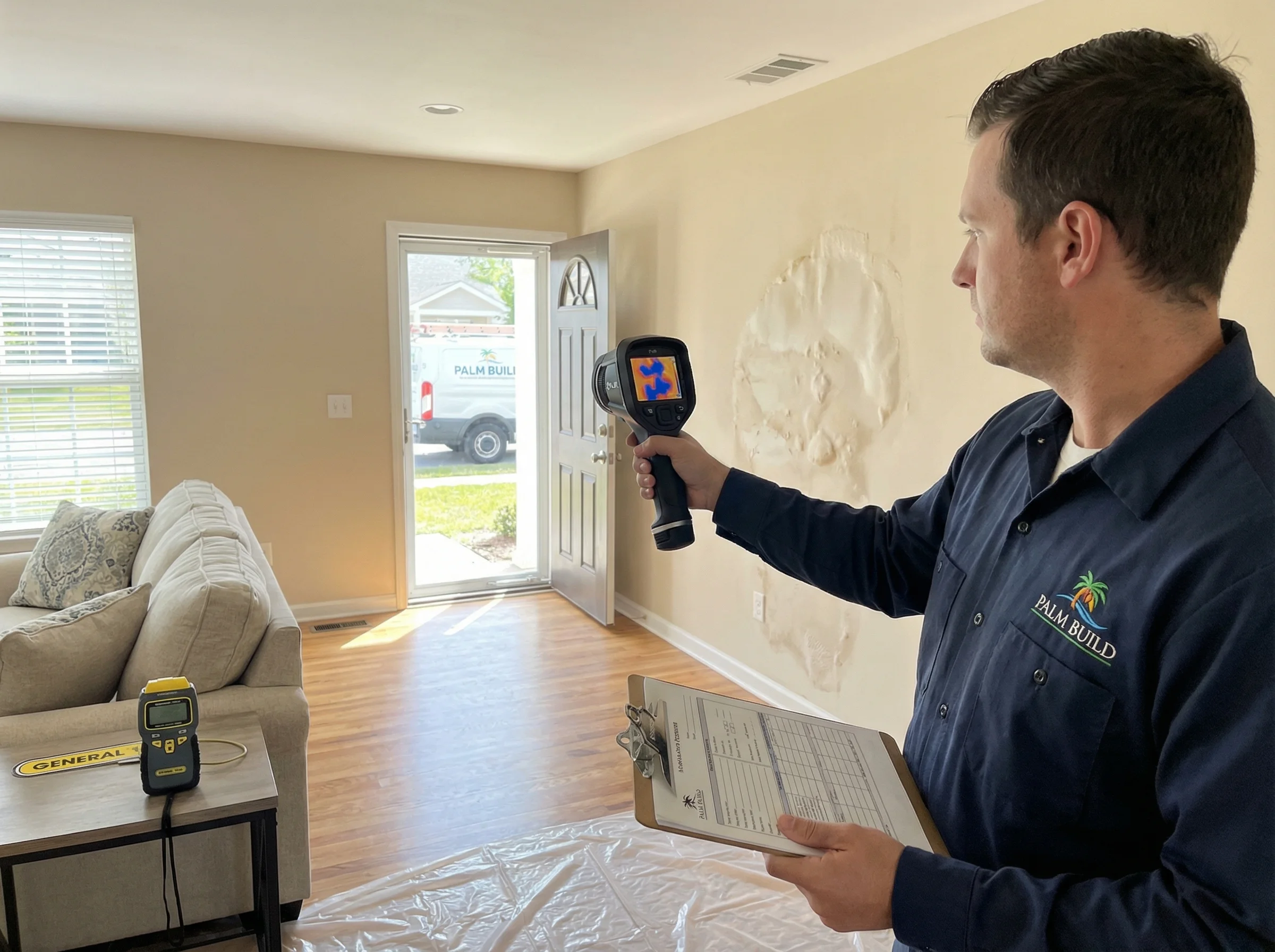
What separates professional drying from a DIY approach is the monitoring framework. Every day, technicians return to the site to take moisture readings at predefined points across the affected area. These readings are plotted against the expected drying curve for each material type, and any deviation, whether a plateau, an unexpected rise, or slower-than-projected progress, triggers an investigation and equipment adjustment. This feedback loop ensures that the drying system stays calibrated to real conditions rather than running on assumptions. The resulting documentation package, which includes daily moisture logs, equipment records, and photographic evidence, provides the verified proof that the structure met dry standards before any reconstruction work began.