Quick Answer
Mold can begin growing within 24 to 48 hours after water damage if wet building materials aren't dried quickly — a benchmark from the EPA, CDC, and OSHA that applies to drywall, carpet, wood framing, and insulation. It's a practical drying target, not a guarantee. Immediate extraction and dehumidification below 50% humidity are the most effective prevention.
Key takeaways
- Mold can begin growing within 24 to 48 hours on wet building materials, according to the EPA, CDC, and OSHA.
- The 24-48 hour figure is a practical drying benchmark, not a hard guarantee. Mold may still occur earlier, or materials wet longer may not always develop mold.
- Immediate water extraction and aggressive dehumidification (keeping humidity below 50%) are the most effective prevention steps.
- Contaminated water from sewage or flooding requires professional containment and should not be dried with household fans.
- Waiting to act can turn a water damage restoration job averaging $3,867 into a mold remediation project costing $1,223 to $3,753 on top of repair costs.
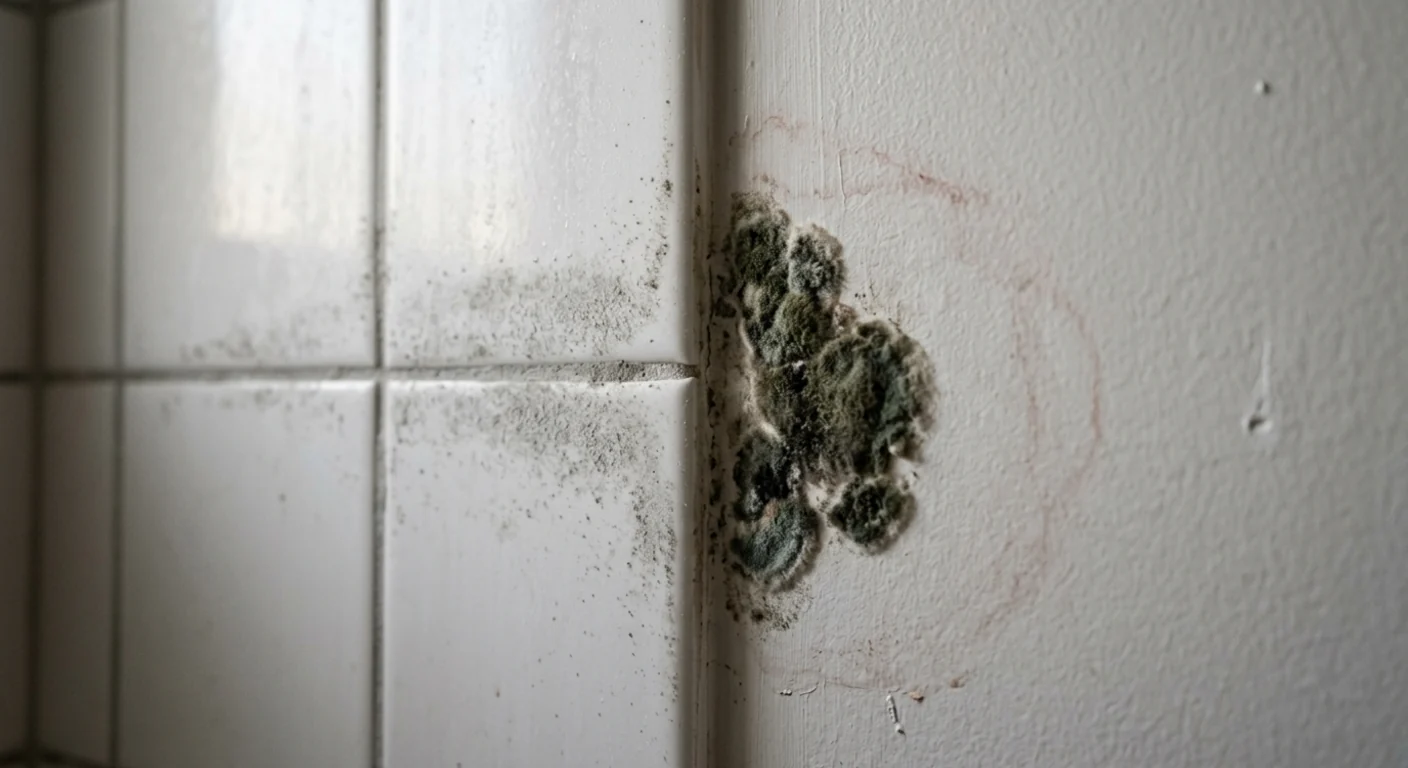
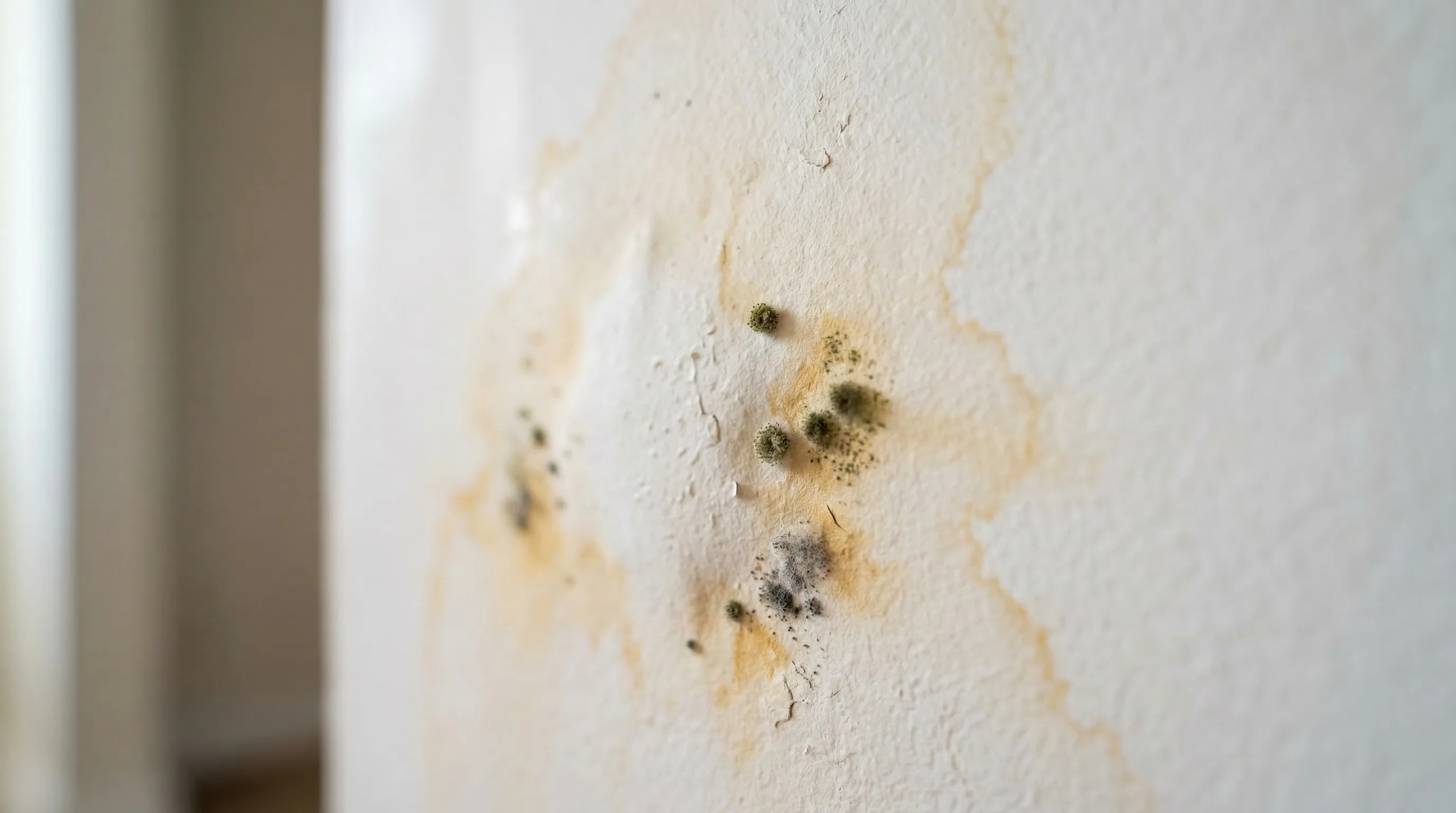
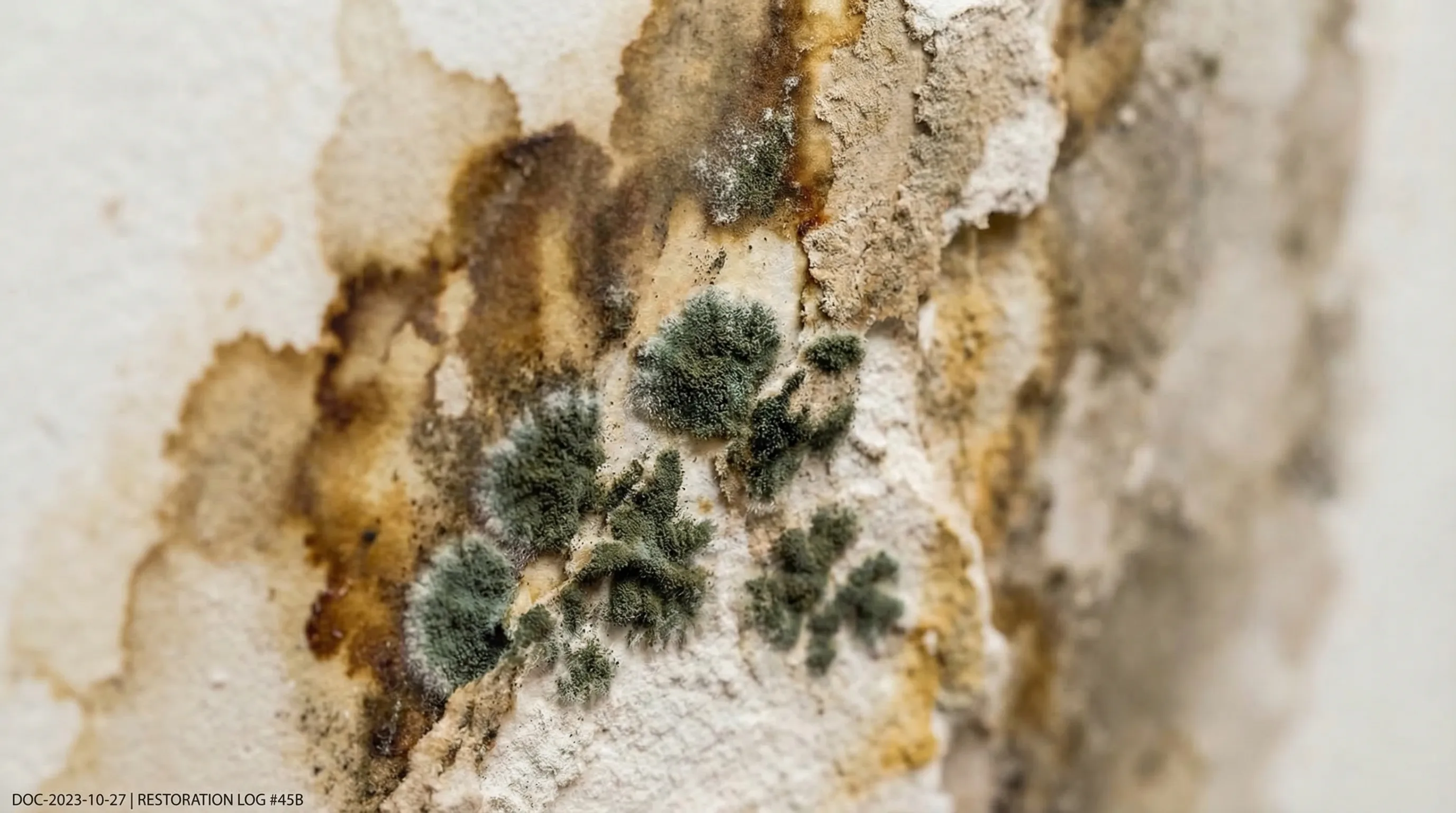
Mold can begin growing within 24 to 48 hours after water damage if wet building materials are not dried quickly. That number comes directly from the EPA, CDC, and OSHA, and it applies to common materials like drywall, carpet, wood framing, and insulation. But here is the part most articles leave out: 24 to 48 hours is a practical drying benchmark, not a guarantee. The EPA's own guidance notes that mold may still occur even if you dry within 48 hours, and that growth will not always happen after 48 hours. The real takeaway is simple. Dry fast, dry aggressively, and monitor moisture until materials hit safe levels. If you are past the 48-hour mark or dealing with contaminated water, contact a professional mold remediation team before the problem gets worse.
Mold growth window
24-48 hrs
EPA, CDC, and OSHA all cite this drying benchmark
Avg. mold remediation cost
$2,364
National average per Angi 2026 data
Water damage claim frequency
1 in 67
Insured U.S. homes with water/freezing claims (2019-2023)
The 24-48 Hour Mold Timeline Explained
Mold spores are already in your home. They exist in every indoor environment. What they need to colonize and grow is sustained moisture, a food source (organic building materials like drywall paper, wood, carpet backing, or insulation), temperatures between 60 and 80 degrees Fahrenheit, and time. When water damage introduces moisture into porous materials, those conditions converge quickly, especially in humid climates like Florida, North Carolina, and South Carolina.
The EPA recommends drying water-damaged areas and items within 24 to 48 hours to help prevent mold growth, with indoor humidity targets of 30 to 60 percent. The CDC advises drying fully and quickly within 24 to 48 hours after flooding, recommending indoor humidity no higher than 50 percent. OSHA states that a prompt response within 24 to 48 hours, combined with thorough cleanup and removal of wet materials, will prevent or limit mold growth.
When Floodwater or Sewage Changes the Rules
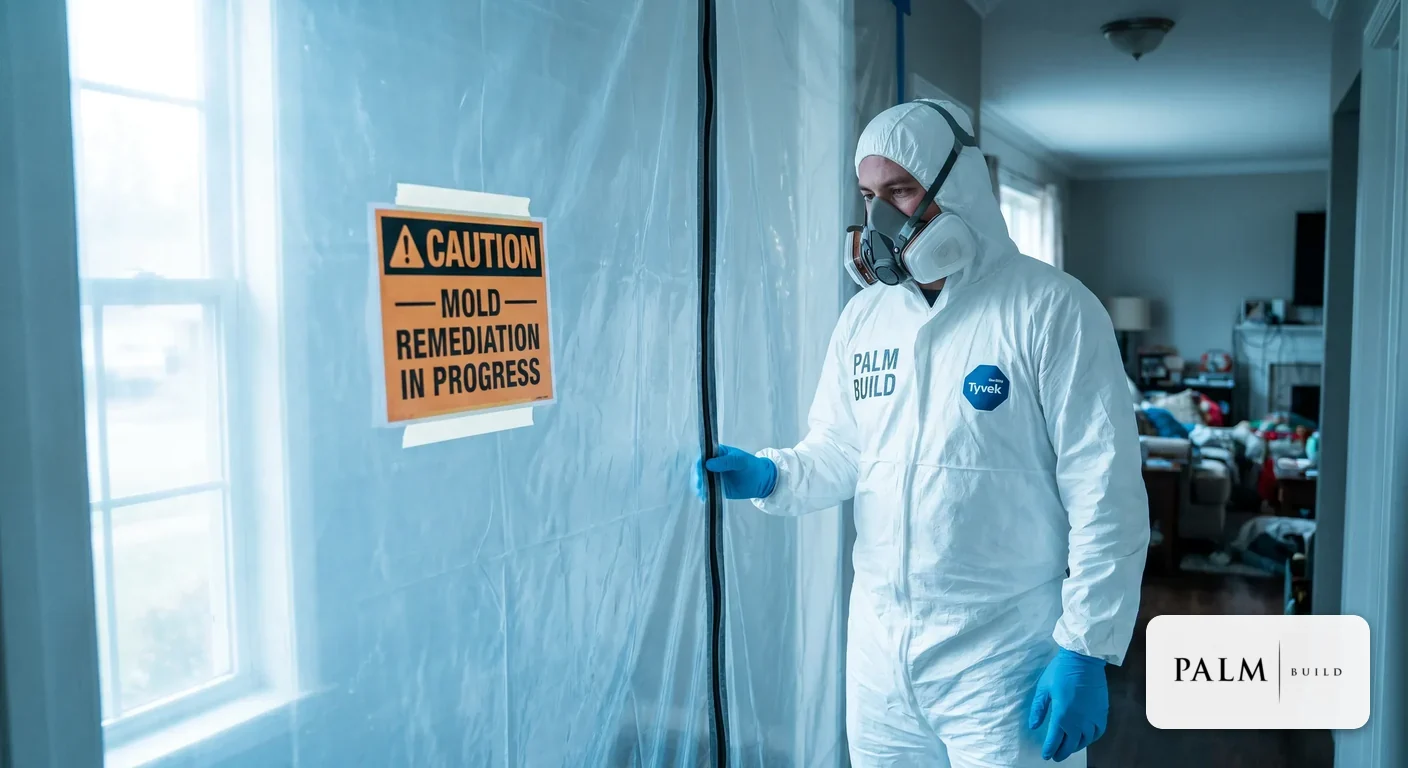
If the water source is contaminated (sewage backup, storm surge, river flooding, or gray water from washing machines), the response is more complex. Contaminated water introduces bacteria, chemicals, and pathogens that make standard drying insufficient. Do not run household fans to try to dry these areas, because you may spread contaminants through the air. These situations require professional containment, personal protective equipment, controlled demolition of affected materials, and antimicrobial treatment. Contact a water damage restoration team experienced with Category 2 and Category 3 water losses before attempting cleanup.
Water Damage to Mold: The Complete Timeline
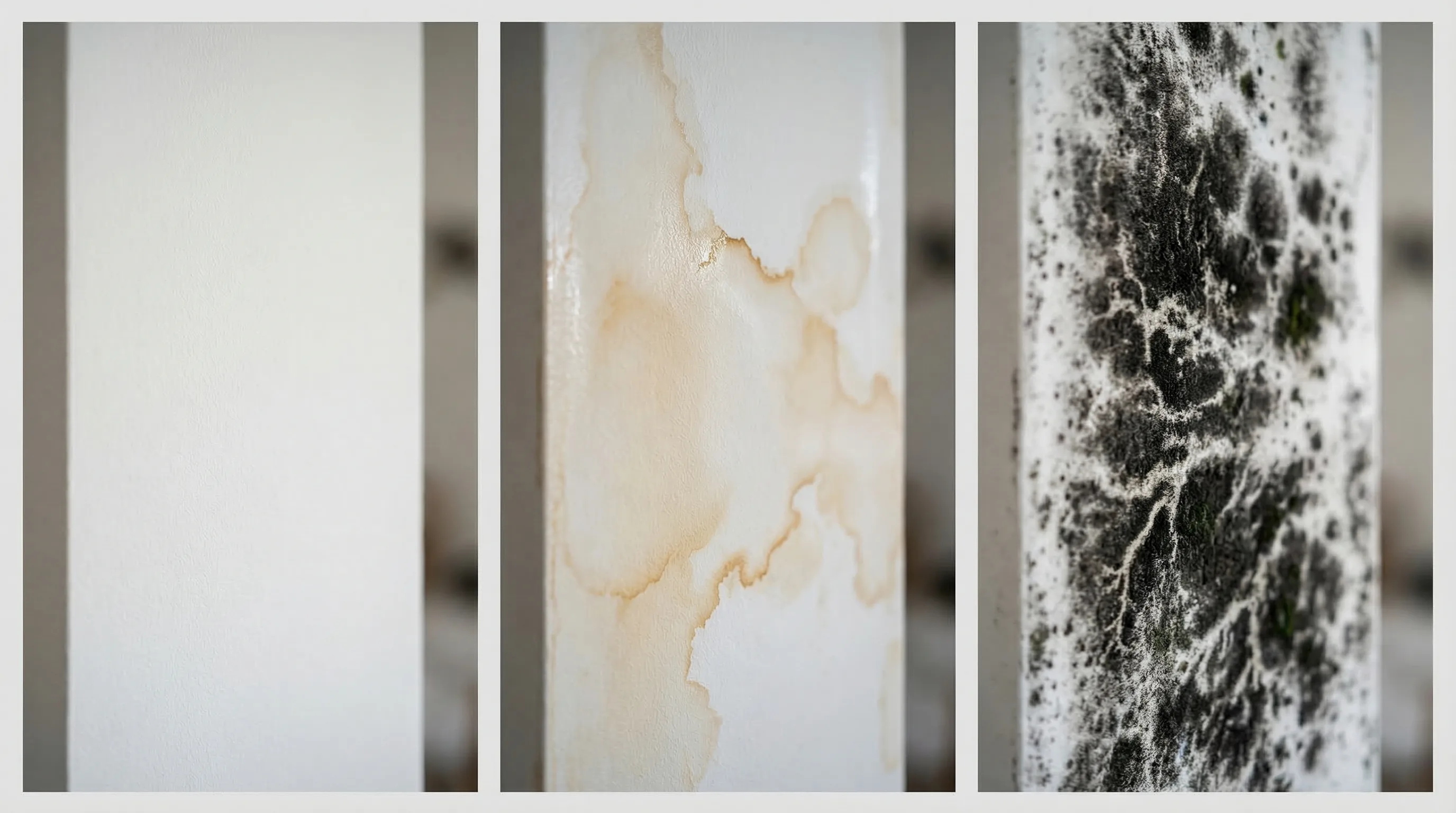
This timeline is based on EPA, CDC, and OSHA guidance and reflects what our restoration teams typically observe in the field. Use it to understand where you are in the process and what actions to prioritize.
Same day (0-12 hours)
Best chance to prevent mold growth
Moisture is saturating porous materials but mold has not colonized yet. Stop the water source, extract standing water, begin dehumidification and airflow, and remove unsalvageable wet contents. This is your highest-impact window.
24-48 hours
Prevention window is closing
If damp materials have not been dried, the mold prevention window closes quickly. Continue drying and monitoring moisture levels with meters. Remove materials that cannot be dried promptly, such as saturated carpet padding and wet insulation.
Beyond 48 hours
Elevated risk requires professional assessment
EPA guidance recommends treating materials wet for over 48 hours under remediation protocols. Mold may or may not be visible, but the risk has risen significantly. A professional assessment with moisture mapping, controlled demolition where needed, and verification-grade drying is the appropriate response.
Flooding or contaminated water
Higher health risks and containment required
Sewage, storm surge, or chemically contaminated water introduces additional health hazards. Avoid DIY fans until the water category is assessed by a professional. Containment, PPE, and antimicrobial protocols are typically required.
What to Do Immediately After Water Damage
Speed determines outcome. Whether you just discovered a burst pipe, a roof leak, or flooding from a storm, these are the priority actions that reduce mold risk. For a more detailed walkthrough, see our guide on what to do in the first 24 hours after water damage.
- 1
Shut off the water source and make the area safe
Turn off the main water valve for pipe failures. If standing water is near electrical outlets or the breaker panel, do not enter the area. Turn off power from a dry location or call an electrician. Evacuate if you smell gas or see ceiling sagging.
- 2
Document damage before you move anything
Take wide-angle and close-up photos and video of all affected areas, including behind furniture and inside cabinets. This evidence is critical for your insurance claim. Capture serial numbers and receipts for damaged contents.
- 3
Extract standing water and remove wet contents
Use a wet-dry vacuum if power is confirmed safe, or mops and towels for smaller amounts. Remove saturated furniture, rugs, and soft goods from wet areas. Lift furniture off wet carpet using aluminum foil or wood blocks.
- 4
Start drying and dehumidifying aggressively
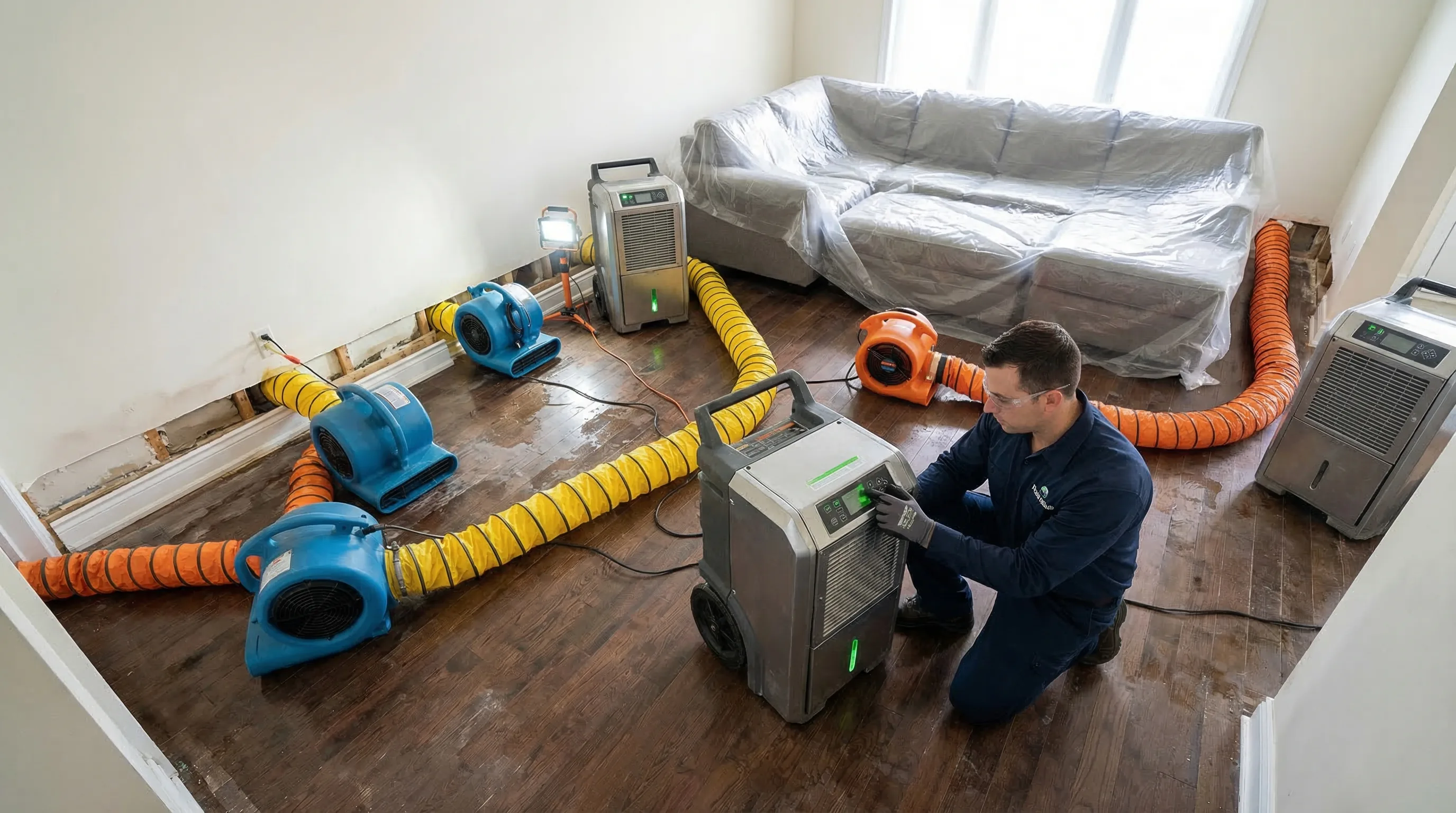
Run dehumidifiers to bring indoor humidity below 50 percent (the CDC recommended ceiling). Open windows only if outdoor humidity is lower than indoor humidity. Position fans to create airflow across wet surfaces. Professional-grade equipment from a water damage restoration company dries significantly faster than consumer products.
- 5
Watch for hidden moisture and early warning signs
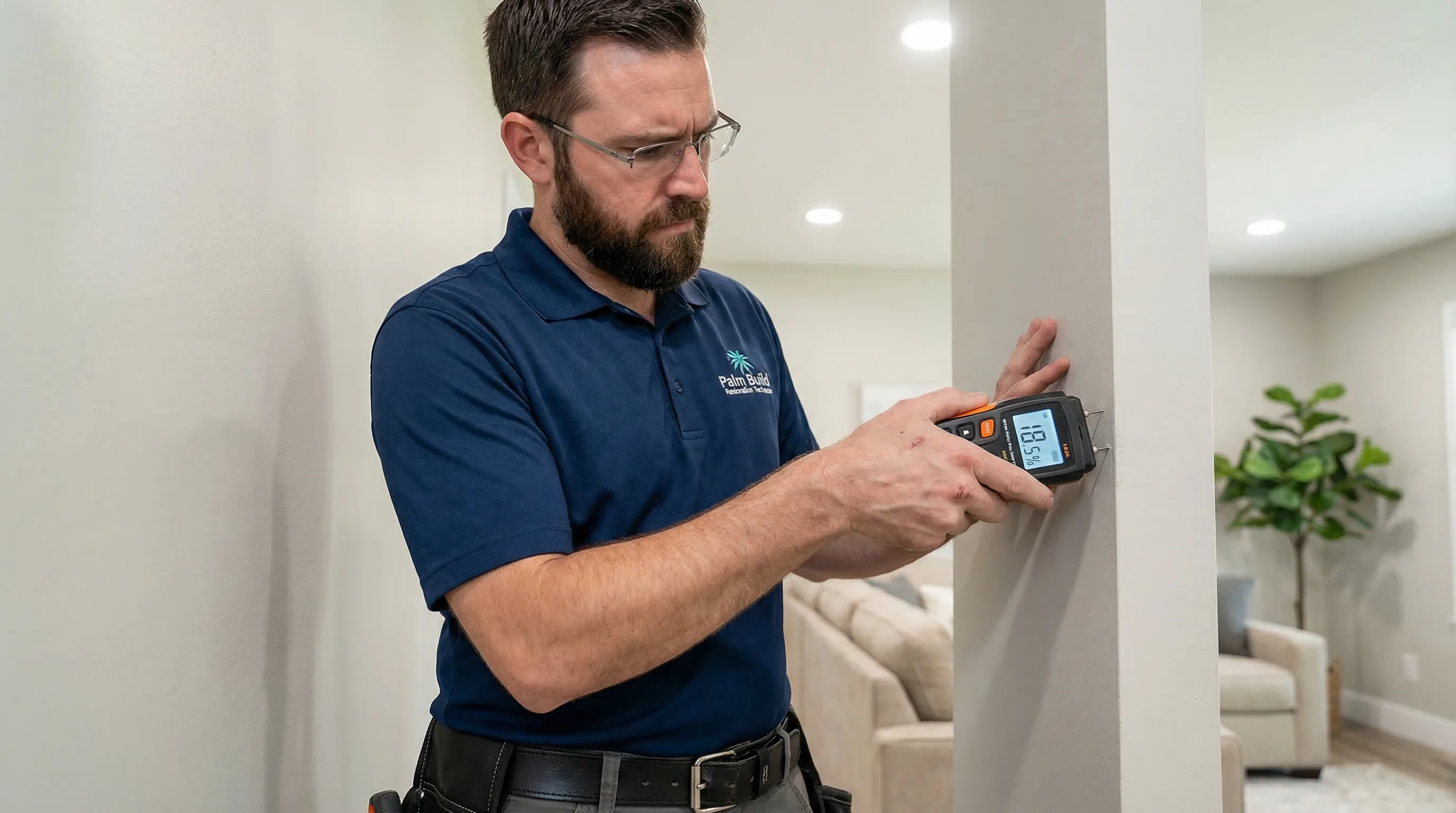
Musty odors, warped flooring, bubbling paint, and staining on walls or ceilings are indicators of trapped moisture. Mold often starts behind walls, under cabinets, and beneath flooring where it cannot be seen. A moisture meter is the only reliable way to confirm materials are drying to safe levels.
- 6
Know when to call professionals
If materials have been wet for more than 48 hours, if the water source may be contaminated, if the affected area is larger than a single room, or if you detect hidden moisture you cannot reach, professional intervention is the safest path. Certified restoration teams use thermal imaging, commercial dehumidifiers, and daily moisture documentation to ensure complete drying. If mold has already started to grow, here is the mold remediation process, step by step.
Do this
- Extract standing water within hours, not days
- Run dehumidifiers 24/7 until moisture readings are normal
- Remove saturated carpet padding, it rarely dries fast enough
- Document everything with photos and video before cleanup
- File your insurance claim notice promptly
Avoid this
- Using household fans to blow on contaminated or sewage water
- Assuming dry surfaces mean dry wall cavities
- Painting over water stains without confirming materials are fully dry
- Waiting more than 24 hours to start water removal
- Ignoring musty smells as 'just dampness'
Hidden Moisture: Where Mold Grows Where You Cannot See It
Some of the most damaging mold growth happens in places homeowners never check. Behind drywall, beneath carpet and vinyl flooring, inside wall cavities, in crawl spaces, and around HVAC ductwork are all common locations. Water follows gravity and capillary action into building cavities that are invisible from the living space. A wall can feel dry on the surface while the framing behind it stays wet for weeks. This is why moisture meters and thermal imaging cameras are standard tools in professional restoration. If you had water damage and the affected areas are not fully exposed and monitored, hidden moisture could be feeding mold growth right now.
Florida, North Carolina, and South Carolina: What Homeowners Need to Know
Mold risk is not uniform across the country. Climate, regulations, and insurance rules vary by state, and all three of Palm Build's primary service areas present elevated mold risk compared to national averages.
Florida: The Most Humid State in the Nation
NOAA's State Climate Summaries describe Florida as the most humid state in the nation. That baseline humidity means wet building materials stay in a mold-friendly environment longer unless dehumidification is aggressive. Florida also regulates mold-related services by statute: the state's definition of "mold remediation" includes any work on mold-contaminated areas greater than 10 square feet. For a deeper look at why Florida homes are so vulnerable, see our guide on Florida mold problems and how to stop them.
Florida homeowners also face a statutory insurance claim deadline. Under Florida's property insurance notice statute, a claim or reopened claim is barred unless notice is given within one year of the date of loss, and a supplemental claim must be filed within 18 months. After any water damage event, notify your insurer promptly and keep documentation of every communication.
North Carolina: Humid Climate, Hurricanes, and No State Mold Certification
North Carolina shares Florida's humid climate profile with additional coastal hurricane vulnerability. NC State Extension guidance notes that no federal or state certification programs exist for mold remediation companies or individuals in North Carolina. The widely accepted industry reference is IICRC certification (the Institute of Inspection, Cleaning and Restoration Certification). When hiring a restoration company in NC, verify IICRC credentials and request written documentation of their drying protocols and moisture readings. For more guidance, see our article on how to choose a restoration company.
South Carolina: Humid Subtropical Climate With Evolving Oversight
The South Carolina State Climatology Office describes the state's climate as largely humid subtropical with hot, humid summers and mild winters. At present, South Carolina does not license mold inspectors. A 2026 bill has been introduced proposing a certification framework for mold assessors and remediators, but it is not yet law. The safest approach for SC homeowners is to hire qualified, credentialed professionals (IICRC-aligned) and demand written moisture documentation throughout the drying process.
The Cost of Waiting: Water Restoration vs. Mold Remediation
The financial case for fast action is straightforward. Water damage restoration is expensive, but adding mold remediation on top of it is significantly more expensive. According to Angi's 2026 data, here is what homeowners typically face.
| Category | Typical national range | Per square foot | Why it matters |
|---|---|---|---|
| Water damage restoration | Avg. ~$3,867 (varies widely) | $3-$7.50/sq ft | Faster mitigation reduces secondary damage and mold risk |
| Mold remediation | $1,223-$3,753 typical | $10-$25/sq ft | Waiting can escalate a dry-out into a full remediation scope |
| Combined (delayed response) | $5,000-$7,500+ | Varies by scope | Secondary mold damage adds demolition, containment, and rebuild costs |
National cost comparison: water damage restoration vs. mold remediation (Angi 2026)
Insurance data underscores how common these losses are. According to the Insurance Information Institute (using ISO/Verisk data), water damage and freezing accounted for 22.6 percent of homeowners losses incurred in 2023, with an average claim severity of $15,400 over the 2019 to 2023 period. About one in 67 insured homes files a water damage or freezing claim annually. For details on the claims process, see our guide on how to file a water damage insurance claim and our insurance restoration process overview.
One additional cost factor that catches homeowners off guard: standard NFIP flood insurance policies generally do not cover mold damage. If mold develops after a flood event, the remediation cost may come entirely out of pocket unless your policy includes specific mold coverage. Check your policy before you need it. For a detailed breakdown of mold remediation pricing, see our 2026 mold remediation cost guide.
Frequently Asked Questions
How quickly does mold grow after water damage? +
What is the best way to prevent mold after water damage? +
Can I prevent mold myself after a small water leak? +
How do you know if mold has started growing after water damage? +
Does bleach kill mold inside drywall? +
If there is no visible mold, am I safe? +
How soon should I bring in professionals after water damage? +
Does homeowners insurance cover mold remediation? +
Professional Mold Remediation Services
IICRC-certified mold assessment, containment, removal, and verification for residential and commercial properties.
24/7 Water Damage Restoration
Emergency water extraction, structural drying, and moisture monitoring to prevent secondary damage.
What to Do in the First 24 Hours After Water Damage
Step-by-step emergency guide covering safety, documentation, water removal, and insurance filing.
Mold Remediation Cost in 2026
Complete pricing breakdown by project size, mold type, and location with insurance guidance.
Florida Mold Problems: Why Homes Get Mold
Why Florida's climate creates unique mold challenges and what homeowners can do to prevent them.
Water Damage Restoration Cost in 2026
National and regional cost ranges for water damage repair and restoration services.
Mold Remediation vs. Mold Removal: Key Differences
Understand the difference between professional remediation and simple removal before you hire.
Crawl Space Encapsulation Cost in 2026
What encapsulation and vapor barrier installation costs in FL, NC, and SC.
Restoration Company vs General Contractor: Who to Call First
When to call a restoration company vs. a general contractor, the difference between mitigation and reconstruction, and state licensing rules for FL, NC, and SC.
Dealing with water damage or mold concerns?
Our IICRC-certified teams respond 24/7 across Florida, North Carolina, and South Carolina. The faster we start drying, the less mold risk you face.
Found this helpful? Send it to someone who needs it.