Key takeaways
- Choose restoration companies based on proof, not promises: verify IICRC credentials, licensing, and insurance before signing anything.
- Public guidance says wet materials should be dried within 24 to 48 hours to reduce mold risk, so response speed is a legitimate selection criterion.
- Require a line-by-line scope, moisture logs, and progress photos before rebuild work starts.
- Watch for contract traps: blank spaces, pressure to sign now, large upfront cash demands, and door-to-door storm chasers.
- Florida, North Carolina, and South Carolina each have different rules that affect how you should vet a contractor.
If you are trying to figure out how to choose a restoration company after water damage, fire, or a storm, the fastest way to avoid bad work and claim problems is to verify five things immediately: credentials you can look up independently, state licensing status, proof of insurance, a written scope with line-item detail, and documentation standards that support your claim. Ask for an IICRC-certified firm profile, proof of general liability and workers' compensation, and an estimate that matches what insurers commonly review. Then confirm they can start mitigation quickly, because EPA and CDC guidance both reinforce the same reality: wet materials left too long become mold projects and bigger repairs. The best contractor is not the one with the lowest headline number. It is the one that can prove, in writing, what they will do, how they will document it, and how they will protect your insurance claim.
Water damage claim frequency
1 in 67 homes
Insurance Information Institute annual benchmark
Wind and hail claims
1 in 36 homes
Shows how common severe weather losses are
Average water/freeze claim
$15,400
National multi-year average severity (2019-2023)
Mold prevention window
24-48 hrs
EPA/CDC guidance for drying wet materials
The Fast Checklist: What to Verify Before You Hire
Homeowners get burned when they choose based on urgency alone and skip verification. Emergencies are stressful, but the first call should still produce concrete proof. A legitimate restoration company will provide these items quickly and without resistance. If they cannot, move on to the next call.
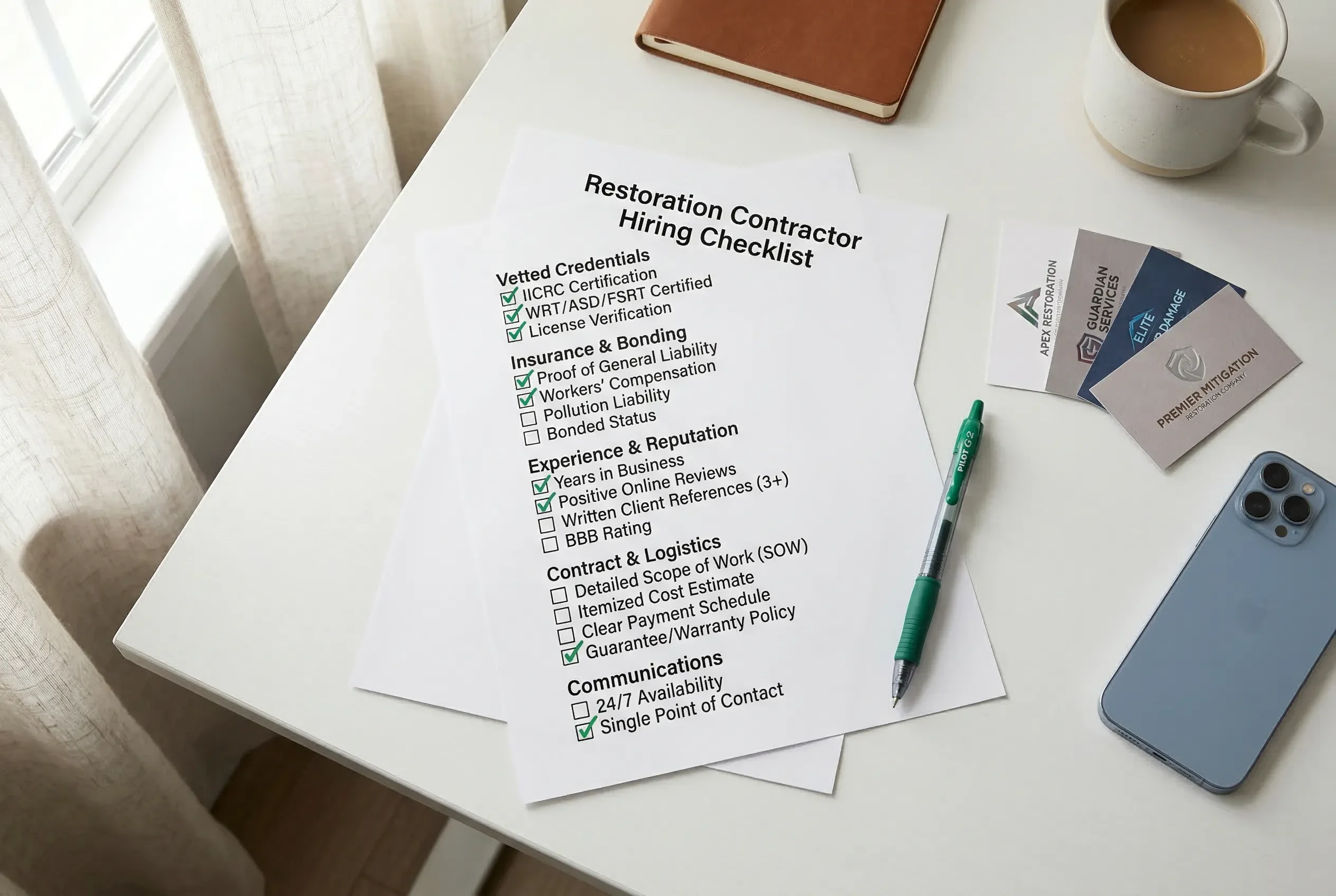
- Verified credentials: ask for IICRC-certified firm proof and confirm it independently through the IICRC locator
- State license status where required, plus the business legal name and active registration
- Insurance certificates for general liability and workers' compensation, verified with the issuing insurer
- Written scope of work before major demolition or rebuild begins, with specific materials and methods listed
- Moisture-readings plan with baseline measurements, daily logs, drying goals, and progress photos
- Clear payment schedule tied to documented milestones, not verbal promises or vague estimates
- Named project manager and a direct communication channel for questions during the project
- Written change-order process that requires your approval before additional scope is authorized
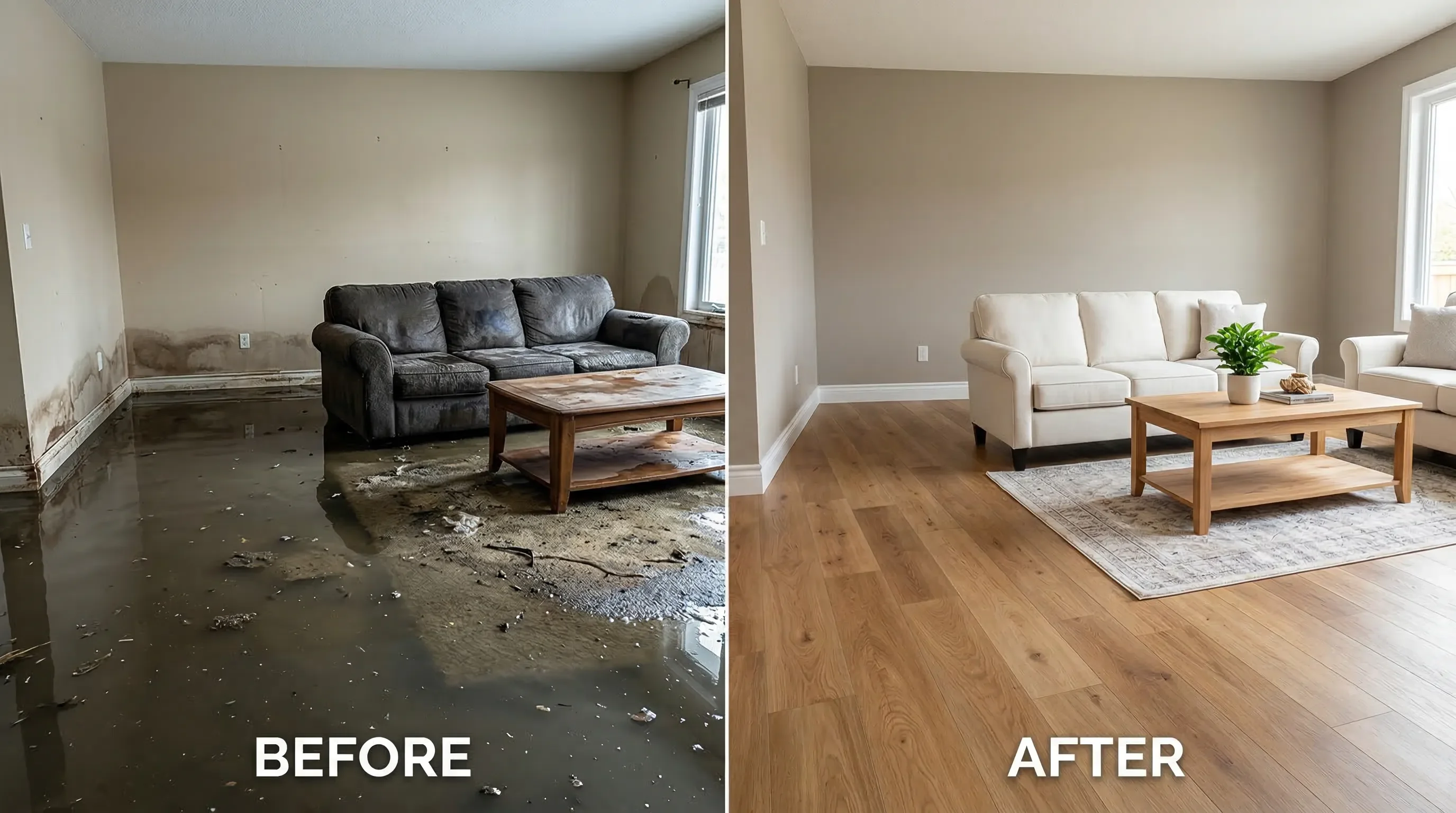
If your loss is active, start with water damage restoration and stabilization first. If contamination is already present, ask for a separate mold remediation and cleanup scope. For fire-related losses where water, soot, and odor overlap, you also need coordinated fire and smoke cleanup planning. And if your property was soaked during suppression efforts, this deeper guide on water damage from firefighting and hidden costs explains where scope and billing commonly expand.

Why Speed and Documentation Matter More Than the Cheapest Bid
A cheap quote can become the most expensive option if mitigation is delayed or documented poorly. Public guidance from two of the most trusted agencies in the country repeatedly emphasizes the same point: get wet materials dry fast, or expect secondary damage that costs far more than the original loss.
"If wet or damp materials or areas are dried 24-48 hours after a leak or spill happens, in most cases mold will not grow."
The Centers for Disease Control and Prevention echoes this guidance, stating that if your home was flooded and you were unable to dry it within 24 to 48 hours, you should assume mold growth has begun. These are not marketing claims. They are public health benchmarks that justify why a true 24/7 emergency response and real drying capacity are legitimate selection criteria when you are comparing restoration companies.
The Drying Timeline: What Should Happen and When
0-6 hours
Stabilize and extract
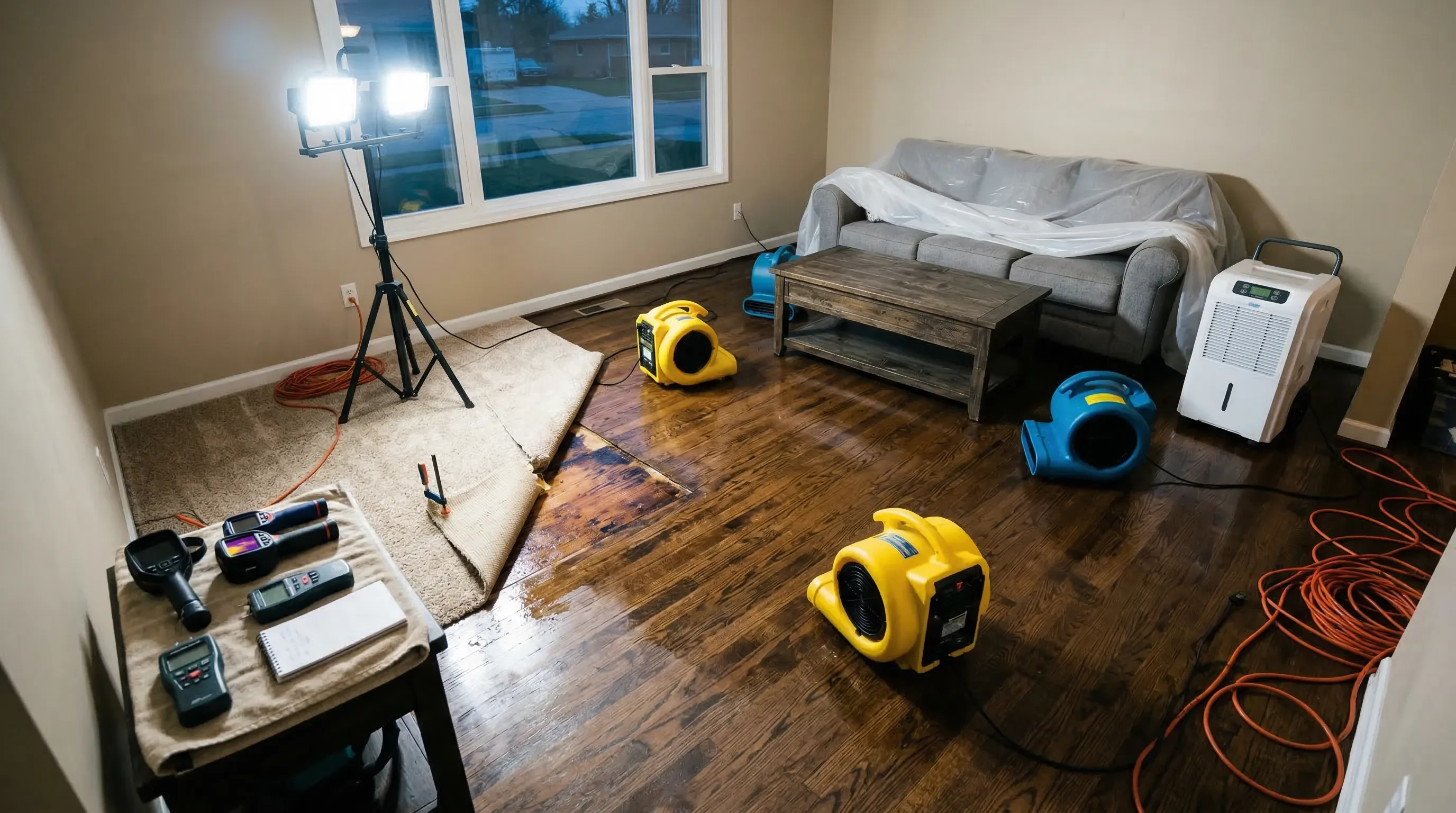
Stop the water source, remove standing water, and protect unaffected areas. This limits spread and keeps scope controlled. Initial safety assessment confirms whether the space is safe to enter.
6-24 hours
Map moisture and set drying goals
Take initial moisture readings across all affected materials. Set drying equipment, establish target moisture levels, and document every affected area with photos for claim support.
24-48 hours
Critical mold prevention period
Materials should be actively moving toward dry standard. Daily moisture logs should show measurable progress. Delays during this window are where many avoidable mold projects begin.
48-72 hours
Secondary damage risk climbs sharply
Hidden moisture in wall cavities, under flooring, and behind cabinetry begins promoting microbial growth. Costs, scope, and claim disputes usually follow delayed mitigation.
3-5 days
Drying verification and transition to rebuild
Moisture readings should reach dry standard. Post-drying documentation locks in scope before reconstruction begins. This is where poor documentation creates billing surprises.
What Claim-Friendly Documentation Looks Like
Good documentation is not optional. It is the primary tool that protects both your property and your insurance claim. When adjusters review scope and billing, they are looking for evidence that work was necessary, properly executed, and consistently tracked. A contractor who skips documentation is a contractor who makes claim disputes more likely.
| Document type | Why it matters | What to ask for |
|---|---|---|
| Initial photo set | Establishes pre-work condition and affected scope | Room-by-room photos before any demolition begins |
| Moisture map | Proves hidden moisture locations and treatment boundaries | Readings by room, material type, and date, with clear notation |
| Daily drying logs | Shows consistent, measurable mitigation effort | Equipment list, readings, ambient conditions, and progress notes |
| Line-item estimate | Allows fair scope comparison across bidders and supports claim review | Detailed labor, materials, quantities, and unit pricing |
| Change/supplement records | Prevents surprise billing and documents evolving scope | Written approvals signed by you before additional work is authorized |
| Post-drying verification | Proves materials reached acceptable moisture levels before rebuild | Final moisture readings compared against baseline and dry standard |
Mitigation documentation checklist: what to request from your contractor
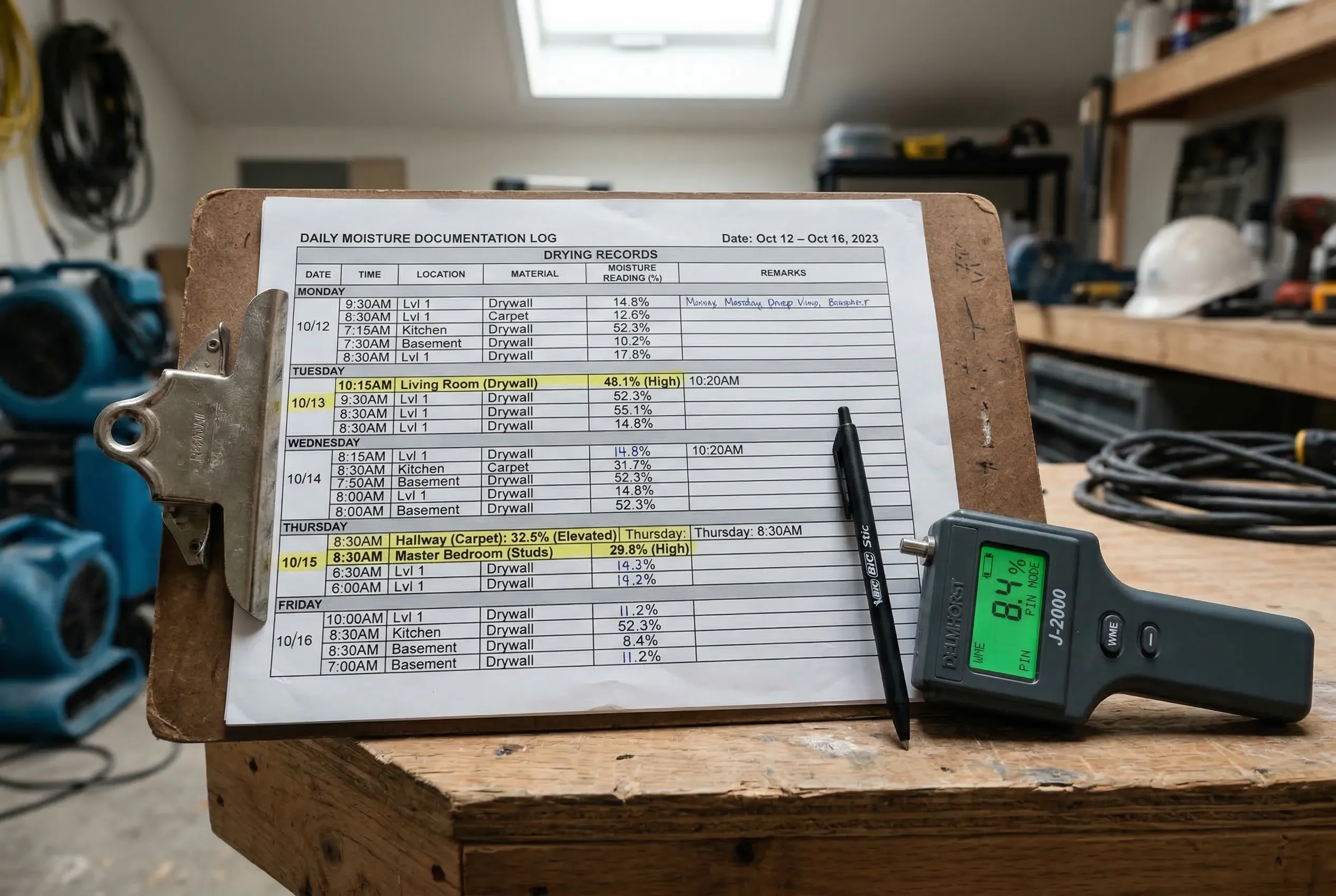
If you need a deeper walkthrough for claim timelines and evidence, read how to file a water damage insurance claim. If your top concern is budget control, compare scope against our water damage restoration cost guide and mold remediation cost guide. For a detailed look at contamination severity, our guide to water damage categories and classes breaks down the classification system that drives scope and pricing decisions.
Contract Red Flags That Should Make You Pause
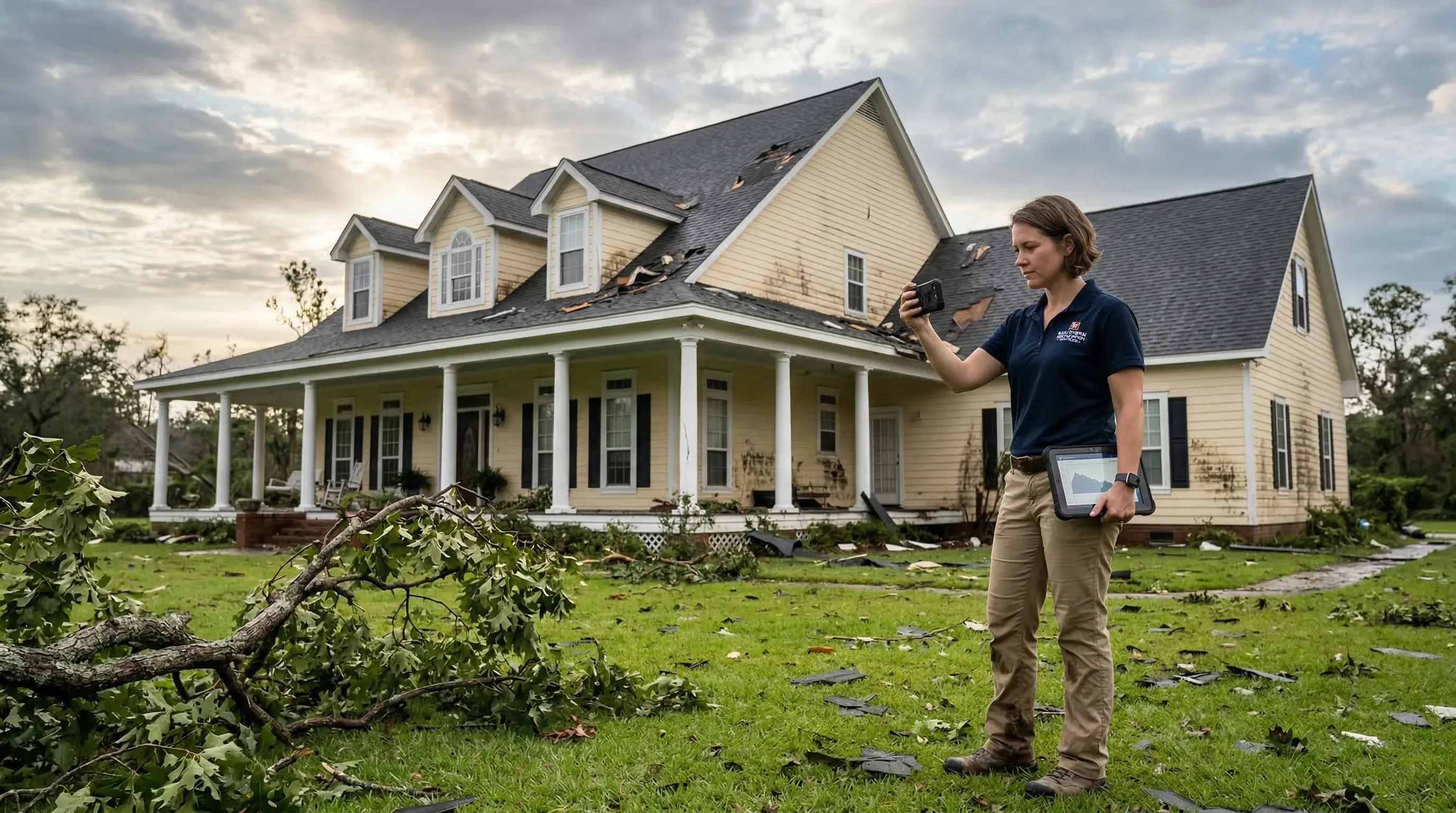
Scam tactics are predictable, especially after storms. The Federal Trade Commission explicitly warns about being skeptical of immediate repair promises, highlights unlicensed contractors appearing after disasters, and flags cash up front or refusal to provide license, insurance, or a written contract as red flags. The best defense is simple contract hygiene. A legitimate company will not rush you into signing unclear language, will not leave blanks, and will explain what is included and excluded before work starts.
Safe hiring practices
- Written scope with materials, milestones, and a clear payment schedule
- Business license and insurance documents provided before work begins
- Clear change-order process requiring your written approval
- Estimate details shared line by line with unit pricing
- No pressure to sign immediately at the door
- Named project manager with direct contact information
High-risk warning signs
- Blank spaces or vague language in contract terms
- Large upfront cash demand before scope is documented
- Refusal to provide insurance certificates or license numbers
- Promises that sound better than what is written on paper
- Door-to-door urgency language after storms or disasters
- Pressure to sign over insurance benefits to start work
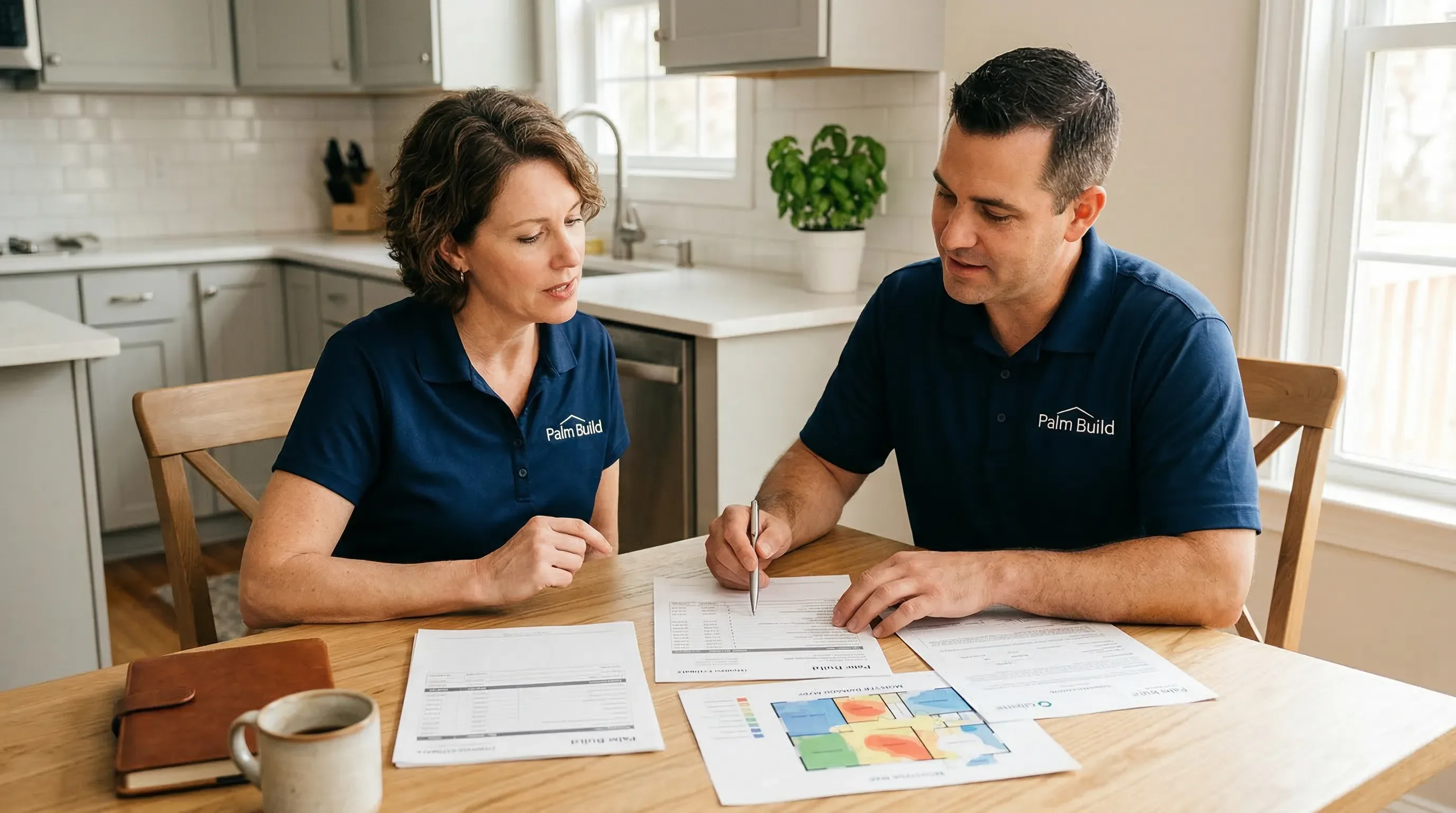
State-Specific Rules: Florida, North Carolina, and South Carolina
National advice is useful, but local rules change real decisions. Palm Build serves Florida, North Carolina, and South Carolina, and each state has specific legal and practical differences that affect hiring, contract review, and what you should expect from a restoration contractor. This is where the post stops being a generic checklist and becomes actionable for your situation.
Florida: Contract Language, AOB Restrictions, and Mold Licensing
Florida has a long history of post-storm contractor fraud and contract traps, and the state has responded with specific protections you should know about. Assignment of Benefits (AOB) agreements, which transfer your insurance claim rights to a third party, are now prohibited for property insurance contracts issued or renewed on or after January 1, 2023. If someone asks you to sign over your insurance benefits to get work started, that is a major red flag.
Florida also regulates mold-related services under Chapter 468, Part XVI, covering mold assessor and mold remediator licensure. If your restoration project involves mold assessment or remediation, confirm whether the scope triggers licensed mold work and verify the professional's license status through the Florida Department of Business and Professional Regulation. For storm and hurricane damage in Florida, coordinating mitigation with storm, wind, and hurricane damage restoration and insurance restoration claim support reduces the risk of gaps between water mitigation, mold prevention, and rebuild.
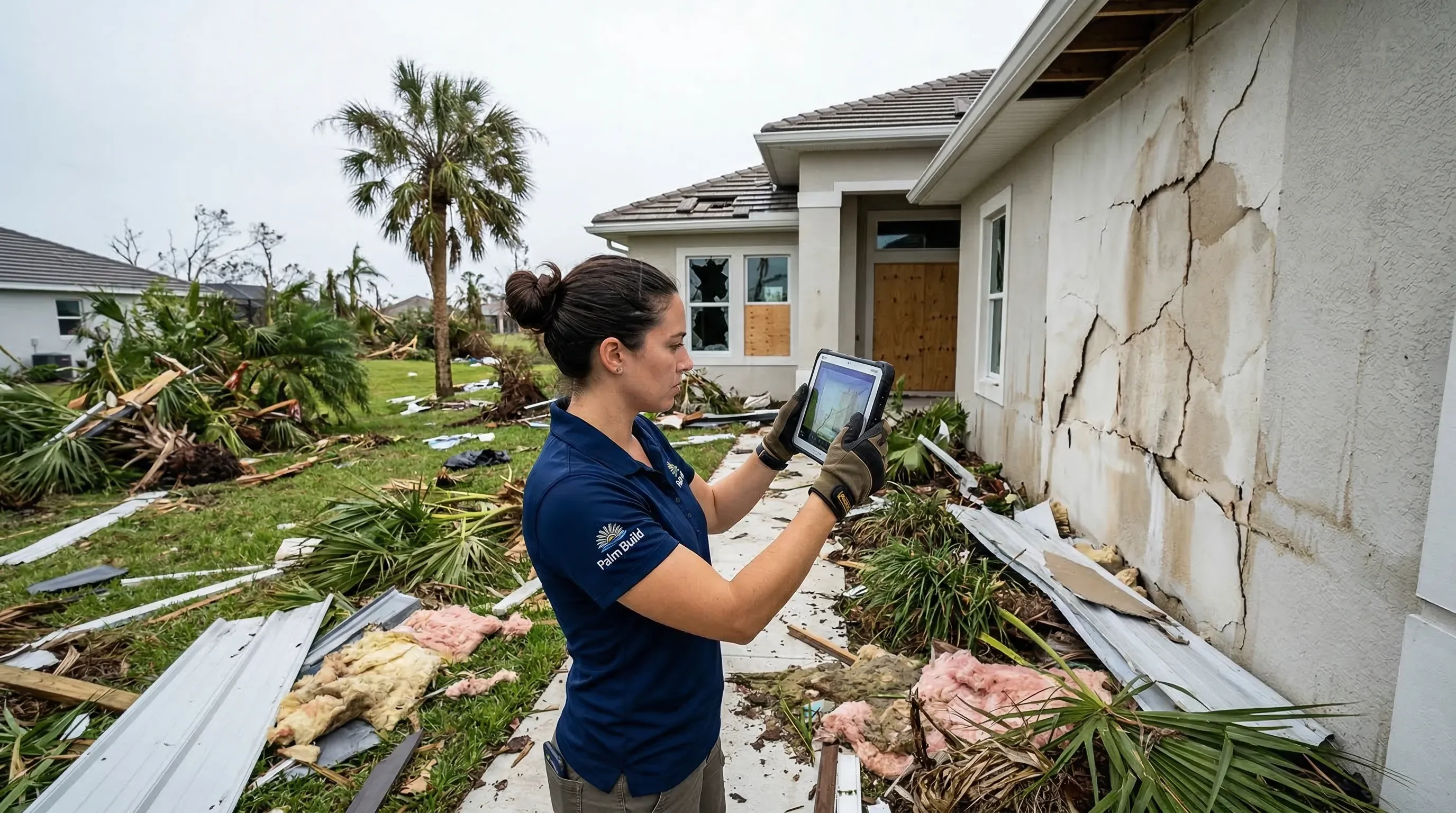
North Carolina: Rebuild Scope Can Trigger Licensing Thresholds
In North Carolina, the Licensing Board for General Contractors states that if a project is valued at $40,000 or more, your general contractor must hold a state license. This matters in restoration because mitigation may start as a smaller job, but reconstruction scope frequently pushes the total project above that threshold. Ask every bidder what portions are mitigation-only and what portions are rebuild, then confirm who holds responsibility for each phase.
For fraud prevention, the North Carolina Department of Insurance provides concrete rules: be wary of door-to-door representatives after a disaster, get everything in writing, never sign a contract with blanks, and never pay in full or sign a completion certificate until work is finished. When your estimate includes major rebuild work, confirm whether the contractor can carry the job through full reconstruction services or whether separate trade contracts will be required.
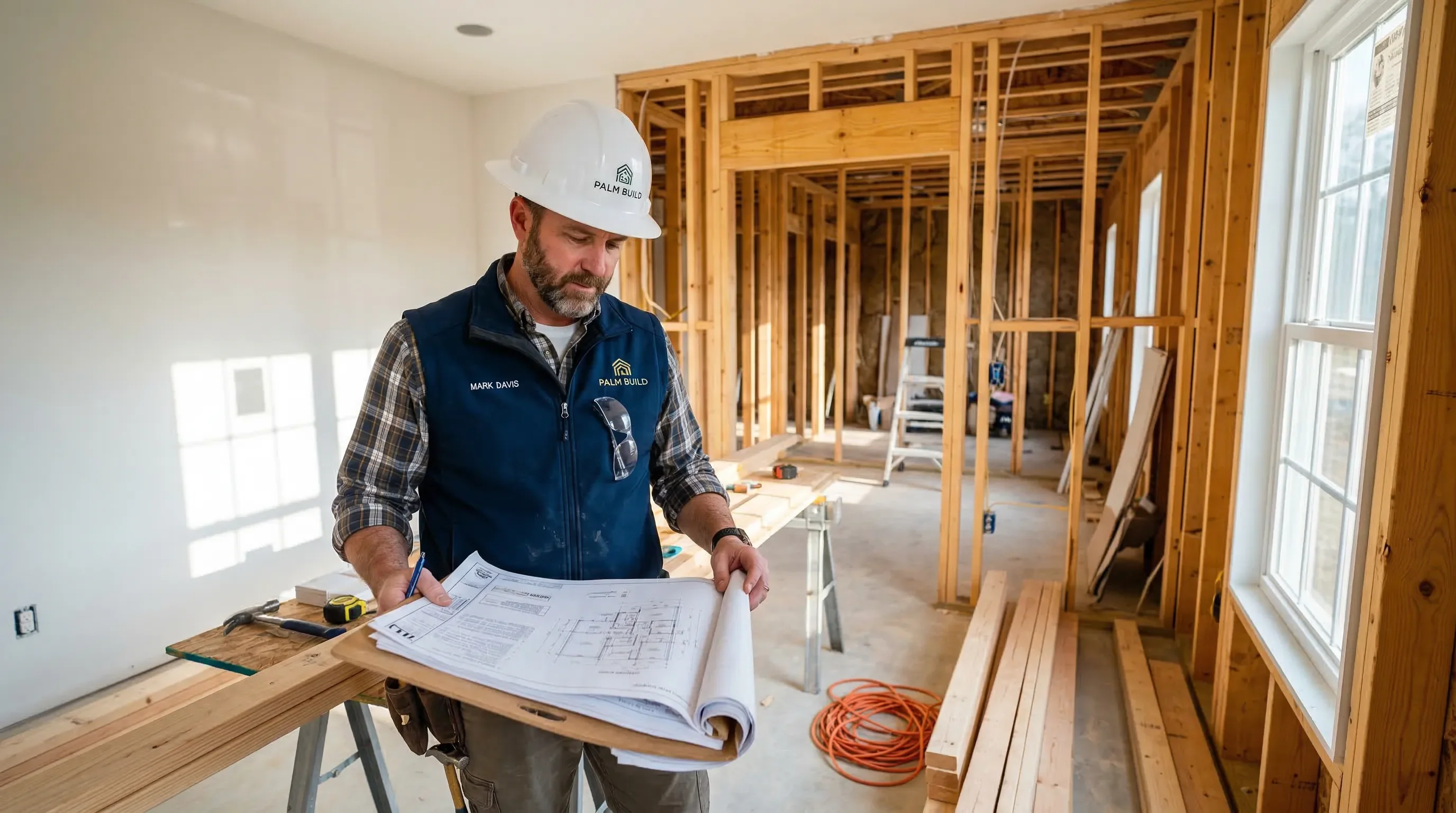
South Carolina: Verify Registration and Avoid Storm-Chaser Pressure
The South Carolina Department of Consumer Affairs warns that storm damage can bring repair scams and urges consumers not to rush into decisions, especially with people who show up at the door. The South Carolina Department of Insurance has published storm-recovery guidance stating that FEMA does not certify or endorse contractors and any contractor claiming to be FEMA-certified is lying.
For rebuild-related compliance, the South Carolina Residential Builders Commission materials explain that when the total cost of a project exceeds $5,000, a surety bond must be submitted for the relevant residential specialty contractor registration. The simple consumer takeaway: if the job is not small, ask what license or registration applies and verify it through South Carolina's licensee lookup tools before authorizing work.
| State | Key threshold or requirement | What to verify | Homeowner action |
|---|---|---|---|
| Florida | AOB prohibited on policies issued/renewed after 1/1/2023; mold licensure under Chapter 468 | License status and mold-related scope requirements | Verify license through DBPR; refuse to sign benefit assignment language |
| North Carolina | GC license required for projects valued at $40,000+ | Whether rebuild scope crosses the licensing threshold | Confirm who is licensed for the reconstruction portion via NCLBGC |
| South Carolina | $5,000+ projects require surety bond for specialty contractors | Registration status and bond compliance for larger projects | Verify status through SC Residential Builders Commission lookup |
Where to verify contractor legitimacy by state
How to Compare Restoration Bids the Right Way
Most homeowners compare totals first, then get surprised later. Compare scope first, total second. Two bids can differ by thousands because one includes proper containment, equipment runtime, and documentation, while the other skips those items and leaves you exposed to supplements and change orders that inflate the final bill well beyond the original estimate.

- 1
Normalize scope categories
Break each estimate into mitigation, remediation, contents handling, and reconstruction. This prevents apples-to-oranges comparisons and reveals which bidder is actually including the full project.
- 2
Check equipment assumptions
Compare number of dehumidifiers, air movers, and projected runtime days. Unrealistically low equipment plans usually mean slower drying, higher secondary risk, and scope creep later.
- 3
Review documentation commitments
Ask whether daily moisture logs and progress photos are included in the price. If not, claim disputes become harder to resolve and you lose leverage on billing questions.
- 4
Validate change-order rules
Require written approval for supplemental work. Verbal changes are where budget control usually fails. Ask each bidder to explain their change-order process before you sign.
- 5
Confirm claim communication workflow
Ask who communicates with your adjuster and how frequently updates are sent. If your project includes major claim complexity, use insurance restoration claim support as part of the evaluation.
If your property includes crawl space moisture, hidden microbial risk, or recurring musty odor, add dedicated crawl space cleanup and drying scope early instead of treating it as an afterthought. Our crawl space encapsulation cost guide provides current pricing benchmarks for that work.
The 12 Questions to Ask Before You Sign
Most bad outcomes in restoration projects can be prevented with better questions asked earlier. A trustworthy contractor will answer these directly and in writing. A risky contractor will dodge specifics, change terms verbally, or pressure you to sign first and ask questions later.
- What certifications does your firm currently hold, and where can I verify them independently?
- Who is the project manager and who is my daily point of contact throughout the project?
- What is your expected arrival window for emergency mitigation?
- What equipment will be used, how many units, and how many days is it expected to run?
- How will you document moisture readings and progress each day?
- Can I see a sample line-item estimate from a similar project?
- What work is included in this scope, and what is explicitly excluded?
- How are supplements and change orders handled, documented, and approved?
- What is the payment schedule, and which documented milestones trigger invoices?
- Will subcontractors be used, and are they covered by your insurance?
- What rebuild items might require separate approvals, permits, or licensed trades?
- Who communicates with my insurance adjuster, and how often are written updates sent?
Pay attention not just to the answers, but to how answers are delivered. Strong teams provide documents quickly and keep details consistent across the contract, estimate, and field explanation. Weak teams often give confident verbal answers that do not match paperwork. If that mismatch appears before you sign, expect bigger mismatches after demolition starts.
Typical Cost Expectations and How to Use Them Safely
Cost guides are useful for setting expectations, not making promises. National consumer ranges can help you identify obvious underbids and overbids, but only if you treat them as directional. The real number depends on contamination category, square footage, hidden moisture, demolition required, and reconstruction complexity. A suspiciously low bid often means incomplete scope, unrealistic equipment assumptions, or aggressive change-order strategy after work starts.
| Service type | Typical range | What drives cost variance |
|---|---|---|
| Water damage restoration | Average around $3,800; lows near $450 to highs near $16,000 | Category of water, equipment days, square footage, hidden cavity moisture, and drying documentation |
| Mold remediation | Average around $2,300; $10-$25 per sq ft common | Containment requirements, material removal scope, post-remediation verification, and Florida licensing compliance |
| Fire damage restoration | Wide range from $3,000 to $51,000+ | Smoke/soot penetration depth, odor treatment, content handling, structural reconstruction, and code upgrades |
Common residential restoration ranges (national consumer estimates)
You should also ask every bidder to identify what would cause their number to increase after work begins. Reputable teams can usually list foreseeable variables in advance: hidden cavity moisture, contaminated insulation, subfloor replacement, content cleaning complexity, code-required upgrades, or permit-related delays. A contractor who acknowledges uncertainty early and documents decision points clearly is usually safer than one promising a perfect fixed number on day one.
Why Estimate Format Matters on Insurance Jobs
Many insurance workflows rely on standardized estimating approaches like Xactimate, a construction cost estimating system widely used by insurance companies, adjusters, and restoration contractors. United Policyholders describes it as the tool adjusters use to calculate repair and rebuilding costs and generate settlement offers. You do not need to become an estimator yourself. You only need enough clarity to ask the right question: can this company explain each major cost driver and tie it to visible damage, moisture data, or required safety protocol? If the answer is no, keep shopping.
Key Terms Every Homeowner Should Know
Restoration projects involve industry-specific terminology that can be confusing during an already stressful time. Understanding these terms helps you ask better questions and evaluate contractor responses more effectively.
- IICRC (Institute of Inspection, Cleaning and Restoration Certification)
- A standards-setting body that certifies restoration professionals and firms. An IICRC-certified firm employs technicians trained in recognized restoration standards. Certification is verifiable through the IICRC public directory.
- Xactimate
- A construction cost estimating software widely used by insurance companies and adjusters to calculate repair and rebuilding costs. Contractors who use Xactimate-compatible estimates align their pricing with what insurers expect to see.
- Assignment of Benefits (AOB)
- A legal agreement that transfers your insurance claim rights to a third party, such as a contractor. In Florida, AOBs are prohibited for property insurance policies issued or renewed after January 1, 2023.
- Containment
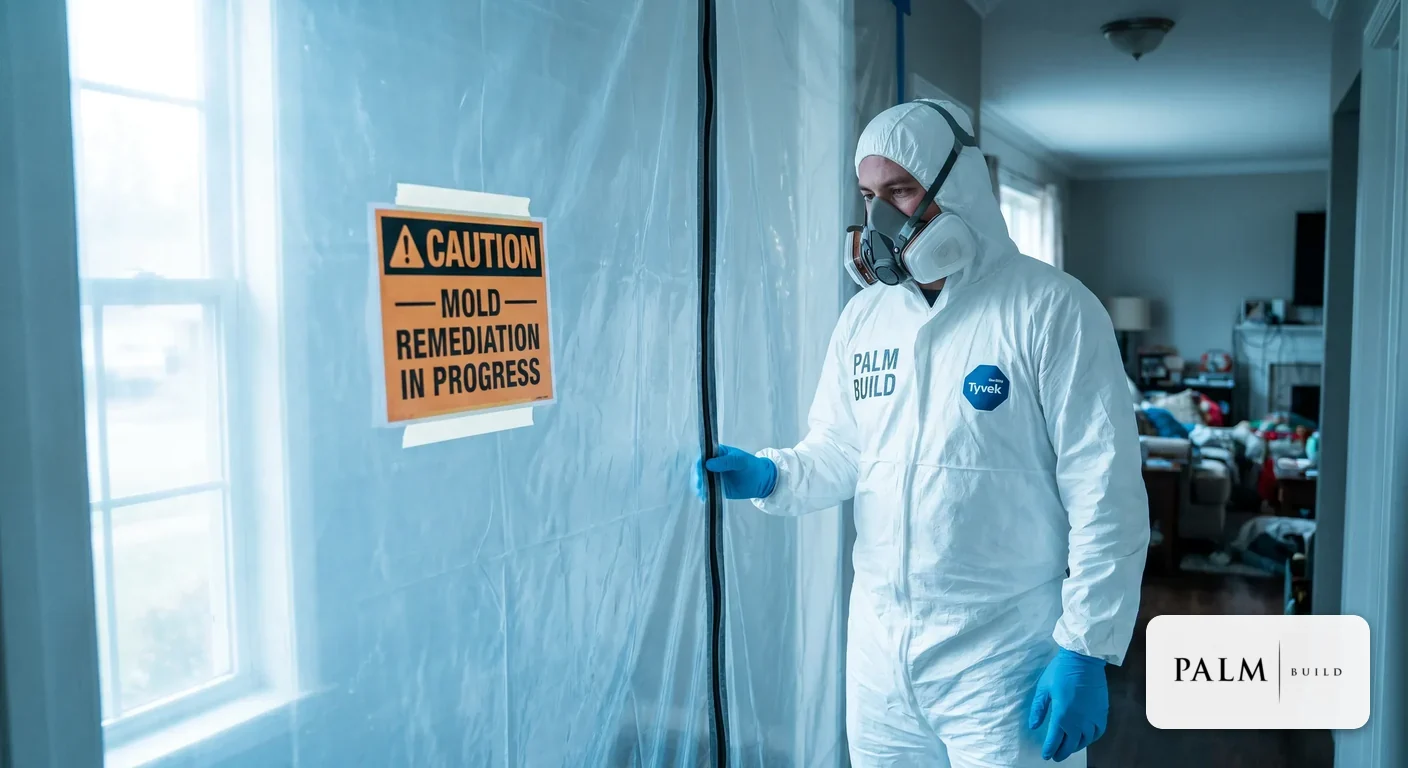
- Physical barriers (typically plastic sheeting and negative air pressure) used to isolate contaminated areas from unaffected spaces during mold remediation or demolition. Proper containment prevents cross-contamination.
- Change order
- A written modification to the original scope of work, typically triggered by discovering hidden damage during mitigation. Legitimate change orders require your written approval before additional work is authorized.
- Dry standard
- The target moisture level that building materials must reach before reconstruction can safely begin. Measured with moisture meters and compared against baseline readings of unaffected materials in the same structure.
- Category of water
- A classification system (Categories 1-3) that describes the contamination level of water damage. Category 1 is clean water, Category 2 contains contaminants, and Category 3 is grossly unsanitary. Higher categories require more aggressive treatment.
Related Resources and Next Steps
Water Damage Restoration Services
Emergency extraction, structural drying, and documentation-first mitigation for residential and commercial properties.
Insurance Restoration Process
How Palm Build coordinates claim documentation, adjuster communication, and Xactimate-compatible estimating.
Water Damage Restoration Cost Guide 2026
Compare category-based water damage pricing and understand the common drivers of cost variance.
Mold Remediation Cost Guide 2026
Use this to benchmark scope and pricing when mold is part of your restoration project.
How Fast Does Mold Grow After Water Damage?
The science behind mold timelines and why the 24-48 hour window matters for your hiring decision.
Water Damage Categories and Classes Explained
Understanding the classification system that drives restoration scope and pricing decisions.
Florida Mold Problems Guide
State-specific mold risk, prevention, and licensing context for Florida homeowners.
First 24 Hours After Water Damage
Hour-by-hour response checklist covering safety, documentation, and when to call a professional.
Restoration Company vs General Contractor: Who to Call First
When to call a restoration company vs. a general contractor, the difference between mitigation and reconstruction, and state licensing rules for FL, NC, and SC.
Frequently Asked Questions
How do I choose a reliable restoration company in an emergency? +
What should I look for in a water damage restoration company? +
What does IICRC certification mean, and how can I verify it? +
How long does water damage restoration usually take? +
Can mold start growing after water damage, and how fast? +
Does homeowners insurance cover water damage and mold remediation? +
What are the biggest red flags when hiring a restoration contractor after a storm? +
Need a verified restoration team now?
Palm Build provides 24/7 emergency response, IICRC-certified technicians, documentation-first mitigation, and direct insurance coordination across Florida, North Carolina, and South Carolina.
Found this helpful? Send it to someone who needs it.