Quick Answer
Florida hurricane prep is simplest on a calendar: season runs June 1 to November 30, but about 78% of activity falls between mid-August and mid-October. Keep at least 7 days of food, water, medications, and batteries on hand. Buy flood insurance early — it usually has a 30-day waiting period — and finish off-season tasks before storms form.
Key takeaways
- Hurricane season runs June 1 to November 30, but roughly 78% of tropical storm activity happens between mid-August and mid-October.
- Florida emergency management recommends keeping at least 7 days of supplies on hand, including food, water, medications, and batteries.
- Many hurricane prep essentials are now sales-tax exempt year-round in Florida, including batteries, generators under 10,000 watts, and tarps.
- Flood insurance typically has a 30-day waiting period. Buy it before the season, not when a storm is forecast.
- Mold can start growing within 24 to 48 hours after water intrusion. If your home takes water during a hurricane, start drying immediately.
Florida hurricane prep is simplest when you follow a calendar and a trigger-based checklist. Hurricane season is June 1 to November 30, with the most active stretch typically from mid-August through mid-October, so your goal is to finish the off-season items before storms start forming and before watch and warning windows compress your time. Florida emergency management encourages households to keep at least seven days of supplies, including food, water, medications, batteries, and other essentials. In 2026, you can also buy many hurricane essentials tax-free year-round in Florida, including batteries, carbon monoxide alarms, smoke detectors, portable generators up to 10,000 running watts, and tarps up to 1,000 square feet. Use the checklist below to prep your kit, your home, and your documents, then update it each May.
Average named storms per year
14.4
NOAA 1991-2020 climate period average
Peak season activity
78%
of tropical storm days fall mid-Aug to mid-Oct
Mold growth window
24-48 hrs
EPA/CDC recommended drying window after water intrusion

Florida Hurricane Season Timing and What Alerts Mean
When hurricane season starts and when risk spikes
The Atlantic hurricane season officially runs from June 1 through November 30. But the real risk window is narrower and sharper than that six-month range suggests. According to NOAA's analysis of the 1991-2020 climate period, roughly 78 percent of tropical storm days and 87 percent of Category 1 and 2 hurricane days occur between mid-August and mid-October. That two-month window is when Florida homeowners face the highest probability of a direct hit.
Florida has historically had more mainland hurricane strikes than any other U.S. state, according to NOAA's state-by-state hurricane strike records. The average season produces 14.4 named storms, 7.2 hurricanes, and 3.2 major hurricanes (Category 3 or higher). Routine tropical outlooks typically resume around May 15, which is your signal to refresh supplies, test devices, and confirm your insurance and evacuation plan.

Hurricane watch vs warning in plain English
The difference between a watch and a warning is the difference between having time to prepare and needing to finish right now. These definitions come from the National Hurricane Center, and understanding the timing changes what you should be doing.
| Trigger | What it means | What you should do |
|---|---|---|
| Tropical outlooks resume (mid-May) | Daily outlooks begin, helping you monitor early-season development trends. | Refresh supplies, test devices, confirm insurance and evacuation plan. |
| Hurricane watch issued | Hurricane conditions are possible. Issued about 48 hours before tropical-storm-force winds are expected. | Switch from season prep to storm mode. Start the 48-hour checklist below. |
| Hurricane warning issued | Hurricane conditions are expected. Issued about 36 hours before tropical-storm-force winds. | Finish final prep, leave if told to evacuate, stop nonessential travel. |
| Storm surge watch or warning | Life-threatening coastal inundation is possible (watch, ~48 hrs) or expected (warning, ~36 hrs). | Treat surge alerts as evacuation-level information if you are in a surge zone. |
| Water enters your home | Mold risk rises fast if wet materials are not dried quickly. | Start drying immediately. Assume you need professional help if saturation is widespread. |
| Flood insurance purchase | NFIP flood coverage typically has a 30-day waiting period unless an exception applies. | Buy before the season, not when a storm is forecast. |
Hurricane alert triggers and what to do at each stage
The Printable Hurricane Preparation Checklist for Florida Homeowners
Supplies and go-bag checklist (7-day Florida target)
Florida's Division of Emergency Management recommends keeping at least seven days of supplies on hand. This is more than the national three-day minimum because Florida storms can knock out power and access for extended periods. Stock these items before the season starts, when shelves are full and prices are normal.
- Water: 1 gallon per person per day for 7 days (drinking and sanitation)
- Non-perishable food for 7 days (canned goods, protein bars, peanut butter, crackers)
- Manual can opener
- Prescription medications: 7-day supply plus copies of prescriptions
- First aid kit with antiseptic, bandages, gauze, and medical tape
- Flashlights (LED preferred) with extra batteries (AA, C, D)
- Battery-powered or hand-crank weather radio (NOAA frequency)
- Cell phone chargers: portable battery packs and car charger
- Cash in small bills (ATMs and card readers go down during outages)
- Important documents in a waterproof container: insurance policies, IDs, bank info, medical records
- Plastic sheeting and duct tape for emergency window coverage
- Whistle (to signal for help if trapped)
- Insect repellent and sunscreen
- Personal hygiene items: soap, toothbrush, hand sanitizer, feminine products
- Bleach (unscented, for water purification: 8 drops per gallon)
- Pet supplies: food, water, medications, carriers, vaccination records

Home hardening checklist (wind, water, and exterior)
The structural upgrades and maintenance items below reduce wind and water intrusion during a hurricane. Some are one-time investments (impact windows, hurricane shutters). Others are annual maintenance tasks (tree trimming, roof inspection). All of them directly affect how much damage your home sustains and how much your storm and hurricane damage restoration will cost if water or wind gets through.

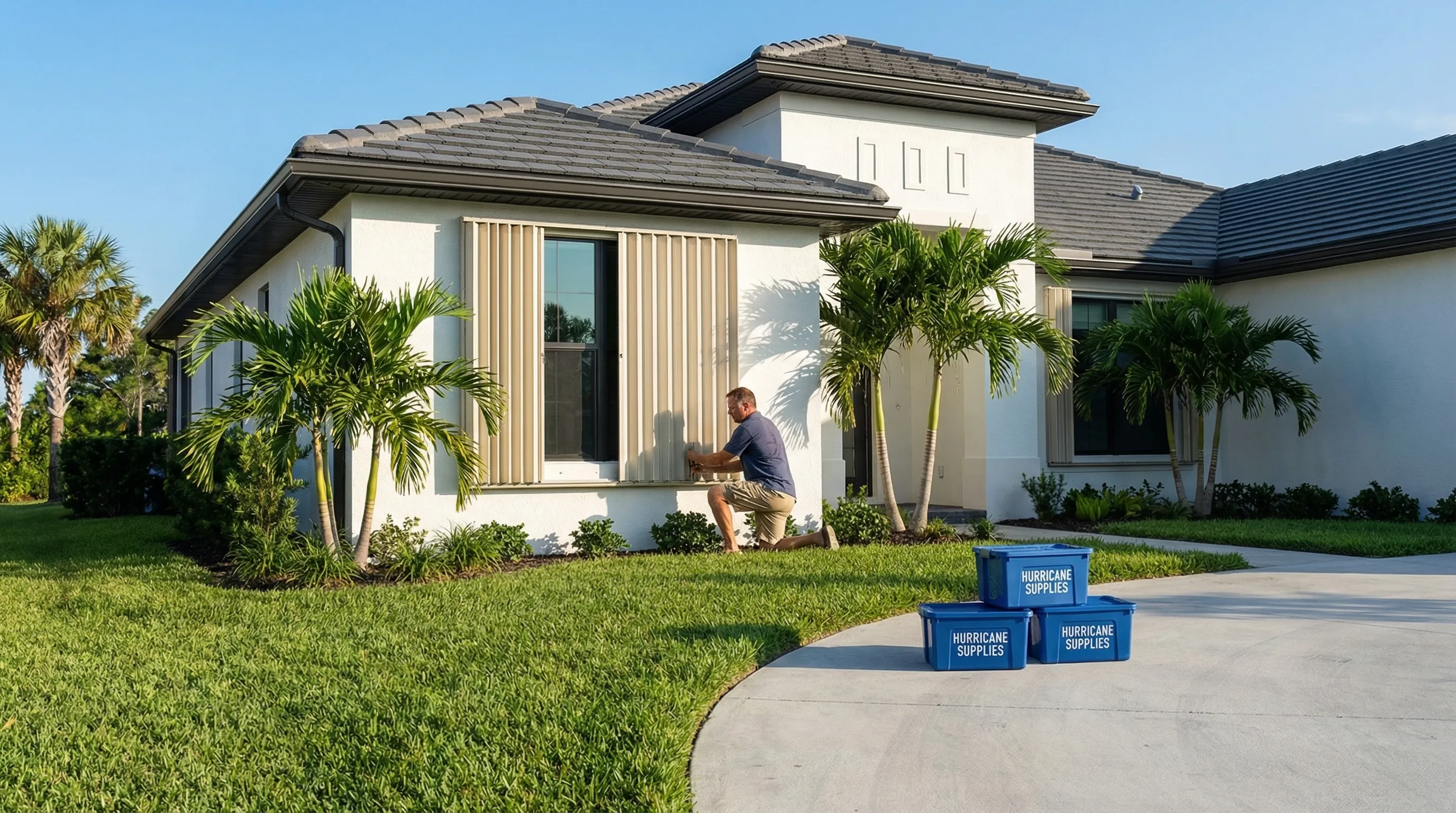
- Install hurricane shutters or pre-cut plywood panels for all windows and glass doors
- Inspect roof for loose or damaged shingles, flashing, and soffits
- Trim trees and remove dead branches within falling distance of the house
- Clear gutters and downspouts so water drains away from the foundation
- Secure or store outdoor furniture, grills, planters, and loose items that become projectiles
- Reinforce garage doors (the most common wind-entry failure point)
- Check that all exterior doors have deadbolts and are properly sealed
- Verify attic ventilation is intact and sealed against wind-driven rain
- Test sump pump if applicable, and consider a battery backup
- Seal cracks around windows and door frames with exterior-grade caulk
- Inspect and secure the pool enclosure if applicable

| Prep item | Typical cost range | Notes |
|---|---|---|
| Hurricane shutters (whole home) | $1,475 to $5,884 | Average around $3,674. Material and window count drive price. |
| Plywood panels (per 7 sq ft window) | $15 to $45 | Budget option. Requires pre-cutting and storage. |
| Storm panels (per 7 sq ft window) | $115 to $240 | Stronger than plywood, reusable season after season. |
| Impact window replacement | $1,200 to $2,500 per window | Higher upfront cost but eliminates shutter installation each storm. |
| Tree trimming | $270 to $1,800 | Average around $460. Do this early when arborists are available. |
| Garage door reinforcement | $200 to $600 | Bracing kit for standard two-car garage doors. |
Typical home hardening costs for Florida homeowners (use as planning ranges, not quotes)
Documents and insurance checklist
Insurance mistakes are the most expensive hurricane prep failures, and they are completely preventable. The items below protect your financial recovery. Review them every May before the season starts.

- Review your homeowners insurance policy: know your wind and named-storm deductible amounts
- Confirm you have a separate flood insurance policy (standard homeowners does not cover flooding)
- Buy flood insurance now if you do not have it: NFIP policies have a 30-day waiting period
- Photograph every room, appliance, and valuable item for a home inventory
- Store copies of insurance policies, IDs, and financial documents in a waterproof bag and in the cloud
- Know your agent's direct number and your policy number by heart or on your phone
- Understand your named-storm deductible: it is typically 2% to 5% of your home's insured value
- Review additional living expenses (ALE) coverage in case you are displaced
Homeowners insurance typically covers
- Wind damage to roof, siding, and structure
- Rain damage that enters through a wind-created opening
- Fallen tree damage to the dwelling
- Additional living expenses if displaced
- Personal property damaged by covered perils
Homeowners insurance typically does not cover
- Flood damage from rising water, storm surge, or overflowing bodies of water
- Sewer backup (requires separate endorsement)
- Gradual water damage or deferred maintenance
- Mold if it resulted from a non-covered event
- Landscaping and outdoor property beyond limited amounts
Florida-Specific Ways to Save on Hurricane Supplies in 2026
Florida's year-round disaster preparedness sales tax exemption
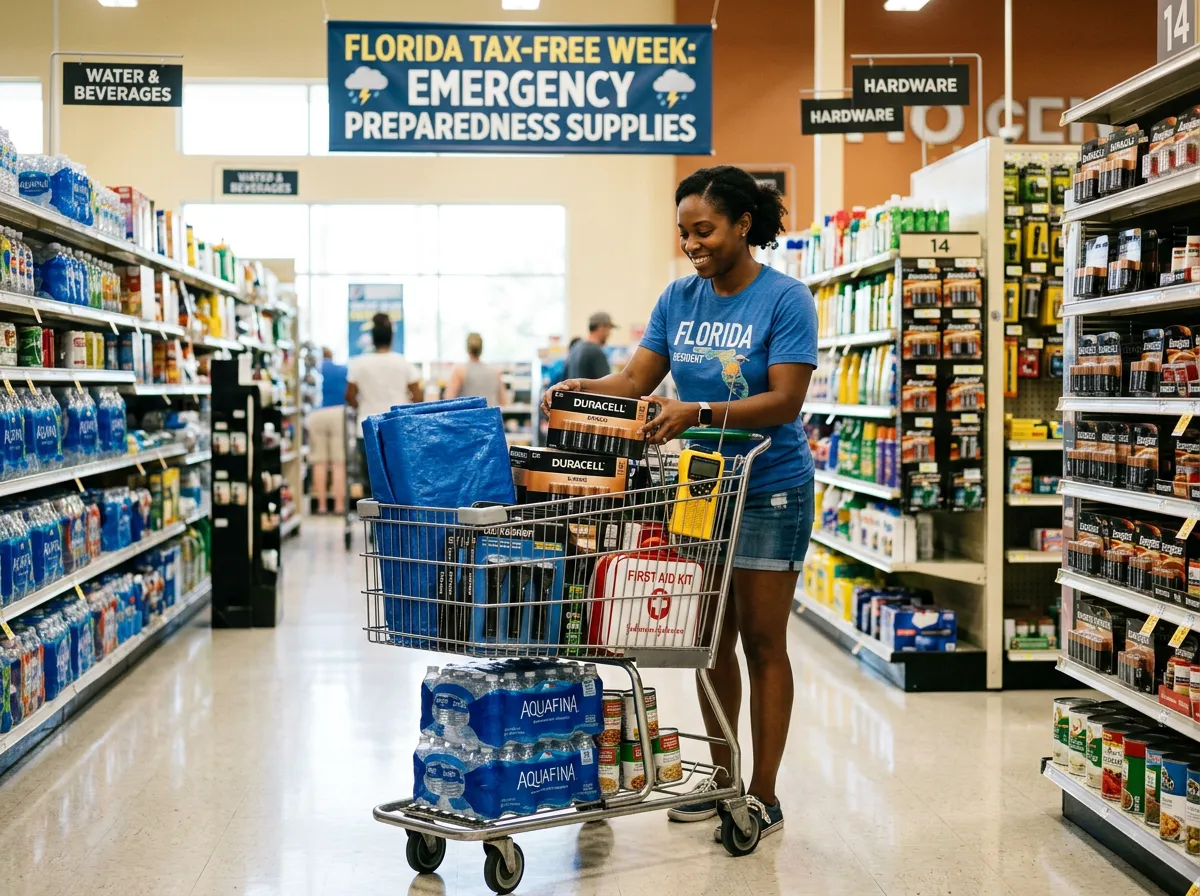
Most hurricane prep guides still reference the old Florida Disaster Preparedness Sales Tax Holiday, but here is the update: as of August 1, 2025, Florida made many preparedness items permanently sales-tax exempt year-round. This means you do not have to wait for a limited holiday window to shop tax-free. The Florida Department of Revenue published the full list in a Tax Information Publication, and the items below are now always exempt.
| Tax-free item | Limit or definition |
|---|---|
| Batteries | AA, AAA, C, D, 6-volt, and 9-volt sizes only |
| Carbon monoxide alarms | Must meet Florida statutory definition and approval requirements |
| Fire extinguishers | Portable extinguishers as defined in Florida statute |
| Portable gas or diesel fuel cans | Capacity of 5 gallons or less |
| Portable generators | Capable of producing 10,000 running watts or less |
| Smoke detection devices | All standard smoke detection devices |
| Waterproof tarpaulins | Flexible waterproof tarps or sheeting, 1,000 square feet or less |
| Ground anchor systems and tie-down kits | All types covered as always-exempt items |
| Insect repellent | Must be EPA-registered and designed for application to skin |
| Life jackets | U.S. Coast Guard approved personal flotation devices |
| Sunscreen | Products primarily intended to block UV (excludes cosmetics) |
| Bicycle helmets | All bicycle helmets (exempt since August 1, 2025) |
Florida year-round tax-exempt hurricane preparedness items (effective August 1, 2025)
My Safe Florida Home program: free inspections and matching grants
Florida's My Safe Florida Home Program pairs free wind mitigation inspections with matching grants of up to $10,000 for eligible homeowners. The program is designed to help Florida residents afford structural upgrades that reduce hurricane damage, including roof reinforcement, hurricane shutters, impact-resistant windows, and secondary water barriers.
After the Storm: Prevent Water Damage and Mold
The 24-to-48-hour moisture clock
If water gets into your home during a hurricane, the clock starts immediately. The EPA and CDC both warn that mold can begin growing on wet materials within 24 to 48 hours, and FEMA's mold guidance reinforces the same timeline. Every hour of standing water or wet building materials increases the scope of damage, the cost of restoration, and the complexity of your insurance claim. The goal is aggressive drying from the moment it is safe to re-enter.

0 to 6 hours
Immediate response
If safe to re-enter, stop any ongoing water intrusion with tarps or barriers. Begin removing standing water with mops, buckets, or a wet-dry vacuum. Open windows if outdoor humidity is lower than inside.
6 to 24 hours
Active drying begins
Run dehumidifiers and fans continuously. Pull back carpet and padding. Open cabinet doors. Move furniture away from wet walls. Begin documenting all damage with photos and video for your insurance claim.
24 to 48 hours
Critical mold prevention window
Mold can begin colonizing wet drywall, wood, and fabric. If materials are still wet at 48 hours, the likelihood of needing mold remediation increases significantly. Professional restoration equipment dries faster than consumer fans and dehumidifiers.
48+ hours
Escalating risk
Wet materials left beyond 48 hours often cannot be dried in place and must be removed. What was a drying job becomes a demolition and rebuild job. Contact a water damage restoration team immediately if you are not seeing progress.

Generator safety and indoor air quality
Power outages after hurricanes can last days or weeks. Portable generators are essential but deadly if used incorrectly. The CDC reports that carbon monoxide poisoning from generators is a leading cause of death after hurricanes, and the risk is entirely preventable.

When to call a restoration team
Not every post-hurricane situation requires professional restoration. A small roof drip that you catch in a bucket and dry within hours may not need a crew. But if any of the following apply, choosing the right restoration company will save you money and protect your claim in the long run.
- 1
Water has reached walls, ceilings, or insulation
Moisture behind drywall is invisible without thermal imaging and moisture meters. A restoration team maps the full extent of water travel to prevent hidden mold. Our storm and hurricane damage restoration crews respond 24/7.
- 2
Standing water covers more than one room
Professional truck-mounted extractors remove water at rates that consumer equipment cannot match. The faster the water is out, the less demolition and mold remediation you will need.
- 3
You suspect contamination
Floodwater, storm surge, and sewage backup are Category 3 (black water) events that require full PPE, containment, and professional protocols. Do not attempt to clean contaminated water yourself.
- 4
You need insurance documentation
Restoration companies produce moisture maps, drying logs, and daily photo documentation that your insurer requires. This paperwork directly affects what gets approved. Learn more about the insurance restoration process and how documentation protects your payout.

Storm and Hurricane Damage Restoration
24/7 emergency response for wind damage, roof leaks, and water intrusion from hurricanes across Florida and the Carolinas.
Water Damage Restoration
Emergency water extraction, structural drying, and moisture documentation for hurricane-related water damage.
Mold Remediation Services
IICRC-certified mold containment, removal, and verification for post-hurricane mold growth.
What to Do in the First 24 Hours After Water Damage
Step-by-step emergency guide for the critical first day after water enters your home.
How to File a Water Damage Insurance Claim
Complete walkthrough of the documentation and filing process for water damage claims.
Hurricane Deductibles Explained
How named-storm deductibles work and what they mean for your out-of-pocket costs.
Frequently Asked Questions About Hurricane Preparation in Florida
What should I do first when a hurricane is forecast for Florida? +
How many days of supplies should I have for a Florida hurricane? +
What is the difference between a hurricane watch and a hurricane warning? +
What should be in a hurricane go-bag vs a stay-at-home kit? +
Does homeowners insurance cover hurricane flooding in Florida? +
How long does flood insurance take to go into effect? +
How fast can mold grow after hurricane flooding? +
How far should a generator be from the house during a power outage? +

Preparing for hurricane season? We are here before, during, and after.
Palm Build's IICRC-certified crews respond 24/7 across Florida, North Carolina, and South Carolina for storm damage, water extraction, mold remediation, and full reconstruction. Call now or request a free assessment.
Found this helpful? Send it to someone who needs it.