Step 1
Calculate your actual hurricane deductible amount
Take your Coverage A (dwelling) amount and multiply by your deductible percentage. A $500K home at 2% = $10,000 out of pocket.
Insurance Claims Guide
Hurricane deductibles are percentage-based — not flat dollar amounts. For many Florida homeowners, this means paying thousands or tens of thousands out of pocket before insurance pays anything. Understanding how they work prevents shock after a storm.
Key Steps
Step 1
Take your Coverage A (dwelling) amount and multiply by your deductible percentage. A $500K home at 2% = $10,000 out of pocket.
Step 2
If two hurricanes hit in one season, you only pay the deductible once. After it's met, subsequent hurricane damage uses your standard deductible.
Step 3
The deductible triggers only when a named hurricane causes damage during the hurricane event timeline. Wind from a tropical storm or severe thunderstorm uses your regular deductible.
Step 4
If a hurricane causes $5,000 in damage but your hurricane deductible is $8,000, you receive $0 from insurance. This catches many homeowners off guard.
Hurricane deductibles are 2%, 5%, or 10% of your dwelling coverage amount
They apply per hurricane season, not per storm event
They trigger only for damage from named hurricanes, not tropical storms or thunderstorms
If damage is below your hurricane deductible, insurance pays nothing for that event
FL law allows choosing your percentage when purchasing — lower percentage means higher premium
NC coastal policies may have similar wind/hail percentage deductibles
In-Depth Guide
Hurricane deductibles were introduced in the 1990s after Hurricane Andrew exposed the catastrophic financial risk that hurricanes pose to insurance carriers. By shifting a larger portion of hurricane losses to policyholders, percentage-based deductibles help insurers remain solvent after major storms. For homeowners, the practical impact is significant: while a standard deductible might be $1,000 or $2,500, a hurricane deductible on a $500,000 home at 5% is $25,000 — a fundamentally different financial exposure that demands advance planning.
The mechanics of hurricane deductible triggers are more nuanced than most homeowners realize. The deductible applies only when the National Weather Service issues a hurricane warning or declaration, and only for damage that occurs during the hurricane event timeline. A tropical storm that causes identical damage uses your standard deductible. A severe thunderstorm that occurs between hurricanes uses your standard deductible. This means the same type of wind damage to your roof could have a $1,000 or $25,000 deductible depending entirely on the weather classification at the time of the event — a distinction worth understanding before storm season begins.
Financial planning around hurricane deductibles is an essential part of homeownership in hurricane-prone states. Many financial advisors recommend maintaining an emergency fund equal to your hurricane deductible amount. Some homeowners choose higher deductible percentages to reduce premiums, banking the savings against a future hurricane. Others prioritize the lower 2% deductible for the financial predictability it provides. The right choice depends on your financial situation, risk tolerance, and property value — but the wrong choice is not knowing your number at all.
Visual Reference
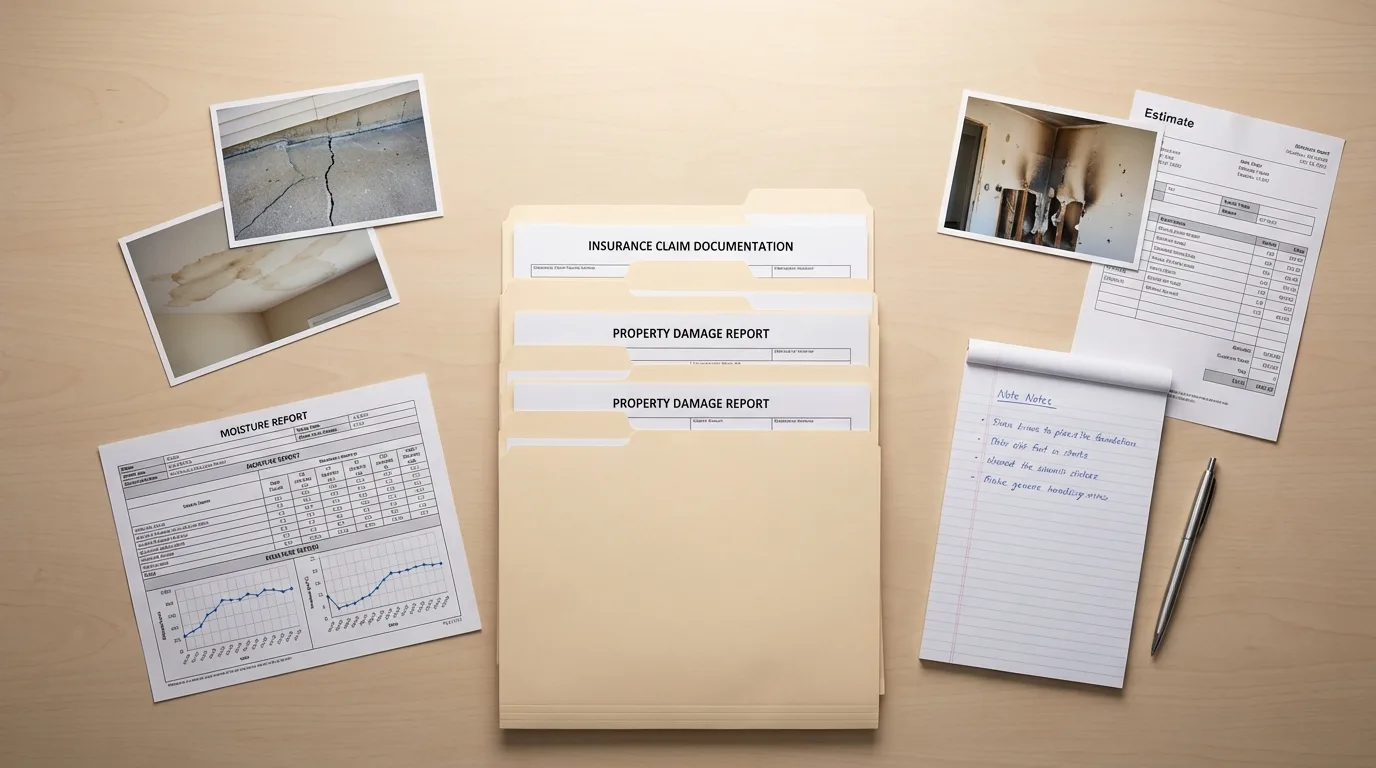
Real-world examples of the documentation, coordination, and processes involved in insurance claims.

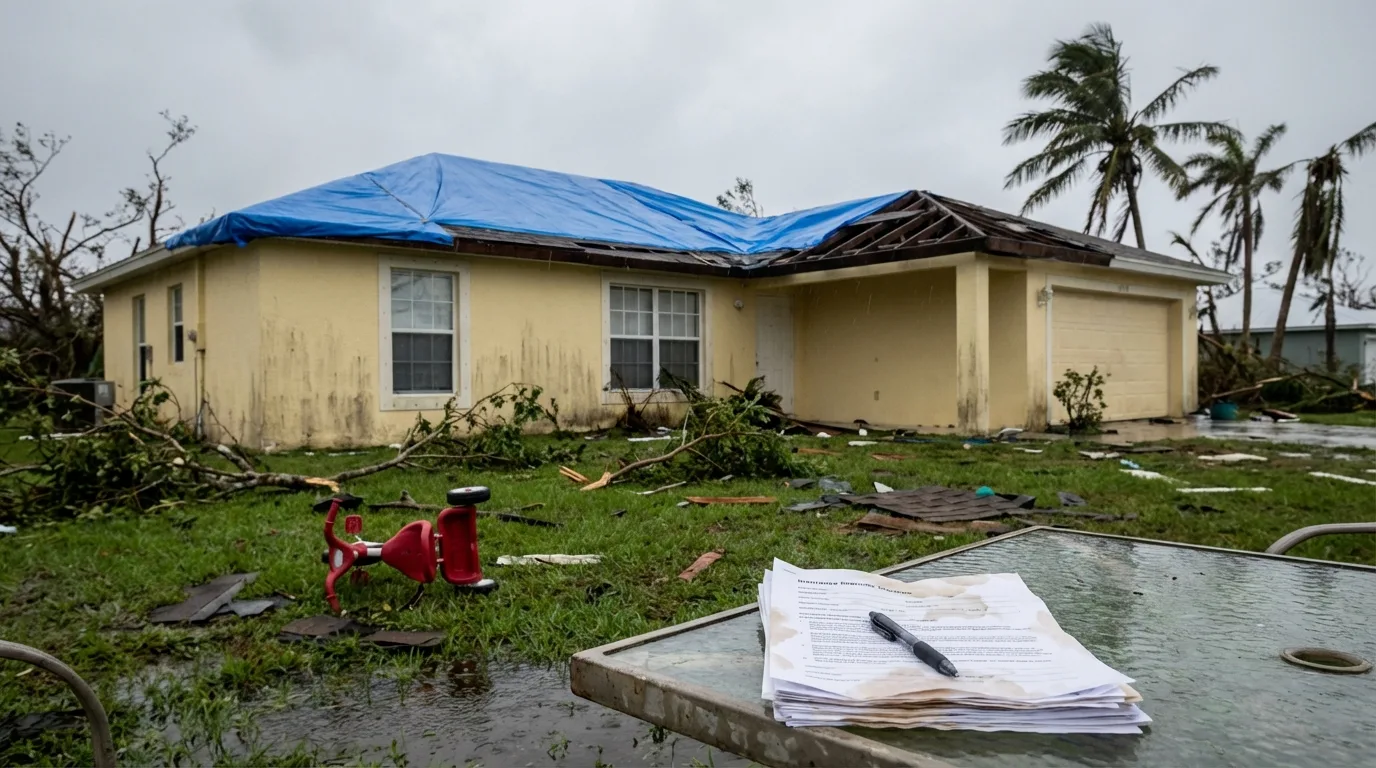
Blue tarps on roofs across Florida neighborhoods show the scale of hurricane deductible impact.
Calculate your hurricane deductible in dollars before storm season arrives.

Your hurricane deductible percentage is listed on your policy declarations page. Calculate the dollar amount by multiplying Coverage A (dwelling) by the percentage before storm season.
Knowing your hurricane deductible in dollar terms helps you plan financially and make informed decisions about whether to file after minor storm damage.
Step-by-Step
Understanding each step gives you leverage and helps prevent common problems.
Check your declarations page. Look for "Hurricane Deductible" — it will show a percentage (2%, 5%, or 10%).
Multiply your Coverage A amount by the percentage. That's your out-of-pocket responsibility per hurricane season.
If estimated damage is close to or below your deductible, it may not be worth filing. If clearly above, file immediately.
Hurricane damage often involves both wind (homeowners) and flood (flood policy) — each has its own deductible.
South Florida
Most FL policies have 2% hurricane deductibles. On a $600K home, that's $12,000 out of pocket. Some areas or older policies may have 5% or even 10%.
Coastal NC
NC coastal counties often have wind/hail percentage deductibles. These function similarly to FL hurricane deductibles but may trigger on any windstorm, not just hurricanes.
Coastal SC
SC uses the SC Wind and Hail Underwriting Association for coastal wind coverage. Deductibles vary. Check your specific policy terms.
Common Questions
Find your Coverage A (dwelling) amount on your declarations page and multiply by your hurricane deductible percentage. Example: $500,000 dwelling × 2% = $10,000 out of pocket. $500,000 × 5% = $25,000. This is the amount you pay before insurance coverage begins for hurricane damage.
No — hurricane deductibles apply per hurricane season, not per storm. If two hurricanes hit your property in the same season, you only pay the deductible once. After it is met from the first hurricane, subsequent hurricane damage in the same season uses your standard (lower) deductible.
The hurricane deductible triggers only when the National Weather Service declares a named hurricane and that hurricane causes damage to your property during the event timeline. Damage from tropical storms, severe thunderstorms, or tornadoes not associated with a named hurricane uses your regular (flat dollar) deductible — which is typically much lower.
In most cases, yes. When purchasing or renewing your policy, you can typically choose between 2%, 5%, or 10% hurricane deductibles. A lower percentage means a lower out-of-pocket cost after a hurricane but results in a higher annual premium. A higher percentage reduces your premium but increases your financial exposure when a hurricane hits.
If your total hurricane damage is below your hurricane deductible, your insurance pays nothing for that event. On a $400,000 home with a 5% deductible ($20,000), damage of $15,000 means you absorb the entire cost. This is why understanding your deductible in dollar terms is critical — it helps you evaluate whether filing a claim makes financial sense.
Continue Reading
Our team navigates insurance claims daily. Call for guidance on documentation, adjuster coordination, or claim disputes.