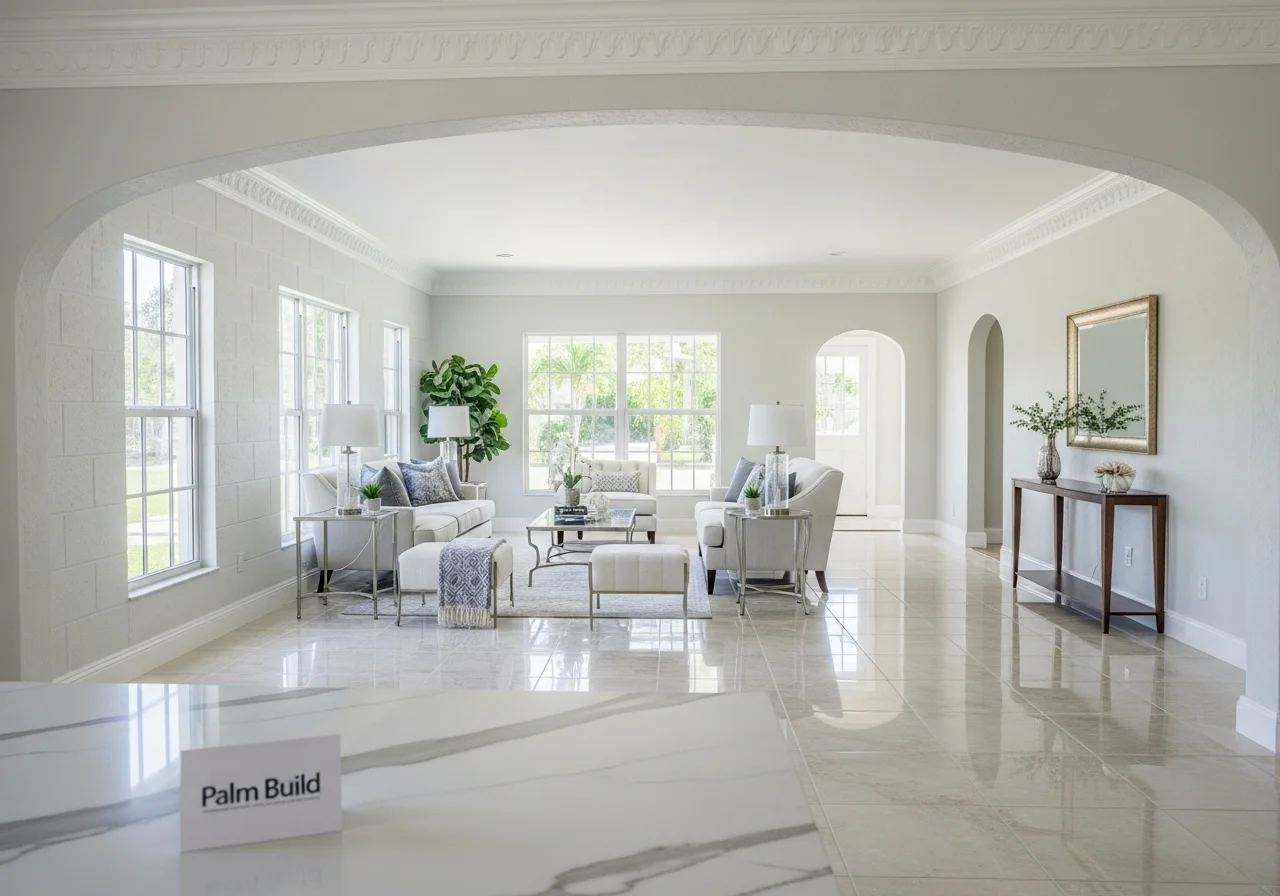
Water Damage Restoration in West Palm Beach, Florida
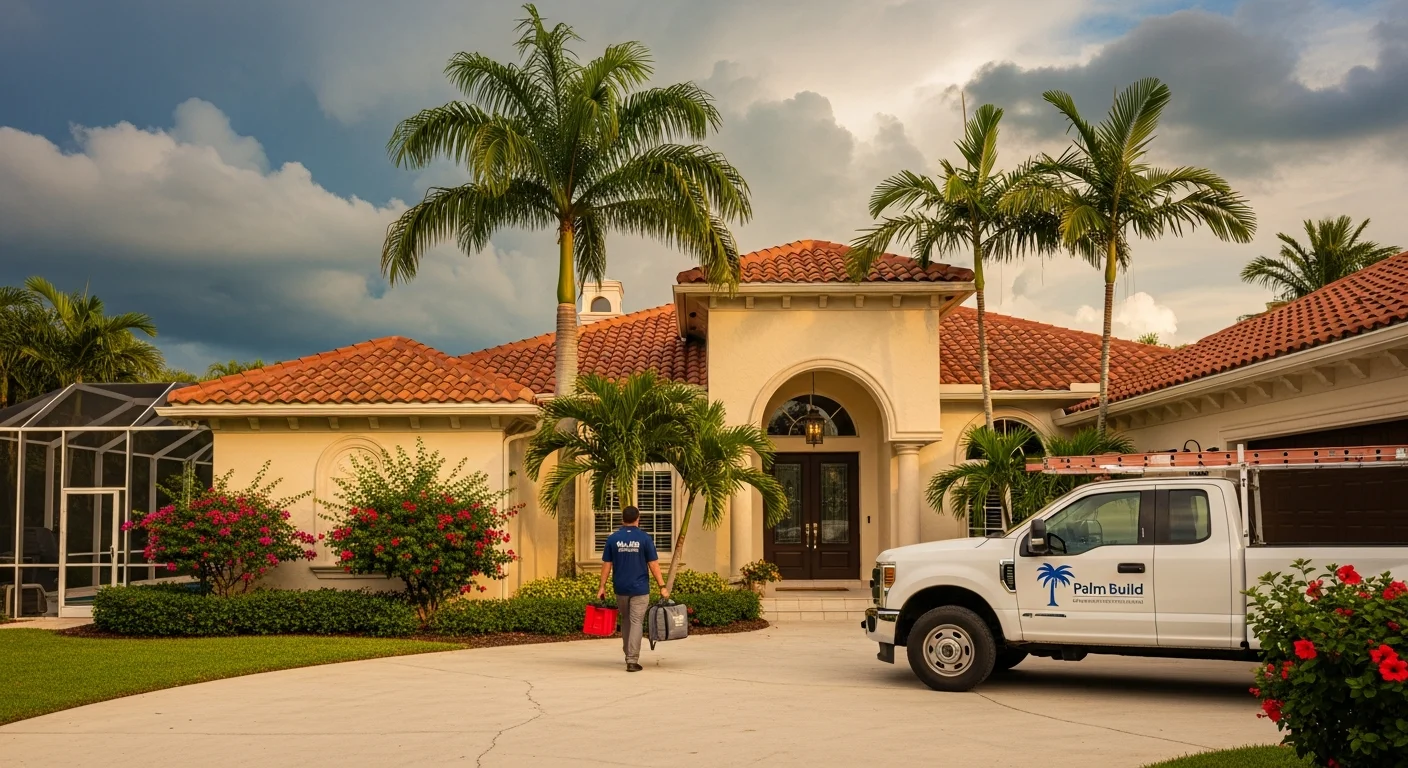
From El Cid's historic Mizner homes to Century Village's 7,800-unit retirement complex, Palm Build's South Florida team responds fast with truck-mounted extraction, CBS block wall drying, and insurance-ready documentation — including saltwater remediation for Intracoastal properties.
Deerfield Beach — 30-45 Minutes from West Palm Beach 30-45 min Response IICRC Certified
Why West Palm Beach Homes Face Unique Water Damage Risks
West Palm Beach sits at the convergence of the Intracoastal Waterway, 500 miles of
drainage canals, and a tropical rainforest climate that delivers 63 inches of rain
annually. When a pipe bursts in your Century Village condo or a King Tide pushes
brackish water into your El Cid estate, the clock starts immediately — mold can begin growing in 24 to 48 hours.
Dual-Water-Body Storm Surge
500 mi
Drainage canal network
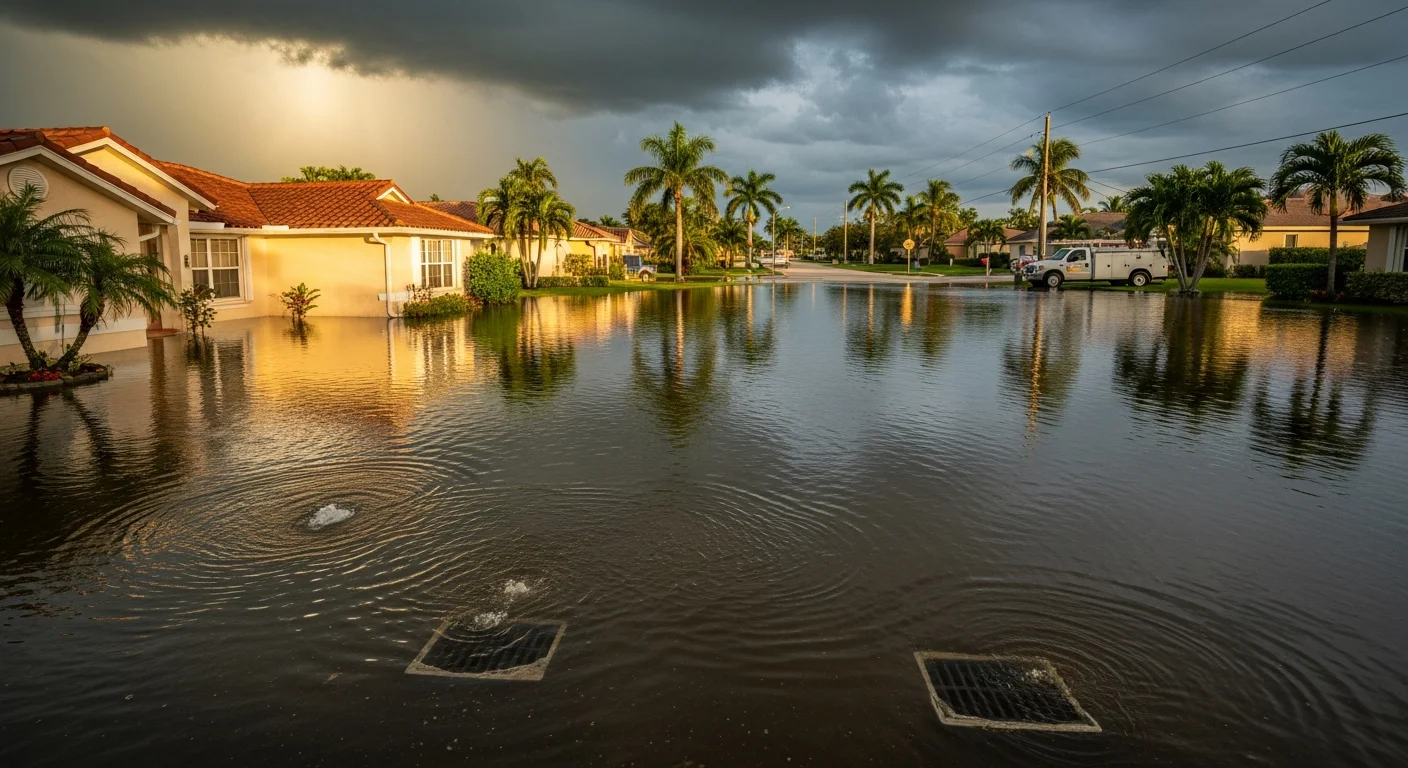
Unlike inland cities, West Palm Beach faces both Atlantic hurricane storm surge through Lake Worth Lagoon and freshwater canal flooding from the C-51 system simultaneously. Every major storm event can produce saltwater and freshwater damage at the same property — with different remediation protocols required for each.
CBS Stucco Water Intrusion
63"
Annual rainfall
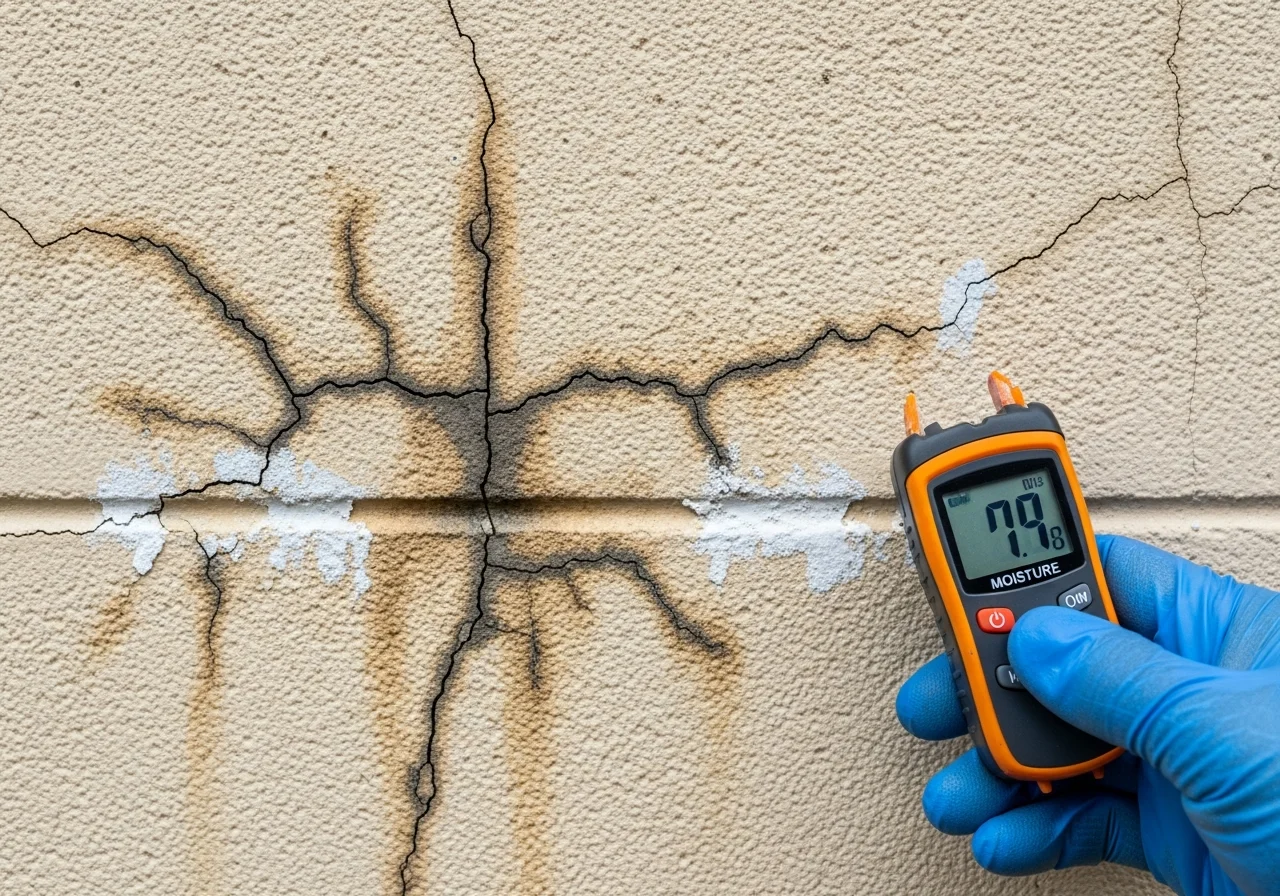
West Palm Beach homes are built predominantly with concrete block structure (CBS) and stucco exterior. Thermal cycling and hurricane winds create hairline cracks that allow water to saturate the block wall cavity — creating hidden moisture and mold growth behind finished walls that homeowners never see until damage is severe.
Year-Round HVAC Condensation
11 mo
AC runs per year
Central AC systems in West Palm Beach run nearly 12 months per year. Clogged condensate drain lines and pan overflows are the single most common source of hidden water damage in WPB homes — directly seeding mold colonies that the air system distributes to every room.
Aging Infrastructure at Scale
10,000+
At-risk condo units
Century Village alone has 7,854 units built between 1967-1974 on reclaimed marshland with 50-year-old plumbing. Golden Lakes Village adds 1,888 more aging units. Polybutylene plumbing in 1978-1995 homes degrades from chlorinated water, causing sudden catastrophic failures with zero warning.
Hairline cracks in West Palm Beach's CBS stucco walls allow water to saturate block
cavities during heavy tropical rain — creating hidden moisture damage homeowners often
don't discover until mold has established behind finished walls.
Neighborhood Risk Assessment
West Palm Beach Neighborhood Water Damage Risk Map
Not every West Palm Beach neighborhood faces the same risks. A Century Village condo
built on reclaimed marshland has fundamentally different vulnerabilities than an El Cid
estate on the Intracoastal. Here's what Palm Build's technicians see in each area.
High-rise pipe failures, balcony water intrusion, HVAC drain pans
Common Damage Patterns
Cascading water damage from upper floors, complex multi-unit HOA claims, premium finish restoration
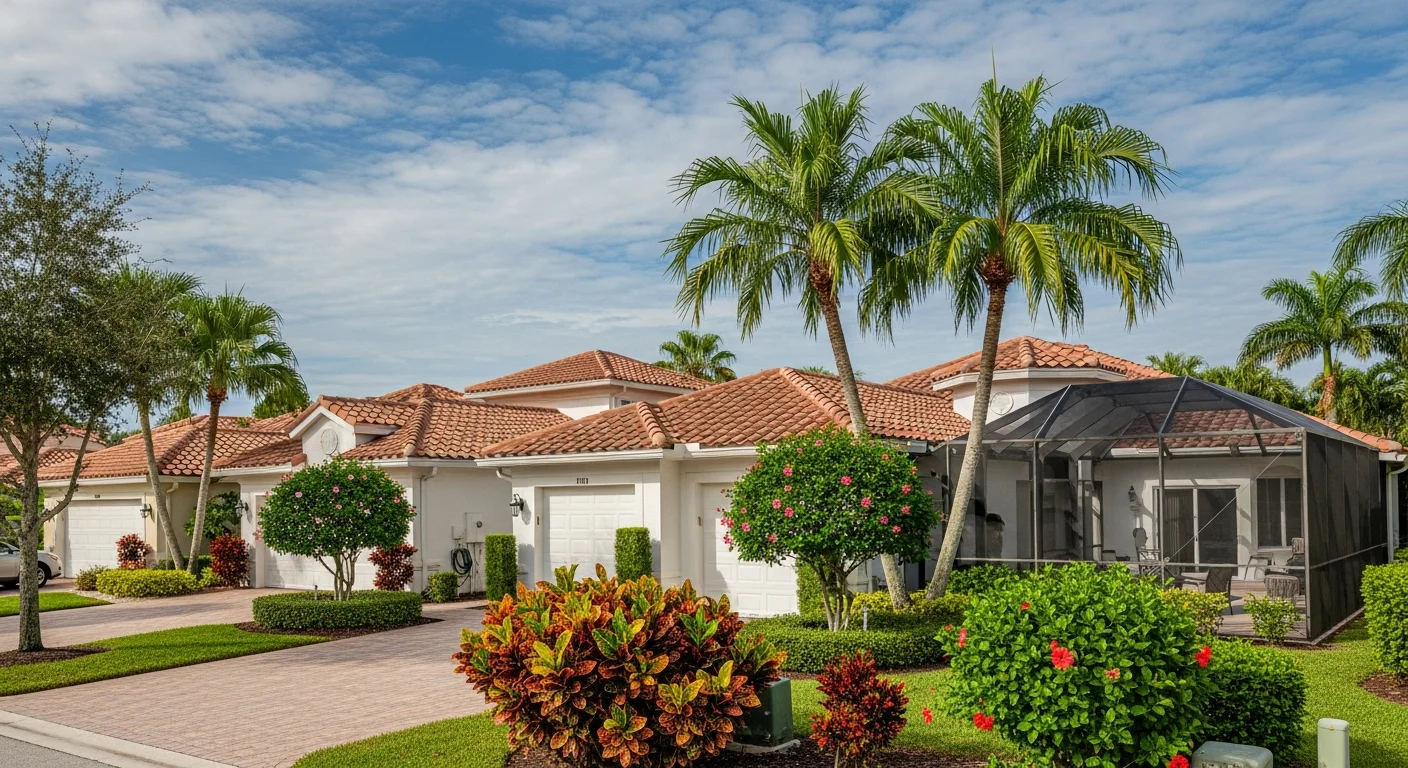
Gated communities like Bear Lakes Estates, Ibis Golf & Country Club, and Breakers West
represent a significant share of West Palm Beach's housing — each with HOA-governed
restoration protocols and access logistics.
CBS Construction Expertise
The West Palm Beach CBS Home Owner's Guide to Water Damage
Generic national restoration content discusses wood-frame homes. Your West Palm Beach
home is almost certainly CBS stucco on a slab-on-grade foundation — construction that
requires fundamentally different drying and remediation protocols. No competitor in this
market explains this.
Why CBS Holds Moisture Differently
Concrete block structure (CBS) walls are the dominant construction type in West Palm Beach. Unlike wood framing, CBS blocks are porous — they absorb and retain water within their hollow cavities. When water enters through cracked stucco, failed window seals, or pipe leaks, it saturates the block and can persist for weeks or months behind finished walls. Standard air drying does not work. Professional wall cavity injection drying systems are required to extract moisture from inside the block without removing all interior finishes.
How to Detect Hidden Water Behind Stucco
Stucco cracks from thermal cycling and storm stress are often hairline-thin — invisible from a few feet away. Water wicking through these cracks saturates the CBS block behind the stucco and migrates inward. Warning signs include: interior paint bubbling or peeling (especially at floor-wall junctions), musty odors with no visible source, efflorescence (white mineral deposits) on exterior or interior block surfaces, and baseboards that feel soft or warped. Thermal imaging cameras can detect temperature differentials indicating hidden moisture without any demolition.
Slab-on-Grade Moisture and Your Floors
West Palm Beach homes are built on slab-on-grade foundations with no basements or crawl spaces (except pre-1950 Northwood Hills homes). Ground moisture wicks upward through concrete slabs, particularly in older structures without vapor barriers. This creates persistent moisture under tile, carpet, and wood flooring — an ideal incubation environment for mold. After any water event, professional moisture testing of the slab surface is essential before reinstalling flooring.
Polybutylene & Chinese Drywall Interactions
Two construction defects are particularly relevant to West Palm Beach water damage. Polybutylene plumbing (installed 1978-1995) degrades from chlorinated water, causing sudden pipe failures — common in Cypress Lakes, Golden Lakes Village, and Bear Lakes Estates. Chinese drywall (imported 2005-2012, often installed during post-Wilma rebuilding) emits sulfur gases that corrode copper pipes and AC coils, creating secondary water damage. When both are present in the same home, the interaction accelerates total system failure.
CBS-Specific Drying Protocols
Standard restoration companies treat CBS like wood framing — and fail. Proper CBS drying requires: directed heat drying systems that warm the block to accelerate internal evaporation, wall cavity injection nozzles that deliver warm dry air directly into the hollow block cores, extended drying timelines (CBS typically requires 2-3 extra days compared to wood framing), and daily moisture monitoring at multiple depths within the wall assembly. Palm Build's technicians are trained specifically for South Florida CBS construction.
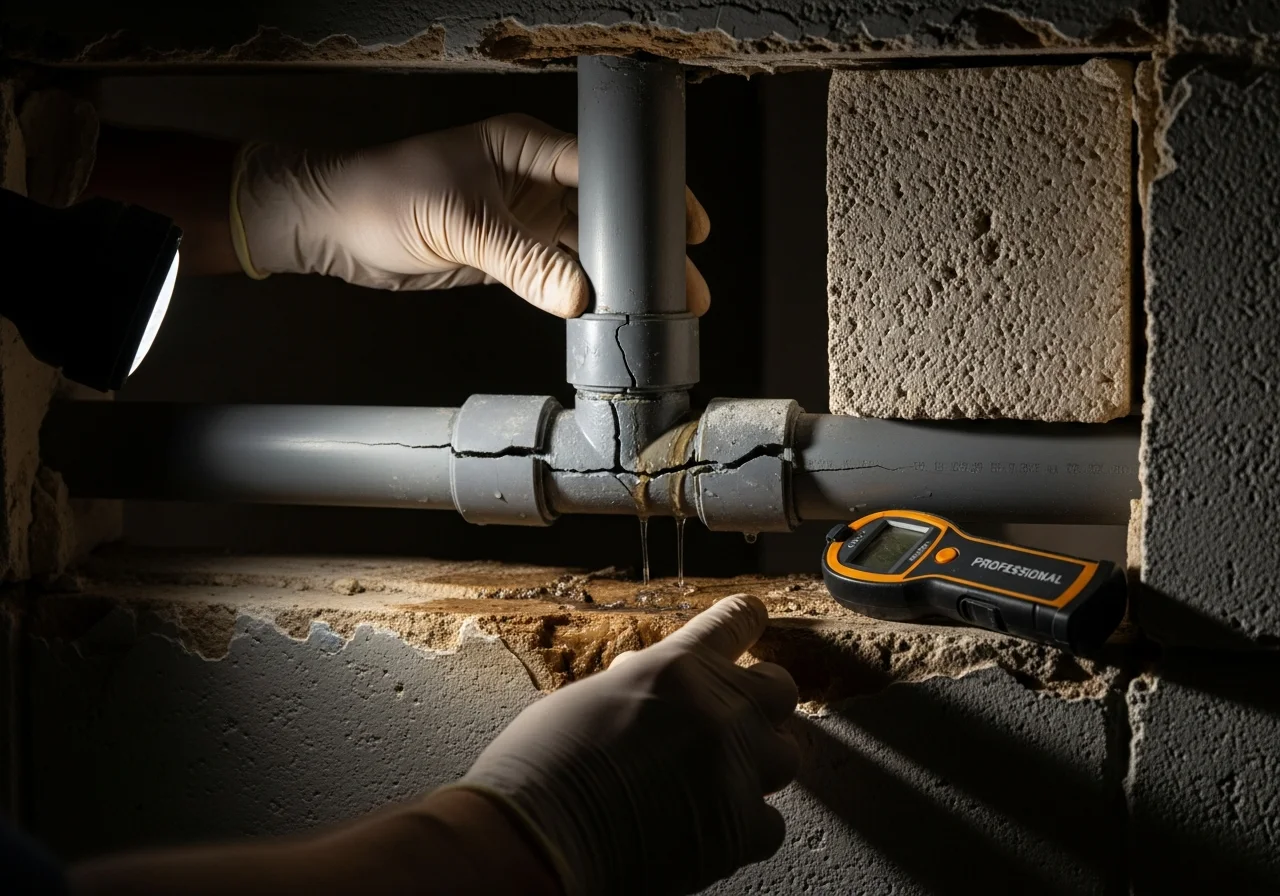
Polybutylene plumbing installed in West Palm Beach homes between 1978-1995 degrades from
chlorinated municipal water, causing sudden catastrophic failures with no visible
warning signs.
Our Process
How Palm Build Restores Water-Damaged West Palm Beach Homes
CBS stucco construction requires specialized drying protocols that generic franchise
companies often skip. Here's what our IICRC-certified team does differently.
01
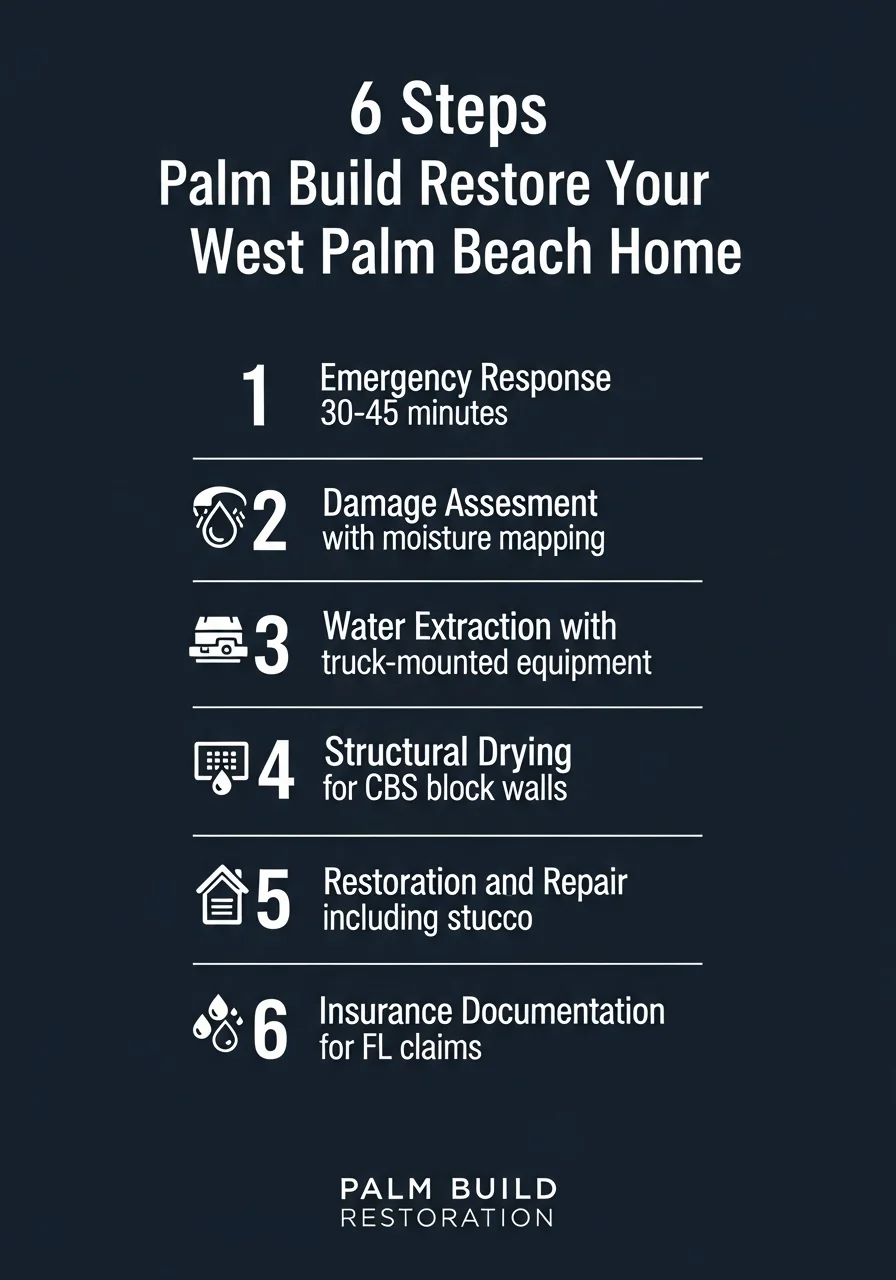
Emergency Response
30-45 minutes
Call (754) 600-3369 any time, day or night. Our Deerfield Beach team dispatches immediately to West Palm Beach with truck-mounted extraction, commercial dehumidifiers, and moisture mapping equipment.
02
Damage Assessment & Moisture Mapping
First 2 hours
We map every affected surface using thermal imaging cameras and pin/pinless hygrometers. In CBS stucco homes, this is critical — moisture trapped inside concrete block cavities is invisible from the surface but creates devastating mold conditions within days.
03
Water Extraction
Hours 2-6
Truck-mounted extractors remove standing water at up to 30 gallons per minute. For saltwater flooding from Intracoastal storm surge or King Tides, we follow Category 3 (black water) protocols — all porous materials in contact with saltwater must be removed.
04
Structural Drying
3-5 days
Commercial LGR dehumidifiers pulling 15-30 gallons per day and high-velocity air movers create a controlled drying environment. For CBS block walls, we use directed heat drying and wall cavity injection systems — because West Palm Beach's 80%+ ambient humidity means nothing air-dries naturally.
05
Restoration & Repair
1-3 weeks
Stucco repair, drywall replacement, flooring installation, paint, trim — we handle everything from emergency mitigation through full reconstruction. For historic El Cid and Flamingo Park homes, we match original architectural details and finishes.
06
Insurance Documentation & Closeout
Throughout
Moisture maps, thermal imaging reports, daily drying logs, photo documentation, and scope-of-work estimates — all formatted for your adjuster. Under Florida's 1-year claim deadline (Fla. Stat. § 627.70132), timely documentation is essential.
Palm Build's 6-step restoration process is designed for West Palm Beach's CBS stucco
construction and year-round humidity conditions.
Damage Classification
Types of Water Damage in West Palm Beach Homes
Burst Pipe & Plumbing Failure
Category 1-2
The most common water damage call in West Palm Beach. Polybutylene plumbing (1978-1995 homes) degrades from chlorinated water and fails without warning. CPVC, copper supply lines, and water heater failures account for most emergency calls — especially in Century Village, Cypress Lakes, and Golden Lakes Village.
Palm Build Response
Immediate extraction, moisture mapping of CBS block walls, controlled structural drying with commercial dehumidifiers.
Hurricane & Storm Water Intrusion
Category 2-3
Wind-driven rain penetrates windows, door frames, and roof-wall junctions during tropical storms and hurricanes. In West Palm Beach, the 2004 back-to-back hits from Frances and Jeanne and 2005's Hurricane Wilma (105 mph winds) caused widespread roof and structural water damage across every neighborhood.
Palm Build Response
Emergency tarping, full water extraction, accelerated drying with wall cavity injection. Saltwater protocols if storm surge reached the property.
Canal & King Tide Flooding
Category 3
The Lake Worth Drainage District's 500 miles of canals can reverse during extreme rain, flooding low-lying yards and structures. King Tides (September-November) produce coastal flooding without any rainfall along the eastern waterfront. Both introduce contaminated water requiring aggressive remediation.
Palm Build Response
Category 3 (black water) protocols: remove all porous materials, antimicrobial treatment, structural drying, full reconstruction of affected areas.
HVAC Condensation Damage
Category 1
Central AC running nearly year-round creates chronic condensation risk. Clogged drain lines, cracked drip pans, and oversized units that short-cycle produce standing moisture in air handlers — often undetected until ceiling stains, warped flooring, or mold odors appear.
Palm Build Response
Source identification, water extraction, targeted drying of affected ceiling/floor areas, HVAC system cleaning and drain line restoration.
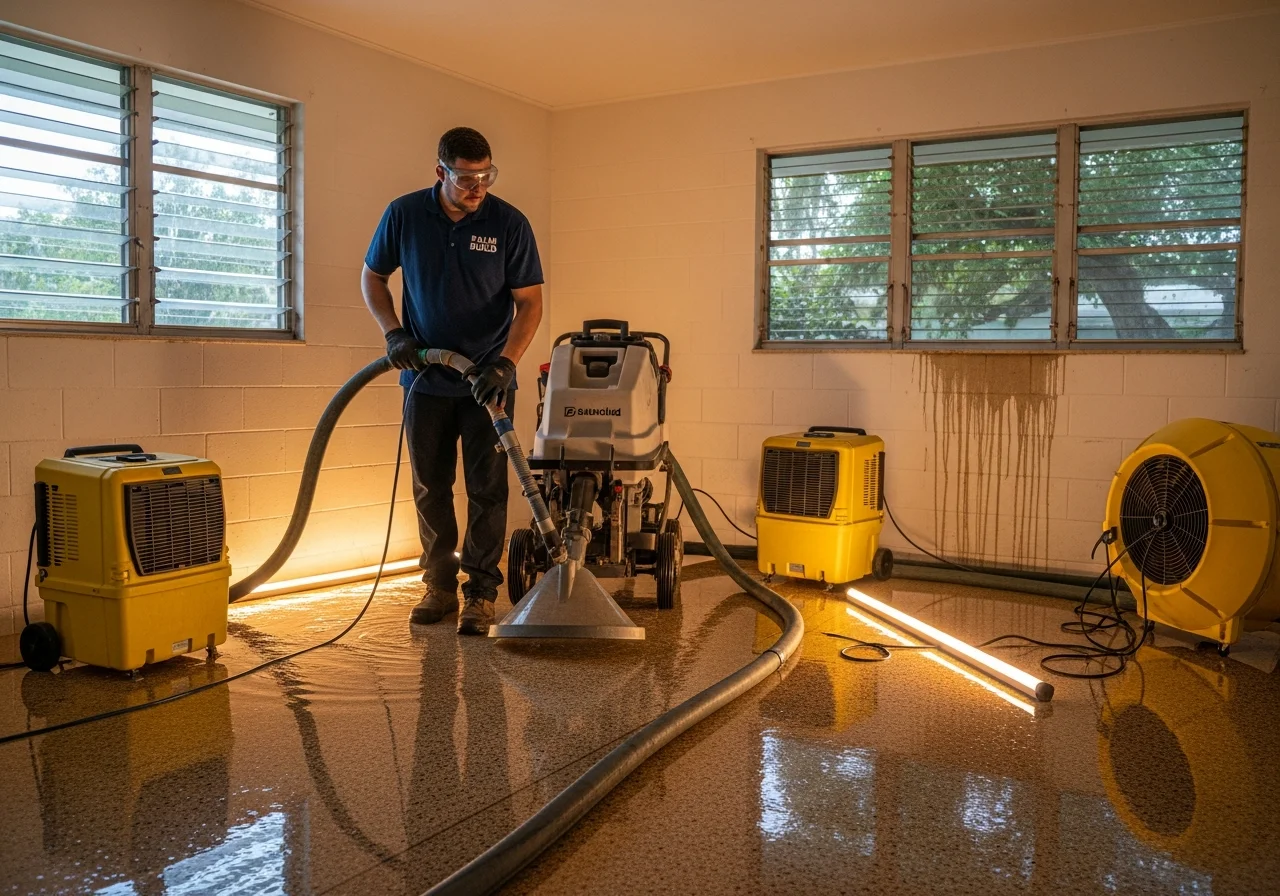
Truck-mounted extraction removes standing water at up to 30 gallons per minute — the
critical first step in preventing secondary mold damage in West Palm Beach's year-round
humidity.
Cost Transparency
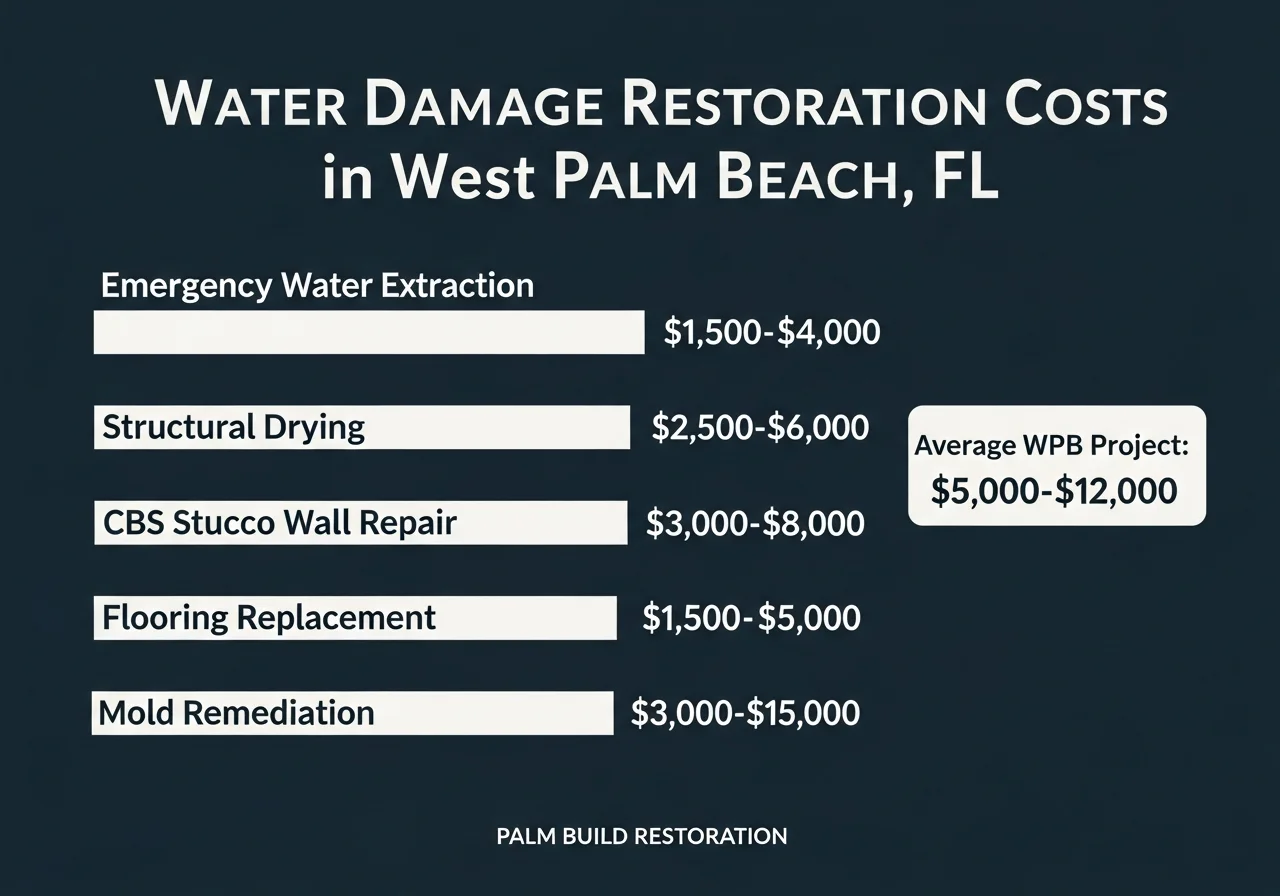
Water Damage Restoration Costs in West Palm Beach
West Palm Beach restoration costs run higher than national averages due to CBS-specific
protocols, saltwater remediation requirements, and a luxury housing market with premium
finishes. Here's what to expect.
Service
West Palm Beach
National Average
Emergency Water Extraction
Higher in WPB due to saltwater remediation requirements on coastal properties
$1,500 – $4,000
$1,000 – $3,000
Structural Drying (3-5 days)
CBS block wall drying requires specialized equipment and extended timelines
$2,500 – $6,000
$1,800 – $4,500
CBS Stucco Wall Repair
Unique to South Florida — includes block cavity treatment and stucco refinishing
$3,000 – $8,000
N/A (wood framing)
Flooring Replacement (per room)
Premium tile and terrazzo common in WPB; slab moisture testing required
$1,500 – $5,000
$1,200 – $3,500
Mold Remediation (if delayed)
WPB humidity accelerates mold — delays cost exponentially more here
$3,000 – $15,000
$2,500 – $12,000
Historic Home Restoration
El Cid, Flamingo Park: Mizner-era details, pecky cypress, custom tile require specialist work
$15,000 – $50,000+
$10,000 – $35,000
Average WPB Restoration Project
$5,000 \u2013 $12,000
Standard burst pipe or appliance failure. Complex projects involving saltwater, multiple
rooms, or historic homes range significantly higher. Free assessments — call (754) 600-3369.
Water damage restoration costs in West Palm Beach reflect the specialized equipment and
extended timelines required for CBS stucco construction and South Florida's persistent
humidity.
Seasonal Risk Guide
When West Palm Beach Homes Are Most at Risk
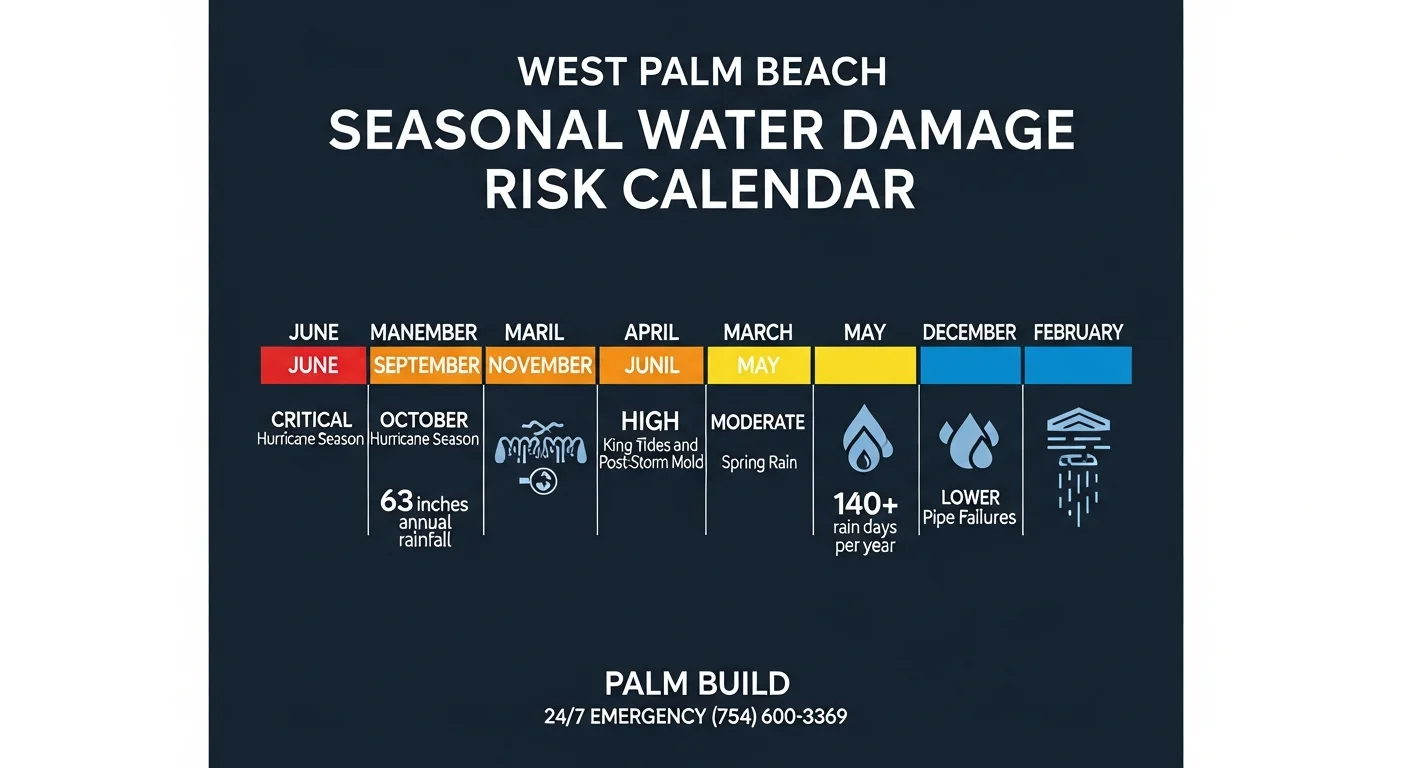
West Palm Beach's tropical rainforest climate produces year-round damage risk, but the
threat level varies dramatically by season. Know your risk window.
June – September
Critical
Hurricane and tropical storm water intrusion
Roof damage from high winds (105+ mph recorded)
HVAC overflow from continuous operation
Canal flooding from extreme rainfall (8+ inches/month)
Post-storm mold colonization within 24-48 hours
Call Volume: Highest — water damage, storm restoration, emergency mold
September – November
High
Late-season hurricane risk (Milton spawned EF-3 tornado in 2024)
King Tides cause coastal "sunny day flooding" without rain
Post-storm mold discovery 30-90 days after water intrusion
Insurance claim surge as damage becomes apparent
Call Volume: High — mold remediation surge, King Tide flooding
December – February
Moderate
Pipe failures from thermal cycling (rare freezes can stress plumbing)
Water heater failures in older units
Holiday fire risk from cooking and electrical
Snowbird arrivals discover damage in vacation homes left unoccupied
West Palm Beach receives 63 inches of rain annually across 140+ rain days, with 70% of
precipitation concentrated in the June-September wet season.
FEMA Flood Zone Update
West Palm Beach Flood Zones Changed in December 2024
FEMA significantly updated Palm Beach County's flood maps effective December 20, 2024,
moving more than 16,000 parcels into higher-risk
zones. If you haven't checked your property's status recently, your flood risk designation
may have changed.
Zone AE
High Risk (1% annual chance / 100-year flood)
Flood insurance typically mandatory for mortgaged properties. Includes coastal areas along the Intracoastal, canal banks, and low-lying sections of the urban core. As of December 2024, thousands of additional parcels moved into this zone.
WPB Areas: El Cid, SoSo, North Flagler, coastal neighborhoods, canal-adjacent properties
Not in the 100-year floodplain but exposed to 500-year events. Downtown WPB carries a "High Flood Risk" score even in Zone X. Flood insurance strongly recommended but not typically required.
WPB Areas: Downtown WPB, central neighborhoods, most inland residential areas
Zone X (Unshaded)
Lower Risk (above 500-year flood level)
Lowest FEMA-designated flood risk. However, in West Palm Beach, even "low-risk" areas experience street flooding from heavy afternoon thunderstorms due to flat terrain and saturated soils.
WPB Areas: Western communities, elevated newer developments
Substantial Improvement Rule: Know Before You Restore
If your restoration costs exceed 50% of your home's
market value in a flood zone, the entire structure must be brought into compliance with
current flood elevation requirements. This can add $50,000+ to a restoration project. Palm
Build helps you assess Substantial Improvement exposure before work begins, so there are
no surprises.
West Palm Beach's flat terrain, saturated soils, and drainage systems designed for
average rainfall produce widespread street flooding after heavy summer thunderstorms —
affecting neighborhoods across the city.
Florida Insurance Guide
West Palm Beach Insurance Claims: What You Need to Know
Florida's insurance landscape is the most complex in the nation. Recent legislative
changes have fundamentally altered how homeowners file and manage restoration claims.
Here's what every West Palm Beach homeowner must understand.
1-Year Claim Filing Deadline
Under Fla. Stat. § 627.70132 (effective December 16, 2022), initial property insurance claims must be filed within 1 year of the date of loss. Supplemental claims must be filed within 18 months. These are hard deadlines — a late claim is legally barred regardless of merit.
If your damage occurred more than 10 months ago, act now.
AOB Reform Changed the Process
Since January 1, 2023, post-loss Assignment of Benefits is prohibited for residential property insurance. Homeowners can no longer sign over their insurance rights to a restoration contractor. You must manage your own claim — but Palm Build provides all the documentation and guidance you need.
Palm Build works as your documentation partner, not your insurance representative.
Hurricane Deductibles Are Steep
Florida policies carry separate hurricane deductibles of 2-5% of insured value. On a $400,000 West Palm Beach home, that’s $8,000 to $20,000 out of pocket before the insurer pays anything on a hurricane claim. Understanding your deductible before hurricane season is essential.
Median WPB home deductible: $8,200 – $20,700 for hurricane claims.
Citizens Property Insurance
Florida’s state insurer of last resort has grown significantly in Palm Beach County as private carriers have exited the market. Citizens covers HO-3, HO-6 (condo), DP-1, DP-3, mobile home, and renters policies. Their claims process has specific documentation requirements that Palm Build’s reports are formatted to meet.
We work with Citizens and all major FL carriers.
Common Coverage Gaps to Watch
Flood vs. Water Damage
Standard HO-3 excludes rising water. Separate NFIP or private flood policy required.
Many WPB homeowners in newly designated high-risk zones lack coverage.
Mold Sublimits
Many policies cap mold at $10,000-$25,000 or exclude it entirely unless caused by a
covered peril. In WPB's humidity, mold costs can far exceed sublimits.
Ordinance or Law Coverage
Required when code upgrades (hurricane strapping, elevation) must be made during
restoration. Critical in flood zones subject to the Substantial Improvement rule.
Our Work
West Palm Beach Water Damage Restoration Gallery
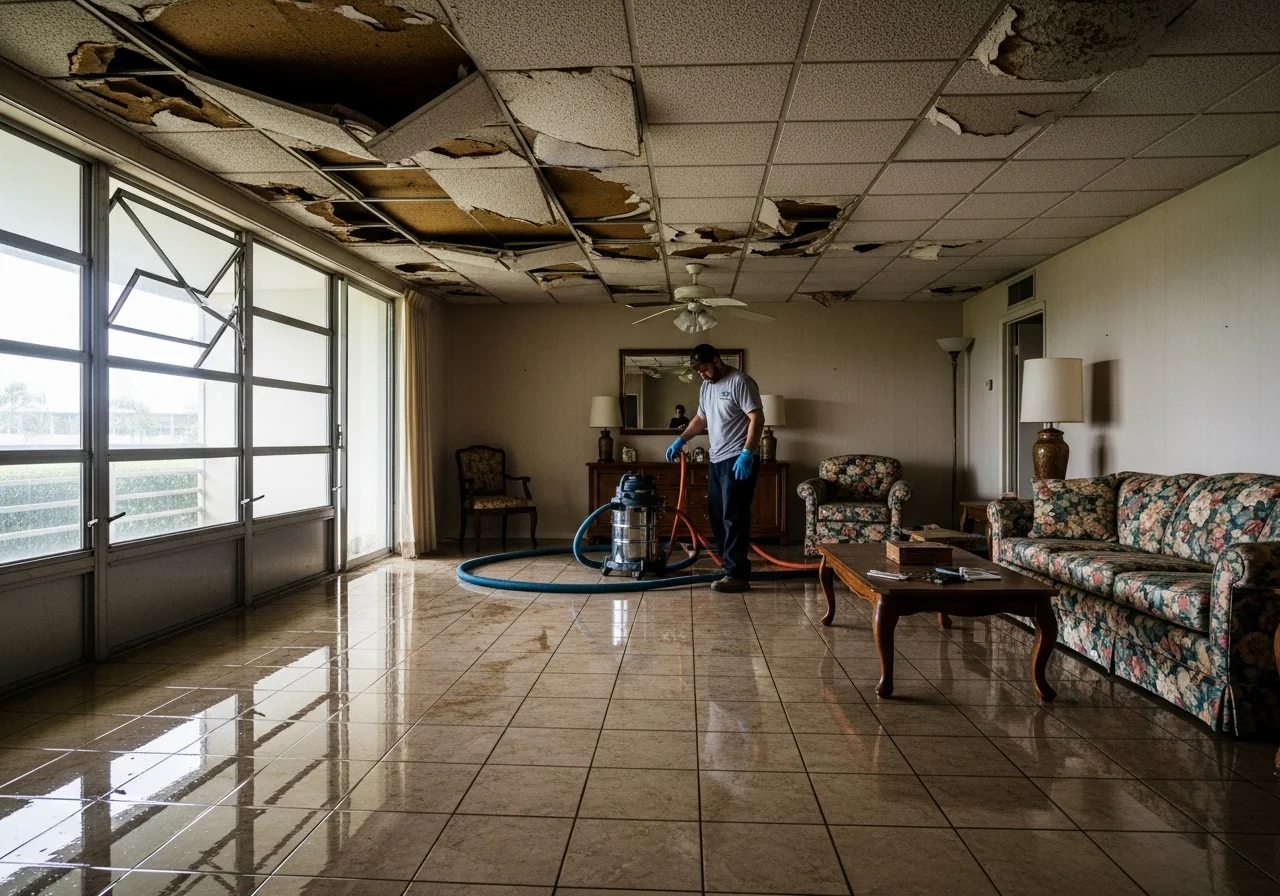
Century Village: 50-year-old plumbing infrastructure in 7,854 condo units creates chronic burst pipe risk requiring rapid response.
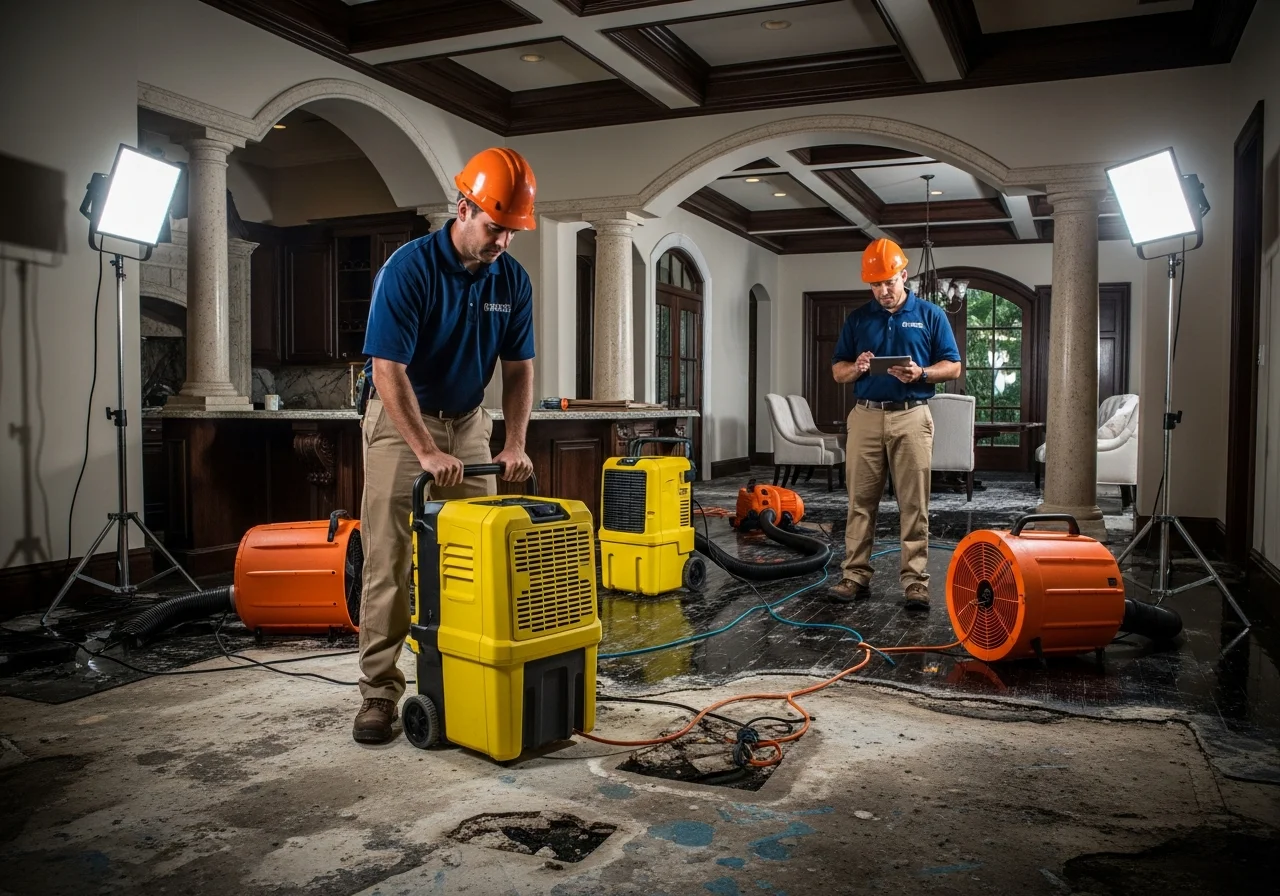
Commercial LGR dehumidifiers and high-velocity air movers creating a controlled drying environment in a West Palm Beach luxury home.
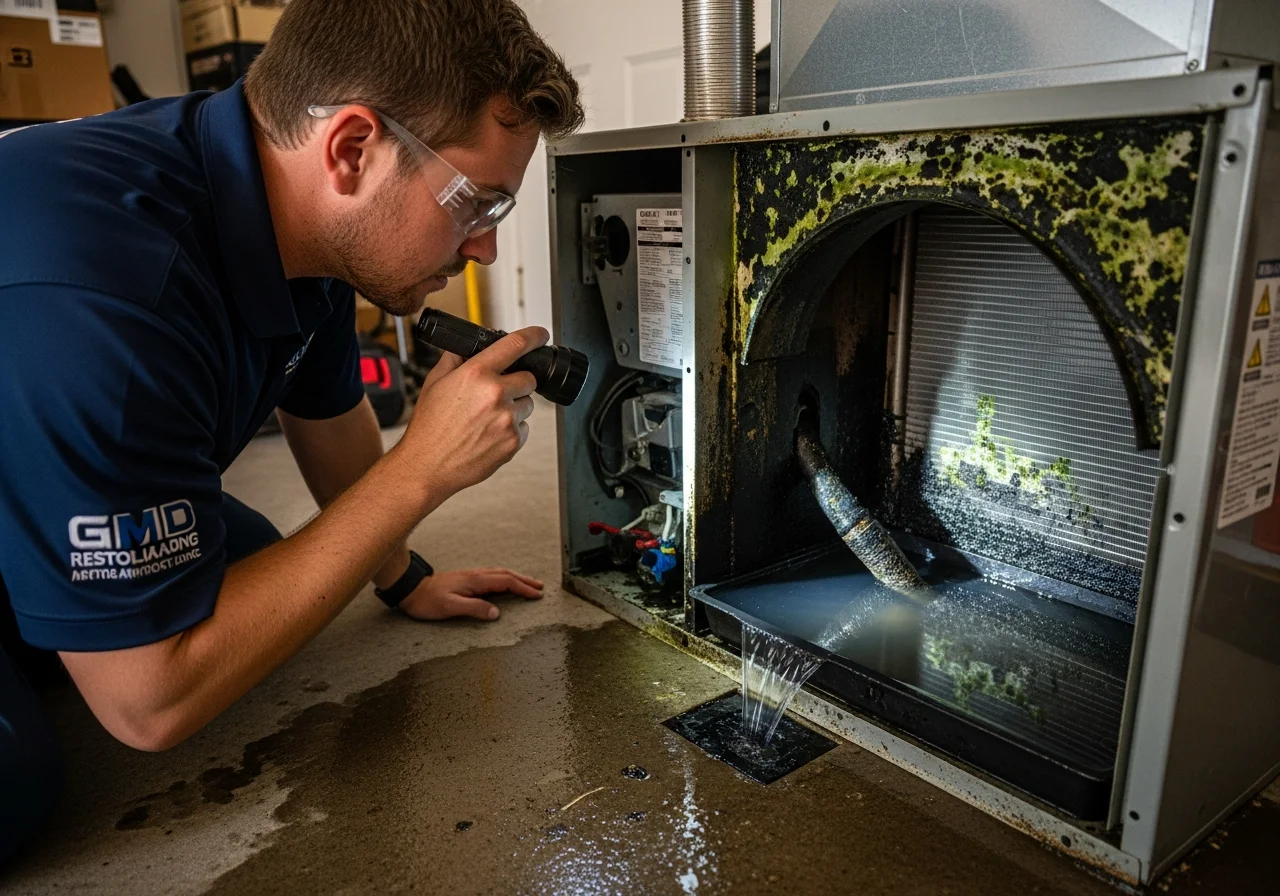
HVAC condensation is the #1 source of hidden water damage in West Palm Beach — AC systems run 11 months per year.
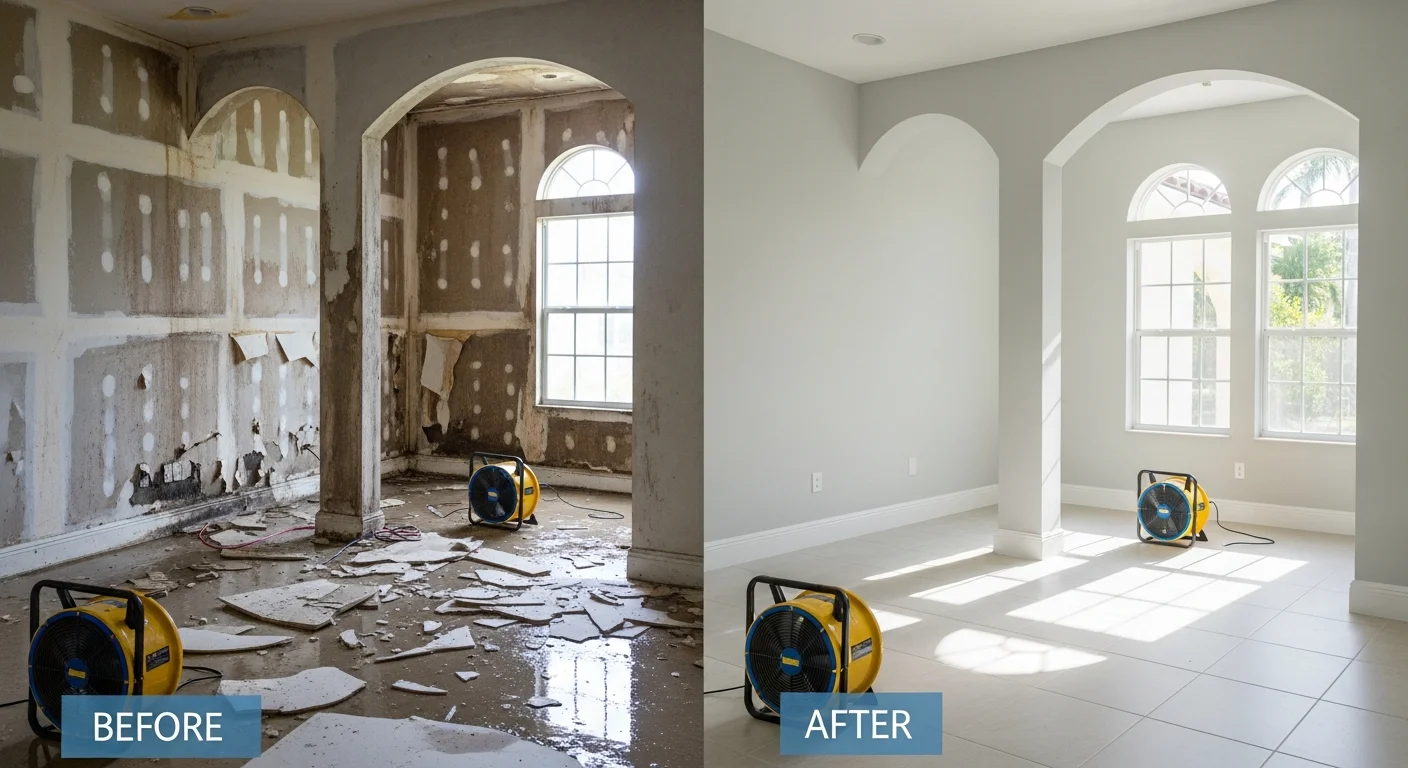
Completed restoration: new tile flooring, fresh paint, and restored architectural details — better than before the damage.
Before and after: complete water damage restoration in a West Palm Beach CBS stucco home
— from standing water and damaged walls to fully restored living space.
Why Choose Palm Build
Why West Palm Beach Homeowners Trust Palm Build
30-45 Minutes from West Palm Beach
Our Deerfield Beach operations hub puts us within fast response range of every West Palm Beach neighborhood — from downtown condos to Ibis Golf & Country Club. We're dispatching locally, not from a franchise headquarters hours away.
IICRC Certified Technicians
Every crew lead holds current IICRC Water Restoration Technician (WRT) certification and follows S500 standards — including Category 3 saltwater remediation protocols for Intracoastal and coastal properties.
West Palm Beach CBS Construction Experts
We specialize in CBS stucco drying protocols, barrel tile roof water intrusion, polybutylene plumbing failures, HVAC condensation patterns, and the critical difference between saltwater and freshwater flooding — all daily realities in this market that generic franchise companies miss.
Florida Insurance Documentation From Day One
Moisture maps, thermal imaging, daily drying logs, photo documentation, and scope-of-work estimates formatted for your adjuster — critical under Florida's 1-year claim deadline and the post-2023 AOB reform. We work with Citizens, Universal, Heritage, and all major FL carriers.
Full-Service Restoration Including Historic Homes
From emergency extraction through final reconstruction — including matching Mizner-era Mediterranean Revival finishes in El Cid and Flamingo Park's historic districts. Pecky cypress ceilings, hand-applied stucco, custom tile — one company manages the entire project.
Common Questions
West Palm Beach Water Damage FAQ
How quickly can Palm Build respond to water damage in West Palm Beach?
Our Deerfield Beach operations hub is approximately 30-45 minutes from most West Palm Beach neighborhoods. We respond 24 hours a day, 7 days a week. Our trucks carry extraction equipment, commercial dehumidifiers, air movers, and moisture mapping tools so we begin work immediately upon arrival.
Does my West Palm Beach homeowners insurance cover water damage restoration?
Most HO-3 policies cover sudden and accidental water damage from internal sources (burst pipes, AC overflow, appliance failures) but exclude rising water or flooding — that requires separate NFIP or private flood insurance. Florida law (Fla. Stat. § 627.70132) requires claims within 1 year of the date of loss, with supplemental claims within 18 months. Hurricane deductibles of 2-5% on West Palm Beach policies mean a $400,000 home carries an $8,000-$20,000 deductible before the insurer pays.
What is the difference between saltwater and freshwater flood damage in West Palm Beach?
Saltwater flooding from Intracoastal storm surge or King Tides is classified as Category 3 (black water) under IICRC standards — the most contaminated category. All porous materials must be removed and replaced, and salt residue continues corroding metals for weeks after drying. Freshwater flooding from canal overflow or burst pipes may qualify as Category 1 or 2, allowing more materials to be salvaged. West Palm Beach's dual-water-body exposure means many storms produce both types simultaneously, requiring different protocols for each.
Is my West Palm Beach home at risk for polybutylene plumbing failure?
If your home was built between 1978 and 1995, it may contain polybutylene piping — particularly in communities like Cypress Lakes, Golden Lakes Village, Bear Lakes Estates, and Breakers West. This piping degrades when exposed to chlorine in municipal water, causing sudden catastrophic failures with no visible warning. If you haven't re-piped, we strongly recommend a plumbing inspection.
How does West Palm Beach's humidity affect water damage restoration?
West Palm Beach's tropical rainforest climate produces relative humidity consistently above 70% and often exceeding 90% during the wet season (June-September). Water-damaged materials cannot air-dry naturally in these conditions — professional commercial dehumidifiers pulling 15-30 gallons per day are essential. Without them, mold colonies establish within 24-48 hours on any organic material including drywall, wood, and carpet.
What are the new FEMA flood zone changes for West Palm Beach?
As of December 20, 2024, FEMA significantly updated Palm Beach County's flood maps, moving more than 16,000 parcels into higher-risk flood zones with increased Base Flood Elevations. Many West Palm Beach homeowners who previously didn't need flood insurance now find their properties in Special Flood Hazard Areas (Zone AE). If your restoration costs exceed 50% of your home's market value in a flood zone, the Substantial Improvement rule requires bringing the entire structure into compliance with current elevation requirements.
Does Palm Build handle insurance documentation for West Palm Beach water damage claims?
Yes. We provide comprehensive insurance documentation from day one: moisture maps, thermal imaging reports, daily drying logs, photo documentation, and detailed scope-of-work estimates formatted for your adjuster's workflow. Under Florida's post-2023 AOB reform, homeowners must coordinate directly with their insurer, but our documentation makes the process significantly smoother. We work with all major carriers including Citizens Property Insurance.
How much does water damage restoration cost in West Palm Beach?
Standard water damage restoration (burst pipe, AC overflow) in West Palm Beach typically ranges from $5,000 to $12,000 depending on the affected area and materials. Complex projects involving saltwater damage, CBS stucco wall drying, or extensive mold can range from $15,000 to $50,000+. Projects in luxury communities like Ibis, Breakers West, or El Cid with custom finishes and specialty materials are typically on the higher end.
Trusted Vendors
Trusted local pros in West Palm Beach
Outside our restoration scope, these are the vetted, licensed contractors we trust
alongside our work. Personally evaluated, reference-checked, and recommended by Palm
Build.
Our Deerfield Beach team responds to West Palm Beach in 30-45 minutes. Call now for 24/7 emergency water damage restoration with IICRC-certified technicians, CBS stucco drying expertise, saltwater remediation, and insurance-ready documentation.