Water Damage Restoration in Hickory, North Carolina
Hickory's foothills clay soils push water against foundations, Lake Hickory basements flood from hydrostatic pressure, and Kenworth's vented crawl spaces trap moisture year-round. Palm Build's Charlotte Operations Hub dispatches IICRC-certified crews in 60-75 minutes with truck-mounted extraction, commercial drying, and the insurance documentation North Carolina carriers require — because in Catawba County's humid subtropical climate, mold starts in 24 hours.
~60 miles — Charlotte, NC 60-75 min Response IICRC Certified
Hickory's combination of foothills clay soils, aging brick ranch homes, Lake Hickory
hydrostatic pressure, and heavy annual rainfall creates a convergence of water damage
risks unlike anywhere else in western North Carolina. When a burst pipe floods your
hardwood floors or a summer thunderstorm overwhelms your crawl space, mold can begin growing in 24 to 48 hours.
<0.2 in/hr
Cecil clay drainage rate
Foothills Clay Soils
Hickory sits atop Cecil-series clay soil — the same expansive Piedmont clay that dominates the Carolina foothills. With infiltration rates below 0.2 inches per hour, stormwater pools against foundations for days after heavy rain. This clay expands when wet and contracts when dry, creating cyclical pressure on foundation walls, crawl space footings, and slab edges that opens new water entry points with every season.
45%
Pre-1980 homes
Aging Housing Stock
Nearly half of Hickory's housing stock was built before 1980 — brick ranches with original galvanized plumbing, cast-iron drain lines, and vented crawl spaces over clay soil. These homes feature hardwood floors directly above crawl space foundations, where a burst supply line at 2 a.m. sends water cascading through subflooring and into floor joists before anyone wakes up. Polybutylene pipe in 1980s-era construction adds catastrophic burst risk.
2,229
Flood-risk properties
Lake Hickory & Catawba River
Lake Hickory and the Catawba River create hydrostatic pressure zones throughout the area. Properties near the lake face basement seepage through foundation walls as water table levels fluctuate with Duke Energy dam releases. Over 2,229 properties in the Hickory area carry flood risk according to First Street Foundation data — many homeowners are surprised to learn their property is in or adjacent to a FEMA flood zone.
47-49 in
Annual rainfall
Foothills Rainfall Pattern
Hickory receives 47 to 49 inches of rainfall annually — higher than the national average — with peak intensity during summer months when afternoon thunderstorms dump 1-2 inches in under an hour. The foothills terrain channels stormwater rapidly downhill toward foundations and low-lying lots. Combined with Cecil clay that sheds water rather than absorbing it, every storm pushes water toward crawl spaces, basements, and any exterior penetration point.
Hickory's Cecil clay soil holds moisture against foundations for days after rain — older
homes with vented crawl spaces are especially vulnerable as water wicks through
subflooring and into joists below.
Neighborhood Risk Assessment
Hickory Community-by-Community Risk Guide
Every Hickory neighborhood has its own construction era, foundation type, and drainage
exposure — from 1950s brick ranches with original plumbing to lakefront properties with
daylight basements. Understanding your specific risks is the first step toward protecting
your property.
Community
Era
Construction
Key Risks
Level
Kenworth
1950s-1970s
Brick Ranch, Crawl Space
Pre-1980 brick ranch homes with original galvanized plumbing and vented crawl spaces over clay soil. Hardwood floors above crawl space foundations, aging cast-iron drain lines, and deteriorating mortar joints allowing moisture intrusion through brick veneer walls.
high
Claremont
1960s-1980s
Brick/Frame, SFH
Established community with aging plumbing systems approaching or past end-of-life. Crawl space foundations with inadequate drainage on Cecil clay, mature hardwood trees creating root intrusion in sewer lines, and original roofing systems vulnerable to foothills storms.
high
Green Park
1950s-1970s
Mid-Century Brick, SFH
Mid-century brick construction with some of Hickory's oldest housing stock. Original plumbing at end-of-life, vented crawl spaces with chronic moisture issues, polybutylene pipe in 1980s-era renovations adding burst risk, foundation settling from expansive clay cycles.
high
Oakwood
1940s-1960s
Brick Ranch/Bungalow
Some of Hickory's oldest residential construction near downtown. Original plumbing systems well past design life, crawl spaces with minimal vapor barriers, aging roof systems, and foundation cracks from decades of clay expansion and contraction cycles.
high
West Hickory
1950s-1970s
Brick Ranch, SFH
Older residential stock with vented crawl spaces and original plumbing. Rolling terrain means uneven lot drainage, with stormwater channeling toward foundations on downhill lots. Mature hardwood trees drop debris that clogs gutters and directs water toward the house.
high
Lake Hickory Communities
1970s-2000s
Mixed, Basements/Daylight
Lakefront and near-lake properties face hydrostatic pressure from fluctuating water table tied to Duke Energy dam operations. Daylight basements and full basements common — basement seepage through foundation walls, sump pump failures, and flood zone exposure during heavy rain events.
high
Newer Slab Subdivisions
2000s-Present
Frame/Vinyl, Slab-on-Grade
Modern slab construction with builder-grade supply line connections aging past warranty. HVAC condensate routing issues, fresh grading that hasn't established drainage patterns, and slab crack infiltration from expansive Cecil clay settlement beneath the foundation.
medium
Condo & Townhome Clusters
1990s-Present
Frame/Brick Veneer, Multi-Unit
Multi-unit construction means one unit's water event affects adjacent units through shared walls, ceilings, and common plumbing. Aging HVAC condensate lines, appliance supply line failures, and stormwater management in shared parking and courtyard areas.
medium
Kenworth
high
1950s-1970sBrick Ranch, Crawl Space
Pre-1980 brick ranch homes with original galvanized plumbing and vented crawl spaces over clay soil. Hardwood floors above crawl space foundations, aging cast-iron drain lines, and deteriorating mortar joints allowing moisture intrusion through brick veneer walls.
Claremont
high
1960s-1980sBrick/Frame, SFH
Established community with aging plumbing systems approaching or past end-of-life. Crawl space foundations with inadequate drainage on Cecil clay, mature hardwood trees creating root intrusion in sewer lines, and original roofing systems vulnerable to foothills storms.
Green Park
high
1950s-1970sMid-Century Brick, SFH
Mid-century brick construction with some of Hickory's oldest housing stock. Original plumbing at end-of-life, vented crawl spaces with chronic moisture issues, polybutylene pipe in 1980s-era renovations adding burst risk, foundation settling from expansive clay cycles.
Oakwood
high
1940s-1960sBrick Ranch/Bungalow
Some of Hickory's oldest residential construction near downtown. Original plumbing systems well past design life, crawl spaces with minimal vapor barriers, aging roof systems, and foundation cracks from decades of clay expansion and contraction cycles.
West Hickory
high
1950s-1970sBrick Ranch, SFH
Older residential stock with vented crawl spaces and original plumbing. Rolling terrain means uneven lot drainage, with stormwater channeling toward foundations on downhill lots. Mature hardwood trees drop debris that clogs gutters and directs water toward the house.
Lake Hickory Communities
high
1970s-2000sMixed, Basements/Daylight
Lakefront and near-lake properties face hydrostatic pressure from fluctuating water table tied to Duke Energy dam operations. Daylight basements and full basements common — basement seepage through foundation walls, sump pump failures, and flood zone exposure during heavy rain events.
Newer Slab Subdivisions
medium
2000s-PresentFrame/Vinyl, Slab-on-Grade
Modern slab construction with builder-grade supply line connections aging past warranty. HVAC condensate routing issues, fresh grading that hasn't established drainage patterns, and slab crack infiltration from expansive Cecil clay settlement beneath the foundation.
Condo & Townhome Clusters
medium
1990s-PresentFrame/Brick Veneer, Multi-Unit
Multi-unit construction means one unit's water event affects adjacent units through shared walls, ceilings, and common plumbing. Aging HVAC condensate lines, appliance supply line failures, and stormwater management in shared parking and courtyard areas.
Don't see your neighborhood? Call (704) 464-0121 and our team can assess your specific property risks. We service all of Hickory, Catawba County,
and surrounding foothills communities.
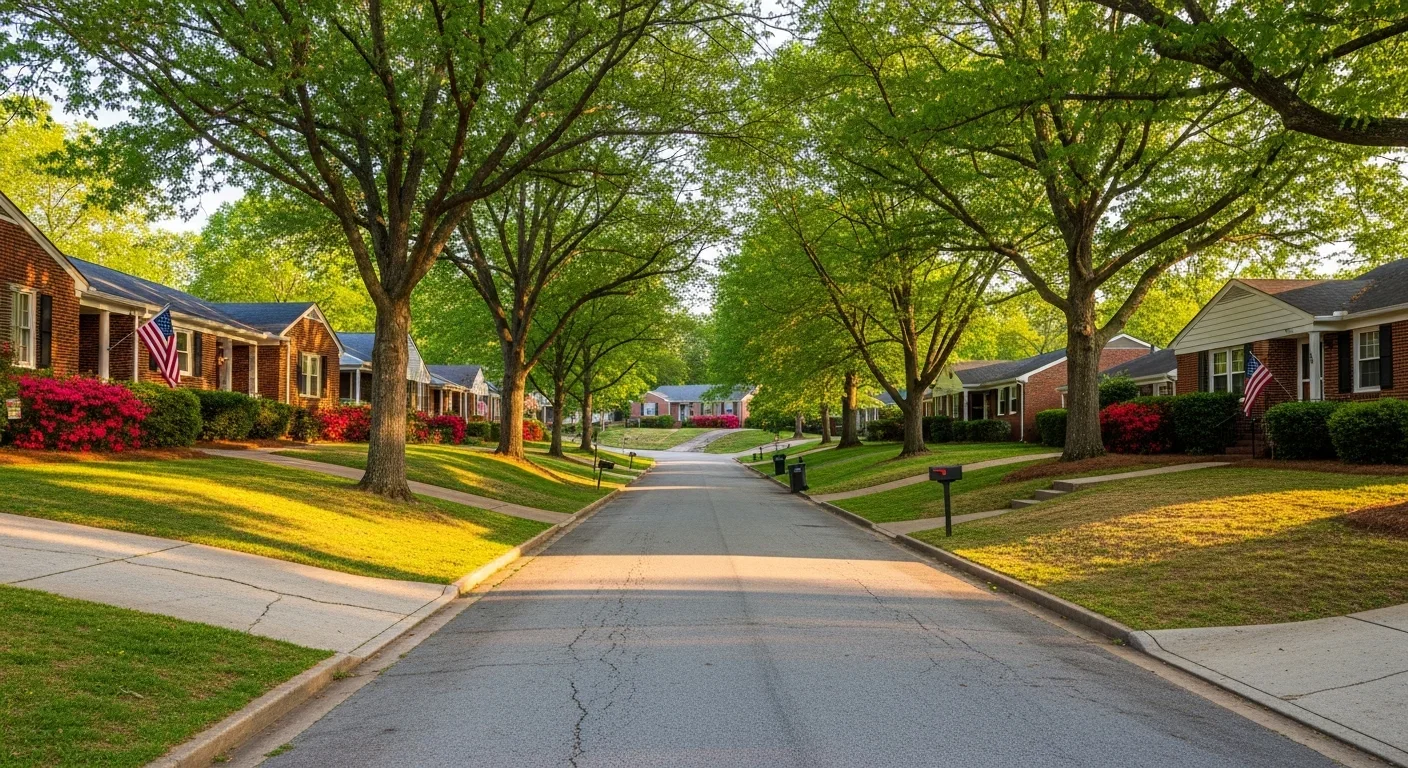
Hickory's established neighborhoods feature mature hardwoods and brick ranch
construction — homes from the 1950s-1970s with crawl spaces and original plumbing carry
the highest water damage risk in the foothills.
Our Process
6 Steps to Restore Your Hickory Property
Every water damage event in Hickory follows a proven restoration sequence — adapted for
crawl space construction, daylight basements, Cecil clay drainage, and North Carolina's
foothills humidity. Our Charlotte team reaches Hickory in 60-75 minutes via I-40.
Step 01
Emergency Dispatch
60–75 Minutes
Your call reaches our Charlotte operations team 24/7/365. We dispatch a fully equipped truck to Hickory — carrying truck-mounted extractors, commercial dehumidifiers, air movers, and thermal imaging cameras. Response time to Hickory averages 60-75 minutes via I-40 from our Charlotte hub. Hickory is our primary foothills service area in western North Carolina.
Step 02
Assessment & Documentation
Hours 1–3
Using infrared thermal imaging and pin-type moisture meters, we map every affected surface in your Hickory home — behind brick veneer walls, under hardwood floors above crawl spaces, and through ceilings into attic spaces. In Hickory's brick ranch homes with crawl space foundations, moisture mapping extends below the subfloor to document joist and insulation damage that isn't visible from the living space. Daylight basements near Lake Hickory require full perimeter wall assessment.
Step 03
Water Extraction
Hours 1–6
Truck-mounted extraction removes standing water from all affected areas. For Hickory homes with hardwood floors, we use targeted extraction techniques that minimize secondary damage to salvageable materials. Crawl space extraction requires specialized equipment — standing water on Cecil clay doesn't drain naturally and must be pumped out mechanically. Daylight basements near Lake Hickory may require sump pump installation for ongoing management.
Step 04
Structural Drying
3–5 Days
Commercial LGR dehumidifiers pulling 15-30 gallons per day and high-velocity air movers create controlled drying conditions. Hickory's crawl spaces require directed airflow into joist cavities and across subfloor panels — areas where North Carolina's foothills humidity makes natural drying impossible. Brick ranch wall cavities need targeted drying to prevent moisture from being trapped behind the veneer. Basement walls near Lake Hickory require extended drying protocols due to ongoing hydrostatic pressure.
Step 05
Mold Prevention
Days 3–7
EPA-registered antimicrobial treatment on all affected surfaces prevents mold colonization during the drying process. In Hickory's humid foothills climate, mold begins growing within 24-48 hours of water exposure. Crawl space joists, subfloor panels, and insulation are treated. If pre-existing mold is discovered — common in Hickory's older vented crawl spaces — we recommend a separate mold remediation scope to address the full extent of colonization.
Step 06
Restoration & Reconstruction
Days 7–21+
Once moisture readings confirm dry conditions, we rebuild — matching your home's existing finishes. Hickory's brick ranch homes require careful drywall, trim, and flooring matching. All reconstruction requiring permits goes through the City of Hickory or Catawba County Building Department depending on your location. Lakefront properties must comply with flood ordinance requirements including BFE+2ft elevation standards. We manage the entire permitting process from application through final inspection.
Step 0160–75 Minutes
Emergency Dispatch
Your call reaches our Charlotte operations team 24/7/365. We dispatch a fully equipped truck to Hickory — carrying truck-mounted extractors, commercial dehumidifiers, air movers, and thermal imaging cameras. Response time to Hickory averages 60-75 minutes via I-40 from our Charlotte hub. Hickory is our primary foothills service area in western North Carolina.
Step 02Hours 1–3
Assessment & Documentation
Using infrared thermal imaging and pin-type moisture meters, we map every affected surface in your Hickory home — behind brick veneer walls, under hardwood floors above crawl spaces, and through ceilings into attic spaces. In Hickory's brick ranch homes with crawl space foundations, moisture mapping extends below the subfloor to document joist and insulation damage that isn't visible from the living space. Daylight basements near Lake Hickory require full perimeter wall assessment.
Step 03Hours 1–6
Water Extraction
Truck-mounted extraction removes standing water from all affected areas. For Hickory homes with hardwood floors, we use targeted extraction techniques that minimize secondary damage to salvageable materials. Crawl space extraction requires specialized equipment — standing water on Cecil clay doesn't drain naturally and must be pumped out mechanically. Daylight basements near Lake Hickory may require sump pump installation for ongoing management.
Step 043–5 Days
Structural Drying
Commercial LGR dehumidifiers pulling 15-30 gallons per day and high-velocity air movers create controlled drying conditions. Hickory's crawl spaces require directed airflow into joist cavities and across subfloor panels — areas where North Carolina's foothills humidity makes natural drying impossible. Brick ranch wall cavities need targeted drying to prevent moisture from being trapped behind the veneer. Basement walls near Lake Hickory require extended drying protocols due to ongoing hydrostatic pressure.
Step 05Days 3–7
Mold Prevention
EPA-registered antimicrobial treatment on all affected surfaces prevents mold colonization during the drying process. In Hickory's humid foothills climate, mold begins growing within 24-48 hours of water exposure. Crawl space joists, subfloor panels, and insulation are treated. If pre-existing mold is discovered — common in Hickory's older vented crawl spaces — we recommend a separate mold remediation scope to address the full extent of colonization.
Step 06Days 7–21+
Restoration & Reconstruction
Once moisture readings confirm dry conditions, we rebuild — matching your home's existing finishes. Hickory's brick ranch homes require careful drywall, trim, and flooring matching. All reconstruction requiring permits goes through the City of Hickory or Catawba County Building Department depending on your location. Lakefront properties must comply with flood ordinance requirements including BFE+2ft elevation standards. We manage the entire permitting process from application through final inspection.
Palm Build's restoration team deploying truck-mounted extraction in a Hickory home —
fast water removal is critical to prevent mold colonization in crawl space foundations
within 24-48 hours.
Cost Transparency
Water Damage Restoration Costs in Hickory
Hickory's foothills location means slightly higher response costs due to distance from our
Charlotte hub, but overall restoration costs align with the western NC market. Lakefront
properties near Lake Hickory with basement seepage and hydrostatic pressure issues
typically fall into the complex/multi-system range. Crawl space construction, hardwood
floors, and brick veneer walls all require professional-grade equipment and
IICRC-certified technicians.
Standard Residential
$5,000 – $16,000 typical range
Emergency Extraction
Burst pipe, appliance leak, or HVAC condensate overflow
$1,500 – $4,200
Structural Drying (3–5 Days)
LGR dehumidifiers and air movers, daily moisture monitoring
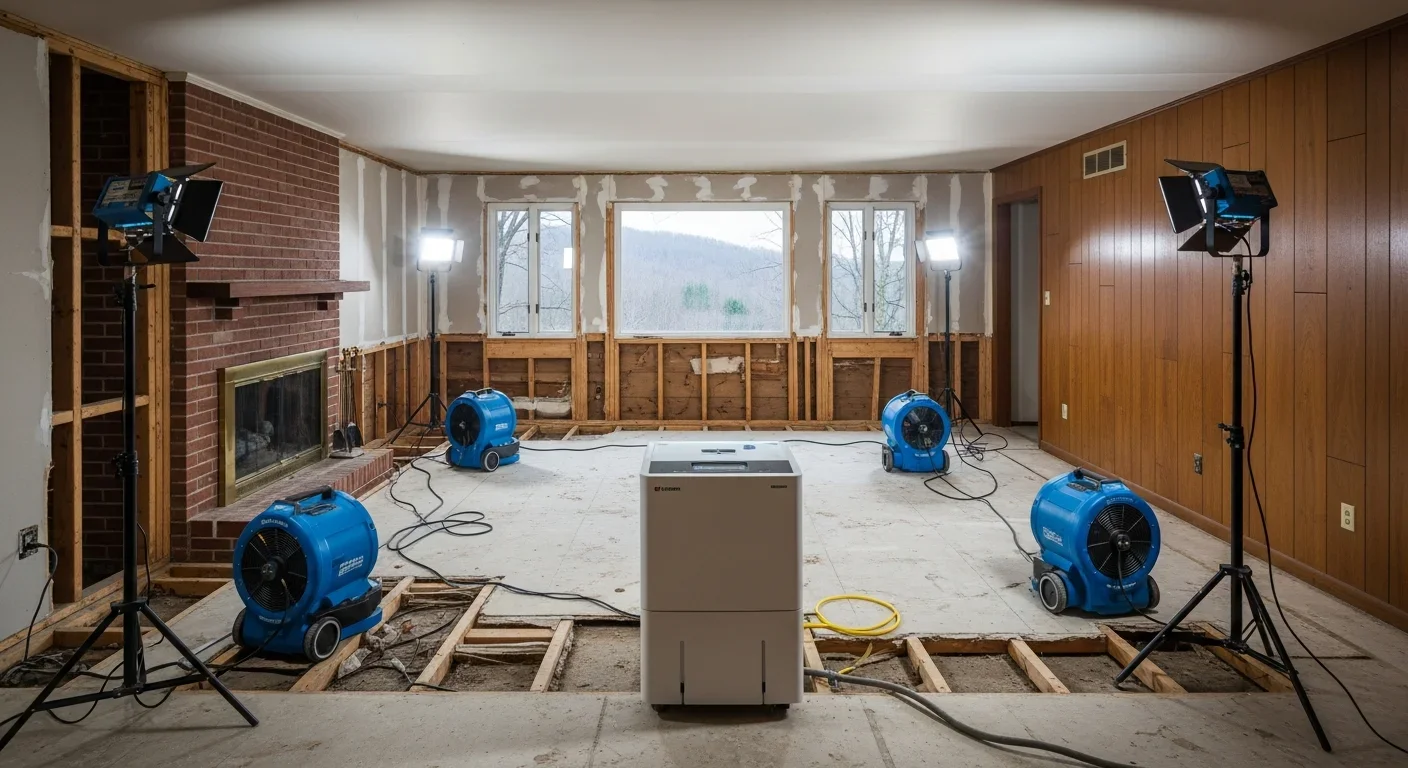
Structural drying equipment deployed in a Hickory home — foothills access from Charlotte
adds modest response cost, but the same professional-grade equipment and IICRC protocols
apply to every Hickory restoration.
Most homeowner insurance policies cover professional water damage restoration.
Palm Build documents every step in Xactimate format — giving your insurance carrier
exactly what they need to process your claim. Call (704) 464-0121 for a free assessment.
When Damage Strikes
Hickory Seasonal Water Damage Calendar
Understanding when your Hickory property is most vulnerable helps you prepare — and
respond faster when damage occurs. This calendar reflects NOAA climate data for the
Hickory foothills region and Palm Build's actual service call patterns in western North
Carolina.
Hickory's foothills elevation means colder winters than Charlotte — averaging 15-25 nights below freezing per season. Pipes in uninsulated crawl spaces, exterior walls, and detached garages are vulnerable. Ice dams form on north-facing rooflines where heat escaping from the attic melts roof snow that refreezes at the eave, backing water under shingles and into ceilings. A single hard freeze can burst supply lines in older homes with galvanized plumbing. Homes left vacant or with inadequate crawl space insulation are at highest risk.
Thunderstorms & Spring Saturation
rising risk
Mar – May
Spring brings organized storm systems and severe thunderstorms with hail that can deliver 2-4 inches of rain in a single event. Cecil clay saturates quickly in the foothills, pushing water against foundations and into crawl spaces. Aging gutters clogged with winter debris overflow and direct water toward the house. Roof damage from winter ice or hail becomes apparent as spring rain intensifies. HVAC systems transition to cooling mode — condensate drain lines idle all winter may be clogged with biofilm.
Peak Humidity & Heavy Downpours
high risk
Jun – Aug
Summer is Hickory's peak water damage season. Daily afternoon thunderstorms can dump 1-2 inches in under an hour, channeling down foothills terrain toward foundations. Humidity regularly exceeds 75-85%, making crawl space mold growth nearly inevitable without proper encapsulation. HVAC systems run continuously, stressing condensate lines. Crawl space moisture wicks into subflooring and joists — homeowners often don't discover the damage until flooring buckles or musty odors emerge.
Tropical Remnants & Tree Damage
moderate risk
Sep – Oct
Hickory lies in the path of tropical storm remnants moving inland from the coast — Hurricane Helene (2024) devastated western NC communities nearby. These events bring 3-6 inches of rain in 24-hour periods that overwhelm local drainage. Hickory's mature hardwood trees — oaks, maples, poplars — are vulnerable to wind damage, with falling limbs and entire trees penetrating roofs and creating immediate water intrusion paths.
Transition & Chimney Fires
moderate risk
Nov
November marks the transition to heating season in the foothills. Chimney fires from creosote buildup in wood-burning fireplaces — common in Hickory's older homes — trigger fire suppression that causes significant water damage. Early freezes catch homeowners off guard before winterization. Leaf accumulation from Hickory's abundant hardwood canopy clogs gutters and downspouts, directing water toward foundations during fall rain events.
Winter pipe bursts and summer thunderstorms account for 65%+ of Palm Build's Hickory
emergency calls.
Don't wait for the damage — call (704) 464-0121 to schedule a pre-season inspection.
Foothills Foundation Risk
Cecil Clay, Crawl Spaces & Lake Hickory Hydrostatic Pressure
Hickory's foothills geology creates foundation challenges that many homeowners don't
anticipate until water appears inside their home. The convergence of expansive Cecil
clay soils, crawl space construction on sloped terrain, and proximity to Lake Hickory
makes foundation-level water intrusion one of the most common — and most expensive —
damage types in Catawba County.
Whether your home has a vented crawl space, daylight basement, or slab-on-grade
foundation, understanding how Hickory's clay and hydrology interact with your specific
construction type is critical to protecting your property.
Hickory's Cecil Clay Soils
Hickory sits atop Cecil-series clay — the dominant soil type across North Carolina's foothills region. This expansive clay has infiltration rates below 0.2 inches per hour, meaning water pools against foundations for days after rain. The clay swells when saturated and shrinks when dry, creating cyclical pressure on foundation walls and crawl space footings that opens new water entry points with every wet-dry season.
Crawl Space Prevalence
The majority of Hickory's pre-1990 housing stock sits on vented crawl spaces over Cecil clay. Warm, humid foothills air enters through foundation vents, contacts cooler surfaces below the house, and condenses on floor joists, ductwork, and insulation — creating a persistent moisture factory. After any water event, the crawl space becomes the primary concern as standing water on clay cannot drain naturally and must be mechanically removed.
Lake Hickory Hydrostatic Pressure
Properties near Lake Hickory face continuous hydrostatic pressure as the water table fluctuates with Duke Energy's dam operations on the Catawba River. Daylight basements and full basements common in lakefront construction are vulnerable to seepage through foundation walls, especially during periods of high lake levels combined with heavy rainfall. Sump pump failures during storms create rapid basement flooding.
Slab Settlement & Foundation Drainage
Newer slab-on-grade construction in Hickory is susceptible to settlement as expansive Cecil clay beneath the foundation cycles through wet and dry periods. Slab cracks allow groundwater infiltration during heavy rain, while improper foundation drainage design compounds the problem. Over 2,229 properties in the Hickory area carry flood risk — and many foundation drainage failures occur outside designated flood zones.
Lake Hickory's fluctuating water levels create hydrostatic pressure against basement
foundations — lakefront properties face seepage risk year-round, with peak exposure
during heavy rain combined with high lake levels.
Hurricane Helene Impact — Western NC
Hurricane Helene (September 2024) devastated communities throughout western North
Carolina. While Hickory fared better than mountain communities closer to the storm's
center, the event demonstrated how tropical remnants moving inland can overwhelm
foothills drainage systems with 4-8 inches of rain in 24 hours.
Lake Hickory's water levels are managed by Duke Energy's dam system on the Catawba
River — during major rain events, dam releases can compound local flooding pressure
for lakefront and low-lying properties.
Insurance Navigation
Navigating Water Damage Insurance in Hickory
North Carolina's insurance landscape requires understanding your specific policy, carrier
process, and the critical distinction between covered water damage and flood damage —
especially for properties near Lake Hickory and the Catawba River. These are the key facts
every Hickory homeowner needs when filing a claim.
Immediate Claim Checklist
Report loss to your carrier within 24 hours
Do NOT discard damaged materials before documentation
Take photos/video of all visible damage immediately
Keep all receipts for emergency expenses (hotel, food)
Request a copy of your policy declarations page
Note your claim number and adjuster contact info
Determine if damage is from a covered peril vs. flood
Check if your policy has a sewer backup endorsement
NC Statute of Limitations
North Carolina imposes a 3-year statute of limitations on property insurance claims (N.C.G.S. 58-44-16). While this window seems generous, delayed filing weakens your claim significantly. Insurance carriers expect prompt notification — most policies require notice "as soon as practicable." Delayed filing gives adjusters ammunition to dispute causation, argue pre-existing damage, and deny coverage.
Common NC Carrier Landscape
Hickory homeowners are typically insured through State Farm, Travelers, Allstate, Nationwide, or Erie. Each carrier has its own claims process, adjuster network, and documentation preferences. State Farm and Nationwide have significant market share in Catawba County. Palm Build formats all documentation to each carrier's preferred workflow — our team knows what your specific adjuster needs.
Flood Exclusion — Separate Policy Required
Standard homeowner's insurance does NOT cover flood damage — a critical distinction near Lake Hickory and the Catawba River where rising water affects many properties. If your damage is caused by rising water (flood), you need a separate NFIP or private flood policy. Sewer backup endorsements are also separate add-ons. We help you determine the water source and document accordingly to maximize covered claims.
~$1,900 Avg Annual Premium (Hickory)
Hickory homeowners pay approximately $1,900 per year for property insurance — in line with the NC average. Mold sub-limits are common in NC policies, often capping mold remediation coverage at $5,000-$10,000 regardless of actual scope. Gradual vs. sudden damage distinctions are critical — carriers cover sudden pipe bursts but deny claims for long-term seepage or maintenance failures.
Flood Ordinance Compliance — BFE+2ft
Properties in FEMA-designated flood zones must comply with local flood ordinance requirements during reconstruction, including Base Flood Elevation (BFE) plus 2 feet. If your Lake Hickory or Catawba River property sustains substantial damage (over 50% of assessed value), the entire structure may need to be brought up to current flood standards. Palm Build navigates these requirements from initial assessment through final inspection.
Palm Build Documents From Hour One
We photograph, moisture-map, and document every affected surface before beginning work. Our Xactimate-formatted estimates match your carrier's preferred format — whether it's State Farm, Travelers, Allstate, or any carrier writing policies in Catawba County. Complete documentation from day one protects your claim and prevents disputes during the adjustment process.
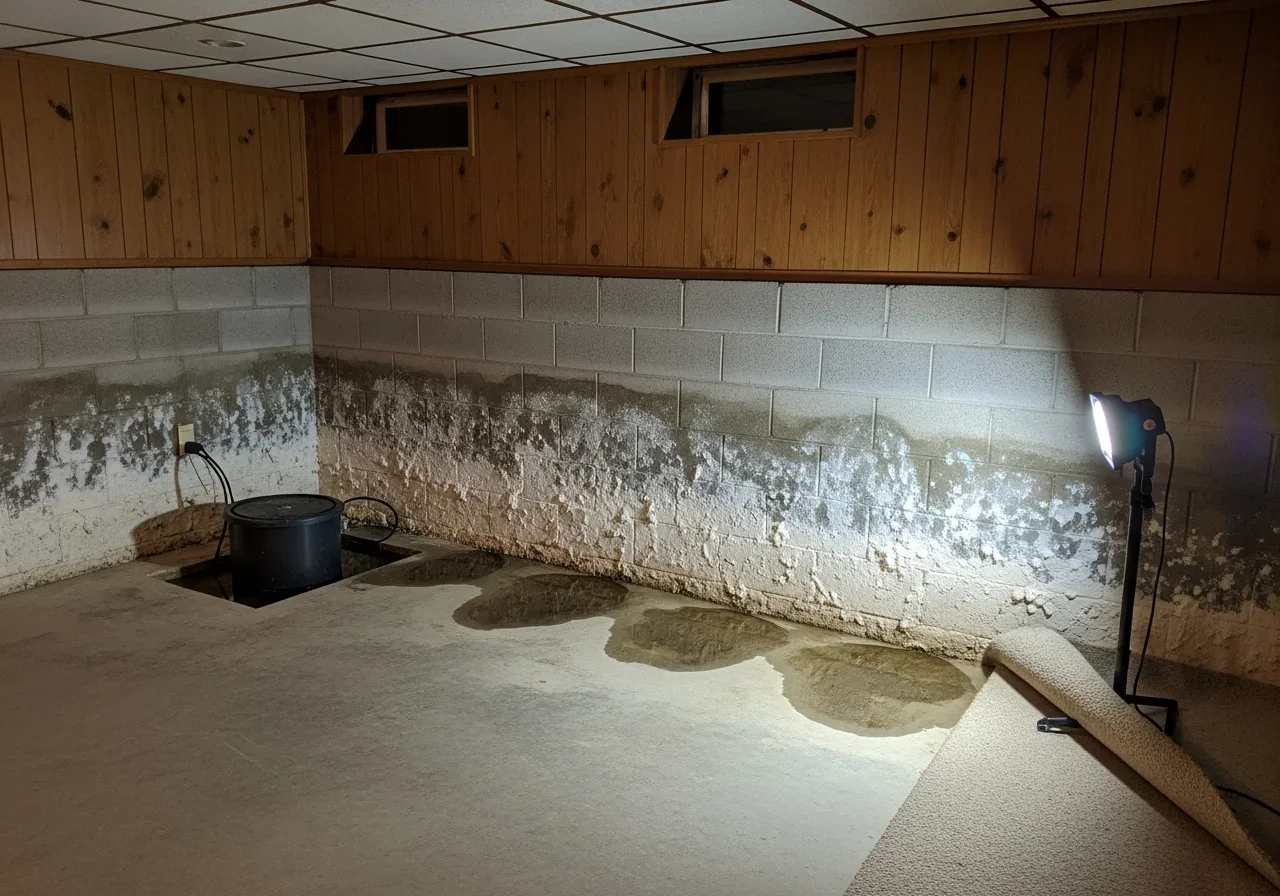
Basement seepage in a Lake Hickory property — proper documentation of the water source
is critical to determine whether damage falls under homeowner's insurance or requires a
separate flood policy claim.
Our Work in Hickory
From Emergency to Restoration
Every image below represents a Hickory-area property where Palm Build responded,
extracted, dried, and restored. From storm-damaged roofs in foothills neighborhoods to
basement seepage near Lake Hickory and crawl space moisture remediation in established
brick ranch homes, we handle every construction era and damage type in Catawba County.
Hardwood tree damage to a Hickory roof after a foothills thunderstorm — Hickory's mature oaks, maples, and poplars create significant wind damage risk that leads to immediate water intrusion through the roof structure.
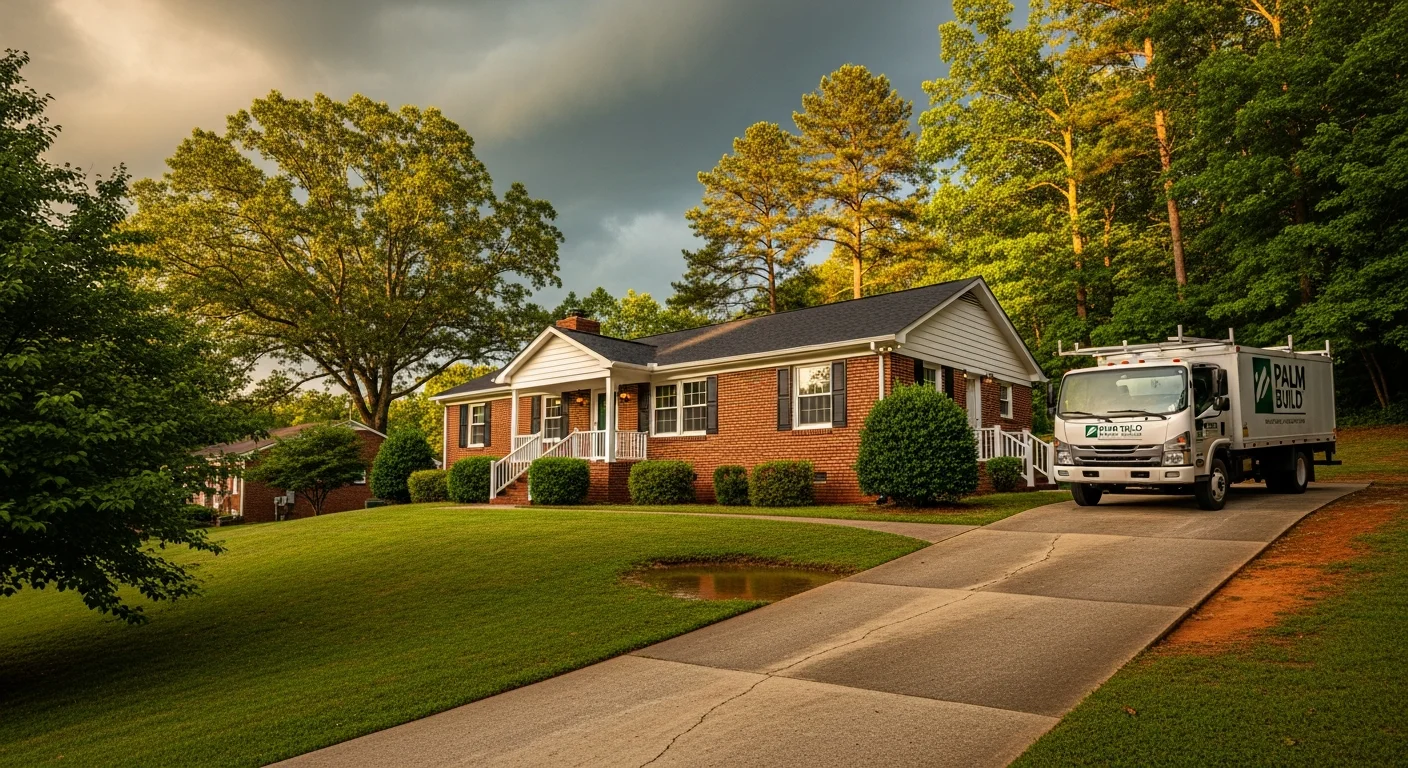
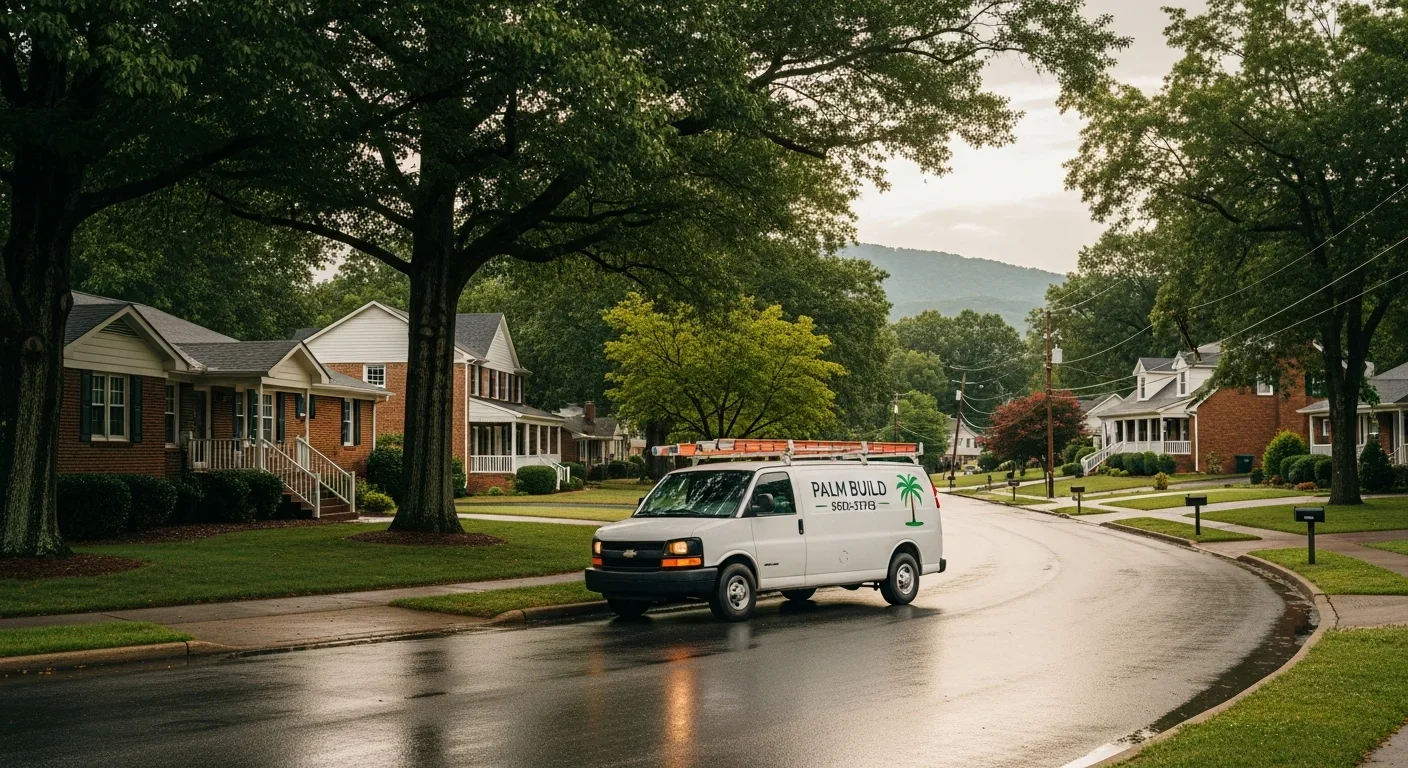
Palm Build responding to a water emergency in a Hickory foothills neighborhood — our Charlotte hub puts us 60-75 minutes from Hickory properties via I-40, 24/7/365.
Crawl space moisture inspection in a Hickory home — Cecil clay soil traps water against foundations and vented crawl spaces create condensation that damages joists, insulation, and subflooring over time.
Basement seepage in a Lake Hickory property — hydrostatic pressure from fluctuating lake levels pushes water through foundation walls, requiring professional extraction, drying, and waterproofing solutions.
Common Damage Sources
Types of Water Damage in Hickory
The source of water determines the contamination category, restoration protocol, and cost.
Hickory's mix of aging brick ranch homes, lakefront basements, and crawl space foundations
creates specific damage patterns shaped by the foothills' unique geology and climate.
Crawl Space Moisture & Wicking
Hickory's dominant construction type — homes over vented crawl spaces on Cecil clay — creates chronic moisture problems. Warm, humid foothills air enters through foundation vents, condenses on cooler surfaces, and saturates joists, subfloor, and insulation. Moisture wicks upward through subflooring into hardwood and laminate flooring above. Homeowners often don't discover damage until flooring buckles, musty odors emerge, or mold is visible on joists.
Supply Line Burst (Aging Plumbing)
The most common sudden water event in Hickory. Water heater, dishwasher, washing machine, and refrigerator ice maker supply lines fail without warning. In older Hickory homes with original galvanized plumbing — nearly 45% of the housing stock — these failures are increasingly common as connections fatigue past 40-50 years. Polybutylene pipe in 1980s-era construction adds catastrophic burst risk across multiple rooms.
Lake Hickory Basement Seepage
Properties near Lake Hickory face hydrostatic pressure that pushes water through foundation walls and floor joints in daylight and full basements. Water table levels fluctuate with Duke Energy dam operations on the Catawba River — when high lake levels coincide with heavy rainfall, basement seepage accelerates. Sump pump failures during storms create rapid basement flooding requiring emergency extraction.
Roof Leak & Storm Damage
Hickory receives 47-49 inches of rain annually with intense summer thunderstorms. Wind-driven rain enters through aging shingles, deteriorating flashing, soffit gaps, and around chimney penetrations. Mature hardwood trees — oaks, maples, poplars — create falling limb and whole-tree damage that penetrates roofs and opens immediate water intrusion paths. Tropical remnants moving inland bring sustained heavy rain that tests every vulnerable point.
HVAC Condensate Failure
HVAC condensate drain lines clog with algae, biofilm, and debris — especially after winter dormancy. When the AC engages for spring and summer cooling, a blocked drain line sends water into ceilings, walls, and utility closets. Hickory's long cooling season (May through October) means HVAC systems run extensively, producing constant condensation that stresses drain lines and overflow pans.
Slab Crack Infiltration
Newer slab-on-grade construction in Hickory is susceptible to cracking as expansive Cecil clay beneath the foundation cycles through wet and dry seasons. Hairline cracks become water entry points during heavy rain, allowing groundwater to seep into the living space. Foundation drainage failures compound the problem — water that should be diverted away from the slab instead pools against the foundation perimeter and finds every crack.
Crawl space moisture wicking is the most common chronic water damage source in Hickory —
Cecil clay traps water against foundations while vented crawl spaces create condensation
on joists and subflooring.
Every water damage event requires immediate professional assessment.
Mold colonization begins within 24-48 hours in Hickory's foothills humidity. Call (704) 464-0121 for 24/7 emergency response.
Why Palm Build
Hickory's Trusted Restoration Partner
National franchises send you their nearest available crew. Palm Build sends you a team
that already knows Hickory's neighborhoods, foothills construction types, crawl space and
basement challenges, and the insurance carriers writing policies in Catawba County.
IICRC Certified Technicians
Every Palm Build technician holds current IICRC certifications in Water Restoration (WRT), Applied Structural Drying (ASD), and Applied Microbial Remediation (AMRT) — the gold standard in the restoration industry. For Hickory's crawl space construction, basement work, and hardwood flooring, this certification ensures restoration meets the standard that insurance carriers and homeowners expect.
Charlotte Hub — 60-75 Min to Hickory
Our Charlotte operations center puts us within 60-75 minute response range of Hickory via I-40. When you call at 2 a.m., we answer — and a fully equipped truck is rolling within minutes. No national call center, no delayed dispatch. Hickory is our primary foothills service area, giving you faster response than most local contractors can offer during peak demand.
Foothills Clay Soil Expertise
We understand Cecil clay. We've spent years learning how Hickory's expansive clay soils interact with crawl space foundations, slab construction, and basement walls. This means we know where to look for hidden moisture, how to address clay-related drainage failures, and how to dry structures built on soil that won't cooperate with natural drainage.
Lake Hickory Basement Knowledge
Lakefront and near-lake properties require specialized restoration approaches — we understand hydrostatic pressure dynamics, sump pump systems, interior drainage solutions, and the unique challenges of drying basement walls that face ongoing moisture pressure from fluctuating lake levels tied to Duke Energy dam operations.
Insurance Documentation Specialists
We know what NC carriers need. Our moisture maps, thermal images, and drying logs are formatted in Xactimate — the industry standard your adjuster uses. Whether you're insured through State Farm, Travelers, Allstate, Nationwide, or any carrier writing policies in Catawba County, our documentation is formatted for seamless claim processing from day one.
Flood Ordinance Compliance
Palm Build handles everything from emergency extraction through final reconstruction — including all permits through the City of Hickory or Catawba County. For lakefront properties in FEMA flood zones, we navigate BFE+2ft elevation requirements and substantial damage determinations. One company, one project manager, from water extraction to move-back day.
Ready for a free assessment?
Call (704) 464-0121 24/7 for immediate
response — or schedule a non-emergency inspection at your convenience.
Common Questions
Hickory Water Damage FAQ
How quickly can Palm Build respond to a water emergency in Hickory, NC?
Our Charlotte Operations Hub is approximately 60 miles from Hickory via I-40. We typically arrive within 60 to 75 minutes under normal conditions. We dispatch 24/7/365 — call (704) 464-0121 any time.
What causes the most water damage in Hickory homes?
The most common causes in established neighborhoods are aging plumbing failures (galvanized, copper, and cast iron pipes 40-70 years old), crawl space moisture intrusion driven by Cecil clay soils, and roof end-of-life leaks. Lake Hickory communities face hydrostatic basement flooding from reservoir water table fluctuations. Severe thunderstorms from June through August drive storm-related water damage across all neighborhoods.
Does homeowners insurance cover water damage in Hickory?
Standard North Carolina homeowners insurance typically covers sudden and accidental water damage like burst pipes and appliance failures. It does NOT cover flood damage from rising water — that requires separate NFIP or private flood insurance. With 2,229 Hickory properties at flood risk (12%), separate flood coverage is essential for many homes. Crawl space groundwater seepage from clay soils is frequently excluded. Mold coverage is usually capped at $5,000 to $15,000.
How much does water damage restoration cost in Hickory, NC?
Standard single-room restoration typically ranges from $3,500 to $7,500. Multi-room projects range from $7,500 to $17,000. Crawl space restoration adds $4,000 to $12,000 depending on scope. Basement restoration in Lake Hickory communities ranges from $6,000 to $18,000. Large whole-home events with structural damage can range from $17,000 to $75,000 or more.
Why are clay soils such a problem for Hickory foundations?
Hickory sits on Cecil-type clay soils with extremely low permeability. When saturated, this clay expands and pushes against foundation walls with hydrostatic force, cracking foundations and forcing water through joints. When it dries, it contracts and opens gaps that become water pathways during the next rain. This constant expansion-contraction cycle progressively damages foundations and drives water intrusion into crawl spaces and basements.
Do Lake Hickory homes have special water damage risks?
Yes. Lake Hickory is a 4,100-acre reservoir on the Catawba River. Homes along the lake face hydrostatic pressure from the reservoir's influence on the local water table, combined with clay soil holding rainwater against below-grade foundations. During sustained rainfall, basement wall seepage can overwhelm sump systems. Many lakefront homeowners need both standard homeowners insurance and separate flood coverage.
What ZIP codes does Palm Build serve in Hickory?
Palm Build serves all Hickory ZIP codes including 28601, 28602, and 28603, as well as surrounding Catawba County communities including Conover, Newton, Claremont, and all Lake Hickory neighborhoods. We also serve neighboring Burke County communities like Morganton.
How fast can mold start after water damage in Hickory?
Mold can begin growing within 24 to 48 hours of sustained moisture. In Hickory's summer humidity — regularly exceeding 70% — this timeline can be accelerated, especially in crawl spaces over clay soil and in enclosed wall cavities. Professional extraction and commercial drying within the first 24 hours significantly reduces mold risk.
Water damage in Hickory? Call now — we respond 24/7.
Palm Build's IICRC-certified crew responds to Hickory emergencies from our Charlotte Operations Hub in 60-75 minutes. Truck-mounted extraction, commercial drying, crawl space and basement restoration, and insurance-ready documentation — dispatched around the clock.