(888) 245-5155
Call Now 24/7
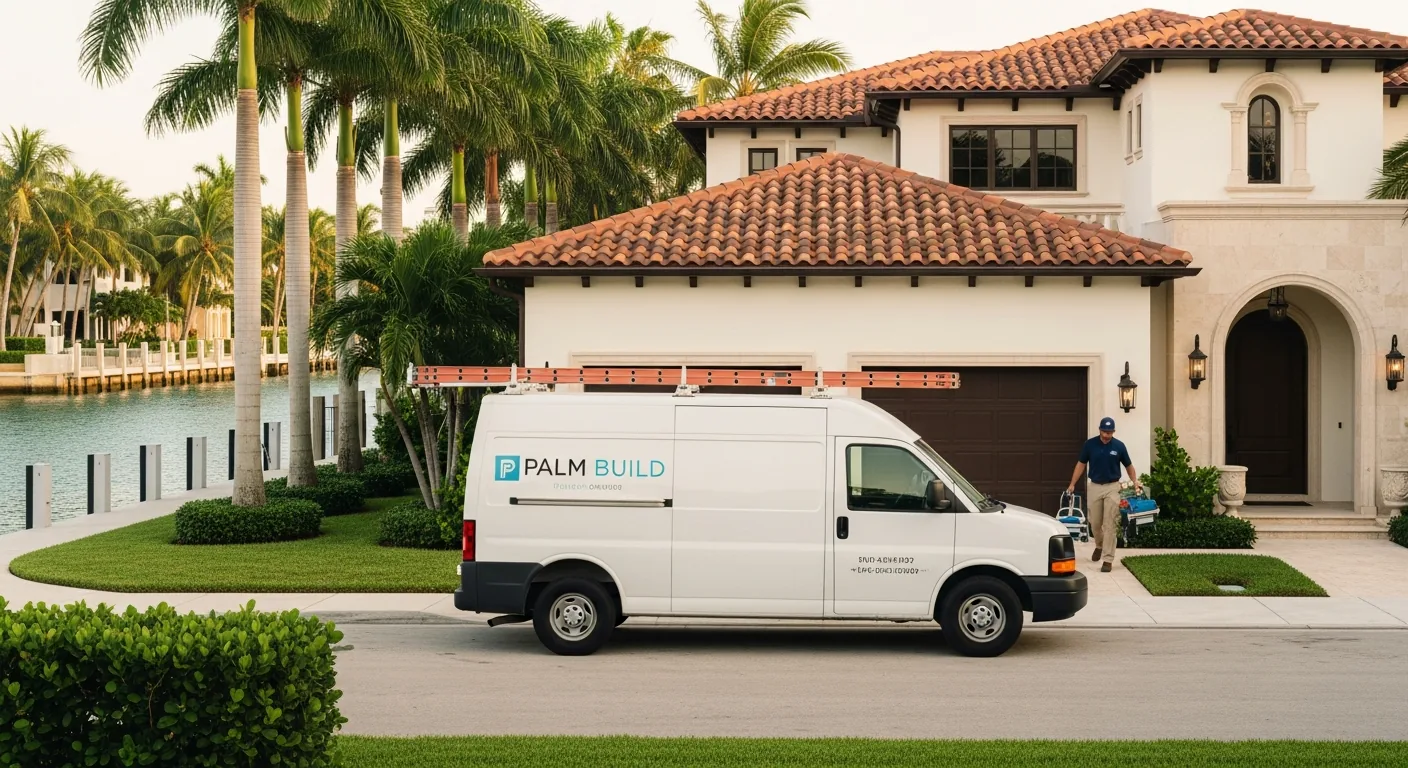
Palm Build restoration truck responding to a water damage emergency at a CBS stucco home along a Fort Lauderdale canal with palm trees and seawall visible
FORT LAUDERDALE FL — 24/7 WATER DAMAGE RESPONSE

Water Damage Restoration in Fort Lauderdale, Florida

The Venice of America's 165+ miles of canals, 62% pre-1980 housing stock, and year-round subtropical humidity create relentless water damage risk. Palm Build's Deerfield Beach team responds in under 30 minutes with truck-mounted extraction, commercial drying, and the insurance documentation Florida carriers demand.

Deerfield Beach — Minutes from Fort Lauderdale Under 30 min Response IICRC Certified

Under 30 min

Emergency Response

24/7

Dispatch Available

IICRC

Certified Technicians

The Venice of America

Why Fort Lauderdale Faces Unique Water Damage Risks

No city in South Florida has Fort Lauderdale's combination of canal density, aging construction, and extreme weather exposure. When the mold clock starts ticking, every minute matters — and Fort Lauderdale's climate makes that clock run faster than anywhere else.

165+ Miles of Canals

165+

Miles of canals

Fort Lauderdale earns its "Venice of America" title with more navigable waterways than any U.S. city outside Venice Beach. Every canal-adjacent neighborhood — Las Olas Isles, Seven Isles, Nurmi Isles, Harbor Beach — faces dual flood risk from both storm surge and canal overflow. The April 2023 event proved that even inland neighborhoods flood when 80-year-old drainage infrastructure is overwhelmed.

62% Pre-1980 Housing Stock

62%

Built before 1980

Nearly two-thirds of Fort Lauderdale homes were built before 1980. These aging CBS structures have endured decades of thermal cycling, hurricane-force winds, and salt air corrosion. Stucco cracks invisible to the naked eye allow water behind wall cavities. Homes built 1978-1995 may contain polybutylene plumbing — a ticking time bomb that degrades from chlorinated municipal water and fails catastrophically without warning.

Relentless Subtropical Humidity

66 in

Annual rainfall

Fort Lauderdale receives 66 inches of rain annually — 66% above the national average — with 62% falling during the June-October wet season. Relative humidity regularly exceeds 80% during summer months. At these levels, mold colonization begins within 24-48 hours on any organic material, making the speed of water extraction literally the difference between a repair and a gut renovation.

The 24-Hour Mold Clock

24 hrs

Until mold begins

In Fort Lauderdale's climate, water damage isn't a slow disaster — it's an accelerating one. The combination of 80°F+ temperatures and 80%+ humidity means mold spores germinate and colonize faster here than almost anywhere in the continental U.S. Every hour between water intrusion and professional extraction compounds the damage exponentially.

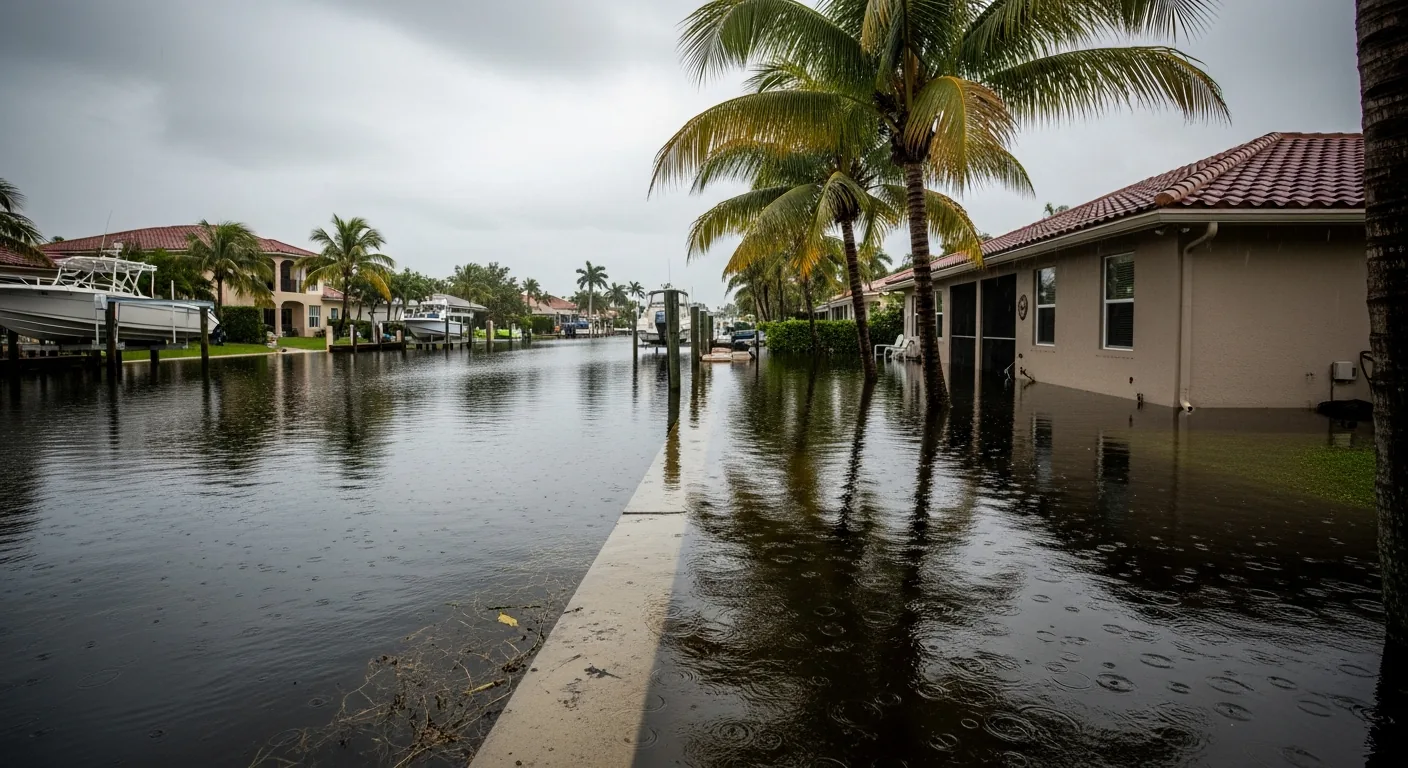
Aerial view of Fort Lauderdale canal-front CBS stucco homes with water levels elevated near seawalls during a rain event in Broward County Florida
Fort Lauderdale's 165+ miles of residential canals create unmatched flood exposure — canal-front homes in Las Olas Isles, Seven Isles, and Nurmi Isles face dual risk from both storm surge and rainfall-driven canal overflow.

Neighborhood Risk Profiles

Fort Lauderdale Water Damage Risk by Neighborhood

Every Fort Lauderdale neighborhood has its own water damage signature — shaped by proximity to canals, age of construction, and elevation. Here is what drives risk in yours.

Las Olas Isles

Critical
Built: 1950s-2000s Type: CBS/stucco, luxury custom

Canal flooding, saltwater intrusion

Active redevelopment zone on Intracoastal canals. Premium water damage to luxury finishes.

Seven Isles

Critical
Built: 1960s-1990s Type: CBS/stucco

Storm surge, canal overflow

315 waterfront homes surrounded by Intracoastal Waterway. Every property faces water on at least two sides.

Harbor Beach

Critical
Built: 1960s-1980s Type: CBS/stucco, tile roofs

Coastal storm surge, saltwater flooding

Gated community. Evacuation Zone A. Direct Atlantic exposure plus Intracoastal access.

Rio Vista

High
Built: 1930s-1960s Type: CBS, some wood-frame

New River flooding, aging plumbing

Historic older stock along New River. Some of the oldest residential plumbing in the city.

Coral Ridge

High
Built: 1950s-1980s Type: CBS/stucco ranch-style

Middle River & Cypress Creek flooding

Extensive waterfront canal frontage. Aging flat and low-slope roofs on mid-century homes.

Victoria Park

High
Built: 1940s-1970s Type: CBS/stucco, mid-century modern

Aging plumbing, stucco cracking

Heavy tree canopy causes roof damage during storms. Older polybutylene plumbing risk.

Colee Hammock

High
Built: 1920s-1950s Type: CBS, Mediterranean Revival

Oldest housing stock in FLL

Historic district with the oldest standing structures in Broward County. Plumbing defects and chronic mold.

Sailboat Bend

Critical
Built: 1940s-1970s Type: CBS/stucco

New River flooding, repetitive loss

Repetitive flooding neighborhood along New River. Older drainage infrastructure cannot keep pace.

Imperial Point

Elevated
Built: 1960s-1970s Type: CBS/stucco ranch

Polybutylene plumbing, canal exposure

Middle-class neighborhood with many 1970s-era polybutylene pipe systems approaching failure age.

Flagler Village

Elevated
Built: Mixed: older + new Type: Urban conversions, mixed

Urban flooding, flat roofs

CBD-adjacent loft and urban conversions. Commercial-to-residential conversions create unique water pathways.

Nurmi Isles

Critical
Built: 1950s-1980s Type: CBS/stucco, finger island

Surrounded by canals, FEMA Zone AE

Finger island community surrounded by canal water. Frequently classified in FEMA Special Flood Hazard Areas.

Middle River Terrace

High
Built: 1940s-1960s Type: CBS/frame

Repetitive flooding from Middle River

Adjacent to Middle River with documented repetitive flooding history. Older infrastructure.
The Venice of America

Fort Lauderdale's Canal System and Your Flood Risk

Fort Lauderdale's identity is built on water — 165+ miles of navigable canals, three rivers, and the Intracoastal Waterway. That same water network creates flood exposure found nowhere else in the U.S. Understanding which waterways threaten your neighborhood — and what type of water contamination you face — determines the restoration approach, timeline, and cost.

Major Waterways Affecting Fort Lauderdale Homes

New River

Primary downtown waterway with North and South Forks. Subject to flooding during heavy rainfall. Rio Vista, Sailboat Bend, and Tarpon River neighborhoods border this system.

Freshwater/brackish flooding

Middle River

Flows through north-central Fort Lauderdale. Coral Ridge, Imperial Point, and Middle River Terrace neighborhoods face repeated overflow events.

Freshwater flooding

Intracoastal Waterway

The eastern spine connecting to the Atlantic. All island communities — Las Olas Isles, Seven Isles, Harbor Beach, Idlewyld, Nurmi Isles — sit on or adjacent to this system.

Saltwater storm surge

165+ Residential Canals

The canal network that earned Fort Lauderdale its Venice of America name. Connected to both the Intracoastal and the North New River Canal system leading to Lake Okeechobee.

Mixed/brackish flooding

IICRC Water Contamination Categories

The type of water contamination determines the restoration protocol. Fort Lauderdale's canal system produces all three categories depending on the event.

Category 1 — Clean Water

Common

Source: Burst pipes, supply line failures, rain through roof

Protocol: Extract, dry, and salvage. Most building materials can be preserved if response begins within 24 hours.

Category 2 — Gray Water

Frequent

Source: Appliance overflow, HVAC condensate backup, freshwater canal overflow with sediment

Protocol: Extract, antimicrobial treatment, selective demo of porous materials. Sanitization required before any drying.

Category 3 — Black Water

Hurricane events

Source: Storm surge, saltwater flooding, sewer backup, standing water >72 hours

Protocol: Full removal of all porous materials. Structural antimicrobial treatment. Complete rebuild of affected areas. Salt residue continues corroding metals weeks after drying.

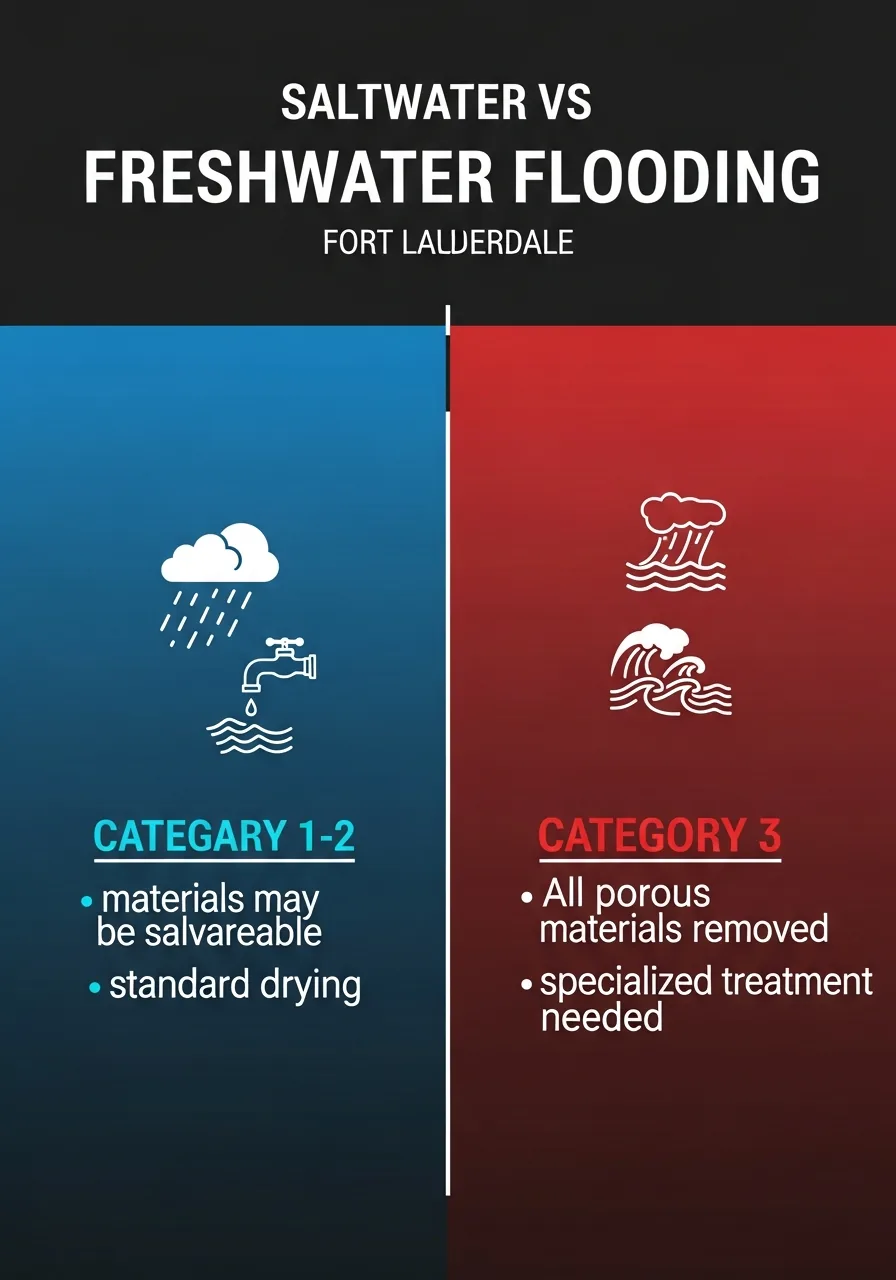
Infographic showing saltwater versus freshwater flooding damage in Fort Lauderdale canal-front homes with IICRC water contamination categories
Fort Lauderdale's North New River Canal connects to Lake Okeechobee — during storm events, water shifts between saltwater and freshwater, creating toxic brackish conditions that require the most aggressive restoration protocols.
Our Fort Lauderdale Process

How We Restore Fort Lauderdale Homes After Water Damage

Every water damage event is different, but the science follows a proven sequence. Here is exactly what happens when you call Palm Build.

01

Emergency Dispatch

Under 30 Minutes

Call (754) 600-3369 any time. Our Deerfield Beach dispatcher sends a crew with truck-mounted extraction equipment — we reach most Fort Lauderdale neighborhoods in under 30 minutes, including Las Olas, Coral Ridge, Imperial Point, and Sailboat Bend.

02

Damage Assessment

First 2 Hours

IICRC-certified technicians deploy infrared thermal imaging and pin-type moisture meters to map water migration — behind CBS stucco walls, under tile floors, into HVAC plenums. For canal-adjacent homes, we test for saltwater contamination to determine IICRC water category and protocol.

03

Water Extraction

Hours 2-6

Truck-mounted systems pull hundreds of gallons per hour from the structure. Fort Lauderdale homes with slab-on-grade foundations trap water under floating floors and in the lowest points — subsurface extraction tools reach moisture that portable units miss entirely.

04

Structural Drying

3-5 Days

Commercial LGR dehumidifiers pulling 15-30 gallons per day and high-velocity air movers create a controlled drying environment. In Fort Lauderdale's 80%+ humidity, natural drying is impossible — our equipment creates conditions that would never exist naturally in South Florida.

05

Mold Prevention

During Drying

EPA-registered antimicrobials applied during the drying process. We isolate HVAC systems early — Fort Lauderdale AC units run 10-11 months per year and will distribute mold spores through every room if not shut down and treated during water damage response.

06

Full Restoration

1-4 Weeks

Drywall, flooring, baseboard, painting, and structural work — all to HVHZ (High Velocity Hurricane Zone) building code standards. For Fort Lauderdale homes in Mediterranean Revival or mid-century modern communities, we match original architectural details including stucco textures and tile work.

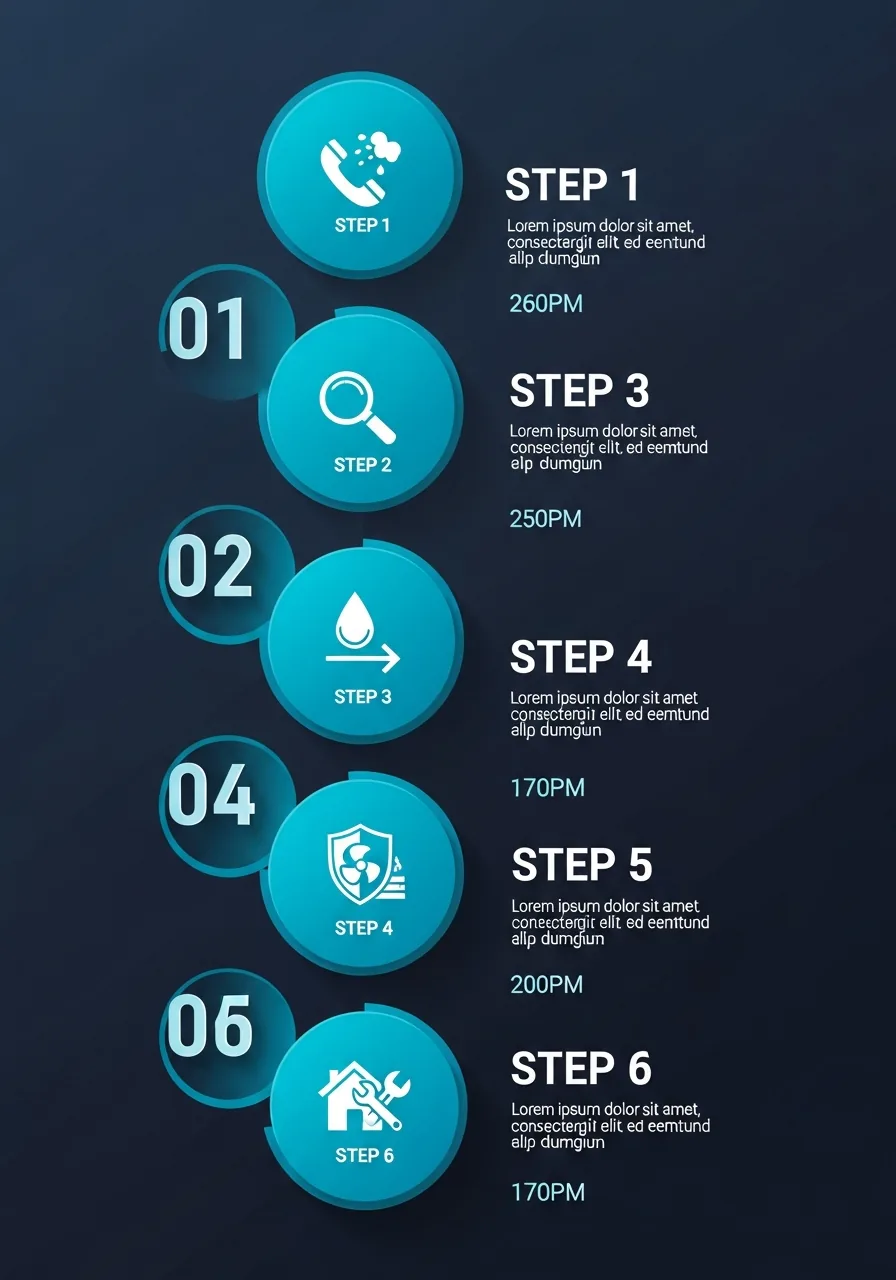
Infographic showing Palm Build's 6-step water damage restoration process for Fort Lauderdale FL homes

Why Our Fort Lauderdale Process Works

1

Canal City Expertise

We understand CBS construction, stucco intrusion, and Fort Lauderdale's canal flood dynamics

2

Under 30 Minutes

Deerfield Beach hub to your Fort Lauderdale home — faster than any competitor

3

Scientific Drying

Daily moisture readings until every material hits dry standard in FLL's 80%+ humidity

4

Insurance-First Documentation

Photo, thermal, and moisture documentation formatted for FL's strict claims deadlines

Schedule an Assessment

Damage Patterns

How Water Damages Fort Lauderdale Homes

Fort Lauderdale's unique combination of aging CBS construction, subtropical climate, and canal proximity creates damage patterns found nowhere else. Understanding the source determines the restoration approach.

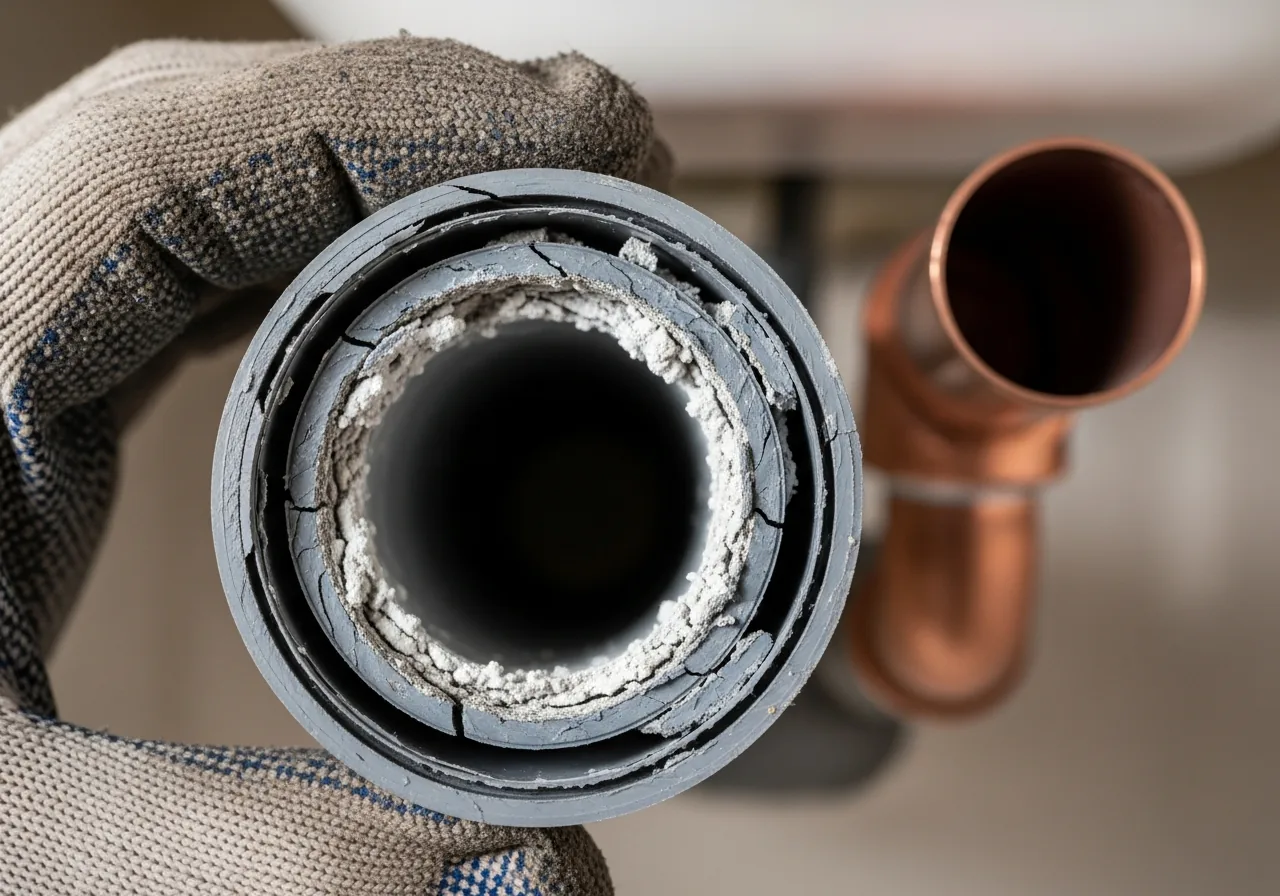
Close-up of degraded polybutylene plumbing pipe showing interior deterioration in a Fort Lauderdale home built in the 1980s

Polybutylene Pipe Failures

Homes built 1978-1995

Polybutylene piping installed in Fort Lauderdale homes during this era degrades from chlorinated municipal water, causing sudden catastrophic ruptures without warning. Imperial Point, Victoria Park, and Coral Ridge neighborhoods have high concentrations. A single poly pipe burst can release hundreds of gallons in minutes.

Areas: Imperial Point, Victoria Park, Coral Ridge, Lauderdale Manors Critical
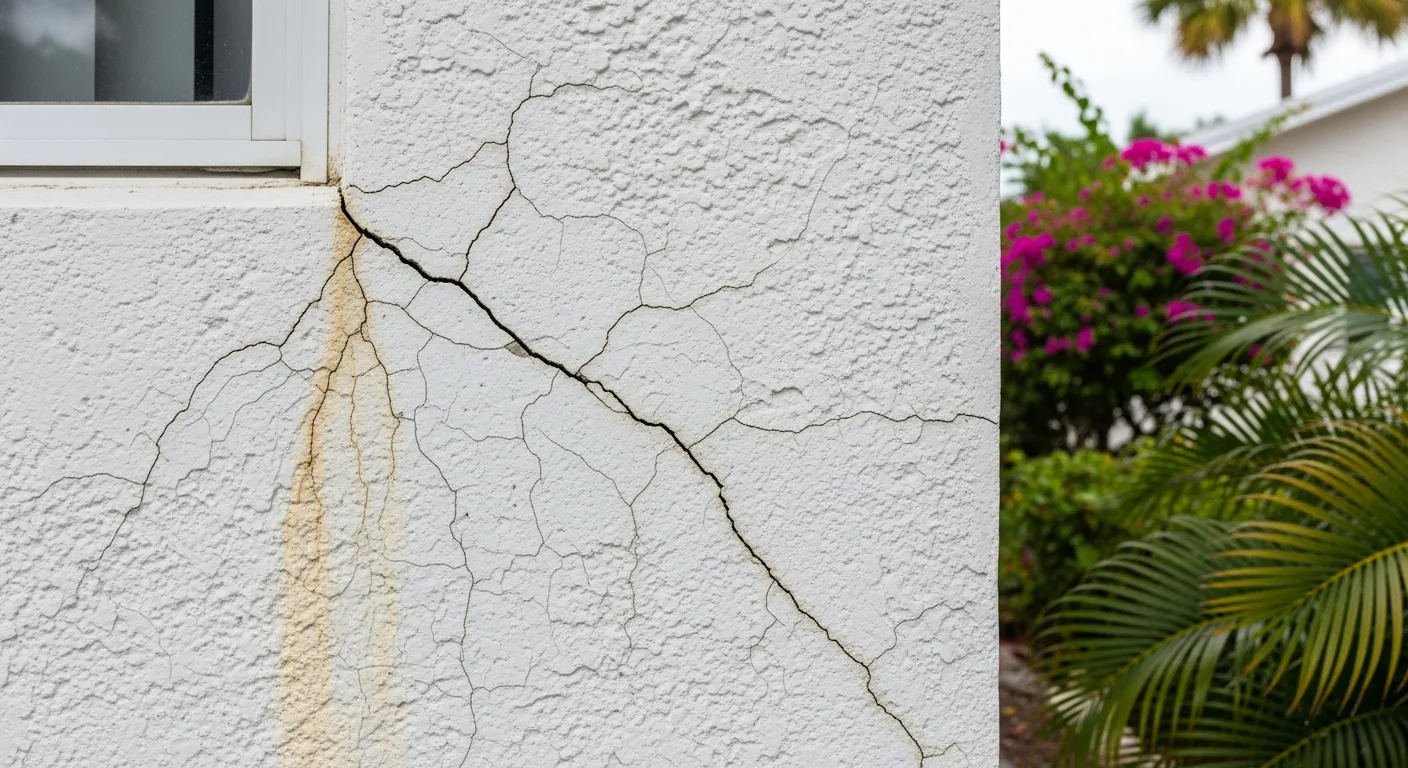
Hairline cracks in aged stucco exterior on a CBS concrete block home in Fort Lauderdale Florida showing water intrusion pathways

Stucco Water Intrusion

All CBS homes

CBS stucco exteriors develop hairline cracks from decades of thermal cycling and hurricane-force winds. Water penetrates behind the stucco and saturates the block wall cavity — creating hidden moisture pockets that feed mold growth behind interior drywall. This is the most common hidden water damage source in Fort Lauderdale.

Areas: Citywide — especially pre-1980 construction High
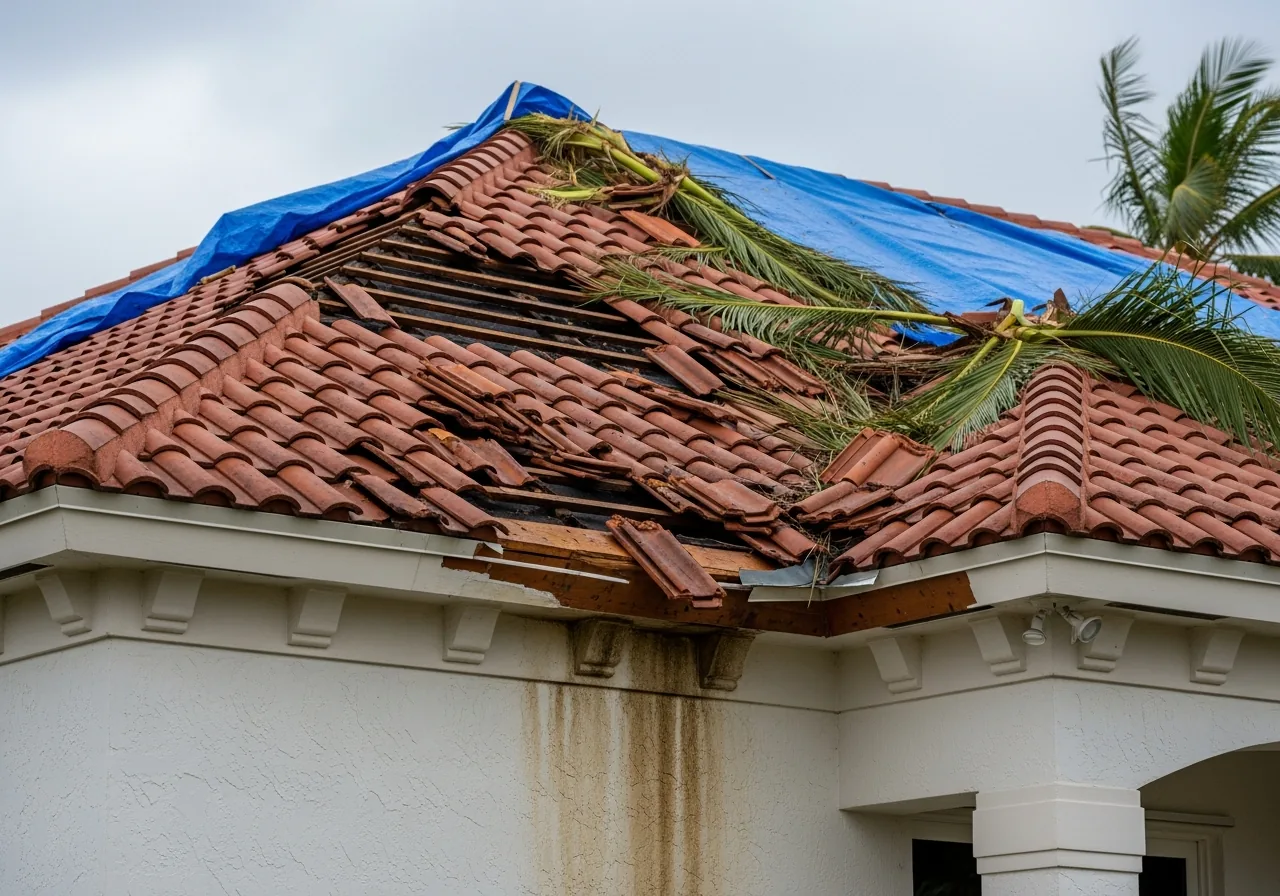
Wind-driven rain intrusion through displaced clay barrel tile roof on a Fort Lauderdale home during hurricane season

Hurricane Wind-Driven Rain

June - November

Hurricanes push rain horizontally through any compromised building envelope — displaced roof tiles, failed window seals, stucco cracks, soffit gaps. The combination of wind and rain simultaneously creates water intrusion in areas that remain dry during normal rainfall events.

Areas: Coastal: Harbor Beach, Las Olas Isles, Fort Lauderdale Beach Seasonal Critical
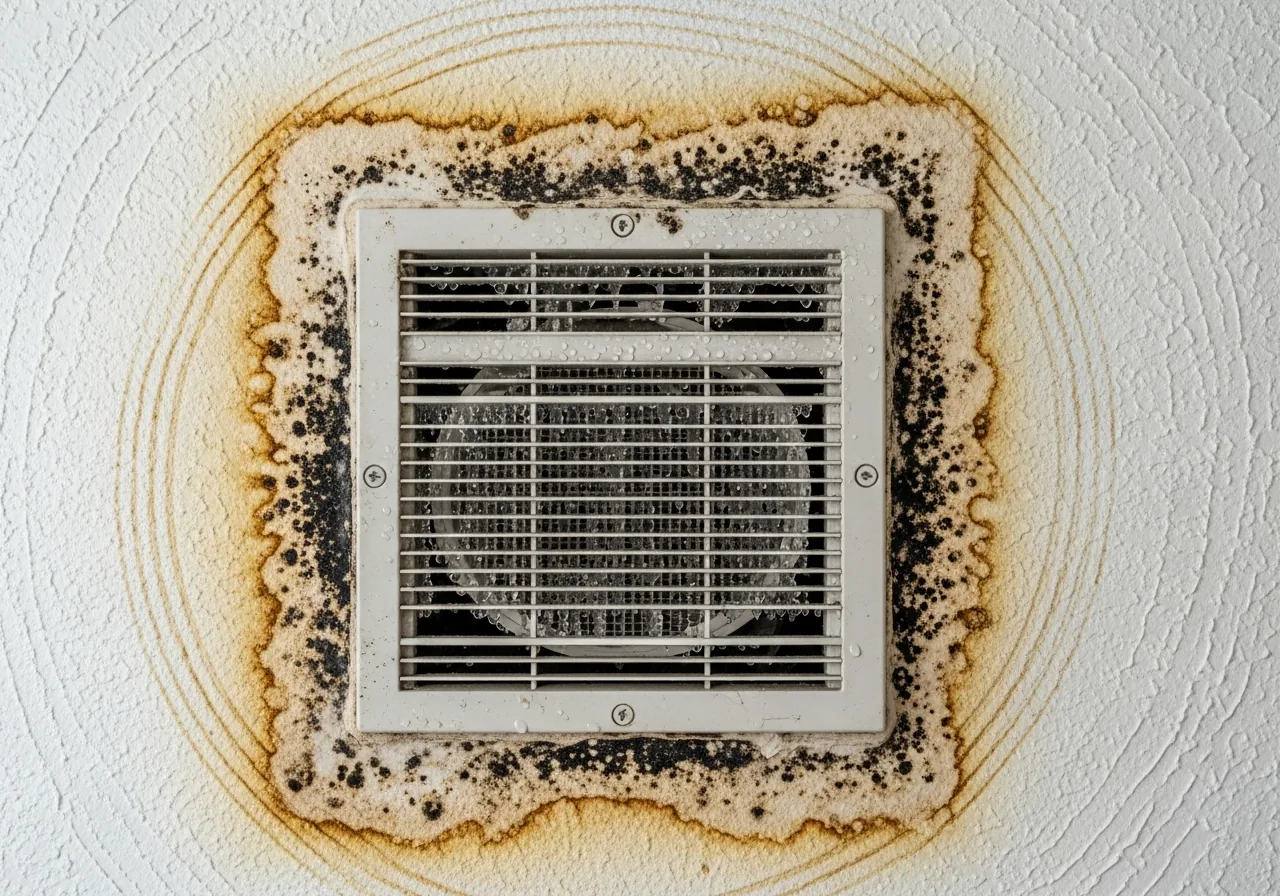
HVAC air handler closet showing condensate overflow and mold growth from blocked drain line in Fort Lauderdale Florida home

HVAC Condensation & Drain Failures

Year-round (peaks May-Oct)

Fort Lauderdale AC systems run 10-11 months per year. Clogged condensate drain lines, cracked drip pans, and oversized units that short-cycle produce standing moisture in air handlers. This water feeds mold colonies that the ductwork distributes to every room. HVAC-related water damage is the most underdiagnosed issue in Fort Lauderdale homes.

Areas: Citywide — affects all construction eras High
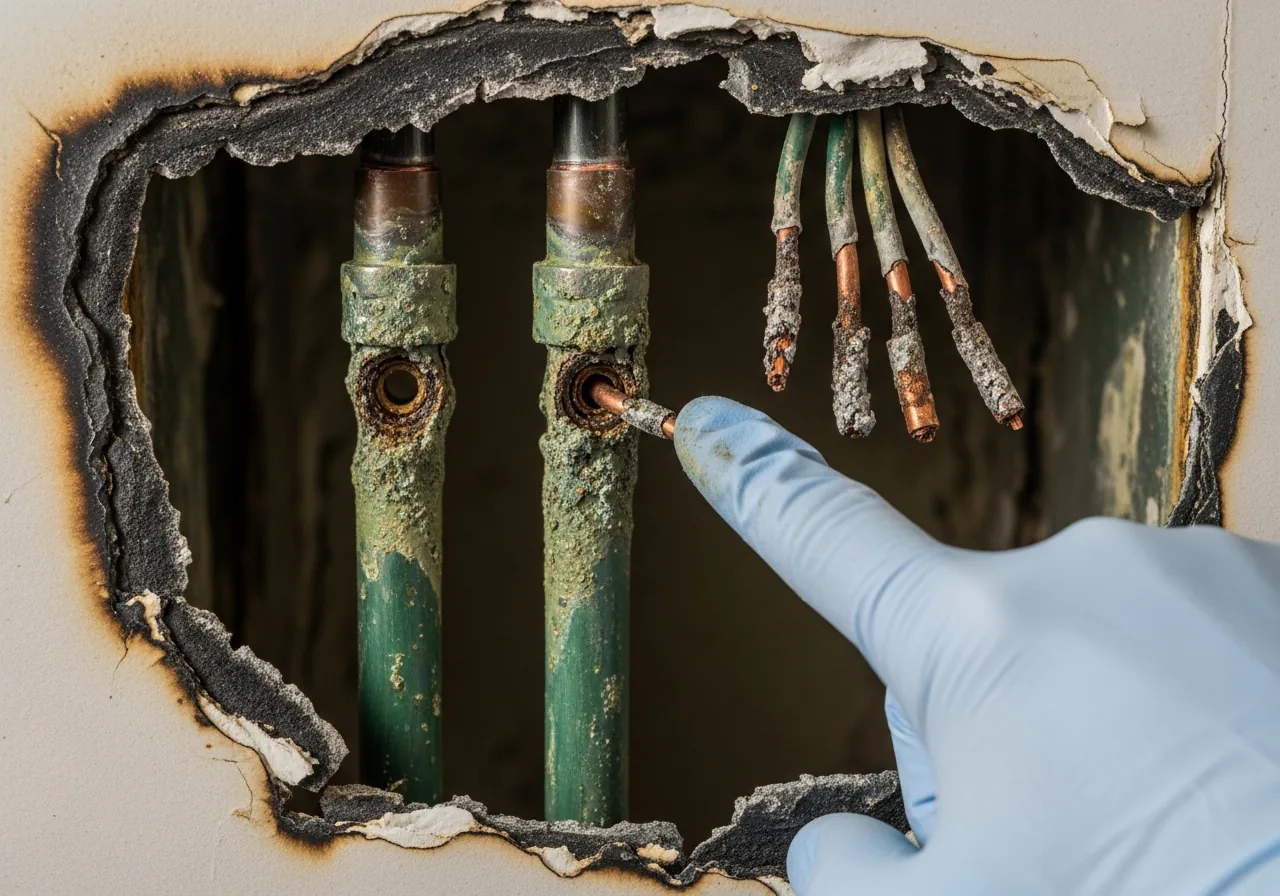
Corroded copper plumbing and blackened drywall from Chinese drywall hydrogen sulfide emissions in a Fort Lauderdale FL home

Chinese Drywall Moisture Damage

Homes built/renovated 2001-2008

Fort Lauderdale homes built or renovated between 2001 and 2008 may contain defective Chinese-imported drywall. Florida accounted for over 60% of all U.S. consumer complaints. CDW emits hydrogen sulfide that corrodes copper plumbing, causing pinhole leaks and eventual water damage — on top of the drywall itself requiring full replacement.

Areas: Construction-era dependent — scattered citywide Moderate
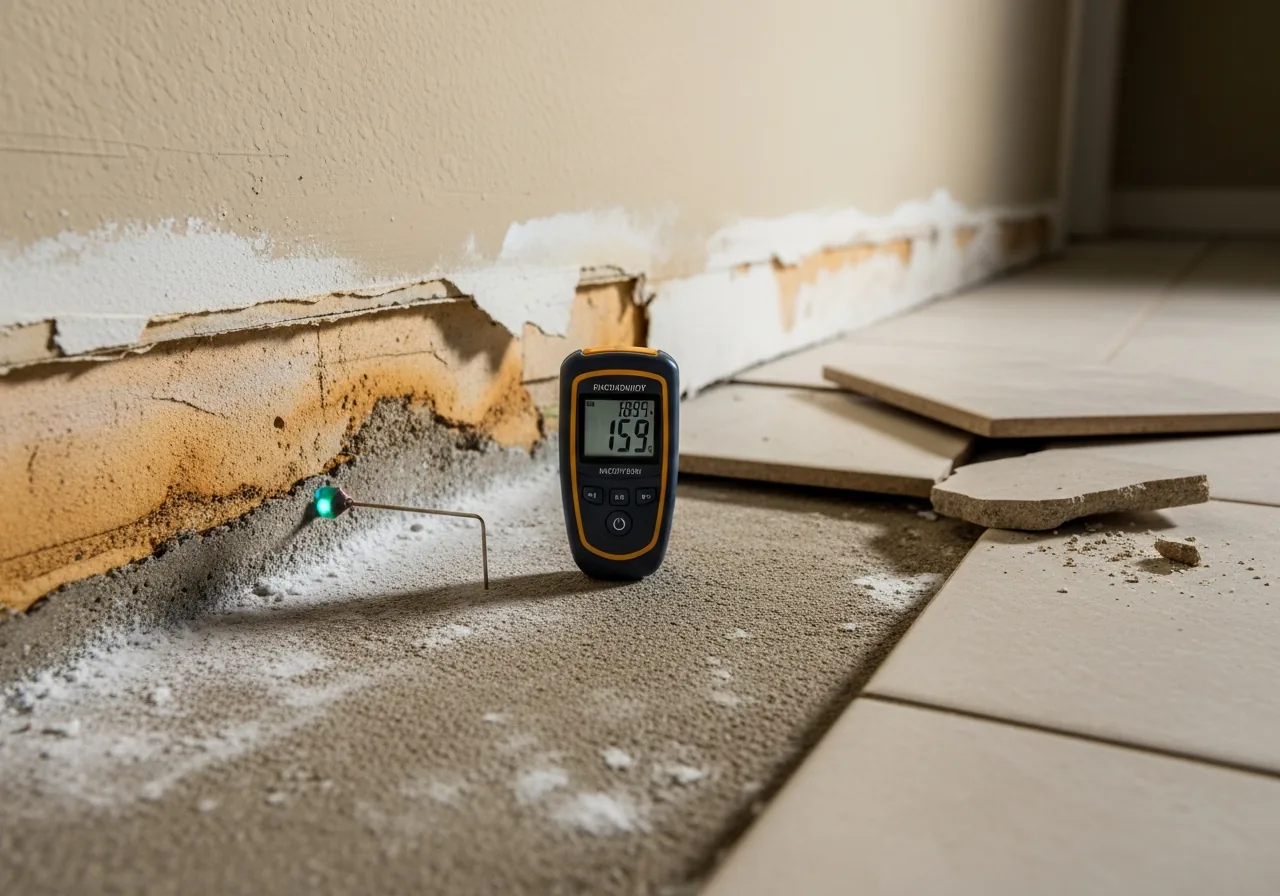
Moisture damage at the base of interior walls from slab vapor transmission in a Fort Lauderdale Florida home without proper vapor barrier

Slab Moisture Vapor Transmission

All slab-on-grade homes

South Florida's high water table means concrete slabs perpetually transmit vapor upward. Without proper vapor barriers — absent in many older Fort Lauderdale homes — flooring and wall bases remain chronically damp, creating conditions for mold growth that appears unrelated to any specific water event.

Areas: Citywide — worse in low-lying areas near canals Chronic

Fort Lauderdale Pricing

Water Damage Restoration Costs in Fort Lauderdale

Fort Lauderdale's HVHZ building codes, premium labor market, and saltwater flood exposure mean restoration costs run 30-60% above national averages. Here is what drives the numbers — and why cutting corners in this market costs more long-term.

Damage TypeNational AvgFort Lauderdale

Standard Water Damage

Burst pipe, appliance failure, single room or zone

$7,500 - $18,000$11,500 - $34,000

Multi-Room Flooding

Major pipe failure, storm intrusion, multiple rooms affected

$15,000 - $35,000$24,000 - $55,000

Saltwater Flooding

Storm surge, canal overflow with saltwater contamination

$25,000 - $50,000$35,000 - $90,000+

Post-Hurricane Restoration

Wind-driven rain + flooding + roof damage combination

$30,000 - $75,000$45,000 - $120,000+

What Drives Fort Lauderdale's Higher Costs

HVHZ Building Code

+15-25%

Broward County enforces the strictest hurricane construction standards in the nation. Every repair must meet these standards.

Specialized CBS Labor

+10-20%

CBS/stucco restoration requires tradespeople experienced with concrete block, stucco finishing, and tile roof systems.

Saltwater Premium

+40-60%

Saltwater contamination requires full material removal, specialized antimicrobial treatment, and corrosion mitigation.

Insurance Documentation

Included

Under FL AOB reform, detailed Xactimate estimates, thermal imaging, and daily moisture logs are essential for carrier approval.

Fort Lauderdale Damage Calendar

When Fort Lauderdale Homes Are Most at Risk

Fort Lauderdale's damage patterns follow a predictable seasonal rhythm. Understanding your risk month-by-month helps you prepare — and react faster when damage strikes.

Tap a month above to see Fort Lauderdale's seasonal risk profile

Updated July 2024

Know Your Fort Lauderdale Flood Zone

Broward County updated its FEMA Flood Insurance Rate Maps in July 2024. Your flood zone determines your insurance requirements, your risk exposure, and the restoration protocols we use when your home floods. Find your zone below.

April 2023 Changed Everything

The April 12-13, 2023 "Rain Bomb" dropped 25.91 inches in 12 hours — a 1-in-1,000-year event. Homes in every flood zone were affected, including 766 with major damage. Fort Lauderdale's drainage system, designed 80 years ago to handle 3-7 inches per day, was overwhelmed completely. If your home is in Fort Lauderdale, flood insurance is not optional — regardless of your FEMA zone designation.

Florida Insurance Guide

Fort Lauderdale Water Damage Insurance Claims

Florida's insurance landscape is the most complex and volatile in the nation. Fort Lauderdale homeowners pay some of the highest premiums in the country — and face strict deadlines that can void even legitimate claims. Here is what you need to know.

1-Year Claim Deadline

Fla. Stat. § 627.70132

New property insurance claims must be filed within 1 year of the date of loss. This is a strict notice requirement — miss it, and your claim is barred regardless of merit. This deadline was reduced from 2 years under prior Florida law.

18-Month Supplemental Deadline

Fla. Stat. § 627.70132

Supplemental claims (additional damage discovered after initial filing) must be filed within 18 months of the date of loss. Hidden water damage behind CBS walls or under slab — common in Fort Lauderdale — often requires supplemental claims.

AOB Reform — January 2023

SB 2A (2022)

Florida law now prohibits Assignment of Benefits on residential policies issued or renewed after January 1, 2023. You cannot sign over your claim to a restoration company. You must coordinate directly with your insurer — Palm Build provides documentation to make this manageable.

Common Fort Lauderdale Insurance Carriers

CarrierAvg PremiumNote
State Farm$4,970/yrCheapest major option
Nationwide$5,209/yrCompetitive pricing
Security First$5,552/yrFL-focused
American Integrity$10,797/yrFL specialty
Florida Peninsula$11,332/yrRegional carrier
Citizens$27,898/yrLast resort; $700K cap

Hurricane Deductible Warning

Most Fort Lauderdale policies carry 2-5% hurricane deductibles. On the median $617,000 home, that means $12,340 - $30,850 out-of-pocket before coverage activates. Separate flood insurance (NFIP or private) is required for rising water — standard homeowners policies exclude it entirely.

Our Work in Fort Lauderdale

Fort Lauderdale Water Damage Restoration Gallery

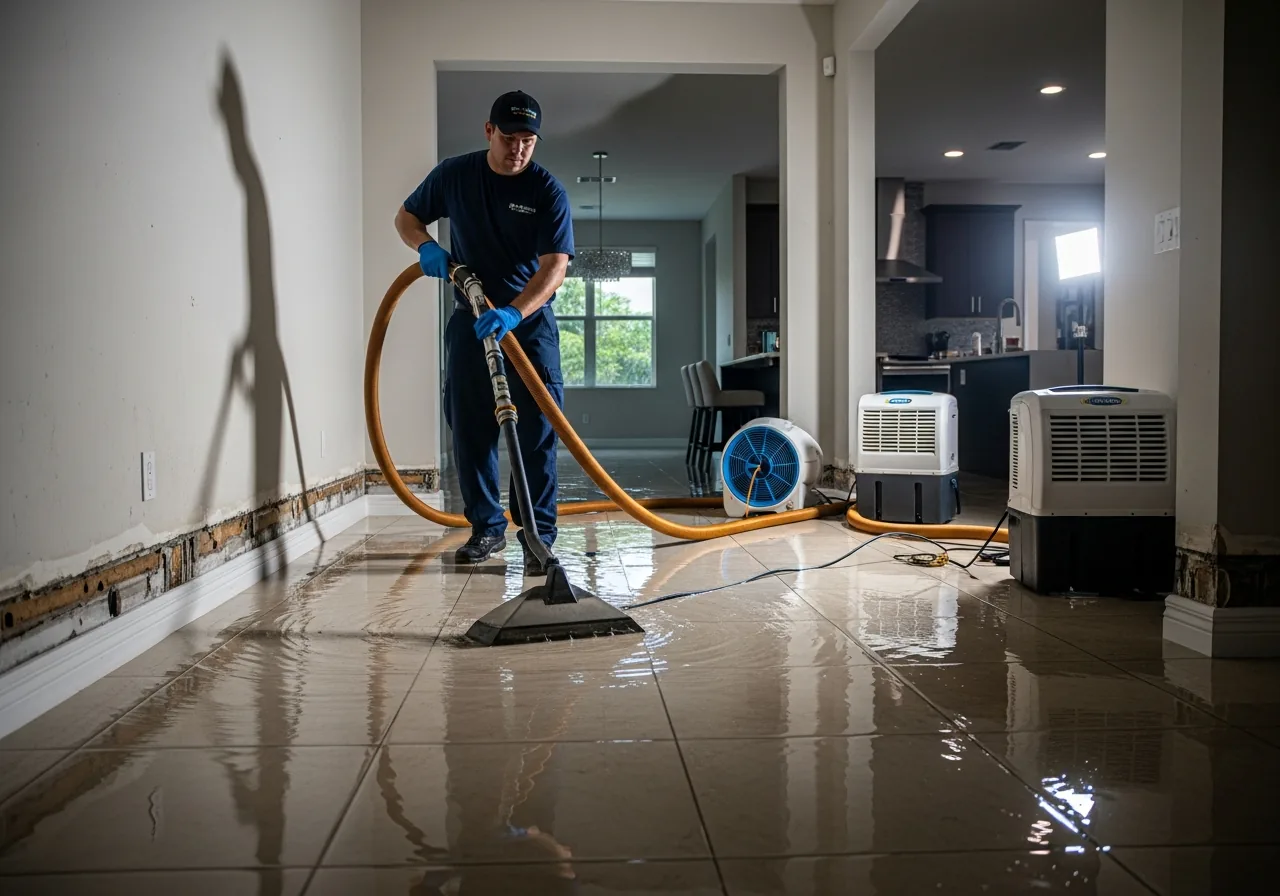
Palm Build technician performing water extraction with truck-mounted equipment in a Fort Lauderdale CBS stucco home with tile floors
Truck-mounted extraction in a Las Olas Isles CBS home — removing hundreds of gallons per hour from slab-on-grade tile floors.
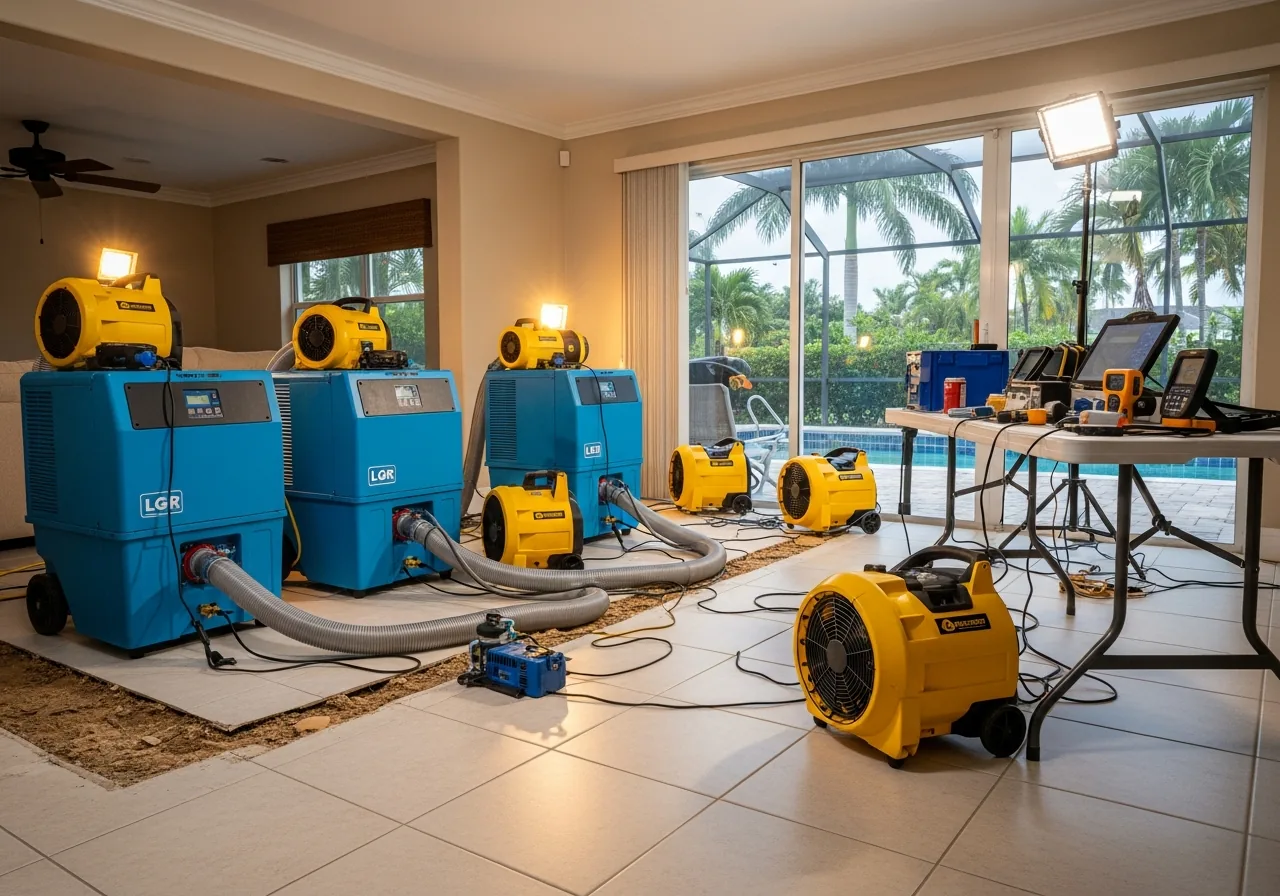
Commercial LGR dehumidifiers and air movers positioned for structural drying in a water-damaged Fort Lauderdale Florida living room
Commercial LGR dehumidifiers pulling 15-30 gallons per day — essential in Fort Lauderdale where humidity exceeds 80% during rainy season.
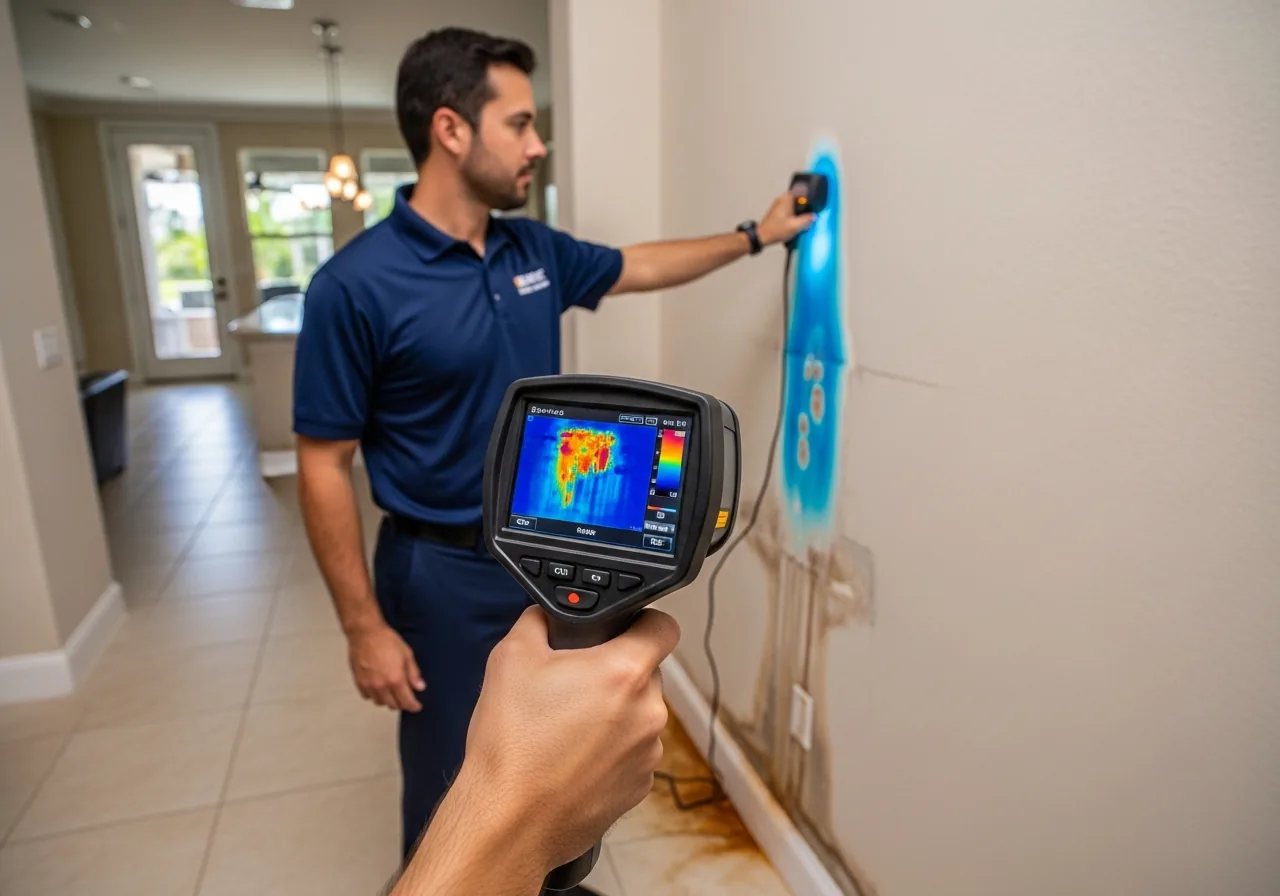
IICRC-certified technician using infrared thermal imaging camera to detect hidden moisture behind CBS stucco walls in Fort Lauderdale home
Infrared thermal imaging reveals water trapped behind CBS stucco walls — invisible to the naked eye but feeding mold growth.
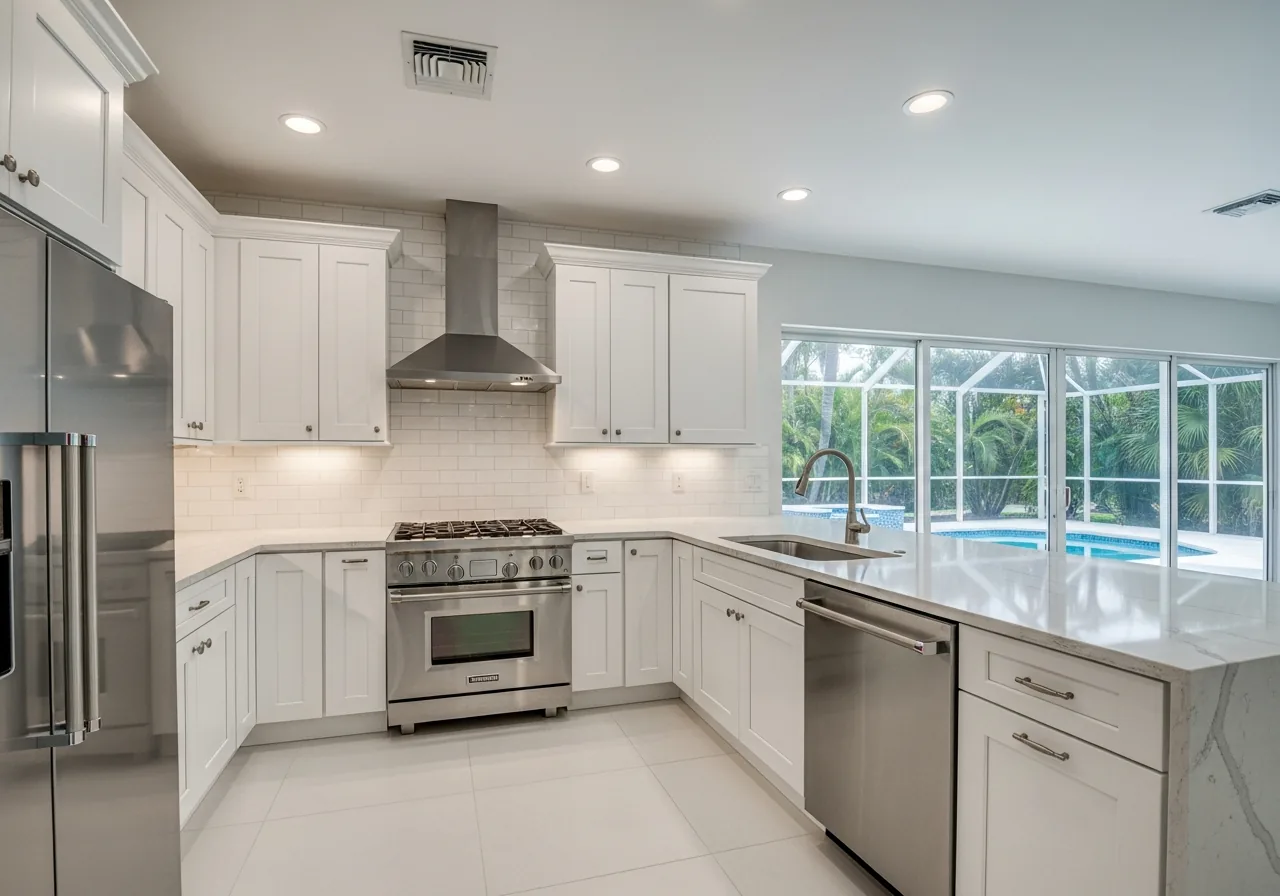
Fully restored modern kitchen in a Fort Lauderdale home after water damage from a burst polybutylene pipe with new cabinetry and tile flooring
Full kitchen restoration in Coral Ridge after catastrophic polybutylene pipe failure — returned to pre-loss condition in 3 weeks.

Why Palm Build

Fort Lauderdale's Water Damage Restoration Experts

National franchises deploy generic playbooks to every city. Palm Build was built for South Florida — we know Fort Lauderdale's canals, its construction, its insurance landscape, and the urgency that this climate demands.

Deerfield Beach — Minutes Away

Our South Florida operations hub at 5051 NW 13th Ave in Deerfield Beach is less than 15 minutes from most Fort Lauderdale neighborhoods. No competitor in the market can match our response time to the entire Fort Lauderdale service area.

Under 30-Minute Response

Water damage escalates by the hour. Our dispatch system gets crews rolling immediately — not after a call center routes you. We arrive with fully loaded trucks ready to extract, not assess and schedule a return visit.

IICRC Certified Team

Every Palm Build technician carries IICRC certifications in water damage restoration (WRT), applied structural drying (ASD), and applied microbial remediation (AMRT). We meet the standards Florida carriers require.

Insurance-First Documentation

Under Florida's AOB reform, you coordinate directly with your carrier. We make that manageable — thermal imaging, moisture maps, daily drying logs, and Xactimate estimates formatted for the adjuster's workflow from day one.

CBS & Stucco Specialists

Fort Lauderdale's CBS construction requires restoration teams that understand concrete block, stucco intrusion patterns, slab-on-grade moisture dynamics, and HVHZ code compliance. Generic companies miss the nuances that protect your home long-term.

Canal City Expertise

We understand saltwater vs. freshwater contamination, brackish canal water protocols, and the specific flood dynamics of Fort Lauderdale's 165+ mile canal system. This expertise changes the restoration approach — and the outcome.

Get a Free Assessment

Or call (754) 600-3369 for immediate emergency response

Common Questions

Fort Lauderdale Water Damage FAQ

How quickly can Palm Build respond to water damage in Fort Lauderdale?
Our Deerfield Beach operations hub is less than 15 minutes from most Fort Lauderdale neighborhoods. We typically arrive in under 30 minutes, 24/7/365. Our trucks carry truck-mounted extraction equipment, commercial LGR dehumidifiers, and air movers — we begin work immediately upon arrival.
Is canal flooding in Fort Lauderdale treated differently than a burst pipe?
Yes. Canal flooding in Fort Lauderdale often involves brackish water — a mix of salt and fresh water from the North New River Canal system connected to Lake Okeechobee. This is classified as Category 3 contamination under IICRC standards, requiring full removal of all porous materials (drywall, carpet, insulation). A burst pipe with clean water is typically Category 1, allowing more materials to be salvaged. The restoration approach, timeline, and cost differ significantly.
My Fort Lauderdale home was built in the 1970s — does that affect restoration?
Significantly. Homes built between 1978-1995 in Fort Lauderdale may contain polybutylene plumbing that degrades from chlorinated municipal water, causing sudden catastrophic failures. Pre-1980 CBS homes often have aging stucco with hairline cracks that allow water behind wall cavities where it's invisible until mold develops. We test for polybutylene and assess stucco integrity as part of every damage assessment in older Fort Lauderdale homes.
Does my Fort Lauderdale homeowners insurance cover water damage?
Most HO-3 policies cover sudden, accidental water damage (burst pipes, appliance failures) but exclude flood damage from rising water — that requires separate NFIP or private flood insurance. Florida law (Fla. Stat. 627.70132) requires claims within 1 year of loss, supplemental claims within 18 months. Hurricane deductibles in Fort Lauderdale are typically 2-5% of dwelling coverage — on a $617,000 home, that is $12,340-$30,850 out-of-pocket before coverage activates.
What was the April 2023 Fort Lauderdale flooding event?
On April 12-13, 2023, Fort Lauderdale received 25.91 inches of rain in approximately 12 hours — classified as a 1-in-1,000-year rainfall event. The city's drainage system, designed 80 years ago to handle 3-7 inches per day, was completely overwhelmed. 766 homes sustained major damage with 18+ inches of water inside. Fort Lauderdale-Hollywood International Airport closed. Water rescues were conducted in the Edgewood neighborhood. This event demonstrated why every Fort Lauderdale homeowner should have both flood insurance and a restoration company on speed dial.
How does Fort Lauderdale's humidity affect water damage restoration?
Fort Lauderdale's relative humidity regularly exceeds 80% during the rainy season (May-October) and rarely drops below 60% even in winter. Natural air drying is simply impossible here. Professional commercial LGR dehumidifiers pulling 15-30 gallons per day are mandatory to achieve dry standard within the 24-48 hour mold-safe window. Without them, you are virtually guaranteed secondary mold damage.
What is the difference between saltwater and freshwater flooding in Fort Lauderdale?
Saltwater flooding from storm surge or Intracoastal overflow is IICRC Category 3 — the most contaminated category. All porous materials must be removed and replaced. Salt residue continues corroding metals for weeks after apparent drying. Freshwater flooding from rain or plumbing may be Category 1 or 2, allowing more salvage. Fort Lauderdale's unique canal system often produces brackish (mixed) water during storm events, which we treat as Category 3 for safety.
How much does water damage restoration cost in Fort Lauderdale?
Standard water damage restoration (burst pipe, appliance failure) in Fort Lauderdale typically ranges from $11,500 to $34,000 depending on the affected area and materials. Complex projects involving saltwater contamination, HVAC system damage, or extensive mold can range from $28,000 to $90,000+. Fort Lauderdale's premium market, specialized labor requirements, and HVHZ building code compliance contribute to higher costs than national averages.

Water Emergency in Fort Lauderdale?

Our Deerfield Beach team is minutes away. Call now for 24/7 emergency water damage restoration — truck-mounted extraction, commercial drying, saltwater remediation, and insurance-ready documentation from IICRC-certified technicians who know Fort Lauderdale's canals, construction, and climate.

Under 30 min Response IICRC Certified