FORT LAUDERDALE FL — DBPR LICENSED MOLD REMEDIATION
Mold Remediation in Fort Lauderdale, Florida
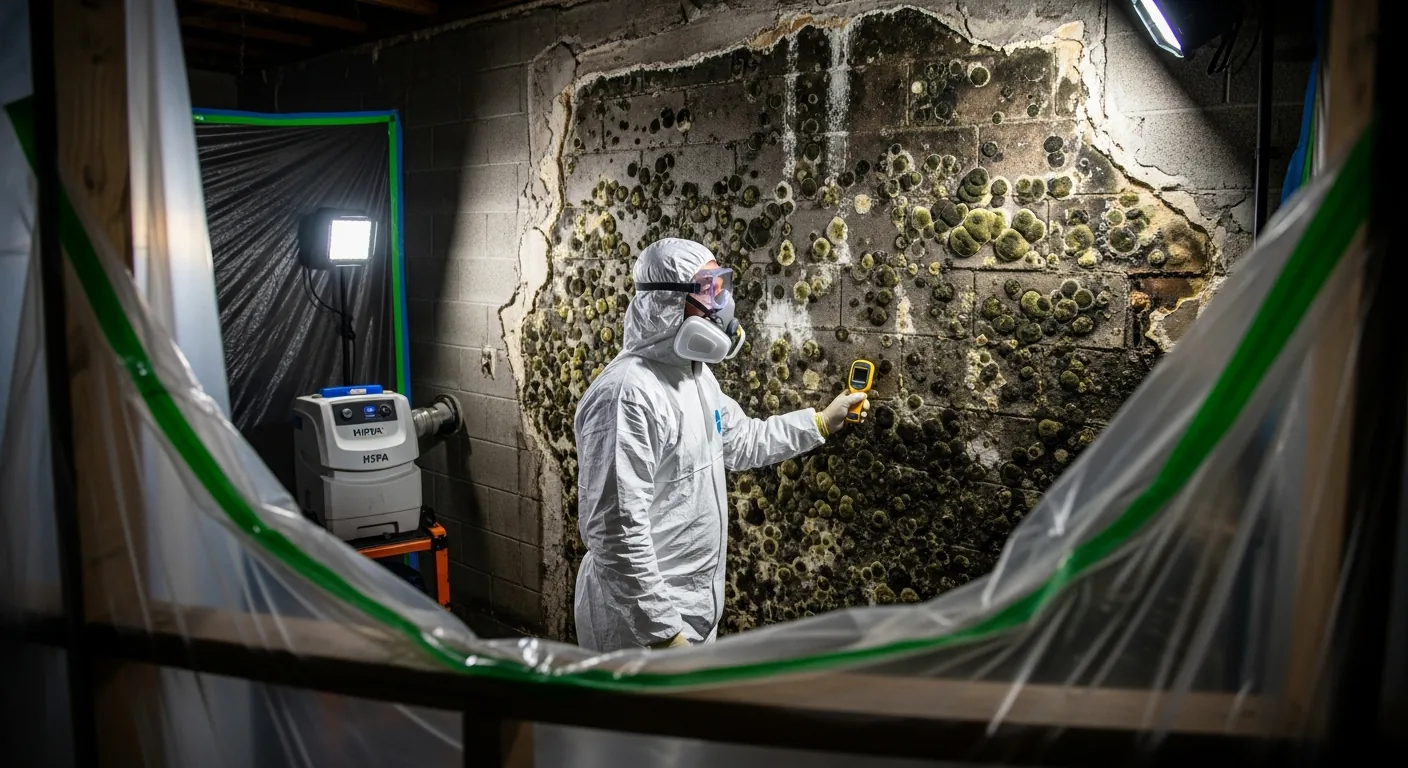
The Venice of America's 165+ miles of canals, year-round subtropical humidity above 80%, and near-constant AC operation create relentless mold pressure on every home and condo. Palm Build's DBPR-licensed team provides professional containment, remediation, and prevention — with documentation your insurance carrier accepts.
Deerfield Beach — Minutes from Fort Lauderdale Same day Response IICRC Certified
Fort Lauderdale's specific combination of year-round subtropical humidity, near-constant
AC operation, aging CBS stucco construction, and slab-on-grade foundations creates some
of the highest baseline mold risk of any city in Florida. Understanding why is the first
step toward permanent remediation — not just cosmetic cleanup.
Year-Round 80%+ Humidity
80%+
Peak rainy season RH
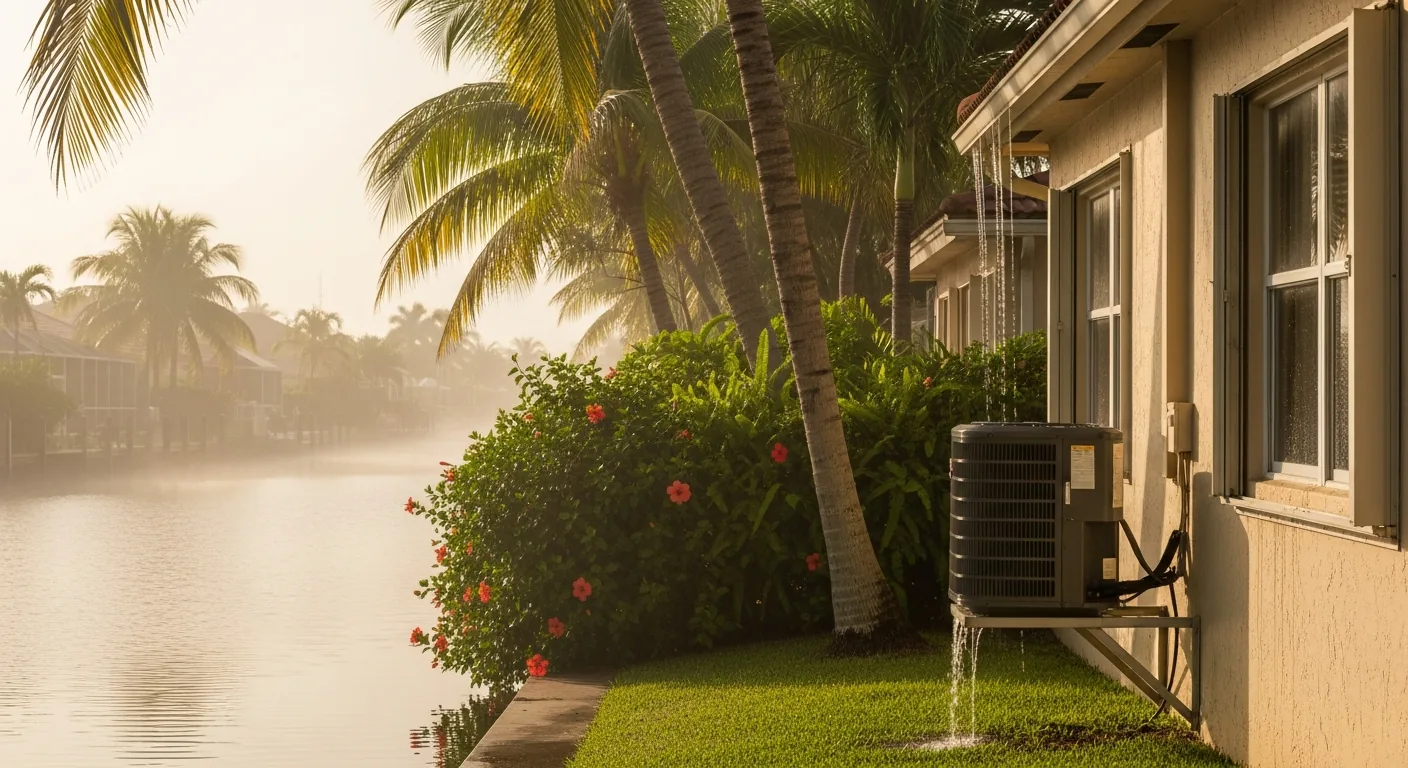
Fort Lauderdale's subtropical climate pushes relative humidity above 80% during the May-October rainy season and rarely drops below 60% even in winter. With 66 inches of annual rainfall — 66% above the national average — and 165+ miles of canals adding ambient moisture, building materials in Fort Lauderdale never fully dry. This constant moisture pressure creates permanent mold-friendly conditions inside walls, ceilings, and HVAC systems.
HVAC Condensation Cycles
10-11 mo
AC runs per year
Air conditioning runs 10-11 months per year in Fort Lauderdale — the longest runtime of any major Florida city. Each cooling cycle generates condensation on evaporator coils, drip pans, and ductwork interiors. Clogged condensate drain lines, cracked drip pans corroded by salt air, and oversized units that short-cycle are Fort Lauderdale's #1 hidden mold source — feeding colonies inside your air handler before you ever see or smell them.
CBS Stucco Moisture Trapping
62%
Pre-1980 housing
62% of Fort Lauderdale's housing stock was built before 1980 using CBS (concrete block and stucco) construction. Decades of thermal cycling, hurricane vibration, and salt air exposure have created hairline cracks invisible to the eye. Driving rain pushes water through these micro-cracks, trapping moisture between the block wall and interior drywall — an environment where mold thrives unseen for months until colonies are well established.
Slab Vapor Transmission
Chronic
Slab moisture driver
Fort Lauderdale sits on a limestone substrate with a high water table — basements don't exist here. Slab-on-grade foundations transmit ground moisture upward through capillary action, a process called moisture vapor transmission. This chronic dampness at the slab-floor junction feeds mold along baseboards, under flooring, and inside bottom plates of walls — a persistent mold driver that many homeowners never identify until a professional assessment.
Fort Lauderdale's 165+ miles of residential canals add constant ambient moisture to
neighborhoods already battling 80%+ humidity — creating the highest baseline mold risk
in Broward County.
Know The Signs
Warning Signs of Mold in Fort Lauderdale Homes
Fort Lauderdale mold problems rarely announce themselves with a dramatic event. In CBS
stucco homes with year-round AC operation, mold grows silently inside walls, HVAC
systems, and beneath flooring for months — until health symptoms or visible damage force
a professional inspection.
Musty AC Odor When System Cycles On
Most Reported
The most common first sign in Fort Lauderdale homes. When mold colonizes inside your air handler, evaporator coil housing, or ductwork, every room carries a musty, earthy odor when the AC runs. Because Fort Lauderdale's AC systems operate nearly year-round, many homeowners become nose-blind to the smell and stop noticing it — guests often notice immediately.
Dark Spots Behind Furniture on Exterior Walls
Advanced
In CBS stucco homes, exterior walls trap moisture between the concrete block and interior drywall. Furniture placed against these walls reduces airflow and creates a microclimate where mold thrives. Dark spots, discoloration, or fuzzy growth behind bookshelves, dressers, or headboards against exterior walls is a hallmark of Fort Lauderdale mold problems.
Bubbling or Peeling Paint at Wall Bases
Structural
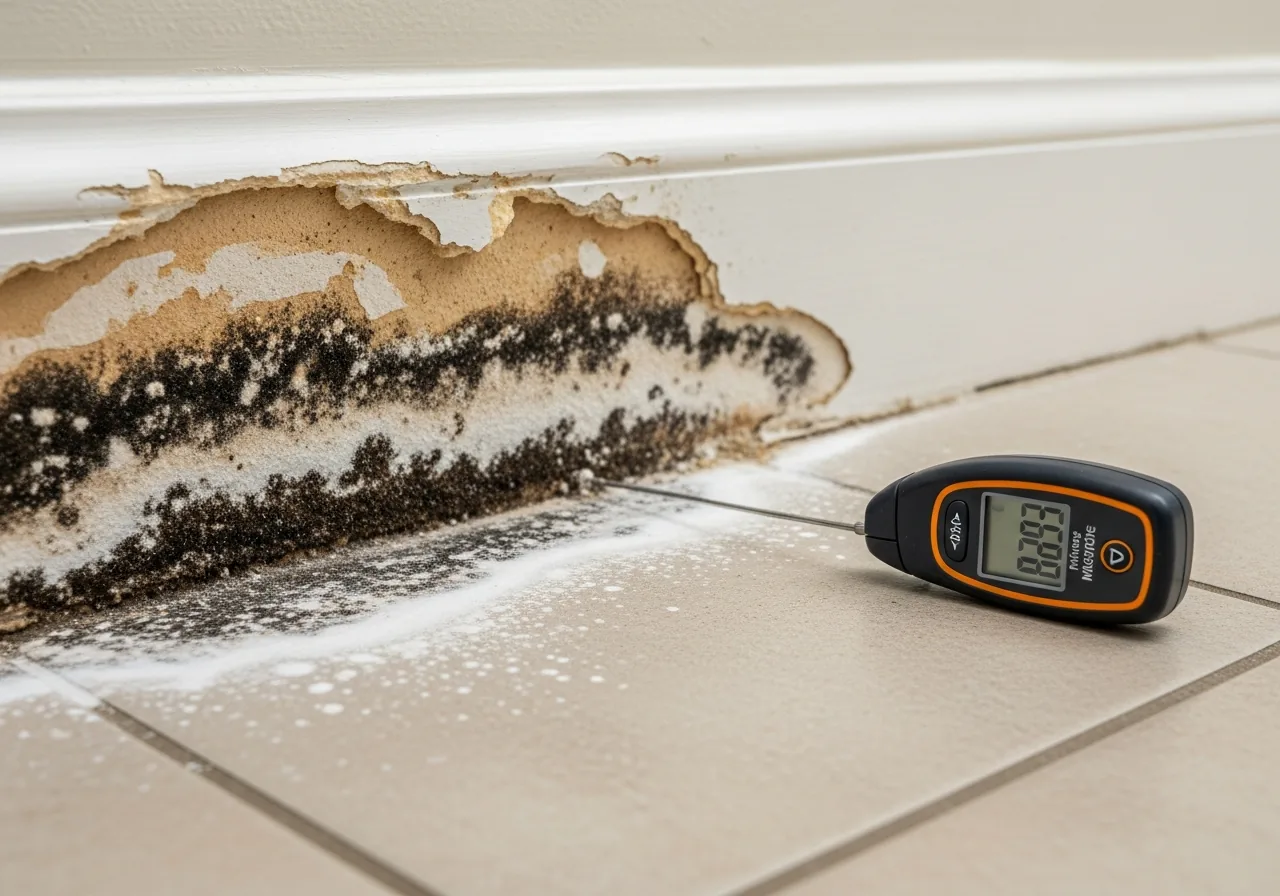
Paint bubbling, peeling, or flaking at the base of interior walls — especially on exterior-facing walls — signals moisture vapor transmission from the slab or ground moisture wicking up through CBS block. This is chronic in Fort Lauderdale homes without proper vapor barriers and indicates mold growth behind the visible surface.
Discoloration Around HVAC Supply Vents
HVAC Issue
Black, dark green, or gray spotting on ceilings or walls around AC supply registers and return air grilles indicates mold inside the ductwork and air handler. If mold is visible on the exterior surfaces of vents, contamination inside the HVAC system is typically far more extensive — the blower fan has been distributing spores to every room.
Allergic Reactions That Worsen at Home
Health Risk
Persistent sinus congestion, throat irritation, eye watering, or allergy symptoms that improve when you leave home and worsen when you return — especially when the AC cycles on — indicate airborne mold spore contamination. Children and residents with asthma or compromised immune systems often show symptoms first.
Condensation on Interior Windows
Early Warning
Persistent condensation on the interior surface of windows — especially single-pane windows in older Fort Lauderdale homes — indicates excessive indoor humidity that your AC system is failing to control. This is often caused by an oversized unit that short-cycles, a failing condensate drain, or insufficient dehumidification capacity. Where there is chronic condensation, mold is usually nearby.
When to Call Immediately
If you see mold covering more than 10 square feet, mold on AC registers or inside
air handlers, recurring musty odor from every vent, water staining on multiple walls
after storms, or family members with worsening respiratory symptoms — do not attempt
DIY cleanup. Contact a DBPR-licensed mold remediation professional and document everything for your insurance claim.
IICRC S520 Protocol
Our Fort Lauderdale Mold Remediation Process
Professional mold remediation follows a strict sequence defined by the IICRC S520
standard and Florida DBPR regulations. Here is exactly what happens when Palm Build's
licensed team arrives at your Fort Lauderdale home.
01
Assessment & Testing
Day 1
02
Containment Setup
Day 1-2
03
HEPA Air Filtration
Continuous
04
Removal & Cleaning
Days 2-4
05
Antimicrobial Treatment
Days 4-5
06
Clearance Verification
Day 5-6
01
Assessment & Testing
Day 1
Comprehensive visual inspection, infrared moisture mapping, and air quality sampling. We identify the moisture source — HVAC condensation, slab vapor transmission, stucco intrusion, or plumbing failure — and classify contamination level per IICRC S520. Florida law requires a separate DBPR-licensed mold assessor for the initial report.
02
Containment Setup
Day 1-2
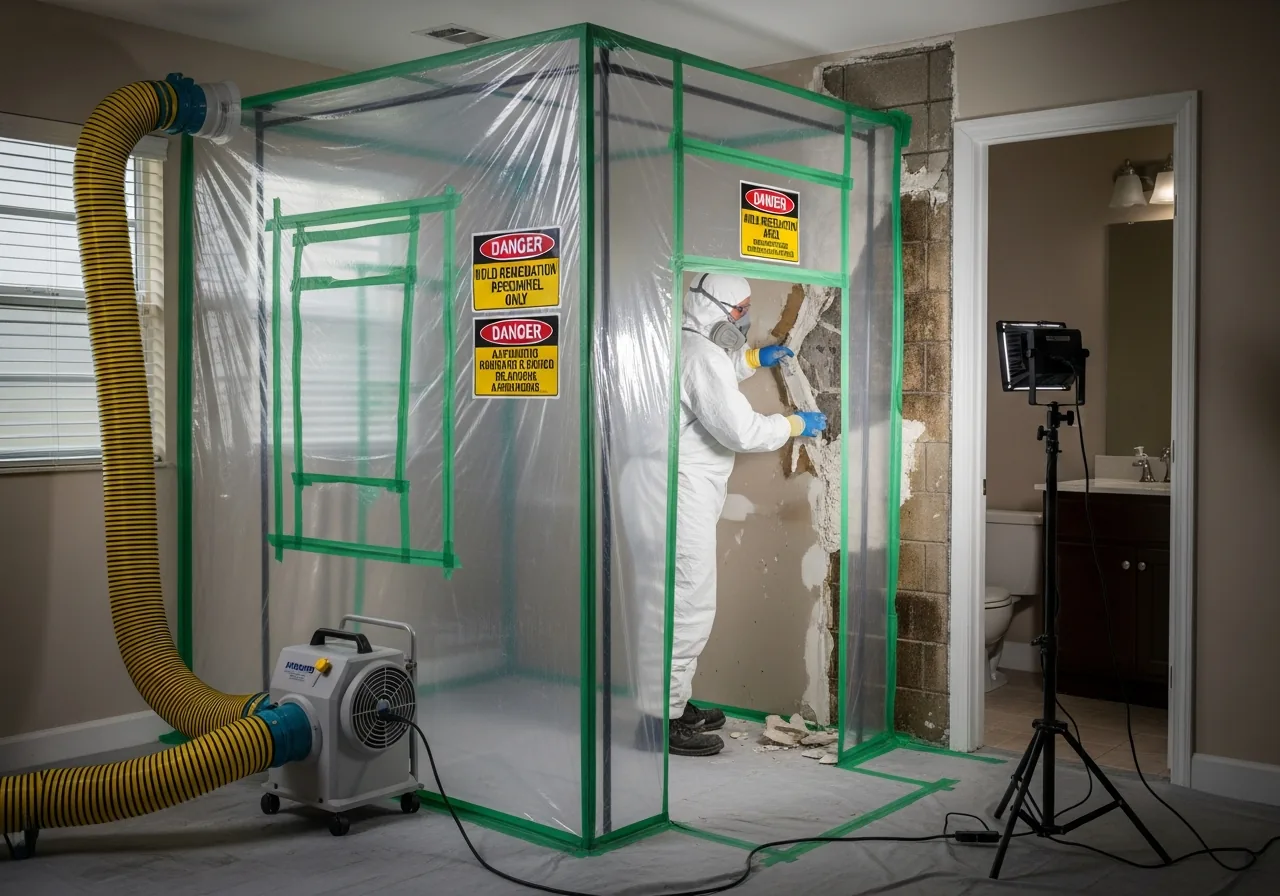
Sealed polyethylene containment barriers isolate affected areas, including CBS wall cavities and HVAC system components. In Fort Lauderdale canal-front homes, containment must account for the elevated ambient humidity that accelerates spore dispersal. HEPA air scrubbers create negative air pressure to prevent migration.
03
HEPA Air Filtration
Continuous
HEPA filtration runs throughout the project, capturing spores down to 0.3 microns. In Fort Lauderdale homes with HVAC contamination — the city's #1 mold source — the entire duct system is isolated and filtered separately to prevent recontamination of cleaned areas during remediation.
04
Removal & Cleaning
Days 2-4
Contaminated materials are removed using controlled demolition. Affected drywall on CBS walls, contaminated HVAC components (evaporator coils, drip pans, ductwork), impacted insulation, and mold-damaged flooring from slab vapor issues are removed. Salvageable surfaces are HEPA-vacuumed and media blasted.
05
Antimicrobial Treatment
Days 4-5
EPA-registered antimicrobial agents are applied to all treated surfaces. For CBS construction, this includes interior block wall faces, window bucks, slab edges, and any areas where moisture intrusion was identified. HVAC components receive specialized coil and duct treatment to prevent recolonization.
06
Clearance Verification
Day 5-6
Post-remediation air quality testing by an independent DBPR-licensed mold assessor confirms spore counts have returned to acceptable levels. Florida's conflict-of-interest rule requires this clearance come from a different licensed assessor than the remediator. Documentation is provided for your records and insurance carrier.
Why Containment Matters in Fort Lauderdale's Climate
Disturbing mold without proper containment sends billions of spores airborne. In Fort
Lauderdale's high-humidity environment, those spores find viable growth surfaces
within hours — and the HVAC system can distribute them to every room within minutes.
Our containment protocol ensures mold stays isolated during removal.
1
Sealed Barriers
Polyethylene sheeting floor-to-ceiling on CBS walls
HVAC Condensation Mold: The Hidden Crisis in Fort Lauderdale Homes
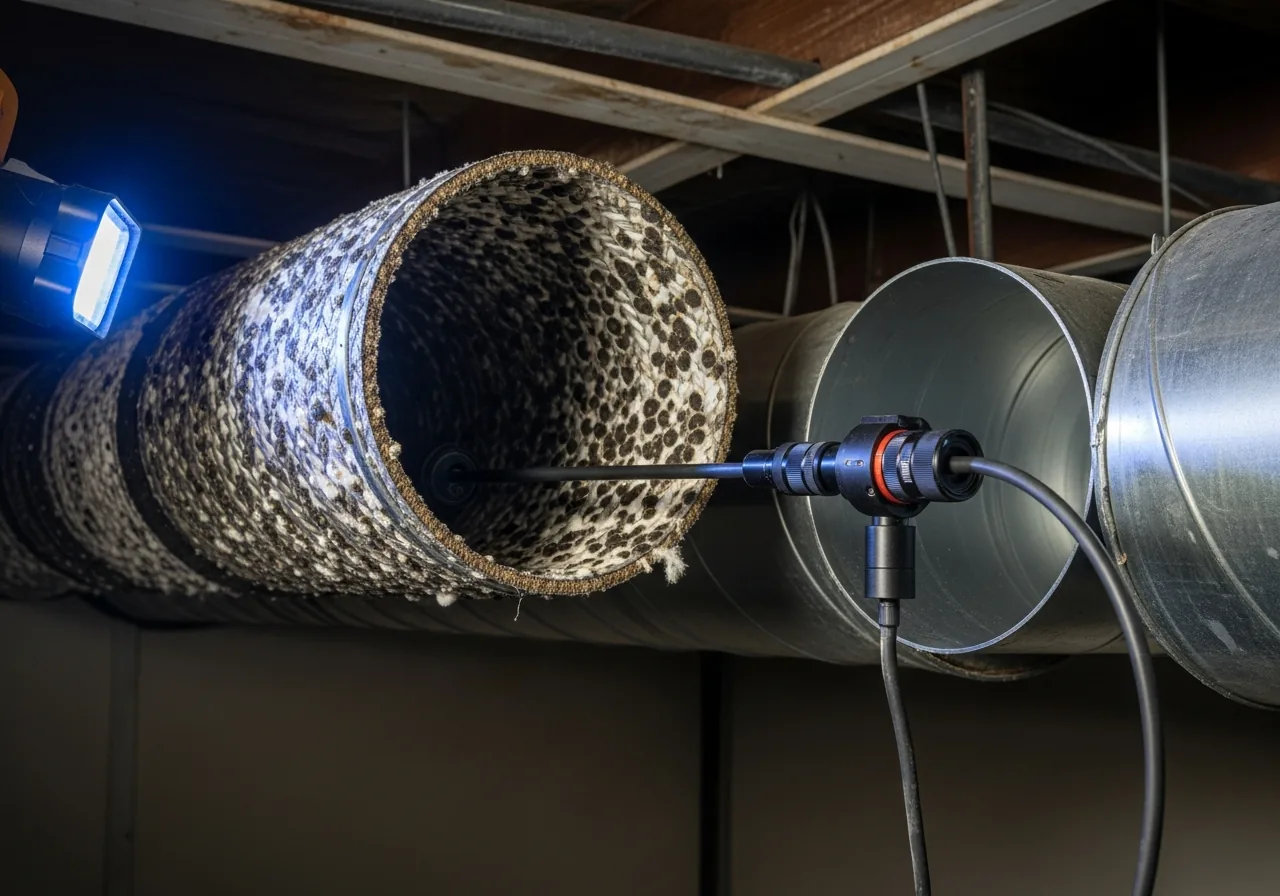
In Fort Lauderdale, the air conditioning system itself is the primary mold vector. AC
units running 10-11 months per year generate constant condensation — more than any other
major Florida city due to the canal-amplified humidity. When drainage fails, that
moisture feeds mold inside your air handler, evaporator coil housing, and ductwork —
distributing spores to every room before you ever see or smell them.
The four most common HVAC mold causes in Fort Lauderdale: clogged condensate drain lines that back up water into the drip pan, cracked or corroded drip pans from salt air exposure in coastal neighborhoods like Harbor Beach and Las Olas Isles, oversized AC units that short-cycle and never
properly dehumidify (a chronic problem in older Fort Lauderdale homes with replacement
units), and dirty evaporator coils that trap organic material where
mold feeds. Once established, the blower fan distributes mold spores to every room through
the duct system.
Indoor humidity (AC failure or short-cycling)75-85% RH
Mold colonization inside an air handler — the #1 hidden mold source in Fort Lauderdale
homes where AC runs 10-11 months per yearSalt air corrosion accelerates drip pan failure and condensate line deterioration in
Fort Lauderdale's coastal neighborhoods
Chinese Drywall + HVAC Mold
Fort Lauderdale homes built or renovated between 2001-2008 may contain Chinese
drywall, which emits sulfur compounds that corrode copper HVAC components. This
corrosion creates conditions that support secondary mold growth — combining two
problems into one. If your home has unexplained copper corrosion alongside mold,
Chinese drywall assessment is recommended.
FL Regulatory Landscape
Florida Mold Licensing: What Fort Lauderdale Homeowners Must Know
Florida has one of the strictest mold regulatory frameworks in the country. Under DBPR Chapter 468, Part XVI, the state requires separate licenses for mold
assessment and mold remediation — and explicitly prohibits the same company from
performing both on the same project within 12 months.
This conflict-of-interest separation prevents the company that finds the mold from
profiting by removing it. Florida mold assessors must carry $1 million in general
liability insurance, and mold remediators must demonstrate proof of financial
responsibility. Both licenses require continuing education and are enforced by the
Department of Business and Professional Regulation (DBPR). In Broward County, where
Fort Lauderdale's extreme humidity makes mold common, unlicensed operators are
unfortunately also common — verify credentials before hiring anyone.
Verify DBPR mold remediator license before hiring any company
Assessor and remediator MUST be separate licensed entities
Same company cannot assess and remediate within 12 months
Post-remediation clearance must come from a different licensed assessor
Check license status at myfloridalicense.com — free and instant
Full liability insurance and workers' comp coverage
Coordinates with independent FL-licensed assessors for clearance
Deerfield Beach hub — minutes from all Fort Lauderdale neighborhoods
Red Flags to Watch For
No DBPR mold license or refuses to provide license number
Same company offers to assess AND remediate your mold
Offers to "spray and seal" without removing contamination
No containment barriers or HEPA filtration during work
Claims "no license needed" in Florida (false)
Fort Lauderdale Pricing
Mold Remediation Costs in Fort Lauderdale
Costs vary by contamination extent, materials affected, and whether HVAC system work is
needed. Florida insurance policies often cap mold coverage at $10,000 — full HVAC mold
remediation and CBS wall restoration in Fort Lauderdale frequently exceed these limits.
Small / Contained Area
Bathroom, closet, single wall section, window frame
$2,500 - $8,000
Moderate / Multi-Room
Multiple rooms, CBS wall cavities, attic, crawl areas
Air handler, evaporator coil, ductwork contamination
$5,000 - $15,000
Why Fort Lauderdale Mold Costs Run Higher Than National Averages
South Florida mold remediation costs typically exceed national averages due to several
Fort Lauderdale-specific factors: CBS (concrete block and stucco) construction requires
specialized demolition and restoration techniques that wood-frame specialists lack. HVAC
system contamination — the most common mold type in Fort Lauderdale — adds air handler,
evaporator coil, and ductwork scope to the project. Florida's mandatory separate-assessor
requirement adds independent testing costs at both pre- and post-remediation phases.
Canal-adjacent homes in neighborhoods like Las Olas Isles and Seven Isles often have
elevated ambient moisture that complicates drying. However, proper remediation prevents
far more expensive structural damage, health consequences, and property value losses.
Insurance Navigation
Mold Insurance Claims in Fort Lauderdale
Mold coverage in Florida is limited and has become more restrictive following recent
insurance reforms. Understanding your coverage — including the $10,000 typical cap,
post-AOB reform changes, and strict filing deadlines — can save Fort Lauderdale
homeowners thousands.
Mold resulting from a covered sudden water event (burst pipe, appliance failure) is typically covered up to your policy's mold sublimit
Most Florida policies cap mold coverage at $10,000 — HVAC mold and CBS wall remediation in Fort Lauderdale frequently exceed this limit
Mold from gradual moisture, humidity, HVAC condensation, slab vapor transmission, or long-term stucco intrusion is almost always excluded
Chinese drywall-related mold claims (2001-2008 homes) have specific exclusions in many Florida policies
Florida's 1-year claim filing deadline (Fla. Stat. 627.70132) is strictly enforced — delayed reporting can void otherwise valid claims
Some Florida carriers offer mold endorsements for additional premium — ask your agent about expanded coverage before you need it
Post-AOB reform (2023 SB 2-A) changed claim assignment rules — but professional documentation connecting mold to a covered water event remains critical for successful claims
Palm Build's Approach to Fort Lauderdale Mold Claims
When mold results from a covered water event, our documentation connects the mold to the
original loss — moisture maps, timeline photos, air quality reports, and remediation
scope all formatted for the adjuster. We understand post-AOB reform requirements,
Florida's strict 1-year claim deadline, and Broward County-specific claim patterns. For
mold not covered by insurance (HVAC condensation, humidity, gradual moisture), we
provide transparent pricing and financing options.
These are the most common mold presentations we encounter in Fort Lauderdale's CBS
stucco homes — from HVAC system contamination to slab vapor-driven baseboard mold.
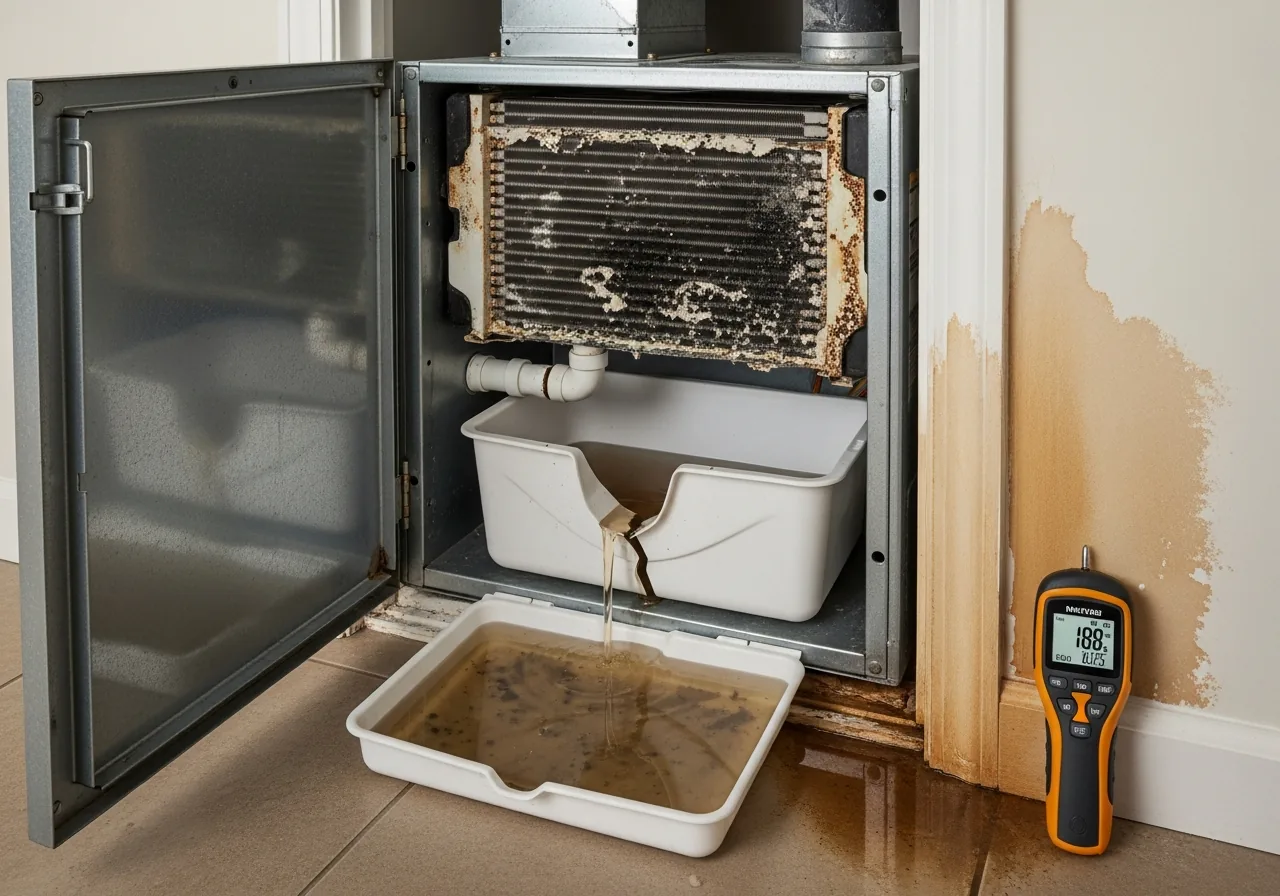
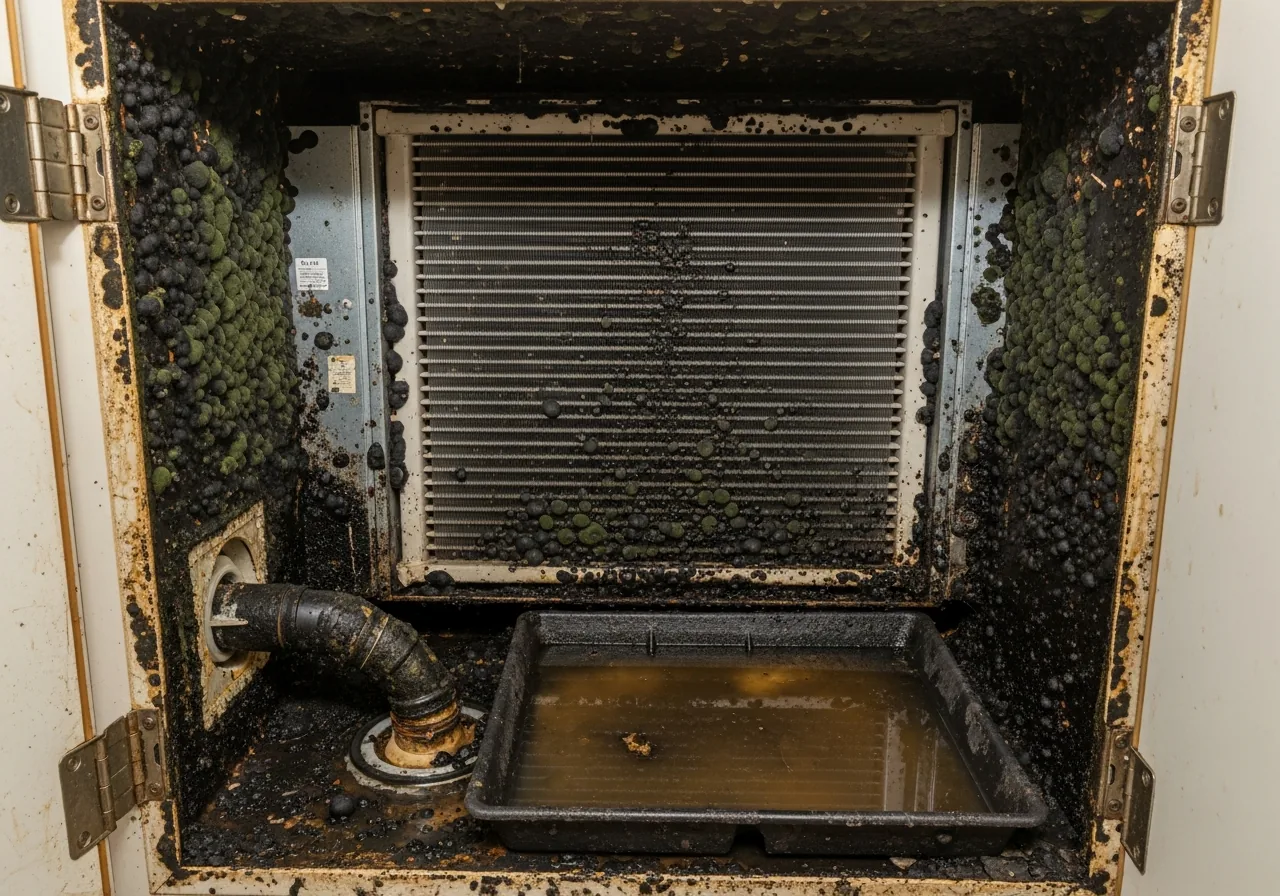
HVAC closet mold — condensate drain failure feeds mold inside the air handler, the #1 hidden mold source in Fort Lauderdale
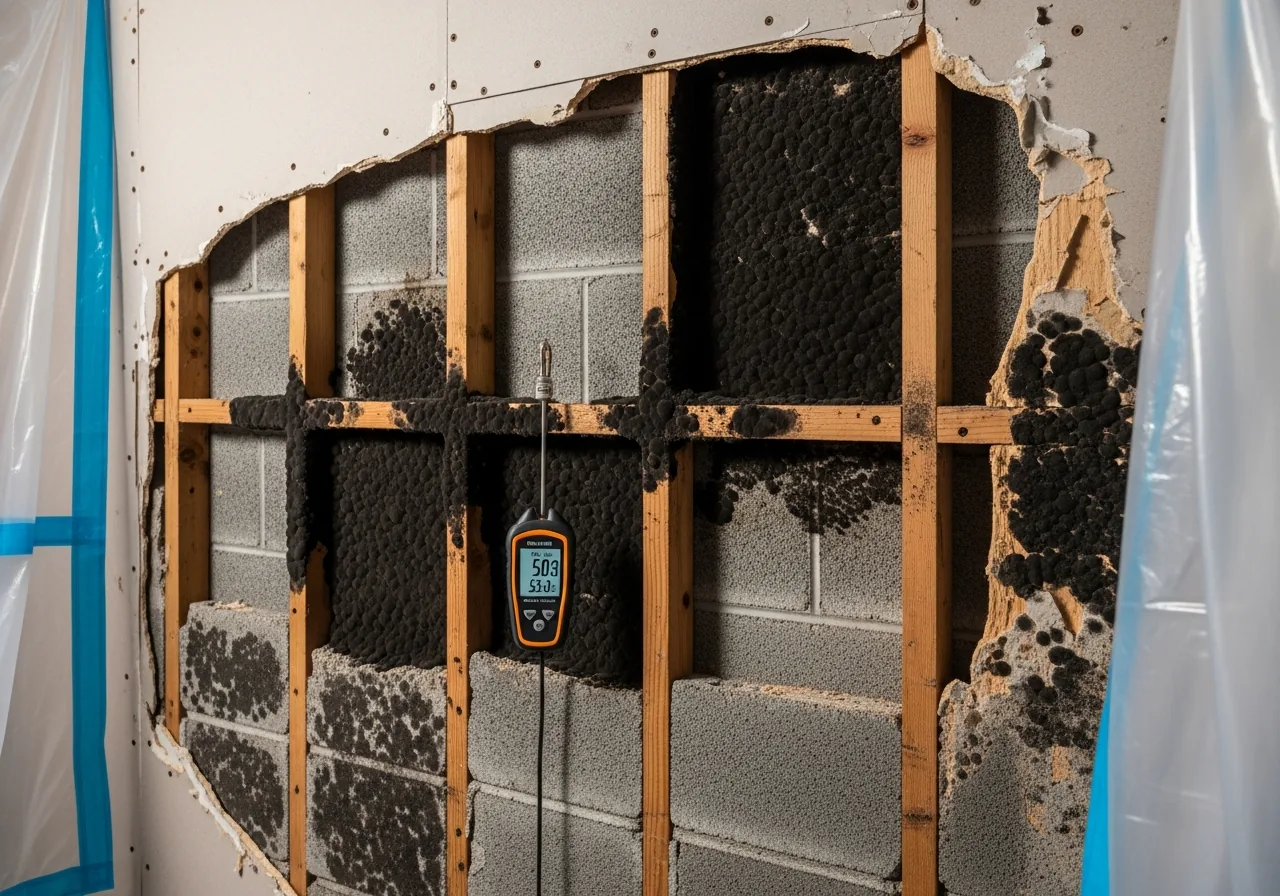
Mold colonization behind drywall on CBS wall — invisible until professional inspection reveals moisture-trapped colonies
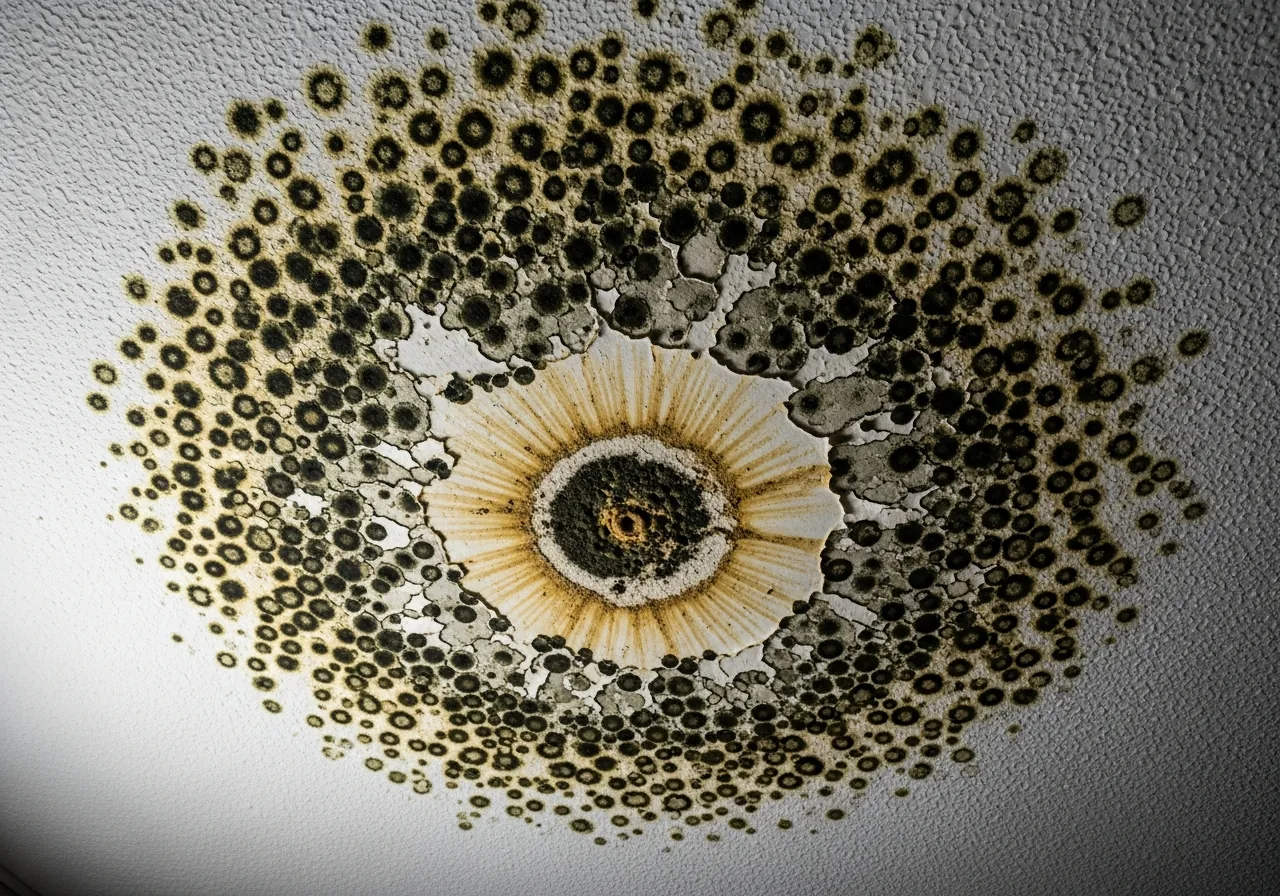
Ceiling mold from flat roof leak — common in Fort Lauderdale ranch-style homes with aging flat roof sections
Baseboard mold from slab moisture vapor transmission — a chronic mold driver in Fort Lauderdale slab-on-grade homes
The Palm Build Difference
Why Fort Lauderdale Homeowners Choose Palm Build for Mold
Deerfield Beach Proximity
Our South Florida Operations Hub at 786 S Military Trail, Deerfield Beach is minutes from every Fort Lauderdale neighborhood — Las Olas Isles, Harbor Beach, Coral Ridge, Victoria Park, Imperial Point, and everywhere in between. Same-day mold inspections for urgent situations.
IICRC AMRT Certified
Every Palm Build crew lead carries current IICRC Applied Microbial Remediation Technician (AMRT) certification — the industry gold standard for mold remediation. Our protocols follow IICRC S520 standards for professional mold remediation.
FL DBPR Licensed
Palm Build holds a Florida DBPR mold remediation license and complies fully with Chapter 468, Part XVI requirements. We coordinate with independent DBPR-licensed assessors for the conflict-of-interest separation Florida law mandates — the same company cannot assess and remediate.
HVAC Mold Specialists
Fort Lauderdale's #1 mold source is the HVAC system — and we specialize in it. We remediate air handlers, evaporator coils, drip pans, and duct systems, then address the root cause (drain line blockage, pan corrosion, unit sizing) so mold does not return after remediation.
CBS Construction Expertise
62% of Fort Lauderdale's housing stock is CBS (concrete block and stucco) construction. We understand stucco crack moisture intrusion patterns, CBS wall cavity mold, slab vapor transmission, and the specific remediation and restoration techniques required for block construction that wood-frame specialists miss.
Insurance Documentation
We understand Florida's post-AOB reform claim requirements, the 1-year filing deadline, and mold coverage sublimits. Our documentation connects mold to the original water event with moisture maps, air quality reports, timeline photos, and scope details formatted for your Broward County adjuster.
Common Questions
Fort Lauderdale Mold Remediation FAQ
Why is mold so common in Fort Lauderdale homes?
Fort Lauderdale's year-round subtropical humidity regularly exceeds 80% during the May-October rainy season and rarely drops below 60% even in winter. Combined with AC systems running 10-11 months per year generating constant condensation, 62% pre-1980 CBS stucco construction that traps moisture behind walls, slab-on-grade foundations that transmit moisture vapor upward, and 66 inches of annual rainfall — Fort Lauderdale creates mold-favorable conditions 365 days a year. The city's 165+ miles of canals add ambient moisture that surrounding neighborhoods absorb constantly.
What is HVAC condensation mold and why is it Fort Lauderdale's #1 mold problem?
HVAC condensation mold occurs when air conditioning systems running 10-11 months per year generate constant moisture on evaporator coils, drip pans, and ductwork. In Fort Lauderdale, the four most common causes are: clogged condensate drain lines that back up water into drip pans, cracked or corroded drip pans from salt air exposure, oversized AC units that short-cycle and never properly dehumidify, and dirty evaporator coils that trap organic material where mold feeds. Once established, the blower fan distributes spores to every room through the duct system — often before visible signs appear.
Does Florida require a mold remediation license?
Yes. Florida has one of the strictest mold regulatory frameworks in the country. Under DBPR Chapter 468, Part XVI, mold assessors and mold remediators must hold separate state licenses. A conflict-of-interest rule prohibits the same licensee from performing both assessment and remediation on the same property within 12 months. Post-remediation clearance must come from a different licensed assessor than the remediator. Always verify your contractor's DBPR license at myfloridalicense.com before hiring.
How much does mold remediation cost in Fort Lauderdale?
Fort Lauderdale mold remediation typically ranges from $2,500 to $8,000 for small contained areas (bathroom, closet, single wall section). Moderate projects involving multiple rooms or CBS wall cavities run $8,000 to $20,000. Extensive whole-home remediation with HVAC system contamination can reach $20,000 to $50,000+. HVAC-specific mold remediation averages $5,000 to $15,000. Fort Lauderdale costs run higher than national averages due to CBS construction complexity, HVAC scope, and mandatory independent clearance testing.
Does homeowners insurance cover mold remediation in Fort Lauderdale?
Most Florida homeowners policies cap mold coverage at $10,000 — often insufficient for full remediation in Fort Lauderdale homes. Mold resulting from a covered sudden water event (burst pipe, appliance failure) has better coverage prospects. Mold from gradual moisture, humidity, HVAC condensation, or long-term maintenance issues is almost always excluded. Florida's 1-year claim filing deadline is strictly enforced. Post-AOB reform (2023 SB 2-A) changed claim assignment rules. Some carriers offer mold endorsements for additional premium.
How fast does mold grow after water damage in Fort Lauderdale?
In Fort Lauderdale's warm, humid climate, mold can begin colonizing within 24 to 48 hours of sustained moisture on any organic material. During the rainy season when ambient humidity exceeds 80% and temperatures stay above 80 degrees, colonization can begin even faster. After hurricanes or power outages that disable AC, indoor humidity spikes rapidly and mold blooms can appear throughout a home within 48 to 72 hours.
What is Chinese drywall and does it cause mold in Fort Lauderdale?
Chinese drywall was imported and installed in Florida homes primarily between 2001 and 2008 during the construction boom. This defective drywall emits sulfur compounds that corrode copper pipes, HVAC coils, and wiring — and the corrosion byproducts create conditions that support secondary mold growth. Fort Lauderdale homes built or renovated during this period may contain Chinese drywall. If your home has unexplained copper corrosion, rotten egg odors, or recurring HVAC failures alongside mold, Chinese drywall assessment is recommended.
What areas of Fort Lauderdale does Palm Build serve for mold remediation?
We serve all of Fort Lauderdale and Broward County from our Deerfield Beach operations hub, including Las Olas Isles, Seven Isles, Harbor Beach, Rio Vista, Coral Ridge, Victoria Park, Colee Hammock, Sailboat Bend, Imperial Point, Flagler Village, Nurmi Isles, Middle River Terrace, Lauderdale-by-the-Sea, Oakland Park, Wilton Manors, and Pompano Beach.
Trusted Vendors
Trusted local pros in Fort Lauderdale
Outside our restoration scope, these are the vetted, licensed contractors we trust
alongside our work. Personally evaluated, reference-checked, and recommended by Palm
Build.
Mold Problem in Fort Lauderdale? Get a Professional Assessment.
Palm Build's DBPR-licensed mold remediation team provides same-day inspections, professional containment, and complete remediation with documentation your insurance carrier accepts. From our Deerfield Beach hub, we're minutes from every Fort Lauderdale neighborhood.