Quick Answer
When water cascades through stacked condo floors, restoration teams must run parallel pack-outs on several units at once — each with its own barcoded inventory log so a resident's belongings never mix with a neighbor's. Logistics hinge on freight-elevator scheduling, corridor staging, access to occupied versus seasonal units, and climate-controlled storage that holds contents by unit until each floor is dry enough for pack-back. South Florida's heat and humidity make climate control essential, and IICRC S500 drying protocols drive the sequence from water extraction through verified moisture clearance before any items return.
Key takeaways
- Cascade events require parallel, unit-by-unit pack-outs — each unit gets its own barcoded inventory so belongings are never commingled.
- Freight-elevator scheduling and corridor staging are the operational choke points; poor planning creates re-damage and delays the pack-back for every floor.
- Access coordination is a real obstacle — occupied units, snowbird-absent units, and locked common-area closets all require advance planning before crews arrive.
- Climate-controlled storage is non-negotiable in South Florida; high ambient heat and humidity will damage contents in standard warehousing while the structure dries.
- Association common-area contents and individual unit-owner personal property must be inventoried and stored separately from the first box lifted to keep the return process clean.
A burst supply line on the fifteenth floor of a South Florida high-rise is rarely a fifteenth-floor problem. Water follows gravity through penetrations, elevator shafts, and shared chases — and by the time a restoration crew gets the call, floors fourteen, thirteen, and twelve may all be wet. Each floor has its own tenants, its own furniture, its own irreplaceables. Running a pack-out under those conditions is a logistics problem at least as much as a drying problem. This guide covers what that operation looks like in practice: how teams stage simultaneous pack-outs across stacked units, keep every resident's inventory separate, manage the shared access points that high-rise buildings use, and hold contents safely until each unit is cleared for pack-back.
Window to extract standing water before secondary damage to contents begins (IICRC S500)
24–48 hrs
Typical cascade span when a supply line or fixture fails on an upper floor of a South Florida high-rise
3–8+ units
Indoor relative humidity the EPA recommends — South Florida's ambient RH regularly exceeds this without active dehumidification
Below 60%
Typical gap between pack-out and pack-back while structural drying completes across affected floors
Days to weeks
Why Cascade Events Are Operationally Different
A single-family water loss gives a restoration team one address, one set of contents, and one household to communicate with. A condo cascade gives them several apartments, multiple owners or tenants, a building manager, an HOA board, and a shared physical infrastructure — one freight elevator, one service corridor, one loading dock. Everything that is straightforward in a house becomes a coordination question in a high-rise: whose unit do you enter first, whose items get loaded onto which truck, which floor goes to climate-controlled storage while the others are still being extracted. The contents restoration process is the same at its core — inspect, inventory, pack, transport, store, clean, pack back — but the execution layer is completely different when six addresses are all active at once.
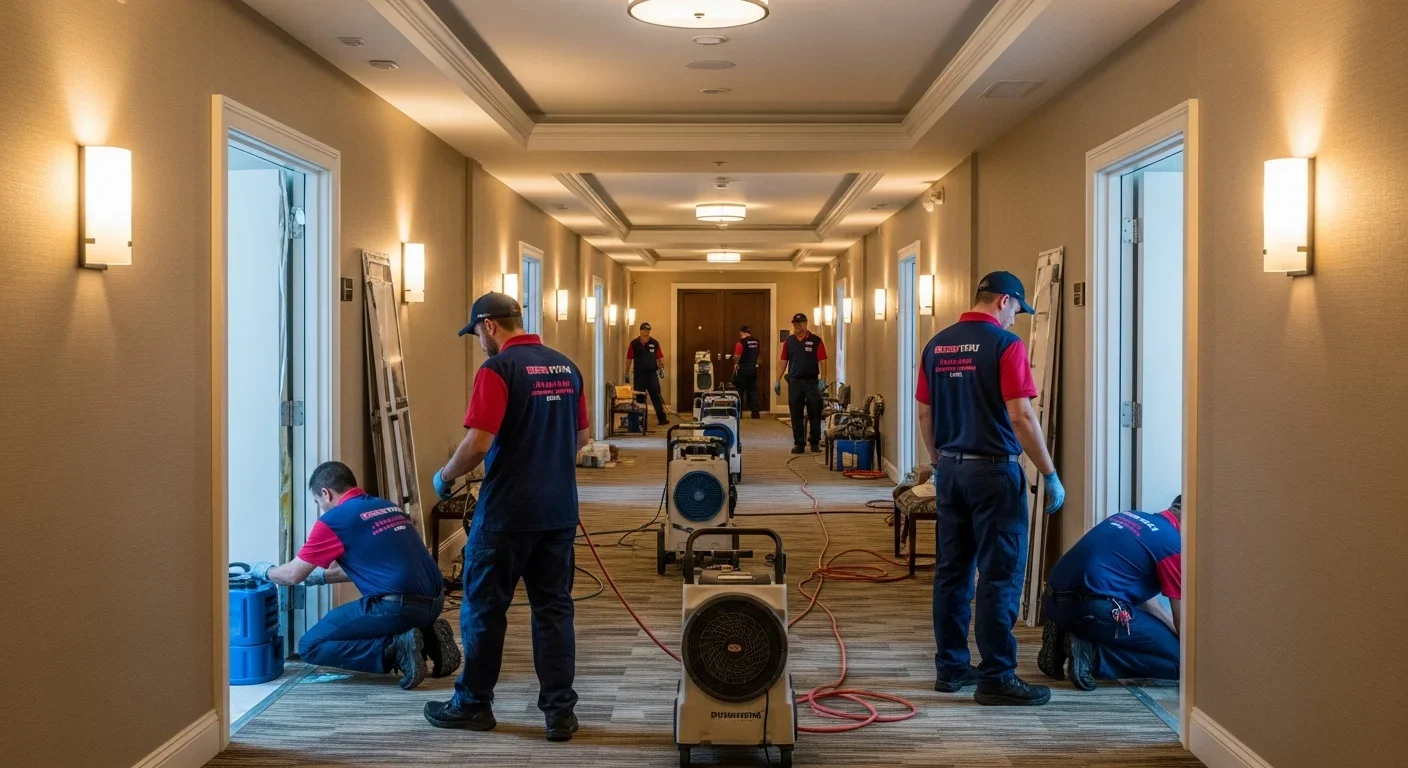
The HOA or condo association manages the shared structure, but personal property inside each unit belongs to its owner. That line matters for pack-out logistics: a crew has to inventory association-owned common-area furniture (lobby seating, hallway artwork, shared lounge contents) as one discrete category, and then track every individual unit's belongings as their own separate chain of custody. Mixing a resident from Unit 5B with one from Unit 4B — even just labeling a box wrong — creates return-day disputes that can derail the whole pack-back. HOA services coordination starts before the first box is lifted.
The Logistics Architecture of a Multi-Unit Pack-Out
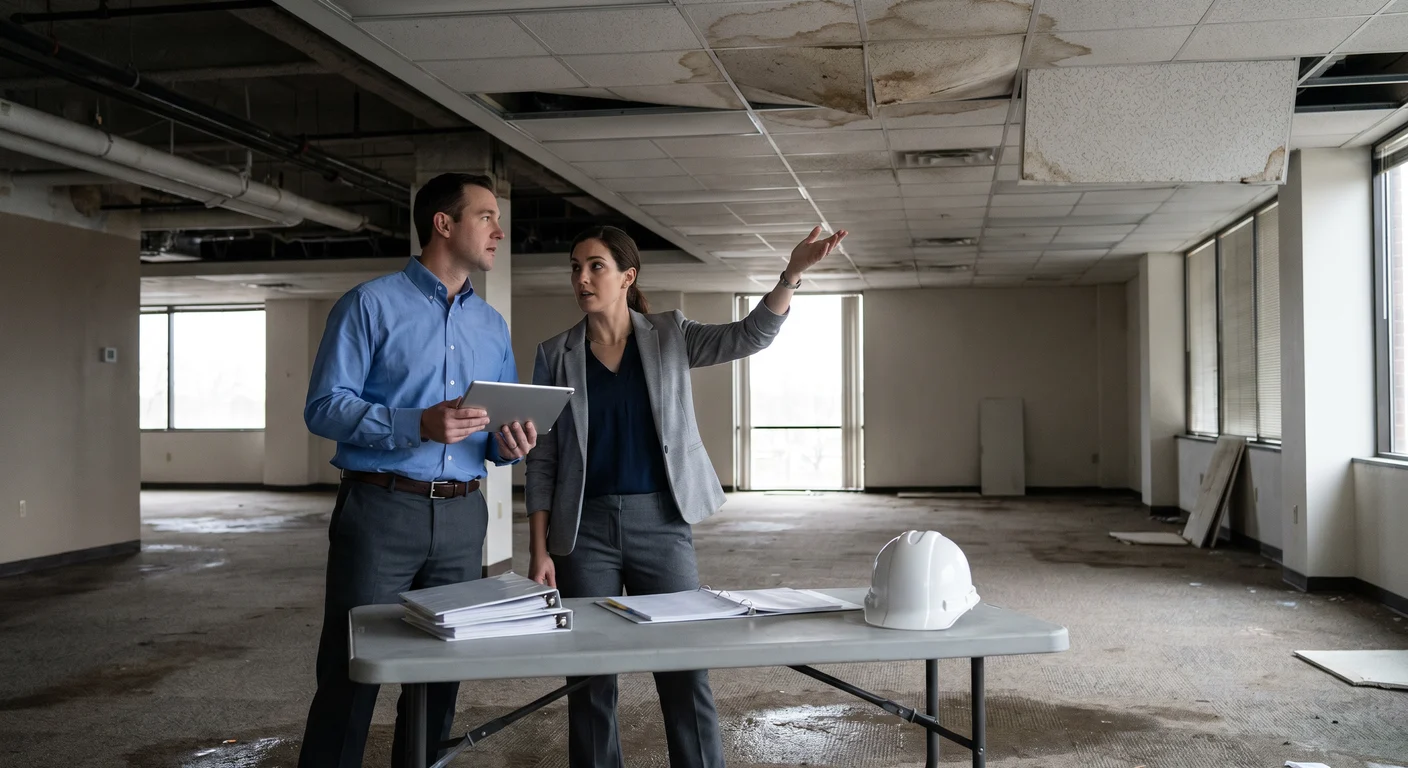
Before crews mobilize, a project lead walks every affected floor and builds what amounts to a logistics map: how many units, which are occupied, which are vacant or belong to seasonal residents, where the freight elevator is, what the corridor width allows, and whether there is a ground-floor staging area large enough to hold a full floor's worth of packed contents before the trucks arrive. Improvising any of this on the day of extraction adds hours and risks secondary damage.
- 1
Pre-mobilization access audit
The project lead identifies occupied, unoccupied, and seasonally vacant units, obtains or requests access to all of them from building management before crews arrive, and notes any locked mechanical or storage closets that hold association property. In South Florida's high-rise corridors, knowing elevator timing and the nearest service entry saves hours on extraction day.
- 2
Unit-by-unit inventory staging
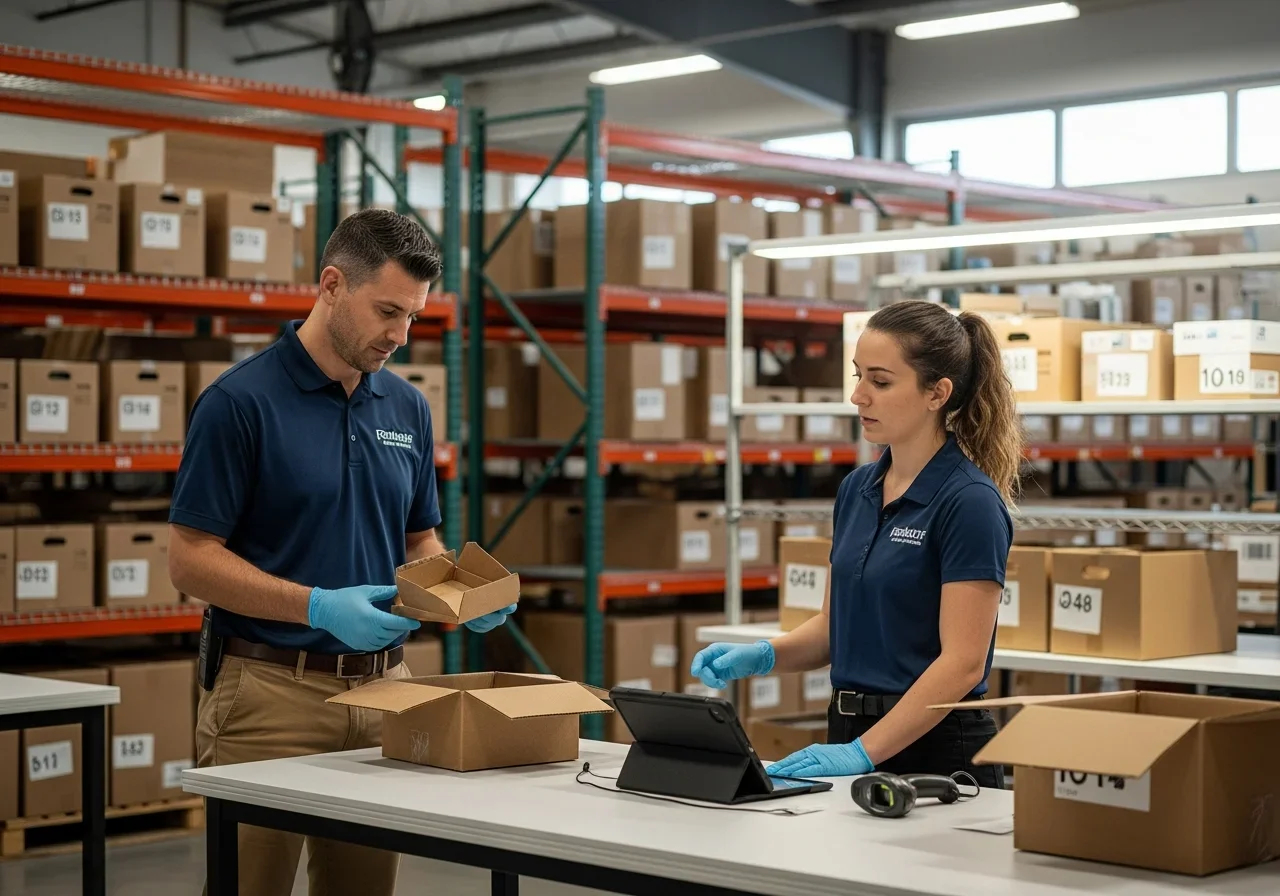
Each unit gets its own color-coded labeling system and its own barcoded inventory log before a single item is packed. Crew members assigned to a specific floor do not cross to another floor's packing operation — clean separation at the point of boxing is what makes pack-back possible months later.
- 3
Freight-elevator scheduling and corridor control
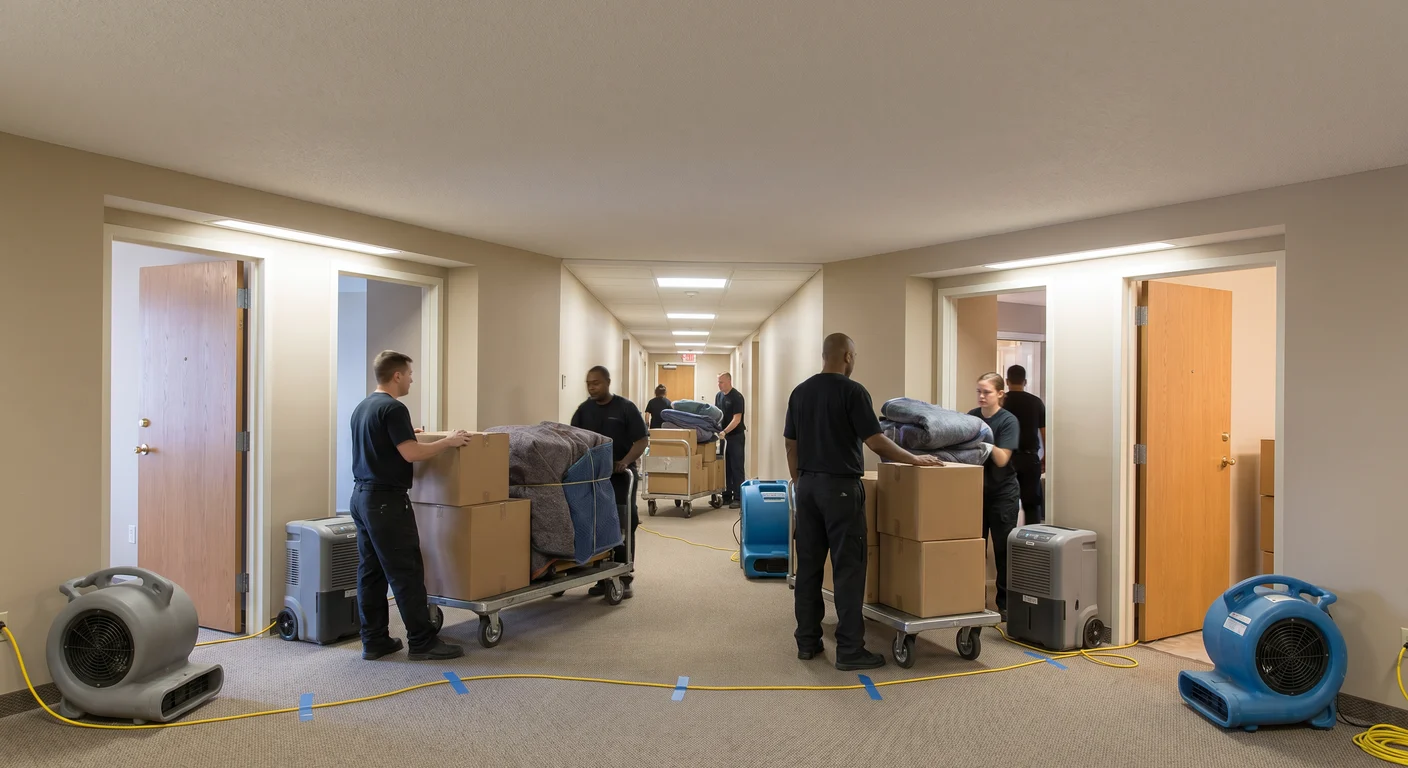
In a high-rise, the freight elevator is the bottleneck. Teams stagger loading windows floor by floor so loads from 15 and 14 do not compete for the same car. Floor runners and corner guards go down before anything moves through a corridor, and crews stage only what fits in the corridor without blocking fire exits or neighboring units.
- 4
Ground-level load-out to climate-controlled transport
Packed units move to a staging zone at the loading dock, then directly into climate-controlled vehicles or warehousing. In South Florida's heat — where outdoor temperatures routinely exceed 90°F and relative humidity can exceed 80% — leaving contents in a standard warehouse or on a non-climate-controlled truck while the structure dries over several weeks causes secondary damage that the water event alone did not.
- 5
Storage separated by unit, documented throughout
At the warehouse, each unit's inventory occupies its own designated section. The barcoded manifest maps every item to a unit, a section, and a bin. Nothing is consolidated across units. When a unit clears drying verification and is ready for pack-back, only that unit's inventory moves.
- 6
Staggered pack-back as floors clear
Drying timelines differ floor by floor — the unit directly under the source often dries faster than lower floors that absorbed more water. Pack-back is sequenced to each floor's individual clearance rather than waiting for all affected floors to finish, which gets residents back in faster and reduces storage costs.
Access Challenges Unique to South Florida High-Rises
The state's seasonal residency patterns add a layer of access complexity that most restoration playbooks do not cover. In coastal Broward County communities like Hallandale Beach and Weston, a significant share of condo units belong to part-time residents who are not physically present during the late spring and summer — the same season when afternoon thunderstorms and aging supply lines create water losses. A unit left vacant for months is still a unit that needs to be accessed, inventoried, and packed out if water entered it. Building managers typically hold emergency access authorization, but crews need to confirm that authorization in writing before any entry to protect everyone involved.
Aventura, which sits in Miami-Dade County, follows similar seasonal patterns but operates under Miami-Dade building department jurisdiction rather than Broward's. For multi-unit pack-out logistics the operational workflow is essentially identical, but contractors coordinating across county lines need to be aware of which jurisdiction's permits and building access protocols apply. Our contents restoration team serving Aventura-FL handles both sides of that line regularly.
Association Contents vs Unit-Owner Contents: The Inventory Line
The distinction between association property and individual unit-owner property is primarily a logistics and inventory issue during a pack-out. Common areas — lobbies, hallways, shared lounges, fitness centers, mail rooms — belong to the association. Packing and storing those items requires authorization from the building manager or HOA board, and those items must be inventoried and warehoused as a discrete batch separate from any individual resident's personal property. This matters for pack-back: when common areas are ready to receive furniture again, the crew needs to pull exactly the association's items from storage — not inadvertently return a resident's sofa to the lobby because the lot was commingled.
For the individual unit owner, every piece of personal property that leaves the unit gets a barcode, a photo, and an entry on a unit-specific manifest. Furniture, artwork, electronics, kitchenware, clothing — all of it. The manifest becomes the unit owner's record of what was packed, its condition at pack-out, and its condition at pack-back. In our experience handling multi-unit Weston FL contents restoration and Hallandale Beach FL contents restoration, the quality of the inventory log is what determines whether pack-back goes smoothly or turns into a dispute.
Why Climate-Controlled Storage Is Non-Negotiable in South Florida
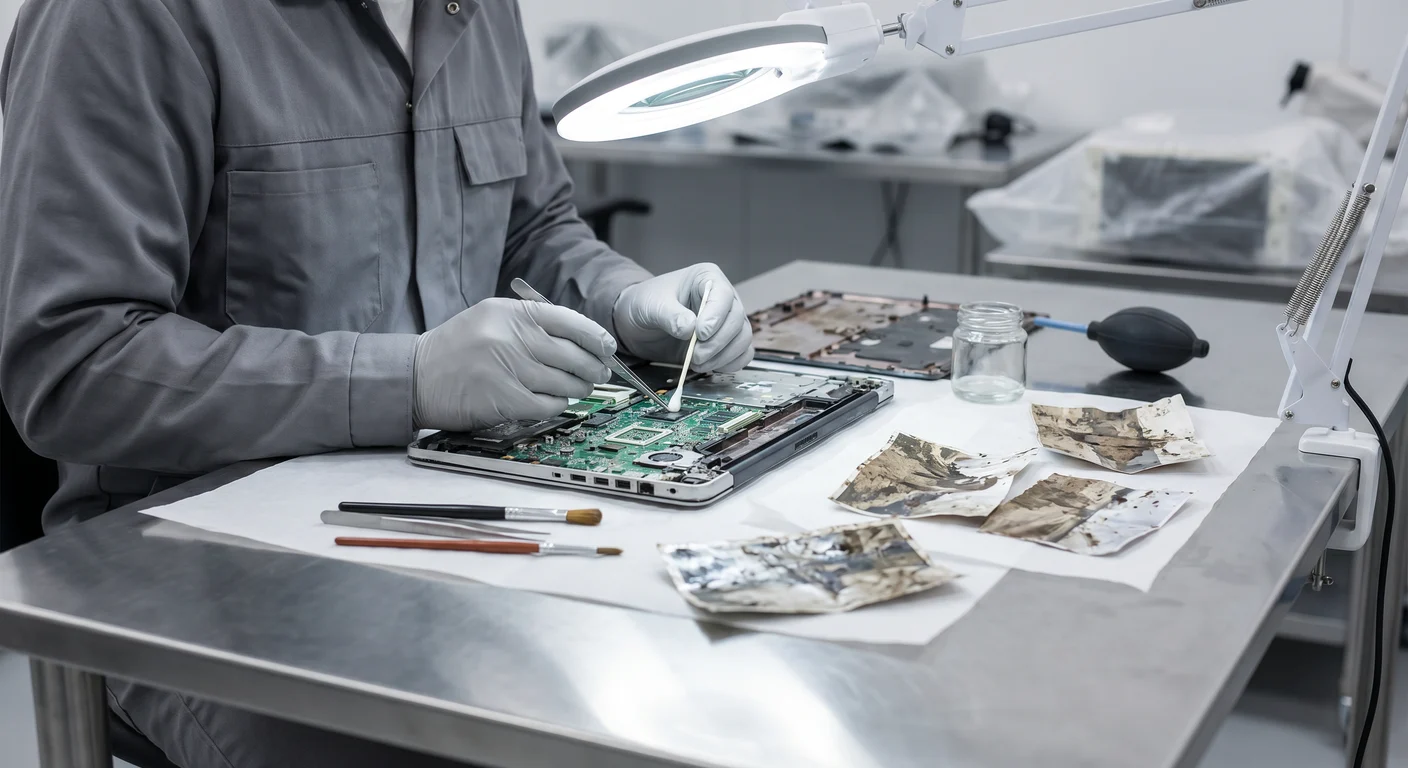
South Florida sits inside the High-Velocity Hurricane Zone, where the Florida Building Code sets design standards for wind and moisture exposure. The ambient environment — high heat, high humidity year-round — means that contents sitting in standard warehousing while a structure undergoes a multi-week drying process will absorb ambient moisture. Wood furniture warps. Fabrics develop odor. Paper-based items continue to degrade. Electronics corrode at an accelerated rate. The IICRC S500 standard for water damage restoration recognizes that psychrometric conditions — the relationship between temperature, humidity, and moisture in materials — drive both structural drying timelines and the condition of contents during storage.
Climate-controlled warehousing maintains temperature and relative humidity within ranges that halt secondary deterioration. For a condo cascade where the pack-back timeline may stretch two to four weeks while multiple floors complete their drying cycles, that controlled environment is not a premium add-on — it is the baseline that keeps contents in restorable condition when they come back. Failing to maintain it often means contents that arrived at the warehouse in recoverable shape are no longer recoverable by the time the unit is ready.
Multi-Unit Pack-Out vs. Single-Unit Pack-Out: Key Differences
Multi-unit cascade pack-out
- Pre-mobilization access audit required for all affected units before crews arrive
- Dedicated crew per unit or floor with color-coded and barcoded inventory separation
- Freight-elevator scheduling and staggered corridor staging to prevent bottlenecks
- Association common-area contents tracked as a separate inventory category
- Staggered pack-back sequenced to each floor's individual drying clearance
Single-unit pack-out
- One address, one access authorization — typically straightforward
- Single inventory log, one labeling system throughout
- No elevator scheduling or corridor-sharing concerns
- No association property to separate from personal property
- Pack-back on a single timeline once drying is verified
Coordination Between the Restoration Team and Building Management
In a single-family home, the homeowner is the project contact, the decision-maker, and the person walking the crew through the house. In a high-rise condo cascade, the building manager or HOA property manager fills that role for the common areas and for access coordination — while each individual unit owner or tenant is the decision-maker for their own personal property. Running a clean multi-unit operation means maintaining two communication tracks simultaneously: one with building management for access, elevator scheduling, and common-area contents, and one with each affected resident for their personal belongings.
Our HOA services team structures every multi-unit project around a dedicated project coordinator who handles building management communications separately from the resident-facing pack-out crew. That separation prevents the scenario where a resident cannot get a status update on their belongings because the project coordinator is occupied with building-wide logistics. For large-loss cascade events across many floors — which can stretch into the territory handled by our Lauderhill FL large-loss response team — dedicated project management is the operational foundation that keeps everything moving on parallel tracks without dropping either thread.
What Residents Can Do Before Crews Arrive
Individual unit owners and tenants in affected units can take a few practical steps even before a restoration team arrives that meaningfully affect how the pack-out goes — and how cleanly their belongings come back.
- Locate your personal property inventory (home contents list, appraisals, receipts) and have it accessible — this helps verify the pack-out manifest and resolve any questions at pack-back.
- Move irreplaceable items — important documents, medications, jewelry, external hard drives — to a bag you keep with you, not in the pack-out lot.
- If the unit is accessible, photograph affected rooms before crews begin — your own timestamped photos are useful documentation regardless of how thorough the professional inventory is.
- Confirm your contact information and preferred communication method with the project coordinator so you receive status updates during the storage period.
- Ask the building manager whether your unit's storage timeline is tied to adjacent units — understanding that pack-back is staggered by floor helps set realistic expectations.
Frequently Asked Questions
How do restoration teams keep different residents' contents separate during a multi-unit pack-out? +
What happens if a condo unit is vacant or seasonally unoccupied when water damage occurs? +
Does the association's property get packed out separately from residents' belongings? +
Why does pack-back happen at different times for different floors in a cascade event? +
Is climate-controlled storage required for condo contents in South Florida? +
Related Guides & Next Steps
Contents Restoration
Full pack-out, climate-controlled storage, cleaning, and pack-back for residential and commercial losses across South Florida.
HOA & Association Restoration Services
Coordinated response for multi-unit, common-area, and association-managed property losses.
Contents Restoration — Weston FL
Multi-unit and single-unit pack-out and storage services for Weston, FL condo and HOA communities.
Contents Restoration — Hallandale Beach FL
Pack-out, climate-controlled storage, and pack-back for Hallandale Beach high-rise and condo communities.
Contents Restoration — Aventura FL
Multi-unit contents restoration for Aventura's high-rise and mid-rise condo communities in Miami-Dade County.
Large-Loss Response — Lauderhill FL
Large-scale restoration and project management for Lauderhill multi-unit and commercial cascade events.
IICRC S500 Standard for Water Damage Restoration
The industry consensus standard for water damage restoration, including drying protocols and psychrometric requirements.
Multi-unit cascade? Call the team built for it.
Palm Build Restoration coordinates simultaneous pack-outs across stacked condo floors — unit-by-unit inventory control, climate-controlled storage, and staggered pack-back as each floor clears drying verification. Learn more about our HOA and multi-unit restoration services or call us directly.
Found this helpful? Send it to someone who needs it.