Quick Answer
A large-loss claim differs from a standard one in almost every operational dimension. Large losses typically involve a Third-Party Administrator (TPA) coordinating between the carrier and the contractor, dedicated program and project management layered on top of field crews, significantly deeper documentation requirements (daily photo logs, moisture logs, Xactimate line-item supplements, scope change orders), and timelines measured in months rather than days or weeks. The adjuster relationship is also different: a standard claim may be handled by a single field adjuster, while a large loss typically brings a dedicated CAT adjuster plus TPA oversight with formal approval gates at each scope change.
Key takeaways
- Large-loss claims typically involve TPA (Third-Party Administrator) coordination — a management layer between the carrier and restoration contractor not present on standard jobs.
- Documentation requirements are far deeper: daily photo logs, moisture readings, formal scope change orders, and line-item Xactimate supplements replace the simpler paperwork of a routine claim.
- A dedicated program or project manager oversees the job on behalf of the contractor; the adjuster relationship shifts from a single field contact to a CAT adjuster with formal approval workflows.
- Timelines expand significantly — a standard water or fire job may close in days to a few weeks, while a large-loss claim with reconstruction routinely runs months.
- Reconstruction is typically a distinct, separately scoped phase on a large loss, requiring permits, code-compliance review, and matching-to-pre-loss documentation that a standard job rarely demands at that scale.
Not every claim is the same, and the differences are not just about size. When a loss crosses into large-loss territory — whether by dollar value, affected scope, or carrier classification — the operational structure around the job changes at nearly every level: how the insurance relationship is managed, who coordinates the contractor, how supplements are submitted, how deeply the job is documented, and how long the whole process runs. Understanding those differences matters whether you are a property owner navigating a major claim or a property manager trying to get a multi-unit building back online. Here is an honest look at what actually changes when a claim scales up — and why those changes exist.
Common informal threshold where carriers often classify a loss as large-loss and assign TPA coordination, though scope and complexity drive classification more than dollars alone
~$500K+
Typical timeline shift: a standard residential loss may close in days to weeks; a large-loss claim with full reconstruction commonly runs several months
Weeks → Months
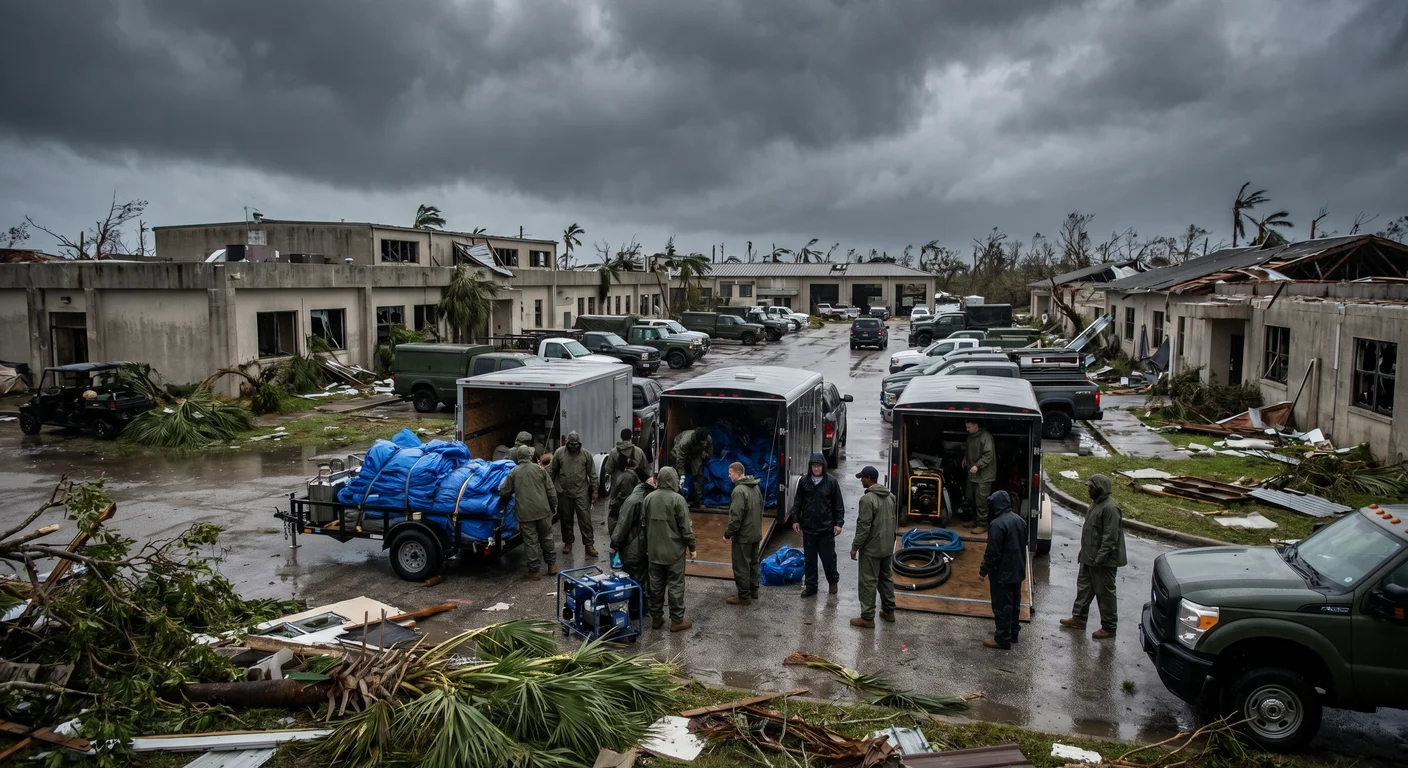
Large-loss CAT crews are pre-staged and deploy around the clock during active disaster events; standard jobs dispatch during normal response windows
24 / 7
Large losses are formally segmented into emergency mitigation, demolition/drying, reconstruction, and closeout — each with its own documented approval gate
Multiple phases
What Makes a Claim a Large Loss
The phrase 'large loss' gets used loosely, but carriers and restoration professionals generally mean the same thing: a loss that exceeds the capacity of a single-crew, single-adjuster workflow. That can happen because of dollar exposure (a common informal marker is losses reaching into the hundreds of thousands or more), because of scope — multiple buildings, multiple affected units, or structural damage requiring permitted reconstruction — or because of the type of event, such as a hurricane, fire, or flood that hits a commercial property or an entire residential complex at once.
The classification matters because carriers handle large losses through a different operational channel than routine claims. Once a loss is flagged, the carrier typically assigns it to a large-loss handling program with dedicated resources — a CAT adjuster, a TPA, and in many cases a pre-approved contractor network. That structure does not exist on a standard job, and not knowing it exists is one of the most common sources of confusion for property owners in the middle of a major event.
The TPA Layer: What It Is and Why It Matters
On a routine claim, the relationship is fairly simple: the property owner contacts their carrier, a field adjuster reviews the damage, a contractor does the work, and the adjuster approves invoices. On a large loss, a Third-Party Administrator — the TPA — sits between the carrier and the contractor and manages the workflow on the carrier's behalf. The TPA reviews scope submissions, approves supplements, monitors compliance with the carrier's program standards, and often has authority over which contractors can be used and on what terms.
For property owners, the TPA layer means that communication paths are more formal and approvals take longer. For restoration contractors, it means every scope change requires documentation submitted through the TPA's system, not a quick call to the adjuster. Large-loss handling contractors who work regularly with carriers and TPAs know those workflows and can navigate supplements without project-halting delays — contractors who do not can create bottlenecks that extend an already-long job significantly.
Program and Project Management: The Operational Difference
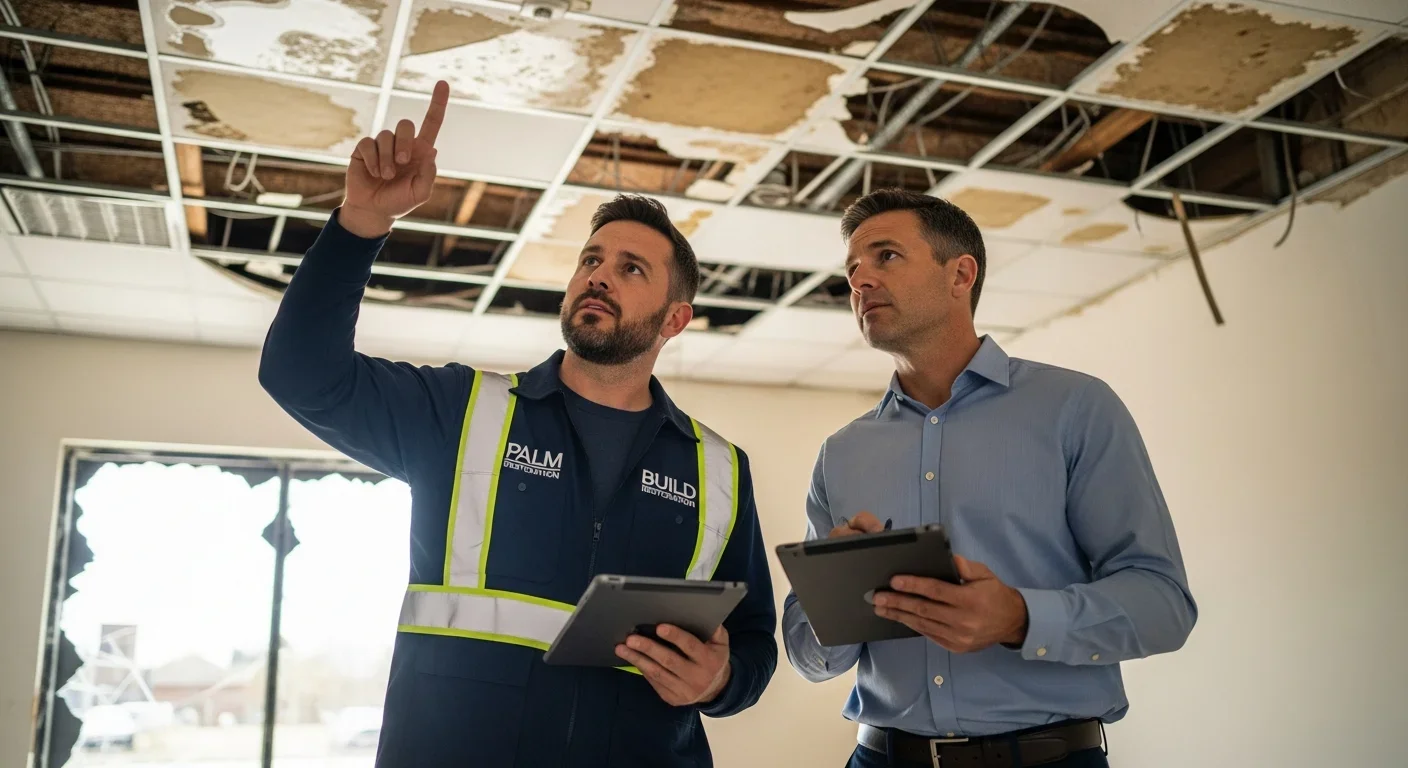
Standard restoration jobs are typically managed by a crew lead or a single project manager who oversees the work and communicates directly with the homeowner. That works when the job is contained and the decisions are straightforward. On a large loss, the management structure expands to match the complexity: a dedicated program manager oversees compliance with carrier program requirements and TPA documentation, while project managers handle specific sites or buildings within a multi-building event.
This is not just administrative overhead. Large-loss restoration involves simultaneous crews across different areas, equipment staging logistics, subcontractor coordination for specialized trades, permit management, and reconstruction sequencing that has to align with the insurance scope — all of which has to be documented in real time. A firm handling reconstruction after a major loss while also managing active drying, contents removal, and code-compliance permitting is running a construction program, not a single job. That requires program management infrastructure that most standard restoration companies do not have.

Documentation: Where Large Loss and Standard Claims Diverge Most
Documentation is probably where the day-to-day experience of a large loss feels most different. A standard residential claim requires a written scope, photos, and a final invoice. A large loss requires all of that plus daily photo logs at each work area, timestamped moisture readings at every affected material until drying standards are met, formal scope change orders for any deviation from the approved estimate, and Xactimate line-item supplements submitted through the TPA whenever scope expands — which it almost always does as hidden damage is uncovered.
The documentation burden exists for a reason: on a job worth hundreds of thousands of dollars with multiple parties reviewing the work, the written record is how the contractor proves what was done and why, how the TPA justifies supplement approvals to the carrier, and how disputes are resolved if they arise. It also protects property owners — a well-documented large-loss claim is harder to underpay than an undocumented one. This is also where the insurance restoration process knowledge of your contractor makes a practical difference: understanding what documentation the carrier actually needs, and delivering it in the right format, keeps the claim moving.
Large Loss vs Standard Claim: Side by Side
Standard Claim
- Single field adjuster handles scope and approval
- Contractor communicates directly with owner and adjuster
- Scope changes handled by a phone call or simple supplement
- Documentation: written scope, photos, and a final invoice
- Timeline: days to a few weeks for most residential jobs
- One project manager, one or two crews, linear workflow
Large-Loss Claim
- CAT adjuster plus TPA coordinator with formal approval workflows
- All scope submissions go through TPA system with documented turnaround
- Every scope change requires a formal change order and re-approval
- Daily photo logs, moisture logs, Xactimate supplements, and closeout documentation
- Timeline: weeks to months; reconstruction may extend the job further
- Program manager, multiple project managers, simultaneous crews, subcontractor coordination
Supplements: Why They Are Normal on Large Losses
A supplement is a request to the carrier to approve additional scope and cost beyond the initial estimate. On a standard job, supplements are uncommon — most of the damage is visible at first inspection. On a large loss, they are the norm, not the exception. Hidden damage inside wall cavities, beneath flooring, within HVAC systems, and in structural assemblies typically is not visible until demolition begins. On commercial properties and multi-unit buildings, the scope discovery process can continue for weeks into the job.
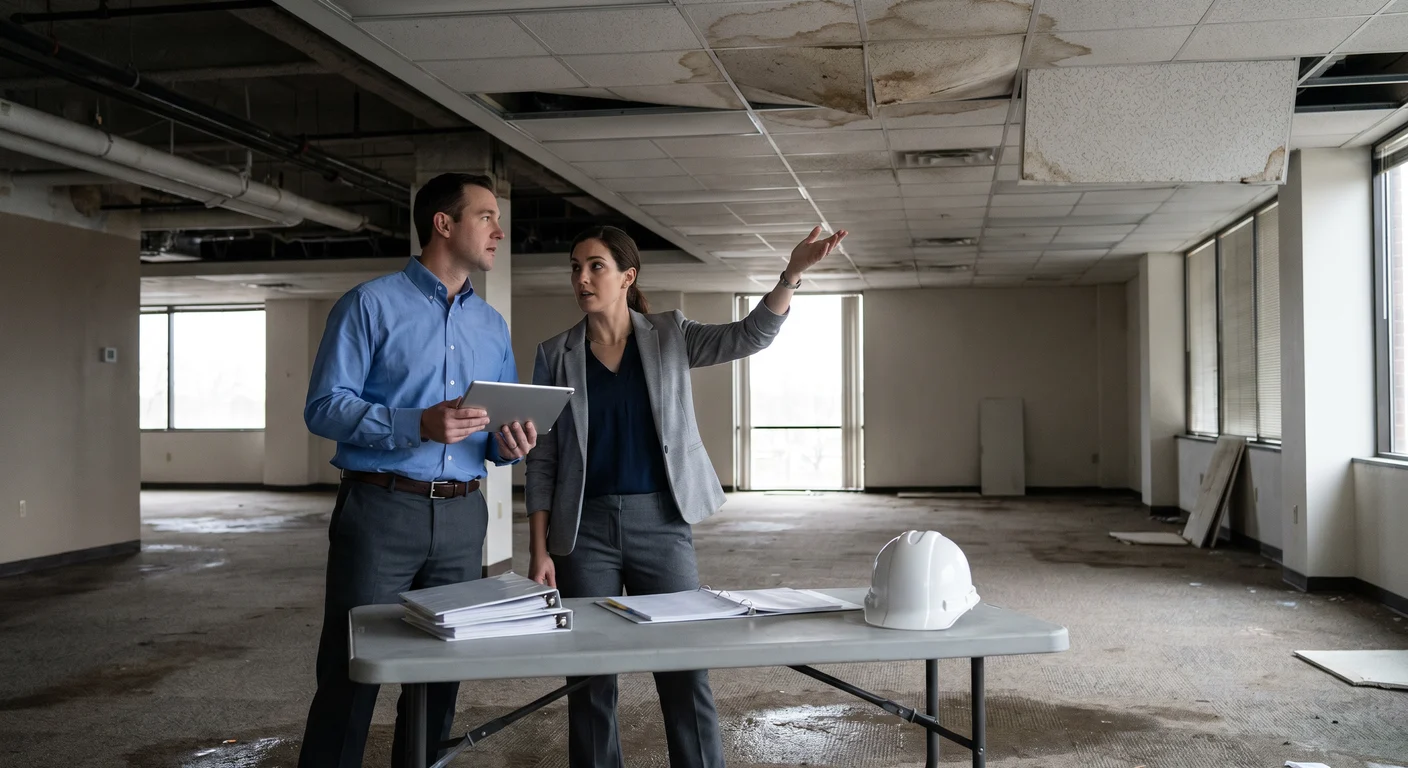
Contractors who regularly handle large losses build the supplement process into their workflow from day one: documenting initial conditions thoroughly at the joint walkthrough so that every supplement has a clear before-and-after baseline, and submitting supplements promptly rather than batching them at the end when disputes are harder to resolve. A delay in supplement approval means a delay in work, which is why this workflow familiarity is part of what separates a large-loss-capable contractor from one that handles routine jobs competently but struggles to operate within a carrier program.
Timeline Expectations: Months, Not Weeks
A standard water damage job — say, a burst pipe in a single-family home — typically runs through emergency extraction, structural drying, and reconstruction in a matter of weeks if no complications arise. A large-loss event involving multiple units, structural damage, contents removal and storage, and permitted reconstruction works on a fundamentally different clock. The mitigation phase alone can run weeks in a large multi-building event. Reconstruction — which is a separately permitted, separately scoped phase — adds months on top of that.
Property owners sometimes expect a large loss to move at the pace of a standard one, and the gap between those expectations and reality is a major source of friction. Understanding that reconstruction services on a large loss involve permitting, code-compliance inspections, material lead times, and subcontractor scheduling — none of which a standard job involves at that scale — helps set realistic expectations. Palm Build serves large-loss clients across Florida, North Carolina, and South Carolina, including commercial and mixed-use properties in markets like Davie, FL and Weston, FL where multi-building HOA and commercial losses are common.
What Property Owners Should Expect During a Large-Loss Claim
If you are a property owner or manager navigating a large-loss event, the most important thing to understand is that the claim will move through formal stages with approval gates between them — and that trying to shortcut those gates usually makes the timeline longer, not shorter. Your contractor should be walking you through the approval status at each stage, explaining what supplements are pending and why, and giving you realistic phase timelines rather than a single completion date.
On the documentation front, keep every written communication with the carrier and TPA, every scope approval, and every change order. Large-loss claims occasionally involve disputes at the closeout stage, and a complete paper trail is your protection. Your contractor's documentation — daily logs, moisture readings, photographs, and supplement approvals — should be accessible to you throughout the job, not only at the end. The insurance restoration process that a large-loss contractor manages on your behalf is ultimately there to protect your recovery, and a transparent contractor makes that visible.
Frequently Asked Questions
What is the difference between a large-loss claim and a standard restoration claim? +
What is a TPA and why do large-loss claims involve one? +
How long does a large-loss restoration claim typically take? +
Why are supplements so common on large-loss claims? +
Do I need a specialized contractor for a large-loss claim? +
Related Guides & Next Steps
Large-Loss Handling
CAT crew deployment, TPA coordination, program management, and multi-building recovery across FL, NC, and SC.
Reconstruction Services
Permitted rebuild from demo through finish — code-compliant and matched to pre-loss condition.
Insurance Restoration Process
How Palm Build manages documentation, supplements, and adjuster coordination on behalf of property owners.
Large-Loss Handling — Davie, FL
Commercial and multi-unit large-loss response serving Davie and western Broward County.
Large-Loss Handling — Weston, FL
HOA, commercial, and large residential large-loss recovery in Weston, FL.
FEMA Disaster Recovery Resources
Federal guidance on disaster declarations, public assistance programs, and large-scale recovery coordination.
Navigating a large-loss claim? Call Palm Build.
Palm Build handles large-loss claims across Florida, North Carolina, and South Carolina — with TPA workflow experience, dedicated program management, and the documentation systems carriers require. See our large-loss handling service or reach out to discuss your situation.
Found this helpful? Send it to someone who needs it.