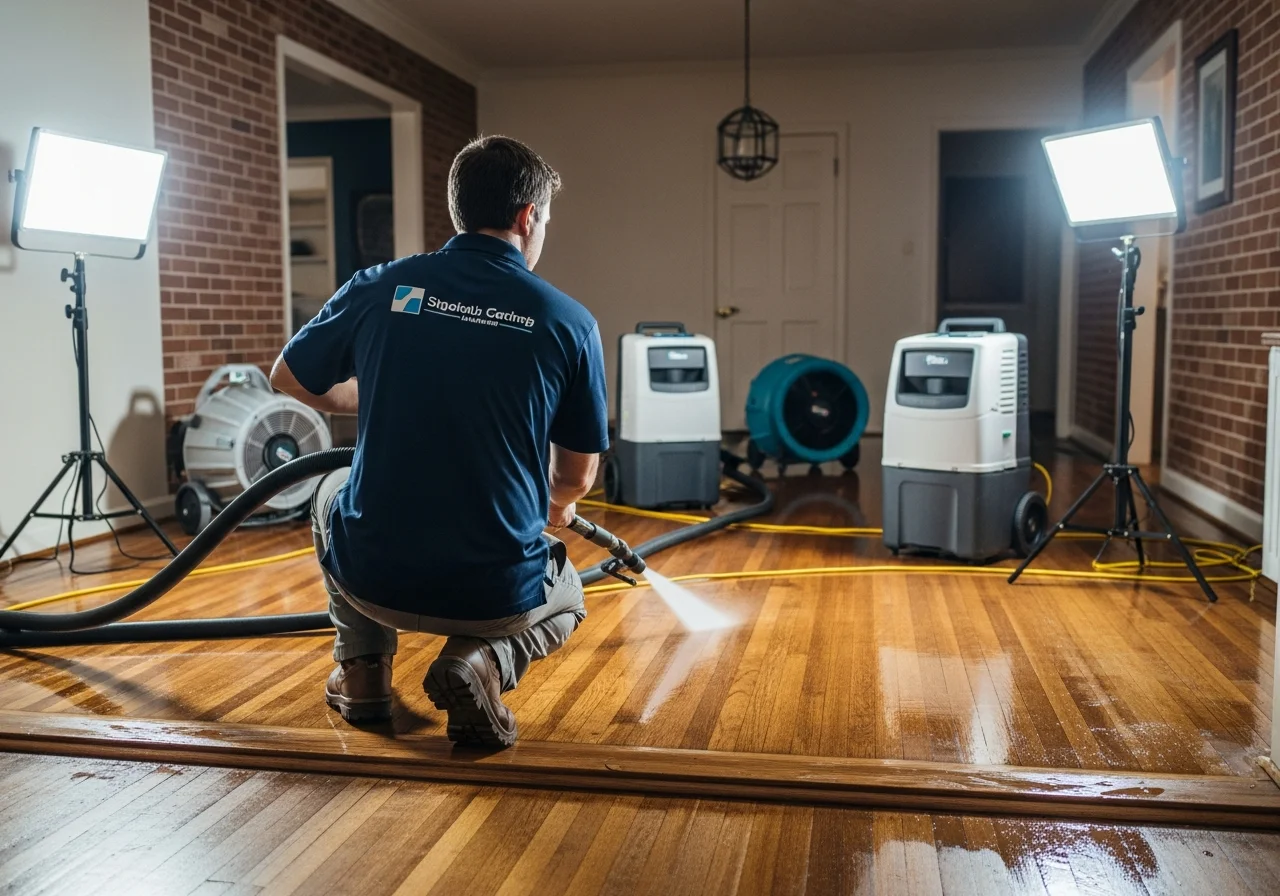
Water Damage Restoration in Charlotte, North Carolina
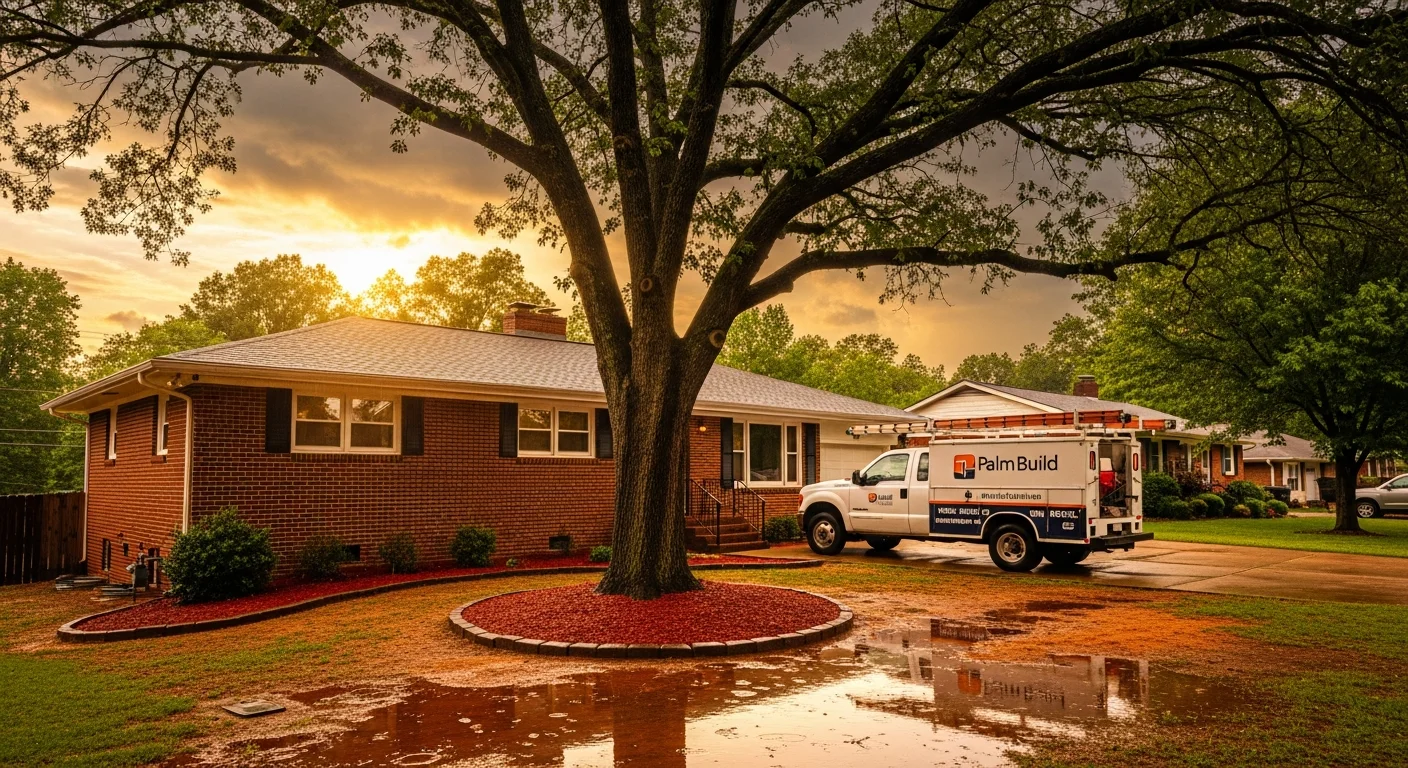
From Dilworth crawl spaces to Ballantyne slab foundations, Palm Build's Charlotte-based team responds in 30-60 minutes with truck-mounted extraction, structural drying, and insurance-ready documentation.
Local Office — Charlotte, NC 30-60 min Response IICRC Certified
Why Charlotte Homes Face Unique Water Damage Risks
Charlotte's combination of Piedmont red clay soil, aging crawl space foundations, and a
humid subtropical climate makes it one of the most water-damage-prone metros in the
Southeast. When a burst pipe floods your Myers Park hardwood floors at 2 a.m. or a June
thunderstorm overwhelms your Dilworth crawl space, the clock starts immediately — mold can begin growing in 24 to 48 hours.
Piedmont Red Clay Soil
<0.2 in/hr
Clay drainage rate
Charlotte sits atop expansive Cecil and Appling series clay with infiltration rates below 0.2 inches per hour. After a storm, water pools against your foundation for days — sometimes weeks — feeding moisture into crawl spaces and wicking up through slabs.
Vented Crawl Space Construction
70-90%
Crawl spaces with issues
A large percentage of pre-1985 Charlotte homes sit on vented crawl spaces over this clay. Warm, humid air enters through foundation vents, contacts cooler surfaces, and condenses on floor joists, ductwork, and insulation — creating a chronic moisture factory.
Humid Subtropical Climate
43.6 in
Annual rainfall
Charlotte receives 43.57 inches of rain annually with no dry season. Summer humidity regularly exceeds 70-90%, and 2024 was the warmest year on record — extending the mold-season window and accelerating damage after water events.
Aging Housing Stock
70+ yrs
Oldest housing stock
Charlotte's 1950s-70s brick ranch homes feature original galvanized or cast-iron plumbing, aging HVAC condensate lines, and deteriorating mortar — all common failure points. Polybutylene pipe in 1980s-90s construction adds catastrophic burst risk.
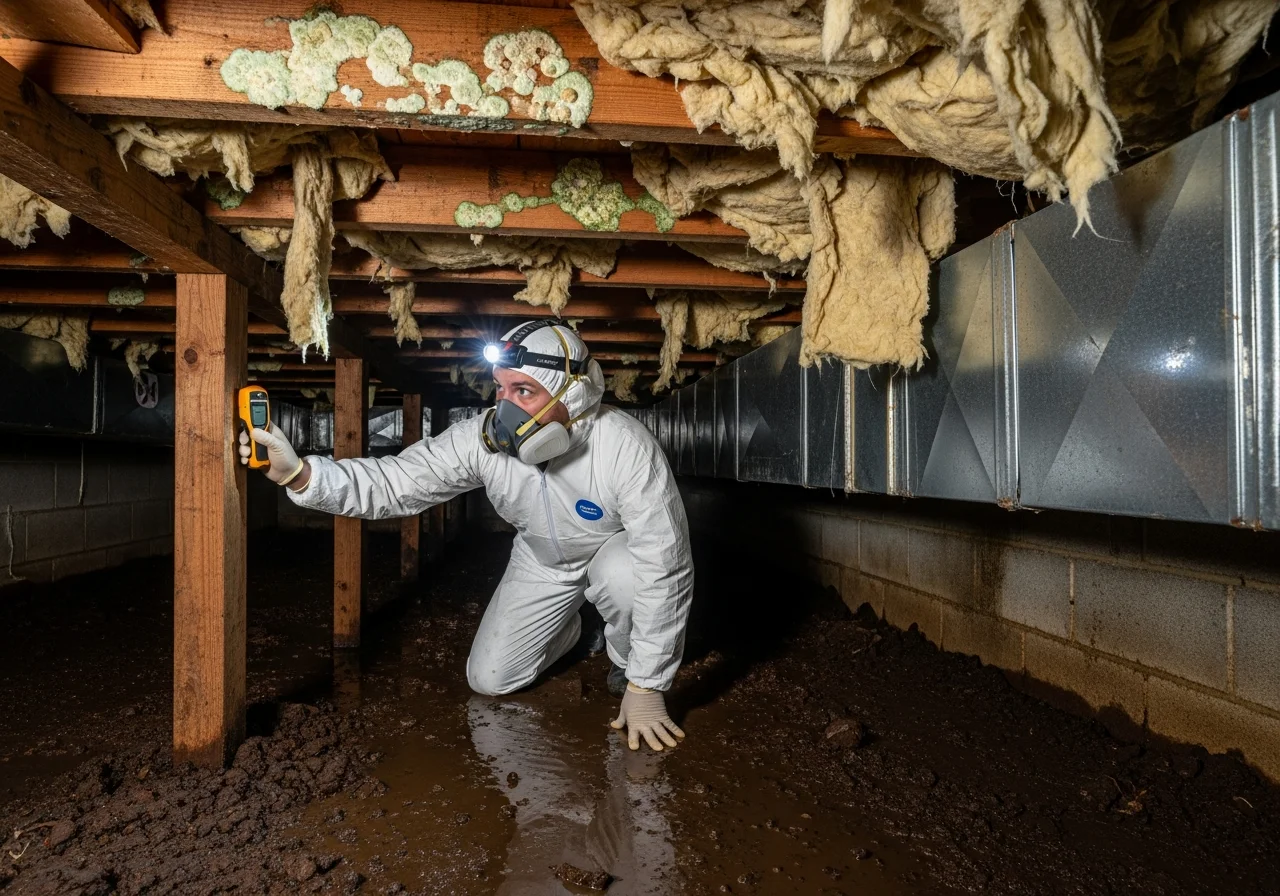
Charlotte's clay soils and vented crawl spaces create persistent moisture conditions
that lead to mold growth on floor joists and subfloor panels.
Neighborhood-Level Intelligence
Charlotte Neighborhood Water Damage Risk Profiles
Water damage in Charlotte is not random. It follows predictable patterns based on
housing age, construction type, proximity to waterways, and soil conditions. Here's what
we see in the neighborhoods where we work most frequently.
Myers Park / Eastover
High Risk
Built: 1920s–1960s
Primary risk: Briar Creek flooding, aging plumbing
Common damage: Crawl space flooding, burst cast-iron drain lines, high-value contents damage
Dilworth
High Risk
Built: 1890s–1930s
Primary risk: Little Sugar Creek flooding, infill drainage disruption
Common damage: Crawl space flooding from disrupted stormwater, foundation water infiltration
Plaza Midwood
High Risk
Built: 1903–1960s
Primary risk: Briar Creek exposure, galvanized pipe failure
Common damage: Burst pipes in freeze-thaw, crawl space mold from creek-adjacent moisture
SouthPark / Challis Farm
Moderate
Built: 1970s–1990s
Primary risk: Inadequate storm drainage in developed areas
Common damage: Crawl space and grade-level water intrusion during heavy rain
Common damage: Slab-on-grade moisture wicking, engineered wood subfloor damage
Steele Creek
High Risk
Built: Mixed
Primary risk: Catawba River corridor flash flooding
Common damage: Flash flood damage, mobile home flooding, foundation washout
NoDa (North Davidson)
Moderate
Built: 19th/20th century
Primary risk: Century-old masonry water infiltration
Common damage: Water intrusion through aging brick, timber beam moisture damage
Mountain Island Lake Corridor
Critical
Built: Mixed
Primary risk: Duke Energy dam release flooding
Common damage: Catastrophic flood damage — 89 homes damaged in Helene (2024)
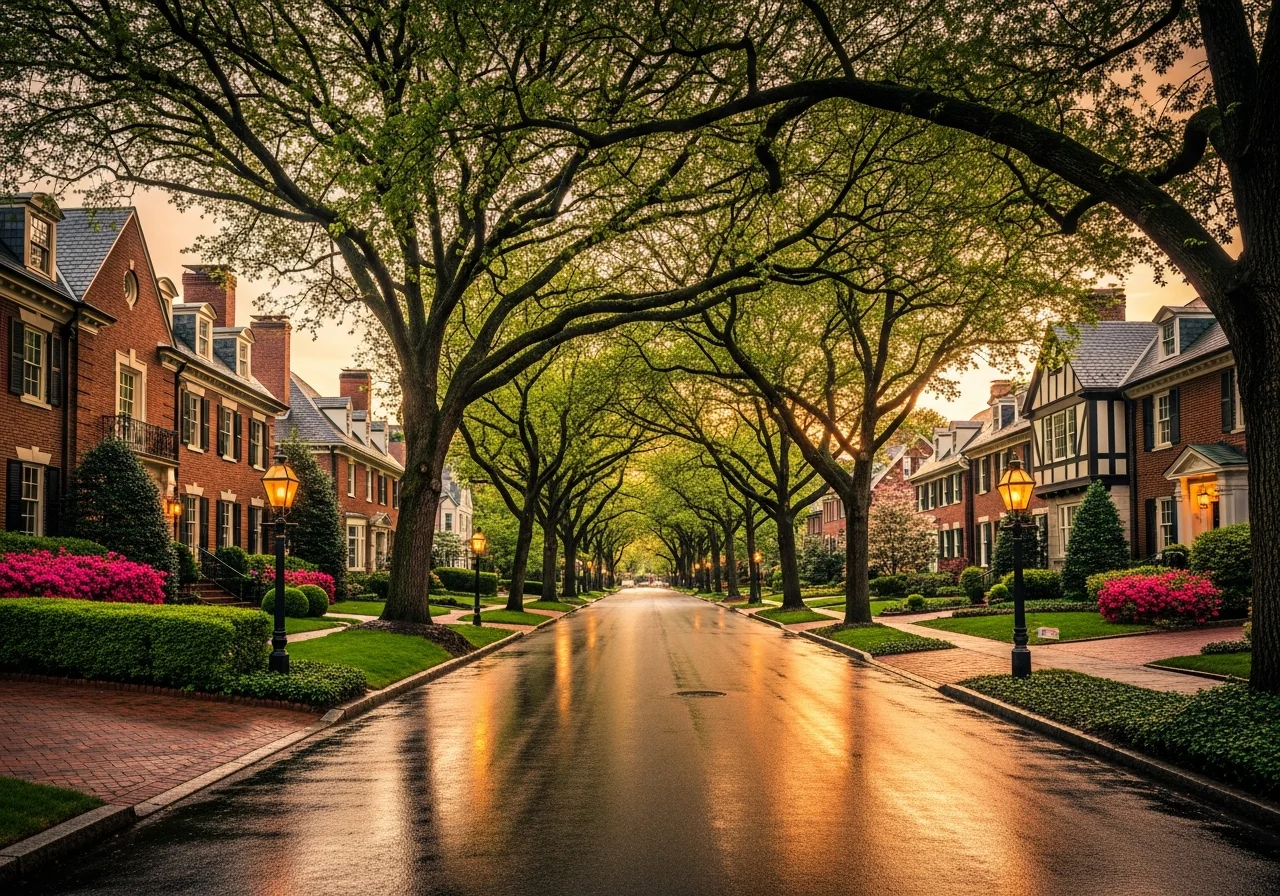
Myers Park's grand homes and mature tree canopy are iconic — but Briar Creek runs
through the neighborhood, creating flood exposure for properties near its banks.
Our Charlotte Process
How We Restore Charlotte Homes After Water Damage
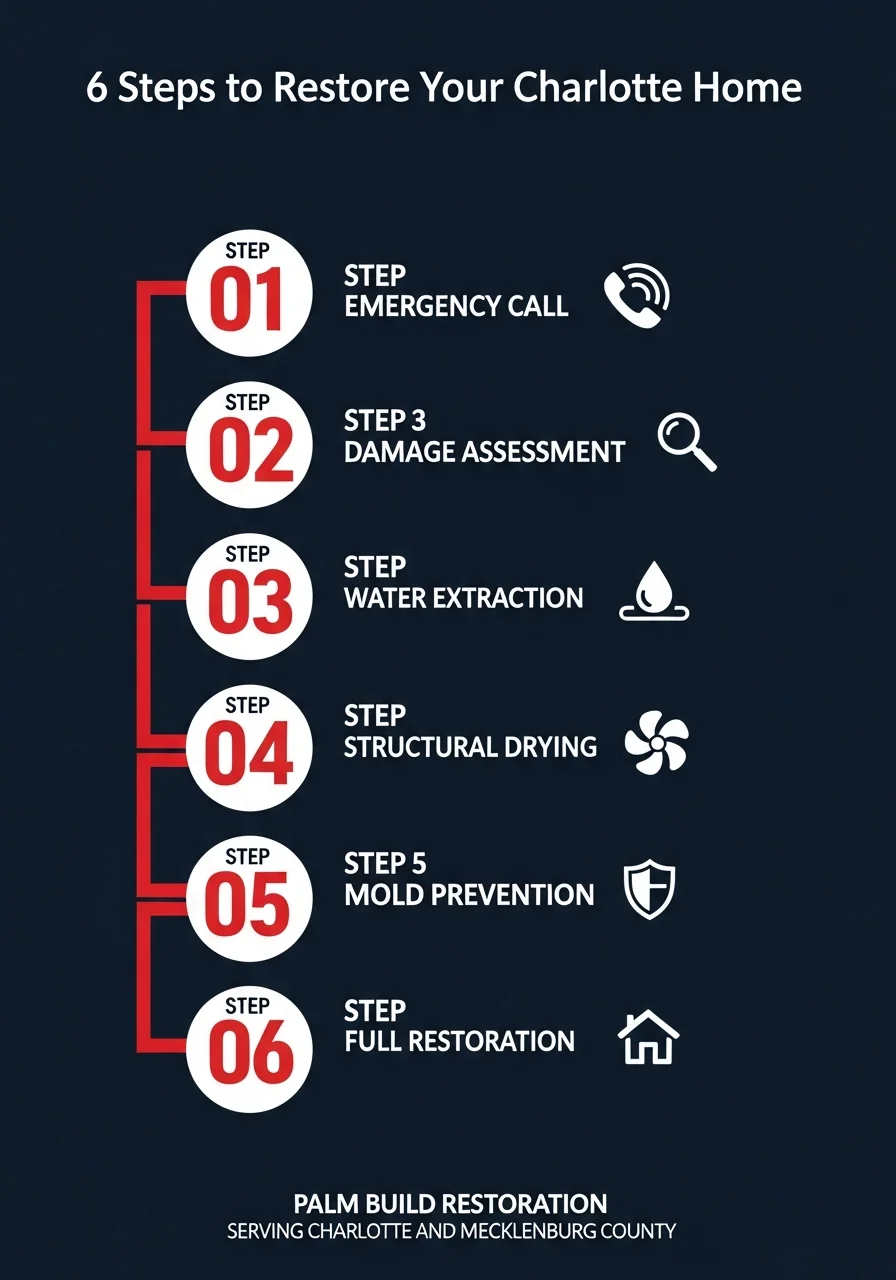
Every water damage event is different, but the science of restoration follows a proven
sequence. Here's exactly what happens when you call Palm Build's Charlotte team.
01
Emergency Dispatch
30-60 Minutes
02
Damage Assessment
First 2 Hours
03
Water Extraction
Hours 2-6
04
Structural Drying
3-5 Days
05
Mold Prevention
During Drying
06
Full Restoration
1-4 Weeks
01
Emergency Dispatch
30-60 Minutes
Call our Charlotte line at (704) 464-0121 any time, day or night. Our dispatcher sends a crew from our Crompton Street hub with truck-mounted extraction equipment, commercial dehumidifiers, and air movers.
02
Damage Assessment
First 2 Hours
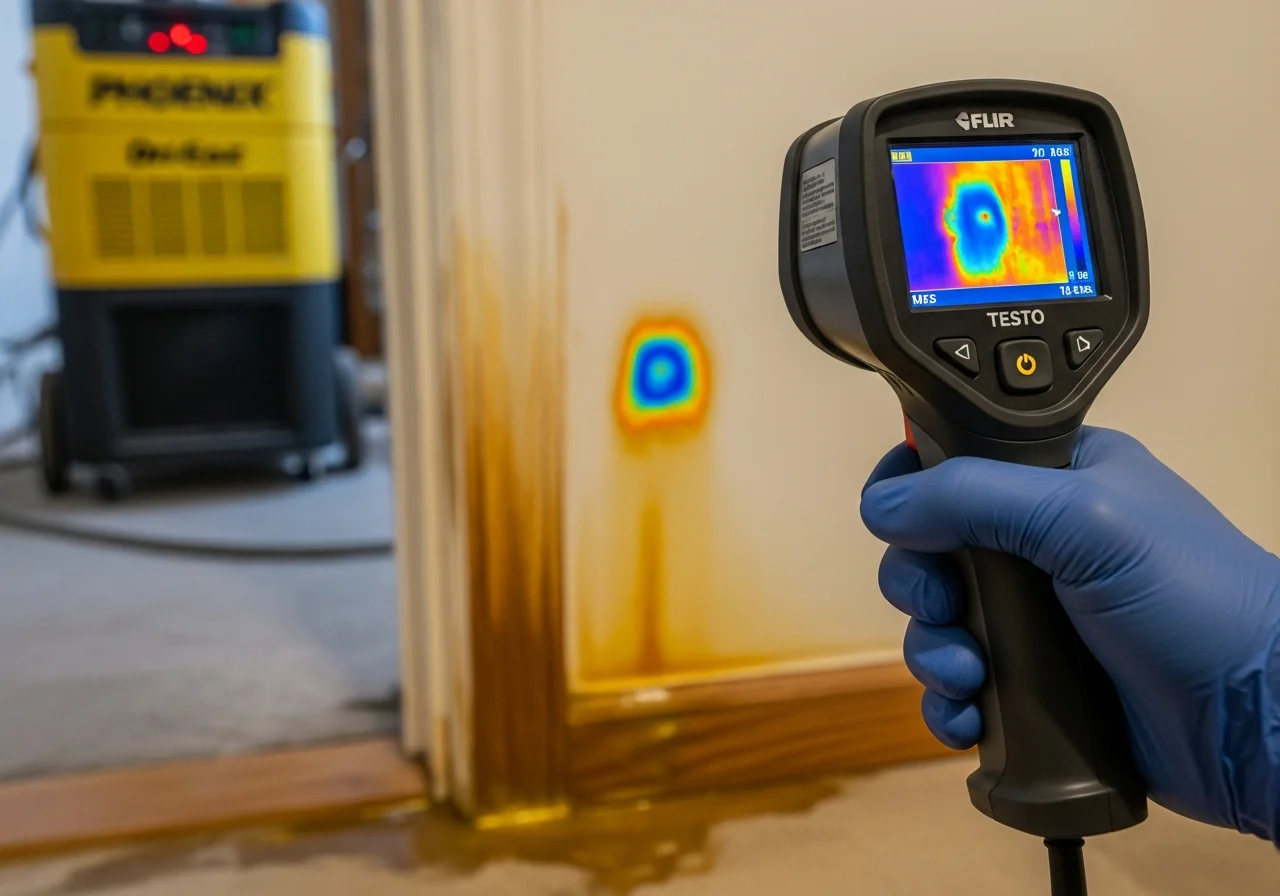
IICRC-certified technicians use infrared thermal imaging and pin-type moisture meters to map exactly where water has traveled — behind walls, under flooring, into crawl spaces. This becomes the foundation of your insurance claim.
03
Water Extraction
Hours 2-6
Truck-mounted extraction systems pull hundreds of gallons per hour. For Charlotte homes with hardwood floors — common in pre-1980 brick ranch construction — speed here is critical to prevent permanent cupping and buckling.
04
Structural Drying
3-5 Days
Commercial LGR dehumidifiers pulling 15-30 gallons per day and high-velocity air movers are positioned strategically. For crawl space homes, we address the crawl space directly — moisture under the house will re-humidify above.
05
Mold Prevention
During Drying
EPA-registered antimicrobial treatments are applied during drying. Charlotte's humidity means mold risk is elevated from the moment intrusion occurs. Pre-existing crawl space mold triggers a separate remediation scope.
06
Full Restoration
1-4 Weeks
Drywall, flooring, baseboard, trim, painting, and structural work. For homes in Charlotte's eight local historic districts, we ensure work meets Historic Landmarks Commission standards in addition to current building code.
Why Our Charlotte Process Works
1
Local Knowledge
We know Charlotte clay, crawl spaces, and creek flood patterns
2
Speed
30-60 minute response from our Crompton Street hub
3
Scientific Drying
Daily moisture readings until every material reaches dry standard
4
Insurance-Ready
Documentation formatted for your adjuster from day one
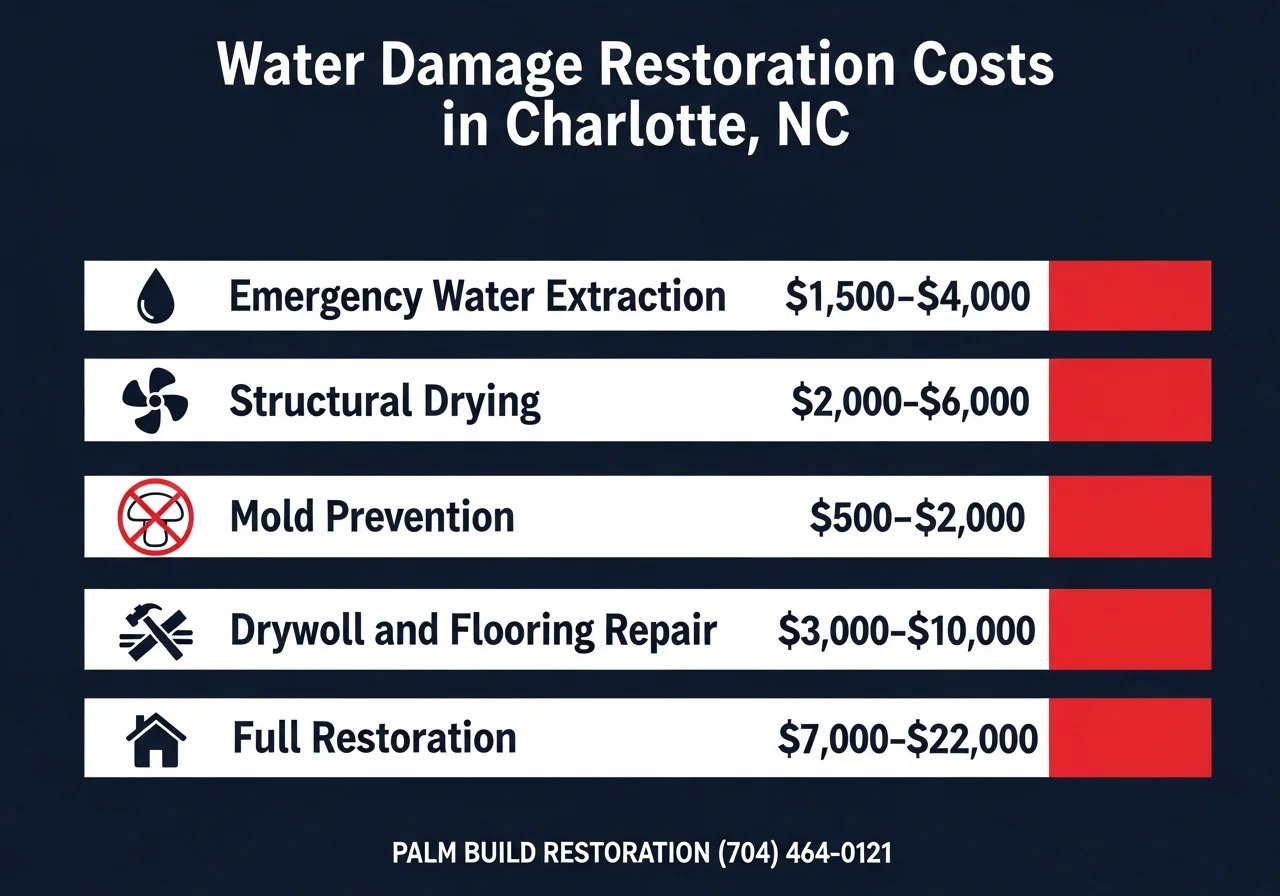
These ranges reflect real-world project costs in the Charlotte metro — not national
averages. Charlotte's labor market, building material costs averaging $180-$250 per
square foot, and the prevalence of crawl space construction all affect the final number.
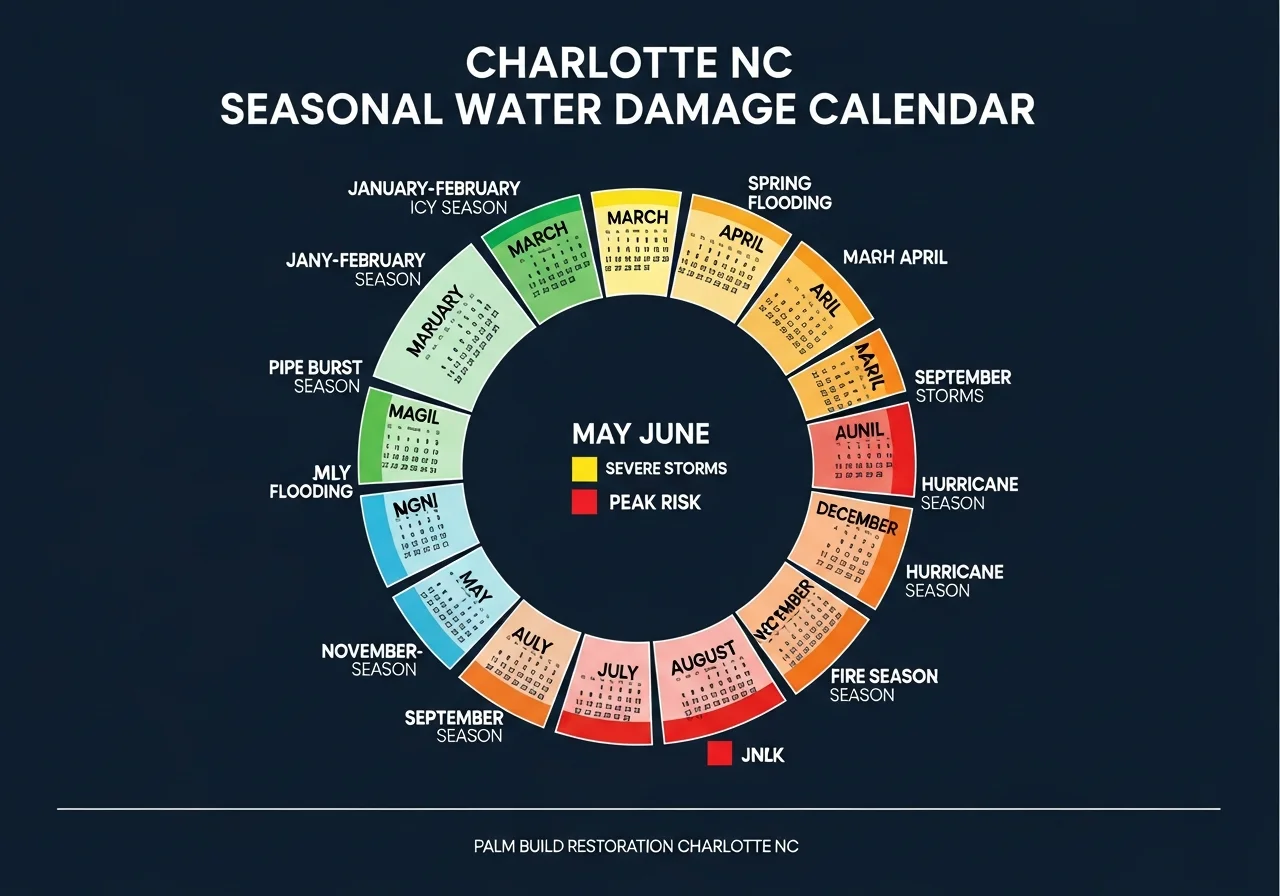
Charlotte doesn't have a single "water damage season" — different types of damage peak
at different times of year. Understanding this calendar helps you catch problems early.
January – February
Freeze-Thaw & Burst Pipe Season
Charlotte's winter temperatures swing between the 20s and 50s. Exposed pipes in crawl spaces, attics, and exterior walls are vulnerable. Older homes in Dilworth, Plaza Midwood, and Fourth Ward with galvanized or cast-iron plumbing are highest risk.
March – April
Spring Flooding & Crawl Space Activation
Spring rains saturate clay soils, and crawl space moisture levels begin climbing. Many homeowners first notice musty smells, condensation on ductwork, or sagging insulation. Briar Creek and Little Sugar Creek begin rising.
May – June
Severe Thunderstorm Season
June has Charlotte's highest percentage of rainy days at 35.2%. Flash flooding overwhelms storm drains and sends water into basements, crawl spaces, and ground-level entries across Mecklenburg County.
July – August
Peak Risk: Tropical Remnants & Maximum Mold
August is Charlotte's wettest month at 4.35 inches. Tropical system remnants bring multi-day heavy rainfall. Humidity exceeds 70-90%, making this the peak window for mold growth in crawl spaces.
September – October
Hurricane Remnant Season
Hurricane Helene (September 2024) flooded 89 Mecklenburg homes and swept four off their foundations. Tropical Storm Debby triggered flash floods along Little Sugar Creek. Post-storm mold is typically discovered 2-4 weeks later.
November – December
Post-Storm Recovery & Heating Season
Many homeowners discover water damage during fall and winter when they venture into crawl spaces for winterization or when HVAC systems reveal moisture problems. Heating-related fire and suppression water damage also increases.
Hidden Flood Risk
The Duke Energy Factor: Flood Risk Your FEMA Map Doesn't Show
Most Charlotte homeowners trust their FEMA flood zone designation. But Charlotte has a
flood risk factor that FEMA maps don't fully capture: Duke Energy's Catawba-Wateree dam
system.
Duke Energy operates 11 reservoirs across 225 river miles. When upstream rainfall
overwhelms the system — as it did during Hurricane Helene in September 2024 — Duke must
release floodwaters through dam floodgates. Mountain Island Lake's small storage
capacity creates a "bathtub-into-teacup" dynamic: large inflows from Lake Norman
instantly overwhelm it and release into Lake Wylie and the Mecklenburg shoreline.
89 Mecklenburg homes flooded during Hurricane Helene
4 homes swept completely off their foundations
Many properties carried FEMA Zone X (minimal risk) designations
Your Zone X Designation May Not Protect You
Homeowners along Riverside Drive, Lake Drive, and Riverhaven Drive experienced
catastrophic flooding during Hurricane Helene despite carrying Zone X designations on
their FEMA flood maps. If you live near Mountain Island Lake, Lake Wylie, or the
Steele Creek corridor, your flood risk may be significantly higher than your FEMA
designation suggests.
What You Should Do
Consider private flood insurance regardless of FEMA zone
Charlotte's CRS Class 2 rating qualifies SFHA owners for 40% NFIP discount
Document pre-storm property condition for faster claims
Have a restoration company on call before storm season
Insurance Navigation
Insurance Claims for Water Damage in Charlotte
Charlotte homeowners pay an average of $2,037 to $2,400 annually for homeowners
insurance, with rates rising 9.3% in 2025. Understanding what your policy covers can
mean the difference between a fully covered restoration and tens of thousands out of
pocket.
Sudden and accidental discharge (burst pipe, appliance failure, supply line rupture)
Flood damage from rising water, overflowing creeks, or storm surge — requires separate flood insurance
Gradual damage (slow leaks, seepage, long-term crawl space moisture)
Mold coverage typically limited to $5,000-$10,000 sublimits — Charlotte crawl space remediation often exceeds this
Building code upgrade costs when restoring older Charlotte homes to current code — needs ordinance-and-law endorsement
Charlotte's FEMA CRS Class 2 rating means SFHA homeowners qualify for up to 40% discount on NFIP flood premiums
Palm Build Handles the Documentation
We work directly with your insurance adjuster from the first inspection. Our moisture
maps, thermal images, daily drying logs, and photo documentation are formatted for the
adjuster workflow — reducing delays and disputes.
Our thermal imaging and moisture mapping provides the evidence your adjuster needs.
Our Work
Charlotte Water Damage: Before and After
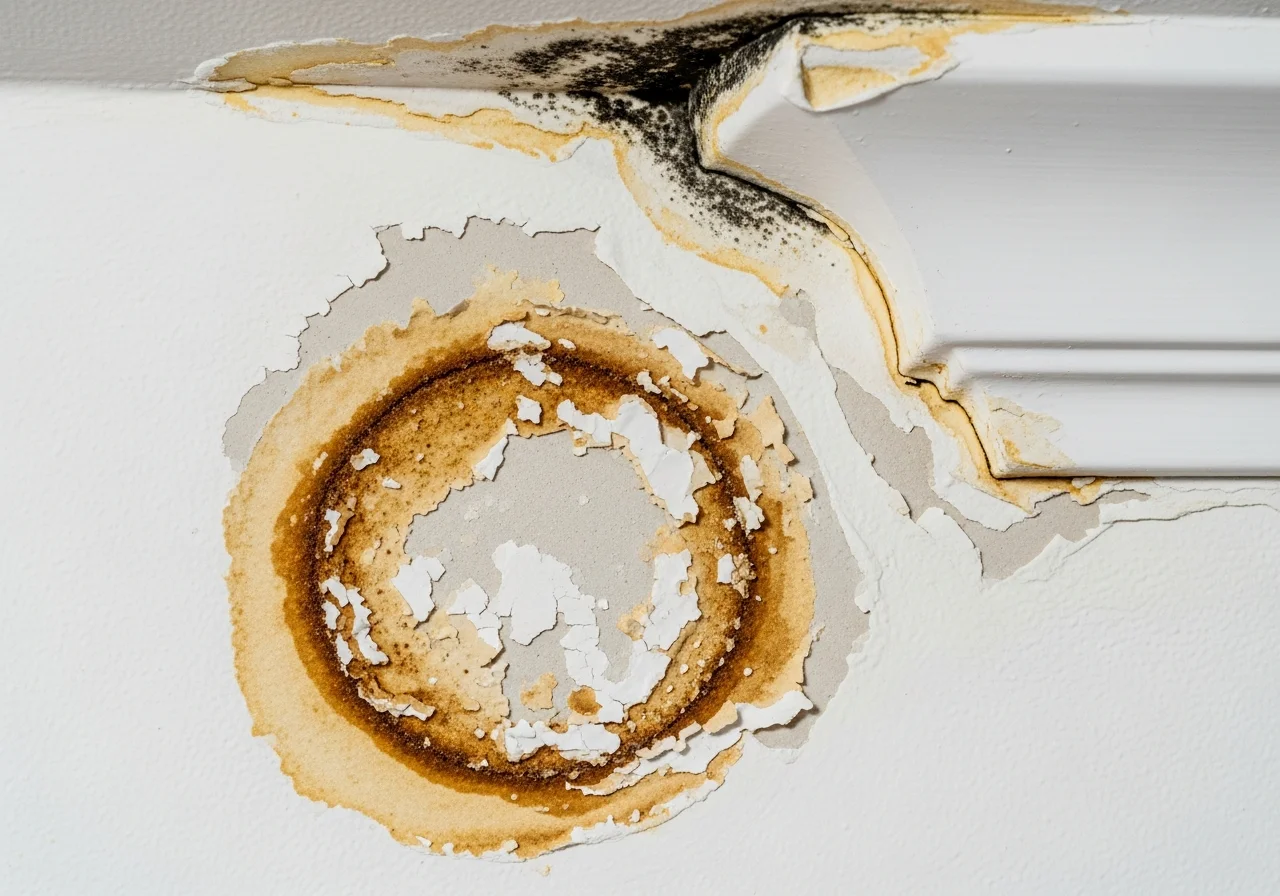
Water staining and early mold growth on interior drywall
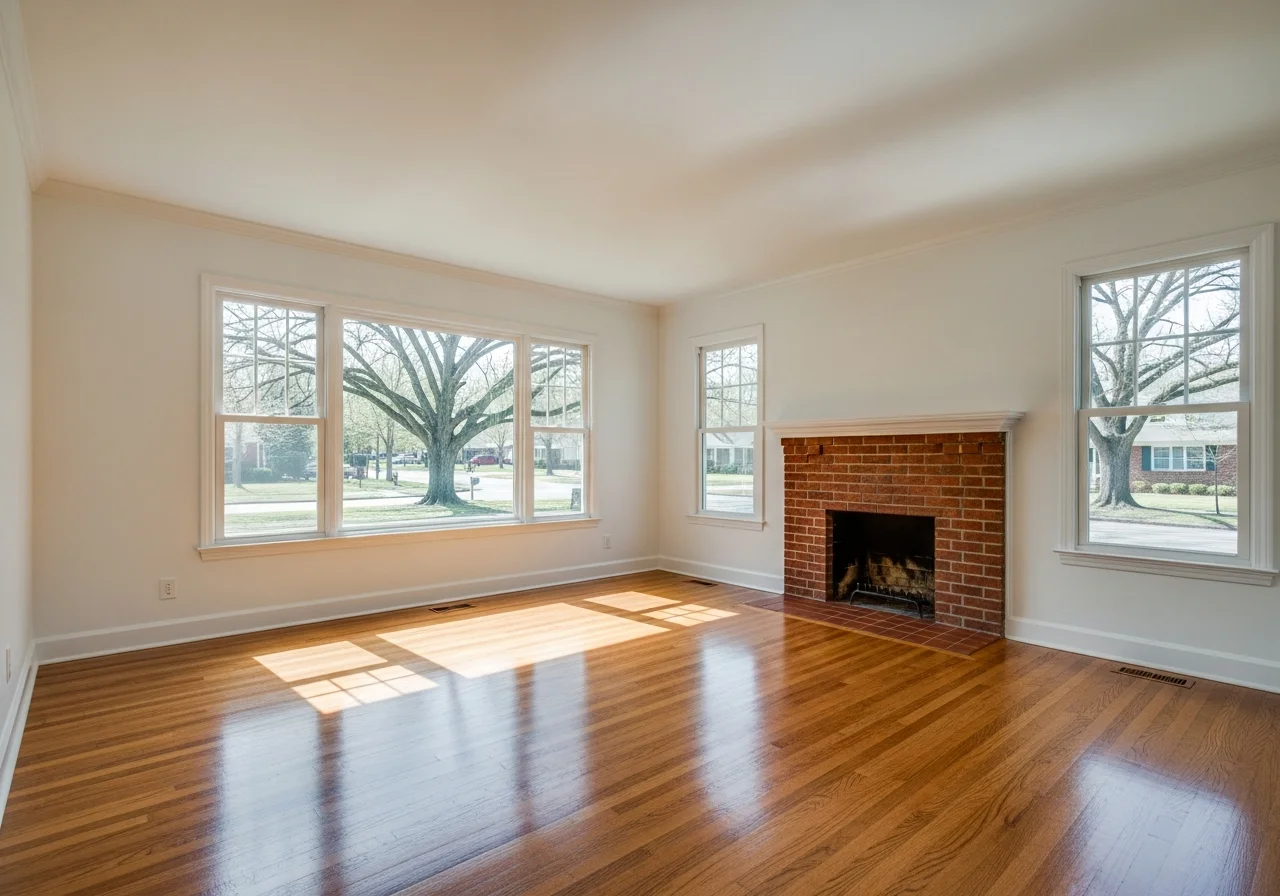
Fully restored with refinished hardwood floors and fresh finishes
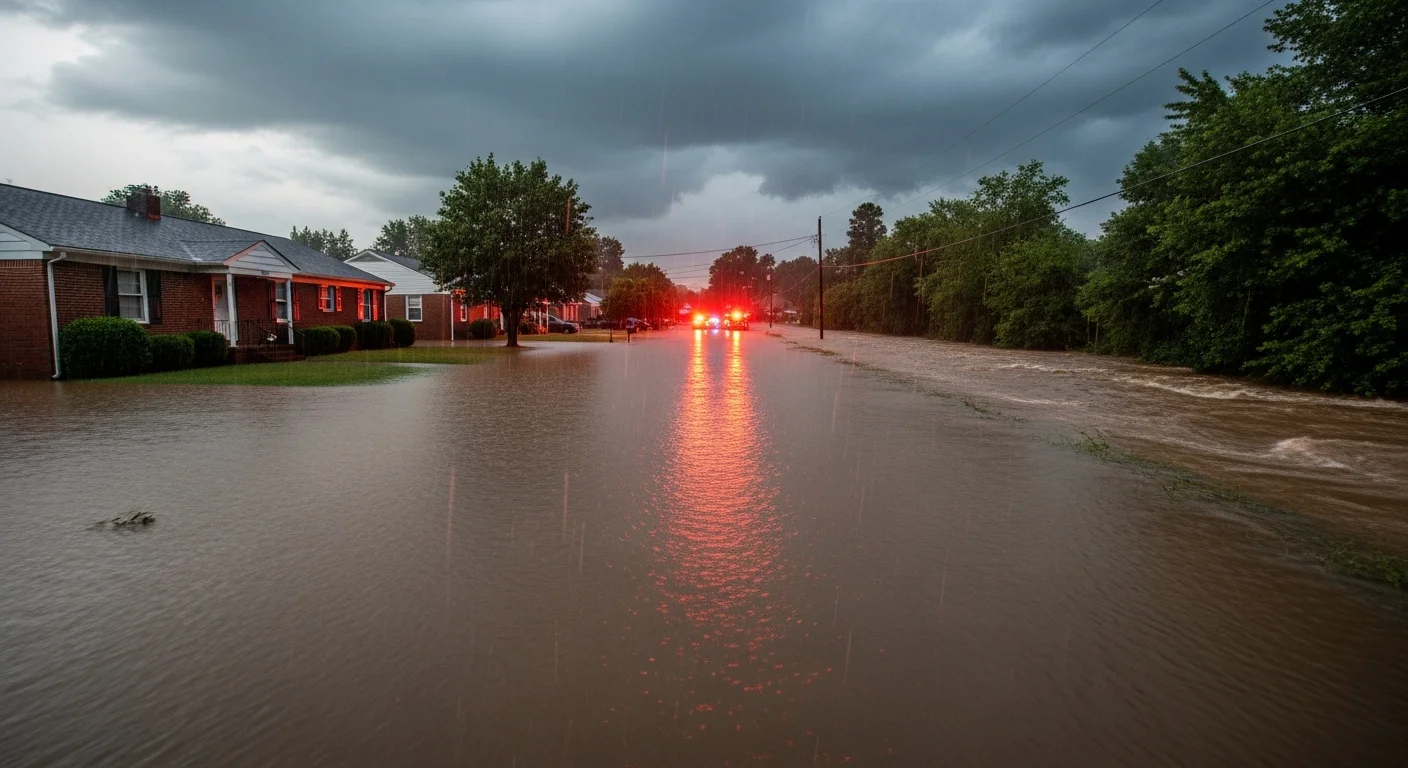
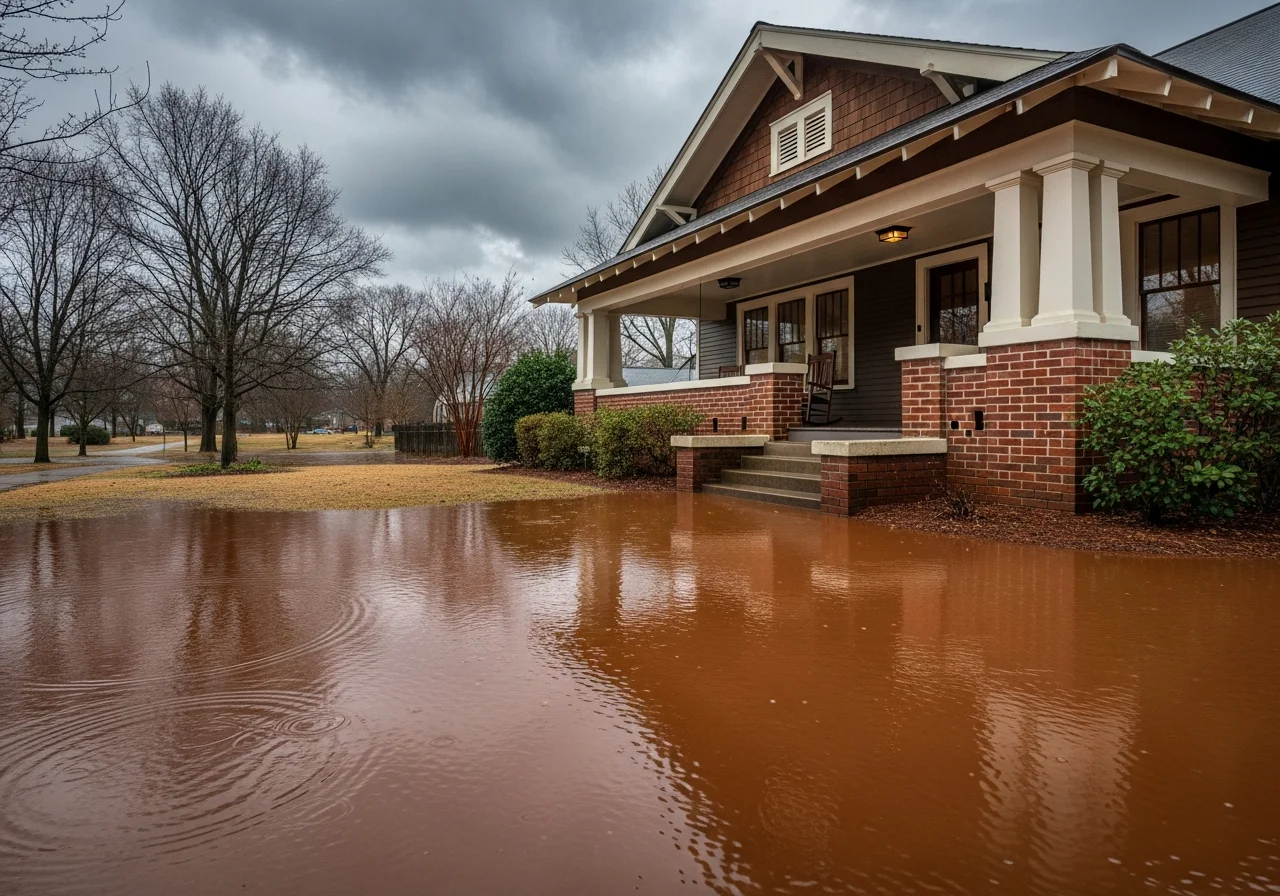
Dilworth's creek-adjacent homes are especially vulnerable to flooding
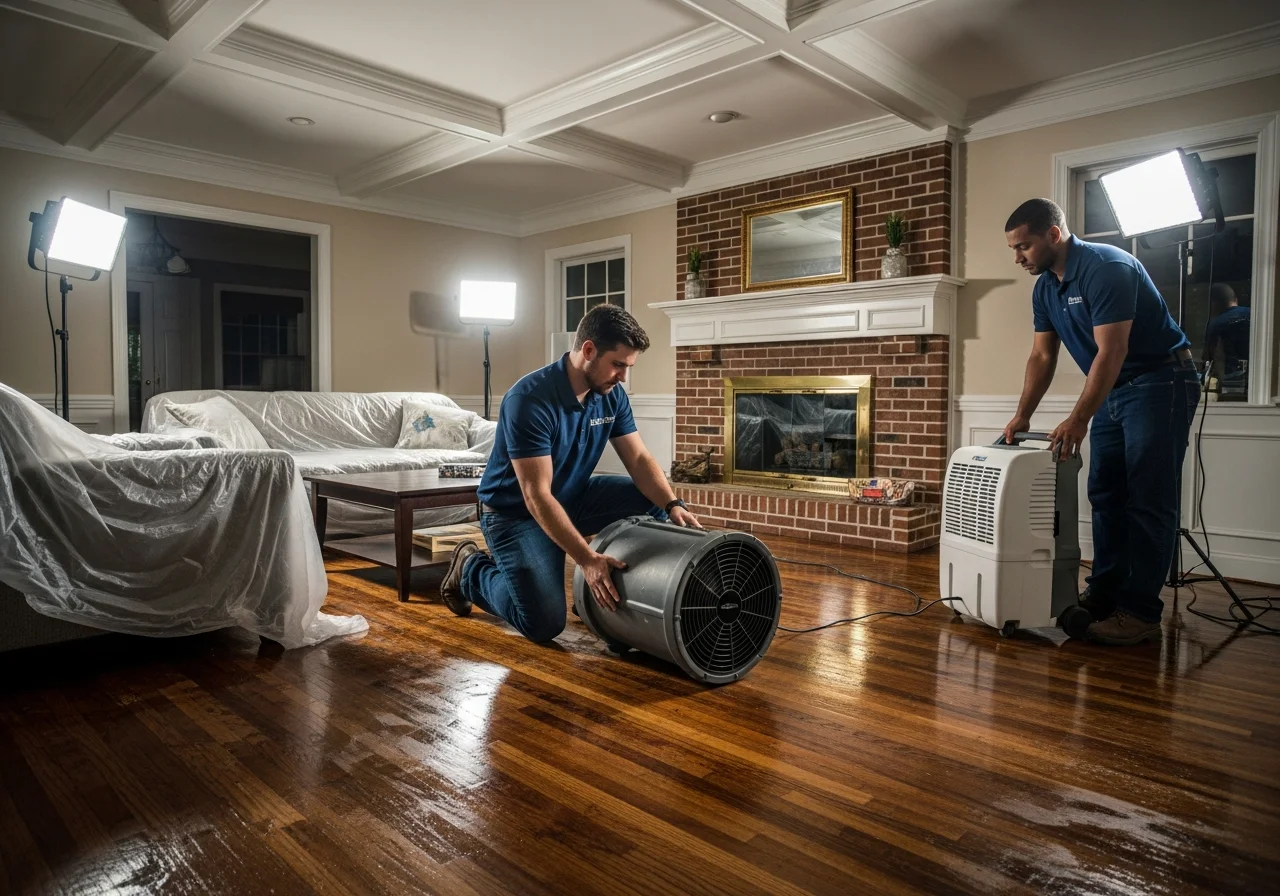
Structural drying in progress with commercial dehumidifiers and air movers
What We See Most
Common Types of Water Damage in Charlotte Homes
Burst Pipe or Supply Line
The most common emergency call in Charlotte, especially January through March. A single burst supply line can release 5-8 gallons per minute, flooding an entire floor in under an hour.
Appliance Failures
Water heaters, dishwashers, washing machines, and refrigerator ice maker lines. In Charlotte's older ranch homes, water heaters are frequently in crawl spaces without drain pans.
Storm & Flash Flooding
Charlotte receives 43.57 inches of rain annually with severe storms capable of dropping 2-3 inches in an hour. Flash flooding affects creek-adjacent properties most severely.
Crawl Space Moisture
Charlotte's signature water damage type. Clay soil moisture, vented crawl space condensation, and inadequate vapor barriers combine to damage joists, subfloors, and ductwork.
HVAC Condensate Overflow
Aging AC unit drain lines in attics or ceilings are a leading cause of sudden ceiling water damage in 1970s-90s Charlotte homes during peak summer operation.
Roof & Flashing Failures
Tropical storm remnants and thunderstorms with 60+ mph wind gusts can compromise roof integrity, allowing infiltration that may not become visible for days.
Speed is critical for Charlotte's hardwood floors — the longer they stay saturated, the
higher the risk of permanent warping.
The Palm Build Difference
Why Charlotte Homeowners Choose Palm Build
National franchises dominate the Charlotte restoration market by volume. But none of
them reference Briar Creek flood stages, Piedmont clay drainage rates, or Duke Energy
dam dynamics. That's because they don't build their operations around Charlotte-specific
knowledge.
Local Charlotte Office
Our Crompton Street hub means we're dispatching from inside the city, not from a regional franchise headquarters 45 minutes away.
IICRC Certified Technicians
Every crew lead holds current IICRC Water Restoration Technician (WRT) certification and follows the S500 standard.
Charlotte-Specific Expertise
We understand crawl space construction on Piedmont clay, the risks of galvanized and polybutylene plumbing, and Mecklenburg County insurance dynamics.
Insurance Documentation From Day One
Our moisture mapping, thermal imaging, daily drying logs, and photo documentation are formatted for the adjuster workflow.
Full-Service Restoration
From emergency extraction through final reconstruction, one company manages the entire project. No handoffs, no gaps, no delays.
Common Questions
Charlotte Water Damage FAQ
How fast can Palm Build respond to a water emergency in Charlotte?
Our Charlotte team typically arrives on-site within 30 to 60 minutes from our Crompton Street operations hub. We dispatch 24/7/365 — call (704) 464-0121 any time.
Does insurance cover water damage in Charlotte homes?
Standard homeowners insurance (HO-3) typically covers sudden and accidental water damage like burst pipes or appliance failures. It does not cover flood damage from rising water, gradual leaks, or long-term moisture problems. Mold coverage is usually sublimited to $5,000-$10,000 on NC policies.
How long does water damage restoration take in Charlotte?
Structural drying typically takes 3 to 5 days. Full restoration including reconstruction usually takes 2 to 6 weeks for a typical residential project.
What makes Charlotte water damage different from other cities?
Charlotte's Piedmont red clay soil drains at less than 0.2 inches per hour, keeping water against foundations for extended periods. The city's 1950s-70s brick ranch homes on vented crawl spaces create persistent moisture vulnerability. Charlotte also faces unique flood risk from Duke Energy's Catawba-Wateree dam system.
Should I worry about mold after water damage in Charlotte?
Yes. Charlotte's warm, humid climate means mold can begin growing within 24 to 48 hours of sustained moisture. This is especially true in crawl spaces, where humidity often exceeds 70%.
How much does water damage restoration cost in Charlotte?
Standard water damage restoration in Charlotte typically ranges from $7,000 to $22,000. Projects involving crawl space remediation or mold treatment can range from $14,000 to $55,000 or more.
Do I need flood insurance in Charlotte?
If your property is in a FEMA Special Flood Hazard Area (Zone AE), flood insurance is required by most mortgage lenders. Even in Zone X, Charlotte's flash flooding history and Duke Energy dam release risk mean private flood insurance is worth considering.
What areas of Charlotte does Palm Build serve?
We serve all of Charlotte and Mecklenburg County including Myers Park, Dilworth, Plaza Midwood, SouthPark, Ballantyne, Steele Creek, Huntersville, Cornelius, Davidson, NoDa, Fourth Ward, Elizabeth, Mint Hill, Matthews, and Pineville.
Water Damage in Charlotte? We're Already on the Way.
Palm Build's Charlotte team responds in 30-60 minutes with truck-mounted extraction, commercial drying equipment, and insurance-ready documentation. Call our local line now — we answer 24/7.