(888) 245-5155
Call Now 24/7
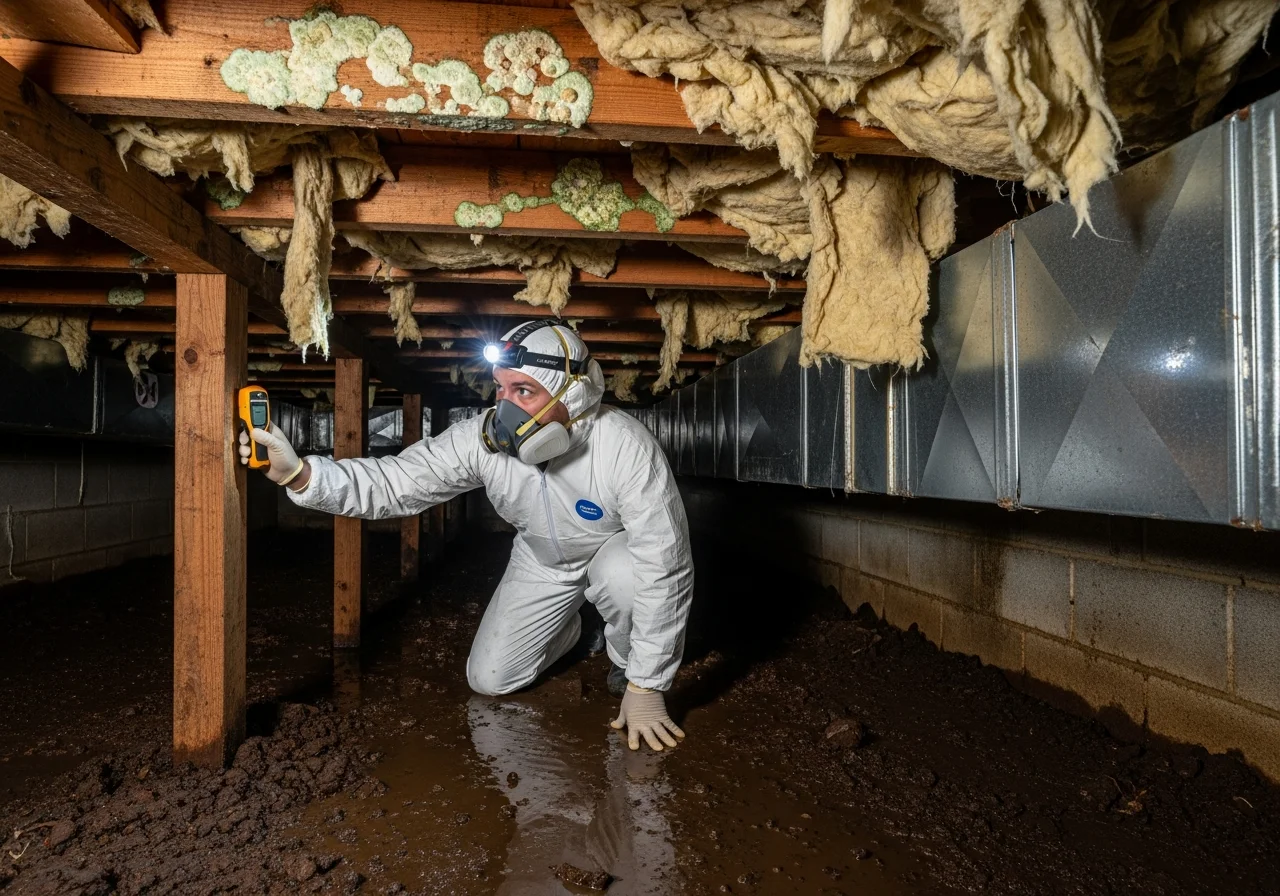
Professional technician inspecting mold and moisture damage in a Charlotte NC crawl space with clay soil foundation
CHARLOTTE NC — CRAWL SPACE SPECIALISTS

Crawl Space Cleanup & Encapsulation in Charlotte, NC

Charlotte's Piedmont red clay soil and vented crawl space construction create some of the worst crawl space conditions in the Southeast. Palm Build provides complete crawl space remediation — mold removal, moisture control, encapsulation, and structural repair — addressing the root cause, not just the symptoms.

Local Office — Charlotte, NC Same day Response IICRC Certified

Same day

Emergency Response

24/7

Dispatch Available

IICRC

Certified Technicians

Charlotte's Crawl Space Crisis

Why Charlotte Has the Worst Crawl Spaces in the Southeast

Charlotte's combination of Piedmont red clay soil, vented crawl space construction, and humid subtropical climate creates the perfect storm for crawl space failure. The city sits on some of the most poorly draining soil in the eastern United States, builds homes on top of ventilated foundations that invite moisture in, and subjects those crawl spaces to year-round humidity that never lets them dry out. The result: chronic moisture problems, structural wood damage, mold growth, and indoor air quality issues that affect a majority of homes with crawl space foundations across Mecklenburg County.

Piedmont Red Clay Soil

<0.2 in/hr

Clay drainage rate

Charlotte sits atop Cecil and Appling series red clay — expansive, poorly draining soil with infiltration rates below 0.2 inches per hour. After rainfall, this clay holds moisture against your foundation like a sponge pressed against a wall. The water doesn't drain away in hours like sandy soil — it persists for days or weeks, continuously feeding moisture into the crawl space through the foundation walls, footer joints, and any crack in the block or poured concrete. During Charlotte's heavy rain events (2-3 inches in an hour during summer thunderstorms), the clay becomes fully saturated and surface water pools against foundations in every low spot. This standing water enters crawl spaces through foundation vents, over footer lips, and through block wall capillary action. Charlotte's clay soil is the single biggest contributor to crawl space moisture problems in the metro area, and no amount of interior treatment will solve a crawl space problem if exterior drainage isn't addressed.

Humidity and Condensation

70-90%

Crawl space humidity

Charlotte's summer dew points regularly exceed 70 degrees Fahrenheit, with relative humidity reaching 80-90% during July and August. When this warm, humid air enters a vented crawl space and contacts cooler surfaces — floor joists, ductwork, water pipes, and the ground itself — condensation forms. This condensation is not occasional or minor. On a 90-degree Charlotte day with 85% relative humidity, a vented crawl space can produce enough condensation to wet floor joists, saturate fiberglass insulation (which then falls from the joists), create standing water on vapor barriers, and coat metal ductwork with moisture that drips onto the ground below. The condensation cycle repeats every day from May through September, creating chronic moisture conditions that are indistinguishable from an active water leak. Crawl space humidity readings of 70-90% are not the exception in Charlotte — they are the norm in vented crawl spaces.

43+ Inches of Annual Rainfall

43.6 in

Annual rainfall

Charlotte receives an average of 43.57 inches of rain per year with no true dry season — rain is distributed relatively evenly across all twelve months. This means the clay soil beneath Charlotte homes is never fully dry. Even during the driest months (October-November), soil moisture levels remain high enough to generate vapor through uncovered crawl space floors. During wet seasons (March-April and July-August), soil saturation reaches levels that push liquid water through foundation walls and into crawl spaces. Charlotte's rainfall pattern creates a year-round moisture challenge that distinguishes it from drier southeastern metros. Combined with the clay soil's refusal to drain, this rainfall ensures that Charlotte crawl spaces never get a break from moisture pressure.

Vented Crawl Space Design Flaw

Pre-2009

Homes with vented design

Building codes in North Carolina historically required foundation vents in crawl spaces — the theory being that air circulation would prevent moisture buildup. This theory works in arid climates. In Charlotte's humid subtropical climate, it's catastrophically wrong. Foundation vents invite warm, humid air into the crawl space, where it contacts cooler surfaces and condenses. The vents that were supposed to reduce moisture actually introduce it. A large percentage of Charlotte homes built before 2009 (when North Carolina code changed to allow sealed crawl spaces) have vented crawl space foundations. Many of these vents are still open, still introducing humid air, and still causing the moisture problems they were meant to prevent. The building science community now universally recognizes vented crawl spaces in humid climates as a design failure — but tens of thousands of Charlotte homes still have them.

Warning Signs

6 Signs Your Charlotte Home Has a Crawl Space Problem

Crawl space problems in Charlotte rarely announce themselves dramatically. They develop slowly — over months or years — and by the time symptoms appear inside the home, the crawl space condition has usually progressed significantly. Here are the warning signs every Charlotte homeowner should recognize, especially in homes with vented crawl space foundations.

Musty or Earthy Smell

The most common first sign Charlotte homeowners notice is a persistent musty smell on the first floor — particularly noticeable when the HVAC system cycles on. This smell originates in the crawl space, where mold and mildew are actively growing on floor joists, subfloor panels, fallen insulation, and sometimes the ground itself. Because warm air in the crawl space rises into the living space through gaps around plumbing penetrations, electrical runs, and HVAC supply boots, the odor migrates upward through the stack effect. In Charlotte's humidity, this smell intensifies in summer months and often becomes the defining characteristic of a home that visitors notice immediately. If your Dilworth bungalow or Myers Park ranch smells musty despite regular cleaning, the crawl space is almost certainly the source.

Sagging or Bouncy Floors

When crawl space moisture saturates floor joists and subfloor panels over months or years, the wood softens and loses structural integrity. Joists develop fungal decay (wood rot) that reduces their load-bearing capacity, and subfloor panels — particularly the OSB (oriented strand board) used in 1980s-2000s Charlotte construction — swell, delaminate, and lose rigidity. The result is floors that sag, bounce, or feel spongy underfoot. You might notice a low spot in a hallway, a bounce when walking across the living room, or doors that have started sticking because the floor has shifted. In severe cases, the floor deflects visibly when walked on. Charlotte homes in Dilworth, Plaza Midwood, and Elizabeth with original tongue-and-groove subfloor over deteriorating joists are especially susceptible.

Condensation on Windows and Pipes

Excessive crawl space moisture raises the overall humidity level in the home. When indoor humidity exceeds 55-60%, condensation appears on cold surfaces — window glass in winter, cold water pipes year-round, toilet tanks, and air conditioning ducts. If you notice persistent window condensation, water droplets on your bathroom cold water supply lines, or wet spots on your HVAC registers, the crawl space is likely pushing moisture into the living space faster than your HVAC system can remove it. Charlotte homes with crawl space humidity of 80-90% can raise interior humidity to 60-70% — well above the 30-50% range recommended for comfort and health.

Increased Allergy Symptoms

The connection between crawl space mold and indoor air quality is well documented. Mold spores, dust mite colonies (which thrive in humid environments), and bacterial growth in the crawl space all produce airborne particulate that migrates into the living space. Charlotte residents with crawl space problems often report worsening allergy symptoms, unexplained respiratory issues, and chronic sinus problems that improve when they leave the house and return when they come home. Children, elderly residents, and anyone with asthma or compromised immune systems are particularly affected. If your allergist can't explain why your symptoms are worse at home than elsewhere, request a crawl space inspection before pursuing medical treatments.

Falling or Sagging Insulation

Fiberglass batt insulation installed between floor joists in Charlotte crawl spaces has a predictable failure pattern. When crawl space humidity saturates the fiberglass, the batts absorb moisture, become heavy, and pull away from the joists — sagging first, then eventually falling to the ground. Once fallen, the insulation sits on the damp crawl space floor and becomes a breeding ground for mold and a habitat for pests. If you look into your crawl space and see insulation hanging like stalactites or lying on the ground in wet, compressed piles, you're seeing the end stage of a moisture problem that has been developing for months or years. The insulation is not the problem — it's a symptom of the underlying humidity condition.

Visible Mold or Wood Damage

By the time you can see mold growth on crawl space surfaces — white, green, or black colonies on floor joists, rim joists, sill plates, or subfloor panels — the moisture problem has been active for an extended period. Visible wood damage (soft spots, dark discoloration, crumbling material when probed) indicates fungal decay that has compromised structural integrity. In Charlotte crawl spaces, the most common mold species are Aspergillus, Penicillium, and Cladosporium, with Stachybotrys (black mold) appearing in areas with chronic water intrusion. Any visible mold or wood damage should be evaluated by a qualified remediation company — not a home inspector, not a general contractor, and not a pest control company offering mold services as a sideline.
Our Charlotte Encapsulation Process

How We Fix Charlotte Crawl Spaces — Permanently

Crawl space encapsulation isn't a single product — it's a multi-step system designed to address every moisture pathway. Here's the complete process our Charlotte team follows, from initial inspection through long-term monitoring.

01

Comprehensive Inspection

Day 1

Before any work begins, our Charlotte crawl space team conducts a full inspection — not a 15-minute walkthrough with a flashlight, but a documented assessment with moisture readings at multiple points, humidity measurements, structural wood probing for decay, mold sampling where visible growth is present, and photographic documentation of every condition found. We measure moisture content of floor joists, sill plates, and subfloor panels using pin-type and pinless meters. We record ambient humidity with calibrated hygrometers. We probe structural wood for soft spots indicating fungal decay. This inspection determines the full scope of work — whether the crawl space needs basic encapsulation, mold remediation plus encapsulation, or full-scope work including drainage, structural repair, and environmental remediation.

02

Mold Remediation

Days 2-5

If the inspection reveals mold growth on crawl space surfaces — which it does in the majority of Charlotte crawl spaces with moisture problems — remediation must happen before encapsulation. Sealing mold behind a vapor barrier doesn't kill it; it creates an environment where mold continues to grow unseen and releases spores into the enclosed space. Our Charlotte remediation team removes all fallen insulation, debris, and organic material from the crawl space floor. All affected structural wood surfaces are treated with EPA-registered fungicide applied to manufacturer specifications. Heavily contaminated or structurally compromised materials (severely decayed joists, rotted sill plates, delaminated subfloor panels) are removed and replaced. Post-remediation air quality testing confirms spore counts have returned to ambient levels before encapsulation begins.

03

Drainage Installation

Days 3-7

Charlotte's clay soil means that surface water and groundwater will continue to push against your foundation regardless of what happens inside the crawl space. For properties with active water intrusion — standing water during rain events, visible water entry through foundation walls, or hydrostatic pressure through the floor — interior drainage must be installed before encapsulation. Our drainage solutions include interior French drain systems along the foundation perimeter, sump pump installation with battery backup (Charlotte loses power during major storms), and grading corrections where the crawl space floor directs water toward the pump. Not every Charlotte crawl space needs drainage — some only have humidity-driven moisture. But when liquid water is entering the space, no amount of encapsulation will solve the problem without addressing the water source first.

04

Vapor Barrier Installation

Days 5-8

The vapor barrier is the centerpiece of crawl space encapsulation — a continuous, sealed sheet of reinforced polyethylene that covers the crawl space floor and extends up the foundation walls to the top of the block or the sill plate. We use 20-mil reinforced vapor barrier material — not the 6-mil poly sheeting sold at hardware stores, which tears during installation and degrades within a few years. The barrier is sealed at every seam with polyethylene tape rated for below-grade adhesion, attached to foundation walls with mechanical fasteners and sealant, sealed around every pier, pipe penetration, and support column, and terminated at the wall with a clean, professional finish. Foundation vents are permanently sealed with rigid foam board and sealant — eliminating the primary moisture entry point that has been feeding humidity into your Charlotte crawl space since the house was built.

05

Dehumidifier Installation

Days 7-9

Encapsulation without active dehumidification is incomplete — especially in Charlotte's climate. Even with a properly sealed crawl space, moisture will continue to enter through concrete foundation walls (which are vapor-permeable), soil vapor pressure beneath the barrier, and seasonal humidity fluctuations. A commercial-grade crawl space dehumidifier maintains humidity below 55% year-round, preventing condensation and mold growth regardless of exterior conditions. We install Santa Fe, Aprilaire, or equivalent commercial-grade units sized for the specific square footage and moisture load of your Charlotte crawl space. These are not residential dehumidifiers — they're purpose-built systems that operate continuously with direct drainage and are rated for the temperature ranges found in below-grade environments. Properly sized, a crawl space dehumidifier uses less electricity than the moisture damage it prevents would cost to repair.

06

Monitoring & Warranty

Ongoing

After encapsulation is complete, we install a remote humidity monitoring system that tracks crawl space conditions continuously and alerts both you and our team if humidity exceeds target thresholds. This monitoring catches issues before they become problems — a dehumidifier filter that needs cleaning, a drain line blockage, or a new water intrusion source that develops. Our Charlotte crawl space encapsulation includes a warranty on materials and workmanship, with annual inspection options that verify continued performance. The monitoring data also provides documentation for real estate transactions — Charlotte home buyers are increasingly aware of crawl space conditions, and documented encapsulation with monitoring history adds measurable value to your property.

Charlotte Pricing

Crawl Space Encapsulation Costs in Charlotte

Crawl space costs in Charlotte vary dramatically based on what's needed. A simple encapsulation for a dry crawl space with no mold runs around $5,100. A typical project with mold remediation runs $12,000-$20,000. A full-scope project with drainage, structural repair, and remediation can exceed $20,000. Here are real-world cost ranges based on Charlotte metro projects — not national averages.

Basic Encapsulation

Moisture control only — no mold, no drainage needed

Crawl space debris removal $300 – $800
20-mil vapor barrier (floor + walls) $1,500 – $2,500
Foundation vent sealing $200 – $500
Commercial dehumidifier $1,200 – $1,800
Total basic encapsulation ~$5,100

This scope applies to crawl spaces with humidity problems but no active mold growth, no standing water, and no structural damage. In Charlotte, this represents roughly 20-30% of crawl space projects — most have at least some mold by the time homeowners call.

Encapsulation + Mold Remediation

Mold present on joists/subfloor — no drainage needed

Mold remediation (joists, subfloor, sill plate) $4,000 – $10,000
Insulation removal & disposal $800 – $1,500
Structural wood treatment $500 – $1,200
Complete encapsulation system $3,500 – $5,000
Post-remediation air testing $300 – $600
Total with mold remediation $12,000 – $20,000

This is the most common scope for Charlotte crawl space projects. The majority of homes we inspect in Dilworth, Plaza Midwood, Myers Park, and Elizabeth have some degree of mold on crawl space structural wood that requires remediation before encapsulation.

Full Scope with Drainage & Structural Repair

Standing water, structural damage, and/or mold present

Interior French drain system $3,000 – $6,000
Sump pump with battery backup $1,200 – $2,500
Mold remediation (full scope) $5,000 – $12,000
Structural joist/sill plate repair $2,000 – $8,000
Complete encapsulation system $4,000 – $6,000
Total full scope $20,000+

Full-scope projects are common in Charlotte homes near creek corridors (Briar Creek, Little Sugar Creek) and in low-lying areas where groundwater intrusion is active. These properties need drainage solutions in addition to encapsulation — sealing the space without addressing the water source will trap water inside.

Every Charlotte crawl space is different. Call (704) 464-0121 for a free inspection and detailed estimate.

We'll tell you exactly what your crawl space needs — and more importantly, what it doesn't — before any work begins.

Neighborhood-Level Risk

Which Charlotte Neighborhoods Have the Worst Crawl Space Problems

Crawl space problems in Charlotte are not distributed evenly. Neighborhoods with older construction, proximity to waterways, and low-lying topography have significantly worse crawl space conditions than newer developments on higher ground. Here are the Charlotte neighborhoods where we see the most severe crawl space issues — and what drives the problems in each area.

Dilworth

Critical Risk

Built: 1890s-1930s

Primary risks: Little Sugar Creek proximity, century-old foundations, infill development disrupting drainage

Dilworth's crawl spaces are among the most problematic in Charlotte. The neighborhood's proximity to Little Sugar Creek exposes properties to elevated water tables, and century-old rubble-stone and brick-pier foundations offer minimal moisture resistance. Original construction predates modern vapor barrier requirements, and many crawl spaces have exposed earth floors with no moisture protection whatsoever. Infill development on formerly vacant lots has disrupted natural drainage patterns, directing stormwater toward existing homes. Dilworth properties frequently show mold on original heart-pine joists, deteriorated brick piers requiring stabilization, and standing water during rain events.

Plaza Midwood

Critical Risk

Built: 1903-1960s

Primary risks: Briar Creek flooding, galvanized drain line failure, mixed foundation types

Plaza Midwood sits adjacent to Briar Creek — one of Charlotte's most flood-prone waterways — and the neighborhood's mix of Craftsman bungalows, postwar ranches, and infill construction creates a range of crawl space challenges. Pre-war homes have rubble-stone foundations and minimal clearance. Postwar ranches have concrete block foundations with the original foundation vents still open. Properties near Briar Creek experience elevated groundwater that enters crawl spaces through hydrostatic pressure during wet seasons. The neighborhood's aging galvanized drain lines add sewage leak risk to the moisture equation — when a cast-iron or galvanized drain line fails beneath the house, Category 3 water enters the crawl space and requires environmental remediation in addition to plumbing repair.

Myers Park (Older Portions)

High Risk

Built: 1920s-1950s

Primary risks: Briar Creek floodplain, mature tree root intrusion, high-value property at stake

The older sections of Myers Park — particularly properties between Queens Road and Briar Creek — face crawl space challenges similar to Dilworth but with higher financial stakes. These homes are often valued at $800,000-$3,000,000+, and their crawl spaces contain aging plumbing, HVAC systems, and electrical that represent significant repair costs when moisture damage occurs. Mature tree roots penetrate foundation walls and footer joints, creating water entry points. Briar Creek floodplain exposure adds periodic flooding risk. The combination of high property values, complex older construction, and active moisture sources makes Myers Park crawl space work some of the most expensive — and most important — in Charlotte.

Elizabeth

High Risk

Built: 1900s-1940s

Primary risks: Low elevation, aging foundations, proximity to medical center construction

Elizabeth sits at a relatively low elevation compared to surrounding neighborhoods, and its crawl spaces reflect both age and topography. Foundation walls are original brick or stone, many without damp-proofing. The ongoing expansion of Atrium Health's Carolinas Medical Center campus has altered local grading and stormwater flow, directing additional surface water toward adjacent residential properties. Elizabeth homes frequently show chronic crawl space moisture with mold on joists, deteriorated floor insulation, and musty odors that permeate the first-floor living space. The neighborhood's walkability and proximity to Uptown make it popular with buyers, but crawl space conditions are consistently among the worst we encounter in Charlotte.

Wesley Heights

High Risk

Built: 1900s-1930s

Primary risks: Clay soil concentration, variable grading, historic construction limitations

Wesley Heights shares many of Dilworth's crawl space challenges — aging foundations, exposed earth floors, and construction that predates modern moisture management. The neighborhood's rolling topography creates grading conditions where some homes sit in natural drainage swales that channel surface water toward foundations during rain events. Because Wesley Heights is designated as a local historic district, exterior modifications (including foundation drainage improvements) may require Historic Landmarks Commission approval, adding timeline complexity to remediation projects. Interior crawl space work — encapsulation, mold remediation, dehumidifier installation — generally does not require historic review, but drainage solutions that affect the foundation exterior may.

Chantilly / Belmont

High Risk

Built: 1920s-1950s

Primary risks: Low-lying terrain, older plumbing, growing property values at risk

These adjacent neighborhoods northeast of Uptown sit in lower-elevation terrain that collects stormwater from surrounding areas. Crawl spaces in Chantilly and Belmont frequently show standing water after rain events, with moisture levels that support active mold growth year-round. As these neighborhoods gentrify and property values increase, crawl space remediation has become both more common and more urgent — new homeowners purchasing renovated homes discover that the cosmetic updates did not address the underlying moisture conditions beneath the house. We've seen multiple instances where a beautifully renovated Chantilly home had a crawl space with 6 inches of standing water, visible mold on every joist, and fallen insulation covering the floor.

The Palm Build Difference

Why Charlotte Homeowners Choose Palm Build for Crawl Space Work

Charlotte has dozens of companies offering crawl space encapsulation. The difference is in how the work is scoped, how mold is handled, and what happens when the crawl space reveals problems beyond a vapor barrier and dehumidifier. Palm Build approaches crawl space work as restoration professionals — not salespeople selling a product.

Charlotte Crawl Space Specialists

We're not a national franchise applying a one-size-fits-all encapsulation template. Our Charlotte team understands Piedmont clay drainage, the specific moisture patterns in Dilworth versus Ballantyne, and the foundation types found in each era of Charlotte construction. We know which crawl spaces need drainage and which don't. We know which neighborhoods have galvanized plumbing that should be replaced during the project and which have modern PEX that's fine. This local knowledge means we scope the work you actually need — not the maximum package regardless of conditions.

Mold Remediation Before Encapsulation

Many Charlotte contractors install vapor barriers on top of existing mold — sealing the contamination behind the barrier where it continues to grow unseen. Palm Build always remediates mold before encapsulating. We remove contaminated materials, treat affected structural wood with EPA-registered fungicides, and verify with post-remediation air testing that spore counts have returned to ambient levels before any vapor barrier goes down. This approach costs more upfront but prevents the cycle of encapsulation failure that happens when mold is sealed in rather than eliminated.

Restoration Company, Not Just Encapsulators

Crawl space encapsulation companies install vapor barriers and dehumidifiers. When they encounter structural damage, plumbing failures, mold beyond their scope, or water damage that has migrated into the living space above, they refer you to another contractor. Palm Build is a full-service restoration company that handles the entire scope — mold remediation, structural joist repair, plumbing coordination, subfloor replacement, and any interior damage that originated from the crawl space condition. One company, one project manager, one scope of work from underneath the house to the living space above.

Monitoring and Accountability

Every encapsulation we install in Charlotte includes remote humidity monitoring. We don't seal your crawl space and walk away — we verify performance continuously. If humidity spikes above target levels, our system alerts both you and our team so we can identify and address the cause before damage occurs. This monitoring also provides documented crawl space history for real estate transactions — increasingly valuable in the Charlotte market, where buyers and home inspectors are more informed about crawl space conditions than ever before.

Insurance and Real Estate Documentation

When crawl space damage is caused by a covered peril — burst pipe, appliance failure, storm damage — homeowner's insurance may cover remediation and repair costs. Palm Build's documentation is formatted for insurance submission from day one, with timestamped photographs, moisture readings, and line-item scopes that adjusters can process efficiently. For real estate transactions, our inspection reports and encapsulation documentation provide the detail that home inspectors, appraisers, and buyers' agents need to evaluate the crawl space condition with confidence.

Common Questions

Charlotte Crawl Space Cleanup FAQ

Why are Charlotte crawl spaces so problematic?
Three factors combine: (1) Piedmont red clay soil holds up to 55% moisture by volume and drains at less than 0.2 inches per hour, keeping moisture against foundations for weeks; (2) Charlotte's humid subtropical climate produces 70-90% summer humidity that enters vented crawl spaces and condenses on cooler surfaces; (3) Most pre-1985 Charlotte homes were built with vented crawl space designs that actually worsen the moisture problem by introducing warm, humid air into the cooler space below the home.
How much does crawl space encapsulation cost in Charlotte?
Basic encapsulation (vapor barrier, vent sealing, dehumidifier) averages approximately $5,100 in Charlotte. Complete moisture remediation including drainage correction, mold remediation, insulation replacement, and structural joist repair can range from $12,000 to $20,000+. For crawl spaces with active mold, add $3,000-$15,000 for professional mold remediation before encapsulation.
Does encapsulation also address radon in Charlotte?
Crawl space encapsulation addresses radon entry pathways through sub-membrane depressurization — sealing the same soil-to-floor interface that both moisture and radon travel through. While Mecklenburg County has an EPA-assigned Radon Zone 3 (predicted low risk), user-submitted Charlotte residential measurements have ranged from 3 to 13 pCi/L — well above the EPA action level of 4. If radon testing shows elevated levels, encapsulation provides the foundation for a radon mitigation system.
Is crawl space work covered by insurance in Charlotte?
It depends on the cause. Crawl space damage from a covered sudden event (burst pipe flooding the crawl space) is typically covered. Gradual moisture damage, condensation, and long-term mold from humidity are generally excluded. If your crawl space moisture led to structural damage (rotted joists, subfloor failure), that structural damage may have coverage implications. Palm Build documents the cause-of-loss to determine which costs may be claimable.
Does North Carolina require permits for crawl space encapsulation?
Yes — NC requires permits for most vented-to-closed crawl space conversions. The encapsulated (closed) crawl space must meet NC building code requirements including a Class I vapor barrier, mechanical dehumidification or conditioned air supply, and a mandatory 3-4 inch termite inspection gap at the foundation perimeter. Palm Build handles all Mecklenburg County LUESA permitting and inspections as part of our encapsulation scope.
How long does crawl space encapsulation take in Charlotte?
Encapsulation only (no mold): 2-4 days. Mold remediation + encapsulation: 1-2 weeks. Full remediation with drainage correction, joist repair, and encapsulation: 2-4 weeks. Charlotte's clay soil can complicate drainage work if heavy rains occur during the installation period.
What areas of Charlotte have the worst crawl space problems?
Charlotte neighborhoods built in the 1950s-1970s on clay soil with vented crawl spaces are highest risk: Dilworth, Plaza Midwood, Myers Park (older portions), Elizabeth, Wesley Heights, Fourth Ward, and older sections of SouthPark and Cotswold. Newer neighborhoods on slab foundations (Ballantyne post-2005, newer Huntersville) generally don't have crawl space issues.

Charlotte Crawl Space Problems? We Fix the Root Cause.

Palm Build's Charlotte crawl space team addresses moisture, mold, and structural damage at the source — not just the symptoms. Encapsulation, drainage, mold remediation, and joist repair, all managed as one coordinated project.

Same day Response IICRC Certified