70-90% Summer Humidity
70-90%
Summer RH levels
Charlotte's humid subtropical climate sustains crawl space moisture well beyond safe thresholds from April through October. 2024 was the warmest year on record, extending the mold growth window.
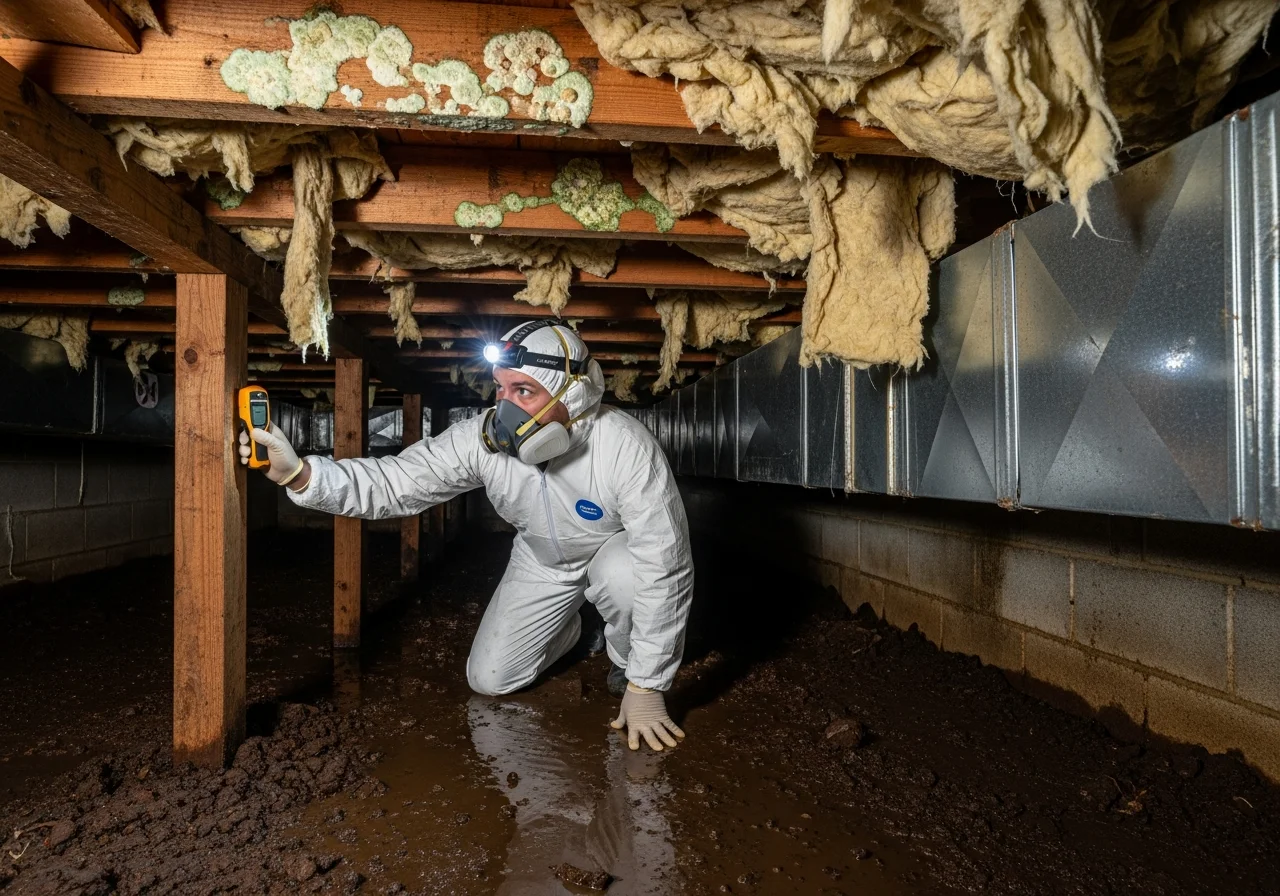
Charlotte's clay soils and vented crawl spaces create some of the highest baseline mold risk of any major Southeast city. Palm Build's IICRC-certified team provides professional containment, remediation, and prevention — with documentation your insurance carrier accepts.
Same day
Emergency Response
24/7
Dispatch Available
IICRC
Certified Technicians
Why Mold Thrives Here
Charlotte's specific combination of climate, soil, and traditional building practices creates some of the highest baseline mold risk of any major Southeast city. Understanding why is the first step toward permanent remediation — not just cosmetic cleanup.
70-90%
Summer RH levels
Charlotte's humid subtropical climate sustains crawl space moisture well beyond safe thresholds from April through October. 2024 was the warmest year on record, extending the mold growth window.
55%
Clay moisture capacity
Clay holds up to 55% moisture by volume and drains at less than 0.2 inches per hour. This slow-release soil moisture feeds crawl space humidity continuously — even weeks after the last rain.
70-90%
Crawl spaces with issues
An estimated 70-90% of older Southeast homes show moisture damage or active mold at first professional crawl space inspection. Charlotte's 1950s-70s brick ranch homes are the highest-risk category.
24-48 hrs
To mold growth
Mold begins growing within 24 to 48 hours of sustained moisture on building materials. Charlotte's warm, humid climate accelerates this — a wet crawl space in June can have visible colonies by July.
Know The Signs
Charlotte mold problems rarely announce themselves with a dramatic failure. Instead, they creep into your living space as subtle signs that are easy to dismiss for months — until remediation costs multiply.
The number-one complaint. Roughly 40% of indoor air in tested homes entered from a vented crawl space. If that air carries mold spores and damp soil odor, your living room will too.
When crawl space humidity feeds mold growth, airborne spore counts rise inside the home. The CDC notes mold exposure can cause nasal stuffiness, throat irritation, coughing, and eye irritation.
When wood moisture content exceeds 19%, it supports mold and decay organisms. Structural softening means damage is already underway — this is not just cosmetic.
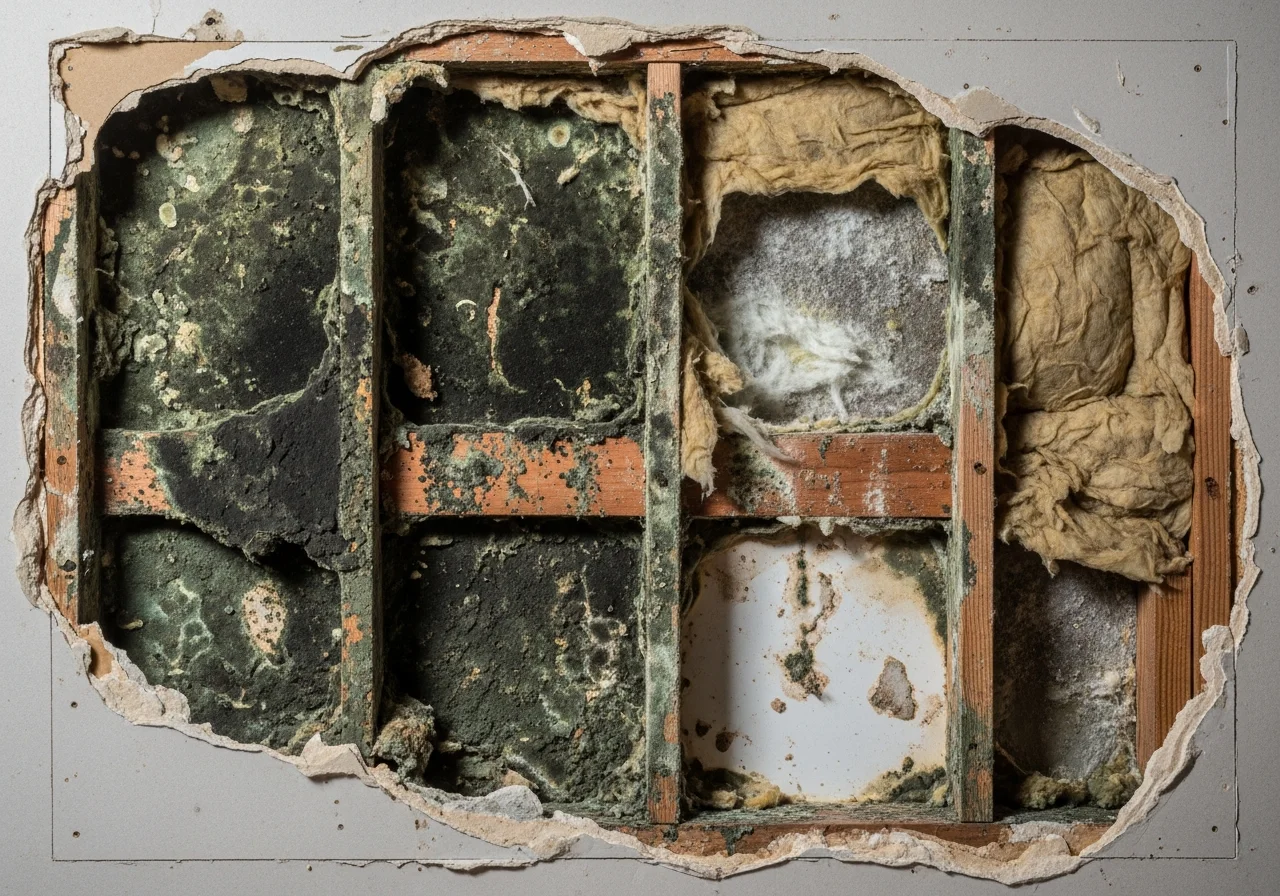
Dark patches on walls, ceilings, or near windows. In crawl spaces: black or green colonies on floor joists, subfloor panels, and ductwork. If you can see it, it's advanced.
Warm humid air contacting cooler crawl space surfaces hits the dew point. Visible condensation means relative humidity is already high enough to actively support mold growth.
If you see widespread mold covering more than 10 square feet, structural damage like rotted joists, or standing water in your crawl space — do not attempt DIY cleanup. Contact a certified mold remediation professional and document everything for your insurance claim.
Charlotte's #1 Mold Problem
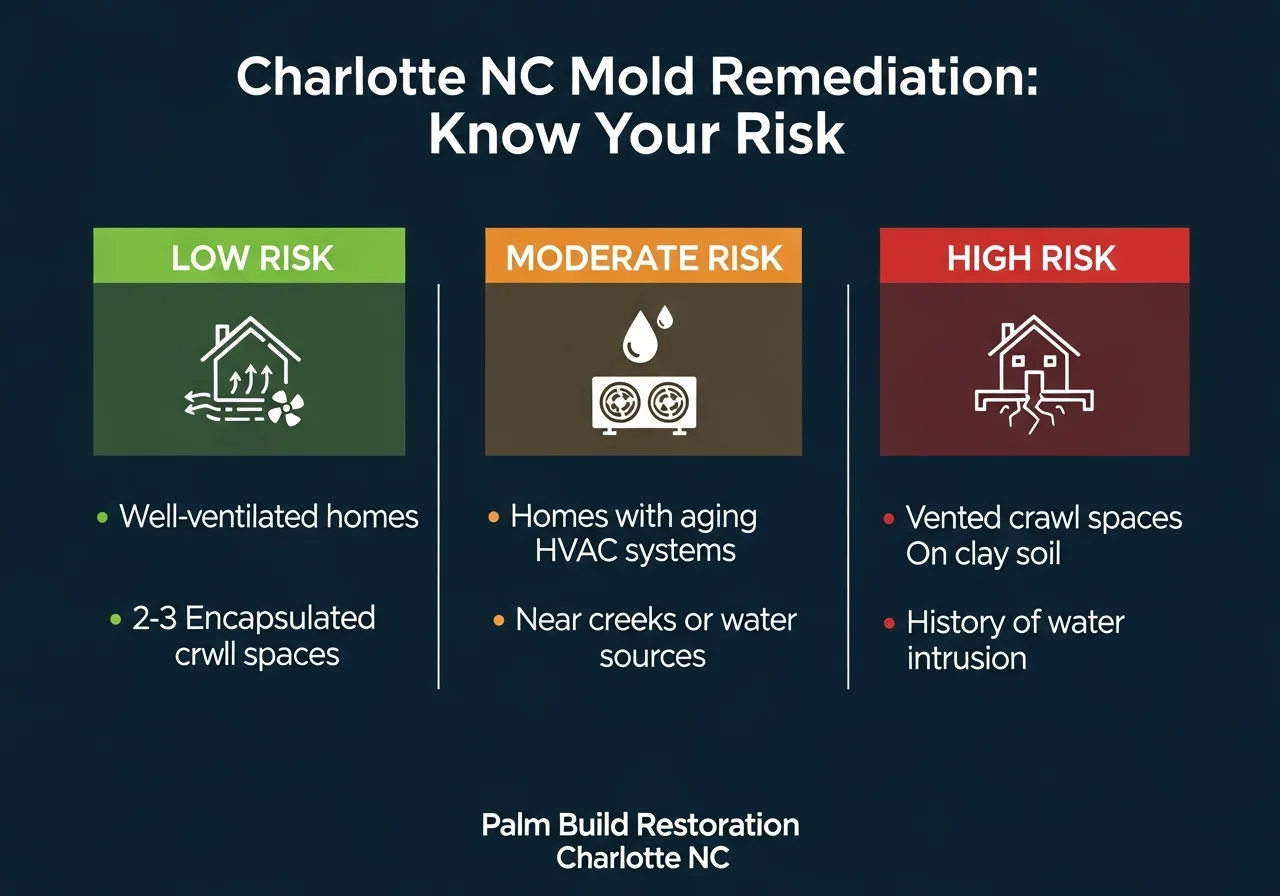
A large majority of pre-1985 Charlotte homes sit on vented crawl spaces over Piedmont clay. The result is a chronic moisture factory: warm humid outdoor air enters through foundation vents, contacts cooler surfaces, and condenses on your floor joists, ductwork, and insulation.
North Carolina's building codes now explicitly allow closed (encapsulated) crawl spaces as an alternative, requiring a Class I vapor barrier, mechanical dehumidification, and a mandatory 3-4 inch termite inspection gap. Average crawl space encapsulation cost in Charlotte runs approximately $5,100, but complete moisture remediation including drainage systems can reach $12,000-$20,000+.
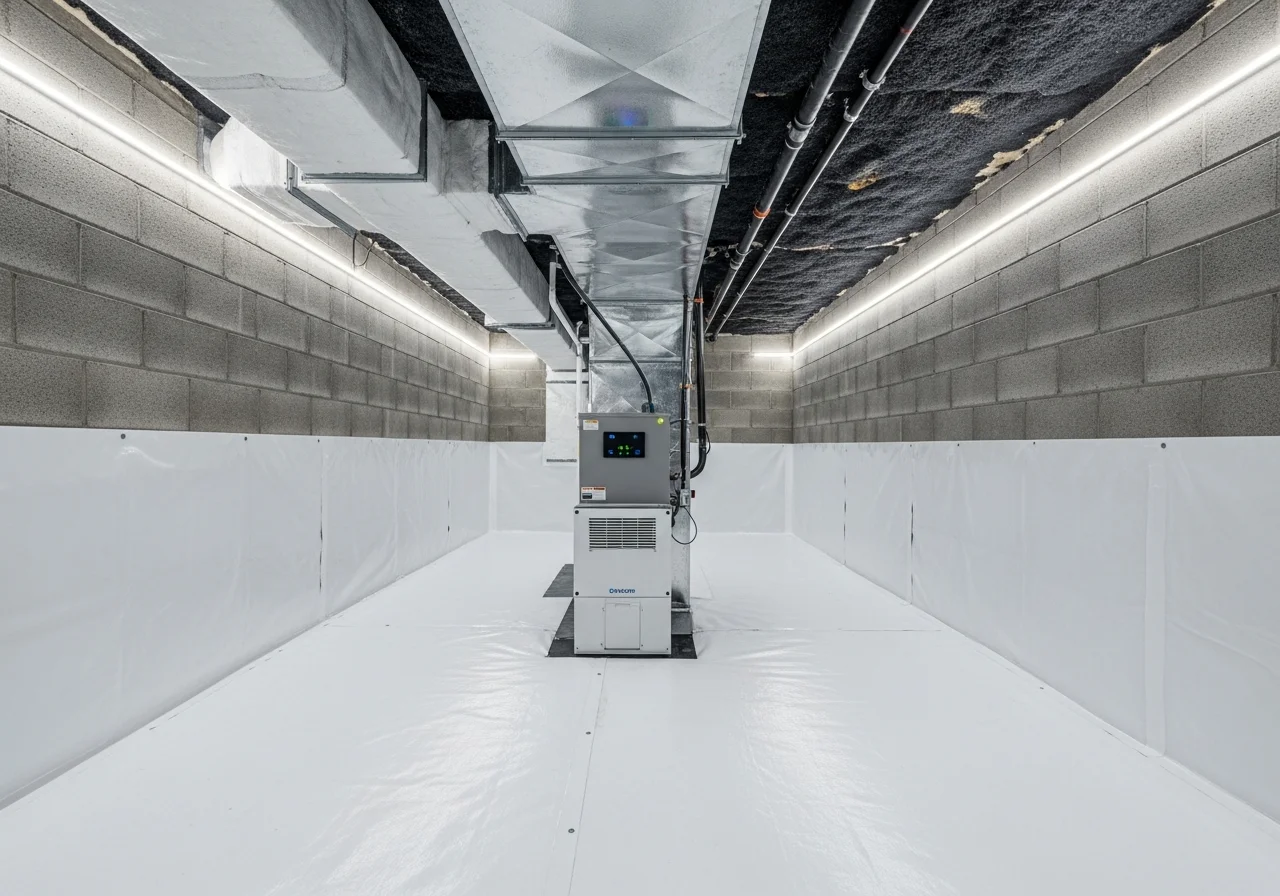
Professional mold remediation follows a strict sequence defined by the IICRC S520 standard. Here's exactly what happens when Palm Build's certified team arrives.
Comprehensive visual inspection, moisture mapping with infrared cameras, and air quality sampling. We identify the moisture source — not just the visible mold — and classify contamination level per IICRC S520.
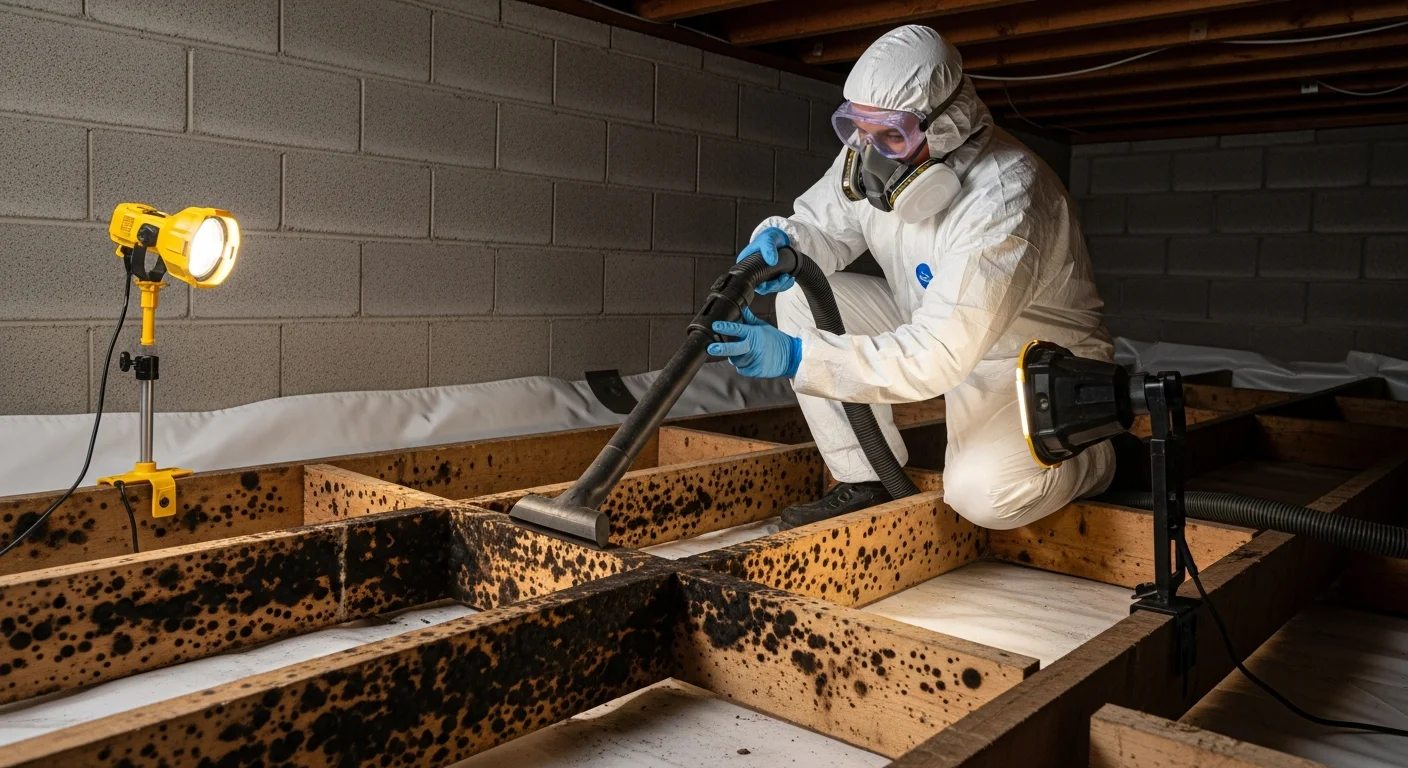
Sealed containment barriers isolate affected areas. HEPA air scrubbers create negative air pressure to prevent cross-contamination. Critical path materials are protected or relocated.
HEPA filtration runs throughout the project, capturing spores down to 0.3 microns. This protects both your home and our technicians while maintaining clean air in unaffected areas.
Contaminated materials are removed using controlled demolition techniques. Salvageable surfaces are cleaned with HEPA vacuuming, wire brushing, and media blasting as appropriate. Non-salvageable materials are double-bagged for disposal.
EPA-registered antimicrobial agents are applied to all treated surfaces. For crawl spaces, this includes joist faces, subfloor panels, and foundation walls. The treatment prevents regrowth during reconstruction.
Post-remediation air quality testing confirms spore counts have returned to acceptable levels. Visual inspection verifies all contamination has been addressed. Clearance documentation is provided for your records and insurance.
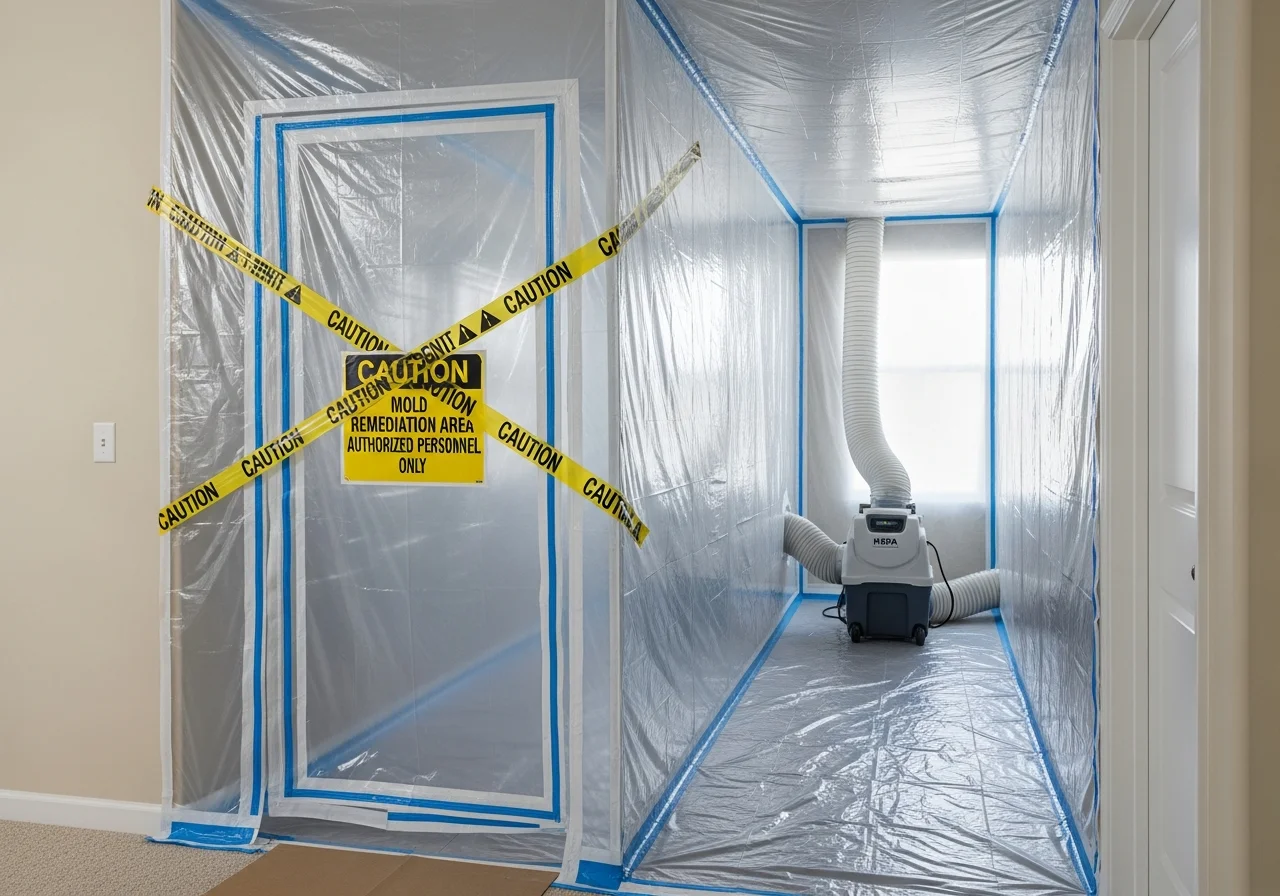
Disturbing mold without proper containment sends billions of spores airborne — potentially contaminating previously clean areas of your home. Our containment protocol ensures mold stays isolated during removal.
Polyethylene sheeting floor-to-ceiling
HEPA scrubbers pull air through containment
Full Tyvek, respirators, goggles for all crew
Air lock entry/exit with HEPA decon chamber
Charlotte Pricing
Costs vary by contamination size, materials affected, and whether crawl space work is needed. NC standard insurance policies often cap mold coverage at $5,000-$10,000 — Charlotte crawl space projects frequently exceed this.
Bathroom, closet, window frame
$1,500 – $5,000
Bedroom wall, basement section, HVAC ductwork
$5,000 – $15,000
Full crawl space, multiple rooms, structural
$15,000 – $50,000+
Our Work
NC Regulatory Landscape
North Carolina has no state-specific mold remediation license requirement. The NC State University Extension Healthy Homes program confirms: "No federal or state certification programs exist for companies or individuals providing mold remediation services."
This means anyone can legally offer mold remediation in Charlotte. The accepted industry benchmark is IICRC certification — specifically the BSR-IICRC S520 standard for professional mold remediation procedures and the Mold Remediation Specialist (MRS) certification, which requires verifiable field experience and a proctored examination.
Insurance Navigation
Mold coverage in North Carolina is limited and varies significantly by carrier and policy. Understanding your coverage before you need it can save thousands.
Mold resulting from a covered sudden water event (burst pipe, appliance failure) is typically covered up to policy sublimits
NC standard policies often cap mold coverage at $5,000-$10,000 — Charlotte crawl space remediation frequently exceeds this
Mold from gradual moisture, humidity, or long-term crawl space conditions is almost always excluded
Pre-existing mold discovered during a renovation or inspection is not covered
Some carriers offer mold endorsements for additional premium — ask your agent about expanded coverage
When mold results from a covered water event, our documentation connects the mold to the original loss — moisture maps, timeline photos, and remediation scope all formatted for the adjuster. For non-covered mold, we provide transparent pricing and financing options.
Insurance Claims GuideThe Palm Build Difference
Every crew lead holds current Mold Remediation Specialist (MRS) certification. We follow the S520 standard for containment, removal, and verification.
We've remediated hundreds of Charlotte crawl spaces. We understand Piedmont clay, vented vs. encapsulated designs, and the specific mold species common in this region.
We identify and fix the moisture source — not just scrub visible mold. Without addressing the root cause, mold returns within months. This is where most companies fail.
We recommend independent post-remediation verification — not self-testing. This eliminates conflicts of interest and gives you unbiased proof the job was done right.
When mold results from a covered water event, our documentation connects the mold to the original loss — formatted for your adjuster from day one.
Common Questions
Palm Build's IICRC-certified mold remediation team provides same-day inspections, professional containment, and complete remediation with documentation your insurance carrier accepts.
More in Charlotte