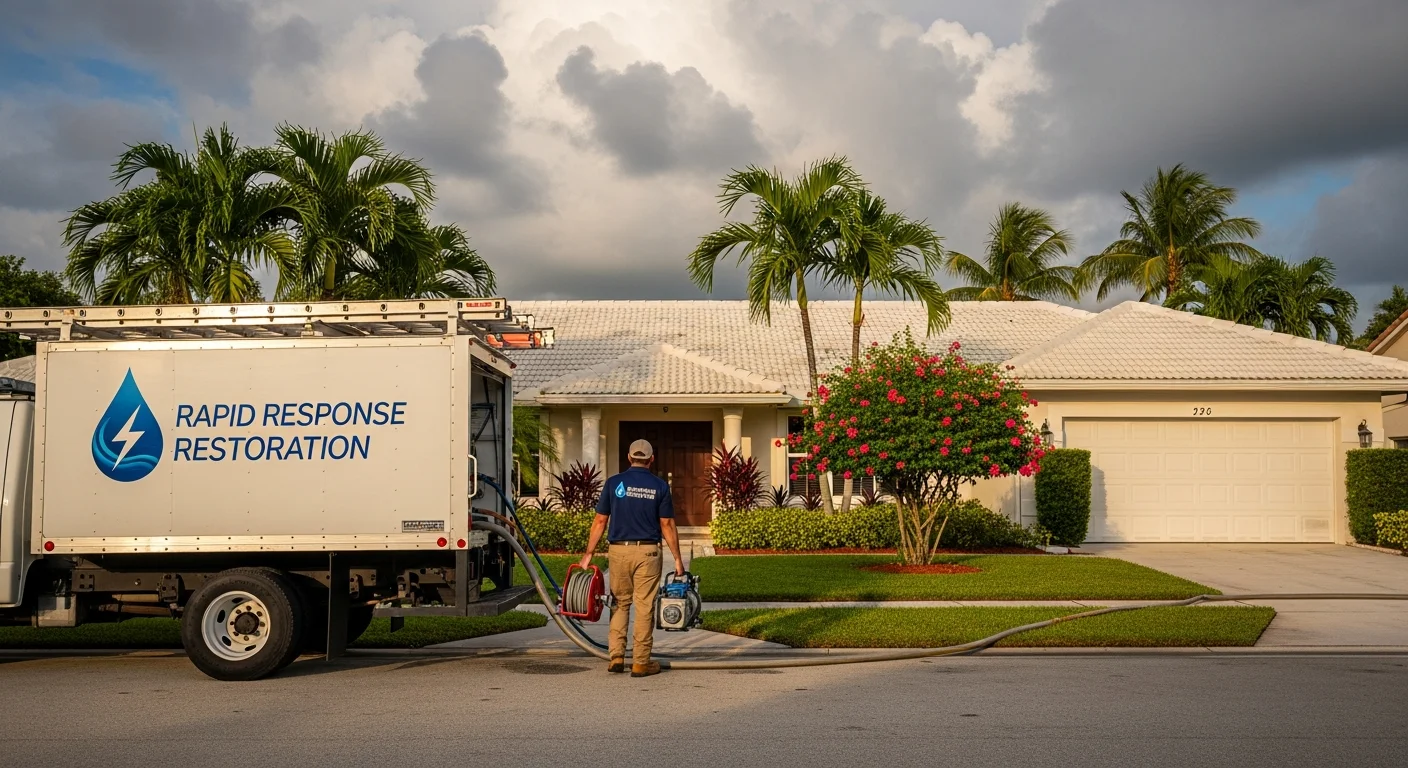
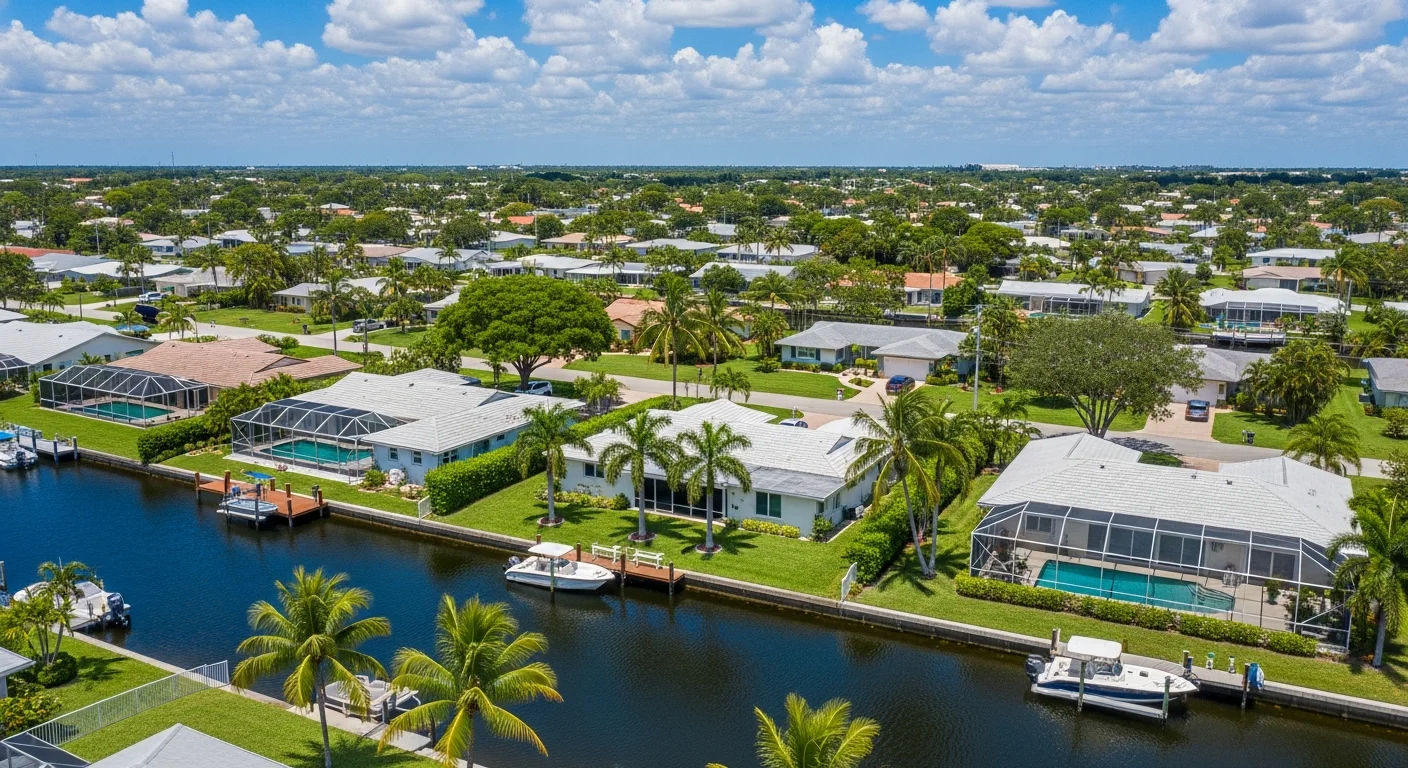
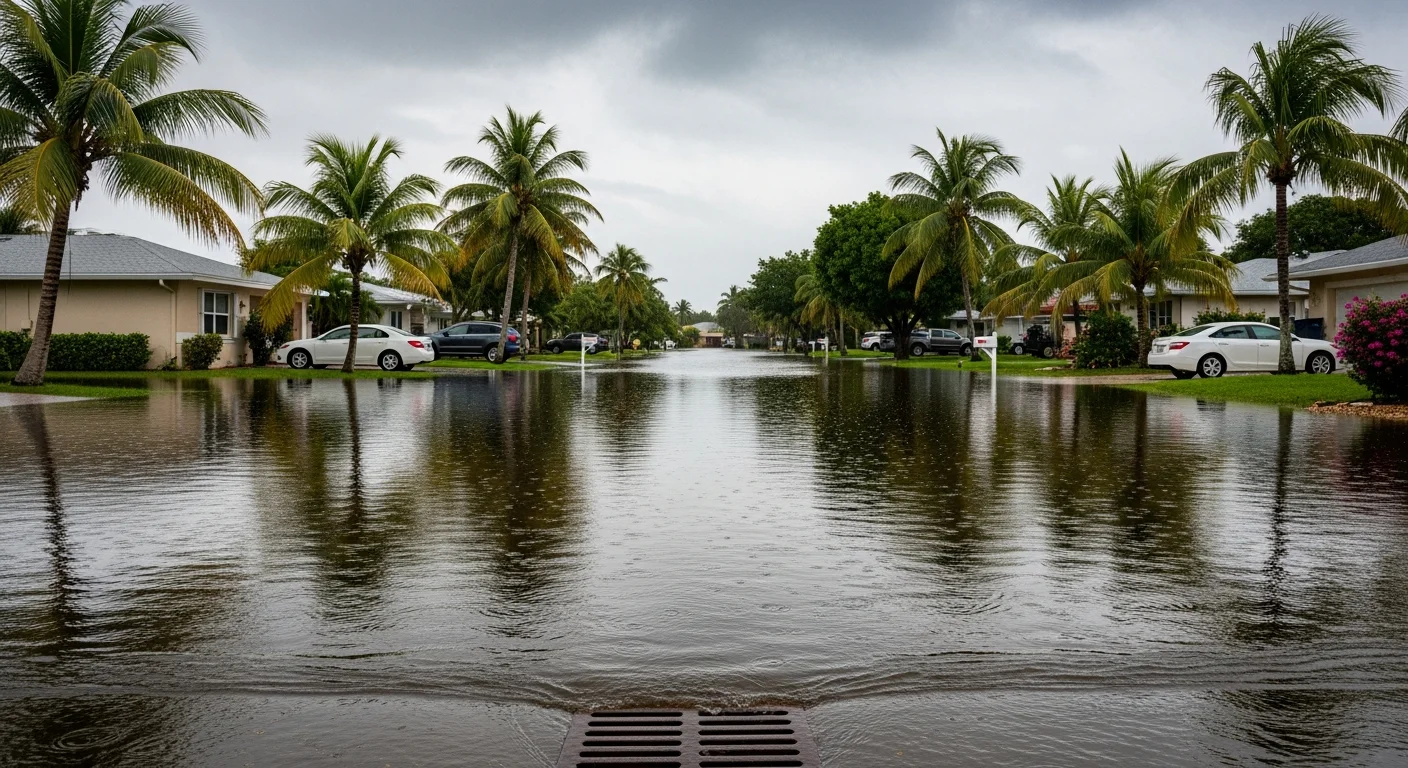
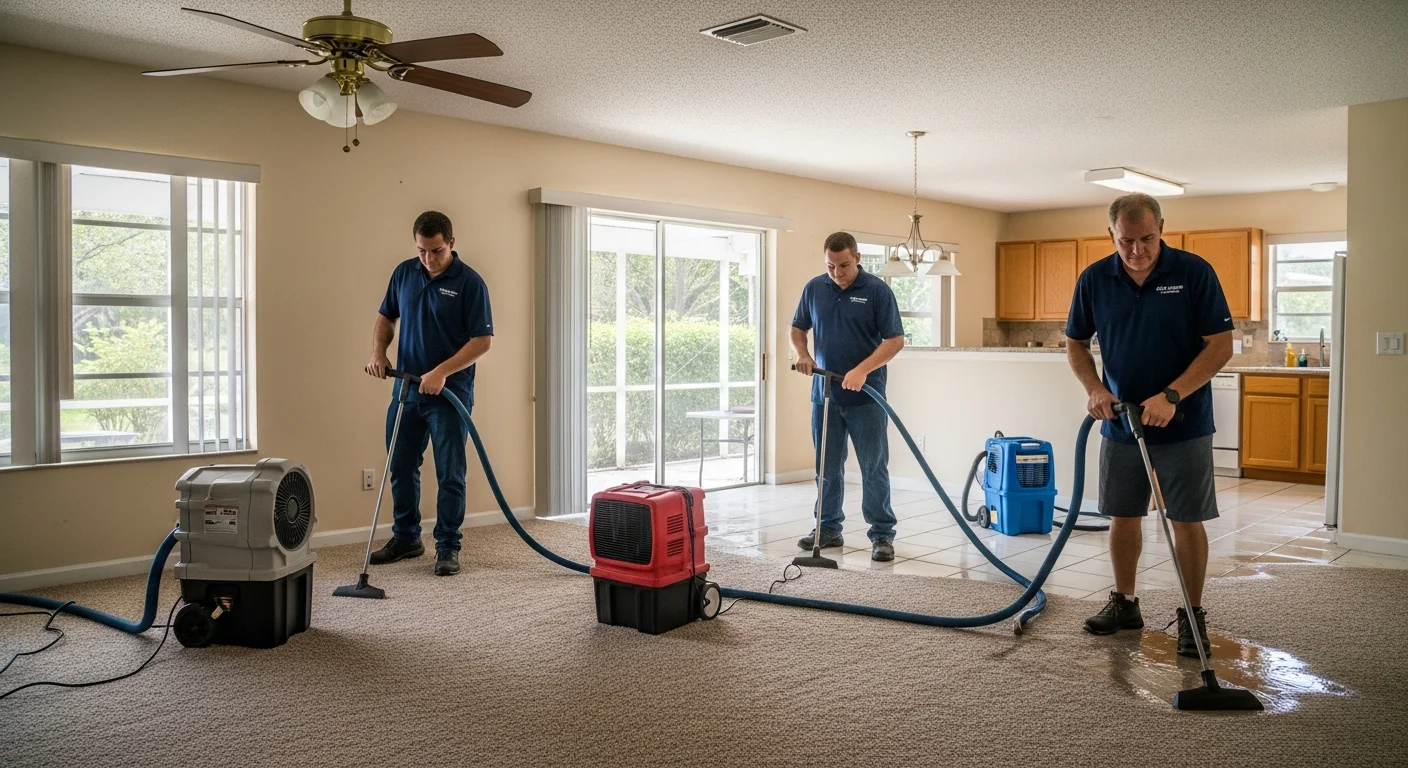
Plantation's 36-mile canal network, 65 inches of annual rainfall, and thousands of 1960s–1980s CBS slab-on-grade homes create a relentless cycle of water intrusion, slab seepage, and hidden mold. When April 2023 dropped 15 inches of rain in 12 hours, hundreds of Plantation homes flooded. Palm Build's Deerfield Beach team responds in under 30 minutes — before the damage compounds.
Deerfield Beach — Minutes from Plantation Under 30 min Response IICRC Certified
Plantation sits inside a 36-mile network of OPWCD canals fed by 65 inches of annual
rainfall, with thousands of CBS slab-on-grade homes from the 1960s through 1980s now
hitting simultaneous failure age for plumbing and roofs. When water gets in, the mold clock starts ticking immediately — and Plantation's tropical humidity makes that clock run faster than almost anywhere in
the continental U.S.
36-Mile Canal Network
36 mi
OPWCD canals
The OPWCD canal system that protects Plantation can also overwhelm it. April 2023 proved that 15 inches of rain in 12 hours backs up canals and floods streets, driveways, and slab-level rooms in Plantation Isles, Jacaranda Lakes, and Plantation Acres. Four pumping stations simply cannot move that volume of water fast enough when every canal in the 36-mile network is already at capacity.
Aging 1960s–1980s Housing Stock
40-60 yr
Average home age
Plantation’s CBS stucco ranch homes are hitting failure age simultaneously. Cast-iron drain lines corrode through after 40–50 years. Polybutylene plumbing (installed in 1978–1995 builds) degrades from chlorinated municipal water and ruptures without warning. Roof underlayment deteriorates beneath intact tiles, and hairline stucco cracks admit wind-driven rain during every thunderstorm.
65 Inches of Relentless Rain
65"
Annual rainfall
Plantation receives 65 inches of rain annually — 71% above the national average — with three-quarters falling between May and October during thunderstorm and hurricane season. Year-round relative humidity stays between 66–70%, ensuring that any moisture trapped behind walls or under slabs never dries on its own.
The 24-Hour Mold Clock
24 hrs
Until mold begins
Plantation’s tropical monsoon climate makes mold colonization extremely fast on any wet CBS wall, carpet, or drywall. At 80°F+ temperatures and 66–70% ambient humidity, mold spores germinate within 24 hours of moisture contact. Every hour between water intrusion and professional extraction multiplies remediation costs exponentially.
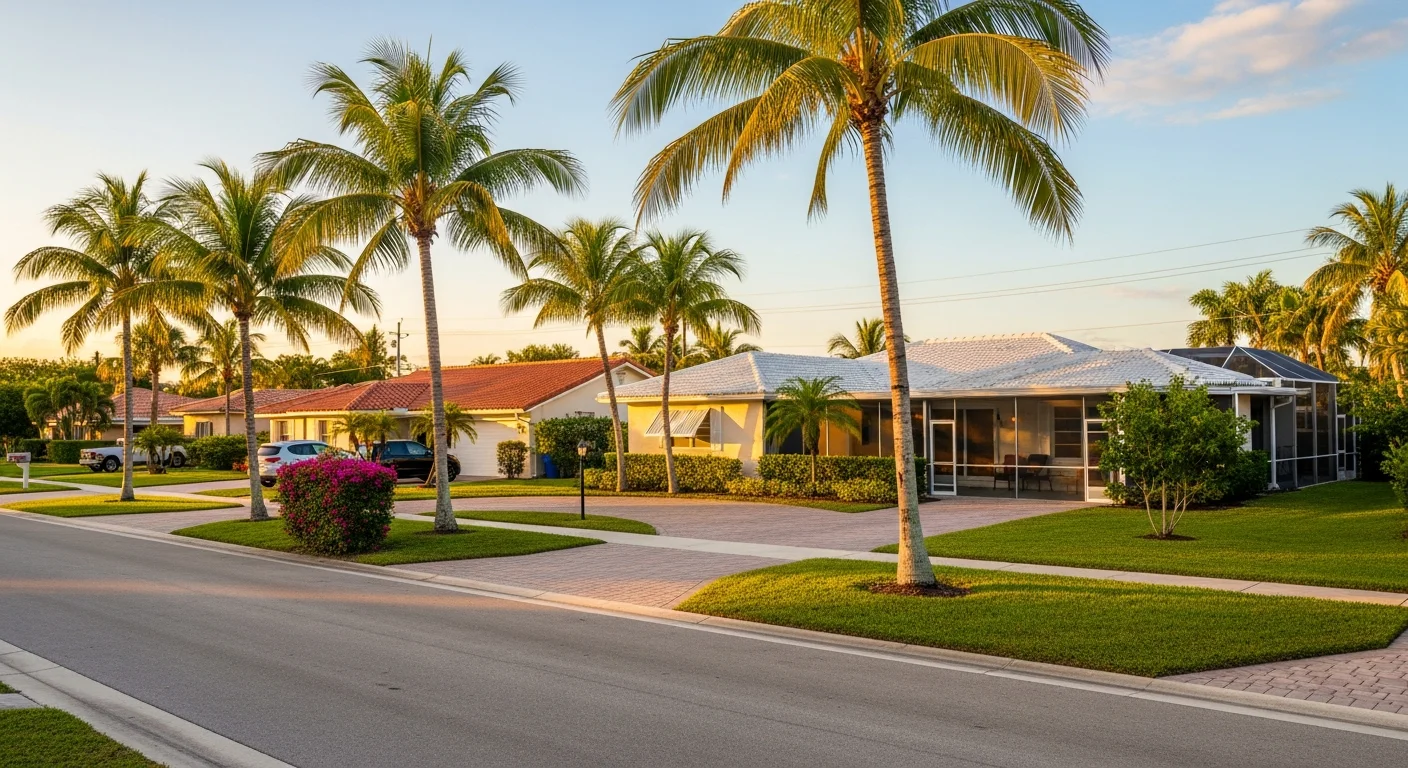
Plantation's 36-mile OPWCD canal network threads through neighborhoods like Plantation
Isles, Jacaranda Lakes, and Plantation Acres — when heavy rain overwhelms the system's
four pumping stations, canal-adjacent homes face rapid slab-level flooding.
Neighborhood Risk Profiles
Plantation Water Damage Risk by Neighborhood
Every Plantation neighborhood has its own water damage signature — shaped by proximity
to canals, age of construction, and drainage patterns. Understanding your neighborhood's
specific vulnerabilities helps you protect your home before the next storm hits.
Plantation Isles / Isla del Sol
Critical
Built: 1960s-1980sType: CBS waterfront
Canal flooding, tidal back-up
Ocean-access canals off the North New River Canal make these homes first to flood when OPWCD pumps are overwhelmed. April 2023 put water into slab-level living rooms and garages across both communities.
Jacaranda Lakes
High
Built: 1980sType: CBS stucco tile/shingle
Lake-edge flooding, wind-driven rain
Lake fetch exposure drives wind-driven rain directly into aging stucco facades. Tile roofs with deteriorated underlayment allow water migration into attic spaces and down interior walls.
Plantation Gardens
High
Built: 1950s-1970sType: CBS ranch shingle
Aging plumbing, cast-iron drains
Some of Plantation’s oldest housing stock with original cast-iron drain lines and single-pane windows. Slab leaks from corroded pipes are the most common water damage call in this neighborhood.
Historic Plantation
High
Built: 1960s-1970sType: CBS ranch acre lots
Tree damage, poor drainage
Mature oak canopy drops limbs onto roofs during storms and root systems infiltrate aging drain lines. Filled swales reduce drainage capacity, pooling water against foundations during heavy rain.
Plantation Park
Elevated
Built: 1960s-1970sType: CBS ranch
Pre-HVHZ roofs, stucco cracking
Roofs built before Florida’s High-Velocity Hurricane Zone standards are vulnerable to uplift and wind-driven rain penetration during tropical storms and thunderstorms.
Plantation Forest
Critical
Built: 1970s-1980sType: Condo
Flat-roof leaks, party-wall moisture
Flat-roof condo buildings with aging membrane systems develop ponding water and chronic leaks. Party-wall construction means one unit’s leak migrates into adjacent units before anyone detects it.
Hawks Landing
Elevated
Built: 1990s-2000sType: Luxury
Complex roof valleys, high-value finishes
Newer construction with complex multi-hip roof systems that create valleys where debris dams form. Water damage to premium hardwood, marble, and custom cabinetry drives high restoration costs.
Lago Mar Colony
Elevated
Built: 1980s-2000sType: Golf course
Roof valleys, balcony waterproofing
Golf course elevation grading directs runoff toward homes. Second-story balcony waterproofing failures send water into ceiling cavities and first-floor living spaces.
Plantation Palms
Elevated
Built: Newer CBSType: Gated
Lake-side exposure, AC leaks
Newer construction with lake-side lot exposure. Most common water damage comes from AC condensate line failures and supply line bursts in closet-mounted air handlers.
Plantation Acres
High
Built: 1970s+Type: Large lot
Canal adjacency, septic failures
Large-lot homes along OPWCD canals with many properties still on septic systems. Canal overflow during heavy rain raises the water table, causing septic backflow and Category 3 contamination.
Fountains / Plantation Pines
High
Built: Mid-riseType: Condo
Flat-roof ponding, stacked-unit water migration
Multi-story condo buildings where a single roof leak or pipe burst cascades through stacked units. Party-wall disputes and association coordination delays extend damage timelines.
Townhouses of Plantation
Elevated
Built: HOAType: Townhome
Party-wall disputes, association coordination
Shared-wall construction requires coordination between unit owners and the HOA for any water event. Delayed response due to approval processes allows mold to establish before remediation begins.
Plantation's Engineered Drainage
Understanding the OPWCD Canal System and Your Flood Risk
Plantation was built on drained Everglades farmland and depends entirely on an
engineered 3-tier drainage system to keep water off your property. When the system
works, you never think about it. When extreme rainfall overwhelms it, entire
neighborhoods flood in hours. Understanding how these tiers connect helps you assess
your real flood exposure.
Primary Canals
South Florida Water Management District (SFWMD)
North New River Canal, C-12, and C-42 provide regional flood control, moving stormwater from western Broward County eastward toward the Atlantic. These major arteries set the baseline water level that everything downstream depends on.
Secondary Canals
Old Plantation Water Control District (OPWCD)
OPWCD maintains 36 miles of waterways and operates 4 pumping stations that protect Plantation properties. This network collects neighborhood runoff and pumps it into the primary canals. When primary canals are already high, OPWCD's pumps lose effectiveness — water has nowhere to go.
Tertiary System
City of Plantation
City-maintained swales, catch basins, and roadside drains feed runoff into the OPWCD canal network. Clogged swales and undersized culverts in older subdivisions like Plantation Acres and Jacaranda Lakes create localized flooding even during moderate storms.
When Plantation receives more than 6 inches of rain in a short window, the OPWCD canal
network reaches capacity and neighborhood streets become temporary retention areas.
Zone X Does NOT Mean Zero Risk
Only about 10% of Plantation falls within FEMA-designated flood zones. The vast majority
of homes carry a Zone X designation, meaning FEMA considers them at minimal flood risk
and flood insurance is not required by lenders. But April 2023 proved that extraordinary
rainfall can overwhelm even the best-engineered canal systems.
During the April 2023 rain event, Fort Lauderdale and surrounding areas received over 25
inches of rain in less than 24 hours. Many homes that flooded throughout Broward County
\u2014 including Plantation neighborhoods \u2014 were in Zone X with no flood insurance
whatsoever. Homeowners who assumed their FEMA designation protected them faced
six-figure repair bills with no coverage.
Standard homeowner insurance does NOT cover flood damage regardless of zone
Private flood insurance is available for Zone X properties at significantly lower premiums than SFHA zones
Document your property condition annually — pre-loss documentation accelerates every claim
Rising Baseline, Slower Drainage
Sea-level rise is gradually reducing the performance of Plantation's entire canal
outfall system. OPWCD canals ultimately drain east through the primary canal network to
the Atlantic. As sea levels rise, the elevation difference that drives gravity drainage
shrinks, and tidal backflow during storm events increases. The practical impact for
Plantation homeowners: future extreme rain events may drain significantly more slowly
than identical storms did a decade ago. Properties that stayed dry during past events
may not stay dry during the next one.
Our Process
How Palm Build Restores Plantation Homes After Water Damage
Every water damage event is different, but the science of restoration follows a proven
sequence. Here's exactly what happens when you call Palm Build's South Florida team for
a Plantation emergency.
01
Emergency Dispatch
0-30 min
02
Assessment & Documentation
30-60 min
03
Water Extraction
1-4 hours
04
Structural Drying
3-5 days
05
Antimicrobial & Mold Prevention
Day 2-3
06
Restoration & Rebuild
1-6 weeks
01
Emergency Dispatch
0-30 min
24/7 Plantation dispatch from our Deerfield Beach hub. Crews arrive in under 30 minutes carrying truck-mounted extraction units, LGR dehumidifiers, and high-velocity air movers — ready to start extraction on contact.
02
Assessment & Documentation
30-60 min
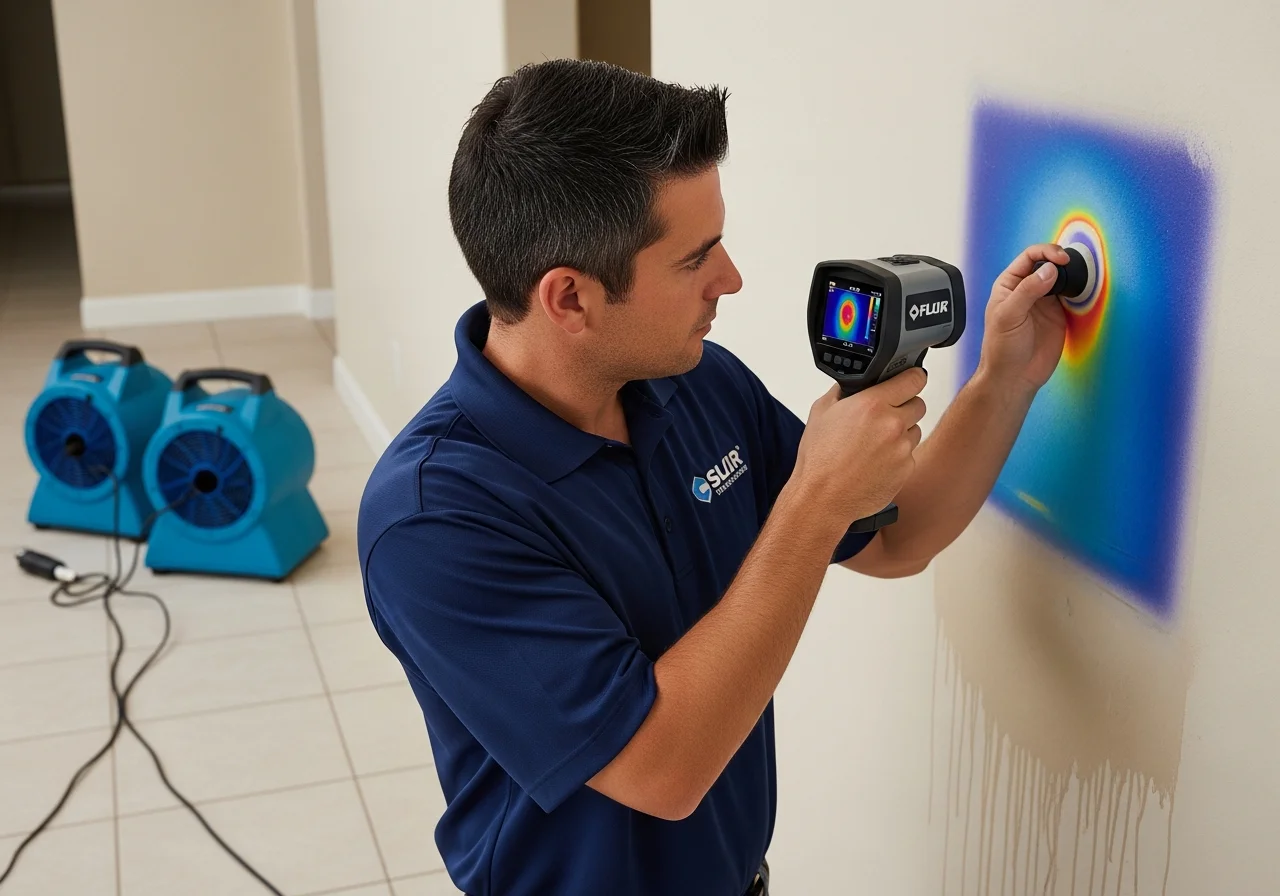
Thermal imaging and moisture mapping of every wall and floor surface. Photo and video documentation formatted to the standards Broward County carriers demand, plus a detailed Xactimate scope built on-site.
03
Water Extraction
1-4 hours
Truck-mounted and portable extraction from carpet, pad, tile, and slab joints. Water is classified as Category 1, 2, or 3 to determine protocol. High-value items are inventoried and packed out for off-site restoration.
04
Structural Drying
3-5 days
Commercial LGR dehumidifiers and high-velocity air movers positioned for maximum airflow coverage. Plantation's 66-70% ambient humidity makes commercial dehumidification non-negotiable. Daily moisture monitoring with pin and pinless meters until every material reaches dry standard.
05
Antimicrobial & Mold Prevention
Day 2-3
EPA-registered antimicrobial application to all affected surfaces including wall cavities and subfloor. In Plantation's subtropical climate, mold colonization can begin within 24-48 hours — this step is critical in the first 48 hours to prevent secondary damage.
06
Restoration & Rebuild
1-6 weeks
Drywall replacement, painting, flooring, and cabinetry. All rebuild work meets current Florida Building Code HVHZ (High-Velocity Hurricane Zone) standards. Permit coordination with Plantation Building Department included.
Why Our Plantation Process Works
1
Local Knowledge
We know Plantation's CBS construction, slab-on-grade foundations, and Broward canal flood dynamics
2
Speed
Under 30-minute response from our Deerfield Beach hub — closer than Miami-based competitors
3
Scientific Drying
Daily moisture readings calibrated for Plantation's 66-70% ambient humidity until every material reaches dry standard
4
Insurance-Ready
Xactimate documentation formatted for Broward carriers from day one — critical under FL's AOB reform
These ranges reflect real-world project costs in the Plantation market using Xactimate
pricing standards. Actual costs depend on water category, affected area, materials
involved, and whether contents require pack-out.
All estimates use Xactimate pricing standards. Actual costs depend on water category,
affected area, and materials. Most Plantation homeowner policies cover sudden water
damage — we coordinate directly with your carrier.
Plantation Seasonal Risk
When Plantation Homes Are Most Vulnerable to Water Damage
Plantation's subtropical climate creates distinct seasonal damage patterns throughout
the year. Understanding when and how water threatens your home helps you prepare during
lower-risk months and respond faster when peak season strikes. Here is what our
restoration teams see in Plantation, month by month.
January – April
Dry Season
Risk: Moderate
Plumbing and HVAC water damage. Burst or corroded supply lines, water heater failures, dishwasher and washing machine leaks. Cast-iron drains in pre-1980 homes prone to corrosion failure. Lower humidity makes this the best time for proactive inspections.
May – June
Wet Season Onset
Risk: High
Thunderstorms begin. Roof leaks and stucco water intrusion surface as rains intensify. AC systems switch to heavy use — clogged condensate drain lines cause overflow into closets and walls. First tropical disturbances possible.
July – September
Peak Hurricane Season
Risk: Critical
Highest call volume. Roof leaks, wind-driven rain intrusion, flooded patios and slab-level rooms. Canal overflow during extreme events. Emergency tarping. Mold growth spikes 1–4 weeks after events when initial drying was incomplete.
October – November
Late Storm Season
Risk: High
Residual hurricane threats, strong frontal systems. Significant mold remediation from summer storms and unmitigated leaks. Structural drying in lingering humidity.
December
Transition
Risk: Low
Drier, cooler. Plumbing failures from thermal cycling. Kitchen fires increase around holidays. Best month for preventive roof and plumbing inspections.
Insurance Navigation
Plantation Water Damage Insurance Claims: What You Need to Know
Florida's property insurance landscape is volatile — carrier exits, AOB reform,
tightened claim deadlines, and premium increases exceeding 30% year-over-year have made
navigating a water damage claim more complex than ever. Plantation homeowners need to
understand their coverage, documentation requirements, and filing deadlines before an
emergency forces them to learn on the fly.
File Within 1 Year
Florida Statute 627.70132 requires initial property insurance claims to be filed within 1 year of the date of loss. Supplemental claims — for hidden damage discovered during restoration — must be filed within 18 months. These are the shortest deadlines in the nation, and missing either one forecloses your coverage entirely.
Document Everything
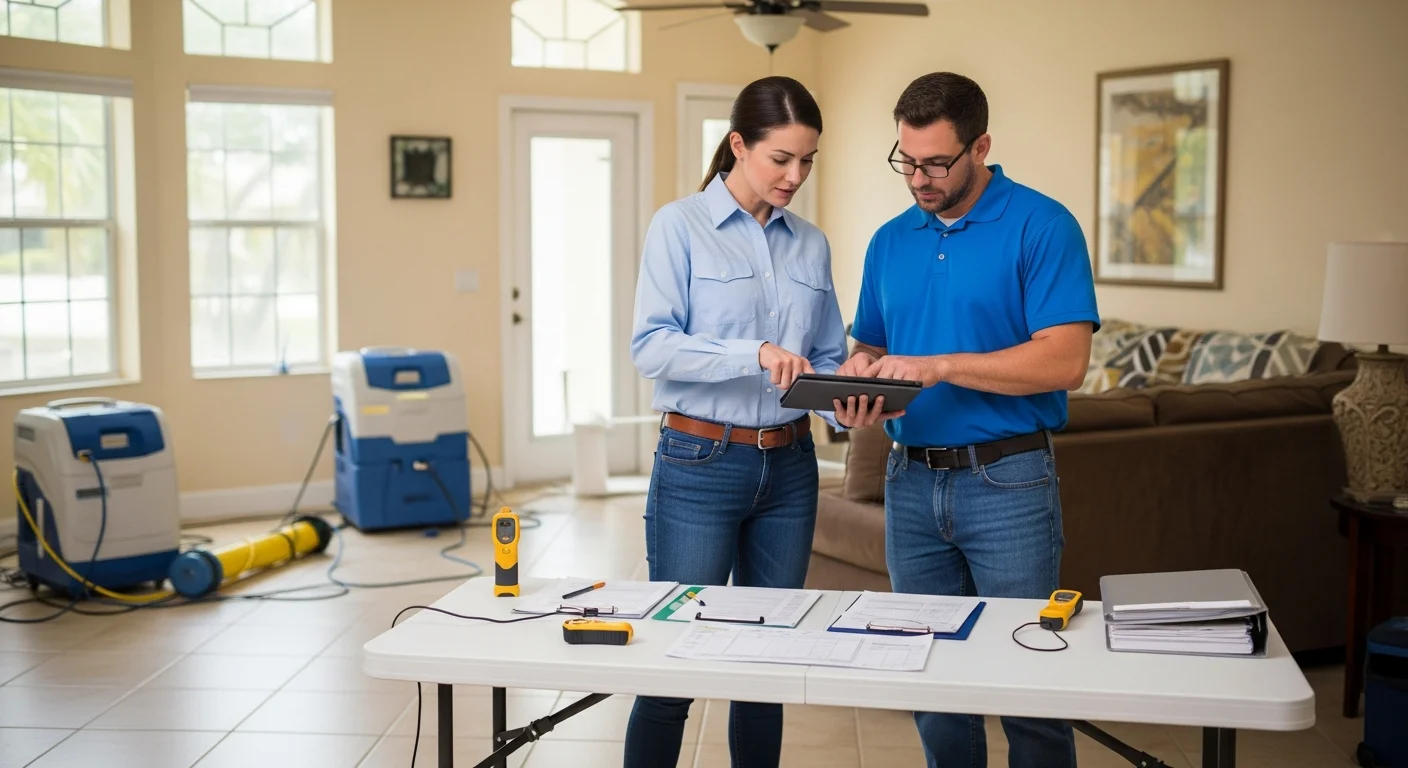
Moisture mapping, thermal imaging, photo and video evidence, and Xactimate line-item estimates are what Broward County carriers expect. Palm Build generates IICRC-compliant documentation from hour one — daily drying logs, psychrometric readings, and scope-of-loss reports formatted for the carriers that insure Plantation homes.
Know Your Carrier
Common carriers writing policies in Plantation and greater Broward County include Citizens Property Insurance, State Farm Florida, Universal Property & Casualty, Slide, Tower Hill, American Integrity, and Heritage. Each has different documentation requirements, deductible structures, and adjuster response timelines. Palm Build has worked claims with every major Florida carrier.
Flood ≠ Water Damage
Standard HO-3 homeowner policies exclude flood damage entirely. Rising water from canal overflow, storm surge, or heavy rainfall requires a separate NFIP or private flood policy. The City of Plantation itself urges residents to carry flood insurance even in Zone X — areas outside the 100-year floodplain — because localized flooding from the OPWCD canal system affects neighborhoods across the city.
Mold Sub-Limits
Many Florida carriers cap mold coverage at $10,000 to $50,000 — far less than full remediation can cost. Documenting the water source and timing immediately after a loss establishes the covered peril (sudden pipe burst, HVAC failure, storm intrusion) and ties mold growth directly to the insured event. Without this documentation, carriers deny mold claims as maintenance-related.
Broward Premiums Average $6,000+/yr
Broward County homeowners pay among the highest insurance premiums in Florida. Proper documentation and prompt mitigation protect your investment — carriers routinely reduce or deny claims when the policyholder delayed mitigation or failed to preserve evidence. Every hour of delay gives your adjuster a reason to question coverage.
Palm Build provides complete insurance documentation from day one — thermal imaging,
moisture maps, daily drying logs, and Xactimate estimates formatted for Broward County
carrier requirements.
Need help navigating a water damage insurance claim?
Palm Build's documentation meets every major carrier's requirements. We work with your
adjuster from initial inspection through final settlement — no AOB required.
Plantation Water Damage Restoration: Before & After
Real results from water damage restoration in Plantation homes — from emergency
extraction through complete rebuild. Every project is documented with before-and-after
photography for insurance and quality assurance.
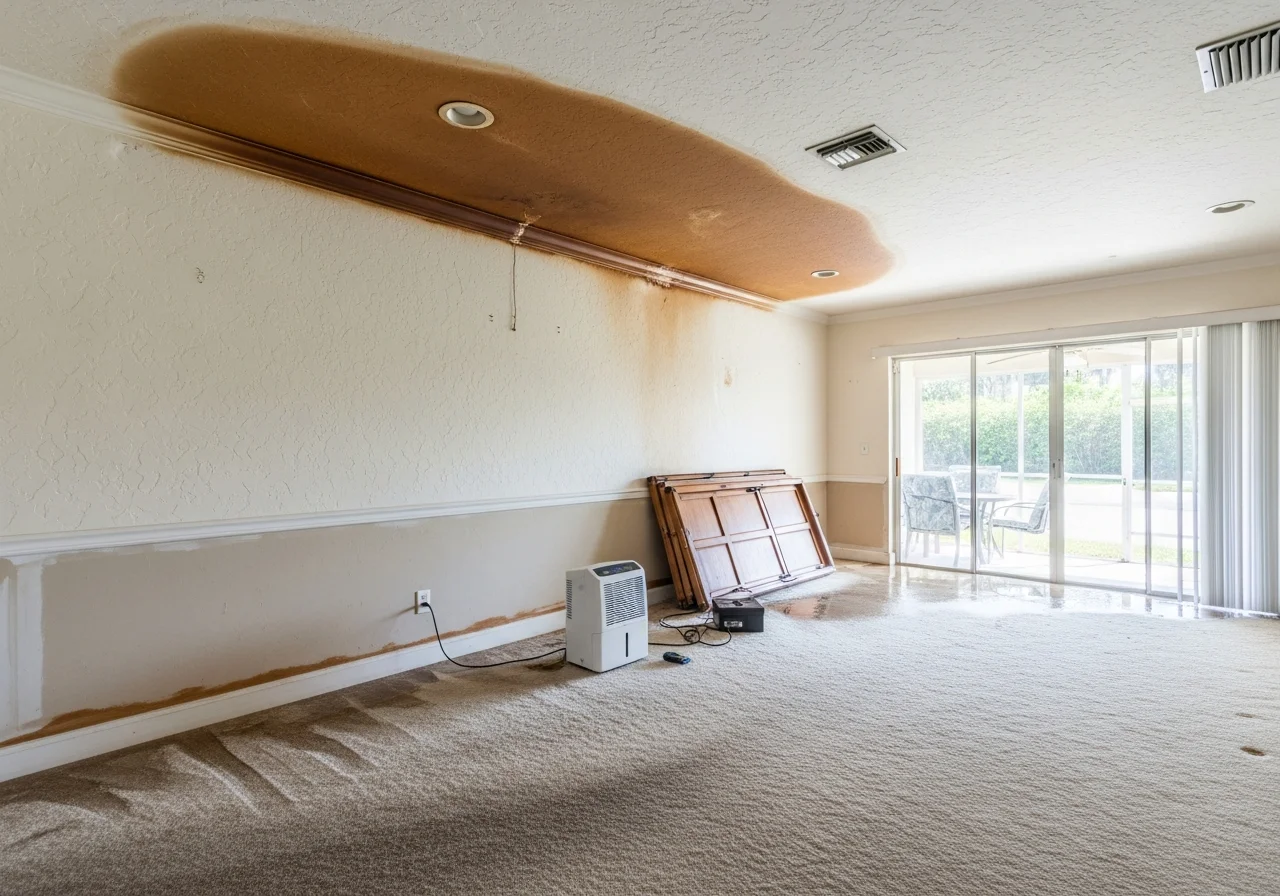
Before: Water intrusion from a slab leak in a 1980s Plantation ranch home saturated carpet, baseboards, and lower drywall
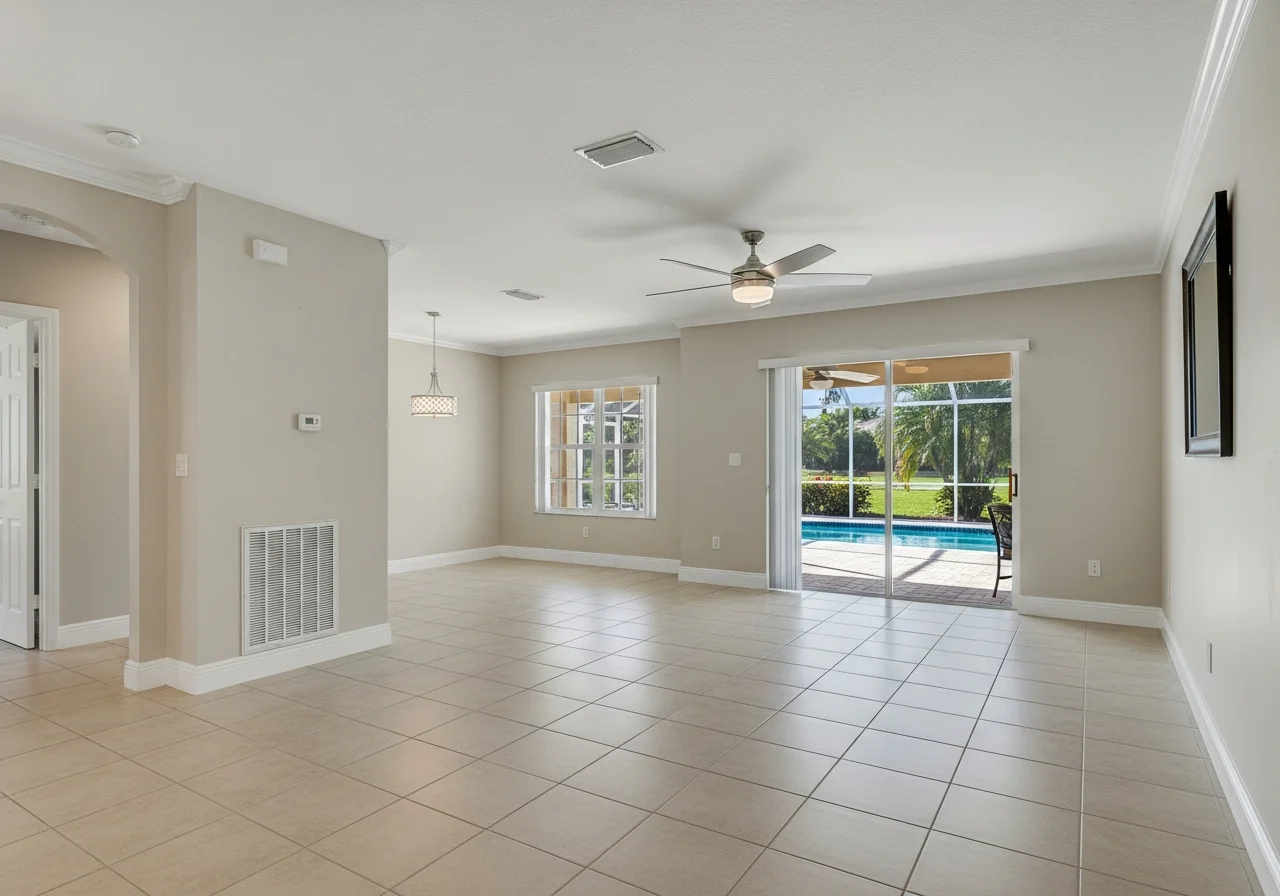
After: Complete restoration including new flooring, baseboards, fresh paint, and antimicrobial treatment
Common Causes
What Causes Water Damage in Plantation Homes?
Plantation's CBS stucco construction, slab-on-grade foundations, aging plumbing systems,
and proximity to the OPWCD canal network create water damage patterns that require
specialized restoration expertise.
AC Condensate Overflow
Clogged drain lines on air handlers cause pan overflow into closets, ceilings, and wall cavities. The #1 water damage cause in Florida homes — Plantation systems run 10-11 months per year, producing gallons of condensate daily that overwhelm neglected drain lines.
Slab Leaks & Pipe Failures
Polybutylene plumbing installed in 1978-1995 Plantation homes degrades from chlorinated municipal water, developing micro-cracks that leak inside slab-on-grade foundations. Cast-iron drain pipes in pre-1980 homes corrode internally. Both fail without warning, releasing water under flooring where it spreads undetected.
Roof Leak Intrusion
Tile roof underlayment failure, shingle degradation from UV and thermal cycling, and flashing failures at valleys and roof penetrations allow water into attic spaces and ceiling cavities. Plantation homes with original 20-year-old underlayment are past expected lifespan.
Canal & Storm Flooding
OPWCD canal overflow during extreme rain events pushes water into adjacent neighborhoods. Slab seepage, hydrostatic pressure through foundation joints, and water entering through sliders and garage doors affect low-lying Plantation homes during tropical systems and prolonged heavy rainfall.
Wind-Driven Rain
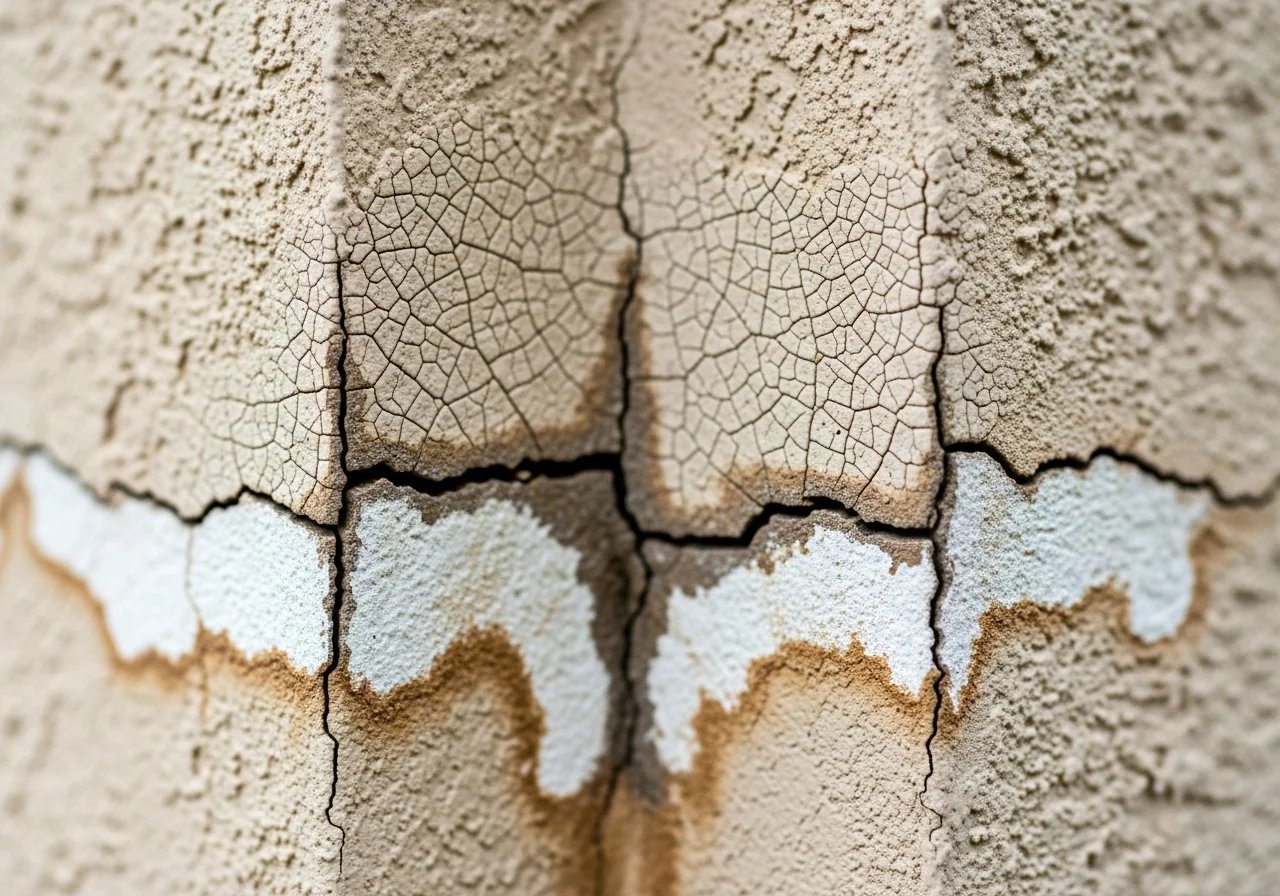
Stucco cracks at window corners and control joints admit water during thunderstorms and tropical systems. Hidden moisture accumulates behind walls, feeding mold colonies that remain invisible until damage is extensive. CBS stucco homes throughout Plantation are vulnerable.
Appliance Failures
Dishwashers, water heaters, washing machines, and refrigerator ice maker lines are common failure points. Supply line bursts in aging Plantation homes release hundreds of gallons onto slab-on-grade floors with no basement or crawl space to absorb the overflow.
Hairline stucco cracks at window corners and control joints are invisible to the naked
eye but admit water during every rain event — a leading cause of hidden water damage in
Plantation CBS homes.
The Palm Build Difference
Why Plantation Homeowners Choose Palm Build
National franchises deploy generic playbooks. Palm Build was built for South Florida —
we know Plantation's planned communities, its CBS stucco construction, its canal-fed
drainage, and the urgency that subtropical storms demand.
Local Broward Team, Not a Franchise
We're based in Deerfield Beach, not answering from a national call center. Our team knows Plantation's CBS construction, canal system, and neighborhood-specific risks from Jacaranda to Central Park.
IICRC Certified & FL Licensed
Every technician holds current IICRC Water Restoration Technician (WRT) certification. We carry Florida-required general contractor and mold remediation licenses — fully compliant, fully accountable.
Under 30-Minute Response
Our Deerfield Beach hub is minutes from Plantation. Emergency response 24/7/365, including holidays and during hurricanes. Fully loaded trucks arrive ready to extract — not assess and reschedule.
Insurance-Ready Documentation
Xactimate estimates, thermal imaging reports, moisture mapping logs, and photo/video evidence — exactly what Broward County carriers require. We document from minute one so your claim is airtight.
Full-Service: Mitigation Through Rebuild
One company from emergency water extraction through complete reconstruction. No handoffs between contractors, no finger-pointing, no delays — a single point of accountability from start to finish.
Outside our restoration scope, these are the vetted, licensed contractors we trust
alongside our work. Personally evaluated, reference-checked, and recommended by Palm
Build.