Quick Answer
The most common signs of hidden water damage are yellow or brown stains, bubbling or peeling paint, warped or cupping floors, soft or sagging drywall, and a persistent musty odor — often appearing weeks before any visible drip. Confirm with a $30 to $80 moisture meter and act fast, because mold can begin within 24 to 48 hours.
Key takeaways
- Hidden water damage typically shows up as stains, bubbling paint, musty odors, or soft drywall long before a visible leak appears.
- Ceiling signs like brown ring stains, sagging, and cracking texture almost always indicate an active or recent leak above that needs immediate investigation.
- Floor signs include cupping or buckling hardwood, loose tiles, damp carpet edges, and spongy spots that feel soft underfoot.
- Mold can begin growing on wet materials within 24 to 48 hours, making early detection critical to controlling both health risk and repair cost.
- The average water damage insurance claim is $15,400. A $200 to $500 thermal imaging inspection can catch problems early and prevent major losses.
Hidden water damage usually announces itself through surface changes and unusual smells long before you ever see an actual drip: yellow or brown staining on walls, bubbling paint, peeling wallpaper, warped floors, soft drywall, and persistent musty odors are the most common signs of water damage in walls, ceilings, and floors. If you notice any of these, treat it as time-sensitive. According to EPA and CDC guidance, mold can begin colonizing wet building materials within 24 to 48 hours, and indoor humidity above 60 percent accelerates the process. Below, we walk through 10 specific signs organized by where they appear in your home, how to confirm hidden moisture, and when to call for professional water damage restoration.
Average claim severity
$15,400
Water damage and freezing losses, 2019-2023 (III)
Mold risk window
24 - 48 hrs
Federal guidance to dry wet materials and prevent mold
Repair cost range
$3 - $7.50/sf
Typical water damage restoration per square foot
Target indoor humidity
30 - 50%
CDC recommended range to prevent mold growth
Quick Reference: 10 Signs of Hidden Water Damage
- Water stains or yellowish-brown discoloration on walls
- Bubbling, peeling, or flaking paint or wallpaper
- Soft, spongy, or warped drywall that gives under light pressure
- Persistent musty odors near walls, especially behind furniture
- Efflorescence (white mineral deposits) on masonry or concrete walls
- Brown spots, water rings, or expanding stains on ceilings
- Sagging or bulging ceiling sections
- Peeling ceiling paint or cracking texture coat
- Cupping, buckling, or crowning in hardwood floors
- Loose tiles, lifted vinyl edges, damp carpet, or spongy spots underfoot
Signs of Water Damage in Walls
Walls hide more water damage than any other surface in a home. Supply lines, drain pipes, and HVAC condensate lines all run through wall cavities, and even a small pinhole leak can saturate drywall for weeks before the damage becomes visible on the surface. Here are five signs to watch for.
1. Water Stains or Discoloration
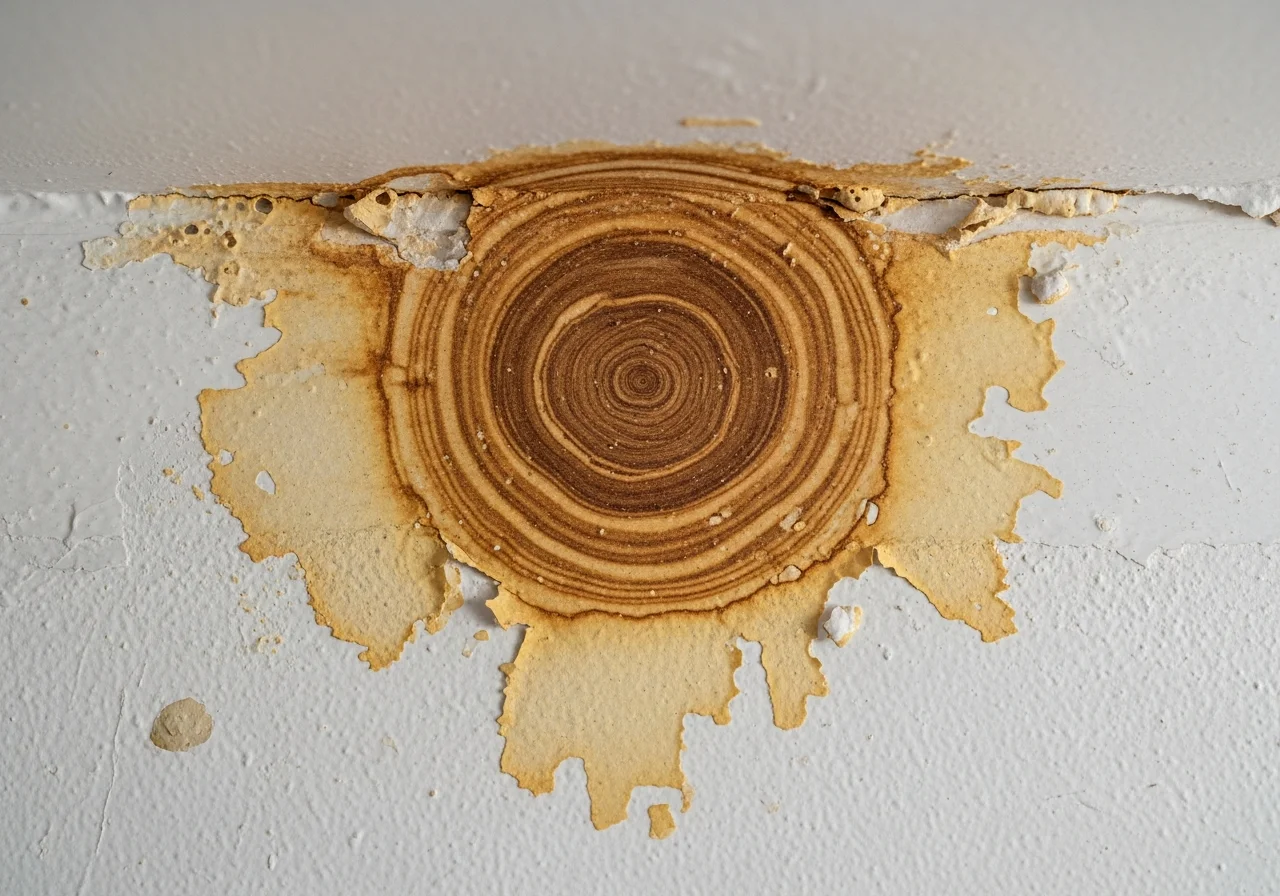
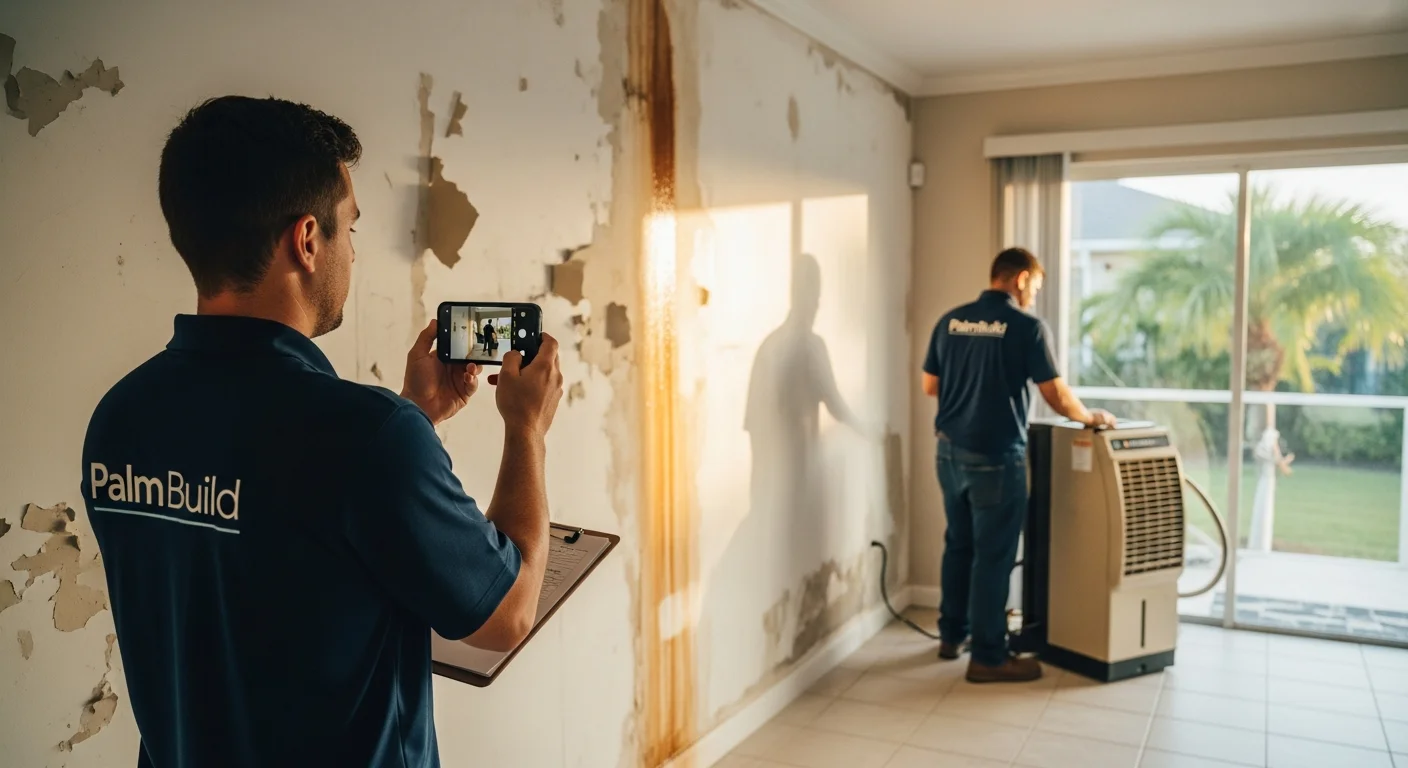
Yellowish-brown stains on drywall are the most recognizable sign of water damage in walls. They form when water dissolves minerals, tannins, and adhesive compounds in the drywall paper and deposits them on the painted surface as it dries. A single uniform stain usually means a one-time event like a brief supply line burst, while concentric ring patterns suggest repeated wetting and drying cycles from a slow, ongoing leak. Pay extra attention to stains near windows, below bathrooms, and around HVAC registers, as these are the most common leak origins.
2. Bubbling, Peeling, or Flaking Paint
When moisture becomes trapped between the drywall surface and the paint film, it breaks the adhesive bond and causes the paint to bubble, blister, or peel away in sheets. Wallpaper will curl at the seams or develop soft, spongy spots. This is different from normal paint aging, which tends to crack and flake evenly over large areas. Water-driven bubbling is usually localized to a specific zone and worsens over days or weeks. In Florida homes, high ambient humidity can make this sign harder to distinguish from condensation issues, so check whether the bubbling corresponds to a plumbing line behind the wall.
3. Soft, Spongy, or Warped Drywall
Drywall is made from gypsum sandwiched between paper facings, and both materials absorb water readily. When the gypsum core stays wet, it loses structural rigidity and the wall feels soft or spongy under finger pressure. In advanced cases, the drywall may bulge outward or warp visibly. Press gently near baseboards, around outlet covers, and below windows. If the wall gives more than it should, there is likely active moisture behind it. A safety note: avoid pressing hard near electrical outlets if you suspect water in the wall cavity, as water and live wiring are a dangerous combination.
4. Persistent Musty Odors
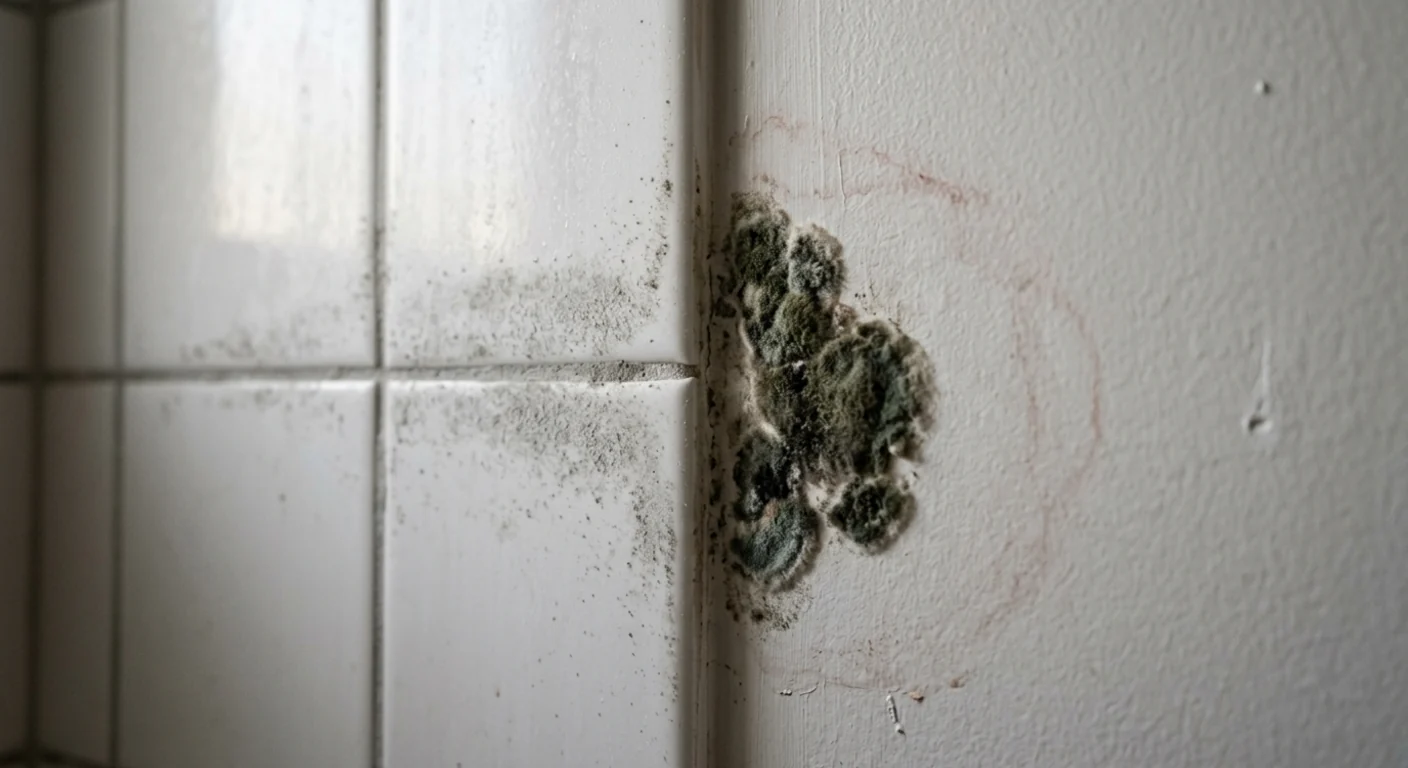
A musty, earthy smell near a wall is often the first sign of hidden water damage, particularly when there are no visible stains yet. The odor comes from microbial volatile organic compounds (MVOCs) released by mold and bacteria metabolizing damp building materials. You may notice it strongest when you return home after being away (your nose adapts when you are exposed constantly) or when you move furniture away from an exterior wall. In the Southeast, where relative humidity regularly exceeds 60 percent outdoors, musty odors indoors almost always point to an active moisture source rather than just "humid air." If the smell persists after ventilating, professional mold remediation assessment is warranted.
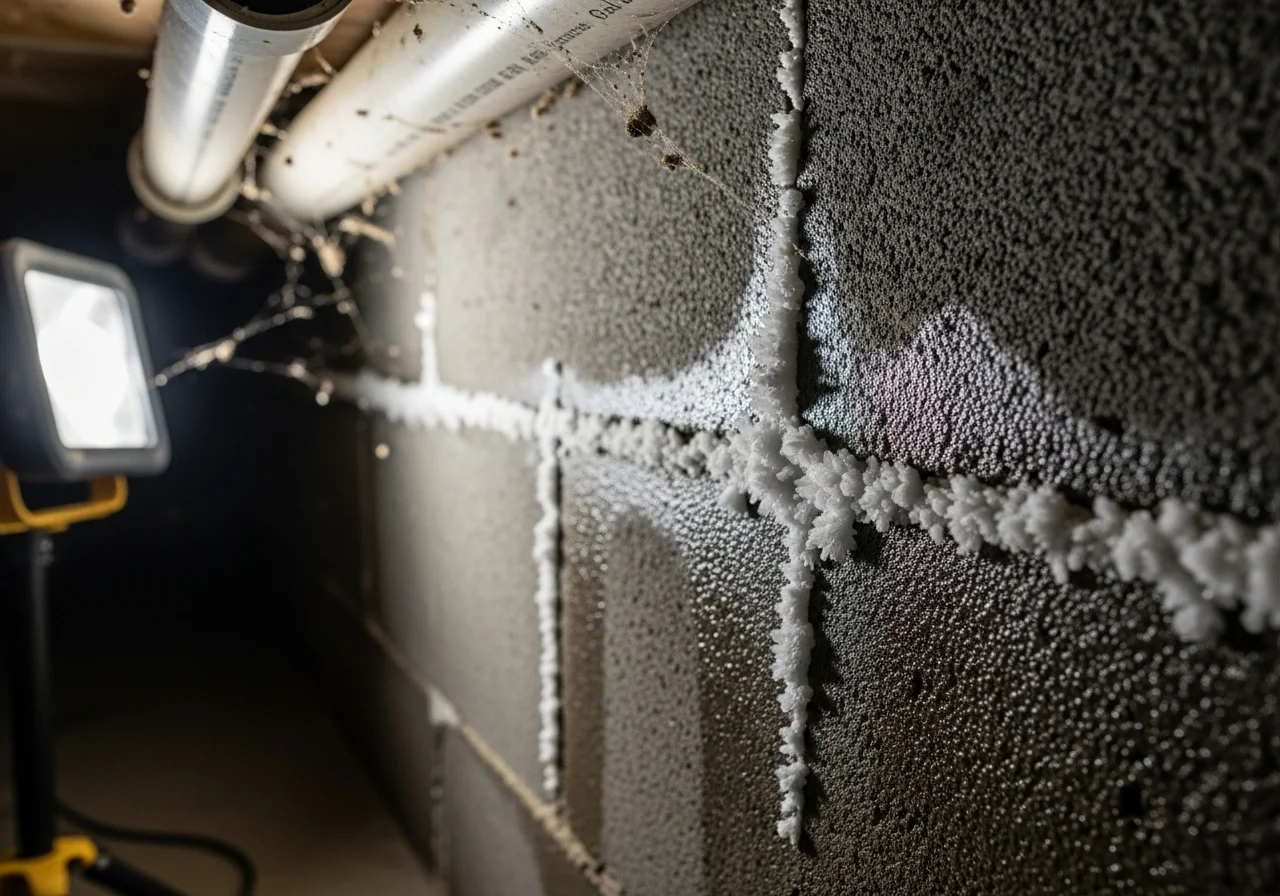
5. Efflorescence or White Mineral Deposits
Efflorescence appears as white, chalky, or crystalline deposits on masonry, concrete block, brick, or stucco surfaces. It forms when water migrates through the wall material, dissolves soluble salts, and deposits them on the surface as it evaporates. This is especially common on Florida stucco exterior walls, North Carolina brick foundations, and crawl space block walls across the Southeast. While efflorescence itself is not structurally harmful, it is a reliable indicator that water is actively moving through the wall assembly, and persistent moisture behind masonry can lead to crawl space problems and mold conditions.
Signs of Water Damage in Ceilings
Ceiling damage is often the most visible type of hidden water damage because gravity pulls water to the lowest horizontal surface above you. A ceiling stain may be caused by a roof leak, an upstairs bathroom overflow, a failed HVAC condensate pan, or a burst pipe in the attic. Regardless of the source, ceiling water damage requires prompt attention because saturated drywall or plaster overhead creates a collapse risk.
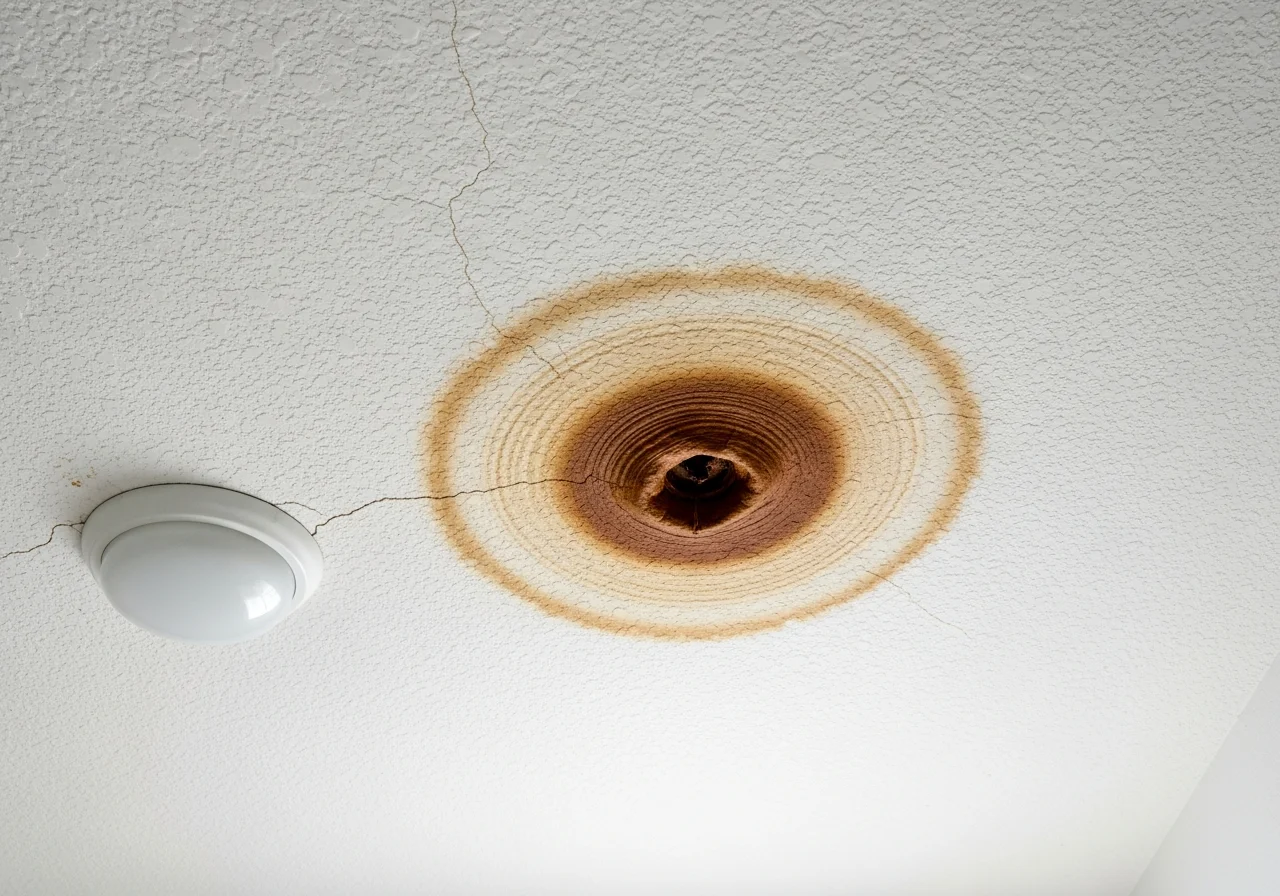
6. Brown Spots and Water Rings
Brown spots on a white ceiling are hard to miss and almost always mean water. Like wall stains, concentric ring patterns tell a story: multiple rings mean the area has gotten wet and dried repeatedly, which points to a recurring leak rather than a one-time event. A single uniform brown area with soft edges may be recent. In either case, even a "dry" stain deserves investigation because the moisture source may still be active above the drywall where you cannot see it. After heavy rain or a storm, ceiling stains that were previously stable may grow or darken, revealing wind-driven rain intrusion through compromised roofing or flashing. This is especially common after storm and hurricane damage in coastal Florida and the Carolinas.
7. Sagging or Bulging Ceiling
A sagging ceiling means the drywall or plaster has absorbed enough water to deform under its own weight. This is a serious structural warning. A water-logged sheet of half-inch drywall in a four-by-eight-foot section can hold dozens of pounds of water before it gives way. If you notice a ceiling area that looks bowed, soft, or droopy, do not stand directly under it and do not attempt to probe it from below.
8. Peeling Ceiling Paint or Cracking Texture
Textured ceilings (popcorn, knockdown, or orange peel) show water damage differently than smooth painted surfaces. The texture coat absorbs water and may soften, crumble, or detach in patches, leaving bare drywall paper visible underneath. On smooth ceilings, paint may crack in a spiderweb pattern around the wet zone. Both patterns are worth investigating even if the area feels dry to the touch, because the damage often indicates a moisture event that occurred days or weeks earlier and has since partially dried.
Signs of Water Damage in Floors
Floor damage from hidden water is often the last to be noticed because homeowners attribute gradual changes to normal wear and aging. However, floors sit directly on subflooring that can absorb and spread water laterally for many feet beyond the original leak point. By the time the surface shows visible damage, the subfloor underneath may be extensively compromised.
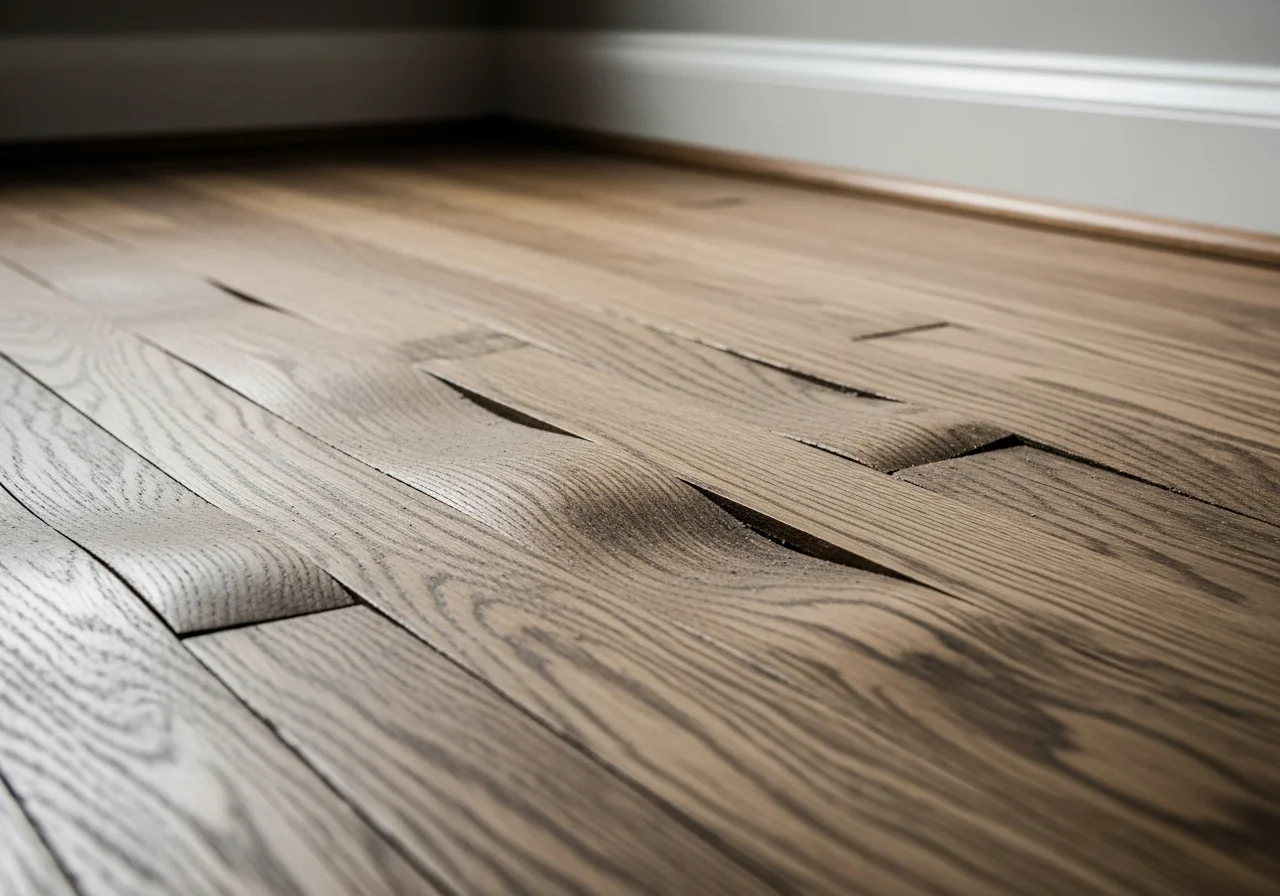
9. Cupping, Buckling, or Crowning in Hardwood
Cupping happens when the edges of individual hardwood planks rise higher than the center, creating a washboard-like profile. This occurs because the bottom of the plank absorbs more moisture than the top, causing uneven expansion. Buckling is more severe: planks lift entirely off the subfloor. Crowning is the opposite of cupping, where the center of the plank rises, and usually happens when a cupped floor is sanded too soon before drying fully. All three conditions point to moisture imbalance, often from a slab leak below, a nearby plumbing failure, or elevated crawl space humidity migrating upward through the subfloor.
10. Loose Tiles, Lifted Vinyl, Damp Carpet, or Spongy Spots
Tile adhesive (thinset or mastic) fails when exposed to prolonged moisture, causing tiles to pop loose or sound hollow when tapped. Vinyl sheet flooring and luxury vinyl plank will lift at edges or develop visible bubbles where water has pooled beneath them. Carpet hides water damage the longest: moisture wicks into the pad underneath, which can stay wet for weeks while the surface feels only slightly damp. Spongy spots anywhere underfoot, regardless of flooring type, indicate subfloor deterioration from sustained moisture and should be inspected promptly.
Signs you can monitor
- Single small water stain that is dry to the touch and not growing
- Minor paint bubbling limited to one small area
- Faint musty smell that disappears with ventilation
- Slight floor unevenness in one spot with no soft subfloor
Signs that need immediate action
- Sagging or bulging ceiling of any size
- Spongy drywall near electrical outlets
- Standing water or actively spreading stains
- Visible mold growth or strong persistent musty odor
- Multiple signs appearing together in one area
What to Do When You Find Hidden Water Damage
Discovering hidden water damage can feel overwhelming, but what you do in the first 24 hours has the biggest impact on final cost and outcome. Follow these steps in order.
- 1
Prioritize safety first
If water is near electrical outlets, switches, or your breaker panel, turn off power to the affected area immediately. Avoid walking through standing water. Wear shoes and gloves if you need to move through a wet area. If the ceiling is sagging, leave the room and keep others out.
- 2
Stop the water source if you can identify it
Shut off the main water supply or the specific fixture valve if a plumbing leak is the cause. For roof leaks during active rain, place buckets and towels to contain the spread. Do not attempt to cut open walls if you suspect electrical wiring may be present behind the drywall.
- 3
Document everything for insurance
Take clear photos and video of all visible damage from multiple angles before moving furniture or starting cleanup. Note the date, time, and what you first noticed. This documentation is critical for your insurance restoration process, especially in Florida where claim notice deadlines are strict.
- 4
Confirm hidden moisture with simple tools
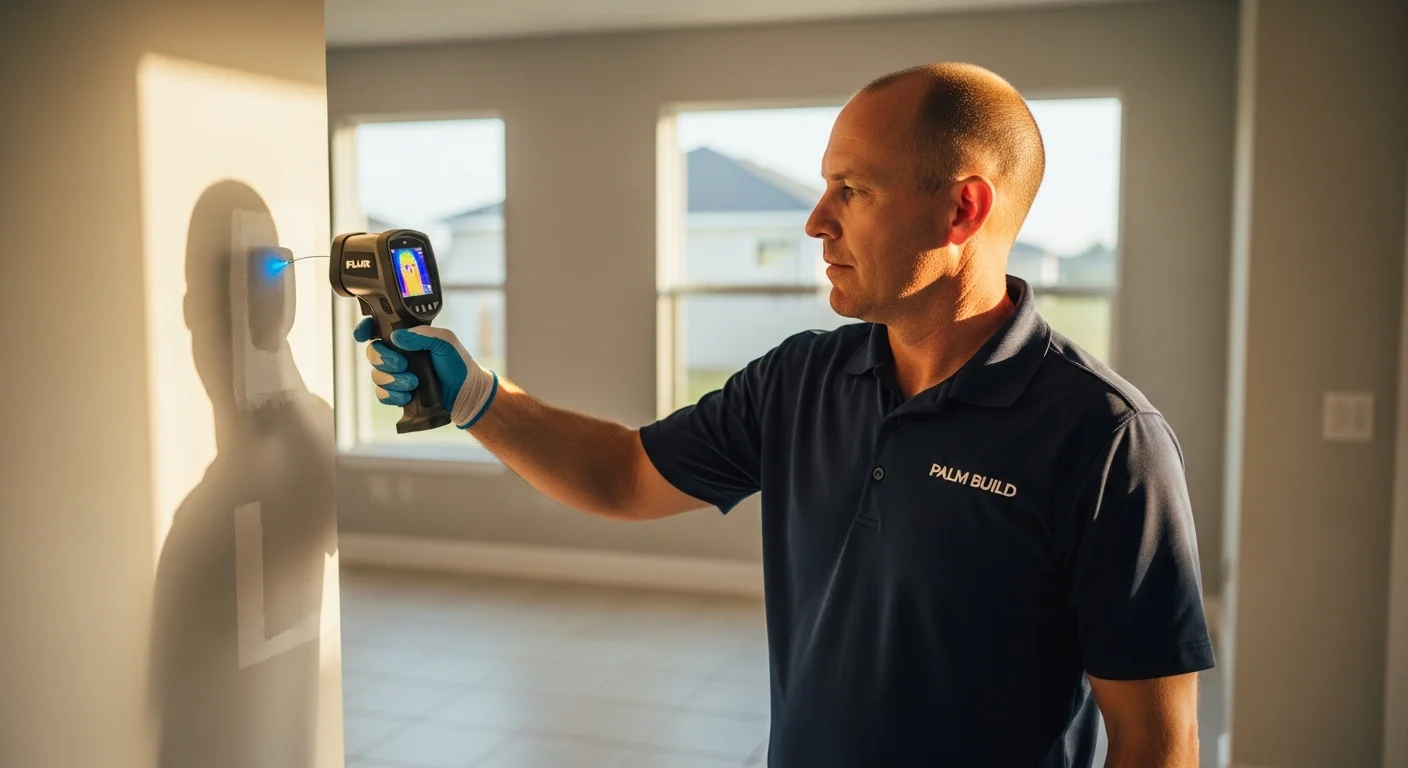
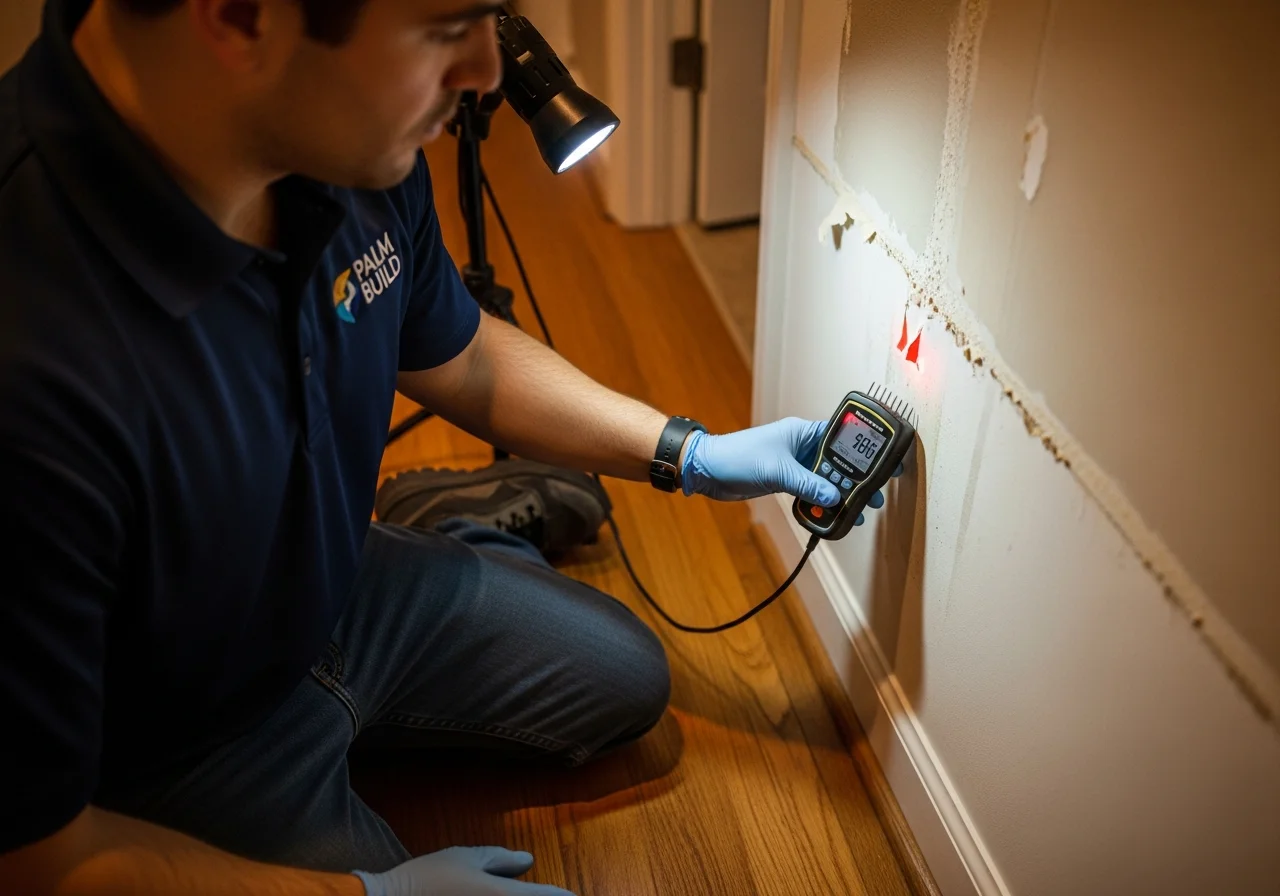
A pin-type moisture meter ($30 to $80 at hardware stores) lets you check whether a wall or floor is wet behind the surface. For a more comprehensive assessment, professional thermal imaging ($200 to $500 for an inspection) can map the full extent of hidden moisture across an entire room without opening any walls. Even a $10 to $50 digital hygrometer helps you track whether indoor humidity is staying below the CDC-recommended 50 percent maximum.
- 5
Start drying within 24 to 48 hours to prevent mold
Open windows if outdoor humidity is lower than indoor humidity. Run fans and dehumidifiers aggressively. The EPA, CDC, and FEMA all emphasize that drying wet materials within 24 to 48 hours is the most effective way to prevent mold growth. In Florida and the Carolinas, where summer humidity regularly exceeds 70 percent outdoors, dehumidifiers are usually essential since ventilation alone will not drop indoor moisture fast enough.
- 6
Call a certified restoration professional when needed
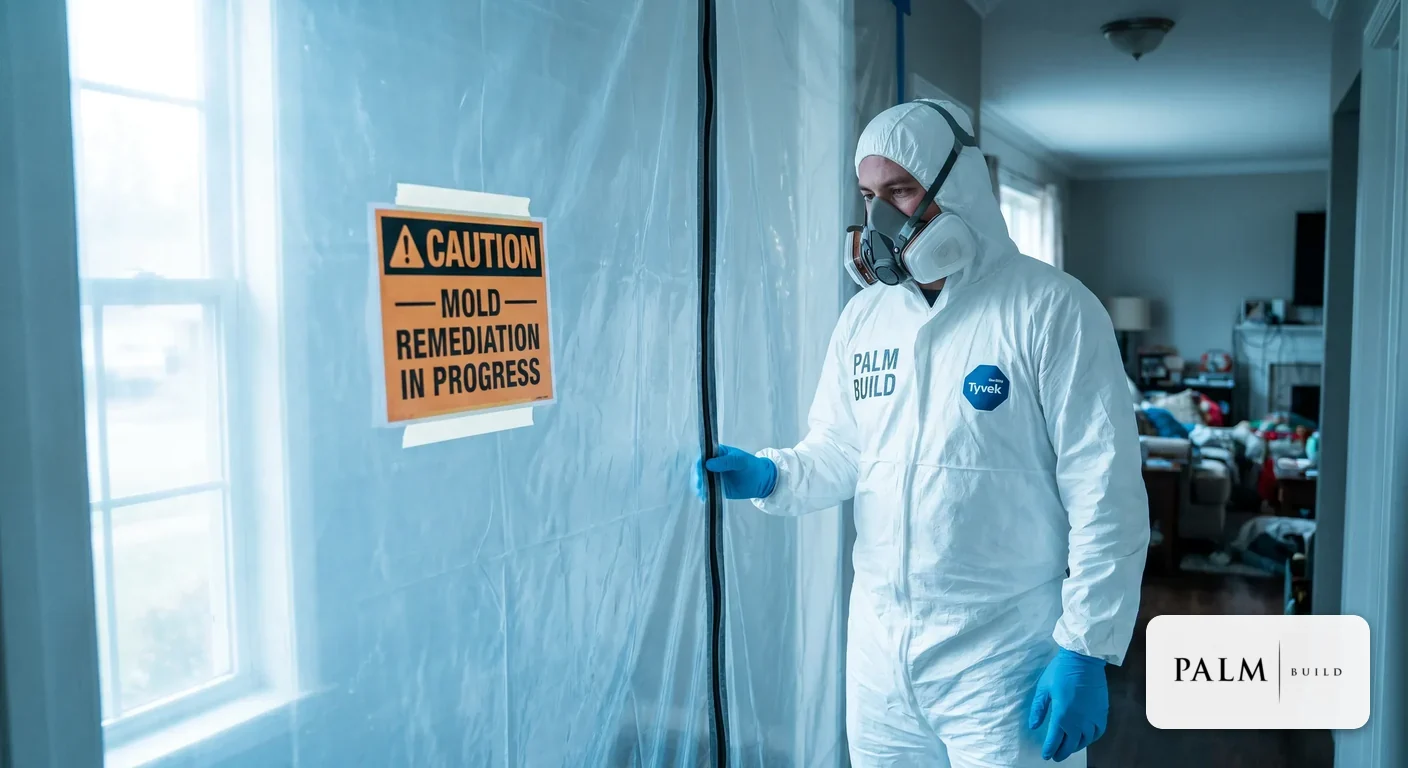
Contact a restoration company if the affected area is larger than about 10 square feet, the water source is contaminated (sewage, gray water, or floodwater), moisture has been present for more than 48 hours, you detect musty odors or visible mold, or the damage involves hidden wall or ceiling cavities you cannot access. Look for IICRC certification, which references the S500 Standard for professional water damage restoration. Palm Build provides 24/7 emergency response across Florida, North Carolina, and South Carolina.
State-Specific Considerations for Florida, North Carolina, and South Carolina
Homeowners in the Southeast face unique challenges because of tropical cyclone rainfall, prolonged humidity, and state-specific insurance and licensing rules. NOAA's disaster data shows Florida, North Carolina, and South Carolina among the states most frequently affected by costly weather events, including tropical storms that drive rain into wall cavities and roof assemblies.
Florida
North Carolina
North Carolina does not have a single statewide mold remediation licensing requirement equivalent to Florida's framework. The NC Department of Health and Human Services and NC State University Extension both note that no federal or state certification programs currently exist for mold remediation companies in North Carolina. IICRC certification (particularly the S520 mold remediation standard) is the most commonly accepted industry benchmark. When choosing a restoration company in NC, verify their IICRC credentials and ask for documented drying protocols. The Piedmont and coastal regions are especially prone to hidden moisture issues due to clay soils and high summer humidity.
South Carolina
South Carolina does not license mold inspectors statewide. County-level guidance advises homeowners to look for trained or certified professionals through industry associations like the IICRC. Recent SC legislative discussions have explored a voluntary certification framework that would publish a list of certified mold remediators, but no mandate is in place as of 2026. As with North Carolina, verifying IICRC credentials and requesting documentation of drying procedures is your best protection when hiring for hidden water damage or mold work.
Water Damage Repair Costs and Timelines
| Scope | Typical Cost | Typical Timeline |
|---|---|---|
| Thermal imaging moisture inspection | $200 - $500 | Same day (1-2 hours) |
| Minor drywall and paint repair (per affected area) | $300 - $800 | 1 - 3 days |
| Water mitigation and drying (per square foot) | $3 - $7.50 | 3 - 5 days |
| Mold remediation (per square foot) | $10 - $25 | 1 - 5 days |
| Structural reconstruction (per square foot) | $20 - $37 | 1 - 4 weeks |
Typical costs and timelines for water damage investigation and repair. Costs vary by region, severity, and materials. See our full water damage restoration cost guide for detailed breakdowns.
The Insurance Information Institute reports an average claim severity of $15,400 for water damage and freezing losses between 2019 and 2023. The difference between a $500 repair caught at the "small stain" stage and a $15,000 restoration project often comes down to how quickly the damage was identified and addressed. A moisture meter costing $30 to $80 or a professional thermal imaging inspection at $200 to $500 is a fraction of what delayed detection costs in structural repair and mold remediation.
Frequently Asked Questions
How can you tell if there is water damage behind a wall? +
What does hidden water damage look like? +
Can mold grow behind walls without being visible? +
How quickly should I act after noticing signs of water damage? +
How can you tell if water damage is old or new? +
Is water damage from rain covered by homeowners insurance? +
How long does it take to restore water damage in walls? +
Should I hire a professional or handle water damage myself? +
24/7 Water Damage Restoration
Emergency water extraction, structural drying, and moisture mapping for homes and businesses across FL, NC, and SC.
Professional Mold Remediation
IICRC-certified mold assessment and remediation for hidden mold discovered during water damage investigation.
Water Damage Restoration Cost Guide (2026)
Full cost breakdown by damage category, square footage, and repair type with regional pricing for the Southeast.
What to Do in the First 24 Hours After Water Damage
Step-by-step emergency checklist for the critical first day after discovering water damage in your home.
How Fast Does Mold Grow After Water Damage?
Timeline, risk factors, and prevention strategies for mold growth on wet building materials.
Spotted signs of water damage in your home?
Palm Build's IICRC-certified team provides 24/7 emergency water damage restoration across Florida, North Carolina, and South Carolina. We use thermal imaging and professional moisture mapping to find every hidden wet area, and we work directly with your insurance company to streamline the claims process.
Found this helpful? Send it to someone who needs it.