Key takeaways
- Black mold causes allergy-like symptoms including coughing, nasal congestion, eye irritation, and skin rashes, with higher risk for people who have asthma, mold allergies, or weakened immune systems.
- You do not need to identify the mold species to take action. All indoor mold growth should be treated as a health concern and removed using safe methods.
- Mold can begin growing within 24 to 48 hours after water intrusion. Drying wet materials quickly is the single most effective prevention step.
- The EPA recommends homeowners handle cleanup only when the affected area is smaller than about 10 square feet. Larger areas, flood-related mold, and HVAC contamination require professional remediation.
- Professional mold remediation typically costs $10 to $25 per square foot, with most residential projects totaling $2,300 to $3,750.
Black mold symptoms typically include a stuffy nose, sore throat, coughing or wheezing, burning eyes, and skin irritation. For people with asthma, mold allergies, chronic lung disease, or weakened immune systems, exposure can trigger severe asthma attacks or respiratory infections. The good news: you do not need to identify the species to take the right next step. The most important move is to stop the moisture source feeding the mold and remove contaminated materials safely. Mold can begin colonizing damp surfaces within 24 to 48 hours after water intrusion, so the drying window matters. If the affected area is larger than about 10 square feet, if the mold resulted from a flood or sewage backup, or if it is growing inside your HVAC system, the EPA recommends involving a qualified professional mold remediation company.
Mold growth window after water intrusion (EPA, FEMA)
24-48 hrs
Target indoor humidity to prevent mold (CDC)
< 50%
EPA threshold for DIY mold cleanup
10 sq ft
Typical remediation cost per square foot
$10-$25
What "Black Mold" Actually Means
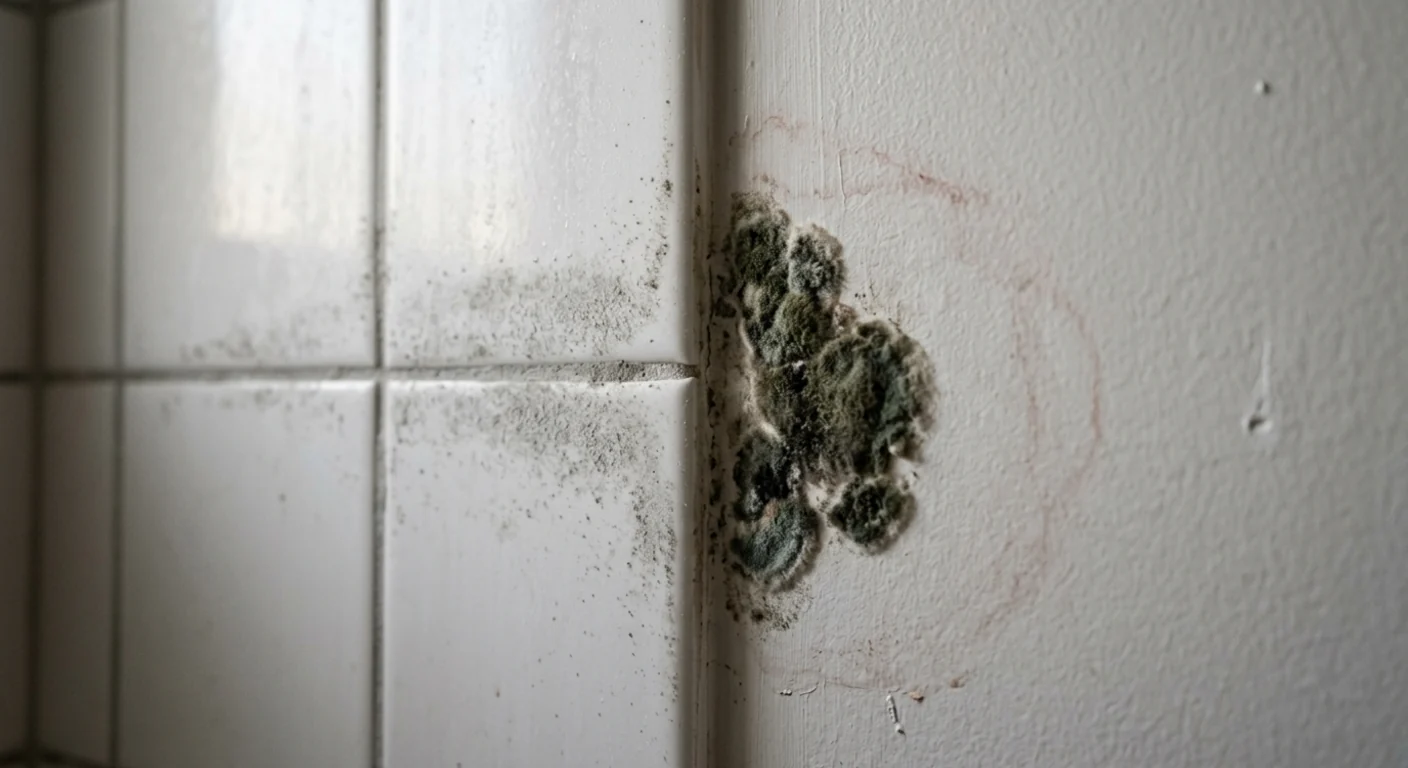
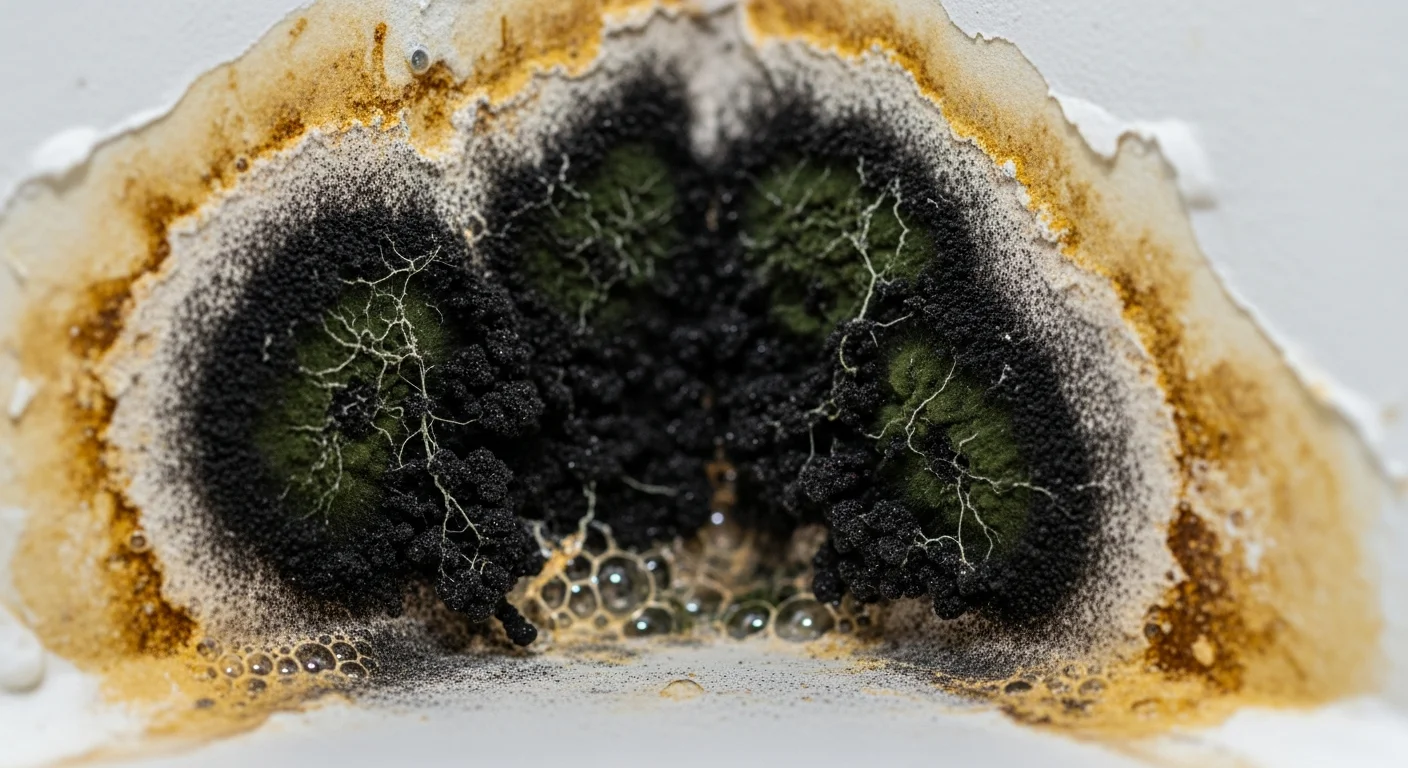
"Black mold" is an informal term, not a scientific classification. It usually refers to Stachybotrys chartarum, a dark-colored mold that thrives on cellulose-rich materials like drywall paper, ceiling tiles, and wood in persistently damp conditions. However, dozens of mold species appear dark green, dark gray, or black. The color alone tells you nothing definitive about the health risk. The same naming confusion fuels the mold vs. mildew question — mildew is simply an everyday word for flat, surface-stage mold.
This matters because many homeowners delay action waiting for test results. Mold testing can cost $250 to $350 or more, and the results rarely change the recommended response. If you can see mold or smell a persistent musty odor, the next step is the same regardless of species: address the moisture and remove the growth.
Black Mold Symptoms and Who Is Most at Risk
The most consistent health effects from indoor mold exposure are respiratory and allergy-type symptoms. Research shows these effects are not unique to black mold. Any indoor mold species can trigger the same reactions in sensitive individuals.
Common Allergy and Irritation Symptoms
The CDC lists the following as common symptoms of mold exposure in sensitive people:
- Stuffy or runny nose and nasal congestion
- Sore throat and postnasal drip
- Coughing or wheezing
- Burning, watery, or itchy eyes
- Skin rash or hives
- Headaches and fatigue
These symptoms often mimic seasonal allergies, which is why mold exposure frequently goes unrecognized. If your allergy symptoms persist year-round or worsen when you are indoors, mold could be the underlying cause.
Asthma and Respiratory Flare-Ups
A widely cited meta-analysis reviewed by the World Health Organization found that living in a damp or mold-affected building is associated with roughly 30% to 50% increases in respiratory and asthma-related outcomes. The EPA similarly warns that mold exposure can trigger asthma attacks in people who are allergic to mold. With 8.6% of US adults and 6.5% of children currently diagnosed with asthma (CDC, 2024), mold in occupied buildings is a significant public health concern.
Higher-Risk Groups
When to See a Doctor
Seek medical attention if you experience shortness of breath, persistent wheezing, chest tightness, high fever, or a cough that does not improve after leaving the affected area. People with existing lung conditions should contact their physician as soon as they suspect mold exposure. Let your doctor know about the presence of mold in your home so they can evaluate whether your symptoms are exposure-related.
Where Black Mold Hides in Homes and Buildings
Mold needs three things to grow: moisture, organic material, and time. In most homes, the organic material is already present in drywall, wood framing, carpet backing, and ceiling tiles. The variable is always moisture. Here are the most common locations where black mold establishes itself.
- Bathrooms and kitchens, especially around tubs, showers, and under sinks where leaks go unnoticed
- Behind drywall after slow plumbing leaks, where mold can grow for weeks before becoming visible
- Attics after roof leaks or poor ventilation that allows condensation to accumulate
- Basements and crawl spaces where ground moisture wicks into framing materials
- Window sills and frames in humid climates where condensation repeatedly forms
Crawl Spaces in Humid Regions
Across Florida, North Carolina, and South Carolina, crawl spaces are one of the most common sites for hidden mold growth. Warm, humid air enters through foundation vents and condenses on cooler surfaces like floor joists and subflooring. Without a proper vapor barrier and dehumidification strategy, crawl space humidity can stay above 70% for months. NC State Extension checklists specifically recommend inspecting crawl spaces for leaks and confirming a ground vapor barrier as a minimum preventive measure. If you suspect moisture issues in your crawl space, our crawl space cleanup and encapsulation team can assess the situation.
HVAC and Ductwork Warning Signs
A musty smell when your air conditioning or heating system runs is one of the clearest signs of mold inside ductwork or on evaporator coils. Mold in HVAC systems is particularly concerning because the blower distributes spores throughout the entire building every time the system cycles. Visible dark growth around vents, on coil fins, or inside the air handler cabinet warrants immediate professional inspection. HVAC mold remediation typically costs $3,000 to $10,000 due to the specialized containment and cleaning required.
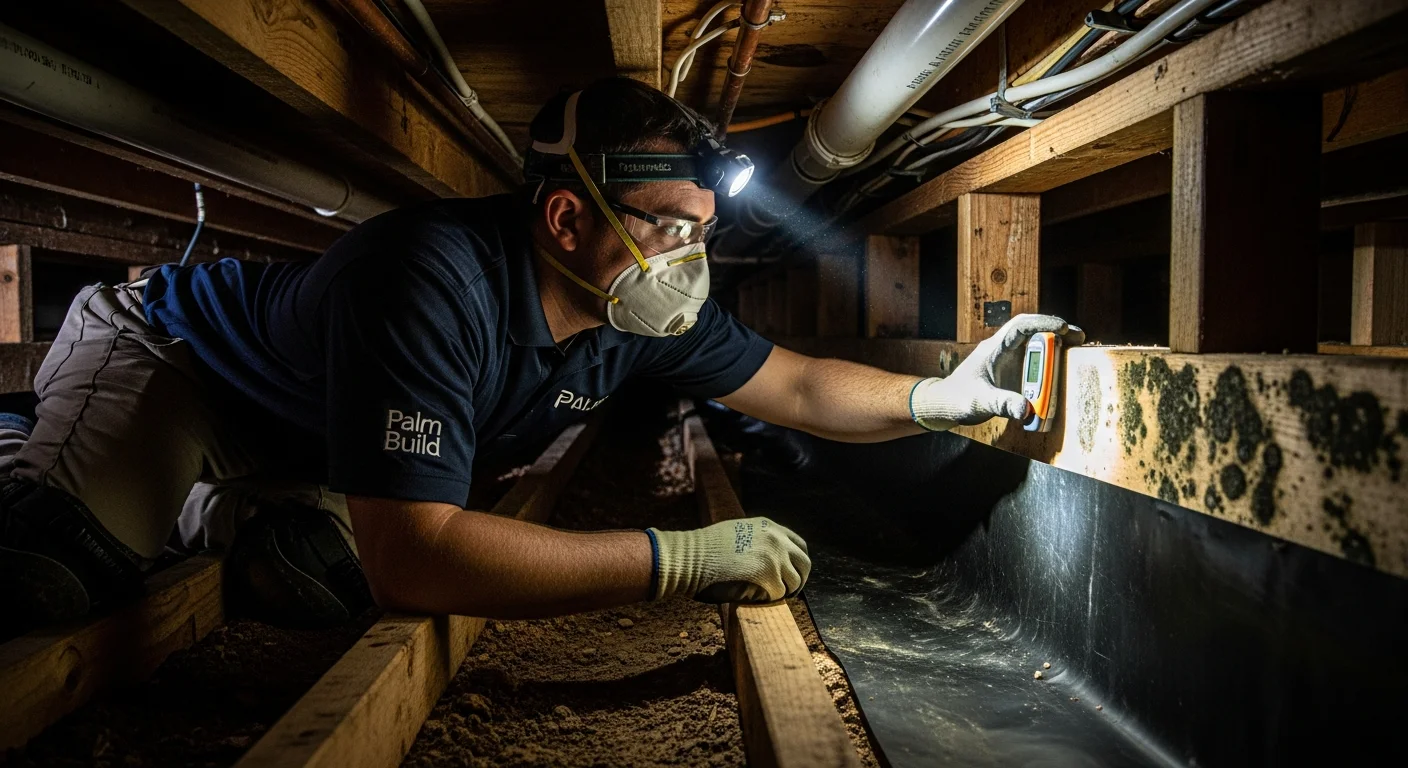
Step 1: Reduce Your Exposure Safely Right Away
- 1
Keep people and pets away from the affected area
Close the door to the room if possible. Do not let children, elderly family members, or pets enter. If the mold is in a shared space like a hallway, limit traffic through the area.
- 2
Do not disturb dry mold growth
Scrubbing or brushing dry mold releases a burst of spores into the air. If you need to enter the area, mist the mold lightly with water first to suppress spore release.
- 3
Wear basic protective equipment if you must enter
At minimum, wear an N95 respirator mask, rubber or nitrile gloves, and eye protection. Do not rely on a standard dust mask or surgical mask. Open a window for ventilation if possible.
- 4
Run a portable HEPA air purifier if available
A HEPA-rated air purifier captures airborne mold spores and reduces your exposure while you plan next steps. Place it near the affected area and let it run continuously.
Step 2: Stop the Moisture Source
Mold cannot grow without moisture. Before any cleanup begins, you must identify and stop whatever is feeding the mold colony. Common moisture sources include slow plumbing leaks behind walls, roof intrusion from damaged shingles or flashing, condensation from poor ventilation, and ground moisture wicking up through concrete or crawl space soil. If the moisture source was a sudden event like a pipe burst or storm damage, our water damage restoration team can respond within hours to extract water and begin drying. The EPA and FEMA both emphasize that drying wet materials within 24 to 48 hours is the most effective way to prevent mold growth. To learn more about this critical window, read our guide on how fast mold grows after water damage.
- Keep indoor relative humidity at or below 50% (CDC recommendation)
- Ideal range is 30% to 50% for occupied spaces (EPA target)
- Purchase a digital hygrometer ($10 to $50) to monitor humidity in problem areas
- Run a dehumidifier in humid rooms, basements, and crawl spaces during warm months
- Use exhaust fans in bathrooms and kitchens during and after moisture-producing activities
- Fix dripping faucets, running toilets, and condensation on pipes or windows within 24 hours

Step 3: Decide Between DIY Cleanup and Professional Remediation
The EPA provides a clear decision framework. For small areas of mold on hard, non-porous surfaces, many homeowners can handle cleanup safely. But several situations require the equipment, containment, and expertise of a professional team. Understanding where your situation falls on this spectrum can save you both money and health risk. For a deeper look at what separates these two approaches, see our comparison of mold remediation vs. mold removal.
DIY cleanup may be appropriate
- Affected area is smaller than about 10 square feet (roughly 3 ft by 3 ft)
- Mold is on hard, non-porous surfaces like tile, glass, or metal
- The moisture source has been identified and fully stopped
- No one in the household has asthma, mold allergies, or a compromised immune system
- The mold is not related to a flood, sewage backup, or contaminated water
Call a professional
- Affected area is larger than 10 square feet or spans multiple rooms
- Mold is on porous materials like drywall, insulation, or carpet
- The mold resulted from flooding, sewage, or Category 2/3 water
- Mold is inside HVAC ductwork, coils, or the air handler
- Occupants include children, elderly residents, or immunocompromised individuals
- Mold keeps returning after previous cleanup attempts
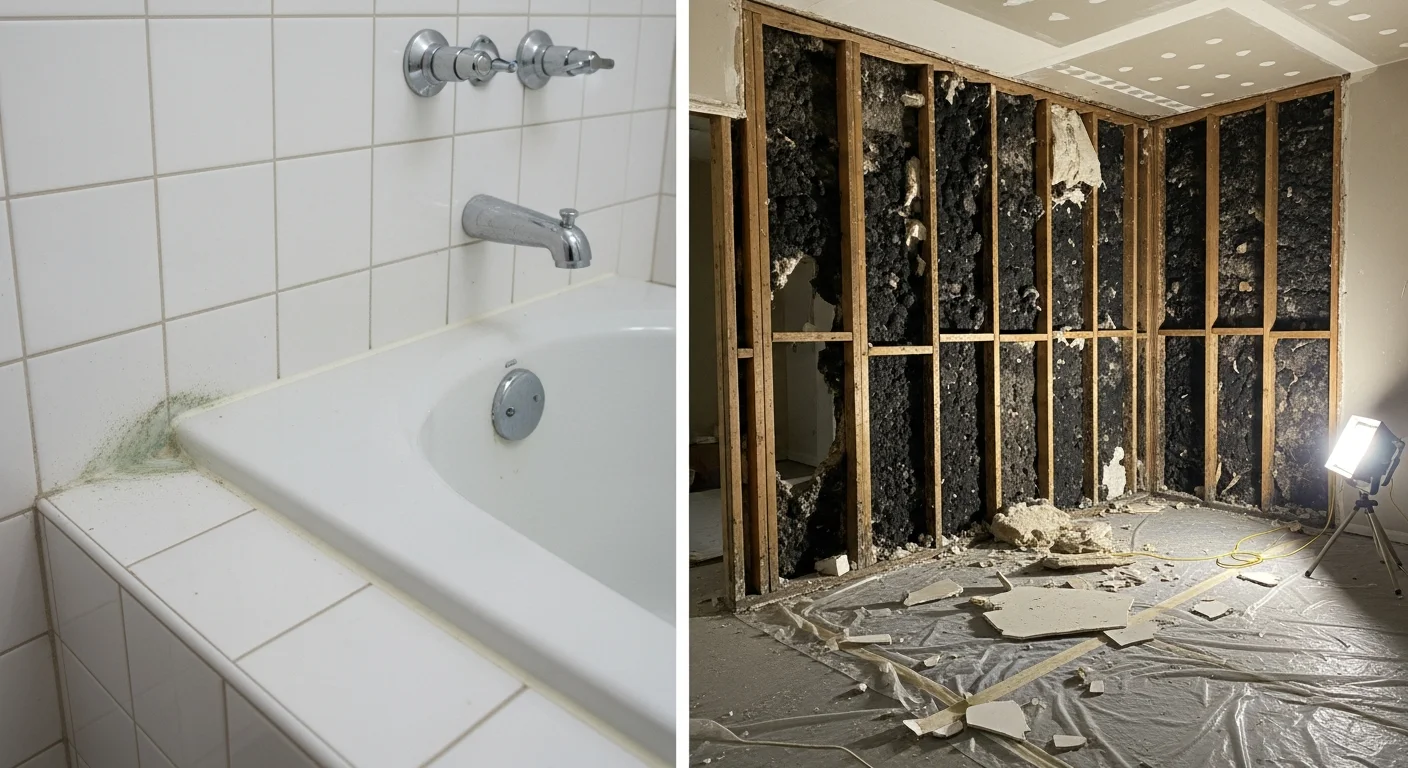
Step 4: What Professional Mold Remediation Includes
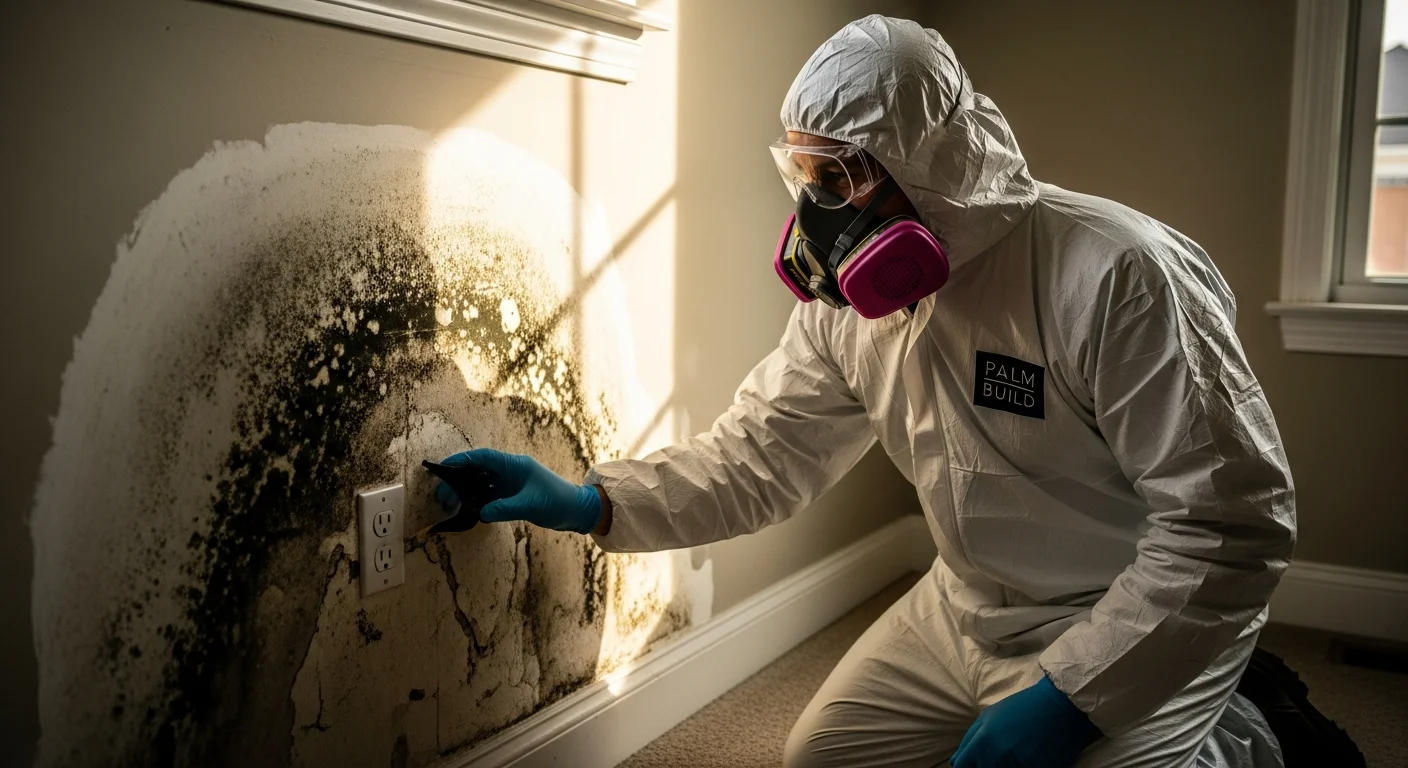
Professional mold remediation follows a structured process designed to remove contamination without spreading spores to clean areas of the building. Here is what a typical project involves:
- 1
Assessment and moisture mapping
Technicians use infrared cameras and pin-type moisture meters to identify the full extent of water damage and mold growth, including areas hidden behind walls or above ceilings.
- 2
Containment setup
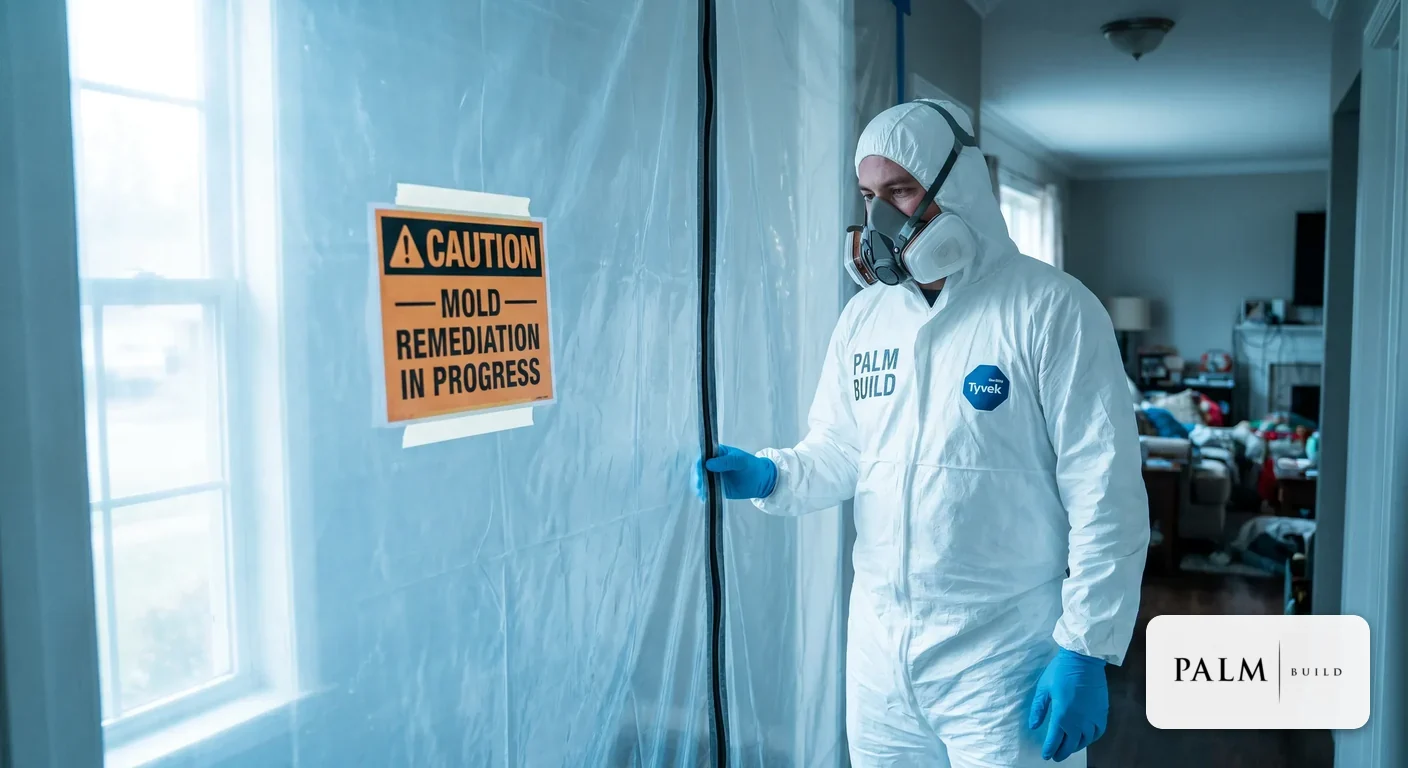
The work area is sealed with heavy polyethylene sheeting and placed under negative air pressure using HEPA-filtered air scrubbers. This prevents spores from migrating to unaffected rooms during removal.
- 3
Removal of contaminated materials
Mold-damaged porous materials like drywall, insulation, carpet, and ceiling tiles are carefully cut out and bagged for disposal. Framing lumber is treated in place when structurally sound.
- 4
HEPA vacuuming and surface cleaning
All exposed surfaces within the containment zone are HEPA-vacuumed and then cleaned with antimicrobial solutions. This removes residual spores from wood framing, concrete, and other structural materials.
- 5
Structural drying and dehumidification
Commercial dehumidifiers and air movers dry the affected area to target moisture levels. Technicians monitor daily readings until materials reach acceptable equilibrium moisture content.
- 6
Post-remediation verification
The project is considered successful when there is no visible mold remaining, moisture readings are within normal range, and there is no musty odor. Some projects include third-party air quality testing for additional verification.
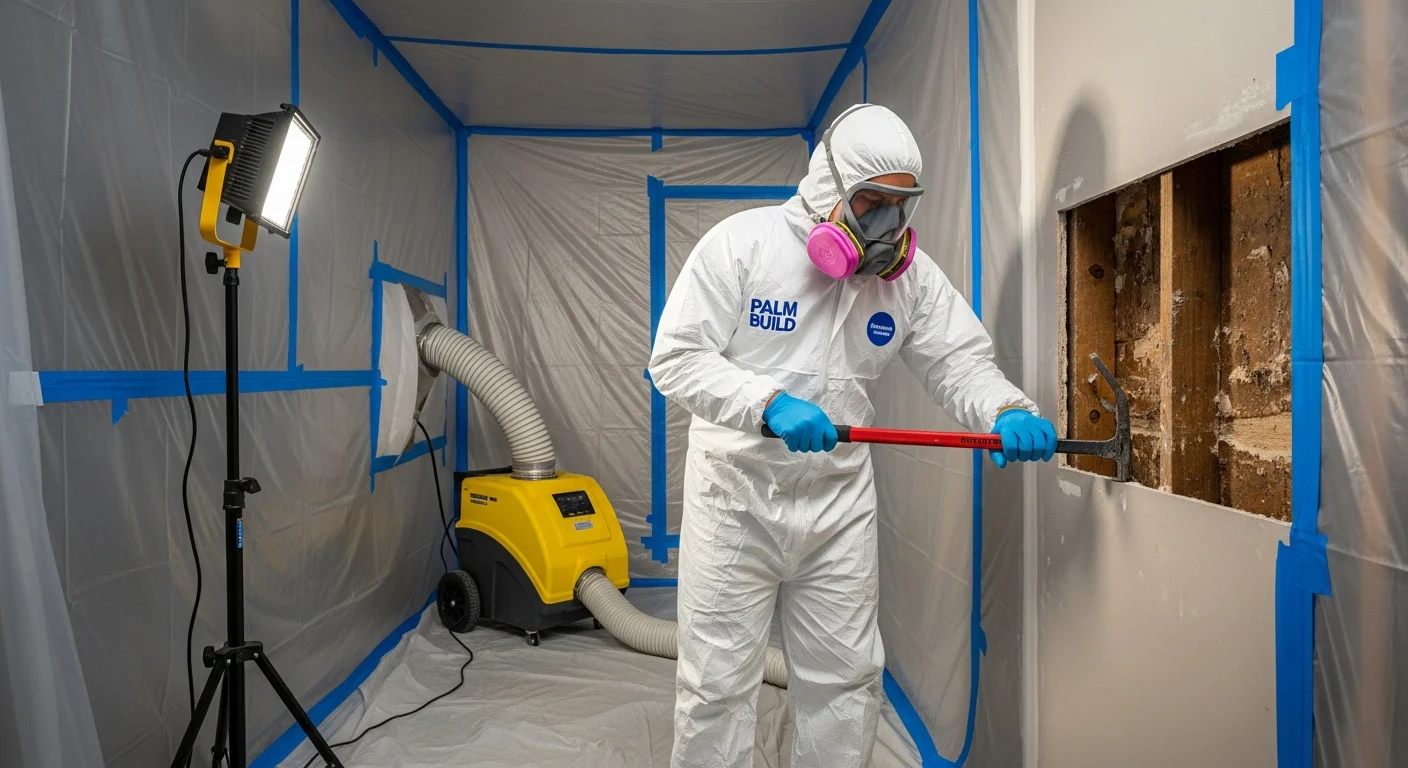
Mold Remediation Costs, Timelines, and Insurance
Cost is one of the biggest concerns for homeowners facing a mold problem. The range varies significantly based on the scope, location within the home, and whether structural materials need replacement. For a detailed breakdown with regional pricing, see our full guide on mold remediation costs in 2026.
| Project scope | Typical cost range | Notes |
|---|---|---|
| Per square foot | $10 to $25 | Standard estimating baseline for most projects |
| Small area (bathroom, closet) | $1,200 to $3,000 | Localized growth on one or two surfaces |
| Average residential project | $2,300 to $3,750 | Most jobs fall in this range |
| Crawl space remediation | $2,000 to $6,000 | Depends on square footage and vapor barrier needs |
| HVAC system remediation | $3,000 to $10,000 | Specialized containment and coil/duct cleaning |
| Whole-house remediation | $10,000 to $30,000+ | Major flood damage or widespread contamination |
| Mold testing or inspection | $250 to $350+ | Not always necessary if mold is already visible |
Typical mold remediation costs by project scope (2026)
Florida Insurance Deadlines and Licensing
If your mold problem is related to storm or hurricane damage, documentation is especially critical. Our storm and hurricane damage restoration team can help establish the connection between the weather event and the resulting mold growth for your insurance claim. For Florida-specific mold guidance including climate factors and prevention strategies, see our article on Florida mold problems.
North Carolina and South Carolina Notes
North Carolina does not have a state licensing program for mold remediation companies. The NC Department of Health and Human Services recommends that homeowners screen providers based on training, experience, and third-party certifications like IICRC (Institute of Inspection, Cleaning and Restoration Certification). Ask for references, proof of insurance, and a written scope of work before signing a contract.
South Carolina similarly lacks a formal mold remediation license at the state level, though legislation (H.5109) introduced in early 2026 would create a certification framework if enacted. In the meantime, IICRC certification and documented remediation protocols are your best indicators of a qualified contractor. SC consumer guidance after storms emphasizes reporting insurance claims as soon as possible, and state law provides for potential attorney fees when an insurer refuses a covered claim without reasonable cause within 90 days of a written demand.
Prevention Checklist for Florida, North Carolina, and South Carolina Properties
- Monitor indoor humidity with a digital hygrometer and keep it below 50%
- Run bathroom exhaust fans during and for 30 minutes after showers
- Use kitchen range hoods that vent to the exterior, not recirculating models
- Service HVAC systems annually, including cleaning drain lines and checking for condensation
- Inspect crawl spaces twice a year for standing water, vapor barrier damage, or musty odors
- Ensure your crawl space has a continuous ground vapor barrier (6-mil polyethylene minimum)
- Check caulking around tubs, showers, windows, and exterior penetrations annually
- After any storm with wind-driven rain, inspect attic, roof line, and window frames for water intrusion
- Dry any wet materials, spills, or leaks within 24 to 48 hours without exception
Frequently Asked Questions About Black Mold
How long do black mold exposure symptoms last? +
Can I remove black mold myself? +
Can I stay in my house with black mold? +
What kills black mold permanently? +
Is bleach or vinegar better for killing black mold? +
What does black mold smell like? +
Is it unsafe to smell mold? +
Do I need mold testing if I can already see it? +
Professional Mold Remediation Services
IICRC-certified mold remediation for residential and commercial properties across FL, NC, and SC.
How Fast Does Mold Grow After Water Damage?
The 24-48 hour mold growth timeline and what you can do to prevent it.
Mold Remediation Cost in 2026
Detailed cost breakdown by project size, location, and insurance coverage.
Mold Remediation vs. Mold Removal
Understanding the difference between surface cleaning and full remediation.
Florida Mold Problems: Why Homes Get Mold
Climate factors, Florida mold laws, and prevention strategies specific to the Sunshine State.
Concerned about mold in your home?
Our IICRC-certified remediation team serves Florida, North Carolina, and South Carolina with 24/7 emergency response. We work directly with your insurance company.
Found this helpful? Send it to someone who needs it.