Storm & Hurricane Damage Restoration in Plantation, Florida
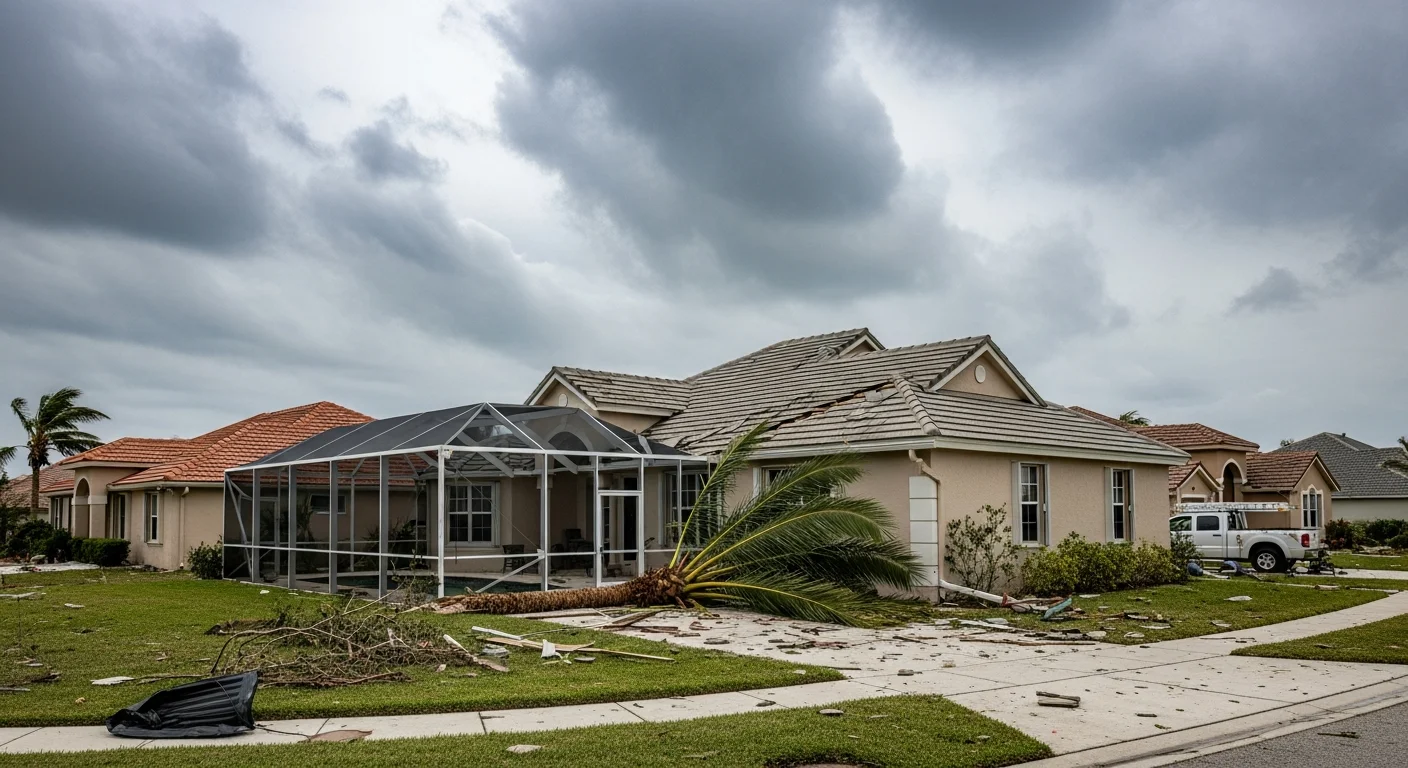
Hurricane Irma's sustained 80+ mph winds ripped tile roofs and destroyed thousands of screen enclosures across Plantation in September 2017. In April 2023, a 15-inch overnight deluge overwhelmed the Old Plantation Water Control District's 36-mile canal network, flooding homes from Jacaranda Lakes to Plantation Isles. Plantation sits in Broward County's High Velocity Hurricane Zone — where every storm repair must meet the strictest wind-load building code in the nation. Palm Build responds from Deerfield Beach in under 30 minutes with emergency tarping, water extraction, and full HVHZ-compliant reconstruction.
Deerfield Beach — Minutes from Plantation Under 30 min Response IICRC Certified
Plantation sits 12 miles inland from the Atlantic — far enough to avoid direct storm
surge, close enough to absorb full hurricane-force winds during every major event. The
city's 91,000 residents occupy CBS concrete block homes with tile roofs, screened pool
enclosures, and a canal drainage system that works until it doesn't. Add the nation's
strictest building code (HVHZ), and Plantation presents a storm damage restoration
challenge that demands Broward County expertise at every step.
Palm Build responds from Deerfield Beach in under 30 minutes. We know Plantation's
construction, its canal grid, and its HVHZ code requirements — because we restore homes
across Broward County every week.
HVHZ
Building code zone
100+ mph
Irma gusts 2017
15"
April 2023 rain
30 min
Response time
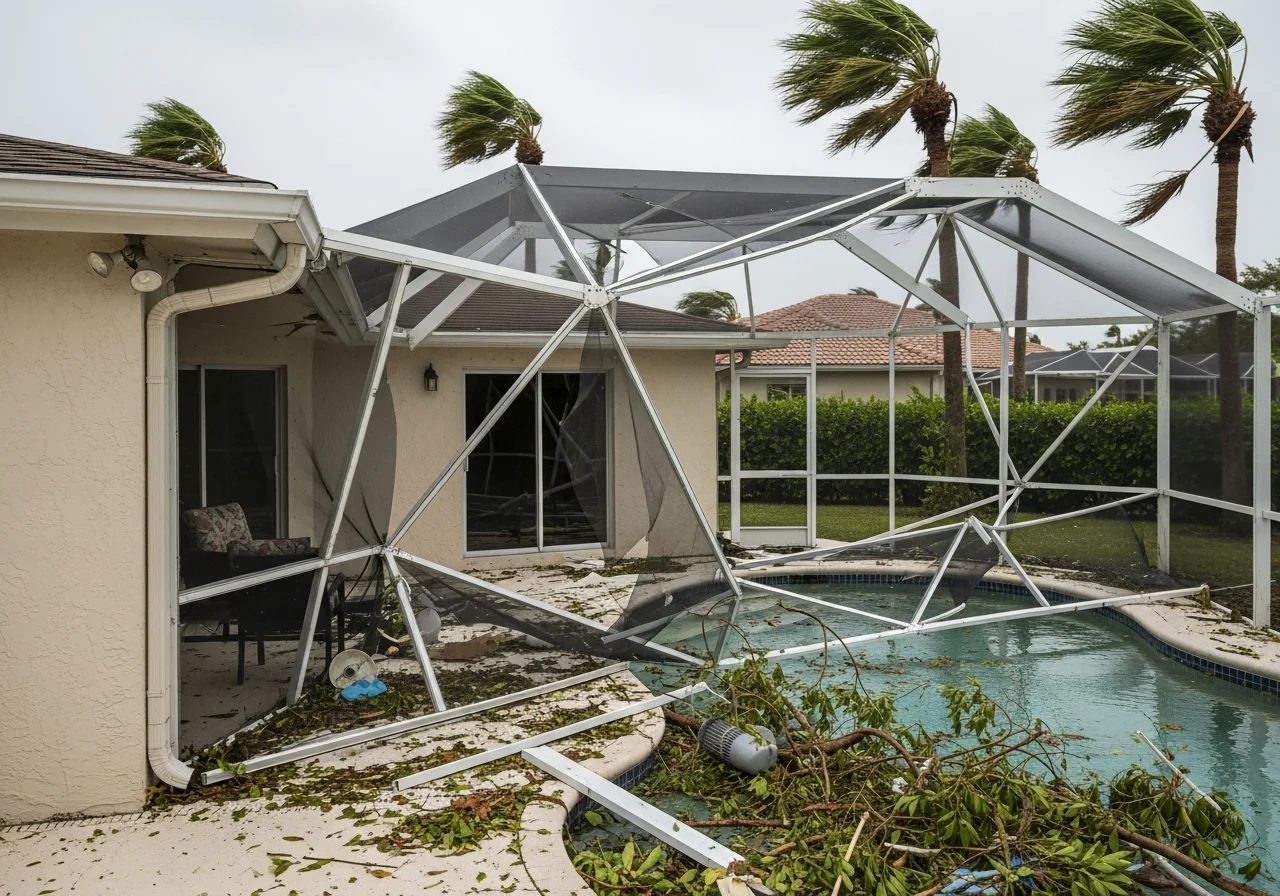
Screen enclosures are the first to fail during hurricanes — Plantation's
near-universal pool cages sustain widespread damage in every major storm event
HVHZ: The Strictest Wind-Load Code in America
Plantation falls within Broward County's High Velocity Hurricane Zone (HVHZ) — a designation that requires every impact window, roofing material, door, and structural connection to carry Miami-Dade product approvals. When a hurricane damages your home, every repair and replacement must meet HVHZ standards, costing 15-30% more than standard Florida Building Code work. Insurance adjusters from outside South Florida routinely underestimate HVHZ restoration costs because they apply non-HVHZ pricing. This single code requirement is what makes storm restoration in Plantation fundamentally different from the rest of the country.
April 2023: Proof That Inland Flooding Is Real
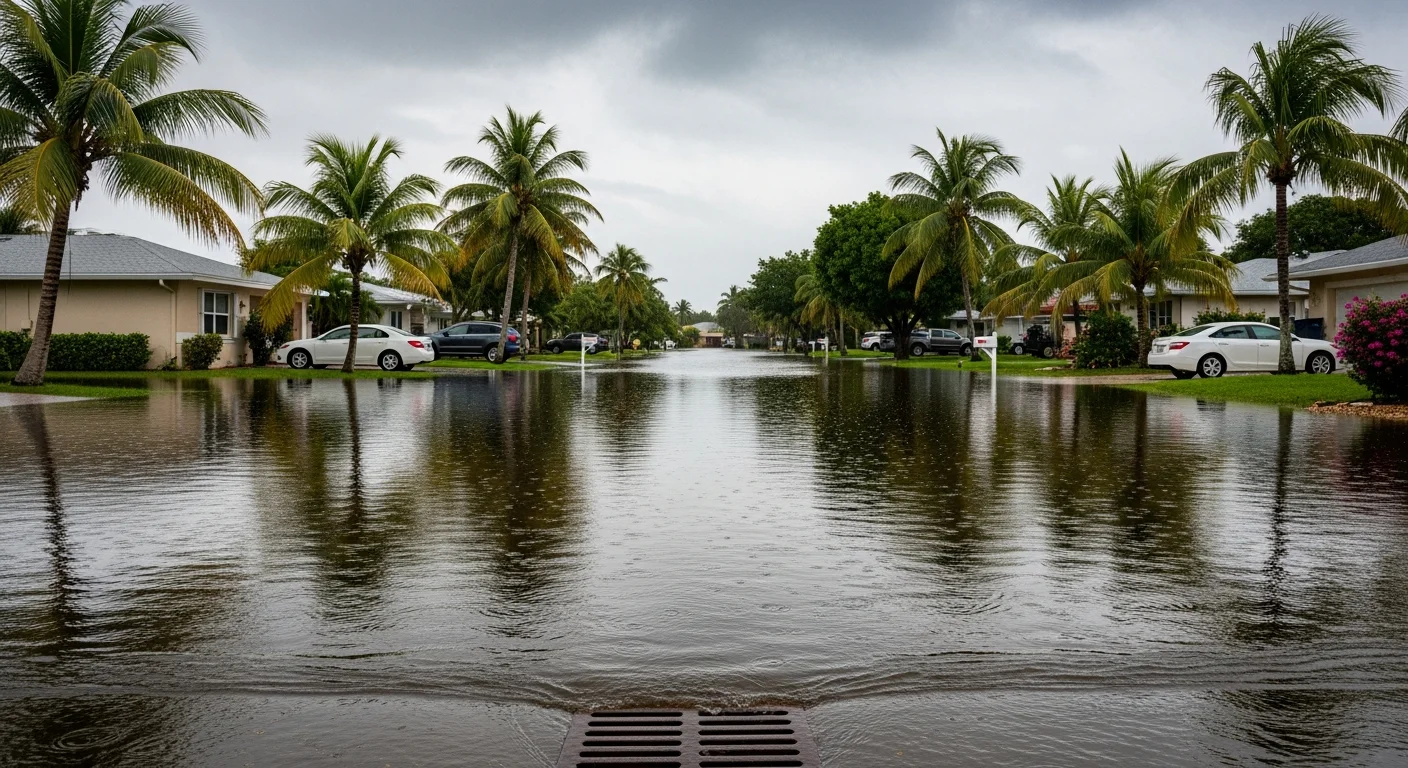
When 15 inches of rain fell on Plantation in 12 hours on April 12, 2023, the Old Plantation Water Control District's 36-mile canal network was overwhelmed. Water backed up through storm drains, flooded streets in Jacaranda Lakes and Plantation Isles, and entered homes through slab edges and garage doors. No hurricane. No tropical storm. Just rain — and a drainage system that exceeded capacity. This event proved that Plantation's flood risk comes from the sky and the canals, not the ocean.
Aging Tile Roofs Reaching Failure Age
Most Plantation homes were built between the 1960s and 1990s — meaning their concrete and clay tile roofs are 30-60+ years old. The tiles themselves resist hurricane winds. The failure point is the underlayment beneath: the waterproof membrane that prevents rain intrusion. After 15-25 years of South Florida UV exposure, underlayment dries, cracks, and fails. Hurricane winds momentarily lift tiles, rain penetrates compromised underlayment, and tiles reseat looking undamaged from the ground. Inside, $15,000-$50,000+ in hidden water damage accumulates undetected.
Screen Enclosures: The Weakest Link
Plantation's near-universal screened pool enclosures and lanai cages are the first structures to fail in hurricane winds. Hurricane Irma destroyed thousands across the city in 2017. While replacement costs run $5,000-$15,000, the secondary damage is worse: torn aluminum framing becomes wind-driven projectile debris that strikes neighboring homes, and the exposed pool deck and lanai sustain additional rain and wind damage. Insurance coverage for screen enclosures often carries sub-limits far below actual replacement cost.
Types of Storm Damage
How Hurricanes Damage Plantation Homes
Hurricane and storm damage in Plantation manifests in six distinct patterns — and major
storms trigger multiple damage types simultaneously. The city's combination of aging CBS
construction, tile roofs with deteriorating underlayment, universal screen enclosures,
and a canal drainage system that floods during extreme rainfall creates restoration
challenges that demand specialized Broward County knowledge.
High
Roof Tile & Shingle Loss
Plantation's concrete and clay tile roofs are designed for hurricane wind loads — but aging mortar joints and deteriorated underlayment create failure points. Hurricane-force gusts lift tiles from their attachment points, exposing the underlayment beneath. When that underlayment is 20-40 years old and compromised by UV degradation, wind-driven rain penetrates directly into the attic structure. Shingle roofs on older Plantation homes fare worse — shingle tabs peel and tear in sustained 80+ mph winds, creating immediate water intrusion pathways.
High
Screen Enclosure Destruction
Screen enclosures and pool cages are engineered for normal wind loads — not hurricane-force events. Plantation's thousands of screened enclosures sustain catastrophic damage in every major hurricane. Aluminum framing buckles, screen panels tear free, and collapsed structures crash onto pool decks, lanai furniture, and adjacent structures. The torn aluminum and screen material becomes projectile debris that strikes neighboring homes. Insurance coverage often carries sub-limits well below the $5,000-$15,000 replacement cost.
Moderate
Soffit & Fascia Damage
Soffit panels along roof overhangs are among the most wind-vulnerable components on Plantation homes. Hurricane gusts create negative pressure that pulls soffit panels from their mounting channels, exposing the attic cavity to wind-driven rain. Once soffits fail, pressurization dynamics change inside the attic — increasing uplift force on the roof structure itself. Fascia boards crack and detach under sustained wind load, compromising the roof-edge seal. This damage often goes unnoticed until interior water staining appears weeks later.
High
Wind-Driven Rain Through Stucco Cracks
Plantation's CBS (concrete block and stucco) construction develops hairline cracks over decades of thermal expansion and contraction. During hurricanes, wind-driven rain at 80-130+ mph is forced through these microscopic cracks and deteriorated window sealant joints. CBS walls trap moisture between the exterior stucco and interior drywall, creating concealed saturation that dries 20-40% slower than wood-frame construction. Post-storm moisture meter inspection of every exterior wall is essential — visible damage represents only a fraction of actual water intrusion.
Moderate
Fallen Trees & Branches on Structures
Plantation's mature tropical landscaping — royal palms, live oaks, ficus, and banyans — becomes projectile debris in hurricane winds. Fallen trees crush tile roofs, screen enclosures, and vehicles. Flying branches strike and can break even impact-rated windows. Neighborhoods like Plantation Acres with dense, mature tree canopies see the highest concentration of impact damage. Storm debris also clogs canal inlets and storm drains, worsening the flooding cycle.
High
Flooding from Canal Overflow
The Old Plantation Water Control District's 36-mile canal network handles normal rainfall effectively. When tropical events produce 6-10+ inches per hour, pump stations cannot keep up — canal water rises, backs through storm drains into streets, and enters homes through slab edges, garage doors, and ground-floor openings. April 2023's 15-inch deluge demonstrated this without a named storm. Canal overflow water is classified as Category 1-2 under IICRC standards, requiring professional extraction, contamination testing, and structural drying.
Hurricane Season Calendar
Plantation Hurricane Season: June Through November
Atlantic hurricane season runs June 1 through November 30, with peak activity
concentrated in September and October. For Plantation homeowners — with tile roofs
vulnerable to wind damage, universal screen enclosures, and a canal system that floods
during extreme rainfall — understanding the seasonal risk curve determines when to
complete preparations and when to have your restoration company on speed dial.
June
Low-Moderate
Hurricane season begins June 1. Early-season storms are typically disorganized but can produce heavy rainfall and localized canal flooding across Plantation. This is your last window to complete roof inspections, verify insurance policies and hurricane deductible percentages, test shutters, and stage emergency supplies before peak activity begins.
July
Moderate
Tropical development increases as Atlantic ocean temperatures rise. Severe afternoon thunderstorms become daily events in Plantation, capable of producing damaging wind gusts that displace tile roof sections, destroy screen enclosures, and cause localized canal flooding. These non-hurricane events generate significant insurance claims each year.
August
High
Peak development zone shifts toward Florida. Cape Verde storms begin their Atlantic crossing. Sea surface temperatures peak, fueling rapid intensification. Plantation homeowners should have shutters accessible, generators fueled, and emergency supplies ready. Preparation transitions from planning to immediate execution readiness.
September
Peak
Statistically the most dangerous month for South Florida hurricanes. Hurricane Irma struck Plantation on September 10, 2017, with gusts exceeding 100 mph. Peak season demands full readiness: shutters installed, generator fueled, important documents secured, restoration company on speed dial. This is when your tile roof and screen enclosures face maximum risk.
October
Peak
October rivals September for hurricane frequency. Hurricane Wilma (2005) struck Broward County on October 24, causing widespread damage across Plantation and western suburbs. Late-season storms approaching from the southwest or Gulf can catch inland cities off guard with unexpected wind angles that stress different roof surfaces than typical Atlantic-approach hurricanes.
November
Low-Moderate
Season officially ends November 30 but late-season tropical storms remain dangerous. Tropical Storm Eta struck South Florida in November 2020, dumping inches of rain on western Broward communities. Do not lower your guard or remove shutters until December. Schedule your post-season roof inspection to identify any hidden damage before the dry season.
Plantation streets flood when the Old Plantation Water Control District's canal system
exceeds capacity during extreme rainfall — April 2023 proved this can happen without a
named storm
Pre-Season Inspection Checklist
Before hurricane season each year, Plantation homeowners should complete a roof
inspection to check tile attachment and underlayment condition, verify all impact
windows and shutters operate correctly, test and fuel backup generators, confirm
insurance coverage limits and hurricane deductible percentages, clear canal inlets and
gutters of debris, and photograph the current condition of your home's exterior —
including the roof and screen enclosure — for pre-storm documentation.
From the moment we receive your call to final HVHZ-compliant reconstruction, Palm Build
follows a proven six-step process designed for Plantation's specific storm damage
patterns — tile roof systems, CBS construction, canal flooding, and Broward County
building code requirements.
STEP 01
Emergency Tarping & Board-Up
Hours 1-4
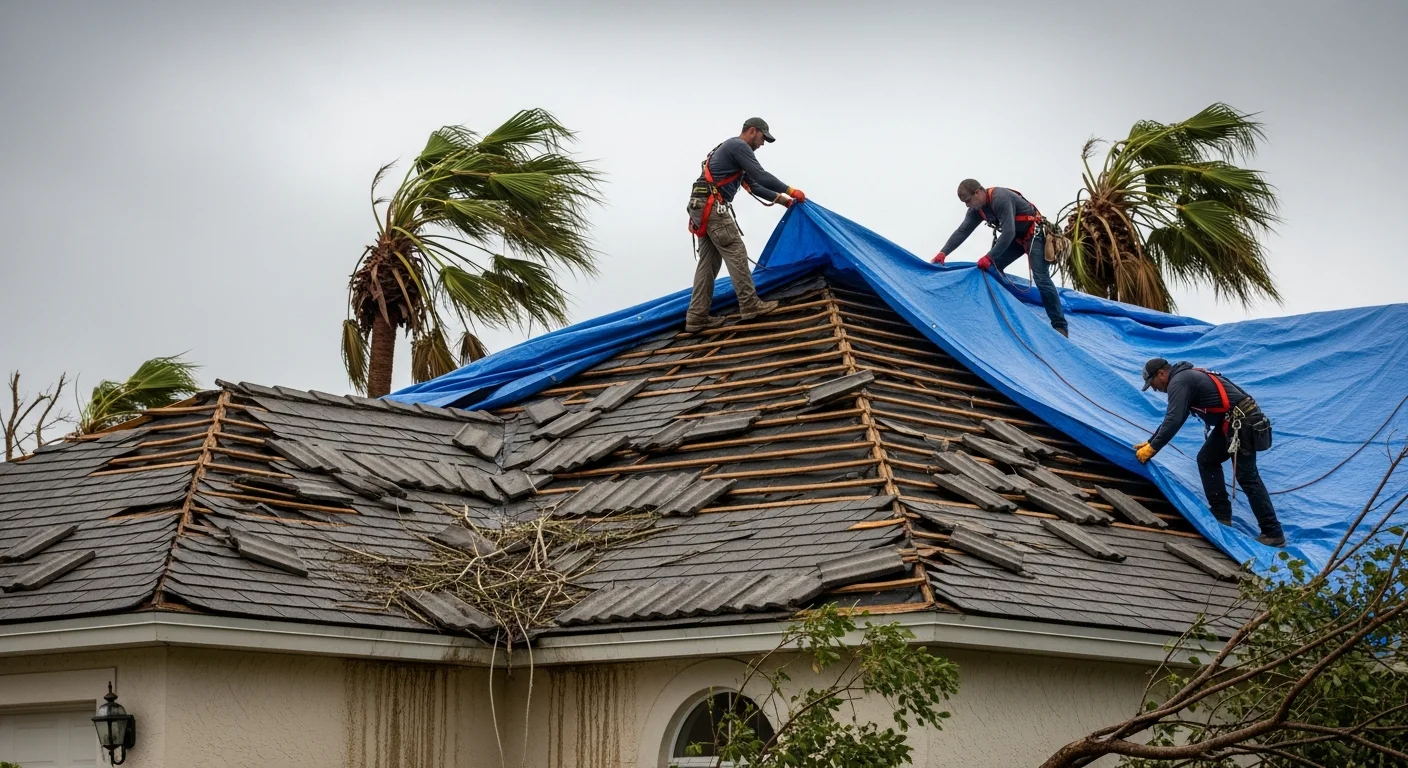
We secure your Plantation home against further weather exposure immediately upon arrival. Displaced tile roofs are tarped with reinforced polyethylene rated for South Florida wind loads, failed windows are boarded with OSB sheathing, and compromised doors are sealed. Palm Build deploys from Deerfield Beach — under 20 minutes from most Plantation neighborhoods via I-595 or University Drive. Emergency tarping is covered by your insurance policy as part of your duty to mitigate further damage.
STEP 02
Damage Assessment & Documentation
Days 1-3
Full documentation of all storm damage classified by cause: wind damage (tiles, soffits, screen enclosures, windows), canal overflow flooding (Category 1-2), and wind-driven rain intrusion through tile underlayment and stucco cracks. In Plantation, where hidden roof damage and canal flooding converge during major events, we photograph every affected area, map moisture with thermal cameras, and create separate scopes for wind claims (homeowners) and flood claims (NFIP or private flood). HVHZ code requirements are documented in every scope.
STEP 03
Water Extraction from Rain Intrusion
Days 1-5
Storm damage in Plantation almost always includes water intrusion — through displaced tiles, failed windows, stucco cracks, or canal overflow. Truck-mounted extractors remove standing water. We classify contamination levels on-site: wind-driven rainwater (Category 1) versus canal overflow (Category 1-2) requiring contamination testing. Commercial dehumidifiers and air movers begin reducing humidity immediately. In Plantation's year-round 70-75% ambient humidity, every hour of delay increases mold risk exponentially.
STEP 04
Structural Drying
Days 3-14
Plantation's year-round humidity makes structural drying more demanding than most of the country. Without power — common for 5-14 days after major hurricanes — air conditioning stops and mold colonization begins within 24-48 hours in September heat. We deploy industrial desiccant dehumidifiers, establish negative air pressure containment, and monitor moisture levels twice daily. CBS concrete block walls retain moisture 20-40% longer than wood-frame construction, extending required drying times.
STEP 05
Storm Debris Removal
Days 1-14
Fallen trees, destroyed screen enclosures, displaced roof tiles, torn soffits, and wind-blown debris are removed from the property, documented for insurance, and disposed of through Plantation's post-storm debris management program. We separate debris by category — vegetative, construction, and mixed — to comply with Broward County disposal requirements. Screen enclosure demolition and haul-off is coordinated to allow roof and structural repairs to proceed without obstruction.
STEP 06
Reconstruction to HVHZ Standards
Weeks 2-24
Full reconstruction meeting current HVHZ building code requirements. Tile roof repair or replacement with Miami-Dade approved materials, impact window installation where originals failed, hurricane strap verification or upgrade, screen enclosure rebuild, stucco restoration on CBS walls, and complete interior rebuild. Every material and installation must carry HVHZ product approvals. We maintain relationships with Miami-Dade approved suppliers to ensure material availability during post-hurricane demand surges across Broward County.
Emergency roof tarping prevents additional water intrusion while insurance
documentation and permanent repairs are coordinated — a critical first step covered by
your policy
Why Speed Matters in Plantation
In Plantation's year-round 70-75% humidity, mold begins colonizing wet building
materials within 24-48 hours after water intrusion. After Hurricane Irma, homes that
sat without power and air conditioning for 5-14 days experienced explosive mold growth
that turned a $20,000 storm repair into a $60,000+ remediation and rebuild project.
Every hour between water intrusion and professional drying determines whether you are
dealing with a storm claim or a storm-plus-mold claim.
Broward County HVHZ Requirements
How HVHZ Building Code Affects Storm Restoration in Plantation
Plantation falls within the High Velocity Hurricane Zone (HVHZ) — the most stringent
wind-load building code in the United States. Originally designed for Miami-Dade and
Broward County's hurricane exposure, the HVHZ applies to every structure in Plantation.
When storm damage triggers replacement of roofing, windows, doors, or structural
connections, all new materials must meet HVHZ standards with Miami-Dade product
approvals. This is what makes storm restoration in Plantation fundamentally different
from the rest of Florida — and why most out-of-area contractors underestimate the cost
and complexity.
Impact Windows & Doors
Every window and door in Plantation's HVHZ must carry a Miami-Dade Notice of Acceptance (NOA) — the most rigorous impact-resistance certification in the country. When a hurricane breaks a window or damages a door, the replacement must meet the same standard. HVHZ-rated impact windows cost $600-$1,200 per opening vs. $200-$400 for standard Florida Building Code windows. A full-house window replacement after storm damage in Plantation adds $15,000-$40,000+ to the restoration scope compared to non-HVHZ areas.
Roof-to-Wall Connections (Hurricane Straps)
HVHZ code requires engineered roof-to-wall connections — hurricane straps or clips that mechanically tie the roof truss system to the CBS wall structure. When storm damage requires roof replacement or structural roof repair, inspectors verify these connections meet current HVHZ specifications. Many Plantation homes built in the 1960s-1980s have toe-nailed connections that must be upgraded during any permitted roof work. This single requirement can add $3,000-$8,000 to a roof restoration project.
Enhanced Underlayment Requirements
HVHZ code specifies underlayment installation methods that exceed standard Florida Building Code. Self-adhering modified bitumen underlayment must be mechanically attached in many applications, not just stuck down. High-temperature peel-and-stick products rated for South Florida's UV exposure are required beneath tile roofs. These HVHZ-specific underlayment requirements add $2,000-$5,000 to a typical tile roof replacement in Plantation — but they are the critical waterproofing layer that prevents the hidden water damage pattern that costs Plantation homeowners thousands.
Miami-Dade Product Approvals for Roofing
All roofing materials installed in Plantation — tiles, underlayment, flashing, fasteners — must carry Miami-Dade product approvals, not just standard Florida Building Code approval. Concrete and clay tiles must meet specific wind uplift testing standards. Fasteners must be rated for the city's wind-load zone. These material specifications limit available product options and increase material costs 10-20% compared to standard Florida Building Code requirements. After major hurricanes, HVHZ-approved materials face supply shortages across Broward County.
Cost Impact: 15-30% Premium Over Standard FL Code
The cumulative effect of HVHZ requirements adds 15-30% to storm restoration costs in Plantation compared to identical damage in a non-HVHZ city. Impact windows, Miami-Dade approved roofing, engineered hurricane straps, rated garage doors, and more rigorous permitting all contribute. Insurance adjusters from outside South Florida frequently underestimate HVHZ restoration costs. Palm Build documents HVHZ code requirements in every scope — ensuring your insurance claim reflects the actual cost of code-compliant restoration, not generic non-HVHZ pricing.
Plantation Building Department Permits
Storm repair permits in Plantation require engineering calculations, product approval documentation, and contractor licensing verification before issuance. The Plantation Building Department enforces HVHZ standards rigorously — roof inspections verify every hurricane strap, underlayment attachment, and tile installation pattern. After major hurricanes, permit backlogs can add 2-6 weeks to the restoration timeline across Broward County. Palm Build maintains pre-established relationships with Plantation's Building Department to expedite processing and avoid common rejection triggers.
Critical Insurance Distinction
Storm Insurance Claims in Plantation: What You Need to Know
Storm damage insurance in Plantation is more complex than most homeowners realize. Wind
damage and flood damage from the same hurricane are covered by different policies, carry
different deductibles, and are filed as separate claims. Understanding these
distinctions before a hurricane is the difference between full financial recovery and
thousands of dollars in uncovered losses.
Roof tile displacement and wind-driven rain intrusion
Screen enclosure and pool cage destruction
Window and door failure from wind pressure or debris
Soffit, fascia, and siding damage
Tree and debris impact on structures
Emergency tarping and board-up (duty to mitigate)
Hurricane Deductible: 2-5% of insured value
On a $490,000 Plantation home: $9,800 (2%) to $24,500 (5%) out of pocket before wind
coverage begins.
Flood Damage (Separate NFIP or Private Flood Policy)
Canal overflow water entering through slab edges — NOT covered by homeowners
Storm drain backup flooding — NOT covered by homeowners
Ground-level water intrusion through garage doors — NOT covered by homeowners
Standing water from overwhelmed drainage system — NOT covered by homeowners
Separate flood policy required
NFIP proof-of-loss deadline is 60 days from the flood event. Missing this voids your
entire flood claim.
Roof ACV vs. RCV: The Hidden Cost Trap
Many Florida homeowners policies pay roof claims on an Actual Cash Value (ACV) basis —
meaning depreciation is deducted from the payout. A 25-year-old tile roof in Plantation
may have a replacement cost of $25,000 but an ACV payout of only $8,000-$12,000 after
depreciation. Replacement Cost Value (RCV) policies pay the full replacement cost, but
require you to complete the repairs before receiving the difference. Check your policy's
roof coverage method before hurricane season.
Screen Enclosure Coverage Limits
Screen enclosures and pool cages in Plantation are covered under most homeowners
policies, but often with sub-limits of $5,000-$15,000 — potentially less than actual
replacement cost for larger or custom enclosures. Some policies classify screen
enclosures as "other structures" with a separate coverage limit (typically 10% of
dwelling coverage). Others exclude screen enclosures from windstorm coverage entirely.
Review your declarations page and consider endorsing your screen enclosure coverage to
full replacement cost before hurricane season.
Florida Filing Deadlines for Storm Claims
Wind damage (homeowners policy): File within 2 years of the storm event. Flood damage
(NFIP): Proof-of-loss must be filed within 60 days — miss it and your entire flood
claim is void. Private flood policies may have different deadlines. After a hurricane
in Plantation, you may need to file both a wind claim and a flood claim
simultaneously, each with different carriers, different adjusters, and different
deadlines. Palm Build classifies every damage item by cause from day one to support
both claims.
Plantation Pricing
Storm Damage Restoration Costs in Plantation
Hurricane restoration costs in Plantation are elevated by HVHZ building code
requirements, tile roof systems, CBS wall drying complexity, and South Florida labor
rates. After major hurricanes, contractor demand and HVHZ-compliant material shortages
across Broward County increase costs 20-40% and extend timelines by months.
Emergency Tarping & Board-Up
Roof tarping, window boarding, door sealing, immediate weather protection
$500 - $2,000
Covered by insurance as duty to mitigate
Screen Enclosure Rebuild
Pool cage demolition, aluminum framing, re-screening, Plantation permit and inspection
$3,000 - $15,000
Insurance sub-limits may cap coverage below actual cost
Post-hurricane demand can extend timeline 4-10 weeks
Hurricane Deductible Calculator: Plantation
Plantation's median home value is approximately $490,000. At a 2% hurricane
deductible, that means $9,800 out of pocket before your wind claim pays anything. At
5%, it is $24,500. This deductible applies to each hurricane event — not annually. If
two hurricanes hit in one season, you pay the deductible twice. The HVHZ premium on
restoration materials means the gap between your deductible and the actual repair cost
is wider in Plantation than in non-HVHZ areas. Knowing your specific hurricane
deductible percentage before storm season is essential financial preparation.
The Palm Build Difference
Why Plantation Homeowners Choose Palm Build After Hurricanes
Deerfield Beach HQ — Under 30-Minute Response to Plantation
Palm Build operates from 786 S Military Trail, Deerfield Beach, FL 33442 — less than 20 minutes from most Plantation neighborhoods via I-595, University Drive, or the Sawgrass Expressway. Emergency crews deploy across every Plantation neighborhood within 30 minutes under normal conditions. During major hurricane events, we activate catastrophe response with pre-positioned crews and equipment across Broward County. Pre-storm clients receive priority dispatch ahead of the general queue.
IICRC Certified — South Florida Storm Specialists
Every crew lead holds current IICRC Water Restoration Technician and Fire/Smoke Restoration Technician certifications. Our South Florida teams are trained in canal overflow contamination protocols, CBS concrete block drying techniques, and the specific moisture dynamics of tile roof hidden damage — the three most common storm damage patterns in Plantation. We test contamination levels on-site before choosing the remediation protocol.
HVHZ Building Code Expertise
Plantation's HVHZ code requirements add 15-30% to storm restoration costs and weeks to project timelines. Palm Build understands every HVHZ specification: Miami-Dade product approvals for roofing, impact-rated window and door requirements, engineered hurricane strap connections, enhanced underlayment standards, and rated garage door replacements. We document HVHZ code requirements in every scope — ensuring your insurance claim reflects the actual cost of code-compliant restoration.
Dual-Claim Documentation (Wind + Flood)
Our damage assessment classifies every item by cause — wind vs. canal overflow vs. debris impact — ensuring each claim is filed with the correct policy. In Plantation, where wind damage goes through homeowners (with 2-5% hurricane deductible) and canal flood damage requires separate NFIP or private flood claims, this dual-documentation approach recovers significantly more for homeowners than generic damage reports that fail to distinguish damage sources.
Florida Insurance Navigation
We understand Florida's complex insurance landscape: Citizens depopulation, hurricane deductible percentages, NFIP proof-of-loss deadlines, assignment of benefits regulations, and the role of public adjusters. Palm Build coordinates with your carrier, your adjuster, and if needed your public adjuster to maximize claim recovery while keeping restoration moving. Whether you are insured through Citizens, a private carrier, or both, we navigate the process.
Full Reconstruction — Emergency Through Final Punch
From emergency tarping through HVHZ-compliant final reconstruction, one company handles everything. We maintain relationships with Miami-Dade approved tile suppliers, impact window manufacturers, and licensed subcontractors who prioritize our projects during post-hurricane demand surges. Tile roof repair, impact window replacement, hurricane strap installation, screen enclosure rebuild, and full interior rebuild — all coordinated through a single project manager with Plantation Building Department permit expertise.
Common Questions
Plantation Storm & Hurricane Damage FAQ
How quickly can Palm Build respond to storm damage in Plantation?
Palm Build operates from our Deerfield Beach hub at 786 S Military Trail — less than 20 minutes from most Plantation neighborhoods via I-595 or University Drive. We dispatch emergency crews within 30 minutes, 24/7/365. After major hurricane events, we activate catastrophe response with pre-positioned crews across Broward County. Pre-storm clients receive priority dispatch.
Does my homeowners insurance cover hurricane damage in Plantation?
Wind damage is covered under your Florida homeowners policy, but with a separate hurricane deductible of 2-5% of your home's insured value. On a Plantation home valued at $490,000, a 2% deductible means $9,800 out of pocket before wind coverage begins. Flood damage from canal overflow requires a separate NFIP or private flood policy — standard homeowners policies exclude flood entirely. After a hurricane, you may need to file two separate claims with different carriers and different deadlines.
Why does HVHZ building code affect my storm repair costs in Plantation?
Plantation falls within Broward County's High Velocity Hurricane Zone (HVHZ), requiring Miami-Dade product approvals for all roofing materials, impact-rated windows and doors, engineered hurricane strap connections, and enhanced underlayment. When storm damage triggers replacement, all new materials must meet HVHZ standards — costing 15-30% more than standard Florida Building Code materials. Permits require engineering calculations and inspections are more rigorous. Palm Build documents every HVHZ requirement in the scope so your insurance claim reflects actual code-compliant costs.
How do I know if my tile roof has hidden storm damage in Plantation?
Tile roofs are designed to resist hurricane winds — the tiles rarely break. The failure point is the underlayment beneath: after 15-25 years of UV exposure, this waterproof membrane deteriorates. Hurricane winds momentarily lift tiles, rain penetrates compromised underlayment, and tiles reseat post-storm looking undamaged from the ground. Inside, water saturates attic insulation, collapses ceiling drywall, and enters wall cavities. This hidden damage pattern causes $15,000-$50,000+ in losses. A professional post-storm inspection with moisture meters and thermal imaging is the only way to detect it.
Does insurance cover screen enclosure damage from hurricanes in Plantation?
Screen enclosures and pool cages are covered under most Florida homeowners policies as part of the structure, subject to your hurricane deductible. However, coverage limits on screen enclosures are often capped at $5,000-$15,000 — well below the actual replacement cost for larger or custom enclosures. Many policies also exclude screen enclosures from windstorm coverage or treat them as 'other structures' with separate sub-limits. Review your policy declarations page before hurricane season to understand your specific coverage.
What should I do immediately after a hurricane damages my Plantation home?
First, ensure personal safety — do not enter structurally compromised areas. Document all damage with photos and video before any cleanup. Call your insurance company to open a claim within 24 hours. Then call Palm Build at (754) 600-3369 for emergency tarping and board-up — this prevents additional damage and is covered by your insurance as part of your duty to mitigate. Do not wait for an adjuster before protecting the property. Keep all receipts for emergency expenses.
How long does hurricane restoration take in Plantation?
Emergency tarping and water extraction: 1-2 days. Structural drying in Plantation's year-round humidity: 5-10 days. Tile roof repair or replacement: 4-10 weeks depending on material availability and Broward County HVHZ permit processing. Full reconstruction meeting HVHZ code requirements: 10-24 weeks. After major hurricanes, timelines extend significantly due to contractor demand, HVHZ-compliant material shortages, and permitting backlogs across Broward County.
What is the deadline for filing a hurricane damage insurance claim in Florida?
Florida law requires you to file a property insurance claim within two years of the storm event for wind damage. For flood damage covered by an NFIP policy, the proof-of-loss deadline is 60 days from the flood event — missing this deadline voids your entire flood claim. After a hurricane in Plantation, you may need to file both a wind claim and a flood claim simultaneously, each with different deadlines and different adjusters. Palm Build documents damage by cause from day one to support both claims.
Trusted Vendors
Trusted local pros in Plantation
Outside our restoration scope, these are the vetted, licensed contractors we trust
alongside our work. Personally evaluated, reference-checked, and recommended by Palm
Build.
Palm Build responds from Deerfield Beach to every Plantation neighborhood in under 30 minutes. Emergency tarping, water extraction, structural drying, and full HVHZ-compliant reconstruction — 24/7, with insurance documentation from the first call. Do not wait for mold to colonize in Plantation's humidity.