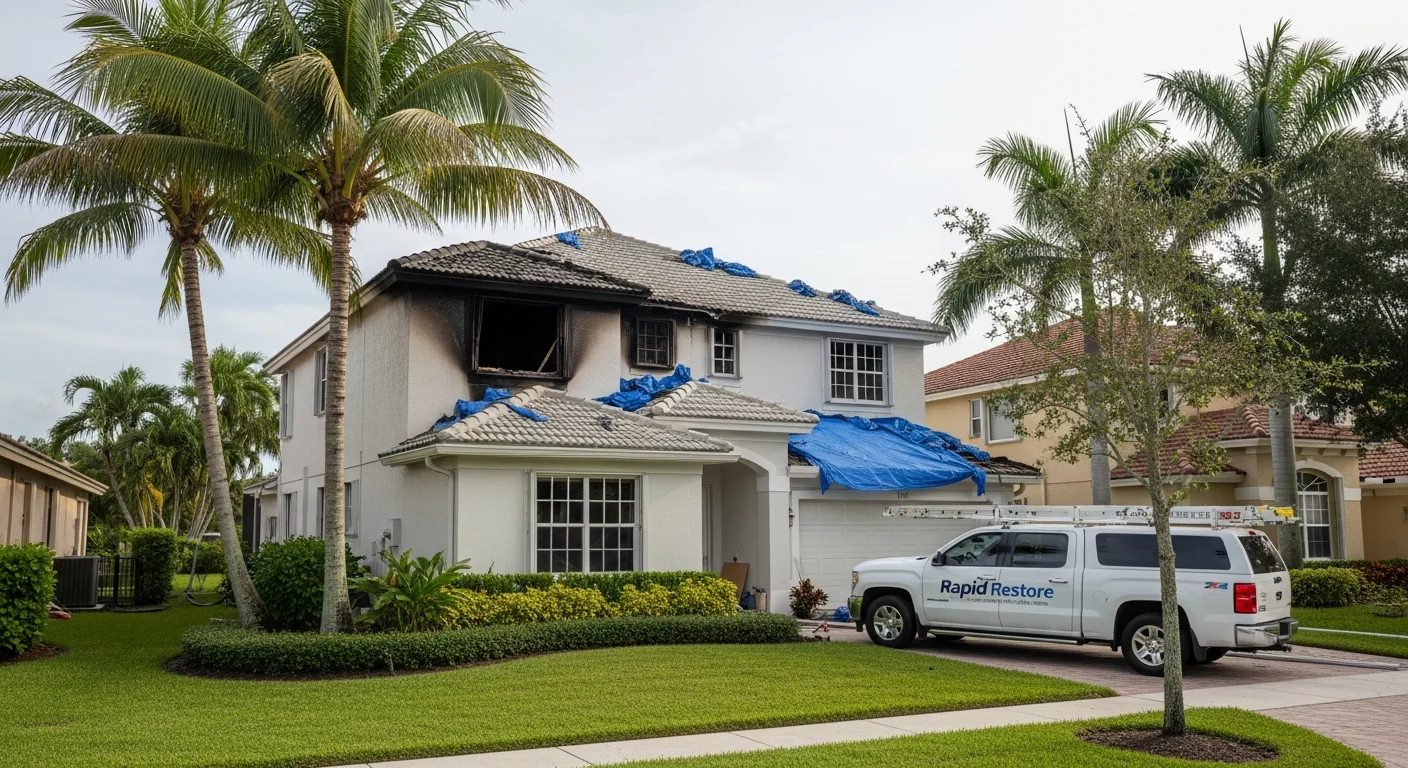
From Jacaranda estates to Central Park condos, Palm Build's Deerfield Beach team responds in approximately 25 minutes with IICRC-certified fire restoration, professional soot removal, smoke odor elimination, and insurance-ready documentation — specializing in the CBS concrete block construction, 1960s-1980s electrical system fire risks, and high-humidity smoke persistence that define Plantation's 90,000-resident community.
Deerfield Beach — 25 Minutes from Plantation 25 min Response IICRC Certified
Why Plantation Homes Face Unique Fire & Smoke Challenges
Plantation's 1960s-1980s CBS housing stock, aging electrical infrastructure, porous
stucco exteriors, and year-round high humidity create a combination of fire and
smoke damage factors that demand specialized restoration techniques. The same
concrete block construction that limits structural fire damage traps smoke where
standard cleaning can't reach.
CBS Block Traps Smoke in Wall Cavities
Critical
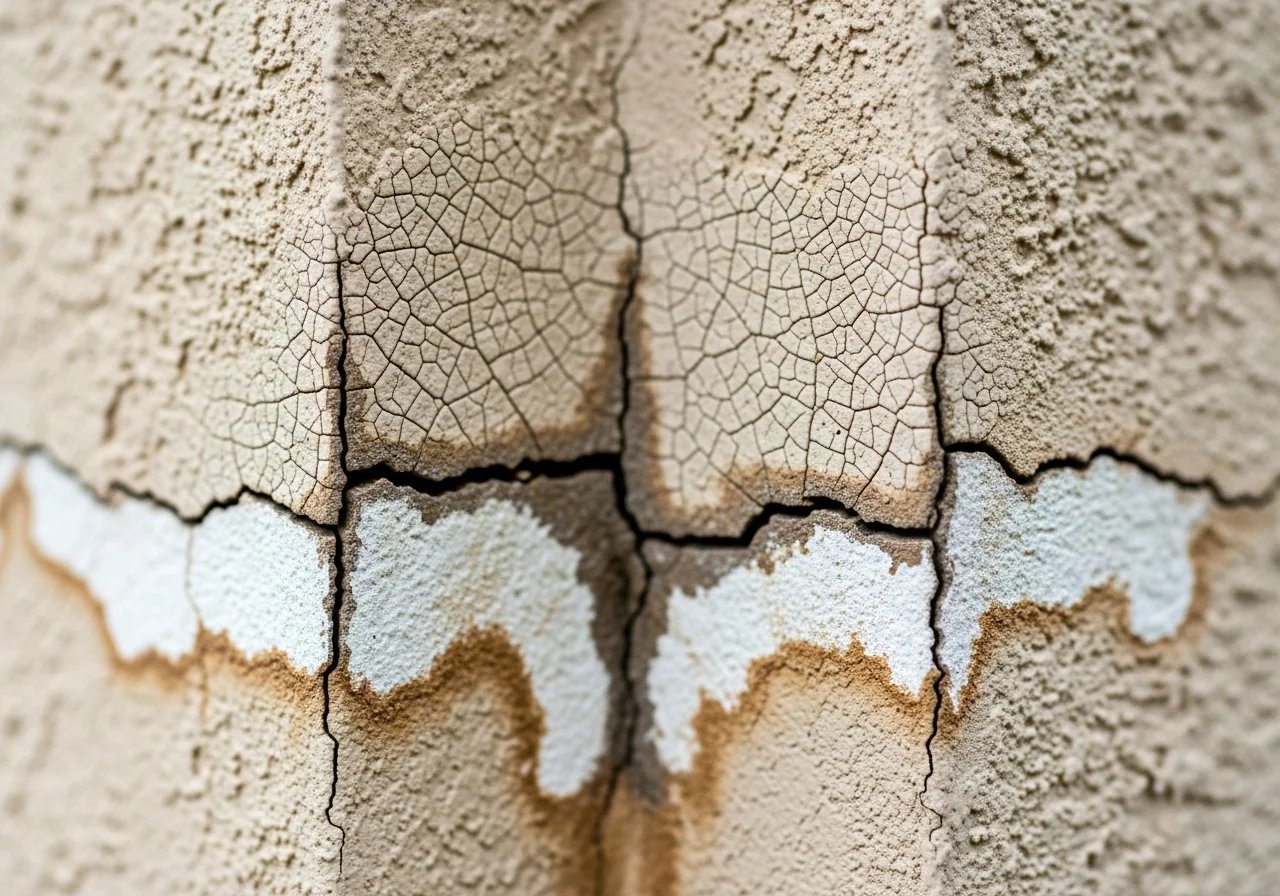
Plantation's CBS (concrete block and stucco) construction resists structural collapse during fire — but creates a paradox for smoke damage. Smoke infiltrates hollow concrete block wall cavities through mortar joints, electrical penetrations, and microscopic stucco cracks that develop over decades of South Florida thermal cycling. Once inside these cavities, smoke compounds bond to porous concrete surfaces where they persist indefinitely. Surface cleaning addresses what you can see; the hidden contamination in block cavities is what makes Plantation fire restoration uniquely challenging.
Stucco Exteriors Absorb Soot
High
The textured stucco finish on virtually every Plantation home is inherently porous — designed to breathe and flex with South Florida's heat. During a fire event, this porosity becomes a liability. Soot particles embed in stucco's micro-texture at depths that surface washing cannot reach. Protein soot from kitchen fires, synthetic soot from plastics, and mixed soot from electrical fires each require different chemical treatment protocols. High-pressure washing damages stucco; the correct approach is chemical application matched to soot type, followed by low-pressure rinse and seal.
Humidity Causes Secondary Corrosion
Critical
Plantation's 70-75% year-round humidity transforms smoke damage from a cleaning problem into a corrosion problem. Soot particles are acidic — when combined with moisture in humid air, they form mild acids that etch metal fixtures, tarnish copper wiring, corrode appliance components, and permanently discolor chrome and stainless steel surfaces. Every hour soot sits on metal in Plantation's humidity accelerates this corrosion. This is why 24-hour response isn't just convenient — it's the difference between cleaning surfaces and replacing them.
1960s-1980s Electrical Systems Increase Fire Risk
High
Most Plantation homes were built between the 1960s and 1980s with 100-150 amp electrical panels and aluminum or undersized copper wiring designed for that era's modest appliance loads. These systems now power central AC running 10-11 months per year, pool pumps, modern kitchen appliances, home offices, and sometimes EV chargers — loads that routinely approach or exceed panel capacity. Aging breaker connections loosen over decades of thermal cycling, creating arc-fault conditions that can smolder inside CBS walls for hours before smoke appears.
CBS stucco throughout Plantation traps smoke deep in hollow block cavities, requiring
professional thermal fogging for complete odor elimination
Plantation Fire Risk at a Glance
CBS block walls trap smoke in hollow cavities for months
70-75% humidity reactivates smoke odor and accelerates soot corrosion
1960s-80s electrical panels overloaded by modern AC and pool loads
Porous stucco absorbs soot at depths surface washing cannot reach
Year-round kitchen fires from 90,000+ permanent residents
Our Fire Restoration Process
How We Restore Plantation Homes After Fire Damage
Fire restoration is more complex than water or mold because it involves multiple damage
types simultaneously — structural fire damage, soot contamination, smoke odor, and water
from fire suppression. Our six-step process addresses all four in a coordinated sequence
tailored to Plantation's CBS construction and Broward County code requirements.
01
Emergency Board-Up & Securing
Hours 1-4
We secure your Plantation home against weather, theft, and further damage. This includes boarding windows, tarping any roof damage, and securing doors. In South Florida, where afternoon thunderstorms develop daily from May through October, an unsecured fire-damaged home can sustain thousands in additional water damage within hours. For Plantation's many condo and townhome communities, we coordinate with HOA management for building access and common-area securing.
02
Smoke & Soot Assessment
Day 1-2
Our IICRC-certified team performs a comprehensive walk-through documenting every affected area with photos, video, and moisture readings from fire-suppression water. We classify the fire source and soot type — protein soot from kitchen fires is nearly invisible but extremely pungent; synthetic soot from plastics is sticky and toxic; electrical soot from wiring fires is fine and pervasive. For electrical fires in Plantation's older homes, we use thermal imaging to identify hidden hot spots inside CBS wall cavities. This documentation is formatted exactly how Broward County adjusters and Florida insurance carriers expect to receive it.
03
Content Pack-Out & Inventory
Days 2-4
Salvageable contents are carefully inventoried, packed, and transported to our climate-controlled facility for professional cleaning and restoration. Electronics, artwork, documents, clothing, and furniture each require different restoration protocols. We photograph and tag every item for insurance documentation — creating a detailed content inventory that satisfies Florida carrier requirements. Non-salvageable items are documented for replacement value claims. Early pack-out prevents continued soot corrosion damage in Plantation's humid environment.
04
Structural Cleaning & Deodorization
Days 3-12
Professional soot removal uses chemistry matched to the specific soot type found during assessment. HEPA vacuuming removes loose particulate, chemical sponges lift embedded residue, and wet cleaning with specialized detergents addresses remaining contamination on stucco walls, tile, cabinetry, and structural members. Thermal fogging is injected into CBS block wall cavities where smoke becomes trapped. Complete HVAC duct cleaning is mandatory — systems run year-round in Plantation, continuously circulating residual smoke particles through every room.
05
Antimicrobial Treatment
Days 8-14
Fire-suppression water saturates CBS walls, slab-on-grade foundations, and contents — creating ideal conditions for mold growth in Plantation's 70-75% humidity. We apply EPA-registered antimicrobial treatments to all affected structural materials, deploy commercial dehumidifiers to bring moisture levels below 15%, and monitor with daily readings. This prevents the secondary mold colonization that can begin within 24-48 hours of water exposure in South Florida's climate — turning a fire loss into a fire-plus-mold loss.
06
Reconstruction & Restoration
Weeks 2-8+
Once cleaning, deodorization, and antimicrobial treatment are verified complete, we handle full reconstruction: drywall, stucco repair, tile, cabinetry, painting, electrical, plumbing, and finish work. Plantation falls within Broward County's building code jurisdiction — all reconstruction must meet current Florida Building Code standards including impact-rated windows, upgraded electrical to current NEC standards, and current insulation requirements. We manage the full Broward County permitting and inspection process.
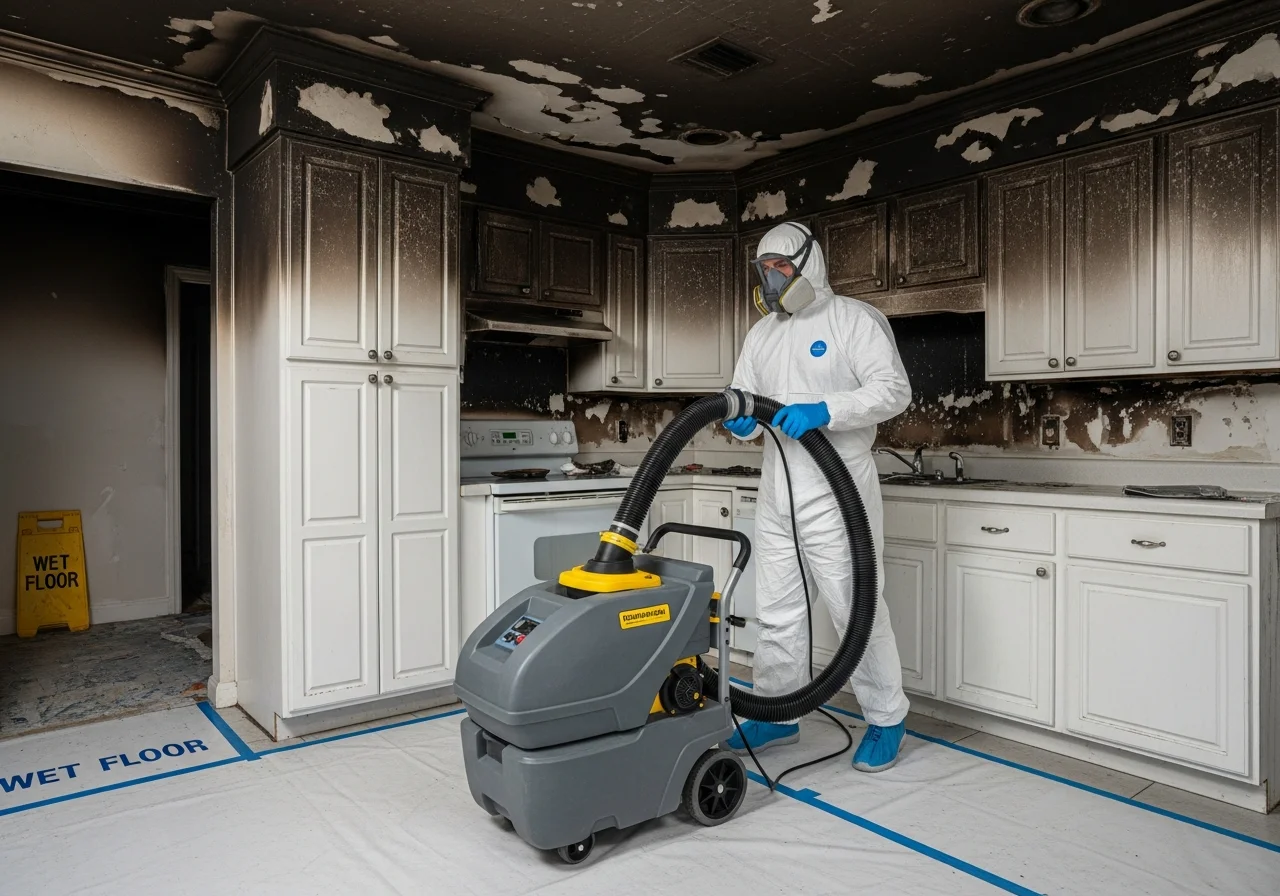
Kitchen fire cleanup in progress at a Plantation CBS home — enzyme-based protein soot
removal on stucco walls and tile surfaces
Smoke Odor Science
Smoke Odor Elimination in Plantation CBS Homes
Smoke odor in Plantation homes isn't a surface problem — it's a structural one. CBS
concrete block construction traps smoke compounds in hidden wall cavities where standard
cleaning can never reach. Plantation's high humidity continuously reactivates these
trapped compounds, making the smell surge and recede unpredictably for months.
Professional elimination requires multiple complementary techniques targeting both
surfaces and hidden cavities.
Thermal Fogging
Primary method for CBS wall cavities
Thermal fog penetrates the same pathways smoke originally traveled — including the hollow cores of Plantation's CBS block walls. The deodorizing fog reaches inside wall cavities through mortar joints and electrical penetrations, neutralizing smoke compounds bonded to porous concrete. This is the only effective method for treating the hidden contamination that makes CBS homes smell like smoke months after surface cleaning. Multiple application cycles are required, with 48-hour sealed verification tests between each cycle.
Hydroxyl Generation
Safe for occupied spaces during restoration
Hydroxyl generators create reactive hydroxyl radicals that break down smoke odor molecules at the molecular level. Unlike ozone, hydroxyl treatment is safe for occupied spaces — critical during extended Plantation restoration projects where workers need continuous access. Hydroxyl generators run 24/7 throughout the restoration, continuously treating air and surfaces. They're particularly effective for protein soot odor from kitchen fires, which is the most common fire type in Plantation.
Ozone Treatment
Sealed-space treatment for deep odor elimination
Ozone (O3) is a powerful oxidizer that destroys smoke odor compounds on contact. Because ozone is harmful to people and pets, it's used in sealed, evacuated spaces — making it ideal for treating individual rooms or whole-home treatment when residents are temporarily relocated. Ozone reaches surfaces and crevices that direct cleaning cannot access, making it highly effective for fine soot odor from electrical fires common in Plantation's older homes.
CBS Stucco Smoke Trapping
Root cause of persistent odor in Plantation homes
Plantation's CBS construction creates a unique odor persistence problem. Smoke enters hollow concrete block wall cavities through every available path — mortar joints, electrical boxes, plumbing penetrations, and hairline stucco cracks. Inside these dark, humid cavities, smoke compounds bond to porous concrete and are continuously reactivated by Plantation's 70-75% year-round humidity. This is why the smoke smell seems to come and go with weather — rising humidity activates trapped compounds, falling humidity lets them recede. Only internal cavity treatment resolves this cycle.
Multi-Unit Smoke Migration in Condos
Coordinated treatment for adjacent units
Plantation's numerous condo and townhome communities — Central Park, Pine Island Ridge, Jacaranda — face a unique fire challenge: smoke migrates between units through shared wall cavities, connected HVAC plenums, and common attic spaces. A fire in one unit can contaminate a dozen adjacent units with smoke odor that standard air fresheners and surface cleaning cannot resolve. Multi-unit smoke remediation requires coordinated treatment of all affected units simultaneously, with negative air pressure management to prevent cross-contamination during restoration.
Understanding the Damage
Common Fire Damage Scenarios in Plantation Homes
Each fire source produces different soot types and smoke patterns that require distinct
remediation techniques. In Plantation's CBS construction, smoke infiltrates hollow block
wall cavities regardless of fire origin — creating hidden contamination that standard
cleaning misses entirely.
Kitchen Fires
The leading cause of residential fire in Plantation. Grease fires on stovetops, unattended cooking, and deep-frying incidents occur year-round in a city of 90,000 permanent residents cooking daily. Kitchen fires produce protein soot — nearly invisible but extremely pungent — that bonds to every surface in the home. In Plantation's open-concept CBS floor plans, cooking smoke spreads rapidly across tile floors and stucco walls, contaminating entire living spaces from a single kitchen incident.
Professional Remediation Approach
Protein soot requires enzyme-based cleaning agents. All surfaces must be treated including ceilings, walls, cabinet interiors, and HVAC returns. Tile grout extraction prevents permanent discoloration.
Electrical Fires in Older Wiring
Most Plantation homes were built between the 1960s and 1980s with 100-150 amp electrical panels and wiring designed for that era's modest loads. These systems now power central AC running 10-11 months per year, pool pumps, and modern appliances. Aging breaker connections loosen over decades of thermal cycling, creating arc-fault conditions that can smolder inside CBS walls for hours before smoke appears. Electrical fires produce fine, pervasive soot carried throughout the home by year-round HVAC systems.
Professional Remediation Approach
Thermal imaging to identify all affected wall cavities. Fine soot requires HEPA vacuuming followed by chemical sponge treatment. Complete HVAC duct cleaning mandatory. Electrical system inspection and upgrade to current NEC code.
HVAC Electrical Failures
Plantation homes run air conditioning 10-11 months per year, putting extreme wear on air handlers, compressors, and associated wiring. Capacitor failures, contactor welding, and wiring degradation can ignite nearby materials — especially in garage-mounted units near stored combustibles. HVAC fires produce mixed soot types depending on what ignites, and smoke is immediately distributed through the entire duct system into every room of the home.
Professional Remediation Approach
Complete HVAC system assessment and likely replacement. Soot cleaning matched to specific materials burned. Duct system treated or replaced. Fire-rated separation verified between mechanical areas and living space.
Space Heater Fires During Cold Snaps
Plantation's rare cold snaps — typically 5-10 nights per year below 50F — send residents scrambling for portable space heaters in homes with no central heating. Heaters placed too close to curtains, bedding, or furniture cause fires that can engulf a room in minutes. Because Plantation homes lack fireplaces and proper heating infrastructure, residents use improvised heating solutions that dramatically increase fire risk during brief cold periods.
Professional Remediation Approach
Mixed combustible soot from fabric, wood, and synthetic materials. Multi-chemical cleaning approach required. Content pack-out for smoke-exposed items in adjacent rooms. Full odor treatment including CBS wall cavities.
Lightning Strike Fires
South Florida averages 80-90 thunderstorm days per year, and Plantation sits squarely in the lightning corridor. Direct strikes to roofs ignite attic insulation and wood trusses above CBS walls. Power surges travel through electrical systems and overload panels, outlets, and appliances — sometimes causing fires hours after the initial strike. Most Plantation homes lack whole-home surge protection, leaving 1960s-80s era electrical systems fully exposed during the May-October storm season.
Professional Remediation Approach
Comprehensive structural assessment of roof truss system. Electrical system inspection and likely full replacement. Surge damage documentation for all electronics and appliances. Soot and smoke treatment for entire home.
Dryer Fires
Lint buildup in dryer vents restricts airflow and causes heating elements to overheat — a risk compounded in Plantation's humid climate where lint accumulates faster and dryer run times are longer. Many 1960s-80s era Plantation homes have dryer vents with excessive length, multiple bends, or vinyl flex hose that further restricts airflow. The laundry area fire is contained by CBS walls but smoke spreads through HVAC ducts to every room within minutes.
Professional Remediation Approach
Synthetic soot from burned lint and clothing requires solvent-based cleaners. Complete vent system replacement. HVAC duct cleaning mandatory. Content assessment for smoke-exposed items throughout the home.
Plantation Pricing
Fire Damage Restoration Costs in Plantation
Fire restoration costs in Plantation run higher than national averages due to Broward
County building code requirements, CBS construction complexity, and elevated South
Florida material and labor costs. The good news: fire is one of the most comprehensively
covered perils under Florida homeowners insurance — coverage disputes are rare compared
to water or mold claims.
Minor Kitchen Fire
Contained fire, protein soot cleanup, odor treatment, cosmetic repairs
$5,000 - $15,000
The most common fire scenario in Plantation — a grease fire or small stovetop incident contained to the kitchen area. Includes protein soot removal from CBS surfaces, thermal fogging for odor in adjacent wall cavities, tile grout cleaning, and cosmetic touch-ups. Plantation's year-round humidity requires additional odor treatment cycles. Most kitchen fires in this range are handled within 1-2 weeks.
Moderate Room Fire
Single-room fire with soot cleanup, full odor treatment, partial reconstruction
$15,000 - $50,000
A kitchen, laundry, or electrical fire that damages one room and spreads smoke through the HVAC system to other areas. Includes structural assessment, soot removal matched to type, complete HVAC duct cleaning, thermal fogging of CBS wall cavities, content pack-out for affected items, and room reconstruction. Electrical fires in Plantation's older wiring often fall in this range. Broward County code compliance adds 10-15% for any permit-required work.
Major Structural Fire
Multi-room fire requiring full structural rebuild and code-compliant reconstruction
$50,000 - $150,000+
Multi-room fire damage requiring full structural assessment, content pack-out, comprehensive soot and smoke remediation, fire-suppression water extraction, and code-compliant reconstruction. Lightning strikes to roofs that damage wood trusses above CBS walls, or electrical fires that spread through multiple CBS wall cavities before detection, typically fall in this range. Full Broward County permitting, impact-rated window replacement, and NEC electrical upgrade are typically required.
Important: These ranges reflect typical Plantation
projects. Actual costs depend on fire severity, soot type, number of affected rooms, content
damage, and reconstruction scope. Palm Build provides detailed, line-item estimates formatted
for your insurance carrier within 48 hours of initial assessment.
Insurance Coverage
Fire Insurance Claims in Plantation: What's Covered
Fire is one of the most comprehensively covered perils under Florida homeowners
insurance. Unlike water or mold damage — which face significant coverage restrictions in
Florida — fire claims under a standard HO-3 policy rarely face coverage disputes.
Plantation homeowners pay approximately $4,000-$7,000 annually for insurance, and fire
coverage is fully included. Florida law gives you one year from the date of loss to file
your initial claim.
Structural repair and reconstruction to pre-loss condition
Professional soot and smoke cleaning of all affected surfaces
Fire is one of the most comprehensively covered perils under a standard HO-3 policy. Unlike water or mold claims that face significant coverage restrictions in Florida, fire damage disputes are relatively rare. All direct fire damage plus all consequential damage (smoke, soot, water from firefighting) is covered.
ALE (Additional Living Expenses)
Temporary housing, meals, and living costs during restoration
If your Plantation home is uninhabitable during fire restoration, ALE coverage pays for temporary housing, increased meal costs, and other additional living expenses. This coverage typically runs until your home is habitable or your policy's ALE limit is reached — usually 12-24 months. Document all additional expenses carefully.
Florida Filing Deadline
1 year from date of loss for initial claim
Florida Statute 627.70132 requires claims within 1 year of the date of loss and supplemental claims within 18 months. Don't wait — file your initial claim immediately and supplement as the full scope of damage becomes clear during restoration. Soot corrosion and hidden smoke damage in CBS wall cavities often reveal additional damage weeks after the fire.
Working with Florida Carriers
Documentation formatted for Broward County adjusters
Florida's insurance landscape is uniquely complex — frequent carrier changes, AOB reform regulations, and strict documentation requirements. Palm Build formats all fire damage documentation exactly how Broward County adjusters and Florida carriers expect to see it, reducing back-and-forth and getting your claim approved faster.
Palm Build Manages Your Fire Claim
We work directly with your insurance adjuster from the first inspection. Our fire damage
documentation — structural assessments, soot type classification, moisture readings,
photo evidence, thermal imaging of CBS wall cavities, and detailed scopes of work — is
formatted exactly how Broward County adjusters and Florida carriers expect to receive
it. With Florida's complex insurance landscape, having a restoration company that
understands FL-specific documentation requirements gets your claim approved faster and
for the full amount you're entitled to.
Plantation Fire Restoration: The Process in Action
From emergency board-up through full reconstruction, see how Palm Build restores
Plantation homes after fire and smoke damage — returning CBS stucco homes to pre-loss
condition with verified odor elimination.
During: Professional soot removal and smoke deodorization in progress at a Plantation CBS home kitchen after a grease fire
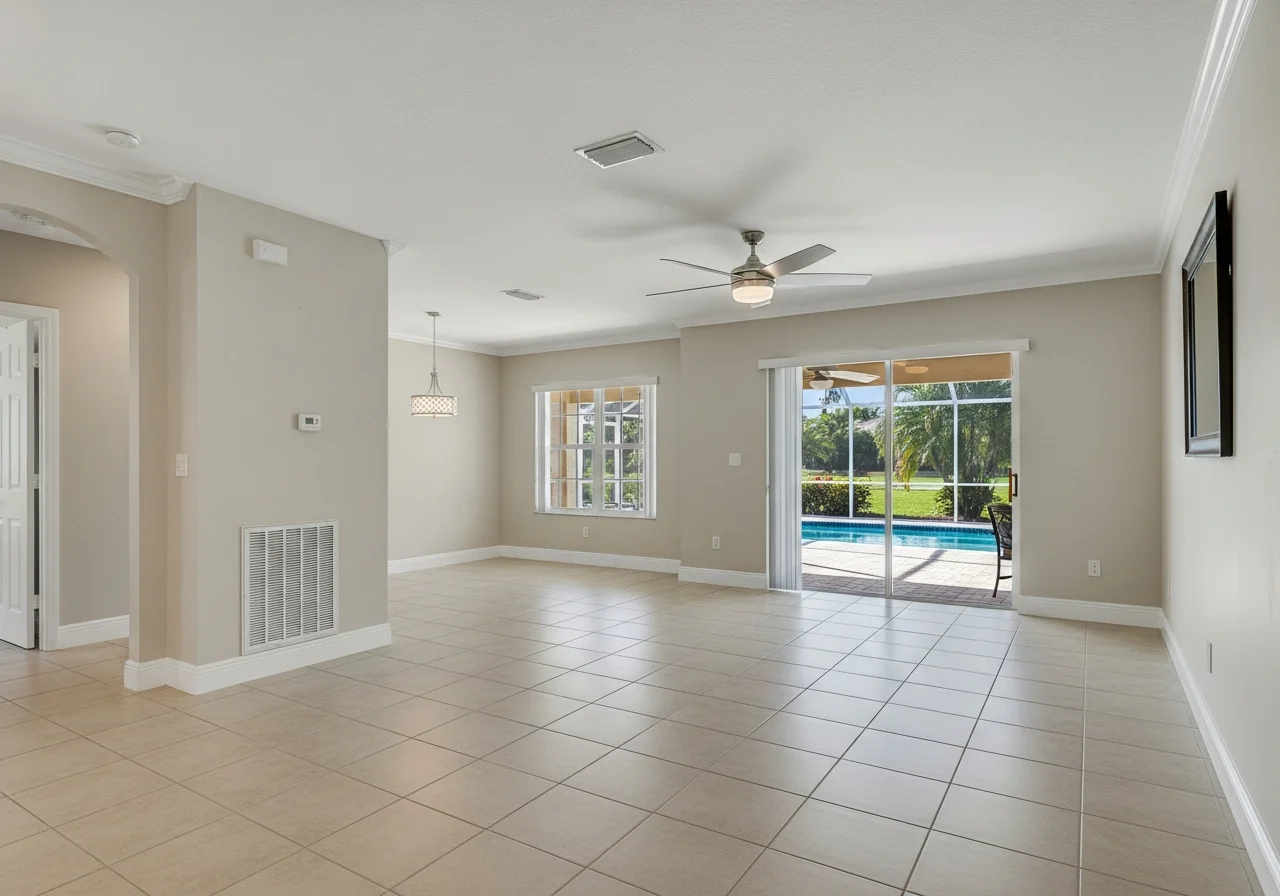
After: Fully restored living space with new finishes, repaired stucco, and verified odor elimination after fire damage
The Palm Build Difference
Why Plantation Homeowners Choose Palm Build After a Fire
Local Broward Team — 25 Minutes Away
Our South Florida operations hub at 786 S Military Trail in Deerfield Beach puts us approximately 25 minutes from any Plantation address via I-595. From Jacaranda to Central Park, from Plantation Acres to Pine Island Ridge, board-up, tarping, and soot stabilization begin the same hour you call. We know Plantation's neighborhoods, its CBS construction era by subdivision, and its condo community requirements.
IICRC FSRT Certified
Every crew lead holds current IICRC Fire and Smoke Restoration Technician (FSRT) certification. We follow the S540 standard for professional fire and smoke damage restoration procedures — the industry benchmark for soot classification, cleaning chemistry selection, and odor elimination verification. This certification matters for both proper remediation and insurance claim documentation that Florida carriers require.
Complete Mitigation Through Rebuild
Palm Build handles the entire fire restoration project from emergency board-up through final reconstruction — eliminating the coordination headaches of hiring separate mitigation and construction companies. One project manager, one scope, one insurance negotiation. For Plantation homeowners dealing with the stress of fire damage, this single-source approach means faster completion, cleaner insurance documentation, and no gaps between mitigation and rebuild.
Contents Restoration Capability
Our climate-controlled contents facility handles electronics, documents, artwork, photographs, clothing, and furniture damaged by soot and smoke. Each item is individually inventoried, photographed, and treated with the appropriate restoration technique — ultrasonic cleaning for electronics, ozone treatment for fabrics, freeze-drying for documents. Items that can't be restored are documented at replacement value for insurance claims.
Insurance Documentation Expertise
Florida's insurance landscape is uniquely complex — frequent carrier changes, AOB reform regulations, and strict documentation requirements. Our fire damage documentation — structural assessments, soot type classification, moisture readings, photo evidence, thermal imaging, and detailed scopes of work — is formatted exactly how Broward County adjusters and Florida carriers expect to receive it. This gets claims approved faster and for the full amount you're entitled to.
Common Questions
Plantation Fire & Smoke Cleanup FAQ
How quickly can Palm Build respond to fire damage in Plantation?
Our Deerfield Beach operations hub is approximately 25 minutes from Plantation via I-595 and the Florida Turnpike. We typically arrive within 25-30 minutes of your call, 24/7. Our trucks carry board-up materials, soot stabilization equipment, and commercial air scrubbers so we begin securing your property and preventing secondary damage immediately — critical in Plantation where afternoon thunderstorms can cause additional water damage to a fire-compromised home within hours.
Why does CBS construction make smoke cleanup harder in Plantation?
CBS (concrete block and stucco) construction — the dominant building method in Plantation — creates unique smoke damage challenges. Smoke infiltrates the hollow cores of concrete block walls through mortar joints, electrical penetrations, and microscopic cracks that develop over decades of thermal cycling in South Florida's heat. Once trapped inside these cavities, smoke odor compounds bond to porous concrete surfaces and are continuously reactivated by Plantation's 70-75% year-round humidity — causing the smell to surge and recede with weather changes for months. Professional thermal fogging injected into block cavities is required. Surface cleaning alone leaves persistent odor that returns within days.
What types of fires are most common in Plantation?
Kitchen fires are the most frequent fire type in Plantation — grease fires on stovetops and unattended cooking occur year-round in a city of 90,000 permanent residents. Electrical fires from overloaded 1960s-1980s era panels are the second most common, as original 100-150 amp systems struggle with modern AC loads, pool pumps, and appliances. HVAC-related fires occur when aging air handlers running 10-11 months per year develop wiring failures. Lightning-surge fires peak during the May-October thunderstorm season, and dryer lint fires remain a persistent risk in homes with aging venting systems.
Does my Plantation homeowners insurance cover fire damage?
Fire is one of the most comprehensively covered perils under Florida homeowners insurance. A standard HO-3 policy covers structural repair, soot and smoke cleaning, smoke odor elimination, water damage from fire suppression, contents restoration or replacement, and Additional Living Expenses (ALE) for temporary housing. Unlike water or mold claims, fire coverage disputes are relatively rare. Florida law requires claims to be filed within one year of the date of loss. Plantation homeowners pay approximately $4,000-$7,000 annually for insurance, and fire coverage is fully included.
How long does fire and smoke restoration take in Plantation?
Timeline depends on fire severity. Smoke-only damage with no structural involvement typically takes 1-2 weeks for professional cleaning and odor elimination. A contained kitchen or electrical fire usually requires 3-6 weeks including soot removal, odor treatment, and cosmetic repairs. Multi-room fire damage with partial reconstruction takes 6-12 weeks. Major structural fires requiring full code-compliant rebuild take 3-6+ months including Broward County permitting and inspections. Plantation's high humidity adds 2-3 additional odor treatment cycles compared to dry-climate restoration.
How much does fire damage restoration cost in Plantation?
Costs depend on fire severity and scope. A minor kitchen fire with smoke-only damage typically runs $5,000-$15,000. A moderate room fire with soot cleanup, odor treatment, and repairs ranges from $15,000-$50,000. Multi-room fire damage requiring structural cleaning and partial rebuild runs $50,000-$100,000. Major structural fires involving full reconstruction cost $100,000-$150,000+. Broward County code compliance requirements and CBS construction complexity add 10-15% compared to national averages.
Can smoke odor come back after professional cleaning?
Yes — if the restoration company only cleans surfaces without treating CBS wall cavities. In Plantation's CBS homes, smoke compounds become trapped in hollow concrete block wall cavities and bond to porous concrete. Humidity reactivates these compounds, causing odor to return days or weeks after surface cleaning. Professional restoration requires thermal fogging injected into block cavities, hydroxyl generation for occupied areas, and ozone treatment for sealed spaces. Palm Build performs 48-hour sealed odor verification tests and guarantees complete elimination before closing the project.
Does Palm Build handle fire damage insurance claims?
We provide comprehensive insurance documentation from the first inspection: structural assessments, soot type classification (protein, natural, synthetic), moisture readings from fire-suppression water, photo and video evidence, and detailed scope-of-work estimates formatted exactly how Broward County adjusters and Florida insurance carriers expect to receive them. Under Florida's AOB reform regulations, homeowners coordinate directly with their insurer, but our documentation significantly streamlines the process and gets claims approved faster.
Trusted Vendors
Trusted local pros in Plantation
Outside our restoration scope, these are the vetted, licensed contractors we trust
alongside our work. Personally evaluated, reference-checked, and recommended by Palm
Build.
Our Deerfield Beach team is 25 minutes away via I-595. Call now for 24/7 emergency fire and smoke damage restoration with IICRC-certified technicians, insurance-ready documentation, and deep expertise with Plantation's CBS stucco smoke remediation, electrical fire damage, and Broward County code-compliant reconstruction.