HOA & Condo Restoration in Fort Lauderdale, Florida
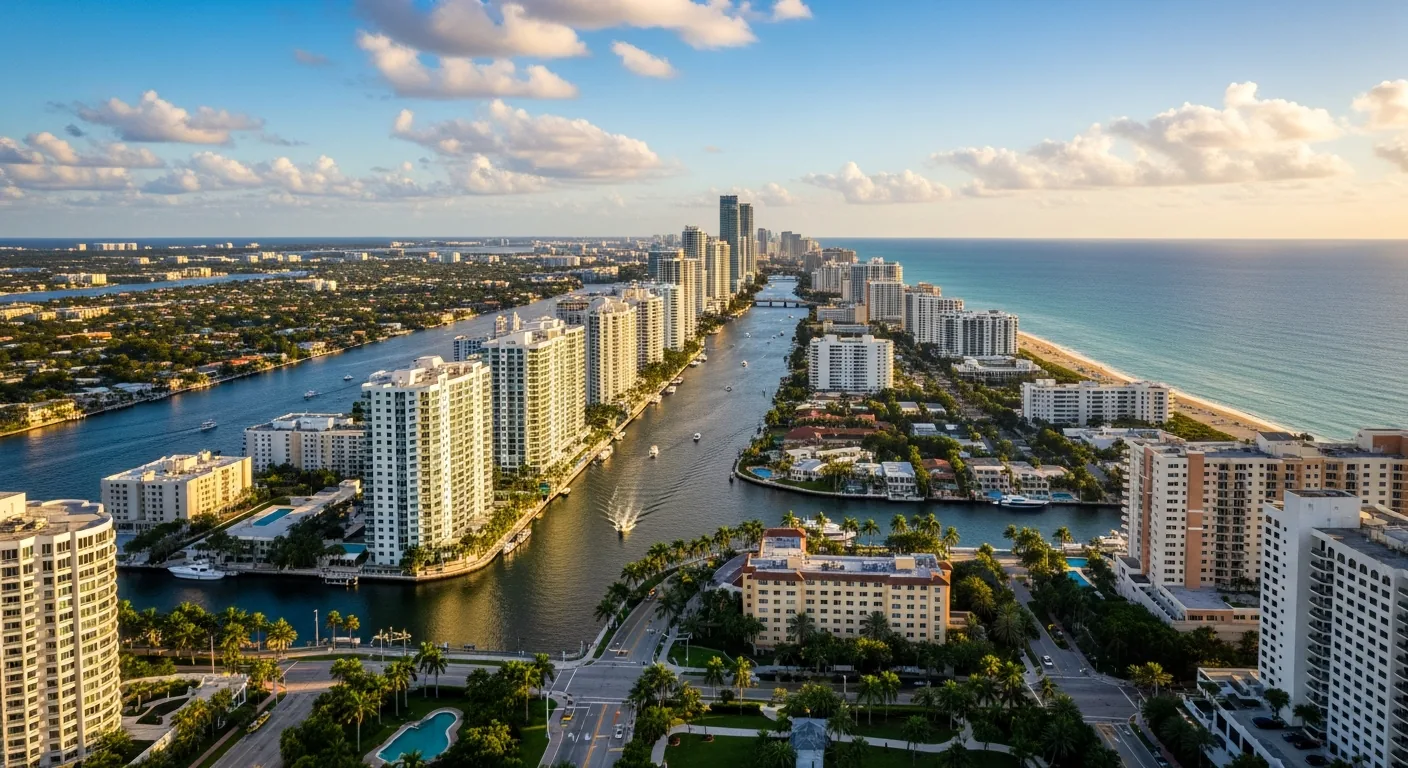
Broward County holds 252,590 condominium units and 3,987 condo associations — 16.5% of all condo units in Florida. From Harbor Beach estates to the condo towers lining Fort Lauderdale Beach and the Intracoastal, Palm Build navigates the unique complexities of HOA and condo restoration: master policy coordination, board approval processes, multi-unit damage migration, and the post-Surfside inspection requirements reshaping Broward's condo landscape.
Deerfield Beach — under 20 minutes from Fort Lauderdale Under 30 min Response IICRC Certified
Fort Lauderdale's HOA & Condo Landscape: 252,590 Units, 3,987 Associations
Broward County holds 16.5% of all condominium units in the state of Florida. Fort
Lauderdale sits at the center of this density — from the oceanfront towers lining A1A to
the gated waterfront estates along the Intracoastal, from country club communities to
the thousands of mid-rise condos now facing post-Surfside milestone inspections. Each
community type has a distinct damage profile and restoration dynamic.
252,590
Condo units in Broward County
3,987
Condo associations
16.5%
Of all FL condo units
$617/mo
Median HOA fee
Oceanfront & Intracoastal Condo Towers
Hundreds of buildings
Fort Lauderdale Beach and Intracoastal corridor condo towers — 10 to 40+ stories. CBS construction with shared walls, centralized HVAC, elevator shafts, and stacked plumbing risers. A single pipe failure cascades through 5-15 units vertically. Master policy and dozens of HO-6 claims per event. Salt air corrosion accelerates building envelope deterioration.
Fort Lauderdale Beach high-risesIntracoastal Waterway towersLas Olas RiverhouseThe GalleonJackson TowerParamount Fort Lauderdale
Common damage: Plumbing failures, salt corrosion, hurricane wind-driven rain, HVAC cross-contamination
Waterfront Gated Estates
6+ premier communities
Guard-gated waterfront neighborhoods on the Intracoastal, New River, and barrier island. Single-family estates from $2M to $20M+ with private docks, seawalls, and direct ocean or Intracoastal access. HOA governs common areas, security, and exterior standards. Storm surge and canal flooding create foundation-level water intrusion. Architectural review committees control all exterior restoration.
Harbor BeachIdlewyldLas Olas IslesSeven IslesNurmi IslesRio Vista
Common damage: Storm surge, canal flooding, salt corrosion, seawall overtopping, wind-driven rain
Country Club & Golf Communities
4+ major communities
Gated golf and country club communities with single-family homes, villas, and townhomes. Multiple sub-associations with different governing documents and insurance structures. Architectural review for all exterior work. Manicured common areas and shared amenity buildings add commercial-scale restoration when damaged.
Coral Ridge Country Club EstatesBay ColonyThe LandingsSea Ranch Lakes
Common damage: Hurricane debris, aging plumbing in 1960s-80s homes, stucco water intrusion, common area flooding
Mid-Rise Condos & Townhome Communities
Thousands of units
Three to eight-story condo buildings and townhome complexes throughout Fort Lauderdale. Subject to Broward County 40-year recertification and post-Surfside milestone inspections at 25 years for buildings over 3 stories. Shared walls mean one unit leak becomes an adjacent-unit problem. Board approval required for significant restoration. Property management companies coordinate access.
Victoria Park condosWilton Manors-adjacent communitiesOakland Park border communitiesCentral Fort Lauderdale associations
Following the 2021 Champlain Towers South collapse in nearby Surfside, all condo and co-op buildings over three stories in Broward County must undergo milestone structural inspections at 25 and 40 years — in addition to the existing 40-year recertification requirement. These inspections frequently identify concrete restoration, waterproofing, and structural reinforcement needs that require immediate association action and substantial reserve expenditure.
All Broward County condos 3+ storiesBuildings approaching 25-year milestoneProperties in 40-year recertificationBuildings with deferred maintenance
Common damage: Concrete spalling, rebar corrosion, waterproofing failure, structural deterioration
Why HOA & Condo Restoration Is Different
The Unique Complexities of Condo Restoration in Fort Lauderdale
HOA and condo restoration in Fort Lauderdale isn't residential restoration with extra
stakeholders. Broward County's 252,590 condo units, Florida's complex condo law,
post-Surfside inspection mandates, and the state's volatile insurance market create a
restoration environment that most companies aren't equipped to navigate. Here are the
six factors that make Fort Lauderdale condo restoration uniquely complex.
Shared Building Envelopes
In Fort Lauderdale's condo towers and townhome communities, the building envelope — roof, exterior walls, windows, waterproofing membranes — is a shared element maintained by the association. When the envelope is compromised by hurricane damage, age-related deterioration, or construction defects, water enters the structural cavity and migrates to multiple units simultaneously. The association is responsible for the envelope repair through the master policy, but each affected unit owner files individual HO-6 claims for interior damage. Determining where 'common element' ends and 'unit' begins is the central dispute in almost every Broward County condo restoration project.
Unit-Owner vs. Association Responsibility
Florida Statute 718 provides baseline definitions of 'common elements' and 'units,' but each association's declaration can modify those definitions. In Broward County's 3,987 condo associations, responsibility splits vary dramatically. Some Fort Lauderdale buildings use 'bare walls-in' coverage — the owner is responsible for everything inside the studs, including drywall, paint, flooring, and fixtures. Others use 'all-in' coverage — the master policy covers interior finishes to original spec, and the owner only covers upgrades and personal property. Getting this wrong means billing the wrong insurance carrier, which means someone pays out of pocket for work that should have been covered.
Board Approval Delays
Most Fort Lauderdale condo and HOA boards must approve restoration work exceeding dollar thresholds specified in their governing documents — typically $5,000 to $25,000. Florida's condo law (F.S. 718) imposes specific notice requirements for board meetings: 48-hour notice for regular meetings, 14-day notice for special meetings with certain expenditure levels. During hurricane season, when dozens of communities need restoration simultaneously, scheduling board approval while meeting statutory notice requirements creates unavoidable delays between emergency mitigation and full reconstruction. Palm Build prepares board-ready documentation and coordinates with property managers to secure approval at the earliest legally permissible meeting.
Multiple Insurance Policies (Master + HO-6)
A single water event in a Fort Lauderdale high-rise can trigger 10-30+ separate insurance claims: one master policy claim for building and common area damage, plus individual HO-6 claims for each affected unit. The master policy carrier may be Citizens Property Insurance while individual HO-6 policies may be through various private carriers. Each carrier sends different adjusters, requires different documentation formats, and operates on different timelines. Coordinating scope approval across all carriers while keeping restoration moving as a unified project — not 15 separate jobs — is the fundamental challenge of condo restoration in Broward County.
Access Coordination Across Units
Restoring a multi-unit water event in a Fort Lauderdale condo requires simultaneous access to multiple occupied units. Some residents are full-time occupants, others are seasonal snowbirds, and many are tenant-occupied rentals where the unit owner is out of state. Coordinating entry for damage assessment, equipment placement, and restoration work across 5-15 units — each with different contact information, schedules, and availability — while managing freight elevator scheduling and lobby protection requires dedicated project coordination that single-family restoration companies simply don't provide.
Noise & Work Hour Restrictions
Fort Lauderdale condo associations impose strict construction hours — typically 8 AM to 5 PM weekdays, with many prohibiting weekend work entirely. High-rise buildings add freight elevator time slots, service entrance requirements, floor protection for common area hallways, and noise limits that affect equipment selection. These restrictions extend project timelines compared to single-family work and require careful scheduling to maximize productive hours within each day's allowed window. Emergency mitigation is generally exempt, but reconstruction must comply with all community restrictions.
HOA Restoration Process
How We Manage HOA & Condo Restoration in Fort Lauderdale
HOA and condo restoration in Fort Lauderdale requires steps that residential projects
don't — multi-unit assessment, governing document review, board approval, multi-carrier
coordination, HVHZ compliance, and resident communication. Here's our six-step process.
01
Emergency Response & Board Notification
Hours 1-4
Immediate dispatch from our Deerfield Beach hub for mitigation — water extraction, board-up, or mold containment. Simultaneous notification to the property management company and HOA/condo board president. Florida law and most governing documents authorize emergency mitigation without board vote. For Fort Lauderdale high-rises, we coordinate with building management for freight elevator access, lobby protection, and resident notification within the first hours of response.
02
Multi-Unit Damage Assessment
Days 1-3
Systematic assessment of all potentially affected units — not just the unit where damage is visible. In Fort Lauderdale condo towers, water migrates vertically through floor assemblies, horizontally through shared CBS walls, and through HVAC chases connecting multiple units. We use thermal imaging and moisture mapping to identify every affected space before hidden moisture creates mold colonization in Broward County's 85-95% humidity. Each unit receives individual documentation for its HO-6 claim.
03
Insurance Coordination (Master + Unit Policies)
Days 2-10
We review the association's declaration and Florida Statute 718 to determine the responsibility split between master policy and individual HO-6 coverage. Each scope item is mapped to the correct carrier. We prepare separate documentation packages for the master policy carrier (potentially Citizens Property Insurance) and each affected unit owner's HO-6 carrier. For multi-unit events, this means coordinating 5-30+ simultaneous claims as one unified project.
04
Restoration with Minimal Resident Disruption
Weeks 2-8
Phased restoration within the community's allowed work hours — typically 8 AM to 5 PM weekdays for Fort Lauderdale condos. Freight elevator scheduling, common area floor protection, and noise management throughout. For occupied buildings, we coordinate temporary relocation when necessary and provide regular progress updates to property management and individual residents. All crews and equipment are pre-registered with building security and guard gate management.
05
Code Compliance: HVHZ + Milestone Inspections
Throughout Project
All reconstruction work in Broward County must meet High Velocity Hurricane Zone (HVHZ) code requirements — the strictest in the United States. For buildings undergoing or approaching milestone inspections (25-year and 40-year for buildings over 3 stories) or 40-year recertification, we coordinate with the association's structural engineer to ensure restoration work addresses any items identified during inspection. Every permit is pulled through Broward County building department.
06
Final Walkthrough with Board & Claims Closeout
Project Completion
Walk-through with property manager, board representative, and each affected unit owner. Separate completion documentation for the master policy carrier and all individual HO-6 carriers. Broward County building department final inspections completed. HVHZ compliance verified for any building envelope modifications. Warranty documentation provided to both the association and individual unit owners. Board meeting presentation of completed work available upon request.
Florida Condo Insurance Structure
Master Policy vs. HO-6: Who Pays for What in Fort Lauderdale?
This is the question every Fort Lauderdale condo owner asks after damage. With Broward
County's 252,590 condo units and median HOA fees at $617/month (rising 16.2%
year-over-year), the financial stakes of an incorrect responsibility determination are
enormous. Florida Statute 718 provides baseline definitions, but your association's
declaration can modify them. Palm Build reviews both before work begins.
Master Policy (Association Responsibility)
Covers common elements and building structure per F.S. 718 and your declaration
Roof, exterior walls, and building envelope (CBS structure)
Shared plumbing risers, main water supply lines, and fire suppression systems
Common areas: lobbies, hallways, pools, clubhouse, parking garage
Structural framing, foundation, and load-bearing elements
Building-wide HVAC systems, mechanical rooms, elevator equipment
Impact-resistant glazing and hurricane shutters on common elements
Kitchen cabinets, countertops, appliances, and fixtures
Bathroom fixtures, vanities, custom tile, and shower enclosures
Personal property and contents
Unit-specific plumbing fixtures and supply lines from shutoff valve
Improvements and upgrades beyond original spec
Loss assessment coverage (for HOA special assessments after major events)
Critical for Fort Lauderdale condo owners: Florida Statute 718.111(11) requires condo associations to maintain property insurance on common
elements. However, the exact boundary between "unit" and "common element" varies by declaration.
Some Fort Lauderdale buildings use "bare walls-in" coverage; others use "all-in" coverage to
original spec. Post-Surfside legislation (SB 4-D and SB 154) has also imposed mandatory structural
reserve studies and milestone inspections — meaning associations must now fund reserves for
these repairs, which affects special assessment exposure for unit owners. Always verify your declaration's coverage boundary and reserve status. Palm Build reviews both the declaration and Florida statute before beginning work to ensure
the correct carrier is billed for each scope item.
Multi-Unit Water Migration
How Water Damage Spreads in Fort Lauderdale Condos
A single unit's pipe failure in a Fort Lauderdale condo tower doesn't stay in one unit.
CBS construction, shared wall cavities, stacked plumbing, HVAC chases, and elevator
shafts create four distinct migration pathways that can turn one unit's water event into
a 5-15+ unit restoration project within hours. Understanding these pathways is critical
to stopping damage escalation.
Vertical Migration Through Floors
5-15
Units affected vertically
Water from a burst pipe or overflow on an upper floor cascades through floor assemblies — penetrating concrete slabs via cracks, plumbing penetrations, and construction joints. In a typical Fort Lauderdale high-rise, water from the 15th floor can reach the 10th floor within hours, saturating ceiling cavities, wall assemblies, and floor finishes in every unit along the path. Five units become ten. Ten become twenty.
Horizontal Migration Through Shared CBS Walls
2-4
Adjacent units at risk
Fort Lauderdale condos are built with CBS (concrete block and stucco) construction. Shared walls between adjacent units are not waterproof — they're block walls with drywall on each side. Water penetrating one unit's wall cavity migrates horizontally through the block to adjacent units. Residents in neighboring units often don't discover damage until mold is already established behind their drywall.
HVAC Cross-Contamination
24-48
Hours until mold begins
Many Fort Lauderdale condo towers have individual unit HVAC systems connected through shared ductwork chases or mechanical spaces. When water damage creates mold in one unit, the HVAC system distributes mold spores through these shared pathways to neighboring units and common areas. In South Florida's 85-95% humidity, mold colonizes within 24-48 hours — turning a single-unit water event into a building-wide mold remediation project.
Elevator Shaft Pathways
All
Floors at risk
Elevator shafts act as vertical channels spanning the entire height of a Fort Lauderdale condo tower. Water entering the shaft from any floor migrates to every level — including the elevator pit at the base, mechanical rooms, and lobby level. Elevator equipment damage from water intrusion can disable building transportation for weeks and trigger master policy claims that affect every unit owner through special assessments.
Why speed matters in Fort Lauderdale condos: Every hour of delay allows water to migrate further through shared building assemblies, saturate
additional materials, and create mold colonization conditions in South Florida's extreme humidity.
A 2-unit water event at hour one can become a 10-unit mold remediation project by hour 48. Palm
Build deploys multiple crews simultaneously to all affected units, sets up centralized drying
in corridors and common areas, and documents damage per-unit for individual HO-6 claims — all
while coordinating the master policy claim for building-level damage.
The Palm Build Difference
Why Fort Lauderdale HOA & Condo Communities Choose Palm Build
Broward County's 3,987 condo associations need a restoration partner that understands
board governance, multi-carrier insurance, post-Surfside compliance, and the unique
logistics of working in occupied high-rise and gated communities. Here's what
distinguishes Palm Build.
Board Communication Experience
We understand how Fort Lauderdale condo and HOA boards operate — statutory notice requirements, meeting procedures, expenditure approval thresholds, and the documentation formats that boards need to make informed decisions. We prepare board-ready packages, attend meetings when requested, and coordinate with property management firms throughout the project. Our team handles the governance side so the board can focus on oversight, not project management.
Multi-Unit Coordination
When water damage affects 5-15+ units in a Fort Lauderdale condo tower, Palm Build serves as the single point of contact for the property manager, master policy carrier, and all affected unit owners. We deploy simultaneous crews to all affected units, coordinate drying across shared structural assemblies, manage access scheduling for occupied and unoccupied units, and keep every stakeholder informed through regular progress updates.
Dual Insurance Navigation
We manage both the master policy claim and all individual HO-6 claims as one unified project. Each carrier receives carrier-specific documentation — separate scopes, separate photos, separate communication — while the physical restoration is coordinated as a single project. In Broward County's complex insurance market, where the master carrier may be Citizens Property Insurance and unit owners may have policies through five different private carriers, this coordination is essential.
HVHZ Compliance
All of Broward County falls within the High Velocity Hurricane Zone. Every reconstruction project must meet HVHZ code requirements — impact-resistant glazing, enhanced fastening schedules, specific product approvals, and Broward County building department inspection. Palm Build ensures all HOA and condo restoration work is HVHZ compliant and passes inspection, including work identified during post-Surfside milestone inspections and 40-year recertification.
Minimal Disruption Protocols
Fort Lauderdale condo communities have strict work hour restrictions, noise limits, freight elevator schedules, and common area protection requirements. Palm Build plans every project around these constraints — scheduling disruptive work within allowed windows, protecting lobby and hallway finishes, pre-registering all crews with building security, and coordinating temporary relocation for residents in heavily affected units.
Deerfield Beach Proximity
Our South Florida Operations Hub in Deerfield Beach is under 20 minutes from Fort Lauderdale. We respond to HOA and condo emergencies in under 30 minutes with truck-mounted extraction, commercial drying equipment, and the multi-unit coordination capabilities that condo buildings demand. Our proximity means we're on-site faster than franchises dispatching from further locations — and in multi-unit water events, every minute of delay means more units affected.
Common Questions
Fort Lauderdale HOA & Condo Restoration FAQ
Who is responsible for restoration in a Fort Lauderdale condo — the unit owner or the association?
Under Florida Statute 718, the condo association's master policy covers common elements — roof, exterior walls, shared plumbing, and common areas — while unit owners cover interior finishes through their HO-6 policy. However, the exact boundary depends on your declaration. Some Fort Lauderdale buildings use 'bare walls-in' coverage (owner responsible for everything inside the studs) while others use 'all-in' coverage (master policy covers interior finishes to original spec). With Broward County's 252,590 condo units and 3,987 associations, no two declarations are identical. Palm Build reviews your specific governing documents and the Florida statute before work begins to ensure the correct party pays for each scope item.
How do post-Surfside inspection requirements affect HOA restoration in Fort Lauderdale?
Following the 2021 Champlain Towers South collapse in Surfside, Florida enacted stricter structural inspection and reserve requirements. Condos and co-ops over three stories must now undergo milestone inspections at 25 years and 40 years, and Broward County's existing 40-year recertification program remains in effect. These inspections frequently identify structural, waterproofing, and concrete restoration needs that require immediate action. Palm Build works with associations and their engineers to address restoration items identified during milestone and recertification inspections, including concrete spalling repair, waterproofing membrane replacement, and structural reinforcement — all while maintaining HVHZ code compliance.
How does water damage spread between units in Fort Lauderdale high-rise condos?
In Fort Lauderdale's dense condo towers, water migrates through four primary pathways: vertically through floor assemblies to units below, horizontally through shared CBS walls to adjacent units, through HVAC ductwork and chases that connect multiple units, and via elevator shafts that act as vertical channels spanning the entire building. A single pipe burst on an upper floor can affect 5-10+ units within hours. In South Florida's 85-95% humidity, mold colonization begins within 24-48 hours on any wet surface. Palm Build deploys teams to all affected units simultaneously and coordinates drying across shared structural assemblies.
Does Palm Build work with HOA boards for approval in Fort Lauderdale?
Yes. We understand that Fort Lauderdale HOA and condo restoration often requires board approval before significant reconstruction can begin. We provide detailed scopes, estimates, and timelines formatted for board review. For emergencies, Florida law and most governing documents authorize immediate mitigation (water extraction, board-up, mold containment) without a full board vote. We begin protecting the property immediately while preparing board-ready documentation for reconstruction approval. We also attend board meetings when requested.
How do master policy and HO-6 claims work together for Fort Lauderdale condos?
A single water event in a Fort Lauderdale condo can trigger multiple insurance claims: a master policy claim for building and common area damage, plus individual HO-6 claims for each affected unit's interior. The master policy carrier (which may be Citizens Property Insurance) uses different adjusters than the various HO-6 carriers. Each needs separate documentation, separate scopes, and separate communication. With median HOA fees at $617/month and rising 16.2% year-over-year, associations are under increasing financial pressure to manage claims efficiently. Palm Build provides carrier-specific documentation packages and coordinates all claims as a single integrated project.
What Fort Lauderdale HOA and condo communities does Palm Build serve?
We serve all HOA-governed communities and condo associations in Fort Lauderdale and Broward County including Harbor Beach, Idlewyld, Coral Ridge Country Club Estates, Bay Colony, Las Olas Isles HOA, The Landings, Sea Ranch Lakes, and the hundreds of condo towers along Fort Lauderdale Beach and the Intracoastal Waterway. From luxury waterfront estates to mid-rise condos to gated family communities — we handle the unique access, approval, and insurance requirements of each.
What about HVHZ code requirements for HOA restoration in Fort Lauderdale?
All of Broward County falls within the High Velocity Hurricane Zone (HVHZ), which imposes the strictest building code requirements in the United States. Any reconstruction work on an HOA or condo property must meet HVHZ standards — including impact-resistant glazing, enhanced fastening schedules, specific roof attachment methods, and product approval requirements. These codes apply to both structural repairs and interior reconstruction that involves any building envelope modifications. Palm Build ensures all HOA restoration work meets HVHZ compliance requirements and passes Broward County building department inspection.
How quickly can Palm Build respond to a condo emergency in Fort Lauderdale?
Our South Florida Operations Hub in Deerfield Beach is under 20 minutes from Fort Lauderdale. We respond to HOA and condo emergencies in under 30 minutes with truck-mounted extraction, commercial drying equipment, and the multi-unit coordination capabilities that condo buildings require. For high-rise emergencies, we coordinate with building management for freight elevator access, lobby protection, and resident notification — all within the first hours of response.
Trusted Vendors
Trusted local pros in Fort Lauderdale
Outside our restoration scope, these are the vetted, licensed contractors we trust
alongside our work. Personally evaluated, reference-checked, and recommended by Palm
Build.
HOA or Condo Damage in Fort Lauderdale? We Handle the Complexity.
From Broward County's 252,590 condo units to gated waterfront communities, Palm Build navigates master policy coordination, board approvals, multi-unit damage, and post-Surfside compliance. One team manages it all.