Hickory's Cecil clay soils trap moisture against crawl space foundations, summer humidity exceeds 70%, and Lake Hickory basements face persistent dampness from hydrostatic pressure — making Catawba County one of the most mold-prone areas in the NC foothills. North Carolina has no mold licensing, so IICRC certification is the only reliable way to verify your contractor. Palm Build provides professional containment, HEPA filtration, and post-remediation clearance testing.
~60 miles — Charlotte, NC 60-75 min Response IICRC Certified
Hickory's position at the base of the Blue Ridge foothills creates a unique convergence
of mold risk factors: persistent summer humidity above 70%, clay soil that traps
moisture against crawl space foundations, hydrostatic pressure driving water into
basements near Lake Hickory, and aging plumbing in nearly half the city's pre-1980
housing stock. Understanding these four factors is the first step toward permanent
remediation — not just cosmetic cleanup.
70%+ Summer Humidity in the Foothills
70%+
Summer relative humidity
Hickory sits at the base of the Blue Ridge foothills where warm Piedmont air collides with cooler mountain air — creating persistent summer humidity that regularly exceeds 70% relative humidity from May through September. This sustained moisture load saturates clay soil around foundations, wicks into crawl spaces through dirt floors and block walls, and creates the prolonged damp conditions that mold colonies require to establish on wood framing, subfloor sheathing, and fiberglass insulation in Hickory's brick ranch homes.
Clay Soil Crawl Space Moisture
70-90%
Crawl space RH (vented)
Hickory's red clay soil — characteristic of the western Piedmont foothills — retains moisture for weeks after rain events. The majority of established Hickory homes sit on crawl space foundations over this clay, and many still have vented designs with exposed dirt floors. Ground moisture evaporates continuously into the crawl space, condensing on cooler wood joists, ductwork, and insulation. Without proper encapsulation, these crawl spaces operate as mold factories year-round — particularly in neighborhoods along Springs Road, Startown Road, and the older sections near downtown.
Lake Hickory Basement Hydrostatic Pressure
Hydrostatic
Basement pressure risk
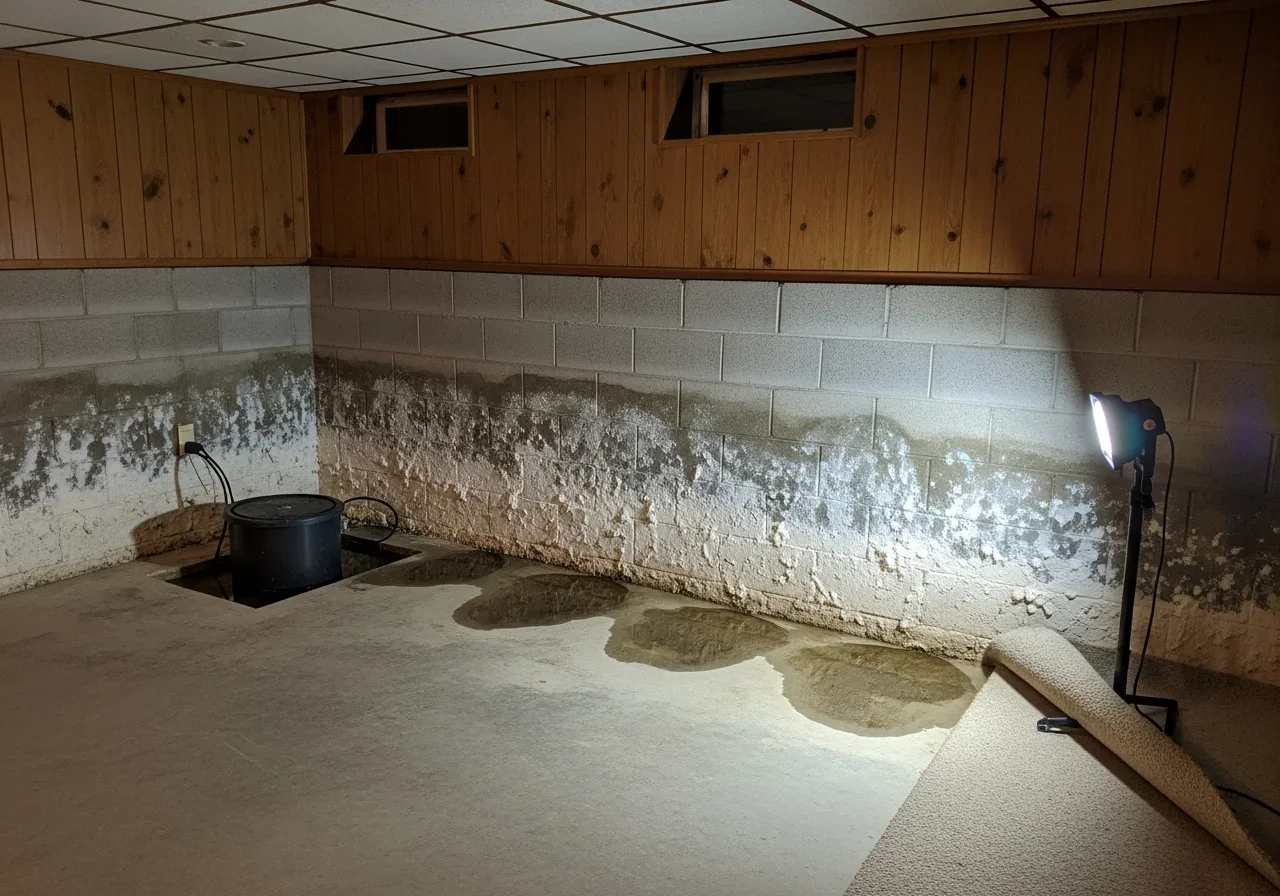
Homes near Lake Hickory and along the Catawba River corridor face elevated groundwater tables that create hydrostatic pressure against basement walls and footings. Water seeps through poured concrete cracks, mortar joints in block walls, and the cold joint where walls meet the floor slab. This persistent below-grade moisture drives mold growth on basement framing, drywall, carpet, and stored belongings — often hidden behind finished basement walls until the damage is extensive.
45% Pre-1980 Homes with Aging Plumbing
45%
Pre-1980 housing stock
Nearly half of Hickory's housing stock was built before 1980 — including the brick ranch homes that define neighborhoods along 12th Street, Main Avenue, and throughout the Viewmont and Highland areas. These homes contain original galvanized steel and copper plumbing with 40-60+ years of service. Corroded fittings, pinhole leaks in copper supply lines, and deteriorating drain connections create slow, hidden moisture intrusion inside wall cavities and under floors that feeds mold growth for months before visible damage appears.
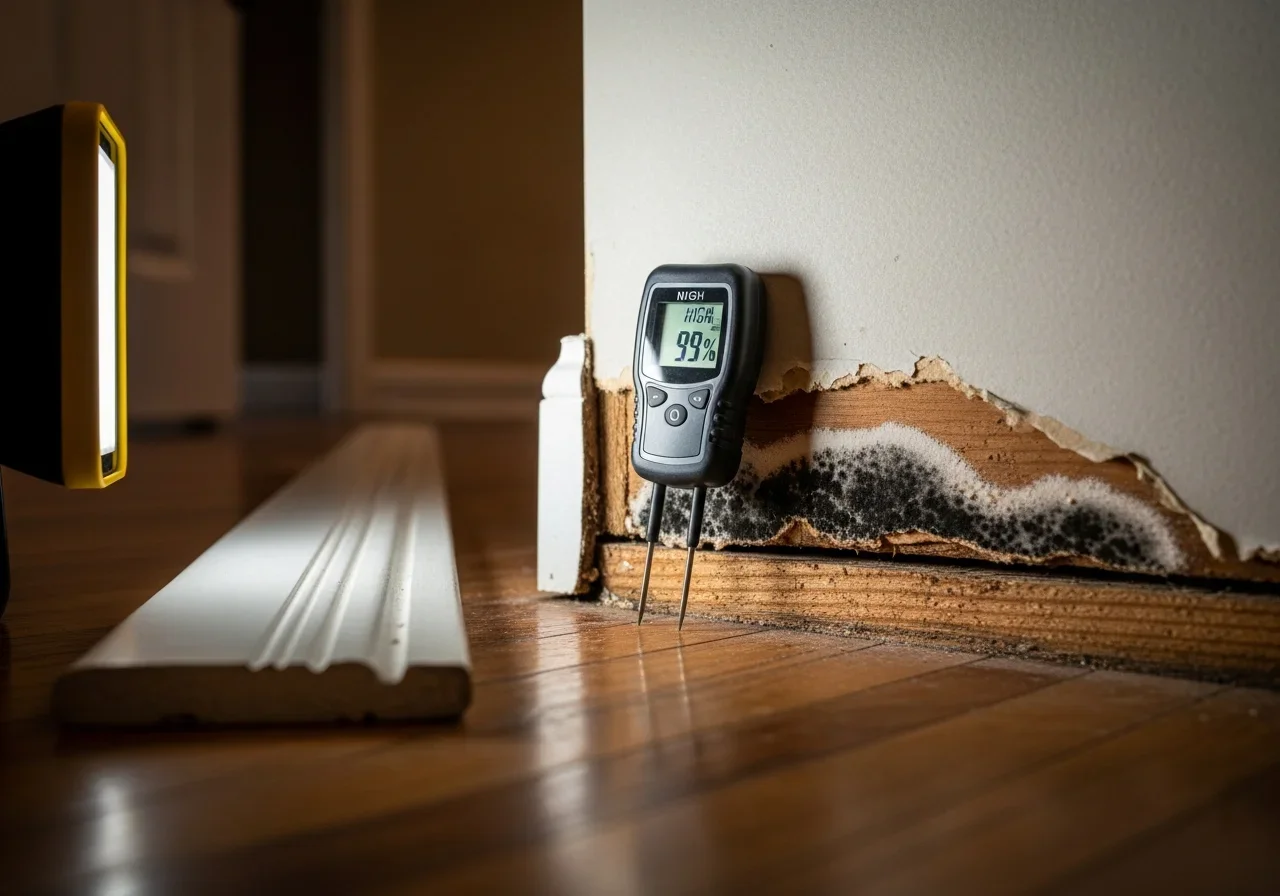
Hidden mold behind baseboards from crawl space moisture wicking in a Hickory home — clay
soil moisture migrating through vented crawl space foundations is one of the most common
hidden moisture sources in the foothills.
Know The Signs
Warning Signs of Mold in Hickory Homes
Mold contamination in Hickory rarely announces itself with obvious damage. In brick
ranch homes with crawl spaces over clay soil — and in basements near Lake Hickory — mold
grows silently on floor joists, inside wall cavities, and behind finished basement walls
for months until health symptoms or visible damage force a professional inspection.
Musty Crawl Space Smell Rising Into Living Areas
Most Reported
The most reported first sign in Hickory homes with vented crawl spaces. When mold colonizes floor joists, subfloor sheathing, or fiberglass insulation in the crawl space, a musty or earthy smell rises through gaps in the subfloor — especially around plumbing penetrations, HVAC registers, and along exterior walls. Many Hickory homeowners in the Viewmont and Highland neighborhoods grow accustomed to the odor and only notice it after returning from time away.
Dark Spots on Floor Joists and Subfloor Sheathing
Structural
Dark green, black, or gray fuzzy growth on exposed wood joists, band boards, and subfloor sheathing visible from the crawl space is active mold colonization. In Hickory's brick ranch homes, the crawl space is often the first area affected — clay soil moisture wicking through dirt floors in the foothills creates the persistent humidity that feeds wood-destroying mold species on structural framing.
Sagging or Soft Subfloors
Structural
Subfloor sheathing that feels spongy underfoot, has visible sagging between joists, or bounces when walked on signals prolonged moisture exposure and potential mold damage to the structural wood. In Hickory homes with vented crawl spaces over clay soil, sustained humidity above 70% weakens the adhesive bonds in plywood and OSB sheathing — a problem that progresses silently until the floor feels noticeably different.
Basement Wall Efflorescence and White Mineral Deposits
Early Warning
White, chalky mineral deposits (efflorescence) on basement walls — especially in homes near Lake Hickory or along the Catawba River corridor — indicate water is migrating through the concrete or block and evaporating on the interior surface. While efflorescence itself isn't mold, it proves chronic moisture intrusion that creates ideal conditions for mold growth on adjacent wood framing, drywall, and carpet behind finished basement walls.
Peeling Paint Near Foundation Walls
Early Warning
Paint that bubbles, peels, or blisters on interior walls — particularly along foundation-level walls, below-grade basement walls, and exterior-facing surfaces — signals trapped moisture migrating through the wall assembly. In Hickory's older brick ranch homes, moisture can wick through mortar joints and foundation block into wall cavities, creating conditions for hidden mold growth behind intact drywall.
Respiratory Symptoms That Worsen Indoors
Health Risk
Persistent sinus congestion, throat irritation, watery eyes, or worsening allergies — particularly when spending time indoors — can signal elevated airborne mold spore levels. Symptoms that improve when you leave the home and return when you come back are a strong indicator of indoor air quality contamination requiring professional assessment. Hickory's combination of crawl space and basement moisture sources can create elevated spore counts throughout the entire home.
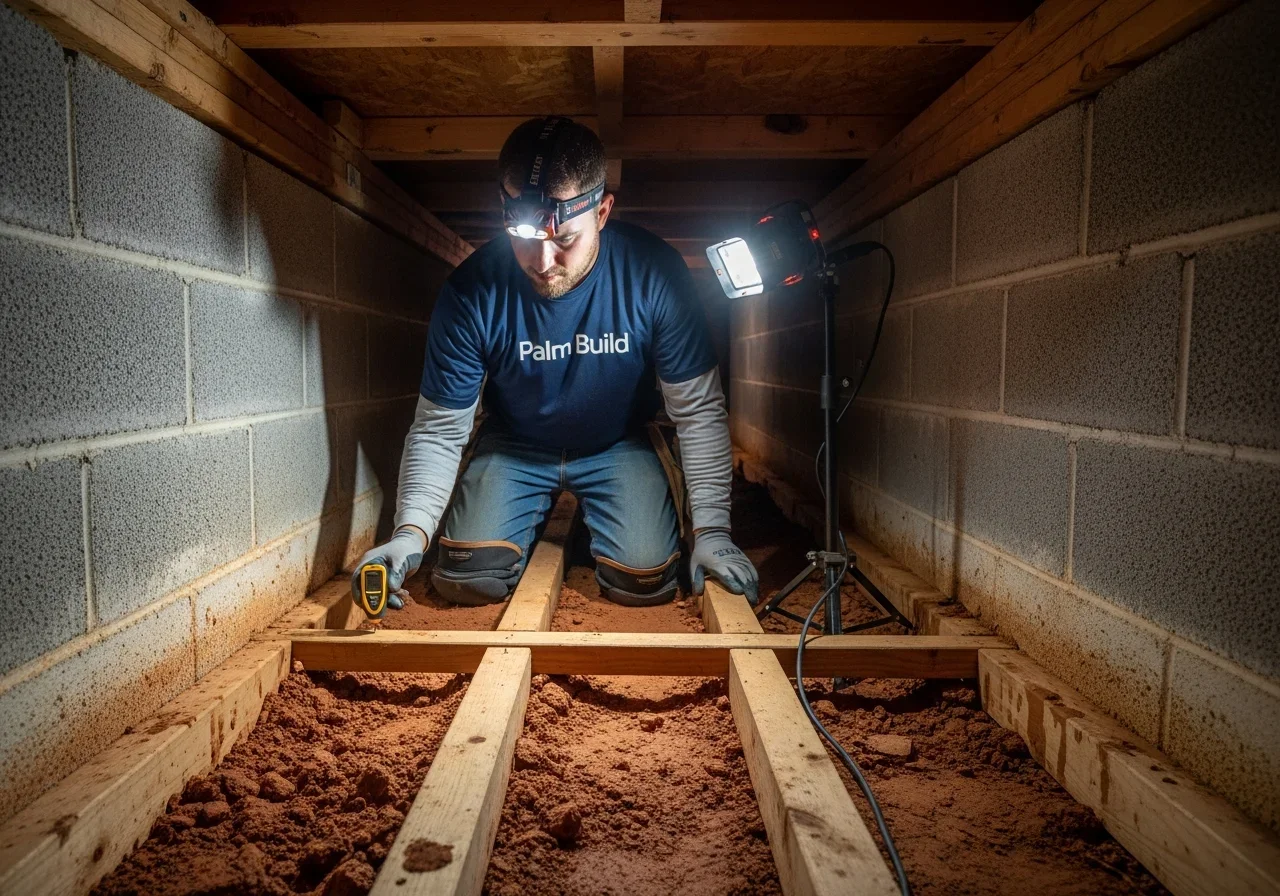
Crawl space moisture inspection in a Hickory home — vented crawl spaces over
foothills clay soil are the primary mold driver in the area.
When to Call Immediately
If you see mold covering more than 10 square feet, mold on floor joists or subfloor
sheathing, black or dark green growth on wood framing in the crawl space,
efflorescence with dark staining on basement walls, or a persistent musty odor
throughout the home — do not attempt DIY cleanup. Contact an IICRC-certified mold remediation professional and document everything for your insurance claim.
Hickory's Dual Mold Crisis
Crawl Space Mold: Clay Soil, Vented Dirt Floors & No Vapor Barrier
The majority of established Hickory homes — particularly the brick ranch homes built
from the 1950s through 1980s in Viewmont, Highland, Longview, and along Springs Road —
sit on vented crawl spaces over western Piedmont clay soil. This combination is a mold
factory. Dirt floors without proper vapor barriers allow continuous ground moisture
evaporation. Foundation vents that were supposed to "ventilate" the space actually
introduce warm humid foothills air that condenses on cooler surfaces.
North Carolina's building codes now allow closed (encapsulated) crawl spaces as the
preferred alternative to vented designs. A proper encapsulation includes a heavy-duty
vapor barrier covering the entire crawl space floor and walls, sealed foundation
vents, mechanical dehumidification, and proper drainage. For Hickory homes with active
crawl space mold, remediation must come first — encapsulation over active mold growth
traps contamination and makes the problem worse.
Crawl space humidity (vented)70-90% RH
Safe humidity threshold<60% RH
After encapsulation45-55% RH
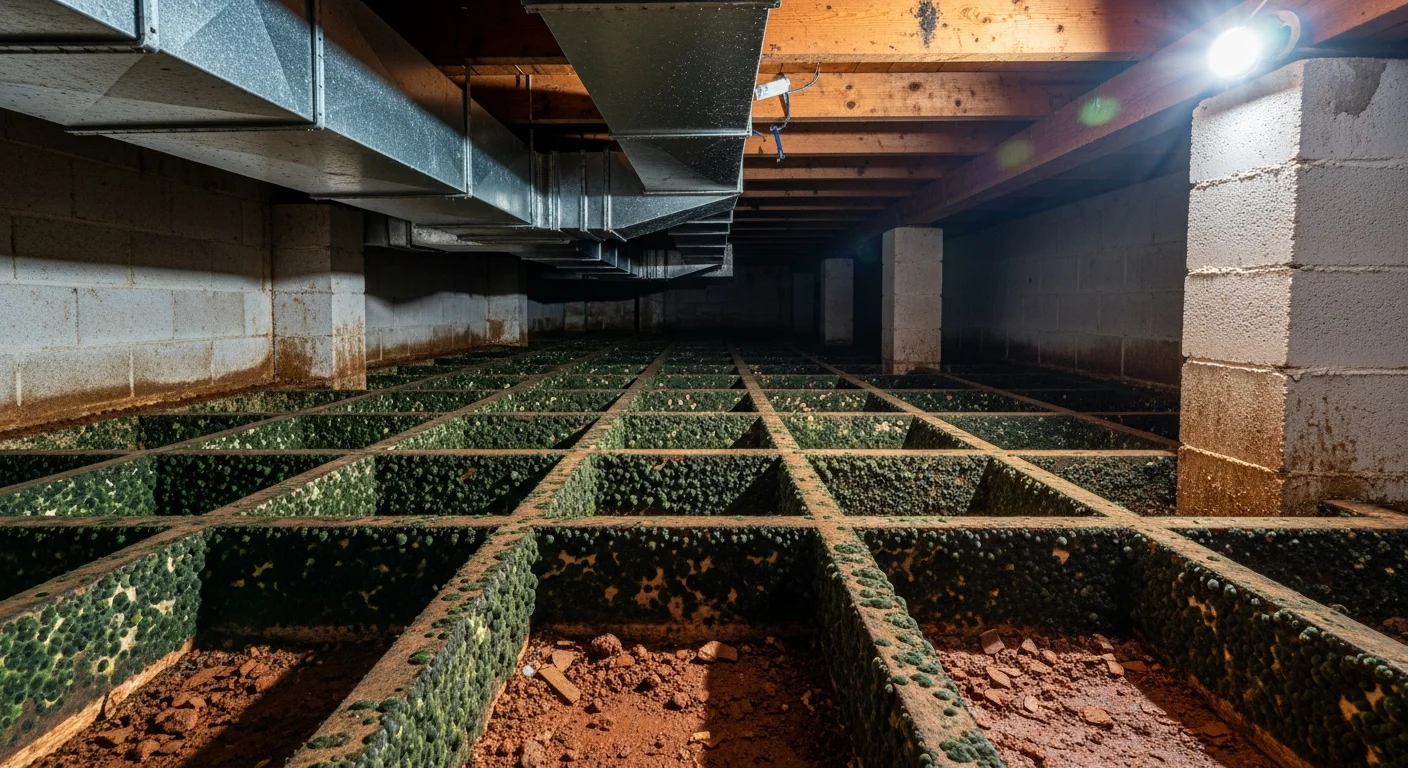
Before: Active mold on floor joists and sagging insulation in a vented Hickory crawl
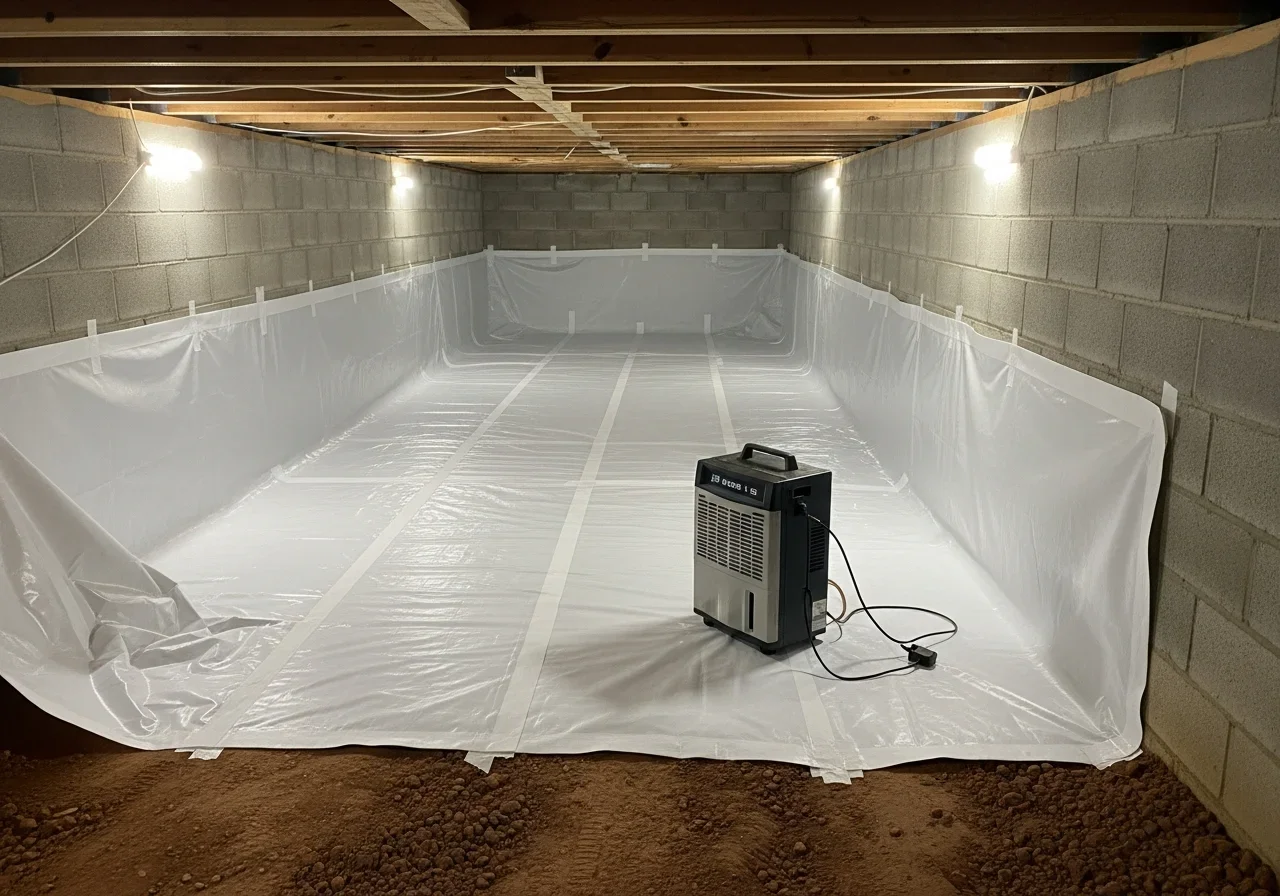
space over foothills clay soilAfter: Encapsulated crawl space with vapor barrier and mechanical dehumidification —
humidity reduced from 85% to under 50%
Why Encapsulation Without Remediation Fails
Some Hickory contractors offer crawl space encapsulation as a standalone "mold
solution." This is a critical mistake. Sealing a vapor barrier over
mold-contaminated wood framing traps the contamination — mold continues to grow
under the barrier and spores remain in the wood. Palm Build always remediates active
mold growth first, verifies with clearance testing, and then encapsulates to prevent
recurrence.
Basement wall seepage in a home near Lake Hickory — hydrostatic pressure drives
water through concrete, creating persistent mold conditions behind finished walls
Radon Awareness in Hickory Basements
Hickory is located in Catawba County, which the NC DHHS identifies as a Zone 2 area
for radon risk. Homes with basements and crawl spaces — particularly those with
foundation cracks that allow water seepage — may also have elevated radon levels.
When addressing basement mold and moisture, Palm Build recommends radon testing as
part of a comprehensive indoor air quality approach. Radon mitigation systems can be
coordinated alongside moisture solutions.
Below-Grade Moisture
Basement Mold: Lake Hickory Hydrostatic Pressure & Wall Seepage
Hickory's proximity to Lake Hickory and the Catawba River creates elevated groundwater
conditions that many Charlotte Metro communities don't face. Homes along the lake, in
the Sandy Ridge area, and throughout the foothills slopes often have full or partial
basements where hydrostatic pressure forces water through foundation walls — through
cracks in poured concrete, mortar joints in block walls, and the cold joint where
walls meet the floor slab.
Basement mold solutions require addressing the water intrusion pathway: interior
French drain systems to relieve hydrostatic pressure, sump pump installation,
waterproofing membrane application, and mechanical dehumidification. For finished
basements, mold-damaged drywall, insulation, and carpet must be removed and the
framing treated before any reconstruction begins.
Professional mold remediation follows a strict 6-step sequence defined by IICRC S520
standards. While North Carolina has no mold licensing requirement, Palm Build
voluntarily adheres to the same rigorous protocols required in licensed states — because
proper remediation demands it regardless of regulation.
01
Inspection & Moisture Mapping
Day 1
02
Moisture Source Identification
Day 1
03
Containment Construction
Days 1-2
04
Mold Removal & Material Demolition
Days 2-4
05
Antimicrobial Treatment & Drying
Days 3-5
06
Post-Remediation Clearance Testing
Days 5-7
01
Inspection & Moisture Mapping
Day 1
We use infrared thermal imaging and professional-grade moisture meters to map every affected area — including crawl spaces, basement walls, wall cavities behind brick veneer, and above ceiling lines. Hickory homes with both crawl space and basement foundations require below-floor and below-grade inspection as primary assessment areas. Foothills clay soil conditions and Lake Hickory groundwater levels are factored into the moisture source analysis.
02
Moisture Source Identification
Day 1
Mold always has a water source. We identify it — whether it's crawl space ground moisture from clay soil, basement hydrostatic pressure near Lake Hickory, aging plumbing leaks, or poor foundation drainage — and coordinate repair before remediation begins. In Hickory homes, the most common sources are crawl space ground moisture from foothills clay, basement wall seepage, and slow plumbing leaks in pre-1980 brick ranch homes.
03
Containment Construction
Days 1-2
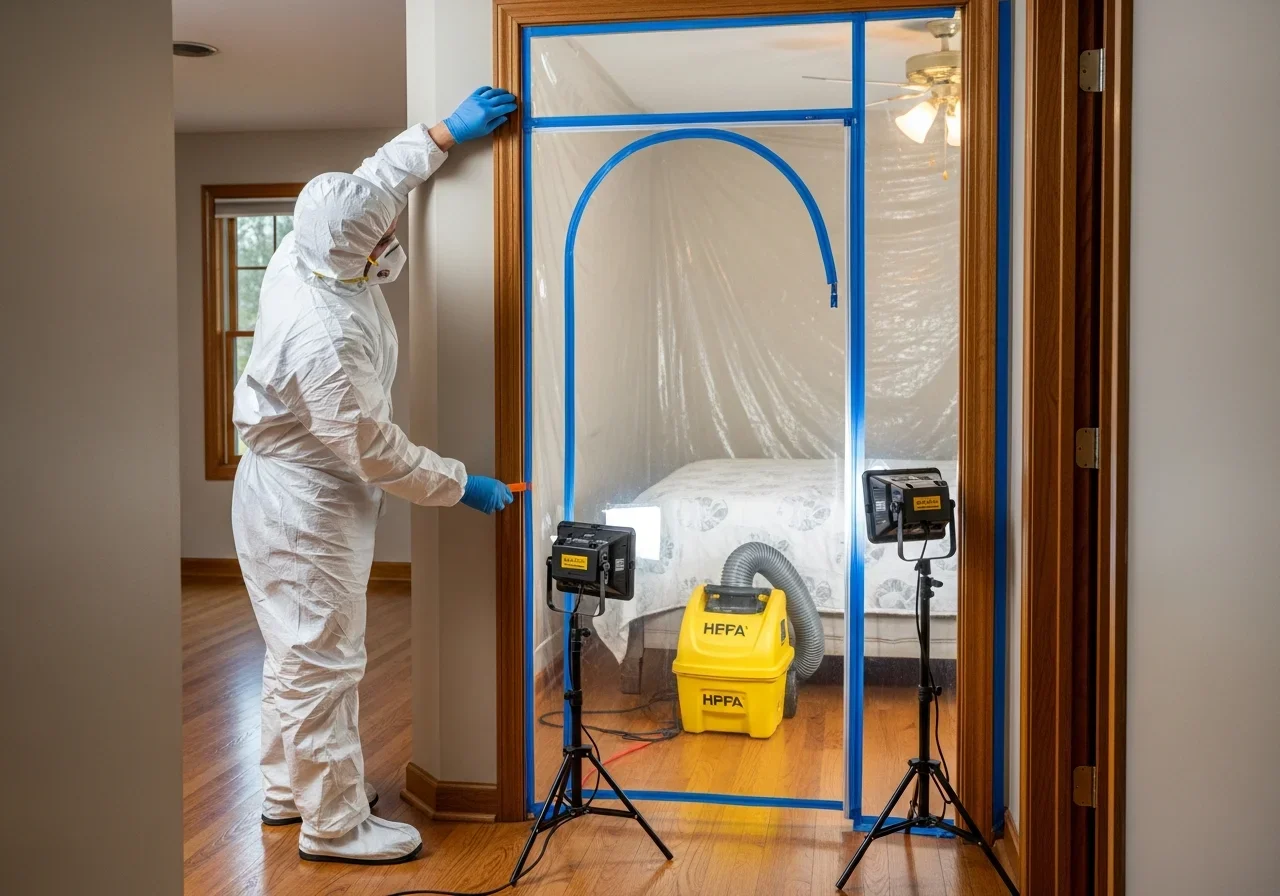
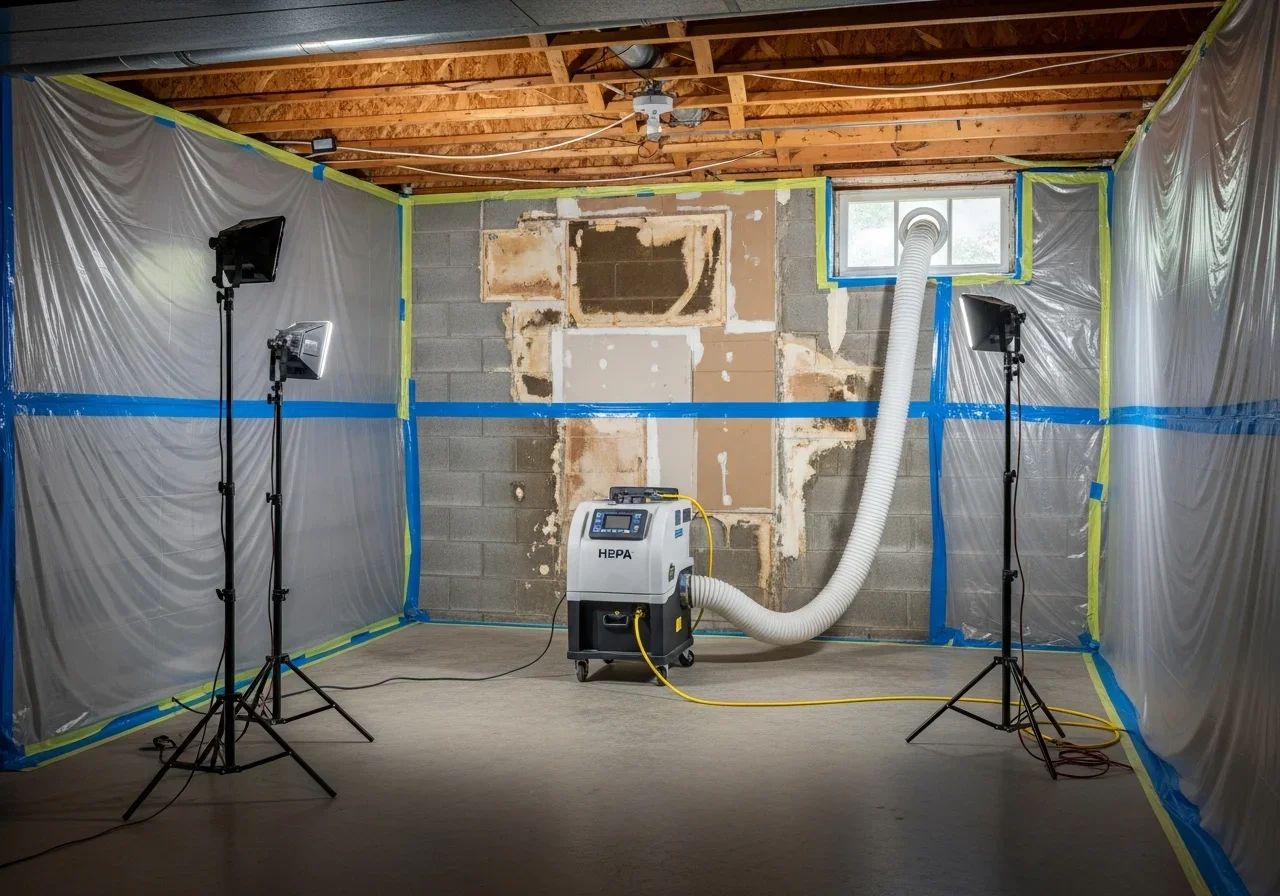
We build physical containment barriers using 6-mil polyethylene sheeting and establish negative air pressure with HEPA-filtered air scrubbers. This prevents mold spores from spreading to unaffected areas during demolition. In Hickory homes, crawl space containment requires sealing the crawl space access point and creating isolated work zones. Basement containment isolates the below-grade work area from the upper living space.
04
Mold Removal & Material Demolition
Days 2-4
Contaminated porous materials — drywall, insulation, carpet, baseboards — are removed and double-bagged inside containment per IICRC S520 protocol. In Hickory crawl spaces, this includes removing mold-damaged fiberglass insulation, treating wood joists and subfloor sheathing, and HEPA vacuuming all accessible surfaces. Basement work involves removing finished wall assemblies to access mold behind drywall and treating concrete block surfaces.
05
Antimicrobial Treatment & Drying
Days 3-5
HEPA air scrubbers run continuously during and after remediation to capture airborne spores. Commercial dehumidifiers bring moisture levels below the thresholds required for clearance testing. Antimicrobial treatments are applied to all remediated wood and concrete surfaces. In Hickory's humid foothills climate, this drying phase typically runs 48-72 hours — rushing it leads to failed clearance tests and mold recurrence.
06
Post-Remediation Clearance Testing
Days 5-7
An independent environmental consultant conducts post-remediation verification including visual inspection and air quality sampling. Since North Carolina has no mold licensing requirement, we voluntarily follow the same separation-of-assessment-and-remediation standard used in licensed states. We coordinate clay soil drainage corrections and encapsulation or French drain installation after clearance to prevent recurrence.
Why Hickory Requires Dual Crawl Space & Basement Expertise
Unlike many Charlotte Metro communities, Hickory homes frequently have both crawl
space and basement foundations — sometimes in the same home on foothills slopes. This
dual below-grade environment requires specialized remediation expertise: confined
space access in crawl spaces, hydrostatic pressure management in basements, structural
wood treatment, and coordinating drainage solutions across both environments.
1
Crawl Space Access
Specialized equipment and PPE for low-clearance crawl spaces common in Hickory brick ranch homes
2
Basement Wall Treatment
Concrete block and poured wall remediation with waterproofing coordination for Lake Hickory area homes
3
Clay Soil Drainage
Foundation drainage corrections to address foothills clay soil moisture retention around footings
4
Encapsulation After Clearance
Heavy-duty vapor barrier and mechanical dehumidification installed only after clearance testing passes
Costs depend on contamination scope, materials affected, accessibility, and whether the
moisture source requires separate repair. Hickory's foothills location adds unique
complexity — crawl spaces built on sloped terrain may have variable clearance heights,
basements near Lake Hickory require waterproofing coordination, and clay soil drainage
corrections affect the final scope. Every Palm Build proposal includes detailed
line-item pricing with no hidden fees.
Small / Single Area
Bathroom, closet, single window sill, or small wall section
$1,500 - $4,000
Bathroom mold behind vanity
Small closet wall section
Single window sill area
Minor surface contamination
Standard containment setup
Standard Room
Kitchen, bathroom walls, single room with drywall removal
Hickory's foothills terrain creates unique cost variables. Crawl spaces on sloped lots may
have access from only one side, requiring additional labor for equipment staging. Homes
with both crawl space and basement foundations may need remediation in both environments.
Clay soil drainage corrections — including French drains, grading adjustments, and
downspout extensions — are frequently needed to prevent recurrence and are scoped
separately. Independent clearance testing by a qualified environmental consultant is
billed separately (typically $250-$500 for residential).
Our Work
Hickory Mold Remediation Gallery
Full containment and PPE during active mold remediation in a Hickory brick ranch home — IICRC S520 protocols followed on every project
HEPA air scrubbers in basement containment — continuous filtration captures airborne spores during active remediation in Hickory
Crawl space encapsulation after mold remediation — vapor barrier and dehumidification prevent recurrence in Hickory foothills homes
Mold Licensing in North Carolina: What Hickory Residents Must Know
North Carolina has no state-specific mold remediation license requirement. Both the NC Department of Health and Human Services (NC DHHS) and NC State
Extension confirm that the state does not regulate mold assessment or remediation
professionals at the state level. This means anyone can legally advertise mold
remediation services in Hickory — from IICRC-certified specialists to handymen with a
spray bottle of bleach.
Without state licensing, the burden falls on homeowners to verify credentials. The
accepted industry gold standard is IICRC certification — specifically
the BSR-IICRC S520 standard for professional mold remediation procedures and the Mold Remediation Specialist (MRS) certification, which requires verifiable field experience and a proctored examination. Structural
repair work does require a separate North Carolina general contractor license from the NC
Licensing Board for General Contractors.
Verify IICRC S520 certification — the only credible industry standard in NC
Ask for MRS (Mold Remediation Specialist) credentials by name
Demand proof of general liability insurance and workers' comp
Insist on independent third-party clearance testing after remediation
Structural repairs require a separate NC general contractor license
Verify any company at iicrc.org — certification is publicly searchable
Crawl space, basement & foothills construction expertise
Full liability insurance and workers' comp coverage
Voluntary separation of assessment and remediation
Red Flags to Watch For
No IICRC certification or won't provide proof
Claims "no credentials needed" because NC has no license
Offers to "spray and seal" without removing contamination
Won't set up containment barriers or HEPA filtration
Same person does testing AND remediation (conflict of interest)
No proof of liability insurance or workers' comp
Insurance Navigation
Mold Insurance Claims in Hickory
Mold coverage in North Carolina is sub-limited, frequently excluded, and varies
significantly between carriers. Understanding your policy's mold sublimits, the
connection between water damage claims and mold coverage, and proper documentation
requirements can save Hickory homeowners thousands — especially when crawl space or
basement mold complicates the claim timeline.
Mold resulting from a covered sudden water event (burst pipe, appliance failure, storm damage) is typically covered up to your policy mold sublimit
North Carolina policies typically sub-limit mold coverage at $5,000-$25,000 — crawl space remediation combined with encapsulation or basement waterproofing frequently exceeds these limits
Mold from gradual moisture, chronic crawl space humidity, long-term plumbing deterioration, or deferred maintenance is almost always excluded from coverage
The average NC homeowner's insurance premium is approximately $1,900/year — and many carriers have added specific mold exclusions or reduced sublimits in recent years
North Carolina law requires prompt reporting of claims — delayed discovery of crawl space or basement mold (common since homeowners rarely inspect below-grade spaces) complicates the timeline adjusters use to determine coverage
Prompt mitigation (starting cleanup within 24-48 hours of discovery) is required to maintain coverage — carriers can deny claims for delayed response
Connecting mold to a specific covered water event with documentation (moisture readings, photos, plumber reports) is the single most important factor in claim approval
Moisture mapping and documentation — critical evidence for mold insurance claims in
Hickory
Crawl Space & Basement Mold: The Timeline Problem
Below-grade mold in Hickory presents a unique insurance challenge: most homeowners
discover crawl space or basement mold months or years after it began — making it
difficult to connect to a specific covered water event. Adjusters may classify it as
"long-term moisture" and deny coverage. However, if a plumbing leak, failed sump pump,
or storm-driven water intrusion can be documented as the triggering event, the mold
claim has a much stronger foundation. Early documentation is critical.
Palm Build's Insurance Documentation
We document mold origin, moisture source, timeline, and scope with the detail
adjusters require. Our team works directly with carriers common in the Hickory and
Catawba County area — providing timestamped photos, moisture readings, detailed scope
documents, and clearance reports formatted for carrier review. We help build the
connection between water damage and mold contamination.
Why Hickory Property Owners Choose Palm Build for Mold
IICRC Certified in an Unlicensed State
North Carolina has no mold licensing requirement — which makes IICRC certification the only credible credential. Palm Build holds IICRC S520 certification, and every crew lead carries current Mold Remediation Specialist (MRS) credentials. In a state where anyone can claim to do mold work, we maintain the same standards required in licensed states like Florida.
Crawl Space + Basement Dual Expertise
Hickory homes frequently have both crawl space and basement foundations — sometimes in the same home on foothills slopes. We understand the distinct challenges of each: confined-space remediation in crawl spaces with variable clearance heights, and below-grade wall treatment with waterproofing coordination in basements affected by Lake Hickory groundwater. Few remediation companies have expertise in both environments.
Foothills Clay Soil Knowledge
We understand the western Piedmont clay that defines Hickory's foundation conditions — how it retains moisture for weeks, how it channels water against footings on sloped lots, and how it requires specific drainage solutions to prevent mold recurrence. Clay soil moisture management is central to every Hickory remediation scope we develop.
Charlotte Metro Coverage — Hickory Response
Our Charlotte operations center serves the entire western Charlotte Metro area, including Hickory and Catawba County. We provide same-day assessments for mold concerns throughout Hickory, Conover, Newton, and the surrounding foothills — with containment and remediation crews available to mobilize quickly for urgent situations requiring immediate response.
Insurance Documentation Excellence
We understand mold coverage sublimits, the critical connection between water damage claims and mold coverage, and the documentation required to satisfy carriers common in the Hickory and Catawba County area. Our documentation packages include timestamped photos, moisture readings, scope details, and clearance reports formatted for adjuster review.
Radon-Aware Indoor Air Quality Approach
Hickory sits in a Catawba County area with moderate radon risk. When addressing crawl space and basement mold, we consider the full indoor air quality picture — recommending radon testing alongside mold assessment and coordinating radon mitigation systems with moisture solutions when needed. A comprehensive approach to below-grade air quality protects your family's health beyond mold alone.
Common Questions
Hickory Mold Remediation FAQ
Why is crawl space mold so common in Hickory?
Hickory sits on Cecil-type clay soils with extremely low permeability that hold groundwater against crawl space foundations for days after rain. Most homes built before 1980 have vented crawl spaces that pull in humid outdoor air — when 70%+ summer humidity contacts cooler crawl space surfaces, condensation forms on floor joists and subflooring. This cycle sustains mold growth from April through October and often year-round in poorly maintained crawl spaces.
Does North Carolina require a mold remediation license?
No. North Carolina has no state-specific mold remediation license requirement. NC State University Extension confirms no federal or state certification programs exist for mold remediation companies. The IICRC S520 standard and Mold Remediation Specialist (MRS) certification are the accepted industry benchmarks. Always verify your contractor holds current IICRC credentials — the lack of state licensing means anyone can legally offer mold services in Hickory.
How much does mold remediation cost in Hickory, NC?
Small single-area projects typically range from $1,500 to $4,000. Crawl space remediation ranges from $5,000 to $15,000 depending on crawl space size and contamination extent. Lake Hickory basement remediation runs $6,000 to $18,000. Large projects involving multiple rooms plus crawl space or basement can reach $10,000 to $25,000. Crawl space encapsulation to prevent recurrence adds $5,000 to $12,000.
Does homeowners insurance cover mold remediation in Hickory?
Mold is only covered when it results from a covered sudden water event — a burst pipe or appliance failure. Mold from chronic crawl space humidity, gradual clay soil moisture, or aging plumbing leaks is almost always excluded. NC policies typically cap mold coverage at $5,000 to $15,000. Prompt drying after a covered water event is critical — waiting even 48 hours in Hickory's humidity can result in denial of the mold portion of your claim.
Can Lake Hickory basements get mold even without visible water?
Yes. Hydrostatic moisture migrates through below-grade concrete walls as water vapor — invisible but measurable with professional moisture meters. This moisture collects behind finished drywall, under carpet pad, and around HVAC equipment, creating hidden mold colonies that produce no visible signs for months or years. If your Lake Hickory basement has a musty smell or unexplained humidity, professional moisture mapping is recommended.
What is crawl space encapsulation and do Hickory homes need it?
Crawl space encapsulation seals the crawl space from outdoor air using heavy-duty (20-mil) vapor barriers on the floor and walls, closes foundation vents, and installs commercial dehumidification. In Hickory's Cecil clay soil environment, encapsulation is the only permanent solution for chronic crawl space moisture and mold. We remediate existing mold first, then coordinate encapsulation to prevent recurrence.
Should I test for radon when treating crawl space mold in Hickory?
Yes. The NC foothills have elevated radon levels, and the same crawl space pathways that allow mold spores into your living space also allow radon gas entry. If you are investing in crawl space mold remediation and encapsulation, adding radon testing and a mitigation system during the same project is significantly more cost-effective than addressing them separately.
How long does mold remediation take in a Hickory home?
Most Hickory residential mold remediation projects take 3 to 7 business days from containment setup through clearance testing. Crawl space projects typically take 5-10 days due to access challenges, clay soil moisture loads, and extended drying requirements. Post-remediation air scrubbing in Hickory's humid climate typically runs 48-72 hours before conditions are suitable for clearance testing.
Suspect mold in your Hickory home? Get a professional assessment.
Palm Build's IICRC-certified mold remediation team serves Hickory and Catawba County with containment protocols, HEPA filtration, and post-remediation clearance testing. We address the clay soil moisture source first — because mold always comes back if the water problem isn't solved.