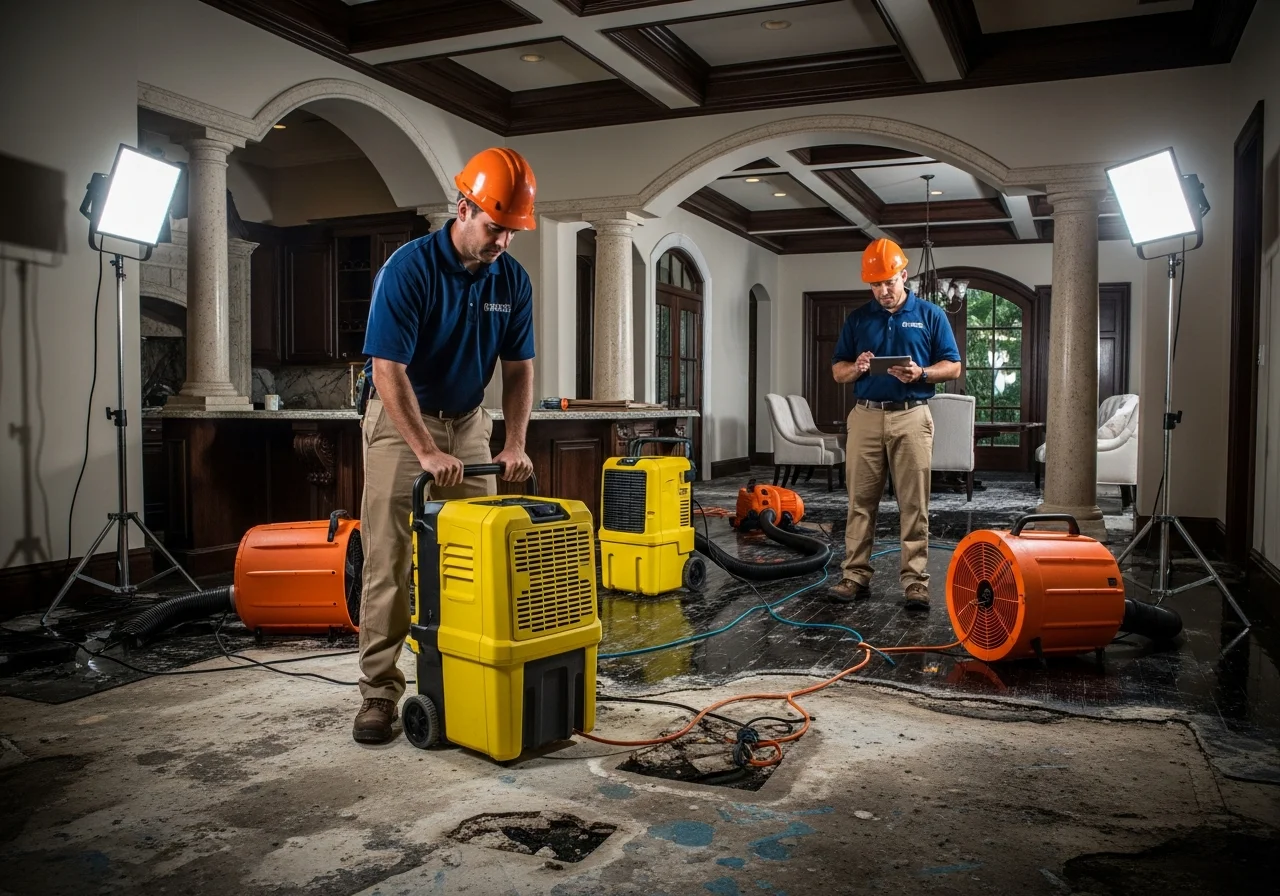
Storm & Hurricane Damage Restoration in West Palm Beach, FL
From the 1928 Okeechobee Hurricane that killed 2,500+ to the 2004 Frances-Jeanne double strike at 105 mph to Hurricane Milton's EF-3 tornado tearing a 29-mile path through Palm Beach County in 2024, West Palm Beach sits in the direct path of Atlantic hurricanes. Palm Build's Deerfield Beach team provides emergency tarping, saltwater and freshwater extraction, CBS stucco repair, barrel tile roof restoration, and full reconstruction -- with insurance coordination from the first call.
Deerfield Beach -- 30-45 Minutes from West Palm Beach 30-45 min Response IICRC Certified
Why West Palm Beach Is One of Florida's Most Hurricane-Exposed Cities
West Palm Beach, the county seat of Palm Beach County, occupies one of the most
storm-battered positions on the Atlantic coast. Sitting at latitude 26.7 with direct
ocean exposure, the city has been struck by 15+ Category 2 or stronger hurricanes since
the 1800s. The Intracoastal Waterway bisects the eastern corridor while the C-51 canal
system drains the western interior -- creating flooding pathways from every direction
during major storms.
Add a housing stock dominated by CBS stucco construction with aging barrel tile roofs,
six evacuation zones, King Tides that raise baseline water levels every fall, and a 2024
FEMA flood map overhaul that reclassified thousands of parcels into higher-risk zones,
and West Palm Beach presents a storm damage restoration challenge that demands
specialized local expertise.
15+
Cat 2+ hurricanes since 1800s
105 mph
Frances + Jeanne 2004
140 mph
Milton EF-3 tornado 2024
A-F
Evacuation zones
West Palm Beach's Intracoastal Waterway exposure and C-51 canal system create multiple
storm surge and flooding pathways into residential neighborhoods
Dual Water Body Exposure
West Palm Beach is squeezed between the Intracoastal Waterway to the east and the C-51 canal system threading through its western neighborhoods. During hurricanes, storm surge pushes saltwater inland through the Intracoastal while extreme rainfall simultaneously overwhelms the C-51 drainage capacity from the west. This dual flooding mechanism makes West Palm Beach uniquely vulnerable -- properties from Flagler Drive waterfront estates to Bear Lakes Estates face water intrusion from opposite directions during major storms.
15+ Category 2+ Hurricanes Within 50 Miles
Since the 1800s, more than 15 Category 2 or stronger hurricanes have passed within 50 miles of West Palm Beach. The 2004 season delivered Frances and Jeanne back-to-back at 105 mph, and 2005 brought Wilma at 105 mph. In 2024, Hurricane Milton spawned an EF-3 tornado with 140 mph winds that carved a 29-mile path through Palm Beach County, causing $45 million in damages. West Palm Beach does not get lucky -- it gets hit.
CBS Stucco with Barrel Tile Roofs
West Palm Beach's dominant construction type -- CBS (concrete block and stucco) with barrel tile roofs -- provides structural integrity but introduces unique hurricane vulnerabilities. Barrel tile adhesive and mechanical fasteners deteriorate over 15-25 years. Stucco traps wind-driven rain between exterior finish and interior drywall. CBS walls retain moisture 20-40% longer than wood-frame construction. Every storm tests aging systems that may look intact but have been silently degrading.
Evacuation Zones A-F + King Tides
West Palm Beach has six hurricane evacuation zones (A through F) spanning from the coastal surge zone to deep inland. King Tides from September through November cause sunny-day flooding that raises baseline water levels before hurricane season peaks. The December 2024 FEMA flood map update reclassified more than 16,000 Palm Beach County parcels into higher-risk zones -- many West Palm Beach homeowners now face new flood insurance requirements.
Hurricane Restoration Process
How We Restore West Palm Beach Homes After Hurricane Damage
Hurricane restoration in West Palm Beach requires navigating saltwater decontamination
from the Intracoastal, canal overflow protocols for C-51 flooding, barrel tile roof
repair, CBS wall drying, and dual wind/flood insurance claims simultaneously. Here is
our proven six-step process from first call through final Palm Beach County inspection.
01
Emergency Tarping & Board-Up
Hours 1-4
We secure your West Palm Beach home against further weather exposure. Displaced barrel tiles are tarped with reinforced polyethylene rated for South Florida wind loads, failed windows are boarded, and compromised doors are sealed. In hurricane conditions, this may require waiting for winds to drop below 45 mph for crew safety. Emergency tarping is covered by your insurance policy as part of your duty to mitigate further damage -- critical before the next rain band sweeps through West Palm Beach's multi-hour storm events.
02
Damage Assessment & Water Category Testing
Days 1-3
Full documentation of all storm damage classified by cause: wind damage (tiles, stucco, windows), saltwater surge from the Intracoastal (Category 3), C-51 canal overflow (Category 2-3), and freshwater intrusion (Category 1-2). In West Palm Beach, where the Intracoastal carries saltwater surge and the C-51 canal system floods from the west, we test contamination levels on-site to determine the correct IICRC remediation protocol. We photograph every affected area, map moisture with thermal cameras, and create separate scopes for wind claims (homeowners) and flood claims (NFIP or private flood).
03
Water Extraction & Decontamination
Days 1-10
Storm damage in West Palm Beach almost always includes water intrusion -- through displaced barrel tiles, failed windows, storm surge, or canal overflow. We extract standing water, classify contamination, and begin appropriate protocols. Saltwater surge from the Intracoastal (Category 3) requires full demolition of affected porous materials. C-51 canal overflow (Category 2-3) requires contamination testing. Commercial dehumidifiers and air movers bring humidity below 60% to prevent mold colonization in West Palm Beach's year-round 70-80% humidity environment.
04
Structural Drying & Mold Prevention
Days 3-14
West Palm Beach's tropical climate makes structural drying more demanding than most of the country. Without power (common after major hurricanes), air conditioning stops and mold colonization begins within 24-48 hours. We deploy industrial desiccant dehumidifiers, establish negative air pressure containment, and monitor moisture levels twice daily until all building materials reach target moisture content. HEPA air scrubbing removes airborne mold spores. CBS concrete block walls retain moisture 20-40% longer than wood-frame -- drying times for West Palm Beach's dominant building type run significantly longer than national averages.
05
Full Structural Reconstruction
Weeks 2-16
Once the property is dried, decontaminated, and cleared, we begin reconstruction meeting current Florida Building Code requirements. Barrel tile roof repair or replacement, stucco restoration on CBS walls, interior drywall and flooring replacement, electrical and plumbing repairs, and painting. All materials and installation meet Palm Beach County code requirements. For properties in West Palm Beach's historic districts like El Cid, Old Northwood, and Flamingo Park, we coordinate with the Historic Preservation Board to ensure restoration maintains architectural compliance.
06
Final Inspection & Insurance Closeout
Week 16+
Palm Beach County Building Division inspections verify all structural, electrical, mechanical, and plumbing work meets current code. We perform a final walk-through with the homeowner and provide complete documentation for insurance closeout -- including all invoices, permits, inspection records, code compliance certificates, and warranty information. For hurricane claims involving both wind and flood policies, we coordinate dual-claim closeout to ensure maximum recovery from both carriers.
A Century of Hurricanes
West Palm Beach Hurricane History: From the 1928 Okeechobee to Milton's 2024 Tornado
West Palm Beach has been shaped by hurricanes for over a century. The 1928 Okeechobee
Hurricane redesigned the entire region's drainage infrastructure. The 2004 double strike
rewrote insurance industry practices. Wilma in 2005 strengthened the building code.
Milton's 2024 tornado outbreak changed how the city thinks about distant storm risk.
This timeline defines the restoration challenges every West Palm Beach homeowner faces.
The Okeechobee Hurricane
Catastrophic
September 16, 1928
The deadliest natural disaster in Palm Beach County history. A Category 4 hurricane with 145 mph winds struck West Palm Beach directly, driving Lake Okeechobee over its levee and killing an estimated 2,500+ people in the surrounding agricultural communities. Downtown West Palm Beach was devastated. This storm fundamentally reshaped the region -- the Army Corps of Engineers built the Herbert Hoover Dike in response, and the entire drainage infrastructure of Palm Beach County was redesigned. Every structure in West Palm Beach today sits on land whose flood engineering traces back to this single event.
Frances & Jeanne -- The Double Strike
Catastrophic
September 4-26, 2004
Hurricane Frances made landfall on September 4, 2004 as a Category 2 near Stuart, just 50 miles north of West Palm Beach, with sustained winds of 105 mph. Three weeks later, Hurricane Jeanne followed nearly the identical track on September 26. The back-to-back hits were catastrophic -- roofs damaged by Frances that were tarped but not repaired were destroyed by Jeanne. Insurance claims overlapped, creating adjuster confusion that delayed payments for months. West Palm Beach neighborhoods from El Cid to Century Village suffered widespread barrel tile displacement, stucco cracking, and water intrusion. Combined damage across Palm Beach County exceeded $6.8 billion.
Hurricane Wilma
Catastrophic
October 24, 2005
Wilma crossed South Florida as a Category 3 with sustained winds reaching 105 mph in Palm Beach County. West Palm Beach took a direct hit. The storm destroyed an estimated 28,000 tile roofs across the county, knocked out power to 98% of FPL customers for up to three weeks, and caused $20 billion in insured losses statewide. Wilma remains the benchmark storm for West Palm Beach -- every restoration company, insurer, and building official references "pre-Wilma" and "post-Wilma" as dividing lines. Much of the current building code was strengthened in direct response to Wilma's destruction.
Hurricane Irma
Significant
September 10, 2017
Irma made Florida landfall as a Category 4 in the Keys, then tracked up the west coast. West Palm Beach experienced sustained tropical storm winds of 60-75 mph with gusts exceeding 90 mph. Flooding along the C-51 canal, Clear Lake, and throughout the LWDD canal network affected hundreds of properties. The Intracoastal corridor saw storm surge pushing water into waterfront neighborhoods. Irma caused $50 billion in total US damage and reinforced that West Palm Beach does not need a direct hit to suffer major losses.
Hurricane Milton -- EF-3 Tornado Outbreak
Catastrophic
October 9, 2024
Milton made landfall near Siesta Key as a Category 3, 150 miles from West Palm Beach. But the storm spawned an unprecedented tornado outbreak across South Florida. An EF-3 tornado with 140 mph winds carved a 28.95-mile path through Palm Beach County, causing $45 million in damages. The tornado destroyed homes, commercial buildings, and infrastructure across a swath of the county that no one had anticipated. Milton rewrote the risk calculus for West Palm Beach -- proving that tornado damage from distant hurricanes can rival the destruction of a direct hit.
King Tide Flooding Events
Recurring
September-November (Annual)
Every fall, West Palm Beach experiences King Tides -- exceptionally high tidal events that push water levels 1-2 feet above normal along the Intracoastal Waterway and into the C-51 canal system. These "sunny-day floods" inundate Flagler Drive, seep into waterfront properties, and overwhelm stormwater infrastructure without any storm present. King Tides are worsening annually due to sea level rise, with NOAA projecting 6-10 inches of additional rise by 2030. When a hurricane arrives on top of a King Tide cycle, the compounding effect dramatically increases flooding across all evacuation zones.
West Palm Beach's hurricane season runs June through November, with peak risk from
August through October when Atlantic water temperatures fuel rapid intensification.
Types of Storm Damage
How Hurricanes Damage West Palm Beach Homes
Hurricane and storm damage in West Palm Beach manifests in six distinct ways -- and
major storms typically trigger multiple damage types simultaneously. Understanding the
full scope is critical for emergency response, insurance claims, and long-term
restoration because different damage types are covered by different policies and require
different remediation protocols.
Barrel Tile Roof Displacement
West Palm Beach's signature barrel tile roofs are engineered for hurricane loads, but adhesive and mechanical fasteners deteriorate over 15-25 years. Hurricane-force winds lift individual tiles, break adhesive bonds, and create cascading failures where one displaced tile exposes the underlayment to direct rain and wind. Post-Wilma code upgrades require enhanced tile attachment, but a significant portion of West Palm Beach's housing stock predates these standards. A single displaced tile can lead to $15,000-$50,000+ in interior water damage if not tarped immediately.
CBS Stucco Breach & Water Intrusion
Wind-driven rain at 100+ mph penetrates stucco walls through hairline cracks, window frame gaps, and deteriorated sealant joints. West Palm Beach's CBS stucco construction traps moisture between the exterior finish and interior drywall, creating hidden water damage that may not become visible for weeks. Salt-laden hurricane rain accelerates corrosion of wire lath and metal fasteners behind stucco. Post-storm stucco inspection with a moisture meter is essential -- visible damage represents a fraction of actual water intrusion.
Saltwater Storm Surge
Properties east of the Intracoastal -- including Flagler Drive waterfront estates, El Cid, and portions of Flamingo Park -- face direct storm surge exposure. Under IICRC S500 standards, saltwater storm surge is Category 3 (grossly contaminated) water, requiring complete demolition of all affected porous materials. Salt crystals embedded in concrete slabs, wall framing, and subfloor systems continue to absorb atmospheric moisture indefinitely, creating perpetual dampness and accelerated corrosion if not properly remediated.
C-51 Canal Overflow & Freshwater Flooding
West Palm Beach's western neighborhoods depend on the C-51 canal system and LWDD lateral canals for stormwater drainage. When rainfall exceeds canal capacity, water backs up through storm drains and floods streets, garages, and ground-floor living spaces. Neighborhoods near Bear Lakes Estates, Cypress Lakes, and Golden Lakes Village sit in the drainage shadow of C-51 and are first to flood. Unlike saltwater surge, canal overflow is typically Category 1 or 2, allowing more aggressive salvage of affected materials.
Tornado Damage from Distant Hurricanes
Hurricane Milton's 2024 EF-3 tornado rewrote the risk profile for West Palm Beach. The tornado -- spawned by a hurricane making landfall 150 miles away -- carved a 28.95-mile path through Palm Beach County with 140 mph winds, causing $45 million in damages. Tornado damage is fundamentally different from hurricane wind: concentrated, violent, and unpredictable in its path. Standard hurricane shutters and impact windows provide little protection against EF-3 tornado forces. Insurance coverage for tornado damage falls under windstorm, but the concentrated destruction often exceeds policy limits.
Electrical & HVAC Storm Damage
Lightning strikes, power surges from FPL grid failures, and saltwater exposure destroy electrical panels, HVAC systems, and wiring. West Palm Beach's outdoor HVAC condensers are particularly vulnerable -- saltwater flooding corrodes coils, compressors, and electrical connections within hours. FPL power outages lasting days or weeks after major hurricanes cause secondary damage: food spoilage, sump pump failure, and mold growth from interrupted dehumidification in West Palm Beach's 80%+ humidity environment.
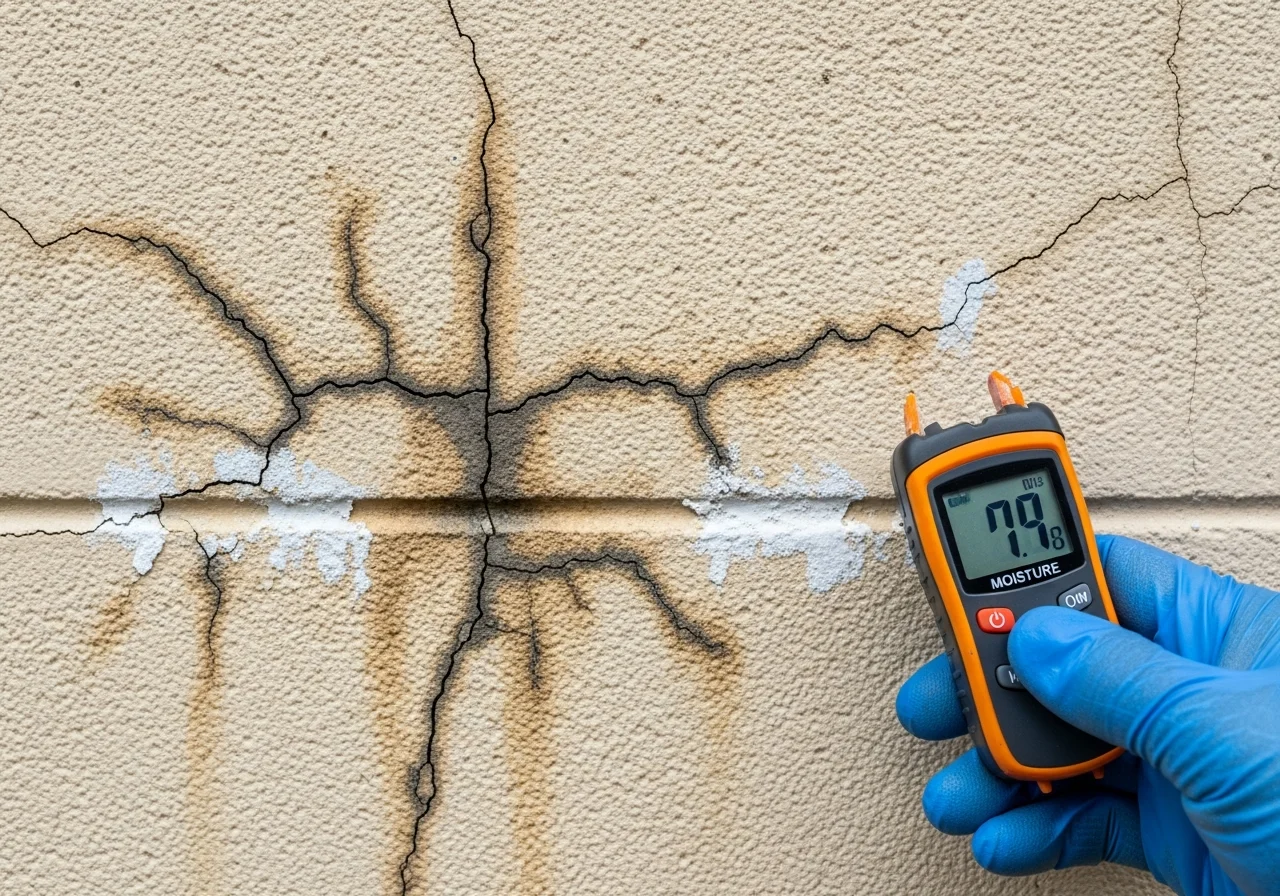
CBS stucco walls trap wind-driven rain between the exterior finish and interior drywall
-- creating hidden moisture damage that may not be visible for weeks after the storm.
West Palm Beach Pricing
Hurricane Damage Restoration Costs in West Palm Beach
Hurricane restoration costs in West Palm Beach are driven by barrel tile roof systems,
CBS wall drying complexity, dual-water-body exposure, and South Florida's elevated
material and labor costs. After major hurricanes, contractor demand and material
shortages across Palm Beach County increase costs 20-40% and extend timelines by months.
Understanding your out-of-pocket exposure starts with your hurricane deductible.
The median West Palm Beach home value is approximately $414,000. At a 2% hurricane
deductible, that is $8,280 out of pocket before your wind claim pays anything. At 5%,
it is $20,700. This deductible applies to each hurricane event -- not annually. If two
hurricanes hit in one season (as Frances and Jeanne did in 2004), you pay the
deductible twice. For luxury properties in El Cid, Ibis Golf & Country Club, or
waterfront estates along Flagler Drive valued at $1M+, hurricane deductibles can
exceed $50,000 per event. Review your policy before a storm forces the conversation.
Critical Insurance Distinction
Wind vs. Flood Insurance in West Palm Beach: Know Before the Storm
This is the single most important insurance concept for West Palm Beach homeowners. Wind
damage and flood damage from the same hurricane are covered by different policies, carry
different deductibles, and are filed as separate claims. Florida's hurricane deductible
structure -- 2-5% of insured value instead of a flat dollar amount -- means West Palm
Beach homeowners face $8,280 to $20,700+ out of pocket on wind claims alone. Documenting
damage by cause is the difference between recovery and financial catastrophe.
FEMA adopted new Flood Insurance Rate Maps (FIRMs) for Palm Beach County on December
20, 2024, reclassifying more than 16,000 parcels into higher-risk flood zones with
increased Base Flood Elevations. Many West Palm Beach homeowners who previously did
not need flood insurance now find their properties in Special Flood Hazard Areas (Zone
AE). If your property was reclassified, your mortgage lender may now require flood
insurance. If your restoration costs exceed 50% of your home's market value in a flood
zone, the Substantial Improvement rule requires bringing the entire structure into
compliance with current elevation requirements. Review your updated FIRM designation
at FEMA's map service center before the next storm.
What Hurricane Damage Looks Like in West Palm Beach
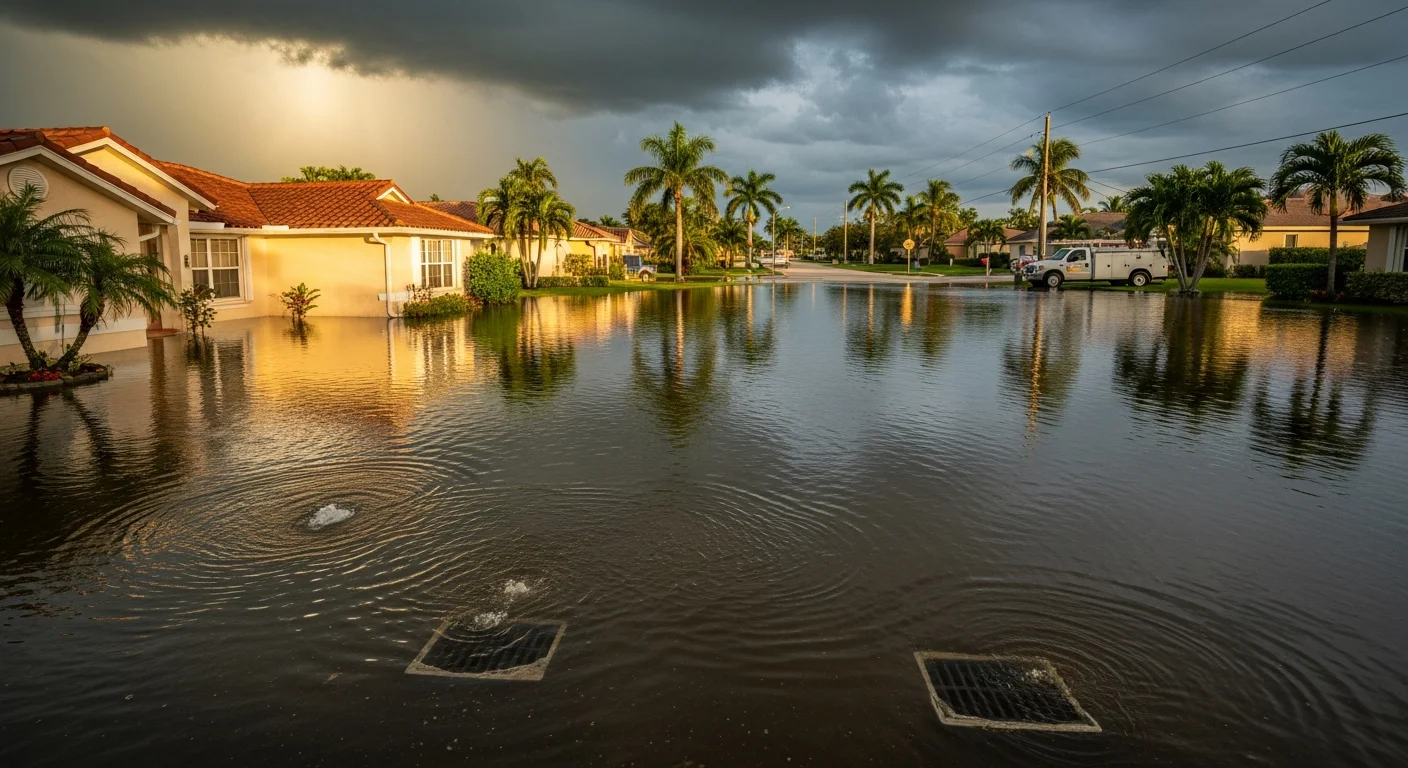
Canal overflow and storm surge create dual flooding pathways through West Palm Beach neighborhoods
Wind-driven rain penetrates CBS stucco through hairline cracks, creating hidden water damage behind walls
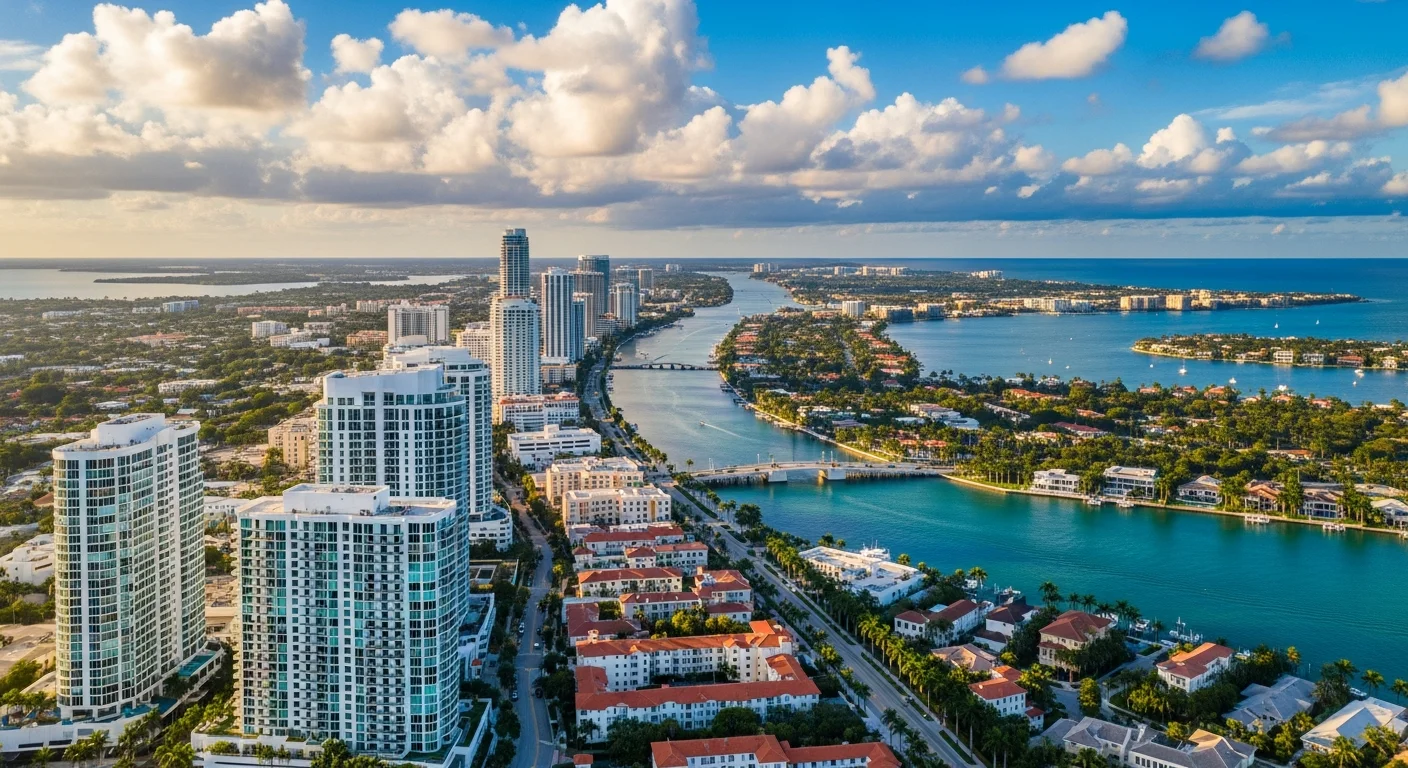
Flagler Drive waterfront properties face direct Intracoastal storm surge and King Tide exposure
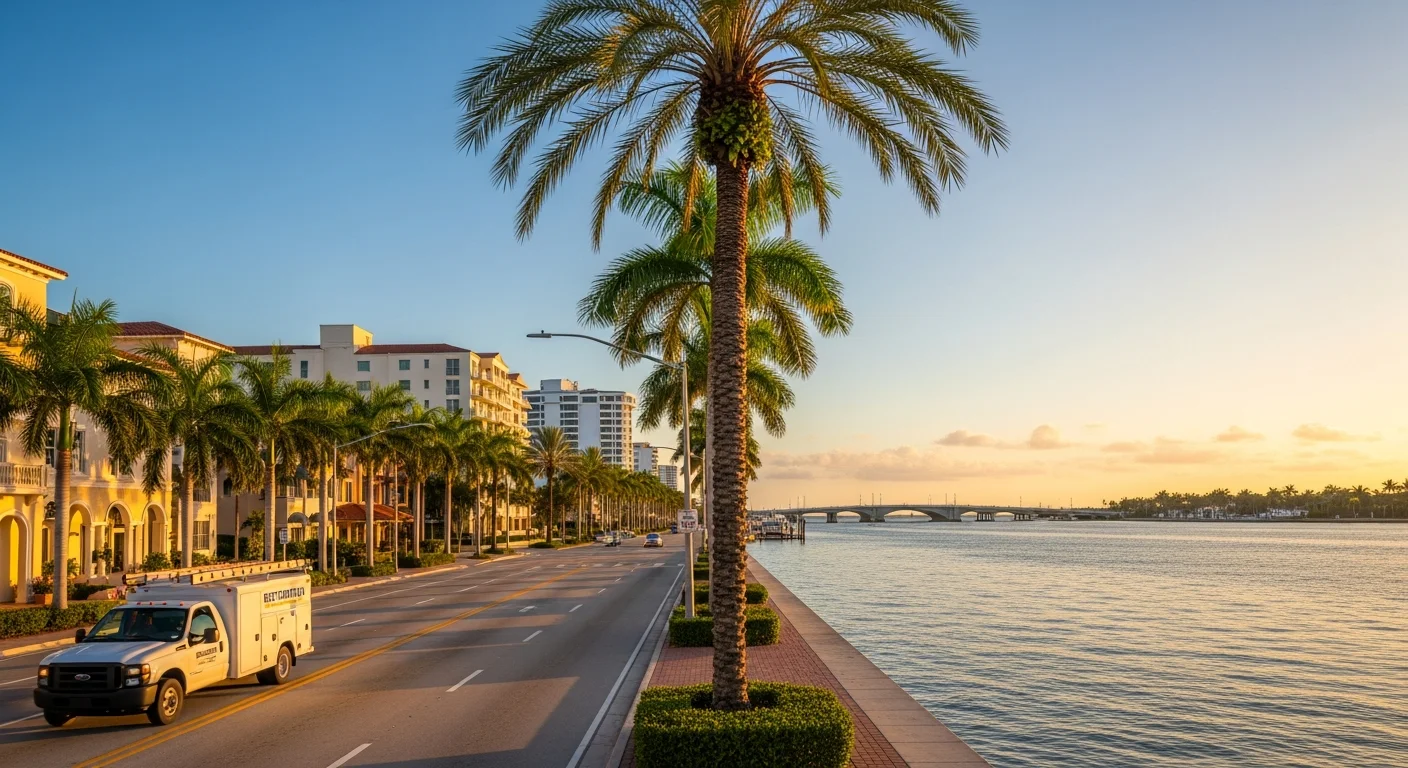
Industrial dehumidifiers and air movers are essential for CBS wall drying in West Palm Beach humidity
The Palm Build Difference
Why West Palm Beach Homeowners Choose Palm Build After Hurricanes
30-45 Minute West Palm Beach Response
Our Deerfield Beach operations center is approximately 30-45 minutes from most West Palm Beach neighborhoods. Emergency crews deploy across Palm Beach County with fully equipped trucks carrying extraction equipment, commercial dehumidifiers, tarping materials, and moisture mapping tools. During major hurricane events, we activate catastrophe response with pre-positioned crews. Pre-storm clients receive priority dispatch ahead of the general queue.
Every crew lead holds current IICRC Water Restoration Technician and Fire/Smoke Restoration Technician certifications. Our South Florida teams are additionally trained in Category 3 saltwater decontamination protocols -- the IICRC classification for storm surge that requires fundamentally different remediation than freshwater flooding. This matters in West Palm Beach, where Intracoastal surge and C-51 canal flooding can affect the same property simultaneously.
Dual-Claim Documentation
Our damage assessment classifies every item by cause -- wind vs. surge vs. freshwater flood vs. tornado vs. debris impact -- ensuring each claim is filed with the correct policy. In West Palm Beach, where wind damage goes through homeowners (with hurricane deductible) and flood damage requires separate NFIP or private flood claims, this dual-documentation approach recovers significantly more for homeowners than generic damage reports.
Florida Insurance Navigation
We understand Florida's complex insurance landscape: Citizens depopulation, hurricane deductible percentages, NFIP proof-of-loss deadlines, the 2024 FEMA flood map reclassification, assignment of benefits regulations, and the role of public adjusters. Palm Build coordinates with your carrier, your adjuster, and if needed your public adjuster to maximize claim recovery while keeping restoration on schedule.
Full Reconstruction -- Tile Roof to Finish
From emergency tarping through final punch list, one company handles everything. For West Palm Beach's tile-roofed, CBS stucco homes, we maintain relationships with tile suppliers and stucco contractors who prioritize our projects during post-hurricane demand surges. Historic district coordination (El Cid, Old Northwood, Flamingo Park) and HOA architectural review board compliance are included for governed communities.
Common Questions
West Palm Beach Hurricane Damage FAQ
How quickly can Palm Build respond after a hurricane in West Palm Beach?
Our Deerfield Beach operations center is approximately 30-45 minutes from most West Palm Beach neighborhoods under normal conditions. After major hurricane events, we activate catastrophe response protocols with pre-positioned crews and equipment across Palm Beach County. Pre-storm clients receive priority dispatch. We respond 24 hours a day, 7 days a week with fully equipped trucks carrying extraction equipment, commercial dehumidifiers, tarping materials, and moisture mapping tools.
Does my West Palm Beach homeowners insurance cover hurricane damage?
Wind damage is a covered peril under Florida homeowners policies. However, Florida policies carry separate hurricane deductibles of 2-5% of your insured value -- not a flat dollar amount. On a $414,000 West Palm Beach home, that means $8,280 to $20,700 out of pocket before wind coverage kicks in. Flood damage from storm surge or rising water requires separate NFIP or private flood insurance. After the 2024 FEMA flood map update, more than 16,000 Palm Beach County parcels were reclassified into higher-risk zones.
What happened during Hurricane Milton in 2024 in West Palm Beach?
Hurricane Milton made landfall near Siesta Key on October 9, 2024 as a Category 3 but spawned an EF-3 tornado with 140 mph winds that tore a 28.95-mile path through Palm Beach County. The tornado caused $45 million in damages across the county. West Palm Beach also experienced sustained tropical storm winds, localized flooding, and widespread FPL power outages. Milton demonstrated that even hurricanes making landfall 150 miles away can produce catastrophic tornado damage in Palm Beach County.
What is the difference between wind damage and flood damage for insurance in West Palm Beach?
This is the most expensive misunderstanding in South Florida insurance. Wind damage -- roof displacement, stucco breach, window failure, wind-driven rain entry -- is covered by your homeowners policy with a hurricane deductible. Flood damage -- rising water from storm surge, C-51 canal overflow, or ground saturation -- requires separate flood insurance (NFIP or private flood). Saltwater storm surge from the Intracoastal is classified as Category 3 (grossly contaminated) water under IICRC standards, requiring more aggressive remediation than freshwater canal flooding. Palm Build documents damage by cause to ensure each claim is filed with the correct policy.
How does the C-51 canal system affect flooding in West Palm Beach?
The C-51 canal (West Palm Beach Canal) is the primary drainage artery for western Palm Beach County. During hurricanes, the canal system can be overwhelmed from both directions: storm surge pushes seawater inland through the Intracoastal connection while extreme rainfall simultaneously exceeds drainage capacity from the west. Neighborhoods along the C-51 corridor -- including Bear Lakes Estates, Palm Beach Lakes, and areas near Clear Lake -- face dual flooding risk during major storm events. King Tides from September through November compound this vulnerability by raising baseline water levels before hurricane season peaks.
Are CBS stucco homes in West Palm Beach hurricane-proof?
CBS (concrete block and stucco) construction provides excellent structural integrity against wind loads, but it is not immune to hurricane damage. Wind-driven rain penetrates stucco through hairline cracks, window frame gaps, and deteriorated sealant joints. Water trapped between exterior stucco and interior drywall creates hidden moisture damage that may not be visible for weeks. Salt-laden hurricane rain accelerates corrosion of wire lath and metal fasteners behind stucco. CBS walls also retain moisture 20-40% longer than wood-frame construction, extending structural drying timelines significantly.
How long does hurricane damage restoration take in West Palm Beach?
Emergency tarping and water extraction take 1-2 days. Structural drying runs 5-14 days depending on water category and CBS wall thickness. Barrel tile roof repair takes 2-6 weeks depending on tile availability and contractor demand. Full reconstruction runs 6-16 weeks. After major hurricanes, timelines extend significantly due to contractor demand, material shortages, and permitting backlogs across Palm Beach County. The 2004 Frances-Jeanne double strike created restoration backlogs lasting 12+ months.
What are West Palm Beach's hurricane evacuation zones?
West Palm Beach has evacuation zones A through F. Zones A and B cover the most surge-vulnerable coastal areas east of the Intracoastal Waterway, including Flagler Drive waterfront properties, El Cid, and portions of Flamingo Park. Zones C through F extend progressively inland. However, Hurricane Milton's 2024 tornado and the King Tide flooding patterns demonstrate that even inland Zone E and F properties face serious storm damage risk from wind, tornadoes, and canal overflow -- not just storm surge.
Trusted Vendors
Trusted local pros in West Palm Beach
Outside our restoration scope, these are the vetted, licensed contractors we trust
alongside our work. Personally evaluated, reference-checked, and recommended by Palm
Build.
Hurricane Damage in West Palm Beach? Every Hour Counts.
Saltwater flooding corrodes electrical systems, contaminates CBS walls, and destroys HVAC equipment within hours. Canal overflow saturates foundations. Wind-driven rain penetrates stucco. Palm Build's Deerfield Beach team provides emergency tarping, extraction, and structural stabilization -- 24/7, with insurance documentation from the first call.