Quick Answer
Mold and mildew aren't different organisms — the EPA defines mildew as 'certain kinds of mold,' and FEMA calls it 'mold in early stage.' Mildew is simply flat, surface-level mold. You can't reliably tell them apart by color or smell, and the fix is the same: remove the growth and stop the moisture feeding it. Call a pro once growth tops about 10 square feet.
Key takeaways
- Mold and mildew are not different organisms. The EPA defines mildew as "certain kinds of mold or fungus," and FEMA calls it "mold in early stage" — mildew is simply flat, surface-level mold.
- You cannot reliably tell them apart by color or smell. Mold comes in many colors (including white), mildew can be black, and both smell musty. Texture, growth stage, and how much area is affected are the dependable signals.
- The fix is the same either way: remove the growth and stop the moisture feeding it. The CDC says you do not need to identify the type first, and the EPA warns growth returns if the water problem is not fixed.
- Call a professional when growth tops about 10 square feet, sits on porous materials, keeps returning, is in your HVAC, or followed a flood — or when vulnerable people live in the home.
- In humid Florida and the Carolinas, keep indoor humidity in the 30-50% range (CDC: no higher than 50%); a damp surface can grow mold in as little as 24-48 hours.
Mold and mildew are not two different organisms. "Mildew" is simply an everyday name for certain flat, surface-level molds — the EPA defines mildew as "certain kinds of mold or fungus," and FEMA describes it bluntly as "mold in early stage." In other words, what you call mildew on your shower grout is mold that has not dug in yet. That matters because the fix is the same either way: remove the growth and stop the moisture feeding it. If the growth is widespread, sitting on porous materials, or keeps coming back, that is when to bring in professional mold remediation.
How fast mold/mildew can start on a damp surface after water exposure (EPA, FEMA)
24-48 hrs
EPA indoor humidity target (ideal 30-50%); CDC says no higher than 50%
Below 60%
EPA threshold for DIY cleanup vs. calling a professional
10 sq ft
Typical professional remediation cost per square foot (industry estimate)
$10-$25
Is Mildew Actually Different From Mold?
Here is the short version of the difference between mold and mildew: there is not a biological one. Mold and mildew are both fungi — FEMA states plainly that "mildew and molds are fungi," and lists "mildew (mold in early stage)" right alongside the molds that grow on drywall, wood, and fabric. The EPA agrees, noting that "the term mildew is often used generically to refer to mold growth, usually with a flat growth habit." University extension programs describe household mildew the same way — "a thin... growth produced by mold."
So mildew is not a separate species you can catch to avoid a "real" mold problem. It is the same organism, usually just earlier and flatter. The popular idea that mold and mildew are two different fungi — repeated by countless cleaning blogs — is simply inaccurate, and it leads people to shrug off "just mildew" until it spreads.
Mold vs. Mildew: The Visual Comparison
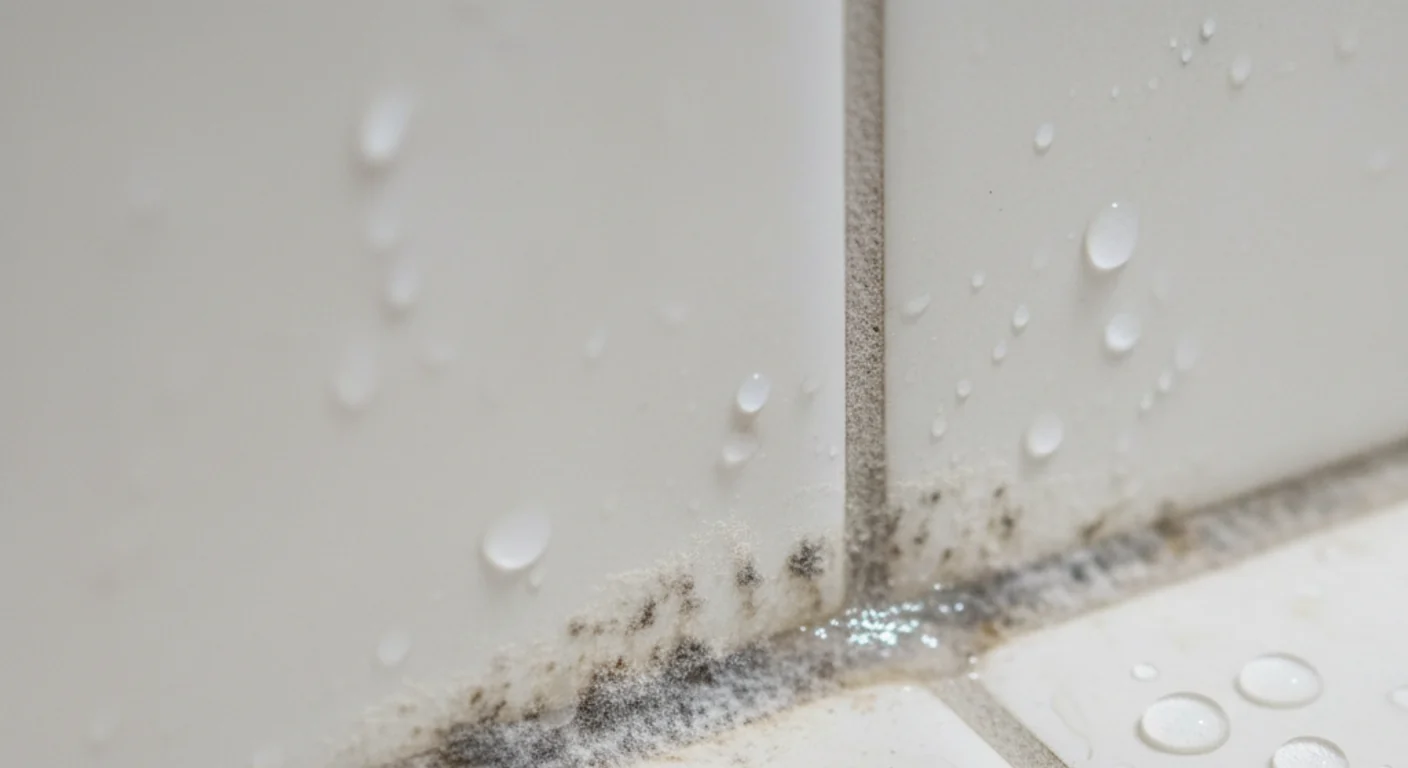
Even though they are the same family of organism, "mildew" and "mold" do tend to look different at different stages — and a few popular shortcuts (like judging by color or smell) are flat-out unreliable. Here is how the flat, surface-growing stage people call mildew compares to an established mold colony.
| Trait | "Mildew" (flat, surface stage) | "Mold" (established colony) |
|---|---|---|
| Texture | Thin, flat, and powdery — sits on top of the surface | Raised, fuzzy, or slimy as the colony matures |
| Color (not reliable) | Often gray-white, but can also be black | Any color — green, black, blue, gray, even white |
| Growth pattern | Stays on the surface (tile, grout, glass, fabric) | Penetrates porous materials (drywall, wood, carpet) |
| Common spots | Fabrics, grout, caulk, closets, damp bathrooms | Drywall, ceilings, framing, HVAC, post-leak or flood areas |
| Smell (not reliable) | Musty | Musty — the same odor, no dependable difference |
| Health risk | Same allergen/irritant effects — not "harmless" | Allergen/irritant; worse with more growth and for sensitive people |
| How to remove | Surface or fabric cleaning, then dry it out fully | Clean if under ~10 sq ft; discard porous items; pro for big/HVAC/flood |
Color and smell are not reliable ways to tell mildew from mold — the EPA notes molds "come in many colors" including white, and University of Missouri Extension describes mildew as "black, or sometimes white." Judge by texture, growth stage, and how much there is.
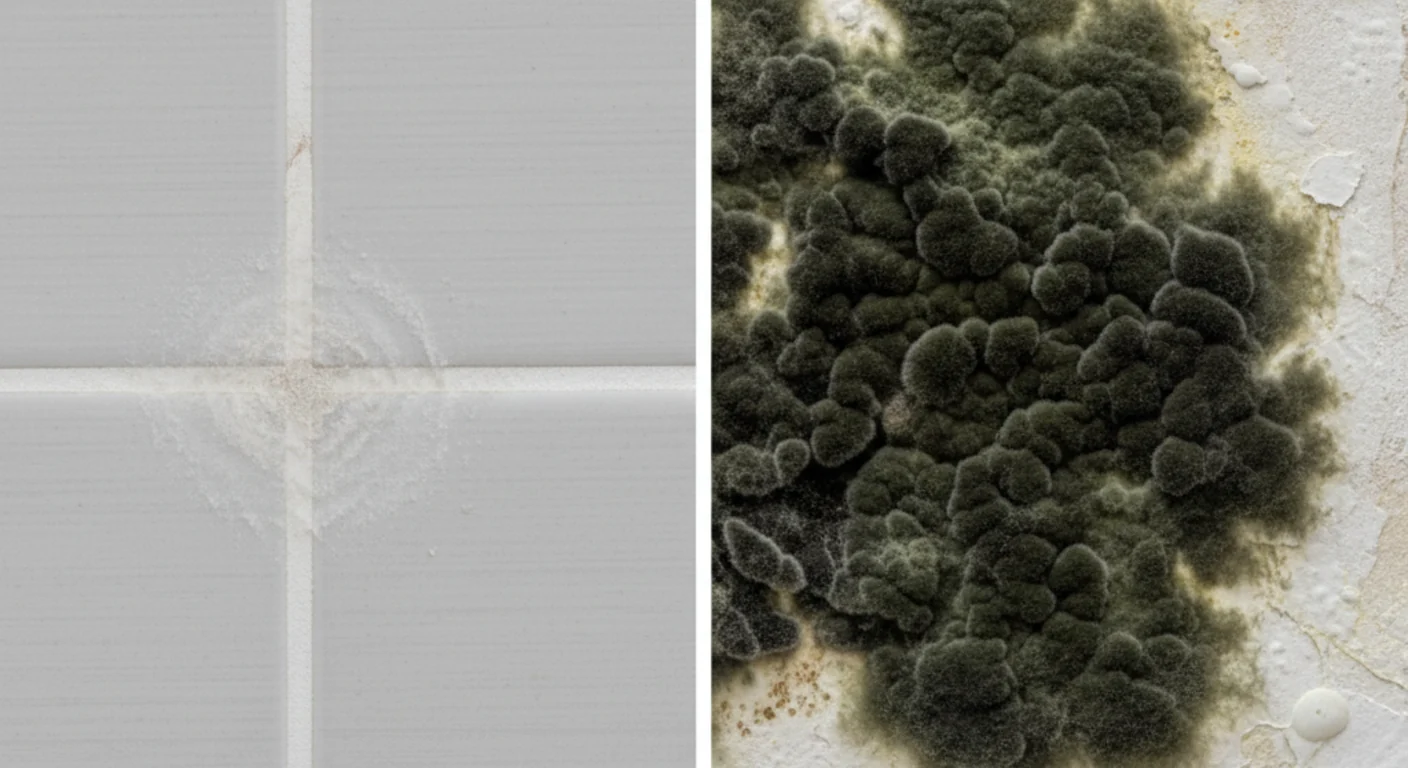
Likely surface mildew — lower concern
- Thin, flat film you can wipe off a hard surface
- Confined to a small spot on tile, grout, or glass
- The surface is non-porous and dries out fully
- You have already found and fixed the moisture source
- No one in the home has asthma, allergies, or a weakened immune system
Likely advanced mold — when to worry
- Raised, fuzzy, or slimy growth, or it is spreading
- On porous materials like drywall, carpet, or insulation
- Larger than about a 3 ft by 3 ft (10 sq ft) patch
- It keeps coming back after you clean it
- It followed a flood, leak, or storm, or you smell musty air with no visible source
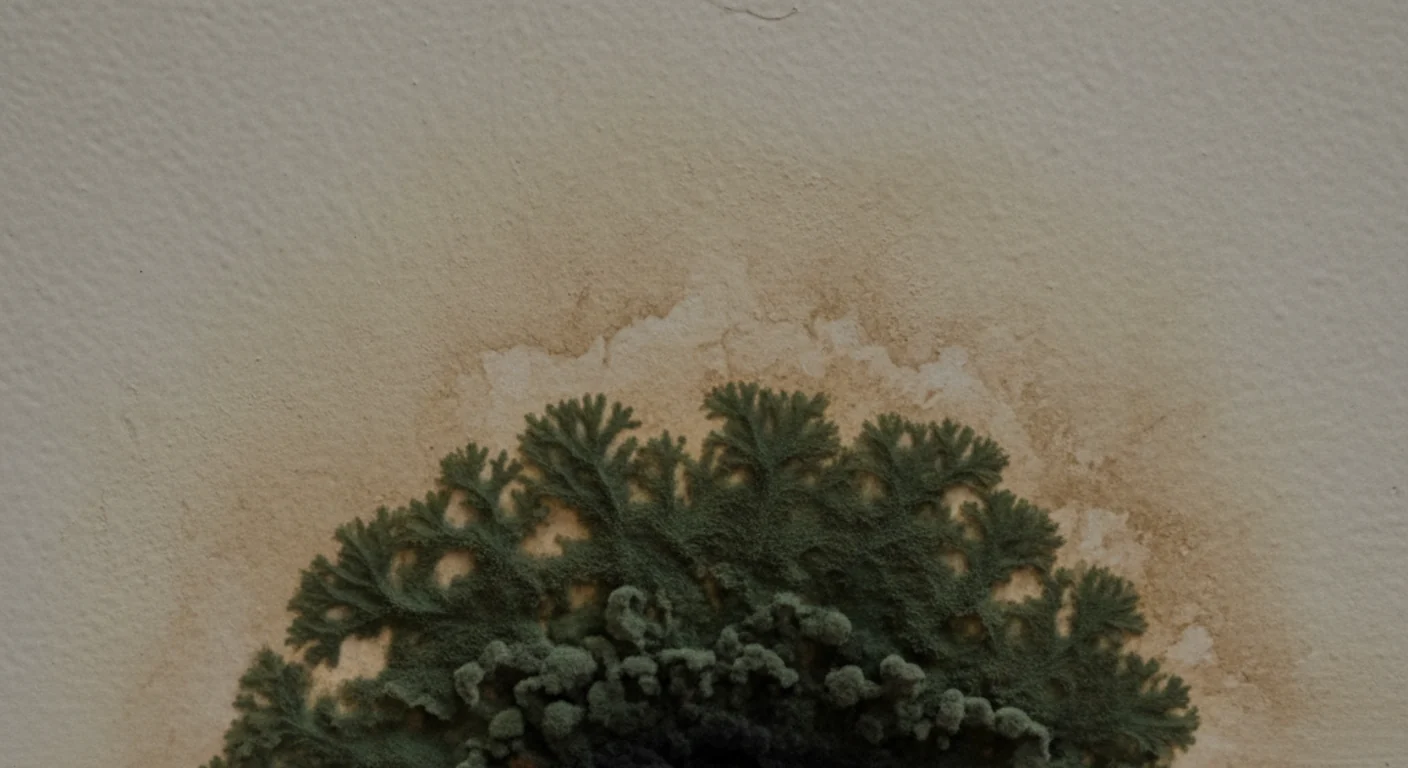
How to Tell Which One You Have
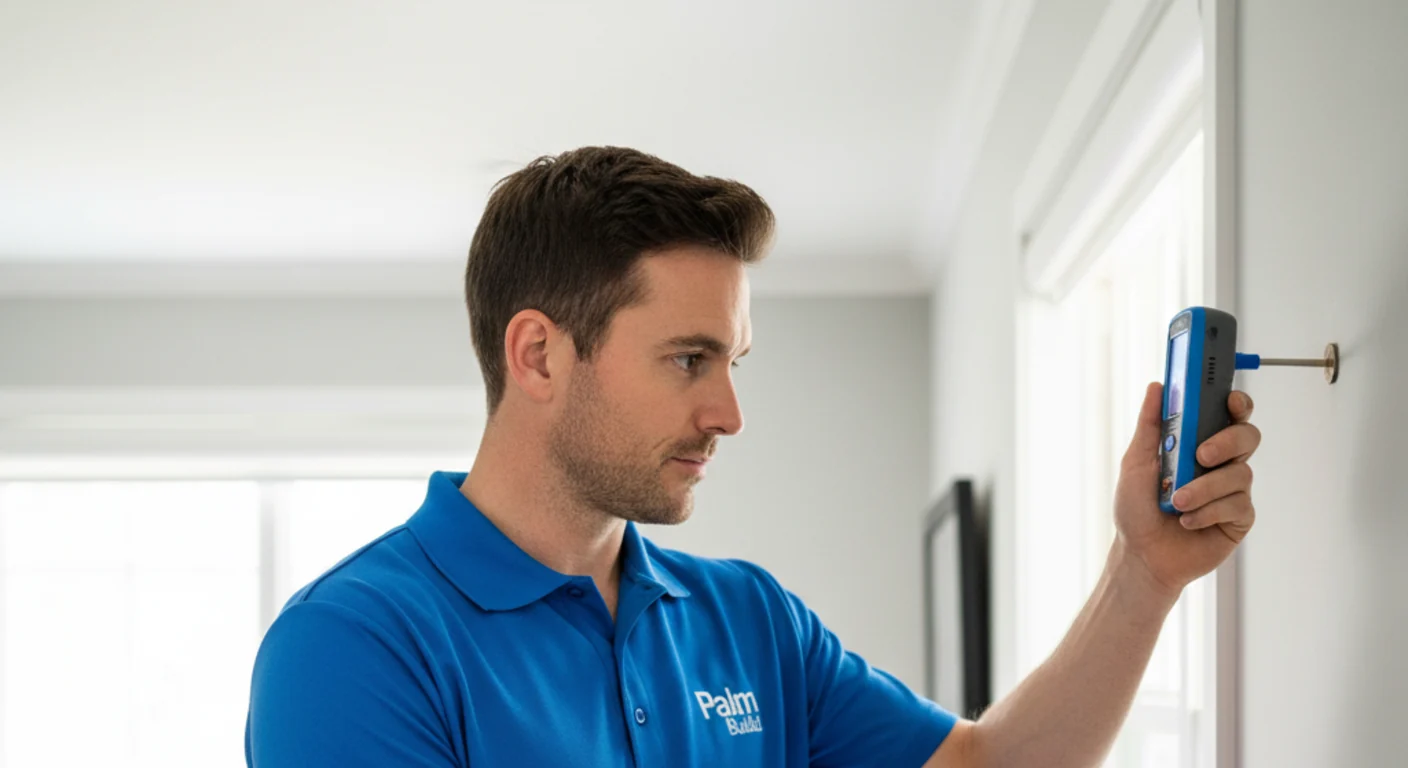
You do not need a lab to make a practical call. These are the same checks our technicians run on a first visit — they sort "wipe it and watch it" surface growth from "this needs containment" colonization.
- 1
Look at texture and stage, not color
Flat, thin, and powdery usually means early surface growth. Raised, fuzzy, slimy, or spreading means an established colony. Ignore color — it tells you nothing reliable about how serious it is.
- 2
Check whether the surface is porous
On hard, non-porous surfaces (tile, glass, metal), growth usually sits on top and cleans off. On porous materials (drywall, wood, carpet, insulation), the EPA warns mold can "fill in the empty spaces and crevices," making it "difficult or impossible to remove completely."
- 3
Try the bleach-drop test — but don't trust it blindly
Dab a little diluted household bleach on the spot. If it lightens within a couple of minutes, it is more likely surface mildew or staining; if it stays dark, it may be deeper mold or dirt. Treat it as a hint, not a diagnosis — and remember bleach only sanitizes hard surfaces, not porous ones.
- 4
Measure the affected area
Map the growth. The EPA's rule of thumb: under about 10 square feet (a 3 ft by 3 ft patch) is usually a DIY job; bigger than that, get a professional involved. Our breakdown of signs you have mold in your house covers the hidden spots people miss.
- 5
Find the moisture source
Track down what is keeping the area damp — a leak, condensation, high humidity, or a past water-damage event. If you cannot stop the moisture, the growth will return no matter how well you clean.

When to Worry: Signs It's Time to Call a Pro
- The affected area is larger than about 10 square feet (the EPA's DIY threshold)
- Growth is on porous materials — drywall, insulation, carpet, or ceiling tiles
- It keeps returning after you clean it
- Mold is in your HVAC system, ductwork, or air handler
- Anyone in the home has asthma, allergies, or a weakened immune system
- The growth followed a flood, sewage backup, or Category 2 or 3 water
- You smell persistent musty air but cannot find the source (a sign of hidden growth)
If you are weighing health risk, our guide to black mold symptoms and health risks breaks down who is most vulnerable, and mold remediation vs. mold removal explains what a professional job actually involves and why surface cleaning is not always enough. When growth is more than surface-deep, professional mold remediation is the safe call.
Why Humidity in Florida & the Carolinas Tips the Scale
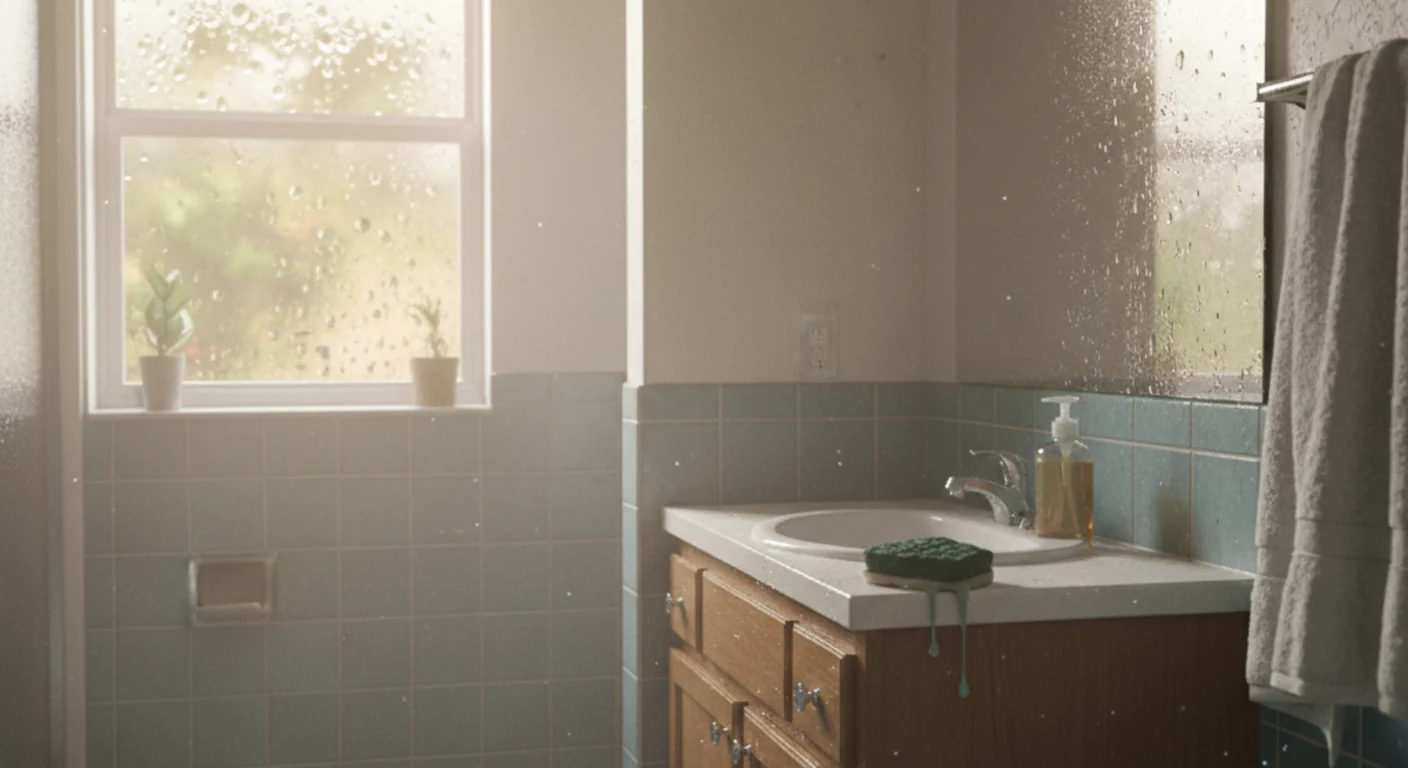
Mold and mildew are moisture problems first, and the Southeast hands them a head start. Across Florida, North Carolina, and South Carolina, outdoor humidity stays high for months, and warm, damp air condensing on cooler indoor surfaces is all the moisture a surface mold needs. The EPA recommends keeping indoor relative humidity below 60% (ideally 30-50%), and the CDC says no higher than 50%, all day long. Once a surface stays damp, growth can begin in as little as 24 to 48 hours — which is why our regional guides on humidity and mold risk and why Florida homes get mold keep coming back to one number: relative humidity.
- Keep indoor humidity in the EPA's 30-50% range (CDC: no higher than 50%) and watch it with a digital hygrometer
- Run bathroom and kitchen exhaust fans during and after moisture-producing activities
- Run a dehumidifier in humid rooms, basements, and crawl spaces during warm months
- Dry any spill, leak, or wet material within 24-48 hours
- Fix dripping faucets, sweating pipes, and window condensation promptly
- After a storm or flood, check for hidden moisture in walls, ceilings, and crawl spaces
Frequently Asked Questions
Is mildew dangerous, or is it harmless? +
Can mildew turn into mold? +
Is black mold the same as mildew? +
Should I use vinegar or bleach to clean it? +
Do I need a mold test to tell them apart? +
Will mildew or mold go away on its own? +
Does mildew smell different from mold? +
Is plant powdery or downy mildew the same as bathroom mildew? +
Professional Mold Remediation
IICRC-certified mold remediation and moisture control across FL, NC, and SC.
7 Signs You Have Mold in Your House
The warning signs that surface growth has become a bigger problem.
Black Mold Symptoms and Health Risks
Who is most at risk and what the science actually says.
Mold Remediation vs. Mold Removal
What a professional remediation job actually involves.
Humidity and Mold Risk in FL, NC & SC
Why indoor humidity is the number that decides everything.
Not sure if it's mildew or a mold problem?
Palm Build's IICRC-certified team serves Florida, North Carolina, and South Carolina with 24/7 emergency response and moisture diagnostics — and we work directly with your insurance company.
Found this helpful? Send it to someone who needs it.