Key takeaways
- The most reliable signs of mold are a persistent musty odor, visible spotting, water stains, bubbling paint, high indoor humidity, allergy-like symptoms that ease when you leave the house, and clues in hidden zones like under sinks or in crawl spaces.
- Mold colonies can start growing on damp materials within 24 to 48 hours, so drying speed after any leak, flood, or storm matters more than any cleaning product.
- EPA guidance caps DIY cleanup at about 10 square feet — anything larger, anything tied to HVAC, and anything from sewage or flood water is a professional remediation job.
- Typical professional mold remediation runs $1,125 to $3,439 with an average around $2,254, plus $300 to $1,000 for inspection and $250 to $500 for testing.
- Florida regulates mold services directly, while North Carolina and South Carolina do not — so in the Carolinas, vetting your contractor's IICRC training and S520 process matters even more.
If you notice a musty, earthy smell that keeps coming back, fuzzy spotting on walls or ceilings, water stains that never fully went away, or bubbling paint near a baseboard or window, you may have mold. Mold grows wherever moisture sits — colonies can start forming on damp materials in as little as 24 to 48 hours after a leak, flood, or humid stretch. The fastest way to tell is to use your eyes and nose, trace any recent water problem, and check hidden zones like under sinks, behind baseboards, around windows, and near HVAC. If you find it, the fix is always two parts: clean the growth and correct the moisture source. Anything larger than about 10 square feet, anything tied to HVAC, and anything from a water damage event involving flood or sewage water is professional mold remediation territory — not a weekend DIY.
Mold growth window
24–48 hrs
EPA and CDC threshold for drying wet materials
EPA DIY ceiling
~10 sq ft
Larger jobs need professional remediation
Typical remediation
$1,125–$3,439
Homeowner average ~$2,254 per Angi and HomeAdvisor
The 7 most reliable signs of mold in your house
Homeowners rarely get a single dramatic warning that mold has arrived. Most of the time, the clues are smaller — a smell that comes back after it rains, a stain that keeps getting slightly bigger, a window that sweats every morning in August. Here are the seven signs public health agencies and restoration professionals consistently flag as the most reliable indicators, along with what each one means and what to do about it.
- A persistent musty or earthy odor that worsens after rain or long HVAC runtime
- Visible spotting, fuzzy patches, or discoloration on walls, ceilings, grout, or vents
- Water stains on ceilings, walls, or floors — even old ones
- Peeling, bubbling, or cracking paint and wallpaper near baseboards or windows
- Condensation, sweating windows, and indoor humidity consistently above 60 percent
- Allergy-like or respiratory symptoms that get better when you leave the house
- Dampness, staining, or odor in hidden zones: under sinks, behind cabinets, crawl spaces, attics, and around HVAC
1. A musty, earthy odor that keeps coming back
The classic mold smell is dank, earthy, and faintly sweet — something people often describe as old basement or wet cardboard. Odor is one of the strongest early indicators because active colonies release microbial volatile organic compounds as they grow, and your nose can pick them up long before anything becomes visible. Pay close attention if the smell gets noticeably worse after it rains, after a long HVAC cycle, or when you first walk into a closed room in the morning. If the odor is strongest near a vent or return, EPA guidance specifically warns that any mold inside an HVAC system can be spread throughout the entire building every time the blower turns on.
2. Visible spotting or fuzzy patches in any color
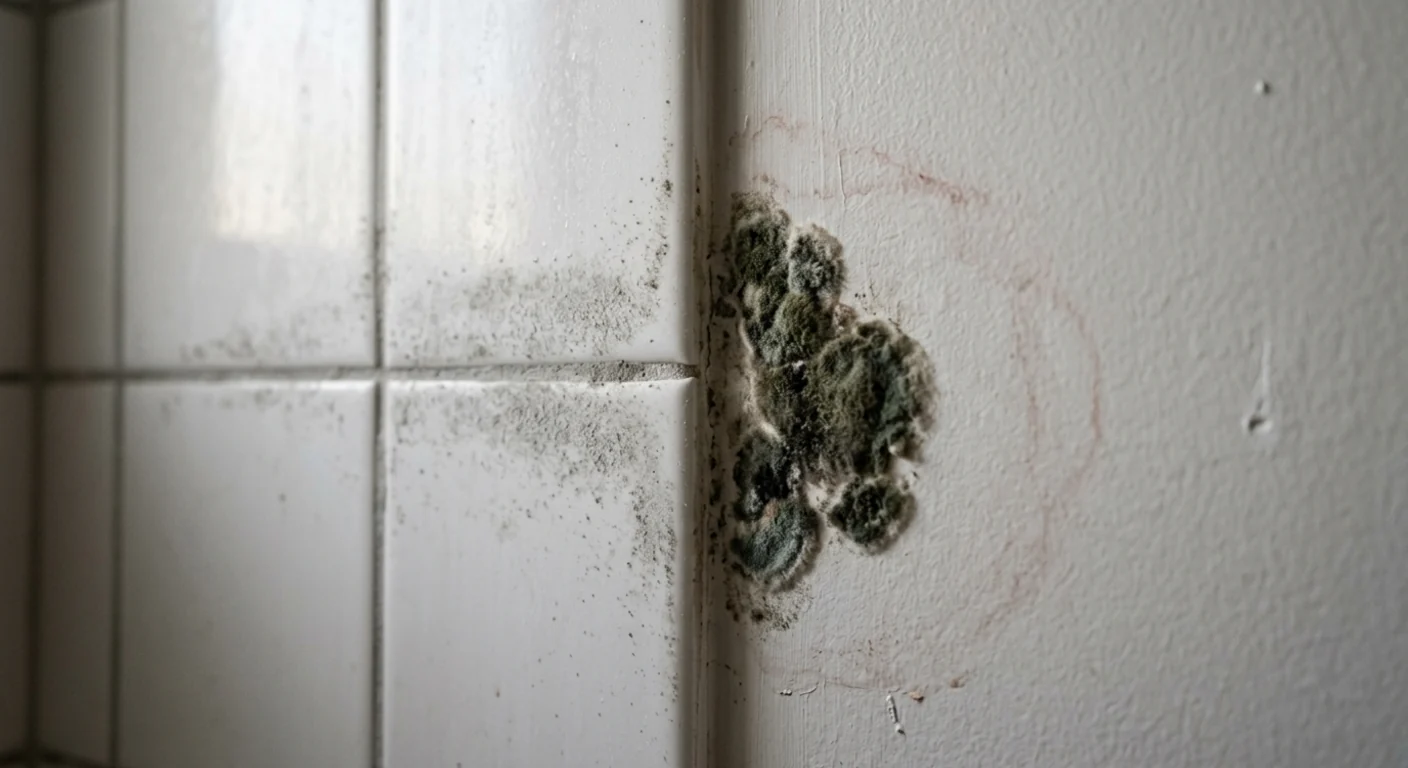
Mold can appear black, green, white, gray, brown, pink, or orange. Despite what you have probably read, color is not a reliable measure of danger — what matters is that something is growing on a damp surface in your home. Treat any visible discoloration or fuzzy patch on drywall, grout, caulk, wood, or ceiling tiles as a moisture problem until you can prove otherwise. Do not wipe it off with a dry rag, do not paint over it, and do not aim a fan at it: all three of those reactions release spores into the air and make the problem worse, not better.
3. Water stains on ceilings, walls, or floors
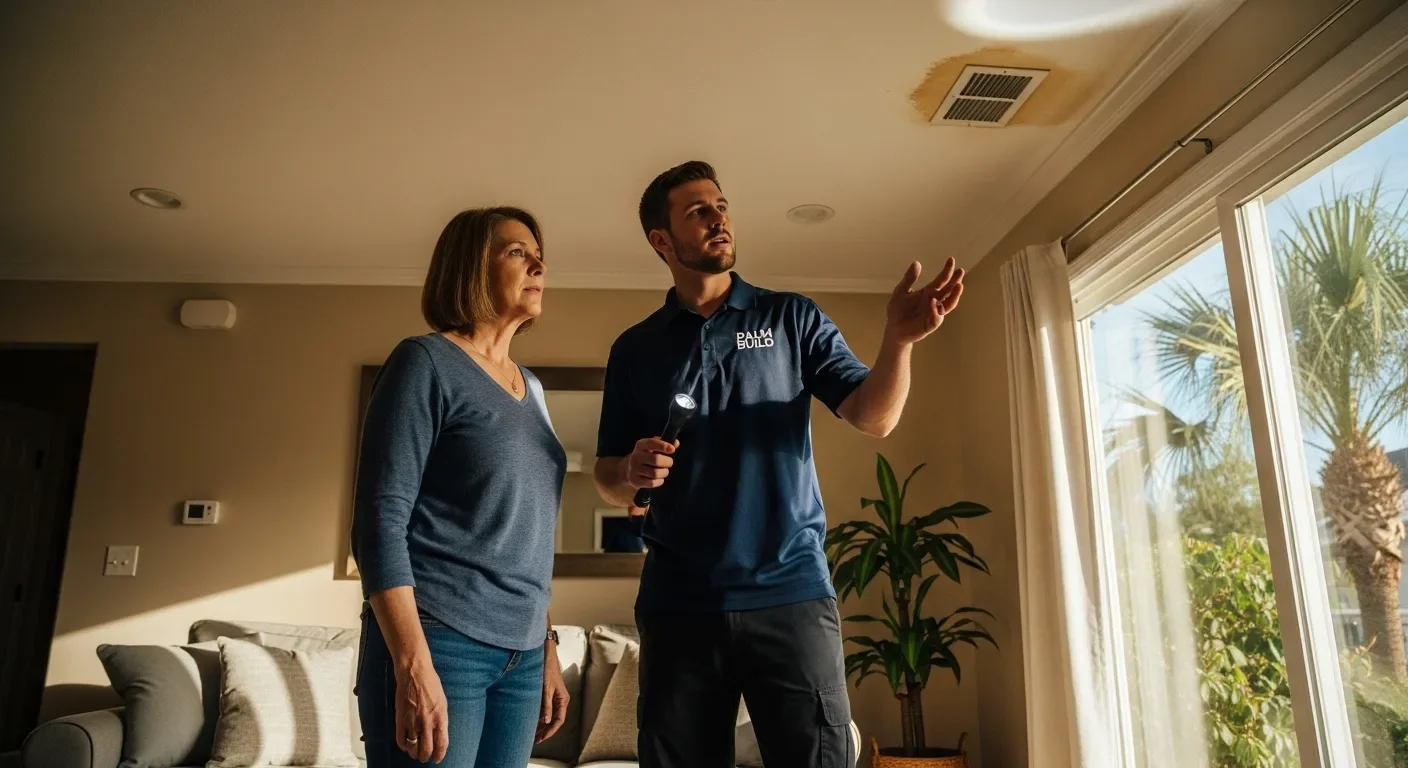
A brown ring on a popcorn ceiling, a dark patch on a baseboard, or a warped section of hardwood is a moisture signal — and anywhere water has touched for more than a day or two, mold can follow. Old stains deserve the same attention as fresh ones. If the original leak was not dried quickly, you may have hidden growth behind the drywall or under the flooring even though the surface looks dry today. Any recent roof, window, appliance, or plumbing failure is a prompt to look for mold, not just a prompt to repaint.
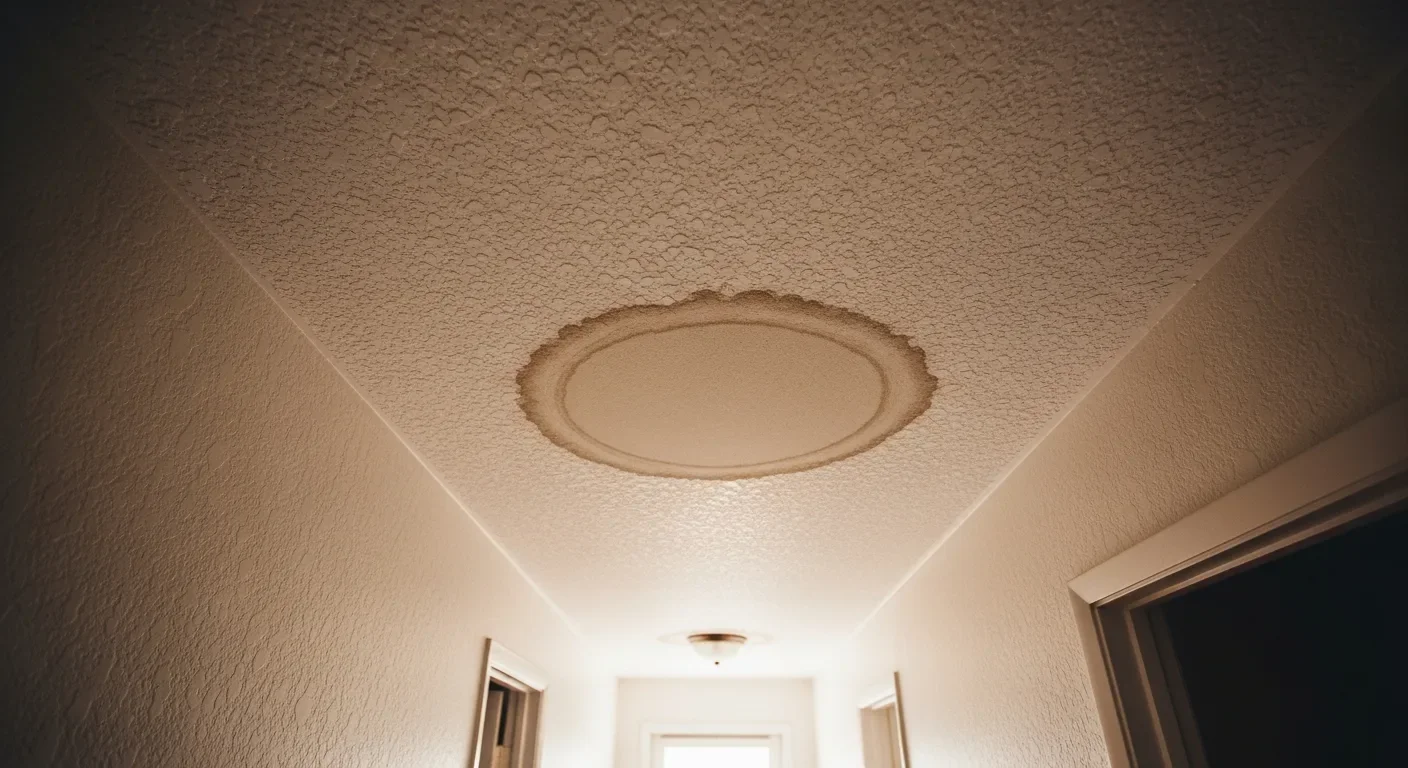
4. Peeling, bubbling, or cracking paint and wallpaper
Paint and wallpaper behave predictably when there is moisture behind them. You will see small blisters, flaking edges, hairline cracks running along seams, or wallpaper separating cleanly from the drywall. These clues often show up on exterior walls, around window frames, along plumbing walls, and above baseboards long before any visible staining appears. If the finish on a wall is deforming, something behind it is wetter than it should be, and mold is a realistic possibility whether or not you can see it yet.
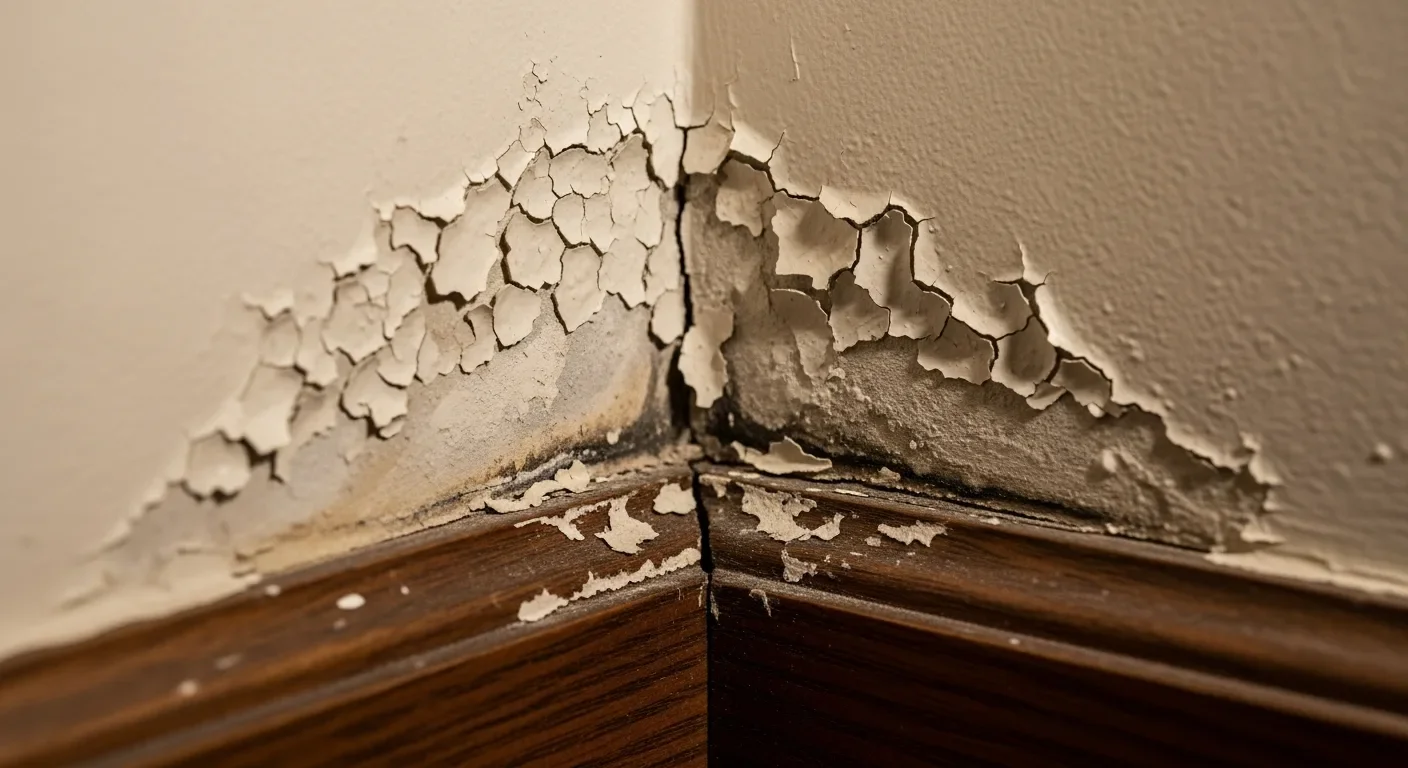
5. Condensation, sweating windows, and high indoor humidity
Humidity is the reason indoor mold exists in the first place. EPA and CDC guidance both recommend keeping indoor relative humidity below 60 percent, ideally somewhere between 30 and 50 percent. If your windows sweat in the morning, if pipes in your closet drip with condensation, or if a hygrometer keeps reading above 60, mold has everything it needs to start growing even without a visible leak. This is especially common in Florida living rooms, North Carolina basements, and any room where a dehumidifier is missing or undersized for the space.
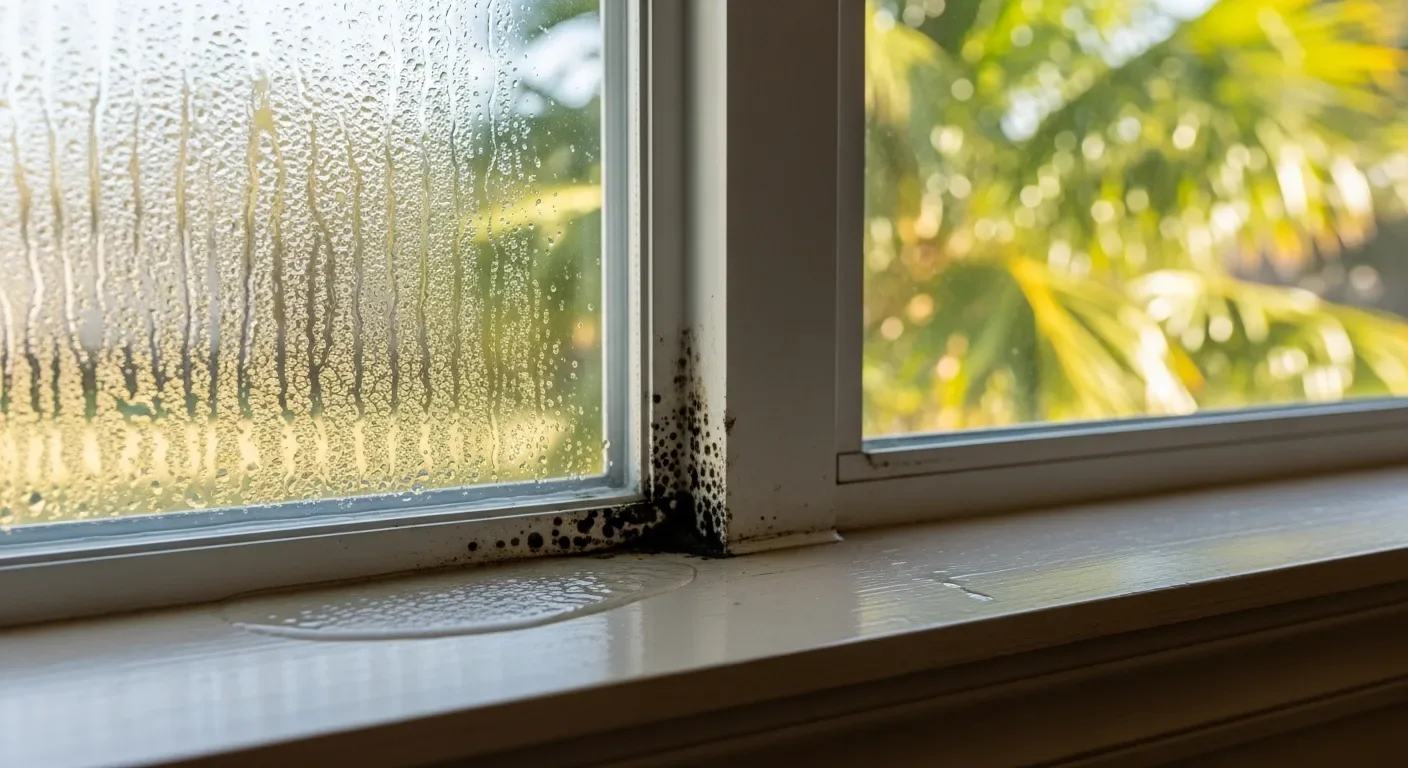
6. Allergy-like symptoms that get worse at home
Some people are much more sensitive to mold than others. CDC guidance notes that exposure can trigger stuffy nose, sore throat, coughing, wheezing, watery or burning eyes, and skin irritation — and those reactions are typically stronger in people with asthma, allergies, chronic lung disease, or compromised immune systems. A useful pattern to watch for: do your symptoms ease after you leave the house for a few hours and return when you come back? If so, something in the indoor environment is the likely driver, and mold is one of the leading candidates worth ruling out.
7. Hidden-zone clues: under sinks, behind baseboards, crawl spaces, and HVAC
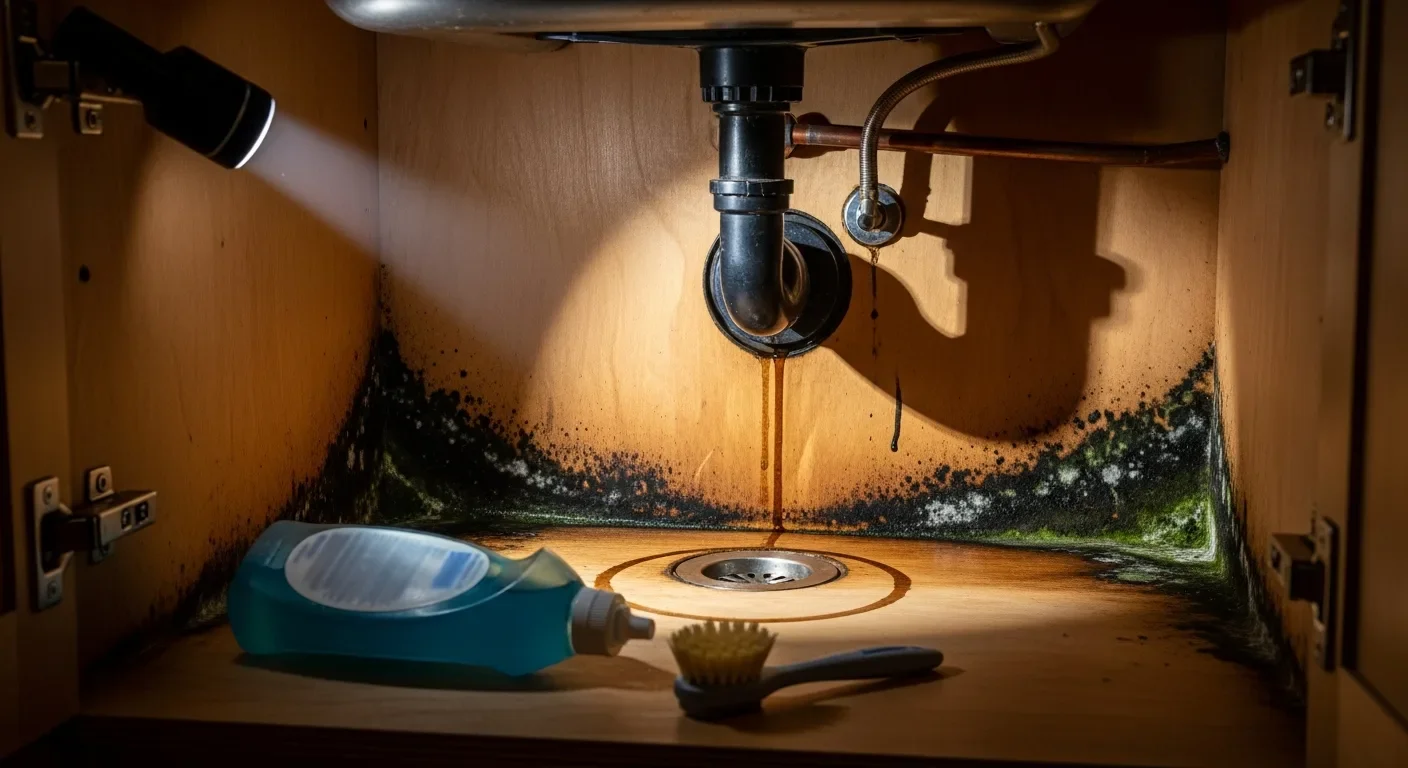
When the first six signs are subtle, the fastest way to get to an answer is to check the hiding spots. Look under every sink, behind the washing machine, around the base of the dishwasher, under windows, above bathroom ceilings, inside closets that share a wall with a shower, and behind anything that sits flush against an exterior wall. Pull the HVAC air handler access panel and look for dust caked with condensation inside, which is a common precursor to system-wide contamination. If your home has a crawl space or basement, that is almost always the first place to inspect — most whole-home mold problems start there and rise into the living area on air currents, which is why crawl space moisture cleanup is often the root fix for a recurring upstairs mold issue.
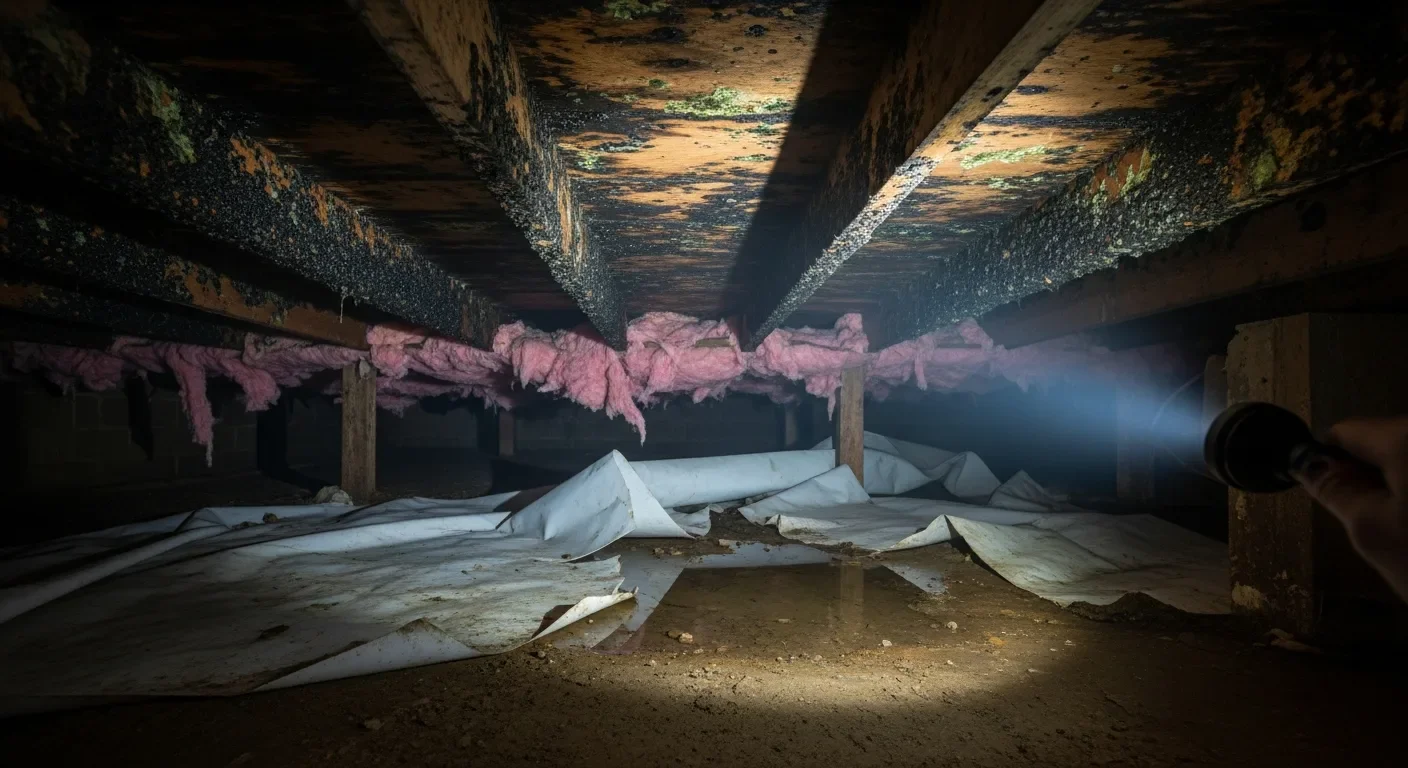
What to do next: a 5-step plan if you think you have mold
- 1
Protect the people inside first
Before you start opening cabinets and pulling baseboards, think about who is in the house. Keep children, elderly family members, and anyone with asthma or allergies out of the affected room until you know what you are dealing with. Close interior doors to stop cross-contamination, and turn off the HVAC if the suspected area is near a return or you can smell the odor at multiple vents in different rooms.
- 2
Find and stop the moisture source
EPA guidance is unambiguous on this: cleaning mold without correcting the water problem is wasted money. Walk the space looking for plumbing leaks, roof stains, window condensation, HVAC drip pans, and gutter overflow. A recent storm leak or appliance failure is often the trigger, and depending on the cause you may need water damage restoration or storm and wind damage help to get the building envelope watertight again before any mold work begins.
- 3
Dry fast and get humidity under 60 percent
Once the source is under control, drying is the next priority. Set up fans, open windows only if outdoor humidity is lower than indoor, and run a dehumidifier sized for the space. A $25 hygrometer is the cheapest accountability tool you can buy — it will tell you within an hour whether your current setup is actually working. Target 30 to 50 percent relative humidity, and do not let it climb back above 60 even overnight.
- 4
Use a clear DIY vs professional decision
EPA guidance caps DIY cleanup at about 10 square feet of clean-water mold. Beyond that, or if the mold is tied to sewage, floodwater, or an HVAC system, you are in professional mold remediation territory. Recurring growth that keeps coming back after you clean it is another clear sign the moisture source has not been fully resolved and a pro should be involved from the next step forward.
- 5
Document damage if insurance may apply
Before you touch the affected area, take dated photos and a short video walking through the room. Note when you first saw the problem and any recent water event that might have caused it. Insurance coverage for mold depends on cause, policy, and often a sublimit — but documentation is what gives you options later. For more on how damage is documented, estimated, and billed to carriers, see our insurance claim process overview.
DIY cleanup vs. professional mold remediation
Not every mold problem needs a full remediation crew, but some absolutely do. The table below is a practical decision guide built from EPA guidance, ANSI/IICRC S520 standards, and the realities of restoration work in southern humid climates. When more than one row lands in the call-a-pro column, treat that as your answer.
| Situation | DIY is usually OK | Call a professional remediator |
|---|---|---|
| Area of visible growth | Under ~10 sq ft on a hard, non-porous surface | Over ~10 sq ft or spread across multiple rooms |
| Water source | Clean-water leak caught early and fully dried | Sewage, floodwater, or unknown water category |
| HVAC involvement | None — growth confined to a single room | Growth near a return, a supply vent, or inside the air handler |
| Materials affected | Tile, metal, sealed concrete, glass | Drywall, insulation, carpet, ceiling tiles, wood framing |
| History | First-time, isolated incident | Recurring growth in the same spot |
| Occupants | Healthy adults only | Children, elderly, asthma, or immune compromise |
Built from EPA mold guidance and ANSI/IICRC S520 standards — when multiple rows land in the right column, treat that as a professional job.
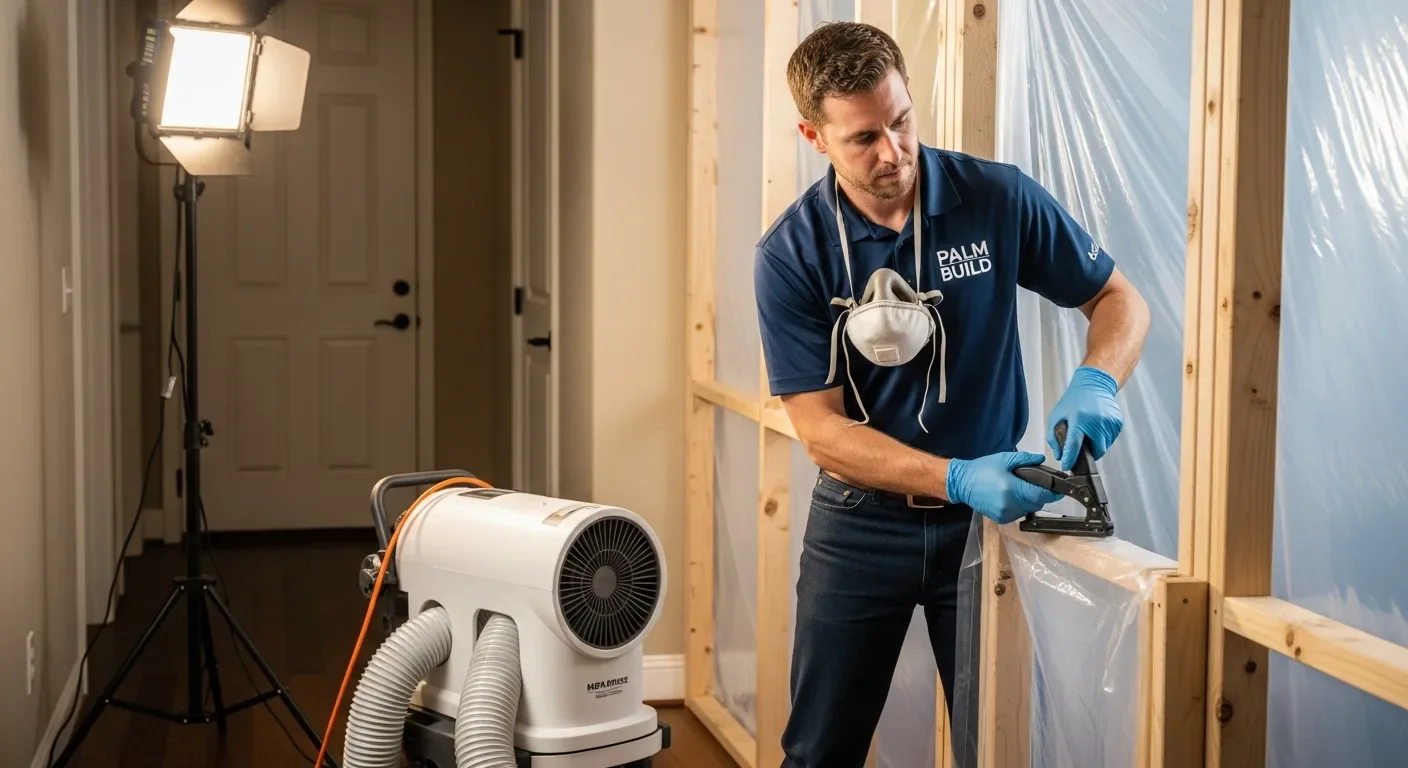
What professional mold remediation should actually look like
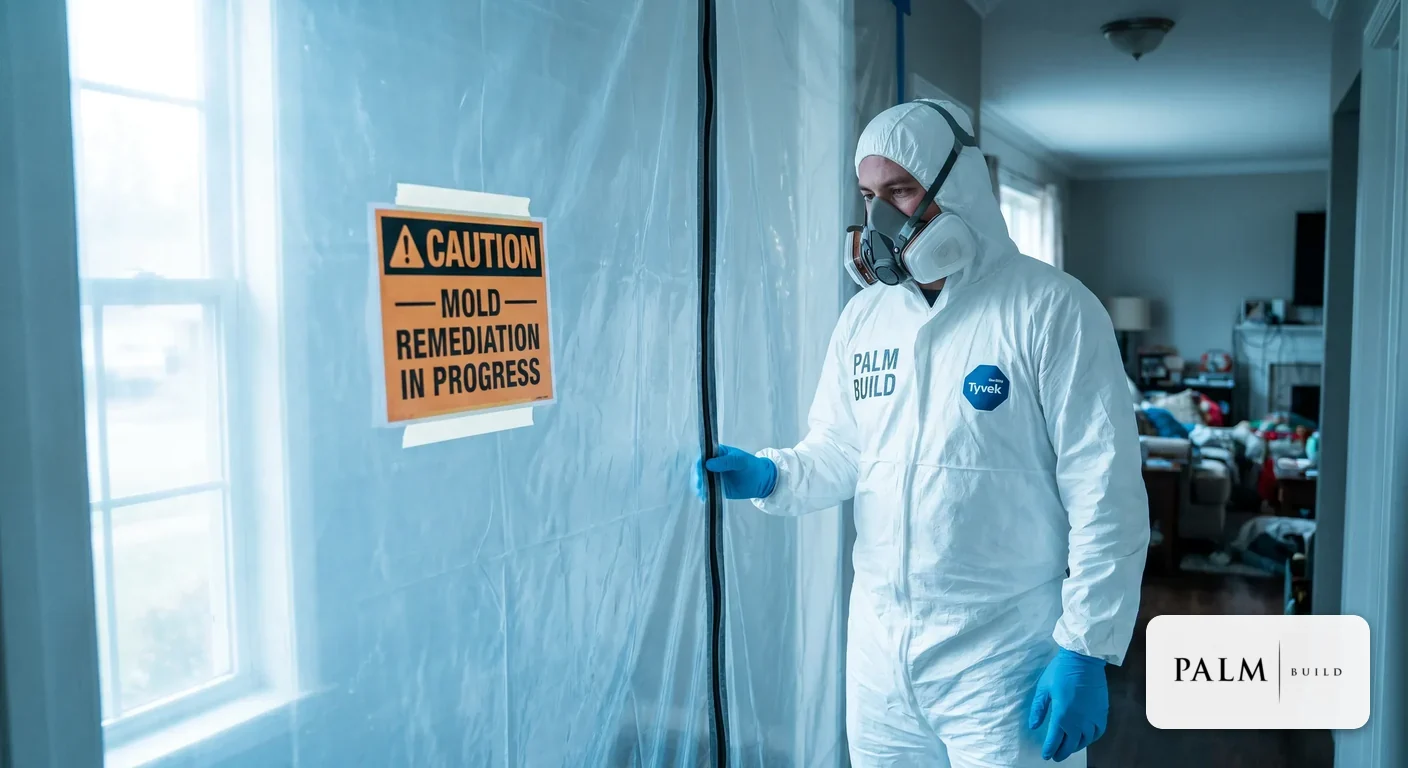
Qualified mold remediation follows the ANSI/IICRC S520 standard, which is the consensus document the restoration industry uses for mold work. A good crew will inspect the space and identify the moisture source before touching the mold, set up physical containment with plastic sheeting, run negative-pressure HEPA air scrubbers during the work, bag and remove porous materials that cannot be cleaned (drywall, insulation, carpet pad, ceiling tiles), HEPA-vacuum and damp-wipe hard surfaces, and verify the area is dry and clean before they rebuild. Before you sign anything, ask your contractor which standard they follow, how they will contain the work area, and how they will confirm the job is actually done. For the full walkthrough, see what mold remediation actually looks like, step by step.
Typical costs to know before you call
This post is a diagnosis guide, not a full cost breakdown — but a quick reference helps set expectations before you pick up the phone. The ranges below come from national homeowner pricing aggregators like Angi, HomeAdvisor, and BobVila, so they reflect averages across the US. Actual pricing in Florida, North Carolina, and South Carolina can land higher when hurricane season is active and local remediation crews are booked solid.
| Service | Typical US cost | Notes |
|---|---|---|
| Professional mold remediation | $1,125 – $3,439 (avg ~$2,254) | Varies by area, material removal, and access |
| Mold inspection | $300 – $1,000 (avg ~$657) | Scales with home size and scope |
| Mold testing (air + surface samples) | $250 – $500 | Often bundled with inspection |
| Post-remediation verification | $200 – $600 | Third-party clearance after the job |
Ranges sourced from Angi, HomeAdvisor, and BobVila homeowner pricing data — regional variation applies.
For a full breakdown including 2026 regional pricing, factors that drive jobs above $5,000, and how insurance typically handles mold claims, see our complete 2026 mold remediation cost guide.
Florida, North Carolina, and South Carolina: what homeowners should know
Florida: licensed mold services and endorsement coverage
Florida is one of the few states that directly regulates mold work. Under Chapter 468, Part XVI of Florida Statutes, companies performing mold assessment or mold remediation have to be licensed through the Florida Department of Business and Professional Regulation. The Florida Department of Health also publishes homeowner guidance that explicitly tells residents to investigate any persistent earthy or musty odor, including inside HVAC components. On the insurance side, Florida's Chief Financial Officer consumer guide notes that many carriers offer optional mold endorsements that can raise mold coverage limits to $25,000 or $50,000 depending on the insurer — a meaningful upgrade from the default sublimit most policies carry. With Atlantic hurricane season running June through November, drying speed after any storm and wind damage event is the single biggest factor in whether Florida homes end up with a mold claim at all.
North Carolina: no broad mold licensure — vet your contractor
North Carolina does not have a broad state certification or licensing program specifically for mold remediation providers, according to guidance from NC State Extension. The North Carolina Department of Health and Human Services emphasizes that there are no federal regulations governing professional indoor air quality services generally, and its consumer guidance focuses on controlling indoor humidity as the primary prevention tool. The practical implication for NC homeowners is simple: do not assume a state license exists, because it does not. Vet contractors by their training (IICRC certification), the standards they follow (ANSI/IICRC S520), their insurance, and their containment and verification process.
South Carolina: no state regulation, watch for pending legislation
South Carolina currently does not regulate mold in homes. State agency guidance is explicit that because there are no state or federal laws, regulations, or standards specific to mold or indoor air quality, the state does not test, monitor, or inspect for it in residential properties. Recent legislative sessions have seen bills introduced to create certification and oversight for mold assessment and remediation providers, but as of early 2026 those proposals have not become law. Until they do, SC homeowners should rely on the same vetting checklist as North Carolina: IICRC training, S520 standards, insurance, and clear containment and verification processes.
Prevent mold from coming back
- Keep indoor relative humidity between 30 and 50 percent, and never above 60
- Fix leaks — plumbing, roof, windows, and appliances — within 24 to 48 hours
- Run bathroom and kitchen exhaust fans during and for 20 minutes after use
- Clean HVAC condensate drain lines and replace filters on a regular schedule
- Inspect under sinks, around windows, and in the crawl space or basement every quarter
- Dry any soaked materials within 48 hours — that is the mold growth window
- Use a dehumidifier in humid rooms and basements, and actually monitor it with a hygrometer
Frequently asked questions
How do I know if I have mold in my house if I can't see it? +
What does mold smell like? +
Can mold make you sick? What symptoms should I watch for? +
Should I test for mold or just remove it? +
When should I call a professional for mold removal? +
How much does mold remediation cost? +
Does homeowners insurance cover mold? +
How fast can mold grow after a water leak? +
Professional mold remediation services
24/7 IICRC-certified mold remediation across Florida, North Carolina, and South Carolina. Containment, HEPA scrubbing, moisture control, and full rebuild.
2026 mold remediation cost guide
Full breakdown of mold remediation pricing by job type, contamination category, and region, with 2026 regional ranges for FL, NC, and SC.
Black mold symptoms and health risks
What black mold exposure actually does, who is most at risk, and when symptoms warrant a doctor visit.
Mold in the attic: causes, dangers, remediation
Why attic mold happens, the five most common causes, typical costs, and what proper remediation looks like.
Found this helpful? Send it to someone who needs it.