Quick Answer
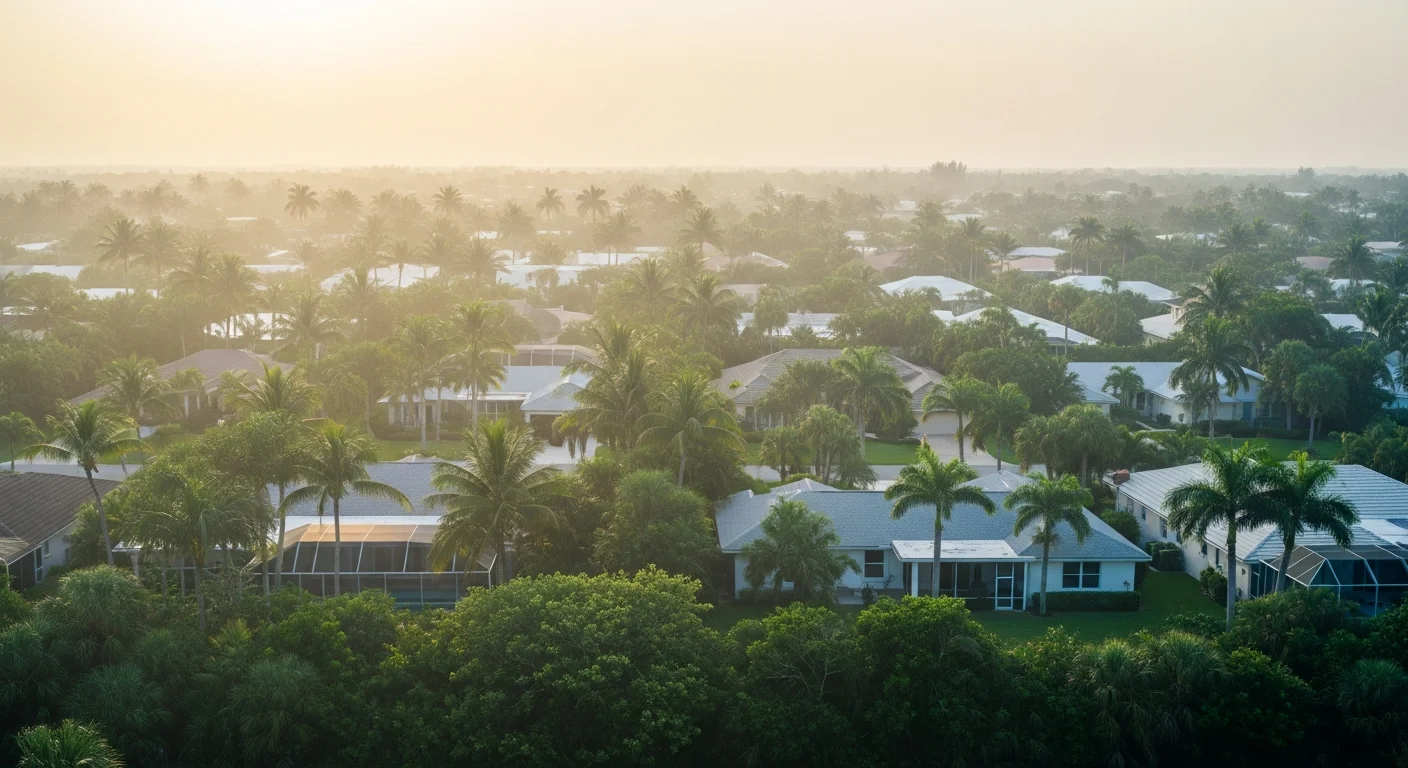
Florida, North Carolina, and South Carolina all rank among America's top 10 most mold-prone states — Florida scored 38.76 out of 40 on the national Mold Index, the highest in the country. When indoor relative humidity climbs above 60%, mold can begin colonizing surfaces within 24 to 48 hours, and Southeast morning humidity routinely reaches 85–96%.
Key Takeaways
- Florida, NC, and SC rank in the top 10 most mold-prone states — Florida scored 38.76 out of 40 on the national Mold Index, the highest in America.
- Mold can begin colonizing surfaces in as little as 24 to 48 hours when indoor relative humidity exceeds 60%.
- Morning humidity in virtually every major Southeast city routinely hits 85–96% — well above the mold-growth threshold.
- Crawl spaces (NC/SC) and HVAC systems (FL) are the most common hidden mold locations in each state.
- A whole-house dehumidifier costs $1,300–$2,800 installed — far less than the $2,300–$3,750 average mold remediation job.
Florida, North Carolina, and South Carolina are three of the top 10 most mold-prone states in America — and indoor humidity is the reason most homeowners never see it coming. When outdoor humidity pushes indoor relative humidity above 60%, mold spores already present in your home can begin colonizing surfaces within 24 to 48 hours. Florida averages 74–75% relative humidity year-round. North Carolina tops 70% on average. South Carolina's Charleston sees morning humidity above 85% in summer. If your home doesn't actively manage that moisture — through air conditioning, dehumidification, or proper encapsulation — you are creating growing conditions for mold every single day. This guide breaks down the humidity data by state and city, shows exactly when and where mold takes hold, and gives you a clear action plan.
Florida Mold Index Score
38.76/40
#1 most mold-prone state in America — FDP 2024 study
FL Insurance Claims (2022)
264,000
Mold-related claims — over 20% of all FL home insurance claims
NC Mold Index Rank
#9 Nationally
Score 35.20/40; post-Helene mold risk now elevated statewide
SC Mold Index Rank
#8 Nationally
Charleston ranks #17 among the moldiest cities in the U.S.
The Mold Risk Numbers Are Worse Than You Think
Nearly half of all homes in the United States — an estimated 47% — already have some form of mold or dampness. But that national average dramatically understates the problem for homeowners in the Southeast. A 2024 study by FDP Mold Remediation scored every state on a composite Mold Index using average temperature, humidity, rainfall, and housing age. The results for Florida, North Carolina, and South Carolina were stark — all three states scored in the top 10 nationally, and Florida topped the entire country.
Florida: The #1 Mold State
The numbers are visible in the claims data: in 2022 alone, an estimated 264,000 mold-related claims were filed in Florida, accounting for over 20% of all home insurance claims in the state. Average annual humidity in Florida runs at approximately 74.5%, second nationally only to Alaska — but unlike Alaska, Florida pairs that humidity with year-round temperatures that keep mold actively growing. Outdoor relative humidity regularly hits 75–90% during the summer and rainy season, which runs June through November. The coastal cities where Palm Build operates face the highest exposure: Miami, Fort Lauderdale, Tampa, and Sarasota are consistently flagged as the most mold-prone cities in the state.
North Carolina: Top 10, and Getting Worse
North Carolina scored 35.20 on the FDP Mold Index, placing it 9th in the nation. The state averages over 70% relative humidity, and during summer months, morning humidity in cities like Raleigh (89%), Wilmington (87%), and Charlotte (87%) climbs to levels that consistently exceed the mold-growth threshold. Asheville's July morning humidity reaches a striking 96% — the highest of any major Southeast city. The problem intensified after Hurricane Helene made landfall in September 2024, causing catastrophic flooding that damaged more than 73,000 homes across western NC. Researchers documenting the aftermath found mold colonizing flooded buildings rapidly — and residents in homes that hadn't even flooded reported new mold outbreaks driven by sustained post-storm humidity.
South Carolina: Coastal Humidity + Inland Heat
South Carolina scored 35.50 on the FDP Mold Index, placing it 8th in the nation. The state has a humid subtropical climate across all regions, though coastal areas are particularly aggressive. Charleston, with its coastal location and historic architecture, ranked #17 among the moldiest cities in the United States — and Myrtle Beach ranked #21. An environmental consultant with nearly a decade of experience in the Charleston area put it plainly: keeping indoor humidity below 50% in the Lowcountry is 'very difficult without dehumidification.' Columbia's July mornings average 90% relative humidity.
What Outdoor Humidity Does to Your Home
The Science: Why 60% RH Is the Tipping Point
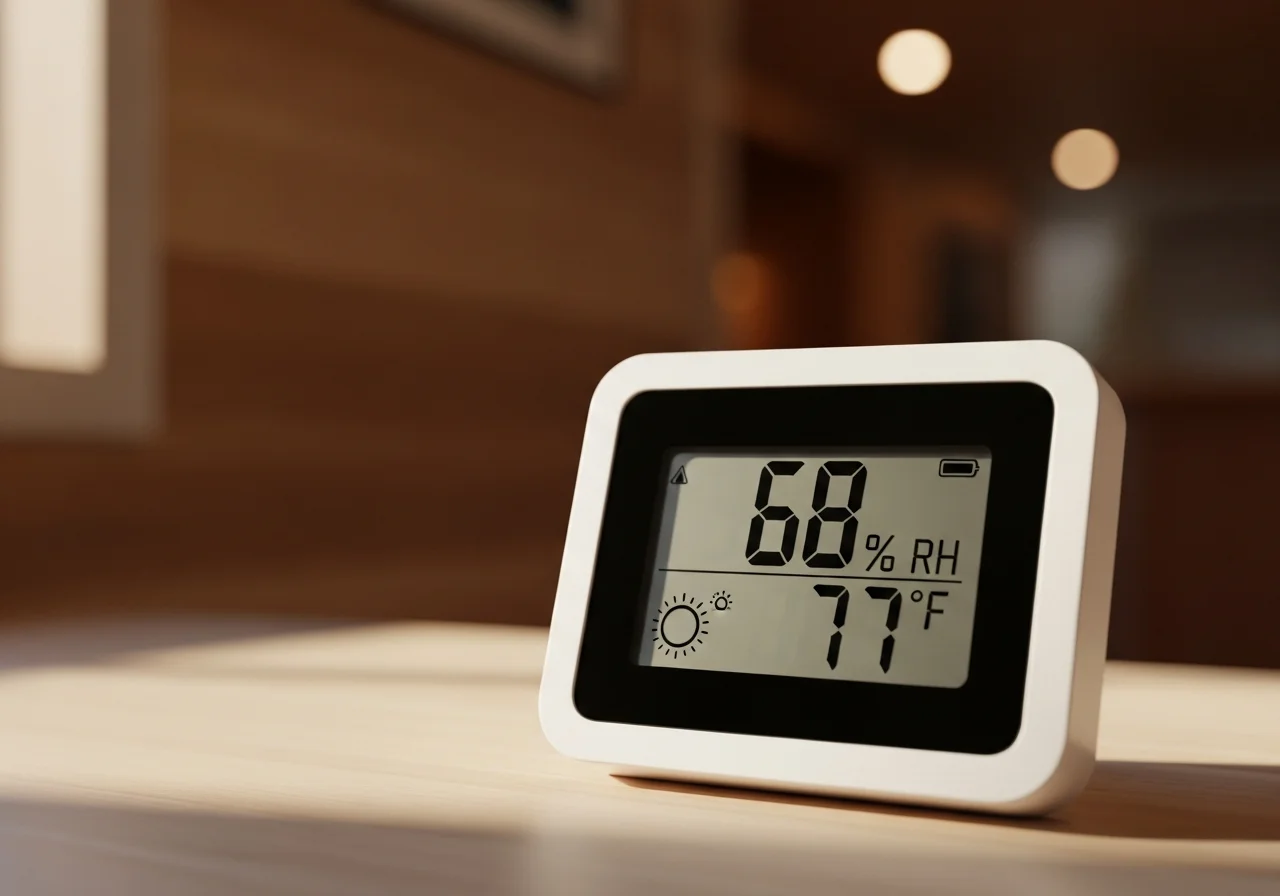
Relative humidity (RH) measures how much moisture the air holds compared to its maximum capacity at a given temperature. The EPA, CDC, and most mold scientists agree on a clear threshold: indoor RH consistently above 60% provides enough moisture for mold spores to germinate and spread — even without any visible water leak. Some research places the threshold as low as 58% RH for susceptible materials like drywall and wood framing. Mold feeds on organic materials — wood, drywall, insulation, dust, carpet — all of which absorb airborne moisture when humidity stays elevated.
Indoor vs. Outdoor Humidity: Why Your AC Isn't Enough
Many homeowners assume that running central air conditioning keeps indoor humidity controlled. It does — but only partially, and only when the system is properly sized, maintained, and actively cooling. When outdoor RH is 80–90% (common in all three states during summer), a poorly maintained AC system, an undersized unit, or a home with gaps in the building envelope will allow humid outdoor air to invade, pushing indoor levels above 60–70%. Crawl spaces with open vents are particularly vulnerable: warm, moisture-laden outdoor air enters the cooler crawl space, hits surfaces 10–15°F cooler, and condenses — raising moisture content in structural framing and creating conditions for mold and wood decay. The average humidity in an uncontrolled Florida home can reach approximately 75%. The goal for FL homes is indoor RH between 45–55% — a meaningful gap from what the outdoors delivers.
How Fast Does Mold Actually Grow?
24–48 hours
Mold spores begin germinating
Under ideal conditions — indoor RH above 60%, temperature between 70–90°F, organic material present — mold can begin forming colonies within this window. The ANSI/IICRC S500 standard, EPA, and FEMA all cite this as the critical drying benchmark.
3–7 days
Visible colonies appear
In a bathroom with persistent humidity and any minor water source, visible mold spots begin appearing on walls, grout, and ceiling surfaces. A damp basement with poor ventilation reaches visible growth within the first week.
1–2 weeks
Spread through building materials
Mold extends hyphae (root-like structures) into porous materials — drywall, insulation, wood framing. Surface cleaning alone no longer resolves the problem; professional remediation is typically required.
Weeks to months
Structural involvement and health impact
Without intervention, mold spreads throughout the HVAC system, into wall cavities, and across entire rooms. Spore counts in the air rise significantly, triggering respiratory symptoms and allergic reactions. Remediation scope — and cost — expands rapidly.
Humidity by City: A Practical Map for FL, NC, and SC Homeowners
The table below shows real annual and peak summer (July) relative humidity data for key cities across Palm Build's service areas. The 60% mold-growth threshold is included for reference — note how many cities exceed it before noon every summer morning.
| State | City | Annual Avg RH | July Morning RH | July Afternoon RH | Mold Risk Level |
|---|---|---|---|---|---|
| Florida | Jacksonville | 76% | 89% | 58% | Critical |
| Florida | Tallahassee | 75% | 91% | 54% | Critical |
| Florida | Tampa | 74% | 88% | 57% | Critical |
| Florida | Orlando | 74% | 89% | 56% | Critical |
| Florida | Fort Lauderdale / Miami | 73–75% | 84% | 61% | Critical |
| North Carolina | Asheville | 76% | 96% | 64% | Extreme |
| North Carolina | Wilmington | 74% | 87% | 65% | Critical |
| North Carolina | Raleigh | 70% | 89% | 58% | Critical |
| North Carolina | Charlotte | 67% | 87% | 55% | High |
| South Carolina | Charleston | 73% | 86% | 63% | Critical |
| South Carolina | Columbia | 70% | 89% | 54% | Critical |
| South Carolina | Greenville / Greer | 69% | 88% | 58% | High |
Annual and July relative humidity by city — FL, NC, and SC (Sources: Current Results climatic averages; Florida Climate Center, FSU)
Where Mold Hides in High-Humidity Homes
High humidity doesn't create mold in obvious places first. It finds the dark, still, poorly ventilated spaces where moisture accumulates undetected — sometimes for months before visible signs appear.
Crawl Spaces (The #1 Problem in NC and SC)
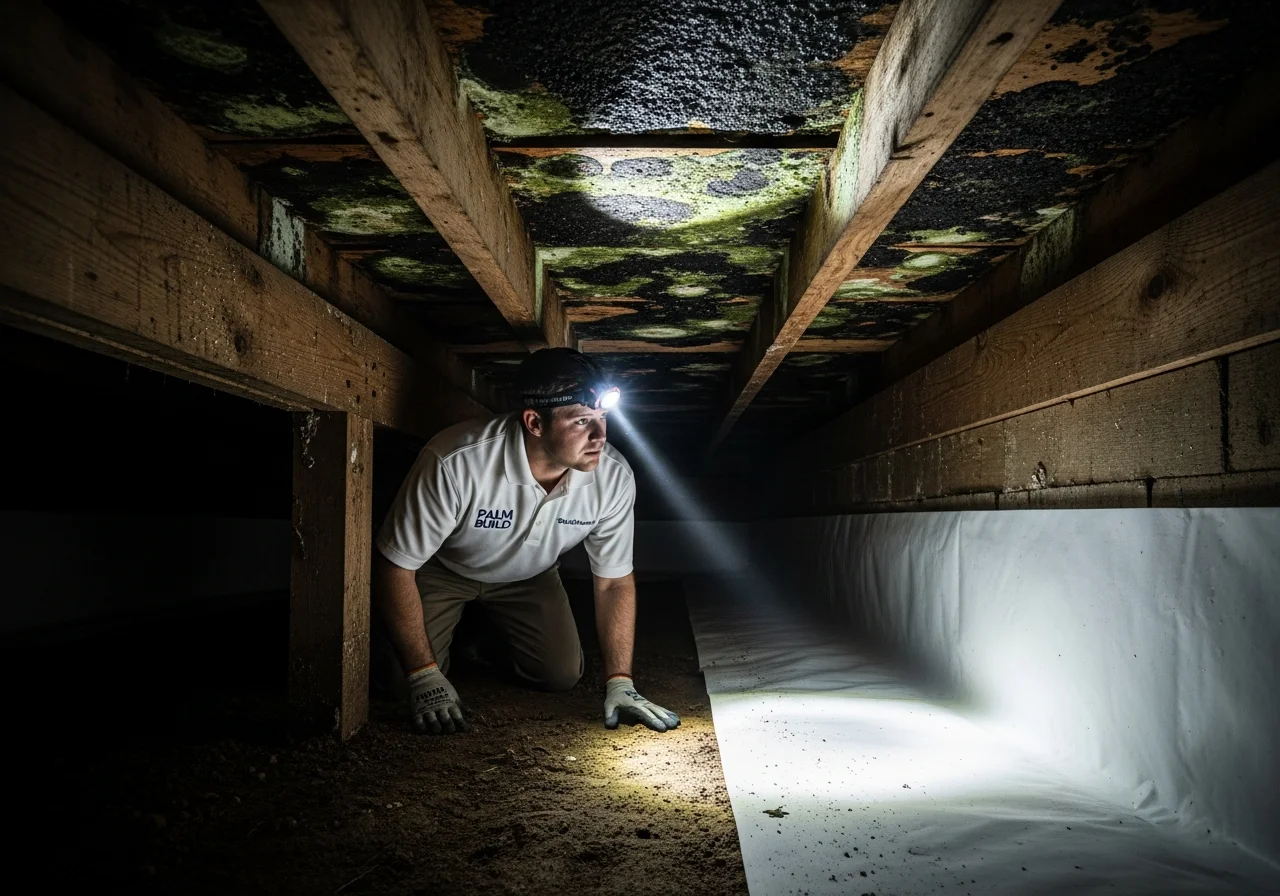
Crawl spaces are the most common entry point for ground moisture and outdoor humid air in homes across the Carolinas. Without a proper vapor barrier and dehumidification, warm outdoor air enters through foundation vents, condenses on cooler structural surfaces, and creates sustained high-humidity conditions that support mold growth on joists, subflooring, and insulation. In North Carolina, dew points regularly exceed 65°F from April through October — whenever that air enters a cooler crawl space, condensation is nearly guaranteed. Crawl space encapsulation — sealing the space with a vapor barrier and installing a commercial dehumidifier — is the most effective long-term solution, significantly reducing humidity and preventing mold and wood decay throughout the structure.
Attics and HVAC Systems (The Florida Problem)
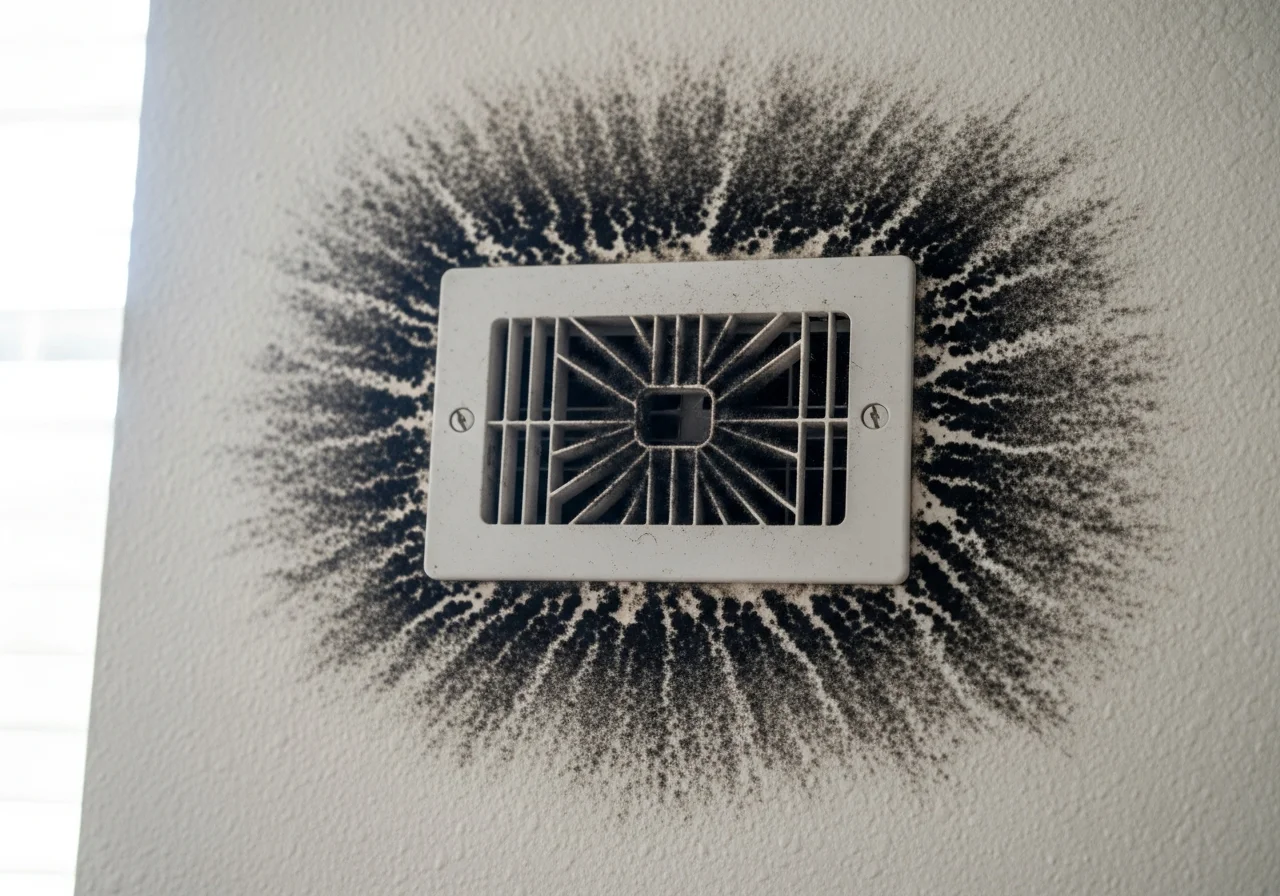
In Florida, attic mold is primarily a ventilation problem: inadequate or blocked attic vents trap hot, humid air against cooler roof surfaces, causing condensation and eventual mold growth on rafters and sheathing. HVAC systems present an equally serious risk. Air conditioning units in Florida homes are often overworked, and if not properly maintained, evaporator coils can harbor mold that is then distributed through ductwork throughout the house. Improperly sealed HVAC registers — a common finding in South Carolina homes — allow warm attic air to mix with conditioned air, triggering condensation and mold on ceilings near registers.
Bathrooms, Kitchens, and Laundry Rooms
These rooms are the most predictable mold locations: steam from showers, cooking vapor, and appliance heat create localized humidity spikes that can exceed 80–90% RH within minutes. Without exhaust fans venting to the outside, that moisture stays in the room and absorbs into drywall, grout, and ceiling surfaces. In a bathroom with persistent high humidity and any minor water source — even grout failure — mold can appear on walls, tiles, and ceilings within just a few days.
Health Consequences of Living in a Humid, Mold-Prone Home
Asthma Risk Increase
30–50%
Mold exposure raises the risk of asthma development by 30–50% per 33-study meta-analysis
Asthma Cases Linked to Mold
4.6 Million
21% of all current U.S. asthma cases attributable to dampness and mold exposure (NIH/PMC)
Annual Economic Cost
$3.5 Billion
Estimated annual cost of mold-attributable asthma in the United States
Higher Odds in Children
41%
Children exposed to household mold have 41% higher odds of current asthma
The health risks of mold exposure are not limited to visible, severe black mold infestations. Even low-level, ongoing exposure to mold spores from elevated indoor humidity carries documented health consequences. The CDC identifies the following effects: stuffy nose, sore throat, coughing or wheezing, burning eyes, and skin rash. For people with asthma or mold allergies, reactions can be severe. The WHO's 2009 guidelines on indoor air quality concluded that the most important effects of dampness and mold are increased prevalence of respiratory symptoms, allergies, and asthma. For immunocompromised individuals and those with chronic lung disease, mold exposure can cause serious lung infections.
"If any part of a home is exposed to flooding or leaks and is not fully dried within 24 to 48 hours, mold growth is almost certain. After major storms, we often see spikes in respiratory illnesses, particularly in homes that were affected by flooding."
What Mold Damage Actually Costs
| Scope | Typical Cost | What's Included |
|---|---|---|
| Minor (bathroom corner, under sink) | $500–$1,500 | Containment, HEPA vacuuming, antimicrobial treatment |
| Moderate (one room, basement, attic section) | $1,500–$3,750 | Above + material removal if needed |
| Extensive (multiple rooms, HVAC involvement) | $3,000–$6,000+ | Demolition access, wall cavity work, post-remediation testing |
| Whole-house / large-loss | $10,000–$30,000 | Full structural involvement, extensive reconstruction |
| Per square foot | $10–$25 (standard) / $15–$30 (complex) | Varies by material type, accessibility, and scope |
Mold remediation cost ranges by project scope — national averages (Sources: Angi 2026; Palm Build cost data)
Beyond remediation costs, mold has serious real estate implications. Studies indicate that home resale value can fall 20–37% when visible mold is present — potentially more than $99,000 off the average U.S. home value. Up to 50% of potential buyers walk away entirely when they learn about a mold problem. The financial case for prevention is clear: investing in dehumidification and crawl space encapsulation is significantly cheaper than paying for remediation after mold has taken hold.
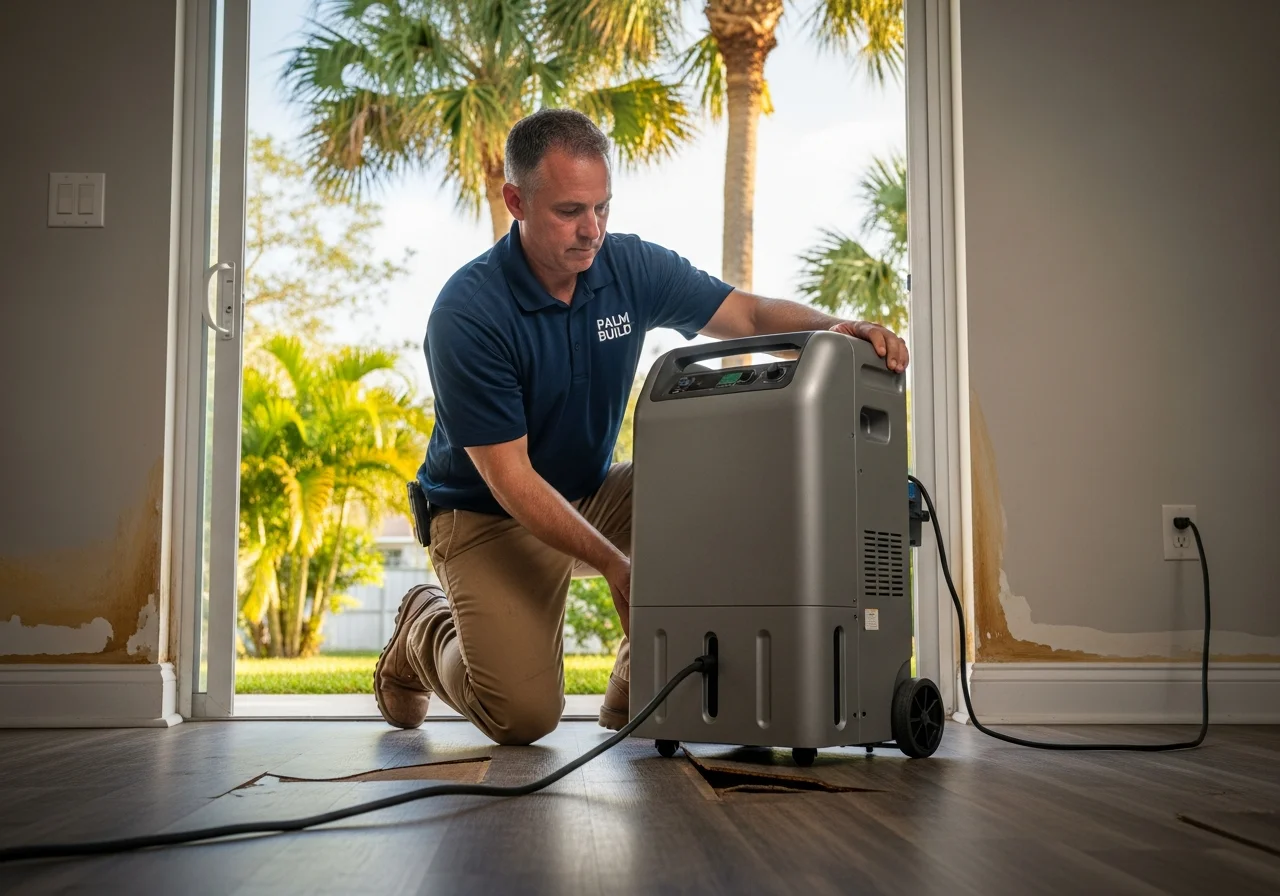
Prevention Investment: Whole-House Dehumidifier Costs
| Unit Type | Coverage | Equipment Cost | Total Installed |
|---|---|---|---|
| Whole-house (HVAC-integrated) | Full home | $1,100–$2,500 | $1,300–$2,800 national avg |
| Florida-market installed cost (humidity sizing premium) | Full home | — | ~$4,500 |
| Basement / crawl space unit | One zone | $800–$2,000 | $1,000–$2,400 |
| Two-stage AC with humidity control | Full home | $5,000–$7,000 | Installed |
Whole-house dehumidifier cost ranges (Sources: HomeAdvisor 2025; Climate Design FL)
How to Keep Indoor Humidity Under Control
- 1
Measure first — get a hygrometer
You cannot manage what you cannot measure. A digital hygrometer costs $15–$40 and provides real-time indoor RH readings. Place one in your crawl space or basement, one in the main living area, and one in the bedroom. If any reading consistently exceeds 60%, you have a mold-risk situation that requires action. The EPA and CDC recommend a target range of 30–50% indoor RH.
- 2
Run your AC — but run it right
Central air conditioning removes moisture from the air as a byproduct of cooling. In FL, NC, and SC, running your AC regularly — even on mild days — is essential for humidity control, not just temperature. Replace air filters monthly during humid season, ensure drain lines are clear, and have evaporator coils professionally cleaned annually to prevent mold buildup inside the system itself.
- 3
Invest in a whole-house dehumidifier
For homes in high-humidity zones, AC alone is often insufficient. A portable unit addresses a single room; a whole-house dehumidifier integrated with the HVAC system manages the entire structure. In the Carolinas and coastal Florida, a whole-house dehumidifier is particularly valuable during shoulder seasons — spring and fall — when outdoor humidity spikes but temperatures don't trigger full AC operation.
- 4
Address crawl spaces and attics
Crawl space encapsulation with a vapor barrier and dehumidifier is the highest-ROI mold-prevention investment for most NC and SC homeowners. For Florida homes with attic issues, ensure ridge and soffit vents are unobstructed and consider powered attic ventilation during peak summer humidity. Inspect these spaces at least annually — before rainy season in Florida, and early summer in the Carolinas.
- 5
Act within 24–48 hours after any water intrusion
This is the most critical window. The ANSI/IICRC S500 standard, EPA guidance, and FEMA all cite 24–48 hours as the practical benchmark: wet materials that remain wet beyond this window are likely to develop mold. Whether it's a pipe leak, roof damage after a storm, or hurricane flooding, professional water extraction and structural drying must begin within this window.
- Keep indoor humidity below 60% (ideally 30–50%) using a dehumidifier or your HVAC system
- Place a hygrometer in your crawl space or basement and check it monthly
- Run bathroom exhaust fans during and for 30 minutes after every shower
- Inspect HVAC drain pans, condensate lines, and air filters monthly during summer
- Have crawl space vents sealed and a vapor barrier installed if you're in NC or SC
- Check attic vents are unobstructed each spring before Florida's rainy season begins
- Call a professional within 24–48 hours of any water damage event — don't wait to see if it dries on its own
- Inspect under sinks, around water heaters, and inside kitchen/bathroom cabinets at least twice per year
State-Specific Mold Risk Callouts
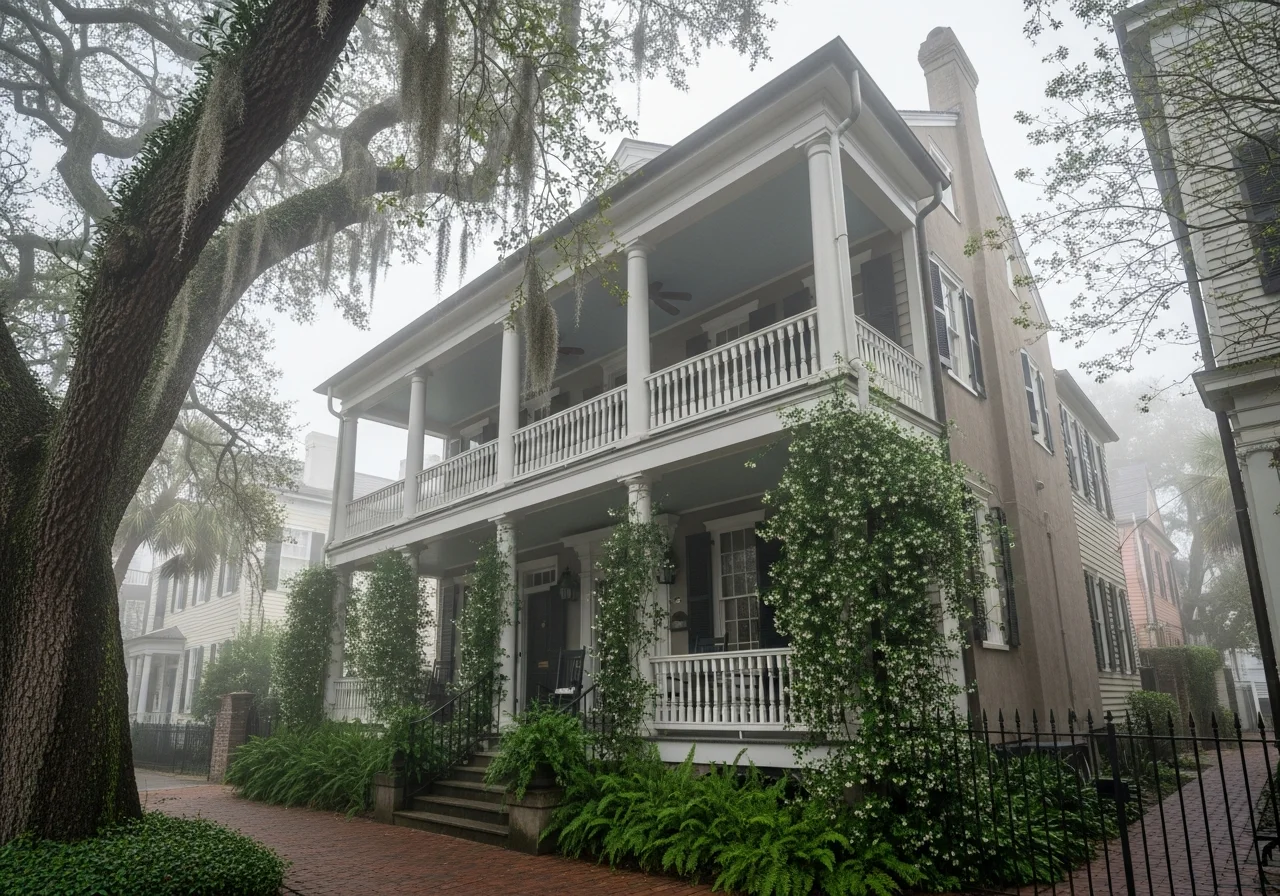
Florida — Year-Round Risk
- Subtropical heat means mold grows year-round, not just seasonally
- HVAC systems run nearly continuously — poorly maintained coils are a top mold source
- Hurricane season (June–Nov) creates acute water damage events on top of chronic humidity
- Fort Lauderdale, Miami, and Tampa are among the most mold-prone cities in the U.S.
- Older homes (pre-1990) often lack modern moisture-resistant materials and vapor barriers
NC / SC — Crawl Space & Storm Risk
- Majority of older homes have vented crawl spaces — the primary NC/SC mold entry point
- Asheville sees 96% RH on July mornings — highest of any major Southeast city
- Post-Helene: western NC homes experienced rapid mold colonization after record flooding
- Charleston and Myrtle Beach rank in the national top 25 moldiest cities
- Tall-ceiling Lowcountry architecture traps warm humid air at ceiling height
South Carolina's coastal communities face some of the most challenging mold conditions in the country. An environmental consultant with nearly a decade of Lowcountry experience describes the situation bluntly: keeping indoor humidity below 50% without active dehumidification is 'very difficult' — it requires intentional, ongoing management. In the Lowcountry specifically, improperly sealed ceiling fixtures, HVAC registers, and can lights frequently allow warm attic air to mix with conditioned living space air, creating condensation and mold on ceilings. Seasonal flooding in Columbia, Myrtle Beach, and coastal SC communities requires the same 24–48 hour response urgency as a hurricane event.
When to Call a Professional
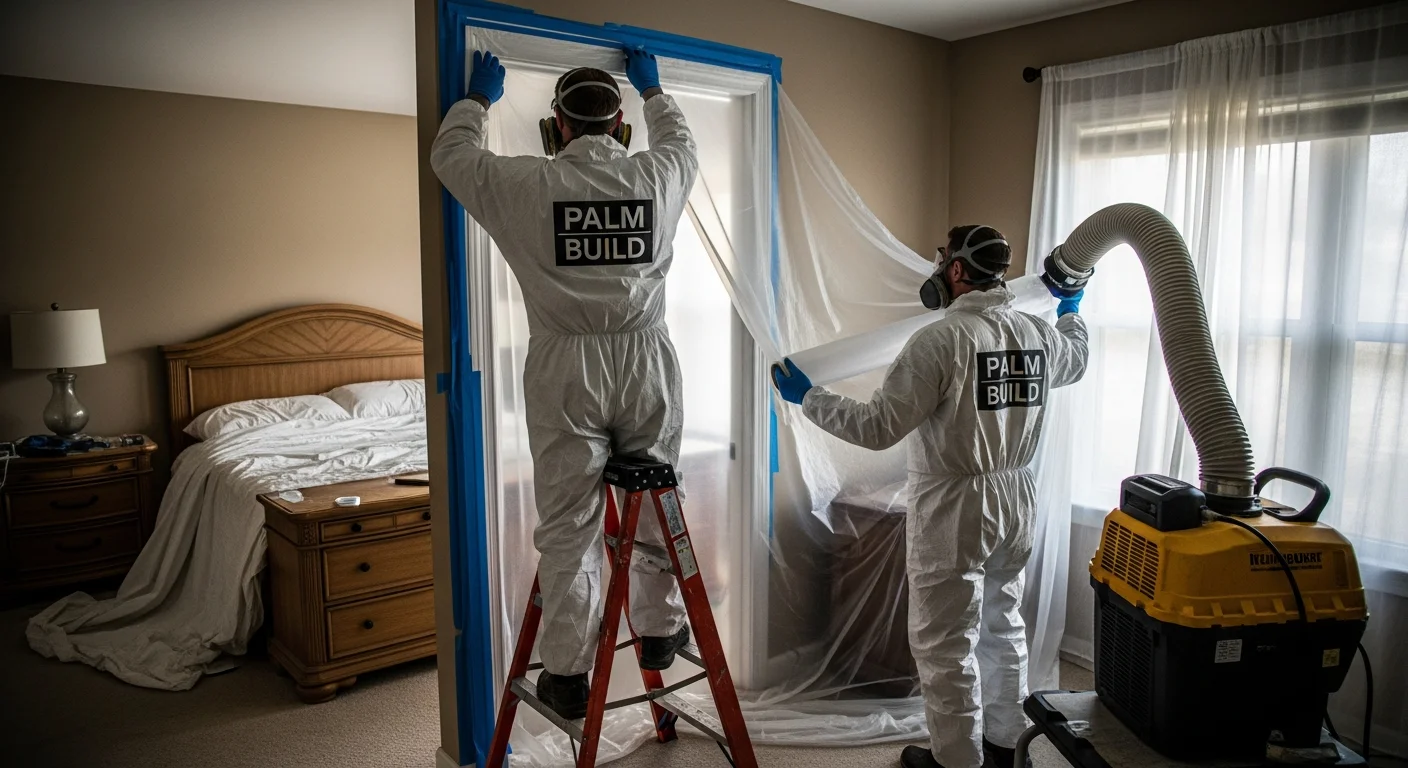
DIY humidity management — running dehumidifiers, maintaining your AC, improving ventilation — can prevent mold from taking hold. But once mold is visible, has spread to HVAC systems, is present in a crawl space or attic, or follows a flood or hurricane event, professional remediation is the appropriate response. IICRC-certified professionals follow the ANSI/IICRC S520 Standard for Mold Remediation, which ensures proper containment, HEPA filtration, antimicrobial treatment, and post-remediation verification — confirming the problem is actually resolved rather than painted over. Palm Build operates across Florida, North Carolina, and South Carolina with 24/7 emergency response, IICRC certification, and direct insurance coordination.
Frequently Asked Questions
What indoor humidity level causes mold to grow? +
How fast does mold grow from humidity? +
Why does Florida have more mold than other states? +
Does running my air conditioner prevent mold? +
What are the signs that high humidity has caused mold in my home? +
Does homeowners insurance cover mold damage from humidity? +
How do I control humidity in my crawl space in NC or SC? +
What does mold remediation cost in Florida, North Carolina, or South Carolina? +
Mold Remediation Services
IICRC-certified mold remediation across Florida, North Carolina, and South Carolina — 24/7 emergency response, insurance coordination, full-scope containment and clearance.
Crawl Space Cleanup & Encapsulation
Crawl space vapor barrier installation, encapsulation, and commercial dehumidifier setup — the highest-ROI mold prevention investment for NC and SC homeowners.
Mold Remediation Cost Guide 2026
Detailed cost breakdown by project size, location, and scope — with insurance guidance and what to expect from a professional estimate.
North Carolina Crawl Space Problems
Why NC crawl spaces are uniquely vulnerable — condensation cycles, wood rot, and the encapsulation approach that stops the problem at its source.
Humidity driving mold in your FL, NC, or SC home?
Palm Build's IICRC-certified teams respond 24/7 across Florida, North Carolina, and South Carolina — mold remediation, crawl space encapsulation, water damage restoration, and insurance claim support all under one roof.
Found this helpful? Send it to someone who needs it.