Storm, Wind & Hurricane Damage Restoration in Matthews, NC
When Tropical Storm Debby crested the dam on Zelda Lane in August 2024, Matthews learned what its dense mature tree canopy and Cecil clay soils already knew: this town floods fast and trees come down hard. Palm Build's Charlotte team reaches Matthews in 20-30 minutes with emergency tarping, water extraction, structural repair, and insurance coordination from the first call.
Charlotte, NC — approx. 14 miles southeast 20-30 min Response IICRC Certified
Matthews' Escalating Storm Pattern: Trees, Clay, and Creeks
Matthews sits at the intersection of three storm amplifiers: the densest mature tree
canopy in the Charlotte metro, Cecil clay soil that sheds water instead of absorbing it,
and two creek flood corridors — Four Mile Creek and McAlpine Creek — that turn from
greenway features into flood threats within minutes. The back-to-back impacts of
Tropical Storm Debby and Hurricane Helene in 2024 proved that Matthews takes direct,
damaging hits from tropical systems tracking inland.
Tropical Storm Debby — Dam Cresting on Zelda Lane
Catastrophic
August 8, 2024
Tropical Storm Debby dropped extreme rainfall across Matthews, causing a dam on Zelda Lane in Matthews itself to crest — a direct, documented impact within town limits that flooded surrounding properties. Across the Southeast, Debby dumped 19+ inches of rain, triggering widespread flash flooding throughout Mecklenburg County. Four Mile Creek and McAlpine Creek reached action stage, inundating crawl spaces and ground-level entries in homes along both corridors. Debby saturated the Piedmont water table weeks before Hurricane Helene arrived, compounding flood damage across the region.
Hurricane Helene — Deadliest US Mainland Hurricane Since Katrina
Catastrophic
September 26, 2024
Hurricane Helene tracked inland through the Carolinas, becoming the deadliest U.S. mainland hurricane since Katrina. The Charlotte metro — including Matthews — experienced damaging winds, downed trees, extended power outages, and flooding. Matthews residents organized relief operations in Helene's aftermath, demonstrating the community's resilience but also the storm's severity. Coming just seven weeks after Tropical Storm Debby had already saturated the soil, Helene's rainfall hit ground that could not absorb another drop — turning every slope and clay bank into a runoff channel.
Flash Flooding — Independence Point Parkway
Significant
August 5, 2025
Severe thunderstorms produced rapid flash flooding across Matthews, closing Independence Point Parkway when creek levels rose dangerously fast. The event demonstrated the recurring pattern: Cecil clay soil sheds water instead of absorbing it, and Matthews' creek corridors — Four Mile Creek and McAlpine Creek — become flood channels within minutes of heavy rainfall. Properties downstream of impervious surfaces (parking lots, commercial areas, newer development) experienced the worst flooding as runoff concentrated faster than drainage infrastructure could handle.
Tree Canopy Limb Drop and Wind Throw
Recurring
Recurring — Every Storm Season
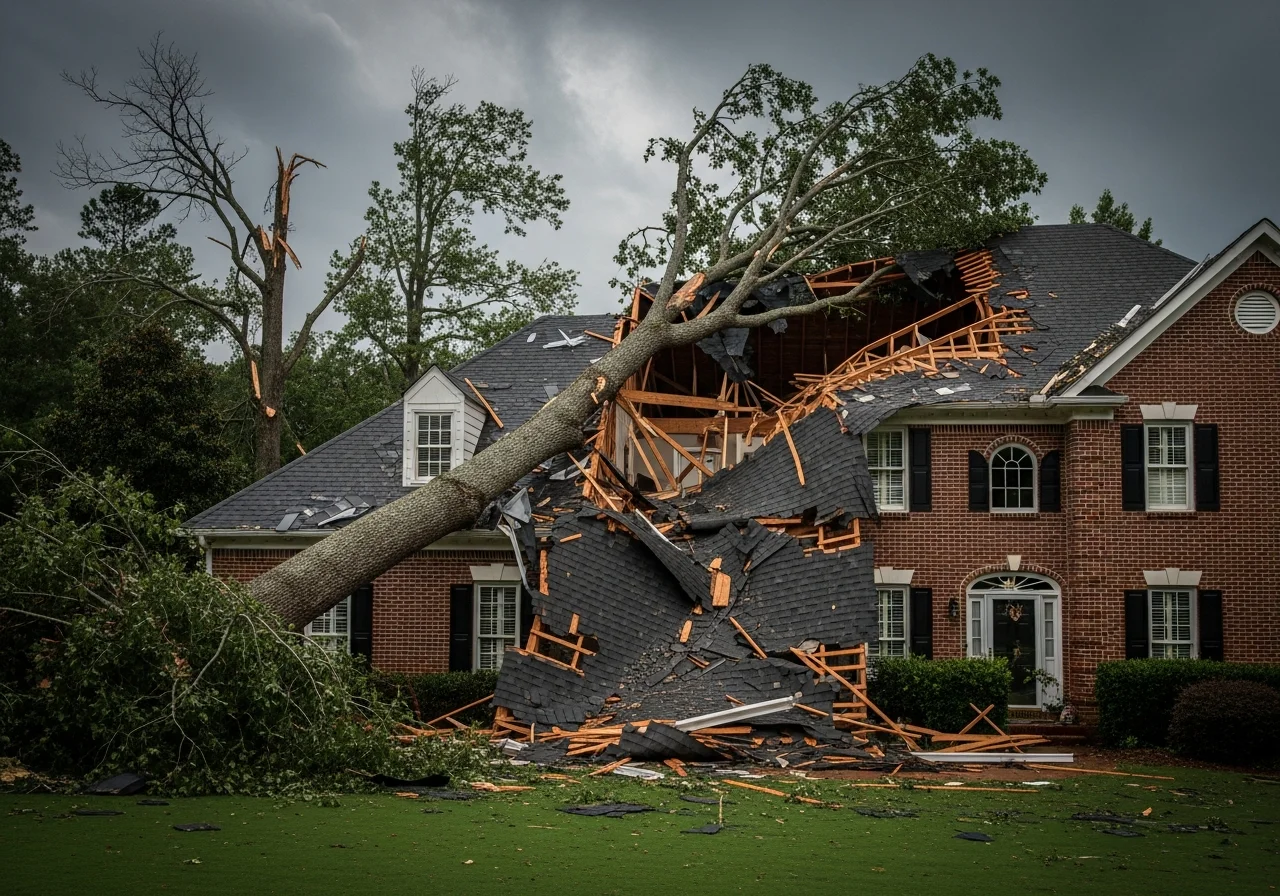
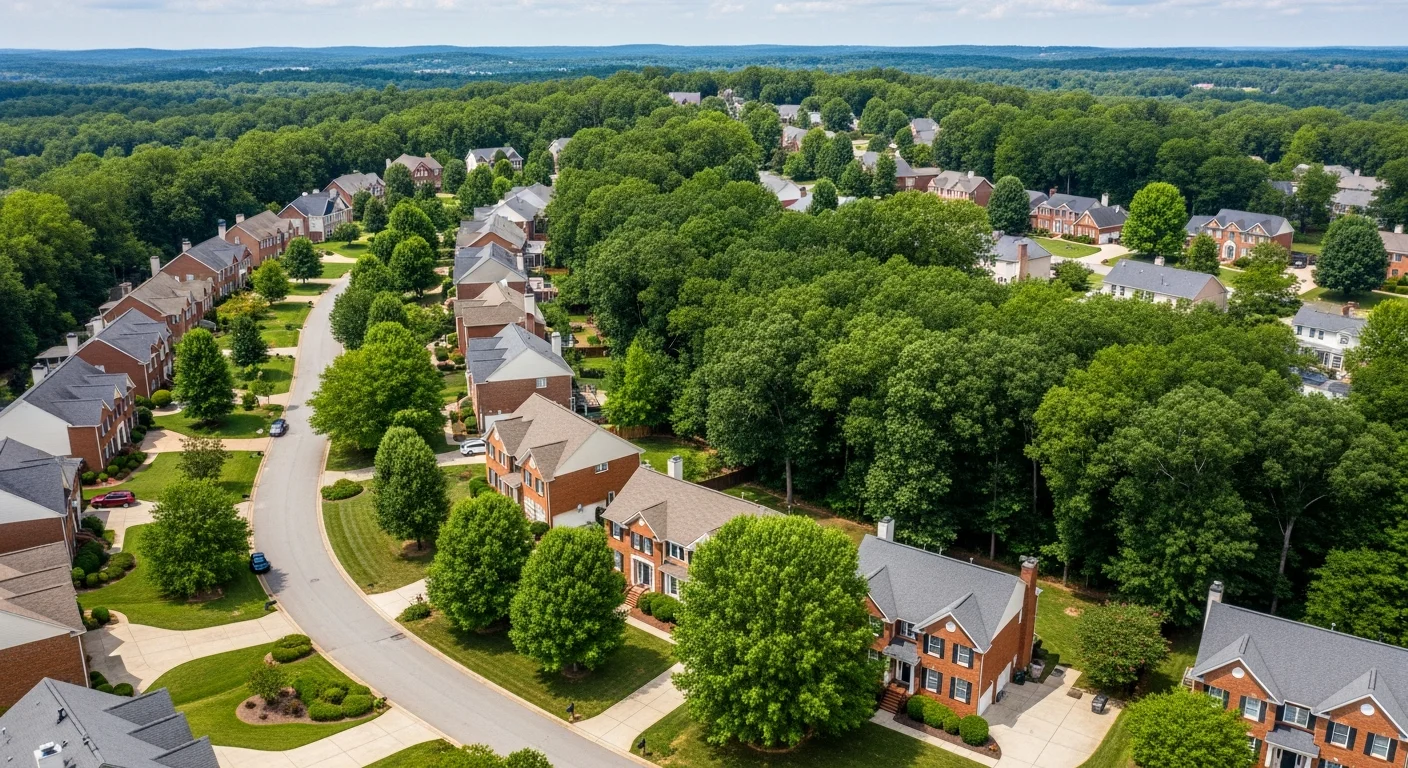
Matthews became a Certified Wildlife Habitat in 2012 and adopted a strict tree preservation ordinance in 2008. The result is one of the densest mature tree canopies in the Charlotte metro — mature oaks, hickories, and hardwoods that overhang rooflines on nearly every residential lot. Every significant wind event drops limbs onto roofs, vehicles, and power lines. When Cecil clay soil becomes saturated during prolonged rain, entire root systems fail and full trees topple onto structures. This is not a rare event — it is the defining storm damage pattern in Matthews.
Matthews' dense mature tree canopy — protected by the 2008 tree preservation ordinance —
means every wind event puts limbs directly over rooflines across the town.
Case Study: August 8, 2024
Tropical Storm Debby: The Day Zelda Lane's Dam Crested
On August 8, 2024, Tropical Storm Debby tracked through the Carolinas and hit Matthews
with a direct, documented impact that no competitor has covered: a dam on Zelda Lane in
Matthews itself crested, sending water over the top and flooding surrounding properties.
This was not a distant river event or a downstream dam release — this happened within
Matthews town limits, in a residential area.
Across the broader Southeast, Debby dumped over 19 inches of rain in some areas. Four
Mile Creek and McAlpine Creek — the two primary flood corridors running through Matthews
— reached action stage, inundating crawl spaces, ground-level entries, and low-lying
yards throughout the town. Homes along Matthews-Mint Hill Road, Sam Newell Road, and the
creek corridors experienced the worst flooding.
The timing made everything worse. Debby saturated Matthews' Cecil clay soil — soil that
was already at capacity from a wet summer. Seven weeks later, when Hurricane Helene
arrived on September 26, the ground could not absorb a single additional drop. Every
inch of Helene's rainfall became instant surface runoff, compounding damage from a storm
that was already severe enough to become the deadliest U.S. mainland hurricane since
Katrina.
Zelda Ln
Dam crested in Matthews itself
19+ in.
Rainfall across parts of Southeast
1,311
Matthews properties at flood risk
7 weeks
Before Hurricane Helene arrived
The Clay Soil Amplifier
Matthews sits on Cecil clay soil — a dense, low-permeability subsoil that dominates
the Piedmont. During normal rainfall, water absorbs slowly. During Debby's intense
downpour, it didn't absorb at all. The clay became a sheet of impervious surface,
channeling every drop directly into Four Mile Creek, McAlpine Creek, and every
low-lying yard in town. This is why Matthews floods faster than its FEMA flood maps
suggest — the maps model creek overflow, not the rapid surface runoff that Cecil clay
creates during extreme rainfall events. First Street Foundation identifies 12.3% of
Matthews properties at flood risk, a figure significantly higher than FEMA's Special
Flood Hazard Area designation alone.
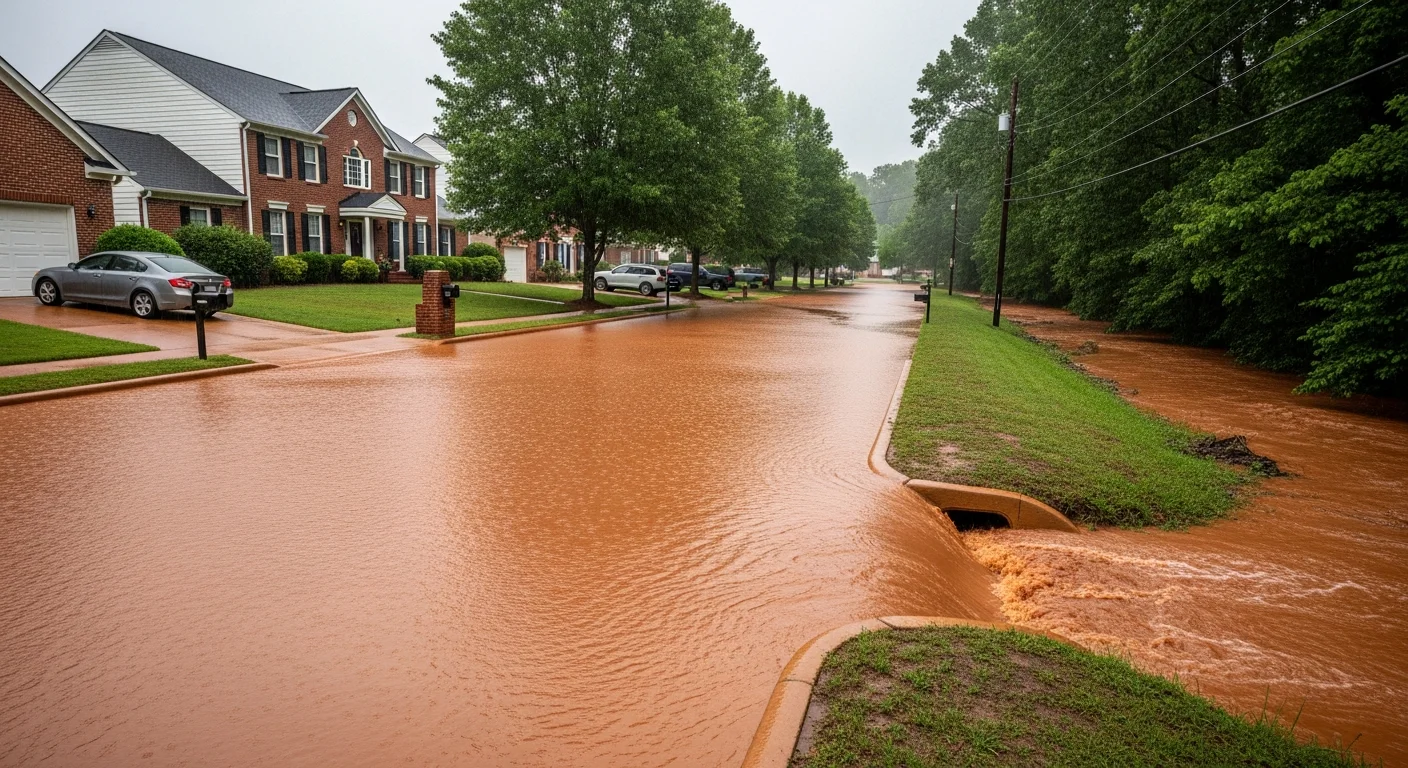
Flash flooding overwhelms Matthews streets during severe rain events — Cecil clay soil
and creek corridors accelerate water faster than drainage systems can handle.
Post-Debby Action Items for Matthews
Get a private flood insurance quote if you're near Four Mile Creek or McAlpine Creek —
regardless of FEMA zone
Have mature trees assessed by a certified arborist — Debby's soil saturation weakened
root systems that may not have recovered
Check crawl space vents, foundation grading, and drainage paths — clay soil requires active
grading away from the foundation
Establish a restoration contact before the next storm season — Palm Build reaches Matthews
in 20-30 minutes from Charlotte
Types of Storm Damage
How Storms Damage Matthews Homes
Matthews' unique combination of dense mature tree canopy, Cecil clay soil, aging housing
stock, and creek flood corridors creates six distinct storm damage patterns. Most major
storms trigger multiple damage types simultaneously — and different types may be covered
by different insurance policies.
Fallen Trees and Limb Drop
This is Matthews' signature storm damage. The town's Certified Wildlife Habitat status (2012) and tree preservation ordinance (2008) have produced one of the densest mature hardwood canopies in the Charlotte metro. Mature oaks, hickories, and hardwoods weighing 10,000-20,000+ pounds overhang rooflines on nearly every residential lot. When Cecil clay soil saturates during heavy rain, root systems lose their grip and entire trees topple onto homes. Even moderate wind events drop heavy limbs that puncture roofing, crush gutters, and crack fascia boards — creating water entry points before the rain even stops.
Roof Wind Damage
Matthews' 1980s and 1990s housing stock features aging architectural shingle roofs now 25-40+ years old — well past the typical 20-25 year warranty period. These aging shingles lose their adhesive bond and become vulnerable to wind lift at speeds far below hurricane threshold. Even 40-50 mph thunderstorm gusts peel shingles at ridges, valleys, and edges where installation quality varies. The brick colonial homes common in Matthews have steep-pitch rooflines that increase wind uplift forces on the downwind slope, compounding the vulnerability of aging materials.
Flash Flooding and Creek Overflow
Four Mile Creek and McAlpine Creek run through Matthews, turning from scenic greenway assets into flood channels during heavy rain. Cecil clay soil throughout the town sheds water instead of absorbing it, creating rapid surface runoff that overwhelms storm drainage infrastructure. The Zelda Lane dam cresting during Tropical Storm Debby (August 2024) and the Independence Point Parkway closure during the August 2025 flash flooding demonstrate this recurring pattern. FEMA Community #370310 maps don't fully capture the clay-amplified flooding that Matthews actually experiences.
Siding and Window Penetration
Wind-driven rain penetrates through damaged vinyl siding, cracked window seals, and deteriorated flashing — particularly common in Matthews' 1980s-90s homes where original caulking and seals have hardened and cracked with age. The brick colonial style dominant in Matthews creates additional vulnerability at mortar joints and weep holes where water channels behind the veneer and into wall cavities. This hidden moisture leads to secondary mold growth behind exterior walls that may not become visible for weeks.
Lightning and Power Surge
Matthews' position in the Southeast thunderstorm corridor means frequent lightning activity during storm season. Direct strikes damage electrical panels, destroy HVAC systems, and can ignite roof materials. The secondary effect — power outages causing sump pump failure — leads to crawl space and basement flooding during the same storm that caused the outage. Matthews' dense tree canopy also increases the frequency of power line damage from falling limbs, extending outage durations and creating electrical hazards.
Structural Wind Load
Sustained high winds create uplift pressure on roof structures and lateral load on walls. Matthews' brick ranch and colonial homes with simple truss construction from the 1980s-90s are generally wind-resistant, but aging mortar joints, deteriorating roof deck connections, and original hurricane clips (or lack thereof) reduce structural integrity over time. When combined with the weight of tree limbs hitting the roof during the same wind event, the structural load can exceed what the original framing was designed to handle.
Matthews' protected mature tree canopy is its defining quality-of-life feature — and its
greatest storm liability. A single tree can cause $50,000+ in structural damage.
Storm Vulnerability Map
Matthews' Most Storm-Vulnerable Areas
Storm damage in Matthews concentrates along predictable corridors based on creek
proximity, clay soil drainage patterns, tree canopy density, and housing age. First
Street Foundation identifies 1,311 properties (12.3%) at flood risk — significantly
higher than FEMA's Special Flood Hazard Area designation alone. Knowing your specific
vulnerability helps you prepare before storm season.
Zelda Lane / Dam Area
Critical
Dam crested during Tropical Storm Debby (Aug 2024) — direct, documented flooding within Matthews town limits
Four Mile Creek Corridor
Critical
Primary flood corridor through Matthews, repeated flash flooding, rapid creek rise during heavy rain on clay soil
McAlpine Creek Corridor
Critical
Southern flood corridor, greenway inundation, crawl space and ground-level water intrusion during storm events
Independence Point Parkway Area
High Risk
Documented road closure from flash flooding Aug 2025, creek levels rise rapidly in storm events
Matthews-Mint Hill Road Corridor
High Risk
Mature tree canopy over residential lots, aging 1980s-90s homes with 25-40+ year shingle roofs
Sam Newell Road / Stallings Border
High Risk
Creek-adjacent properties, Cecil clay runoff concentration, Union County drainage infrastructure transition
Downtown Matthews Historic Core
Moderate
Dense mature hardwood canopy, older commercial and residential structures, narrow lot tree-fall exposure
East Matthews / 28104 (Union County Side)
Moderate
Different county permitting authority, newer development with increased impervious surface runoff
Storm Restoration Process
How We Restore Matthews Homes After Storm Damage
Storm restoration requires coordinating emergency response, tree removal, water
mitigation, structural repair, and insurance claims simultaneously. Here's our proven
process from the first call through final closeout.
01
Emergency Tarping & Board-Up
Hours 1-4
We secure your Matthews home against further weather damage and intrusion. Damaged roof sections are tarped with reinforced polyethylene, broken windows are boarded, and exposed openings are sealed. This is covered by your insurance policy as part of your duty to mitigate further damage — and it's critical before Matthews' next afternoon thunderstorm can pour water through the opening. Our Charlotte crew reaches Matthews in 20-30 minutes.
02
Damage Assessment & Documentation
Days 1-3
Comprehensive documentation of all storm damage — wind, water, fallen trees, structural, and contents. We photograph every affected area, map moisture intrusion with thermal cameras, classify damage by cause (wind vs. flood, covered vs. excluded), and create a detailed scope of work. For Matthews homes near Four Mile Creek or McAlpine Creek, this cause-specific documentation is essential for filing separate wind and flood claims correctly.
03
Water Extraction & Structural Drying
Days 1-7
Storm damage in Matthews almost always includes water intrusion — through damaged roofs, wind-created openings, or flooding from saturated Cecil clay soil. We extract standing water, set up commercial dehumidifiers and air movers, and monitor drying daily. Matthews' brick colonial homes with crawl spaces require simultaneous sub-floor treatment to prevent secondary mold growth in the critical 24-48 hour window.
04
Tree Removal & Debris Clearing
Days 2-7
Given Matthews' dense protected tree canopy, tree removal is a major phase of nearly every storm restoration. Fallen trees are removed from structures using cranes and rigging when necessary. We coordinate with arborists for trees that are damaged but still standing (hang-back risk). All work respects Matthews' tree preservation ordinance requirements even during emergency situations.
05
Structural Repair & Reconstruction
Weeks 2-12
Once the property is dried, secured, and cleared, we begin full reconstruction: roof replacement, siding repair, window installation, drywall, flooring, painting, and finish work. For Matthews homes straddling the Mecklenburg/Union County line, we handle permitting with the correct jurisdiction — 28105 (Mecklenburg) or 28104 (Union County) — ensuring all work meets current building code.
06
Final Inspection & Closeout
Week 12+
County inspections verify all structural, electrical, mechanical, and plumbing work meets current building code. We perform a final walk-through with the homeowner and provide complete documentation for insurance closeout. Warranty information for all materials and workmanship is provided. For dual-county properties, we coordinate inspections with the correct permitting authority.
Matthews Pricing
Storm Damage Restoration Costs in Matthews
Storm restoration costs in Matthews vary based on damage severity, tree involvement,
roof age, and whether flooding is included. The town's dense mature tree canopy means
tree-on-structure damage is the most common major claim — and also the most expensive
due to combined tree removal, structural repair, and roof replacement. Wind damage is
well-covered by standard NC homeowners insurance.
Minor Storm Damage
Missing shingles, siding damage, minor limb drop
$2,000 – $10,000
Moderate Storm Damage
Partial roof replacement, tree on structure, water intrusion
$10,000 – $50,000
Major Storm / Hurricane
Full roof replacement, structural tree damage, flooding
$50,000 – $250,000+
Critical Insurance Distinction
Wind Damage vs. Flood Damage: Why It Matters in Matthews
This is the single most important insurance concept for Matthews storm damage. Wind
damage and flood damage from the same storm are covered by different policies, filed as
separate claims, and adjusted by different adjusters. With 1,311 Matthews properties at
flood risk and Tropical Storm Debby demonstrating that dam cresting and creek overflow
happen within town limits, documenting damage by cause is critical for maximizing your
coverage.
Wind Damage (Homeowners Policy)
Roof damage from wind, fallen trees, flying debris
Siding, window, and door damage from wind pressure
Rain water entering through wind-created openings
Structural damage from fallen trees and wind load
Emergency tarping and board-up costs
Temporary living expenses if home is uninhabitable
Flood Damage (Separate Flood Policy)
Rising water from Four Mile Creek or McAlpine Creek overflow
Dam-related flooding (Zelda Lane dam cresting, Debby 2024)
Groundwater entering through foundation or crawl space
Sheet flooding from saturated Cecil clay soil
Sewer backup from overwhelmed storm systems
NOT covered by standard homeowners — requires NFIP or private flood
The Debby-Helene Overlap Problem in Matthews
During Tropical Storm Debby and Hurricane Helene — which struck Matthews just seven
weeks apart in 2024 — many homes experienced both wind damage (covered by homeowners)
and flood damage (not covered without separate flood insurance) from each event.
Without cause-specific documentation, insurers may attribute water damage to flooding
rather than wind-driven rain entry — denying coverage that should have been approved.
Palm Build's damage assessment specifically documents which water entered through
wind-created openings (covered) versus which entered as rising water from creek
overflow or surface runoff (flood policy). This documentation approach has helped
Matthews homeowners recover significantly more from their claims.
The most expensive storm damage is the damage you could have prevented or documented
before it happened. With Matthews' dense tree canopy, aging housing stock, and clay soil
flooding pattern, these five steps can save thousands in unrecovered losses and weeks of
extended displacement.
Document Your Home Annually
Walk through your entire property — inside and out — and photograph every room, the roof, siding, crawl space, and landscaping. Include timestamps. This pre-loss documentation is your strongest asset when filing a claim. Without it, you're relying on your adjuster's estimate of pre-storm condition — and for Matthews' aging 1980s-90s homes, that estimate often undervalues the property.
Review Your Insurance Coverage
Confirm your homeowners policy limits, deductible (NC often has separate wind/hail deductibles), and whether you have an ordinance-and-law endorsement for building code upgrades during reconstruction. If you're near Four Mile Creek, McAlpine Creek, or any area that flooded during Tropical Storm Debby, get a private flood insurance quote — NFIP is not the only option and private policies are often more affordable for Zone X properties.
Address Tree Risk Before Storm Season
Have a certified arborist assess mature trees near your home for structural defects, root damage, and lean. Matthews' Cecil clay soil becomes saturated during prolonged rain, weakening root anchoring. A proactive tree removal costs $1,000-$5,000. An emergency removal after it falls on your home costs $5,000-$15,000 plus structural damage. Given Matthews' tree preservation ordinance, get removal permits in advance — they're easier to obtain before a tree is already on your roof.
Inspect Aging Roof and Entry Points
If your Matthews home was built in the 1980s-90s, your roof is likely 25-40+ years old and well past its warranty period. Inspect flashing, valley seams, and ridge vents for deterioration. Replace cracked or missing caulk around windows and door frames. Check mortar joints on brick colonial homes — deteriorating mortar creates water channels behind the veneer that lead to hidden interior damage during wind-driven rain.
Establish a Restoration Relationship
After a major storm, every restoration company in the Charlotte metro is overwhelmed simultaneously. Response times that are normally 20-30 minutes can stretch to days. Homeowners who have an existing relationship with a restoration company get prioritized. Contact Palm Build before storm season to establish your account — our Crompton Street hub is 14 miles from downtown Matthews.
Storm Damage in Matthews
What Storm Damage Looks Like in Matthews
Mature hardwood downed by saturated Cecil clay root system during high winds
Flash flooding overwhelms Matthews streets — Cecil clay sheds water instead of absorbing it
Commercial drying equipment extracts moisture and prevents secondary mold growth
Full interior reconstruction after storm-driven water intrusion and structural damage
The Palm Build Difference
Why Matthews Homeowners Choose Palm Build After Storms
20-30 Minute Matthews Response
Our Crompton Street hub is approximately 14 miles from downtown Matthews — significantly closer than competitors operating from south Charlotte or the University area. During major events, we activate catastrophe response with additional crews from our Florida operations center. Pre-storm clients get priority dispatch when every restoration company in the metro is overwhelmed.
IICRC WRT & FSRT Certified
Every crew lead holds current IICRC Water Restoration Technician and Fire/Smoke Restoration Technician certifications. Storm damage crosses both specialties — wind drives water intrusion, fallen trees expose structures, and lightning can cause fires. Our crews handle the full scope without subcontracting critical phases.
Cause-Specific Documentation for Dual Claims
Our damage assessment classifies every item by cause — wind vs. flood vs. tree impact vs. lightning — ensuring each claim is filed with the correct policy. For Matthews homes near Four Mile Creek or McAlpine Creek that experience both wind and flood damage in the same event, this documentation is the difference between a partial payout and full recovery.
Dual-County Permitting Experience
Matthews straddles Mecklenburg County (28105) and Union County (28104), each with its own permitting authority and inspection process. Palm Build handles permits, inspections, and code compliance for both jurisdictions — eliminating the confusion that slows restoration for companies unfamiliar with the dual-county dynamic.
Full Reconstruction Under One Roof
From emergency tarping through final punch list, one company handles everything — including tree removal coordination, structural repair, and finish work. For Matthews' brick colonial and ranch homes from the 1980s-90s, we source appropriate materials and manage the reconstruction to match the existing home's character.
Common Questions
Matthews Storm Damage FAQ
How quickly can Palm Build respond to storm damage in Matthews NC?
Our Charlotte operations hub on Crompton Street is approximately 14 miles from downtown Matthews. We dispatch emergency crews within 20-30 minutes for tarping, board-up, and water extraction. During major storm events affecting the entire Charlotte metro, we activate our catastrophe response protocol with additional crews and equipment. Pre-storm clients receive priority dispatch.
What happened in Matthews during Tropical Storm Debby in August 2024?
Tropical Storm Debby struck Matthews on August 8, 2024, dropping extreme rainfall across the Charlotte metro. In Matthews itself, a dam on Zelda Lane crested — a direct, documented impact within town limits. Flash flooding was widespread, with 19+ inches of rain recorded across parts of the Southeast during the event. Debby saturated the Piedmont water table in the weeks before Hurricane Helene arrived in September, compounding flood damage across the region.
Why is Matthews especially vulnerable to storm tree damage?
Matthews became a Certified Wildlife Habitat in 2012 and adopted a strict tree preservation ordinance in 2008, resulting in one of the densest mature tree canopies in the Charlotte metro. While this canopy is an asset for property values and quality of life, it means mature oaks and hardwoods directly overhang rooflines throughout the town. During wind events, saturated Cecil clay soil weakens root systems, and heavy limbs or entire trees fall onto homes. The combination of tree density and clay soil makes Matthews uniquely vulnerable to tree-on-structure damage.
Does insurance cover storm and wind damage in Matthews NC?
Yes — wind damage, fallen trees, and storm-driven rain intrusion are covered perils under standard NC homeowners policies (HO-3 form). However, flood damage from rising water — whether from Four Mile Creek, McAlpine Creek, or sheet flooding across saturated clay — requires separate NFIP or private flood insurance. With 1,311 Matthews properties facing flood risk per First Street Foundation (12.3%), and many homes in FEMA Zone X without flood coverage, this distinction is critical. Palm Build documents every item of damage by cause to ensure correct claim filing.
What areas of Matthews are most vulnerable to storm flooding?
The Four Mile Creek and McAlpine Creek flood corridors running through Matthews create the highest flood risk. Properties near these waterways, including sections of neighborhoods along Matthews-Mint Hill Road and Sam Newell Road, face repeated flash flooding. The August 2025 event closed Independence Point Parkway when creek levels rose rapidly. Cecil clay soil throughout Matthews causes rapid surface runoff rather than absorption, meaning even properties away from creeks can experience significant yard and crawl space flooding during heavy rain events.
Matthews straddles two counties — does that affect storm permits?
Yes. Matthews spans Mecklenburg County (28105) and Union County (28104), and each county has its own permitting authority and building inspection process. Storm damage repairs requiring structural permits — roof replacement, framing, electrical — must be filed with the correct county based on your property's location. Palm Build handles the permitting process for both jurisdictions, ensuring your restoration meets current building code regardless of which side of the county line your property sits on.
Should I get flood insurance if I live in Matthews?
If you live anywhere near Four Mile Creek, McAlpine Creek, or in any area that experienced water during Tropical Storm Debby or the August 2025 flash flooding, yes — regardless of your FEMA zone designation. First Street Foundation identifies 1,311 Matthews properties (12.3%) at flood risk, and FEMA Community #370310 maps don't fully capture the rapid-runoff flooding caused by Cecil clay soil and increasing impervious surface. Private flood policies are often more affordable than NFIP for properties outside the Special Flood Hazard Area.
How long does storm damage restoration take for a Matthews home?
Emergency tarping and water extraction: 1-2 days. Structural drying: 3-5 days with daily monitoring. Tree removal from structure: 1-3 days depending on size and access. Roof repair (partial): 3-10 days. Full roof replacement: 1-2 weeks. Interior reconstruction including drywall, insulation, and finishes: 2-8 weeks. Full reconstruction after major structural damage: 6-16 weeks. After wide-area events like Helene or Debby, timelines extend due to contractor demand across the Charlotte metro.
Storm Damage in Matthews? Every Hour of Exposure Compounds the Loss.
Matthews' mature tree canopy and clay soil mean storm damage escalates fast — an exposed roof opening lets water pour through before the next afternoon thunderstorm. Palm Build's Charlotte team reaches Matthews in 20-30 minutes with emergency tarping, water extraction, and insurance documentation from the first call.