Fire & Smoke Damage Cleanup in Matthews, North Carolina
From Cherokee Woods' 1970s ranches to Brightmoor's colonial-style homes, Palm Build's IICRC-certified team handles structural fire damage, soot removal, smoke odor elimination, and full reconstruction across both Mecklenburg and Union County jurisdictions — with insurance coordination from the first call.
15 minutes from Matthews via I-485 30-45 min Response IICRC Certified
After a Fire in Matthews, Every Hour of Delay Costs You
The fire department puts out the flames — but that's when the real damage clock starts.
Soot, smoke residue, and fire-suppression water are all actively damaging your Matthews
home right now. The difference between a $15,000 restoration and a $60,000 rebuild often
comes down to how fast professional mitigation begins. Here's what's happening inside
your home while you wait.
CRITICAL FACTOR 1
Soot Becomes Permanent in Hours
Acidic soot residue begins etching into metal, glass, and stone surfaces within hours of a fire. Stainless steel appliances, chrome fixtures, marble countertops, and brass hardware can be permanently damaged if soot isn't neutralized quickly. Matthews' colonial-style homes are full of these vulnerable surfaces — ornamental hardware, light fixtures with brass finishes, and granite or marble countertops installed in 1990s-2000s kitchen renovations. The chemical reaction accelerates in the Charlotte metro's humid climate, where moisture reacts with soot to form sulfuric and hydrochloric acid on surfaces.
CRITICAL FACTOR 2
Smoke Penetrates Deeper Every Day
Smoke odor molecules are measured in microns and continue migrating into porous materials for days after the fire is out. In Matthews' homes with brick veneer exteriors, real hardwood floors, and wood-framed walls, smoke penetrates much deeper than in newer vinyl-and-drywall construction. The hardwood flooring, solid wood trim, and brick found throughout Cherokee Woods, Sardis Forest, and Brightmoor absorb smoke aggressively. Every day without professional treatment makes odor elimination more complex and expensive.
CRITICAL FACTOR 3
Secondary Water Damage Starts Mold in 24 Hours
Fire suppression — whether from sprinklers, fire hoses, or extinguishers — saturates your home with water. A single fire hose delivers 150 to 250 gallons per minute. In Matthews' crawl space homes built on Cecil clay soil, that water pools under the house on slow-draining clay and feeds mold growth within 24 to 48 hours. You're dealing with fire damage, water damage, and mold risk simultaneously — and the restoration approach must address all three from day one.
Emergency Fire Restoration
Palm Build dispatches from our Charlotte office within 30-45 minutes to anywhere in
Matthews. We begin emergency board-up, soot stabilization, and water extraction
simultaneously — stopping all three damage clocks at once. We serve both 28105
(Mecklenburg) and 28104 (Union County) zip codes.
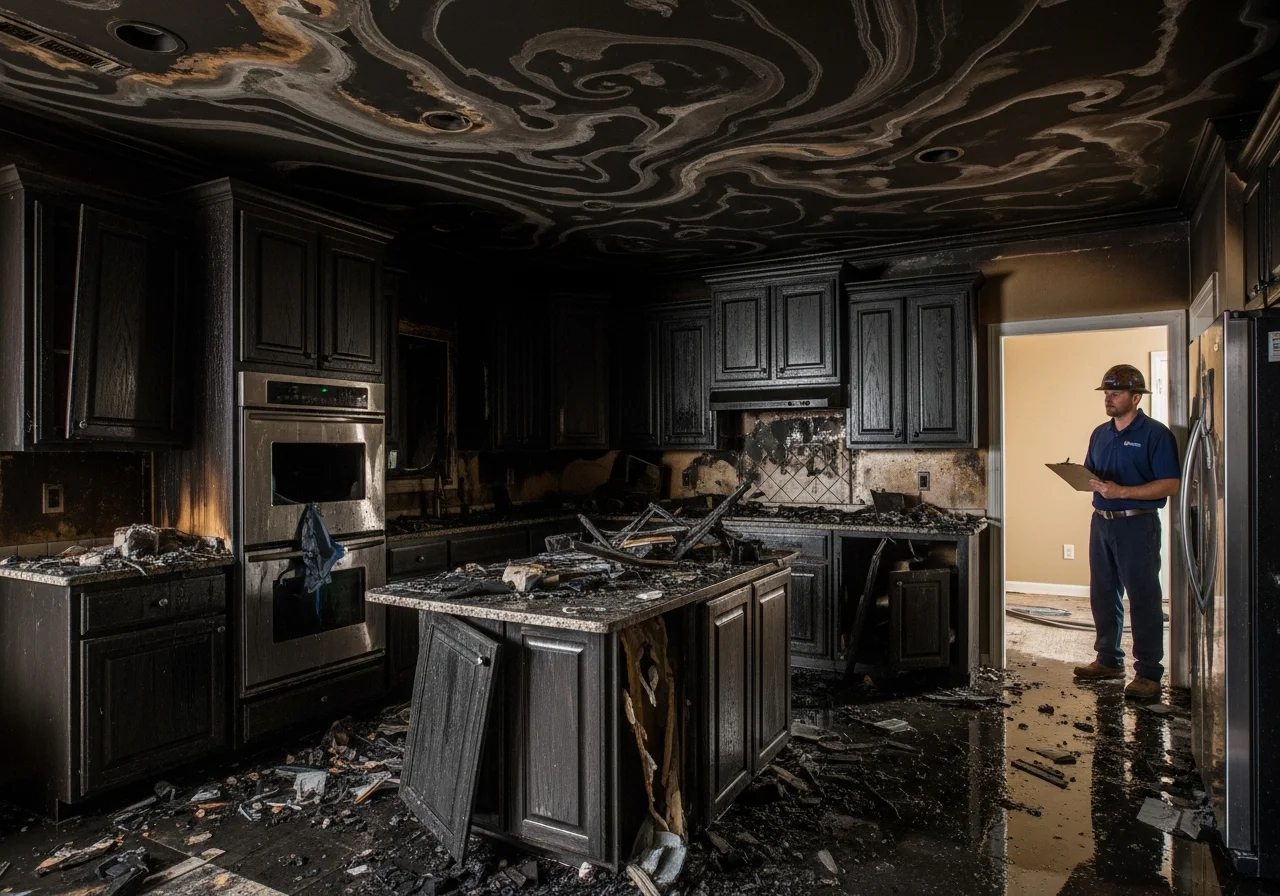
Kitchen fire damage in a Matthews home — soot stabilization must begin within hours to
prevent permanent surface etching
Understanding the Damage
The Science of Soot: Why Fire Type Determines the Restoration Approach
Not all fire damage is the same. The type of materials that burned determines what kind
of soot your Matthews home is coated with — and that determines the cleaning chemistry,
equipment, and timeline required. Using the wrong approach doesn't just fail to clean
the surface — it can permanently set stains and drive odors deeper into your home's
hardwood, brick, and wood framing.
Protein Residue (Kitchen Fires)
The most common fire type in Matthews homes. Protein fires from cooking produce an almost invisible, yellowish residue with an extremely pungent odor that penetrates every surface in the home — often far beyond the kitchen. Matthews' colonial-style floor plans with semi-open kitchens connecting to dining rooms and family rooms allow protein soot to spread rapidly through connected living spaces. The residue bonds chemically to surfaces rather than sitting on top. Standard cleaning products will spread the residue and set the stain permanently.
Professional Cleaning Approach
Requires enzymatic cleaners and specialized degreasing agents. Thermal fogging with protein-specific solutions is typically needed for odor elimination in Matthews homes with porous hardwood and brick.
Natural Material Soot (Wood, Paper, Cotton)
When Matthews' wood-framed colonial homes burn — dimensional lumber framing, hardwood floors, wood trim, and cellulose insulation — they produce dry, powdery, gray-black soot. This lighter soot spreads throughout the entire home via HVAC systems and natural air currents. In Matthews homes with forced-air HVAC (which is nearly all of them, many with original 1980s-90s ductwork), soot from a fire in one room contaminates the entire duct system and distributes residue through every supply register in the house within hours.
Professional Cleaning Approach
HEPA vacuuming first (never wipe dry soot — it smears), followed by chemical sponge treatment, then wet cleaning. Full HVAC duct cleaning is mandatory for Matthews homes with contaminated ductwork.
Synthetic Soot (Plastics, Polymers)
Many Matthews homeowners have updated their 1980s-2000 homes with modern materials — engineered wood flooring over original hardwood, foam insulation in attics, PVC trim replacing wood, and synthetic carpeting. When these materials burn, they produce thick, black, sticky soot that is extremely difficult to remove. Synthetic soot smears when touched, adheres aggressively to all surfaces, and contains toxic compounds including hydrogen cyanide and dioxins. This is the most hazardous soot type for occupants and restoration technicians.
Professional Cleaning Approach
Requires solvent-based cleaners specifically formulated for petroleum-based residues. Multiple cleaning passes are standard. PPE is critical due to toxic compounds.
Local Risk Factors
Fire Risks Specific to Matthews Homes
Matthews' housing stock — predominantly colonial-style homes built between 1980 and 2000
with wood framing, hardwood floors, and brick veneer — creates distinct fire risk
profiles that differ from Charlotte's urban core and newer suburban development. The
town's mature tree canopy and aging infrastructure add risk factors unique to this
community.
Aging Electrical Systems (1980s-2000 Homes)
High
Over 53% of Matthews homes were built between 1980 and 2000 with electrical panels and wiring that were never designed for today's electrical loads. Home offices drawing continuous power, multiple device charging stations, updated kitchen appliances, smart home systems, and EV chargers push these aging circuits well beyond their original ratings. Homes in Cherokee Woods and Sardis Forest from the 1970s-80s are at highest risk — many still have original 100-amp panels and some contain aluminum branch circuits that expand and contract at connection points, creating arc faults behind walls.
Peak season: Year-round
Mature Tree Canopy & Powerline Fires
Elevated
Matthews holds Certified Wildlife Habitat status thanks to its dense mature tree canopy — beautiful, but a genuine fire risk. During storms, large limbs fall across powerlines, creating electrical arcing that ignites dry vegetation and structures. Downed powerlines in contact with roofs, siding, or decks have caused multiple structure fires in Mecklenburg and Union County. The combination of Matthews' tall hardwoods, aging overhead utility infrastructure, and the summer thunderstorm season creates a fire ignition pathway that newer, underground-utility subdivisions don't face.
Peak season: May – Oct (storm season)
Kitchen Fires in Colonial-Style Homes
Most Common
Cooking fires are the leading cause of residential fires in Matthews. The protein soot from kitchen fires creates an almost invisible, chemically bonding residue that standard cleaning cannot remove. Matthews' colonial-style homes typically have semi-open kitchens that connect to dining rooms and family rooms — smoke and soot travel quickly through these connected spaces. Unlike Charlotte's newer open-concept floor plans, many Matthews homes still have partially enclosed kitchens with cabinetry on three sides that traps and concentrates heat, making the fire damage zone more intense but sometimes more contained.
Peak season: Year-round
HVAC-Related Fires in Aging Systems
High
Matthews homes built in the 1980s-90s commonly have original forced-air HVAC systems with 30-40 year old components. Aging furnace heat exchangers, deteriorating capacitors, failing blower motors, and accumulated lint in ductwork all create ignition risks. Many Matthews crawl spaces house furnace units that sit on the ground in spaces that accumulate moisture, dust, and debris over decades. When these units fail catastrophically, the fire often starts below the living space and spreads through floor joists and wall cavities before residents notice smoke upstairs.
Peak season: Nov – Feb (heating season)
Our Fire Restoration Process
How We Restore Matthews Homes After Fire Damage
Fire restoration is more complex than water or mold because it involves multiple damage
types simultaneously — structural fire damage, soot contamination, smoke odor, and water
from fire suppression. Our process addresses all four in a coordinated sequence tailored
to Matthews' construction characteristics.
01
Emergency Board-Up & Securing
Hours 1-4
We secure your Matthews home against weather, theft, and further damage. This includes boarding windows, tarping damaged roof sections, and securing doors. Matthews' afternoon thunderstorms can send thousands of gallons of rain into an unsecured fire-damaged home within hours — an unsecured structure can sustain catastrophic secondary water damage from a single storm.
02
Damage Assessment & Documentation
Day 1-2
Our IICRC-certified team performs a comprehensive walk-through documenting every affected area with photos, video, and moisture readings. We classify the fire type (protein, natural, synthetic), assess structural integrity of Matthews' wood framing and floor joists, and create a detailed scope of work. Because Matthews straddles two counties, we identify which jurisdiction applies — Mecklenburg or Union — and format documentation accordingly for both insurance and permitting.
03
Water Extraction & Drying
Days 1-5
Fire suppression water is addressed simultaneously with soot stabilization. We extract standing water, set up commercial dehumidifiers and air movers, and monitor drying daily. In Matthews' crawl space homes built on Cecil clay, fire suppression water pools under the house on slow-draining soil — if not extracted, mold colonizes the wooden floor joists and subfloor within 24-48 hours.
04
Soot & Smoke Removal
Days 3-10
Professional soot removal uses chemistry matched to the specific soot type. HEPA vacuuming removes loose particulate, chemical sponges lift embedded residue, and wet cleaning with specialized detergents addresses remaining contamination. Matthews' colonial homes with hardwood floors, solid wood trim, and brick veneer require specialized techniques — aggressive chemicals that work on drywall can damage original hardwood finishes and mortar joints.
05
Odor Elimination
Days 5-14
Smoke odor elimination treats the source at the molecular level. We use thermal fogging (heated deodorizing agents that penetrate the same way smoke did), ozone treatment for sealed spaces, and hydroxyl generation for occupied areas. Matthews' homes with porous brick veneer, real hardwood, and wood framing absorb smoke deeply — most homes require multiple treatment passes across several days to fully eliminate embedded odors from every material layer.
06
Reconstruction & Restoration
Weeks 2-8+
Once cleaning and odor treatment are verified complete, we handle full reconstruction: drywall, flooring, cabinetry, painting, electrical, plumbing, and finish work. Matthews' colonial-style homes require matching specific trim profiles, brick veneer patterns, and hardwood species that may no longer be standard stock. We pull permits through the correct county — Mecklenburg LUESA for 28105 or Union County Code Enforcement for 28104 — and manage inspections through completion.
The Hidden Damage
Water Damage From Firefighting: Often Worse Than the Fire Itself
Many Matthews homeowners are shocked to discover that fire suppression causes more
damage than the fire itself. A single fire hose delivers 150 to 250 gallons of water
per minute. A residential sprinkler head activates at 17 gallons per minute and may
run for 30 minutes or more. That water saturates drywall, subfloors, insulation, and
personal property — and flows downward through the structure, damaging every floor
below the fire origin.
In Matthews' crawl space homes — which make up the majority of the 1980s-2000 housing
stock — fire suppression water pools under the house on top of Cecil clay soil that
drains extremely slowly. Within 24 to 48 hours, that standing water begins feeding
mold growth on the same wooden floor joists and subfloor that may have been weakened
by heat from above. You're dealing with fire damage, water damage, and mold risk
simultaneously — and the restoration approach must address all three from day one to
prevent compounding costs.
Palm Build's fire restoration team handles water extraction and structural drying as
an integrated part of fire cleanup — not as a separate project that adds weeks and
thousands to your timeline. Our technicians are cross-trained in both fire and water damage restoration, so one team manages the entire scope.
How We Permanently Eliminate Smoke Odor in Matthews Homes
Smoke odor is the most persistent aspect of fire damage. Masking products — candles, air
fresheners, even consumer ozone machines — do not eliminate smoke odor. They temporarily
cover it. Professional odor elimination requires treating the source at the molecular
level using methods matched to the specific materials and construction of your Matthews
home — brick veneer, hardwood, and wood framing that absorb smoke far deeper than modern
vinyl and composite construction.
Thermal Fogging
Heated deodorizing agents are converted into a fog that penetrates materials the same way smoke did — through microscopic pores, cracks, and cavities. This is the most effective method for Matthews' colonial homes with porous brick veneer, real hardwood flooring, and solid wood trim. The fog penetrates deeply into brick that may have absorbed smoke several inches into the masonry. Multiple applications are often needed for Matthews homes where brick, hardwood, and wood framing all require treatment simultaneously.
Best for: Porous materials, deep penetration, Matthews brick veneer homes
Ozone Treatment
Ozone generators create O3 — a highly reactive oxygen molecule that breaks down odor compounds at the molecular level. Ozone treatment is extremely effective but requires the space to be completely unoccupied (including plants and pets) during treatment. We use ozone for sealed, evacuated spaces like closets, attics, and enclosed rooms. Matthews' colonial floor plans with more defined room layouts — as opposed to Charlotte's newer open-concept designs — actually work in our favor here, allowing room-by-room targeted treatment.
Best for: Sealed spaces, heavy odor concentration, room-by-room treatment
Hydroxyl Generation
Hydroxyl generators produce hydroxyl radicals — the same molecules that naturally purify outdoor air via sunlight — to break down odor compounds. Unlike ozone, hydroxyl treatment is safe for occupied spaces. We deploy these continuously during the multi-day cleaning process to keep air quality manageable for workers and homeowners coordinating insurance and contents decisions. This is particularly valuable for Matthews projects where the homeowner needs to be on-site working with adjusters from either Mecklenburg or Union County.
Best for: Occupied spaces, ongoing treatment during restoration
Matthews Pricing
Fire Damage Restoration Costs in Matthews
Fire restoration costs vary dramatically based on severity, affected area, and
construction type. With Matthews' median home value at $445,100 and the colonial-style
construction with hardwood, brick veneer, and custom trim, reconstruction costs tend to
run higher than suburban average. NC insurance premiums have risen 44.4% from 2020 to
mid-2025 — but fire remains one of the most comprehensively covered perils under NC
homeowners policies.
Minor Fire (Kitchen/Contained)
Smoke and soot cleanup, minor repairs
$3,000 – $15,000
Moderate Residential Fire
Structural damage, full-room restoration
$15,000 – $55,000
Major Structural Fire
Multi-room, roof damage, full reconstruction
$55,000 – $200,000+
Our Work
Matthews Fire Restoration: The Process in Action
Kitchen fire damage with charred cabinets and heavy soot coating on walls and counters
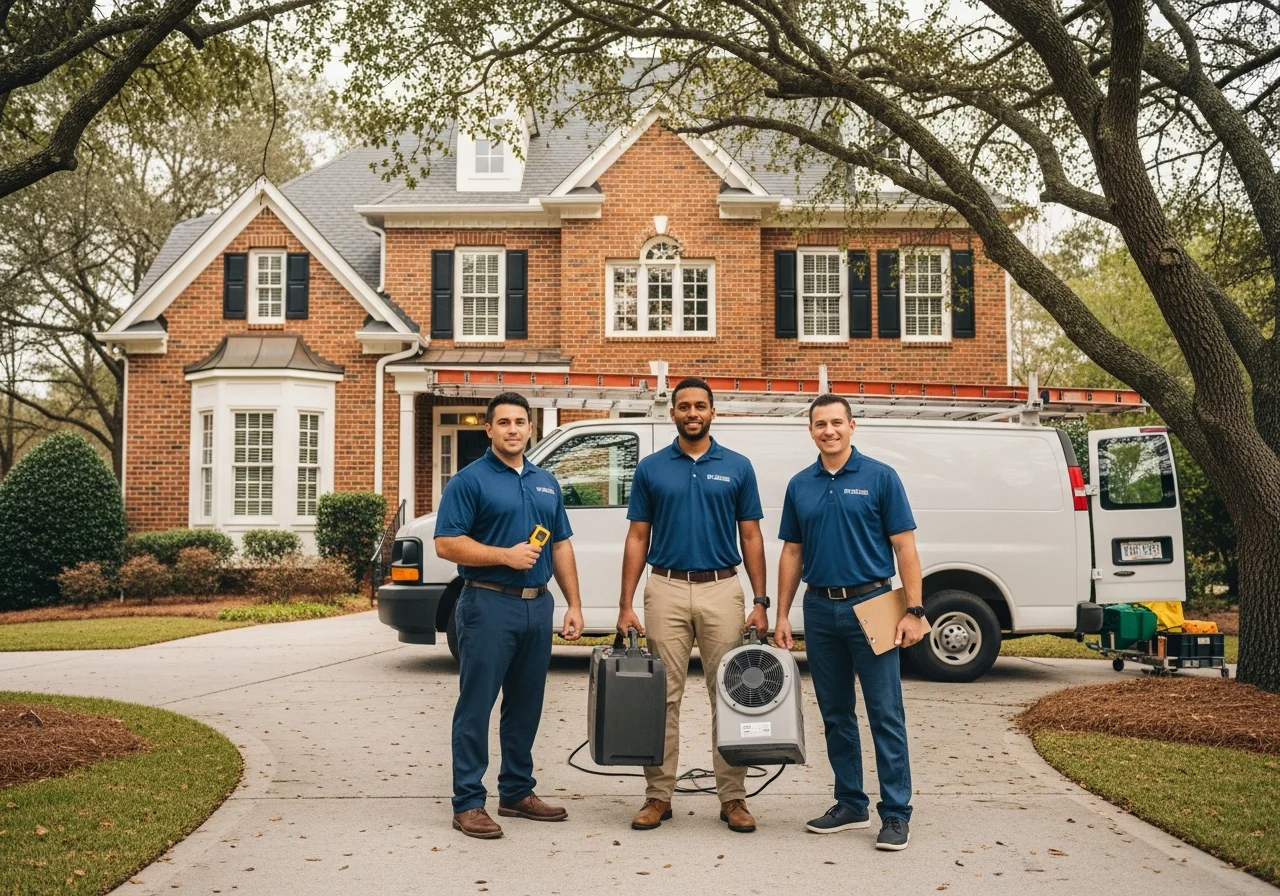
Our IICRC-certified crew arrives with specialized equipment for soot and smoke remediation
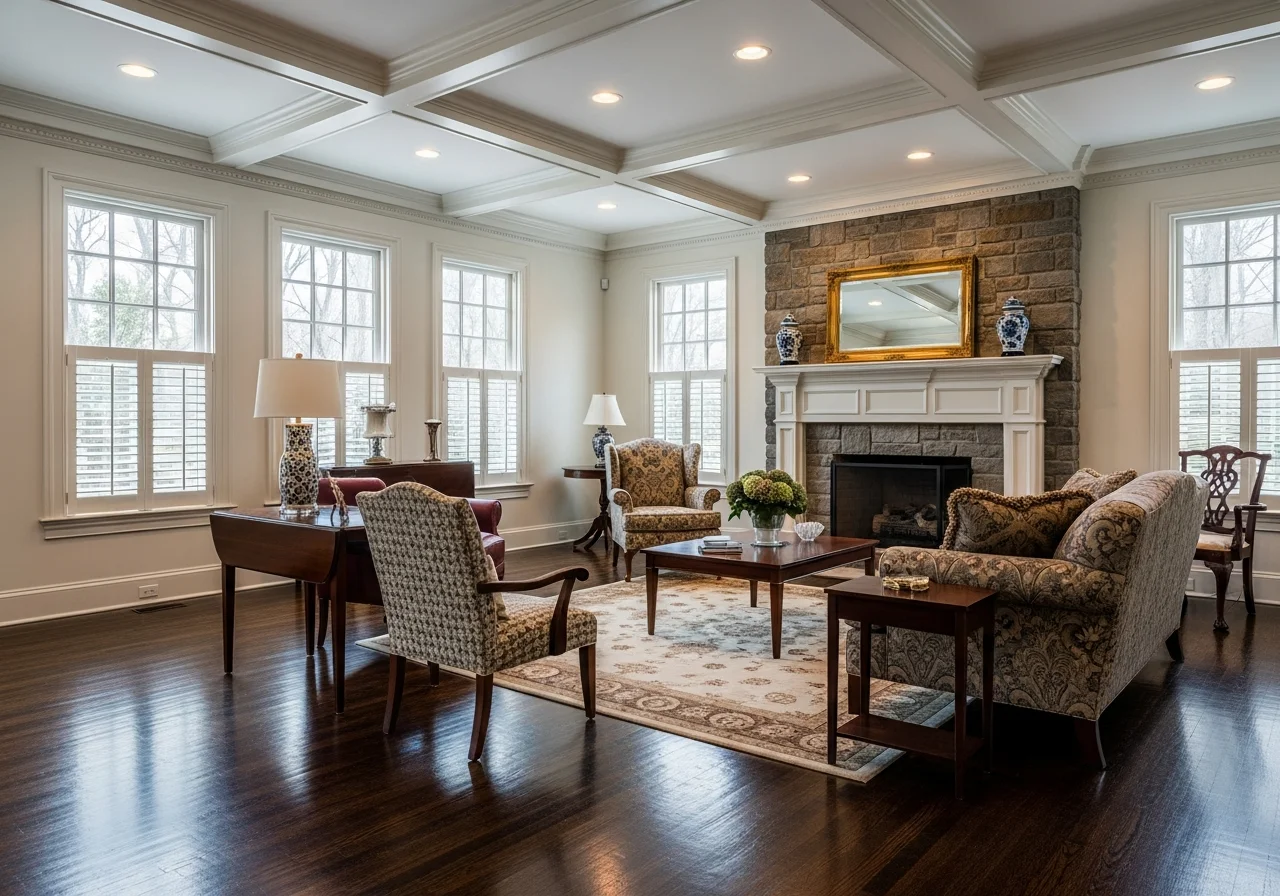
After: Fully restored with refinished hardwood floors, new paint, and matched trim
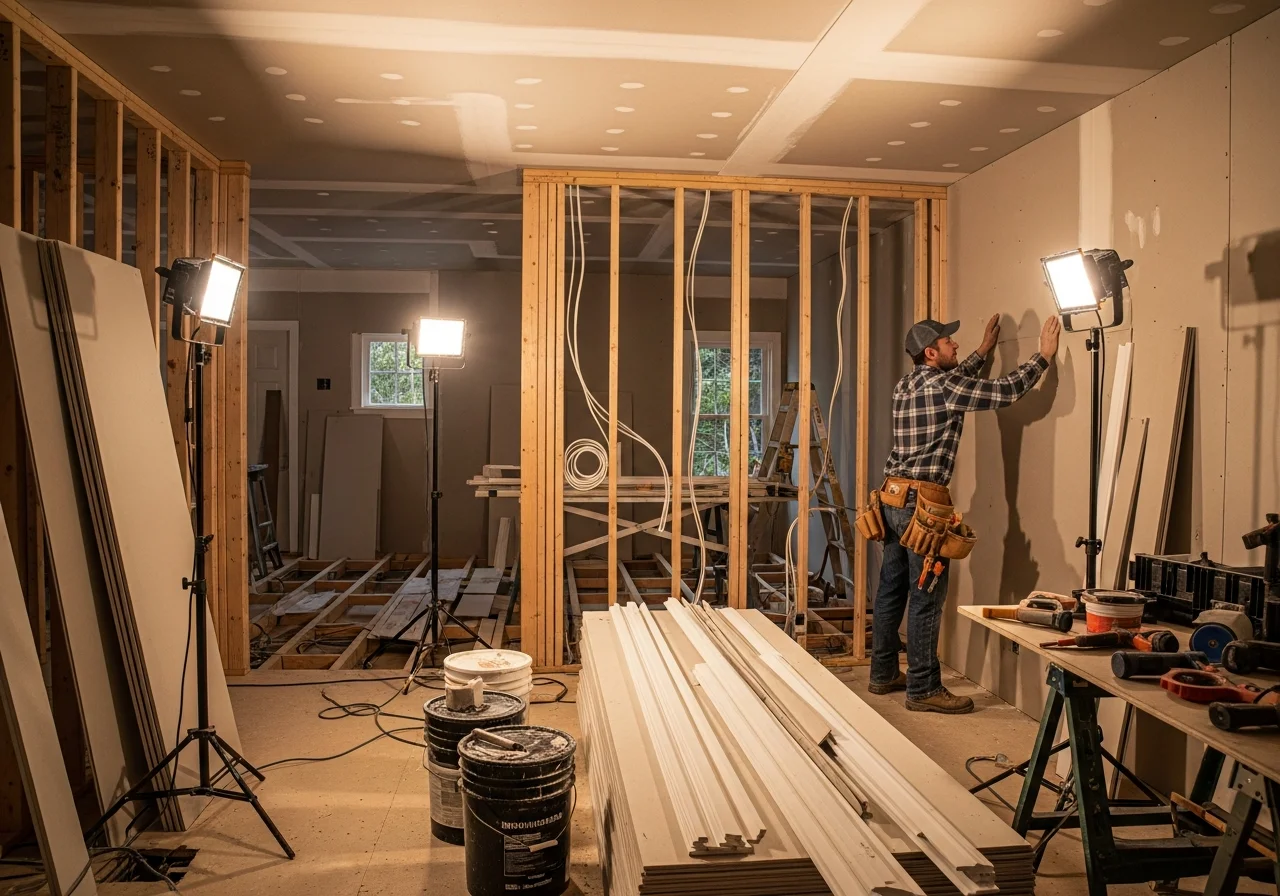
Reconstruction in progress — new framing, drywall, and electrical in a Matthews home
Insurance Coverage
Fire Insurance Claims in Matthews: What's Covered
Fire is one of the most comprehensively covered perils under North Carolina homeowners
insurance policies. Unlike water or mold damage, fire claims rarely face coverage
disputes — your policy is designed for exactly this situation. Matthews homeowners pay
an average of $1,900 to $2,400 annually for coverage, and NC premiums have risen 44.4%
since 2020. Here's what a standard HO-3 policy covers for fire damage.
Structural repair and reconstruction to pre-loss condition
Professional soot and smoke cleaning of all affected surfaces
Water damage from fire suppression (extraction and drying)
Contents restoration or replacement (furniture, electronics, clothing)
Additional Living Expenses (ALE) for temporary housing during restoration
Debris removal and hazardous material disposal
Building code upgrades required during reconstruction (with ordinance-and-law endorsement)
Palm Build Manages Your Matthews Fire Claim
We work directly with your insurance adjuster from the first inspection. Our fire damage
documentation — structural assessments, soot type classification, moisture readings,
photo evidence, and detailed scopes of work — is formatted exactly how NC carriers
expect to receive it. Because Matthews straddles two counties, we ensure all
documentation, permits, and code compliance references match the correct jurisdiction
for your specific address.
Why Matthews Homeowners Choose Palm Build After a Fire
Minutes From Matthews — Not Hours
Our Crompton Street operations hub is 15 minutes from Matthews via I-485. We're on-site in 30-45 minutes — not waiting for a national franchise to dispatch from another metro. Board-up, tarping, and soot stabilization begin the same night, whether you're in 28105 or 28104.
IICRC Fire & Smoke Certified
Every crew lead holds current IICRC Fire and Smoke Restoration Technician (FSRT) certification. We follow the S540 standard for professional fire and smoke damage restoration and understand the specific challenges of Matthews' 1980s-2000 colonial construction — wood framing, hardwood floors, and brick veneer.
Multi-Damage Expertise for Matthews Homes
Fire projects in Matthews always involve water damage from suppression and often involve mold risk due to crawl space construction on Cecil clay soil. Our technicians are cross-trained in fire, water, and mold restoration — one team manages the entire scope without handoffs or separate contractors.
Two-County Permit & Insurance Specialists
Matthews straddles Mecklenburg and Union County — different fire departments, different permit authorities, different inspection timelines. Palm Build handles all permitting through the correct jurisdiction and formats insurance documentation to match NC carrier requirements, reducing back-and-forth and getting your claim approved faster.
Full Reconstruction Through Final Punch List
From emergency board-up through final paint and trim, Palm Build handles the entire project. For Matthews' colonial-style homes, we source matching trim profiles, brick veneer, hardwood species, and architectural details that bring your home back to pre-loss condition — not a generic rebuild.
Common Questions
Matthews Fire & Smoke Damage FAQ
How quickly should fire damage restoration begin in Matthews?
Immediately. Soot becomes increasingly acidic within hours and causes permanent etching on metal, glass, and stone surfaces if not neutralized. Smoke odor penetrates deeper into materials with every passing day. Palm Build responds within 30-45 minutes from our Charlotte operations hub to begin emergency board-up, tarping, and soot stabilization anywhere in the Matthews 28105 and 28104 zip codes.
Does homeowners insurance cover fire damage restoration in Matthews?
Yes — fire damage is one of the most comprehensively covered perils under standard NC homeowners policies (HO-3). Coverage typically includes structural repair, contents restoration, smoke and soot cleanup, temporary living expenses (ALE), and debris removal. Matthews homeowners pay an average of $1,900 to $2,400 annually for this coverage, and NC premiums have risen 44.4% from 2020 to mid-2025.
My Matthews home has wood framing and hardwood floors. Can they be saved after a fire?
Often yes, depending on heat exposure and char depth. Matthews' colonial-style homes typically feature dimensional lumber framing and hardwood flooring that chars on the surface but retains structural integrity underneath. Palm Build's technicians assess char depth, check for heat-weakened joists and studs, and determine salvageability before recommending replacement. Hardwood floors can often be sanded, treated, and refinished rather than replaced entirely.
My home is in the 28104 zip code. Does that affect fire department response or permits?
Yes. Matthews straddles the Mecklenburg-Union county line. ZIP 28105 falls under Matthews Fire & EMS (Mecklenburg County), while ZIP 28104 falls under Union County Fire. Permits for reconstruction also differ — 28105 uses Mecklenburg County LUESA, while 28104 goes through Union County Code Enforcement. Palm Build handles all permitting for both jurisdictions as part of our fire restoration service.
How do you remove smoke odor from older Matthews homes with brick veneer?
Smoke odor elimination in Matthews' brick veneer homes requires treating the source, not just masking it. Brick is extremely porous and absorbs smoke deeply — sometimes several inches into the masonry. We use thermal fogging to penetrate the same pathways smoke took, combined with ozone treatment for sealed interior spaces and hydroxyl generation for occupied areas. Most Matthews homes require multiple treatment passes due to the combination of brick, hardwood, and the wood framing typical of 1980s-2000 construction.
What about water damage from firefighting in Matthews homes?
Fire suppression often causes more water damage than the fire itself. A single fire hose delivers 150-250 gallons per minute. In Matthews' crawl space homes built on Cecil clay soil, fire suppression water pools under the house on slow-draining clay and begins feeding mold growth within 24-48 hours. Palm Build handles both fire and water damage simultaneously — we begin water extraction and structural drying while performing soot stabilization.
How long does fire damage restoration take in Matthews?
Timeline depends on severity. Small kitchen fires with contained smoke may take 1-2 weeks. Moderate residential fires typically require 4-8 weeks. Major structural fires can take 3-6 months including full reconstruction. Matthews homes built in the 1980s-2000 era often require matching specific colonial-style trim profiles, brick veneer patterns, and hardwood species, which can extend material sourcing timelines.
Are Matthews homes with 1980s electrical systems at higher fire risk?
Yes. Over 53% of Matthews homes were built between 1980 and 2000, and many still have original electrical panels, wiring, and HVAC systems that were not designed for modern electrical loads — multiple devices charging, home offices, smart home systems, and updated kitchen appliances. These aging systems are a leading cause of residential electrical fires. Homes in Cherokee Woods and Sardis Forest from the 1970s-80s are particularly at risk with outdated wiring that may include aluminum branch circuits.
Fire Damage in Matthews? Every Hour Counts.
Soot becomes permanently damaging within hours. Palm Build's team responds in 30-45 minutes from our Charlotte hub with emergency board-up, soot stabilization, and water extraction — plus insurance documentation from the first call.