Quick Answer
After a major fire or flood, reconstruction follows mitigation as a separate, permit-driven phase — not a continuation of cleanup. The sequence runs: emergency stabilization → controlled demolition of unsalvageable materials → structural drying to verified moisture targets → Xactimate scope and permit application → rebuild and material matching → final inspection. Skipping or compressing any phase leads to failed inspections, insurance disputes, or hidden moisture locked inside finished walls. In Florida, North Carolina, and South Carolina, the rebuild phase typically requires a licensed general contractor and must comply with current building codes — not just restore to the original condition.
Key takeaways
- Reconstruction is a distinct phase that begins only after the structure is dry and stable — starting it early locks moisture inside walls and causes mold and structural failure.
- Xactimate is the industry-standard estimating platform insurers use; a line-item scope tied to actual measurements is what drives the settlement and the permit set.
- Building permits are not optional: fire and flood damage that affects structural, electrical, or mechanical systems triggers required permit pulls in every state, and inspectors check code compliance — not just pre-loss condition.
- Florida's High-Velocity Hurricane Zone (HVHZ), covering Broward and Miami-Dade, enforces stricter wind-design and opening-protection requirements that affect rebuild specifications even on interior-damage claims.
- A contractor who performs both mitigation and reconstruction simplifies documentation and eliminates scope gaps — but every phase must be sequenced correctly, with verified drying before any assembly work begins.
The word 'restoration' implies a single, continuous job — clean up the damage and put the building back. In reality, after a major fire or flood, the work divides into two separate and sequentially dependent efforts: mitigation (stopping further damage, removing wet and charred material, drying the structure) and reconstruction (rebuilding what was removed to a permitted, code-compliant, insured condition). Mixing those phases — or starting the rebuild before the structure is truly dry and stable — is the single most common reason a property ends up with mold behind new drywall, failed inspections, or an insurance dispute that drags for months. This guide covers how the mitigation-to-rebuild sequence actually works, what each phase requires, how Xactimate scoping ties insurance to permits, and the state-specific details that matter in Florida, North Carolina, and South Carolina.
Window in which Category 1 water can degrade toward Category 2/3 contamination (IICRC S500)
24–72 hrs
Common total timeline from loss to final inspection on a major residential reconstruction
3–6 months
HVHZ design wind speed (Broward + Miami-Dade) — affects rebuild specifications under Florida Building Code
~170–175 mph
Every major loss produces two distinct billable and permitable scopes: mitigation and reconstruction
2 phases
Why Reconstruction Is Its Own Phase
Mitigation and reconstruction are legally, contractually, and technically distinct. Mitigation covers everything done to prevent further damage — water extraction, smoke cleaning, controlled demolition of unsalvageable materials, and structural drying. Reconstruction services cover the actual rebuild: framing, insulation, drywall, flooring, painting, cabinetry, mechanical rough-ins, and finish work. Insurers track these separately, permits are pulled against reconstruction scope (not mitigation scope), and the sequencing is hard: reconstruction cannot begin until the structure meets a dry standard that a moisture meter confirms, not one that looks or feels dry to the touch.
On large-scale events — multi-unit fires, major storm-surge floods, or commercial losses — the distinction becomes even more critical. Large-loss handling at scale involves program management, third-party administrators, and multiple trade contractors, each of whom enters the job at a defined handoff point. A project manager who confuses the mitigation closeout with rebuild readiness creates scope gaps that no one owns, and those gaps show up later as callbacks or claim disputes.
The Full Sequence: Mitigation Through Rebuild
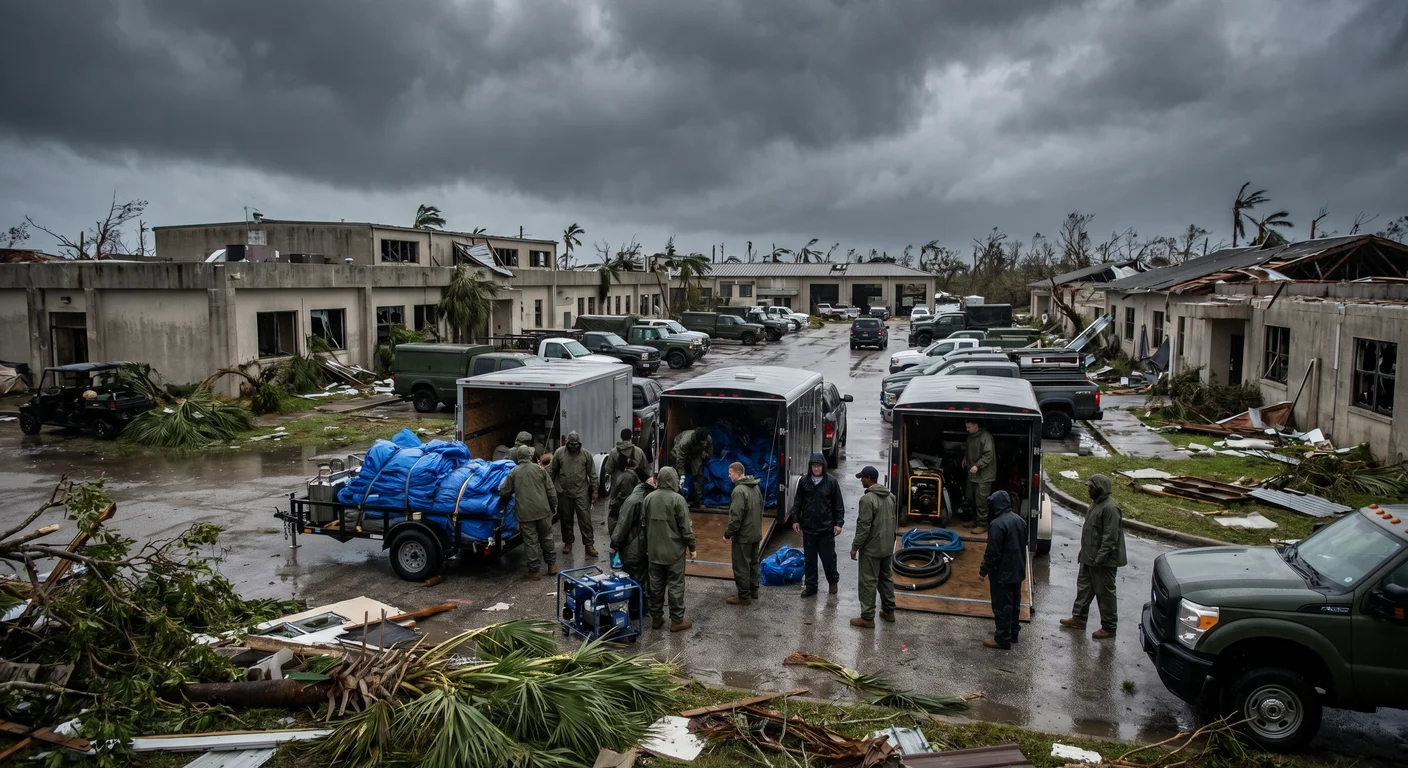
Every major fire or flood follows the same backbone. The details vary — fire leaves char and soot where flooding leaves saturated framing — but the phase logic is identical. Here is the sequence a professional reconstruction team follows.
- 1
Emergency stabilization
The first crew on site stops active damage: board up broken windows and doors, tarp the roof if compromised, shut off utilities at risk of secondary ignition or electrocution, and extract standing water. This phase is about preventing the loss from growing, not about starting the cleanup.
- 2
Controlled demolition
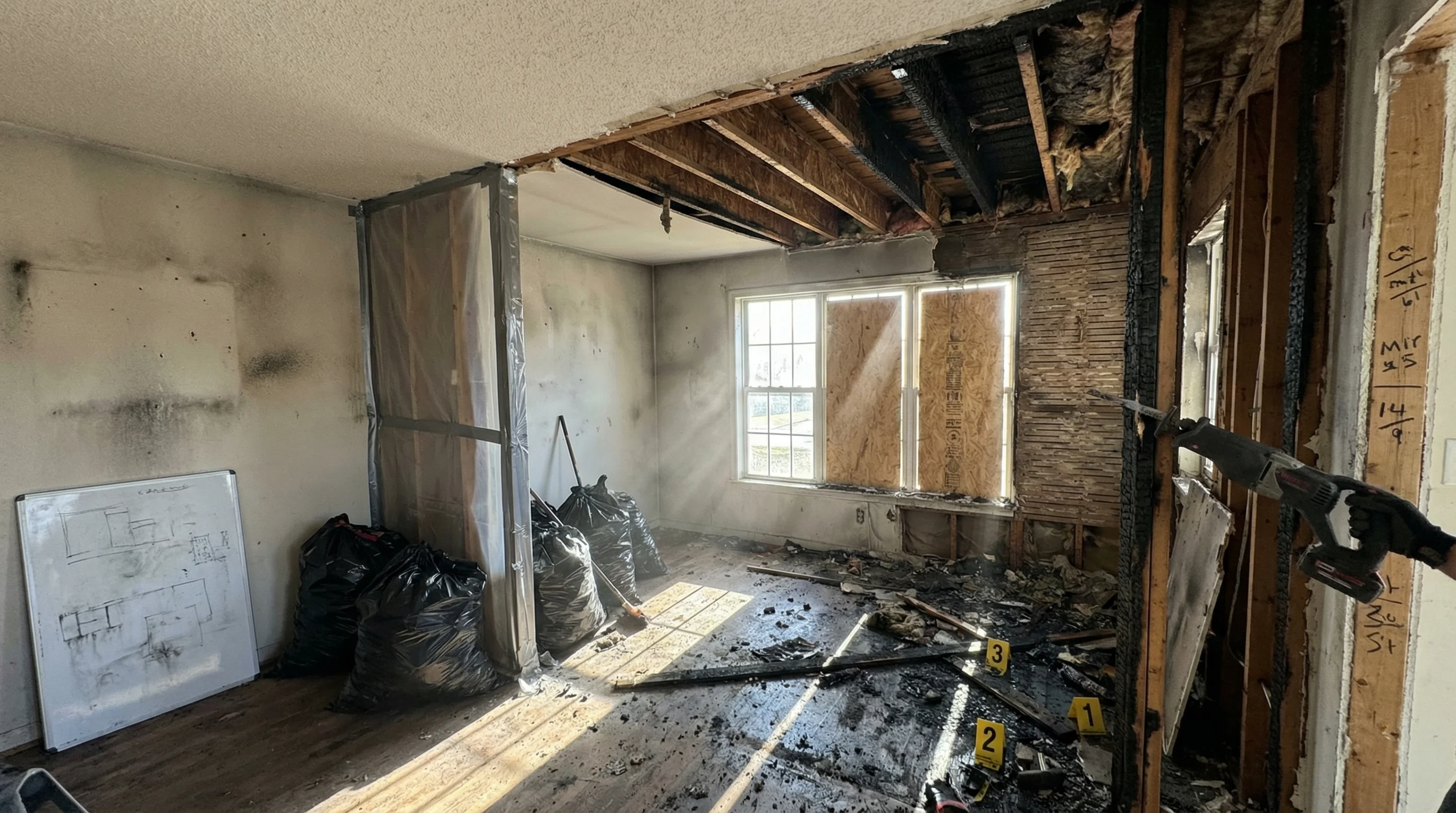
Everything unsalvageable comes out — fire-damaged framing and drywall, smoke-saturated insulation, water-saturated flooring and wall assemblies. Demo follows cut lines designed to expose hidden damage and reach dry material. What stays informs the rebuild scope; what goes informs the insurance estimate.
- 3
Structural drying to verified targets
Industrial air movers and dehumidifiers dry all remaining materials to a documented moisture standard. Readings are logged daily against reference materials (undamaged framing elsewhere in the structure). Per IICRC S500 guidance on water damage, drying targets are confirmed with meters — not timelines or visual checks. This phase must complete before any assembly work begins.
- 4
Scoping with Xactimate
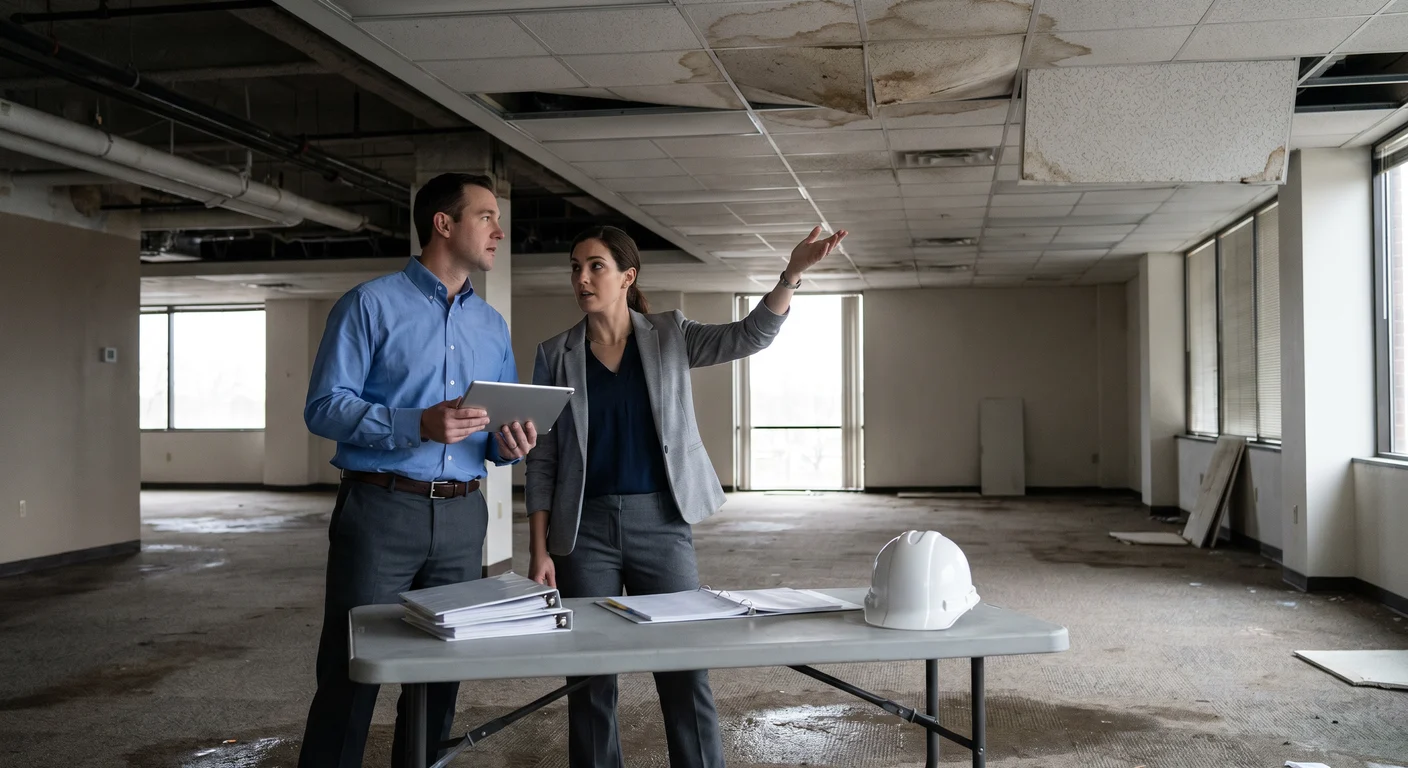
Once the structure is dry and demo is complete, an estimator measures every affected area and builds a line-item scope in Xactimate, the industry-standard platform insurers use to adjudicate claims. The scope documents every material, quantity, and labor item the rebuild requires. It becomes the foundation of the insurance supplement and the basis for permit drawings on structural, electrical, mechanical, and plumbing work.
- 5
Permit application and plan review
Fire and flood damage that affects structural elements, electrical wiring, HVAC, or plumbing triggers a required permit pull in every jurisdiction. The permit application references the Xactimate scope and, where required, engineered drawings. Plan review confirms code compliance — in Florida, this includes Florida Building Code provisions and, in the HVHZ, stricter wind-design and impact-protection requirements.
- 6
Rebuild: structure, systems, and finishes
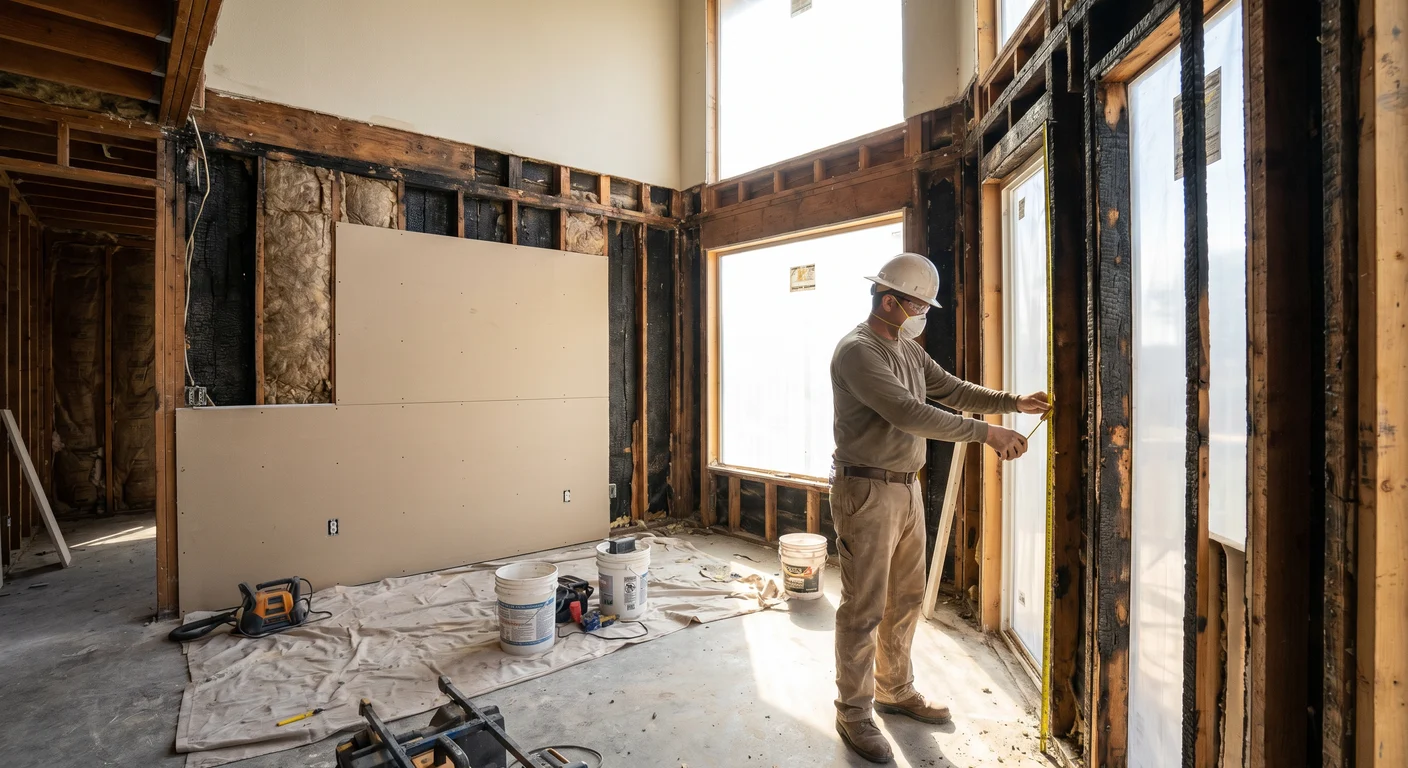
With permits in hand, reconstruction proceeds in trade sequence: structural framing first, then rough mechanical and electrical, then insulation, then drywall, then finish work — flooring, cabinetry, painting, trim, and fixtures. Each trade must complete and be inspected before the next phase begins. Material selections aim to match the pre-loss condition, documented with photos from the insurance file.
- 7
Final inspection and closeout
The jurisdiction's building inspector signs off each phase and issues a final certificate of occupancy or completion. The insurer's adjuster confirms the scope has been executed. Documentation — including all moisture logs, permit cards, inspection records, and photo documentation — goes into the claim file. The property is returned to pre-loss condition or better.
Fire vs. Flood: How the Damage Type Changes the Rebuild
The sequence above applies to both fire and flood losses, but the specific challenges differ in ways that affect scope, timeline, and material selection. Fire and smoke cleanup leaves soot and char that must be fully addressed before any rebuilding — residual odor locked behind new drywall or insulation is one of the most common callbacks on fire rebuilds. Porous materials in the affected zone typically require full removal rather than cleaning, and HVAC systems often need decontamination or replacement because they can spread smoke particulate through the duct network.
Flood losses, which feed the water restoration side of the job, create their own rebuild complications. Category 3 water — sewage-contaminated or storm-surge water — requires full removal of all porous materials the water contacted, including framing if moisture readings remain elevated. In coastal markets like South Florida, saltwater intrusion accelerates corrosion on metal fasteners, junction boxes, and HVAC coils, which can show up as a failure months after the structure is visually repaired. A thorough scope catches this; a rushed one does not.
Xactimate Scoping and the Insurance Estimate
Xactimate is the estimating platform used by the vast majority of property insurers in the United States to price claims. It prices repairs by line item — each material, each labor operation, each equipment item — using geo-adjusted unit costs for your zip code. When a restoration contractor and an insurance adjuster both work in Xactimate, disputes become a line-item conversation rather than a guess, which is why the scope document matters so much.
A well-built scope captures everything: the square footage of every damaged surface, the linear footage of trim, the count of outlets and switches that need replacement, the type and thickness of flooring, the ceiling height that affects drywall labor. Anything left out of the initial scope requires a supplement, which adds time to the settlement. On large-loss events that involve large-loss handling — commercial buildings, multi-unit structures, or catastrophic residential losses — the supplement process is a structured part of the program, but it still adds weeks. A thorough initial scope is cheaper in total project time than an optimistic one.
Permits and Code Compliance: What You Must Know
Building permits are not bureaucratic formalities on a major loss — they are legal requirements, and inspectors do not just confirm the work was done; they confirm it meets current code. On a pre-2000 home, a fire or flood rebuild may trigger required upgrades to electrical panels, GFCI and AFCI circuits, smoke and CO detector placement, egress window sizing, and more. The permit scope defines which upgrades are required; the Xactimate estimate should include them. If your contractor pulls a permit and the work fails inspection because it was built to 1987 standards, the rework comes out of the project budget.

Matching Pre-Loss Condition: Materials and Documentation
Insurance policies typically obligate payment to restore the property to its pre-loss condition — not to upgrade it, and not to downgrade it. That obligation depends on documentation. A property with custom hardwood floors, non-standard tile, or specialty cabinetry requires photos and specifications from the insurance file to confirm what 'matching' means. In the absence of documentation, adjusters and contractors negotiate over assumptions, and assumptions cost time and money.
The matching obligation can also create complexity when a damaged material is discontinued. Flooring that was installed a decade ago may no longer be available, which triggers an insurer's 'like kind and quality' standard — a material of equivalent type, performance, and visual character. A contractor who documents the original installation (manufacturer, product line, approximate installation date) gives the adjuster more to work with and the homeowner a better outcome. This is why photo documentation from the very first visit — before demo begins — is not optional on a major loss. Contact us early to establish this documentation baseline.
| Phase | What happens | Common checkpoint |
|---|---|---|
| Emergency stabilization | Board-up, tarp, utility shutoff, water extraction | Insurance initial report filed; adjuster notified |
| Controlled demolition | Unsalvageable material removed; hidden damage exposed | Photo documentation; adjuster walkthrough recommended |
| Structural drying | Air movers + dehumidifiers; moisture logged daily to target | Moisture log reviewed; drying complete before assembly |
| Xactimate scoping | Line-item estimate built from measured quantities | Adjuster agreement or supplement negotiation |
| Permit application | Drawings submitted; plan review; permit issued | Jurisdiction-specific; HVHZ review in Broward/Miami-Dade |
| Rebuild | Framing → systems rough-in → drywall → finishes | Framing, rough, and final inspections |
| Final closeout | Certificate of completion; insurer sign-off; documentation package | Claim closed; occupancy restored |
Major reconstruction phases and what each requires — a reference for property owners navigating the rebuild process.
What to Look for in a Reconstruction Contractor
A contractor who handles both mitigation and reconstruction removes the handoff risk — no finger-pointing between the demo crew and the rebuild crew about what the structure looked like when it was handed over. But that only works if the contractor sequences the phases correctly. The mitigation team must close out the drying phase with documented moisture logs before the reconstruction team sets a single stud. On a major loss, ask to see the drying logs and the Xactimate scope before the rebuild contract is signed.
Signs of a qualified reconstruction contractor
- Provides moisture logs from drying phase before any rebuild assembly begins
- Builds a line-item Xactimate scope tied to actual measured quantities
- Pulls all required permits and schedules trade inspections at each phase
- Documents pre-loss condition with photos before controlled demo starts
- Holds state general contractor license for the jurisdiction
Red flags on a reconstruction bid
- Proposes to skip or combine the drying and rebuild phases to save time
- Offers a lump-sum estimate with no line items tied to actual quantities
- Advises against pulling permits to keep costs down or speed up the job
- Cannot produce moisture readings or drying logs from the mitigation phase
- Does not reference code compliance or HVHZ requirements in Florida markets
Frequently Asked Questions
Can reconstruction start before the structure is fully dried? +
Do I need a permit to rebuild after a fire or flood? +
What is Xactimate and why does it matter for my claim? +
What does matching pre-loss condition actually mean? +
How long does reconstruction take after a major fire or flood? +
Related Guides & Next Steps
Reconstruction Services
From Xactimate scoping and permits through full rebuild and final inspection — across Florida, North Carolina, and South Carolina.
Large-Loss Handling
Program management, TPA coordination, and multi-building response for catastrophic commercial and residential losses.
Fire & Smoke Cleanup
Char removal, soot cleaning, odor neutralization, and structural drying before the rebuild phase begins.
Water Restoration
Emergency extraction, structural drying to IICRC S500 targets, and moisture verification before any reconstruction.
International Code Council (ICC)
Model building codes and code compliance resources referenced by Florida, North Carolina, and South Carolina building departments.
Ready to start the rebuild? Palm Build handles both phases.
Palm Build manages the full sequence — from emergency stabilization and structural drying through permitted reconstruction — so there are no handoff gaps, no scope disputes, and no moisture locked behind new drywall. Serving Florida, North Carolina, and South Carolina with 24/7 emergency response.
Found this helpful? Send it to someone who needs it.