Crawl Space Cleanup & Encapsulation in Concord, North Carolina
Crawl space construction is the default foundation type for pre-2005 Concord homes — and the dominant 1980s-1990s housing cohort carries every risk factor that makes crawl spaces fail: bare-soil floors, foundation vents designed under outdated code, HVAC ductwork sweating in humid summers, falling fiberglass insulation, and aging wood framing absorbing moisture from Cecil series clay soil that drains at just 6-15 cm per hour. Advanced Energy NC field research confirms what Concord homeowners already suspect: vented crawl spaces in North Carolina exceed 80% relative humidity in spring and summer, while sealed crawl spaces stay below 65%. Palm Build provides complete crawl space remediation — moisture control, mold removal, encapsulation, structural repair, and radon testing — addressing the root cause beneath your Concord home.
20 miles — Charlotte, NC 30-45 min Response IICRC Certified
If your Concord home was built before 2005, there is a very high probability that you
are living above a crawl space -- and that crawl space is the single greatest structural
risk your home faces. Not storms, not fire, not plumbing failures. The slow, silent
accumulation of moisture beneath your floors is degrading framing, feeding mold colonies, and eroding your home's structural integrity year after year.
85%+
Concord homes on crawl spaces
80%+
Vented crawl space RH
6-15 cm/hr
Clay soil infiltration
60% RH
Mold growth threshold
Cecil Series Clay Soil
6-15 cm/hr
Clay infiltration rate
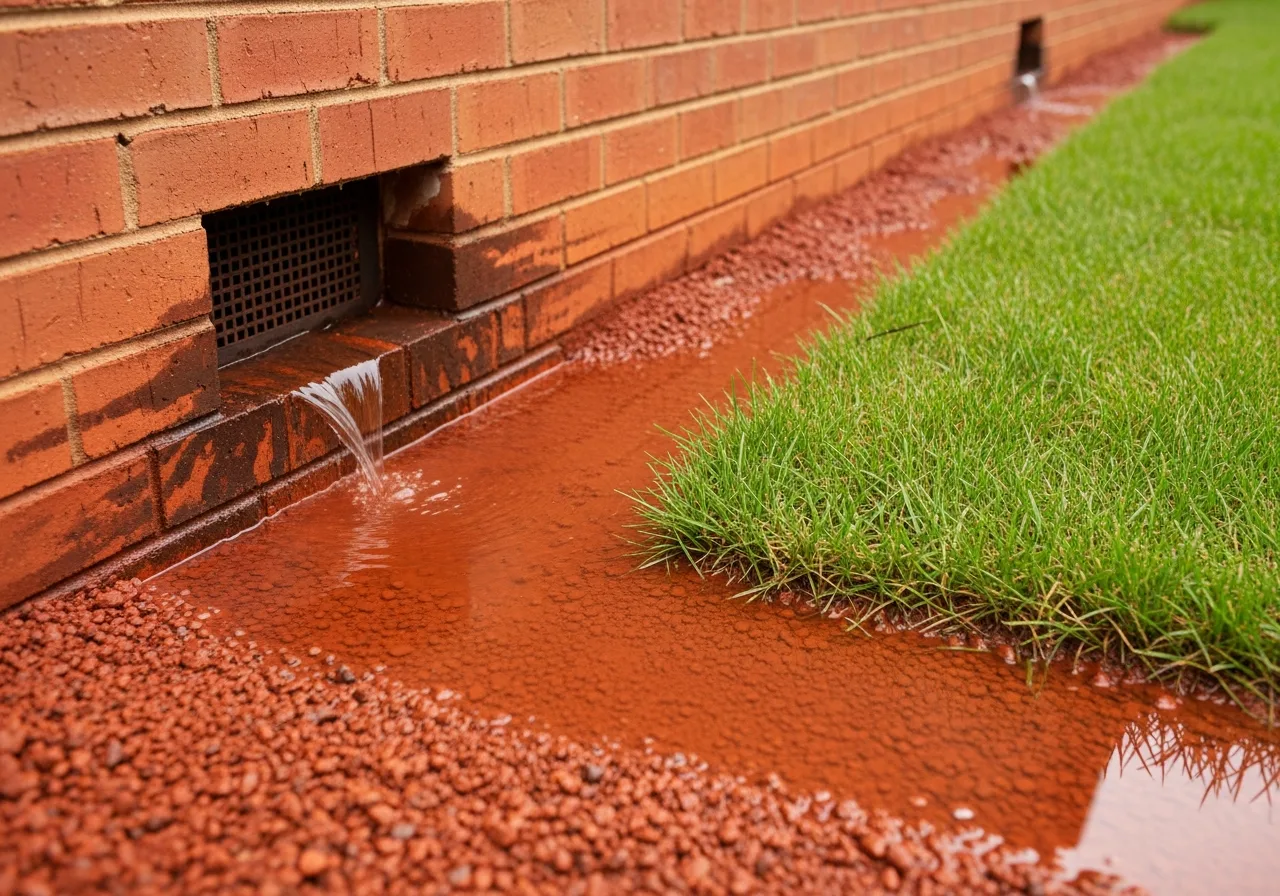
Concord sits atop Cecil series clay -- iron-rich, deep red, and among the most moisture-retentive soils in the Piedmont region. With an infiltration rate of just 6-15 cm per hour, this clay holds rainwater against foundation walls and footings for days after every storm. Water migrates through concrete block foundations by capillary action and evaporates into the crawl space as a continuous moisture source that no amount of passive ventilation can overcome.
Vented Crawl Space Code
80%+ RH
Vented crawl space humidity
The majority of pre-2005 Concord homes were built with foundation vents -- a code requirement based on the theory that air circulation prevents moisture. In humid subtropical climates, this approach is catastrophically wrong. Advanced Energy NC research found vented crawl spaces exceed 80% relative humidity in spring and summer, while sealed crawl spaces stay below 65%. The vents are not drying the space -- they are the primary moisture delivery system.
HVAC Ductwork in Crawl Space
85%+
Homes with HVAC in crawl
The dominant 1980s-1990s Concord housing stock runs HVAC supply and return ductwork through the crawl space. When conditioned 55-degree air passes through ducts surrounded by 85-degree, 80%+ humidity air, condensation forms on the duct exterior constantly -- sweating hundreds of gallons into the crawl space over a summer season. This moisture saturates insulation, pools on vapor barriers, and feeds mold growth on every surface it contacts.
Five-Month Humidity Window
5 months
Continuous mold-risk window
Outdoor dew points in Concord exceed 65 degrees Fahrenheit from late May through early October -- five continuous months where every cubic foot of warm humid air entering through foundation vents deposits condensation on cooler crawl space surfaces. No rainfall needed. Mold colonization risk is continuous, not episodic, exceeding the 60% RH threshold for active mold growth for more than half the calendar year.
Crawl space construction is the default foundation for pre-2005 Concord homes -- and the
number one source of hidden structural damage in Cabarrus County.
What We Find Beneath Concord Homes
6 Common Crawl Space Problems in Concord, NC
Concord's dominant 1980s-1990s housing stock was built with every feature that modern
building science has since identified as a crawl space failure. Here are the six
conditions Palm Build encounters in nearly every Concord crawl space inspection.
Critical
Bare Soil Floors
The majority of pre-2005 Concord crawl spaces have either no vapor barrier or a degraded 6-mil poly sheet that has torn, shifted, or decomposed over decades. Bare Cecil clay soil releases moisture vapor continuously into the crawl space -- a process that accelerates in summer when soil temperature rises. Without a sealed, heavy-duty barrier, the soil is a permanent moisture source feeding humidity levels that exceed the 60% mold colonization threshold year-round.
Critical
Open Foundation Vents
Foundation vents were required by the building code under which most Concord homes were built. The theory -- that air circulation dries crawl spaces -- has been proven catastrophically wrong in humid climates. Advanced Energy NC field research confirms vented crawl spaces in North Carolina exceed 80% relative humidity in spring and summer. Every open vent is actively delivering moisture into the space it was designed to dry.
High
Sweating HVAC Ducts
HVAC ductwork running through Concord crawl spaces carries 55-degree conditioned air through spaces that reach 85+ degrees with 80%+ humidity in summer. The temperature differential causes constant condensation on duct exteriors -- visible sweating that drips onto insulation, pools on the ground, and saturates every surface it contacts. This single factor can introduce hundreds of gallons of moisture per season without any water intrusion event.
Moderate
Fallen Insulation Batts
Fiberglass batt insulation installed between floor joists was standard practice in Concord construction from the 1970s through the 2000s. Once crawl space humidity saturates the fiberglass, batts absorb moisture, become heavy, and pull away from joists -- sagging first, then falling to the ground. Fallen insulation serves no insulation purpose and becomes a moisture trap, mold habitat, and pest harborage on the crawl space floor.
High
Degraded Vapor Barriers
Original 6-mil polyethylene vapor barriers in 1980s-1990s Concord homes have been exposed to UV (through vents), foot traffic from contractors, pest activity, and ground moisture for 25-45 years. Most are torn, displaced, or decomposed -- covering less than half the original floor area. A partial vapor barrier is worse than none: it channels moisture to uncovered areas where evaporation concentrates, creating localized high-humidity zones directly beneath structural members.
Critical
Aging Wood Framing (>19% MC)
Floor joists, sill plates, band joists, and subfloor panels in Concord crawl spaces routinely test above 19% moisture content -- the threshold at which wood supports active mold colonization and begins fungal decay. Composition board (OSB) subfloor used in 1990s-2000s construction swells irreversibly when wet. Original tongue-and-groove subfloor in older homes delaminates and weakens. Both conditions create the bouncy, sagging floors that Concord homeowners notice overhead.
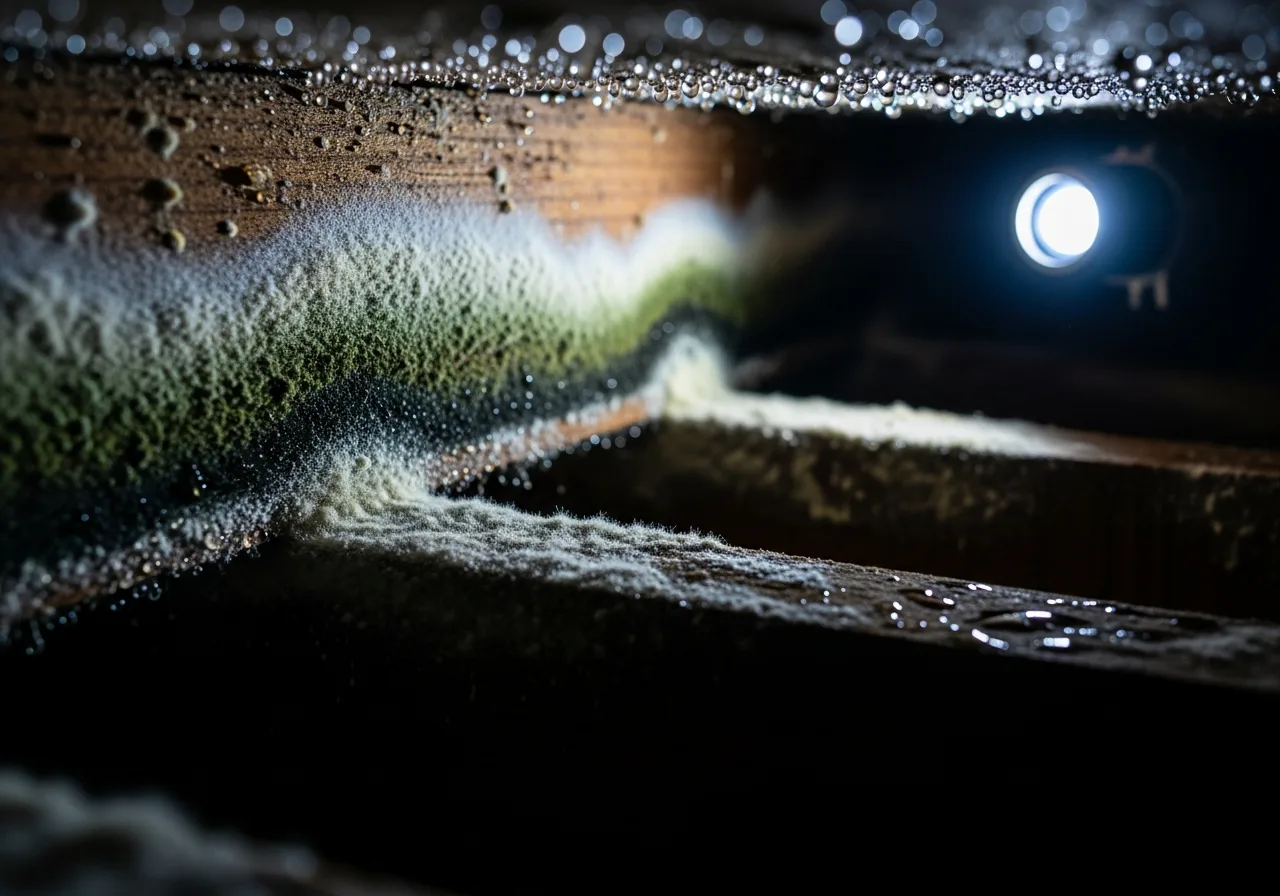
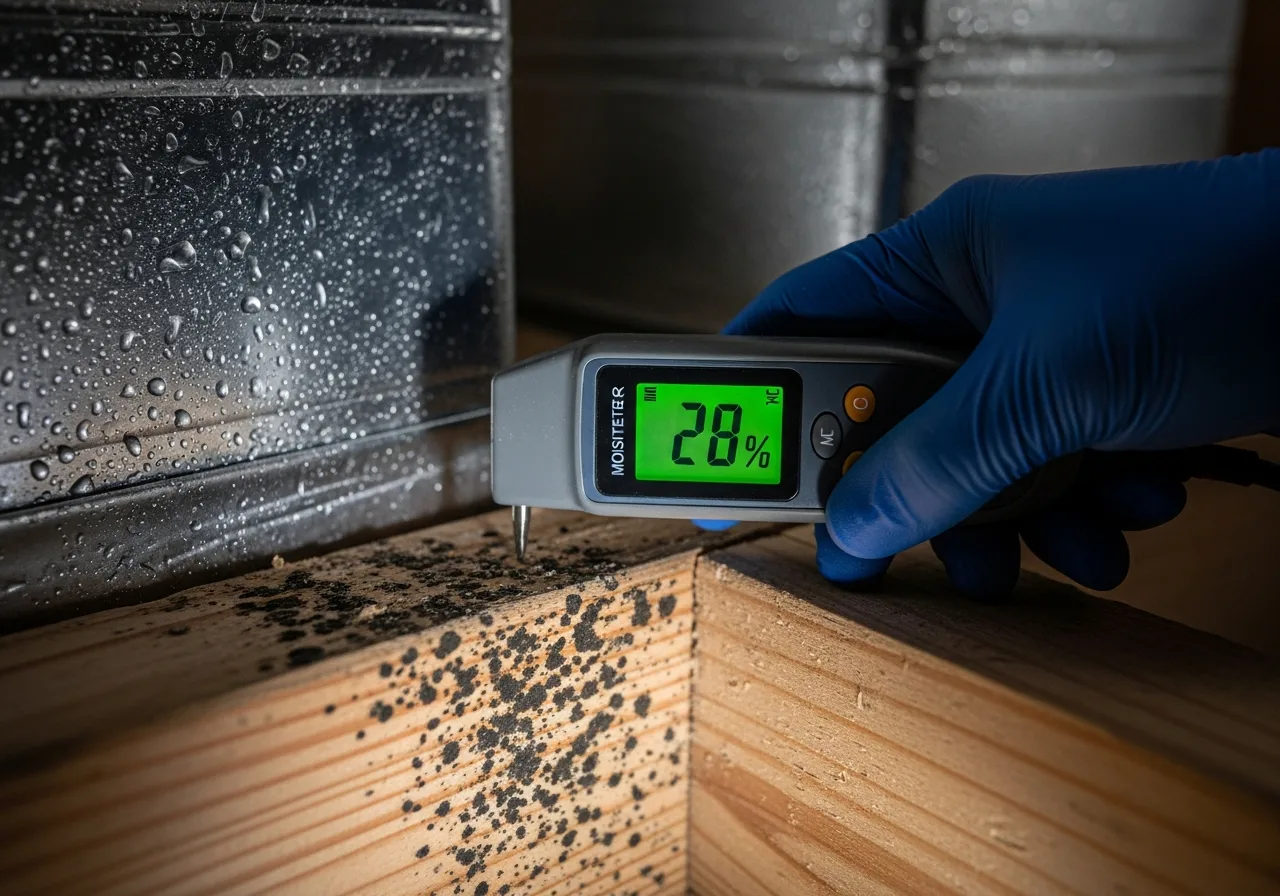
Active mold on floor joists -- the most common finding in Concord crawl space
inspections. Wood moisture above 19% supports active mold colonization and structural
decay.
Construction Era Analysis
Concord Crawl Space Risks by Housing Era
Concord's housing stock spans multiple construction eras, and each era carries a
distinct risk profile for crawl space failure. The dominant 1980s-1990s cohort has the
highest volume of active problems, but pre-1970 homes carry the most severe structural
risk.
Housing Era
Risk Level
Typical Construction
Primary Crawl Space Problems
Pre-1970
Highest Risk
Pier-and-beam, minimal or no vapor barrier, uninsulated
Bare soil floor with no moisture barrier
Wood framing in near-ground contact
Severe joist rot and structural compromise
Original plumbing (galvanized steel) failed or failing
Composition board (OSB) subfloor that swells irreversibly when wet
HVAC condensate drain failures flooding crawl space
Better vapor barriers but still vented
Original fiberglass degraded after 25+ years
Galvanized drain lines corroding
2000s+
Lower Risk
Mix of crawl space and slab, some sealed crawl spaces per updated code
Homes built after 2005 NC code change may have sealed crawl spaces
Significantly lower crawl space risk if sealed
Pre-2005 homes in this era still carry vented crawl space issues
Newer homes may have dehumidifier failures or vapor barrier installation defects
Attic and basement moisture issues more common than crawl space
The 1970s-1990s era is Concord's largest risk pool. These homes represent the
majority of crawl space projects Palm Build handles in Cabarrus County -- polybutylene plumbing,
degraded vapor barriers, fallen insulation, and 25-45 years of unchecked moisture accumulation
on Cecil clay soil.
Our Concord Encapsulation Process
How We Fix Concord Crawl Spaces -- Permanently
Every Concord crawl space requires an approach calibrated to its specific conditions --
a 1960s Beverly Hills brick ranch on piers demands fundamentally different treatment
than a 1995 Castlebrooke home on concrete block. But the science follows a proven
six-step sequence.
01
Assessment & Testing
Day 1
02
Radon Testing
Days 1-3
03
Debris Removal & Mold Remediation
Days 3-7
04
Structural Repair & Drainage
Days 5-10
05
Vapor Barrier & Vent Sealing
Days 8-12
06
Dehumidifier & Final Inspection
Days 10-14
01
Assessment & Testing
Day 1
We enter the crawl space with thermal imaging cameras, pin-type penetrating moisture meters, and ambient air quality monitors. Every structural member -- floor joists, sill plates, band joists, subflooring -- is tested for moisture content. Soil moisture is measured at multiple points across the Cecil clay floor. Foundation walls and piers are inspected for cracking, movement, and moisture intrusion paths. We photograph and document every finding with a timestamped report -- the same documentation your insurance carrier will require if any portion of the damage stems from a covered event.
02
Radon Testing
Days 1-3
Before any encapsulation work begins, we deploy continuous radon monitors in the crawl space for a minimum of 48 hours. Cabarrus County carries an EPA Zone 3 radon designation with an average of 1.4 pCi/L, but individual Concord tests have measured as high as 4.0 pCi/L -- the EPA action level. Because encapsulation seals the soil-to-air interface, it must be designed with radon provisions if pre-test levels are elevated. Testing after encapsulation is too late to establish a baseline.
03
Debris Removal & Mold Remediation
Days 3-7
All fallen insulation, debris, and organic material is removed from the crawl space. If active mold is present -- and in Concord vented crawl spaces, it almost always is -- full IICRC S520 remediation precedes encapsulation. Technicians establish negative air containment, deploy HEPA air scrubbers, and treat every affected wood surface with EPA-registered antimicrobials. Heavily colonized framing is media-blasted to bare wood. Post-remediation air quality testing by a third-party lab confirms clearance.
04
Structural Repair & Drainage
Days 5-10
Rotted sill plates, deteriorated band joists, and compromised floor joists are sistered or replaced. In Concord homes where polybutylene or galvanized supply lines from the 1980s-1990s have failed, we coordinate plumbing replacement. If the crawl space experiences recurring water intrusion from clay soil drainage, we install interior perimeter drainage with a sump pump before encapsulation. Exterior grading corrections redirect surface water away from the foundation.
05
Vapor Barrier & Vent Sealing
Days 8-12
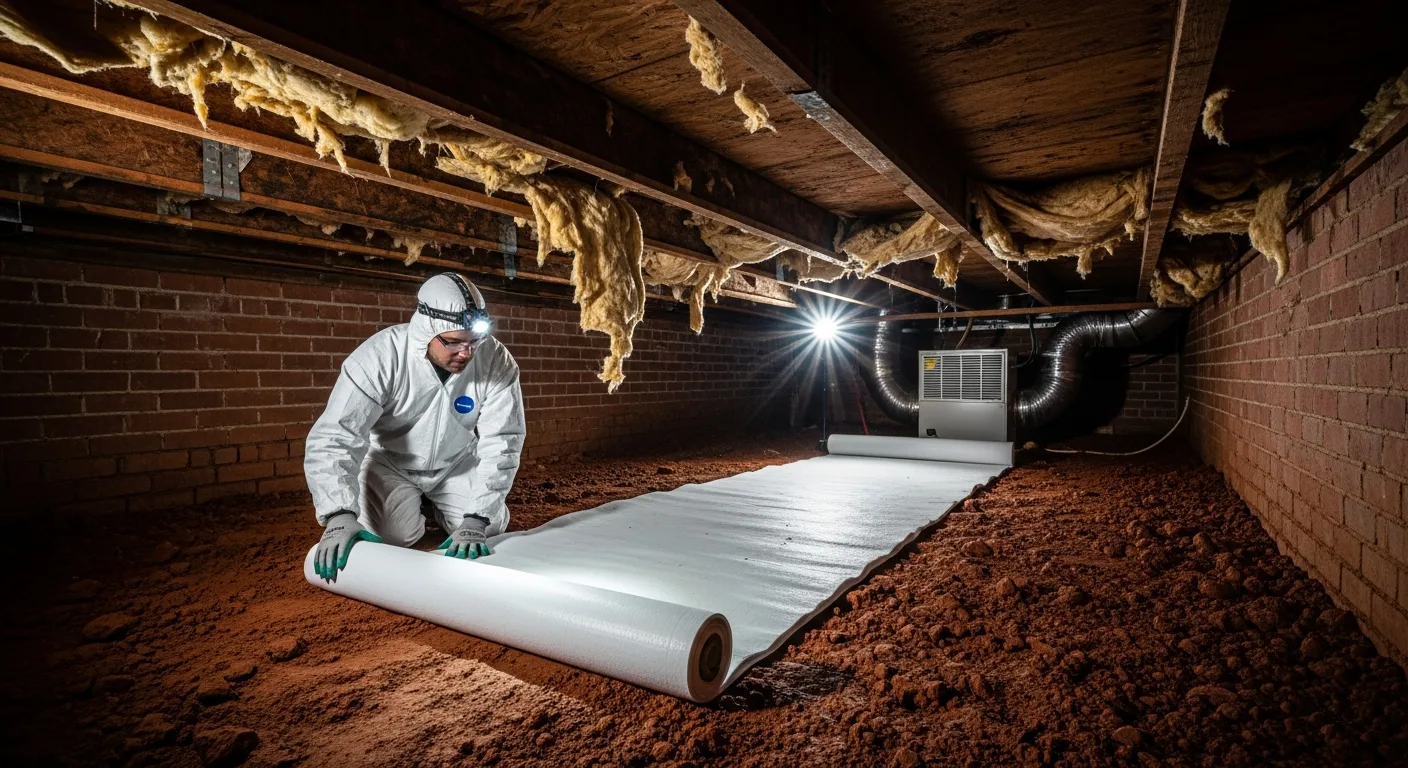
A 12 to 20 mil reinforced vapor barrier is installed across the entire crawl space floor over the Cecil clay, sealed to foundation walls with mechanical fasteners and waterproof tape, and overlapped at every seam by a minimum of 12 inches. All foundation vents are permanently sealed. Support columns, plumbing penetrations, and HVAC connections are individually wrapped and sealed. If radon testing indicated elevated levels, sub-membrane depressurization piping is installed beneath the barrier and routed to an exterior exhaust point.
06
Dehumidifier & Final Inspection
Days 10-14
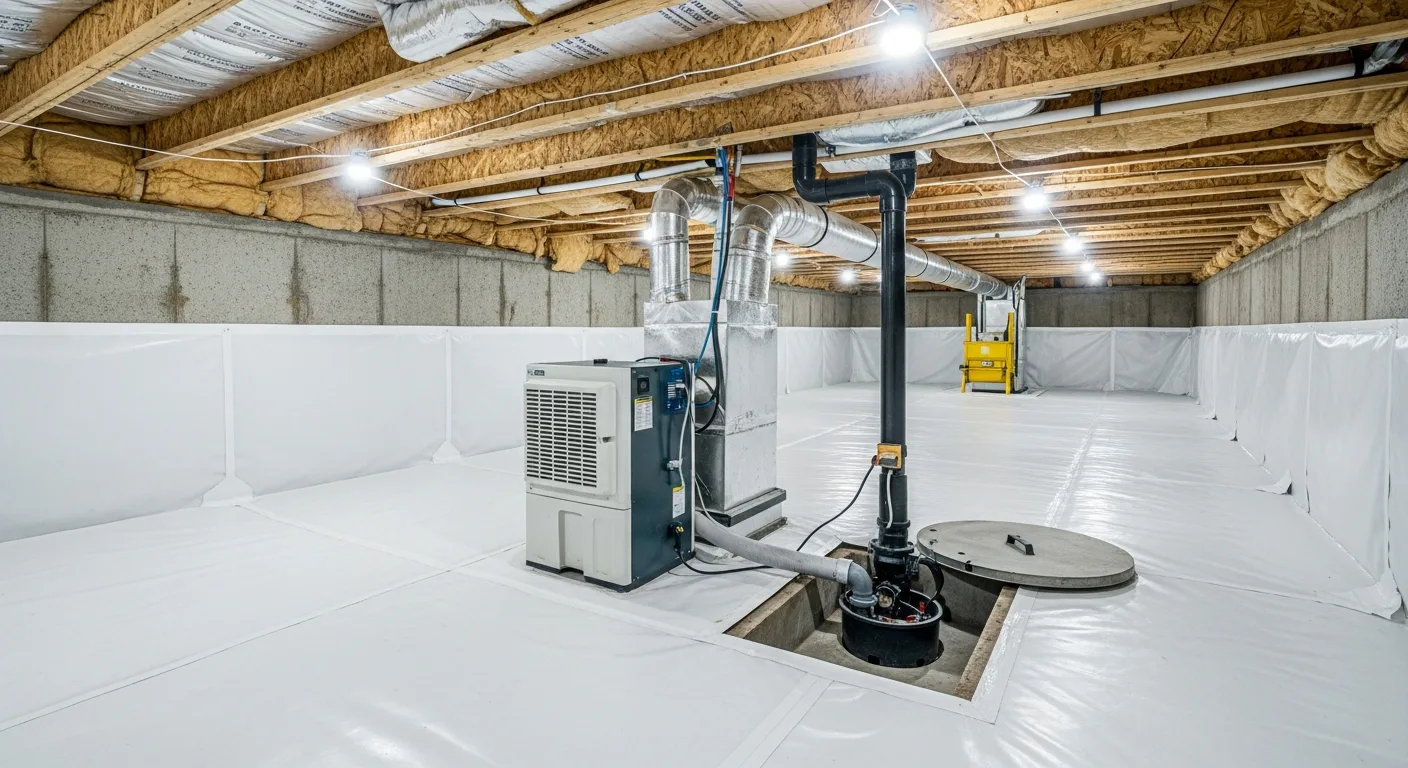
A commercial-grade crawl space dehumidifier is installed and set to maintain relative humidity below 55% year-round -- well below the 60% mold threshold. Closed-cell spray foam or rigid foam board insulation is applied to crawl space walls. A mandatory 3-4 inch termite inspection gap is maintained at the foundation perimeter per NC building code. Final moisture readings, humidity levels, and photo documentation are provided with a written commissioning report.
Full encapsulation complete -- 20-mil vapor barrier sealed to walls, all vents closed,
commercial dehumidifier maintaining humidity below 55%. This Concord crawl space
transformed from 80%+ RH with active mold to a controlled, dry environment.
Vented vs. Sealed Crawl Spaces: Why Concord Needs Encapsulation
Advanced Energy NC field research measured crawl space conditions across North Carolina
homes and produced definitive results. Southern Energy NC summarized it plainly: "keeping a vented crawl space dry in North Carolina is really hard." It is not merely hard -- it is physically impossible in Concord's climate.
When outdoor dew points exceed 65 degrees Fahrenheit from late May through October --
five full months in Concord -- every cubic foot of warm humid air entering through
foundation vents deposits condensation on cooler crawl space surfaces. The vents are
not drying the space. They are the primary moisture delivery system.
Crawl Space Cleanup & Encapsulation Costs in Concord
Crawl space remediation costs in Concord vary based on crawl space size, whether active
mold is present, the extent of structural damage, and whether drainage correction or
radon mitigation is needed. Here are real-world cost ranges based on Concord metro
projects.
Basic Cleanup & Encapsulation
No active mold -- moisture control only
Timeline:2-4 days
Debris removal and old insulation pull-out$400 - $1,000
12-20 mil reinforced vapor barrier$1,500 - $2,800
Foundation vent sealing$200 - $500
Commercial dehumidifier with drain line$1,200 - $1,800
Minor grading or drainage correction$500 - $1,200
Total basic scope$4,500 - $8,500
This scope applies to crawl spaces with humidity problems but no active mold growth, no standing water, and no structural damage. In Concord, this represents roughly 20-30% of crawl space projects -- most have at least surface mold by the time homeowners call.
Full Remediation & Encapsulation
Active mold, structural damage, drainage needed
Timeline:2-4 weeks
IICRC S520 mold remediation with containment$4,000 - $10,000
Joist sistering or sill plate replacement$2,000 - $8,000
Interior perimeter drainage with sump pump$3,000 - $6,000
Full encapsulation with radon provisions$4,000 - $6,000
Post-remediation air quality testing$300 - $600
Total full scope$12,000 - $22,000+
Concord homes from the 1980s-1990s with active mold, failed polybutylene plumbing, and deteriorated original vapor barriers typically fall in this range. This is the most common scope for Concord crawl space projects.
Common Add-On Costs
Mold Remediation Add-On
$4,000 - $10,000
IICRC S520 protocol with containment, HEPA filtration, antimicrobial treatment, and post-remediation air testing. Required when crawl space mold has colonized structural wood.
Structural Joist Repair
$2,000 - $8,000
Sistering or replacing compromised floor joists, sill plates, and band joists. Common in Concord homes where wood moisture has exceeded 19% for extended periods.
Radon Mitigation System
$800 - $2,500
Sub-membrane depressurization piping with passive or active exhaust fan. Installed when pre-encapsulation radon testing exceeds 2.0 pCi/L in Cabarrus County.
Every Concord crawl space is different. Call (704) 464-0121 for a full assessment and detailed estimate.
We'll tell you exactly what your crawl space needs -- and more importantly, what it
doesn't -- before any work begins.
What Competitors Ignore
Radon and Crawl Spaces in Concord: A Connection Most Contractors Miss
Radon is a naturally occurring radioactive gas that seeps from the decay of uranium
in Piedmont bedrock and enters homes through the soil-to-air interface -- the exact
interface that exists in every Concord crawl space with a bare soil floor. Cabarrus
County carries an EPA Zone 3 radon designation, and county-wide averages sit around
1.4 pCi/L. But averages mask the reality: individual Concord residential tests have
measured as high as 4.0 pCi/L -- the EPA action level.
This matters profoundly for crawl space encapsulation because the encapsulation
process seals the same soil-to-air pathway that radon travels. A properly designed
encapsulation with sub-membrane depressurization piping can actually reduce radon levels -- the sealed vapor barrier and exhaust piping create a negative pressure zone beneath
the membrane that draws radon gas out before it enters the living space.
But an encapsulation performed without radon testing and without depressurization
provisions can concentrate radon beneath the barrier with no escape path, potentially increasing indoor radon levels when the barrier is breached
at seams, penetrations, or over time. This is why Palm Build tests for radon before every
Concord encapsulation project.
Palm Build's Radon Protocol
48-hour continuous radon monitoring before any encapsulation work begins
Sub-membrane depressurization piping installed if levels exceed 2.0 pCi/L
Active exhaust fan activated if levels exceed 4.0 pCi/L
Post-encapsulation radon verification confirms system performance
Cabarrus County Avg
1.4 pCi/L
EPA Zone 3 designation -- predicted average below 2 pCi/L
Highest Concord Test
4.0 pCi/L
Equals the EPA action level for recommended mitigation
EPA Action Level
4.0 pCi/L
Above this level, mitigation is recommended by the EPA
NC DHHS Guidance
2.0-3.9 pCi/L
North Carolina recommends considering mitigation at this range
Radon varies house to house. A home one block from a low-reading neighbor
can test at four times the action level. Pre-encapsulation testing is the only way to
know.
Our Concord Work
Crawl Space Remediation in Concord Homes
From bare clay and active mold to fully sealed, dehumidified environments -- here is
what our crawl space work looks like in Concord.
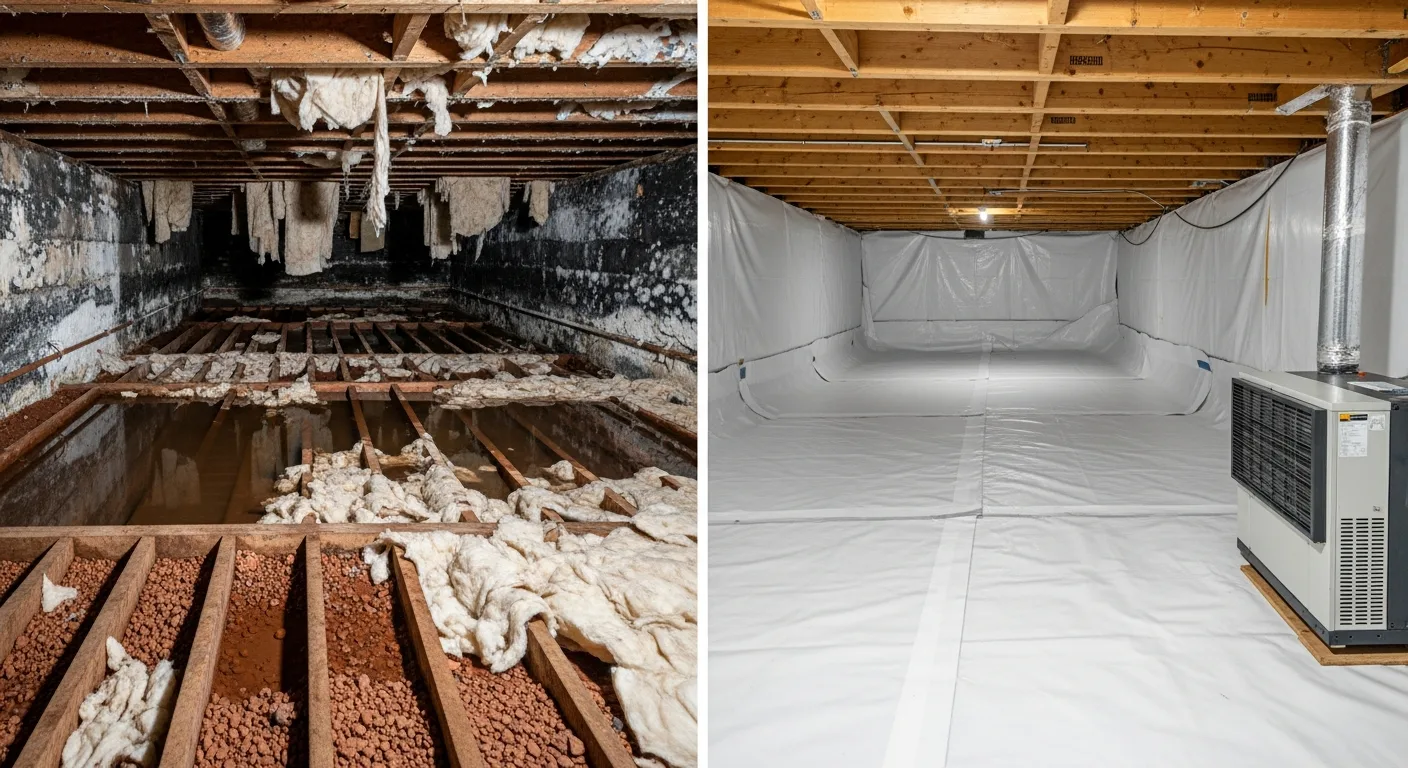
Before and after: from active mold on bare clay to fully sealed and dehumidified
Moisture meter showing elevated readings -- wood above 19% MC supports active mold growth
Cecil series red clay -- the iron-rich, nearly impermeable soil beneath every Concord crawl space
The Palm Build Difference
Why Concord Homeowners Choose Palm Build for Crawl Space Work
Concord has multiple companies offering crawl space encapsulation. The difference is in
how the work is scoped, whether mold is remediated before encapsulation, and whether
radon testing and long-term monitoring are part of the project. Palm Build approaches
crawl space work as restoration professionals -- not salespeople selling a product.
Cecil Clay Soil Expertise
We understand Piedmont clay drainage -- the iron-rich Cecil series that drains at just 6-15 cm/hr, holds water against foundations for days, and creates a continuous moisture source no passive ventilation can overcome. Our remediation approach is calibrated to Concord's specific soil conditions, not a national franchise template applied to every climate.
Full Encapsulation -- Not Half Measures
Many contractors install a vapor barrier and call it encapsulation. Palm Build addresses the complete system: mold remediation before encapsulation (not sealing mold behind the barrier), 12-20 mil reinforced vapor barrier over every inch of clay floor, permanent vent sealing, structural repair where needed, and commercial dehumidification. Half measures fail. Full encapsulation works.
Radon Testing Included
We test for radon before every Concord encapsulation -- a step most crawl space companies skip entirely. Cabarrus County has individual residential tests as high as 4.0 pCi/L (the EPA action level). Because encapsulation seals the soil-to-air interface, it must be designed with radon provisions if levels are elevated. Testing after encapsulation is too late.
Cabarrus County Permits Handled
NC requires building permits for most vented-to-closed crawl space conversions. The encapsulated crawl space must meet NC building code requirements including a Class I vapor barrier, mechanical dehumidification, and a mandatory 3-4 inch termite inspection gap. Palm Build handles all Cabarrus County permit applications and inspection scheduling as part of our scope.
Long-Term Humidity Monitoring
Every Concord encapsulation includes remote humidity monitoring that tracks crawl space conditions continuously. If humidity spikes above target levels, our system alerts both you and our team so we can identify and address the cause before damage occurs. We don't seal your crawl space and walk away -- we verify performance and provide documented history for real estate transactions.
Common Questions
Concord Crawl Space FAQ
Answers to the most common crawl space questions from Concord homeowners -- based on
real inspections and projects across Cabarrus County.
Why are Concord crawl spaces so problematic compared to other cities?
Concord's crawl space crisis stems from three compounding factors. First, crawl space construction was the default foundation type for pre-2005 homes, meaning the vast majority of Concord's housing stock sits on a crawl space. Second, the Cecil series clay soil beneath Cabarrus County drains at only 6-15 cm/hour — holding water against foundations for days after every rain event. Third, the dominant 1980s-1990s housing cohort was built with foundation vents, bare soil floors, and HVAC ductwork in the crawl space — a combination that Advanced Energy NC research shows produces humidity exceeding 80% in spring and summer. Southern Energy NC put it plainly: keeping a vented crawl space dry in North Carolina is really hard.
How much does crawl space encapsulation cost in Concord, NC?
Basic cleanup and encapsulation (vapor barrier, vent sealing, commercial dehumidifier, minor drainage) runs $4,500-$8,500 depending on crawl space size. Full remediation including mold removal, structural joist repair, drainage correction, old plumbing replacement, and encapsulation with radon provisions ranges from $12,000-$22,000+. Concord homes from the 1980s-1990s with active mold, failed polybutylene plumbing, and deteriorated original vapor barriers typically fall in the higher range.
Does Concord have a radon problem that affects crawl space work?
Cabarrus County carries an EPA Zone 3 radon designation with an average of 1.4 pCi/L, but individual Concord residential tests have measured as high as 4.0 pCi/L — the EPA action level. Radon varies house by house based on bedrock geology, and encapsulation seals the soil-to-air pathway that radon travels. Without pre-encapsulation testing and sub-membrane depressurization provisions, you risk concentrating radon beneath the vapor barrier. Palm Build tests for radon before every Concord encapsulation and integrates depressurization piping when levels warrant it.
What is the difference between a vented and sealed crawl space in Concord's climate?
Advanced Energy NC field research found that vented crawl spaces in North Carolina exceed 80% relative humidity in spring and summer — well above the 60% mold growth threshold. Sealed (encapsulated) crawl spaces in the same study stayed below 65% year-round. In Concord, where outdoor dew points exceed 65 degrees Fahrenheit from late May through October, vented crawl spaces actively pull moisture into the space through foundation vents. Sealing converts the crawl space from a moisture trap into a controlled environment.
Is crawl space encapsulation covered by insurance in Concord?
Encapsulation itself is generally classified as home improvement and is not covered by standard homeowners insurance. However, if crawl space damage resulted from a sudden covered event — a burst pipe flooding the crawl space, or storm water intrusion through a foundation breach — the remediation of that specific damage may be covered. Mold remediation from a covered water event may also carry coverage, though mold limits in NC policies are typically $5,000-$10,000. Palm Build documents every project with cause-of-loss analysis to identify which portions may be claimable.
My Concord home has polybutylene plumbing in the crawl space. Should I worry?
Yes. Polybutylene supply lines were installed in homes built from 1978 through 1995 — the dominant construction era for Concord homes. These pipes are known to fail due to chlorine degradation of the plastic, and most have exceeded their practical service life. A polybutylene failure in a crawl space can flood the space with hundreds of gallons of water before anyone notices, saturating clay soil and creating conditions for rapid mold colonization. If your Concord home still has polybutylene supply lines, replacing them during a crawl space encapsulation project eliminates the most likely future cause of crawl space water damage.
How long does crawl space encapsulation take in Concord?
Encapsulation only (no mold, no structural damage): 2-4 days. Mold remediation plus encapsulation: 1-2 weeks, including containment, treatment, post-remediation air testing, and then encapsulation. Full-scope projects with drainage correction, structural joist repair, plumbing replacement, mold remediation, radon mitigation, and encapsulation: 2-4 weeks. Concord's clay soil can extend exterior drainage work if heavy rain occurs during the installation period.
Does North Carolina require permits for crawl space encapsulation?
Yes. NC requires building permits for most vented-to-closed crawl space conversions. The encapsulated (closed) crawl space must meet NC building code requirements including a Class I vapor barrier, mechanical dehumidification or conditioned air supply, and a mandatory 3-4 inch termite inspection gap at the foundation perimeter. Palm Build handles all Cabarrus County permit applications and inspection scheduling as part of our encapsulation scope — you do not need to coordinate separately with the building department.
Concord's #1 Crawl Space Problem? We Fix It at the Source.
Palm Build's crawl space team addresses moisture, mold, and structural damage beneath Concord homes at the root cause — clay soil, vented construction, and uncontrolled humidity. Complete remediation: mold removal, encapsulation, radon testing, structural repair, and dehumidification managed as one coordinated project. Every Concord project starts with a full assessment.