(888) 245-5155
Call Now 24/7
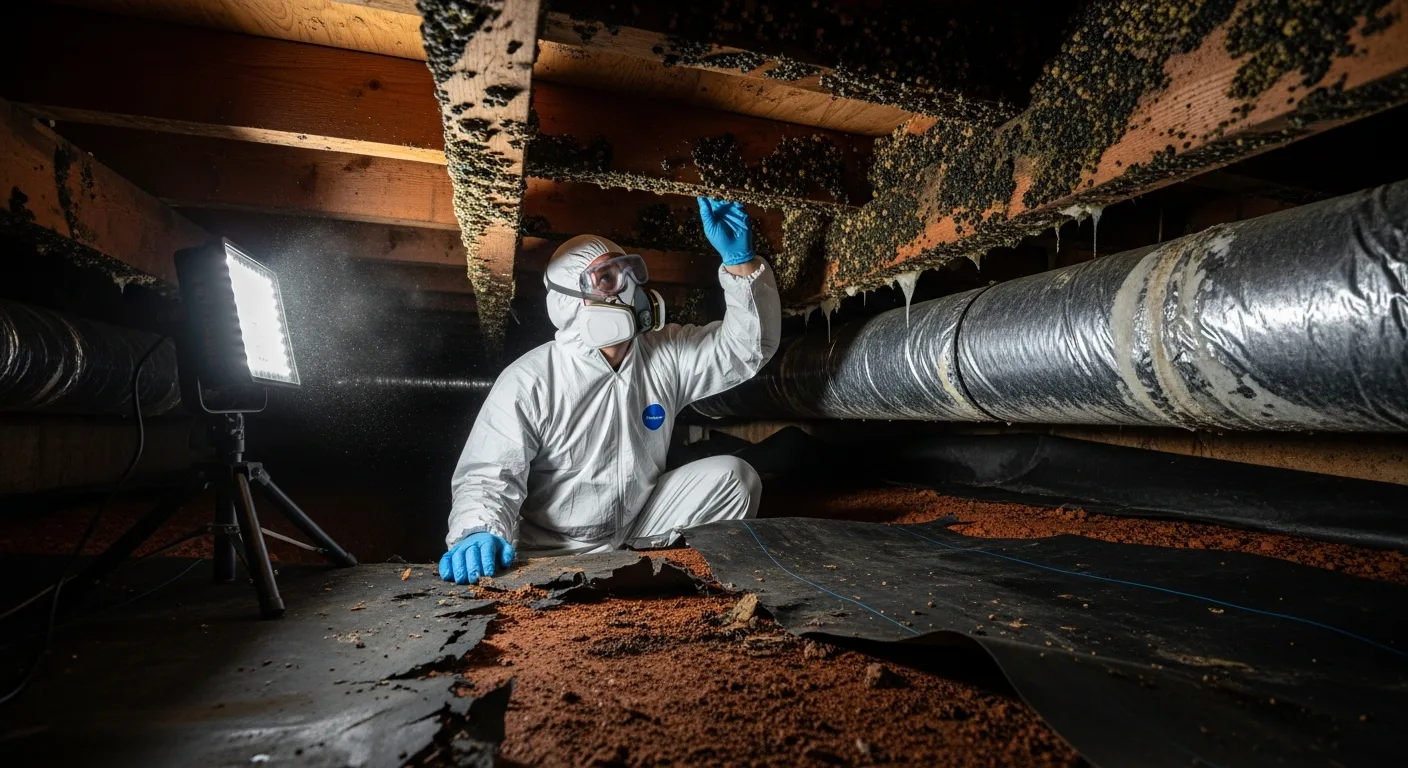
Palm Build mold remediation technician in full PPE inspecting mold growth on wooden floor joists inside a Concord NC crawl space with red clay soil visible
CONCORD NC — IICRC-CERTIFIED MOLD REMEDIATION

Mold Remediation in Concord, North Carolina

Concord's Piedmont clay soil, vented crawl spaces, and five-month humidity window make mold not just possible but inevitable in untreated homes. Palm Build's IICRC S520-certified team eliminates mold at the source and prevents recurrence.

20 miles — Charlotte, NC 30-45 min Response IICRC Certified

30-45 min

Emergency Response

24/7

Dispatch Available

IICRC

Certified Technicians

Why Mold Thrives Here

Why Concord Is a Mold Capital of the Piedmont

Mold in Concord is not an occasional problem \u2014 it is an endemic condition driven by three structural factors that no competitor is documenting for local homeowners. When these forces converge, mold can establish within 24-48 hours of any moisture event.

6-15 cm/hr

Clay infiltration rate

Crawl Space-Clay Soil Combination

Concord sits atop Cecil series clay with infiltration rates of just 6-15 cm/hour. Water pools against foundation perimeters for days after rainfall, feeding continuous moisture into vented crawl spaces from the ground below and the saturated soil around them.
5 months

Continuous mold-risk window

Five-Month Humidity Window

Outdoor dew points exceed 65°F from late May through early October. When warm, moisture-laden air enters a crawl space 10-15°F cooler than outdoors, condensation forms immediately on framing, ductwork, and insulation — no rainfall event required.

70%+

Pre-2005 homes at risk

Aging Housing Stock with Open Vents

The dominant 1980s-1990s cohort was built under code requiring open foundation vents — on the incorrect assumption outside air would dry the crawl space. These homes now have degraded vapor barriers, aging plumbing with slow leaks, and HVAC equipment adding heat cycling to the moisture problem.

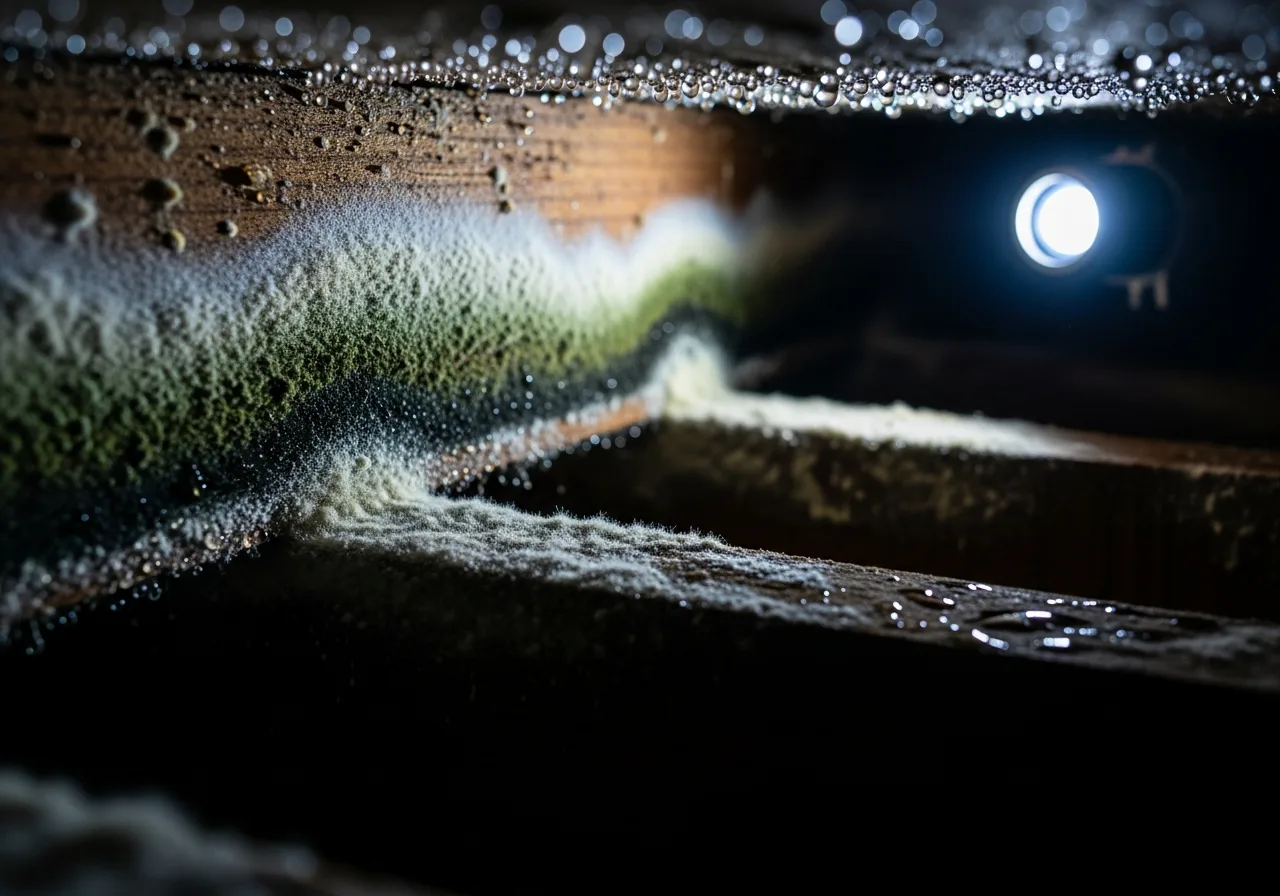
Close-up of severe white and dark mold growth on wooden floor joists in a Concord NC crawl space with condensation visible
Active mold colonization on floor joists in a Concord crawl space \u2014 sustained by humidity consistently above 80% during spring and summer months.

Neighborhood Risk Map

Concord Neighborhoods Most Vulnerable to Mold

Mold risk varies significantly across Concord based on construction era, foundation type, and proximity to clay-heavy soil. Here is how your neighborhood ranks.

Critical

Historic Districts (N/S Union)

1880s-1930s · Crawl/pier

Century-old framing, no vapor barriers, exposed soil

Critical

Beverly Hills / Logan

1940s-1970s · Crawl space

Vented crawl spaces, aging plumbing, clay soil saturation

High

Oak Park / Sheffield Manor

1985-2000 · Crawl space

Degraded vapor barriers, composition board subfloors that swell when wet

High

Hearthwood / Hampden Village

1990s · Crawl space

HVAC in crawl space creates condensation cycling

Moderate-High

Castlebrooke / Laurel Park

1995-2010 · Crawl/slab

Crawl space moisture, engineered wood moisture sensitivity

Moderate

Christenbury Chase/Mews

2007-2015 · Crawl/slab

Tighter construction traps moisture if HVAC fails

Moderate

Christenbury Hall/Glen

2009-2018 · Basement

Basement humidity if dehumidification fails

Lower

Winding Walk / Skybrook

2005-2018 · Slab

Attic moisture from HVAC duct condensation

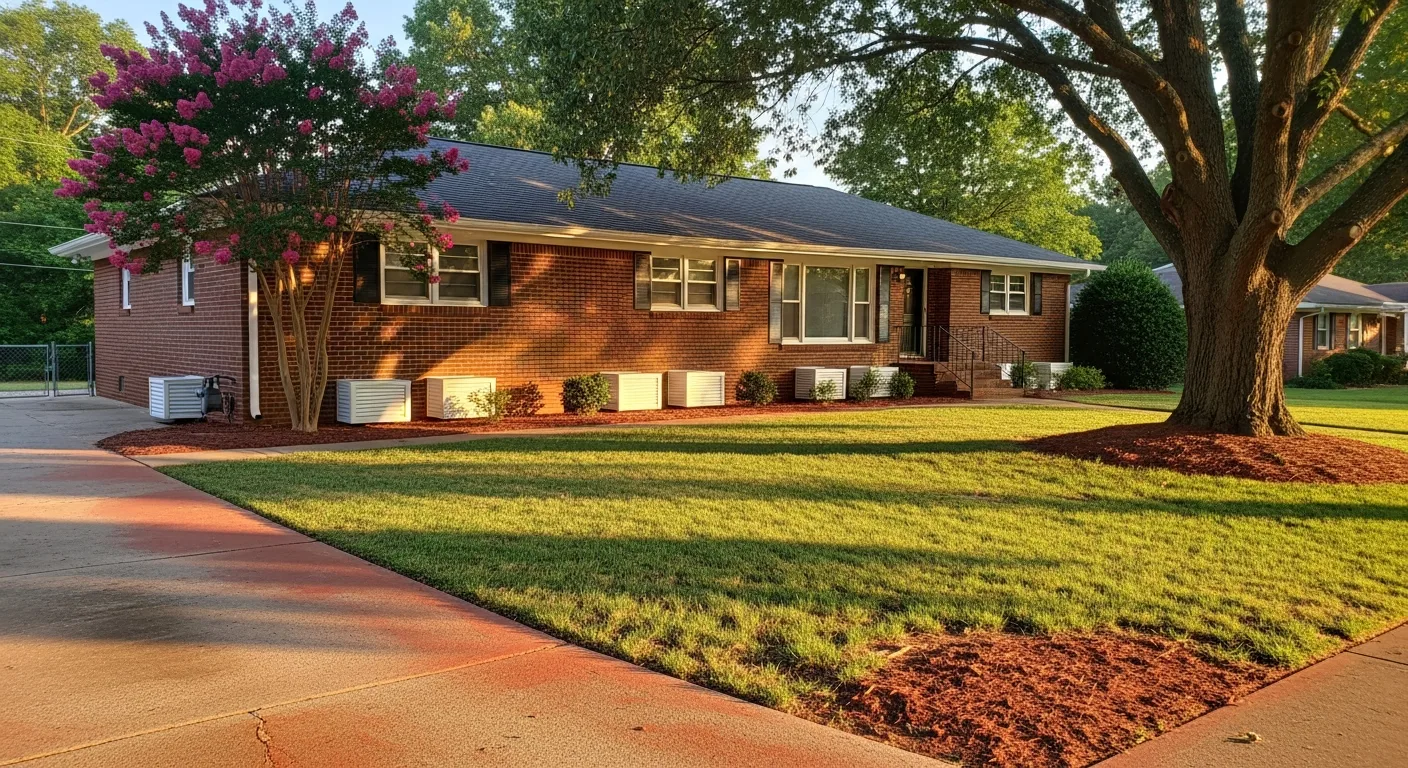
Typical Concord NC brick ranch home with visible crawl space foundation vents at grade level near red clay soil
Foundation vents at grade level \u2014 the entry point for humidity that feeds Concord crawl space mold in Beverly Hills and Logan-era homes.
IICRC S520 Protocol

Our Mold Remediation Process for Concord Homes

Professional mold remediation follows a strict IICRC S520 protocol. In Concord, step four \u2014 source elimination \u2014 is what separates permanent results from temporary cosmetic cleanup.

01

Comprehensive Mold Inspection

Day 1

Visual assessment, moisture meter readings on all framing, air quality sampling if needed. For Concord crawl spaces, we check vapor barrier condition, foundation vent status, HVAC duct condensation, and wood moisture content on joists and sill plates.

02

Containment & Air Filtration

Day 1-2

Negative air pressure containment with HEPA-filtered air scrubbers prevents cross-contamination to unaffected areas. Essential in Concord homes where crawl space mold spores can migrate through floor systems into living spaces.

03

Mold Removal & Surface Treatment

Days 2-4

HEPA vacuuming, wire brushing, and sanding of affected wood surfaces. EPA-registered antimicrobial treatments applied to all accessible joists, rim joists, sill plates, and subfloor surfaces.

04

Source Elimination (Encapsulation)

Days 4-7

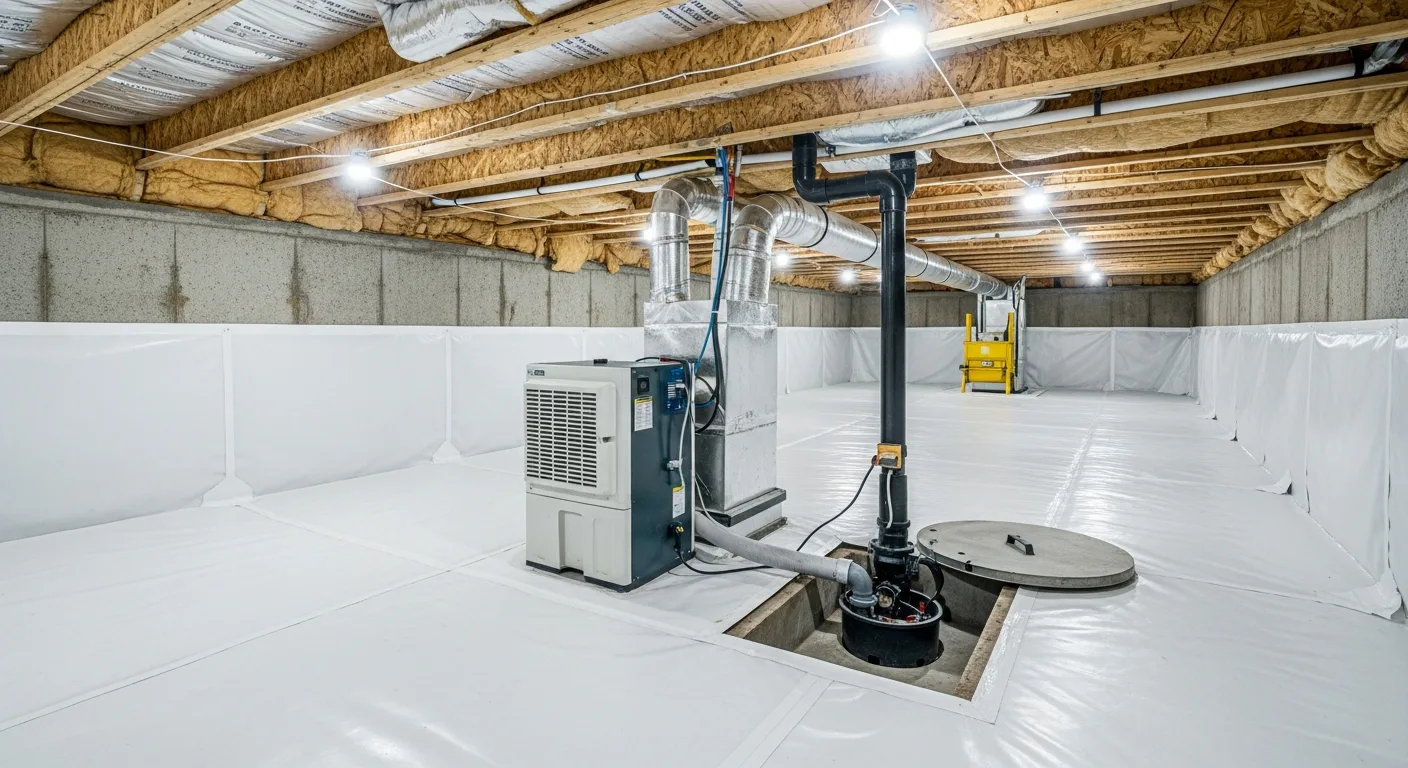
This is where most competitors fail. We seal foundation vents, install a heavy-duty vapor barrier over the clay soil, and deploy a commercial dehumidifier to maintain humidity below 55%. Source elimination, not just removal.

05

Post-Remediation Verification

Day 7-8

Final moisture readings, visual inspection, and clearance testing confirm successful remediation. Complete documentation provided for your records and insurance carrier.

Fully encapsulated crawl space in a Concord NC home after mold remediation with white vapor barrier, dehumidifier, and clean treated joists

Why Source Elimination Matters

Removing visible mold without sealing the moisture source is cosmetic, not remediation. In Concord, the source is almost always the crawl space. Our encapsulation protocol permanently breaks the moisture cycle.

1

Seal Foundation Vents

Stop outdoor humidity from entering the crawl space

2

Install Vapor Barrier

Heavy-duty barrier over Cecil clay blocks ground moisture

3

Commercial Dehumidifier

Maintains humidity below 55% year-round

4

Verified Results

Third-party clearance testing confirms success

Schedule Mold Inspection

The Science Behind the Problem

Why Mold Thrives in Concord Crawl Spaces

Understanding the moisture physics beneath your Concord home is the key to permanent remediation. Advanced Energy research in North Carolina proved that vented crawl spaces are the problem, not the solution \u2014 and the data is striking.

Vented Crawl Space Exceeds mold threshold
80%+ RH
Sealed/Encapsulated Below mold threshold
<65% RH
Mold Growth Trigger Sustained colonization begins
60% RH

Key insight: The 15-point humidity difference between vented and sealed crawl spaces is the difference between active mold colonization and a dry, healthy home. Encapsulation is not optional in Concord \u2014 it is the only permanent solution.

NC Crawl Space Guide

Cecil Clay Soil Moisture

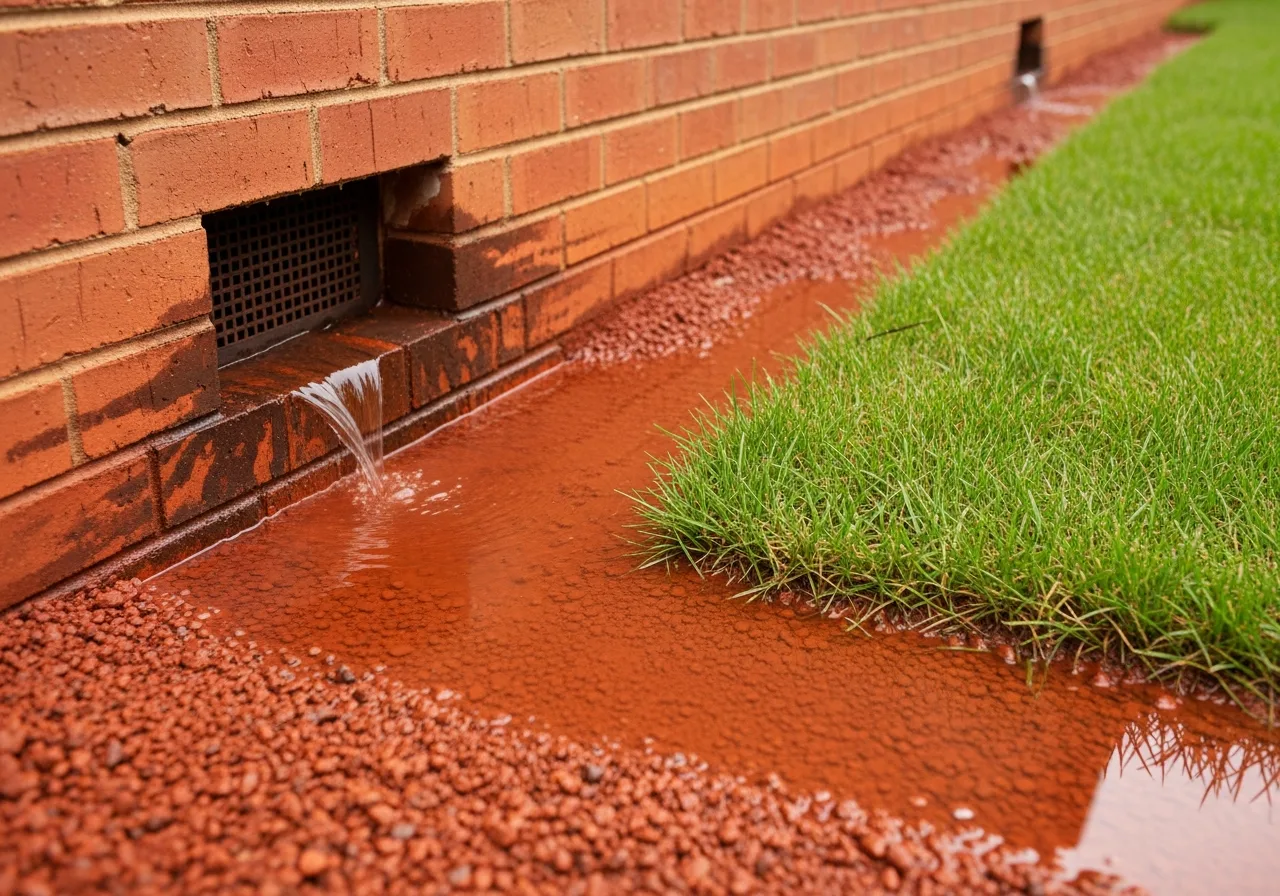
Concord's Cecil series soils are iron-rich fat clays with infiltration rates of 6-15 cm/hour. After rainfall, this soil holds water against foundations for days, continuously evaporating moisture into the crawl space from below.

Condensation Physics

When outdoor air at 85°F and 75% RH enters a crawl space at 70°F, the relative humidity jumps above 95%. Water condenses on every cool surface — joists, ductwork, metal hangers. No plumbing leak required.

Vented vs. Sealed

Advanced Energy’s research in North Carolina found vented crawl spaces regularly exceed 80% RH in spring and summer, while sealed crawl spaces with dehumidification maintain below 65% — a 15-point difference that determines whether mold colonizes or starves.

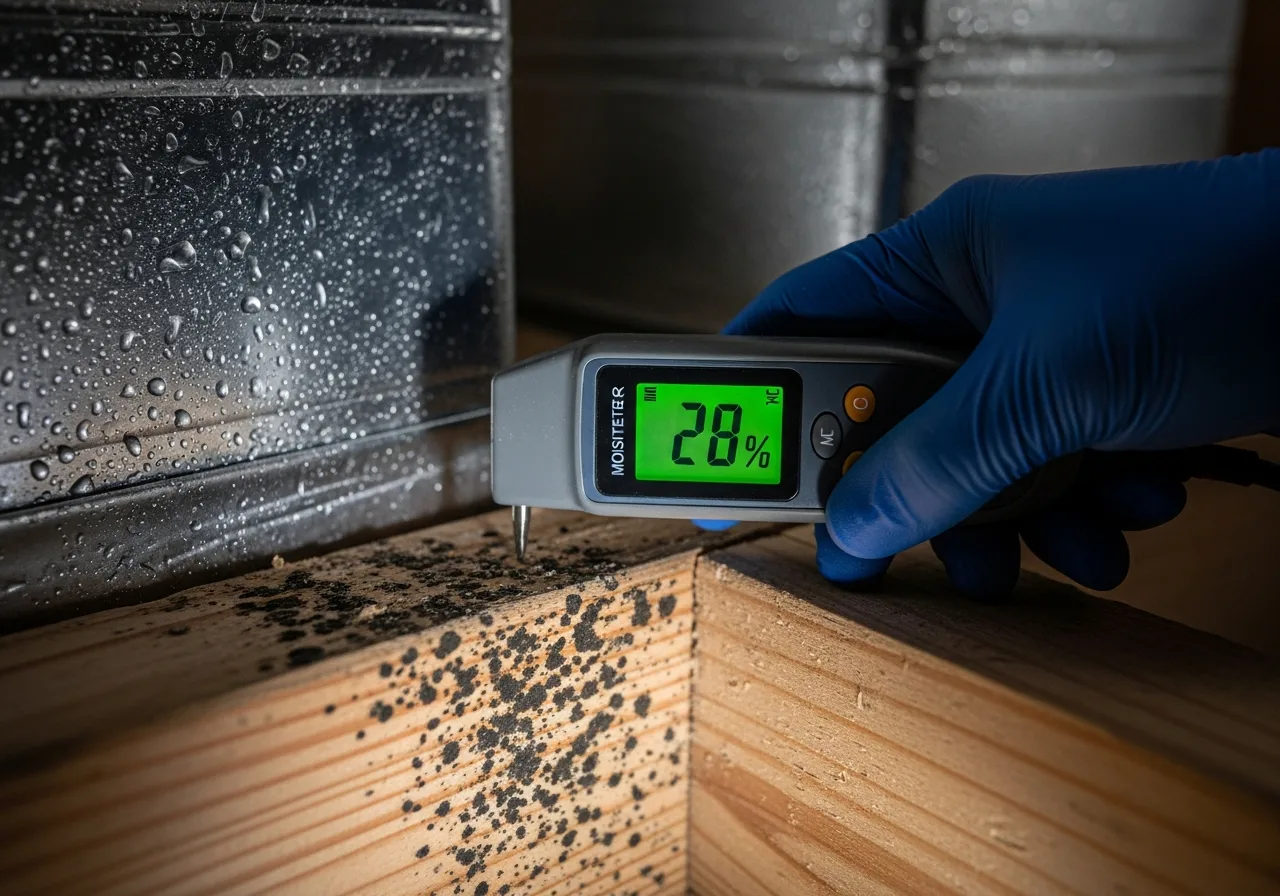
Professional moisture meter showing elevated reading on a mold-stained floor joist in a Concord NC crawl space
Moisture meter confirms elevated wood moisture content \u2014 above 19% supports active mold growth on Concord crawl space joists.

What No Competitor Mentions

Radon: The Hidden Companion to Crawl Space Mold

The same crawl space environment that concentrates moisture can also concentrate radon \u2014 a colorless, odorless radioactive gas that enters through soil beneath your foundation. No Concord mold remediation company discusses this, but the data demands attention.

Cabarrus County EPA Classification

Predicted average indoor radon screening level

Zone 3
County aggregate average

Below EPA action level, but individual homes vary widely

1.4 pCi/L
Highest Concord test recorded

Exactly at the EPA action threshold

4.0 pCi/L
EPA action threshold

Mitigation recommended at or above this level

4.0 pCi/L

The NC DHHS recommends considering mitigation for levels between 2 and 3.9 pCi/L. If your home is undergoing crawl space encapsulation or extensive foundation work, radon testing should be part of the scope \u2014 the cost is minimal compared to the construction already underway.

Why Test During Encapsulation?

Encapsulation changes crawl space airflow. Testing before and after ensures you are not inadvertently trapping radon.

A radon mitigation fan can be added during encapsulation for $800-$1,500 \u2014 far less expensive than retrofitting later.

The same sealed vapor barrier used for moisture control also serves as the radon barrier \u2014 dual protection from one investment.

Ask About Radon Testing

Concord Pricing

Mold Remediation Costs in Concord

Costs depend on contamination scale, materials affected, and whether crawl space encapsulation is needed. NC standard insurance policies often cap mold coverage at $5,000-$10,000 \u2014 Concord crawl space projects frequently exceed this.

Contained Mold Issues

$1,500 - $8,000

Single bathroom/kitchen $1,500 - $4,000
Attic mold (limited area) $2,000 - $6,000
Small crawl space section $3,000 - $8,000
HVAC duct mold cleaning $2,000 - $5,000

Extensive Remediation

$8,000 - $50,000+

Full crawl space remediation $8,000 - $20,000
Crawl space + encapsulation $15,000 - $35,000
Whole-floor remediation $12,000 - $30,000
Multi-story or basement $20,000 - $50,000+

Early action saves thousands. A contained bathroom mold issue at $2,000 can escalate to full crawl space remediation at $20,000+ within a single humidity season. In Concord's five-month mold window, delay is the most expensive decision.

Insurance Navigation

Mold Insurance Coverage in Concord

Mold coverage in North Carolina is limited and varies significantly by carrier and policy. Since crawl space mold in Concord often develops over months, documentation of the triggering event is critical for successful claims.

Mold resulting from a covered sudden water event (burst pipe, appliance failure) is typically covered up to policy sublimits

Some carriers offer mold endorsements for additional premium — ask your agent about expanded coverage before you need it

NC standard policies sublimit mold coverage to $5,000-$10,000 — Concord crawl space remediation with encapsulation frequently exceeds $15,000

Mold from gradual moisture, humidity accumulation, or long-term crawl space conditions is almost always excluded as "gradual damage"

Pre-existing mold discovered during renovation or a home inspection is not covered

North Carolina has no state mold remediation licensing program — IICRC S520 is the accepted industry standard, but is not legally required

Palm Build's Approach to Concord Mold Claims

When mold results from a covered water event, our documentation connects the mold to the original loss \u2014 moisture maps, timeline photos, and remediation scope all formatted for the adjuster. For non-covered crawl space mold (the most common scenario in Concord), we provide transparent pricing and financing options so the work does not wait.

Insurance Claims Guide

Our Work

Mold Remediation in Concord Homes

From crawl space mold to clay soil moisture \u2014 every image documents the conditions we encounter and resolve in Cabarrus County homes.

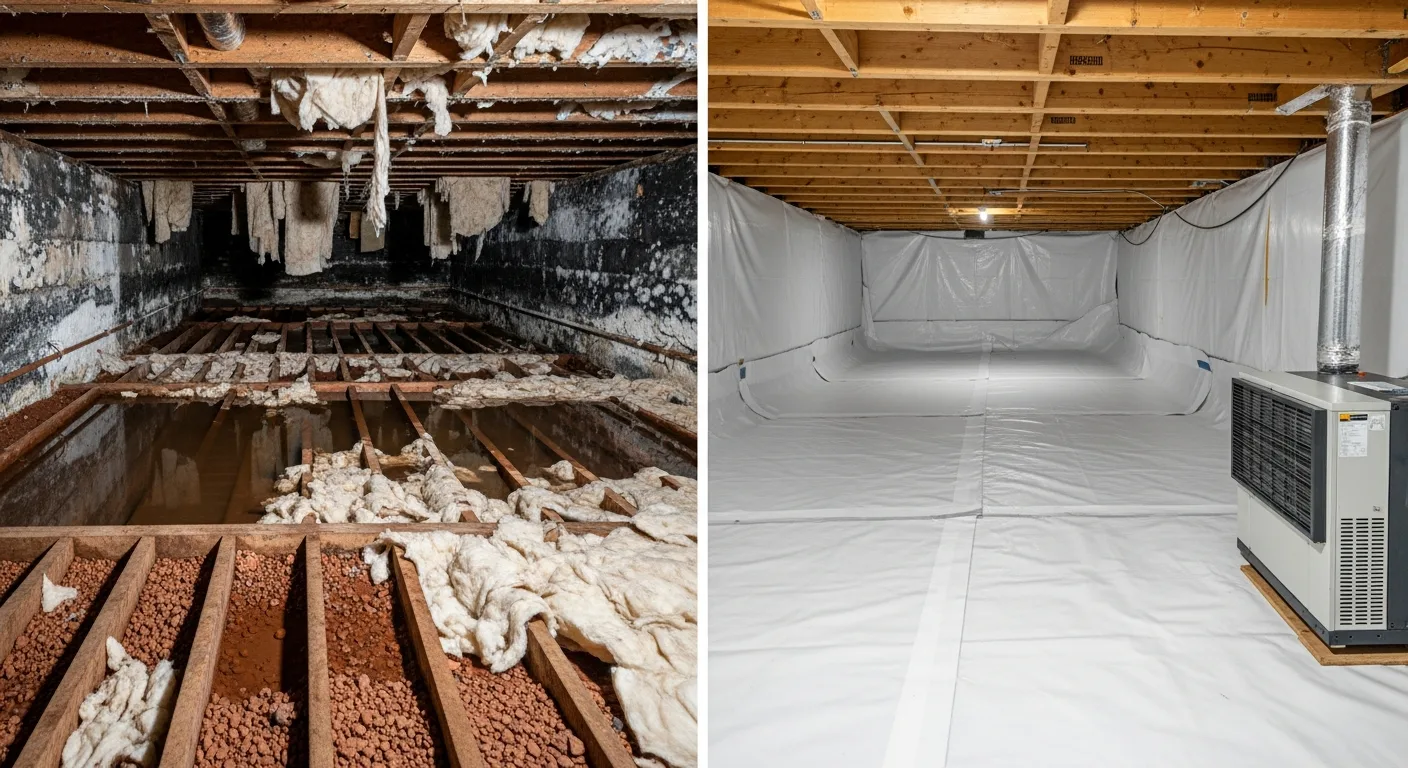
Before and after crawl space mold remediation in Concord NC showing transformation from mold-covered joists to clean encapsulated space
Complete crawl space transformation: from active mold on bare clay to sealed, treated, and dehumidified
Professional moisture meter showing elevated reading on a mold-stained floor joist in a Concord NC crawl space
Moisture meter confirms elevated wood moisture content — above 19% supports active mold growth
Typical Concord NC brick ranch home with visible crawl space foundation vents at grade level near red clay soil
Foundation vents at grade level — the entry point for humidity that feeds Concord crawl space mold
Saturated red clay soil pooling against a brick foundation in Concord NC feeding moisture into the crawl space
Red clay holds moisture against foundations for days — the root cause of chronic crawl space problems

The Palm Build Difference

Why Concord Homeowners Choose Palm Build for Mold

In a state with no mold licensing requirement, choosing the right remediation company is the most important decision you will make. Here is what sets Palm Build apart.

IICRC S520 Certified

Every crew lead holds current Mold Remediation Specialist (MRS) certification. We follow the S520 standard for containment, removal, and verification — the only universally accepted benchmark in a state with no mold licensing.

Source Elimination, Not Just Removal

We identify and fix the moisture source — not just scrub visible mold. In Concord, this means crawl space encapsulation, plumbing repair, or HVAC corrections. Without addressing root cause, mold returns within months.

Concord Crawl Space Specialists

We understand Cecil clay soil, vented vs. encapsulated foundations, and the specific mold species common in Cabarrus County. Our team has remediated crawl spaces across every Concord neighborhood from Historic Union to Skybrook.

NC Licensing Expertise

North Carolina has no state mold remediation license, creating a low barrier for unqualified operators. We maintain IICRC certification, carry proper insurance, and follow documented protocols that protect you legally and structurally.

Documented for Insurance

When mold results from a covered water event, our documentation connects the mold to the original loss. Moisture maps, timeline photos, air quality results, and remediation scope — all formatted for your adjuster from day one.

Common Questions

Concord Mold Remediation FAQ

Answers to the most common questions Concord homeowners ask about mold, crawl spaces, insurance, and remediation costs.

How common is mold in Concord NC homes?
Extremely common. The majority of pre-2005 Concord homes sit on vented crawl spaces over clay soil. Advanced Energy research found vented crawl spaces in the Southeast regularly exceed 80% relative humidity in spring and summer — well above the 60% threshold for mold colonization. AdvantaClean of Cabarrus County identifies crawl space mold as the most common property issue in the area.
Does NC require a license for mold remediation?
No. North Carolina has no single statewide mold remediation licensing program. The IICRC S520 Standard for Professional Mold Remediation is the universally accepted industry benchmark. Always verify your contractor's IICRC certification independently. Palm Build's technicians maintain current IICRC S520 certification.
How much does mold remediation cost in Concord?
Costs range from $1,500-$8,000 for contained issues to $15,000-$35,000+ for full crawl space remediation with encapsulation. Insurance typically covers mold only if it resulted from a covered peril, with sublimits of $5,000-$10,000.
What causes crawl space mold in Concord homes?
Three factors converge: Piedmont Cecil series clay soil that holds water against foundations, open foundation vents that admit warm humid air into cooler crawl spaces (causing condensation), and a five-month humidity window where outdoor dew points exceed 65°F continuously from May through October.
Can I stay in my home during mold remediation?
In most cases, yes — our containment and negative air pressure systems prevent cross-contamination to living spaces. For extensive whole-floor or multi-area remediation, we may recommend temporary relocation for 2-5 days.
Does homeowners insurance cover mold in Concord?
Typically only if the mold resulted from a covered peril such as a burst pipe. Most NC policies sublimit mold to $5,000-$10,000. Long-term humidity-related crawl space mold — the most common scenario in Concord — is usually excluded as gradual damage.
How long does mold remediation take in Concord?
A contained bathroom or kitchen takes 1-3 days. Full crawl space remediation with encapsulation typically takes 5-10 days. Complex multi-area projects can take 2-3 weeks.
Should I test for radon during crawl space work?
Yes. Cabarrus County averages 1.4 pCi/L for radon, but individual homes can exceed the EPA's 4.0 pCi/L action threshold. The same crawl space conditions that concentrate moisture also concentrate radon. Testing during encapsulation is inexpensive insurance.

Mold in Your Concord Home? Don't Wait.

Every day mold goes untreated in Concord's humid climate, it spreads further into your home's structure. Palm Build's IICRC S520-certified team eliminates mold at the source and prevents recurrence with proper moisture control.

30-45 min Response IICRC Certified